Kitti Sisters - The Untold Stories Of Real Estate Investing - How To Mitigate Risk
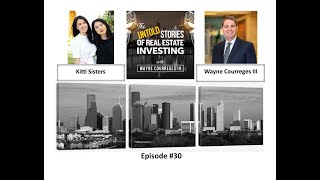
Podcast episode (Untold Stories of Real Estate Investing) hosted by Wayne Courreges III featuring Palmy and Nancy Kitti (the Kitti sisters). They describe their journey from fashion manufacturing to owning ~2,600+ multifamily units, moving from single-family flips and passive syndication to active multifamily investing. Topics include underwriting conservatism (stress-testing rates by +50 bps), debt selection (agency vs. bridge, prepayment considerations), market selection (Sunbelt, Texas, Atlanta, Florida), vendor/supply strategies, risk mitigation (flood zones, worst-case stress tests), investor selection (track record, sponsor experience), and exit timing (short holds, quick turn strategies).
Chapters
Welcome to the Untold Stories of Real Estate Investing hosted by Wayne Courageous iii. A place where active and passive investors come to hear the good, bad and ugly of real estate investing. Our guests consist of experienced operators and investors who want others to succeed by sharing their stories. If you're looking to syndicate deals or grow your wealth passively in real estate, you've come to the right show. It's now time to sit back, take mental notes and enjoy next episode of the Untold Stories of Real Estate Investing.
Welcome to the Untold Stories of Real Estate Investing. I'm your host, Wayne Courageous. For our next episode, we're excited to have Palmy and Nancy Kitty, AKA the Kitty sisters. The Kitty sisters are joining me today to discuss their journey with owning 11 apartment projects with over 2600 doors. As first generation immigrants, Palmy and Nancy were reliant on one income stream with no safety net. Despite owning successful fashion manufacturers. When their largest client announced they were closing all their stores, the income they had worked hard for dried up, pushing them to find a different way to find financial freedom. Welcome to our show, Tommy and Nancy.
Thank you so much, Wayne, for having us.
We're so excited to be here.
I'm excited as well. And what an incredible. I was telling you before our show, your website is incredible. Your story is incredible. First generation immigrants to owning over 2,600 doors. I mean, I'm excited to hear your story. And also, let's start with that. What's your story? What's the journey? And then, you know, how did you get from where you were into real estate?
Yeah. So Pom, do you want to share our backstory?
Yeah. So a little bit about Wayne kind of went into it a little bit. So basically Nat and I, we're our parents migrated here from Thailand when we were little and the whole entire time when as we were children, we saw how hard they were working and we thought like, we need to pay them back by getting good grades in school, getting educated and doing well financially. And what we've discovered was we found out, hey, fashion manufacturing was our gig, was our thing, was our jam at the time. What happened was like, we were so proud that we were able to support our family with one source of income. And that was kind of like our pride and joy that we saw our friend side hustling. We're like, we don't need that, we don't need that. And we started dabbling a little bit in real estate by buying single family buy and hold in California, thinking that we're in this California bubble. We had no idea what was happening outside of the state, how successful it was. The problem was all this one source of income that we were relying on had no safety net. And one day in 2017, our biggest client decided to close all their stores just like that. Overnight, 95% of our income was sapped, and we had no backup plan. And we realized at that time what we thought was our sense of security was completely an illusion. We were trading time for money, even if it's a lot of money, but when your business have no more demands, you become obsolete overnight.
So we had to act really fast. And that was kind of like our turning point. So we immersed ourselves in a whole new world through apartment syndication to free ourselves from the daily grind and to give us stability, reliability, and scalability in our next venture.
Yeah, so that's a little bit of how we were somewhat, like, forced to act. And this is what we came up with.
Yeah, that's incredible. So, I mean, you mentioned single family, so let's back up. There was this single family that you're renting.
Yeah, it was buy and hold. It was a buy and hold was a single family home. Nice, Great property. At that time, we didn't know how to underwrite. We didn't know it was even possible to have cash flow. All we thought was, hey, let's put a whole bunch of money into this one property, and then in 30 years, maybe it'll double. And at that point we'll have this nest egg of, you know, this thing. But then, like, after a while, Nan and I were calculating, we're like, do you know how much money it would take to buy all these houses in LA for us to actually have a comfortable living? The math just didn't make sense. Yeah.
On top of that, we have no idea what is apartment syndication. We didn't know that. Hey, we didn't know that ordinary people like us can actually own part of the apartment pie. We thought we need to be like ultra high net worth individual, have millions of dollars to invest and buy, own, like, you know, apartments. Apartments.
And like many people, I think our experience was like, hey, you need to start small, you need to do single family. Maybe we'll one day graduate to duplex, triplex, quadplex. Like Nan said, never in our wildest dreams would be on any apartment of the size that we have now.
Yeah, I mean, there's a few things on that one scalability that y' all experience. Right. You had the house and you realized, like, you would need quite a bit of these houses to give you that income. And then the other thing I heard too was appreciation versus forced appreciation. So like, you're like, hey, I'm gonna buy this house. And this is like may too. I started off single family, bought our first house actually in California, but in 29 palms. So not as fancy as LA, but you know, that area, you know, I barely made any money on it, but it was right in that 09 crisis. But anyway, the point is, is that, you know, yeah, you buy, you think, oh, my expenses are going to be X and my rent's going to be this and I'm going to make some money and then. But the big piece is the equity. Like especially in California. The idea is it's going to. But when you look at syndication or apartments, you know, you're pulling your money and then you're buying these apartments. So how, if you didn't know about syndications, you didn't know about that you could possibly own, you know, these bigger projects. Like, how did you stumble across it?
That's a good question. And you can answer that one. Yeah.
So you know how we say we start with flipping business. Right. And through flipping business we, you know, learn about apartment syndication and that's when we start actually investing as a passive investors.
Yeah. So basically to backtrack a little, once the fashion business crashed, we were like, oh my gosh, we need to do something. Let's pick. We pick real estate. And we didn't know about multifamily at the time. We're like, let's flip houses. We live in la.
We love like business.
We're entrepreneurs.
We love business. Entrepreneur. And we love real estate. Let's do a business that we can combine both our entrepreneurship and real estate. And that was when we like, voila, let's do flipping. But quickly we realized that flipping is a lot of trading time for money. So I would happen without us. Right. Like what we're trying to create. So we'll be missing like our family dinners or like our friends bridal showers because we were still really much involve it. Trading time for money.
Yeah. And through just going, going to a lot of rias and stuff like that, we started hearing like whispers about multifamily apartments. And we're like, tell us more. What is this thing? What are you talking about? And then we started hearing more and more, oh, people do syndications.
And this is truly passive where you don't have to, you know, lift a hammer to make cash flow or tax benefit or crazy return.
Yeah. And that's why we're like, okay, so, yes, we should have had we known about this, Wayne, when, you know, prior to our business closing, because of the, the, our customer closing on other stores, I think we would have been in a much better predicament. It was just like one of those things where, like, ignorance isn't bliss. It's actually like a fault. So, yeah, so I think at that point we were like, okay, we're in. Let's, at least at that time, I don't think we had like, aspirations to do it actively. We just kind of like, let's do this at least passively. It's going to be much better for us. Yes.
And I would totally encourage anyone who want to start the apartment syndication journey. Even if you want to be an active investor, you should try to see if you even like this feel right. You should start with like, passive investing to see if you even like the apartment syndication, if this is even an asset class that you want to invest and devote your time to do.
Right.
Yeah, I, I think to myself sometimes I'm like, so I'm obviously an active investor myself, but I'm like, you know, passives, they have a good, you know, they're investing and they're getting preferred returns. You know, they're, you know, and that's the whole, you know, point is make our investors a lot of money. Their goals, they'll reinvest, et cetera, and continue growing their wealth. But for sure, I think the passive, it takes a special person, in my opinion, to enjoy the active side.
Yeah.
And so it's sort of like, it's.
Not, it's not for everyone.
It's not for everyone, for sure. So when did, you know, along the passive side, like, hey, I'm, I'm more of an active person. I like to underwrite and negotiate and find brokers. I mean, that's the things that, you know, the list goes on and on and on. So what, what excited you about the active side?
Yeah, you know what I think? I think it comes to the scalability. And because we value our time, we started appreciating, hey, a lot of the underwriting that we were doing for single family. If we scale, if we. There's more nuance, obviously, to multifamily underwriting, but at its core, it's pretty similar. What are you going to purchase for? What are you going to add to it in order to make sure that you can support the mortgage, and how are you going to be able to increase the property's value? And so from there we realized, hey, single family is great, but there's tiresome stuff. You have to deal with the contractors who sometimes are reliable and are not reliable. You can. You have to deal with the city who doing. Especially now during COVID a lot of people who listen to you probably have experienced delays at the city where they're not giving license issuing permits as quickly as they used to. So the. Those things were stuff that Nan and I decided we don't want to do this. We rather have if we were able to scale to multifamily. What we learned from the GPS that we invested with was that, hey, there's someone else who can handle that role, even if you're active. And that's where we felt, okay, that's a better business model for us.
Yes. And to add to what Palm just said, I think as we're becoming more involved in passive investing, we gain confidence. We know what to look for, how to underwrite the deal, what is a good deal, what is a bad deal. And, you know, we learn a lot from apartment operators, like who we, you know, like follow or just invest with that, hey, this is the way to do the deals.
You know, even like basic communications, communicating with investors, you know, before, after. How does that look like reporting all those things? Like, it really was when we passed invest, it was really kind of like we were getting paid to learn this business and we got to learn it in a safe space where someone else is doing all the hard work and we're just coming along and basically almost like shadowing them and we make money. So great gig.
So one of the questions I've got for you too, it's so when you switch over to the active side. So you came to the US early on, were you. Were you citizens at a certain point? I asked this because I'm curious. There's people may be listening in on, you know, are there any hurdles for people that are. And you, I don't know if you're American center citizen or not. We can go through it, but are there hurdles in general for people who may not be American citizens buying large multifamily assets?
So we're U.S. citizens. Our parents came and they applied for us when we were little. So we became, you know, legally. So that part was not a problem. What I think is actually the hurdle may be cultural. So as our parents, when we first started getting started, even in real estate, our parents were really against it because in their mind, again, living in California, they're like, it doesn't grow, it doesn't have, provide any cash. And they rather hoard cash because they think cash is king. It's a, it's a kind of like an old world mindset where they think that, hey, if I have more money, I'll feel more comfort.
Or if they have like money in the bank and seeing my account grow.
Yeah, that's how, like, that's how their, their mindset was. Feel secure. Yeah, but they didn't know that hey, there's this thing called inflation that's at the buying power. And they didn't know that there's other things that we can do now that actually accelerate our growth while hedging inflation. So I think it's more like a cultural thing. And to be honest, like Nan and I heard them and there were some moments of doubts where we thought, is this the right move? But then like, but then, you know, we felt like, no, you know, what, what, what our parents, like what any parents know, doesn't necessarily mean that they know the right thing. You know what I mean? Like, so they mean well, but they may not have all the actual answer because what they, their mindset is from a very traditional point of view, while we all now know that actually going.
To school, get a good grade, get a good job is not the way to, you know, have a nice retirement. Right.
Yeah. So that's. So I would say that part was something that had we maybe, had our parents been more pro like real estate, maybe we would have started even earlier. Right?
Yeah, I think, I mean it's fantastic everything you're saying and also like generational, you know, like, you know, for example, my parents are retired and you know, the idea of investing in real estate doesn't really excite them. Not saying all generation of my parents age are like that, but to your point, having that money in the bank and being like, hey, this is my safe egg for my retirement, you know, it's just, it's that mindset and the shift for sure. You mentioned inflation a couple times and so it's a good shift to one of my questions that I've been thinking about a lot lately and that's the Fed rate increases. I've been, it seems with Twitter and everything else and the Fed's coming out and nothing's been done yet. Right. But the anticipation of things happening is already adjusting the markets in many ways. And you know, as of this week, I was looking at a deal and it had a lender quote and it was the first time in a while that I've seen it over, you know, 4% rate for an agency loan. So it's been a While, but just curious, you know, with the changes in Fed rate potentially, and then we've got these supply challenges, you know, how are you underwriting and viewing deals this year?
Yeah, I love this question because I think it's prudent to pay attention to these things as passive or active investors. And you know, I try to, I subscribe to the, the mindset that like, as long as the cap rate to, you know, to, to the inflation rate is like still pretty substantially different, we still, we're still pretty safe. The other thing is that as people are right now, so many people are jumping into the multifamily game. There's a lot of money, as you know, Wayne, like, there's a lot of money coming to multifamily. I don't foresee the cap rate increasing in the strong markets anytime soon. And so while we have to be prudent and I think like the, I mean the simplest thing is as and as always, we always underwrite about 50 basis points above whatever term sheet we get from mortgage brokers or any lender. So I think do at least that and also like put in some like, other conservative things here and there to make sure as far as supply challenges, we have some. Right. Like right now there's some cabinet charges from our, our apartment in Atlanta. So my solution was, I told them, hey, look, there's so many of cabinet. What is it? Cabinet wholesalers that we know in LA that are like direct from factory. Why don't you give us your specs, we're going to shop it for you and then if necessary we can just, we can have them shipped directly across the country instead of waiting four weeks to have it ready. And so then like, you know, your apartment is sitting there vacant and so some stuff like that where we can help because actively thinking. Yeah. Kind of outside the box because LA is a major hub for a lot of construction stuff from the world and especially from China. And so we have a lot of access to those things that may not be available in Atlanta.
And I think due to our like, flipping backgrounds, we actually have a lot of sources for.
Sources, vendors for stuff. Yes.
Yeah, that's great. Yeah, you got those relationships. And like you said, LA is, you know, it's all sort of the heartbeat of, of where everything is coming in from a supply standpoint. So going back a little bit, you had mentioned when you see cap rates and interest rates having that gap, then we're still. But I'm seeing at least in the Texas markets where, I mean, we're at a 3 cap 2 cap in some parts of Austin. I mean it's insane. And I absolutely agree with you on the multifamily side. I mean I'm, I'm a multifamily investor, but at some point the water is bloody. There are so many sharks looking after the same things and then reprocessing the same meat. It's getting ridiculous. So when you start seeing that interest rates and that cap rates, do you steer away from those markets and then start looking for markets, tertiary markets and other areas, maybe other states, do you start shifting?
We are expanding outside of the Dallas or Fort Worth area, Texas area, to like Atlanta, Georgia for example. But I think, you know, I think there's other variables that we have to consider beyond just share cap rate. So affordability, are there net migration, is there, is there a housing supply shortage in the area, are there an increase in good paying job coming into the area? Because while the cap rate may be compressed and we're buying it at a three, I haven't bought anything sub three. But let's say a three cap. When we're underwriting, will we be able to support our performer rents based on our purchase price and like would it cash flow? So all those things are also a consideration. So it's not just like, hey, so basically the cap rate itself doesn't tell the whole picture. And so therefore we also consider other things to make sure that the deal actually pencils out. And a lot of time that has to do with like doing a lot of different stress tests on the product property as well just to make sure, hey, worst case scenario, if we have to exit at a higher cap rate, what would it look like? And we of course rely on a lot of the industry data costar Yardi to kind of give us guidance on what the cap rate would be on the exit in three to five years. And then we always pencil in something above that. And so for example, even if we're buying at a 3 cap and they're saying, hey, in two years we project it's going to be 4, 4, we're gonna put 4.5, something like that, that's, that gives you a bit of cushion. So if we're, we're wrong and it's under that, everyone's gonna be really, really happy. And if we don't hit, but if it goes up beyond that, if it goes to 4.5, then we're still safe. And even if we go a little bit above that, because normally our returns are 100%. So even if we go a little bit above 4.5, then we're still safe. They're still going to make a great return, you know, so, so there's like, like I said, cap rate is one thing, but there's other variables as well that we consider when we're looking to purchase a property.
Yeah, I think it's well said. I think the, the big point is, is that you gotta think big picture. You mentioned the, the migration and especially in the Southeast and even outside Texas, you mentioned Georgia. You're investing in Florida. We recently did a project in Louisiana. And these states, the jobs are coming and people are moving for many different reasons, but definitely a huge piece. So supply and demand being one. You had mentioned when you underwrite, and I think this is a great point for those that are underwriting deals is the markets are changing so fast with the interest rates that putting in 50 basis points higher than the loan quote, I think is a fantastic idea because think about, you're not going to be able to close on the property, you know, in many cases, 30, 45, up to, you know, 60 days and longer.
Right.
Maybe 70 longer, depending on, you know, the backlog with agency, Fannie, Freddie, et cetera. So, yeah, that, that's huge. Putting that in a little higher. And that's, that's a big takeaway for me because I've been putting in really the rates from the lender. But you make an excellent point that you really got to put in a little higher.
Yeah, I would definitely go higher. And again, those are all the things that if it doesn't, you know, we close and it ends up being whatever they projected on the term sheet. Awesome. So we made money. We made even more money. Right. But if not, then we're at least like, okay, like for example, right now we're looking, we're closing eight days from now and obviously the rate caps are going up and the question is like, wow, it's like, you know, it went up from probably in September. I think it was like $80,000. Now it's like $300,000. But can we afford it? Luckily, our underwriting already was. Our, our closing cost was higher than what we thought at the time. And so it covered it, you know, and so things like that really saved our skins because we're like, okay, we can afford not have to put more into, into the closing costs. And that comes with, you know, just having the experience and being very like, conservative about the approach to underwriting. Yes.
And I think that's what passive investors need to really focus on. You don't want to Invest in a deal that, that's somebody's first deal.
Right.
You want to see their track record, their experience and you know, like even if they have any deals that gone full cycle or not.
Yeah, I agree. I mean it's a team sport. So those that are, you know, on the team that are executing the deal, you know, for sure, look, look and analyze. And I think a big point on the passive investor side is really understand what the debt structure looks like. On a previous podcast we talked about the bridge loans and how I'm seeing in these active sponsors and I'll use bridge loans to buy properties because they don't meet the minimum debt service coverage ratio. So in essence they're overpaying if there's not a true value add story of you're going in and you're truly renovating deep and you're pushing rents, but you're pushing rents to the market instead of you already being at market. So all really great points. I'm really focused on still agency debt in today's market. Most people are not going after that. But my, my biggest concern with, with bridge is yeah, you can get 3, 5 years IO, but if you need to refinance or if you have to refinance and your DSCR is not at that minimum 1.25, you're, you're pretty screwed. You know, yeah, you can kick another year or two potentially on your deal, but there's just a lot of risk for that. And I like that you're capping your rate even if you're spending more. And so that's a huge thing for listeners to consider because if there's a variable rate, I mean remember what happened in, you know, 0708 exactly in these, these jumbo loans all became due. So I mean it's just a huge aspect in investing is, is the debt piece.
Yeah.
And you have to balance it because we know of a lot of people who just jumped into like long term fixed debt agency debt and now they have such large like yield maintenance that they can't exit the deal. And so you want to have that flexibility but you also want to have like insurance on how much the rate increase can get to so that your investment is, you know, is protected. Like we're not expecting 10% interest rate, but hey, they're talking now about maybe 50 basis point increase in March. So that's a huge amount. You know, like in one, in one goal. They're gonna, if they're gonna keep push it up that high, like what will be the next time because they're projecting maybe four raises in, in interest rate this year. And so what would that be? Would that be 2%? Like, I don't know what it would be. So at least we need to protect the, protect our investors for any of that kind of like, as much as possible, you know?
Yeah. I mean, it's the, it's the crystal ball of what's rates going to be doing in a couple of years. Because if rates are going up, which sounds like y' all agree that they're going up, I believe they're going up, then the prepayment penalty is going to be a lot less. I mean, I'm sorry. I'm already seeing in the markets where deals that a year ago, sellers wouldn't even look at selling because they're going to get hit huge by a prepayment. Now I'm getting calls and saying, hey, you reached out to me last year. I mean, literally, I had a text message this week from a seller in Houston that's like, hey, I'm, you know, it may make sense to look at selling now. They still want a high price because everybody wants a high price in Texas. But, you know, we can work through that. But at least I'm not having to have the hurdle as much with the prepayment. And then I'm also liking the step down, the ready step down. So you pay a little higher interest rate, but then you have that was it, 5, 5, 4, 3, 2, 1 penalty. So I, you know, but all great points because at the end of the day, like, debt can make or break deals. And it's got to be part of the strategy that either a passive and obviously an active investor's got to look at.
Yeah. And if I can add one more point to this with us right now, as part of our company investment ethos, we like to turn properties quickly. And so having a variable loan term, it allows us to be able to exit deals faster. So 18 months after that is a 1% prepayment penalty. That's great. So, like, there's deals right now that we're in that we're projecting, hey, we're going to hold it and we're going to sell it once we hit that kind of threshold.
Yeah. But then you're also paying a cap, so you're mitigating your risk. Right on that, Right?
Yeah, yeah. And two of the deals that we've.
Gone full cycle, our average is like around 23 months.
Yeah.
So relatively really quick.
Well, and that goes into passive investors. That's what we're Seeing a lot, right, is these deals that are, you know, that were supposed to be a five or six year, maybe not in your case because you had a short term horizon on your deals, but in a lot of cases, you know, five to six, five to seven years, but the, the numbers are making it so that way, hey, 18 months, two years, the markets are the way are they're churning. But what's happening is, is these passive investors are getting this wealth event and then they're having to look at redeploying that pretty quickly when they were basing off cash flow, like they were thinking, hey, I'm gonna get 8, 8, 10%. Well that's a little too high right now in the market, say 7 or 8% returns year over year and that's going to help for whatever passive income lifestyle you have. And then now they're coming in, now the equity is nice. But as passive investors that are listening in, that's a big piece of knowing like, hey, is this a cash flow deal? Is it equity or both? Or if I have an equity event in a couple years, am I going to be happy with that? Because there's definitely investors out there who are long term, do not sell, they're active investors. And I'm meeting more and more of those where just like hey, we're buying and holding and it's all about the cash flow.
And so it's like you have to be able to find the right investor for the right deals. Like you said, there's me investors who are kind of like, hey, what is it called? Mailbox check people where they just want like hey, I want my predictable cash flow month after month and just don't tell me about anything else. I don't want to sign even another subscription document. But there's others who are in the kind of wealth accumulation phase. And that's most of our investors, I believe. And they want to keep, keep redeploying their money so it keeps doubling. So like we did a 27 months hold 2.85x multiple now someone who invested 100k, now their equity is substantially increased, right? So therefore instead of like hey, instead of 8%, now they got cash flow the whole time plus equity. And now they're like, hey, I'm going to redeploy a large portion of it, but I'm going to hold some back to spend as if it was their cash flow. And so it's kind of like potentially winning, like getting both sides, like getting both, both the benefit of cash flow doing the whole. But like you're going to get this massive capital gain that came your way just for investing in a few months.
Yeah, I agree. And I think for some of the deals that we've pitched out there to our investors, it's like, hey, this, the best case scenario is we may have like a two to three year hold but you know, be happy with five to seven years. Because real estate can change obviously based on the economy, what's going on with markets, et cetera. And so we've been really on this wave of, you know, this great, this returns and all and in pent up demand due to Covid and supply demand and then a lot of people are starting to get into, you know, this field, et cetera. So it's this perfect storm. But I always tell investors, you know, if you're, if you're happy with the five to seven year hold, then you're going to be extremely happy with a two or three year hold to your point, if you're making that big of a return. So it's realizing that real estate is cyclical and it's not always perfect. Right. And plans deviated, but it's just part of growing wealth and that risk standpoint, there's risk and all.
And I think that's like, I mean of course Covid, that's kind of like the unknown unknown that no one would have seen. And so you're absolutely right. It's like in anything like I'm sure everyone, every investor understands is like any investment comes with risks and then like what will mitigate it is being educated, investing in deals that have conservative underwriting and have some safeguard for some, some events. We can't predict and know everything but we can try our best to mitigate the known factors.
You know, we, I wasn't planning on going this direction but I feel like it's, it's such a great topic about risk mitigations. We talk a lot about underwriting and looking at deal sponsors and all to, to reduce risk and those, those are important things. But you know, simple, just go into the flood map, going to FEMA's website and just putting in the address and seeing if this property that you're passively or actively investing in is in a flood zone or a bayou in certain parts of the country. You know, it's, it's worth that Google search or that fema, you know, search multifamily. These real estates are already have some sort of, there's already some risk. Right. And some more than others depending on if it's a development or full rehab etc. But why go. And this is my, this is my risk profile. This not perfect for everybody, but you know, why go into a deal that already has a little higher risk because of it being in that flood zone?
I don't know, I mean like in general, like hairy deals, like don't, don't bring it our way. Even as passive, we continue to pass and invest and we'll pass. It's like we, we like the returns, but we're okay with the, we're happy and like very, very happy with the returns that we can get now. And we don't seek outrageous things that are on hairy deals.
Like.
Well, just, you know, doing a Google search of the city. I was recently doing it, looking at a deal and when I googled the city, and I won't say what it was or what city, but it came out as one of the first, you know, top two or three Google things that came up was the city is 98% more likely to be hit by a tornado than any other US market.
Oh wow. Can you tell me offline?
Yeah. And I'm like, wow, even though this property has been around for a very long time, I'm like, it's still a risk. Like, you know, we have risk and you know, a building lose, you know, goes down with fire or something and obviously it can be rebuilt but during that time you're losing cash flow. Right. There's not business income replacement on that. And so that's the, you know, there's just those risks but I mean, just can't stay enough. Just do your own due diligence, you know, of researching the property, maybe even going to the property if, if it's near you. Any other, you know, while we're talking about risk mitigations, anything else you do from a passive and active investor side when you look at deals.
Yeah, I think like a lot of times like we'll, we'll kind of like underwrite for worst case scenarios. And that kind of, that practice started with COVID just making sure that our portfolio was going to, you know, at the beginning of COVID no one knew. No one knew if people were start paying rents. People were just stalking on toilet papers and like all canned food. Yeah, canned food. And so we're like, are there any riots? I mean this is me being like apocalyptics at the time. Like, are there any riots? Should I buy a gun? Like I went pretty dark for a moment there. And so it's like no one knew. And so like at that time he started stressing, hey, we need to test for worst case scenarios. And most of the time our worst case scenarios are substantially worse than historical levels. And that gives us a really a better peace of mind that we always elaborate that to our past investors. And it goes back to your DSCR thing. We always try to see like hey, will we still cash flow if this happens? Will we still cash flow if this happens? And so those are some of the kind of like backstop that we try to put in place to make sure like we're not going, we're not super aggressive on deal and that. And it becomes risky. Like I know a lot of people now they're buying their ingoing cap rate and exit are the same because apparently there's a consensus that cap rate will not be going up in anytime soon. But that for us is still very risky because what happens if it does go up? You know, so, so stuff like that like always underwrite like I said before, like interest rates always at least 50 basis point higher than, higher than what was quoted. Even cap exit, cap rate at least 50 basis point. If, if you can 100 basis point. And doing some stress test to see like hey, what happens if my expenses increase? What happens if my economic vacancy increases? And you can obviously do this as a passive or an active check it out and see like hey, just drop it as much as you can and see like what would it still make sense and then compare it to historical levels like In DFW during 2008, the, the economic vacancy, how much it dropped for example, and compare it saying okay, if this is it drops to this level, what will the financial situation look like? Well, it's still at least at minimum, hey, wealth preservation is key. So we'll at least I still own this building. You know, I can support the expenses, I can pay my mortgage. I may not cash flow with this really scary scenario where like worst case scenario, but at least I still own the building. And then we can survive that wave because we've seen we went back to 2001, we went back to 2008 and then we studied obviously Covid this pandemic and we've seen that multifamily amongst all asset classes dropped the lease during the doing economic downturn and rebound the quickest. And we see that specifically true in the Sunbelt where frankly we raise our rents throughout the entire hold throughout Covid we still, we still are. And so that part didn't, didn't. It didn't actually impact it at all. And so yeah, I would say like be very mindful of Testing against worst case scenarios. And then like you said, I think it's a great point. Check out the check out, check out the. If you can, check out the property, check out news of the property, surrounding areas, what's happening. So you have an idea overviews. Because for us we don't mind bad reviews as actives because we know that we're going to take over and then we can kind of understand. Yes. What. What the sellers did wrong and then see if those are things that we have the skill to improve upon. And then we know like, okay, these are the things that they've done really poorly and we're very good at fixing this. So it's gonna, it's gonna be easy to turn to fix those things. Stuff like that.
Yeah, that's all great, great information. And obviously you're very bullish on multifamily. Are there any other asset classes that y' all have looked to diversify in? Are y' all just all in on multifamily right now and in foreseeable future?
Yeah. So we love that question and I guess I want to answer with this quote from Warren Buffett. Diversification preserve. Well, but the concentration builds wealth.
Yeah. So for, for depending on your, your like your season of investing, the answer will be different. For us. We want to diversify as far as geographical location in multifamily. So we'll continue to invest across the Sunbelt passively and actively because we are still in the wealth creation phase where other people, if their horizon is like closer to like satisfaction of where their wealth is and they're in a wealth preservation mode, they may say like, hey, let me, let me put some money in something. I don't know what would be safer.
Gold.
I don't know. Bond. I'm not even sure if bond is really that safe, but let's say gold or something. Definitely not NFTs, probably not cryptos, but basically like so for us we don't see diversification as a helpful strategy for.
Us, at least in our season of life right now.
Right.
Yeah. Well, your focus lasered in on the Sunbelt markets and a particular asset class is doing really well for your investors. So completely makes sense. I've seen people sometimes diversifying in industrial or storage as well since those are pretty smart.
Yeah, I think there are, I think they're just great. It's just like a matter of time getting knowledge. Yeah. So at this point we don't have the capacity, but those are all really great asset classes.
And you know, like, I think a good tip would Be like before we start to, you know, even move into storage, we probably read up or even do a couple passive deals to see how it goes.
Right.
You know, put our money where, you know, put.
Yeah, put our money in to test it. Yeah. Yeah.
Well, I always ask a question at the end about your proudest moment in real estate, but before I do, is there anything else that you would like to. To share tidbits before we go into the last question and then closing.
Yeah, I think, like, Nan, do you want to. Do you give a tip? I have one too. Yeah.
I think, like, Palm kind of said it at the beginning that when we first started out our, you know, investing journey, we thought that we had to do everything, like, small or do everything ourselves. We had that control kind of issue. But now that we kind of expand our horizon and getting knowledge and be really entrenched with this investment opportunity apartments, we realized that learning to leverage people is the key to growing.
Yeah, to grow faster. And I think the other thing that I think Nan was alluding to is go faster. And in this business, it's all about connecting with people. Like Wayne, you said it. It's a team sport. Don't think that you need to know everything before you get started. For us, we wish we started or even earlier. And I think most people who are successful would say the same. So don't hesitate, get some knowledge, find the right partners, and go and go get the deal.
Yeah. Fantastic advice. And so what are. And I'll ask you both, would love to know what your proudest moment investing in real estate has been.
Okay, so this one, like, literally, I don't know, like, you guys maybe always held from. From our voice that we're actually smiling. So. So when we're. When the proudest moment is when we're able to fulfill our promise to our investors when the deal goes full cycle. Because we talk a lot, we say, hey, throughout the whole, this is what we're doing. We're doing well. Cash flow.
This is a hidden projection.
This is the noi. This is what's happening. These are the great things, but none of those are really tangible until they see the big chunk of money hit the bank account. And our joy is really when the money lands in their bank account and all the texts and communication we get and, like, how much excitement that they have from it. It feels like we fulfilled a promise, we exceeded the promise, and we definitely protected and preserved their money.
Yes. And we have, like, recently have been fortunate to do not like, multiple, I mean, couple exit that we're able to exceed the projected return in a really short period of time.
Yeah. So our proudest moment is just getting our investors the return that they deserve.
Yeah. It's a great feeling when they invest in you and you have that fiduciary responsibility to return as much as you can to them. And then when it happens to your point, it's fantastic. So love both of your proudest moments There anything else you'd like to share on the show or about your company? How can you listeners find you?
Yeah, so I guess we want to talk about the importance against of having your squad, your people, you know, you ask us, hey, how do you like how if you were to, I mean passive investor to get started, like how do they know who to trust or what to like, who to invest with? Right. So really we want to stress the importance of like, know like and trust factor and that would you even drink wine or share like a security board with them? Passive investor benefit from strong team with proven track record to at least you know, hit the projected return if not exceed it.
Yeah, so that, that's like the important part. And I think like numbers are great, but some, but, but beyond number, especially when you get this as an asset manager and a property, a lot of people, they're mistaken. They say like you make money when you buy. We think you make money when you buy the right property in the right location at the right price. But more importantly when you operate it superiorly, that's where the money is made. Yes. If you buy two people, two groups can buy the identical property. One will do really, really well and the other one may not because they don't know how to operate. And the 2000s will leave you with this like is definitely the, the, the time of operations. Like you have 20, 20. 2020. Decade. The decade of operations.
Yeah, I agree. I mean I always think it's, it's easier to, to, you know, to buy the property and then day one, it's really, that's when it counts. Right in that experience and those full cycle people moving forward. So Paul, me and Nancy, how can listeners find you? What's your website and how can they reach out to you?
Yes. Well guys, we hope you learn a thing or two from us and enjoy our conversation. You can check us out on Instagram at the Kitty Sisters and our podcast Cashflow Multipliers Podcast. Plus check out some cool Phoebes on our website, Apartment Syndication Survival Guide. Our website is the Kitty Sisters.com and.
Kitty is with an I. So the K I T T I S I mean, let me spell that again to make sure I did right. The Kitty Sisters the K I T T I S I S T E R s dot com.
Yeah. And we'll put that in our show notes and please check out that website. It is fantastic. I gave you all kudos for that earlier before the show, but I was like that's a nice website. So hey Kitty sisters, thank you for being on the show. I learned a lot and look forward to continuing building the relationship and getting to know each other. Appreciate it.
Yeah, thank you so much for having us. We, you know, have a blast.
It was really fun.
That's all for this episode. We hope you subscribe, share and leave a review of the show. For more information about passively investing in multifamily apartments, check out Wayne's free ebook by going to creipartners.com ebook also follow us on Facebook by searching CREI partners. This was the untold.
More from Wayne

September 2026 Meetup: Investing Ahead of Growth: The Bryan–College Station Opportunity





May 2026 Meetup - Apartment Complexes & Passive Investors: Opportunities & Risks


March 2026 Meetup - Reading the Market: Economic Indicators Every Investor Should Know


February 2026 Meetup - Syndication 101: How CREI Partners Structures Deals for Investors

Build-to-Rent (BTR) Communities Explained: Why Investors Are Paying Attention