Lee Yoder Untold Stories of Real Estate Investing Podcast - Physical Therapist to Full Time Investor
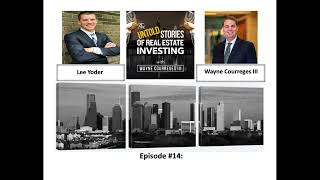
Podcast episode (recorded 2022-12-04) where host Wayne Courreges interviews Lee Yoder, a former physical therapist who left clinical work to pursue multifamily real estate investing full-time. Lee recounts starting with a flip and duplex (auction purchases), progressing to a 16-unit value-add (bought for ~$350,000, held ~1 year, then sold), and additional 8- and 10-unit projects. He describes joint-venture arrangements with family/friends (examples of equity splits), hiring a third-party property manager (paying ~8%), contractor vetting via the management company, surprises from deferred maintenance and tenant conditions, limited COVID-era eviction impact on his properties, mentoring/RIAs/masterminds that accelerated learning, and plans to syndicate toward 30–80 unit buildings (long-term 1,000-unit goal). Contact: threefoldrei.com, info@threefoldrei.com, phone 937-400-3044.
Questions this video answers
2022-12-04
threefoldrei.com
937-400-3044
Approximately $350,000 (purchase price for the 16-unit)
Just over one year
Chapters
Welcome to the Untold Stories of Real Estate Investing hosted by Wayne Courageous iii. A place where active and passive investors come to hear the good, bad and ugly of real estate investing. Our guests consist of experienced operators and investors who want others to succeed by sharing their stories. If you're looking to syndicate deals or grow your wealth passively in real estate, you've come to the right show. It's now time to sit back, take mental notes and enjoy next episode of the Untold Stories of Real Estate Investing.
Welcome to the Untold Stories of Real Estate Investing. I'm your host, Wayne Courageous. For our next episode, we're excited to have Lee Yoder. Lee was practicing as a physical therapist when he realized his true passion was building his own business and investing in real estate. He has taken this passion and considerable action to quickly build a portfolio with several small apartment buildings. Lee is the founder and visionary behind Threefold Real Estate Investing and he's committed to forging a path that will generate incredible wealth and opportunity for all involved. His focus is driving the business forward by forging new relationships with top notch professionals in the real estate world and bringing on more partners to invest alongside Threefold. Lee also hosts an exciting new podcast, the Threefold Real Estate Investing, which focuses on multifamily real estate investing while also focusing on pursuing better relationships with family and a better walk with Christ. Welcome to our show. Lee, how are you?
I'm doing great, Wayne. Thanks so much for having me on.
Yeah, I'm excited. Wanted to get to know you. You know, we talked a little bit before the show, but I'm really excited about this show. I think there's gonna be a lot of great info for our listeners and for you. And I keep building relationships. So. So tell us what we missed, where you from, you know, anything before we really dig into real estate.
Yeah, so. Well, you read there that I am a physical therapist. That actually ended a week ago. So big update for me. I was able to quit my job with real estate. You know, what the journey really has come down to for me is I've kind of experienced what I would call kind of both ends of the spectrum. For me, where I had a corporate job at one point, I wasn't doing any physical therapy. I was in the office, you know, kind of a typical like climbing the corporate ladder story. I really did enjoy my work. I liked the people I was working with, very competitive environment. I was making kind of significantly more money than I would have made as a physical therapist or than I was making as a physical therapist when I Came into the office and was doing more of a director of operations role. So on the job front in my career, I was really fulfilled. I was really challenged, and I liked it. But my wife and I were starting our family at the time. We had two young kids and she hated it. You know, it was not my. My wife stays home, which, you know, was a great blessing. It's what we prayed about, what we wanted. But that just means she's home with the kids all the time and she wants me home that much more. You know, if she was off working most of the day, then when she came home to be with the kids, like, you loving being home with, you know what I mean? Like, she's missing them all day. By 5 o', clock, she's been with our kids, like, way too much. You know, when you have young kids, like, it's just too much, you know, so she's like dying for me to get home. So when I'm working extra, she's like, just remember, every time you work overtime, I'm working overtime, you know, at home. So it just. For us and the way we were trying to do things, I mean, I wasn't satisfied with that either, Wayne. Like, I'm not just saying, hey, if it weren't for my wife, I'd still be in the corporate space. That's not what I wanted either. That's not the light that I believe God was telling us to. It works for some people, not us. So, yeah, so I kind of experienced that side of things. And then what I left to go back to was doing home health physical therapy, which is where I'm going into people's homes and doing physical therapy. Mostly the elderly population. It's a very laid back, very relaxing job. Pays very well. I mean, I take probably like a 25% pay cut, maybe, maybe 30% pay cut when I left, but still making plenty for us. You know, I get to make my own schedule. I mean, I didn't even really ask for days off when I wanted to take, like, just a day off because I could just move my patients around, right? So now my wife just loves it. Great for the family, great for the kids, and I'm just bored out of my mind. Eventually, like, I went back, I did it for a year, it was fine for a year. Got to listen to a ton of podcasts, you know, so that's cool. But, like, the job is not challenging, it's not fulfilling, and I just couldn't do it. That's not the way. That's not the kind of Job God created me to do. So I knew there had to be a change. And so that's what led me into real estate in the first place. And I can kind of get into that journey. But, yeah, I just feel like I've kind of had the experience of the corporate world and then a relaxing job where, like, I'm not fulfilled and it's like, great for the family. And I was looking for something in between where I could get the best of both worlds and. And I feel like we have kind of found that with real estate.
Yeah, Definitely have that entrepreneurial spirit. So why. Why apartments? You know, did you look at office, retail, industrial? Like, what. What got you into apartments? And maybe even why not single family?
Yeah, well, that's how I started. So I definitely want to go residential, like commercial, you know, retail and like office space or like restaurants, stuff like that. I never had any interest in that. I was always, my dad's in construction, my son summers off. I always did construction, you know, during college, stuff like that. So I knew I want to go residential. We did flip a house first, so we did that first. I always say, like, you know, I'm like, trying to convince my wife that real estate's the way to go. She's like, extremely risk adverse. She's like, no, no, your job is awesome. Let's just do this. But she knew I wanted more, so she was supportive and like, okay, let's try it. So she's like, you know, and me too. Like, let's just start small. So we started with a single family. We did a flip. The funny thing is, toward the end of that flip, when we're like hustling to get it done, she's like, this is just like you being back in the corporate world. And it's like everybody says, right, Wayne? Like, everybody says, flipping is just another job. And that's what we found out. It is just another job. Now, we did well financially. She thought we were going to lose money because she thought it was going to be a terrible thing. We're going to lose money. I thought maybe we'd make a little bit. We did fine financially, so that part was good. But it wasn't a good experience because I'm also telling her, like, real estate's this dream, right? Like, you don't. You work when you want, you can design it around your lifestyle and you make good money. And it was like, no, you make good money. It's just. It's also. It's like just like being back in the corporate world. So that's what shifted me and two Wayne. I was already heading that way because I listened to a lot of podcasts, I read a lot of books and so many guys and girls that I hear that I just kind of respect from the little bit that I know about them from being on podcasts. So many of them start out small and it just seems like all of them. When that question at the end of the podcast comes up, like, what would you tell your 25 year old self? What is it? I would have went bigger, faster, right? I would have went bigger and the numbers make sense to me. So started small, but just kind of knew right away, I want to go multifamily. Next we did a duplex and then we jumped into a 16 unit. So yeah, I didn't, you know, started small, but we jumped pretty quickly because I just always knew that's where I wanted to head. And I just felt like the people that were mentoring me through podcasts and whatnot and books were saying, you know, you can do it, just, just go bigger. The numbers make more sense up there.
So I know potentially you're exciting as like these 60 units or more. But I really would love to hit on that single family and the duplex I talked about with other, you know, people on the podcast because there are a lot of people out there that are doing single family and duplexes. Can you talk us through the good, bad and ugly of those? How did you find the property? Is it, you know, surely it's not like what you see on tv. So what was, what was it like? And then, you know, did you hit those? It sounds like you did hit the financial returns for the single family. But did you see the same and duplex as well?
So yeah, yeah, we do well. So the first single family we bought was an online auction like auction.com. so I think at the time it was called Zome X o M E.com and we bought that one on there and then I bought a duplex and then I actually did another flip just earlier this year. I always forget about that one, but we know and those are bought at the county auction. And that's one thing I would say, Wayne, is a great way, great place to find good deals. You can get multifamily there sometimes as well. The reason I think you can get a good deal, but what makes it difficult and anytime there's difficulty, that's where you can find a good deal, I think, is that you have to pay all cash. My county is within 30 days and most of the ones around here I think some others, you might have to pay everything up front. So my county, it's like you have to put 5% down pay of, and then you've got 30 days to come up with, you know, so you got to pay all cash. So that's what we did. We actually did it with a family member, you know, so just, just us and them kind of partnered on it. We gave them a little bit of return for the money and we did it. So that helps because then carrying costs are low. Right? I mean, just, you know, whatever you decide to split with your investors, maybe consider that high. But that's what I would suggest to do. Yeah, we did hit our, you know, hit returns on all of them. We did. We did well on all of them. Flipping in and rentals is totally different. So if you want to talk about, like, having single families and having duplexes as rentals, I think it's a great idea. I have no interest in management, like being a landlord, zero. So even the duplex, we did manage that ourselves. We had great residents, you know, very easy, but it still, you know, felt heavy. It felt like a burden. My wife was always, like, just wondering when their water was going to break, you know, and then just felt so bad for them, like, you know, it's not going to be good. And so that's not what we want to do. If you have any interest in managing, then I would stay small. I would, you know, single families, duplexes, squads, I think those are great. They're easy to finance because you can get a residential loan, you know, and you just can't scale. But when you're managing yourself, you don't need to scale as high. You can make really good returns in the small stuff. So I think if you want to manage or if you just, if you like your W2. So I was trying to work my way out of my W2, Wayne. Right. So I wanted to scale quickly. If you're looking at this, like, no, I have a good job. I just want to build up some assets along the way. And I would go single family or very, you know, residential, multifamily, 2, 3, 4 units.
So speeding up to the 60 unit. Did you syndicate that deal or.
Well, no, it was. Sorry, I missed What? It was a 16.
Oh, sorry. 16.
Not 60. 16. Yeah. So we, after that, yeah, we kind of, you know, big steps, but little. So not gigantic steps. So we did a 16 unit. Like, a month and a half later, we closed on an eight unit. And like a month and a half later, we closed on a 10 unit? No, we did not syndicate those. You know, the most we paid the 16 unit was only 350,000. So we still did a joint venture, either just one or two partners on each of those deals. I only put a significant amount of money in on one of those. On the other ones, it was like going to close family and friends. Hey, if you bring like the first one, for example, if you bring $100,000, they got 35%, I kept 55%. And then my mentor, I actually brought in on that deal, help. And he got 10%. Another one, like the 8 unit, close friend of mine, we both brought 32,000 to the deal and I kept 55%, he kept 45. Because I'm the one, you know, kind of doing the asset management. So. Yeah, just an example of how you might do it.
Are those more fix and flips? Are you going to hold those on? What's your strategy with that?
They were. The 16 unit we already sold, we held just over a year. It was a heavy value add, you know, kind of your typical mom and pop. They had a resident managing the place. They three vacant units that weren't even close to ready, needed a new roof. Common areas were terrible. So we were able to. And rents were really low. So we were able to really increase the value enough to flip that. And I do want to get into the bigger stuff, you know, we could talk about that. But because I knew that, I knew these were kind of going to be more flips, I had no idea that the market would be this crazy and that I would do it in a year. I was telling people like maybe a three year plan and we did it in a year because that's, you know, and how stupid this market's been. And then the eight unit, we're under contract and we should close by next Friday. The 10 unit, we're still turning around. It's been a longer project as far as just getting it filled up and cash flow has been terrible stuff like that. But I think probably in the spring we'll probably look to sell that one as well. Just because I have a goal of owning 1,000 units. And then I'll probably change my goal to 10,000 if we get there. But I always say I want to own 1,000 units, but I want to own it in 10 buildings, not 50 buildings or 100 buildings. Right. So, yeah, just trying to go a little bit bigger.
Has that COVID 19 impacted any of those deals that you had as far as getting tenants paying rent and such? Or has it Been.
No, it really hasn't. In my units, I mean, we had. You know, initially we had some people. Like, I think I had one resident. They're like, yeah, he says he just lost his job. He can't pay anything. And then unemployment kicked in, and he got caught up, no problem. So between, you know, I only have 34 residents. We sold the 16, but at the time, we had 34. I will say my property manager told me that when it came out that the government had. Or actually, it wasn't even the government. This is so weird to me, but the CDC said you can't foreclose on or you can't evict people, that they had more evictions the next month than they've ever had. Because you actually still can evict people. If they meet all these things and, like, they get an affidavit sign and they prove that they cannot pay, then the eviction is delayed. But you can't. You still file the eviction. It's just you have to wait till the end of the year to actually evict them. So they had more evictions. And then they said, you. Like, 15 to 20 people called immediately, hey, you can't evict us because of this. And, like, no, we actually can. And you're gonna have to go to court if you decide to do this. Like, if you go to court, if you do all these things. She said there was, like, seven steps. You may know more about it than me, but there's, like, seven steps they have to meet. So you still can't evict people. She did say they had gone to court and had lost against a guy that. That was able to prove. And actually, they didn't lose. Like, he just got a little bit of an extension and, like, hey, you need to get us more proof to prove that you can't pay. Like, one guy showed up to court, and he's getting government assistance. If you're getting government assistance, you can still be evicted. Because it's like, no, you do have the money to pay. The government's giving it to you. But in mine, no, I haven't had a direct impact.
Nice. So what's been the most challenging through all this that, you know, people don't talk about often that you think, yeah.
One thing that I like to talk about that's. That's been a real surprise is that, let's say in the 16 unit, we had three vacant units. And then, well, kind of two surprises. So one, we only raised rent $25. What we did is we just added a $25 utility bill back because we were billing back to utilities. But on top of that, my property management company always makes everybody get renters insurance, and nobody had it when we moved in. I think that's like eight bucks a month. Okay. So, yeah, maybe we're up to 33 bucks. Some people had pets, and they weren't paying for their pets. So we did add 25. You know, we would normally do 25 per pet or. I know, actually, I think it's like 25, 35, 45, and then that's all you can have. But we even people with three, we just said, you grandfathered in. We don't want to raise that much, so we'll do 20 or 25. Sorry. And then one lady even had like storage that was. That she was paying for. So we were charged for that. But anyway, some people's rent went up like $58. And so that was so where I felt like, oh, we're only doing 25. It ended up being a little bit more than that if you had a pet and the renters insurance, stuff like that. Also, we started cracking down on no smoking in the building. It was a little more professional about how you had to pay rent. You can't just hand it to the resident manager, slide it under his door like they were doing before. So all those things did lead to more people leaving than I thought would because, you know, it was. It was more than just a $25 utility billback. There were. There were other things. So a couple more people moved out than I thought. But the other thing that really surprised me was, let's say, I think, you know, like I said, we had three vacant, let's say maybe two more people moved out. So we had 11 residents that chose to stay. You know, through those changes, the amount of deferred maintenance of those 11 residents really surprised me because I thought, if somebody's living in this unit, it can't be that bad. That was incorrect. That was wrong. We went in to change a toilet for a lady, and it was only because we inspected and found out that some toilets were kind of running right, and we were losing a lot of water. So. And since we're paying for that, you know, we care. So we go in to replace her toilet, and she's like, hey, could you take a look at my sink? You know, it doesn't work. It hasn't worked since I've lived here. And I'm like, how long have you lived here? Four to five years. Has not had A sink in her bathroom. Well, I look at it, I'm like, well, you have it turned off. And she's like, why only do that? Because it leaks so bad. I'm like, it's been like this for four or five years. Like, you just don't have a sink in your bathroom. And she's like, yeah, so I just. I didn't expect that. I didn't think somebody would live and put up with that in a unit and not have running water. So stuff like that. And, you know, that's not a huge cost, but there was other stuff like that. Like, hey, my freezer doesn't even work. Okay. Now we're painting for a new refrigerator freezer for the. You know, for these people. I didn't expect that because I didn't think someone would live without a freezer, you know, so that was a big, big learning lesson that if you're taking over a building that just in general, you know, has deferred maintenance, and you better believe the people that are living there, they've let some stuff go or been forced to let some stuff go. You might. Because I would say, Wayne, like, there were for sure units that the person did not move out, and we didn't go in and give them their flooring. You know, we're not like, remodeling the unit. Just water heater, appliances, you know, plumbing repairs, stuff like that. A leaking ceiling. Thousands of dollars into those units. And that was definitely a surprise where we spent a lot more money.
So did you not walk the units before? Were you not able to get early access or, you know, access to spaces?
This was my first one. I guess I just didn't do the.
This is why we talk about it, though, because I think this is. This is exactly what the listeners need to hear, though, because.
Yeah.
You know, before you have your due diligence, I guess during an auction, though, a lot of times you're not able to see the property.
Well, sure. This wasn't an auction. No, no, no. We walked every unit. One guy wouldn't let us come in. We walked every unit, you know. Yeah. So we should have known that stuff. And then. And then the only way I would have changed that way is I would have just raised a little bit more money and just known that. So that's the only difference. Because I always say, like, when you're walking units, unless it seems like every one of them is bad, like, whoa, we have a systemic problem, I would say, like, that's nothing that's going to kill the deal. Right. That's not your big capex. But now when you get into 100 units, okay, if we're spending a couple thousand more per unit, then it's a huge deal. But again, it's. Well, I don't know, it might change your price a little bit. But for me on that 16 unit, yes, I should have raised a little bit more money and. And then it wouldn't have been surprised. Now this was very, I mean, we were very mom and pop owners, right? So I just ended up putting in some of my own money, you know, to keep it going. And again, it was a home run deal. We did, we did really well on it. But yeah, you just gotta. And I think my inspector probably found all that and I just didn't comb the report well enough to know that. So on. You know, we're under contract on a 45 unit right now. And that's something I did. I combed that thing in every single unit. I wrote it down. Just because it's like, I just want our property manager. I'm going to hand that list to them. Hey, go get this stuff done. Because like if it's leaking water, right, like, get that done. Now that's going to become such a bigger issue. If it's just a sink that's not leaking because they just turned it off, that person's going to move out. And now you've got a vacant unit that you could have resolved. So yeah, you're. It's a great point, Wayne. It's something people need to learn, learn from my mistake and you know, think about that stuff more and write that down and raise more money and take care of it right away.
Hey, one thing you mentioned earlier, which I really liked. Well, it's probably not something you like because you don't want a higher vacancy than what you projected, but you make a good point. Where you buy a property, the rent roll shows, I'm say 10% vacancy. And then the new owner comes and you actually, you know, make them clean up, you know, the exterior on their space or you, you know, you're looking.
Smoking in the building.
Exactly. All those things. Right, because it's a new, new owner. But you're doing the things that are needed to collectively benefit all the residents. Right. Or, and help, you know, future leasing. But when people are underwriting and they're like assuming that, oh, I've got a 10% vacancy, I'm going to continue a 10% vacancy year one, you really need to. And this is for passive, you know, investors that are passively investing too. When they're looking at a deal is if year one's vacancy, I mean, depending on the market location. So this is, I'm not trying to be too general, but the idea is, is that assuming the vacancy is going to be the same year one with the new ownership should bring some questions. Right. And so I mean really doesn't matter on the size of the deal. At the end of the day, if you're thinking only five units are going to be vacant, but 10 become vacant, so you know, it's a major hit to cash flow. So the other thing too is I heard you mentioned property management a few times. So did you hire a third party management company?
Absolutely.
Talk to us about that. Because you know, for a lot of those unit sizes, especially if you're trying to do it full time, you're wanting that fee and you're, you're trying to collect all that income. Why did you decide to get a management company and how did you hire the right one?
Sure, yeah. Like I said, I just knew right away. I've known really that corporate space kind of helped me learn this about myself. But I just knew that I am not a manager. I don't like to, to manage people like that. And I just didn't want to have anything to do with that. So frankly, I mean, I joke about this, I'm kind of not joking. Like I don't want my property manager to know this, but I would pay them 20% if I had to do what they do. I just want nothing to do with it. So sure, it is a hit to cash flow. I pay 8%. I think it's well worth it, honestly. And I wanted to scale. So to me, like the more you're in the business, you can't work on the business. Right? Like just that kind of general idea. So I just felt like that that's not something I want to do. I really do enjoy kind of being the GC on the project, like turning the building around. So I do like that part of it that goes away and then I can move on to the next deal because I'm not managing that property. You know, honestly, it was a small enough deal that I guess I took a little bit of a chance, but I just got referrals. I had a couple different people refer the same property management company to me. I did interview them. I did have them come out to the property and look it over and talk with them and talk to them a little bit about what would you do here, here's some of my ideas. But what are some of your ideas. So, yeah, just referrals for sure. Referrals are, I would say number, like even beyond an interview. Somebody can interview. Well, I would put referrals at the very top of the list and then, and then interview them and ask them kind of all the questions. I think you want somebody for me. I don't know, Wayne, I don't know how you feel, but I was going after some smaller ones. But I still wanted somebody that was managing a lot of units. And I've really, I think that way even more now that I've used them. I mean, this company, they manage like a thousand units. I guess it's still not huge, but for my market it's plenty big. And I mean for me to have 16 units with them, you might think, well, I'm only 16 of a thousand. That's true. And so maybe you can get a better service if you go somewhere. But what I like about them is there is one person in their office that manages the leasing. Okay, actually two. And then there's one person that manages unit terms. There's one person that manages just the day to day maintenance like a toilet. There's one person that manages utilities. Right. So these people are focused on that one issue. Now I do have to talk to different people. I still have one point of contact that I can go to, you know, Lori, hey, Lori, I'm having an issue with utilities. She would still go to her guy that does utilities and have him figure it out. But I like that one person manages each one just so. Because they're focused on it. Like if it's somebody, hey, I know I'm trying to get your unit lease, but we just have so many unit turns going on right now. Well, that's unacceptable. You know, but the person doing unit turns isn't worried about leasing. So that's not the case with them.
I think scale, you know, you're obviously doing, I mean, if you were, I mean you seem to be on a rapid buyer on, on buying properties, so scaling for sure and then finding something that you're, you know, yourself. So, you know, you don't want to be managing people or you know, you talk about, you know, your wife. My wife would have a really hard time telling somebody they need to pay their rent or, you know, you're being evicted.
Right.
She's. I would do, yeah, she's a counselor, therapist and she would, I have to remind her to bill her clients, you know, she's just not, you know, so, so talk to me about where do you go from here? What's your, what's your future? Are you syndicating? Are you bringing in more passives? What?
Yeah.
What's the next steps for you?
Yeah, we're definitely looking, we definitely want to syndicate. We want to go bigger. You know, the end goal, Wayne, is, you know, you put it at 60, maybe 80 plus, but even bigger than that, 150 plus. I believe in the economies of scale. I believe in having property management on site. I think a lot of people say, and I haven't experienced it, but I think I would agree that you get better management for cheaper, right? Like when they have somebody on site, I think typically some people say you're going to pay more like 4% but you got somebody on site so they're all the time. You can have a full time maintenance person, the bigger you get, stuff like that. So I want to own those buildings. I just, I feel like I can't compete right now with the amount of money that's chasing those deals. So that's where the focus has really been, more like 30 units to 80 units. So that's where we're focused right now. You still get some good economies of scale. You can still syndicate those deals, bring in some money, see some great returns. You know, raising rent by $25 still means a lot when you have 40 units. It means a heck of a lot more when you have 400, but it still means a lot when you have 40. I can still get to, you know, hundreds of units and not own hundreds of buildings, you know, so I don't have to buy that many. So it feels like a sweet spot. It's still competitive, don't get me wrong. But I feel like most of the people that are looking to buy a 50 unit property are still looking for a really good return. So there's a lot of people out there looking for that. But to me the reason I feel like I cannot compete on a 200 unit is because there are people out there looking at 200 unit buildings that do not care if they make only a 3% return. And I just for me I would go do something else. That's people that have already created their wealth, right? Like I'm doing this to create wealth. If once I've created wealth, sure, I'll buy a 200 unit apartment building that's only going to have a 3% return. Because once you've created your wealth you're really just worried about maintaining it, right? So I would just say once you get above 100 units and certainly once you get above maybe 150, 200 units. That's what you're competing against. And I'm not ready to compete against that because I'm trying to build wealth. So that's, that's where we're headed. 30 to 80 units. We definitely want to bring on more investors, let more people enjoy this. You know, we have the property management company. You know, right now we're in like the Cincinnati and Dayton markets of Ohio. We'd like to branch out. I'm networking a lot. I'm part of a mastermind, networking with good people like you, Wayne, where, you know, I would definitely look to take down a deal if I had somebody that I could partner with in that area.
Yeah. And I, I think with the, the size units and your management company, you're going to be, because you mentioned you like to have on site property management, but if you have several properties or, or the management company has properties nearby, you know, they can share payroll or share, you know, that manager.
Yes.
To go through there. So it, it's, I see a lot of active investors. They'll manage in house. And there's benefits to that because you control the, you know, you can do things a lot quicker, make those decisions a lot quicker. But there's also benefits on the property management side, especially if you've, you have, you know, apartments under 100 units where you may not have that one. Or, you know, the rule of thumb, at least here, you know, Texas, you know, for every 50 units, you have one on site staff member. Right. So if you have 50 units, there's one property manager. At two units, you've got one manager and one, you know, maintenance. But, but, you know, with the management company that, you know, you have and others that are looking, you know, for properties and look for management companies, getting in with those larger management companies, like you said, definitely helps. So from a risk management standpoint, do you, you know, when you have contractors on your property, how do you vet them? And you know, you, you mentioned even on your smaller properties where you've done huge value add, you know, how did you go through that bidding process? You said you like to be the gc. So what is that full process of, of vetting the contractor, comparing bids, insurance, etc. I think that's something that, you know, people that are not doing this day to day would love to learn from.
Sure. Yeah. So because I had done some flips, I had gotten a couple good contacts and honestly I didn't worry as much about the insurance as I should, but I brought a couple people with me that had to do stuff. But the way I do it today, Wayne, is the way I would recommend people do. I go through my property manager so I can have as much control as I want. But what, what? And so sometimes I just have them do it. But if it's something that I want to do, I'll say, hey, you know, just bought this building. I've got three units I want to have rehabbed. Hey, property management company, can you get me three quotes so they will quickly, boom, boom, boom, here's three guys they're going to be calling you. If I want to be out there, right, like, they'll just do it. But if I say, like, hey, I want to be out there because I want to talk to them, I want to know what's going on. So they'll have three different contractors that they have vetted, that they know are insured, call me and I'll meet them out there. And like I say, I can be as hands on as I want. I can be out there and tell them exactly what I want done and then I can be out there while they're doing it. I can say, hey, I want you guys to do this. And then I'm going to do the painting myself, because that's easy. And then I want you guys to do this. You know, you can, you can kind of decide. But with the property management company, it's been great. They have a lot of great referrals. I have found that the people they refer, honestly are exactly what I'm looking for. They do good work, not the highest end and they are very reasonable. So I've been very thrilled. But they're always up for getting me three quotes. I can sit there and just look at the quotes and say, I want to take this one and talk through that with them. And like, yep, I'll take this quote, have them rehab all three units. This looks good. And they'll do it. Or like I said, I can be as involved as I want to. So that's how I would go again. It's just another great benefit of having a good property. Yeah.
And do they sign the contracts directly with these contractors?
Yeah, again, it just depends. Sometimes I'm working with them, but I now it's just like, yep, through the property management company. So they'll pay. Now the only thing that I don't love is then the property management company doesn't really do a great job of sorting that out as a capex expense. If I want it to be, you know, like a unit turn, you're just Going to consider that as part of the expenses. Right. The typical monthly expenses. But when you go in and you want to do some big capex, like, hey, we're coming in, we're spending $50,000 within the first few months, we're going to redo the common area stuff like. Right. And we're going to call that capex. When they send you the monthly report, it's just going to be in there. That's all mine. Does it anyway, so. And it's just an extra step where I have to pull it out and say, no, this is capex. We're going to pay for that. You know what I mean? We're going to pay for that. So. Because what it'll look like, Wayne, is, hey, the first two months, hey, we lost $20,000 a month, you know, sorry about the distributions. Well, no, it's not true. You know, we 50,000 of that is coming from our capex. So instead of losing, you know, 40, we actually made 10, you know, and so we're actually going to do a distribution. So. But yeah, they pay for all that and contract. Perfect.
You talked about a mastermind earlier. So as you're growing, you're getting more experience and more partnerships and such. So has there been anyone? And I'm a little over the place a little bit, but one thing that I've noticed with you compared to some of my other, some other people I know is that you truly are that entrepreneur going after it and you're, you know, you're finding the properties, getting your friends. I haven't heard anything about a mentor. Has there been anyone mentoring you during this or was this all just podcasts, books and you just going after it and sort of learning as you go at this stage in your game?
Yep. So I would say the flip and buying the duplex. I had very little mentorship, just jumped in. I'm a risk taker and yeah, just kind of like, you know, the whole like I'm like the jump and build the parachute on the way down. So I did that. I don't think I. Yeah, I probably would have still bought. Ended up buying a 16 unit or something eventually maybe it would have taken me longer, but that is when I got the mentor. So I ended up joining my like our local, the Cincinnati RIA Real Estate Investment association and, and there with them there's an apartment syndication focus group. And the leader of that group, he's teaching us how to underwrite. So he gave us just a really pretty easy, simple underwriting tool in Excel. So I start Jumping on. I didn't mention this, but that first deal, I bought on LoopNet, or bought off of LoopNet, right? Where deals go to die. That's where I bought my first one. So I'm just running. I'm just on LoopNet, underwriting deals. And then that first deal I ended up, I went to the guy leading that group and I said, hey, what do you think about this one? He just walked me through the whole thing and, hey, okay, I think I'm ready to send an loi. How do I do that? Here's an loi. Fill this out. Send in. Hey. They counteroffer. You know, he walked me through the whole process of getting it, so he made me feel so much more comfortable. And like, I. I thought I mentioned this, but I might have skipped this. I gave him 10% of that first deal because I felt like I owed it to him for sure. But then also I kind of wanted him to, like, have reason to stick with me. Right? Like, hey, you're in on this deal, so can you keep helping me? And, man, that was invaluable. It was really cool. I was able to pay him, you know, a good amount of money because we just sold the property. I mean, I would. I would have paid him, you know, even more. And so, yeah, I did have a mentor for that one. I just joined the Mastermind recently, and I've had other people that I've talked to, but, yeah, he was. And he was an unpaid mentor. Like, he would have done all that. I could have closed on this deal and given him nothing. He asked for nothing. But, yeah, I. I tell him I couldn't have done it without him. I probably would have forced my way into it, but, man, it helps so much.
Yeah, I just. I encourage anybody that's looking to do this. I mean, there's. So. There's a lot of meetups out there, and a lot of you can. You can learn so much. Those meetups and then these. These groups that you can start small and do it yourself, but as you grow, you're going to want somebody who can have that experience and then as you did, and I think it's very wise is give up a little bit of your ownership share. So that way when things go wrong, you have a resource who has some skin in the game too. Right. To help you and guide you through.
So, yeah, and if you have to pay for it, I would do that too, because I got him. And maybe your local re. I mean, check your local rehab if they have somebody. Like, I had great use Them. And I almost did it. When I joined the Mastermind, I was about ready to pay for more mentorship. So if you can't find somebody like that, that's still not an excuse. Your first 10, 20 grand you save up, I would put into a mentor. I think it's so worth it. What that probably means is you have 10 or 20 less that you get to put in the first deal. So it's like, like you said, you're just giving up a little bit of ownership, but, man, it gets you going and probably a year quicker than you could do it on your own.
At least it opens up those contacts. I mean, I tell you, you know, it's exactly what I did. You got with guy with a mentor, you know, paid the money, but built the relationship, and it's opened access to the brokers, the lenders, property management company, et cetera. So it's a little money up front. To your point, it's less money you have in your deal. But as you scale and grow and you go back to what you said earlier about when people ask the question, what would I tell myself 10 years ago when I first started is scale faster. It's all about education. It's all about how do you get educated and how do you partner, have relationships. So pretty important aspect. So what are some of the habits? I like to ask this too is like some of the routine habits that you do to stay focused and keep yourself motivated. And I asked that because. And I find this personally, where you. I underwrite so many properties and then you get one, you're like, oh, this is good. And then you have. So it's that emotional roller coaster, right?
Yeah.
What have you done to, you know, keep motivated? Obviously this, the success that you're seeing financially and the freedom of your time and such is helpful in your scaling, but it's a grind, right. And it's a constant. So just curious, what do you. What do you do on a routine basis just to stay motivated and keep going?
Yeah, I think that's so important. One of the books I recommend and one of the principle from that book is something I just talk about a lot is the book the Compound Effect and how. The idea behind that book basically is like to see compound exponential growth. And to me, kind of what you're talking about, buying an apartment building is like that. It's that compound effect where you do things every single day and see nothing from it. You think nothing's happening and it might be a year, but everything you're doing is actually building up so buying an apartment building and then you take off and then you buy another one. Another one. So I say all that to say, like, yeah, it's really hard because you have to work for so long until you finally get that payoff. And so I'd say a few things. I mean, I struggle with it, so I'm definitely not the guy that would teach on it. But keeping a schedule and just like, I've heard people say, maybe brain interner biggerpocket says this, but, like, fall in love with the process. And even if you don't fall in love with it, just commit to the process. Don't commit to, like, okay, I'm gonna. I mean, you might. You should still have goals. But, like, more than saying, like, I'm gonna buy, you know, a hundred units in the next year, it's more like, how many per week. I'm gonna talk to three brokers per week. I'm gonna underwrite 10 deals per week. I'm gonna reach out to potential, like, three potential investors. And I would just stay true to that and just know that if you do those things, you will buy an apartment building, but just don't focus on the end goal. And I'll tell you, I've kind of joked with people and said, like, I listen to podcasts still a lot, and I still have so much to learn. So I'm listening to learn. But bigger than that, I think I'm listening to them just for the motivation of exactly what you said, Wayne. Like, I'm listening to the people that talk about, like, how long, like, how many deals they're underwriting to finally find one. How long it takes. You know, you've got guys on. The guy that leads. My mastermind has not bought a deal in a year and a half. Now he's in a position where he doesn't have to, but, like, he wants to. And he's just not finding the deals that fit his criteria. So talking with people like that keeps me motivated, you know, So I think that's a big part of it, like, just being out there talking to other people. I think that's another reason why networking is so important. It's just that motivation. A coach will do that for you. Hey, you know, you're doing the right things, like, and if you're not, then do that. But as long as you're doing the right things, you are taking big steps toward buying an apartment building. It's just going to take a long time. Most of the time, I'm all about.
Vision boards, but to get To a vision board, you have to break out. So I always say a goal without a deadline is only a dream. And I, and so I'm all about spreadsheets and goals and such. But it's going back to your point on, okay, this week I'm going to reach out to three investors or I'm going to underwrite two or three deals or what have you. And every week you have that and it's keeping yourself accountable. So I love, I love what you said. There's. All right, so shifting gears as we, as we close up passive investors for those that are listening, that invest passively. We've talked a lot on the, obviously the active side. You know, what do you, what do you recommend to them on, on investing in their first deal and, you know, how do they vet sponsor and you know, just curious on your, on your thoughts and advice for them.
Yeah, yeah, I think vetting the sponsor is number one. I heard, I heard somebody I can't remember that I really respect and, and they were talking about this and they said, look, it's definitely number one is vetting the sponsor. So, you know, if you know the person, you know, the people that invested with me so far are just betting on me and they're betting on my integrity. So, yeah, you know, if you know the sponsor and you know they're a person of integrity, then I do think unless you buy terribly wrong, if you're willing to stick it out, you almost can't lose, right? Like, they could tell you you're going to make 10% on your money and you only make 5. And so I guess that is a loss, but you're not going to lose all your money. Like, your money's in the property. You know, you always own the property. And that's why you and I love multifamily. Like, there's just so much like the worst, I always say, like, really the worst case scenario when I'm underwriting is that we actually get less rent than we think. Like, we actually have to lower the rent and then, sure, it's going to affect the returns. But, like, unless everybody moves out of an area, unless you bought in Detroit when just everybody moved out, there's always people there to rent. You just might have to lower your rent to be competitive. So I don't mean to say that the deal can't go wrong, but if you have a sponsor, it has integrity and then that they know what they're doing. I mean, the people that invested with me also knew that I had been in real estate for A couple of years and had just been all in on it and it had some success on smaller stuff. So certainly a track record is huge. I mean, it's easy to invest with a sponsor that doesn't have a track, that has a track record. So I mean, I feel like that's kind of an obvious one. You know, if the person has integrity and they have a track record, then you know, go for it really. I mean, you should vet the deal. But again, it really comes down to the sponsor. If they know what they're doing and they have integrity, you're really just betting on the jockey at that point, not the horse. And then it helps to know a little bit about the market at least. I would do some, a little bit of market research. I mean, you know, hey, if they're invest in buying a property in Memphis, you might want to get an idea, you know, what's, what's population look like in Memphis? Maybe do a Google Maps search, just, hey, this neighborhood looks pretty shady. And then again, if you trust us, like I would, I would just do all that and come up with questions. But if you trust the sponsor and they have a track record, then give them all those questions and if they have good responses, then they should be able to put you at ease and then you should be feel comfortable investing in the deal.
Love it. All right, so last question of the show. Well, there's actually two more. But the last question before I ask you to say any final comments is what is your proudest moment in real estate investing so far?
I would say my proudest moment has been the slow conversion of my wife to be more open to it, certainly quitting. So it's been a dream. I'm definitely an entrepreneur at heart. I mean, I'm like a weekend, so I'm still learning like being full time anyway. But my wife has come a long way and kind of a side note to that, like her parents were the ones that invested on the first deal with us and she is super conservative because of them. They had never invested in anything. I mean, her dad has a 401k, kind of one of those things, like it just happens automatically through his job. But like beyond that, zero investments. I mean, they have a lot of money in the bank and, and they've just been super frugal. They had their house paid off and so they're earning, what is it, 0.5% on their money. They're not keeping up with inflation. So to see them invest with us and then make a great return and my wife see that, and obviously she was really happy for her parents and really happy that worked out because she's freaking out the whole time. And for her to see that. And it really was this first deal that gave her parents a great return on the money. That's something for them that the government is making sure doesn't happen in your savings account. They want you to have no return on your money so that you don't save money. You know, we were able to give them a great return on their money. My wife and I, you know, we did very well. You know, put my wife at ease. And then for me to be able to quit my wife to be comfortable with that, yeah, that's. That's been really cool.
That's a dream right there. So congrats to you on that. How can listeners reach out to you, find you and hopefully connect?
Yeah, I'd love for people to reach out to me. I think it's probably obvious that I love, you know, talking about this stuff. So you can reach out to me on our website. We've got a website, it's threefold rei.com you can email us. It's the same thing. Basically, it's 3, 4, or, sorry, infofold rei.com and then we actually have a phone number on there that you can call 937-400-3044. That's what I was just looking up to make sure I got that right. But yeah, reach out to us in any of those ways. We love talking and like you mentioned at the beginning, when I do a podcast as well, threefold Real Estate Investing. So you can check that out.
Hey, Lee, I really enjoyed getting to know you and hopefully keep connecting and building a relationship. If I can do any more, you just let me know. You have a great rest of the day.
Yeah, you too, Wayne. God bless.
That's all for this episode. We hope you subscribe, share and leave a review of the show. For more information about passively investing in multifamily apartments, check out Wayne's free ebook by going to creipartners.com eBook. Also, follow us on Facebook by searching creipartners.
More from Wayne

September 2026 Meetup: Investing Ahead of Growth: The Bryan–College Station Opportunity





May 2026 Meetup - Apartment Complexes & Passive Investors: Opportunities & Risks


March 2026 Meetup - Reading the Market: Economic Indicators Every Investor Should Know


February 2026 Meetup - Syndication 101: How CREI Partners Structures Deals for Investors

Build-to-Rent (BTR) Communities Explained: Why Investors Are Paying Attention