Matt Teifke -The Untold Stories of Real Estate Investing- Relationships, Buy, Rehab, Rent, Refinance
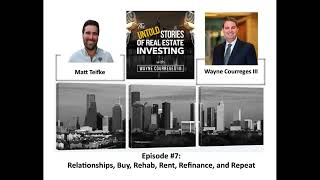
This content was created by Wayne Courreges III, CPM®. This content was uploaded by Wayne Courreges III, CPM®. This is a YouTube podcast episode titled "Matt Teifke - The Untold Stories of Real Estate Investing - Relationships, Buy, Rehab, Rent, Refinance" (created 2022-12-13). It is an interview-style conversation hosted by Wayne Courreges III, CPM® with guest Matt Teifke. The discussion covers Matt’s background and business (Austin-based brokerage and property management), value-add real estate strategies (BRRRR), creative financing, wholesaling and deal sourcing, underwriting and market/rent analysis, contractor vetting, property management and rent collection during COVID, syndications/passive investing, partnership lessons, and the importance of relationships and networking.
Chapters
Welcome to the Untold Stories of Real Estate Investing, hosted by Wayne Courageous iii, a place where active and passive investors come to hear the good, bad and ugly of real estate investing. Our guests consist of experienced operators and investors who want others to succeed by sharing their stories. If you're looking to syndicate deals or grow your wealth passively in real estate, you've come to the right show. It's now time to sit back, take mental notes and enjoy next episode of the Untold Stories of Real Estate Investing.
Hey, everybody. Welcome to the Untold Stories of Real Estate Investing. And this is your host, Wayne Courageous. So for our next episode, we are excited to have Matt Tiefke with us today. Matt is based out of my hometown, Austin, Texas. He started his real estate career at the age of 18 and currently is the broker of Tyfke Real Estate and part owner of Stone Oak Property Management, which owns and manages multifamily and single family homes. Matt graduated with a master's degree in real estate from Texas A and M. He has his own podcast and YouTube channel and is passionate about value add real estate opportunities. Welcome to our show, Matt.
Hey, man, thanks for having me on. I'm blessed to be here and it's Monday, so we're gonna go get it today. But thanks for having me.
Yeah, absolutely. I'm excited to dig in on real estate. And then one thing I've noticed about you is you've done a really great job building the brand. So I'd love to talk about how you've built the brand and real estate. And prior to this podcast, we were talking about, you know, your multiple businesses that you source that all funnel back into to real estate, which I know is your passion. So I'm sure I missed a few items on your background. Is there anything you want to add to introduce yourself, man?
I'm just entrepreneurial and I've taken a big bet in the last five years on value add and got a lot of this stuff, actually, truly from Gary Vee. You know, value, value, value and just hustle and commitment. And so, you know, I could go all over the place on where my passions are, but yeah, I mean, ultimately it's a real estate passion, and we're trying to build a brand and be able to capture leads on all aspects. And my goal is to make money on every aspect of real estate and I want to train our agents to be able to do the exact same thing.
And you have. It's a family business, right? Your wife is part of the business. And how do you all divide up Roles and managed to keep marriage happy while working.
Yeah, man. So we both, we both started when we were 18. She was working at the same real estate company that I was working at in Corpus Christi where I went to college. And so we've always kind of just had this work life relationship and we were a little bit different, I think in some senses where we don't look at it as work or, you know, we're off on the weekend. It's just this is our lifestyle and we might go on a walk in 20 minutes and then we might be working late tonight. So we've just created a lifestyle for ourselves that we love. And she is a full time. She's a partner but also an employee at Stone Oak Property Management Company. We have about 750 door single family and some small multi family that we manage and she works full time as a property manager at that company.
Got it. Was she with Stone Oak prior to y' all merging?
No, she was with our company Tree and she really helped build that to the point where we merged. And then she took off two months because we're having our second kid. And now literally three days ago, she started back full time.
Nice. Well, it's exciting, you know, having young kids myself. It's fun taking them to the properties and having them being part of real estate. Was that part of your background growing up?
It was, yeah. My mom was a single mom. She. I remember she was actually cleaning houses and slowly over time, she started owning houses and she would buy, I think one or two, maybe three or four per year, depending on the year. And she's got 16 rental properties at this point and she still works a full time job. And they're all rented out single family homes around the Austin area. And I saw how that can change somebody's life. It didn't change it for her immediately. It still doesn't. She doesn't collect any money from that. But she made a huge sacrifice and in five years, they'll all be paid off. At that point, she can just cash flow on those properties. And you know, she always told my brother and myself that those are properties that she was going to pass down to us. And so, you know, not that I 100% was counting on that, but I was always thinking, how do I take this business and grow it? And I think she's at a point where she probably won't give those properties because she married someone new and that person will probably get the properties. But it just got my mindset thinking about real estate and seeing how that can Change your life and how it works. And So I was 14, 15, 16 years old, and I was actually working on the houses with some of the contractors. And I just was so passionate about this is the aspect that I want to take to set myself up in life.
Yeah, I mean, so having that experience with your mom, you know, early age and then 18, getting your sales person license. So you were going to school at A and M Corpus Christi and also doing like house real estate sales on the side.
Yeah. So I was my, my sophomore year, I got my license and I stopped caring about school. I just was focused on closing deals. I was trying to network, brand myself, market. And I loved real estate and I don't do this by any means anymore, but I was wearing a suit and tie, going to class, and I couldn't wait to get out of class to go show properties. So I just, I loved it, man. And I was lucky to pick it early on in life and just stick with it ever since.
And then after your undergrad, you went to Texas A and M at a college station to get your master's in real estate. What was the trigger on that other than, you know, wanting to learn as much as you can about real estate? Was there reason why you felt like you needed that master's in real estate to do what you're doing?
Yeah, I mean, just along the lines of what you said. But on top of that, knowing that I wanted to be in it for a long time, I guess I'm competitive in a sense. I don't know if that's the exact word, but I've always tried to be as good as I possibly can, always try to be better. And so knowing that I wanted to be in the real estate business for 50 years, I thought the way to set myself up is to go and get the best education that I can find. And for me, that was Texas A and M. And I just felt like it would be a really strong base or support to go grow my business over the next 20 years.
Yeah, well, that education, I'm sure sets you up for a great foundation. Talk to us about like your first single family investment purchase. You know, what were the hurdles lessons that looking back, you had wished you had known going through the process?
Yeah, I mean, the biggest thing was trying to get financing for real estate because I always had the passion to own real estate and I didn't always have the ability to get lending for it. I had the money for a down payment, I had good credit, I had the knowledge and expertise on how to run property Flip property. Because I just studied it hardcore for a long time. And so it was just trying to figure out, how do I get financing, how do I get capital? And my first deal was owner finance. So that was because I couldn't get a loan from the bank. So I've always had to. I started off with having to figure out creative ways to own real estate. I wish I would have known more about creative real estate, but it's easy to say now. Just like going through that process of this bank won't give me a loan, but who will? Okay, this private investor will, but the rates are too high. Maybe this owner will at a lower rate. So I guess the only thing I would have changed is found some great lenders early on that I could have stuck with and had been doing deals with for 10 years at this point.
Yeah, and I think with the creative financing, you know, a lot of people are not thinking about that. They think the traditional going to your, you know, if it's a single family home going to a bank, make sure you have, you know, enough down payment, you know, going the very traditional route. What other creative ways, you know, for those listeners out there that, you know, are similar position where they're still starting or they're just starting their real estate path and are not, especially with COVID and, you know, banks being definitely more conservative and less risky, even though we've seen over the last, you know, 10 more years where the banks have tightened it up and done a much better job of not overstretching people that are lending. But what other creative ways have you seen that your investors or you yourself have used to buy properties?
I mean, there's so many options. I feel like there's options that I haven't even thought of or people haven't even thought of. Maybe I'm wrong. But, you know, you can do owner financing, you can do private money, you can do hard money, you can get a community bank, you can obviously go the traditional route and then you can do joint ventures. You know, you can partner up with the owner of the house and bring half the money of the equity and own it together and split the profits a certain way. You can go find a partner that will sign on for the loan for you and you bring all the capital. And however you work those out, that's where you can get really creative. But yeah, one of the big ones that I like that people don't really talk about that often is you run into a homeowner that wants to sell, they can't get top dollar, but the house needs 25,000 in work, and they don't have the 25,000. So I'll give them the 25,000. I'll take a 5 or 6% interest on that 25,000, and then we'll split the profits 50. 50. So that's. That's a cool way to go about it.
Yeah, that. That is a great way. And then in Austin, where there's just a lot of money flowing in, is it harder to do those creative financing since there's a lot of cash purchases happening?
Yeah, it's hard. You can't. I don't know if you can compete against cash. Maybe you can. I mean, there's all different, you know, variables to manipulate to make an offer attractive. But yeah, Austin, this is a. It's its own unique market where I've had the saying, and I. And people hear this all the time, find the deal and you can find the money. I agree with that. But I also think that finding the money is not as easy as. As that statement is made out to be, because, yeah, there are people that will give you money, but what if they want 90% of the deal? Right.
It may be real expensive.
Yeah. So, you know, and if it's a. It's a huge deal, 100 grand, 200 grand that you can make, that could catapult you five years ahead or a couple years ahead. So you don't want to miss out on those type of opportunities. So my thing is constantly be building relationships. I'm a huge networker, huge relationship guy. So you have to build those ahead of time, because when you have the deal, it's too late. That's when you're going to get the deal, where you're going to give the guy 90%.
Right.
I'm here to be a resource. People can tap into that. I'm a local resource every way I possibly can be. But yeah, I mean, finding the deal is the hardest thing. That's the biggest challenge in Austin. And then finding the money is also a challenge. It's not easy. And so you want to be building those two things at the same time so they're prepared when you're ready to go.
Yeah. And where do you recommend people go find those relationships? I mean, obviously you've mentioned that you're a resource, and I would love to talk more about your mentorship program and what you're doing, and you're putting so much free education out there to everybody throughout through your social media platforms. But what other places can they get the resources that they need?
Yeah. So I think right now with COVID and everything, you gotta cancel out the networking type stuff for the most part. I'm sure some people have some stuff going on, but that was a big one. You know, I would go to all the meetups, and then for me, it's on Facebook. Anytime I see someone's name pop up two times or even one time, I'm sending them a message. I'm trying to buy them coffee, I'm trying to buy them lunch. I would have two or three years where I would have three coffees or four coffees every single day. And so that's just a huge commitment to be building that investor base. That way you can find people on bigger pockets. You can find people on YouTube, you can go find people on the MLS that you see have sold a lot of deals or constantly have listings. You just got it. My big thing is planting seeds and keeping lines in the water and as many as you possibly can. I've done all kinds of hardcore stuff where we'd send out 60 offers a day. I would email 250 agents a day. And so I would just come up with these ideas and just start, just start going with it. And the biggest thing is the follow up. You can't just do it once. You have to follow up and you have to build real relationships, really get to know people. Every time you get to know someone, ask them how you can add value. And if you have this mindset and you do this for long enough, you're going to build a really, really big network. But I guess back to the basics is Facebook, some of these real estate groups. There's probably 20 Austin real estate groups and whatever market you want to be in, there's real estate groups. Just start talking to the people. And every meeting usually leads to another meeting. Hey, who else do you know? Who else can I help? Who else do you think I should talk to? And you just start getting in this rhythm with it.
Yeah, that's all great advice. In the market right now with supply and demand of homes, I'm hearing that there are definitely buyers out there looking, but the sellers are a little less right now just with not wanting to move. Is that accurate? And are you seeing a potential housing bust as the government potentially ends their rent payments? Or not rent payments, but financial assistance to those that are in need. And would this be a good opportunity for investors? You know, how are you seeing the market?
Yeah, I think, I guess to answer your first question, yes, there's a low level of inventory, so there are more buyers and Sellers. I'm not seeing any sellers selling at any major discounts. So I think people are kind of in a pause holding mode and the inventory is so low that people are getting multiple offers still. I had a friend that listed a property and they literally sold it for 100k over ask 15 multiple offers. That's crazy. And so, yes, I do think there's some things coming down the pipeline. Mostly my mindset is with the furloughed payments. I think people aren't going to be able to make those big chunks. I don't know how many, but definitely some. And then who knows if the government's going to do another stimulus package. That's to be seen. And then I view. I'm so zoned in on Austin, Texas. This, like the Austin MSA is where I choose to build all my relationships and know the market and there's positives and negatives to that. I'm missing out on other markets and this isn't really a cash flow market, so that makes it super challenging. But there's a reason I've zoned in on this market. You know, I'm lucky to be from here. And I think even if I wasn't from here, I would pick this market because it's all about the jobs, jobs, jobs, jobs, jobs, jobs. And we're still getting jobs. Amazon, Google, Tesla, somebody's announcing a big lease every week or new property. Round Rocks got huge developments coming in. And so I think those jobs here in Austin will offset any dip I do. Everyone says if anyone's telling you what the market's going to do, they're guessing. And I believe that too. So that's my guess. But I'm making a big bet on Austin and everything I personally do is with the 10, 15, 20 year mindset, everything. So yeah, maybe there's something that happens in the next five years. But 20 years from now, I see Austin MSA as being way bigger and way more jobs and way more opportunity because, you know, just look at Texas one. Texas is bringing jobs in and then everyone knows Austin's the coolest place in Texas. So it's a good place to be.
Yeah, and the growth, I mean, we were just talking earlier when I would go to camp in the summers in Round Rock, it would, you know, it just. The development wasn't there. But now you're seeing the development continuing to expand outside the city limits. Austin, San Antonio, that growth corridor is crazy. And then as these new companies are moving in, it does make Austin a very desirable place for sure. So I Think you've bet on a good market and it is nice that you're from here. Not a lot of people can say they're from Austin. I've noticed.
Yeah, it's a blessing, man, for sure.
So let's talk about the bridge strategy. That's the buy, rehab, rent, refinance, and reprocess. Can you tell us about an experience you had with this and, you know, what were some hurdles and challenges that you went through?
I think the biggest hurdle is finding the deal in Austin. In other markets, San Antonio, Killeen, I think it's a lot easier, but the strategy is. My strategy is hard money. 10% down. Buy the property significantly below value, add the value. Ideally, you use the hard money. The hard money's money to rehab the property. And so you're, you know, you're in it for 10%. You go add all this value. You get it leased out, refinance is six months later at the new value. If the loan that you're trying to take out at 75% LTV is higher than what you paid, then you get all your money back. And sometimes you can even make money on the deal. So the challenges for people are going to be getting the right financing where you can move quick, have low closing costs, have a good interest rate on the hard money. Every time you borrow hard money, you can. You can get rates better over time. I started out at 12% with three points, and then I got it down to two points and 10%, and now I've got it at one point and 7.5%. So in some ways, it's not even hard money in some people's opinion. And then having the constructor, the contractors that can knock out the work and do it quickly, having the management systems to get it leased and to get it managed, and then having the lender on the back end to be able to refinance it. So you want to get all those relationships set up. You want to have efficiencies on all of them. If you're overpaying 10 grand on construction and 3 grand on your points and 3 grand on the backside, that's 15 grand. That could wipe out the BRRRR strategy for you. So you got to understand the process and all the pieces that are going to be in place, contractors leasing the loan, how you're gonna buy it, how you gonna sell it after you do the brrrr if you're gonna do that. And what people don't sometimes realize is anytime you're pulling money out on a refinance, you're not taxed on that as a profit. So that's a huge benefit to use. And Burr strategy is amazing. Everybody wants to do it. It's very hard to do in Austin, Texas, but it's possible. And I think I've done it six times and I want to continue to do that as much as I can. But you really have to find significant value or create value to be able to make that work.
So when you're finding significant value are most of the deals that are the six. I mean, how many of those were off market properties that you purchased?
Half of them. Half of them were on market. I find them from everywhere. I make offers on mls. We have real estate agents that know what we're looking for, that are on our team that will send us deals. Back to building the relationships. I meet and try to meet every wholesaler I can. So I get on their list, so I see those deals and just back to having lines in the water. You're just having as many things going on as you possibly can at the same time. And it's a hustle and it's a grind and you try to capitalize on all the ones you can.
Yeah. I think anybody that's been listening to this podcast since we started in June. Relationships, relationships. You know, it gets brought up every single time. And if we focus on the buy portion of the brrrr strategy, you know, you talked about wholesaling, so talk to us a little bit more about what wholesaling is and, and why it's important when you're looking for, you know, opportunities at value.
It's a source of deals. And wholesalers do everything that they can to find below market properties. Yeah.
So they're doing that. They're doing the groundwork of doing mailers, doing calls, et cetera, to find those sellers that haven't put their house on the market.
Is that right? Yeah. Door knock mailers. Look at the eviction list, look at the utility shutoff list, absentee owners, withdrawn listings, anything you can think of to get a hold of somebody that might be motivated. List stacking, where you find a list of divorced and utility shut off. And you take the people that are on both lists now, that's the new list that you're going after. So wholesalers find value. You can do the same exact thing yourself. You don't have to use a wholesaler. You can, you can do the same thing. There's not a lot of secrets in it. It's just consistency and putting in the work. And then they put a Property under contract and they'll mark it up and they'll make the spread and they'll sell it to you and they'll either do a double close or an assignment. Sometimes you can partner with the wholesalers and say, hey, you know, because people are wholesaling a lot of times because they don't have the capital to buy real estate so they're trying to make the quick capital. Sometimes people have tons of money and they just love the wholesale business. We have a wholesaling branch at our company and so we're constantly sending out offers, we're sending out mailers, we're cold calling, we're getting everything we can to find deals. If you're an investor, you want to be on every wholesalers list because you got, you could probably find 100 people doing that and they're going to be finding a couple deals a week that they're going to send to you that can be on your radar. And you got to know how to work with them. You got to be able to move quick. Because a lot of times wholesalers have a 10 day close or a 15 day close. Sometimes they'll have a 30 day close. And building a relationship with them is critical. So they know who you are when they call, they know that you can close and maybe they'll give you a little bit of preference on giving you the deal instead of someone else if they like you.
Yeah, I mean all that's really great. But once the deal actually comes to you, I mean, how do you know how to underwrite? I mean as the properties get larger, it becomes a little bit more sophisticated and you know, a lot more spreadsheets, but just sticking on with single family. How do you find out those market rents? And I mean Zillow and Julia, when my wife was doing real estate in Houston, she did it for a few years there. You know, that wasn't very accurate a lot of ways. So how can someone know like, hey, I'm actually going to make money at this or I mean, I guess would the short answer be just find a good realtor? I mean, what are your, you know.
I think the short answer would be know the market.
Yeah.
Or learn the market. The more you know and the more you understand, the more things you see, the better. That's another value of being on 10 lists. You start to see what the deals look like and you got to get on the mls. You know, you can find a good realtor. Absolutely. If you are a realtor or broker and you have MLS access, that's huge. But know the market. As simple as that, man. I. You could point out a house anywhere in Austin and tell me the square footage and the bed and bath count and I'd be very close on what it would sell for and what it would rent for. I just already know it. So you got to get to that point where you know it. That way you can move quick. But yeah, a realtor is obviously a great source. You know, Zillow, Trulia, these websites are actually getting more and more accurate all the time. So that's just one tool to use. Look up the appraised value, see what else is available for sale, for lease. Just kind of just. You got to engulf yourself with the market and the more you know it, the quicker you can move, the better you get. Yeah.
And all this work, that's just for the first, that's just for the B in the brrrr strategy. Right. So it's a lot of work, a lot of grit. It's not a lot of glamour when you know, we're watching HDTV and you know, the house, we, you know it, there's a lot of work. So let's get to the rehab. So you see on TV a lot where a lot of people are doing their own renovations and that's day one times money. And you know, going back to that relationship of, you know, having those contractors, you know, how do, how do people vet good contractors and make sure they get this rehab right in this strategy?
Yeah, you got to check referrals. You know, you try to build these back to what you said, relationships. We just released a video today on, or we just filmed one today and we're going to release it on our channel. But you know, vetting them out, understanding who they are, understanding the communications up front, like you gotta detail out with the contractor how you plan on communicating with me. That's a huge part of the process. Looking at their past work, seeing their work. And once you just kind of go through these things, you gotta jump in, you gotta do the most due diligence you possibly can. You gotta talk to them, you gotta meet them at the property, see how they seem like they operate and then do the back end research on projects, referrals if you want to. Maybe they'll let you do a background check. Right. And you know, just to be honest, like on this show, if it's people in Austin, we are here to help. We have a construction company, we can do full remodels. We'll be happy to run out there and get bids. We try. So Hard to be the resource in Austin, Texas. So if it's in Austin, I got you covered. Just call me. We'll point you in the right direction. Otherwise, you know, just be constantly networking on all aspects. You know, when I talked about building those relationships with lenders, the same thing goes with contractors. You want to just go meet them. Things will go wrong in real estate. It's going to go wrong, but you just got to understand that that's going to happen. And, yeah, I've been screwed over by contractors, and I'm sure I will again in the future, but you just got to roll with the punches. You know, it's just like anything. Nothing's going to be perfect, but just try and get out there and meet them, talk to other investors. You know, there's a ton of contractors out there, and if you. If you. If you do these probably four things, there's a good chance that you'll run into someone that's pretty good. And if not, if they make mistakes, but. But they have a good reputation, then they'll come back and fix it. So that's the key. Yeah.
And if somebody going on to the next are rent. You know, given the COVID environment we're in, how are y' all being creative and renting out your units? And are you seeing getting back to where people are walking the property and feeling comfortable to do so?
Yeah, we're. We're just working through it the best we can. We have. On the management side, we have little to no leverage. We can't evict people. So we just say, hey, what can you do? How can you work with us? And for the most part, people have been paying. I mean, our rent collection is usually at 99%. We're at like 94, which is a hit. But for the most part, it's not nearly as bad as I thought. In the middle of the scare, I thought it was gonna be 50%.
Yeah.
And that could change. That could change moving forward. Who knows?
Yeah. I remember early on I was watching one of your podcasts, and, you know, there was so much uncertainty and, you know, nobody knew, you know, how bad this could get. But I remember you talking about going back, you know, relationships again, but reaching out to lenders and. And your partners and, you know, just opening that line of communication. So I'm sure you're continuing to do that.
Absolutely. And the relationships, man, I mean, we could. We should say it a thousand times because it's that important. And I realized that I was working at a company called Edge doing retail Tenant rep for three years and none of the commercial brokers would call me back. I couldn't get a call back. I started taking them to coffee and lunch and they started knowing me, then they started calling me back. And then I realized, man, there's always stuff I can learn, but for the most part, I know enough to be dangerous to go acquire deals, to own deals. So now I just need to go meet more people and know more people. And that's been a huge part of my success. And it's critical on how you go about these relationships. You cannot just have coffee with them and move on. You've got to say, how can I help you? And then actually go do that. Actually help them, really help them. I plan on doing that with you. Wayne. Wayne, after this podcast. How can I add significant value for you? How can I help you? Boom. One relationship. You're finding multi family deals. I have real estate agents looking for multifamily deals. People don't make that commitment and they just like move on and they're thinking very, very short term.
Yeah, all good. And we'll stay relationship pipe at least 10 more times on this podcast for sure. So the next two R's refinance, we talked about that, where you know, you're building relationships. Said it again with lenders. And that's when you get to the property at market value. You bought it at a discount, now you're able to pull the cash out, then you repeat. So really wanted to hit on that brrrr strategy for all those that are looking to get in real estate investing. And one thing too, it's, you know, single family, multifamily. The strategy is, is the same, you know, this isn't, you know, at a bigger scale, large multifamily projects, it's or other asset classes, you know, make. It's going to get more complicated, more money, more partners involved. But at the end of the day, if you're, if you're buying right for value add strategies, there's different strategies from an opportunistic value add and core, but from a value add standpoint of buying, rehabbing, rent, refinancing, repeat, that has made a lot of people really successful even if they didn't have a whole lot of money. And I think Matt did a really great job of explaining how he did it and how anybody can do this process.
And real quick I want to jump in there. I think we need to add another R relationships. Yep, that's critical. So have another R on that bur strategy.
The relationship should be before the buy.
Yes. Arbor. Arbor. Come on now.
You just started something there.
And then I want to touch on the fact that I think too many people think this is easy. I really do. I don't think that they know what it takes. It is hard. It takes a lot of time and commitment. And there's only one way to do it. Hustle. I mean, seriously, hustle. Be somebody with integrity and build relationships and work and do things the right way. But brrrr. Strategy sounds amazing. It's hard to do. It's very possible, and everyone can do it if they commit to it. It's not just gonna happen. Definitely not.
Yeah. And you've. You've been successful with it, but with anything. I mean, you. You mentioned earlier on, when we're talking about contractors, you know, things go wrong in real estate. Is there any. Anything that you'd be open, sharing. Started getting a little more vulnerable that what you experienced and really lost sleep at night wondering how you're gonna get through this. And then how did you get through it?
Sure. Yeah. I had a deal that I had a $300,000 loan maturing probably three months ago, and I thought that the hard money lender would extend it for another year. It was a good deal. Everything was fine. But they weren't going to extend the loan. So I was kind of left scrambling, figuring out how I'm going to get $300,000 in the next 60 days. Ended up being able to sell it in time, like two weeks before closing or two weeks before the loan matured. And so we're lucky. But, yeah, that kept me up at night. And I was talking to my wife a couple weeks ago about something else that I was like, kind of in the stress time, in the crunch time, and she's like, matt, you love this. You put yourself in this position on purpose. And I was like, yeah, you're right. I do. I do love this. I do. Like having to figure something out and not knowing how to. I'm going to. I'm a different breed than some in that sense, is that I like to take the risk. I like to have my back against the wall. You know, when I was playing football in elementary school, I wanted to play two. I wanted to play two on four instead of three on three. You know, whatever it was, I wanted to have everything against me and try to dig my way out. And so, yeah, I put myself in those situations all the time. And, you know, relationships are going to help you bail you out. Right. You know, someone that has 300,000, they're going to lend you real quick, paying back whatever. But yeah, it's, you know, I think the biggest things are the crunch time on the loan, the high interest, hard money. Hard money. The word. I mean, these guys are hardcore and they're not always going to extend the loan. Right. They want their money. So, yeah, I mean, it's not. Everything has worked out perfectly. I've had mistakes. I'm an open book. I don't mind sharing any of it. I've never lost money on a real estate deal. I've had a bad partnership that I'm kind of working through, getting out of and good guy, but just didn't work out well. And so that my biggest thing was the partnership that hurt me not having things detailed out exactly who was going to do what, how things are going to play out. Just kind of handshake, trust type agreement.
Yeah. So can we dig in a little bit more on that? So if somebody's going in with a friend or family member and you know, how do you, how do you protect yourself or get everything in writing when things are good to protect you for when things turn?
Yeah. You always have to plan for the divorce and that sucks. But you have to plan for the divorce when you're planning for the wedding. I mean, seriously. So you, you know, I try to background check my, my partners. I try to credit check them, I try to meet them as much as I can. I take it slow and then try to detail out the roles very specifically. What are your roles? What are my roles? If you have the expectations clear and you understand what it takes to meet those expectations, I think you'll be fine assuming you're with a good person, which is, you know, I could come off as a bad person too. We get stressed. I'm not perfect. Like things can come off bad and you try your best, but just having expectations clear I think is the biggest key. And then that way everyone can perform and hopefully over perform and make your partner super happy.
Yeah. It brings me to my next question. You know, what are some of the most overlooked aspects to real estate investing that you see?
I think people forget about closing costs a lot. They forget about taxes on the profit. And so, you know, if you forget about closing costs and taxes on the profit, that might be all your profit. So there's, there's these other fees. What I typically see is 3, actually 4 to 7% of the deal is closing costs, to be conservative. Yeah, that's, that's the big thing. Just kind of really understanding all of the numbers and then you just got to look out for the big things, the big ticket items. You want to understand the roof, the plumbing, the foundation, the ac. If you do those things and you're conservative on your sales price and you buy right, and you factor in the closing costs, you factor in maybe six months of hold time just to be safe, then you kind of minimize your risk. And I always try to have multiple exit strategies. I really don't like to buy $500,000 houses. I like to buy $200,000 houses that if I can't sell, I can rent them out for 1600. You know, these $500,000 houses, you're not going to rent them out for 5000, you're going to rent them out for 3000. So you know, the ratio of price to value or rent price to sales price or rent price to value is critical. And I think you can get a better ratio a lot of times on the smaller houses. When you get into multifamily, that's different. But you know, you don't want to be buying a million dollar house as a rental property. Right.
Well, and then from a passive investor side on your deals, have you brought in passive investors? And if so, you know, what are the things that they need to, you know, passive investors need to know about when making a decision to invest.
Yeah, I've done two syndication deals where I had some passive investors. You know, the biggest thing is understanding your team, really understanding them. You try to. The syndicators, I hope will try to be very upfront about how they're making money. And so the passive investors want to understand that, you know, there's no problem with the syndicator making money. But it feels a little weird if the syndicator is making a ton of money up front and they're not committed to the operations or the back end profit. And so you just want to kind of vet that out. Not that that alone is a reason not to do a deal, but you kind of want to feel like you're aligned in a lot of ways. You want to understand their reputation, you want to understand who's their property manager, who's their contractor, who's doing the leasing. How do they view putting money into a unit, like all those kind of things, how do they view maximizing rent or having a tenant that stays long term? So just kind of asking all those questions and looking at, obviously looking at the contract and the documents and I guess to keep it simple, understand how everyone's making money.
Yeah, I think that's great advice. So as we wind down our conversation here. I've got two more questions. One is, you know, given the COVID 19 environment, you know, how have you changed the operations of your businesses to adapt and buying new properties for investments?
Yeah, so we're just. We're just always trying to be flexible and creative. I think we're working harder than ever. I mean, we're doubling down and things are going well for us. But we're teaching. We've made a huge commitment to teach our agents. We have 30 real estate agents. How do you make money on every aspect of real estate? Assignment, contracts, flipping, owning. And we just believe in adding the value and building the brand and building the team. And we'll get paid later. If our. If agents on our team wholesale a deal, we don't make any money on it. We're happy that they do. And, you know, we only make money when they, you know, want to partner with us or if they want. If they close a brokerage transaction. So, you know, I guess it's. It's make in Austin, Texas. I think you have to be flexible and you have to know how to look at a deal and figure out five different options to present the seller. And because you can't just go in there and present them a low cash offer, someone else is going to do the same thing and give them a higher cash offer. But you might be able to show them how they can make more money by selling it on the market or partnering. So just constantly, constantly thinking outside of the box. I'm a million percent okay with failing. I want to fail. I like to fail. And I tell our agents, go try something. Facebook marketing, YouTube marketing, whatever it is, go try something.
Love it. And on a softer note, you know, what are we proudest? You know, some of your proudest moments investing in real estate.
I mean, my proudest thing is when I see our team sharing and working together. It's really cool because I'm trying to create this mindset within our team, and I think it comes from Gary Vee. I don't know if I felt like that before. I think I did, but I just became obsessed and it subconsciously ingrained. It was like, add value, add value. So we get on. And in some ways, you could look at our agents as competing with each other, but we go through and say, hey, what's working for you? How'd you get that lead? And if people aren't willing to share how they got that lead, I don't want them on the team. I want them out. So it's really cool to See, when they do work together and they share and it works out, I'm really proud of that because it shows that the culture is working and that people have this abundant mindset and that they get it.
Yeah, I love the abundant mindset and sharing and helping each other grow and be successful. So really appreciate you being on our show today, Matt, and would love for you to give us anything more about your company or how listeners can reach out to you. Anything that you want to close with. I'd love to.
Cool, man. Yeah, we're trying to build a brand and have the brand mean something here in Austin, Texas. And you know what you get when you come work with us. And we're trying to be able to capture every lead that we can that's involved with real estate. So we have a construction remodeling company, we have a wholesaling company, we have a lending company, and we have the brokerage. And we want people to be able to reach out to us as a resource and us be able to take care of what they need. And if they can't, if it doesn't fit exactly what they need, we'll refer them to someone that we like and trust. Like, for example, on the remodeling company, we don't have a general handyman type guy that can go fix a quick leak in the. In the kitchen. So our construction company can't handle that. But we're going to try and get you set up with the right person that can. We're constantly building out our YouTube channel. We're constantly building our podcasts. We do four trainings a week. Monday, Wednesday, Thursday, Friday, 10:30, Google Hangout, free for everyone. And we just give everything we possibly can. So everybody's welcome to join those. I'm happy to be a resource. I want to figure out ways I can help you, Wayne. You know, we're just here, Austin, Texas. We're not hard to find. We want to help you guys. We want to help you grow. I was blessed to be introduced to this at an early age. I'm so passionate about introducing people to that. I think there's a lot of misunderstanding about real estate. I see people that pay 100 grand, 70 grand for coaching programs, and I know that that's wasted money. And so we're just trying to be the opposite of that and, you know, trying to build a real name and trying to do this for 30 years here in Austin.
Well, Matt, thank you for your time today. It was very insightful for myself and for the listeners. And if I can do anything for you, you know, let me know and I'm sure we'll definitely talk more after this. But thank you again for your time. I appreciate it.
Yeah, man, thanks for having me.
That's all for this episode. We hope you subscribe, share and leave a review of the show. For more information about passively investing in multifamily apartments, check out Wayne's free ebook by going to creipartners.com ebook Also, follow us on Facebook by searching CREI partners.
More from Wayne

September 2026 Meetup: Investing Ahead of Growth: The Bryan–College Station Opportunity





May 2026 Meetup - Apartment Complexes & Passive Investors: Opportunities & Risks


March 2026 Meetup - Reading the Market: Economic Indicators Every Investor Should Know


February 2026 Meetup - Syndication 101: How CREI Partners Structures Deals for Investors

Build-to-Rent (BTR) Communities Explained: Why Investors Are Paying Attention