Maurice Philogene - The Untold Stories Of Real Estate Investing - Leave Behind The Rat Race
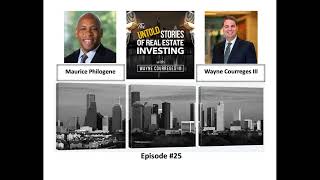
Interview (released 2022-11-24) of Maurice Philogene (founder of Quattro Capital) by Wayne Courreges III. Maurice recounts his path from military/Accenture/reserve policing into real estate — building 35 single-family homes by age 30, surviving 2008, shifting to multifamily and mobile-home investments, and co-founding Quattro Capital which acquired ~20 apartment complexes in under two years. Core themes: lifestyle-design/time freedom as the primary goal; lessons from the 2008 downturn; active vs. passive investing trade-offs; debt strategies (bridge vs. agency, exit planning, DSCR awareness); and operational automation (Loom, Syndication Pro, EarthClassMail, Slack).
Chapters
Welcome to the Untold Stories of Real Estate Investing hosted by Wayne Courageous iii. A place where active and passive investors come to hear the good, bad and ugly of real estate investing. Our guests consist of experienced operators and investors who want others to succeed by sharing their stories. If you're looking to syndicate deals or grow your wealth passively in real estate, you've come to the right show. It's now time to sit back, take mental notes and enjoy next episode of the Untold Stories of Real Estate Investing.
Welcome to the Untold Stories of Real Estate Investing. I'm your host, Wayne Courageous. For our next episode, we're excited to have Maurice Feligian with Quattro Capital. Maurice is a retired lieutenant colonel and federal agent, IT services executive and real estate investor. He is a financial freedom guru with the mindset that we are meant to live, not just exist. Maurice has completed over 300 acquisitions and dispositions, built a portfolio of 35 single family homes by the age of 30, owns apartments and mobile home apartments over eight states, and has a passion for helping aspiring investors grow their wealth through real estate, through coaching and sponsoring. Welcome to our show, Maurice.
Thank you, Wayne. Happy to be here. Good to be here.
Absolutely. And first, want to start off by saying thank you for your service and what an incredible career you've had. I was saying it prior to the show. You've done a lot and you know, certain amount of years on this earth, but you know, through military and IT executive, through Accenture and then obviously real estate. So again, thank you for your service. It's great, appreciated. But I want to dig in on this show with real estate, of course. So start with how you, how you got started and would love to know like a 2003, it looks like you bought 10 properties in your first year. So love to dig in on that and sort of see how you went about it.
So yeah, that's for sure. And I try and start backwards so people understand where it led to. So where I am today is I'm a full time real estate investor. For the most part. I've left all my W2 jobs, which I'm sure we'll get into. I am developing property on the island of Cyprus in the Mediterranean. Now I'm on my third project. Everything from luxury vacation apartment homes to a neighborhood of 16 villas and then we have another project on the way and then back stateside and that's purposeful. That is more lifestyle related more than it is the real estate stuff. Back stateside with Quattro Capital, which I started two years ago with Amazing Partners. We've done about 20 apartment complexes in just under two years. When we close our current project on December 8th, it will have been $100 million in acquisitions in the past 13 months, which is really cool and aggressive. That all started not because I was trying to make money. And real estate is a very small sliver of life for me. It is not who I am, it is a small part of it, but it was always because I was trying to attain some level of freedom. I was aware of that in my early twenties for some reason. Started picking up books, picked up personal finance for dummies, started to get smart. There was a very small section or sentence on passive income which intrigued me. We didn't have Google back then. Yahoo was just coming around. So I just went to the library, read a bunch of books, bought my first place. It appreciated. And then by the end of the year, I had bought 10 more places. So literally the reason I got into real estate was because I understood that passive income could give us a certain level of freedom in terms of not necessarily having to go to work. So that's how the journey started and that's where I am today.
And when you first started, were you in the military at that time?
Yeah. So I went to University of Virginia right out of College. In 97, I got hired by two entities. One was the U.S. air Force. They gave me a scholarship to go to college, do mechanical engineering and play football. And then fortunately I went into the reserves because there were too many active. There were too many officers coming out to go active duty. So I had a choice. And then Accenture, which back then was Anderson Consulting, hired me out of college as well. So those are my main two employers right out of college. And I stayed with both of them for 20 plus years.
Nice. So how are you able to manage your time growing your real estate portfolio while also balancing your family and these other work responsibilities and the reserves and Accenture? It's just a lot.
It is a lot and it was a lot. And I do look back on it from time to time. And what I was good at was creating time. I post about it all the time. I still do it today. Today's Sunday, November 7th. I still got up today at 4:30am I was at the gym by 5:15. I did a bunch of real estate work probably until about 8am and then started working on the house. So we just clean up the house like I created that time. I got up this morning. So my statement around that is if you, you know, if you work from 4am to 8am that's four hours a day, five days a week, 20 hours, 80 hours a month, 960 hours a year. That's 5.14 weeks you've created. Five point something weeks you've created. You add one more hour when you get home from work, it's seven weeks of time. So you'll figure it out if you really want to do it. And you cut out all the other nonsense like binge watching Netflix or whatever. I'm not saying don't have fun. I'm saying I made a very conscious decision that the weekends were going to be weekends and mornings were going to be for real estate and building this lifestyle that I wanted to build. Yeah.
And so segueing from that, you know the routine habits that you've accomplished and did well, other than waking up early, what are the ways did you stay focused and stay motivated during both good and bad times during your journey with the real estate?
Yeah. And there were some bad times too. So I don't want to make it seem like real estate is all roses and honey and stuff like that. It's not. When I was doing the single family racket in 2000, you know, I got up to some 35 single family homes, mainly condos, but I had a couple of single family homes as well. And the bottom fell out in 2008. Right. It was my first cycle, if you will. I faced bankruptcy because half of my residents stopped paying for various reasons like legit and not legit. Right. And while I was a really good preparer in that, I had 150, 200 grand of reserves always available. You can imagine how fast I blew through that. It went fast. So how did you stay online? Because it was, it was purposeful. It wasn't a money thing, it was a freedom thing and I was willing to fight for it. So I negotiated with all 20 plus banks. What can I do? What can we figure out together? And I'm glad that I did because by the time 2014 came around, I sold a bunch of those places that had equity and then coupled the equity and the passive flow from those properties with my paychecks and started paying off homes. And I, I got to a point of 14 to 18 paid off homes between 2014 and 15, and I was making more from real estate than I was from my job. The reason I was able to get through it and stay on target and give up my 20s and 30s socially, because on the weekends it was tenants, termites and toilets for me was because I had a Goal. And here I am, my 46 year old self thanking my 23 year old self for not giving up.
Yeah, I love that. I know that period was, was rough and then having all the, you know, the houses and negotiating, you know, we were talking yesterday on a podcast about scaling in single family. And one of the questions I asked, and I'll ask you as well, is how were you able to scale? Did you set up each property in an LLC or did you have. I mean, because at some point you sort of maxed out on how many single families you can buy as a personal in your name. So how did you do that?
That's a good question. All those single families, I bought them all in my personal name. I would quit, claim them into LLCs for liability purposes. But in terms of buying them, the period from 2002 to 2009, there were no DOC loans. I mean, they were handing out, banks were handing out money. So I was able to get loan after loan after loan after loan. But here's the other thing. I always had an employer, I always had Accenture, I always had the military, and I added a local police department. I became a cop in 2008 as a means to give back to local community. So I had three W2 paychecks coming in at any given time. I looked very stable to lenders and that's where I pushed back on occasion on the whole burn the boats notion to become an entrepreneur or an investor. No, I stayed employed for 20. I mean, I just retired from Accenture two weeks ago. I stayed employed for 25 years because my goals mattered. Right? And when you have W2 active income coming in, that's like lighter fluid on top of the fire that's fueling your goals. So I never quit. I just found a way to manage all those responsibilities at the same time. So having the W2 was one thing. And then I really took advantage of the system at the time in that I probably got way too many loans as a late 20s, early 30s guy. But it worked and, you know, I just leveraged it.
Are you seeing any of the aggressive lending in today's market that you saw back then? Are you seeing.
No, no, not at all. Fortunately, you know, I made the switch to multifamily in 2016 and learn the difference between recourse loans and non recourse loans. So for folks who are listening, a recourse loan would be the type of loan that goes on your credit. So you buying a home, but usually multifamily, in my case, mobile home communities, large scale apartment complexes, 100, 200, 300 units. The loans are secured by the property itself. So they won't come after you personally, but if something goes bad, it is your good name, but they'll take the asset back. So you know, I, there was certainly a difference and I've not seen that kind of lending since that time. And I think that's a good thing for the industry.
Yeah, absolutely. So on your website you talk about lifestyle design hacks that are needed to leave behind that rat race by leveraging real estate. Tell us the game plan, you know, for those that are starting and maybe mid through or just adjusting as we plan our 20, 22 goals.
Yeah. So anyone who's getting into real estate, whenever you go to a real estate conference, you'll have folks, especially multifamily real estate conference conferences. You'll have folks get on stage and they'll tout how many units under management they have and things of that nature. I don't have a problem with that. Where I do have a problem is the notion that you have to have 10,000 units to be free. You don't. All you need is more passive income than you have expenses and you can be free. I want people to hear that because this whole. And I have, I have owned well over a thousand apartments, I have restaurants in my portfolio, I have real estate development stuff overseas. I was free when I had single families that were paid off and were giving me salary. So all the stuff that I'm doing now is more goal related than it is my freedom related. But what I was doing intentionally that I can now articulate very well as freedom principles was orienting my life around financial freedom, time freedom, geographic freedom, freedom of purpose. I didn't go be a police officer in 2008 when I already had two other jobs for the money. That's not why I did it. I did it to give back to local communities. That was freedom of purpose and then freedom to build relationships with incredible people like yourself, Wayne. Because we need relationships to grow as individuals and to learn and to give back to people. I am very intentional about seeking out meaningful relationships. I'm not talking about going to the networking event and getting business cards. No man. I'm talking about truly connecting with people and being part of people lives, people's lives and things that nature. So from a lifestyle design perspective, I knew I was going to create enough passive income such that I had time. Freedom I knew and started very early, even when I didn't have a lot of money, traveling around the world, immersing Myself in different cultures because the constant learning piece is what makes life feel really good. And I also knew finally that if you are executing with purpose, Mo, how did you stay on point with all this real estate stuff over the years? Because it was never about the money, it was about the freedom, right? If you stay on point with purpose, you'll find a way to get things done. So I orient around those freedom principles.
I love that you through the good, the bad, it was all about the purpose, right? It was the end goal. And you, you fought through and you, you know, and your family had to be on board. I'm sure as well, waking up at 4 in the morning and you know.
I feel like, yeah, man, they're still on board. It was hard. Like I got now when I look back on it and talk with them about it, they put up with a lot. Because I deployed for the military a bunch of times, I took on two full time jobs. Of course, you know, they would have to bear the brunt of some of that. But you look at it now, I joke around with my 8 year old. Now, he is aware that dad retired from the military, the police and Accenture in the last two years all at once. And I tell him, would you rather have me running from the office at 5pm to go get you from school or do you want dad to be home waiting for you to get off the bus? So here I am, 46, in total control of my time, and My youngest is 8 years old. I am going to be there for everything all the time, right? And that was what was so meaningful and purposeful for me to punch through it over the last two years.
So what are some of the roadblocks and potential hurdles that investors will potentially experience along the way?
Roadblocks?
Yeah, roadblocks, potential hurdles. I mean, you've gone through a lot, especially working, you know, multiple jobs and such. So what are some of these roadblocks that you see? Because I think part of this, well, I know part of this podcast is really talking about that untold stores real estate investing. And you know, as you had pointed out earlier, when you go to some of these gurus about the number of units they have, you know, there's a little bit more behind the scenes on that and it doesn't always end up that way, but that's okay because you don't need that. To your point, if you're, if you're becoming financially free by offsetting that, you know, your needs of your income. But you know, what are the roadblocks that you're seeing.
Yeah, peers, peers. Everyone is absorbing everybody else's definition of what success is. It's no different in the corporate world, too. Right. I put out a post on LinkedIn that did extremely well. I think it has like 300,000 views now where I talked about the fact that I was never a CEO, partner, executive vice president, or anything like that, because my definition of success was going after the time freedom, using active income to create passive income. That's all I ever cared about. In the real estate space, or even in the multifamily space or single family space, everybody gets this notion that you have to have $30 million in the bank or something to be free, or you have to have closed a very large deal. You have to have done this or that. I know a guy who, when I was doing the condo stuff in DC, he bought 4 as well. 4 or 5. 4. Paid off one of them or sold one of them and then paid off the others. Between the equity in that one and his salary, he's gone, man. He lives in Thailand with his beautiful wife and three kids now, and he's a bartender. Like that was his definition of success. Everybody seems to be looking at what other people are doing and absorbing it as their definition of success. So now that I put it out there, what I was doing in the corporate world and then I pushed back on, I had to be this title or that title, or even when I go to conferences and I'm asked to speak and I get a little bit agitated when people ask me about, how much do you have under management? It's irrelevant. It is. What is the, the. What is the success factor for you? And then how are you going to employ real estate as a tool to get it? If real estate is even a tool for you, it doesn't have to be. It could be just being a digital nomad and you might have the lifestyle you want. Right. So I really think it's peers, the instant success, the Instagram stories, all those types of things.
Yeah, absolutely. I think with social media plays a huge role into that too, because I know for me personally, you go on Facebook and you. You start following these other investors who seem to be closing deals every other week or, you know, monthly. And then you really have to internally view one. What's your purpose? And as far as purpose for where you're trying to be, you know, what's. What's the goal?
Yeah, it's there. It's there and it's. It's toxic, in my opinion. It's really toxic because folks are going after more and more and more and more and more and more. They're gonna, if you keep going, at some point you're going to trip up. I've been asked several times if I still have that portfolio of single families. I do. They're all paid off. I was told, well, why don't you just sell them and leverage them and go get something bigger, better, faster? Yeah, they, they take care of my day to day basic needs. So it means life is generally okay. Why would I sacrifice that to go get something more? We're always shooting for more. I think folks should shoot more for lifestyle. And you know, once you have that covered, then build and go after goals and your legacy and all that type of stuff. Really hammer down on what your definition of success is and that will keep you away from pitfalls.
Yeah, yeah. You're leveraging real estate. In your case, the real estate that you have on the single family at least is paid off to create that lifestyle for sure. So what are systems and processes that y' all have put in place to manage and operate your, your holdings? So I mean that can be a full time job without the help if you're, you still have that single family, you've got your, your multifamily, you got your restaurants and all. So what are some processes and things that you've put in place to help free up that time so you can, you can have this freedom to be there for your kids and such, you.
Know, all of it. So I mean I come from IT consulting and business consulting space. Right. So everything is process and automation and what have you. A really good book that I have just stuck with over the years is the Four Hour Workweek by Tim Ferriss talks a lot about. Well, he wasn't talking about working four hours a week. He was talking about automating life is what he was doing. So from a process perspective, I look at it both from a business and from the business and personal side. I don't receive mail anywhere. Every single company I have, I don't know how many companies I have anymore, but every single company I have, the mail is automated and comes into an online interface. I tell them to shred it or forward it or send it to the bank or something like that. Right. We, Quattro Capital, we have specifically chosen to have no employees. We have partners, but we don't have employees. And the reason why, from a business perspective, we want to stay as close to our investors as possible. I want any investor to be able to call me at any point in time. On any, even on the weekends. Because they should feel close to their investment, which is their life energy, if you will, to make that money. Right. So we don't do any of that. We automate with tools. We will use things like Loom to do intern. You know, I don't know if you know Loom, but Loom is a. Like you can take a video, a one minute video and show someone something instructional and then email it to them rather than having a Zoom call for 30 minutes. Right. We'll employ things like loom. Obviously we use Zoom. We'll use Syndication Pro to manage our investor accounts, if you will. And then the other thing is from a Quattro Capital perspective on the syndication side, we've been very intentional about how big we are going to get or not going to. We don't want brick and mortar. What we want is for any member of our team, including me, especially me, to be able to disappear for four months with your family, wherever you want to be in the world and still operate your, your business. Right. So as much as you know, I could make more and more and more money like let's say go doing some franchises or opening a new restaurant or whatever. I don't do any of those things. I shy away from them. So automation, process improvement, spending time with the team, getting rid of fluff, if you will. If there's something that's causing us to bog down, we'll get rid of it. So that applies in my business life and personal life. I should be able to get up and disappear for four months and run my business and my personal life. If something, if I'm being asked to do something and it will impact that, I say no and I won't do it.
No. Those are great. I've heard about Loom especially for, you know, if you're hiring through upwork or Fiverr to help a project and you can show them.
Exactly.
So what you're trying to do and send out, I think it's. It sounds like a great tool, something I'm implementing in the future as well. You mentioned Syndication Pro. That's a software that we use as well, which, which I really, really like. Especially when you're adding code. Gps.
Exactly.
So it's a big differentiator from a lot of the other ones.
Yeah. And you know, let me add two more. So we said Syndication Pro. Cause this isn't good for people. Syndication Pro. I'm not endorsing any of these things. I'm just, I just use them. Syndication Pro, Loom Earth class mail is How I digitize mail Slack for communication with our team. So we have Slack channels for all of our acquisitions and I don't know, we have like four or five acquisitions going on right now. And then once the acquisition is done, the channel will switch to an asset management channel. So if you like, I. There's no way I can absorb all the information for every single property constantly. So when people put in communication, I might go in on a Sunday and go backwards and read everything going on. Right. So that's a great thing with, with Slack. And then I, you know, I think one of the biggest is obviously Zoom. We have third party property managers, quite a few of them, and we'll meet with them once a week and manage the manager type of setup. They are included in our channels that we can talk to them that way. So anyways, there's, I just want to make sure I put the titles of the tools out there so folks can leverage them.
Yeah, I'm in a mastermind and that Slack is, is fantastic. Yeah. To your point, there's so many. A lot of communications on a daily basis. But you know, when you have time to go back and start from the beginning and read the threads, it's powerful. A lot easier than when you're going into email and you're having I load.
Email at this point, it's too much.
Yeah. Thank you for putting those programs that you use out there. So hey, we've talked a lot about you actively passively investing. So you're an active passive investor, right. You own these properties, you're actively finding, you're making decisions. But have you invested passively, truly passively in a deal or is that something you've stayed away from?
Funny enough, I've truly passively invested in one. And that one deal was the first multifamily deal I ever did. And I did not. I invested in it again. Purpose. The purpose of investing in that deal was not necessarily the return on investment financially. It was the return on investment from an educational perspective. I wanted to. So now, you know, after I did the deal, then I understood the property placement memorandum, the subscription agreement, the business plan, the rates of returns, IR versus ar Like I just started looking into everything. It just so happened that that operating group was pretty good. The forced appreciation from the business plan, they started to execute it, but the market shifted in our favor and instead of holding for five years, they held for 18 months. So my 100 turned into 232 very quickly. I'm very happy for the financial return, but what I got from it was confidence of how to do my own syndication. And then ever since then, you know, we've. I think I've purchased like 20 apartment complexes today.
So with that experience, I know the focus was more on the education. And of course everybody wants preservation of capital and have that return. Which sounds like you did, right? But what are the pros and cons for investors out there to get into passive and active? You know, as Quattro Capital is having these discussions with investors who are looking at, hey, I may have the time to actively do it or I can invest with say, Quattro Capital passively. You know, what are those pros and cons?
Hi. It goes back to goals again. We primarily do 506B passive deals at the moment. We may do 506C fully accredited investor only. But the reason I really like 506B is because I want people to have access to private placements who've just never been involved. That's my mission, right, is to try to help people. The downside of passive deals is that they are passive and you have very limited opportunity to have impact on how your money grows. So you are wholly reliant on the operating team. That's the thing. You have to do your as much as you are investing in the property, you are investing in the people who are operating that property for you. So with what I said before, now you see how it comes into play. Wayne, I want you know, of our 600, 700 investors, they know to look in my email signature and call me anytime. I want them to be able to call and have input and to be angry that a communication came out late or what have you. And for me to understand their goals that, hey, we're trying to do legacy for the grandkids, well then I'll say let's not worry so much about a cash flow deal. Let's worry about something that might be a bit more on the equity side. And you know, we can grow that a bit faster or have a longer or bigger lump sum over a longer period of time. That's the downside of passive deals. You are beholden to the operating team. But the good side of passive deals, you are beholden to the operating team. When you can find a good team. And let's say in our case, our target holding period is five years. Right now we're on average, we're disposing of our assets in two, two and a half years. We're doing a really good job where our target ARR is 20%. We're returning 38, 46%. So we have 40% ish investor reinvestment rate. That means a lot to me because that says that investors are comfortable with what we're doing, how we're doing it anyway. So those would be the downsides of passive deal. And then very quickly on the active side, just time. Time is a very valuable commodity. There's only so much of it. If your goal is to truly understand and operate real estate, then yeah, do the passive deal. But if your goal is just to do the. Excuse me, do the active deal. If your goal is just to do the active deal. Because that's what you see everybody else doing. Question that. Because real estate is not roses and rainbows. It is a very difficult procedure and uncomfortable one that takes time to get used to. So there is a time component that I don't think folks really pay attention to there.
Yeah, not only a time component of operating and managing the properties, but a massive time of just finding the deal. And of course, you know, not only with the relationships with the brokers and all, but finding off market deals, partnering with partners, GPs and such. So massive time, you know, as well in that. So what are some overlooked aspects of real estate investing that you're seeing in today's general, you know, real estate as people are getting in or people that are, are more seasoned that you're seeing, that's causing some investment mistakes? Because right now we're benefiting from this low interest rate. There's so much capital flowing right now, which returns are really great, which is good. But I think it's good to also learn from prior mistakes or any overlooked aspects that you're seeing from a general standpoint. So we can.
Yeah, there's two things. One is market versus property and I'll go into it. And then the second thing is interest rate protection. So on the first one, Quattro Capital is much more of a market research entity or just as much as a market research entity. As we are a real estate investment firm, we study markets first, understand what's going on with them. So you know, we have a current deal that we're doing in Indiana, but we've been watching Indiana for two years now that we see in a certain part of the state jobs coming in, salaries going up, residents looking for a higher quality and better quality of life in the product that's there. We saw an opportunity and then we start to shake out the trees to see what property we can find in that particular market. One of the pitfalls is people are chasing properties but are not paying attention to the Market demographics around the properties. When as you know, and most folks know, the health of a property is directly tied to the resident's ability to pay for the rent. Resident's ability to pay for the rent is directly tied to employment. Employment is directly tied to what's going on in that market. So you have to have that healthy aspect around the property itself. So that's the first thing. The second thing on interest rate protection, we do it really well. When we go out and look for financial products to do the financing on a property, we'll evaluate every single exit that we can. Nobody knows what's going to happen in five years. People can say they know, but we really don't know. Who the hell would have guessed Covid would have done did what it did? Right. So when we're going after a product, for example, on the one we're doing now, it's a bridge as opposed to an agency. But that bridge is two year fixed bridge with three one year options to extend that we can control. And then at the end of that, those three one year periods it will convert automatically into a fannie. We're doing that to give ourselves options to exit the property and to make sure that we don't have high inflation risk on our on the debt. Right. That matters because that debt can be very expensive and will impact returns. I don't think people pay attention to that either. I think what people do a lot is amazing property. Didn't research the market, but amazing property. It's a great cap rate. Oh, let's just get a small balance Freddie and let's just do the deal. Yeah, there are so many things that come with that and I think my experience going through that first downturn in 2008 taught me a lot. And then Chad Sutton, who's my business partner and Kim Wendland, who runs our asset management side of the house, pay an enormous amount of attention to debt products. How we get them, how we will exit them, doing research on that for the benefit of our investors. So those are the two pitfalls, the market and then interest rate protection.
Yeah, I love that you brought up the debt side on this podcast. We've gone a lot into the equity aspects and I think both from an active people getting in and also from a passive understanding. What's that loan process for me I like the longer term loan with a step down prepayment penalty. I really like the Freddy floater, et cetera. But you had mentioned the bridge loan and would love if you could go into what a bridge loan is and Such and I will, let's go into that and then I'll share sort of my thoughts on some of those bridge loans that I'm seeing that people are using because we haven't talked about it on this show. So thanks for going into that.
No problem. And I need to get Chad to get into the details of everything about it. I'm not knee deep in the details, but. But one of the most important things is so when we're talking about bridge versus agency debt, for example, agency is typically set up for you to have it for a very extended, a very long, extended flat period of time. You know the risk you are getting into with an agency. Now I have investors that I'm responsible to and those investors have high expectations on rates of returns. So there are products out there, bridge loans that can be very flexible and the cost of that capital could be cheaper than the agency loan. So while I can go get 15 million from agency, let's say 15 million and it may cost me X percent, I can probably go get that same amount of money from a bridge perspective. And it will, it could be cheaper and could be more flexible. Because Quattro Capital has closed so many deals in the last 24 months, our reputation is starting to precede us. So we can negotiate our way to a better product on behalf of our investors. Right. So in this particular case for this debt, we're eyeing that market, right. That Indiana market that I was telling you about. We're going to provide a B product in a market where it doesn't exist. We know that in two years a significant amount of equity is going to get driven into that property, probably north of 10 million over a five year period, maybe north of 20 million because of our research. But we want the flexibility to be able to exit in a way that is most beneficial for the investors to get a rate of return. Right. So that's why we will look at those products. Now if our investor pool, even though it's passive, if the investor pool gives us a signal, man, we love that property, we want to keep that into perpetuity. Well, we're set up to do it because that bridge is already preset to flip to a Fannie Mae product, same lender, and it's a feeder into Fannie Mae and we know that we'd be able to keep it for 10, 20, 30 years. Right. That's how we think about that stuff. The bottom line is bridges can be lower cost of capital than agency debt. But if it's only if it makes sense for your goals for your investor pool, for what you're trying to do. It's not the same for every single deal. You have to evaluate it on a case by case basis.
Yeah, I agree. It's a fantastic tool, especially for true value add. You know, what you are doing and what we're doing and others, you know, finding, you know, class B C properties, finding that forced appreciation which you had talked about just there about growing revenues or reducing expenses. What I'm seeing in today's market is a lot of people are buying or getting into bridge loans because they don't satisfy the Fannie or Freddie requirements with the DSCR requirements. So what's happening is these people are using a bridge loan to in essence potentially overpay for a property.
Yes.
And hope that the market continues to do what it's doing and have natural appreciate, you know, this appreciation that's happening in this market. And so that's what was, you know, has been concerning for me. Bridge loan is a great, as you mentioned, cost of capital potential cheaper and such. But as an investor, especially for those that are passively investing into these deals, look at the debt service coverage ratio, year three or four, what are those projections? Because the essence of going from a bridge loan to a debt or shimmy to an agency loan, you've got to have a minimum of 1.25 DCR. And as I underwrite these properties, both as a passive and active investor, there's risk that you know, if after those extensions are made, you're not able to get into, you know, long term agency. So bridge is a great tool for when you truly have these value add opportunities that you go in with the plan. But please don't use bridge to overpay. And just going back to our point earlier, just to get the assets under management or say you bought a property, it's easy to buy a property, but buying a property, that makes sense and for your investors not to be upset in a few years. So I wanted to hit that.
I'm glad you did and let me, I just want to go back for 30 seconds. Bridges can get people into a lot of trouble. A lot of trouble. People will overpay. People will take bridges with terms that will be extremely detrimental if they don't pay it off in a year or two years or something like that. But there is a point, especially if you're an operator that's doing really well ethically and financially like Quattro Capital, where you can negotiate in terms of a bridge for what you need with a lender. Now we have Lenders who knock on our door and say, I have this money. What is it going to take for you to borrow this money from me? And that's the position we're in. So we're very fortunate. We are not in a position where, oh, man, I can't get agency. I can't get this. I'm going to go find some random bridge person to lend this, lend the money to me for 9% interest or something like that. That's totally different than what I'm talking about. I'm really glad you brought that up because people can get burned by that.
Yeah, for sure. Definitely a differentiator there. And you're using it really well. And congrats on Quattro Capital being where you all are and especially with this Covid environment you have scaled really quickly during all this. So is there anything else on the show you want to discuss that we haven't. Before we go into my last question.
Listen, we touched on it a little bit, but I just want to pivot back to the point of why I'm in real estate. I am in real estate because it gave me a tool to design my life the way that I wanted to design my life for myself and my kids. I find myself at 46 years old now, retired from every employer that I've ever known, in total control of my time, to be able to do more with my kids and also do more in a business perspective and travel and do all the things that I want to do. My life is not real estate. It is, you know, real estate. Just one sliver. The folks who are getting into real estate, I just really want to encourage them to understand why they are getting into it. If it is to. Because your neighbor's doing it, you want to do it. I like, yeah, you can do it. But I think you will make a mistake at some point. There should be a purpose behind all of it. And then you pick the right tool within real estate or any other entrepreneurial endeavor for such that you can live your best life now. So I always want to bring these real estate conversations back to what they're intended to do, which is give you a tool to live extremely well while we're here on this big.
Yeah, well said. And I feel like I already know the answer, and I feel like our audience knows the answer, but I always ask this, so I'm going to ask it for you. What are your proudest moments investing in real estate? I want to say it's your time back, but I already know.
But you know what, my man I, you know, I, this has been a very reflective year for me because I have exited the W2 and things of that nature. And real estate or any entrepreneurial endeavor is just like the stock market where you're investing and it's going flat, flat, flat for a very long time. And probably in the last, not flat. I mean, I was doing fine. But what has happened in the last two years is this, right? My personal passive income has shot up. My personal equity or net worth has shot up. I worked really hard at it and went through very, went through numerous periods of what I call entrepreneurial depression where I was doing it on my own and by myself and it sucked and I was eating wind and it was terrible in a lot of cases. What I'm most proud of is I didn't quit. And what I will add to that is that I recognized in the past two years that I needed partners and I found amazing people. I don't close 20 apartment complexes on my own. It's. It's physically impossible. I also don't impact the 200 plus investors who are with us on that on my own. So I'm proud that I didn't quit and I'm also proud to, you know, drop my ego and get help where necessary and be part of a high performing team to get stuff done.
Well, I appreciate your time. How can listeners out there reach out to you and connect further?
Yeah, awesome. Especially on the life side because life comes first. Instagram is a great place to connect. Just Maurice village. I love LinkedIn and I'm showing I'm being more vulnerable and transparent about my path through corporate life as a public servant, police officer, military, and how during all that period I push through the need to climb the ladder in favor of using active income to generate passive income. So that's on LinkedIn and I love helping people there. And then of course on the business level, it's Quattro Capital. The website is the Quattro Way. Q U A T T R O W a y the quattroway.com on all those platforms. I get back to everybody and anybody and I love having conversations and I do coach people on the lifestyle design aspect of it, sometimes leveraging real estate as a tool and will be open to those conversations as well.
Well, Mo, again appreciate your service and thank you for being on the show with us today and look forward to staying in touch. If I can do anything for you, let me know.
You got it, Wayne. Thanks man. Thanks for having me on and spending time with me.
Absolutely. Thanks Mo.
That's all for this episode. We hope you subscribe, share and leave a review of the show. For more information about passively investing in multi family apartments, check out Wayne's free ebook by going to creipartners.com also follow us on Facebook by searching CREI partners. This was the Untold story.
More from Wayne

September 2026 Meetup: Investing Ahead of Growth: The Bryan–College Station Opportunity





May 2026 Meetup - Apartment Complexes & Passive Investors: Opportunities & Risks


March 2026 Meetup - Reading the Market: Economic Indicators Every Investor Should Know


February 2026 Meetup - Syndication 101: How CREI Partners Structures Deals for Investors

Build-to-Rent (BTR) Communities Explained: Why Investors Are Paying Attention