Nonna Pikiner - The Untold Stories of Real Estate Investing - Scaling Real Estate in California
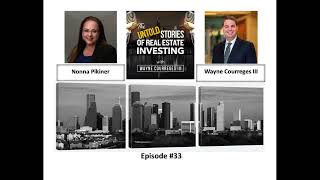
This content was created by Wayne Courreges III, CPM®. This content was uploaded by Wayne Courreges III, CPM®. This is a YouTube episode titled 'Nonna Pikiner - The Untold Stories of Real Estate Investing - Scaling Real Estate in California' (published 2022-11-09). It's an interview-style podcast hosted by Wayne Courreges III, CPM® with guest Nona Pikiner and an opening/closing announcer. The conversation covers Nona's origin story in multifamily real estate, operating an eight-unit property, moving into syndications and passive investing, underwriting and investor due diligence, investing in Oakland/California (rent control, government-subsidized housing programs), her company SmartOak (a hybrid startup/ syndication equity/share model), fundraising strategy, and the San Francisco Investor Social Club. Multiple practical topics discussed include cash flow vs. equity, partnering with government/nonprofits, underwriting, and investor returns/expectations.
Chapters
Welcome to the Untold Stories of Real Estate Investing hosted by Wayne Courageous iii. A place where active and passive investors come to hear the good, bad and ugly of real estate investing. Our guests consist of experienced operators and investors who want others to succeed by sharing their stories. If you're looking to syndicate deals or grow your wealth passively in real estate, you've come to the right show. It's now time to sit back, take mental notes and enjoy next episode of the Untold Stories of Real Estate Investing.
Welcome to the Untold Stories of Real Estate Investing. I'm your host, Wayne Courageous. For our next episode, we're excited to have Nona Picner. Nona is an experienced and accomplished real estate investor who identifies promising financial opportunities for investors with various experience levels and helps them accumulate wealth through asset diversification, tax efficient passive income and capital preservation through partnerships with reputable and experienced operators. Nona has her footprint on a real estate portfolio valued close to $1 billion. Welcome to our show, Nona.
Thank you. It's very exciting to be on your show. I really appreciate the opportunity.
Yeah, we met a few months back and I guess it was in January in Los Angeles and we had such a great conversation there and want to sort of relive that conversation here because it was a lot of valuable information that I had learned and I know I'm going to relearn it here but really just would love to, you know, learn about your journey, you know, what's your background, how did you get into real estate investing? And let's start there.
My journey started very interesting. I actually was in a syndicate in semiconductor industry for a very long time. And my friend who was a successful investor, very active operator in San Francisco, Auckland and other areas, he basically asked me if he want, if he teach me, will I be willing to learn. And I said of course. But it was hard to believe that somebody is basically coming to you and telling you, you know, out of best of my heart, I'm going to show you and teach you. So I said okay. It took me a year to realize that I would like to do it. Then it took us one year to find the property that was worth of purchasing based on my friend's recommendation. And then we purchased our eight unit buildings in Auckland and this is when my journey started. After operating this building for three years, I was planning to refinance and you know, purchase another building at the same time. I accidentally got into a seminar and learn everything. Not everything, but at least touch based on syndication, passive investments, partnership, joint ventures. I found the subject Very interesting. So I basically said, okay, let me wait with my refinancing. Let me see what I can learn, who I can talk to, what kind of network I can build, what kind of books I can read, what kind of seminars and webinars I can attend, and then see what happens after that. So several months later, I was ready for syndication for Passive Income. I was kind of considering myself and I still consider myself an operator. I like asset management, I like property management. Different kind of aspects related to operation, and that's what I'm doing now.
Yeah. So let's go back to the eight unit property. Did y' all syndicate that deal or was it just you and a few partners going in on it?
No, it just was my husband and myself.
Okay, what did you find the most challenging about going in, you know, because that was like your first, you know, first property and, you know, most people start off with one single family and grow that way. You just said, you know, hey, I'm going to go buy eight, you know, in Oakland. And, you know, so what was, what was it like with the tenants? And what did you like and dislike owning it yourself?
You know, I probably was very lucky because I didn't have a much of a challenge with my tenants. I didn't have much of a challenge with paperwork. I probably, because I didn't know anything about it, I just dive in without any knowledge. Right now it sounds scary, but at that time I didn't think about it. But. But you probably will be laughing at what was the most challenging with this building. The most challenging was to find somebody who can take care of the garbage. This was the biggest problem to take care of because the garbage, you have to bring it out to the street on a specific day at a specific time, you have to bring it back at a specific time and specific day. And then you have to also on a different day to come to. To repeat the same as your recycling containers. And because I don't live in Auckland, I couldn't really, even if I wanted to, or even if my husband wanted to, it was impossible for us to handle. And garbage companies, they are basically charging you. It's called the pull and push service. They charge you a lot of money. It's more expensive to pull and push than to just pay for garbage collection. I had to learn a thing or two. But luckily in Auckland we have this companies who provide the service at a very reasonable price. I was hesitant to use them because it still was a little bit more money into expense. But as soon as I engaged into the service, my life just turned completely easy because everything else I could do remotely, of course I was visiting my properties. But this problem, as soon as I learned how to deal with this, everything else was easy.
Yeah, well, you know, it's funny because that's one of the last things that somebody would probably think about when they're buying a property. Right. And I think with real estate, when we have, you know, when we buy properties, every property is going to be unique and it's going to have its own little challenges and all. And, you know, just like owning a business, you know, you got to be flexible and you got to find solutions and find partners, you know, whether that's the trash company or Pest or whoever.
So.
And then when you. So a few years later. Did I hear right, you sold that property a few years later?
No, I didn't sell this property. I also wanted to kind of come back to your question very quickly. A lot of people do engage property management companies and they don't have the situation, especially with smaller buildings. They don't have a problem with garbage or don't have to deal with tenant. But I specifically and intentionally did this because I wanted to learn how to operate, what kind of problems to anticipate. So I can later on either have a property management company that will do this for me, or I would be efficient to manage my property management company to do a good job. But in regards to the property, I never sold it. So basically recently I refinanced it. Finally, something that I have done or was planning to do. And I reinvested this money into my smart corporations, the companies that I just started recently.
Nice. And we're going to touch base on that later on the show. So was it a few years where you started getting into syndication after that? The first eight units, I assume you, you learn more about that a few years later because you wanted to scale a lot quicker in real estate. Was that where you were, what you were thinking or being told, you know, with syndication?
No, I just. So after three years, again, I got into this seminar and learn, heard these words, did not know what they mean, had no idea what to ask or what, where to go, where to run. But I started learning and actually, so for three years I just was operating, managing my property. And at that time I was working full time for a semiconductor company. So I just was combining my efforts here. And then later on, after three years, I learned about syndication, passive income. I start exploring this more and actually was trying to find a company so I can invest with them as a Limited partner and learn the process from the limited partner standpoint. While was planning to become a part of a general partner company. So it's not that somebody told me, it's just I was so fascinating about this journey and because I'm really a big advocate of the multifamily units properties and how it can grow and what wealth it brings, it was kind of my own idea to take this route.
Yeah, yeah. I always tell people, education, education, education. When you're getting into real estate investing, your biggest education was hands on grunt work on these eight units. Like you learned the business in and out from a day to day operation. Property management, whether you're dealing with eight units or 100 units, it's the same issues and the same rent collections, just a bigger scale. Right. But it's a great learning. And then you go into the seminar you're learning and then what I see a lot of people doing and I think it's a great strategy. Nona is vesting passively first. Like the end goal is to get on the general partnership, partnership side. And for many some people, you know, are just like, hey, I want to be passive. My joy is the day job I do or just living off passive income. But obviously you've already mentioned you've already you like real estate, the operations, asset management, property management. So eventually the active side is where you wanted to get to. So let's talk about the limited partnership side. What did you learn while being a passive investor?
Yes.
So those that are listening can benefit from that.
This is a great question. So my experience with the property allowed me to understand what general partners are doing. So I was kind of on another side right now. And when I was looking into offering memorandums or presentations of various projects, I could understand how these people are making money, how they are making money and making money work for their investors. So I was able to see, okay, if they're going to raise rent, houses going to be reflected on the price if the general partner planning to build a storage or add a parking. Because I could feel when I purchased my property, even though my mentor told me all of these basics, I couldn't feel it. I couldn't understand what, what does it mean, net operating income? Even though you understand it's kind of profit but you don't feel it, what does it mean if you're not operating income goes up, how your property value goes up. You kind of understand this in theory, but you don't feel it with your heart or your soul. You don't understand. So after I went through this operating on my building, I could really understand what exactly he was telling me three years ago. So when I am on another side of a limited partnership, I could appreciate a hard work that general partners are doing. And if somebody is considering limited partnership, which is actually being part of the big syndication project and investing for passive income, without control, without participation in decision making, without even seeing, you know, sometimes properties, of course you can always fly and see your property, but some people are busy professionals. They are not, you know, they cannot do it. So how do you do it? What do you, what does it take from you as an investor to trust somebody who is going to manage your money for you? So what I had learned was that you really have to go with people who have a good tracking record. You look what they have done, you assess what kind of properties they already purchased, how they exited, what was their performance, what the, what was average return on those properties, how do they handle conversations with investors? Are they open? Are they giving you enough information if you ask for this information? Of course, a lot of people don't understand which I was one of them recently. What is underwriting process is. An underwriting process is actually financial and physical evaluation of the properties. So general partners, for operating, you know, the syndication, they have to understand what the property is worth, how it was distressed, what they can do about this property and present it to the, to us, to investor from a passive investment point. And we have to. Not everyone has an experience like mine, correct? So people just come in and they listen about all this great benefits that passive investment can do. But if you educate yourself, if you look at the tracking record of the person who is presenting or the company, usually it's a team because it's not one person. For big syndication, if you try to ask questions, sometimes you don't know what to ask. But if you listen to enough presentations, you will know what to ask. If you feel that people who are helping you with capital and connection with those general partners, if they are decent or honest, if you feel that they kind of fulfill all your requests, questions, then this is a good match. And you don't have to be in a rush, you don't have to invest today. You can take your time. And for me, what was very useful is looking for reports, attending presentations, getting used to those presentations. When we came to us, they didn't know any English and it was so difficult to understand what people were saying. So what we had to do, we just had to basically turn on the TV and watch a movie. Movie after movie after movie after Movie after movie and you keep going. And then of course you read material, of course you look, but you have to use to listen and comprehend what is going on. So this is what it was for me, even though I had an experience in operating and, and I couldn't understand what this operator, sponsors or general partners, the same thing, are doing. I could see their strategy, but I couldn't really know how to listen to offering memorandums. So I had to listen, I had to read. And this is what I would probably recommend for people who are starting out to do. Just listen, ask questions, come back to it, maybe listen one more time and get used to it. And you will catch it like that, like a snap of a finger mic drop.
You just did the playbook for anybody looking to get in syndications. That's perfect. Yeah, awesome. Especially when people who are transitioning to real estate from another industry, complete industry and in your case another country plus an industry, you know, like you've had, you've come along, you know, a long way to be where you are today just to comprehend and understand the intricacies of real estate, you know, in the United States in general. And then not only the United States real estate, but then you gotta deal with Oakland. So let's shift off to Oakland. Like you know, when people are investing, you know, when I talk to people and I go to these conferences, everybody's looking at the Sunbelt, you know, Texas and Florida, the Carolinas, Tennessee and here's Nona, she's in California and then all of California, like she's in Oakland. So that's what like when I had the conversation with you in January, I was just so fascinated because you're winning the game there and you're understanding it and you know, so let's talk about why Oakland, why California and you know, what have you done to navigate to make it a win win for you and the government, etc. So.
Yes, thank you. It's a great question, Wayne. I appreciate the question. Yes, it's very different strategies and other investors have in mind and Sunbelt stuff. State Sunbelt states are very awesome market investments and they perform beautifully and people get great returns. I am however advocating for California, especially like you mentioned Oakland and Bay Area, just because I got to appreciate how we can make multifamily properties perform in a tenant oriented states and in the rent control environment. And how do we do that is first of all we don't have a competition from syndicators. But again we are not yet, I'm not yet in a position to buy 100 or 200 units in Auckland because prices here a little bit different than prices in other states. But at the same time, surely, slowly but surely we are getting there. And California actually invests billions of dollars in affordable multifamily housing. According to our research, in Auckland alone, government is seeking to get 1200 properties or units for their customers or clients because there is a huge problem with housing. And government is actually investing additional now $30 million per year to subsidize affordable multifamily rental payments. So partnering with proper government organizations and any savvy multiple real estate owners can deliver to their shareholders a very attractive rent return on investments and double digit yearly distributions. So basically, this being said, when you talk to people and say, and kind of bring up help from government, everyone is saying, oh, Section 8, yes, Section 8 is one of them. But there are many, many more that are much more competitive and even better than section 8. Section 8 maybe was in the market the longest, but at the same time other programs were here as well, a very long time for years and years and years and years. But now when Covid hit, government realized that they would like to deal with homeless people and try to help them with housing. And here's the problem, government kind of released all these funds to all these different agencies. The demand is huge, but supply is very limited for several reasons. First of all, the supply is limited. And second of all, many of landlords are not yet comfortable working with government because either they don't understand how it works, they don't know what kind of tenants are coming their way and will they be able to handle a lot of landlords. You talk to them and they, they would kind of raise a concern saying, oh, you have to go through all this inspections when you work with government, yes you do, but they inspect normal things. They want your hot water to be running, they want your smoke detectors to be working, they want your, I don't know, windows to properly open your refrigerator to open and work your lights to be, you know, in each room. Don't you do this for every tenant? Isn't this something that you do anyway? What difference does it make?
Basic thing, right?
Providing the correct, correct. And also different programs, like you may have non profit organization organizations and they are sponsored like there is one non profit organizations that I work with. It has 27 different government funds that they're using. And why do they have so many? Is because different peoples have different situations and each fund is catered for a specific group of people. So when you talk to this program, you Explain to them what is there you have to offer. They know their clientele, and they know which client will be applicable for each program. So, so basically, this is why I'm in California. Appreciation here is amazing. And this is what we do. And this is how I kind of got my connections and my interest. And I do work with those governments, government organizations or nonprofit organizations sponsored by government funds all the time. Yeah.
And then do these government programs have stipulations? I guess is rent control in California thing, or is it more city by city?
California has rent control. Oakland is the toughest city in probably in the entire America because this is how it works. California has regulations. Oakland belongs to Alameda County. Alameda county has regulations. And then Oakland has its own regulations. So Oakland regulations are usually much stricter than anybody else. And whatever goes in Oakland supersedes Alameda county in California. So, yes, those programs have stipulations. They have specific requirements we have to follow as landlords. But at the same time, the beauty of this program or various programs, that they are not subject of rent control. So they are not. And this is a great thing because they are helping. It's a partnership. They're helping people to get housing. And we as landlord are helping people get housed. And in appreciation for that, we are not subject of rent control.
Yeah, I mean, that's a perfect example of, you know, you can make money in real estate in any market. And Oakland in particular, you've already said it. I mean, the hardest city in the United States. Right. Really possibly be a landlord, but yet you, you've gone out there, you've met and you've built relationships, and you found programs that make it a win win. Obviously, everybody has needs. In any business, any negotiation, their government is obviously focused on the people you mentioned.
Their.
Their goal is what, 1200 homes? Is that in Oakland or is that.
No, just Oakland.
Yeah, just Oakland.
Yeah. And it's growing. It's growing.
Yeah. And so, you know, partnering with them seems like be the way to go, because if you don't partner with them, then you're constrained. You know, it sounds like, I mean.
You still, you still can make it work. There are some other tricks you can do which is all legal. It's not something. You're not doing anything illegal here. But there are other opportunities. How to bring revenues. When you pick up your property, you just have to do proper underwriting. You have to know what is available to you within legal boundaries. And you can work, not necessarily only with government programs or subsidized tenants. You can Work with others. You just have to know how to make it work. And this is what we are basically doing. Yeah.
Hey, when we met in person, when you came to Texas with your daughter, you were looking at a property and you were underwriting and trying to make the deal work. My question to you is, how do you, when you have all these, when you do have rent controls and such, are you doing. Is it more of an equity play in. In California, where people are buying, you know, they're breaking even pretty much, and then they're expecting the equity? Or are you. Are you able to, you know, have that return? What is really the return? And I'm a little over the place a little bit. But, like, if you're investing in California, you know, what do you sort of expect a good return annually?
So my calculations, when we are reviewing the property is probably not different from syndication. It's just that syndications are at a little higher scale. But no matter, as you mentioned, properly, no matter where you go, if your numbers make sense, then they make sense. And the way we kind of review and evaluate our properties, possible properties, we are looking for three various. One is a cash flow. Another one, of course, it's a principal amortization, and the third one is how do you bring your value up in your building? So when we underwrite property, we put all these numbers into. So a lot of people have underwriting systems and underwriting Excel documents, which I used as well in the past and using still. But my partner in a business that we have created, we. We kind of sit down and we created our own little one because we are not buying yet 100 units, but we are getting there. But we are putting this first glance. And a lot of underwriting programs have this as well. But our, I think, is very, very simple. So simple, anyone can use it. So we basically put some numbers into the system and right away we can see cash flow, amortization and value. And as you mentioned, it's very difficult when you are in a rent control environment. But because you are in a rent control environment, you can kind of predict your conservative growth. Plus, when you're looking at properties, and because we are buying properties that have government subsidized units, you look, okay, what is it? What are they paying? Not now. And how can we bring it up? So it's like in the regular market in Texas or Florida or any other state, any syndicator, general partner, or sole operator, they look at the price, at the current trend, and they know what kind of demographic is around this property, and they Kind of see and compare market of other properties around them and they know, okay, we project we are going to raise a price for our unit to such and such extent we are doing the same, but we are focusing on the government programs and we don't have any limitations. So if there is some lucrative possibility for us, we know how to raise this price. And some units are not subsidized. So what do you do? You just take the smallest possible conservative race that you can possibly imagine and you know it will get better and then you basically deliver to your investors much more than you promised. But we are not buying any properties that don't have subsidies or partial subsidies at this moment. Because some of the challenge also in California and in Oakland especially is eviction moratorium, people not paying rent and landlords not being able to do anything. Yes, we had government programs that compensated a lot of landlords. But right now this program, particular big program from some state of California is over. There are some local programs. So to be on the safe side, we have to be creative. But at the same time, your questions, what kind of return we are looking for? So we are trying to have at least 5 to 10% annual on one specific property. But because our model, our business model is very different from others. Our investors not only getting this distribution yearly, but also because they have shares into our company they participate in, they don't need to reinvest. They invest at one time and they participate in each and every project that we are going, that we are going to have. And later on when we start sell our corporation, then they're going to get even bigger return. But on the entire corporation, not on a specific project.
Yeah. So let's shift gears to your company because so Smartoak is your company and it's different from a syndication and it's more of a startup mentality of somebody buying shares.
Yes.
Okay, so go from there because this is very unique and it's not something that I'm seeing a lot of, but I think it's a fantastic, you know, idea and very entrepreneurial. So, you know, share with what you're doing and how, how it makes sense.
It is an unusual idea and it's not. Sometimes people kind of confuse it and visit and they're saying, oh, you're doing something that Reed is doing. No, it's a little bit different than reit because in reit, yes, you invest and you, it's more liquid investment, but you only invest what you invest and you only get return on what you get return on. While in our Company we have a different approach.
So like a REITs? More like like a stock.
Yeah, it's a real estate investment trust where people also invest in real estate but not in any particular project. They just invest in the pool, pool of money. And REIT company basically take from this pool of money and they invest in various projects. But you only have a compensation from your specific investment. 50,000, 100,000 million, whatever you invested. So our company has a different approach that is not yet known or kind of understandable for some people because it has a startup module and it has partially a syndication approach as well. So basically what we are doing we startup is usually based on product or idea or technology. And people who invest into startups they know their risk and what is their risk. The risk is okay, I invest is a product, idea or technology is going to raise up. I'm going to be very well off is one investment. If the situation doesn't go good and it goes south, then I lose all my investments. There is no possibility for me to guarantee any kind of return. So this is a very known model, especially here in Silicon Valley. Everyone knows what it is. Zan Syndication is also a very known model for people who do either who are operators or who are limited partners. So we are talking from investment point. People invest in syndication and they basically get return on their investment. We combine both our investors are purchasing shares into our company and they have benefit from everything what we are going to do. Like for example with my own investments they are in LLC and my LLC is only worth what my property is worth. It doesn't matter my skills, it doesn't matter my know how it's only worth what my property was because this is how it's set up. When I am trying to build here we are trying to build a corporation. This is my partner and his name is Yakov coming. So we are trying to build this as a business. Assets will be assets. But our know how, our knowledge, our connections, our kind of creative revenue attraction is something that will be part of the corporation. So this is what basically we are doing. We are buying property with high stabilization potential. We are stabilizing rent revenue through high efficient faster modeling in single multi year rent commitments with the government. We planning to refinance those stabilized properties same like syndications are doing. We are reinvesting free capital into the next deal. And we are just basically doing the same thing. We are either selling or keeping this for cash producing revenues.
So if I invest $50,000 into SmartOak, I'm buying shares with that, with Your company and you're using that money or those shares as equity for purchases of other properties or for properties.
Yes.
And the returns that you receive from that property goes and splits, you know, just like a normal syndication back to the investor based on the Paradise Share.
Yes.
Do you constantly continue to get new people investing so you can buy that next property and still fund the improvements to do you know. So it's just an on, you know, it's like an ongoing process and is there ever. When is the time where if I were to do 50,000, where would I get. When, when would I get my investment back and return? Or is it. Or if I'm just focusing more on the cash flow.
This is a very great question. So basically because we are a startup, so we just closed our seed round. So investor who invested in the seed round, we already used all their money and we invested them in the stock buildings that we purchased. So your question is excellent because if you call me today and say, nona, I would like to invest 50,000, I will tell you, Wayne, I cannot take your money yet. I can take your commitment because I don't want your money to sit in my bank account and not working for you. They can work for you some other way at this moment. So, so we basically right now stopped raising capital for another maybe two, three months. However, we have somebody who is very much interested to come in with a very large amount of money. So if they will come in with this very large amount of money and it will allow us to just buy one of the building with cash, we are going to do it. And then we can bring some more investors for like what you mentioned have committed to us and waiting for us to have this opportunity. But at this point we are not raising for a couple of months. How are we going to, how long we are going to be keep raising money? We have a gap or a cap. I would say not a gap cap. We don't want to actually raise more than $10 million. We don't, even though it sounds not much, but later on we may change this amount. For, for some people, they would like big syndicators, they would say what is $10 million? We are just using $10 million, you know, for, for this small, you know, cash that we are putting into. Not even capex. Correct. It's a very small change for them but for us because basically we just wanted to show this new model to investors, prove how it works. And then as soon as they see what we are doing, then we will change and we will change our goal. For a much larger amount. Because this is such an unusual model, people don't know about this. They are concerned. They don't know they have to see some kind of a result. So we don't want to set a goal of $100,000 or $100 million or 10, you know, $50 million just because, because we don't want this money to sit and wait. We want to have a showcase of what we are doing.
So if that money is. Once that money, you know, continues, it gets returns and then you sell. Well, unless the investor takes his money or her money out at that point, then it still continues on to the next property. Like it. I guess what you're saying is it's like a true. It's not a stock, it's a share. And as you mentioned, sort of like a startup where you're, you're investing into a startup, but that money will continue growing over multiple properties, not just one syndicate, one particular deal. And that's what makes it different, if I'm understanding.
Yes. And also, yes, you already asked me this and I didn't kind of touch base on this specific point because our investors are shareholders. They can make a decision with us. So let's say by the end of the year, we have a capability of, you know, distributing investments, dividends on investments. And then we sit down with our investors and we say, okay, there are two ways we can do it. We can distribute this and just rely on what else is left and keep going with what we have in reserve. Or we can use this money and reinvest and then they will make a decision and I assume based on the performance. And because everyone who invests with us have a little bit of a different state of mind than passive investment in syndications. Because people who invest passively in syndication, they know this model. They invest in one deal, they know it's three, five years, they take it out, they can do whatever they want with this money, which is absolutely great. I invest passively all the time. All the time. But at the same time, people who invest with us, they know that they don't want to take money in three years because they can't. We are not giving them their principal back. They have to be ready for this drawback. But at the same time, they're having an opportunity to participate in the startup that they are planning at some point to take public.
Right. Okay, that's. That, that's awesome. So that's sort of the end goal there is, is take public and really truly like, as you mentioned, a startup, what you know Silicon Valley, what a tech company would would do. So as we start finishing rounding it up here, one thing I wanted to mention and we're going to have a podcast on this with other your team members. But the San Francisco Investor Social Club can you give a high level of that organization? And I know we're going to dive in a lot deeper next time but love to get that out in front of our investor or excuse me, our audience.
Absolutely. Because we all love real estate and we love investments and we had to learn from some point in the past from somebody or from books or from some resources, we decided to get this club going. Clara Halton, she was the main founder, she figured out that this would be a good niche in our area. And this is called San Francisco Investor Social Club. So basically we are inviting experts to present on their subject of expertise. But at the same time our main goal to socialize and network these people who would like to learn investment, who would like to specialize in a specific area. We have people who come to our events and they for example invest in single family homes, but they are interested to learn about multifamily business. We have somebody who is presenting on investing in industrial space triple Net. We are aware of very curious programs, tools, for example a lot of people. It's very, it's very important point some to invest in syndication you have to be almost all the time accredited investor. Of course there are deals for non accredited as well. But we found a very good tool and a good program for people who are not accredited who can without problems invest into multifamily units or various projects. So we are trying to find this golden nuggets some tricks, some possibilities that we would like to extend to our friends in a more kind of social network environment, not like in a classroom.
And when, when do you all meet and how can people find more information about that Investor Social Club.
So basically we are on Facebook San Francisco Investor Social Club. Definitely welcome to. I don't know how you, you know, introduce information in regards to phone numbers or email addresses. I don't know what is the best way to. But definitely people probably get connected through you to us. I don't know what is how usually your guests.
So on the show notes we'll have links and I'll make sure that this link of your Facebook group. But if you want to share an email since it's audio that works as well.
Yeah, absolutely, we can do both and we'll be happy to see new faces. So right now we meet once a month and people just Come, they learn about our events from Facebook, they come to our events, we meet. We extend this relationship to deeper communications and just try to stay together as a community with like minded individuals and help each other to progress and scale up and build wealth.
Yeah, it's important. We had a investor happy hour this week and a meetup and you know, it's nice being past that. The past two years have been tough getting in person and meeting and relationship building. So real estate is a relationship game. So if anyone is in the Bay Area or visiting often, you know, definitely check it out. So as we wrap up here, I always ask this question and I prepped you before, but what is your proudest moment in real estate investing?
Proudest moments? Yes, there are several. So I'll just mention some because I can talk forever, but I'm kidding, but I just will mention some. So first of all, I think getting enough courage to start my investing to realize that multifamily investments, like many other investments, probably, I don't know about other investments, is a team game and the process of scaling up is kind of not possible without support of like minded people and partners who support you. Another proudest moment probably would be the closing a deal with a very, very difficult seller. But probably the most fulfilling achievements that I can talk about right now. I had other achievements, but at this point, currently, while we're talking, is to make possible for money, work hard for us and our investors to educate people so they know what they're doing and to show them a little bit different way from stock market of how we can take, take care of our taxes, have tax advantages, how we can fulfill our dreams of being in big real estate without really investing tons and tons of money. So this is kind of the proudest things to, to educate people, to work with people. I'm a very person, I love people. So it's very good for me to kind of see how people can be happy if they found their good investment opportunity.
Yeah, I love that last one. And it's one reason why we do this podcast and other things because there's so many people still out there that don't know that this is possible and that you can own larger real estate if that's what you choose to do. There's definitely nothing wrong with owning single families and owning a lot of them. But if you're wanting to invest passively or scale into larger deals, whether office, industrial, storage, I mean, there's so many asset classes. But yeah, it's fun to educate and get people excited and then return those Returns that you talked about.
Thank you, Wayne, so much. I really appreciate that you. You gave me this opportunity to speak. The only thing I want to add is if. If people plan something, if they have some ideas and goals in mind, they are much more easier to come alive if you. If you think about them and pursue your opportunities. A couple of years ago, I was talking to my partner who we now just created Smart Op, and he was asking me this several years back. He said, what would make you happy? What kind of management or operation of real estate will make you happy? And I looked at him and I said, oh, I don't know, probably $10 million. And now looking back, you're thinking, oh, my goodness, at that time, it felt so large. It was so big, like it's impossible. Dream. And now if you slowly but surely go to your goal, you see that some goals become bigger goals and bigger goals and bigger goals.
Absolutely. Mindset and patience and hard work. It's the, it's. There's a lot of that.
So.
Well, how can the listeners reach out to you? Find you?
So again, I will provide the information in script for you. I don't know if anybody will be writing down my, you know, number right now. Everybody can probably reach me on Facebook as well. My name is Nona. It's a very unusual name, although there are people with the same name. But when you go on Facebook, usually you type N o N a and then right away my name comes up and my last name is Pikener. P I K I N E R. We do have a website, but it's not yet developed. So to the extent we would like it to be, just because we first wanted to do the work and then showcase our work. So the best way probably right now through Facebook or through Wayne, who is absolutely amazing and giving me this opportunity and giving opportunity to other people to educate his clients, his investors, people around him. It's amazing. Thank you, Wayne, so much.
Yeah, thank you so much. We learned a lot and look forward to continue building a relationship and let's partner on some deals over time too, so.
Absolutely. We already had our business handshake.
Yeah, absolutely. Over IHOP breakfast. We'll do it again.
All right.
Thank you so much.
Thank you.
That's all for this episode. We hope you subscribe, share and leave a review of the show. For more information about passively investing in multi family apartments, check out Wayne's free ebook by going to creipartners.com forward/ebook. Also, follow us on Facebook by searching CREI partners. This was the.
More from Wayne

September 2026 Meetup: Investing Ahead of Growth: The Bryan–College Station Opportunity





May 2026 Meetup - Apartment Complexes & Passive Investors: Opportunities & Risks


March 2026 Meetup - Reading the Market: Economic Indicators Every Investor Should Know


February 2026 Meetup - Syndication 101: How CREI Partners Structures Deals for Investors

Build-to-Rent (BTR) Communities Explained: Why Investors Are Paying Attention