Raj Venkatramani - Untold Stories of Real Estate Investing - Passively Growing Doctors' Wealth in RE
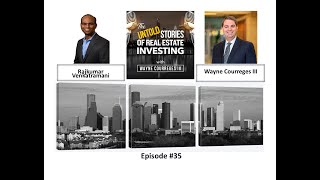
This is a YouTube podcast interview (recorded/published 2022-12-21) in which host Wayne Courreges III interviews Dr. Rajkumar (Raj) Venkatramani — a pediatric cancer researcher/oncologist who became a multifamily real-estate investor and operator focused on helping physicians invest. Raj describes his long medical training (started med school in 1996; completed training in 2011), his move into passive multifamily syndication around 2017–2018, and transition toward active syndication and sponsor vetting. Key themes: how physicians should vet sponsors (communication, track record, asking specific questions), conservative underwriting (skepticism of high rent-growth and aggressive exit cap-rate assumptions), diversification across markets (Texas/Southeast emphasis), tax/diversification benefits for doctors, educational resources he’s built (Doctor Syndication School, 101 questions to ask a sponsor, a short book), and time-management/ fiduciary responsibilities balancing clinical work, family, and investing.
Questions this video answers
2022-12-21
Started medical school in 1996; finished all training in 2011.
Around 2017–2018.
More than 1,200 apartment units (combined LP and GP investments).
About 60 short video modules.
Chapters
Welcome to the Untold Stories of Real Estate Investing. This is your host, Wayne Courageous. Today I'm going to speak with Rajkumar Venkatramani. Raj, who is a pediatric cancer researcher, oncologist, real estate investor, entrepreneur, founder and manager at Redoc Capital llc. Raj went to medical school in India and trained in London, Illinois and California. Raj has a master's degree from University of Southern California and an MBA from University of Massachusetts. Raj owns and manages several rental properties in Houston and has invested in multifamily syndications for more than five years. He has invested both as a limited partner and general partner in more than 1200 apartment units. Raj is passionate about helping doctors invest in apartment syndications. He met his wife Gita in London. They have two children and live in Houston. Welcome to our show Rush.
Thanks Vin. Thanks for having me.
So the listeners know who followed our show is I really enjoy the time before our podcast where, you know, you and I had a great, great conversation and you know, we even share where our daughters were were born, same hospital kids in the in the Houston area. So excited to, you know, continue that conversation here for our listeners, but just would love for you to introduce yourself and sort of share with us how you got into real estate and sort of your your path on this journey.
Yeah, as you said in the introduction, I'm a physician based out of Houston and most I actually went to medical school in 1996 started and then got out of all the training 2011. So it was a 15 years of training before I became an attending physician and I'm a pediatric cancer doctor and I what I enjoyed most is research and publishing articles in medical journals, those kinds of things. So that's what I was doing and then around and I save all the money I make through medicine and traditional teaching save put in the stock market, those kinds of things. Around 2017, 18 I started looking at my portfolio and realized that almost all my money in stock market and I I basically started as started out in real estate as a means of diversification. Then I didn't have a lot of free time so I started with as an LP in multifamily syndication and I've been doing like a 1 investment per year since then and gradually started learning about multifamily syndication. And in the past couple of years I had more flexibility at work and more free time on the weekends and and I've started doing active real estate syndication.
So when you were investing passively as a limited partner, what did you learn, lessons learned or things that you wish you knew now that you didn't know then and especially for your audience that you know doctors that could, that they can learn from your experience.
That's an excellent question. So it's really funny. The first time I invested in 2017, the way I invested is I went to a doctor's website, a website which is catering to doctors finance like finances and teaching doctors on finances. And I saw this ad by a company for multifamily syndication. And then the doctor who actually is running this website said hey, this is a good company. I had no clue about what multifamily syndication was. I just called those guys and the person who runs the syndication was talking to me for an hour. I wasn't even listening to him properly. I was driving and taking my kids to like swimming and I've under the corners session said okay, Here is your $50,000 and sent it out. Right. I had no clue how to vet a sponsor where the market nothing. I just trusted this website and then said hey, 50,000, let's see. Overall the experience has been okay, but if I were to do do it over again, I would probably vet the sponsor. Spend some more time learning about multifamily syndication before I invest. So that's what I try to do most of my time now. I don't want any other physicians what I did. So I spent a lot of time putting out educational materials for other physicians to learn about multifamily syndication before they invest. As you know, physicians are an easy target for multiple people because they are very busy, they don't have the time and of course people think they have a lot of money. Often that may not be the case. So they are easy targets. One of my missions is to educate them on how to properly select a partner to invest with those kinds of things.
Yeah. And are you, since you're you know, still practicing as a doctor and have a fulfilled career there, you're finding or you're building relationships with syndicators yourself and vetting and doing a lot of that heavy lift yourself while you know, raising capital from other doctors to invest. Are you doing more of a fund to fund model or are you, you know, how does that process go? And then what are you looking for with with finding syndicators that you're comfortable investing yours and other doctors capital with?
Sure. I, I tell the doctors invest with me. It's my primary value add for them is to help them partner with right operators. It's very as you know, the syndication is a very small space and they're with varying operators. The way I Did it is of course like many other people I joined a mentoring group and I learned everything need to know about syndications and at the same time during the group we assess other operators and partners and vet them, those kinds of things. So that inside knowledge, with that inside knowledge I help other doctors find good operators. Of course I invest in every deal I bring my colleagues to so I'm putting my own money in. So I do my own due diligence on those properties of as a practicing physician I'm not doing like going and developing relationship to brokers or going and finding properties, I don't have time for that. But I do do my own underwriting. When I partner with people I do my vetting of the sponsors I call different people who have worked with them, those kinds of things. So my value for the people who invest with me is I do those works, I vetting the vetting work and of course educating them on how, how these things work, those kinds of things. That's the value I provide for physicians.
And how, what are you looking for when you're vetting a sponsor? Like what are, what are the things you're looking forward to get that comfort that they're, they're a good jockey to ride with.
So one thing is of course I always talk to them first, right? It's always a gut feeling when you talk to people and I always want them to have at least gone through one cycle, full cycle. Of course it's not fair for people who are starting out. That's why you partner with more experienced people and we want them to be gone through one cycle. I also talk to the partners who have worked with like either an LP or a code gp. I talk to all those people and say hey, how is this person? The main question I ask is how is their communication? Right? That's always a red flag. So if you put your money in and if they're not communicating after that, that's not a good sign. So there's other things of course I have in my Website I put 101 questions to ask a sponsor. So of course I don't ask all the 101 questions but I ask similar questions to the sponsors like hey, have you had a capital call? Have you had unforeseen circumstances where you had to have unforeseen repairs? How do you handle that kind of thing, those kinds of questions and then you assess them. Of course it doesn't have to be perfect but they need to know how to handle those situations in their eyes. And so we also get A gut feeling like is this person truthful? Are they answering your questions honestly? Those are the things also you look for in some ways some of it is gut feeling as well. When you deal with sponsors, yeah, for.
Sure you can definitely get the gut feeling and especially if you're doing all that vetting like you're saying that. So how do people on the who are listening that 100 you said that you have 101 question is, is that a document that people go find in your website?
Yes, it's a blog post. I'm actually trying to make it as a document but in my website it's again primarily for educating LP investors and I created this document or where they can have all the questions, different sections you can ask a sponsor.
So what do you find when you're working with doctors as their hesitation getting into real estate investing?
So a lot of them, as I told before, have been approached by multiple people for multiple investments. Right. So they're always guarded and skeptical. And some people ask them, hey, this is the new thing which is going to produce all these returns for you. And some of them actually have I spoke to have been burnt before trusting people putting money in crypto or other things. So once they get burned, they don't want to trust another person. Right. So that is one hesitation I've seen. The other thing is again, they don't, they feel like they don't have the time to properly vet stuff. So they don't want to like they're already busy and they don't want to take on this new field. They have to learn something and put money and stock market is easy because the work they put it in, there's index funds and those kinds of things. So that is a major hesitation at least recently. Of course, not only doctors, everyone is worried about recession or where the economy is going. So everyone says I want to wait and see what's going to happen because all the things they hear on the news, those kinds of things. And some of them actually think like syndications are too good to be true. Right. So we say, hey, these are the returns we aim for, these are the risk adjust risks. And they say, oh, this sounds too good, too good to be true kind of thing. So that I have heard as well.
Well, as a passive investor, have those things been too good to be true? I mean, have you had the success that investors or syndicators are putting out there?
Yes, I have. But I, I put, I specifically tell my investors, hey, again, the typical cliche is past performance is not representative. Future returns Right. But also I tell them specifically during COVID that's not a normal time. And raising tide lifts all ships. Right. So every, everyone who invested in multifamily did well and I started investing just before COVID so I've done well too. But I make it very clear to them that that's, that situation is not going to happen again or may not, I cannot predict, but it may not happen again. So you cannot rely on those kinds of returns you saw in Covid and expect the same. So I purposely tell them, hey, it's going to be more typical thing. It's not going to be 15% increase in rent every year. So to tamper down some of the expectations, but the things I've invested in some of them, the operation, the business plan wasn't executed properly, but we still got good returns because again, the COVID situation that because of the market influence, the results have been very good.
Yeah, definitely that tidal wave. I think the moving forward, you know, the syndicators, there's going to be a definitely a divide of syndicators who are quote, unquote, the real deal. And those that, you know, just were getting in, doing a side gig and not really understanding what real estate investments. Because you, we were talking about it before where, you know, things are going to happen, challenges are going to occur, you know, or, you know, whether it's the market or you've had of a repair, there's going to be something that comes that's just part of a physical asset that you're, you're managing and you're working through. But it's, how do you overcome that, you know, and you know, it's almost like in a way a job interview, right? When someone asks, you know, what are your, what are your weaknesses or what, you know, you, you find out a lot of, about a person by them just being, you know, very open and transparent, but also like, hey, these are the lessons learned, or these are the things that I'm doing or partnering with these type of people who offset that, whether it's experience.
I could not agree more. And I make it a point specifically when I speak to investors, hey, you can lose your money, right? Sometimes people are very rosy when they speak to investors. But I say the risk is you could lose your money. So don't invest. If you need that money for something in two years or if you really need that, that's the money you're going to spend for college for your kids. This is some additional money you have to invest and you will expect not to get Anything back for five years. So that is the time horizon and there is a risk that you could lose your money. So, so I make it very clear up front.
But as a, as a doctor researcher, I'm sure you're very data driven. You know, you're looking at numbers or you're looking at the odds of success. And from a track record, commercial real estate has a track record of outperforming, you know, other alternative investments, whether it's stock market and such and then within the commercial real estate. Why I have chosen as one of the primary asset classes multifamily is because it's even more risk resilient, even though there are still risk. But you know, there's, there's that comfort of history. You know, we can look back 50 plus years and yeah, we're, there was this wave of everybody succeeding in covet, but you know what, my stock market's down 24, 25%. But on my real estate transactions, I'm not having to worry about people tweeting negative stuff and impacting rents. I'm not worried about, you know, a lot of things. And then, you know, you have the tax benefits, you know, as we're going to experience, you know, in a few months and when we file taxes, a lot of that. So I guess what I'm trying to say is when you talk to doctors and such, yeah, there's, there is the, you may lose money. But I think, do you go at it with an approach of, you know, looking at, from a historical standpoint, you know, just pass that, you know, looking in the newspaper and thinking or watching the news and realizing that, man, this.
Is.
This is not bad. I mean it's a bad market, but it's not. Yeah, even during recessionary times, we can make money in real estate, right? Yeah.
Yeah, you're exactly right. I didn't want to give the impression that I'm going to give negative information to the physicians that physicians who invest with me, they know. So mainly three reasons, right? One is diversification, like what I started. Two is tax benefits. Of course, the third one is the returns they are looking for. But I, I go through each one of them one by one saying, hey, why it's important for you to diversify. And then what are the tax benefits? Of course, W.2, sometimes it's difficult, but overall I, I go over a typical scenario, okay, this is the return you're getting, what is the tax implications for it? Of course, with the caveat that I'm not a cpa, but this is the typical one. So, so those three things are very attractive to physicians. Diversification, tax benefits and high returns. So those are the three main reasons people invest and multifamily syndication.
So one of the questions that, you know, that's just things I've been thinking about. You know, I met a friend who, from high school, I mean, this was many, many years ago, but I just met him in Houston actually randomly at a restaurant. And he just finished his. I mean, he's a doctor and I mean he had to been in so 20, 15 years of school. I mean, it's just crazy. So what are you seeing as the average age of a doctor and then their debt situation and then you've got so on top of, you know, especially the newer doctors, they've got, they're getting out of school sort of later in their career than other professionals, they may be in higher debt. I'm not just gonna put it all in one big pool, but assuming there's more education, et cetera, there's higher debt. I mean, that's a lot to think about, a lot of stress, plus saving people and healing people, et cetera. Because as a doctor you have that responsibility. So how do you get, how do you work through that with doctors and how did you work that with yourself where you even have time to think about your financial independence and passive income? I mean, it does seem a little daunting if I'm thinking of myself as a doctor in that shoe.
Yeah. What people, doctors themselves say is we are like high income earners, but we are not wealthy. Right. There's a difference between earning a lot of money income than having a lot of wealth. And so in commercial real estate, we know the time value of money. Right. So we are talking about IRR all the time. If you think about a doctor. Right. I started becoming an attorney and when you have 31 years old, my friends who went to school with me, they started earning like 22, they went to engineering school and started earning a lot of money. So they have like 10 years head start and didn't have a similar amount of debt going to medical school.
Right.
Plus the other things society wise, which is happening is the reimbursement for doctor services have been progressively cut based on the nature of how the Medicare works and those kinds of things. So the doctors cannot expect the same level of increase in their salaries going forward. So that produces additional stress for doctors and they are losing a lot of autonomy overall because they're all part of a big system and they feel like a lot of doctors enjoy being a doctor. Because they can make decisions for the patients. No one can interfere. That independence is going away. On top of all these things now you put Covid on top, right? So the last three years has been really, really stressful on all healthcare professionals, including doctors and even young people who did not think they are going to die. Right. Their death is like 30 years, 40 years down the line. Now after Covid, hey, I can get covered. Tomorrow I may die. I'm working in the hospital. Then they have that made people rethink their priorities in life, right. Family time, I need, so I need to spend time with my family. I may not have enough time later on. Previously doctors like 80 hours and 100 hours, just work, work, work. I don't think they want to do that anymore. They rethought all this stuff, right. So that's in that scenario. That's where I present this opportunity. Hey, you need more time to spend with your family. You cannot expect the same level of salary or W2 income going forward. And also you want to do the job you love without the stress of worrying about your finances. So that's one of the reasons I got into this because I still love what I do. I don't see myself not being a doctor or treating children with cancer any anytime soon. But I'm not doing real estate because I want to get out of medicine, but I want to do it because I want to treat patients without the worry about money or family, how families are going to be taken care of. So I think it's a perfect does who start late, right. Compared to others who have high income but not a lot of wealth, often have high amount of debt, those kinds of things. So this is, this helps them accelerate their financial independence. So commercial real estate, ideal tool for that.
Now that's well said. Talk to me about your, the school, the syndication school of doctors because I love your passion for educating, you know, these, you know, people that give their all and risk their health as you're talking about with COVID and all. So you know what?
Yeah, that came out of a couple of things. One, I told you about my story about how I invested education initially, right. So I, I didn't want anyone else to do that. The second thing was when I started speaking to doctors, the same questions came again and again and again, right. I was answering the same questions but usually have half an hour, 30 minutes to answer those questions. So. Well, that made me think, okay, can I, can I design a course which is catered to specifically doctors because all my courses examples is from doctors. Things so the, it's a doctor speak I can say because they can understand what I'm talking about. And These are like 5 minute videos, not a long videos. Right. So I designed this course, it has about 60 videos in it, 60 different modules that goes through each aspect of multifamily syndication. So if they can watch it go through the course and then they know, have a basic understanding of how to better sponsor sponsor how to assess a market. What does different IRR mean? What does cash on cash return mean? So they can understand all those terms, the language, then it makes it easier for them to feel comfortable waiting sponsors putting their own money and those kinds of things. That is the whole idea behind doctor Syndication school.
Yeah. Well, I'll include that link for your school in the show notes. Thank you. That way you know, people can, can access, can access that as well. So how, how are you juggling your responsibilities with your hospital and your patients and real estate investing? How do you juggle it all in with family and such?
So I, I have to probably thank my wife Gita for it.
I mean here we are, we're doing a podcast in an evening too. So yeah.
She'S taking care of the kids while I'm in the podcast. Right. So this year I had to be honest, this year has been, this is the year I started out because a lot of times when you start out in commercial real estate, as you know is putting the systems in place, right. Having a website, developing the systems, emails and other stuff, that takes a lot of work. My aim is once I have the systems in place, spend less time on it and have more time for me, of course the whole thing, whole reason I do it is I have to have more time with my family. So I, I don't expect to spend that much time in future. Right now, of course, as I said, my work is more flexible. So I want to from work in the evenings or weekends. I do it and it's very exciting for me right now because I'm learning a lot of new things. Everything I do is new, so I don't mind spending the extra time. It's like going to med school all over again. But once I learn it, of course, as you know we can have virtual assistants in Philippines or other people help with you. So I really like the book who not how. Right. So you, you don't see like you don't try to do how everything yourself but you put systems in place and get help from others who are often more qualified than you to do those jobs. So that is my ultimate aim. But this year it has been tough, but it's. I spend more time than I, I would expect it, but not. I don't plan to do it in the future.
Yeah. And what I love about what you're doing is you've got a niche of people that you're trying to help and surely that's got to be motivating especially when you're starting to see, you know, as you do investments and you've, you've done those yourselves as a limited partner and a general partner. But you know, it is pretty cool when you are helping others get out of, you know, it may not be out of their profession but maybe get out of the worry of financial freedom or you know, and here's the thing, real estate, it's a long term game, right. And it's just, it's not a, A lot of people, you know, push out like oh, you retire in three, five years and you know, it's like no. And why would you like. The blessing that I have too is I enjoy what I do during the day as well and it just so happens to be in real estate and so it you know, funnels through with our multifamily investments. But it's pretty cool when you have an investor who is trusting you with their capital and you know there's a story behind it of like hey this money is for, to help fund whatever. So I'm sure that's motivating for you to just keep going.
Yeah, yeah, it's, it's amazing. I, it's amazing people trust me exactly what you said and give you money that also nerve wracking because you have to make sure you, you, you are a fiduciary for their money and take care of it. So that provides extra responsibility on you and you try want to work harder to make sure their, they're taken care of, their money is taken care of in that one that sense it's, it's true, it's rewarding as well.
Well, a couple more questions that I have for you is one with the economy and high inflation and sort of things what we're, we are seeing and reading are there certain markets that you're focused in on and you know when it, when a syndicate or someone comes to you like hey I'm in market A what makes you excited about a particular market versus another or you focus on you know, just specific markets and you know, knowing as much as you can about those markets.
So I've done kind of differently in the sense of course like every other multifamily syndicator. We our group because I belong to mentoring. We concentrate on Texas and Southeast. That's the main area of concentration. But as you know, it's because of more population growth, more jobs, those kinds of things. Landlord friendly laws, those are the things. But I've done differently in the sense I tried to. Of course all of these are good markets but I try to diversify within the markets because that's one of the powers of syndication is you don't have to invest in the same city for example or same submarket because I, because I invest in all my deals and some of my investors, they invest in every deal I have. So I want to give them some diversification within those things. Since I'm not actively developing broker relationships are putting things under contract myself. That gives me more flexibility to work with different syndicators who specialize in different markets. So I assess each deal on its own merit. But I've been trying to do in a different markets each time specifically for diversification purposes.
Yeah, perfect. Yeah, I like the diversification, especially if you know, you're, you're looking at the sponsors, the boots on the ground who are going to be implementing and what their track record and their knowledge about the market. So love that strategy. And then when you're underwriting because on your website and what we've talked about earlier is you're not trusting the underwriting of the sponsor, you know, yeah, that's, you're taking it it, you're looking at it and you're seeing if it makes sense. But you're also underwriting these deals yourself. Have you shifted, done anything differently in your underwriting to be a little bit more conservative or more thoughtful of, of risk?
Definitely. So, so, so what? Of course I do trust them. But trust but verify, Right. You always want to verify it. Sometimes when you are the one lead sponsor, it's your baby. Right. So a little bit biased, not intentionally, but unintentional bias towards it. So that's why I do underwrite. Of course the main sponsor may be underwriting 200 deals and getting one. I underwrite like 10, 20 deals and pick one that's already gone through multiple steps. And not only do I underwrite, I also consult my trusted partners who are not involved in the deal. I have some trusted partners. Hey. I go through the underwriting with them and say, hey, does this make sense? The way I've shifted is of course everyone claims it's a conservative underwriting. Right. So the degree varies. But I'm more strict on the rent growth projections when compared to a year ago because we know, all of us know that the rent growth is not going to be the same. So if they are projecting 5% rent code per year, I'm not going to touch that deal. For example, I'm just a good example and also I'm also keen on DSCR and then how much they're projecting say if they, if they're buying at 160 and saying in five years they're going to sell at 320. I'm very, a little bit skeptical now. Right. So those are the big red flags I'm looking for.
Yeah. So you're looking, you know, rental growth and a lot of times, especially if there's that huge jump in price per door value, it's a cap rate rates, you know, just being conservative on the, on the cap exit cap rate, you know, because I always tell people that's why we do the, the meetup and such is, and it's not to scare people away because there's a lot of fantastic honest syndicator sponsors. But you know, you as an investor, as a sophisticated. Well, a lot of our investors are accredited investors but even if you're not accredited in some offerings, you at least need to be sophisticated. So from a, at least a sophistication standpoint you should be able to, you know, review a business plan and be like, yeah, this makes sense. And part of that is understanding cap rates and, and you know, rental projections etc. So I always say like you we mentioned earlier about gut feeling if, if something doesn't seem right about the. Because none of this is, you know, let's say rocket science or you know, healing cancer, etc. I mean that this is, it's business and it's a business plan. It's revenue minus expenses is noi. So does the revenues make sense? Does the business plan or does the submarket allow for those things? And you know, where can we find ways to reduce expenses potentially but also make sure we have a quality product for our renters and the community. So no, I think that's good that you're, you're focused in and honing in on, on those areas. What are you finding as sort of the most overlooked aspects of real estate investing? Whether it's from a limited passive or limited partner standpoint or as a general partner. But is there anything that you've seen time and time again where it's like this is starting to become overlooked or any, any.
So one of the things I've noticed of course recently at least the X I I don't know if it is a one thing, but I've noticed the expenses, for example, they always put it as 2%. Right. So but we know that if the inflation, the expenses are raising very high. The other things I've seen is the insurance stuff. The especially states like Florida and Houston for example, it's a big, big issue. So those are the things. And I, I think as you said, a lot of sponsors do a very good job, right. They have professional insurance people, everything. But sometimes deals come across. Of course I make it, make it a point that I never do a deal with someone I have not met in person. So that's again the gut feeling part of thing. But people, since there is a right now, they're always looking for someone who can bring in money. You do get a lot of calls and deals coming through and some of them you notice all these little things that makes the deal work. But you're always want to know more. Okay, how did you come up with this number? So expense side, of course, revenue side, there can be some rosy projection. But also on the expense side, they have not put enough there and then the NOA can be high because of that. One of the, one of the good things I have is a lot of doctors are not looking for hey, I need to double my money or who x3 x my money. Those kinds of things. They're very conservative. So as long as, if you explain to them properly, they will get a lower return as long as it's, it makes sense. So I'm not under pressure to find a deal with the highest IRR or highest equity multiple. So that gives me more flexibility, right?
Yeah. I always say, because I always, during our webinars and such, I always try to find worst case scenario. And I'm like, hey, if you're happy with the worst case scenario, then you're going to really be happy on the best case scenario. Right. So but if you can get excited about, you know, the worst case, then you know, it sets, sets the tone. And also to your point earlier, it's like, you know, worst case you lose, lose your investment. But I mean that, that, that a lot would have to go really wrong for you. I mean you gotta remember this is right, this is a physical asset that we're you're buying and was as such, you know, a lot of things would have to go really wrong. But you know, if you're making a modest return and you compare that to the stock market and other, you know, investments, you know, you don't need a 2 extra money. You just need to be positive on your return. If you're positive on your return, you're beating the markets. Right. So. So anyway, well, one way I always, I like to end our, our podcast. And you know, this doesn't have to be just real estate investing, just, just in general. But I always love to ask this question. What are your proud. What is your proudest moment in your, in your career? And for you, I mean, it's got to be. I mean, I mean, it's probably putting you on the spot for sure.
In my career, it's, it's professional, personal, probably the proudest moment. There are a lot of them, to be honest, because when I grew up in India, I never thought I'll be a physician. Right. I know I, my aim was never like in my wildest dreams. I never thought I'll come out of the city I grew up and not only the country. So I've been very, very fortunate throughout my life. I've lived in four different continents, practices of physician all over there, and I feel very, very fortunate. The proudest moment for me would be. It's a very cliche but. Birth of my Children, but it's not a career mo. But yeah, I cannot pick one, fortunately, one proudest moment, to be honest. Maybe coming out of med school or going. Maybe getting into med school, which was not an option for me or like, not an aspiration. Maybe that's, that's the proudest moment if you ask me to pick one. But everything has been a surprise for me every time I reach a point. Oh, I never thought I'd be here. Okay. I never thought I'll be here. So I feel very fortunate and grateful for where I am. Yeah, to be honest.
Well, definitely a lot of proud moments and, you know, really want to thank you for all that you do for, you know, children and, you know, those that are sick and, you know, it's, it's pretty special what you do, so. And, you know, the real estate is definitely the bonus to help, you know, doctors and such who are, you know, risking their, their life and also putting a lot of time and, you know, away from families, etc. With schooling and what their work commitments are. So. But I appreciate your time. Is there a way for, if you could share, you know, how people can reach out to you and any other resources that you want to share on this podcast that, you know, we'll put it in the show notes, of course, but sure.
For sure. The LinkedIn probably is the easiest way to reach me and they can search rei doc any of the social media if they search rei doc my I'll turn up but LinkedIn is probably the easiest one. I do have a book for doctors who want to passively invest. It's called Passive Investing in Real Estate a guide for doctors they can get in my website which is www.renau they can go there and get it or of course they can reach out to me anytime. Not only about investing in real estate anything I I always like to talk to different people who do interesting things.
Well I'll make sure that all that's in the show notes and really Raj, pleasure meeting you and we we live fairly close together so we should we should definitely do lunch to each other in person and just keep building the relationship. But thank you again for your time and excited to see your future growth in real estate investing.
Thanks Wayne for having me on your podcast. It's an honor. Thank you so much.
More from Wayne

September 2026 Meetup: Investing Ahead of Growth: The Bryan–College Station Opportunity





May 2026 Meetup - Apartment Complexes & Passive Investors: Opportunities & Risks


March 2026 Meetup - Reading the Market: Economic Indicators Every Investor Should Know


February 2026 Meetup - Syndication 101: How CREI Partners Structures Deals for Investors

Build-to-Rent (BTR) Communities Explained: Why Investors Are Paying Attention