Ruben Greth- The Untold Stories Of Real Estate Investing- Maximizing Capital Raising Brand Awareness
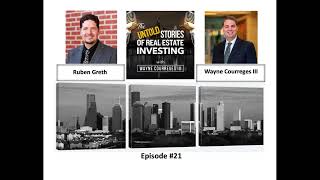
Interview with Ruben Greth on capital raising and brand awareness for multifamily syndications. Ruben recounts his start (influenced by his father), early success raising $625,000 via social-media-promoted small multifamily deals, and later partnering to raise $1,000,000 through co-GPs. He explains focusing on a 'superpower' of capital raising, latching onto partners with track records, building consistent multi-channel communication (funnels, CRMs, drip campaigns, podcasts, meetups), and emotional branding targeted to investor avatars. He stresses consistency, trust-building, adding value (not hard-selling), scaling by expanding reach (know→like→trust with emphasis on "know"), outsourcing marketing where needed, and lessons learned about due diligence, choosing partners, and sticking with an asset class (multifamily). Contact/resources: legacyacquisitions.com, capitalraisershow.com.
Questions this video answers
$625,000
$1,000,000
Bachelor's degree from Arizona State University in Chemistry and Spanish
legacyacquisitions.com and capitalraisershow.com
2022-11-27T14:00:09+00:00
Chapters
Welcome to the Untold Stories of Real Estate Investing hosted by Wayne Courageous iii, a place where active and passive investors come to hear the good, bad and ugly of real estate investing. Our guests consist of experienced operators and investors who want others to succeed by sharing their stories. If you're looking to syndicate deals or grow your wealth passively in real estate, you've come to the right show. It's now time to sit back, take mental notes and enjoy next episode of the Untold Stories of Real Estate Investing.
Welcome to Untold Stories of Real Estate Investing. I'm your host, Wayne Courageous. For your next episode, we are excited to have Reuben Greth. Reuben has a popular podcast about raising money for multi family syndications where he learns from the best multifamily syndicators in the country. He recently raised $1 million through the CO sponsors for multifamily projects in Arizona. Originally, he got his start by doing social media videos for a local apartment investor in Phoenix and successfully raised $625,000 for deals during the post crash buying frenzy. Ruben recently has collaborated with Andy McMullen, a fund manager, to invest with the best operators in the usa, some of which have been guests on his show. His company can be found@legacyacquisitions.com he has a bachelor's degree from Arizona State University in Chemistry and Spanish. Welcome to our show, Ruben.
What's going on, Wayman? Honored to be here. Really excited to do this podcast, man. Thanks for having me.
Yeah, I'm excited for you to be here as well. But before we dig in, is there anything I missed or want to add? Anything to introduce yourself?
No, I just the way that I run my show, I don't do a bio and I let people kind of talk about it. It's kind of funny and interesting to hear my bio being told because there's so many pieces that are missing. But I'll let you kind of run the show and hopefully you can extract the stuff that your audience wants to hear and we're going to have a good time today.
Sounds good. Well, I feel very fortunate to have this discussion, you know, for myself and our investors because you speak to highly successful capital raisers regularly through your podcast. So I'm eager to learn myself and I know others that are going to learn along with me. But I really want to focus really on this podcast about capital raising and brand awareness since you found a niche. And again, you're talking to investors and syndicators day to day. But before that, you know, how did you get in real estate investing?
So My dad was an investor in small, I should say in single family residences when I was a kid. He died early, but he planted that seed. Like, I remember going around to the different properties and collecting rent. And he was a doctor and politician and, you know, military corporal. And he told me before he passed that he made the majority of his money in real estate. So after graduating college, I was like, what do I do now? How do I become, you know, I was looking at my goals and said, I want to be a realty investor. So I didn't even know the terminology, the correct terminology of what I needed to do in order to get in real estate, but started in mortgages, found a company that was teaching real estate. They had a class on multifamily. That kind of opened my eyes to the power that's in multifamily, the cash flow that you can generate and the forced appreciation that you can create and the control that you have over the value. And met. This dude that came into town here in Arizona with the bankruptcy was buying a 4 Plex like every other week. And I followed him around, posted videos of him on social media, and just by posting these videos on YouTube, which were really not well done, by the way, we ended up raising 625,000 for these small multifamily units. He and I split up. I kind of left real estate for a while and then came back and found a local mom and pop syndicator and started raising capital for them. But in the process of trying to bring some national exposure to the company, I interviewed a great deal of capital raisers and sponsors and even syndication attorneys and just kept on asking, hey, I'd like to be the facilitator for putting these capital raisers and these sponsors together. What is the best process, you know, for me to do this legally? And the answer kept on getting, you know, coming back to me as an overwhelming response, you need to start your own fund. So eventually I quit the company and ended up partnering with another fund manager. And the skillset that I brought to his team was essentially the automations, the rebranding, the national exposure and those types of things. So now I work in legacy acquisitions as a managing partner and we do build to rent in Louisiana and some neighboring states. And we also raise capital for other sponsors across the country that we've, you know, been becoming friends with over the last 10 years. You know, you know, in my case just the last few, I've interviewed quite a bit. And I can select of those hundred and plus or so operators, the very best of the best that have the best retention and that not only are good at syndicating real estate and purchasing large scale multifamily, but are also trying to make an impact in the world and make a difference. So that's kind of where I'm at today.
So with your background, Arizona State and chemistry and Spanish to today, you know, raising capital. What is it about capital raising and brand awareness that attracted you? And then, you know, we heard, you know, just briefly on why you started the Capital Raiser show was to get more interaction and learn yourself for, you know, raising capital. But what is it about capital raising and brand awareness that you enjoy the most? And really, you know, how did, how did that come about, you know, when earlier on your focus was maybe a little different than marketing?
Yeah, I kind of stumbled upon the capital racing business because I was a connector of people and I figured, hey, what's the best way for me to not do all of this work that requires underwriting and finding deals and you know, putting deals under contract, which I had done some of, at least in the small multifamily space and was like, how can I, my mindset was like, how can I work less and take the path of least resistance and yet add so much value that my services will always be needed? And I knew that everybody that was going to be doing multifamily or any type of commercial real estate, they needed money and if I could master the finding and acquiring of capital that my services would always be in demand. So instead of trying to focus and become a well rounded person, I decided, hey, let me, let me see if I can develop a superpower which would be capital raising and then let that be an instrument that will get me to the places that I want to go without really focusing on every other aspect of the cap of the multifamily or commercial real estate side of things right now.
That makes sense. So what do you see as key for anyone raising their first capital raise?
Yeah, there's, there's a lot of different ways that I could go with this. One of them is just try and latch on. I think a lot of cases you don't always have to do this, but I would say latch on to somebody that's already got a really good track record. Because the first question you're going to get is like, why should I invest with you? Like, who are you? You've never done this. And when you can say, oh well, my partner's done 17 syndications and here's what they've done in the, the capital that they've returned to their investors and all of these returns, then that makes the process a great deal easier because you're not touting yourself, you're touting somebody else. And that really is an easy approach. So I think one of the things about getting into large scale multifamily is this mindset and limiting belief that a lot of people have, especially if they've never had or been involved in large scale. Like if nobody in your family has ever purchased a $5 million deal, like, what gives you the right? How are you going to go out and do it? And that's a big hurdle to jump through if you're trying to do it by yourself. And since multifamily is a team sport, one of the great aspects of it is you're not just touting yourself when you go into this business. You are really promoting somebody else and their track record, which allows you to, to have the confidence that you could do it too, because you're just a part of a team that's already done it. So that's kind of a big part of it.
Yeah, I love how you mentioned team sport because it for sure is. And you know, touting the, the record of other syndicators who you may be partnering with is huge. That's one thing I talk to a lot of our investors about is, you know, when we bring a deal, you know, you've got to look at the full team as well. So you're not just investing with myself, you're investing with the team. But you know, one of the things that my mentor and I know a lot of syndicators out there that go to these conferences and all and they, they talk about the funnel and how, you know, the goal is to try to collect as many people who may be interested and sort of funnel them into, you know, potential investors. So, you know, for those that are getting into the business that are needing to raise capital, because at the end of the day you got to have capital to, to close on a deal or relationships already pre established to raise capital to close the deal. Once you, you find an opportunity, what are your recommendations on, on with the website? Just sort of that funneling. I mean, before this podcast we were talking a little bit about drip campaigns and all. And you know, this is just a little selfish for me. You know, when people go in and they, you know, put in their information on our website, they start getting drip campaign. But you know, I'm learning a lot with these, with these listeners. So what do you, what really does it take other than you know, friends, family, you have your lists, but getting those other investors that may be interested in, through that funnel, educated and ultimately investing in a deal.
Yeah. So the number one reason why people don't reinvest with sponsor is typically not because they didn't make money because in the last five years everybody's been making money all over the country because there's such a shortage of housing, workforce, housing all across the United States. But the reason that people typically reinvest is because their communication structure is really powerful. And when you're a beginning investor, the number one thing that you want to potentially focus on is connecting with people and letting them know what it is that you're doing. Right. So I think a lot of people are scared. I've never done real estate or I've never done large scale real estate, how am I going to start transitioning into this bigger field? But if they don't open their mouth, share information about what it is that they like about multifamily, like whether it's the passive income, the generational wealth, the tax benefits, the fact that you can have a bunch of properties in one location, it's easier property manage, it's easier to scale. When you start sharing all of this little information about what is so sexy to you about multifamily and how it can impact them and how they can also impact the world by investing in multifamily, then that kind of opens some doors, right? Because now people know or at least have heard of and have received seeds, you know, that have been planted in front of them, that you are the go to guy or you are at least interested in the same things that may get them to where they want to go. But then after that, then you have to start building a communication structure. Because if people only hear about you when you have a deal, they're going to get turned off very fast. So the process becomes branding yourself as a multifamily person or whatever commercial or real estate asset class that you're doing and then sharing that information over time. And then also as people get onto your list, have some sort of an automation which a lot of people struggle with particular if, if you're not a marketing kind of person. So these CRMs and you know, like ActiveCampaign has automations and you have to send out some consistent communication to start letting people know that they can trust that they're gonna get continuous information from you and that you're not gonna disappear into the clouds if they ever invest with you. But you know, when they see you over and over and in multiple places, right? So they see you at a meetup. If they hear you on a podcast, they get an email from you, they see you at a conference and then see you on social media. And all of these places, the more that they see you, especially if they get social proof and hear of other people that are successfully doing business with you, all of these kind of touch points that they get makes them feel like they can trust you, that you're going to be as good steward of their money, that you know what you're talking about, that you have access to the greatest deals or whatever the case may be. And then eventually that opens up conversations that you can have with people. And then you just basically ask them, you know, what is it that you're trying to accomplish? You know, are you looking to create generational wealth? Is that you have a W2 that you really want to get out of, you want to spend time on the beach, and you just can't do that because you don't have time, freedom, because whatever it is that you're doing is sucking that up and that you may not be even spending time with your kids. Kids or, you know, you're worried about xyz, Right. So this kind of thing where you're sharing information and then having conversations with people and then consistently communicating with them really starts to develop trust. Especially when the person feels like they've been heard and you understand what their pain is, you know, like, what is it that they want to accomplish? If they feel like you understand them, they're much more likely to potentially invest with you.
Yeah, I love that consistency with touch points. So from an email and marketing, you know, is there a rule of thumb whether it's a monthly, bimonthly, you know, weekly touch point on an email? I mean, social media, if they're following, you know, regular posts there. But, you know, how successful is email marketing and spam? I mean, it's that fine line of communicating, but also not spamming and annoying people as well.
It's a lot more important than you think. And if you're. If when they click on your email message and they open it up and it's spammy, or you're selling something every time and not really adding value or kind of focused on yourself instead of the. The person, people can smell that from a mile away. So it's really not as important what the cadence and how frequent you are posting or delivering messages. It's. It's just that you are consistently doing it right. So it doesn't matter if it's weekly or monthly or if they open your emails or not really, when somebody is going through their daily operations and they, they open up their email and they see you, even if they don't open your email, if they see that you sent something over and over and over again, it starts to build the trust that you know what you're talking about. But it really has to do a lot with what is the information that is in there. Like, even if, if they don't open it, but they know that there's good content in there, they start to develop this trust that you're consistently going to be there. And that consistency develops a trust. And that trust is actually one of the most important parts of the marketing campaign. The fact that they know what they're going to get even if they don't open it. They know what your branding is. They have a certain feeling that they get when they open your marketing. That's not spammy, that's more about value. That's just, you know, here's why we do what we do and here are the benefits that people can get from it. Not necessarily like, hey, here's my deal, like, you should invest. And you know, it's a different approach, but this is what really takes people from $1 million capital raises to 3 million to 5 to 10 to 20. I've seen it over and over. People that consistently brand themselves and market consistently through email and social media are the ones that are having the most success. Assuming that the content is good and not just a bunch of junk.
Yeah, yeah, it's educating, adding value and not that salesy as you had pointed out earlier. So a lot of what you just said could probably go into this next question, but what I hear a lot is people going into their second, third, fourth deals, they, they max out. You know, they've already tapped out their friends, family. Their friends and family are waiting on that, the original deal, to have a full cycle or just sort of see how it turns before investing more. So, you know, what have you seen or you know, when you've spoken to these other capital raisers, how are they able to keep lifting that ceiling? So after that first, second deal, they can still continue to raise capital and be successful and grow in their portfolio when you know their original base has been tapped out.
Yeah, a lot of people that are attempting to share opportunities with their friends and family, they get to a point where they max out and they then start to focus on, well, how can I get more of my existing database to invest and converting instead of 1 out of 10 people that are on my list to 2 out of 10 people on my list because that will increase the ability to raise capital. And Hunter Thompson like to say that instead of trying to fix your conversion ratio of how many people invest with you, it's more important to get information in front of, you know, Instead of changing 1 out of 10 to 2 out of 10, focus on getting in front of a thousand people. So that's why people like Joe Fairless will start touting and talking about you need to have an interview based thought leadership platform or something that gets you some kind of exposure. And you know, I asked Neil Bauer one time, what's the best marketing system or what's the best tool that you can implement to get the most success from your capital raising. And he said it's the wrong mindset. You have to be in multiple places. It's not one tool. It's the fact that you're using numerous tools, right? So they can find you at meetups, conferences, webinars, social media, they're hearing about you, social proof you're adding value. And this is, this is one of the main keys is like when you're trying to get people to know like and trust you, they can never like or trust you if they don't know you. And if you're not massively marketing, they can't ever find out that you exist. If you're not opening your mouth, if you're not sharing what you do, if you don't have a platform to get in front of more people, then you're stuck with that little database. So that kind of becomes a very important area of focus when you're scaling is like getting your information out to more people so that they can at least find out about you. Because in the investor triad, as Dan Hanford likes to talk about, there's no like and trust. And he likes to ask, you know, which one is the most important to his audience. And some people will raise their hand like other people will raise their hand trust. And those are extremely important. But he says that every time the most important factor of this triad, the know, like and trust triad, is the know, because if people don't know you, they can never like or trust you. So then your focus as a marketer, which a lot of mom and pop people don't really treat their business like it's a multi million dollar business. If they're not investing in marketing dollars and really even some of their time, because time is also a cost. If they're not investing their time into marketing and sharing information, then they're already, you know, kind of at a. In a situation where they're preventing their own success from growing and scaling.
Yeah, no, I love that. Well, before we move into brand awareness, are there any other key elements and best practices that you want to talk about with raising capital that really help make the syndicators and capital raisers out there more successful?
Yeah. So like, don't be so focused and concerned about whether or not somebody invests with you as much as just sharing information. I think the big part of capital raising is not selling, although that's part of it. The big part of it is just adding value and sharing with information and allowing them to choose and self select. Right. Because there's many people that can, you know, provide an opportunity and you're just one of them in this sea of syndicators. But if people can kind of feel that you're of abundance mindset, that you're not trying to sell them, that you're just really trying to make friends with people and genuinely be interested in what it is that they're trying to accomplish. That is a big deal that. And it's, it's kind of a mindset. Right. So it's not an approach that, hey, I need money for my deal. It's an approach that, hey, I have an opportunity that I'm sharing with you. And if you don't like it, it's no different than just being a waiter serving coffee. Right. Some people will say, no, I'm not interested in coffee, or I've already had enough. And then there's always going to be someone in the restaurant that'll be like, yeah, I'll take some more coffee. It's the same thing with investing. Like, so some people are going to say no. But if you can realize that just by continuing to ask people, eventually someone's going to say yes. Because what you're offering hopefully is something that can really benefit and change and impact the lives of the people that you're serving this opportunity to.
Now. It's definitely the mindset of, hey, I'm not selling an opportunity, I'm offering an opportunity. Or you know, at least educating others to show that, hey, there's other ways to diversify investments outside to typical stock market.
Yeah, man. Cause it's a crazy roller coaster ride, right? So people don't know like how to create the generational wealth that they need that will get them to the beach by doing stocks or cryptocurrency or investing in gold and silver and bitcoin like that's just a roller coaster ride. So one of the easy access points to con to convince them and share with them what you're doing is by explaining that your team successfully increases people's net worth by a much higher rate than if you invest in some of these other things. And this is why our team is successful at it. Because in the industry across the country, people can typically, in multifamily and commercial real estate syndications, they could double your money in like in five years. And the really good ones, they can double your money faster than that. They can do it like two and two or three years. Right. So share sharing with that is, is really key too.
All right, well, let's shift to brand awareness. So for those looking to raise capital or build a business, or maybe not even in real estate in general, I mean, brand is, is key in developing and surviving, you know, all the things that come at you, you know, as a business owner. So what are things that, you know, people should consider consider when building that brand awareness? I mean, I'm talking about like day one from the start that they're looking at building a logo, a company name, website. I mean, just going to basics before we go a little further into brand awareness.
Yeah, you want to look at some brands and kind of contemplate what you feel when you look at them. Like if you go to or think of even Ikea, branding is really not what a brand says to the audience. It's what people say about the brand when the brand is not there. So like when people are talking about Ikea or Ford or Coca Cola, like, what's the feeling that they get? You know, are, are you thinking, oh, this, this company has cheap furniture or this company makes me feel like warm and fuzzy around Christmas time and it's delicious. Or you know, is this the most powerful, best value and most beautiful looking vehicle you kind of want to start thinking about, like, what is the audience gonna see or what are my friends and family gonna see when they go to my website or open up an email from me? Is it going to be friendly? Is it going to be business oriented? Are going to, they're going to think that I'm a professional. You can even start thinking about, you know, marketing colors. I don't know. If you do a Google search for marketing colors and what they represent, you'll see like my colors are like blue, which means trustworthy, purple, which means creative, and black, which is mysterious. Right. So other people, like my friends at Good Egg Investments, they like to have a white background and pictures of beaches. And you know, things that represent financial freedom. And it's a warm and friendly feeling. So depending on what you're doing and what your perspective is or what you're trying to promote for, whether it's a podcast with dark colors or a brand for your company that's got bright colors that are not just a bunch of pictures of buildings, but pictures of like the things that people will accomplish by doing business with you and yet still be able to create a call to action and get people to invest with you. Like the feelings of what people experience when they go to your site, when they open up. Your marketing is really one of the first things that you want to start focusing on. And before you even get there, you have to. A lot of people will say create an avatar, like who is your ideal person? And that way you can structure your brand to that person. Because if your person is interested in, I don't know, let's say financial freedom and spending time with their kids, then you want to have pictures that make them feel that way. If you have just pictures of buildings and hypotheticals or even in your webinar presentation that you're doing to, to share your opportunity, if it's just hypotheticals and graphs, you're really not speaking to the emotional needs that people need because people will always buy with emotion and justify through logic. And your branding has to be emotional, at least from my perspective, in order to be effective. Like people want to when they open your, your website or your email campaign, they want to feel something. And if they don't, or if they feel something that doesn't resonate with them, they're going to move on to somebody that does really resonate with. These are things to think about when you're, when you're doing marketing campaigns or when you're creating a website.
I don't think many people, not even myself, really think about the emotions. We want to, you know, come across that we know what we're doing, that we're professional, that, you know, financial risks reduce your risk so you're more conservative and all. But hitting on that emotion aspect of putting your avatar of like who, who you want your, or what your customer end user is is looking to get out of with your service. I think it's great advice.
People are never going to invest into a multifamily or commercial asset because they buildings. They're going to invest into those buildings because it gets them something. Whether it's to put their kid in, in grad school or you know, have the ability to spend time with their Parents instead of sending them off to assisted living. You know, like that freedom that gives you the ability to travel or those types of things are what most people are looking for. Yeah, there's going to be some introverted analysts that are just going to look at, just send me the numbers. I don't want to hear about all this emotional stuff. But the majority of the humans that are going to be looking to do something to create a better life for themselves are going to need to be emotionally satisfied. So that's something to think about when you're doing your marketing, for sure.
So for those that have a recognizable brand, what can be done to continue strengthening it for future success? The obvious are don't screw up, be trustworthy and be consistent. But is there, is there really more to that to be reputable long term and really just continue building that successful brand that someone may already have?
So a lot of people think that other people want the same things that they want and they base their marketing based off of things that they would want. But somebody may not want what you want. So it's got to be more kind of dialed in to what other people are interested in. And some of that is, you know, like maybe you don't care about financial freedom. Maybe you care about the power that you get from being a multifamily investor, or maybe you care about the adrenaline rush from, you know, having some kind of level of, of closing that makes you a bunch of money real quickly. Or other people are going to want status like, hey, check me out, I just invested in a syndication and I just got a quarter distribution. What are you doing with your, you know, like people have the different needs, so you kind of want to connect with a variety of people. But one of the things that you want to do is have somebody else look at your website in your marketing or hire a coach to help you build that out because they may unlock things that you cannot see yourself. Right. So other people may say, well, this kind of branding sucks. You know, like have somebody else look at your marketing, I would say is a big key. Or hire a coach to help you. And then if you're not strong at marketing or automations, outsource that and treat your marketing like you're doing a multi million dollar business. Don't treat it like you're a mom and pop and not invest anything other than just, you know, I'm going To post on LinkedIn, you know, like you want to spend some money and then learn where that money is most effective. Right. So is that SEO, is that Paying somebody for a list of investors is, you know, what is going to get you in front of the most people and give you the most success. Because, like, I tried all kinds of stuff. Like I tried paying people to grow my Instagram and then I got a bunch of bots. That was a waste of money. But you can do certain things and provide certain value in certain places. Like your strength may be in podcasting or in something else. Maybe your webinar presentation is really good. But whatever it is that you end up determining to be your strong suit, invest more of your time and money into getting that information out to more people. And that could potentially mean YouTube ads, Facebook ads, or maybe starting your own meetup or stuff like that.
Hey, one thing I've noticed too, and you know, even personally here, it's, you know, you, you build your brand, you build your website, you're, you're getting that funnel. But to your point earlier, you've got to continue to stay in touch with the emotions of what your customer, your investor, what they're looking for. And so it always evolves. And so it's really been on my mind too, at least on my website. It's what can we do to continue improving? And I see some of these large, even Fortune 500 companies that they have the same name, but they're changing the colors, they're making it more bold, they're adapting, you know, to, to the times and spending millions and millions of dollars just on the color of a brand, even though it's the, the same logo, et cetera. Just, you know, these little adjustments are really big adjustments over time. But yeah, just, it's really, just interesting, fascinating on, on brand, brand recognition because at the end of the day, we all are a brand, whether it's just a person, a business, you know, we've got a brand to live by and uphold based on what you're trying to get across.
Right? Yeah, branding is really big. However, people don't want to do business with companies, they want to do business with people, at least in the commercial real estate space. So that's kind of part of it is like first kind of displaying what you are about and then being able to connect with people and being readily available to help them or, you know, just make sure that they know that you're available and you're not going to disappear with them. Right. Stuff like that. Right.
Well, to just to close up a little bit on the, the cap raising and brand awareness before, I really want to just ask a couple questions on your personal experience with, with Real estate investing. But is there anything else you want to cover with capital raising or brand awareness that we haven't touched base on yet before we go?
Well, I mean, I'll give a shout out to my show because the first like 50 or so shows were all about raising money from limited partners and the differences between raising in joint ventures or for small family, single family dwellings versus larger scale multifamily. And then we kind of started talking about where does money come from? Can you get it from co gps? Can you get it from funds? You know, what are the legalities around it? I would recommend if people are interested in becoming a capital raiser and raising money for themselves, there's, there's that resource that's always available to them that, you know, you're not going to get that kind of thing on most people's podcasts because they bring in a cost guy or you know, a sponsor that talks about themselves. But on, on the Capital Raiser show, you're always going to get some kind of piece of information that's about fund creation or, you know, the different structures of funds or how do you become a fund manager or how do you raise from limited partners. There's stuff on branding, marketing, attracting limited partners, keeping investors warm. All of that stuff is available. So either, you know, either go there or like pick up a couple books on capital raising and just try and feed your mind as much information as you can so that you can be of the best service to the people that you're trying to serve.
Sounds good. And I'll have the link to the Capital Raiser show so others can go that way for the podcast as well. So last couple questions here really just shifting to your experience with any challenging times that you experienced on real estate properties. I know before the podcast, you know, you were talking about some investments that you've, you've been part of, but anything there that you was sort of a lessons learned, you, you wish you knew now what's the saying where you wish you knew then what you know now type thing? Love to learn any tidbits on your personal investing path as well.
In the beginning, because it was so important to me to make my father proud and like get this real estate investor label. Oh, I'm a real estate investor, you know, like I would do anything and everything to connect people and try and get in the business. I ended up raising some money for a gold mining operation and a hotel development and a couple single families and all of those went sideways. And then eventually when I locked down into one particular Asset class, which for me was multifamily. Every time that I raised capital for multifamily, it became a success because I was locked in on one thing. So I would say, like, if you're getting started and you really want to scale very quickly, spend that extra time doing due diligence, don't partner with the wrong people. Contemplate and maybe do some research on what can go wrong with a partnership because it's really like a marriage. And realize that whoever you select, you're going to be in business with long term. So focus on finding the right thing that makes the most sense to you and then start advertising or sharing that with an audience that will also resonate with the things that you want to create in the way that you want to create them. And for many people that are, at least in my industry, that vehicle is multifamily. Either value add, acquisition or development, or some kind of, even in some cases, heavy lift. Multifamily.
Well, I always like to end the show with this question, you know, what are your proudest moments investing in real estate?
So I think the ability to take myself on and challenge myself, right? Because one thing that I haven't really shared with a lot of people is that I raised $400,000 through code GPS for my previous company and then left in the middle of that capital raise, giving up a GP slice of that business so that I could go and launch my own fund and grow, even though it was scary as hell. So, like, for me, I think the proudest thing that I've done is to give up something safe and secure that I know is going to give me a little bit or, you know, even in some cases, a good chunk of money so that I could go off and do something better, even though I didn't know what was going to happen or if I was going to be able to figure out and create my own fund or partner with somebody. So I'm really proud of the fact that I was willing to give up something in order to go after something more, and you mentioned it earlier too, is like this stability to adapt, pivot, evolve, create. Like in the beginning when I started raising capital for multifamily, small, multifamily, and then broke up with my partner, I wasn't able to go off and do it by myself. And I got kind of kicked in the teeth and then ended up back in corporate America. So you have to recognize that you, even though it may feel like you've arrived, you're gonna continuously get kicked in the teeth and have and learn all kinds of dilemmas and how to solve those things. But be prepared for this roller coaster ride that is called entrepreneurship because it's not a straight line to success. It's ups and downs and emotional swings and it can go forwards and backwards and it's very challenging. And when you get into it, just realize that it's going to take a while. I mean, even in podcasting, you start out getting nothing, but if you keep on watering the seed over time, eventually it grows and blossoms into something. So just be intentional about doing this for, for the long term. And if you get kicked in the teeth, come back, you know, jump back, jump back on top of the horse.
To start writing again, you for sure need grit. And they said before you even start getting into the business, you got to have a. You have to understand your why. Because every time you get back up, you know, you gotta go back to why am I doing this? Whether it's for family or, or freedom or whatever that financial freedom, whatever goals you have, you got to keep that front and center. But Ruben, thank you so much for being on this show. I'd love for you to tell our listeners how they can reach out to you and any other final comments before we close the show today.
Yeah, you can find me on all social media platforms. My business website is legacy acquisitions.com and my show website is capitalraisershow.com so if you want to learn about raising capital, go to this, go to the show website. And if you want to learn about our opportunities, go to legacy acquisitions.com all.
Right, well, thank you, Ruben, again. We'll connect soon.
Rock and roll, man. Thank you so much for having me on, man. It's been a pleasure.
That's all for this episode. We hope you subscribe, share and leave a review of the show. For more information about passively investing in multifamily apartments, check out Wayne's free ebook by going to creipartners.com forward/ebook. Also, follow us on Facebook by searching CREI partners. This was the untold story.
More from Wayne

September 2026 Meetup: Investing Ahead of Growth: The Bryan–College Station Opportunity





May 2026 Meetup - Apartment Complexes & Passive Investors: Opportunities & Risks


March 2026 Meetup - Reading the Market: Economic Indicators Every Investor Should Know


February 2026 Meetup - Syndication 101: How CREI Partners Structures Deals for Investors

Build-to-Rent (BTR) Communities Explained: Why Investors Are Paying Attention