Ryan Narus - Untold Stories Of Real Estate Investing Podcast - Grow Wealth Through Mobile Home Parks
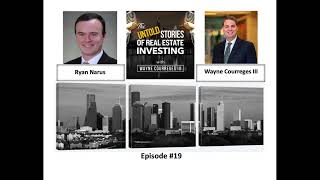
YouTube interview episode (recorded 2022-11-28) of "Untold Stories of Real Estate Investing" hosted by Wayne Courreges III with guest Ryan Narus (principal, Archimedes Group). The conversation explains why Narus focuses on mobile home parks in the U.S. Southeast, his charitable goals and mentoring, business strategy (land-lease vs. park-owned homes), pricing challenges and lack of institutional pricing/data, underwriting on potential (value-add) vs. actuals, financing difficulties for new operators, operations and expense recovery (utilities, trash, infrastructure), limited third‑party property management options, and syndication/partnership approaches. Episode includes concrete examples and hyper‑specific anecdotes (e.g., pitching banks, acquisition and rehab examples) and closes with mentorship/resource links.
Questions this video answers
17 mobile home parks
1,662 units
February 1 (annual rent increase baseline tied to inflation)
Month-to-month leases (state-dependent)
He pitched 40 banks and received 40 no's for his first deal
Chapters
Foreign.
To the Untold Stories of Real Estate Investing, hosted by Wayne Courageous iii, a place where active and passive investors come to hear the good, bad and ugly of real estate investing. Our guests consist of experienced operators and investors who want others to succeed by sharing their stories. If you're looking to syndicate deals or grow your wealth passively in real estate, you've come to the right show. It's now time to sit back, take mental not and enjoy our next episode of the Untold Stories of Real Estate Investing.
Welcome to Untold Stories of Real Estate Investing. I'm your host, Wayne Courageous. Today I'm eager to learn from Ryan Ayers, the principal of Archimedes Group. The Archimedes Group is a private real estate investment firm focused on mobile home parks in the Southeast United States. Their goal is to provide safe and affordable housing for less affluent Americans while delivering extraordinary returns to their investors. Ryan is a double graduate of Wake Forest University with an undergraduate degree in psychology and an mba. He's a safe made real estate entrepreneur who owns and operates 17 mobile parks spanning 1662 units. Ryan started with no money, no network and no experience. He was in his 20s with more student debt than money to invest in his deals and was able to sacrifice, take action and scale his business. Welcome to our show, Ryan.
Wayne, I'm honored to be here. Thanks for having me.
Yeah, man, so I am. I told you prior to the show, but I'm excited to really dig in because I don't know much about mobile parks. At least I don't think I know a lot about mobile parks. And so I'm going to be learning so much talking with you and then obviously the benefits, our listeners will get to benefit from that as well. So let's get started. And how did you get into mobile park investing and what makes this investment class more attractive to other investments like multifamily or office and other asset classes?
Sure.
So I had actually been actively looking for a business to start for years. I had read hundreds of books, I had networked, I had introspected. Ask who I am? What do I want out of life? What type of business do I want to start? And in that soul searching educational experience that I kind of thrusted myself into making myself available for the right opportunity to hit, mobile home parks presented itself to me. So that's the actual answer. Now the funny answer is I am a huge fan of trailer park boys and when the opportunity hit, I was like, if it's anything like this show I'm in, that's hilarious. Let's go and do some fun stuff. But why mobile home parks? For me, first and foremost, my charity goals in life. I realized at a really young age that I could make a big difference in helping people get their education. And I realized that a lot of underprivileged children, it's not that they're not smart or don't have potential, it's just that for one reason or another, they don't just have someone who's there, who cares. And for me, being able to come in to buy affordable housing and improve it, make it cleaner, safer, much like almost completely eradicate all the crime, it removes distractions away from kids so they can get their education. And on top of that we've also created a partial college scholarship and we've helped their parents build credit while they pay their rent. And we've done a lot of really cool free food giveaways, all sorts of cool stuff to basically help people get their kids educations and live well. So that way I don't want folks to think that they're living in poverty. I want them to think that they're living in affordable housing. So in other words, someone like a nurse, cna, like a school teacher, folks going through divorces, just normal people live in my communities and they just, they need affordable housing. I mean if you look at teacher salaries, it's pathetic. If you look at how much a nurse can make with two kids, it's not good. It's a very expensive place to live. The United States of America and affordable housing. When you hear mobile home parks, you tend to think trailer park boys in Hollywood and it's just not the case. So that's a big reason why for me it checked all my boxes, so to speak. It was the business I was meant to start. Now your second question there. Why mobile home parks? Why not self storage or other multifamily or class office or any office for that matter. And the truth of the matter is when I went on my multi year study deep dive of myself and who I was and what I what type of business I wanted to start, I realized I needed to, whatever I picked, be completely enamored with it, just absolutely in love with it because it was going to be so hard to start any business because I had no money, I had no network and I had no experience. It was for that I had more student loan debt than cash. It was really bad. So I realized whatever it was that I was going to start, I was going to have to love it and make serious sacrifice. So for me, I love the fact that mobile homes themselves are incredibly difficult to move, it's going to cost you tens of thousands of dollars to move it. So in other words, in a way, you have a captive audience in the regard that they're more likely to sell their home and you get a new tenant or, or abandon their home and you go through the abandonment process or you buy the home from them than them actually picking up their home and moving it. So in other words, your turnover is going to be very, very low. Your demand is going to be insanely high. Because governments don't want to address affordable housing. They love to talk about it, but I found very few people in government actually doing anything about the affordable housing crisis in this country. And the wealthier are getting wealthier and the poorer are getting poorer. That gap between haves and have is showing no sign of the gap is not seizing, it's not shrinking, it's going to get worse. So therefore the demand is insane, the supply is artificially capped because governments don't want to build out new, and it's also cost prohibitive, even if they do want to build out new ones. So from a lot of reasons, both macroeconomic reasons and microeconomic reasons, it is an absolute wonderful space. And I know, like the big thing in real estate is you don't want the three T's, right? Tenants, toilets and trash, which you get all three in a mobile home park. But here's the thing, if you don't own the home, you don't have to worry about toilets. Yeah, you still gotta worry about tenants. But here's the thing, they're not calling you when something's broken in their home that's theirs. And your responsibility then is to be. You're doing a land lease. You are leasing out the right to park a mobile home or rv, because we do some RV as well in your spot. So, yes, you still have to worry about trash. So you have to worry about tenants, you still have to worry about infrastructure. What else is new? Tell me real estate that doesn't have issues like that. But the benefits to me are that you can scale this company, a company on mobile home parks, because not a lot of people are looking at it. Most folks are looking at multifamily. Don't get me wrong, it's still an incredibly competitive space, but relative to multifamily and other asset classes, it's a lot easier to get into because it's harder to get finance, meaning that's an opportunity for you to come in. What is hard means there is opportunity and A lot of people are just not thinking about it or don't want to deal with it because of the impression that they're bad because Hollywood. So it's a very long witted way to say I love this space and I think it is the best real estate niche, at least for me and a lot of others could really benefit by really giving it a hard look.
Yeah, I think it's a great response and you answered a couple of the questions. But I want to dig in on. So it is a land lease. The mobile homes that are on that property are owned by somebody else, but you're buying the land of the park.
Or are some of those mobile homes part of the acquisition that you purchase?
So the big one big reason why banks aren't too keen on mobile home parks is because ideally you don't own any of those homes because what you have if you own the land and the homes is basically a horizontal apartment complex which is going to be basically a C class or below apartment complex because basically you're dealing with affordable housing. Right? This isn't class A luxury downtown Charlotte, downtown Austin housing where amenities and locations sell the opportunity. What sells a mobile home park rental is the fact that it's cheap. I mean, let's call it what it is, it's cheap. And so therefore you're not getting the people with 800 credit credit scores and $100,000 a year jobs. You're getting folks who are, like I said, teachers and CNAs and hospitals and people going through divorces. And you're not a lot of folks on fixed income. You're not getting, you're getting a certain type of clientele that banks deem as riskier. So because it's riskier, they're less likely to loan on it. And also the mobile homes themselves are deprecia assets. They're basically more of a liability and they break a lot. So banks aren't really like pumped to use them as collateral. They will, but basically what do you have left? Dirt, which by and large is not developable. A lot of mobile home parks exist because it's really easy to go and put a mobile home on it. I mean, you've got the cinder blocks, maybe some steel rebar tied down the joists, you're good to go. You can kind of put these anywhere as long as you can send out the infrastructure, which again isn't overly difficult, although it can be cost prohibitive. So in other words, a lot of times these aren't very developable plots of land. So from a bank's perspective, it's not a great loan, it just isn't. Is a cash flowing asset. Yes. Can we do a 1 to 5 debt coverage ratio on that? Yeah, sure. So you can sell a bank on it, but you're not getting crazy cheap non recourse stuff easily. I mean it definitely exists. But anyway, it's because of that it becomes difficult. But to more directly answer your question, the Democrat versus Republican, the super like dividing topic within the mobile home park spaces, do you just rent the lot or do you also own the home and rent the home too? There are wonderful arguments that you can back with data for both arguments, just like politics, there's probably no right answer and the right answer is probably somewhere in the middle and would require compromise. But we're in the United States of America, we don't like to do that.
You can do both. It's, it's not either or. It just sort of, you know, you.
You buy the land. You can buy the land and people can bring their own houses, which you don't own.
Right.
That's they own that or you can go and I guess whoever owns that land and owns the homes they can sell. So it sounds like it's not a clear cut answer, yes or no, just because it's deal by deal dependent either way.
And what one of my friends, Coleman Bubis likes to say, which he is spot on. If you are in the mobile home park business, you are in the mobile home business and here's why people default. People have to move and it is cost prohibitive to move a home out. It's also cost prohibitive to move one in. So therefore you are going to be trading mobile homes. Now again it comes down to the divisive issue here is do you own the home? Some people are very staunchly, like I don't want lot renters, period. I want control, I want the additional profit and I'm happy with that risk. And then the opposite side of that is, oh my God, they show up, they pay me lot rent and I don't hear from them for a month. It's great. So in other words, there are two ways that you can go about this business. Both very lucrative if done right and both really make the opposite philosophy really angry when they talk to each other. Just like Paul.
Yeah, what about, so how do you determine what that land rental fee is? I mean are you looking at comparables? Because there's, I mean with multifamily, I mean there's could be several apartment buildings within a half mile from each other. Are you seeing that with the mobile park? Or you just whatever, you know, you've got cash flow goal and you know, you've got to be competitive, obviously to rent space and get people. So how are you determining that?
So here's probably one of the coolest thing, as a former professional data scientist, or data minor, whatever you want to call me, analytics guy. The fun thing about apartment rent and really a lot of different types of real estate niches is there's actually artificial intelligence programs out there that take in just an insane amount of data and actually give you live time pricing for things like self storage and apartment complexes. So I mean, you have these just like treasure troves of data where you can get just incredibly accurate optimal pricing based on algorithms and big heaping hot piles of data. Well, and mobile home parks, Billy Bob's mobile home park down the road charges $200 because that's what feels right. So it's, you know, not saying that Billy Bob and his family are running their property wrong. I'm just saying they're doing it based on shooting from the hip. So the billion dollar question in my space is how do you get analytics to come in, tell you what the proper pricing is for these units? And no one that I can find has an answer to that. Professor Charles Becker out of Duke University put together a massive study a few years ago. And basically what he concluded is a lot of things that you would probably guess. Location is better, more amenities means you can charge more, proximity to highways means you can charge more. But what he wasn't able to find out, which, again, the billion dollar question in my mind is what is that optimal price? Because there are not many mobile home parks around and they are very different. And because of that, it's very hard. What I do is I look for cost of substitutes, right? So in other words, if Billy Bob's mobile home park is the only other mobile home park in town and he's charging like something ridiculous like 200 bucks, when apartment complexes are charging over 1,000 bucks and up, like, should I be charging 200 bucks because Billy Bob thinks it's 200 bucks? No, I think that's wrong. I think you need to find a way to get the optimal price point. And that is really difficult to do, especially if you don't own any of the homes, because a lot of times elderly folks on fixed incomes are living in these homes and they've been used to 150, 200 lot rent for years. But the question, the ethical question there is, do you come up and do you charge five? Get them to 500 bucks a month? Well, if you can't live anywhere else in this city for under a thousand, 500 is a deal. Right? But if these folks are getting 600 to $1,000 a month in fixed income and they own their home and they can't afford to move their home, is it ethical to come in and basically boot them out or force them to sell their home and bring in someone at 500 bucks? It's really hard to make that consideration. What I've done is I've tended to buy more park owned home communities and then basically let the market tell me what the lot rent should be. So in other words, when I go to sell the home, I basically try to get as much as I can and if I can't sell anything at that number, well, there's market feedback for you. I can't sell it at 400 bucks. I might think it's 500 bucks, but no one wants to buy this at 500 bucks. What if it's 400 bucks? What if it's 350 and I let the market tell me and just without a good multivariate regression calculation where I can plug in, all right, population of the city, average income of the city, average C class apartment rent or whatever to plug into the, to multiply by the coefficients and then go boom. The optimal price is 357amonth, like they can do with artificial intelligence and other real estate classes. It is an absolute crapshoot. It's like the wild west. And I honestly think, Wayne, it is going to take years, if not decades for my industry to get really institutionalized. At which point point in time when it is all consolidated and institutionalized, that's when you're going to have really cool data science coming in telling us what the optimal lot rent is.
And they're signing more of a land lease. And is it one five year type of lease? And are there usually rent bumps or you know, how does that typically work out from an agreement with the resident?
Sure, wonderful question. It is state dependent. Some states do not want land leases to be less than a year. Some don't care at all. And the state that I play ball in, I do month to month. And for my residents I always raise rents on February 1. No matter what your rent's going up, it's going to happen at a minimum of inflation. If we are below market, it's going to be a little bit more aggressive than that. But basically I condition my residents to know like, look, $1 today is worth less than $1 a year ago. I have to raise your rent. And if you are not getting raises or if your fixed income is not going up, then you need to take issue with that because you're getting a pay cut if you're not at least matching inflation. So that's how I do it. Once I find what I feel like the market is telling me is the appropriate rent to charge at that point in time, I just raised by inflation and if I'm below, then I try to figure out a way to get up to market rent as ethically as possible by raising rents once a year on February 1st. Everybody knows it's coming and everybody has a month to month lease. And the reason why I do a month to month lease is again in the states that I am in, if you break my rules and you are on a year long lease, all of a sudd we have problems in court getting you to enforce rules like don't shoot guns at your neighbor because he mean mugged you. Stuff like this happens. Stuff like this happen. It happens in every real estate. Any multifamily you're going to have disagreements that escalate and people are going to try to fight each other, shoot off guns. It happens. Now it doesn't. Thankfully it doesn't happen frequently. Last year we had one shooting across all of our properties to unless there's any that I'm forgetting just one and the guy didn't even live in the property and we still kicked the residents of that out because we found out the daughter was dating the guy and we still kicked him out. So good news is it doesn't happen frequently, but month to month is the way to go, at least in the states that I operate. But again it's state dependent.
So let's talk about some of the expenses that you have to take care of the property. I assume you don't have to take about or take care of the individual yards, but from a trash or the roadways. What other expenses that happen that benefit.
The community as a whole.
And then are you able to recover any of those expenses?
You know, for example trash, utilities, other things that you typically would have in a normal multifamily that you may or may not have in mobile parks?
Yes, it's property dependent. Some properties have wells, others don't. Others are billed by the city or county. Ones that are billed by the city or county may have a master meter and charge the property one giant bill. At which point in time I go to a utilities commission, for example, in North Carolina in utilities commission sign up just to verify I'm not making a profit on reselling the water but that way I can recoup a percentage. Call it 90% of the water I get billed because there's always going to be leaky joints or small little leaks along the line that I'm going to have to pay for. But then sometimes you have direct billed where it isn't ever your problem. The resident pays the municipality or county directly. Same thing with sewer. Sometimes you have septic wastewater treatment plants that come with costs. Sometimes it's direct build, sometimes it's billed through the county. So all you have to do is maintain those lines. So you're always going to have infrastructure costs, maintenance, replacements, stuff like that. Trash similar thing. You're either going to have individual totes or a pull away universal can to spread out the middle for everybody to use. You can pass that along to them. They can also be in a situation where it is direct billed from the trash company. That happens as well. So beyond that stuff that you're going to pay no matter what. Taxes, Duh, right. You have to pay taxes on the mobile homes if you own them. You also own a piece of property and you also own a cash flowing asset. And also you have these stupid business licenses depending on the state that you have to pay for once a year which is honestly just a hidden tax. Taxes you're not getting away from, insurance you're not getting away from. And then your lawn again, lawn is property dependent. Some properties I have basically no grass to cut, others are a giant forest. So I have grass to cut and trees to worry about too. So there's definitely a lot of, you know, potholes, playgrounds, there's mal boxes, there's going to be common area stuff that is just going to need maintenance and investment in time. But for the most part there's really not a whole lot going on if you don't own the homes. If you own the homes, it's a lot of work, a lot of stuff is going to break. You're going to find yourself at Home Depot quite a bit. But if you are just leasing the land, depending on your utility situation, it can actually be a whole lot of nothing.
So what about personnel? Do you have a property manager that oversees your portfolio or how hands off.
Can mobile parks be for investors? Or is it a, you know, pretty much an everyday you're in the weeds doing something for the property.
It's up to you how you want to run your business. So you certainly can be very hands off. In this business, if you don't own any of the homes. That being said, there's always something. There's always something literally right here I have a Department of Revenue thing from North Carolina about one of my LLCs that I'm going to have to respond to and get them what they need. Right here I have a violation because somebody left the refrigerator out and it just happened to be when the county inspector rolled through. It happens. So you're always going to have notices from the county. Obviously they're elevated because it's tax time. So certain times of the year you just expect to get notices because people want to say they're doing their jobs right. So like this is insurance time right now. I get inundated with insurance recommendations. So listen, you're always going to have things that are beyond really a product. Property manager, right? I'm not going to have a property manager deal with North Carolina Department of Revenue or the irs. I'm a business owner, that's me. I got to get them documents, stuff like a refrigerator being out. And I got a notice obviously that the property manager can handle. But here's the one tricky thing about our space. There are not very many, if arguably any good third party management companies out there, which is a very different than multifamily when you can theoretically just scale up and utilize third party management companies. The reason why there's not a lot of good third party management companies is because a lot of third party management companies charge a percentage of the gross revenue. Think about it. Billy Bob's Mobile home park charges 200 bucks a month and you cannot find any other rental for under 1000. If you are charging 5% of the gross revenue to manage a unit, that's what, 50 bucks plus per unit at $1,000 and growing and $5. I do that mental math, right? No, $2.50. Hold on. $1. Sorry, $1 for the $10. Sorry, I'm terrible at mental math. For the 200 buck lot rent. So in other words, you're talking about 5x more gross revenue to manage a third party manager. Why would they ever touch mobile home parks? And they're more difficult to deal with because in theory you have a lower class resident in the regard that they're not making a hundred grand a year, they're making a lot less than that. So in other words, there's just not a lot of third party options. And if you're like me and you didn't have any money starting out, I built my own property management company from the ground Up. So in other words, to me, the best way to do it in this space with not a lot of third party management options, if any at all, is to build it up on your own. So in terms of like, is this a hands off business? In theory, absolutely. In practice, probably not. So at least until you get your systems up and running, you get your employees in place. You know, we have a lot of things in my business that are completely automated. We have E signed documents for leases, we have cash pay and E pay so we can do touchless payments. There's a ton of ways you can automate in this space, but whenever you're dealing with residents, you always are going to need a human touch to that. Now whether that's going to be you third party management company or your own, you're always going to have folks who disagree with one another, who don't like what you're doing, who love what you're doing, and just want to tell you thank you all of the above, who, you know, want to work with you on charity stuff. Like there's always going to be that level of engagement. So unless you want to be an LP in a syndication or a fund, you're probably never truly going to be truly passive. But if you do this right and you put in the time up front, boy, you can really have yourself a passive investment.
And you've mentioned several times already that getting a loan, banks aren't too eager to lend to mobile products. So how do you secure those loans? And especially if you go back to when you're in your 20s, doing this for your first time, how did you start secure that first loan and did you do it more through a syndication? Did you put your own money down since you didn't have a whole lot of money then you know, talk us through, you know, how you were able to secure financing on that.
Yeah. So my first one, I didn't. I pitched 40 banks and I am proud to tell you, wayne, I got 40 no's. I struck out hard on a deal we bought for $1.5 million and sold for over four. It was a home run for everyone involved and no bank wanted to touch me. What I had to do is I had to go to my investor partners and they had to pull a favor to get lending on it. It was really, really difficult for our first one. Now our second One we pitched 15 banks and two said yes. Now I have banks competing over me. Now I'm like, I get cold calls from banks being like, hey, can we do your lending? And I'm like where were you six years ago? When I was starting, I had no money. Right now banks want to bet on Archimedes Group, my company. And the thing of it is, it's really tough out of the gate. What we've had to do is basically blitz local banks to get a local partner. And it can be done, it can be done. Local banks, you'll find are more interested in investing in the community than they are other things, which means that can be advantageous to you and they're more apt to listen to your sales pitch. Whereas a bigger bank that has a ton of money to place and have stricter rules and stricter shareholders, they're just going to be less likely to work with you at least out of the gate now in time. When you have giant loan balances and years worth of tax returns and clean books. You paid your taxes, you paid them on time. You know, the debt coverage ratio is phenomenal. Boy, all of a sudden everyone starts being very interested in you. But when you're starting up, you're in your 20s like I was, now I'm in my early 30s. It's tough, especially when you have no money. I had nothing. I mean, I joke like my collateral is my Honda Fit, like so in other words, what's the answer to that? Other people's money? You have to partner with someone who can be a recourse holder for, for you out of the gate or at least a bad boy carve out if you're going to do non recourse like Fannie Freddie, CMBS type debt.
Yeah. So none of the loans, are they all recourse loans that you would get for mobile parks, are they out of.
The, out of the gate? Yes.
Yeah.
So how do you source and how are you underwriting these properties? Are you just targeting certain cities or are you open to like if someone's in California listening to this, are you open to getting that type of call on, hey, this is an opportunity or how are you sourcing and underwriting?
Sure. So underwriting is no different than any other real estate class. You're going to have your typical pro formas and the banks kind of want to laser in on the debt coverage ratio as well as a bunch of other factors. But let's be honest, all they really care about at the end of the day is that debt coverage ratio. They want to be. They're curious about how you're, what you're going to do, how you're going to execute your business plan and case studies about what you've been able to do formerly. That's in terms of, you know, that type of underwriting now when it comes to buying deals. So the thing that I hear time and time and time again is, oh my God, everything's overpriced. I can't buy anything. And I think the reason why I said right Now, I've bought 17 mobile home parks, I have five under contract, and I swear to God, I get a new lead at least once a week. That is a decently viable lead. And, and I actually argue that whenever you find yourself saying, gosh, everything is so overpriced, I can't compete, what I think that is a signal for is that is the market telling you your strategy's wrong, you need to change your strategy. I am someone who almost exclusively buys in major metros in the south, southeast, Charlotte, Atlanta, Spartanburg, Greenville, Asheville, Knoxville, Charleston, Columbia. I have a handful of Durham, Raleigh, Durham. I have a handful of market and a relatively speaking short list to call on. And I have five deals under contract and I've bought 17. Do not tell me that there are the deals are overpriced right now. I am not overpaying. I am not overpaying. What is different about me is I have a very unique strategy. And my strategy is I don't really care how big the mobile home park is. If it is in a big city, I want it. I want it and I'll overpay for it. And I especially like stuff with lots of problems because what gets me really excited is when I have an ignored property in a big city with a dramatic shortage of affordable housing. So let me give you a quick, for example, bought a mobile home park in Stanley, North Carolina, a suburb of Charlotte. It has 33 units, 31 homes, and two residents, both paying like 150 bucks a month. I mean, this property had waist high grass. It had not been touched in years. And we came in and we were almost 100% full. We have a handful of homes left. This morning I checked, I think it was four homes that we have left to bring wonderful residents in. And we're. It's been about almost six months now. And we dumped a ton of tens of thousands of dollars into this property. We've brought in and screened and found wonderful people to come into this property. We've dumped in thousands and thousands, tens of thousands of dollars rehabbing homes and getting livable. I have awesome before and after. I'm going to have awesome before and after footage where I can show people these are units that exist that are legal and Conforming that if the government doesn't want to build new, guess what, I can come in and I can take a unit that existed and make it affordable housing. That gets me excited about it. So that's kind of my strategy. And because of that, I don't really feel like that deals are overpriced. One of my real estate mentors left me with a million just wonderful nuggets of wisdom. But one thing that he said is you can always pay more than the next guy. And what's brilliant about that is that's a way to explain away this concept of, oh God, things are overpriced. I can't compete, yada yada yada, you can always pay more than the next guy. This guy paid like an ins an over absurd amount for an office building in Houston, Texas and then set a record when he sold it in January of 2020 to an oil company. What a horrible time for that oil company to buy that for a record price. But at the same token, he couldn't have timed it better. What does that mean? What that means is just because something is overpriced today doesn't mean in 10 years it's not going to be like, oh my gosh, I should have bought. Bought everything. However, this ties back to underwriting, which was part of your question. So I want to tie what I'm all this back together. So how do I underwrite? How I underwrite is I go, what am I going to make this property worth in terms of cash flow? And then how likely am I to pull off the business plan? So what's my execution risk and what is my downside risk if I don't pull it off, off. And from there, I actually, for the most part, don't buy on actuals. I buy on potentials. So that property told you, I told you about in Stanley, North Carolina, we bought it for 225k and at an 8% capitalization rate, when I am done, that's going to be worth about a million dollars. So I will 4x the value of that mobile home park. There is a zero. That was a negative cap rate going in. Now, I know that's an extreme example, but a lot of people in my space are underwriting this way, which is what am I going to take this to? And as long as they are okay with the execution risks. In other words, if I don't pull this off, then what? How much money am I going to lose? How much am I going to take a bath on if I sell? And that's how we're underwriting, we're not going, oh man, I need an A cap going in or I need 8% cash on cash return or 10% cash. No, it's not about going in. It's about what can I do to add the value to basically make this deal make sense. Because right now, I mean, I get cold called almost every day by someone else trying to buy one of my mobile home parks. And people are calling from all over the country. New York, California, Florida, all over the place. The competition is there, the market. If you are finding yourself saying, man, everything's overpriced, guess what? Everything is overpriced. You can always pay more than the next guy. If you are, you have a unique enough strategy and you are confident in your ability to execute, you will look back in 5 years, 10 years, 15 years, and go, oh my God, I could have bought what for what? That's how I'm thinking through underwriting nowadays.
Yeah.
And so when you're educating your investors. So do you syndicate any of your deals or is this all now you're of a scale where you're putting in your own money. Are you still using other people's money?
You should always be using other people's money. If there are only a handful of deals and you have enough capital on your own, that's when you basically. And you're okay with the risk, then don't take other people's money. If you want to scale a business and you feel like there are a lot of deals and there will be deals in perpetuity, always take other people's money. Money, it will multiply your capital and lower your risk. It is an absolute no brainer to do that up front. I've actually never really truly syndicated a deal. I've only partnered with highly qualified people. So other mobile home park operators, folks from other real estate disciplines that are bringing their skills in with me. So, I mean, I guess in theory I'm syndicating deals, but I'm really not because everybody that is in deals with me is active. So I don't have any LPs.
That's how you're able to get away with overpaying a little bit. Because you're all active and you see the long game where you can wait, you don't need that cash flow. You're not worried about cash on cash today. It's all about, like you said earlier, underwriting to its potential and getting there. So it could be that five, seven years, you're looking at the long term, not that Monthly cash flow. And I think that's why people are so into, for example, my investors in particular, multifamily.
You know, we do have a criteria.
That we go off of on, you know, returns, say cash on cash or the IR or such. So that's very unique and great because you can do it.
Because we, we all do look back and be like, oh, I mean, yesterday.
I was thinking about a property that.
Has gone up about 10,000 a door in a year. It's insane. I'm like, oh, that was overpriced then. But, you know, and it's just the reality of real estate, especially with lower interest rates. So just the last few minutes of time, can you talk to about anything that not so much talked about in multifamily or, excuse me, mobile parks or real estate investing in general, like some overlooked aspects and we'll close there. And then if you could share your information, the success that you've had, if you are looking for investors to invest in your deals or I think I know I saw on your website that you have an education platform for others to mentor. So however you want to close with that. But I'd love to hear if there's any overlooked aspects to real estate investing that you've seen others do.
Yeah, I think the biggest overlooked aspect in real estate in general is introspection is going, who am I, what do I want and what am I willing to sacrifice to get there? And I think you bring up a really great point which is, look, a lot of folks have been taught go and do some type of preferred return structure, you know, a pref 50, 50 split, 80, 20 split, whatever that split is. Right. But the problem is if you are only if you're going to chase after properties and overpay, so to speak, for them, and you're only going to hit 8% cash on cash return, you're never going to pay off that principal initial investment. You're only basically going to hit your preferred return every year and that's that. And then you have to bank on exit or a refinance to pay back a large part, if not all of that capital back. And I think for me, of the 17 deals that we've done, only one of them we did with that preferred return structure. And I'm looking at the numbers now and I'm like, God, I really am glad that we did not go down this route. We got creative. So in other words, I loaded all of my incentives up on the front end. Now in the long run it will cost me more money to do that in the order of about 10% on average. But the thing is, I've done the math on this. It's going to take me almost a decade to get back to that point and I get the cash flow. In the meantime, I could distribute as much as I want or none. And to me, this all comes back to this one point, tying it back into that question you just asked. Like, what is overlooked in real estate? Well, what is overlooked in real estate is introspection, number one. Knowing who you are, what you're willing to sacrifice. Yeah, yeah, yeah, I said that already. Creativity. Creativity is overlooked in real estate. You don't have to do what everybody else is doing if you have consenting adults who are accredited investors. And depending if you have a 506B or C, you can also take on non accredited investors. Or do it like I do and just have everybody be active and everybody has a. Everybody's got something to do, right? You can get creative and get in there and have everything you want. I am recording this right now in the middle of a business day from my house. I can hear my son in the other room. And this was pre Covid. So this isn't like, oh, I'm working from home now, because Covid. No, I've had this for several years. I have no business being here, Wayne. I have no business being here. I'm not that smart. I'm not that hardworking. I'm really not. What I am is clutch. I would rather be clever than smart. I basically life hacked my way here. I figured out how people get rich and I studied them and I did stuff people weren't willing to do because I figured out who I was, what I was willing to do, where my comfort zone is today, where it could be tomorrow. And made big bets on myself and was a big boy, put my big boy pants on, took some big risks. And the cool part about it is, I'm at home. I have a reasonably good net worth for my age group. I am no longer starting with nothing. And the best part about all of this, Wayne, is I get to help people along the way. So to answer your last question there, what do I do? I mentioned earlier, I have a partial college scholarship for my residents. I help them build credit. I do free food giveaways. I help folks pay off predatory loans before I really thoroughly enjoy giving back. I want to leave this world going, I made the world better because I was. Was in it. Not that. Oh, man, if I only made another million dollars. No, I want to be on my Deathbed thinking about my friends, my family, and what good deeds I did on this earth, who I helped. And in that spirit, beyond just what I do for my residents, we also started a mentorship program. It's called Mobile Home Park Mentors. So you can go to my website, Archimedes grp.com or listen to my podcast, Mobile Home Parks in Real Life, or go to my mentorship website, just mobilehomeparkmentors.com and what I quite literally do is we coach people into how to get started into this business, how to bust through. Oh, God, everything's overpriced. How to bust through that, how to formulate a unique strategy to get exactly what you want out of this space. And ultimately, what I actually want to do. And this is gonna sound bizarre, I actually want to train up my competition. So literally on Sunday, I was having drinks with one of my first three mentees. His name is Craig, and I was sitting down with him. And Craig's profusely apologizing to me for outbidding me on a property. And I said, craig, what was one of the first things I told you? I don't care. I have an abundance mindset. I would so much rather lose to you than someone who's going to come in and be a slumlord. I know you on a very personal level because I was your mentor. And I am so proud that you beat me to this deal because you're going to do phenomenal things here. I don't care. And that's a really bizarre thing for most folks to hear, like, why are you literally training up your competition? And here's why. Because I would rather lose a deal to Craig than a slumlord. I know Craig is going to go out and do wonderful things for those residents and his employees and investors and everything. And that's what I want for my space. These are very vulnerable people. A lot of them are very vulnerable people. And it is not cool to come in and do very unethical things. So to me, I want to fight the good fight. I want people who are motivated to get into this space who are willing to sacrifice to get in this space. And I will reward you by being your mentor, so to speak, by helping you formulate a unique strategy, helping you cold call, helping you find a way to get deals, helping you operate, helping you set up systems for everything, employees, cold calling, mailers, broker outreach, the works, so that you can go and run a good business, so that while this industry consolidates, we can help people along the way. So I am all about preserving and enhancing my the affordable housing in the United States of America, which is my company's tagline. And that's what I'm about. And like my favorite rapper Tupac used to say, I ain't hard to find. My name is Ryan Neris. You can google me N A R U s and my LinkedIn. I'm a wide open door. You can email me directly through my website or LinkedIn. If I can help you in any way, shape or form, you do not owe me a penny. I don't care. I genuinely speaking love helping good people. So if you are listening to this and you're like this guy inspired me. I think this guy can help me, do not hesitate to reach out. I am so happy to help and I don't expect anything in return.
Ryan, thank you so much. This is a great episode for me personally cause like I told you before, I didn't know much about mobile parks and you really cleared up a lot and I appreciate it. So thank you and keep up the good work and helping people and others. I love everything you said so I appreciate it. You have a great rest of the day. Thanks Ryan.
Thanks for having me.
That's all for this episode. We hope you subscribe, share and leave a review of the show. For more information about passively investing in multi family apartments, check out Wayne's free ebook by going to crea. Also follow us on Facebook by searching CREI Partners this was the Untold Stories of Real Estate Investing.
More from Wayne

September 2026 Meetup: Investing Ahead of Growth: The Bryan–College Station Opportunity





May 2026 Meetup - Apartment Complexes & Passive Investors: Opportunities & Risks


March 2026 Meetup - Reading the Market: Economic Indicators Every Investor Should Know


February 2026 Meetup - Syndication 101: How CREI Partners Structures Deals for Investors

Build-to-Rent (BTR) Communities Explained: Why Investors Are Paying Attention