Senate Eskridge-The Untold Stories Of Real Estate Investing- Navigating Market Turbulence
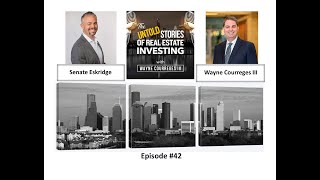
Interview-style podcast (YouTube) featuring Senate Eskridge and host Wayne Courreges III discussing multifamily real estate investing. Topics include Senate’s path from single-family to multifamily, active vs. passive roles, five operator “buckets” (deal finding/due diligence, risk capital, key principal/sponsor, investor relations/capital raising, asset management), underwriting and debt considerations (preference for long-term fixed debt, caution around short-term bridge loans), coaching/mentorship, networking for passive investors, and two personal proud moments. The episode is educational and aimed at prospective active and passive investors.
Questions this video answers
"595 multifamily units" (as stated in the transcript).
Transcript states "across 1212 transactions" (quoted as presented in the audio; may contain transcription duplication/typo).
Chapters
Welcome to the Untold Stories of Real Estate Investing hosted by Wayne Courageous iii. A place where active and passive investors come to hear the good, bad and ugly of real estate investing. Our guests consist of experienced operators and investors who want others to succeed by sharing their stories. If you're looking to syndicate deals or grow your wealth passively in real estate, you've come to the right show. It's now time to sit back, take mental notes and enjoy next episode of the Untold Stories of Real Estate Investing.
Welcome to the Untold Stories of Real Estate Investing. This is your host, Wayne Courageous. Today I'm excited to have Senate Eskridge on the phone of the podcast with us. Senate is an expert real estate investor who currently owns and manages portfolio of single and multif family homes numbering over 500 units across the country. He has over 10 years of experience in real estate investing and more than 20 years of experience in business development, management and sales. SIN is a multifamily coach that teaches students how to purchase multifamily properties. He hosts a real estate investors group in his hometown and brings investors together to network and learn with each other. He's driven by self development and he's completed numerous courses including Dale Carnegie's leadership training. Welcome to the show Senate Wayne.
Thanks for having me. I'm excited to be here.
Yeah, I'm excited as well. And your knowledge and background is going to be really beneficial to those listening. So let's get started. Tell us how you got into real estate investing and a little bit, you know, just about your path and where you are today.
Yeah, for sure. You know, so I, I've been an entrepreneur the majority of my life. Every, you know, I've had one or two like W2 style jobs but for the majority it's always been self employed of some kind. I always knew that for me to be successful I had to go out there and beat my own path. Go way, way, way back. I was actually the kid in school that sold things out of their locker. You know, the candy or you know, whatever. Some things we won't talk about but I was always that guy that had something that I was doing to earn the extra buck. And so real estate specifically I got into it, I had a house that I couldn't sell and I had the bright idea, well what do you do with something you can't sell? You rent the thing out. That's really, really where I got started was with a house. It was around the 2008 cycle and nobody was buying houses so I had to move and I moved, had a vacant house, I rented it out and I fell in love with the cash flow. And then I decided to do it again, make a little bit extra money. Is that just that guy that was trying to earn some extra money? And I figured out that I was pretty good at it after doing two or three of these things. And then I decided to buy a junker and fix it up. And I discovered the brrrr strategy for those that are in the single family space, right? You buy, you buy a junker, you fix it up, you rinse it out, you increase the value by doing that and then you refinance it and you get the majority of your money back. There's a great book out there called, called Burr. I think it was David Green that wrote it. And I really learned a lot through that process and I did that several times. And then once, one time I had a house that I was fixing up and I was going to rent it out and somebody offered me a bunch of money for it. And now lo and behold, I flipped a house and you know, I made, I made what I figured out that it would take four years of rent that I could make in one sale. And I'm like, that's a no brainer. So I flipped more houses and then I did some accidental wholesales. And then I started getting to duplexes and triplexes and fourplexes, just trying to scale up. And I finally got to the point where I had this portfolio that was just taking a ton of my time. And I'd really built myself a job in the single family space. And I still had my other primary job. I was a financial advisor. I help people invest in stocks and bonds and mutual funds, those types of, those type of work. And I was spending so much time in both of these businesses. You know, I had five kids, I have five kids and they were all small at the time. And I realized that I was not giving them the attention they needed. So I had to do something different. I decided to shift my focus at that time and go into commercial real estate, specifically multifamily apartment buildings. And I spent a lot of time looking at every aspect of commercial real estate. Self storage apartments, mobile home parks. I looked at everything you could imagine in that realm. And multifamily made the most sense to me because I had all that rental experience. And I found a niche that I believed is recession resistant, has all the benefits of being recession resistant. Great returns and also great tax advantages as well. But I knew I couldn't do it alone. So I Spent a lot of time vetting every possible mentorship group I could find. And I finally joined one that I thought was absolutely phenomenal and dove headfirst into their education. And I just became a sponge, learning everything I possibly could. And at that same time, I started selling all my single family homes and moving them all into multifamily. And I'm still in that process. I got a couple left, but the goal is to be completely out of multifamily. But all in this, in, I'm sorry, out of single family and into multifamily. And through that process, I joined a second group that is all focused on helping investors invest into multifamily. And then later I was offered a position to be a coach, as we talked about. And now I teach people how to buy multifamily as well as invest in multifamily and buy multifamily. So you read my bio, but as of Today, I have 595 multifamily units. That's the number right now at this very moment, across 1212 transactions in the multifamily space.
That's exciting. So would you looking back and when you talk to your students or people listening, do you think single family is still a good way to get into the business or would you have done it a little different going into multifamily a little earlier?
Oh, the answer is it depends. So let me, let me expand on that a little bit. I, first of all, I'm a big fan of self development, as you said, and Stephen Covey is one of my favorite authors. He has a book called 7 Habits of Highly Effective People. One of those chapters is Begin with the End in Mind. And really what that means is figure out where you want to go long term and make sure you build your roadmap to there. My opinion is if you want to be in multifamily, start in multifamily. That's my opinion. Somebody that's just getting started never done anything ever, and they say, how do I start? And my question is, do you want to be in multifamily? They say yes. I say start with multifamily. Now maybe you can start a little smaller, right, with some smaller joint ventures or something of that nature. But I don't believe that single family is a necessary step into multifamily. Now, there's nothing wrong with single family. That's totally different conversation. I know, I know some, I have some friends. They're actually in the Austin, Texas area. They have over a hundred single family homes and they're killing it. They're doing amazing. There's nothing wrong with that if that's the route you want to go. I'm just saying it's not a necessary step to go to start with singles and get into small multi and then get into bigger multi.
Yeah, I think those that aren't educating themselves on real estate investing through the books and podcasts. I know before I even was really looking, I started with single families and it was just starting with single family, just with the mindset of I wasn't able to buy the larger multifamily or commercial real estate assets. You know, that's reserved for people with a certain amount of net worth, you know, et cetera. So I think naturally, you know, you, you, you tend to go to buying assets that you can hope, you know, based on your net worth, et cetera. You know, it's like, oh, this could be an easy way to get into the real estate. And to your point, there's not a right or wrong way of getting in real estate investing. If you want to get into multi family, get a multifamily. But single family has done, you know, a lot of people really well. It just as you're experiencing and have experienced the time that it takes to manage each single asset and then when there's a vacancy, you know, the time of no cash flow and getting it renovated for the next, you know, renter and then the leasing commission, it's just when you look at it, the money comes, you know, it's there. It's just a lot slower and in my mind a little riskier than say a multifamily where you have multiple units giving cash flow and even if you have a vacancy, you're still, it will pay your debt service and having some cash flow.
We are on the same page there, 100%. In fact, I, I think there's nothing riskier than a single, one single family house. There's just way too much risk. When I said getting started in a single family, I'm talking like, are you going to go do lots of them? Just one single family house is a problem in my opinion. And let me explain a little bit more why. It's a lot of stuff you just alluded to. But let's dig in a little bit more. The average single family house makes somewhere between a hundred and two hundred dollars per door per unit, single family. So let's just say it's a hundred dollars a month you're making, that's twelve hundred dollars a year in profit that you're going to make. And you've got to put a ton of time like you just talked about to make sure it's leased, pay the bills, manage your property manager. Because you're not going to get professional property management on a one single family house. You got it. You've kind of either manage it yourself or maybe have a mom and pop property manager. And so that twelve hundred dollars, if you divide amongst your time, it's pretty minimal per hour really. But what about the risks? When was the last time you bought a hot water heater? You know? Yeah, yeah, twelve hundred dollars a year. It that, that's going to eat a lot into that, you know, just a hot water heater. But what if it was a water main or a roof or a door or something like that? And then you mentioned vacancy. If it's vacant, your single family house is vacant. How much money is it making? 0. But it's actually worse than that because you still have all the bills. So now you're losing money. If you have a duplex or a triplex and you have a vacant unit, you're probably breaking even, but you're not making any. When you have 100 unit complex now, one or even say five or six vacancies don't really hurt too much. You can still pay the bill like you said, pay the debt service, pay everything else and still make money. And even if you're only making a hundred hundred dollars per unit, which is, you know, light average to light per unit, that's what, $10,000 a month. So $120,000 a year. You can buy a couple water heaters for that.
Absolutely. I, I'm sure there's some aha moments or like, you know, light belt lights turning on and people's minds listening because again, most people are thinking single, single family and not really seeing there's a big picture. And I can speak for myself at least that's what happened when I started getting into multi family. A lot of these other things, you know, it's like, you know, why didn't I start a little a little earlier? So for those that are saying, okay, I want to get into multifamily or say commercial real estate in general, not, you know, just multifamily because a lot of the steps are similar. If you're looking at storage or you know, other asset classes, what are some of the steps that people need to do initially to get. And I'm talking we're sort of focusing more on the active side. But maybe starting off in passive investing is the way to go. Too. So you know, the range can, can go all over but you know, what are those steps for doing deals that you, you couldn't buy on your own?
Yeah, I, I'm really glad you, you clarified the difference between active and passive. And I want to talk about both opportunities here for just a minute. So the, the first thing is I, I do want to talk about passive first and, and the reason behind it is it's a little easier to, to explain. Most people think that real estate is a simple, easy thing and going back to the single family, they don't realize just buying a rental is a lot of work. They, they get into it and they think that they're going to create passive income for themselves. They're going to create income for themselves, but it's not passive. I personally believe, and this is, this is, I've said this before and I'll say it again, the dream job in real estate is to be a limited partner or a passive investor. So to get started as a passive investor, what you need to do is you need to find people like Wayne, people like Senate who are out there buying apartment buildings or whatever that asset class is on a regular basis and get to know them and trust them and ask how do I invest in your opportunities? So the first step is networking and get to know these people and start following them. I have a list of great operators that I'd be happy to introduce anybody to anytime. So I'm, I do this same thing, but I'll also gladly introduce you to other people that you can talk to as well and start learning about their opportunities and just get educated about what is this passive investment and what does it work. Because literally as a passive investor, all you have to do is vet the deal, read regular updates about the property, whether that be monthly, quarterly, however they're sending them out and cash the check. That's your job. It's a dream. It's a dream opportunity. Vet the sponsor, read the updates, cash the check. That's it. On a now to go back to active. How do you get started as an active investor? Well, I am a huge fan of coaching obviously. Right. I, I am a multi family coach. I teach people how to buy apartment buildings. I personally believe the first thing you need to do is decide you want to be an active investor and then figure out what kind of investment you want. Like what's that goal five years from now? What's your life look like five years from now? And kind of really think about that and then hire a coach. Yeah, selfish. That's me that I'm a coach. Right. I'll happily talk to you about the coaching programs that we have and what that looks like, but find a coaching program that fits your goals and fits your values. And yeah, you're going to spend a little bit of money on this coach and on this coaching program. But a good coaching program is worth 10 times what they charge. When I, when I talk to my students, what I tell them is my goal is to 10 extra money. If you give me a dollar, I want to give you $10 back. That's my goal. And any good coach should do that. So that's the first step. Second step after hiring a coach is to figure out which aspect of the business that you're going to excel in. Right. They've said all the time that commercial real estate is a team sport. It's getting cliche. People are saying it all the time, but no one person, well, unless you're the rare exception, no one person can do all of it. In our business, that's one of the biggest differences between single and multi. I believe anybody can go out and buy a single family house and rent it out or duplex. But to be able to go buy 100 unit building takes a lot of special skills, a team of people and a lot of money. What I say to people is, you know, I've developed those skills and I have the teams of people. I just need to pull people's money to, to, to buy them. Right. That's, that's how I start my sales pitch every time for passive investors. So what parts of the business do you want to do? And there's really five buckets that that falls into and I want to hit that real quick. And then we'll, we'll stop in and I'll stop rambling here.
This is great.
So deal finding, are you going to go out there and hunt deals? Whether that be through brokers or cold calling sellers or something like that, hunting deals. And that is a job all day, every day after, after finding the deal. Part of that is due diligence and making sure that it's a good deal, vetting it, going through, doing property tours, going through each unit to make sure that the drains work, checking the roof, doing the legal side, making sure the, the rent rolls are right and the leases, it's a ton of work. And there are people that shine in that, that role. After that, the next position is risk capital. Someone has to pay to buy these assets. They have to put down earnest money, pay for appraisals and pay for inspections and all this type of stuff, it takes a lot of money. And that's a special person that's willing to put up tens or hundreds of thousands of dollars that could just go up in smoke if the deal falls apart. And after that, sometimes it's the same person's risk capital. You need to have a key principle. This is someone that has a net worth equal to the size of the deal and liquidity of 10% of the deal. So if you're buying a $10 million asset, you have to have. The team has to have $10 million worth of net worth and a million dollars in liquidity. You got to have somebody like that, somebody that can help you with that. This is also sometimes called a deal sponsor. I've sponsored several deals for people and I'll be happy to do that again for the right person. The next job is investor relations, or some people call this capital raising. This is where you pool, find the people's money to pool together to go out and buy this, this asset. Use that $10 million asset we were talking about earlier. Given the current climate, you're probably going to have to raise somewhere between three and a half and four and a half million dollars to buy that $10 million asset. So you've got to have a pretty good investor pool. And that takes a special kind of person. And then the last one, and in my opinion the most important is the asset manager, the person that's going to run this deal day to day. And this is the people in the trenches all day, every day, talking to the property manager, talking to the accountants, making sure that the property is going, the business plan is going through and following through so that you can pay the investors their investment and you can exit the property later. So sometimes people fit into more than one of those five buckets. But my experience is that's us. Those are usually the buckets that people fit into.
Yeah, I think you said well with team sport, you know, and that was something, you know, that's a little different from single family because you're doing it likely yourself. It's your net worth, it's your down payment, it's you managing the property, potentially, you know, maybe even finding the tenant and, you know, going through that whole background process to approve them, going into multifamily. It's a team sport. So those five buckets are huge. Thanks for going through each one of those. We haven't really dove dived that deep into the different buckets, but you make a great point. Somebody coming in doesn't have to do it all, you know, and you know, you find what really motivates and excites you some, you know, if that asset management, that that's the joy that I enjoy most, you know, so that fits in the bucket and I can raise some capital. But then, you know, there's others that, you know, have more of the risk tolerance to put that earnest money check up or you know, sign them alone, etc. So I was really well said. So going back to finding a coach, I can't overstate that enough either because in any thing that you're doing, whether it's sports or, you know, your first job, you know, there's usually somebody you're looking up to, there's somebody that's guiding you, directing and sort of helping you when you stumble and investing in a coach and the right coach who's going to open their Rolodex and say, you know, these are the lenders, these are the inspectors, these are, you know, these are the partners that, you know, we've used and now we've opened it to you since you're part of that program. It's talk about a time saving process. It really helped us, you know, accelerate our growth too. So I think that is huge. Not only from a stance of learning, you know, the do's and don'ts of whatever step in the process you are to closing and post closing, but just opening it up to your partners and resources that, you know, are going to be available to that coaching student.
So I agree with you so much. One thing that I've learned, I've studied a lot of elite performers over, you know, my time. And what I've learned is the higher up someone goes in the ranking, the more coaches they have. If you think about the go to sports because that's what most people really know. But if you, if you go look at, you know, Tiger woods, he's got several coaches and has several times. Michael Jordan had several coaches the entire time. All of these elite performers had coaches, musicians, there's voice coaches, there's performance coaches, actors. The higher up people go, the more coaching they have. The beginners, these are the people that are most resistant to getting coaching. And so what I've discovered is once someone opens their mind, they get a little success. They see the benefits of hiring a coach in whatever aspect you're doing, then they can get more. Because the whole job of a coach is to compress time frames, you know, help you, help you get to where they are as fast as they possibly can.
Yeah, set that road map so Shifting gears a little bit. Senate, your background initially, you stated earlier was more in financial advising. Stocks, bonds. Now from a passive investor standpoint, and what I tell passive investors is diversification is key. Like in none of my talks with investors is like, hey, take all your money and put it in real estate. You know, there's, you know, we still have stocks, we still even have crypto. We've got, you know, there's a diversification and there's a lot of push towards even investing in, in metals and you know, gold and you know, silver and you know, tangible, you know, assets. So what is your thoughts on that, you know, having that financial advising background of diversification and, and you know, sort of the split, you know, if someone's out there thinking about investing in real estate but just don't know how much to really invest in the beginning as a passive investor compared as a total view of their, of their net worth.
Well, I'd like to answer a couple of different things about that. So first, I do believe in diversification and I'll tell you a little bit about my portfolio. I don't have any stocks anymore. I've taken all my money out of stocks. I do have a little bit of crypto, but specifically I bought into a crypto mining organization that generates crypto and it, so I put in money one time and then it just spits off crypto on a monthly or quarterly basis and now it goes into a wallet. I'm not, I'm not out there buying it, I'm not out there trading it. I'm not anything like that. And the reason I say that, and I wanted to explain that is I am not a fan of diversification when it comes to your time. You know, there's the saying a lot of people have heard the average millionaire has seven sources of income and all that kind of stuff. I say that's hogwash. If you, if you really look at any of these true millionaires out there, they got wealthy doing one thing. So my actual advice is specialize in one thing, get really, really good at it and build a canyon of knowledge. Be a specialist in one thing and be the best and make a ton of money with that one thing and then use that money to diversify through other people that specialize in one thing. So if you're a doctor, be the best doctor you can be. Don't try to be, don't try to be a part time crypto guy or a part time trader or anything like that. Just be the best doctor you can be and then give Money to people like Wayne to invest in real estate and to people like Senate. And if you want some crypto connections and that's something you want to diversify into, I'll gladly introduce you to a couple of my friends that do that. If you want to get into hotels, I'll introduce you to some people. You want to get into Airbnb, I'll introduce you to some people that are specialists in that. My friend Sam is. The stuff he's doing with Airbnb is phenomenal, and he's making a ton of money for his investors. But if you're. If you're a chiropractor full time, you shouldn't be running an Airbnb business. That's my opinion. And I realize that that is controversial and not everyone agrees with it, but my opinion is specialize in one thing and diversify through people who specialize in one thing. Yeah.
So how do you find those people that are special, other than call, you know, Senate, and that's definitely, you know, then interview your info, which is. Which is good. And that's why we do these podcasts. Yeah, but how do people find, you know, you know, it doesn't have to be doctor it could be anybody that is looking to get more on the passive side. How do they even get started?
Well, you. You did. You did hit the first one. And I know you said, you know, other than call Senate, call Wayne, but it's networking, right? There's. There's online meetups where you can jump on and meet people in this space. There's lots of forums out there. Heck, Bigger Pockets is a very famous real estate forum. Get on there and start asking for referrals and references. You can also attend conferences. I just attended a thing called the Best Ever Conference. It was in Salt Lake City, and there were, I can't remember the number, 15, 1600 people there. It was absolutely huge. And I met people I'd never met before that were doing this real estate, you know, different things. You know, one guy runs vineyards, wine. Like he grows grapes and makes wine, and he allows people to passively invest into that. Another one is oil. There was. There's a great company that does oil operations. And again, yes, I would like to introduce you to them, but that's the best way, I think, is to network and get to get it around those people where they hang out. One more thing, there's a couple of groups out there that are investor clubs. My friend Devin runs a group that. Her whole job, the only thing she does is she introduces people to Passive investors every week or passive investments. Every week she highlights a different passive investment. That's all they do. And, and it's a group, you know, small elite group that she's vetted the operator already, she's vetted the presentation and she just presents a different thing every week. That's another opportunity.
Yeah, yeah. I think with the meetups, I mean, meetup.com is pretty familiar to most people, but just put in your city real estate investing, you know, there's, it is networking, it's education, you know that a lot of times can be done at the same time. So you're killing two birds with one stone. So. Well said. So before our podcast, we're just, just talking briefly about sort of the changing market and the tide of, you know, real estate and deal flow right now with interest rates and, you know, things just with taxes and insurance. I mean, it's just sort of a perfect storm in a way. What are your thoughts on buying in today's market? Are there anything that you're being more cautious about or being more mindful of before getting in? And, and I'm want to, and there's two ways to go about it. This active or passive. But let's push it towards the passive because I want to really use this opportunity to educate and in a way protect them for making decisions that, you know, because this is, this is a turbulent time, you know, and we're in April 2023 if someone's, you know, timestamping this. But what, what are your thoughts on this?
Well, I think that you can make money in any market and, you know, you actually make more money when people are fearful and when they, when it's turbulent, you can make a lot more money if you know what you're doing. That said, especially as a passive investor, you really need to be careful and vet the people you're working with and ask questions and make sure that they know what they're talking about. Because the number one risk in one of these passive investments is that you work with somebody that isn't the best or, you know, and I don't want to, I don't want to harp on it or I don't want to beat anybody up, but you need to make sure you're working with good people that know what they're doing. A couple of key components. I want to get very specific and tactical here. If I'm looking at a deal right now, I want to make sure that it has long term, fixed debt. First question, passive investor looking at a deal, ask, what does the debt look like if it's, and if the loan has to be paid off in less than, well, I would say five years, but three years would be a hard line for me. If the loan has to be paid back in less than five years, I wouldn't touch the deal. So there's this thing called a bridge loan, which basically is designed for really short term business plans. And then the, you go and refinance that later. Well, that's a great opportunity if A, you know you can get a loan later and B, you know that you could execute the business plan in that short amount of time. I'm saying that that's a lot harder to do than people think it is. So I only do long term fixed rate debt. Three years would be a hard minimum, but I prefer five or more. Second thing is, I would ask the question, what are your rent escalations? What are your projections? How are you projecting the rent's going to go up and at what rate? Basically what that means is, you know, if the rents call it 800 now, how long does it take to get to a thousand? And why tell me that story? Because if they're just betting on rents going up. Well, I'm sorry to say we've just come coming out of the highest rent escalation period. You know, like if the markets, if the rents are under market or they're doing a heavy remodel or something like that. But you need to know that story. And then the next question would be, what escalation are you doing on expenses? You know, because if, if rents are going up 3%, then expenses are probably going up at least that. I mean, what's inflation doing right now if they're not modeling something you're comfortable with? I wouldn't touch it. And the whole point of asking these questions is not necessarily to know what they say. It's not, it's not the, the exact answer doesn't matter. It's that they have an answer and that they know what they're talking about.
Yeah.
And I, and I could give you 10 more things, 10 more specific questions to ask. I've gone through that several times. But if they're afraid to answer your questions or they can't answer your questions, I would be very leery of investing in their deal.
Yeah, the transparency, open book, willingness to talk through, even open the, the underwriting are all, all good things. I do think that everything that you're talking about with rent escalations being even a lot more conservative than what was previously done, a little bit more Aggressive on the escalations impacts purchase price which the sellers right now are not, you know, are, you know they're going to be. Their valuations are a lot less than you know, what they were a couple of years ago. Right. But if those people are selling in today's market are needing to one because if they can't refi into permanent debt because rates are high or you know, they're having a, you know, sponsorship team internal issue or you know, it just time to sell because of the time period or maybe it was a, it's a small asset and it's just taking too much time and not getting the love it needs. Those are huge opportunities for buying real estate. So when the market is up down to me, when the market's down, that's why we say we're holding a property five to seven years or seven to 10 years, we give a range. So that way we're not selling when we have to and we're structuring our debt in a way where we're not put up against a wall and having to make, you know, bad decisions. Right. So from a passive investor side you want to sort of see that there's flexibility and the timing of exit.
Right.
But to your point there, there can be money and is money made at any time of the cycle. And I think if you look back in 0809 people that were buying assets on pennies of the dollar for what they were at the time just because people were running and not able to, you know that now that was a different financial crisis than we are today. You know, we're not, we're not having a liquidity issue where people were over leveraged, you know, that way it's just these interest rates and if they didn't have a, a rate cap, you know, three years ago Senate as you know like two years ago even we weren't really talking about rate caps very, you know.
Yeah.
And then the bridge loan I actually a little different on that. I think the bridge because I like more of the devalue add type stuff. Right. But on, on the bridge debt that we have on our portfolio we had a three year bridge. We have three year bridge plus one plus one. So I really have a five year.
Yeah.
And then we buy a rate caps. Right. So we spent on the most recent was like $384,000. It was crazy. But the numbers have to work right to, to make it work. But you buy that rate cap so it's potentially not a fixed rate but in a way it's A fixed rate. Because once it, you know, at our point, you know, we're maxed out at, you know, so, you know, but there's different, there's different ways of doing things in different risk, you know, and, and you make some really great points. But one point I really love that you made is not timing really the market. Buying, buying real estate. Don't just sit on the sidelines, but buy real estate. But just make sure you're underwriting is key. Now talk about what we talked about before the podcast where, you know, if the deal works. I'm still in your thunder here, but the deal works at today's interest rates, you know, and you can finish my sentence with that.
Yeah, well, so what I said was I actually love high interest rates. And the reason is I only buy deals that pencil out, they only that make money in today's interest rates. So if the deal works at 7, heck even 8%, whatever it is that you're paying and then it makes money today. Well, my opinion, my crystal ball is, and we know how cloudy those all are, cracks or whatever, that rates are going to come down probably around the election time. I want to get political, but they're going to come down around the election. They're going to have to, that's going to be the, the way that they come down. I'm going to buy a rate today. I'm going to buy a property today at a low price because they're directly, the price is directly inversed to the interest rates. Cap rate directly inverse to the interest rates. And I'm going to refinance it when the rates come back down.
Yeah, no, I think that's key.
We don't know that's going to work. Right. But that's the plan. So. But how do you mitigate that plan? You just said you get a three year bridge with two one year extensions. So that makes it a five year loan. The fi, the market cycle over five years, you're definitely going to be able to refinance it or sell it over the course of five years. You're going to be okay.
Yeah, no, I think it's just there's risk in every asset. As a passive or active investor, just how do we have the conversation before closing day on how do we dilute as much of that risk as possible? Right.
Yeah.
Real estate, you know, even the best laid out plans, reality, the markets, things that are controlled happen. But historically, and this is what I think you know, must be said is historically, real estate has been absolute performer.
Yep.
You know, during each Cycles. Yeah, there's dips and there's ups and, and a lot of that deals with supply too. You know, over being overbuilt. You know, they're, they're building all over now. There's competition and, but we still have a shortage of housing. So you know. Yeah, it, but with all that said too Senate, it's, it's very location based. You know, what, what is happening in Texas and the Southeast compared to the Northeast or you know, some argument in on the west coast. Even though those people that are moving here, somebody's buying their properties back in California. So I don't, you know, I think the west coast, they seem to be doing just fine too.
So like I said, you can make money in any market, right?
Any market.
If you really. I only, my first rule is I only invest, invest in red states. Again, don't want to get political, but if that's, that's my rule of thumb. But someone's making money in la, someone's making money in Seattle.
So yeah, no, I have a good friend who's doing real estate investments in Oakland and they have a lot of rent cap but she's learned the system and you can make money and rate, you know, and, and rent ceiling cities as well. So well center, we're coming close to our time. One of the questions I always ask at the end and I didn't give you a heads up, I apologize. But you know, what is your proudest moment in real estate investing is one and you know, likely there's many proud moments. So just one that's top of mind. And then how can people reach out to you and, and you know, hopefully connect with you soon.
And can I give you two proud moments?
Absolutely.
Yeah. So the first one is one of my tenants. I bought this junkie property and she was super concerned about what we were going to do and raise her rents and all this type of stuff and we, we cultured through it. She, she stayed with us and all that. But after nine months of having this property, I walked up to, to her. We were just in this, in this space and she came up and hugged me and said, senator, I am so happy that you bought this property. This is my home now. I always hated coming home to this place, coming back to this place, I dreaded coming here. And now I feel like it's my home because we provide great places for people to live. Oh, and by the way, her rent almost doubled but she was happy to pay it because she had a home, not some junkie apartment. She went to okay, first proud moment. Second proud moment. I had a real estate co or a real estate student that came to me and said, senate, I want to be this active investor. I want to build this big portfolio. I want to do all this kind of stuff. And. And I asked him this question. Why? Why do you want to do that? And this is something I ask every student, but why do you want to do that? And we really vetted through this for about an hour of why and what the goals were and those kind of things. And really what it came down to was he wanted to retire. This guy made a lot of money, spent very, very little money, and he wanted passive income. And I left him with this food for thought of, do you really want another job or do you want passive income? And about two weeks later, I saw him in person, and he came up to me and looked at me and said, senate, you changed my life. I had this big grand plan of buying all these houses and buying all these apartments, and I realized I was building myself a second job, and I was going to work just as hard after that as I was before at my. I think it was like a podiatrist or something. Like foot doctor. Yeah. Foot doctor. Yeah. And it was gonna have to work just as hard as I do in my practice. And now I know all I really want to do is be a passive investor. And so we built a plan for him where he was going to be able to completely retire in less than five years. Wow. And literally have beach money, mailbox money after that. And. And so that's really proud. I look back and I talk about it all the time. And he's one of my biggest fans. Rants and raves about me every time he can because I really helped him, and I changed his changes trajectory of his life.
Absolutely. Yeah. I still think as an active investor myself, I'm like, passive investing. Be a lot less stress, but problem is. And it's like when doctors or lawyers or truck drivers, whatever, you do what you love to do or you do what is providing, you know, food at the table. But hopefully you're doing things that you love to do. And I like to work in real estate, so I have a feeling I'll be active most of my life. But, you know, but. But for those that are retiring or wanting that, you know, do what they do and as you said, master your one thing and partner with people who have mastered their one thing or the other task, I think that's. That's a big takeaway for me on this as well. So I appreciate your your time, your guidance. How can people reach out to you?
So the best way to find me is on my website, senatescridge.com pretty easy. You google Senate Eskridge. I'm the only one out there. I am on all the social medias and everything as well. You can hit me up there. But my website's the best place. All my links and everything are there. I even have a course on that website that's all about investing101 how to get Started in Real Estate. It's all right there and that's free. So reach out to me. Senateskridge.com awesome Senate.
Thanks for joining us and providing so much insight for our listeners today. And I look forward to connecting soon.
Yeah, it was a fun conversation. Thanks for having me.
Thanks Senate.
That's all for this episode. We hope you subscribe, share and leave a review of the show. For more information about passively investing in multifamily apartments, check out Wayne's free ebook by going to creipartners.com ebook also follow us on Facebook by searching CREI partners. This was the untold stories of Real Estate investing.
More from Wayne

September 2026 Meetup: Investing Ahead of Growth: The Bryan–College Station Opportunity





May 2026 Meetup - Apartment Complexes & Passive Investors: Opportunities & Risks


March 2026 Meetup - Reading the Market: Economic Indicators Every Investor Should Know


February 2026 Meetup - Syndication 101: How CREI Partners Structures Deals for Investors

Build-to-Rent (BTR) Communities Explained: Why Investors Are Paying Attention