Shelon Hutchinson - The Untold Stories Of Real Estate Investing - Building Veterans Wealth
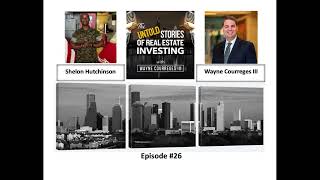
Interview with Shelon (Hutch) Hutchinson, a Master Gunnery Sergeant (E-9) and Jamaican immigrant turned real‑estate investor/operator. Hutch recounts his start using VA loans and single‑family flips (early condo bought for ~$161k, sold ~ $235k within six months), lessons from contractors and market downturns, door‑knocking/off‑market sourcing, and market selection focused on Southeast migration (Pensacola, Augusta, Spartanburg). He and partner Dr. Heath Jones transitioned from single‑family flips to multifamily syndications (most recent: ~167 units in Augusta). Tactical topics include CoStar and county records for owner contact, underwriting/boots‑on‑the‑ground due diligence, partnership/mentorship formation (accountability partners, vet‑to‑vet mentorship), and tax strategies for syndications (cost segregation and bonus depreciation to create early-year paper losses; example: 55‑unit Spartanburg deal produced ~ $800k in investor tax savings in 2019). The episode targets active and passive investors, with a veteran/wealth‑building emphasis.
Chapters
Welcome to the Untold Stories of Real Estate Investing hosted by Wayne Courageous iii. A place where active and passive investors come to hear the good, bad and ugly of real estate investing. Our guests consist of experienced operators and investors who want others to succeed by sharing their stories. If you're looking to syndicate deals or grow your wealth passively in real estate, you've come to the right show. It's now time to sit back, take mental notes and enjoy next episode of the Untold Stories of Real Estate Investing.
Welcome to the Untold Stories of Real Estate Investing. I'm your host, Wayne Courageous. For our next episode, we're going to welcome Shalon Hutchinson with H Squared Capital. Shalon, or also known as Hutch Hutchinson, is a Master Gunnery Sergeant E9 in the United States Marine Corps. Hutch immigrated from Jamaica in 1998 and has been serving this great nation for over 23 years. Throughout his career, he has served in many leadership roles in the Marine Corps Aviation. He has been awarded several personal awards for his job performance. He has created and led teams of various sizes that performed effectively in training and combat operations. Hutch has successfully executed over 2.4 million in single family real estate transactions, which includes over 870,000 as real estate agent currently not active. Hutch's most recent real estate transaction was a syndication in Augusta, Georgia with over 167 units. Welcome to our show.
Oh, man, thank you for having me, my brother.
Yeah. Anything you want to add there before we dive in?
Man, I think we, we're going to dive into a lot of stuff, you know, so just dive right into it.
All right, well, first I want to start off by saying thank you for your service. Simplify, Master Gunnery Sergeant. That's, you know, you either, either the highest sergeant on the enlisted side, Sergeant Major, Master Gunnery Sergeant. So you've peaked, right? Marine Corps. So you've hit that top rank on the enlisted side. So congratulations.
Thank you, sir.
And yeah, I'm super excited to have this conversation with you today and sort of dig in on, on real estate. Right. So how did you get into real estate? What was your journey?
Yeah, first off, Wayne, I really appreciate your service as well too, man. I think we have, we have stomped in some of the same grounds, except that you're a Hollywood Marine, you know, I mean, so you know how that is, you know, so really appreciate the service. Happy birthday by the way, brother. Happy belated birthday and appreciate your service. So happy Veterans Day as well too, you know. So real estate, as you know, man, I believe before the show start was talking and saying that you got your start in real estate in 29 Palms, right? I just come from 29 Palms. And I'm telling you, there's a lot of real estate out there. A lot of sand, a lot of desert, you know what I mean? So, you know, it goes to show that wherever you are, you know, if you have a vision for what you want your future to be, you can start the creation of that future. You know what I mean? So congratulations to, you know, seeing the vision and starting invest in real estate. But for me, you know, like you said, immigrated from Jamaica and my dad was in real estate. He was listening to those Carlton Sheets cassette and he was sharing that information with me in the single family space. You know what I mean? But, you know, that was just information. That was just what my dad was doing, you know, and the more he told me about it, the more I got intrigued about it and the more I realized that, look, come from Jamaica, but I can own some of America and I want that, you know. So as I got stationed in Hawaii, we did some single family. We got. Our first rental was a condo. We bought a condo for about, I believe it was 161,000 with a VA loan. And then I deployed right away, you know, so Athena had the family support back there, so she went home to another island and we put a renter in that house, you know, so before I came back off six months of deployments, that how that condo had appreciated significantly. We was able to sell it for believe was $235,000 within six months. You know, so we sold it, we moved the money to another property and into a fixer upper. We did a live in flip, you know, change the lighting, painting, flooring, appliances, so on and so forth. And it was on from there on. But, you know, there's a sad end to that story and it's something we can dive into if we got some time.
Yeah, we will. And so, yeah, that VA Home loan, I didn't start that off with the. I mean the. It was 29 palms, it was outside base. I had some good friends who rented it out, but I didn't use the VO Home loan until I started buying my primary property. Right. Which is. But in your case, since you bought it as your primary and we're deployed. Yeah. What a great opportunity for you to rent it out. That VA Home loan, every home we've purchased, that's personal. It's been a VA home loan. It's a huge, huge benefit and it's even gotten better now. They've taken away the, the limits on it as well. So obviously you don't want to get stretched too thin on, on payments and stuff, but it's, it's definitely a great way to get started. So one, one of the bios I was looking at is you were finding off market MLS listings. Were you doing that with that condo property or did you work with a realtor? What was your strategy initially and then how did it expand to more entrepreneurial off market listings to scale your business?
Yeah, so in the single family space. When I got down to Pensacola, I attended this three day seminar with than Merrill, I think his name is, and what he does it teach people how to, how to flip property, how to do some wholesaling and. But what the biggest takeaway from that three day seminar is not how to do one specific thing, but what I did that opened up my vision of the possibility. Like, look, you're telling me that I can go knock on somebody's door and, and with the right words, they might want to sell their property to me. Oh, shoot, let's do that. You know what I mean? My kids will tell you that I never meet a stranger, you know, so I have no problem, you know, walking up to a house that I think might be slightly neglected. Right. Or in the apartment complex and, you know, talking to a property manager or talking to a homeowner and saying, you know, this is what we're doing. Do you know anyone in the neighborhood that might be interested in selling their property for cash? Right. You know what me and my friends are doing, we could close in two weeks. You know what I mean? So get this conversation going and before you know it, somebody will have a problem that we want you to solve. Sometimes the conversation go nowhere. Sometimes you get to wholesale a property if you don't have the cash right away, and sometimes you get to buy the property, you know. So for me, my first flip though was actually on market property, right? And because I was walking around the neighborhood and talking to people and doing analysis on the, on the neighborhood, I was able to identify this on market property and I was able to see the potential of that property. You know, so we bought it for I think it was 130, $545,000. And after the renovation, we sold it for 290, you know, so that was a good return on investment. You know, there's some ups and downs in that transaction, you know, I mean, but being able to analyze the markets and being able to, you know, it helps you to identify potential, whether it be apartment complexes or the single family space?
Yeah. Were you focusing on finding homes, single families that were near the base or was there a certain radius of driving distance that you wanted to be away from, from the property?
So we're looking at things that was in a path of growth and I think it's the same thing, we do it in apartment complexes. Right. You know, you're looking at population growth, you're looking at migration trend, what kind of ties into the population growth. You're looking at job, job growth, you're looking at the income growth, you're also looking at the growth in home values, you know, so once you have those kind of, kind of mapped out, you want to focus on spec areas. Because if you're looking at everywhere in your community, in your town, city, whatever the case may be, then you're going to be spread thin, you know, so identify those small little niche that you want to find a property and then you just go freaking balls to the wall and you find a property and when you will be able to identify a good opportunity in your niche, you know, so we chose a little area in Pensacola that was when I was doing flips, that was close to the airport, it was close to the mall, close to the hospital and good access to the beach, you know, so it has, it was not on the beach. So you're not paying millions of dollars, you know, but it was also in the path of growth. There's a couple homes in the area that was renovated and they was able to double the price of what they bought it for, sometime even more, you know, so we like that and we started following those little areas, you know, so same thing for apartment complex, you know, the apartment complexes that we're looking for in the Southeast. Because when you look at the migration trend, you see that a lot of folks are moving for the north from the North Atlantic down to the North Carolina, South Carolinas, Georgia, Alabama, Florida. You know what I. When you look at the path of growth and the growth in different cities, those are where we're looking for apartments. Or one of the markets that we're learning to appreciate right now is Augusta Markets is a lot of growth. It's like the cyber capital of America. A lot of high paying jobs there, but there's also some customer service jobs there as well, you know, so because we focus on the B and C class property, so a lot of our clienteles, a lot of our renters will be in those customer service job trade jobs, so on and so forth.
Yeah, I love it. And when you're trying to Find certain markets that you may not be as familiar with. You know, example Augusta, as you're mentioning whether websites or certain ways that you found data to help back up the, the support of, of the trends from an economic standpoint, a job growth, population increasing, etc.
Yeah, absolutely. So fortunately for us we got, we got 167 units there. So we have boots on the ground. So the asset manager is always in the markets. Right. Also we're talking to the property managers of different properties as well. We're managing, managing different properties. But one of the key. This is free information, right. Anyone can have access to this. But one of the key site that we use is city data.com, right. So when you go to city data you can look at the population trend, you can look at the job growth, so on and so forth and you can get to dive deep into the matrix into that, that, that city. Right. And as you go into to more specific information, if you have you know, small friends in high places or high, big friends in small, whatever the case may be, you might be able to get a COSTAR report or different reports that for the specific property that will give you some market trends as well, you know, so you can also talk to the broker. If a broker have a listing for a on market property or if they bring a off market property to you, you can, they usually have access to a COSTAR report and they can pull that for you and you can get some more information about a specific property demographic and also the surrounding areas.
Yeah, it's a great point there because I have COSTAR that I personally pay for. But you don't need to pay for it if you're working with a broker. Right. A lot of my COSTAR is more of these off market properties that we're trying to buy. So from a, if you have a broker relationship and such, to your point, ask the brokers, it'll save you quite a bit of money per month that way.
Absolutely. So what we're doing right now as well to find more off market apartment complexes that COSTAR reports, right. You're able to pull owners information from COSTAR reports and you're able to, you know, send an email, send a text and do a phone call, you know, or send it, send a letter, mail out to those owners. You can never tell, you know, you just look at the range of how long they've owned the property. Right. Are there still a debt on the property? You know, if you want to go deeper, you can find out if they got any kind of lien against the property, so on and so forth and you know, the contacted owner and then you might be able to solve their problems.
Yeah, I'd love to go into that a little bit more because you know, with the costar you do get the owners and all, but sometimes it's not updated for the most part. You know, costar does a good job I think, but sometimes as updated. And so what I found helpful, and this is maybe what you are doing as well, I'm sure it is, is you're pulling the address but then having somebody like a VA or you know yourself going through the tax record, so going to the local county's appraisal district website, finding, you know, putting the address and finding who the true entity is. And then in Texas we're, you know, go to the secretary of state website, take that llc, that entity that owns that property and find out who the true owner is and then start skip tracing trying to find, you know, phone numbers for that person or emails. Is that similar to what y' all have been doing?
Yeah, absolutely. But here's, here's one of the tack is one tactics that I believe folks should implement. Now if you just happen to not have that certified true owner of that property, what I mean is that this individual might have sold the property recently. What does that mean? This mean that it could have some money that he wanted, 1031 exchange or he wants to roll into another investment. So we are looking for off market property, but we're also looking for passive investors. Right. And people want to move their money. Right. I had a good friend, Bill Allen, he said that, you know, money has to keep moving and that's what it's called currency, you know what I mean? So if somebody just sold an apartment complexes complex. Yes, I want to talk to you if you're no longer the owner or if you just, if you bought, if you bought it recently, several years ago or preferably several years ago, I want to talk to you because you might be at the end of your business plan, you know what I mean? So it's a win, win, win. Wayne and I want to talk to everybody. I don't meet a stranger.
Yeah. And moving, moving currency is key, right. For growth. So are you still doing the fix and flips or have you transitioned to more of the larger commercial properties? What are y' all doing now?
Yes, so we transitioned to straight multi family properties. Now I do have some capital that we have looked for some folks to do fix and flip, but it's not, it's not our main focus, our Main focus is moving our money into the multifamily. Look, I'm okay with watching paint dry or watching grass grow, you know, so the multifamily syndication is not. It's not a get rich quick, you know what I mean? It's not a high intensity as doing flips are, you know, I mean, but it's more predictable for the things that I'm aspiring to do, you know, for my family in the. In the not so distant future, you know. So I consider multifamily to be a lot more predictable and also a lot more stable and a little safer, I believe.
Yeah, no, it's all about risk, right? When you were going out doing the fix and flips, there's a lot of risk. You know, we watch. You know, I don't say we, but I think most people, like, sometimes on a Saturday morning, they'll turn on the HGTV or show and they'll see the flips and, you know, be 30 minutes to an hour show of them making money and struggling a little bit along the way. But there's a lot of risk that goes along with that for multiple reasons. What were some of your, you know, just real quick, before we go into multifamily, specifically, were there. What were the risks or any major challenges that you consistently saw over property. Property, or what was overall your experience with fix and flips?
Yeah, so we bought a living flip in Hawaii right after we sold a condo, bought a living flip, did some renovation with the hopes of. That's why they say hope is on the course of action. Right. With the hopes of selling it for a property, because property market was skyrocketing. But keep in mind, this is back in. I got orders to move in 2009. So we all know what was going on in 2009. So we bought this property for. I think it was butterfly. I forgot how much we paid for it. 303. I think it was like 335,000 somewhere around there. And we end up selling for 270, you know, so it cost me almost $50,000 to sell this property whenever we left, you know, so we were moving to Florida, which the basic housing, basic housing allowance over there significantly lower than Hawaii, you know, So I had to, I had to make the move to sell this property. So I had to cash out about $30,000 in stocks to take $20,000 loan out from Navy Fed. And I was a seller's agent because I had my license at the time, you know, so I had to put my commission into. Into that into that property, you know, just to get across the finish line to be sold, you know what I mean? So we end up walking away with negative $50,000 in that property, you know, but fortunately for us, it was right around the time where President Obama incorporated the what's called homeowners assistant program for people who were moving due to military orders because of the. Because of where we were in the downturn in the market, you know, So I was able to recoup about $43,000 of the.53 of the $55,000 back, you know, so that was a. That was definitely a win. So I was able to pay off a $25,000, $20,000 loan from Navy Fed and roll some money back in the stock markets and also keep some. Some liquid cash on. On hand, you know what I mean? So that was a freaking bless. Now, as far as the flips goes, was working on a major flip in Pensacola, and I'm telling you, it was a huge, huge one. We were tearing down walls. We were converting rooms into a mat. We're converting this big open living room, which we didn't need two living rooms, into a huge master bedroom. I'm telling you. I will send you some pictures here. The thing is freaking beautiful. But we had a contractor that taught the top, but could not walk the walk. He had the knowledge, but he did not have the team to support what we wanted to do. So he dragged out the FL about seven months, and then hurricane hit Panama City, and that's the only way we can get him to walk away from the job because he was okay with drywalls, and there was a lot of properties down in Panama City that. That he could make a lot more money, say, like Hutch, I underbid this property. I don't have the team to support what we need to get done, so I'm gonna walk away. All right? No harm, no foul. We had some checks and balances in our draw schedule, so he had to finish, you know, a bathroom, and then we get paid. You get paid for that job. They got to finish another bathroom. You get paid for that job finish, you know what I mean? So we had different stages to it for our draw period, you know what I mean? So we did not pay him for work that was not accomplished. So that was fortunate for us, you know? So anyone who's aspiring to do flips and this, even in apartment complexes, you want to make sure that you have those that written understanding of where you need to be in a project before money is distributed, because way too many People try to fund a project upfront and end up with a situation where the contractor walk away from the job and the job is not completed for what they paid for. Now they got to go through litigation, costing more money for lawyers and all the good stuff. So have some checks and balances before you start distributing money, you know, so he walked away from the job, and then we had another contractor that came on the job, and they spent about two weeks redoing almost everything the other contractor did. Electrical work, plumbing work, drywall. He was pretty freaking crazy, you know, so. But, you know, this contractor came in, it was knowledgeable, he had a team. He had great people skills. He brought. He brought a lot of value to the project. Like Hutch, what you wanted to do here is. Might not be the best value for your bucks to do this, this, and this. And I tell you, I definitely got to send you some pictures of this project and how it turned out, you know, so we end up taking another six, six and a half months on this project. And it turned out it blew our mind the way the project turned out, you know, so it goes to show that, you know, you know, create some checks and balances, but also have a vision and be flexible, you know, be flexible to a vision for. To someone who might have a vision that complements yours, you know, and make yours a little bit better. You know what I mean? So it was amazing. Scott Brake, our contractor, did amazing on the project.
Yeah, there's a lot. A lot of key points there. One is huge. You lose leverage if you're paying too much up front, you know, so that's. That's key. And we're going to dig in more about partnerships a little shortly, but that's going to be a whole nother big aspect of real estate. But the other thing is, you know, your experience with that loss initially on the property, but then the pain of going through multiple contracts or contractors and having it extended out, ultimately, it takes grit, right? And so one of the questions I've got for you is, you know, what Marine Corps traits and leadership skills have transferred over to real estate investing through your experience of these? I mean, there's going to be so many key traits in leadership, grit being one. I'd love to get your thoughts on.
That now, man, is that stick to itiveness, right? I think that's the same thing we say in the Marine Corps that stick to itiveness where, you know, take, for example, aircraft maintenance, right? The job is not done until all the paperwork is completed, right? So no matter how Many you could turn wrenches all day, but until you do the paperwork, that freaking aircraft is not going anywhere, right? So you got to stick to the entire process, you know, so there's many times we looked at different projects and we're like, okay, should we sell the project at this point? Like, no. You know, we went into this knowing that things could go wrong. And if we go wrong, if things go wrong, we have to have capital, you know, to ensure that we can, we can stick to that project and see it through, you know, I mean, so that, that stick to itiveness. And also one of the things we do in the Marine Corps, you know, is that we train to our potential, right? But then we employ our teams to their capability, right? So, so, you know, just like the contractor that I have that we had in the job, right, we tell him what we wanted, you know, But I think the job was bigger than his team was, you know, I mean, and that's something that I should have assessed from the get go, you know what I mean? I should have walked a few more of their projects, check the synergy in the team, talk about their timeline that taken to, you know, to do a bathroom, to do a kitchen, to do flooring, so on and so forth, right? And then employ them. Maybe not for the entire project, but for a specific portion of the project. You know what I mean? So employ your team. You know, train your team to their potential, but employ them based on their capabilities.
Yeah, all great, great points. And you know, for partnerships, that's got to be key for you. You know, being an active duty Marine, senior enlisted person. How have partnerships helped you scale and what do you look for when partnering with groups? Whether that's property management or capital partners or.
Yeah, absolutely. So Dr. Jones, Heath Jones, the other H of the eight square capital, right? Amazing spiritual being. But before we, before we became partners, right, we were accountability partners. Meaning we are up at 4am in the morning and we're talking about the different things that we are working on separately, right? Because I was running Pure Revision Homes and he was running hg, hg HG Investments. HH Investments, HGJ Investment. Yes, I was running this company. So it was running two different companies. But we both understood that we want to transition more, more into the multifamily space, you know, so we bounce ideas and then before you know it, we start on the underwriting properties together. We start. I started driving a couple hours to his house and then driving four hours up to Huntsville, Alabama, right, to go walk properties, talk to property managers. Talk to brokers, you know what I mean? And, you know, but in the. In the four hour drive to. Four hour drive, two or four drive, two and four hours back, you know, we listened to, you know, to grant cardone 10x, right? And then we pause and talk about, oh, snap, what did you just talk about? What did you learn? And we started, you know, we started vibing and we, you know, started listening to some Jim Rome, so some Tony Robbins and, you know, started to peel, get an inside look of the way we think, right? And who we are as a spiritual being, you know, so before we became. We became actual partners, we develop a keen understanding of who we are, our family values, you know, and the things that we were aspiring to become both personally, spiritually and with our family, you know, and then we were like, okay, we're doing this together, man. Why don't we partner? You know, so one of the things we identify, like, look, anyone that comes into our investor portal, one of the things that we're looking for is to create better relationships, right? So we get on Zoom call with them, and it's not all about the deal. The deal, the deal. Money, money, money. How can you. How much money you got to invest is about who you are as an individual? Are you somebody that I can. Look that I want to talk to for the next five years, you know, as we go through this project, are you an individual that I can bring a disagreement to or a problem to? Right? I can let you know that here's a problem we having, right? Here is how it might affect your return, right? Or here is how we are implementing a solution, right? These are things that we have to know up front because, look, we have talked to some people on Zoom Calls, right? And you know, we're like, I don't think we want to talk to that person. I don't think that's somebody that we want to work with, right? Because of their temperament, because of their. Not so much their beliefs, but the way they articulate their beliefs, right? It's just, you realize that, you know, some folks are just so stuck in their museum that anything you tell them, it's going to go negative, right? And it's not going to be a relationship that you can improve, right? So we want to ensure that we have a good start in the relationship and it's something we can build on, you know, based on that person's temperament and also what they're aspiring to do with their. With their life and also their financial.
Yeah, that's huge. So the relationship was key and, you know, you found somebody who, you know, you, you would sort of, you're all helping build each other up, you know, at 4:00am you know, what a. That's a sacrifice on both yalls end to be waking up at 4am in the first place. But I know you probably had PT at 5:30, so you're probably trying to do it early and then, you know, be out with your marines shortly after. But no, it's, you know, great. Where you have that other partner who's keeping you accountable. Right. And so how did you find your partner and how would you recommend others find, you know, their future business partners?
Yeah, absolutely. Now if you look at some folks, there's a couple out of Texas, I forgot the name. It's a husband and wife team. Right. You know, so if you have that already in your household, work with that. Right. If you have strong wife or a strong husband, right. Who understand and appreciate what real estate brings, right. And they're able to do, to do, maybe work and do real estate or just focus on real estate full time. Right. Start building the team there. Right. But also the understanding has to start there because that's where a lot of the source of your money will come from. And you gonna, you're gonna make a lot of sacrifice, sacrifices to build this journey right now. You know, a lot of some folks complain about 2020, but 2020 was, it was a great year to networking because when you think about it, a lot of folks were staying at home. Like right now I'm wearing a Jess shirt. I could be wearing some green PT shorts. You never know, right? You know, so we can reach across the world in networking, identifying, you know, people's character. You can talk to people, you can check their facial expression, their body language whenever you say certain things, you know, so we're not limited, you know, to going to places and meeting people. We can do it over zoom call like we're doing here. We can get a good feel. You get what I'm saying? Yeah. Has this place open up, you know, get out and meet some people, you know, get on meetup.com and see if there's something that interests you. You're not going to find all your investors at real estate meetups, go to another meetup that they talk about wine tasting or they talk about expensive cars, whatever the case may be, right. The areas that people who are doing real estate investing are not going and educate these people and build those relationships and before you know it, right. You are in a niche that not everyone is tapping into. You Know, I mean, but there's so many, so many things. But as far as a partner goes, a partner that you're going to be waking up at 4 in the morning, going to be staying up late at night talking to that can come in many shapes and sizes. And I think the way that Heath and I did it, of becoming accountability partner first, I believe that's the way to go. LifeBridge Capital did the same thing as well, right? Where they found each other at meetups, they went to each other's house, met each other's family and realized that they have comparable, comparable spiritual goal, comparable business goals. And they were able to build, build LifeBridge Capital into a really great organization that witnessed swell and his and Sam.
And grew their podcast too, right? Then they have like a daily podcast that they, they host syndication show, the.
Longest daily running podcast. That's pretty cool.
Crazy. I'm trying to keep up with my week, you know, try to push the weekly podcast, much less of a daily one. It's, it's, it's incredible what those guys have done, for sure. So we talked about partners and all, but when you first got, I mean, I know your dad had the real estate bug and gave it, gave it to you or at least gave you some eyes to dig in further. Did you get in with the mentor? Did that. Is that something that you would tell one of your fellow Marines who's looking to get into real estate to not only find good partners but, you know, find a mentor? And what were you looking for when you, if and when you found a mentor?
Yeah, so when I got into the multifamily space, what I started to look for, I started looking for people that look like me, right? So Wayne, you look like me. Military veteran, you understand VA Loan, you understand the struggles we go through, deployments on, away from the family, all that good stuff. So I wanted more people that look like me. And that brought me to Brian Briscoe, who was on the tail end of his, of his Marine Corps career working out of the Pentagon, right? So he looked like me because, you know, he understand the struggles, right? He understand that, you know, after working 20, you know, after being committed 20 plus years in the Marine Corps, you want to have more flexibility with your time, right? And you also understand the way to leverage team, right? To create a common cause or to actually accomplish a common, common cause, you know, so I gravitated toward, towards Brian and the Four Oaks team because I believe they look like me and they understand what I was aspiring to create, you know, so they were Getting mentored through the Michael Blanc program, you know, so a lot of things that they were learning through, just through association, I was, I was pretty much learning some of the things that they were learning too. I don't have 25, 30,000, $450,000 to be committed to a coaching course. Not to mention I don't have that set timeline or the set time during my day to be committed to a mentoring program. So I believe I will be wasting a lot of money, you know, so being associated with those individual who looks like me, who understand what I'm trying to do, and aspiring to create the same greatness in the future, I found myself to learn better from those individual and networking, just this came natural with those individuals. But look, I am not against coaching program. I believe I will be committed to a coaching program maybe in 30 months, whenever, whenever I retire to take my game to a next level. Because, look, I understand, you know, how a coach or mentor can elicit the greatness in you. Right. Because a lot of times we just need for somebody to let us know exactly what is possible. Right. And give us a few steps to accomplish that and we got to take action. You know what I mean? So I appreciate what mentoring, look, in 23 years in the Marine Corps, you know, becoming a master gun resort and didn't happen by my individual efforts, I had a lot of coaches, a lot of mentor over the years. So I'm a biggest proponent for, for coach, coaches and mentors because I am epitome of what can happen when you have solid coaches and mentors to get you on a specific journey.
Yeah. And to your point, it didn't have to be a $50,000, $30,000 program that you're joining. You know, going back to those meetups that you had mentioned earlier, networking, finding partners, and finding somebody who's maybe six months ahead of you or a year ahead of you on what you're trying to do, it will help tremendously to accelerate your growth into real estate. If someone's gone and done something ahead of you, you know, just adapting and learning and just trying to soak up as much information and knowledge from those people can do wonders. I will say mentorships are huge in any scale of life. Right. Whether you're in the Marine Corps or real estate or school, whatever it is, it just helps you get there quicker and with us and with less mistakes. But you don't have to be joining these.
And you're absolutely right to your point, right. If I should say to follow Donald Trump's blueprint of being a real estate developer. I probably spend a good next 10, 15 years trying to figure out this first deal. Right. But to your point, finding somebody who's six months ahead of you who maybe, maybe close on one or two deals, whether it's in the single family space or in a multifamily space, those are the guys and gals that you want to lock onto. Right. Because the information that they're gonna give you is not overwhelming information. Right. You're not trying to bottle up 10, 15, 20, 30 years of experience, you capturing it the last 18 months. Right. And they're able to, you know, to give, give that to you within the next, you know, five to six months and get you started. You know what I mean? So you just want to find somebody who's a little bit ahead of you and start emulating what they have done to your point.
Yeah. Hey, so shifting back to multifamily investing because you know, that's obviously where you're focusing on now and we talked about, one of the reasons why you're there is it's the risk profile is attractive to you. We talked about, you know, markets that you are looking for. Is there anything else that attracts you or you want to dig in more on, on the multifamily side.
Yeah. So for passive investors, which, which is this, which is where I am trying to go, not trying to, where I'm committed to go try should be eradicated from everybody vocabulary. I'm committed to becoming a passive investor in the not so distant future. That's where I want to go. See, Athena have this big vision of having a lot of land and this big house in Hawaii to the point where we probably need to put a helicopter pad on the property. That's huge vision for our future. So the way I see us accomplishing that is doing some active but we want to transition most to the, to the passive investor. Here's what cool about a passive investing. As a passive investor you get to, you get to leverage a active investor's knowledge. See, I talk about Donald Trump's knowledge, right. He's one of a well known real estate developer or any other real estate developer want to choose, right? They have a knowledge, they have a unique skills, they also have some resources and also access to some capital that a lot of passive investors were looking to invest in real estate can leverage. And that's one of the things that as a passive investor. So when I'm chilling in Hawaii, you know, in our, in our, in a house, I want to be able to be Able to give my money to some of my friends who are still doing real estate, actively investing, and they can put that money to good work. Right? So I get to leverage their knowledge. Plus, as a passive investor, you know, you get to scale. You have the economy of scale. So you have $50,000 to put into, put into apartments investing. Right? You get to put the $50,000 into a, into a $10 million property, and you get to reap the benefit of the economy of scale. Right. You get to double your money within three to five years. Right. And that. Who doesn't like to double your money? Right? So the rule of seven, a lot of folks in, especially in Wall street, they're looking to double their money in about seven years. That's good money. That's good return on your investment. But in the apartment complex, we're looking at double. It's three to five years. It doesn't always happen, but at least it come close, right? So I like the economy of scale. I like leveraging other people's experience. Right. And I also do like the tax break that comes with it. And the way you structure your finance, your income will determine how much of that tax break you get to take advantage of. Because every property that we purchase, we go through the bonus depreciation. We will continue to use cost segregation bonus depreciation until the government do away with it. But, you know, we see a lot of tax savings. Take for example, the 55 unit that we bought in Spartanburg in 2019. We were able to offset our investors over $800,000 in tax savings within that 2019. Right. So it doesn't matter if you close on the last day of the year. You get to leverage that tax saving through cost segregation bonus appreciation in that tax year. So you get to save a lot of taxes. Right. And who does not want to save a lot of save a lot of taxes? You know what I mean? So there's a couple things that I like. You know, the bonus depreciative tax savings, the, the leverage of other people's time and knowledge, and also the economy of scale.
Yeah. And getting the preferred return. Right. And so sometimes I even think, like, I should do more passive investing, but I just got that bug of wanting to do more of the active side. But with that said, you know, eventually, you know, be at point where you are, where, you know, it's, you've, you've worked very many, many, many years and you're still doing the active side, but eventually, you know, you do want to, it sounds like, hang your hat in Hawaii and, and retire and, but still have that money work for you. I need to do a podcast on sock cost segregation and bonus depreciation. But for, for at a high level, can you dig in on that? You know what, what did that really mean on for that 55 unit property that you had to get that paper loss back to your investors. What had to happen for that to occur?
Yeah. So you buy a personal home, a residential home, you get 27 and a half years to depreciate the entire value of a property. Right. So the government understand that the house will depreciate even though your house is actually appreciating in value. So that's a straight line depreciation. But for the bonus depreciation what happens is that you have a cost segregation engineer. Right. I can do an introduction to you to a cost segregation engineer if you, if you have not if you don't have one in your team yet. So what they do, they come in and they look at your fan and the fan in every unit have a lifespan. The stove has a lifespan, the fridge has a lifespan, the flooring of a lifespan. All the land developed, the land improvements have a lifespan. So they depreciate that over several years. And some of those equipments you can do a bonus depreciation where you can get 100% depreciation within that first year. Right. So you get to claim that as a loss. So even though for the, for the property you might get that, you talk about that 7% preferred return. 7, 8, 9, 10% preferred return. Even though you got a return from the property, you can go to go to your tax guy or gal and you can show a loss because you have done a cost segregation engineering study on that property within the first year. Now if you don't get to use that entire depreciation within the first year, you get to roll that into the second, 30, second and third year to offset some of your incomes. Keep in mind that passive loss can only offset passive income. Right. So you cannot unless you are a real estate professional which is SEC put a criteria for that passive loss can only offset passive income.
Yeah, no, that's all great points on on passive investing and appreciate you you diving in more on that as we start closing out here. And one question I've always asked towards the end and sometimes it stumps people but hopefully it doesn't with with you. But if it does, it is what it is. But really wanting to know what is your proudest moments in real estate investing this moment.
So they have been A couple and share.
Both of you want whatever you, whatever you want to take it.
The proudest moment I believe was in 2020. We were grinding, Dr. Jones, Heath and I, we were grinding, grinding, grinding, grinding.04 in the morning late podcast interview. A whole bunch of different things, you know, to get in, to get, to get the ball rolling, you know. And it was a lot of sacrifices, that sacrifice that were made. Right. Sometime, you know, I missed a game or missed a practice for my kids who were doing. Was doing track at the time. You know what I mean? And I believe the proudest moment is to be able to have a celebration for closing under 167 units in Augusta, Georgia. For them to let them, to let them know, like, look, if you want to accomplish something, you have to, you have to work hard and sometimes you have to make some sacrifice. Right? A lot of things, things are not just going to come to you. It's not just going to happen. Right. You have to create those. And I think that was my proudest moment to show them, like, look, the sacrifice has paid off or is paying off. You know what I mean? So I believe that that was my product.
Yeah. And you look up to your like, you know, similar probably what you did with your dad, you know, and have that be in the back of their mind that they can accomplish this is there's no if. If a Jamaican can come over in 1998 and scale and buy 167 unit property with his partners, that's pretty awesome. And so anybody on this call, you know, or listeners listening in, it's, it's motivational so you can do it. Right. And it just goes back to what we talked about earlier with the grit and that can do attitude and the partnerships. The mentorship part we talked about, you know, the tools are there and you know, just takes work. So anything else you would like to share on the show? And in closing, how can listeners reach out to you?
Yeah, absolutely. So we record a little bit over 60 episodes of podcast. It's called the Multifamily Real Estate Experimental Podcast. We also run a meetup on Mondays is the Southeast Multifamily Investor Meetup. This week, this coming week, we got a couple for November, end of November and the beginning of December, we got a couple of guests coming on to talk about some pretty important topics to include Damian Lupa coming on a Monday to talk about investing with your retirement fund. We also got a retired Air Force pilot coming on to talk about taking command of your financial future. Right. And we have a couple of different guests that's coming on. We got Omar coming to talk about a deal that they closed, 177 unit that they closed on in Southern Florida or central Florida. So always have these unique guests coming on to talk about different things about the multifamily space. So one of the things that Heath and I, we are committed to is as we close on a syndication, we are donating 10% of our acquisition fee to a nonprofit organization that benefits our veterans. You know, that's one of the things that drive us so, you know, additional to, you know, securing a better future for our family, we also want to create an impact in our community. And, you know, he currently work with the army as a research scientist and myself being an active duty Marine Corps, we have a special place in our heart, you know, for helping our veterans. Because, look, you know, Wayne, you know, being a part of a team and going out in the civilian world, you know, some folks, maybe not you, but some folks, you know, they lose the camaraderie, they lost the sense of purpose. You know, they don't have a mission to work through towards every single day. And that can take a toll on some people. So we see a lot of folks turn towards drugs, you know, alcohol, become homeless, so on and so on and so forth, you know, so we're committed to impacting those folks or in an effort to help them to get back, you know, to be positive members of society, you know, I mean, and improving their life.
Yeah. Now that brotherhood piece is. Is real. You know, I absolutely. I missed that for several years afterwards, so. Well, thank you, Hutch, for one, your service and two, being on the show and wish you well and look forward to staying in touch and hopefully partnering with you in the future.
Absolutely. Let's do that.
Simplify.
That's all for this episode. We hope you subscribe, share and leave a review of the show. For more information about passively investing in multi family apartments, check out Wayne's free ebook by going to creipartners.com forward/ebook. Also, follow us on Facebook by searching CREI partners. This was the untold.
More from Wayne

September 2026 Meetup: Investing Ahead of Growth: The Bryan–College Station Opportunity





May 2026 Meetup - Apartment Complexes & Passive Investors: Opportunities & Risks


March 2026 Meetup - Reading the Market: Economic Indicators Every Investor Should Know


February 2026 Meetup - Syndication 101: How CREI Partners Structures Deals for Investors

Build-to-Rent (BTR) Communities Explained: Why Investors Are Paying Attention