Stewart Heath-The Untold Stories of Real Estate Investing-Inflation, Interest and Cap Rates
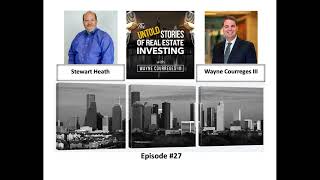
This content was created by Wayne Courreges III, CPM®. This content was uploaded by Wayne Courreges III, CPM®. This is a YouTube podcast episode titled "Stewart Heath-The Untold Stories of Real Estate Investing-Inflation, Interest and Cap Rates" (recorded/posted Nov 21, 2022). It's an English interview-style conversation hosted by Wayne Courreges III, CPM® with guest Stuart Heath (Chairman & CEO of Harvard Grace Capital). They discuss Heath's real estate origin story, lessons from the 2007–08 financial crisis (importance of reserves/equity), market focus on the I-840/I-565 Tennessee–Alabama corridor (Huntsville area), views and short-term forecasts on inflation, interest rates and cap rates for 2022–23, financing sources (credit unions, watching the 10‑year Treasury), tax/structuring tips (self-directed IRAs/solo 401(k)), development and operational risks (labor, materials, maintenance, supply chains), and contact details (harvardgrace.com, harvardgracecapital.com). The episode includes producer intro/outro and listener call-to-action.
Chapters
Welcome to the Untold Stories of Real Estate Investing hosted by Wayne Courageous iii. A place where active and passive investors come to hear the good, bad and ugly of real estate investing. Our guests consist of experienced operators and investors who want others to succeed by sharing their stories. If you're looking to syndicate deals or grow your wealth passively in real estate, you've come to the right show. It's now time to sit back, take mental notes and enjoy next episode of the Untold Stories of Real Estate Investing.
Welcome to the Untold Stories of Real Estate Investing. I'm your host, Wayne Courageous. For our next episode, we're excited to have Stuart Heath, the Chairman and Chief Executive Officer of Harvard Grace Capital. Harvard Grace Capital was formed by Harvard Grace Corporation, a company founded in 2010 by Stuart. Harvard Grace Capital provides fractional C level executive services to clients as well as general business consulting. Heath also sits on several boards including Harvard Grace Corporation, Winsome Truth, the Shepherd's Call, and Second Chance Sober Living. In 2016, Heath was recognized as a finalist for the Nashville Business Journal's CFO Awards. Currently, Heath holds several fractional CFO positions. Heath previously held positions as COO and CFO for companies in retail, real estate, manufacturing, corporate services, entertainment and digital media. He earned a CPA license in 1987 and has held several senior financial and operating positions. He also holds a business of science and business administration from Auburn University. Welcome to our show, Stuart.
Hey, Wayne, thanks for having me. I appreciate that intro.
Yeah. And you know I always love on these shows where I get to get to know you and prior to the show. So we had a great conversation and excited just to continue that recording this time. So. So let's dig in on real estate and how you got started. And so what are you doing now with Harvard Grace Capital?
Well, my interest in real estate began when I was still a boy and after my grandfather had passed and I was sitting around the table listening to my mother and father talk about her inheritance. It was her father who had passed and my grandfather had had hundreds and hundreds and hundreds of acres of timberland in central Alabama. And my mother was recalling that she had actually helped plant some of the pine trees on that land when she was a girl that just sort of got my wheels turning and just think, wow, what a long term asset that is. And they were about to go through and cut out about half the timber, you know, pull off some cash and then let the rest of the timber mature for another 20 or 30 years and, and even then all the way through business school and when I started my career with Price Waterhouse. I took the opportunity to get onto every real estate client that I could and learning how people were actually making money in real estate. Most of them were developers at the time, and some of them were excellent and some of them were not. And so I got to see firsthand what some of the mistakes were made. I didn't really venture out on my own until about the year 2001. I was sitting around one evening, I'm a CPA, it was tax season, it was about one o' clock in the morning. And I'm just like, I just can't keep doing this anymore, doing taxes. And I turned on the TV and you may not be old enough to remember this guy Wayne, but Carlton Sheets used to run infomercials all night long. And he had a no money down real estate course. And it was money back guarantee. So sure enough, I picked up the phone right then and I ordered the course. I believe it was $199, figuring that I would return it within a week and get my money back. And I still have that course. Carlin Sheets had some excellent stuff and especially in what I needed, which was how to get started. And within about 90 days I bought my first duplex. And within three or four months I had come across another guy who, who was from Nashville, consequently, who also travels around and sells courses like that. But he had 14 duplexes in north side of Nashville and I bought those. And because I've. I've really never done anything small. And so lo and behold, I was in the real estate business and. And from there I got into home building and some development work and, and so that was, I guess that all started about 2001, and then along comes 2007 and 2008. And I've been doing most of this by fully leveraging everything and refinancing this property, taking out the cash to go buy this property. And long story short, I didn't have a lot of reserves and so I didn't make it out of the last financial crisis. In whole, it was a pretty rough time and learned a lot. But I've never ever lost my love for real estate as an investment vehicle and my conviction that it's the greatest asset class available to any investors. I am not anti stock market one bit and a lot of fortunes made there. But you probably know real estate's made more millionaires than, and generated more wealth since the beginning of time than anything else.
Well, we were just talking about prior to this recording was, you know, having gone through that financial crisis and then most recently the pandemic. Major education, if anyone was in real estate during the both of those times, you've learned a lot. What, what did you learn then that's changing the way you invest and allocate resources, et cetera, in your properties that you're buying today?
Well, my first lesson is it's going to sound rather cliche, but it's just simply the value of equity and, or the value of reserves. I'm a cpa. I knew all this. But you know, in my head I was convinced that the market was never going to back up. I knew it would slow down. I didn't think it was going to stop. And you know, every financial crisis back for the last hundred years has had its own unique origin story, if you would, and that one's no different. But the bottom line is, here's the point. You don't know what's going to happen. That's why you keep reserves. That's why you, you are prepared for the downside. And at the point, through a lot of partnerships and a lot of things, you know, at the height of 2008, based upon appraisals, I had a net worth, I had a portfolio. I don't recall what my net worth was, but the portfolio of real estate was. But worth $20 million. And then when it all started unwinding in the fall of September of 2008, I sort of did a retrospective. Several years later, if I'd had as much as a half million dollars in cash, I could have navigated that whole thing and who knows where I'd be now. Some of those pieces I'd probably still want to be owned, owning, but I mean that's just, it's just a pitifully small amount of money to keep on the sidelines of reserves to weather the storm that I just simply didn't have and was not able to even offer the banks anything to work with me. So that's my biggest lesson. The value of expecting, preparing for the downside, not expecting the downside because if we expect it, nobody'd ever invest in anything but just preparing for the just good old fashioned prudence. It would be my number one lesson that I've learned.
Yeah, I think, I think it's great, great advice and I think we, we definitely need to learn from the past and other people's experiences. I know during, in our underwritings and such, you know, having that operating capital, you know, most recently we were doing a build a rent in Lafayette that we were talking about earlier and you know, we put a million in reserves because there's so much unknown, especially on the development side because you know, you've got the cost of lumber and all the prices, shortage of labor and stuff that we'll dig in a little later, but a little more, more reserves on that project. But to your point, I mean we're not, you're not looking, not needing a whole, you know, much if you look back and you know, a 20 million dollar portfolio and 500,000 could have, you know, really saved it. It's, it's the big scheme of things. It's not a, a lot of money. So. But shifting gears here, I saw on your website that you focus really heavily on the 840, the 545 corridor in Tennessee and Alabama area. Why have you focused on that? Is it more just because it's close to where you live or you see in massive growth and would love to sort of pick your brain on how you chose your market and how's is.
Where I live in that corridor. And that's just my clever way of saying the Tennessee Valley, if you would. It's actually the 84565 corridor, which is, which is a bypass running through the middle of northern Alabama, cuts across I65 there from Nashville and 840 is sort of a similar interstate, sort of a loop going on the south side of Nashville. As you and I were talking earlier about our hometowns, Austin and Nashville, I mean they're both some of the hottest markets in the country. And you know, I grew up in the Nashville area and I don't even recognize it anymore. I'm not anti Nashville. I think it's fun to visit, but there's so much going on there. There's a lot of competition. My whole point of focusing on this is for one thing, there's not as many competitors there. I like to take my time with my deals. I like to study them. I get very uncomfortable when I move too fast. And you know, in Nashville you come across a deal, you've got about 24 hours to go tie it up. And I don't like that.
With hard money. Day one, right?
With hard money, yeah, day one, that's right. And I'm just like, that is not how I work inside. This i4565 corridor is Huntsville, Alabama, the heart of northern Alabama. NASA has been located there forever. They love to brag through the Chamber of Commerce that they've got more PhDs per capita than any other city in the country and probably do they're all rocket scientists and it's an interesting town. It reminds me a lot of Nashville 30 years ago. But since 2012, the federal government has moved I think it's 80,000 troops in the army to the Redstone Arsenal and all of the other support staff and civilian folks that go along with that. The FBI has also moved a major installation to the arsenal and the CIA and the nsa, although they won't tell you how many because, you know, it's all a secret. And not just federal government that would actually concern me. But there's so much private sector influence there. Private sector that's working with the government, but also manufacturing Facebook's putting up. They just announced last week that they're expanding a facility that they just had under planning and development that announced year before the Toyota Mazda joint venture engine plant that where they're. They, when they announced it, it was going to be 4,000 people workers that they hired before they've even opened. They increased that another thousand people. So it's just a lot of activity going on there and it's, and it goes out in concentric circles. I actually live in Fayetteville, Tennessee in a rural county called Lincoln county just above Madison, Alabama where Huntsville is. About 2/3 of the people that live in Lincoln county work in Huntsville, Alabama. So you know, it's. And so there's opportunities here on the Tennessee side for multifamily, for self storage and for all those kind of things. You know, we don't have an income tax here, so that's kind of where we're looking. Although, you know, we're. We're pursuing several opportunities in the Madison county area right now. It's just, there's just every sign that there's just going to be a very long run of opportunity in northern Alabama. That's why we focus there.
And I think the also a great point too is that, you know, people that are focused on the bigger cities, and I'm guilty of this too, focusing on Austin, San Antonio, Houston, and until recently started looking outside those areas, just finding that there's so much cash flowing into these markets just to place, just to place capital. Right place cash. And so looking at these other markets that are smaller that aren't as hot, I would say that it's a great strategy, especially if you, in, in your case, you know these areas really well and you've can really determine, you know, what is, what is a growing area in this smaller secondary tertiary market.
I've always liked to invest in what I know and again I'm not criticizing anybody else's strategy, but I like to go touch it and feel it and walk it and, and stuff like that.
Yeah, it's a must for me. I think recently as I mentioned, Austin, San Antonio, Houston was a big focus, but going and looking and partnering with other people that have that similar boots on the ground experience. So it's not for me. So much of it's important to know the market for sure, but also real estate's that team sport and for people to go out and buy properties without even seeing them are going and as I say, touch the soil of, you know, what you're, what you're buying or what your investors, what you're syndicating. It's a head scratcher. It's like it is, you know, go, you know, you can, you can Google map and, and search all you, all you want, but it's good to, to get out there, so.
That's right. Yeah. Well that's, that's, that's why I like real estate. Yeah, it feeds, it feeds my math side as a cpa, but it also feeds my creativity, need for expression from time to time. And I just, I like building things. And as the old A team guy used to say, I love it when a plan comes together. You know, when you put it all together and people start paying you money to use it.
Absolutely. Well, I wanted to, and I always say this is a little selfish for me because we have these conversations and then you know, the listeners are listening in and on. Hopefully it spurs conversation and then they reach out to you as well, or, or me. But one thing I saw on your website that you know, I thought was great and we mentioned earlier was the blogs that you've posted and very current up to date recent activity was the Fed discussing their plans and intentions for 2022 with inflation and interest rates. So I'm just curious. I mean, they've hinted what they're doing. Do they? I think we all know that, you know, something has to happen from a macroeconomic standpoint to control inflation and such. But what's your crystal ball in 2022? I mean, where do you feel like inflation, interest rates will be and how will this impact real estate both from a passive and active side? I'm just curious on your thoughts.
That's a big question. Yes, and thank you. All right, so there's kind of two schools of thought on interest rates. I guess the more traditional anti inflation people, well, the interest rates need to go up to slow down inflation. It's probably where I land. But Then again, as you look at the United States as a citizen of the world, we're the only major developed economy that doesn't have currently negative interest rates. I know a guy who, I mean, we were just talking about this the other day, speaking of Nashville again and some of the multi family projects, you know, top notch, just out of the ground, beautiful stuff, are selling for a projected 3 cap on, on the price. I mean they're not even rented up yet and there's, it's selling for a 3 cap and I'm just like, I can't borrow money, you know, any better than three and a quarter, three and a half if the asset's perfect. So how is it I'm going to generate less return and then turn around and pay more than that on the interest? So it's just a negative cash flow situation. So of course your question is all wrapped up into cap rate compression as well. But this guy I was talking to the other day, he has a link into European investors, especially in Germany, where, you know, they're upside down with, you know, just been putting their money away for interest. So buying at a 3 cap and expecting a return in the twos was, was like going to Disney World for them. All right, well, okay, I guess that's good money when you can get it. Although you asked for my crystal ball. So it seems as though there's a consensus among the Fed to raise interest rates this year. My gut is that they're going to raise them two times this year, but not by much either time. I guess the day before, I guess Wednesday some somebody was hinting around that they might raise interest rates at the March meeting. And then Thursday we got this presumably horrible jobs picture. It was only horrible because it wasn't what people expected. So, you know, it wasn't that bad considering that Covid's ramping up again and, and depending on what part of the country you're in, because we really are a country. A tale of two countries almost. Because in Texas, where you are, in Tennessee, we're like what pandemic? You know, depending upon what city you're close to. Nashville probably like Austin has reinstituted some restrictions, but not in broader Tennessee. That Alabama's wide open as well, where I spend a lot of my time. So I wouldn't have expected the jobs picture to have been all that great this time. But the talking heads that indicated that they thought that this report would have been before the Omnicron, I don't know what they're talking about. I was hearing about Omnicron at Thanksgiving. So it would seem to me it would have had to have impacted the December report. So anyway, after that it sort of shook the markets and maybe they won't raise in March. I don't think it's going to be three times. I think they're going to raise two times and, and in 2022, I don't think it's going to affect much of anything. You'll see a little bit of, of impact on when you go to finance a new deal. So I, I've just secured financing on an office deal at three and a quarter percent for 10 years. I would expect if that were a year from now, maybe that's three and a half. I think we will see a bigger impact in 23.
And then from a cap rate compressing or expanding during these inflationary times with rental rates, with inflation, more people have money. In theory, things are more expensive, but there's more money.
You feel richer though.
You're right. And so people. Fleet of real estate's one thing that does really well during inflationary times because rents tend to grow with it and such. But are you seeing that cap rates will compress or continue to compress, or do you think they'll expand as they normally would during interest rate hikes?
I'll give you a 22 and a 23. I think that the cap rate compression will slow or probably even stop in 22. I don't see any real expansion until the interest rates really start to rise. Because what they're talking about is two to three quarter point raises in the interest rates, which if you're borrowing a lot of money is certainly significant, but it's not significant enough, I think, to stop the movement. I think people should be fleeing to real estate in this time because the Fed this go round, the Fed seems to be behind the eight ball. I remember back in the 90s with Alan Greenspan and everybody thought he was ahead of the eight ball. He was in there tweaking it a quarter point and we're like, what are you doing? We didn't understand, but he was staying ahead of things. And this Fed seems to be behind and not to go political, but you know, they don't generally mess around with interest rates a whole lot in an election year. And so 22 is clearly, you know, it's a midterm year. And so that's why I think 23 will be the year for the big adjustments that we will start to feel when you're doing deals, you know, five to $10 million.
Yeah, I was Talking to one of my partners a couple of weeks ago and we were talking about interest rates and you shouldn't talk politics and controlling inflationary and monetary policy, but it is what it, I mean it is. Well, we, you know, politics is in everything we deal with. Right. And so you think about 2023, well, we're going to be in a presidential cycle at that point. But you know, I felt like interest rates has been. Every year we've talked interest rates increasing, but you know, something in the market happens and it just doesn't, it doesn't expand. I do feel, and I do agree that, you know, at least two rate hikes this year would occur. But because of the demand and the pent up demand and as you mentioned, the international money that's looking for yield, everybody's looking for yield. I mean, you've got institutional buyers that are going after these smaller multifamily, you know, or you know, properties and it just. Everybody's looking for yield and there's no discrimination on where to find that.
So yeah, when I first started talking about Huntsville as a great market, you know, the institutions weren't there. Oh, they're there now, you know, so I mean there's increasing competition there. Yeah, it's because I've. The whole multifamily market scares me until I go and read the research for the forecast. And it's just population growth and many other factors such as families splitting up and stuff like that. It's just the demand for multifamily seems to be on the expansion for at least the next five years.
Yeah, especially in the south as people are moving in. So this is a follow up question on what we were just talking about. But with consumer demand being high, shortage of labor, how does this, does that at all impact the real estate cycle? Obviously it impacts probably what the Fed and how they make decisions. But could you put any correlation with consumer demand and shortage of labor in real estate and should it be something we should be concerned about?
They're not a direct factor, but consumer demand and labor shortages will dictate how businesses, where they will locate and how much space they will take down. I mean, just as a real quick aside, I like office properties. We're closing one later this month and as I've talked to people across the country. Wow, you must be gutsy. I mean it's office and like. Well, for starters, I'm in middle Tennessee. It's a suburban office property. It's been 100% leased for the last three years. With this one system doesn't feel like a risk. And you know, again, going back Chicago, New York, places like that, office properties are still struggling, but where the labor is and how the availability of labor has always dictated where a particular business will locate. And depending on just use the Toyota, Mazda joint venture, you know, they, they picked, you know, 500 acres out in the middle of nowhere with, which sounds strange, with great infrastructure, access to infrastructure, but now there's like a whole city that's built up around that because why did they locate there? Because of the availability of labor in northern Alabama. And then everybody else has been coming around them again because of the availability of labor of northern Alabama. Alabama is getting its fair share of the, the blue state exodus as, as well as Tennessee and it's Texas. So. And with all of the moving that generates consumer demand, you know, just the furniture always follows housing booms because people get tired of their stuff and I guess they leave, they, they leave it again as families disintegrate, split up. You need more stuff. So I hate to say it, but, you know, families not sticking together is great for the economy. You know, it's kind of sick, but, you know, you need two households and, and more beds and more sofas and more TVs and stuff like that.
Yeah, and storage units.
And storage.
So I think start investing in storage. But, you know, I asked that question and I was thinking in my mind too while I was listening to you, it's like shortage of labor, consumer demand from a real estate side. You know, it's, if you're building, developing new, you know, the, the increased cost and, and time delays, et cetera, for that. But if you're, you know, buying a, a property that's already built and, and to your point, there's already a labor force that's strong. You know, jobs are, are coming that way because businesses are relocating. So anyway, great, great points. You know, I always feel fortunate being in, in where we're located in the south or at least, you know, Central Texas, and you're in Tennessee. But it's nice to be in states that are pro business and wanting to grow and not shut everything down and such. So hopefully continue seeing that over the next 10, 15 years. But things continue changing as people move.
As we love to say around here, there'd be no Texas if it wasn't for Tennessee, because going back in history, that's how we became the Tennessee Volunteers, you know, to go fight for Texas.
All right, so let's talk about some metrics that real estate investors need to be watching closely. So my mentor this past week we were having a conversation about the 10 year treasuries and how you know, they've, they've spike over the last week and two so that obviously impacts cost of loans. Checking out CPIs. But are there any other resources, websites, other rates that you know, investors should be watching closely that you recommend?
That's another good question. Since I was in college, I've always read the Wall Street Journal. And then when I want to get more in depth research on rates, I'll go to Barron's and bank rate. But you know what's interesting is really since the last financial crisis, interest rates have almost been a non factor. Hence why we're in the compression that we're in right now. But now all of a sudden we're having to wake up. Oh yeah, I remember interest rates and you know that, that, that's a real factor. You know all real estate is local but unfortunately financing is, is national if, if not global. So you may have the best piece of property in the world and you won't get a better rate on that because rates tend to be set nationally. But typically it's. I watch fed Funds. Libor used to be something we watched but I guess with the controversies and the manipulation of the Libor, that's not as popular of a basis for a loan anymore. But it, for me it's really the ten year. That was a long answer to say, yeah, I think it's the 10 year. As far as I'm watching interest rates. I read several people on what their prognostication is for interest rate increases. I really like Mohamed El Erian who's a frequent CNBC guest a lot. I think he's perhaps one of the smartest guys on the planet as well as others. But at the end of the day we just got to wait and see what happens. We still got a long Runway before interest rates I think will become a major concern.
Well, and even with interest rates, it's all about net operating income. So it is at the end day, you know, if revenues, rents are going up, you know, it's. To your point, there's definitely a long Runway with that.
Yeah, I'm far more concerned about maintenance costs. Maintenance, you know, keeping those low and in particular properties having ready access to H Vac replacement equipment because you know, a lot of that is still sitting on the water outside the port of L. A. Uh, and I've been very fortunate so far. But you know, I got one property that's got some aging units on it and whether we got to Replace the whole unit or the, or just a part. I worry about that. That's a problem.
I mean, appliances too. I mean I've been, I've been checking. I mean personally I need a freezer for my, my garage. I've checked every day last month at Home Depot and Lowe's. I mean they're just out of stock. You know, you just, you just can't get appliances, at least freezers. So.
Yeah, I can't even imagine what the used appliance market must be like right now. Probably a little bit like the used car market.
Yeah. Oh yeah. Don't even think about buying a car right now. Somehow get, get through the next, however long it takes to get that supply back to, back to normal with these vehicles. Technology.
I bought two cars in, in 2019 and I'm just like, wow, that was just dumb luck. That was beautiful.
You timed it good.
Accidental brilliance I like to call it.
So from a real estate finance side, what do you think are the most overlooked aspects to real estate finance and maximizing tax strategies that you see when working with your clients? Anything that just completely overlooked that people for 2022 need to focus in on?
Yeah, I think most people don't know that they can use their self directed IRAs or their solo KS or whatever for the down payment piece of that. And sometimes if you are doing that, sometimes you can get yourself a better deal with a partner. If you don't need any of the tax benefits, maybe you get a larger share of the cash flow and let somebody else take some of the tax benefits. So that's one of the things. The other piece is, I think one of the more closely held secrets, and this is on a local basis, is credit unions. I'm closing a piece of financing about a $3,004,000,000 transaction with a credit union who are just, they're this incredible group of entities that seem to be outside of the general financing community and they have different terms. Usually they're going to be better terms than your local bank would have or certainly any non bank lender. And they're small credit unions and they're big credit unions. Big credit unions, they can, they can be a powerful factor in the community. So get to know some of those guys and check them out. Now they do tend to be hyper local in their focus, but the bigger credit unions tend to have a wider net that they can cash because you know, you have to be a member of the credit union and things like that. But in the last year and a half I've seen a couple of really good deals done with a credit union that commercial banks couldn't and or wouldn't touch. So I would encourage people to check that out in your local area.
Yeah, as you mentioned that local real estate is local. So having those relationships with the, the banking institutions in your, in your hometown or your area actually goes a really long way. I know a lot of people do that with single family and such, but I mean, you said you've been doing that with, with office and larger commercial.
Yeah, trust me, it was a shock to me too. And two of the officers that I had worked with at a bank that was holding the note on a piece of property we were involved with left to go to this large credit union which is on an expansion phase. They're pushing out of Alabama and into Tennessee. And so it was a ready made relationships and they, they called on us and like, wow. I had, I had no idea. I'd literally never heard of the credit union before. But you know, we're talking, you're talking to officers who'd already underwritten the asset at least a couple of times before and, and then all of a sudden they were armed with just incredible rates. So it's just a happy coincidence, happy circumstance how that happened. But it's made me sit up and take notice of other credit unions in our area.
Yeah. At the end of the day they got to place money too, right?
They do.
They're in it to make money as well. And they can only make money. They're placing those loans. Well before we close up and love for you to share about yourself and your company and how people can reach out to you. But before we get to that, I always like to ask this question at the end. What are your proudest moments investing in real estate?
I'll name a couple. They may sound cheesy, but it is what it is. Proud of it. We've been able to purchase an office property from a ministry who originally bought the building for ministry purposes. But they just sort of hung on. As times changed, the ministry changed and they just sort of became a landlord. I was just tickled to death that we could buy that from them and they get the net proceeds to go further. What's really the main point of their existence? You know, not a small amount of money either. I just love that. And I think I put in the offerings as you can do good and do well at the same time. And we're getting it for a great price. You know, we're not stealing it from anybody, but it's a good price. We're very happy with the, with our entry point and they're taking out a whole ton of equity which, you know, I know the ministry pretty well and they're going to put to really good use. So I'm excited about that. The other part is very basic. I love sending distribution checks to owners because that means the plan worked. That means that things are going well. That will spur a set of conversations. It's a different set of conversations if the checks don't go out. But I mean, I just love doing that even more than cashing my own check. You know, I just, it's. Those are my proudest moments.
Yeah, I love that. And thank you for sharing, sharing those and that ministry one, you know, it's pretty powerful, you know, just, you know, because they're, they need money and this equity and stuff for them to grow to your point, their purpose and what their, what they're in it for. So, so thank you again for sharing. So how can our listeners reach out to you and anything else you want to share on the show before we we close up?
You can find me at two different websites, harvard grace.com and harvard grace capital.com. the capital side is where we do all of our real estate operations. The Harvard grace.com is where I do the fractional consulting work, fractional CFO consulting work. both of those places you can learn about us. You can find a link to book some time with me and trust me, I love to talk with people about what it is they're trying to accomplish. Certainly not a high pressure sales guy but I do love to learn about how people have made money, where they got their money, what they want to do with their money and just learn and meet other people. So I encourage you to reach out and let's get in touch so that we can stay in touch going down the road.
Well, I'll put your website link and other contact information in our show notes. But thank you Stuart for your time and I really enjoyed and learning from you and look forward to continue building the relationship.
Thank you Wayne. I appreciate it man.
That's all for this episode. We hope you subscribe, share and leave a review of the show. For more information about passively investing in multifamily apartments, check out Wayne's free ebook by going to CRM eipartners.com ebook also follow us on Facebook by searching CREI partners. This was the untold story.
More from Wayne

September 2026 Meetup: Investing Ahead of Growth: The Bryan–College Station Opportunity





May 2026 Meetup - Apartment Complexes & Passive Investors: Opportunities & Risks


March 2026 Meetup - Reading the Market: Economic Indicators Every Investor Should Know


February 2026 Meetup - Syndication 101: How CREI Partners Structures Deals for Investors

Build-to-Rent (BTR) Communities Explained: Why Investors Are Paying Attention