Tim Kelly Untold Stories of Real Estate Investing Podcast Wealth Through Real Estate in the Military
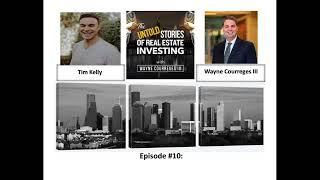
Podcast interview (Untold Stories of Real Estate Investing) with Tim Kelly, an active-duty U.S. Navy Chief Petty Officer and co‑founder/VP of Education at Active Duty Passive Income. Tim traces his start in real estate (2011 single-family with a VA loan), house‑hacking and an FHA 203(k) rehab fourplex (purchase $150k + $100k rehab → $250k loan; ~3.5% down ≈ $15k), then scaling to a syndicated 42‑unit (Reg D 506(b)), mobile home parks and other asset classes. He emphasizes time management, documentation, property-management selection and oversight, partnership-building (learn–network–take action), mentorship, and guidance for passive investors on vetting sponsors (track record, fees, preferred return) and realistic returns (rough IRR targets ~15–20% depending on market). ADPI offers free resources (Military House Hack book, VA loan mastery course, free Facebook group ~15,000 members) and paid academies/masterminds; Tim gave contact information (phone 847-910-9161).
Questions this video answers
15 years
2011
FHA 203(k) loan: purchase $150,000 + $100,000 rehab = $250,000 total loan; 3.5% down (~$15,000)
Regulation D 506(b) (friends-and-family, non‑solicited)
847-910-9161
Chapters
Welcome to the Untold Stories of Real Estate Investing hosted by Wayne Courageous iii. A place where active and passive investors come to hear the good, bad and ugly of real estate investing. Our guests consist of experienced operators and investors who want others to succeed by sharing their stories. If you're looking to syndicate deals or grow your wealth passively in real estate, you've come to the right show. It's now time to sit back, take mental notes and enjoy next episode of the Untold Stories of Real Estate Investing.
Welcome to the Untold Stories of Real Estate Investing. I'm your host, Wayne Courageous. For our next episode, we're excited to have Tim Kelly with us today. Tim's an active duty Chief Petty Officer in the United States Navy and has been serving his country for 15 years. Now stationed on shore duty in Pensacola, Florida, he is fully pursuing his dream of owning and operating multifamily real estate and helping others realize their financial freedom goals. Tim has been investing in real estate since 2011 where he purchased his first single family residence with the intention of forcing appreciation and flipping for a profit. That was also his first house hack and he quickly learned the benefits of long term buy and hold real estate were much more aligned with his goals. Through analyzing hundreds of multifamily properties, Tim has built an incredible network of real estate professionals, owns, controls or has directly been involved in over 1,000 income producing units and looks forward to acquiring 5,000 multifamily units within the next three years. As VP of Education and co owner of the incredible platform Active Duty Passive Income, Tim is helping active veteran Reserve and other military affiliate personnel realize their financial freedom goals through real estate investing. Welcome to the show Tim.
Hey man, it's such a pleasure. I truly appreciate this man. Let's have a great conversation.
I'm one. Thank you so much for your service and you know, 15 years is is no small feat. So congrats on your tour and appreciate, you know again you serving our country. So is there anything else you want to share about yourself?
No, I mean like I said, that means a lot and I appreciate you for your service. Obviously we were chatting up a storm about our military service before we started this recording and so thank you for that. I mean we are the 1% of the 1% is probably the best way to say it because now 1% of people have served or are serving and 1% of the mass, you know, the masses is had these ambitious goals to change the world and create an amazing legacy. And so I think anybody who's listening is part of that and it's just super exciting to me. But anyway, yeah, man, let's just, let's just have a conversation. What do you want to talk about, man? Whatever you want to talk about.
Well, we want to talk a lot about real estate, but. So how did you start in real estate? I mean, I was talking to you earlier before this podcast that, you know, one my Marine Corps experience, it was seems like a whole nother life and whole nother self go. But you know, I bought a property in 29 Palms. That was how I first started when I was stationed out there and rented it out. But it's, you know, very few people in the military, you know, they'll buy a property, they may live in it, use that BH to offset, you know, housing costs, etc. They may rent it out. But you've really scaled business and I know you've partnered with a lot of people to help grow that. But can you start off by just sharing your experience in real estate investing? How'd you start? You know, maybe we really dig in on single family first and then go into multifamily since that's where you're really focused on now, just to help our audience just get a feel of how military can get invested.
Yeah, I mean, it really all started when I grabbed a couple books for my 2014 deployment on the USS Baton out of Norvolt, Virginia, where, you know, my Navy command had about 2,000 Marines embark on our ship and we went on a nine month deployment together. And so I needed, you know, I was finishing my degree at that time and I knocked that out and I just knew I needed some material to help time pass and just learn and continue growing. And it was all on, you know, personal finance, financial management. Just like I always had an interest in learning how to build wealth. And I just kept seeing this pattern of real estate and how anybody can get into it. You know, literally you don't have a lot of capital or even any credit. You just have to understand some strategies. You know, it does take credit and it does take money. Right. To really get started. But educating yourself doesn't just learning about it. So I just got the bug, stumbled across bigger pockets, stumbled across rich dad, poor dad, stumbled across all these, you know, a lot of the rich dad books and just really got educated on all the ways you could create, you know, generational wealth and real estate. Just dabbled a little bit in each one. And then I didn't get traction until I focused on one. And that was large multifamily. So the single family was A purchase before I knew what investing was. And I ended up house hacking it. I ended up just, you know, adding a lot of value to it with just my sweat equity and then flipped it for a profit, took those proceeds, bought a 4 Plex here about three years ago, six months later bought a 42 unit. And it's because I educated myself, syndicated that with some friends, then bought a bunch of mobile home parks and a bunch of more apartment complexes. And we got some offers in right now on some. That's ADPI Capital. But the ADPI is the whole education where we're teaching others through our best selling books that we have our podcast, podcasts, our academies, our masterminds. We have a mortgage company, we have an insurance brokerage, a whole network of agents that we vetted that who are military or veteran, who are just the top, not cream of the crop. So which way do you want to take the conversation, man? I mean. Yeah, does that answer your question? Yeah.
And just to clarify, so the active duty passive income, that's the education arm of your business and then you have a separate.
It's really active duty passive income is, is the corporation that's the big eco, the big platform, the big movement, the, you know, and it's education is. So ADPI Capital just happens to be what we called our acquisitions team because it's a couple people who helped start adpi, including myself and a couple of the other coaches, we started buying property and we just happened to name it ADPI Capital.
Got it. Now, with your single family, did you buy that with your VA home loan? Did you live in it or did you rent it out? What was your.
Yeah, that first single family home in 2011, just with my VA loan 0% down in a nice neighborhood, bought too much house. And then I realized it was. I had two master bedrooms that I want, I could rent one of them out. And they happened to be people we already knew. And so I was just house hacking and we, you know, we were single or we were just together, weren't married yet and my wife and I now, and we just had our dog, so we had all this extra space and we just started house hacking. And then I started, then I went on that deployment and learned about investing in real estate and the opportunities. And then after that deployment is when I really just dove into education. Highly educated myself, paid a lot of money for, you know, and spent a lot of time on my mentorship and education. And that's what got me where I'm at today. And you know, no regrets, man, it Was all just a lot of lessons learned, a lot of failure, a lot of mindset growth, a lot of personal development growth. I'm addicted to that now at this point, just being forever student mind feeding and stuff like that. But yeah, man, so you lived in.
That home and this was in Pensacola and that's when you, you said you use those proceeds to use towards the fourplex.
Yeah, so that was actually in Virginia beach when I was stationed there before I came here. I had that single family home and ended up selling it for a profit before we moved here to Pensacola. And then those proceeds were used to, you know, acquire a four unit property using a 203k FHA loan with the intentions of living in one unit, running out the other three. You know, that 2 or 3k loan, you're able to wrap the cost of rehab into the loan and it's just an amazing 3.5% down loan on the total project cost. And just for quick numbers, and I wrote about this in our book Military House Hacking. But you know, bought the four units that were occupied for 150, put $100,000 worth of rehab. So that's a $250,000 loan. I've just wrapped $100,000 with a rehab costing loan. I only had to put down like 15 grand, 3.5% of the total, plus closing costs and all that stuff. Now it's just been a cash flowing fourplex, cash out refinance that things took 50k out tax free that you know, has been already parked in multiple multifamily assets. And you know, and so there's just a lot of opportunities. But I knew I wanted to do large multifamily at that point, but I just wanted to take advantage of that fourplex 203k loan, house hacking, you know, strategy. But then six months later we bought our first 42 units, indicated that with some friends, a couple of them military. And now we, I'm not partnering with them on any deals. Moving forward with us actually sell that, that apartment community. But we're all kind of just focused on other things and ADPI is probably the main thing I'm focusing on right now. Just building that education and giving high quality education to our vets, man. Love it.
So on that fourplex, so what were some of the pros and cons? I mean, you know, a lot of people that live in one unit, whether it's a duplex triplex, in your case fourplex. But what was it like, you know, having your, you're owning it but then your residence how did you find the right people to, you know, rent? You know, talk to us about.
That's a great question. I think this is good.
This is where most people are going to be starting. Right? So what's the good, bad and ugly of that?
Dude, this was a great question. And I rarely get into this and this is probably one of the most important 12 months of my investing journey. And I was active duty stationed in Pensacola, Florida. Luckily I was not deploying, I was shore duty. Right. That fourplex, we never actually moved into it because FHA policy is you have to intend to move into the property for six months in one day. The rehab took about eight months. So I never actually moved into the property. Right. And we were renting a place and then after that eight months went by, we ended up actually buying a triplex with our VA loan wrapped the cost of rehab into that. But that was a cool setup because it's a single family with a detached duplex. But let me go back up to the fourplex. We self managed until it was fully occupied. So we did all the hard work and then we pass it over to a property management company. But in that six to 12 months I got some experience. I would learn how to vet tenants, you know, screen tenants, get a lot of rejection, do a lot of follow up, get all those four units occupied. Meanwhile, it's just a great newly rehabbed fourplex. And it's just been cash flowing because, you know, basically got, got it fully rented out. I'm like, cool. Did it get what I needed to do? I'm not going to build a property management team or a business right now. So I'm going to go pass it off to the best property manager that I could find and go take down an apartment complex. And that's exactly what I did. And so leveraging the best property management in the area is probably one of the biggest lessons learned because too many people are stuck on self managing. Well, how could I manage two doors? How could I manage? Well, you don't. You find the best people who are professionals do it. You just have to be responsible for them because they are the face of your asset. They're, you know, solely responsible for the financial health of your asset. There's a lot of responsibility there. But once a month, if they're doing everything right, they just send you a report and it's just your time is you get your time back. And that's the most important thing for me, you know, just that extra time. And that's why real estate is just so desirable man, you put a bunch of time up front and then boom, cash flow for life. Or, you know, in a few years you reposition and get a big payday. But either way, you do a lot of work up front, you stop. And if you want to be on management or asset management or operations day to day, then that's, that's fine if that's what you enjoy doing. I like to be acquisitions. Find the deal, negotiate the deal, negotiate contracts, raise capital, due diligence, close, then it goes to operations. That's where my time means the most, where I'm collecting income from something. I'm no longer putting any time in. Right. So that's, that's just the personal strategy that I just. And my strengths are in building relationships with brokers, raising capital.
So with that, and I know I keep going, digging on this four plex and then, but I want to start where, where most people are going and then as they scale. But you know, you talked about that six months where you didn't have that third party property management. How did you screen tenants? What, what were the things that were easy, like checkboxes where, you know, they were a good fit. And then also, you know what, from a due diligence standpoint, when you were looking for that property, you know, were there things that, you know, you bought the property and you found out like, oh crap, you know, I've got to, you know, do a plumbing retrofit or replacement, you know, things that will really help people that are getting into it that don't have that property management.
That's great. Let's start, let's start with the management, like the tools that helped me and how I was able to streamline it with a full time job and, you know, in between. First of all, it's time management is the biggest thing. And understanding your time is you have to understand the value of your own time and understand the value of other people's time. And so that's why the most successful people on our planet are the best time managers, because they truly have respect for their own time and other people's time. And so there's always ways that we're trying to be as efficient as possible with the time. So time management is huge. But utilizing your time, let's say if you're locked up for nine to five, before you're nine to five, any breaks or lunch, you're making calls, and then after your 9 to 5, how are you utilizing that time? Are you entertaining yourself with Netflix and chilling or going out, or are you focused on Making those calls, doing those follow ups, writing down documentation. And documentation is key. And that's where I really leverage the power of the Google Drive. Right. It's all a free database, cloud based service where I could just have everything organized and documented. You have to document everything, document the calls, document your scripts, use your calendar. And time blocking for me is huge for time management. All that really is creating blocks of time in your calendar. This is what I will be doing. I'll have a 15 minute reminder, it'll remind me at the time. Have to use brain space because I know that's what I'll be doing at that time. And then you just do it. And so it's just a lot of, a lot that I learned along the way in terms of just how to get this done. Because my why was deep. I wasn't happy in the military doing what I was doing and I know how much real estate was able to provide to me and it's just a tool that could take you to freedom. Now I'm leaving at 15 years because I have multiple streams of income, you know, coming from income producing assets because I educated myself and grinded it out for like you know, a year or two and now it's just a lot of passive income while I'm helping educating other people. Well, you know, educating other people and building an enterprise while we're at it, you know, so if I could do it, anybody can, man. And you know, this at Fourplex was a lot of lessons learned. So the Google Drive, you know, the calendar, you know, time blocking and remind myself follow up with this person. And then we use property management software called Tenant Cloud. I think use it for about that year it was fine. You do everything on the app. It was just a tool where they could pay, they could submit all their stuff, they can submit their application, they could submit maintenance calls on that one app. Right. So it made the most sense and it was super affordable. I don't even know if it's around anymore. We use rent manager and mostly for our, for our properties from this point forward. But that's larger scale, multifamily.
Yeah, I appreciate sharing that and love like technology. You know, when we owned a property in 29 Palms, this was probably 2006, you know, there wasn't an app or anything like that. But we did third party at out. I was stationed in Japan and I, you know, with time management and you know, for you, I mean you're short duty but you know, at any moment, you know, we all can, you know, any active duty can deploy. So it's important to have your team in place. So when you're growing into, you know, you've grown in multifamily, it sounds like mobile parks and other, you know, asset classes. But how do you juggle your life in the military, your family, and then continuing to actively educate others in multifamily and pursue acquisitions?
That's such a good question, man. And a lot of it is going to go back to what I just talked about, like the time management and picking up skills and just through growing as a person every single day by learning, you know, how the successful, the most successful people think. And there's books out there, there's podcasts, there's all this free content, some paid content that you could start emulating how successful people act, how they breathe, how they think, what they invest their time in, what they invest their money in, and you just start emulating those behaviors. The better investor I continue to become, it's because I'm just growing as an individual. And the result of growing as an individual just happens to be becoming a better investor. But at the same time, it directly and positively impacts multiple facets of life. You know, your spirituality, your spouse, you know, relationship with your spouse, the most important relationships that you have, you know, your, your ability to give more. And because you're receiving, you're open to receiving because you're the more value you can give out, the more you'll receive in abundance. And so the more, you know, you grow, the more you can give and the more you give, the more you receive. And so it's just deliver value to as many people as possible that you come across with every single day. And that's, that's one thing I found was just like a major driving force because it all boils down to your why. Why do you want financial freedom? If it's not deep rooted and emotional and makes you like kind of tear up when thinking about it, then it's probably not going to get you through all the failures and struggles and all the other nonsense and politics and legalities that it's going to take to wrap your head around to on the way to success. So hopefully that answers your question.
It was a great, great answer. And how it all just intertwines. You know, you talked about the why, but you know, how, you know, the more success, it doesn't just come in a form of wealth, you know, it's. It's developing and growing the family and yourself as a person. So thanks for sharing that. So we talked about this a little bit before our podcast. But, you know, you talked about mentorship and getting partners. So can you talk to us about how you were able to find the people that you're partnered with? And you know, you read a lot of books, but what was the mentorship program like? And, you know, can you just talk through us with how you teamed up, who you partner with?
Yeah, I mean, one of our mantras at ADPI is learn, network, take action. Right? It's like the three pillars and they all do you. You do all three of them all at the same time, all the time, right? So your every day you learn, the more you learn about just the basics. Anybody can learn this stuff. And I can give you a list of books, like content, podcasts, whatever you want to get to that point where you have confidence to go network. If you don't have the confidence from that education, it's going to be hard for you, for others to take you seriously. So you have to just consume every book and get as focused as you can, as quick as you can, and not focus on like 10 different ways to make money in real estate. Do that horizontal until you choose one and go vertical. Once you choose that one asset class that you can master and become the best at, that's when you just spend more time on Just for me, and it was multifamily, so I read books only on multifamily. I listen to podcasts only on multifamily. Whenever I network with you or told them I am a multifamily investor, I convinced myself that I was a multifamily investor before I actually did any investing. But if I can't convince else that they could trust me and that I'm credible and that I have the capacity to close, because most people don't get paid in real estate until you close. That's brokers, you know, your partners, your investors. So once I got that education, I was able to go out there and network at the RIAs, you know, on Facebook, on LinkedIn conferences. But I knew that I had to have a very clean elevator pitch. When someone said, what do you do? It was, this is who I am, this is what I do. This is how we could potentially work together. How do you want to collaborate? You know, this is the value that I give. What do you bring to the table? And just being very transparent and understanding what it takes to close the deal and then understanding how you fit into that deal and then understanding, like, what else you need to complete a deal and then sharing with everybody, that's what you need and sharing with everybody what you could bring to the table and finding people that have the same vision, the same, that are like hearted, like minded, you know, want to hold on to real estate forever and ever. Don't want to just flip and go to, you know, on the beach because that's not aligned goals, ethics, you know, and morals. And so once you find people who are aligned morally and ethically, some people are going to be more left brain, analytical. Some people are going to be more right brain, you know, dominant and just outspoken sales, just networking, visionary, long term. Usually it's like a good predominant left brain, a good predominant right brain who have the same, who are like minded, like hearted, that then bring those different roles to the table that you need. That's a really good, really well sculpted partnership. That's actually what we Talked about on BiggerPockets. It was how to establish a perfect partnership. And that's actually kind of sort of what I just explained. But it's a little bit about what you know, because you have to know, right? It's even more about who you know, but most about who knows you. If you're not telling people what you can do, what that you're the multifamily expert, what you're looking for. Of course, after what you bring to the table, no one's going to be able to help you. People want to help you. Like, you want to ask for stuff because then you want to be open to receiving that. You know, whether it's a bigger guy you're thinking about or whether it's just a law of attraction you're thinking about or whatever it is, you have to share with other people what you need and what you could do in order to find the people that could complete your circle and your team. And once I realized that I was not the only one that had to do everything, once I realized I just had to do a couple aspects and be really good at it and help out a team to close and get much more scale out of it. And cash flow and appreciation and debt pay down. It just made the most sense to me. And it was just enlightening knowing I didn't have to do everything. But when people like take down a single family, they kind of have to do everything because there's not a lot of cash flow. Like they have to put all, everybody together and kind of be the ringleader to get a deal closed, of circus to get a deal closed. But I definitely went on a tangent, but I, you know, I'm just, obviously this stuff excites Me, man, I'm passionate about this.
So it's not a tan. I mean it's all great information. I mean I heard things about, you know, networking and then knowing what you're, what you're good at and finding, you know, partners to, to, you know, make the team, make the partnership even, even better to help close those deals. And you, you came in with that experience of closing. I mean you, you said the expectation or the, the confidence that you're able to close the deal and then you went out and networked and you found those people that had like minded goals and, and you said ethics and values, etc. So yeah, that, that's fantastic. And definitely a lot of value to anybody who's looking to definitely scale. So when you went from your 4 Plex, then you went to the triplex and then is that when you went to the 42 unit, you went from there to the larger 42 unit?
Yeah, like before I even left Virginia Beach, I knew I wanted large multifamily, but I also knew we were moving to Pensacola and I wanted a house hack, a fourplex. So I got there, literally I prepped before I even moved. We went and toured the property, connected with people. The first week we got there close on a fourplex and six months later I bought a 42 unit. Because again, since that point we were looking at large deals. But I also wanted to take advantage of a 4 Plex live in house hack. And then I used the FHA 203k loan to do that. But then, but meanwhile in the back of my head, my main number one goal is large multifamily. So then six months later, you know, syndicated a multifamily deal with some friends. And since that point only large multifamily, including mobile home communities, you know, and we're now looking at storage facilities. Cause those things are freaking amazing. The amount of automation and demand in the right markets, at the right financing that is still so cheap right now. So we're in highly in acquisition mode. Yeah, that's kind of how that happened.
So from the syndication on the 42 units, I mean this was your first large multifamily. How did you gain other investors? I assume you had to grow your capital or get passive investors. Or did you, I mean, how did that work? And how did you get your, those passive investors to trust in what you were doing since this was your first large multifamily?
Yeah, I mean, a lot of this is going to sound repetitive from what I've been talking about. It's the Same basics and the same type of. That's why mindset is everything. Just understanding these concepts. So I was networking with people. I already kind of knew some people in the Pensacola area who were focused on multifamily that I've been speaking with, been virtually meeting with. And then when I got there, physically met with a bunch of people. And everybody in that little circle, my, my Ria, they all knew I was a multifamily investor. They knew exactly what I was looking for. My detailed criteria, my B and C class, you know, 30 to 40 to 100 unit properties is what I'm looking for for my first deal. And then I found two other military dudes who were there who had already bought a couple of them. And I'm just, I brought them the deal and my other partner brought them the deal. And they had some money, we had some money. We syndicated the rest from our local and we just made it happen, man. Like it's just like. But I didn't, none of that would happen if I didn't share with people and do and grind and hustle and find the network of people and establish like a, literally my own team before I even got there. And then I met them all and then we just networked and like a few months later, boom. Bought a syndicated apartment complex. But the minute you do your first deal, you're just on the map. It's a game changer. The first deal is always the, the very toughest. But once you do that first deal, that's like instant credibility. That's instant knowledge, instant confidence. You won even if you don't. Like it's not, even if it's not a home run yet. You did it, you know, and you learn, you're learning more and more and more every single day. And it's just compounds over time. You just got to keep that momentum up and figure out ways to do that, you know. Yeah.
And what was the strategy on that 42 unit? And you know, how did you, with your active duty military career and how did you kick off that strategy, you know, day one of buying, that's, that's.
Where it comes into play. Like everybody figuring out their roles and responsibilities based on their strengths, weakness, knowledge, experience, what they're willing to learn, what they're willing to do, what they have the time to learn and what they have the time to do. And so it was a, it was a reg D506B. So non accredited investors, it was sophisticated investors, they were non accredited, but it was all friends and family. So we, we had A pre existing relationship with every single person. So yes, we had to file it with the SEC through a reg. D506B but we weren't able to go solicit it and we didn't need a lot of the other filings and added stuff. When you do a 506C with accredited investors only, you have to take a few more steps because you're creating a security. You could promote it. But we only worked with our own capital. So it was like a mini jv. But then we obviously syndicated. So it is a syndication structure. We all put money in it, we all put time in it. Well, I haven't been to that property in probably two years. Haven't needed. It's been managed. One of the other guys is there closer. He's got the most amount of time. He's doing most of the. He's like the main point of contact for investor relations and with the property manager and we're about to sell it and I'll make six figures, you know, we double the profit of it and paying all our investors like a like 150% return. We're all making like 300% returns and just for a couple years. And just that was the first deal too. It's like usually you cut your teeth and you do all this stuff but we learned a lot, a lot along the way. We've had to fire property manager. They assured us they would be able to, you know, kind of hang with us and meet our criteria, but they didn't. Then we had to figure that out. They lost us a boatload of money. Then we ended up hiring great property manager who's made it very passive for us. But yeah, man. Does that answer your question?
It does. And I want to. You brought up a great point on that property management because that execution day to day interaction with tenants being the face of the ownership is huge. So what were some of the horror stories? And then what are you now looking for? What did you learn through that? Where the next larger property. You're looking for the right property management group.
Man, I appreciate the horror stories and that's because it shouldn't really be considered a horror story because that's like got a bad ring to it, bad stigma. Those are the best opportunities to learn, right? No matter what happens, you're either succeeding or you're learning. Like either way it's a win, right? So there's no such thing as failure struggles. That's all. That's all you know, bullshit. Failure is struggling as part of success. If you're not willing to fail or struggle. You don't deserve to succeed if you keep that mindset. Like you failure is the stepping stones to success. So I just wanna, because I'm a big mindset dude and I seriously believe in all that stuff and the positive mental attitude and the meditation and the prayer and the gratitude attitude is just instrumental in my, I know my success. That's a whole nother story that we can talk about if you want. But yeah, I mean it's just, you know, it's been a, it's been a big component and so the biggest things, I mean we found like a dead cat, we found a huge beehive in the wall. We found yeah, a dead cat in the kitchen cabinet be. I mean entire unit was completely covered in mold from a flood. And they didn't tell the management we took over the property that we found a stack of like 90 submitted troubleshooting cards like maintenance requests that were never addressed. So we, we had budgeted, luckily we budgeted for everything. And then the property management team for about a year had it leading, was leading us to believe they were handling everything. We were still intruding in leadership. We were all, we were all had full time jobs. So we didn't, we weren't there day to day. We trusted them to handle day to day and it just didn't work out. But they, it was just. Some people can call that a horror story, but it's just a seminar. It's a lesson learned. It's cool, it's a win because I learned something. Now let's go grow because it was grow through this situation just like you know, and any other situation. Because it's only your destiny and your success is only 10% of what happens to you, but 90% of how you choose to respond. Because it's a choice how you choose to respond to whatever happens, happens to you. There's thousands of different ways you could respond. But pay attention to how you're absorbing what happens to you and how you're responding. Are you cool, you calm, you know, collective making strategic decisions or are you acting emotionally and saying this is. I'm a victim. This is the worst possible thing that could have ever happened to me. Woe is me. That's not a success mindset if that hasn't been clear. But that's, that's the type of thing like for me, you flip that switch. It's like game changing on so many levels, you know so well and with.
That property management, you know, yet you can third party it. You're hoping that you get, you know, great service and all. But at the end of the day, the person, whoever's on your team, that partner or yourself that's in charge of asset management, it's incredibly important for that person to check on the property, you know, look at the reports, look at the invoices, look, you know, just dig, dig in, you know, at least on a monthly basis to find those things. So you, you've touched a lot about this throughout but definitely a question I really want to go back to is you know, when starting, you know, your real estate career, what do you wish you had known or excuse me, what do you wish you had known that you know, now when you were getting started?
Don't waste any time on single family residential creative financing anything below 4 units unless it's a live in house act. I wasted maybe like 9 to 12 months trying to dabble in single family wholesaling, creative financing, buy and hold brrrrs. Less than four units just as an investment. I'm like this doesn't feel like I'm getting enough bang for my buck. And so I would have initially just like completely avoided all of that but went straight for large multifamily, like 100 plus units. It would have been a quicker way to where I'm at today. Scalability. It would have been more of a hockey stick in terms of net worth growth, income growth instead of like a slow kind of trickle. It would have straight shot to increase your net worth, increase your wealth, increase your income, you know, just increase your life, your quality of life and your, your, your able, your ability to give. You're just improving, you're 10xing everything so that'd probably be the only thing. But I don't have any regrets man. And because of all that, because of my single family experience now I can help more people in the ADPI community and, but I'm still the multifamily guy because I've always focused on it and that's, I'm the director of that whole academy Mastermind. But, but that's probably the only thing like I don't have any regrets though man. It's, it's hard for me to come up with those, that type of stuff because I don't hang on to regrets.
Yeah, it's not regrets, just things that you, you know, you wish you had known. Just. But, but you made a great point. It's like hey, you know, instead of getting into the single family and that, you know, that works for some people who, it works for a lot of People, I mean there's a lot of, a lot of investors and people that have done really well with it. But you know, just, just, it goes back to your why, right? And what are you passionate about and why are you wanting to potentially have a lot more exposure to bigger, bigger things that may go wrong if you don't may enjoy that larger investment. So we've talked a lot about active side. Now a lot of people are not going to want to get on the active side. They want to continue, they want to be a passive investor, they want to learn more about passive investing. So can you, let's shift gears to focus on passive investors. You know, what do they need to hear more of and what do they need to do to prepare themselves to analyze and see if a deal makes sense for them?
Yeah, great question, man. And this could be confusing because there's a lot of conflicting views. One is not better than the other. To some, one is like the Mecca. But they think they have to go through this whole process in order to become a limited partner. But they go through that whole process, they can create a big ass nest egg of capital where that passive investing could, they could live for the rest of their life, you know, have just an abundant lifestyle. But some actually want to become an LP first, then become a general partner and put the deal together. So then as an LP they could see what do my investors want the most. And that's a really smart strategy. I, the first deal I was an LP and a gp. Then I became continue to do gp. Then I did like LP on one or two, but I'm mostly gp. But as an lp that's what I can't wait to do. Like pretty soon when I just, in the next couple years we're just gonna be board of advisors and adpi. Then I'm just gonna invest in businesses and real estate. That's all I'm gonna be doing. Mailbox money, passive investing. So what if you're, if that's your goal, then you have to either become a GP or understand the g. What it means to be gp, the roles and responsibilities and understand how to vet them based on their experience. Have they gone full cycle, multiple times? You know, what do they share? Are they willing to educate you? Are they willing to answer questions? Are there systems in place for tax distribution, for quarterly distributions, for email updates? Like are they clean, modern, Are they on top of their game? Are they ethical? Are they following through with what they're telling you that they're doing? Are they over promising and under delivering or are they under promising and over delivering. That's a big thing too. So as an lp, like if you're just an expert at vetting general partners and their teams and the sponsors and the deals and just analyzing the team and the deal and the market. Right. If you're, if you're really good at that stuff, then you can capitalize the most on being an LP because then you have a lot of time because you do that upfront work and then boom. Quarterly distributions, mailbox money. And if you're a majority shareholder in the deal, you own part of that property as an lp, you get tax benefits, you get equity growth, you get all that appreciation capture. That's what your IRR is. You'll get a cash on cash return, monthly distribution like quarterly distribution. But the overall return is calculated at a reposition, either sale or refinance at 5, 7, sometimes 10 years. That's when your IRR should be pretty close. 18%, 20%. Now there's like 15% is desirable because interest rates are so low, but prices are so high. So the returns can't be as good as right now unless you find off market like we're doing. But at the same time, you know, as an lp, those are probably some keys to success. Just under be an expert at vetting gps. Get it, get to know what you personally like as an lp, what means most to you. Because I can't answer that question. You know, figure out maybe work with a couple different GPs, 2, 3 GPs and see which one made the most sense, which one, who is the best. That's maybe the next one, the next deal. Then I'll continue investing in that. But that's, that's straight mailbox money man. That's how you become an owner and just sit back and you own part of, part of an income producing asset. You get tax benefits, all kinds of other benefits and it's just time freedom, which to me is paramount.
Yeah. So the GP general partner typically or the deal sponsors and the partnership finding the deal and executing the strategy and making day to day decisions. Where the lp, the limited partners are your are the passive and they're buying into or investing to help, you know, make that large down payment, you know, for the, for the property and then the capital expenditures and such. So when an opportunity, so say I'm a passive investor, I know somebody who is a GP deal sponsor, got a lot of trust in this person. They bring an opportunity. You know, you as a passive investors, what are the, what are the things that you're most looking for from A metric standpoint. You mentioned the 15% IRR in today's environment. But with COVID I mean, has that changed with, you know, the rent bumps and you know, just the story that goes behind some of these? I mean, what are you, what are you going to be looking for that you think other passive investors really need to look out for in today's environment?
Yeah, that's some really good stuff. And you know, first of all, yeah, Covid definitely hit a lot of different industries, mostly the hospitality, the short term rentals, the hotels, stuff like that. But that's why we invest in workforce and affordable housing and the best markets in the, in the nation. Because during crashes and recessions we thrive because people are downgrading from their class A, class B apartments or their big homes to an affordable apartment or affordable mobile home community, depending on, you know, where they're located. That's the only thing I'll ever park my money in. Until there's something that's stopping us from achieving our goals. Then we'll shift. Like storage facilities obviously is what we're looking at. Residential assisted living, 55 plus mobile home communities. Instead of just the value add, let's force some appreciation and do it and refi pay our investors very, very good. So I just want to make sure that that was clear. But as an lp, you know, how many deals have they done, how many deals have they actually closed, gone full cycle through like the refi and paid their investors back straight up. How many times have they done that? If it's none, but you still like have a good feeling about it. The fees that they make should be lower. Like at closing. Everybody gets an acquisition fee who's a general partner. It shouldn't be any more than 1%, probably less, if anything, zero for their first couple deals. That way more money could go to the investors. There should also be a pref called a preferred return, meaning you get the first 7, 8, 9%, whatever the pref is before the GPS make a dime. That's a preferred return. So I would always look for that preferred return and just higher returns. If you're dealing with someone who's closed 10 deals in the last 10 months and has, you know, over delivered on every single one of their investors, they're probably going to charge an acquisition fee of 2 to maybe 2.5, maybe 3% at closing, boom, they get cash and they're probably not going to offer you as high of returns, but they're giving you that credibility that like, look, this is going to be your safest bet. In commercial real estate. So it's like what makes more sense to you? What is your risk aversion? Are you young and you're willing to take those risks? That's a lot of elite economists dictate your age based on your level of risk. And so if you're young, take those risks because with a lot of risk comes a lot of reward and a lot of learning lessons. Unless you want to be like a 55 plus and just park it in a bond, then you can invest in class A assets. That's not really a whole lot of equity growth, but more just like a yield play. There's a great appreciating market or great appreciating asset, but not a whole lot of cash flow, if that gives you some ideas.
So yeah, and I like how you went in. You spoke about the numbers, the acquisition fees, and I think you know, those that are, you know, starting out, you know, just as you did, you know, you had a team around you. So who's in that gp, who has that experience and that track record? So really great points. So as we close, I typically close with this question and before we do our final closing. But you know, what are your proudest moments investing in real estate?
I mean, probably just the, the first deal, even, even the VA loan, I mean that's, that's not even as a real estate investor. So it's kind of like doesn't really count because we house hacked it without even knowing about investing and we ended up making a really good profit. But I knew where that profit was going to go. So the proudest moment would probably be just like closing our first actual investment property, which was the fourplex, using a 203k loan. But I mean, closing my first apartment deal was also pretty exciting. I think over the next couple years when I see all the repositions come to life, like we're about to make a killing on the sale of this 42 unit. But we're holding. We don't plan on selling or refinancing, so we're holding. So there's slow growth in income and net worth. But when the repositions happen and when the sales happen or the refinances happen, that's when like the net worth goes up, the income goes up that you know, you know you're able, your ability to give goes up and be generous. So. And that's all happening from like this point for the next five to ten pretty much and beyond because we're continuing to do deals like deal after deal after deal as Big as possible, as many doors as possible. And right now we have one partner, JV partner, which is a family office, who just funds our entire deals for us without even using in a bank sometimes. So they have access to like hundreds of millions of dollars. Family offices, another mecca for capital raising. If you could link up with a family office, then that's, that's a win. And that was a huge win for me when I, when I connected with them this past year.
Well, Tim, I really appreciate you being a guest on our show and the insights you've given there. Any other items you want to share on the show about you, your company and how can people find you?
Yeah, I mean if you're, if you're military, past, present, family military, past, present, you're a reservist, anything and you're even remotely interested in active or in, in real estate, just start listening to our podcast from, from episode one start. You know, go download our free book called Military House Hack and just go to activitypassiveincome.com free Facebook group. 15,000 members and like 2,000 are requesting to get in. But it's a high value group because there's no soliciting allowed. So it's just all questions and answers from vets for vets by active duty past and present. And it's just we, when you're serious, I mean we have paid programs, but we have a free VA loan mastery course, our free book, a free credit guide that shows you how to thrive in your credit, a free financial foundation type book that I wrote, I wrote all those books. We have an action journal that we got coming out. But then if you're serious, we have paid academies and masterminds that I'm leading that whole education side. Plus we have a mortgage company where you can fund your deals better than the USAA's and the Veterans United. And we could also fund, you know, insurance policy for you both whole life and property casualty. And so just, just if anything, just check me out on Instagram at the Timothy Kelly, check me out on LinkedIn at the Timothy Kelly. But for those people who just want a direct access, just shoot me a text and we'll hop On a call 847-910-9161. Shoot me a text and we'll hop on a call and I'll help you get to the next level, man. Or answer any questions that you guys have.
All right, well, thank you and thank you for your service and hope to connect soon.
Yeah, thanks a lot, man. Thanks again for having me, Wayne.
Appreciate you.
That's all for this episode. We hope you subscribe, share and leave a review of the show. For more information about passively investing in multi family apartments, check out Wayne's free ebook by going to creipartners.com forward/ebook. Also, follow us on Facebook by searching creipart.
More from Wayne

September 2026 Meetup: Investing Ahead of Growth: The Bryan–College Station Opportunity





May 2026 Meetup - Apartment Complexes & Passive Investors: Opportunities & Risks


March 2026 Meetup - Reading the Market: Economic Indicators Every Investor Should Know


February 2026 Meetup - Syndication 101: How CREI Partners Structures Deals for Investors

Build-to-Rent (BTR) Communities Explained: Why Investors Are Paying Attention