What I Wish I Knew Before Quitting My 9 to 5 for Real Estate with Wayne Courreges III
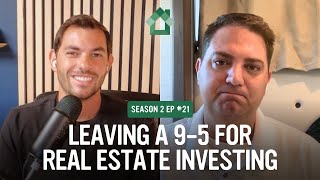
Podcast interview (Sky's the Limit) with Wayne Courreges III, founder of CRE Partners. Wayne describes his path from the Marines to CBRE to launching CRE Partners (founded ~2019) and growing to roughly $60M assets under management. The firm focuses on multifamily (≈80% of portfolio) via GP/LP syndications targeting 100–300 unit properties with value-add plans; typical cash-on-cash distributions are 4–6% annually and projected average annual IRR including exit about 18–20% over a ~5-year hold. About 20% of assets are opportunistic (RV/boat storage, some office/medical); storage pads rent roughly $0.65–$0.75/sqft. Wayne also discusses tax/depreciation benefits (K-1 passive losses), deal structure (SPV LLC per asset), capital-raising, and his time-management rhythms while traveling with family in an RV (focus/buffer/free days).
Chapters
Foreign. Guys. Welcome back to another episode of Sky Slimmer podcast. I'm your host, Mike Doherty. Today we have a guest. Awesome guest, Wayne Courageous. He is the founder and principal managing director at CRE Partners, which currently has over 60 million in assets based in Texas and he invests in Louisiana and Alabama as well. Wayne. He primarily focuses on acquiring apartment complexes and developing RV and boat and business storage, which is unique. I definitely want to get into that in areas with strong market fundamentals and has a few strategic partner relationships. So with that, Wayne, welcome. Thank you.
Hey Michael. Glad to be on.
So one question I ask all the investors that we interview here or come on the podcast is how in the world did you get started in real estate investing?
Yeah, so I got introduced into real estate investing at an early age. Actually it was in high school. I was good friends with someone whose dad was a developer in Austin and so got the bug early. And when I went into the Marine Corps in 2003, bought my first single family rental outside Twentynine Palms base and realized quickly that single family rentals was not going to be something I wanted to do long term. So we can go down that route if you want. But I joined CBRE in 2007. So getting out of the Marine Corps, I went right into working with a large commercial real estate company. 2019. So speed that from 2007 to 2019, I had just finished my MBA and got the entrepreneurial spirit and juices flowing again to start CREI Partners, a real estate investment company that we've grown to about 60 million assets under management. We've got a couple, we have three developments in the pipeline and looking for multifamily opportunities as they come.
That's awesome. Congrats on all your success so far.
And right now, if anyone's watching YouTube, whatever, like we are in, you know, an RV benefiting from all that hard work and you know, like commercial real estate provides. We're on a nine month RV trip and you know, so I'm living proof that, you know, hard work, commercial real estate can really allow you to, I don't want to say buy back your time, but also the location of where you are. I'm been grinding all morning on real estate and on a podcast with you right now. But, but I can do that anywhere just because of, you know, the blessings of commercial real estate.
Yeah, essentially you are allowing real estate to work for you. You're not working for real estate, so to speak. You're able to manage your time however you want, whether that's a nine month RV trip or you know, maybe you're going to plug in a couple hours from 6 to 9am in the morning and then go for a swim. I mean this, that's the beauty of real estate is it's, it's, it can be passive just like that. Obviously it takes a lot of active hours, I'll say, to, to get to the point where you're at. You didn't just get there overnight. But I mean that's, that's the power of real estate. And so you know, that's, that's, that's why we're all doing this. Right.
And you have build a team around you too and we can dive into that if there's so many different directions. But I mean just no matter where I'm at, there's so many active hours regardless of putting into our portfolio and just the surrounding yourselves with a strong team, whether it's property management, asset management, investor relations, accountants, et cetera. It's, it's much more than just one person.
Yeah, no 100%. So how. So you do multifamily investments, you do some development. Talk to me about the RV and boat storage. I don't think I've ever spoken to someone, at least on this podcast where they're investing in what I would take as kind of wide open, maybe industrial ish land and maybe a building or two around it. But primarily you're charging for boat or RV like price per foot or yard. And that to me is like truly passive because you're not fixing any broken toilets. You don't have laundry machines leaking flight from one floor down to another. You're not probably getting any crazy tenant calls. So I'd love to learn more about that.
Yeah, absolutely. And we definitely dig in. So about 80% of our portfolio is multifamily. We like the cash flow, the tax, depreciation, equity, upside. I'm much more bullish on multifamily than I am RV boat storage. I just wanted to put that out there now like our bread and butter. And what we really, really focus on is, is multifamily. But 20% is more opportunistic. You know, we have some office retail, a medical office. We, we do RV boat storage. And when I talk about that, it's, I don't like the traditional self storage. I think it's one, Barriers to entry are quite low. It's easy to, you know, build a small or you know, a mini warehouse storage. It's also a different clientele, very transient, etc. So I'm more focused on the 20 by 50 storage. They're all thousand square feet. And to your point, you know, we do price per square foot. At our facility, it's 70. We have two facilities. The one in Bryan is about 75 cents a square foot. One in Huntsville, Alabama is about 65 cents a square foot. So for 1,000 square feet, I mean that's $750, $650. You know, it, it takes out a lot of people who, you know, could afford it. So a lot of businesses, high end RVs, boats, it's still time consuming. Nothing in real estate is ever really passive unless you're truly a passive investor, which a lot of your due diligence and such is going to happen up front and during the paperwork signing, etc. For you know, prior to you investing in a deal. So if you're passive, truly a passive at limited partner, yes, but from an active partner. And you know, just give an example. You know, one of my partners in Huntsville, Alabama had to deal with, you know, people, you know, taking hot water and pouring it on the keypad at the entryway during a freeze event. And so, you know, the keypad was frozen. So they had this brilliant idea of like let's put hot water and try to defrost it. Well, I just caused bigger issues. I mean, you know, so. But to your point, it's, it is a lot easier, it is a lot easier than say multifamily. But it's still not a passive, passive, passive. It's concrete and steel from an investor standpoint that does impact depreciation, which is a big reason, you know, we, we like real estate is, is those K1 losses for, for tax purposes. So that's something to consider. But at our one facility in Alabama, we've stayed 100% occupied with a waiting list. On our one in Bryan, Texas, we opened that July of 2024 and we're a little over a year in and we're about 60 occupied. So when you compare that to like a traditional storage, it could take three years to get to the point where we're at now. So anyway, happy to obviously answer any more questions and all, but I wanted to just give up. Yeah. Review.
No, it's interesting. Yeah. Everyone, you know, every different asset class has its, its pros and cons. My partner, I usually are primarily are investing in probably similar to you, multifamily and commercial buildings. Whether that's you know, triple net lease or just, you know, a simple six unit multifamily. But I love the commercial space for a Number of reasons. But I'll turn that question to you. Do you primarily invest in larger scale commercial apartment buildings or are you still dabbling in maybe the 2 to 4 range where you see opportunity fit? Maybe you're flipping it or just for a simple cash out refinance. Are you strictly commercial, large kind of institutional money?
We'll will say yeah, and I'll say with that too. There's no right or wrong on strategy. I think if, you know, because like I said, I started out when I was 19 with a single family rental and some people want to be more active, some people want that, they enjoy that ownership, that pride and ownership of owning single family, getting to know residents, etc and they, they like that, that income. For me, I, I, I didn't see a real easy way to grow wealth through single family. And so to answer your question, we're more focused on 100 to 150 units and eventually we'll get to a point where we'll be doing 150 to 300 units. I mean you think about all the time to go source properties. Maybe it's through broker relationships or off market opportunities. You got to work through a title company, still got to do earnest, you still gotta, you know, do your inspections, you still have H vacs, you still have plumbing, you still have roofs. So you know, if I can do 100 units and still have that, go through the same process, yes, we're talking about bigger debt, bigger equity, et cetera. But partnerships and syndications allow for that opportunity to do that. And especially it's helpful for like people who have no experience at all but want to get into it. And they start off by investing passively. We have a lot of investors who have this idea like, oh, I want to do active investing, but real estate is not easy. You know, it's, it's a lot of grit, it's a lot of stress, it's a lot of ups and downs. And so if you have a day job or you're you know, thinking I might enjoy it, like it's better to partner with somebody who like does this and has a team, at least in the beginning.
Yeah. And, and you can learn the ropes without, you know, if you go by, listen, you know, I, I'm a firm believer where you should definitely own property and then you'll appreciate how hard property management is and you'll appreciate how hard. Maybe, you know, a number of different things that go into real estate are, but for those, you know, maybe high earners W2 employees where you have a full family and they just don't have time to invest and buy their own property, manage it and do all that. Something like what you're offering, where, hey, let me take all that stress out there out of it for you. I'll still give you a double digit return, which maybe you could do yourself, but maybe you could couldn't because you don't have any experience. And I'll, you'll still get all the benefits from, from owning real estate. So actually talk to me a little bit about how you're raising capital for these 100 to 150 unit complexes. Are you doing debt, are you doing equity? And if you're doing maybe a combination of both, or if you're just doing equity, what kind of returns are you offering to your investors and how is that structured?
Yeah, so a lot of investors that we have aren't looking to get out of their day job. I know that that's sometimes pushed out there like, oh, all this passive income gets you out of your day job. But most people enjoy what they do. But they're looking to diversify off Wall Street. And you know, I own stocks that, you know, we, I just do the s and P500 and really just focus in on real estate because that's where my passion is. I don't have the time to go look at stocks and do, you know, do a trade here, there based on, you know, I don't have the time for that, but I do have time for real estate and that's where my passion is. So investors that come to us are looking to diversify. They're looking for those tax benefits, passive losses offset passive income. That's where depreciation comes into play. And so they build this, they build a portfolio. So how we do it is we'll every think of every property as its own business. I always like to really break it down as simply as I can. So if we go out and buy 150 unit property, that property has an LLC entity. Okay, so there's a, there's an entity, a buying entity, a single special purpose entity that was created just to buy that asset. And within that asset you have what we call general partners, which is where the active investors sit. That is where I would sit as someone signing on the loan, someone who's sourcing the deal, putting earnest. There'd be other partners with us as well. Maybe they're putting up some more earnest, or maybe they're helping with asset management. Whatever it is, that's where the general partner said, they're the ones who are going to source the deal, close the deal and then actually be the jockey on the horse and executing the deal during the life cycle. And then you have what's called limited partners. And the limited partners is, they're limited to the investment they put in the deal. So say there was a lawsuit or the deal foreclosed on, et cetera. Those limited partners are only their, their risk is, is the amount they put in. So a lot of the work is up front, listening to your podcasts, doing investor education, training, reading books. We've got a passive investor coaching program@ passiveinvestorcoaching.com it's free, it's free content, but it's over five hours of content of just accelerating that knowledge curve for passive investors. And then once they invest that's where the, that's when this returns start getting into. Now the returns are going to be presented up front. So there'll be a business plan, a webinar and then in that webinar it will go over the team. Because remember this is we're buying a business. So think buying a business. So you want to know as an investor, who's the team going to be executing the deal? What is the business plan? You know, how are we going to grow income? Ultimately think of income as total net operating income, revenues minus expenses, net operating. So I can increase revenues or decrease expenses or a mixture of both to maximize noi which maximizes the value. It's not like single family microware. The house next to you sold for 200, so your house is probably about 200. It's all income generated to maximize value of the asset. And what we typically see is a 4 to 6% annual return. So cash on cash. So say you put in $1 million or $100,000 year, you know, for the investment, say four to $6,000 is, is distributed as cash flow for that year and then say it's a five year hold and then we exit and you would get profits at exit. So what typically will happen in our experience is we'll see a 20, an 18 to 20% average annual return and that includes cash flow and exit without having doing any of the work. The headaches dealing with tenants toilets, termites, as you had mentioned earlier.
Yeah, no, that's pretty, pretty aggressive and solid numbers. Are they getting, are your investors getting. So if your time horizon's five years, are your investors getting a lower return between years one and four and then when you annualize it over the five years it gets to that, you know, the 18, 20% or are they getting 18 to 20% in years two, three and four, you know, up until the point you sell.
No, great question. So that average 18, 20% average annual returns is cash flow during the whole period and, and at equity sales. So it's the, it's the average of all that. Right. It's a combination. So typically what you would see is years one through four you would see between a 4 to 6%, maybe upwards of seven, maybe even 8%. On my RV in Huntsville, Alabama we've been doing 10%. So there's those, there's going to be one offs that you know, do double digigit returns annually, but I would say you know, 4 to 6% and then what happens is you get a K1 that for tax depreciation you'll see some passive losses. That's not a negative thing, those passive losses. It's just, it's sort of think of it like a credit on your tax statement offsetting income which reduces the, the taxable liability that you're responsible for.
So now can I just play devil's advocate for a minute?
Sure.
So if you know one. I guess I, I totally understand the model and I, I think it's great and I think it's, that is very active I think for those. Do you ever, I guess, do you ever think about, or maybe, maybe it's not for you but to, for like a buy and hold investor to you typically to reach those 18 to 20% returns you need to sell, you need to exit to pay everyone back, pay the bank back, to hit those returns for your investors. Do you ever see deals that are juicy enough where you could do a cash out refinance and you as the gp get to keep the deal equity and also pay back your investors and meet those returns you promised them. So like to you know, if your strategy was to be a buy and hold investor because a lot of syndicators I talk to, it's really just a job, right. You're, you're making a couple points up front on the, on the acquisition fee, you're making a management fee, you're making the returns throughout the years, but eventually you have to sell. Do you ever find deals where you don't have to sell and you paid back all your investors and now you can just do a refinance and now you just own it outright? Not outright, but you know, own it with just your GP team?
Yeah, that's really all good points and I love that we're actually, we're going through this conversation. So first and foremost we are A real estate investment company. Our priority is preserve capital and make you as wealthy as possible before making our team. So yeah, it is a job because it is very outwardly focused on passive investors. The reason behind that is because you know, I've got investors who are using that money obviously for the retirement, for their kids education. You know this is, this is personal, right? This is their investment, hard earned money. So if I can 1.8 or 2 exit over a five year period, that's great, great. And we still get, you know, the, the ownership because remember I mentioned the entity, the LLC, the limited partners own about 75% in our deals. Every deal is going to be a little different. This is where when you meet the syndicator, you look at their business plan. Typically 75% of that special purpose entity, so that buying entity, 75% is owned by the limited partners whereas 25% is owned by the general partners. So we are owners in the asset. We also invest at least 5% in the deal. So typically that's 4 to 600,000 or more into a deal collectively as the general partnership team. So we're also heavily invested in the deal. So as far as you know, the returns, you know, etc, I mean when I was in single family and I only did that one and I was like never again. I had that home vacant for like four months after good long term tenant and then there was no cash flow, you know, we had to go in and do some renovations. All that profit that I sort of made during got lost at, you know, during that, during the downtime. Whereas like If I have 100 units and my break even is 75% like it has to be really bad. 25 of my units have to be vacant for me not to break even. So from a risk profile, you know, I like that as well.
Yeah, no it makes sense.
I feel like I didn't answer the whole question. So was there anything part of that that I didn't answer? Because I do want to answer. All those were good points. They were just multiple points.
Do you ever end up keeping, do you end up ever finding deals and keeping them after? Instead of selling it, do you ever refinance it, pay back your investors and keep it, you know, keep the equity for yourself.
So my number one job, as you put it, is to make my investor as much money as possible. So typically that happens during a capital event. So to your point, a sell, but an exit or sell typically is five years because the debt balloons in five years. So in commercial real estate, in Multifamily It's a 30 year amortized loan. Maybe you have two years of interest only, maybe upwards of five years interest only. But that loan expires in five years. Sometimes it's a seven year loan, sometimes it's a 10 year loan. And so what we do is yes, we will look to make a capital event or exit year five. Part of that too, Michael, is you think about the capital on 100 plus units I may have to put in through the business plan. A million dollars for unit renovations, exterior, etc. Well, year five, our capital for that property may be depleted. And so instead of putting, you know, a lot more into renovations or a new roof replacement or a pool renovation, whatever it may be, it's time to sell. So there's two reasons. One, again the debt expires, but two, new capital has to be put in. So even if it's a great deal and you're still getting cash, right, that cash eventually needs to turn into continue renovations to maintain the property. Now we do have in our private placement memorandum the ability, so say if I, you know, 15 IR is the minimum IR that gets us excited about a deal. But I'll put in there like if, if we paid you and Mr. Investor 22% IRR, then we can buy you out and you can reinvest so you can recapitalize or I can recapitalize the stack. So I need new debt, but it allows me the opportunity to keep existing investors in the deal so they keep their capital in or we can bring in new. I would say two, like five years is a long time and so you start to get a little antsy and 100 units starts becoming like a lot of work. When I could buy 250, 300 units and the wealth and the opportunity for our investors gets greater with the larger number of units. You're thinking 10 to 20 million dollar assets off one property. Think about the returns of that and just the scalability moving forward. Which is why I would exit to buy bigger and more profitable businesses. In this essence, multifamily makes sense.
Yeah, I mean your opportunity set just gets bigger and now you have the, you have the potential capital to go after the big ones. So no, it makes complete sense. One question I always like to ask is how do you spend your day? I know you're traveling in an rv, but maybe when you get back home, what is your, what does your day to day look like?
It's always the same. So I'll tell you, I'll break it down. So buy back your time if you haven't read that book, definitely an incredible book. But we, we follow exactly that. So Mondays and Wednesdays, and I've been doing this for a while and I'm also part of strategic coaching. So for those entrepreneurs, people think about business controlling. So if you're a W2 employee, which I was for 16 years, and if I didn't have this like, desire to be an entrepreneur, like, I would still be working for cbre. It was a great company there. You know, they took care of my family, I took care of those clients. There's nothing wrong with W2 employment. Like, so I just want to put that out there. Sometimes we're like, oh, join real estate. So you got a W2, W2, you know, feeds families. All good. But if you have the ability to control your schedule, what I have implemented is focus days, buffer days, and free days. So I control my days in the sense of Mondays and Wednesdays are focus days. I'm only doing things that are going to create future revenue or focus on existing revenue. So how many times have you, you, you know, you've gone a whole week as a business owner and you did nothing to generate revenue or growth. You focused on putting out fires. Right? Right. So Mondays and Wednesdays, I don't check emails. I'm doing this podcast with you. It's Monday. This is an opportunity for future revenue growth and generating investor leads. That's what I'm focusing on. On Tuesdays and Thursdays, those are my buffer days. Those are the days I meet with teams, I do a lot of calls, I schedule, you know, if I, if I have to meet with a property management company, et cetera, Tuesday, Thursdays and then every other Friday are free days. So for me, I take every other Friday off just to focus. I'm on a nine month journey with my family. But every day in the mornings, I'm either doing a focus day or a buffer day or a free day. Right. So I live, I live that every single day. The afternoons we're out exploring as a family and then in the evenings I plug back in once the kids are relaxing and the wife's tired of me. So I get my alone time. So, yeah, that's pretty much how I do it. And now those days are longer, like when I'm back home. Right. So my focus days is a full eight hour, um, versus the four to five that I spend in the mornings. Waking up early and doing that before noon.
Yeah, it's amazing. So I'd say, you know, Mondays and Wednesdays you are working on the business versus Tuesdays and Thursdays. You're working in the business. And I think a lot of entrepreneurs, myself included, we tend to be so focused. And you get busy working in the business, doing this, doing that, putting out fires to your point, versus like doing these podcasts, which could actually grow your net worth a lot more than just replying to emails. So might have to take a page out of your book on that and just focus. Like two, buy back your time.
Like my email system and then the strategic coaching. If anyone out there is listening, or any entrepreneur, whether they're. And I find doctors, attorneys, I mean, there are entrepreneurs in their own set because a lot of practice. But I, I've been year one strategic coaching. It's constant learning, constant. Like joining mentorship groups, joining masterminds, et cetera. And I would say strategic coaching has redefined the way I look at my days. I mean, we just started year one, but I would say that's a pretty big, pretty big adjustment.
Yeah, no, it's really good. Well, Wayne, thank you so much for your time. I usually, like I said, like to try to keep these 25 to 30 minutes. You've shed a lot of insight and knowledge to a lot of the listeners. So thank you. For anyone who likes this podcast, be sure to like and subscribe. And Wayne, we will link all the show notes where people can learn more about you after this episode is edited and produced. So thank you again. Really appreciate your time and we'll talk again soon.
Thanks, Michael. Appreciate it.
Thank you for watching Sky's the Limit. We're always releasing new real estate content, so if there's something you want to hear, be sure to leave a comment. And don't forget to subscribe to our channel.
More from Wayne

September 2026 Meetup: Investing Ahead of Growth: The Bryan–College Station Opportunity





May 2026 Meetup - Apartment Complexes & Passive Investors: Opportunities & Risks


March 2026 Meetup - Reading the Market: Economic Indicators Every Investor Should Know


February 2026 Meetup - Syndication 101: How CREI Partners Structures Deals for Investors

Build-to-Rent (BTR) Communities Explained: Why Investors Are Paying Attention