What Passive Investors Should Know About Underwriting
Recorded Monday-evening meetup (fourth Monday monthly) led by Wayne Courreges III (CREI Partners). Wayne (based in Central Texas; ~ $60M AUM) explains multifamily underwriting for passive investors: rent rolls, T12 (trailing 12) financials, NOI, underwriting/model spreadsheet, purchase price vs total basis (acquisition/loan/closing fees, capex, reserves), line-item assumptions (property management fee, payroll, R&M, insurance, taxes), lender metrics (DSCR, debt yield, debt constant, LTV), break-even occupancy and cap-rate sensitivity, due diligence (PCAs, inspections), and investor documents (PPM, subscription & company agreements). He emphasizes transparency, conservative assumptions, and verifying sponsor/management experience.
Chapters
Foreign welcome to our Monday evening meetup. We meet on the fourth Monday of every month at seven. We're going to be talking about what passive investors should know about underwriting. We just finished our networking component of our meeting which is typically the first 15 minutes. And I always like to do that in the beginning because networking isn't something you can record or go back on. Like this is all going to be recorded and you're going to get, you know, a recording of this meetup at the end. So. But the relationships and just talking to others and what we find is like, especially people that are new to investing coming to a place like this and seeing like, you know, hey, everybody starts in one spot and then over a year or two or more, you know, people are, are doing a lot of things. There are several people on this call that started with us a few years ago and have invested in multiple deals since. So a little bit about myself. I'm based in Central Texas. We have about 60 million assets under management that were majority, primarily the primary lead sponsor. And when you think of lead sponsor, it's more like the jockey and the horse. We're responsible for the full business plan. So from sourcing the deal to executing on the business plan. For about 16 years I was with a Fortune 150 company, CBRE, where I led about 4 1/2 million square feet of office and retail industrial properties. And so I was doing the math today. So 18 years of my life has been in commercial real estate and this is what I'm passionate about. I don't really know much different other than commercial real estate. So I'm excited to share some knowledge about it today and hopefully provide some education for you. One of my team members is on as well. Her name is Shelby. She runs our investor relations for CREI Partners. So if you're interested in getting to know us at crei, I'm definitely going to be available and talk. But you'll also definitely get to know Shelby. She has been one of the greatest, I would say, investments of our company because building that hospitality and that experience for our investors is key because I'm definitely much more hands on on the operations and acquisitions and the development piece. But she's focusing on maintaining those relationships and building a great experience around the investment process. So some of y' all had mentioned that this is like your first time or think, well, first time in this meetup but also in real estate investing. And so what I found was there are several people that have done month after month of our monthly meetup. And invested over a year or two after getting a lot of the education from this call. So what I did is I created a passive investor coaching program. It's free. I don't make my money off education. You know, we make it on real estate investing. But this are, there's, you know, several hours and there's over five hours of content broken in short videos of how to look at a sponsor, how to look at a deal. You know, a lot of the things that we're going to be covering today, I cover in that investor coaching program. So if you are wanting to accelerate your passive investor pro, you know, process, Definitely go to passiveinvestorcoaching.com there's nothing going to be sold to you at the end of it. It's just pure knowledge and education for, for you as a passive investor. So with that, I'm gonna go into some underwriting. So for those that are on this call, live, you know, feel free to ask any questions. Shelby, if you see somebody ask a question in the chat or Q A, if you can just interrupt me too, I'll be happy to to answer questions. So I'm gonna try to make this as easy and painless as process. For those that may be listening in later after this recording and maybe through a podcast or such, I am sharing an Excel spreadsheet that we are going to be going over. So the first thing I want to discuss is when we're looking at a deal to purchase, the first thing that we're getting, typically from the broker or direct from the seller, is the rent roll. And I'll pause there on the rent roll. So the rent roll is going to show the tenant names, it's going to show occupancy, the vacancy, what the current rents are. Maybe you'll have what market rents are. They'll have what additional income is being billed to a particular resident. Maybe there's pet fee, maybe there's an amenity fee, utilities. So for every resident, and I'm speaking for multifamily in the office, it would be a tenant. So but for every resident, there's going to be their rent charge and what their monthly rent charges, plus any additional income and utilities. So there's miscellaneous income and then there's utility income. So based on that rent roll, we're able to see, you know, what the current occupancy is at CRI, you know, we wouldn't buy anything less than 85% occupied. We're not investors who want to go buy a very distressed deal and have to lease it up and take on that risk. Now there's a lot of sponsors who are willing to take on that risk. And in return there should be quite a bit of a reward for us. We're like middle of the road, like to sleep at night type investors. And so we typically want to see a property that's 85% or more. So that's, that's where we start is the rent roll. Then what we will want to get from the seller is called a T12. And it's a trailing 12 months. And what that trailing 12 months. For those that are business owners or business minded, think of it like an income statement. You have your revenue all itemized, right? So you're going to have your base rent, you're going to have storage income, miscellaneous income, et cetera for income. And then you're going to have your expenses. And all those expenses is trash, utilities, management fee, repairs and maintenance, insurance, taxes. So all those expenses, line items, you're gonna, we're gonna see that on the T12. And so if you think about revenue minus expenses is net operating income. So I'm gonna pause right there because I see some, some questions and then I'll go a little further. You should be seeing. I'm not showing a rent roll right now. I'm just showing. You should see an Excel spreadsheet. Y' all see an Excel spreadsheet? I just. Before I go in. No, I'm seeing return summary. That's perfect. Oh, that's what you wanted us to see. Okay. Yes. Yeah. So right now, because those, those documents I'm talking about from a rent roll and a T12, that's like step one. And then it all integrates into here. So as we get the income and expense and the rent roll, that's sort of the starting point for us. And then we take it to our, to our underwriting. So let me go back.
Is this like an actual example, Wayne? Like I'm trying to understand context.
So what I'm trying to do is show you behind the curtain. Like if you're investing in one of our deals or another sponsors deal, they're doing some type of underwriting. The spreadsheet that I'm showing may be different than the spreadsheet they use, but it's sort of behind the curtain. Many times what a passive investor will see is a presentation, a PowerPoint presentation about all the returns and all the great things about the property. But they're not really seeing the behind the scenes underwriting. And so my hope at the end of this is I'LL show you sort of, you know, what happens behind the scenes and then what are some inputs that a partner, what a lead sponsor may be putting that is either, you know, potentially aggressive or not aggressive, if that works for y'. All. And again, I'm happy to answer questions along the way as we go along.
Yeah, makes sense, makes sense. So what should we be looking for? You know, you know, like, like, you know, typically what I've seen is presentations, as you said, PowerPoint presentation. So you can't do much with it. It's a PDF that we get. So what should we be looking for? What are like the inputs that are, that are. That should be.
Go.
Go through some due diligence or confirmation.
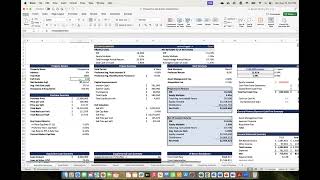
Yep. And I'm gonna go through all that in the next 30 minutes. So all that you're gonna have, you're gonna have a very in depth overview, but it's going to be pretty high level. But I'm gonna try to get through as much of that as possible. But from a sponsor standpoint, you may not see this. But behind the scenes a rent roll has been given to the sponsor and a teach trailing T12. So within that they have their own underwriting spreadsheet. This is ours. So you're seeing Craftner spreadsheet. And what we're doing is we will put their income. So this will be like their T12 annualized, not on a monthly, but we'll annualize it and then we'll put in our year one, our projections. So, and so what we typically will see is we go back to the assumptions is on the underwriting there's typically an asking price. Right. It's called a whisper price. And in negotiations there are, you know, people will, the seller is going to want X. The broker's probably telling them you're not going to get X, but you're probably going to get Y. And we're going to find whatever that aspiration or that's actually. So the aspiration price is the whisper price. Right. And then what we're trying to do is actually find a strike price. So in this case, and I'm. This is not a particular deal. This is, I just made this up, right. This spreadsheet. But we can go along through this. So there's an asking price, say 13 million to purchase price. I'm putting at 12 million 800. Now what you would typically see and this is going to be in the PowerPoint that, you know, there's going to be a presentation of business plan that's given to investors. There's going to be fee fees that are associated. There's acquisition fees, there's going to be loan fees, there's going to be closing costs, there's going to be capex renovation and additional reserves. So these are going to be those fees and those expenses that are going to be on that PowerPoint presentation, all this. The. So say if I buy a property for 12.8 million, well, once you're done with all the capex and, you know, fees, et cetera, really the total basis is 14.2, in this example, 14.2 million. And then the total equity we'd have to raise is 5.2 million because there's going to be debt. So you ask the question of, like, what are the things to look for? 1, they should be very transparent on the underwriting. They should send you this spreadsheet. And we do. So if one of our investors says, hey, send us the underwriting, like this spreadsheet should be sent to you. And a lot of times you've got some sponsors who are like, don't want to share their underwriting. To me, that's a red flag. Why aren't they being just fully transparent and being like, hey, this is my underwriting. In underwriting there's always going to be, there's never a true, like black and white. Like, it's always going to be a gray area and there's always going to be assumptions. So if I go into my annual Performa and I start building out, say, the expenses, well, we know that property management fee is going to be about 3%, right? So if typically on a smaller property, say it's 170 to 100 units, this may be 4%. But you know, because we have scale with this particular management company, we're able to get away with 3%. So those are things, you know, you could look at management fee, GNA and multifamily. There's usually a rule of thumb on price per unit. And since you're not having to actively do the underwriting yourself, the biggest thing is it's like look at, maybe, you know, if you're looking at, you know, what the current seller is paying, right, and what the operator thinks that they're going to be doing, then you should be asking those questions. For example, like if I'm looking at this and I see on the seller's T12, which is on my underwriting here, 31,000 is what they spent over the last 12 months. And. But I'm underwriting the sponsor's underwriting 150 a unit 19,200. You know, a question may be asked is why are you, you know, why are you budgeting 19,200 versus 31,000? And for, for us, you know this, and there should be an explanation. So it could easily be like this management. There's not a professionally managed company. It's somebody who owns the asset. They're managing it themselves. They've got higher expenses because they're not sharing it across the portfolio, whatever that is. It's just some of these things you could be, you know, looking at and just thinking like, hey, does this make sense? For example, like income. And again, I made this spreadsheet up, right? Let's say year one. My effective gross income that I'm projecting in this Hypothetical situation is 1,000,707. Well the T12. So what the seller has been getting over the last 12 months is 1 million 4, 80 in this example. So that's a huge income difference. So if I was a past investor looking at this underwriting, I would go, I, I would be high level in a business where. High level, you know, high level and then dig down. So look at income, total gross income, you know, where the seller had it, where the sponsor has it, and then go to total expenses and sort of see, you know, if they make sense. So does that make sense from that standpoint? It's like you're looking at the underwriting and you're saying, okay, this sponsor is making assumptions. And your job as a passive investor is to, you know, make sure that they're being conservative or at least able to back up what they're projecting. Once you, once, yeah, once you sign that paperwork and it's not scary like once you sign that sponsorship, you know, syndication agreement, ppm, subscription agreement, company agreement, once those are signed and you wire, the good news is you're fully passive, you're limited. But all this work up front is through education and then looking at the deal to see if it makes sense. And if you treat every deal as a business and not think of it over like over complicated, it's straight up business. It's a revenue, expenses, profit. And so if the revenue line items make sense or at least can be explained. Because maybe, you know, this management company, you know, they, you know, they really were awful. Like they had a lot of management transition. You know, they looked at the Google reviews and there was a lot of, lot of hate towards management. Maybe you can get this income up with good management, but you'll want to look at that and just make, see if it makes sense for you but probably a lot of these expenses are going to be pretty fixed, right? Especially for somebody who's already been doing a lot of the work in that area. So like property management be, we know where our GNA comes in. Contract service, it's already pretty close, so I just budget a little higher. But typically 350 a unit. Contract services, typically 150. Marketing, excuse me, payroll, 1450. That's usually a rule of thumb for this guys is one person for every 50 units. So if you've got 100 units, you have one person in, one person out, meaning one maintenance, one person in the leasing office. And so that could be a question to ask is what is your, what are your, what are you thinking on personnel and on site management? If it's 130 units, so it's not exactly the 150. Typically we would do one in, one out still. But at 150 units, you're going to want at least two people in, one person out or you know, three people. So repair and maintenance, you know, 250. You know, we do budget a little lower on RNM because we have capex dollars. But you know, that's how we, you know, that's how we would do it. Now you could, when you talk to a operator and they're, you know, whatever their RNM shows, you know, you can ask those questions. Typically there's a property condition assessment report and that property condition assessment report is done, typically required by the lender to have a third party professional company do it. And so that could be something you asked for. Like let me, you know, ask for the property conditioning assessment report over time. You know, a lot of our like investors we have at CRA Partners, you know, they trust over, you know, they start trusting and they're like, you know, hey, we've had several deals and so they don't really ask as much. But in the beginning with any relationship, you know, you want to trust and verify. And so those are, those are things to look for. Insurance. If you're investing in Houston, you know, this number is going to be a little higher, maybe 1300 a door. But you know, in San Antonio, you know, you can get 800 and 900 a door. Real estate taxes, typically 100%. So this is one thing to look for is ask about, you know, taxes. Like is taxes 100%. And I'll give you an example. So all these numbers, right? It all translates into internal rate of return, equity, multiple total average. So on our underwriting we do a 100% of purchase price, but what if I just did like, you know, some groups out there only do 85% of purchase price. So just that one change. Again, my underwriting shows 100%. So I sleep at night knowing that no matter what happens in an appraisal board, I'm not going to pay taxes higher than what I purchased the property for. But if I made it 85% of purchase price, that IR jumps from like 15% to, to 18% equity multiples like 2.17. And so for insurance and taxes, think of those two, especially in Texas, as like the biggest drivers of expenses. That's what the bulk of the money is, you know, going towards insurance and taxes. So insurance, you know, just ask the sponsor or the person, have you worked with an insurance broker? Have you gotten a quote? They better say yes and you can ask for it. I mean that should be transparent. There's nothing to hide. On insurance and then on real estate taxes, I would say they need to be doing 100% of purchase price in the first year. Right. And so I'm going to just change that back. So that would be something to look at as well. And then typically you'll see an asset management fee, 2% go from there. So these are some other metrics and this is going to be recorded. So if you're doing notes or such, you'll, you'll get this and you can, you know, look at it as well afterwards. But there are some metrics that we, we like to look at and one of them being the debt service coverage ratio. And so typically a lender just do a, to do like an agency debt or you know, a non bridge debt, they typically want to see a 1.25x. So what that means is for one, for every $1 of debt service paid, there's 25 cents left over to pay other expenses. So if you're at 0.8 DSCR, what that means is you're not even able to pay the debt service. So you need to make sure you got lots of reserves because you're not hitting debt service. And maybe that's a deep value add and there's a business plan behind it. At a 1x you're, you're just paying debt and not operating. So you better have reserves. In this case we're at, you know, in this example we're at 1.46. So this is something too to ask is like what is year one DSCR? What I saw in 22 to 2024 DSCRs were less than the day, you know, it was like point 8. And lenders were doing it. And there was a business plan probably of doing bridge debt, doing major renovations, increasing rents. And then when things didn't go their way, you know, rents didn't go up and, you know, business line didn't work. Then there's still negative cash flow and then, you know, they're struggling. So that's something to look at. I did get a question here. So what happens if you have an expense that shows up older than the T12? So if there's an expense from the prior year. So that's a really good question. So I don't ever, I don't ever really look at a broker's opinion of value from a sense of their expenses. And I also don't really care what the seller's expenses are because I know I'm going to operate it the way we're going to operate it. Right. It's a good checks and balance. But we know how we can manage and how, you know, based on due diligence. Now when we do due diligence, we've got our plumbing, electrical, roofing. You know, we're walking every single unit. We're looking at foundations, we're looking at the environmental. We're doing all the inspections, including running cameras through plumbing lines. So we have a pretty good idea of like R M. Payroll's pretty fixed marketing. You know, it's, you know, we've got our, you know, typical budget, you know, per door. And so if there's an outline or like, typically like insurance or taxes, sometimes there's. In Texas, you know, we're protesting real estate taxes every single year. So, you know, maybe the bill was 250,000, but on the. But then there's like a $20,000 credit. And so for somebody who's not sophisticated, they may budget lower taxes because they're like, oh, they actually just paid this. Well, reality is that was a protest rebate. So did that answer your question? There will be some, you know, something was really high. Like one of the, like in this example, like repairs and maintenance. I mean, they spent 400 a door. And so, you know, it seems high, but when, you know. But as a sponsor, if I'm digging in on their financials, maybe they're not capitalizing certain repairs. They're putting make readies into rm. So that makes sense. So I'm like, okay, well, I have my money separate in a capital account, still have R M money. But we're just classifying a little differently. If expenses are below budget, what happens? So if we, if I'm Budgeting, if this is what I'm budgeting and our actual expenses become less, then just like in any business, the net cash flow increases. So say, say instead of 1450, I was able to get somebody for 1250 or you know, 160,000. I was able to get somebody on the inside, outside for 160,000 first, 185,000. Well, that, you know, increase my, you know, net cash flow significantly. That net cash flow this year is what's paid out to, to you as the investor. So, so when we, when we look at, you know, our deals, we'll do our underwriting and then the management company will do their own underwriting. They never see our underwriting. We always, you know, have them do theirs and then we hold them accountable for their underwriting. That makes sense. So in some cases, like our numbers are less. Like we feel like we won't achieve the income that the management company is thinking, but we don't tell them like, oh, ours is less, you should change theirs. Just like, no, we'll keep our underwriting alone. Keep, keep it alone or leave it alone. And you as the management company, you know, will be working to, to hit that target. So did that answer that question again on the expenses for the seller? You know, you don't know if they're hiding things or not including things or maybe they are, they do in house management and they, you know, they're co. Mingling you, you just never know. There's. And so we just, you know, base it on, you know, our expenses and we also review with the property management.
So, so Wayne, I think my question is a little different. So there's a management company and the management company is going to do their own budget and we can hold them accountable to that. But if it comes lower, for example, marketing. Right. I'll give you a simple example of marketing. So if, if 75% of the units are occupied and I don't know what the renewal rate is, but let's say 75%. Argument's sake, 75% renew, right? So your cost of advertisement is going to be very low because you're not spending any money on 75% of the units. You're only spending money on 25% of the units. So therefore there's a significant difference in the cost. So how does that translate? Right, because the management company, or I guess the question is, does the management company keep that as their profit or does it flow to the deal?
Really great question. So the property management fee, this here, this 3%, it could be three and a half, it could be four, it could be whatever is in the deal. That deal is based off gross revenue income. So whatever that gross revenue income is, that, that is their fee and that's their only fee, meaning. And then there's typically payroll reimbursements, which is this line item. So if they come in less than budget, which is what we want, we're very NOI driven. Right. Because the maximum, you know, we increase income, reduce expenses, we're maximizing noi. Or if we're keeping income the same and reducing expenses, we're maximizing noi or if we're keeping expenses the same, maximizing. So at the end of the day, noi, as long as that's increasing, that this amount flows to you as the investor. So we want to be below budget. But what I tell our team members is sometimes, you know, because we have in house asset management, and when I'm looking and I get daily KPI reports about collections and you know, our financials and all that stuff. So every day I'm getting a high level view of our KPIs. What I'm really focusing on is NOI because maybe leasing is being a little slow right now, but if we're able to manage expenses, we're still hitting our target from an NOI standpoint. So does that answer your question? They do not profit you, the investor benefits from low budget expenses.
Okay. So if the, if the, if the cost is lower than expected, the investors benefit and in the same regard the cost is higher than expected, then obviously investors are covering those costs, right?
That's right. Yeah. So if expenses were higher in a category, then on our, because we do weekly asset management calls. Yeah. So we're, we're trying to drive the hardest part of a deal. And this is where you want to really understand the operator's experience and their history is how can they land the plane safely ultimately? Have they had a crash? Have they, have they even flown a plane before? And so because if they are, at the end of the day, if I, if I'm landing the plane properly, I'm getting as close to this noi, this projection or higher as possible and there's going to be one off. I mean there could be an insurance claim, there could be something mean, there's those things. But ultimately, you know, we are targeting our, our budget and this performa is different again from our management company performer. So there's always going to be two different performas.
Got it. One, one question about insurance. So when you have, when you have this, this as a Management company. When you have hundreds of units under management, could you be self insured? Do you have to use a third party insurance company?
Well, it's a good question. I say no. But so typically like the, we typically do agency debt or with Fannie or Freddie or we will do our debt through like a debt fund and they will require general liability and property insurance and that really protects them and their investors. So these debt lenders, they have their own investors and so they're going to want to see that insurance. Now if the seller, and this is, there's all different ways to skin a cat on real estate investing. I as a buyer could be buying a property, 100 cash and then at that point I have a, I can, I can self insure. I have a property that we manage for one of our investors. It's our only property we, we manage that we don't own. But he's invested a lot with us and, and we're happy to do it for him. He, he owns the property outright and he self insures and that's totally fine. But typically when you have debt behind a deal, they are going to want you to have insurance for that particular asset and that entity and covering the, the lender for any insurance that comes up.
Okay. Okay.
Yeah. And then you can also do. So I have one deal in Houston that I did sell, excuse me, they did seller financing so I still had to have insurance and that protects them. But you know, their insurance requirements are not going to be as robust as Danny or Freddie on their insurance requirements.
Okay.
One of the questions was why do you not tell the management you're underwriting? Because I really, it's a great question. A couple things. One, when I'm initially underwriting, a lot of these are how I, how we operate a property based on our experience. But the management company, if they do their own management company and they're not clouded by our returns, then it's a checks and in a way it's a check and balance. Because if I, and this is just a hypothetical underwriting as I mentioned, but if I can hit 877,000 NOI year one, 893 year two, then I'm able to hit these returns above. Now what if the management company came in at 900,000, 920, 950 and that typically happens. The NOI typically is higher than what I projected. That's fantastic. I'm not going to tell them that my number is less and they can do less. I'm always going to be like, hey, Great, let's run with it. And our senior portfolio manager will on our team every week is you know, pushing the business plan with the management company of, of achieving their numbers. They don't really need to know what our numbers are because our numbers are, are, you know, should be conservative. It's almost like the under, you know, over perform under deliver type thing. So that answers that question. But yeah, they never see CR underwriting. Now there have been instances where, and typically we wouldn't change our underwriting but say they're, they came back and their, their payroll was at 1350. Right. And, but they're, and I'm just you know, adjusting numbers here. So they're, So their number says 1350 but their revenue is higher. So that say their expenses are higher or excuse me, overall expenses are, are higher and their revenue is higher but still nets my noi then I'm still okay with it because they're still, they're, their numbers may not be exactly like mine but again as the operator I'm heavily focused on my NOI because that's really what matters to our, to me and my investors. All right, so going back to, so we mentioned debt service coverage ratio. So for every, if you see a one dscr that just means that they're paying the debt service. So you have to want to understand what, how they're paying for operating expenses and everything else. So at 1.46 this is a pretty strong VSCR meaning I can pay a dollar, I can pay all my debt service and still have for every dollar, you know, 46 cents left over for other expenses. So if you see anything 1.25 or higher and you're comfortable with the income and expense business plan then you know that's, that's pretty good. Debt yield 9 and a half debt constant 7.6. This is another one as I look at break even. So what I love about multif family is say this is 100. How many units that I put in here? Again, I just made this 128 units. So of 128 units if I'm 77% occupied. So of my 128 units, you know I need 98 units of those 128 to be occupied. So you know, 30, the 30 units I can have 30 units vacant and I can still break even now that's not good. I wouldn't want to have 30 vacant. But this type of break even occupancy, you know it's, it's good. You know, if it's high 80s or low 90s like that doesn't give much room for, you know, vacancy to break even. Some of the other things you look at is deal cash on cash, cap rate. You know, cap rate varies. And typically what you want to see is a sensitivity analysis. So like in our deals, you know, we're going to provide you a sensitivity analysis. And what that is is like I'm projecting. So in this, I'm just making this so say 5.75 exit cap rate at 1.9. What happens if it's a six and a half cap rate? Well, it goes from 14.6 IR to a 10% IR. And are you comfortable with that? You know, there's no right, right or wrong answers. Just you as an investor will determine what's best for you. But you'll want to see the sensitivity analysis. And this is what I really wanted to get across. So on the expenses, I mentioned that, you know, you want to get comfortable. Just think of it as simple as a business. If you understand business, if you own a gas station or you're an operations, like if you understand just an income statement, if you get comfortable with the revenue and all these different line items and they make sense and there's no red flags, right? Growth is 3% or less or maybe zero year one or, you know, but if it's like 8, 9%, it doesn't make sense. Some red flags and you're okay with the expenses. Then, you know, you go over and you're like, okay, well, I'm comfortable with the business plan. Now let's look at exit cap rate. Now this is. Where am I gonna dial this back a little bit. All right, so I want y' all to look at this number here. 15.61. And this number, 5.6. If I increase this to 6% cap rate, it reduces my IRR turn array return 13.05, equity multiple 1.78 average annual returns like so this, it dramatically decreases. So how do we come up with our cap rate? Well, the cap rate, it's a crystal ball. Nobody knows where cap rates are going to be. They are, they have been historically trending with the, you know, the, the Treasuries. So if as Treasuries go down, you know, cap rates go down and that's where that sensitivity analysis comes. You know, that where this is. But sometimes, you know, a, you know, somebody may be going like, okay, well I think it's going to be a five and a half cap. Well, that. Sorry, five and a half cap. Wellor, then, you know, that drove my IR up to 16.27. Nobody knows what the exit cap rate is going to be. And if we're a business minded person, if you think of the cap rate as the, as the aspect, the multiplier, so you take the revenue divided by the multiplier, that's the value of the asset or the business. That's where like cap rate comes into play. So where do we get our cap rates from? We get it simply from costar. And so our COSTAR report will show on that property or they'll show the submarket and they'll show like where cap rates are trading now and over the next five years where they're trending. And that's, that's where we would just plug in. Because I don't feel like I'm going to be smarter than costar. Costar has all those, the details now. That's how we come up with the cap rate. There are other groups that like hey, we're going to do 10 basis points per year or 5 basis points per year and they just do it that way. So there's no right or wrong other than you want to ask like how are they coming up with their cap rates? Because as I showed, like it really dramatically changes the returns. Other things to look at, you know, is the financing. So think of like the debt as like the biggest investor on the deal. So they're coming in on this particular made up deal at 8,960,000. So 70% of the total funding is coming from the lender. Some groups, you know, maybe they can get a 75%, maybe they can get an 80%. You know, the higher the leverage, the higher risk it is for you as the investor. Right. So there's got to be a good balance. So typically we do a 65% or 70% loan to value. In some cases I've done 75 and on one deal I did 80. But that was the seller financing deal, it's at 80%. But typically you would, we would be around that 70%. And why that matters is because the higher this leverage, if you look at this here, this debt service, the higher the leverage, the higher the debt service. So it went from like 600,000 to 728,000. So that 128,000 is now going to the lender, not the passive investor. So again, just understanding the debt structure and seeing, you know, what their interest rate is, how much of it's interest only, you know, those are good questions to ask of, you know, if they're expecting it to be a five year deal and they have a five year loan, you know it. What's the, what's what happens if you know year five it's not a good time to sell and they have to extend, you know the sponsor should be able to explain, you know how they're going to go work through that. So. All right, so I'm gonna pause there again. As I mentioned earlier, this spreadsheet should not be a mystery. It should be easily sent by any sponsor worth their salt. Like there's no secret to the sauce, its assumptions and you as a limited partner are just trying to do your homework of what assumptions are being made and do they make sense and do they sound like you know, there was thought behind it and you know, if you feel comfortable with it then you've done your homework, you've done your analyzing and so then from once you submit the investment and moving forward you're just trusting that the jock jockey on the horse is doing, doing the work. So there's a question here. Okay, so how do you handle someone wanting to exit earlier? So this would be a great question for any sponsor that you're about to do a deal with these for us as Syria partners. Like if you were to invest $100,000 like that money and I'll show you in this example here, that $100,000 went towards this total equity and that total equity went towards the purchase of the property, acquisition fee, closing costs, working capital capex. So that was accounted for. So you know that funding is not liquid. So you know, don't. I would not invest anything that you think you need that liquidity back in that five years if there's a one off instance where you know there's extreme circumstances and we're able to find, or you're able to find an investor who will come in and take your position. You know that's something that the sponsor may be open to but you know these are not liquid investments until they sell. That's a good question. You may find though like as you're you know talking to other sponsors and all they may allow it and they may be like yeah that's fine as long as you find somebody to backfill it. You know we just, you know, we have not done that. So. All right, looks like he had one follow up question too. If it's a five year deal and if you have to extend but the investor is not. Yeah it's another. So this is where reading the subscription agreement and the. So there's three documents, I'll show you this. So for those that are newer. So private placement memorandum. So this is like if you're about to buy your timeshare and there's all these documents about the risk and you know, business plan, You know all this is going to be, all this is going to be outlined, the team returns, you know it's all going to be there. But you're not signing the ppm, right? That is, that's an informational document. Most of it is to scare you out of the investment. That's its purpose, the ppm. But there are two documents you are signing. You're signing the subscription agreement and you're signing the company agreement. When you invest in a deal, you are becoming an owner in the entity. So say 12-341-1334 Rockdale LLC and you've invested in a deal on a, on a property. You're an investor in this deal. So you're an owner in this entity. You, you do not, you're not able to get your funds back until this company think about like you're buying a business until that company dissolves. Which means, you know, sell. So these two documents. Subscription agreement. If you put in a hundred thousand, the, this is going to be about your shares, shares agreed upon. So for you know, say you do 100. So for us it's $5,000 per share. So you do 100,000. So it's what, 20, 20 shares. That's what you're signing there. But this what you just asked and it's a great question that's going to be found in your company agreement. Also capital calls and other, you know, things that relate to that business is going to be in this company agreement. So very important document. This is the document you are signing and this is the document you really want to read closely. So hopefully and every deal is going to be a little different. Every sponsor is going to be different. So as long as you're comfortable with the subscription agreement and the company agreement, you'll be, you'll be good to go. Typically they're not going to change the company. Like I wouldn't change the company agreement or subscription agreement for an investor if it, if it doesn't work for them, it's okay. There's other deals, there's other sponsors, other properties. So you may not be able to change anything in subscription agreement, but definitely want to read and just feel like you're comfortable with it. So. Another thing on this five year deal, it's because it's a great question if, if a deal isn't say the market just it doesn't make sense to sell, like today, like, I wouldn't sell any of my assets today. Does not make sense. The people that are selling today are people that cannot refinance because the interest rates are higher and they can't sell because the value, because interest rates are higher. The value of the property, it doesn't make sense to sell. So the cap rates are high. So why would I sell a deal if I can extend another year or two and be in a better position to sell at a higher price to get you a better return or better yet, make sure I can at least provide the initial investment. So that's where, you know, you just want to, you know, have those conversations with the sponsor, you know, you know, for us, like, we have Shelby on the team and, you know, I'm here. So if there's any questions throughout, we do monthly updates, we provide monthly financials, we do quarterly distributions. We haven't missed any of our distributions that were budgeted or planned. And so those are things that we take pride on. So, but you're going to want to talk to us or a sponsor about how they plan on handling the deal. So if there's anything you take out of today, just know, like, there is a behind the scenes of your PowerPoint presentation that you're seeing. There is an Excel spreadsheet or some type of modeling that's happening and asking for that model just to see what the inputs are, I think is good to do. I think asking questions is a good thing to do. There's several on this call that have invested with us. And you know that I took time and we went through questions, we went through underwriting. I put you in touch with other investors who have invested with us, like referrals, like, they should be open to sharing other people who've invested in the deals. And so as you're looking at the underwriting, seeing about other referrals and you know, and you know just how the communication style with that sponsor is just going to make you feel comfortable investing in the deal. So any, any questions? I'm happy to go further into anything. I know it's getting a little late. All right, well, what I'm going to do is I'm going to stop sharing and then wait a few more minutes to see if there's any other questions that come along Again, to summarize, though, please do not overcomplicate real estate investing. Think of it as a business. Revenue minus expenses is profit, net operating income, understanding the business plan, understanding, like, where they're coming in on the Revenue where they're coming on expenses, where their capital dollars are being spent. You know, those are good questions. And if they're being transparent and, and going through the business plan and you're trusting the team and they've got experience and I think, you know, look, I'm on a nine month RV trip with the family because of how real estate has blessed our family. So and you know, I've got other investors who have retired and are just living off the income that, you know, we're producing for them and seeing the tax benefits year over year. So hopefully, you know, that will continue to go for, for you and other investors. Great question. Yeah, I got a question here. What's the minimum acceptable DSCR? I would say 1.25 and 1.25 is what Fannie and Freddie, the agencies determine as typically the minimum. Sometimes they go as high lately as like 1.35. So there could be, you know, between 1.25, 1.35. You know, those are definitely very good strong DSCRs. Anything above that, you know, it's even better. You know. But this DSCR only matters if the income and the expenses make sense because I can make this, the SCR look incredible. Like I can double rubs. Now my, let me see what I do there. So 1 million 700. Oh, did it update anything? No. So yeah, so my, now my DSR is 1.53. So again it just really depends on the inputs and you know, being comfortable with what they're, what they're underwriting. All right, can we use tender exchange on these deals? So the answer is yes. For, for us, our typical 1031 is a million. We did most one recently for 600,000, but typically it's 1 million. And there are definitely groups out there that do it. We have an actual deal we're closing on very soon that if you do have a 1031 and want to talk about it? Yeah, it's a great way to get, you know, have those benefits but then also have the ownership and then, you know, have a percentage of the cash flow and the depreciation. Good question. But one question that isn't asked that I'll mention. So like on 1031 exchanges, sometimes people ask, well, can you, if we do an investment, can we 1031 that, you know, when we sell the Property, can you 1031 that into another syndication? And the answer is no, unless all the limited partners on that number that are going back to that company. So where did I put it? So if 1334, Rockdale LLC, if all the investors decided to do a 1031, then yes. But if, if some people are like, no, and. And for us, we. We would sell, so that wouldn't be an option. If they, you know, if some investors like, no, then you couldn't do it because you would need all of them to agree. All right, so that. I'm going to stop share, Trying to see how I stop recording.
More from Wayne

September 2026 Meetup: Investing Ahead of Growth: The Bryan–College Station Opportunity





May 2026 Meetup - Apartment Complexes & Passive Investors: Opportunities & Risks


March 2026 Meetup - Reading the Market: Economic Indicators Every Investor Should Know


February 2026 Meetup - Syndication 101: How CREI Partners Structures Deals for Investors

Build-to-Rent (BTR) Communities Explained: Why Investors Are Paying Attention