Why Wayne Courreges III Is Still Bullish On Multifamily Apartments In Texas
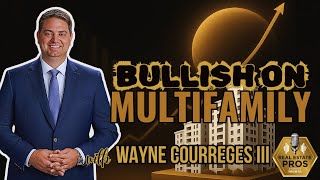
This is a YouTube Real Estate Pros interview with Wayne Courreges III (CREI Partners). Wayne recounts his path (Marine Corps → first single-family buy ~2004 → 16 years at CBRE on property-management/operations → founded CREI Partners in 2019; left CBRE in 2023) and explains CREI's multifamily strategy: conservative underwriting, focus on day‑one cash flow and modest capex, selective value‑add and use of bridge debt as true bridge financing before refinancing to permanent fixed-rate loans. He discusses market selection in Texas (San Antonio, Houston, Bryan) and provides deal examples (June 2025 San Antonio ~127–128 units bought ~$3M below prior-year purchase; 2022 Houston 101-unit acquisition at ~4% cap rate). He notes activity in Louisiana and Huntsville, AL (partnered) and points listeners to passiveinvestorcoaching.com and creipartners.com for resources.
Questions this video answers
2019
2023
December 2021
creipartners.com and passiveinvestorcoaching.com
June 2025 purchase of a ~127–128 unit asset in north San Antonio (near airport); one purchase was 127 units bought for $3 million less than seller paid a year earlier
Chapters
In multifamily. I am very bullish on multifamily and I love it when people talk negative about multifamily because that gives us the opportunity to go buy. I'll give you one more example, and I'm talking a lot. In June of 2025, we bought an asset in San Antonio, 128 units. This is an area that I was being Antonio.
I lived in San Antonio.
Yeah. So this is north, north San Antonio near the airport and, you know, very established neighborhoods. There's not a lot of new supply going in the area. It's an, it's an older, you know, middle to upper class established area. And we bought an asset, it was 127 units for $3 million less than that seller bought a year prior.
Welcome to the Real Estate Pros show where we interview real estate investing professionals from coast to coast, as well as the service providers that serve the real estate investing industry. Our goal is simple. Share what's working now to help you improve and scale your business to the next level and meet the pros that can help you get there. Real Estate Pros is powered by Investor Fuel, America's leader in helping real estate investors and professionals build the business you need to live the life you've always dreamed of. Let's start today's show. Property insurance for real estate investors doesn't have to be difficult, but it does need to be there to protect you when you need it. MyInvestorInsurance.com only provides insurance at 15 to 30% cheaper than traditional agencies. It's built specifically for real estate investors like you. You can set up an account in about two minutes, get quotes on properties, turn on and turn off insurance for your fix and flip or rental properties in around two minutes without having to talk to anyone directly all through our portal. There's no better way or faster way to make sure you've got the coverage you need to protect you. And no more lengthy policies either. Once you're set up, you're billed monthly and prorated by the day for however long your policy is active. It's powered by MSI, the third largest independent MGA with 1.5 million customers and more than $1 billion in cumulative premiums. Written get set up today in about two minutes@myinvestorinsurance.com fuel.
Hey folks, welcome back to the show. Today's guest, Wayne Courageous III with crei, is a commercial syndicator active in Texas, Louisiana and Alabama. Wayne, welcome to the show.
Dylan, thanks for having me on today.
Great to have you on here. Great to meet you, Wayne. I always like to start off at the top of this show by asking guests how they got started in real estate.
I started in real estate indirectly in high school so early 2000s where I was dating someone whose dad was a successful real estate investor developer. And I really caught the bug early, you know, seeing what he was doing on a day to day basis and so asking him questions. So I, you know, when people ask, you know, I really contribute it to that person who, you know, like looked up to in my high school years but in the Marine Corps. So I joined the Marine Corps 2003 and bought my first single family rental when I was stationed in 29 Palms, California around 2004. So I must have been 19 years old when, when I bought my first single family, beat up out of the Marine Corps in 2007. Joined CBRE where I was with them for 16 years, heavily on their property management side. So I saw and was able to do a lot on the operations, which is really the hard part of owning real estate. You know, even in a, in a tougher capital environment, you know, day one of owning an asset is, you know, onward is. That is always going to be the challenge. But that's always what I've known. So I don't really know anything different. You know, I'm a heavy operator, operations guy. And then in 2019, I started Crei Partners while working for CBRE and they were very open to it. I was focusing heavily on multifamily, which we still do now. And, and then in 2023, left the big green machine at CBRE and headed right into full time CREA partners. And that's where we are now, into almost 2026. It's crazy to say. It's just around the corner.
It's. That's right. I want to ask you a little bit about it. Cbre, forgive me for being a little bit in the dark. It sounds like the scope of what they were doing was, was, was broad. But you were on the operations side. So was this all multifamily properties and management of them, acquisition of them. Walk me through what the scope of CBRE is and then also what you were doing for them.
Yeah, so CBRE is like, I don't know, top 130 in the Fortune 500. I don't know what their number is now, but they are a massive, massive company. Jones and La Salle, Fisherman, Wakefield, these other large companies, you know, are in that same genre where they're focusing. You know, there's a development arm with Trammell Crow Co. There's obviously the property management sides, more so on the office, retail, industrial, there's the accounting, financial services that, you know, go along with commercial real estate. There's project management, you know, when it comes to, like, tenant improvements and building improvements. So CBRE touches everything. What I was doing was heavily on the office retail side for property management. And so, you know, a lot of the things are transferable into multifamily because every deal is like a business.
Stop living on an island and join the number one mastermind in America for professional real estate investors. Investor Fuel is a community of hundreds of the nation's top investors working together to build stronger businesses and better lives. In addition to the amazing community of real estate investors acting as a board of advisors for one another, Investor Fuel members have access to 100% funding on purchase and repairs for our members only, a health insurance program, and benefits and discounts that more than pays for the membership of most of our members. Meaning it's actually costing you money to not be a member of Investor Fuel. If you're looking to scale your business and build a business that allows you to live the life of your dreams, please visit investorfuel.com today and book a call with our team.
And so if you understand, you know, where we can get income, expenses, maximize occupancy, you know, ensure maximum collections. Look at the risk management. A lot of people don't talk about risk management, but that it's a huge component of, of owning real estate. Um, and so, you know, I was able to get in the multifamily because it didn't really compete with the day job. And to be frank with you, I, I saw the ups and downs of office and retail. Not to say multifamily doesn't have its own ups and downs, but with office and retail, it's much more obvious because people just move out in the middle.
Of the night, get out of the office. Yeah.
And they'll just go, you know, work from home or work from Starbucks or wherever. So, um, anyway, so that's what we were doing and what I did for, for all those years, and man, it was great. I. The reason, you know, I, I left was really just because we were growing our investment company to a point where it was hard to do both at the same time. And so, you know, but that's how, you know, that's sort of the arm that I was in was, you know, on the operation side, which from, you know, multifamily property management, it went really well despite, you know, a Lot of that background being office and retail. Because you're still dealing with a physical asset. You're still dealing with similar, you know, financials, income statement. A lot of things are transferable, despite the asset class.
Yeah, I, I have only one experience in managing commercial real estate. It was like almost, gosh, it feels like maybe 10 years ago. It wasn't that long ago. It's probably like 2017 timeframe. I was living in the Greater Boston, Massachusetts area. And are you familiar with Yardi the, The software for managing, like, tenants? I was working at some type of mall and I had. Actually, this is before I had even an idea that I wanted to get into real estate. I had been hired through a temp agency. Now, years later, I'm reflecting on it, that was really good experience because I saw like, okay, this is mostly just, you know, collecting rent, dealing with people who are delinquent, and then dealing with problems all day. And so I understand why, you know, people hire property managers and the like, because that was my job. It wasn't, you know, it wasn't like I walked in there with the mindset of, okay, today is going to be a bunch of great news. It was more like, okay, what's the issues that I have to solve today?
Yeah, and when I was in property management, a big part of that was trying to be proactive versus reactive. So, you know, I, you know, I was eventually a direct, an associate director overseeing multiple property management teams within the company. So definitely had a higher leadership position. And it was just shifting that mind of being proactive versus reactive. Because, yeah, if every day you're coming in putting out fires, that is not a good way of, of living or working. So, yeah, and there's a lot of things we could do proactively and we do, you know, on the multifamily side. I'll give you an example. You know, we're. We're approaching, you know, we're in Texas, so approaching, you know, winter. Typically, January, February are the coldest months. But, you know, let's be proactive before we get that first freeze warning and, you know, make sure we're wrapping, you know, the pipes. We're winterizing the systems that we're already starting to communicate with residents about what to do during the freeze. Again, you know, if you're, if you sort of plan in advance of things that are, you know, are coming down the road from an operations side, it, it helps protect the asset. And for passive investors who are investing with us, you know, they're expecting us to protect their investment. Protect the, the asset. And so again, just going from a proactive, you know, instead of a reactive to a proactive, it's hard to do in, in operations. But once you've been to the movie a few times, you sort of know what to expect. And this is where they had experience. Like I've been doing this for, I mean, almost 17, 18 years now. And so, you know, we've, we've gone, we've gone to the dance a few times. So we sort of know what to expect. Uh, when, when you have that experience that you can just have more of a proactive approach versus reactive for, you know, for 99% of the stuff, right, there's always that 1%. We're like, dang, you know, that sucks. You know, we're gonna, we'll have to get through it.
So when we talk about, you know, multifamily acquisition, you've got experience in this. It does seem like, and I've talked about this with other guests of the show, that people ran into issues maybe around 2020 because it felt like you couldn't go wrong buying multifamily, especially since everyone was working from home or a lot of people working from home. But it does feel like now that there's some stress distress on the operator side, not in the buildings themselves, but from people who bought maybe too deep and they had arm loans that now have gone up. What mistakes type being 2020 were people making at that point in time?
If you're looking for consistent, high quality leads, look no further than Investor Machine. Investor Machine isn't just another agency. It's the most sophisticated, data driven lead generation company on the planet for real estate investors and serves the role of being not just a lead generator for your business, but a marketing partner that is helping you achieve your goals along the way. Go to investor machine.com to learn more and schedule a call with our team today.
Yeah, so I, you know, first and foremost know that like it's not just an operator who's underwriting and getting a deal under contract. You know, it goes through appraisers, it goes through lender scrutiny. There are a lot of people along that process to get, to get a loan and to go, you know, through that process. Right. So I think there was definitely some concerns in multiple. A lot of people just want to put it on the operator. But really holistically, the amount of people who have to sign off on any given loan, it's, you know, it's more than just one person. So I'm definitely not going to kick Any operators? You know, there are those that were a little bit more aggressive than others. But I will say that, you know, I can only speak from my experience. So when I was starting to underwrite, now, remember, I started the company in 2019, so I was right into the thick of it. 2020, we didn't buy any assets. 2021, we closed on our first asset in December of 2021 for CR Partners. I was getting told time and time again that every deal that we passed on, we would be regretting. Like, your biggest regret in your life, Dylan, would be the one that you said no to. Right. And so that's what I was being told time and time.
Who was telling you that? Was that from, like, listing? Like, who was telling you?
Oh, it's, yeah, mostly, you know, brokers. You know, and honestly, at that time, I mean, they, you know, people were making quite a bit of money buying properties and, and doing the value add. I, you know, I had only wished that I had bought properties a little, you know, prior to that and, you know, hit the wave. So there's, there's going to be, you know, with any market, there's ups and downs, I will say, like, I was getting outbid on projects, you know, a million dollars, you know, higher than what I. Holy cow.
You know, so where in Texas and Alabama?
Yeah. Yeah. So, you know, 95% of our stuff is Texas, so I stay in the Texas triangle. You know, we have outliers and, you know, property in Louisiana through a build a rent community. And we have a couple properties in Huntsville, Alabama. Those are with some partners that we have really close relationships with. But for the most part, we're the lead sponsors on the stuff we do in Texas. But yeah, so, I mean, you, you just underwrite and, you know, conservatively and realize like, hey, you know, could we have won the bid? Could we have gotten the loan? Could we have done all this? Yes, but, you know, there were a few, you know, at that point, two years from me starting the company, like, man, I really want to get a deal under the, under contract. And so for me, like, I'm. I feel very blessed that I'm not stressing about those properties that I. But, but, you know, we, we all don't bat 100. And so that, that's something that, you know, any investor should know. Like, there's, there's always risk. How do you go through that risk? I'll give you an example. So in 2022, I bought a property in Houston. This property was owned by a seller who had it since 2007. So a long term hold. It was, you know, a doctor investor out of California. I was buying definitely below market when I was looking at how many units. So I was 101 units. So price per unit, um, it was well under, you know, what others were paying in that submarket. Our cap rate was reasonable. Now our cap rate was still in the four, which was still, you know, people were doing three cap, you know, purchases. So I felt like, you know, four cap.
Yeah.
And we use bridge debt, which I think a lot of people got, obviously are in trouble or were in trouble with a lot have refinanced and have gotten out of it. But with bridge debt, you know, we were using it in a way that actually made sense in the fact that the bridge debt is there to be used so that you can buy an underperforming asset, prove the asset to get you to the permanent financing. So it's a true bridge debt. Right. That's what it's meant for. A lot of others were unfortunately using bridge debt because the valuations were so high, they were buying the property so high they weren't able to get permanent financing. And so there wasn't really that value add component where what we were doing was definitely a value add. So I slept easy at night knowing that, hey, we're going to do bridge debt. Well, that property has aged me 25, 30 years. You know, we have, I mean you've. And that's what I hope people that are listening in again, we're not all going to bat a hundred. What do you do to get through it? Have you folded? Have you put your head under a pillow or you stop communicating with investors? You know, we refinance that into a fixed rate debt. But I'm still, we're still dealing with it, right?
If you're a new or newer real estate investor looking to launch or grow your real estate investing business, please check out InvestorFuel Club. It's a coaching community, but unlike anything you've ever seen before. And you can actually partner with members of our mastermind from coast to coast on deals right in your market. There's no better opportunity to build a consistent business than to literally partner with pros to help you avoid costly mistakes, avoid the need for capital to do deals, and help you eliminate your fears as you're starting your business. Learn more about Investor fuel club@investorfuel.com club.
And so you know, if you, if you're investing with a group and that group says they don't have one black eye or scar over the last five to 10 years there, you know, there's more to it. Right. Everybody who is investing there in that time has a property that hasn't met pro forma and I'm not going to put anybody, including myself, in the fire for it. Like, you know, at the end of the day, like we underwrote it conservatively, we're working through it, we haven't given up, we've overcommunicated, we've refinanced to fixed rate debt. Fortunately for us, that was like the one property that, you know, has tested our grit quite a bit where the rest of the portfolio has done extremely well. We've done, you know, quarterly distributions, as we said we were going to do, you know, the great tax depreciation that comes. I am a big believer, Dylan, in multifamily. I'm very bullish on multifamily and I love it when people talk negative about multifamily because that gives us the opportunity to go buy. I'll give you one more example, and I'm talking a lot. In June of 2025, we bought an asset in San Antonio, 128 units. This is an area that I was being part of.
I lived in San Antonio.
Yeah, so this is north, north San Antonio.
Okay.
Near the airport and you know, very established neighborhoods. There's not a lot of new supply going in the area. It's an, it's an older, you know, middle to upper class established area. And we bought an asset, it was 127 units for $3 million less than that seller bought a year prior. And the year prior, you know, they, their loans were called due by one lender and it was because they were having some financial defaults in other properties is what I'm being told. But regardless, there was an opportunity for us to go in and find a really great value in buying an asset. We bought another one just a few weeks ago in San Antonio, about 10 minutes away from that asset. And that is a day one cash flow, very low capex getting in at a strong cap rate. And so again, I'm bullish on multifamily. You're going to have these ups and downs when people are running away from an asset class, you know, especially multifamily, which has proven historically over many, many years. I mean, it's the original asset class of real estate. Thinking back to the caveman days, like multi, you know, people need a place to live. Right. And so this is not something that is going to go away. It's a need for any man, regardless of what AI is going to be doing in the future. So like I said, I'm bullish for it. I think there's opportunities.
I have so many thoughts on, on this. I mean, I look at it from all sides. I'm also a realtor myself, so it's not, I'm a retail single family home, you know, Realtor predominantly now, at least first year in the business as a realtor. Prior to that I was a wholesaler in the single family space. So from that lens, there's of course a lot of my peers who are going to tell everybody, you know, you've got to buy a home or you know, don't let everything turn into a rental economy. But on the other side of it, and I'm just talking like macro, large influences here, it's, it's in many cases not feasible for people. Even now with late rates a little bit lower and with all the builder incentives, it's still not possible for everybody to get into a home. There's renters by necessity and you know, post Dodd Frank, there's more of that because, you know, it feels like you need a. And again, there's going to be a lot of people on my side who might say, don't say this, but it feels like you need a blood sample and like your next of kin to, in order to qualify for a home in some cases, especially for younger people, even with good credit, but maybe not necessarily established credit. And so, you know, I see that in some cases, like they've talked about the Austin area, you know, rents may have stabilized or even dipped a little bit. But on the whole it does feel like from a, from the perspective of a, someone who's rented in San Antonio, there's not enough rentals. Like if you go to a place and ask them if they have, you know, any open, even if they do have some open, they're likely to say no. And I don't know why that is. So until we get to a point where there's like truly affordable housing where people aren't spending, you know, on $50,000 a year close to, you know, one third or half of their post tax income, you know, in their apartment plus utilities, I still think that there's not enough multifamily housing.
Yeah, well, and it's very market specific. You're absolutely right in many cases on this. And then I think every market that someone invests in has to see, you know, what is the supply coming to the, to the market and what is supply has been put on the market Austin and San Antonio had thousands of units put on the mark, you know, you know, finish. Because you think about during expansion, recovery, you know, these different cycles that happen in real estate, you know, depending on the cycle and the real estate, there can be an oversupply. And in San Antonio there is an oversupply in much of the city. West San Antonio has a lot of new development. There's a lot of growth happening west going into the hill country and you know, you know, that's in Austin, you know, a lot. So when a lot of growth was happening over the last few years, heavily from the west, you know, coming into Silicon, you know, coming from like Silicon Valley to like Silicon Hills is what they call Austin. And even Austin being really tough, I mean you couldn't, I mean there were, when we were looking to buying in Austin several years ago, I'll say four or five years ago, it would have been really difficult to put anything under contract. I mean, we sold our house, you know, we lived in a Lake Travis bee cave area and you know, we got a cash offer on our home double for what we paid for it a few years prior and we're able to lease back that home for three months. And I'm always just saying this because the market was really frothy. You know, there was just much capital, cash. And so that brought a lot of developers to develop. And that's normal. It's part of this, you know, cycle. But then things slowed down, the economy slowed down, people weren't moving as much and so now you have this oversupply. But in Austin, San Antonio, these other markets, if you look at like what's coming, like what permits are in the pipeline for new deliveries over the next few years, it's practically zero. It's extremely small. So if you're buying today looking for a five to seven year hold, I believe we were in a great position because as supply and demand, you know, tightens, that pushes, you know, rents and you know, it, it. And then when rents are pushed and then there's a demand issue and you know, developers start going back in and start developing. But that's a three to four year timeframe from when you start a permit to finish, right? So there's cycles of what's going on. I believe in certain markets, especially like north San Antonio, where, you know, it's already an established area, there's not a lot of, there's no real raw land where you can just go develop. And so, you know, the, those type plays I feel very bullish about and then looking at overall markets three to four, five years from now. I think, you know, hopefully, you know, I don't have no crystal ball, but hopefully we're making the right decisions and being conservative and, and buying now with the opportunity to, you know, build the business plan to sell, you know, over that period.
There's an element of this conversation too where it's the deal changes like from the point that you got it under contract to the point that you break ground to the point that it's finished, you're looking at totally different circumstances. So if it's like a 18 month or two year builder, what, whatever the, the standard would be for a, you know, 100 unit, 200 unit multifamily complex, I saw. So I was living that area west side of San Antonio going towards, I don't know if you should call it the west side. I think that they may not love that term in San Antonio, but the western part of San Antonio going towards Bernie and then going towards like Six Flags, they have the rim area. I was living over there. There were all these high end apartment complexes going up all over the place. And I had left there around 2024, so last year and a lot of them were not finished yet. So now I'm thinking, okay, well if they're finished now, it's probably a difficult time for a lot of them because this may be, you know, now there's too much inventory to kind of juxtapose that with years earlier when I know I was moving into that apartment in 2021 and there was, you know, not enough inventory.
Yeah, you're, you're, you're spot on right now. There's a lot of inventory in San Antonio, but where real estate investors, you know, where you sort of have to like look at where today is and then sort of forecast, okay, what's the next three to five years? Look at, you know, what is the absorption in Central Texas like there's a lot of growth. You know, we, we primarily focus in Houston and San Antonio and both of those markets have, you know, incredible growth. San Antonio was one of the largest cities population growth according to the US census in 2023. And so, you know, as that continues and those units are absorbed, it's going to take a few years. It's not, you know, all going to be done over the next year. And then you look at the new permits and you sort of see the cycle. Then there's a tightening, then there's, you know, opportunities for new supply that come on. But it just takes a while and that's what's really concerning, you know, nationwide and especially thinking the Sunbelt states because as, as we have so much growth into these markets, you know development has taken a backseat over the last few years. We are already hundreds of thousands of units short previously and then as you know it became less favorable to start developing. You know that's just going to cut harder into the supply. Now we were talking before the show but the bulk of our stuff is day one cash flow, value add type opportunities. I am heavily on focused on base hits. I think home runs are overly aggressive and just doesn't happen very often. So our properties that we buy have to cash flow day one and they have to have little capex. We're going to push a value add plan but the days of just going in and doing complete renovations and changing out the demographic it's just highly risky in today's environment. But then there's about 20% of our portfolio that's focused on development and so we are doing 150 unit multifamily development in Brian and you made a really Brian, Texas and you made a good point Dylan is like how do you know, like in the next couple of years things change. But we do a lot of market study, a lot of research, a lot of third party and you know, data that comes in and shows okay, what's the influx into the Bryan College Station area just as a market, as an example, how many units are available, what's the, the you know, the lack of supply, what's that number that's lacking. And if you've got a strong location and a very pro tenant or excuse me, pro landlord area, you know there, there are opportunities and we can talk through that through HUD and such. But you know this is also maybe a good time to look at you know, some development opportunities for investors.
I know that there's a lot of, I can say this coming from the background of distressed single family fix and flip. There's a lot of fix and flippers who can't do fix and flip any longer because there's so much new development in single family homes and subdivisions going up that you know, why would you, if you're a retail buyer and you can buy maybe a slightly smaller home but brand new for the same cost as a pre owned home, not brand new without the builder warranty and like a higher rate on the pre owned side, why would you do it? And because of that shift towards development overall there's, I've seen as well kind of a migration if you will from people who were traditionally single family investors into multifamily. I've been seeing this in real time, like people coming to me asking me, hey, I saw that you're making, you know, offers off market and helping investors. I'm looking at getting into the multifamily space, even on the, you know, doing creative offers. Can, can you assist with that? I've been seeing more and more of that.
I tell you my experience and I'll, you know, no matter what part of real estate you're in, I think if you're in real estate, you're doing it good. Like it's, you know, there are people that are going to focus on single family. There are people are going to focus on multi family retail office. You can make money and do extremely well regardless. It's really where your passion is. So when I bought my first single family, it was a two bed, one bath in 29 Palms, California. Nothing sexy. 80 grand for the property. Somehow it was like, I don't know, I, I didn't have any money, so I think I got 100 financing. It was during that time where like people probably shouldn't get financing. I was a private first class loan on, on this property. One of my experience was when we had a resident who was a good friend of mine who was renting it. The rents came in monthly. It was great. You know, I didn't have any issues. I made like 100 bucks, which, you know, for a private first class, I was like, hey, it's, that's pretty good money. Yeah, then when I told him I was gonna, yeah, then I told him I was gonna sell. I mean, that was after management fee and you know, because I was in Japan stationed and I wanted someone local to help manage the asset. Well then, you know, I told him, I called him, I was in Okinawa, Japan. I called him and said, hey, I'm looking to sell before I get out of the Marine Corps. Would you be interested in buying? Well, that spooked him. He moved back onto base. You know, they had a newborn, you know, they were focusing on, you know, what, what made sense for their family. And then it sat vacant for six months while I was trying to sell the property. And so I'm like, California, in California now. This was like during a time where it was like starting to, you know, this is like 07, you know.
Yeah, it was a tough time.
Yeah, I was like, you know, after that, like single family, never. I mean I was 21, learning that lesson of like single family just to me, you know, unless you've Got a big portfolio. You know, there's risk because you, there's downtime to change units, whereas multifamily. I mean, my break even for majority of my properties is, you know, 70%. So of 100 units, 70 of them have to be, you know, occupied. So there's, there's, you know, economies of scale and just thinking about like the break even and just the profit and the, the higher chance of you being able to really grow wealth comes with the bigger numbers, right? Not, you know, 100, 200,000, you may get 20, 30,000 here. But if you can double your investment and you know, three to five years, and I would say in this environment, more of a five year turnaround, get that depreciation, help with the tax and then, you know, having some cash flow, I think it's, you know, it's worth the investment thesis. The other thing too, I say, Dylan, is like, I don't worry about what Elon Musk or anybody's out there tweeting or, you know, what geopolitical stuff's happening overseas. You know, really, it's just, you know, laser focus into that 1 mile radius of our property and, you know, rents are still due on the first. It's still a physical asset that, you know, I don't have to worry about too many external things that could really, you know, factor into, you know, missing the business plan.
Yeah, I mean, at the end of the day, people need a place to live. That's what it comes down to. And if they're not homeowners, they're going to be renters. And it's funny you mentioned California because I've seen now, although I have no experience buying or selling deals in California, working with people who are buying in California, there is apparently this huge push for ADUs in multiple cities in California right now. So like Los Angeles in particular, I guess people are building, you know, dwelling units in their backyard and then maybe even dividing the property somehow and being able to sell off portions of it. And I don't think we've seen that as much or at all in Texas, I think because of so many HOAs and this type of thing that I don't necessarily know that it would be allowed. But that's another thing that it's not, it's not impacting, you know, market conditions. But I'm looking at, and I'm saying, you know, I'm right now visiting my parents in northern New Jersey, and I know the price of real estate over here, you know, for $370,000, home in the DFW metro would be a $950,000 home up here. You know, there's so many ways to solve the housing crisis. Multifamily addresses a ton of it. And we're also seeing some of these other, you know, more creative setups as well, happening throughout the country, even in, you know, places like California.
Yeah, well, and the other thing too is like, you know, multifamily is an investment. And you know, my wife and I, we have these discussions. I'm very business minded, I'm very bottom line, you know, however, there is a heart in me and I want our communities to do, you know, be a community. And one of the things we've done this year for Christmas is, you know, we're putting a Christmas trees in all of our management offices. We're getting like those plastic crystal Christmas balls so people can write their name. We're doing gifts for the kids. And one of our properties has actually very few kids. I think there's like one kid in the whole complex, if you can imagine. But they're very dog friendly. They have a lot of dogs. So we're actually doing gifts for the dogs. And so like every unique, every property is unique in its own little way. And so trying to find and give back to the community where we can and doing these events. And so you, you really have an opportunity to make a difference from an ownership side at a larger scale too, than the single family. And so, yes, all of our investors, we do care about, you know, the business generating enough income. And I say business because if you think of like every multi family or every commercial real estate in general as its own business, like you're buying a business. Yep, good income, you know, supports the profit and the distributions to investors, but we can also give back to the community. And so that's another huge thing that like, I love and my team members are really getting excited about.
And that's got to contribute to value in some way. It really does. Like it has to contribute to value. People saying, yeah, I'm having a better experience here. Or maybe, you know, new man, new management is better, you know, reputation, the amount of vacant units, it's got to contribute.
Yeah, well, they start telling their friends and family and, you know, it makes it harder, makes, I'll say it makes it a little bit more sticky for them not to leave, you know, if they're feeling like they're part of a community. And, you know, just, you know, property we bought a few weeks ago, you know, we're, we're doing it in the process of creating a survey and going out to all the residents and getting their feedback of what they like and what they don't like, what amenities they would like to see what improvements. And you know, so many times owners go in and they, they go full steam ahead. Some, some properties just sort of have to step back. It's already doing extremely well. And so let get their feedback and you know, try to, you know, in some cases, less disruption is better than, you know, having disruption. It's knowing when to go a little further, fast steam into doing some renovations and stuff than sitting back and like, let's really get the pulse of the community because really that's, you know, we, we make them happy. They're going to make, you know, all of us, you know, investing in the deal happy. That's right. That.
That's right. We are coming up on time here. Wayne, where can folks go if they're interested in learning more about CREI Partners or maybe they've got in Texas they'd like you to take a look at? How can folks reach out to you?
Yeah, so I do these podcasts really to make awareness of real estate syndications, obviously let people know about CIA partners. But we have a free passive investor coaching program. I find that there's not a lot of passive. I mean, people can do podcasts and, you know, read, you know, a few books that are out there. But if you're interested into like a free passive investor coaching program, it's like five hours of content we've put together of how to evaluate deals, how to evaluate markets, syndicators or sponsors, what questions to ask, you know, those type things. Because a lot of the work that a passive investor does is all upfront. Right. So it's sort of that, you know, the networking, everything that happens all happens before the deal is funded. And then once the deal is funded and signed, then, you know, you step back and, you know, play that passive role. But, you know, people can Definitely check out passiveinvestorcoaching.com there's no sales pitch or anything to it. It's just content that hopefully will help investors make decisions and make them a little more sophisticated in this investment that we're doing. The other thing is, if people want to know directly more about us, Creipartners.com would be that website to check out, but highly encourage people to check out. Passiveinvestorcoaching.com Wayne, thank you so much for.
Coming on the show today.
Yeah, Dylan, thanks for your time today. Hopefully we added a lot of value to the listeners.
Thanks for joining us. For today's Real Estate Pros show. You can learn more about the amazing benefits of the Investor Fuel Mastermind community, including surrounding yourself with hundreds of other rock stars, 100% financing for your deals, and members only discounts from vendors. You're likely already using that as a member of Investor Fuel will save you more than the cost of your membership. Visit investorfuel.com to learn more. If you're interested in joining us as a guest of this show, please visit investorfuel.com pros to apply. You can also check the show notes for access to free resources, how to get access to world class lead generation, and much more. Don't forget to subscribe so you never miss another episode. Have a great day. We'll see you on the next show.
More from Wayne

September 2026 Meetup: Investing Ahead of Growth: The Bryan–College Station Opportunity





May 2026 Meetup - Apartment Complexes & Passive Investors: Opportunities & Risks


March 2026 Meetup - Reading the Market: Economic Indicators Every Investor Should Know


February 2026 Meetup - Syndication 101: How CREI Partners Structures Deals for Investors

Build-to-Rent (BTR) Communities Explained: Why Investors Are Paying Attention