Zach Feldman - Untold Stories of Real Estate Investing Podcast - Creating Wealth in Student Housing
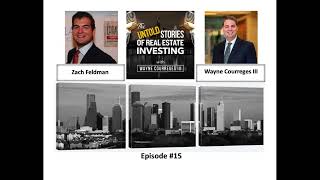
Interview (host Wayne Courreges III) with Zach Feldman, VP of Development at Aptitude Development, about creating wealth via ground-up student housing. Key points: Aptitude focuses exclusively on development (land deals, off-market sourcing, entitlement expertise) and currently owns ~1,500 beds with roughly $250M in student housing under construction or planned; market selection emphasizes enrollment growth and supply/demand balance (prefer larger state schools), on- vs off-campus dynamics, and municipal approval risk (some towns restrict new student housing). Typical entitlement/predevelopment can take 3–12 months (up to 2+ years in complex markets like NYC); construction timelines ~18–24 months; typical hold periods 3–10 years. Student housing performed resiliently during COVID (national collections ~92–94%); developers can return 50–100% of investor capital at refinance (tax-free), and use cost segregation to accelerate depreciation and shelter taxes early. Advice for newcomers: network, outwork others, do deep local market homework, or find and bring deals to firms. Wildcat Fund (westonwildcatfund.org) provides mentorship and college aid; Zach contact: 781-789-4354, email zf@aptitudere.com.
Questions this video answers
Approximately 1,500 beds owned, and about $250 million of student housing under construction or set to break ground.
Typically 3–12 months, but can be 2+ years in complex jurisdictions (example: New York City).
About 18–24 months.
Anywhere from 3 to 10 years (longer holds for Opportunity Zone projects).
Approximately 92–94%.
Chapters
Welcome to the Untold Stories of Real Estate Investing, hosted by Wayne Courageous iii, a place where active and passive investors come to hear the good, bad and ugly of real estate investing. Our guests consist of experienced operators and investors who want others to succeed by sharing their stories. If you're looking to syndicate deals or grow your wealth passively in real estate, you've come to the right show. It's now time to sit back, take mental notes and enjoy next episode of the Untold Stories of Real Estate Investing.
Welcome to Unsold Stories of Real Estate Investing, and this is your host, Wayne Courageous. Today we're going to hear from Zach Fieldman. Zach is the vice president of Development and Aptitude Development, one of the nation's top student housing firms. He spearheads the company's new development efforts around the country, focusing on sourcing and underwriting new opportunities, as well as pre development, entitlement capital markets and investor relations. Aptitude currently owns 1500 beds with another quarter billion dollars of student housing under construction or set to break ground. Prior to Joining Aptitude Development, Zackalance enjoys 77 holdings shortly after graduating college and is still active with it today. Enjoy 77 holdings as a real estate investment company specializing in student housing and multifamily investments in the northeast, with over 22 assets in the portfolio. Outside of the work, Zach is focused on the Wildcat Fund, a nonprofit organization he co founded that provides mentorship and college financial aid to students of color from his high school alma mater. Without further ado, welcome to our show, Zach.
Oh, hey, Wayne. How are you? Thank you so much for having me.
Hey, I'm good. I'm grateful for you to be on our show and very excited to dig in on student housing and more so the ground up. Anyway, so I appreciate you being on the show. So very impressive background. Is there any items I missed? Anything you want to tell the audience about yourself?
No, and I think. I think you covered most of it. Again, appreciate the kind words and I'm an open book, so. So feel free to ask me anything. I'm here to be a resource for your listeners.
Sounds good. Thanks, Zach. So how did you get started in real estate? I know after college sounds like you got into your own private investment, so I'd love to hear more about that. And then in particular, you know what, what has been attracting you to student housing and multifamily?
Sure. So, you know, I kind of fell into real estate in some ways growing up. My family had invested in some throughout the Boston metro area, so a lot of my kind of Weekends were looking at buildings with my dad and I actually ended up working for a family friend maintenance company which if you've ever done that, you know that the grueling hours of power washing and waxing building floors really can teach you the business from the ground up. So I really did start at an early age and understand the business from the ground up. From there I went to college and at Elon University I was a finance major and thought I wanted to go be a renewable energy trader. Little did I know that after 12 months in the real world and getting on a renewable energy trading desk is the exact opposite of what I wanted to do. It's funny how those things happen. And while I was there and towards the end of college as well, I was reading a lot of books. One of them was Robert Kiyosaki's Rich dad, Poor Dad. And that had a profound effect on my life. It kind of taught me the principles of having your money work for you. And I always knew that even if I was successful in the field outside of real estate, I would always want to be involved with real estate as well as other cash generating assets and businesses. So I started to buy real estate and look at real estate very heavily. The first building I bought was at the age of 22, which was actually down the street from the office I was working at at the time. And after I bought my first one I really caught the bug. From there I thought I knew student housing because I had just graduated from college and that was the asset class I was closest. I also knew that I didn't have any money but wanted to start buying more real estate from there. Essentially I went on Zillow and found a 1 bed, 2 bed, 3 bed and 4 bed rental of a certain zip code that each college was in and then pulled the median home price for that house within the area. I then outsourced that to Brickwork India, heading out to Tim Ferriss for them. They've been great and essentially did all the data entry and I had a list of every college town in the country and what the highest yield on cost would be. And at the age of 23, with a full list, one building under my belt, I thought I wanted to go out and buy student housing around the country. I did end up buying quite a few properties over the coming years with friends and different partnerships while still holding down full time jobs. And that was kind of the start of enjoy 77 holdings in my introduction into the student housing world. And from the start I always wanted to do it at an Institutional level. Even though some of the buildings were, you know, $100,000. Right. You know, really, really starting from, from the ground. But, you know, I had to deal with everything from sourcing deals, underwriting deals, you know, raising equity from friends and family. And we put in a waterfall structure and try to do it at the most institutional scale I could while understanding, I was still really understanding and learning the business from the ground, you know, from there I was able to kind of parlay that job into my current role at APT and have put the acquisitions at Joy 77 holdings on the back burner. I always thought the end game was development. It's an incredible firm. They're doing everything right. I was lucky enough to get my foot in the door and two years later we're taking the program around the country and it's been an incredible ride so far with a lot left to go. So that was kind of how I got started in the student space and where we are now.
Yeah, it's a great start from right out of college, getting the bug early and reading Rich dad, Poor dad and realizing passive income for sure can definitely grow wealth and had that mailbox money. So one thing that, you know, I've liked, you know, went to the Aptitude Developments website and such and it's really, I mean, it's all ground up, right. So there's not any existing properties that you are buying and renovating. I just wanted to clarify that for myself. Is everything land deals and then it's developing on that land near student housing University.
Yeah. So we really only focus on development. We think that, you know, student housing development is our core competency. We think we have a competitive edge and to provide a higher risk adjusted return to our investors by taking on the entitlement and development risk. You know, as you have seen, and I'm sure everyone that's listening has seen, you know, everyone who knows something about real estate is trying to buy multifamily, whether it be, you know, upgrading C to B or B to A or you know, buying student housing that's currently stabilized and you know, small value add things and it's just not, there's not that much edge left in my opinion in that space. And I think that's where Aptitude Development really does have a competitive advantage by having the expertise in the entitlement and construction production process.
I had lunch with, with a friend last week and we were talking about blue ocean, red ocean and how, you know, multifamily in particular. There's a lot of sharks at sea going after the same thing. So it can get bloody waters. Do you see that? And then of course, you know, blue waters, white ocean, less competition. Do you see student housing in that blue ocean? Less competition, especially with the ground up?
It's a great question, Wayne. I'd like to say there's less, but there's not. You know, it is as competitive, I think as any asset class. I think, you know, maybe the price per foot is trading a little bit different than maybe industrial multifamily would. But you're never the only one looking at a deal and it's extremely competitive and it's becoming more and more efficient in terms of pricing on a day by day basis. You know, and again, I think that goes back to aptitude's competitive advantages. We're not trying to buy, you know, on market stabilized built projects. You know, land isn't as marketed as your, as your average asset that is stabilized and running. And we actually source the majority of our deals off market. So we think, you know, combination of having, of taking the entitlement risk, having the construction expertise and being able to have, you know, a well oiled machine at this point that can source off market deals is really puts us in a place to provide the best returns to our investors and also provide the best residences for, for the students that live in them.
Yeah, we were talking about before this podcast just that how the off market strategy, you know, because you know, tomorrow I'm putting an offer on a property and you know, there's really just the highest bidder, right. And so who's overpaying for the property when it's on market. So if the returns works, it works. So we'll put in our offer at, you know, what makes, makes sense for our investors. But you know, this off market strategy. Can you talk a little bit more about, you know, how you are sourcing that is it, you know, finding the true owners, you know, through secretary of state and then reaching out. You know, how is it any different than what you did back in, you know, in your 20s, you know, sourcing, you know, off market housing and student. Student housing?
Yeah, I think, you know, when I was starting out, you know, I was really looking at smaller unit counts. And you know, the idea when I was kind of, you know, 22, 23, 24 was that, you know, I could go buy, you know, 50 single and two families at a 10 cap and sell them at a 6 cap because I had accumulated scale and someone would pay me for a stabilized asset, you know, and those can be accomplished by mailers and door knocking and things like that. And a lot of the principles that are kind of taught. You know, I think Biggerpockets is a good example of someone that kind of teaches that strategy and a lot of people have success with. But that's a volume gain in terms of sourcing land deals, in my opinion. It's much more exciting. You really get to have the vision of hey, there is a parking lot, a McDonald's that's, you know, that, that has kind of been vacated, an old supermarket, that lease is about to end, and a two story, you know, building that's already being rented to students. What can we create here as it's across the entrance to a major university? And you get to really create value by not only through the construction process, but by having that vision that other people might just be looking at stabilized cash flow from the supermarket and they want to get a new lease in there and having a retail tenant as well.
So I mean, obviously not going to share the secret sauce of aptitude development, but can you talk us through the lifecycle of development from finding that land, construction, permitting, and then what, what are the pain points along, along the way that you all have experienced? Just to help other listeners learn how to get through those pain points?
Of course. So you know, we, we start with a market in the macros of the market, where, you know, I think that is again, one of the advantages of development is we get to kind of pick the market we want to play in and try to be in a certain area that we want to develop in versus what's on the market and what's already built. So we'll look at schools throughout the country that have certain macro factors and I'm happy to go into that in a little bit more detail later. And then from there we define what location makes sense. For example, do kids want to live across the street from the university or do they want to live 10 minutes down the road where all the bars and retail is? Do they want to just a campus where every single person needs a car and we need X amount of land to make sure that we can park everyone? Or is this a place that kids don't really bring a car and mom and dad drop them off? You got to look at things in addition to that, if addition to the pedestrian portion. If there's some markets where kids just want to go live in a frat house and there isn't a need for institutional quality 20 story student housing. So those are things that we try and understand the market and what moves that first and then we go and pick up that location that was defined through that understanding and study of the market. And from there we'll go and start to source land that can be through, you know, as you said, trying to find the true owners, local brokers. You know, there can be old loop nets for, you know, what was maybe a 10 unit building, but it's actually zoned to go build 120 units. We look at it from 100 different ways and try and put together the best thing from there. And we look at assemblages, we look at some on market deals too. There's no defined way that we go about finding property. But we, you know, we start with the market. From there, if we get comfortable with the market, we'll go and find a location. And then from there we'll go and try and put together a sizable project. In terms of the pain points that can come with that. I mean, the zoning process and the approvals and variances if needed, with different cities throughout the country, you know, there's a lot of entitlement risk that comes with that. One of the pain points that you know, that you need to be aware of, some towns aren't developer friendly. It could be the best college in the country in terms of where the current stabilized assets are and where the rents are and the occupancy and the enrollment growth within the school. Yet they will not approve a new project and they don't like development. There's a lot of schools throughout the country that are phenomenal student housing markets that have moratoriums on new student housing development. So you will never get approved for a new project that has a certain bed count or density within the units because they feel like kids are overrunning that town. And it's a huge misnomer that I think a lot of these towns haven't understood is that by creating a building for all of the kids to live in versus having them dispersed throughout all the residential neighborhoods, in a sense, you're controlling the madness. You are key. You know, you have a full staff, usually anywhere between five and 10 employees of the sponsor who work in the building, from community assistants and leasing managers and general managers and superintendents so that the building actually doesn't get as trashed as some people think. And for towns, you need to understand that if you have all these kids in one location that's adjacent to school, it is not going to fall over into your neighborhood and ruin the fabric of the community. It actually is going to enhance it long term. Where a lot of these towns have the colleges be the lifeblood of the community to begin with? So one of the pain points I think is really understanding is the dynamics of the town. Are they in favor of new student housing? Do they see it as an amenity to the school and a contributing member of the community or you know, they have a big X on the door. We don't want new development.
So you mentioned earlier about the macro. You know, with cities and universities, there's just a lot of universities. Last days are y' all focused on certain markets like I know in the northeast and I saw on the website Alabama was, was the state. Are y' all looking for landlord friendly states? Are there places that you won't invest in or you know, how do you really choose that city and that university since there's just so many out there?
Yeah, it's a great question. So I mean the main macros that we look at are, and again, it's not overly short. I mean I think you have to look at a ton of data points to get comfortable to go build a, you know, 25 to $100 million project and you know, go spend, you know, three to 10 years in this part of the country or even in this college market specifically. And Those are for U.S. enrollment growth for some people. Look at population growth more on a multi family level. For student housing, you're focusing on the enrollment growth. Is a school growing rents, can the rent support new development? Some towns are extremely rural and they have schools that don't need new student housing and don't need new development. Not only enrollment growth, but enrollment. You're typically not going to go to a 2,000 person school. You prefer to be at some of the larger state institutions such as, you know, UT Austin, which is in your backyard. UCF, FSU, TX A&M, you know, these 50, 60,000 person schools or for an example UAB, we just broke ground in November to 22,000 person school. That's from 30 plus percent in the last 10 years. So you're seeing a lot of enrollment growth there. Other things to keep in mind are concessions. Are those very prevalent in the market? Is your net rent actually going to be what you're underwriting it at or is it going to be a certain concession that you have to take into account? Occupancy in the market. We want to see high occupancy and how the absorption has panned out. While new developments have come in over the last couple of years. The supply demand imbalance is there a lot of kids per available off campus and on Campus bed. That's also something to keep in mind. And then on versus off campus housing. Some schools have a four year live on requirement. Obviously if you're, if you're an off campus private student housing developer, you want to, you know, try and aim for schools that have a large imbalance on, on campus, like off campus housing and kids to fill all those beds. Other things that we look at are the endowment, the endowment, size of the endowment at the school, the growth rate of the population, high school graduate graduation rates, tuition costs and things of that nature. So it's a long winded way of saying it's a. We look at a lot of different data points, but all of them can either get you comfortable or help you make an informed decision on where to go, put capital to work.
Yeah. And you really hit on the next question I was going to ask and that was like, is there a market survey on determining is the market already oversaturated with student housing? It sounds like, I mean that is key to any underwriting, any type of asset is what's the supply and demand? Right. So now with COVID how is that, how's that impacted Yalls development or any of this oversaturation with student housing units? It's probably currently more availability. And so how are y' all adjusting and adapting for future developments with COVID in mind?
Sure. I mean, I think like everything else in the world, Covid has totally changed the game, has made you rethink every single thing you do in your business. And I should say, thankfully for our student housing has, it's really held its own. Before COVID student housing was known as the most recession resilient asset class. And it's really held up to that name. I think in the depths of the recession in late spring and early fall as well, national collections were 92 to 94%. That is ahead of multifamily on a national scale. The only one that performed better was industrial. So that really points to the power and strength of the student housing sector. And I think there's a lot of negative press around student housing, which isn't the case. You know, parents are guaranteeing these leases. And another thing that people don't take into account is kids don't want to live with their parents. The average 18 to 22 year old, if they can go take classes online with four of their friends in a nice building with amenities that's being cleaned, you know, in a very regular basis and still has all the amenities that they love and you know, has their friends literally next door or in their unit that can never be replicated via zoom. And you saw that with occupancy throughout in deep March and April when schools were fully canceled. When Covid started the outbreak, you saw occupancy that was pretty healthy in certain properties. And collections again were in the low to mid-90s. Kids wanted to be on campus, the asset classes continued to perform. And you know, we're already pre leasing ahead as a whole, as an industry, as well as aptitude development than we were last year before COVID was even a thing.
Yeah, I think anybody that was in student housing investing, I've talked to several people that are in that space that, you know, they were scared. I mean, it's unprecedented that universities are closing down, these cities are closing down. But what helped, correct me if I'm wrong, but a lot of the student housing, you know, you pay for the semester. You're not on this monthly, you know, rent. Is that the same in the Northeast?
So, you know, you know, we're national, so we have projects in Syracuse, New York, we're in Arkansas, Alabama, South Carolina, Kentucky. But when you're. So I think something that is worth noting is on campus versus off campus. So typically when you're a freshman at school, you go live on campus and you pay by the semester and you pay, you know, for example, I know you live in Austin, if you go to UT Austin, you know, you're going to pay the school, you know, the first semester rent and the second semester rent. Maybe after your freshman year, you don't want to live in the fraternity authority house, you want to move off campus, you move into our building and you can either do a 12 month lease which is guaranteed by your parent, or a guarantor if your parent isn't your guarantor, or you can do, you know, a lease, let's call it on a prorated basis for, you know, August through May. But it, you know, in terms of a net rent for the annual year, it's the same as a 12 month lease with. So you're not paying per semester. However, you really are paying in terms of, especially on the underwriting side, it really is a 12 month lease. So that's one thing to note. The second thing to note is a lot of schools, when you think about it, have this old cinder block dorm design which has not been updated since the 1940s, I would assume, right when colleges really started to become a thing you had to do to go and make a name in the world. And a lot of those designs and dorms are the exact same as when they were originally built. What you're seeing is schools have had to understand that there is a compensation for where kids live. And they've also had to de densify a lot of their on campus housing units. So where you had two or three people in a one cinder block room with, you know, no privacy isn't really safe during COVID And it also isn't that competitive if you're closing down for the semester. But kids want to still live in the college town, so they come to development, say aptitude development. You know, we offer, if you're going to live in a four bedroom unit, it's a four bed, four bath unit. So you share the living room and the kitchen and the washer and dryer within the unit. But once you go into bed in your bedroom, you have a bed, a desk, you have a walk in closet in your own private bathroom. It's about as safe as you can get for Covid while still enjoying living with your best friends. So we have a huge competitive advantage in terms of programming and design from what we built compared to on campus housing. And with a lot of the on campus housing, they're having to DE densify from 3 to 2 people per room to 1 person per room or shutting down the dorms completely. It's actually acted as a huge tailwind for private development and we think as a whole for student housing, it's just going to continue to push the market forward as schools start to upgrade their on campus housing and kids, you know, and kids have moved off campus early.
No. I be understandable why students would want to one, be off campus, but two to be in a nicer living situation. And I like the idea of, you know, everybody, you know, sharing that common area, but, you know, having their own room. So from a financing standpoint, you know, how, how are you all financing this or you know, you getting a land loan and then a construction loan from that and then what's typically the life cycle of your developments is, you know, is it six months, a year, two, three years? You know, can you talk us through the financing side and when do y' all get out of or sell the property? Once it's developed?
Sure. So, you know, every deal is a little bit different. But you know, typically once we, you know, find the market, find the opportunity, you know, put it under contract, you know, then we will go through the entitlement process with the city and then once we get full approval, approvals will go break ground. In that process, you're raising equity and you're getting debt. And from there you go into the construction phase. Depending on the market you're in, that whole entitlement and pre development process can take six months. And in certain places, like New York City, it can take a minimum of two years. I think that it's on different animal. And things you have to understand going in is what the pre development process looks like. What type of entitlement, risk and costs come with that. You are paying your architect and your professionals to do that work ahead of time and that can, you know, make or break sometimes properties. If you go into a town I know as we touched on earlier, and they don't allow student housing and you thought you could get it pushed through. So we're very cognizant and understand the approval process in each municipality and market we go into. But typically we're seeing anywhere from three to 12 months for the approval process. And then we're seeing a construction timeline of 18 to 24 months. You know, from there our typical hold periods are anywhere from three years to 10 years. If it's an opportunity zone, which we've done a few of those to date.
Got it. So no, and every property's gonna be different, but typically at least five years to that 10 years. Right. With the construction. So. And how do the returns work? I mean, from a. You said early on that equity is, you know, before even development occurs, equities being raised. So are investors, are the passive investors being paid at the end? I mean, is it a cash flow? I mean, there's no cash flow during development cycle. So I'm. How does that work from?
Yeah, we'll typically give a pref during the construction period. So we'll give you essentially credit for having your money sit passively until we open the building. Typically from there, once we stabilize the asset, we'll give a large refinance proceeds to our investors. Then we will start to give quarterly distributions even before that, but also moving forward. And then, you know, you'll continue to have your distribution on a quarterly basis. You're getting the appreciation of the asset plus the tax benefits of the asset as well. And then you'll get, you know, your distribution on the sale of the asset or capital. Then.
Yeah, that refinance is huge. Right, so it sounds huge.
Yeah, we're typically seeing anywhere from, you know, 50 to 100% of your proceeds back on the refi.
Yeah. And that's not tax that refinance proceeds, is it?
That is not, my friend. It is quite a beautiful thing, I think, to Add to that, for anyone out there that's thinking about becoming an lp, those are things to look at. Even though it is, let's call it a three to ten year hold, you're de risking the deal very quickly because you're getting credit from a press piece on the construction portion. You're getting some distribution or two before the refinance period. So you probably get 10% cash on cash in year one. Then you're getting another big hit on the refi proceeds and then you're going to be cash flowing from there moving forward before the sale. And as Wayne mentioned, you're getting a huge bump on the refi and those are tax free proceeds. But one other thing that I think is mentioning is that we do, and a lot of larger developers do what is called a cost segregation analysis. And what that means is instead of depreciating the building on a straight line basis over 27 and a half years, we do a study that says, hey, the doors are actually going to depreciate much quicker than the bricks. You know, the carpet in the bedroom is going to depreciate much quicker, you know, than some of the mechanical systems. And you push a lot of the depreciation into the first few years of operations of the building and you can actually show a large tax shelter on that depreciation in the first one to three years.
Yeah. And I've posted a podcast on cost segregation with Yona Weiss. I mean it's. These are all the reasons why the wealthy people are growing their wealth now this little different. I mean, for me, I see a lot of student housing that's existing, that's being repositioned and such. But what's unique with aptitude development in you, it's risk from the standpoint of getting the permitting and getting traction with the city. But the development's going to happen. It's. You've already done your due diligence on supply and demand and rents and such. So from a passive side, I mean, I, I think it's a, it's a great opportunity, especially with that refinance side because you've just added millions of dollars of value by improving that land. And once you refinance, you know, that goes out and then as Zach's talking about that cost segregation. So I just want to hit that point hard that, I mean, that's why people go into real estate investing. You know, whether it's passive or active side is the huge tax benefit. So thanks for, for sharing all that.
Yeah. And I think that's, you know, something valuable to be said is, you know, a lot of people, and I'm sure, you know, a bunch of your listeners want to get into real estate or maybe they bought a building or two and want to do more, or they have excess capital and they're trying to find their way into the business. You don't always have to go be the sponsor or the, you know, the GP and take on, you know, all the risk and all the responsibilities. You know, there you can get involved in real estate and see, you know, the majority of, you know, really all of the benefits of real estate. By being an lp, you know, you'll be a part of the business. You'll get all the benefits of the depreciation, you know, of the building, you know, but the appreciation and value and the distribution to the building without the headache. It is. It is truly mailbox money at that point. And I think that is kind of a misconception from people that are starting out or even who have been doing it for a long time. You don't always have to be the gp. You can still be a part of great deals from an LP position, you know, and do very well from a financial standpoint.
I'm going to close with this, and then I want to get on to. Onto a different subject a little bit. But the one thing that I've noticed is people that get into real estate who think they're going to make it rich in the first year or two or, you know, sooner. There's this shock moment of, wow, this is a lot of work, right? So I always say, you know, if you don't have passion for real estate, if it's not. If real estate isn't what you think about every day, and that's okay because there's, you know, doctors, construction, dentists. I mean, there's all different things we need people to be passionate about. But if you're not passionate about the day in, day out, you know, or sounds fun, getting that 2am call that, you know, you've. You've got a water leak that's, you know, flooded out a couple floors and you're having to deal with it. Then to Zach's point, you know, this l. The limited partnership side, which is really the equity piece, it's the equity of, you know, you're investing into an asset, and that equity is being used for the down payment for the property. You know, that mortgage or the construction costs, the architectural, all those expenses, you know, you have that equity. So, Zach, one thing I really. And it's unique on the show because I don't really go into it much, but I have the privilege of talking to a lot of military people that are transitioning. And you know, being a former Marine myself, I've sort of that's been my service to others or one of the things that I like to do is help military or people transition. And so the question has been asked next really can apply to like a college student or, you know, anybody, even mid career. But I get a lot of people asking, like, how do I get in real estate development? And so a lot of times we talk about, you know, I started in real estate, you know, as you did, you know, 22, 23, you bought your own properties. But a lot of people, they just want to join a good development firm and get a lot of experience. So I guess my question is, is what suggestions do you have for them to get into real estate development? I find that it's so competitive to get your foot in the door. What are your experiences? What do you recommend for people that are getting out of college or getting out of the military who want to get in real estate development specifically?
Yeah, I mean, I think the first thing is you got to put one foot in front of the other. You know, everyone else is in the same position as you are today. They want to get into the industry. They have an interest in it. They think it's something they want to do, you know, and while you maybe can't go out and get experience from building a building today, you should go out and educate yourself. There's no substitute for knowledge and hard work. I think you have to outwork everyone just to get your foot in the door and then to stay there as well. There's tons of books, there's tons of networking things, listening to podcasts like Wayne's and then meeting people within the industry and understanding kind of what makes it move, what makes it function, and how you want to play a part in that. You want to be in development, do you want to be on the underwriting side, do you want to be on the lead sourcing side? You want to be on the asset management side, you want to be on the debt side of things. There's a million different ways to get into the business. So, you know, figure out what you want, figure out some firms that are doing it well and network your butt off. Educate yourself, read a ton, you know, and if you keep at it, you'll find a way to get your foot in the door.
Yeah, you mentioned networking. I think that Relationships, Urban Land Institute, these other organizations that are in your city, you know, just getting involved in networking because it's hard, hard to. And then correct me if I'm wrong because I'm not in real estate development. But what I've seen a lot, especially on acquisitions, is there's a lot of desk work. It's not the I'm out, you know, walking properties day one. When you join the industry, there's a lot of underwriting and sitting on a desk and calling and it's that grunt work that you sort of have to earn. You have to go through that pain.
Wayne, Wayne, I want to alter my answer. The best way to get into real estate development is go find a deal.
Go find a deal.
Go find a deal. You know, did you live in a, you know, let's say student housing? Great example. Where did you live when you went to college? Did you live in a single family home with 10 single family homes next door that were all lived in by college kids? Okay, go talk to all 10 of those owners, see if they would want to sell and bring it to a firm like attitude. We would, you know, pay you a commission. And all of a sudden, you know, you put together a real estate development and we're going to build a, you know, 20 story building adjacent to campus where kids used to live and the land was underutilized, you know, from there you took 10 single family homes that kids were beating the crap out of with parties for the last 20 years. You put ground floor retail, you put, you know, units above that, and you put some amenities on the, on the rooftop that overlook campus right there. You created a $50 million project by just going to what you know, which is where you used to live. If you want to get in the industry, you know, and I think this goes back to your point about networking. Help someone else and, you know, eventually, you know, they'll help you. I think solving other people's problems has always been a surefire way to get, you know, to solve your own. So if you want to get in the industry, I think everyone is always, you know, looking for deals and looking for capital. If you can put one of those two together, you'll find yourself in the industry very quickly, either working for someone else or working for yourself.
Love it. And putting, like you said earlier, one foot in front of the other, every day going after it. So. So for those that are getting into real estate, what are some overlooked aspects that can cause investment mistakes that you see?
I would say not doing your homework. I, I think everyone says, hey, we did our due diligence and you know, we, we walked the property and we looked at the comps. Yeah, I can tell you right now, people don't, they just don't. You know, when we go into a market that we think we want to go build for student housing, not only have we walked every comp, we probably spent five or six hours in the student center talking to kids, asking where they live, what they like about where they live, what they want to see. Is it a renter by necessity type market and you can't push rents. Is it a place where kids want the just the nicest pool that overlooks the football stadium? You have to know the market. We do campus tours, so we'll understand, you know, which buildings, you know, around campus or where. We will know every single thing about a market before we go and decide to put capital to work. And a lot of people say they do that, but they don't. You know, I, I've seen other, you know, firms from multifamily to office and everything in between do their due diligence and try to understand the market. You really need to do your homework. You need to put your, you kind of the brain inside the individual who you're going to be trying to cater to when you're there. And that is one thing I really think we do better than anyone else.
Nice. So shifting back to those passive investors, especially with student housing ground up, what do they need to know or hear more of to make the right decision? Investing with, with you?
Yeah, I mean, you know, I would say we're open for business. If you have an interest in getting involved on the limited partner side or if you have a deal, you know, you can reach out to me directly. Wayne will put my information in the show notes with my cell phone and my email. You can always text or call me. I'm happy to, you know, just told, you know, walk through some opportunities we have today as well as opportunities that are coming up as well. You know, always happy to find new partners on the limited side or if you have a deal that you're looking to broker in a college town, definitely give us a shout. If that would be one thing I would recommend. And then I think to our discussion earlier, Wayne, you know, some passive investors think they want, be active investors. They want to be the general partner. And it's okay to be passive. It's okay to be a limited partner. You know, a lot of people, it isn't mailbox money. In order to execute a strategy and hit your, hit your return threshold, it takes a lot of work. You Got to keep your eye on the ball every single minute of every single day. And there's nothing wrong with being an lp. You're getting all the benefits of the cash flow, the depreciation and the appreciation of the asset. And, you know, that's a great way to get involved in real estate and take advantage of all the upside.
I've got two more questions for you. So, as we near our closing, can you tell us more about the Wildcat Fund? I thought that was really interesting. And is there any way the listeners can help out with that?
Yeah, I appreciate you asking about that. That is a charity that I started with some of my best friends from growing up. No, it's something I'm very passionate about. You know, in short, it is a program that helps, you know, inner city kids that are educated at my alma mater in Weston with both mentorship and financial aid for college. You know, we want to make sure that we're putting everyone on the right path and have the same opportunities everyone else. And, you know, what I found in my own life and I think has had a high impact on the recipients of the award every year is having a mentor. Having someone that you know is in finance or is in marketing. And while you're trying to pick between your majors, have them walk you through that, help you get your first internship, help, you know, you get your foot in the door at a real estate development firm, whatever it may be. And we try to level the playing field and help out any ways we can from a financial standpoint to individuals that have gone through the program.
Is there a website or how do people find out more about it?
Yeah, so the, yeah, the website is Weston wildcatfund.org Again, that's Weston w e s t o n wildcatfund.org or you can call or email me and I'm happy to talk to you about it if you'd like to be a mentor. Wayne, I'm going to sucker you into this on air. You're going to have to be a mentor for some of these kids moving forward. And, you know, we're always happy to have anyone else out there that's interested in becoming a mentor.
Yeah, I actually really enjoy it and I don't mind doing it, especially like I said earlier with the military. I always. It's. It's tough transitioning with all the lingo and you gotta. It's just a different, different speed of things. You're used to things being fast and in the military and things slow down when you're the civilian world. So happy to, happy to mentor and be a resource. So as we typically close, are there any or can you share what your proudest moment investing in real estate has been?
You know, I, I think to date it's been my first deal and my next deal, you know, doing, doing my, you know, the first deal I bought, you know, when I was right out of college was really exciting and opened up my whole world to what, what is out there and, and what I want to achieve. You know, I now set goals that I never thought were even, you know, remotely would enter my brain and now we're starting to achieve some of them and you know, I say my proudest moment is also my next deal. We have a really exciting pipeline over at Aptitude Development, you know, and I'm really proud of what we've created as a firm. The two principals here, Brian, have done an incredible job to date and everyone in the firm is pushing forward and we have a lot of great deals and I'm proud of what we have in store for us over the next 10, 20 plus years.
Congrats to your success and your future success. Really appreciate you being on the show. Can you obviously share your name again and then your phone number, email, whatever we want to share to so the listeners can get back with you and learn more about aptitude?
Yeah. So thank you so much for having me. It's been a pleasure speaking with you today. For anyone listening to this and has more interest in learning about aptitude development or the student housing industry, do not hesitate to use me as a resource. And if you'd like to get involved in some of our projects, please reach out. The best number for me is my cell phone. That's 781-789-4354. Again, that's 781-789-4354. You can call or text me and my email is zfptitudere.com sounds good.
Well, thanks Zach. And reach out to me regarding the Wildcat fund. I'm happy to help you. Have a great rest of the day and I'll talk to you soon.
Appreciate your time, Wayne. Talk soon.
That's all for this episode. We hope you subscribe, share and leave a review of the show. For more information about passively investing in multi family apartments, check out Wayne's free ebook by going to creipartners.com ebook also follow us on Facebook by searching creipartners.
More from Wayne

September 2026 Meetup: Investing Ahead of Growth: The Bryan–College Station Opportunity





May 2026 Meetup - Apartment Complexes & Passive Investors: Opportunities & Risks


March 2026 Meetup - Reading the Market: Economic Indicators Every Investor Should Know


February 2026 Meetup - Syndication 101: How CREI Partners Structures Deals for Investors

Build-to-Rent (BTR) Communities Explained: Why Investors Are Paying Attention