154 Vinnie Tortorich: No Sugar, No Grains (The Best Diet Ever)
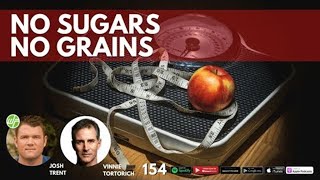
A Wellness Force Radio interview (episode 154) between host Josh Trent and fitness author/podcaster Vinny Tortorich (recorded Jan 14, 2018). The conversation reviews Vinny’s NSNG (no sugars, no grains) lifestyle, his background (long career training celebrities, leukemia survivor), critiques of mainstream nutrition claims (eggs, vegan campaigns), views on exercise vs. diet, and practical advice (30–45 day resets, travel foods, basic morning routine). The episode mixes personal stories, listener calls (notably a deeply personal listener story on Fitness Confidential episode 884), and direct, often confrontational opinions offered by Vinny.
Chapters
Wellness Force Radio Feelings are essential, but they can't dictate our actions. We literally inspect each other with our emotions.
We came here for a special purpose. Let the purpose unveil itself.
Knowing without doing is the same thing as not knowing. They're not just trackers. I'm gonna wear this and it's gonna help me do the right thing. Wellness Force Radio episode 154 with Vinny Tortorich.
Well, the problem becomes if you don't exercise our bodies, we're an animal just like any other animal. It's a use it or lose it proposition. If you're not using your muscles, if you're not pushing back against gravity, if you're not, you know, causing growth of your bones, of your capillaries, causing mitochondria to grow, causing your heart to stress a little bit so that it can continue to grow, you're just whittling away. You're dying. If you want to go walking down the street every day or taking a little hike, or riding a bicycle, or going to the gym and doing a rowing machine, or hitting a jump rope, it doesn't matter. You have to move. It's a use it or lose it proposition.
What's up, my friend? It's your host, Josh Trent. And welcome back to another episode for your weekly access to global experts in all things wellness as we discover the physical and emotional intelligence we need to live life well. In this episode we learn from one of the godfathers grandfathers, big daddies of fitness, Vinny Todorich, the podcast host of Fitness Confidential. A best selling author of fitness and ventures in the weight loss game, Vinny shares his stories, the importance of movement and how to follow the no sugars, no grains lifestyle which he has branded as nsng. I mean, the reality is cancer feeds on sugar. There's so many studies out there, plain and simple.
Cancer.
If you want to have a healthy body and mind, it's vital that you cut out as much sugar as possible. You might have come to believe that being healthy and getting fit means that you need to eat bland foods and work it out until you're about to crash and burn. That is not farther from the truth. Living healthy is not a punishment. Vinny's teaching us that it's really about being present, really being in the moment. Now, Vinny has a unique personality, to say the least. This guy is one of the most controversial podcast hosts in the fitness game. But I know you're gonna love this conversation because he really opened up. I asked him some unique questions that Showed a side of him. I don't know if he usually shows on a podcast and he actually talked about this in our interview in Depth where we talked about Fitness Confidential. People know him as America's angriest trainer. He typically exposes kind of the nasty underbelly of the fitness industry while getting people into the best shape of their lives. It's been 20 plus years Vinny's been in Hollywood and he's kind of a go to guy for celebrities. Probably the go to guy. We're learning from Vinny what he's seen and experienced with, with over three decades involved in the health and wellness industry, what came through him, why he created this no sugars, no grains lifestyle, why the idea that eggs are bad for you is a complete lie, and why he has a hashtag, fquinois. You'll learn what that is on today's podcast. Let's step in with Vinny Tortorich. So put down your sandwich. We're talking with Vinny Torich, celebrity fitness trainer, speaker, podcaster, and the bestselling author of Fitness Confidential Adventures in the Weight Loss Game. Vinny, welcome to Wellness Force Radio, man.
Well, thanks for having me.
You start your shows with something really unique. You say your good intentions have been stolen and I'm here to help you get them back. I love this. I'm just curious, how long have you been saying that? What does that mean to you?
Looking at you, Josh, you're a very fit looking guy. Obviously you're no stranger to the gym. I walked into a gym in 1970 for the first time and never walked out. And along the way, got a degree in physical education and exercise physiology and nutrition and so on and so forth and just made it a lifetime study. I just would pass by newsstands back when newsstands were a thing. Now we have an Internet version of that. And it would be lose 10 pounds in 10 days or rock hard abs by the weekend and all this kind of stuff and buns of steel by tomorrow afternoon. Late in my head I would go, well, obviously no one believes this, right? I would walk back into the gym where I was every day and I would hear, you know, we weren't calling them bro science guys back then, but hey, bro, you need to do this, you need to do that, you need. And I would say, oh, my God, everyone believes all this crap. You know, the diet and fitness industry realizes, look, we want to do the right thing.
Yeah.
They don't allow us to.
It's interesting you mention this because I think we live in an era now where it's just harder to be full of shit. Because on the online world, when we have live video and live Facebook and podcasting, it's just more difficult to lie. Now also, there's a dual edged sword where it's also kind of easier to be a jerk and to lie. So we live in this duality right now. I'm curious what you've seen. 30 plus years in the industry, you've trained some of the most famous movie stars in Los Angeles. What do you see right now that's just fundamentally different than when you started? When we look at the online world.
And training, well, the lies are just as bad, if not worse. But you're right, you know, people can literally Google things and figure out the truth. But even within that, you know, people can say anything. I'll give you an example. I have nothing against vegans at all, but there are these vegan doctors out there. You know, these are medical doctors, and they just wholesale lie because they're not actually trying to protect people. They're trying to protect animals. But they won't tell you that. They will just tell you that eating a vegan diet is the best way to eat. Which, okay, if you want to be a vegan, that's one thing. I have no qualms with that, other than the fact that it's not a complete diet. You could get away with a lifetime of being a vegan if you so choose, right? But recently, this guy, Dr. Michael Greger, back in, I want to say around Easter time, he did this whole campaign called Quit the Carton, where he literally said that eating one egg every day is equal to smoking five cigarettes.
Is this the same guy that was in the. What? The health movie?
He was. He's the guy with a trim beard that looks like he could really use something to eat.
I think they should have titled that movie what the Hell.
Well. Oh, we could get into a whole conversation about that. I've done three podcasts on it. So the Quit the Carton campaign was one egg every day is equivalent to five cigarettes. That's ludicrous, because an egg is one of the healthiest things known to mankind. Number two, if you want to be more specific, he did a second piece on that saying that eggs will cause type 2 diabetes, and type 2 diabetes is caused by sugar, and there's no sugar in an egg. An egg is protein. Basically, all of the amino acids we've ever discovered is in an egg, a chicken's egg, and good healthy fat. You can't possibly get type 2 diabetes if sugar is not present. So that's just an all out lie. And the third lie was an egg is a 70 on the glycemic index. Now, if there's no sugar present, how can it even be a 1 or a 2 on the glycemic index, much less a 70? So those are three lies that one guy told in one month and did videos and did campaigns and everything else largely backed by the vegan community in order to let them go out there and lie to people. And then people, you know, those same people come to me and go, oh my God, you've been telling me to eat an egg. Is that like smoking a cigarette? Oh, my God. And this goes on and on and on. I just try to come through as the voice of reason going, no, none of that is true. These people are just lying to you. And you have to realize that, man.
You bring up such a great point because we are in the age of over information. I mean, it's obvious you love what you do. Being in the industry as a fitness professional, health professional, reaching millions of people a year. What fuels you, Vinny? I mean, why do you continue to put out content like a machine?
I'm gonna be perfectly honest and say, I don't know, I'm obviously not getting rich on this. I make a comfortable living doing what I do. My book, Fitness Confidential did very well when it first came out and it still does very well four years later because it's just a book of truths. You know, there's no lies in that. Now, I'm sure we'll get into that book at some point during this podcast, but people are always saying, oh, geez, you're on Twitter 24 hours a day. You don't get paid for that. And it's like, yeah, but how cool is it that you get to help people? And besides, if you're doing a lot of stuff for free, no one's going, oh, yeah, he's got an agenda. Yeah. Now@vinnytorteris.com, i'm doing something that I've never done before. I literally own the trademark nsng, which stands for no sugars, no grains. Because that's what I tout. And I've never come up with what the NSNG diet is because I never look at no sugars, no grains as a diet. It's a lifestyle. You just cut those things out, eat everything else, and you will be healthy. And I've proven that over and over and over. People have lost everywhere from 20 pounds, if that's all they had to lose up to 2 and 300 pounds. It's created its own little quasi epidemiological study out there in the world. So just this week I'm putting the finishing touches on a PDF and people will be able to download that PDF for absolutely free. So just like my book, Fitness Confidential, this will be a tome explaining my no sugars, no grains, my NS&G approach.
What I think is really interesting is you have a section that says, what about quinoa? Answer, fuck quinoa. Quinoa is a grain, so it's not a NSNG food. And you've made T shirts about this. What's going on with this? Why do you feel so adamant about putting quinoa in the trash?
You know, early on in the show has been going on now for five years, we kept getting the question, no sugars, no grains. And everybody would go, what about quinoa? Yeah, quinoa, it's a grain, it's full of protein, right? Quinoa. And in fact, quinoa is not much better than oatmeal or rice. You know, it's about the same. And your liver doesn't go, hey, Josh just gave me some quinoa. I'm gonna, I'm gonna take this and run with it because, hey, it's got a little extra protein. No, it causes the same insulin reaction that any other grain will cause. So I said that on the show once, Anna, you know, my cohort started laughing and then people started tweeting, you know, hashtag fuck quinoa over and over and over. And at some point we, you know, someone wrote to me and said, you realize you're in the urban dictionary for a term. And I was like, what are you talking about? They said, you're in the urban dictionary for the term fuck quinoa. And then we came out with a T shirt. I never thought that I could make money on a T shirt like that, but it was like, wow, we made how much selling? Because we made it available for like one month or like, I don't know, maybe 45 days.
This is the polarity that happens in our industry, though people that I just interviewed with the guys in mind pump from San Jose, and we talked about this, the polarization in our industry. You can be polarizing and still have integrity. You don't have to use shock valued marketing. So when I see your T shirt, I understand you're talking about the myths of gluten, the myths of keto, which I want to dive into later on in the show, but I want people to understand who you are a little bit more. Vinny, before we get into the science, I know you're heavily, heavily entertaining as a person, but also I think it's really cool to know a little bit more about who you are. You're an Italian from Louisiana who now lives in LA but has spent time in New York. So on this podcast, you seems like you share almost everything about your life. But with all you shared, I mean, is there anything that you've either found out about yourself or that you've worked on this year that you haven't talked about that you can share with us? I mean, something unique that you don't normally talk about about yourself?
It's literally all out there. And even the stuff that I tried to hide, like my appearances on Oprah, especially the one where I was younger, that got out there, my Oprah appearance was the seventh highest rated Oprah appearance of all time.
What'd you talk about on Oprah?
It was somewhat of a farce. I went on. It was the early 90s, and it's out there. You can find it. And it was before the term cougar was a thing.
Wow.
I was dating an older woman. I was dating a woman that was eight years older than me, maybe 29 and 30 when I went on Oprah. And she was like 38. So it wasn't like I was dating 37. It wasn't like she was someone's grandmother. Right.
Yeah.
And she was a very fit, very hot, and she looked younger than me. And a friend of mine said, you should go on this Oprah show. It'll help your career. Back then, television was the way to do things. And I did, and I was bamboozled. What I didn't realize was Oprah used to be. I don't think people realize this. In the early days of Oprah, before she became righteous or self righteous, she used to put on basically a Jerry Springer show.
Yeah.
I had never seen the Oprah show. You know, when I had gone on, I knew that it was another, like, Phil Donahue type show. And even a buddy of mine loaned me a pair of pants. He goes, this is the kind of stuff you want to wear on Oprah. It was a pair of pink fuchsia pants. It wasn't even my own clothes. So I go on and they put me on stage and I'm sitting next to this woman that, you know, she was nice enough woman, but I'm looking down the line and it's like, okay, there's a bunch of young guys, and there's these older women. It looks like a circus freak show, which is what they created. And I noticed this when they were like micing us up on stage before the show. And I went, okay, I'm getting ready to be bamboozled on national television. I will turn this show into my bitch. And did. And ended up. I asked Cher out on national television before the end of the show.
This is such a great story, man. Okay, I'm gonna try to hunt that down and put it in our show notes.
You don't have to hunt very far.
It's out there.
Put it in Vinnie and Oprah. Because about four years ago, the Oprah people. After my podcast got going, the Oprah people got in touch with me to do a where are they now? Thing, because they went, you know, Oprah was like, he was one of the most da da da shows ever. And we're bringing him back. And the only reason I agreed to it was my book Fitness Confidential was coming out. I had a burgeoning podcast, you know, at the beginning of the world of podcasts, they did all this filming and talked about my book, and we filmed at the podcast and the whole thing. They cut all of that out. So I have no love for Oprah. So I tell the truth about her now.
Well, that's something people can depend on you for, is to tell the truth. I mean, your whole podcast is completely raw, unfiltered. This is a zero edit show, right?
Oh, you can tell that sometimes my gardener is in the backyard with the leaf blower and I'm out the window yelling at him in the middle of the show.
Oh, my gosh.
And I, you know, people laugh. You know, I'm in pain over here. People laugh at that. So that's how it kind of became funny.
Well, you know, you didn't really start coming into this planet perfectly healthy. One thing I learned in your book, which we're definitely gonna link this in the show notes today, such a well written first person narrative of exactly the ups and downs of this life, of this wellness world we live in. You were six. You actually had blockage in your ears. Legally deaf at that point, but surgery corrected you, so you learned to speak at 7 and 8, but you had a speech impediment.
Oh, yeah.
And you also went to Catholic school, which you kind of described as hell. Looking back, how does that shape your voice now? I mean, what do you know about that kid, that six year old kid that directs and puts your message out? Now, as a leader and a Man in the fitness space.
Well, you might be one of the best interviewers that's ever interviewed me on their show. So kudos to you, John.
Thanks, man.
Wow, that's a tough one because, you know, every day when I went to school, the nuns were horrible. You know, that's the only way I can put it. You know, I had a speech impediment and they knew it. And I spoke like a deaf person, even though I had my hearing back. My hearing never came perfect. But it's strong enough that I'm able to get through life with no problem. They just goofed on me, which allowed the other kids, oh, wait, the nuns are goofing on this kid. We can goof on him, too. It was a minefield. Every day I would wake up in the morning knowing as a young kid, I would be facing hell.
Yep.
And then I got home and life was great again because my home life was pretty awesome. You know, my parents were great, and there were friends in the neighborhood and this and that, you know, I played with. And it shaped me to literally. I think I do talk about it in the book. On Saturdays, I would watch a show called why World of Sports. It would open up the world to a guy like me. I would see, you know, there was, as I described in a book, Kitzpuel, Austria, and there's snow. And they would show, like, you know, ski jumping. And I would go, oh, my God. Oh, my God. What is that? Where is that? Because I lived on Bayou Lafourche down in Donaldsonville, Louisiana, and I was born on the bayou. And how do you see that white stuff where people are flying through the air? How do I get there? That show opened up everything to me.
So looking back, you really have kind of a space in your heart for people that have been through something similar to that. And we all go through things as kids. When I was a kid, I used to numb out with food. I use food as a way to not feel the uncomfortable feelings I went through. And I. I gotta say, Vinny, don't you think most people have, quote, quote, a tough childhood, and then we spend the majority of our adult life growing our emotional intelligence to be the best version of ourselves?
I think that's 100% accurate, because I. Look, I told my story in my book. Hundreds of thousands of people read it. And then they all wrote me letters going, oh, my God, I'm so sorry about that. My childhood was just as bad. And they would write these letters to me. I would sit there at night reading them, literally. With tears in my eyes going, holy shit. I'm glad I wrote this into a book because I'm not the only one. It's the majority of kids. We all grew up with trouble and problems and everything else.
Yeah. I just feel like we all have our own hero's journey. I don't know if you're familiar with Joseph Campbell, but we all have this kind of separation, initiation and return. You had another huge transformation through leukemia. I mean, this book is filled with wisdom. We're not gonna get to all of it. It's just the tip of the tip of the ICEBERG. But chapter 18, about your story with going through leukemia, can you also share with us how that might have changed the way you approach training clients or giving health and fitness information? Because I'm sure that you grew your emotional self so much by going through that.
Yeah, yeah, I kind of went through it almost by myself. You know, my parents are getting older now, and I'm living in la and they live down on the bayou. And, you know, when I found out I had leukemia, the biggest thing that I had to do was convince my parents that somehow I had what was commonly known as the. The common cold of leukemia.
Yeah.
Meanwhile, you know, they were saying, you know, you're going to be dead in three months. I've never smoked a joint in my life, right? I've never smoked. I never did a drug, never smoked a joint, never did anything. Now everyone I knew was bringing me marijuana, saying, you need this, because the chemo, you're going to need this. And of course, I would take it and accept it. And turns out I made it all the way through chemo without marijuana. But the other piece of advice people would give me besides their stash was you need to get on a vegan diet, you need to juice. Because I'm out in la, everybody's juicing and vegan and everything else. And you need to be on a micro, a macro. Micro and macro together. You need to go see this guy, he makes a special tea and all this stuff, right? This is the land of douchebaggery when it comes to that. So I happen to have one of the best hematologists in the world. And I started talking to her about it, and I said, everybody's telling me I need to juice and more vegetables and more this and more that, and where's the truth? And she literally said. She goes, well, you're going to have to take more B vitamins. You're going to have to supplement with a lot of B vitamins. When you're done, that has been shown to give some results. And she goes, cut sugar out. That simple, huh? And she goes, yeah, cancer feeds on sugar. She goes, we don't really know that yet. But the research, you got to realize this is like 11 years ago now. She was going, we're starting to see stuff. You know, I'm starting to get reports and double blind studies and this and that and lab reports that cancer loves sugar. So I would tell you, eat whatever you want, just cut sugars out. And I just said, okay, I'm going to add grains to that. Because in fact, in my practice in Beverly Hills, my trick to keep all these starlets on the red carpet. So I just started doing what I was doing with clients, you know, for years. I just started eating what I told people to eat.
Like, we will get right back with Vinnie, but this is your breath break. Take three deep breaths and relax into the fact that better wellness starts with eating, moving and sleeping well, including boosting your immune system. As busy as you are in, you get to have a boost from our show sponsor, Organifi, the creators of organifi green juice with some chlorella, spirulina, turmeric, ashwagandha and a ton more adaptogens that will give you that boost for your day and your full schedule. I've been loving being able to not have to juice anymore and still get my nutrients with the single serve packets when I travel for the green juice. You can take them at the airport to your travel whatever you're doing, soccer games, even in the weight room. Give your body some love while you save some money and practice your self love today. Just enter your special discount code WellnessForce over@shoporganifi.com and because you are part of this community, you get 20% off with the code wellnessforce at shoporganifi. Com. Now let's drop back in with Vinny Tortorich. I think what blows me away the most is the transformation you had going from, you know, having the issue at 6 to then going through leukemia, finding your real voice, which you speak so bluntly and authentically in a cool way on the show. You actually went through adversity and that's how you found your truth. Do you feel like we all get to experience this in some way? Do you feel like everyone has to go through putting on different diet sweaters, trying different programs, or do you think that there's a faster way for somebody to find what kind of diet actually works for them?
No, I think everyone has to play around with it. That's generally how people find me, or, you know, a lower carb way of eating and that sort of thing. But it's hard to convince people of that. You know, most people, you know, still think, I'm going to go on a diet, I'm going to start eating clean, and the first thing they do is they start making a shake for breakfast that's full of sugar. You know, so everyone has their journey. And, you know, in life, I've been fairly successful in health and fitness and fairly successful in business. And the one thing I can tell you is when you sit around with other successful people, not a one of us ever brings up the fact that we're successful, but what we do bring up is our failures. You know, people will. You know, successful people will sit around and talk about their failures as if it was one of their successes. And I think that's what people miss in the world. Everybody, especially with today's generation, you know, it's a generation of everybody wanting to do everything right the first time and getting a gold star for it. And, man, life is just not that way.
You know, some people might say I'm one foot in, millennial, one foot out. But I have only succeeded by failing forward, and specifically with my health. I mean, I lost 80 pounds when I was 22. I lost 100 pounds, actually, and then I gained 60 back, and I fluctuated doing a bunch of different diets. And that's what got me into Fitness. In 2002, I went this route of going into gyms and, you know, really trying to find what it was for me that I could be well in my body for the long term. And that's what got me into more of a wellness approach. But in fitness, I think for most people, this catalyst of fitness, Vinny, they try to get fitness and just have that be the only thing. If you had to go between diet and exercise, though, do you feel like diet is more powerful than exercise for the long term?
Well, as far as losing weight, diet is king. You cannot exercise away a bad diet. Well, the problem becomes, if you don't exercise our bodies, we're an animal just like any other animal. It's a use it or lose it proposition. If you're not using your muscles, if you're not pushing back against gravity, if you're not, you know, causing growth of your muscles, of your bones, of your capillaries, causing mitochondria to grow, causing your heart to stress a little bit so that it can continue to grow, you're just whittling away. You're dying. I mean, people go, what kind of exercise? Or great one. What should I do? It doesn't matter if you want to go walking down the street every day or taking a little hike or riding a bicycle or going to the gym and doing a rowing machine or hitting a jump rope. It doesn't matter. You have to move or it's a use it or lose it proposition.
I think so many people are just interested in giving me the template, Vinny. You know, like, what exact exercises should I do? Monday, Wednesday, Friday. You talk about in your book the importance of exercise not just being something that you do, but something that you enjoy. You mentioned to your clients that the body doesn't mind if your brain is having a good time.
Right.
Can you tell us how you came up with that?
Yeah. You know, people think exercise is supposed to, you know, hurt. You know, you watch any Gatorade commercial, you know, or any Nike commercial, and it's, you know, just do it. Just do it.
Some guy in the rain suffering.
Yeah, yeah, in the rain, in the cold, in this. In the gym, you know, and you see the pain on their face and, you know, and you sit there and you go. Most people will look at it and go, well, hell, I'm never going to exercise. If life is supposed to look like a Nike commercial or a Gatorade commercial, why go do that? That doesn't look like fun. But what if you can make it fun? Most people think about what they want to do when they retire. You know, I have people that go, oh, when I retire, I'm going to buy that kayak, and I'm going to go kayaking four days a week. Why are you waiting until you retire? Go. Kayaks are not that expensive. You're telling me you want to do something, and when I tell you how you can do it, you're complaining and telling me that I'm the problem.
What's interesting is that you've trained so many celebrities. Do you feel like they have the same complaints about accountability that just everyday people have?
We want to think that celebrities are kind of soft people who got lucky. No celebrity has ever gotten lucky. Well, Kim Kardashian got lucky. But within that luck, nobody works. You know, people go, why are the Kardashians a thing? And you sit there and you go, well, because they work their ass off at being a thing. It's not by chance they're spending 24, 7 doing that. They don't have easy lives. Selena Gomez wakes up every morning and works at being Selena Gomez, right? People want to think that they got it made in the shade and they're just rolling up and down Sunset Boulevard and, you know, Bentley's. But if you knew what it was like on the ground floor with celebrities the way I do, you know, their agents would say, this guy Vinnie's coming in. You listen to everything Vinny's got to say, and that's what they do. So when I walk in, they'll go, okay, what are we doing? All right. I go through their pantry and say, we're pulling out all these cereals. Well, that's heart healthy grains. Not anymore. And they go, okay, what else you got? All this pasta has to go. Well, that's good. Carbohydrate. It's gone. No, it's going. Ice cream's got to go. Okay. So by the end of it, they're just going along with you, because celebrities know one thing. They're going to do everything 1,000%. And if the guy who helped make them a celebrity says, you listen to this guy, they don't question that a whole lot.
They have something that's pretty clear for them, though. I mean, they have a career that's dependent on how their physicality shows up on camera. So that's a pretty deep why. I mean, I can't think of a bigger why. You know, there's normal people that don't make a living by being on tv, though. And one of these people was on your show. Your listener, Lisa Perez, who lives in Brooklyn. This was such a great episode. We're going to link this. It's episode 884 on Fitness Confidential in our show notes today in the title of this. I mean, I can't think of a more powerful paradigm to shift for almost everyone then the way that our emotions show up as exterior weight. And the title is called the weight that protects you will kill you. Now, I definitely want to get into gluten and keto with you, but can you share with us the takeaway of this podcast? This was such a great conversation.
You know, that show was a complete fluke. Just to give your audience an idea, I do four and five shows a week. Tucked away on Saturday is the listener show. So any listener who gets in touch with me can come on. I try to keep it to 15 or 20 minutes. I must have gone an hour, an hour and ten minutes with this woman, Lisa. She was maybe one of the most fascinating human beings that I'd ever spoken to.
And it was a surprise. She just happened to phone in. And then you got into this deep conversation.
Yeah, I've never gotten more mail on one show in the history of the show than with Lisa. It was just mind boggling. This woman, by definition, should have been dead or on heroin by the time she was 16. And in fact, she wasn't any of that. She was on food stamps. Just to give the audience an idea, her dad was not ever part of the picture. Her mom was a schizophrenic or something like that. You know, like Lisa was literally taking care of her mom. And one day when she came home from school and there was a note saying, I moved with my boyfriend to Denver. Can you imagine? No warning, hey, honey, I'm moving to Denver and this and that. I've moved to Denver. She had no family around her. She had no support system, nothing. And she kept bamboozling the welfare system for another couple of years while she made it through high school, you know, explaining she was picking up the check for her mom who was in bed. Meanwhile, her mom was non existent. She didn't want to end up completely homeless. And somehow. You got it, folks. You got to hear the podcast to hear the rest.
Yeah, incredible. And I think the big takeaway here that I'm really wanting you to dive into for just a minute is what she learned about food and how she was using it for emotional protection. We've explored this on the show quite a bit, Vinny, with various authors. Someone that comes to mind right now is the work of Gretchen Rubin and understanding what are our tendency types and how do we approach our relationship with food. This listener, Lisa, had a terrible relationship with food. She was using it to protect herself, but she found a way to break through that.
Her idea was literally, she figured that if she was really, really fat and unattractive, that she would be protected from men and life and everything else.
Once she became comfortable with herself, then she didn't have to use this exterior weight as a safety mechanism. And we see this so much, you know, in psychology where someone's abused, someone goes through trauma, and then they become overweight so they can protect themselves so they won't get hurt anymore. You know, people that might have had sexual abuse, people that might have gone through anything that was dependent on them not feeling safe in their physical body. That weight can become this buffer where it guarantees their subconscious mind that they will never be taken advantage of again and they will not get hurt, essentially. And I think. I think the big point that I pulled from that interview, which we'll definitely link this in the notes again, was once you Become safe in your own body and you feel safe, the weight just flies off. You know, there is something to be said about calories in, calories out. But we know the psychosomatic work of many authors, including Bruce Lipton, talk about if we're not right in our subconscious mind, nothing can change, no matter how many calories in or calories out measurements we go through. So just a really great interview. And I think one thing that came up in that conversation was the no sugar, no grains. So we already talked about quinoa. We don't need to go there anymore. But tell us how you formed this no sugar, no grains. And what happened when you went to Italy?
I had been doing this for years for myself and everyone else. The only time I didn't follow no sugars, no grains for myself was I'm an ultra cyclist and I would spend copious amounts of time on a bike. When you're out there in the middle of nowhere, sugar and grains are the easiest thing you could put in your mouth. So I had somewhat of a two pronged approach. If I wasn't on a bike, no sugars, no grains. If I was on a bike, sugars and grains all day long, I would eat like a kid at a birthday party. But then after cancer, I decided that I would do that for myself too. NSNG became my little trade secret because it was a takeaway that I could give to clients. The bottom line is if it's got a sugar in it, don't eat it. If it's grains, don't eat it. You know, and that way they could. That was a takeaway. And I could just blur that out. Just throw it out, throw it out. No sugars, no grains. And then they would call me. What about potatoes? It's just like sugar. Hey, I had dressing last night on my salad. Oh, wait, they put a lot of high fructose corn syrup in there. That's the sugar. And you see, it would mutate. And, you know, that way I didn't really have to write a lot of stuff down. You know, I would give them a list of things, but yeah, they had me on speed dial.
Are there safe starches with no sugar, no grains?
Well, you know, not really. I mean, there's resistant starches, but with me, I like to keep things simple. Stupid. You know, for these people, you start making, you know, concessions, then it just gets out of hand. You know, if you go, well, you know, Uncle Ben's converted bran rice is somewhat of a resistant starch. You know, it won't cause the Same, you know, Spike, you know, certain people will hear that as, oh, Vinny says, I can have all of this that I want. That's why I always feel like if you just cut it all out and then they start to get the rhythm of that. And now they're eating more vegetables, they're eating more red meat, they're eating more fish and pork and chicken. You know, now we're onto something.
Yeah. Once their blood sugar starts to stabilize, they go through this kind of transformation or change phase. But then when do the potatoes or when do the starches, even if they're not resistant, ever get back into the.
Diet with the celebrities? It was goal oriented after the movie ended or whatever. You know, a lot of times some of them would go right back to what they were doing before. Others would call me up and go, hey, can I just keep you on retainer? And you come in once a month or once every two weeks and give me a touch up. And I would do that, but with my regular clients, I would always say, look, you know, let's give it a good 30, 45 days of absolutely no cheating. I call it no life into living. But then after they go through that initiation period of just trying to set their body straight again, right. I will start saying, okay, here's how you can eat converted bran rice. You know, instead of having white potatoes, you can have a yam. A white potato is 100 on a glycemic scale. A yam is somewhere around 55 or 60.
Yeah.
And guess what? If you don't bake, that yam, if you just boil, will stay right at 60%. And if you're eating that as part of a whole meal with red meat or fish or chicken or pork or whatever, you're not causing a problem.
Have you ever played around with any quantified self? I think we had Rob Wolfe on the show and he used that continuous glucose meter to see how different people's physiology gets affected and their insulin and blood gets spiked by potatoes or rice or bananas. Certain people react differently to certain foods, and he was able to quantify it. I'm curious if this has come up in some of the circles for celebrities around quantifying how their blood sugar changes when they take in the different types of carbohydrates.
A good friend of the show, I just had her on again. I don't think the show is out yet. Ann Childers, she's messing around with that because there's something called the French paradox. You know, why do French drink wine all day long? And eat bread and never get fat. I'm one of those early adapters of saying, well, they add fat to everything that, you know, bread always has butter on it. You know, the British eat clotted cream. The Italians have meat more than pasta. You know, we want to think of pot. Italians are eating pasta around the clock. So it proves a point that, you know, you can look at these people as a small epidemiological study.
Yeah.
And children started messing around with that continuous glucose monitor and realized that, yes, it does hold water. What did Rob come up with?
Rob came up with certain people get affected by the insulin spike when they take in a different varied source of carbohydrate. For example, he and his wife did this test, and his load increased when he would have chips, hers didn't. One person had a banana, and their blood sugar would be, like, sky high, while someone in their home would have the same banana, and it would barely affect their insulin. So this is what we're seeing on the bleeding edge of science now. And this is what I'm really fascinated on, too. We know that, as you've talked about, there's these core tenets when it comes to regulating blood sugar. You know, no sugars, no grains. I would say pretty much applies to almost everyone, Vinny. But then within that, I think there is some nuances of. Once someone's done that reconciliation phase, you know, that trial phase of 30 to 45 days after that, what foods actually spike their blood sugar to an unhealthy level, so which one should they know within themselves to cut out or not? And I think this is where we're seeing a lot of things go in the industry, in the quantified cell field, too.
I do the Adam Carolla show every other week, and Adam is always mystified by the fact that he eats one thing or drinks one beer and puts on five pounds. Yet his Italian wife, who's a little younger than us, but Adam goes, well, my friend Ray never gains any weight. And my wife, she sits there and just eats junk food. You know, she puts cereal on top of her pasta and then pours sugar on top of that, and she doesn't gain any weight. Unfortunately, 20, 25% of the population can get away with that. And I do think that, you know, there's going to be more of individual. You know, we're heading in that direction, but, you know, we don't have to get that scientific. You can almost just look at yourself and go, okay, you're 300 pounds. You got yourself a problem. You know, you're not one of those people, obviously. But then you take, you know, someone like Lynette or Adam's friend Ray or anyone like that, and you go, okay, he doesn't. He does not go to the gym. He does not work out. He's. He's basically a carpenter and he's ripped. You know, Ray eats like, like a five year old. You know, he just eats whatever he wants. But it doesn't mean that Ray's insides aren't hurting from that. You know, it doesn't mean that he's not developing type 2 diabetes or fatty liver disease or anything else.
Yeah.
You know, just because he doesn't get fat.
But there's definitely varied styles for different people. And I think when we look at right now, what's really huge, if you look at trends, not only on Google trends, but also just in conversations. Vinny, I'm sure keto comes up so much, it's not for everyone. Now, you've talked about keto quite a bit on the show. Can you share with us your insights on what the ketogenic diet can do for people? And by the way, should we be cycling this ketogenic diet?
I don't think that keto diets are the end all be all at all. No sugars, no grains is obviously not a ketogenic diet. Because of the amount of vegetables you eat, you become fat adapted. Your body is making ketone bodies, but you're not solely living on ketone bodies because of the amount of vegetables and some of the fruit you eat and whatnot. I don't even push a keto diet now. It becomes a bit conflated because people go, well, you live on a. In ketosis. Because I do live on ketosis. And they'll go, why is it good for you and not good for us? Well, I have an issue. I was told my cancer would come back. I find that living on a, in ketosis is the best way for me to live. Do I think cycling in and out is a good idea? No, because, you know, once you're in, you're in. You know, if you, if you're going in and out, you. You're causing a lot of acidity in your system and that can end up causing, you know, gallstones and all kinds of problems. So it's not good to pop in and out all the time or to psych. And look, if you want to cycle in for four months and then pop out for a while, that's fine. But I would tell you not to go hog wild.
Yeah. So Coming out of keto, you want to take your time. You don't want it to be like carb night. You know, Kefir talks about with carb night, he'll go six, seven days of just like 30 or less carbs and then all of a sudden there'll be a refeed of 300 grams or 400 grams. Have you seen that? Be something that's deleterious to long term health.
I don't have any studies on it, but I don't like it because I see what it's like when people are doing the 30 day of no cheating, of just trying to get off of sugar.
Yeah.
Just looking at the physiological aspects of that. You know, they go through, you know, commonly known as the keto flu or the Atkins flu, and they're, you know, just this rebooting of their system is not good to pop in and out of that. There's no way anyone will ever convince me that that's a good idea.
Well, this is the last part of the show, man. I've really enjoyed the places we've gone in this conversation. This is seven fast questions. Are you ready?
Yeah, I think I am. Should I drink some coffee? Hang on.
Yeah, go ahead, take a sip of coffee.
Hang on. Okay.
What are the three foods that you travel with on the road?
Nuts, hard boiled eggs and did I mention nuts?
Nuts and hard boiled eggs.
Yeah.
Is there a best way for someone to prepare for a trip when they're on a 30 day reset?
Like I said, you know, have things you can eat if you're going on a trip. Hard boiled eggs are always good. Cheese is good if you could keep it cold, that sort of thing, just have enough around that you can make it to wherever you're headed.
If working with a client, you come across somebody with a really negative and self defeating mindset, what is something you can do to either verbally or physically snap them into a self empowerment phase? In other words, how do you get somebody out of their head and into their body?
Usually when people hit that negative note, I go into the tough love arena, which a lot of people nowadays won't do. I will give them the you only have one life. This is not a dress rehearsal. Speech and practice doesn't make perfect. Perfect practice makes perfect.
Some of those looking back on all the influences for you to drive your podcast and write your books and do everything that you're heading in the direction of being of service to the industry, who have you depended on for teaching, for guidance, who has been one of your mentors or many that have helped you along the way.
I talked about a couple of them in my book. Joe Bonadonna, the guy who brought me into a weight room when I was.
A kid, sounds Italian.
He is. He's not been with us for the past 10 years, but there's a picture of Joe and me that sits right next to my desk, and I look at him every day. Also another Joe, Joe Dean, the guy who started Converse. Not started, but one of the influencers who made Converse tennis shoes what it was. And then he moved on to his alma mater, lsu, and wanted to make it a football power, which he did by becoming the athletic director. By the time he died, it was that power.
If someone is going through this good intention phase that you think many people have, that's been stolen. What is literally the first one to three things they can do when they wake up on a new day for a fresh start? What are those first three things that they can look forward to, really sparking positive change.
I always tell people not to sleep late, get up and get moving. You know, no matter whether you have something to do the next day or not, get up, create something to do. Even on a weekend, don't go, oh, it's my day off. So that's number one. Number two, start with a real healthy breakfast. Always start with either eggs, you know, don't do any of these, you know, egg white omelettes and this kind of thing. Have the whole egg, you know, get your body stoked, get moving. You don't have to do real exercise in the morning, but it's amazing what can happen if you spend 15 minutes on the floor stretching after breakfast or right before breakfast, if, you know, just get, you know, stretch, start moving. Because anytime you start moving and just stretching out, it gets the boulder rolling down the hill, man.
Well, you know what? 30 years plus in fitness, almost a thousand podcasts. This is a big question. It's about wellness. You've started in fitness. It's been kind of a guiding light for you in the way that you help so many other people. But how would you, Vinny, define wellness? What does wellness mean to you?
Question. People always say, you know, is how do you define fitness? So I can maybe turn it into that. I always say, fit to do what? Because if I'm training someone to do a weightlifting competition, getting them out to run 10 miles every other day is not going to help. Meanwhile, if I'm trying to make someone run a marathon, doing squats and lunges is not going to do a whole lot for them so well rounded fitness to begin with and then decide what you want to do after that. But wellness is just getting up and moving every day.
You know what? This machine was built to move, wasn't it? And thank you for reminding us that no matter what happens to us, if it's something in childhood, if it's something that happens to us in adult, people go through thresholds. And those thresholds, at least from what I read in your book, they make us stronger. Vinny so thanks so much for coming on the show.
Thanks for having me.
Hey my friend, thank you for hanging out and growing with me on today's show. Remember to hit subscribe Share this podcast with somebody you care about that you think gets to hear this message. Support the show by leaving a five star review for the podcast right now simply by tapping on your show artwork on your iPhone, click that purple link that says replace you this podcast. It helps the show reach more conscious and smart people like you and your voice will attract more world class guests that want to come on the show. So let them hear your voice. For all the downloads, videos, links and free resources mentioned on the episode, go to wellnessforce.com radio. And while you're at my house on the web, join us in the Wellness Force Community newsletter on that page and I'll send you four free guides around staying healthy with your eating, moving and sleeping while you travel. Join Us Join a group of people like you over at the Wellness Force Community Facebook page. This is where we talk about the things that really matter. We share our wins, inspirations, struggles and a lot more. So join us. Tap on the show artwork on your phone and hit that purple link that says join the Facebook group and I will welcome you at the door. Okay, now you get to go out into your world and create impact for the people that you care about. So until I see you again real soon, I'm wishing you love and wellness.
Sam.
More from Josh






Your child's future start before pregnancy... and even before conception! #podcast

MD Reveals: Your Healing Creates Your Child's Reality (The Souls Coming In Need Strong Bodies)



