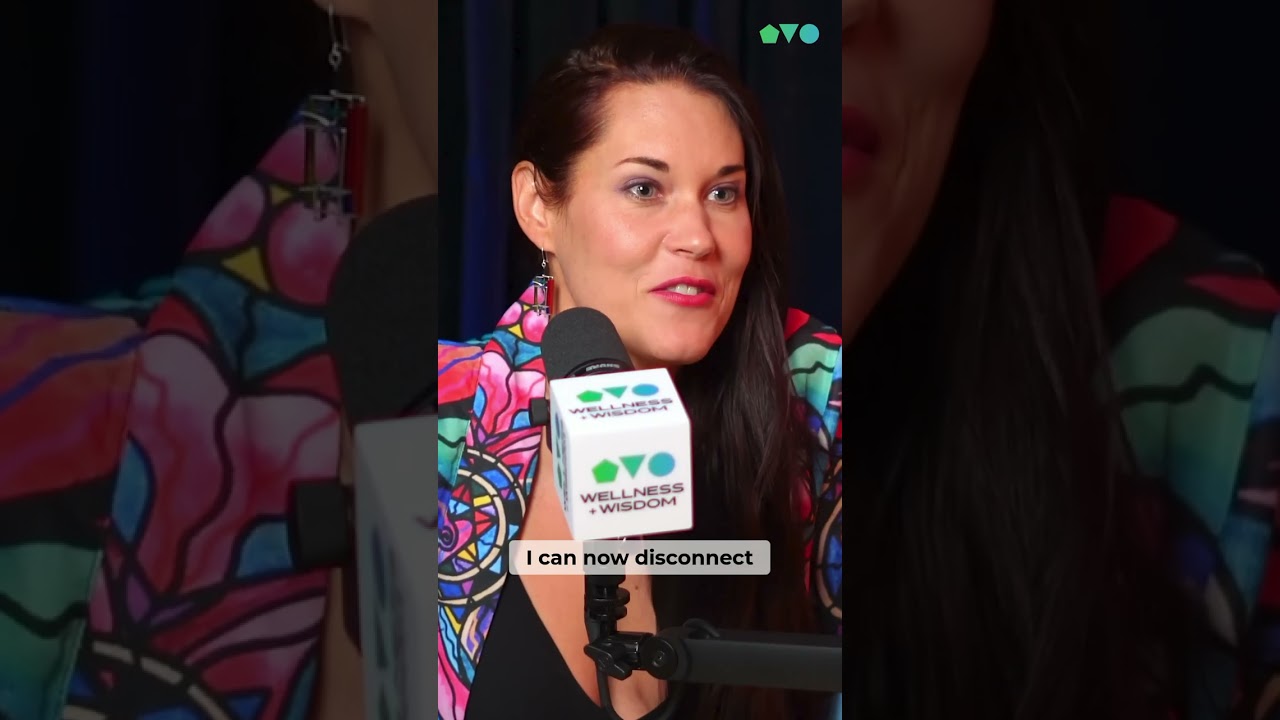
MD Reveals: Your Healing Creates Your Child's Reality (The Souls Coming In Need Strong Bodies)

This content was created by Josh Trent. This content was uploaded by Josh Trent. This is a YouTube interview (video titled "MD Reveals: Your Healing Creates Your Child's Reality (The Souls Coming In Need Strong Bodies)") recorded September 15, 2026, featuring host Josh Trent interviewing Dr. Ann Shippy, MD. The conversation blends medical, scientific and spiritual perspectives on preconception health, fertility and epigenetics (e.g., egg/sperm selection, zinc spark), environmental toxins and mold illness, intergenerational trauma and healing (including psychedelic-assisted work), practical interventions (nutrition, detox, meditation, neurofeedback) and parenting/psychospiritual preparation for conception.
Chapters
There are souls that are wanting to come into human form, but they're not able to. What I see as possible is really starting parenting before you even conceive. The child starts learning even before birth.
The preconception period is not just a year before, it's the whole life before, essentially. Ann Shippy, MD, is a board-certified internal medicine physician, a certified functional medicine practitioner, and is the author of The Preconception Revolution.
In my practice of what alters fertility, the parent feels the soul, but they're not fertile. They feel there's the soul that wants to come join them, and when I feel that too or acknowledge that with them, it seems to make the whole thing go faster and smoother to have them be fertile or actually super fertile. Like, these souls just pop right in. Some of these parents that I've gotten to work with, they have the same knowing that the souls that are wanting to come into them, through them, join their families, are going to operate a bit different, and they need strong bodies.
What's the operating system that's so different with the souls wanting to come in? So this is your book, The Preconception Revolution, if you're watching on Spotify and YouTube. I think about this time, and you've described it in your work as we all are bathing our children in water and they inherit that water. What do you mean by that on a high level?
What I mean by that is that we have so much more influence over our children's future health than we think. So the genes get expressed based on the environment that we conceive them in to start out with, and that can increase their risk for things that we don't want them to have, like obesity and diabetes and cancer, or it can actually help them to be more resilient.
And this resilience is something that we build, but I also believe that we inherit it. I've mentioned this a few times on the podcast, but I'd love to get your medical and also your personal opinion on this. The Native American principle of the 7th generation principle. They say that when we heal physiologically, spiritually, emotionally, that that healing signal ripples back 7 generations and it ripples forward 7 generations. What's your medical and also personal understanding of this Native American principle?
Well, that would be outside of time-space. The book is particularly about what you can do right here and right now to help prepare to have a healthy baby. Even if you've got 3 months, or if you have— if you don't want children for 5 years, it can be effective to help to build that resilience.
Yeah.
But your asking the question actually made me think of a question or a situation that's actually happened with a friend. So I have a friend who recently did a psychedelic called ibogaine, and—
That's not to be played around with.
No, it's really serious.
Ibogaine.
Yeah. It's really serious. And he had a lot of intergenerational trauma. You know, some of his ancestors were Jewish in Nazi Germany, and his father had lost his, father at a very young age, like around the 10, 12-year-old timeframe. So in the process of doing Ibogaine, he actually set the intention to do intergenerational healing.
Yeah.
For his future children, as well as his parents. And I think just by setting the intention, he actually had a better understanding of losing his mother at such a young age, What that trauma caused him and how it then impacted my friend. And his father, actually, they went to a conference together, the TED conference, and his father, like a couple months after he did ibogaine, and his father was walking around, hey, my son did ibogaine and he healed my trauma. You might wanna interview him.
Wow. What was the result of his healing? What was the reckoning?
Less stress, better sense of wellbeing, and better relationship between father and son.
This is the ultimate healing. I am not saying y'all need to go do ibogaine, but—
No, but I think—
For those that are called.
Like, that was such a clear distinction, right? There's before ibogaine and after ibogaine, and how each person feels in their relationship and in their bodies. You can do this so many other ways, right? You can do it by just dealing with your own trauma. You can do somatic therapy, you can do EMDR, I think things like IV NAD, phosphatidylcholine, some of these things also help with some of the epigenetic changes as well.
Well, the preconception period is not just a year before, it's the whole life before, essentially.
It's cumulative.
I think it's 1 in 6. You know the data better than I do.
1 in 5 or 6. It is very—
1 in 5 or 6 are struggling to bring new life into the world. And so I'll go back to even the title of your book, The Preconception Revolution. I see there's the sperm and the egg. I didn't know this until my wife pointed it out to me, that the egg actually selects the sperm.
Yes, it's fascinating.
Can you talk about that?
Yeah, well, there's new study and we still don't understand. It's all still somewhat of a mystery. A lot of it's a mystery.
We're just like, we witness it and then it just happens.
But especially with your interest in the metaphysical as well, It does look like the egg sends out some signals. It's not just the sperm that gets there first, like we used to think, like we're taught in medical school. It seems like there's some communication that's very selective, and that the egg is saying no, no, no, and yes. There's probably also a sperm component about which sperm can actually create the enzymes to enter the egg the best.
Okay.
But the thing that's really fun is the Zinc Spark. Have you seen that?
I've seen that. Oh my gosh. I'll link it on the screen right now for everybody, the Zinc Spark. It's phenomenal.
It's phenomenal. My belief— I don't have any data to back it up, but I do after talking to people and when they've conceived and, you know, they're having these awarenesses— I think that's when the soul enters into the egg and starts creating life, is when that zinc spark happens.
Well, that seems about right to me. If you look at the way that many people that have had NDEs like Anita Moorjani and many people like her, they say there's this bright white light. It's a very Very contextual, yet uniquely different, but it has the same storyline of, like, there's a bright light. So it would make sense that when the sperm is selected by the egg, there's the light. And to me, that's all the proof that I need. I mean, science can prove many things, but there's many things that science can't prove. What's something in writing the book that just absolutely floored you from a scientific perspective that maybe you already knew intuitively?
There was so much. Like, I, you know, in 2016, when I was working with this PhD biologist, there was a lot of really great information. But the amount of information that's been studied on epigenetics in the last 10 years is incredible.
Mm-hmm.
And the amount of information on how nutrients impact fertility and the health of the future child, like, We know so much now.
Yeah.
And what I feel so grateful that I was able to bring so many different— there's over 500 references in the book— bring all these different pieces of information together and develop a plan so that people really can take action and know the things that are most powerful for improving their fertility. And really, I just could weep at that. what's possible for really starting parenting before you even conceive, right? Especially for men, to know that the state of your body, the state of your epigenetics in the sperm is your first gift to your child.
Yeah.
So things by really reducing the environmental toxins in your body and doing a detox, getting good sleep, meditating to manage your stress, getting your weight good, exercising, these things that sometimes Men can put on the back burner because they're building their career, or they're already busy with one child, or, you know, they're just pulled in so many directions, to know that prioritizing their own wellbeing is a gift to their future child. Oh my gosh, it's amazing.
Yeah, it's literally biologically encoded into the sperm. So we think of this tiny microscopic sperm, But there are so many, I mean, maybe millions, I don't know the exact data, maybe you can shine a light on that. What actual codes are in that sperm and how are they a snapshot epigenetically of the man's health when the sperm enters the egg?
Well, let's look at ultra-processed foods versus whole foods. So one way to look at this is they took a study where they had men who ate ultra-processed foods almost exclusively for 3 weeks, And then they took another group that ate almost no packaged foods, so pretty much whole foods for 3 weeks. The sperm quality between the 2 groups was astronomical in just 3 weeks.
Hmm.
And then they gave a little washout period and then flipped it around. Changes your hormone levels to eat healthy versus unhealthy, and then probably the chemicals that go into the body from the ultra-processed foods. So it's nutrient deficient, but then you're also getting the plastics and the PFAS and pesticides and all the things in the food as well. So, and then when we extrapolate further, when we look at toxin levels, those are huge implications for the future, for both fertility and the health of the child. So things like the BPA, the PFAS, the nonstick chemicals, for the people that aren't familiar with those.
Yeah, yeah.
Those are part of those epigenetic dials that increase the risk for the child to have obesity and diabetes and inflammation in their body.
How might you explain those dials? I'm going deep into this myself, and we've had many people that have talked about it, but I'm curious with your book and your work, you even met with patients this morning before you came here for the podcast, which I think is super cool. You're actually practicing, you're in the trenches, and you're writing about the trenches. What is something that you understand now about these dials? I've heard them described as levers that can alter methylation, that can alter stress response, What's your understanding of these dials that are turned on and off epigenetically?
You know, that's a really great question. And maybe you can even give me some feedback on the best way to— the best analogy that works for you. I'm sitting in the question with you. When I did my TED Talk, I talked about the genes as being like the pixels in a computer screen, but it's the epigenetics that actually can create infinite number of pictures. So you've got, like, the hardware with the genes, and then how they actually get expressed on the screen is the epigenetics.
Yeah.
It's unlimited options. So yes, we have some genes, like the cystic fibrosis genes, or the Down syndrome, or those kinds of things that are harder to change, but you still see a difference in how they get expressed. example that I like to use that's not around fertility is for cognitive decline, for Alzheimer's. Almost all of Alzheimer's patients have an ApoE4 gene.
Mm-hmm.
But most people with an ApoE4 gene don't get dementia. And so it's environmental, how that gene is being dialed up and dialed down. There's a huge association with it, but what I see with my patients is when They've got low inflammation, low toxicity, high nutrient levels. They don't get dementia. Or even if they're starting to get dementia, we can reverse it.
It's so phenomenal. So it's literally just the quality of input.
Yes.
And that input is the air we breathe, the water we drink, the chemicals we're around that we absorb, our food. What about the people that we hang out with? Because certain people can put you on a catecholamine rollercoaster, Talk about that a little bit.
Yeah, and it is interesting too, what I see with patients is there is a spiritual and emotional component to our health. So, and a lot of times when we get our body stronger, it gets easier to actually set the boundaries, make the choices, or change the lens at how we're looking at things. Like, I just had a third follow-up with a patient who, when she first came in, I really thought she was going to leave her husband. Like, she could— she had just had it with him.
Yeah.
You know, it was all him. He's, you know, ex-military, he's traumatized, he's depressed, he's all the things. And then as she has started feeling good, the dance between them has changed. And she's like, he's so nice to me. Everything's so good, like amazing. And so, A lot of times what— oh, and I just thought about a man who was like, I think I'm outta here with his marriage. And I just pointed out, okay, I'm seeing a huge stress response here. And they do, they have a lot of stress in their life. They have a 2-year-old from their marriage. They have a child that has some health issues from his previous marriage. And so they have a really full plate. And when I was going through, oh my gosh, I can see you're having these high catecholamine, high cortisol responses. I could see how you might have a very short fuse.
Yeah.
Yeah. And then I could just see the light bulb come on and he's like, oh, maybe things aren't all her. Maybe it's Some of the relationship, you know, what I'm putting into it. And so it's really fun to get to see the resilience start to build, not just physically, but emotionally and spiritually, where people, like, they can come in and feel like, especially around the fertility space, if they've already, you know, failed IVF and— And they're being told that their only option is to adopt, you know, feel pretty hopeless. And then as we start finding the root causes of why the body's saying, wait, no babies right now, and start to address those things, they start to have hope again. And sometimes it's as simple as me holding the space to have hope for them.
Yeah.
Yeah.
Yeah, I've heard that compassion is really just the presence of an empathetic witness. And I think when you combine empathy with, you know, a medical degree and being a caregiver, 'cause essentially, you know, you took an oath, right? It says, do no harm, back in medical school. You mentioned emotional and physical tied into spiritual. And I don't know if you've gone into any of Carl Jung's work, but I'm currently going deep into it myself. And he says that the unfinished business of the parents will be tasked to the children, which I absolutely agree with. What do you see about that?
Well, actually, in my book, I really recommend that people do the inner— some inner reflection to even start out, like to really look at why they want to have children, what kind of parent they want to be, how they want to co-parent, really share those things because I really think that our thought patterns, how we consider things, the child starts learning even before birth. Like, they can hear the emotions, they can feel the emotions even in utero. And so I think we really start imprinting our patterns, and a lot of times it's so unconscious.
Right.
And you can see it, you know, the commonalities in And siblings sometimes too, like how they sound, how they think, the patterns of even their voices and things. But the exciting thing is that we can change.
Right. All of it is malleable.
We can dramatically change our thought patterns. We can heal from hard things that we didn't think we were ever going to be able to either forgive ourselves or others from. Humans are really resilient and amazing at what's possible. One of the things that has really struck me, especially recently, but then over the years, is how many people have experienced some kind of abuse, either physical, emotionally, or sexual abuse. It's so common. And if I allow for that vulnerability, that conversation with my patients, It really opens such a door to healing.
Did you ever think that you would be an MD and also a therapist? When did that start to come online?
Probably right away, just because intuitively I would know that there was something below the surface. And I think when people feel safe and they feel heard in the way that I run my practice, I have time with my patients. Scuttling them out in 10 or 15 minutes. We spend usually an hour and a half, 2 hours the first visit. And, and a lot of times those things that are ready to be healed will come up, and, and people will be kind of shocked that they even shared it. And I think it's that subconscious starting to work on true healing.
You had 2 children when you were going through medical school. What arose for you that got to be healed that aligns with your work?
Oh, thank you for asking that question. Well, I had gone through some infertility and then decided to go to medical school. And at the time, I don't think I was— I was just so compelled to change careers from engineering to medicine that I don't think I really thought about the fact that I might be choosing whether I was going to have Be a doctor or have babies. So I fortunately got to do both. But the thing that is really popping into my mind is the impact of having my babies during medical school. What I wish I had really understood the impact of my— of the epigenetics that might happen to them. So With my first one, I was doing kind of insanity. I was doing my first actual rotation in medical school where we're up every 4th night, uh, when I was 8 months pregnant. And I was doing pediatrics. And I was in Hermann Hospital in Houston. And it was, you know, you're already— when you're going through these rotations, you're— having to see things that I think are traumatizing in the first place. Like, it's hard to see the, the toddler that had a near drowning or the 14-year-old that had a near drowning. But what— so you're already kind of emotional, but then being 8 months pregnant.
Sure.
I mean, I like— I was feeling everything already being an empath. And there was this little girl that I didn't realize even until about a year ago how much I was still carrying with me, even though it's decades later, who had been really horribly abused. So here I am, this 8-month— 8 months pregnant medical student, starting to feel a responsibility of being a doctor.
Yeah.
When I realized I was still carrying that, I I cried for hours because I had the responsibility, and yet there was nothing I could do to really help this little girl. Like we could help her physically, but and we can call Child Protective Services, and they were like, "What? I I don't know what happened to her. Like I don't I don't know. Like it's just," and then it also gave me such a window into how many children. don't feel safe and aren't protected. And yeah, I wish there was more we could do to really help parents to be in the shape that they don't do those things before they have their kids, and to really— to have all their traumas worked out so that they don't hurt their children.
Is that what you mean by being in the shape? Because when you say shape, people might think physical shape.
No, emotional. Have the emotional ability to manage their choices and decisions, that they consistently protect their children rather than hurting them.
Yes, I feel like, and I'm not sure if you talk about it in the book, I'm sure you talk about it with patients, the triggers that we experience, we all get triggered. It's just like, you're not getting out of this world without being triggered. Yet what we do with the trigger, either project it onto others or do the necessary regulation work for ourself, parents, even parents that are going to be parents in 10 years, you can start the work now. It's not like you need to wait till you want to be pregnant. What does that look like?
It applies to every relationship too. It's like, how do you show up with your partner, your siblings, your kids?
I learn it every day. I have 2 children and my wife at the house up here. I learn it every day.
Yeah.
Yeah.
Yeah.
What does that look like in the beginning stages?
Yeah, I really love things like neurofeedback. There's a little device called the Muse that helps you to learn to be in the alpha brain state, which is the beautiful set point rather where you can actually make— have better choices rather than being in the high beta run-from-the-tiger state, which a lot of us kind of get stuck in.
Yeah, yeah.
Um, so I love things like that. I love meditation to help you be in a place. One of the interesting things that I've found over the years is that when People notice there's a shortening of their fuse. A lot of times there can be an environmental toxin exposure like toxic mold.
Yeah.
It's one of the most common things that I see shift people into a more anxious, short-fused, depressed state. So a lot of times just doing some of these investigations to see what's going on, you know, sometimes there's Some neuroautoimmunity that's driven by the gut microbiome being off there. I mean, there's so many things to look at in these situations, but for anybody listening that doesn't feel quite like themselves, there are things that can happen to actually make them feel better and to get the fuse long again, and to be able to show up the way that you wanna show up.
I think it was 6, maybe 7 years ago that we podcasted, when the podcast was another name, But the message still remains with just as much weight as it does today in the concept of mold. I, I've heard from many teachers that mold or autoimmunity cannot live in a body where there's not space for it to live. Can you expand that? Because at first audible, it might be a little confusing to someone. One person can be in a hotel room with mold and their body detoxes it fine. The other person gets stricken with mold illness and it takes them 2 years to recover. One person had the space for the dis-ease, the other didn't.
Yeah, I think it's very complex who's getting sick when.
Right?
A lot of times, so, you know, for me, I know I lived in moldy houses multiple times before I got super sick, but then looking back at things, now that I've looked at my genetics in great detail, I can see that I don't detoxify very well, and that I have a very vigilant immune system. So that combination of things, my immune system being like, oh my God, there's toxins here, we need to do something about it. And then having it accumulate a little faster in my body. So there's the physical reason for it to actually happen.
Can I ask you a question about that? Would that be a COMT, like a slow wastegate clearing, if somebody did a test?
Exactly. COMT, glutathione methylation, and then a whole bunch of the Inflammation genes.
Okay.
So how we make histamines, how we make antibodies, all of those kinds of things. It's like the perfect storm. On a metaphysical standpoint, I am so grateful that I had ALS-like symptoms and thought I was gonna die. Like, I'm laughing, but like, it was pretty horrific at the time. How am I going to take care of my kids? How am I gonna take care of my patients? How am I going to function? What I learned in the ability to heal for something that amazing is part of why I like— it's actually helped me to be healthier now by learning some of those pathways and things that I need to do on a regular basis, as well as help a lot of people. Yeah, like I wouldn't trade it in for anything.
How did you— what was one of the biggest levers when you moved through the mold illness for, for clearing, for detoxing?
For me, it's liposomal glutathione. Liposomal glutathione is— it's like opening up the spigots for me and letting a lot of different toxins out. So, as long as I take liposomal glutathione on a regular basis, it keeps my head above water. Unfortunately, even to the point where I can be in a mold exposure and not realize it. Wow.
It goes back— I'd love to unpack a little deeper on that question. You said why some people get sick and some don't is a multifaceted question. Can we sit in that question a little bit more? Um, to what degree does someone's elevated cortisol, elevated epinephrine, elevated stress hormones play a role in one person getting sick with mold and another person not?
So there are multiple reasons. So it can be what the total load is. So they just happen to have the tipping point this time and Hadn't had it before, and then a lot of it really is the immune system. How angry does the immune system get when there's an exposure, and especially if you're you've been pre-exposed, you've had some of these run-ins with toxicity before. But I for me, I know that when I did finally have such a severe tipping point, that it was the accumulation and not knowing that I needed to be. reducing my toxic load over time. So I had a mouthful of amalgam fillings. I loved tuna fish, so I ate tons of tuna over years and years and years. I worked as a chemical engineer, so I was in manufacturing environment and had all the different chemical exposures.
Wow.
And then, um, I just didn't know what I didn't know, right? I didn't know that there's so many things that we can avoid. And so then when I got hit with a pretty bad mold exposure, my body just crashed.
Yeah.
The other thing that can happen is the person that doesn't think they're being affected actually is more affected than they think. Like, it's really fascinating the number of patients that I've had where, as they heal, the spouse actually notices some things that they thought were just aging or normal, get better too.
Wow.
Especially the stress response and feeling anxious or short fuse. Those people kind of accept more easily. They don't actually think there's something medical going on. So it's kind of fun to be helping one person and then the other family members benefit as well.
It's like healing by osmosis in a way. On the screen right now for everybody that— I was thinking about this and I want to talk to you about this. Have you seen the ant that gets inoculated with a mushroom? And the mushroom, the fungi, essentially makes the ant climb up to the part of the tree so that the mushroom can kill the ant and get sunshine for itself. That's essentially what's happening with our body.
Yeah.
With this infiltration of mold, it starts making us crazy. It starts making us Do things that we'd never do, respond in ways we'd never respond. I see that in nature. We are nature.
Well, and there's great studies too that you might want to put some of this information in the book, that there are certain bacteria and fungi that can actually change our eating behaviors, like crave sugar, eat more carbs.
Which ones?
I don't remember exactly off the top of my head anymore, but we can get that for you.
They're there.
Well, and I see it with patients all the time when I see Some of the fungal markers that aren't just the external mold exposure, but an indication that there's a fungal overgrowth in the body, they will really want carbs and sweets, sometimes alcohol. And when we start to get the levels of the fungal infections down, they don't want the carbs or sweets or alcohol as much.
And then when they get to that point, would they also get to then, now that there's the physiological load that's lessened, Would then the emotional and potentially the inherited stuff come up once they've addressed the body first, or does it all mix in the same soup?
It all mixes. And I think some of it's like, what's your spiritual journey? Like, when are you actually ready to process things?
Yeah, courage is an interesting piece. All over social media and in personal development, there's this positive thinking. Just think positive, Anne, just think positive and everything will change. Yes, that's good to have a positive mindset, but if you're putting a positive mindset on top of a broken body, essentially, not even broken body, just a burdened body, I don't think any of us are broken, I think we're just burdened by many things.
I would agree.
Then we get to this place where courage is almost impossible unless there's a significant event, you know, like a cancer diagnosis or rheumatoid arthritis or autoimmune or the loss of a loved one. These events shake us, they wake us up. Do patients come to you in the middle of the shakeup? Is that normally when they find you?
There's a mix. I'm so lucky, you know, I'm so, so lucky. I have patients that are very sick and they, you know, they'll say, okay, you're my last resort. If you can't get me better, I'm done. And then there are the patients that are just super motivated to have healthgevity, I call it. So, you know, Live longer, but also healthier. And it's usually people that are pretty motivated in one way or another. And whether it's the heart illnesses or infertility, or on the fertility side too, just sometimes they'll pop in and be like, oh, I'm 40, 45, 46. Do you think I could have a baby? Do you think it's a good idea?
Yeah.
And so then we can help tune them up and have healthy babies well into their late 40s.
Yeah, you're touching upon something I don't necessarily enjoy, and it's this term for a woman who's over 35. It's called geriatric pregnancy, which is honestly insulting, even that word geriatric pregnancy. What's your stance on that?
It should be illegal.
Should be illegal. That's—
it's so demonstrative. And it's not correct.
How is it not correct?
So When women are healthy and their bodies are full of the nutrients that need to create life, and they're not being overburdened by the environment, women are very healthy and very fertile and can have healthy, healthy babies well into their mid-40s and sometimes even late 40s, sometimes even 48, 49.
Yeah.
And maybe even older. So I think words are frequency, energy, information. And to start to say that to women's faces, I think it really cuts out, cuts the legs off from under them. And it's just not correct.
Yeah, and it really, the way I see it is that words are spells. So we're all casting spells on each other. And so when someone has, Let's say that they're in their late 30s and they get this diagnosis of geriatric pregnancy. The path to becoming a mother or a father becomes very challenging because of the spell that was cast.
Well, and there's so much fear being cast for really even women in their 20s now, but especially in their 30s. Like, they're all being encouraged to— if they're not ready to have their family yet, to do the egg harvesting rather than preserving their own fertility. So that's really what this book is about, is how to preserve your fertility as well as have a healthy baby. So instead of pushing your body to do something that's super physiological and really hard on your body, take care of your body.
Yeah.
And there's no such thing as— since we're on these Yeah. There's no such thing as unexplained infertility. There's a reason, it just hasn't been detected yet. You, you are with somebody that isn't doing enough deep dive to really understand what's going on in you or your partner's bodies.
What do you see as a common thread? This is really a softball, but it's something that I think is important to discuss when it comes to the way that the man and woman relate to each other. And the way in which they either are fighting or in stress, that is a massive outcome in how the child's birthed, essentially, if you look at birth trauma and birth programming.
I do think it can change even the fertility, right? Because if you— if neither one of you feels truly safe, yeah, that could be sending the physiological messages that it's not a good time to be a baby or bring in a baby. Your body doesn't know the difference between we're really at war and there's no place that's actually safe to give birth and be with a newborn versus we're fighting. So it's really good to do all of that assessment and growth and repair before you even start to try. Because bringing in a child, as you know, you have 2 kids, right?
Yeah.
Kids don't make the relationship any easier.
Oh, no.
It's like an exponential complication, each one, right? Did you notice that one is— it's complicated and then the next one's even more complicated?
Yeah, both my children drive me deeper into maturity. They drive— they really do.
Even now, my kids are grown, I feel like they're my greatest teachers.
How could they not be?
I do wish that I had known what I know now about this whole stress response and how the epigenetics are passed on. Because having them, you know, one in med school and one in residency, like, I know they're pre-programmed for stress. Fortunately, they meditate and are doing the things to really take care of their bodies. But I probably, you know, could have set them up a little bit better.
Were you always this calm? Have you always had a calm demeanor?
I've worked at it tremendously.
Uh-huh.
I've done like 9 Joe Dispenza retreats. I've learned like 7 or 8 different kinds of meditation, 2 kinds of qigong, tai chi. It's, I think on the outside, probably always, but I think I actually had a pretty big trauma. I got electrocuted when I was 2. the pretty serious burn and brain injury. And so I think I've had this, and then I have the calm genes that you mentioned earlier that slow down the metabolism of the stress hormones. Thank you, that's a compliment.
Yeah, I think that the most powerful person in any situation is the one that can be most calm. Now, calm doesn't mean being passive, doesn't mean that you don't have authority or agency. But when someone's calm and they're in a position of guidance, or in your case, a physician, it just makes the space so much more applicable to healing, to evolution, to greater states of consciousness. A lot of medical practitioners, physicians that go through school, they're stressed out the entire time, and then they bring that stress to their patients. From the meditation and everything that you've done, what's been the biggest fulcrum that's allowed you to create safety in you, but really create safety in the medical office?
I think it is back to our conversation that we started before we even started, and that is faith.
Yeah.
I think it's perspective about Like, humans are so messy. Like, we're all so messy, right? We're just messy.
Yeah.
I, I kind of look at humanity like we're toddlers. We're all just worse. But what I see is possible. It's, it's, it's incredible what each human is, is capable of. And then as a collective, I can see the hope of where we could potentially go. I think we're really reaching a threshold with, you know, what we've done to our environment.
Yeah.
We've not been good stewards. You know, I have to tell people it's probably not good to eat fish anymore. You know, even if you order it.
Even sardines, wild-caught?
Maybe wild-caught sardines occasionally, but maybe order from Seatopia where they actually check the batches. But like, I can't say— I used to, you know, 20 years ago I could say, oh yeah, you increase the— like, we've really poisoned our planet. Also remarkable, and even in Tanzania with the tribal people, they're, they're so poisoned they're starting to see Western diseases like autism and preeclampsia and all autoimmunity, all these things that were Seeing from what we've done to our food supply and our environment. We've got AI coming where—
Yeah.
Who knows what that's going to be? But because of this faith that I'm learning in consciousness and in humans, I think we're going to do something really amazing and it's going to be an incredible journey.
I'm on that ride. That sounds like a game I want to play. I love the way you describe— you really do a good job of bridging worlds of the metaphysical and the spiritual and the emotional with medical and scientific. Do you ever get pushback from colleagues that say, Anne, you're too woo-woo?
Well, I used to have that voice for myself.
Interesting. Okay.
And when I said yes to this commitment to write this book, The reason I said yes is because of the woo. Like, my knowing of the importance of this book is that there are souls that are wanting to come into human form, but they're not able to, that are— their operating systems are different, that are going to really help humanity. They are, and they need strong bodies. They're bright lights, have a very strong guidance operating system. They're not going to need the same kind of parenting that we did.
Oh, great.
Great. They're going to have their own guiding light. So it's for when I'm around people like you that are also tuned in to this, I feel free to talk about what really inspired me to write this book. Which is— and what's so fascinating is that some of these parents that I've gotten to work with, they have the same knowing that the, that the souls that are wanting to come into them, through them, join their families, are going to operate a bit different, and they need strong bodies.
What's the operating system that's so different with the souls wanting to come in?
Yeah, so, you know, we found I think part of why humans exist is because of parenting, right? We teach our kids to do the right thing, to try hard, to— and we use things like disappointment and praise and all the common bribes, all the common parenting things to get our kids to learn how to be able to fit into society.
Yeah.
These souls are gonna already know their guiding system and what's right and what's wrong for them and operate accordingly. Like, they're not gonna need these guardrails the same way. They're gonna need a different blueprint. And I don't know what that is yet, but some of these parents are starting to talk to me about it. So maybe that's the next book.
Wow.
Is Parenting This next generation.
The parenting blueprint.
Exactly.
Yeah.
The souls, they're gonna— one of my traumas from childhood was if I got a disappointing look from one of my parents, it would be crumbling for me. 'Cause I just never, ever, ever wanted to disappoint them for any reason.
Sure.
It worked kind of for my kids, but not great. So it's really interesting to see what's going to come about. But I think it's really going to be— for these parents that are receiving these kids, they're already figuring it out.
One thing that I get from your work is that it's essentially a Trojan horse. A lot of times when it comes to the public, we get to meet them where they are. And by the way, I'm not saying that because I am so evolved. I'm in the public with The mental model of science and research and case studies, like, these things are really valuable because they allow the mind to have some sort of connection point such that some of the woo that fueled you to write the book can actually be learned. Did you find that to be true as you were writing the book?
Yes, and when I go there with the woo, I think it really helps these parents, the parents that really want to, You know, there have been the ones that, you know, the parent feels the soul, but they're not fertile, right?
Yeah.
Like, they feel there's the soul that wants to come join them. And when I feel that too, or acknowledge that with them, it seems to make the whole thing go faster and smoother to have them be fertile or actually super fertile. Like, I can't tell you the number of couples where They came to do the work. I'm like, use condoms. But then they end up getting pregnant, mostly being super careful, the same practices that they've used for years, and then suddenly they're not working. And so they're just super fertile. Like, these souls just pop right in.
Yeah, the soul's like, let me in, basically. The thing that's fascinating to me is that the deeper I go into science— I probably had 500 health I've done over 100 podcasts, Anne.
You're prolific.
And every single time we would have a health-specific podcast, I would always leave the podcast going, you know, there's so much more than just the testing and the data and the science. Out of all the things that we've talked about today, and we're just scratching the surface on the book, I mean, there's so much in here. Is there one metaphysical principle or one faith-based principle that's really been a guiding light for you and also for your patients? Beyond just the science.
Yes. There's an intersection between love and whatever your spiritual beliefs are. And when it comes to fertility, I believe that the love between the couple Creates a frequency and then connects with the soul and connects with consciousness, God, whatever you believe. Like, I feel like we're weaving this web of frequency that is all founded in love.
Wow, that's such a great answer. And love is something— it really is.
I saw you just check in with your wife. And your kids.
Yeah.
You just tested it out. Oh, of course. And it's true, right?
Yeah. Could you feel that? I could feel it. That was interesting.
Yeah.
Yeah, I was thinking about, I so deeply love her and my children and my work. You know, we've heard this phrase that your mess is your message, which I think is so interesting, or you do pain to purpose. We put these interesting little phrases on the work that's most needed. And I find that even with my great amount of love with my children and with my wife, That I still have a bunch of learnings that arise where I'm projecting stuff onto her or I'm snapping at my children. It's just such a long-term work in progress. I don't think we ever get to there, there, like a fully healed, evolved, mature parent. But God, we're here to try. That's the whole point.
And what's beautiful is seeing the evolution, right? Like, where I am with my children now is so different than Yeah. It was 10 years ago or 20 years ago. Now they're both in their 20s. So I think maybe when we stop learning and growing and, and, uh, really the gift of the— we're not just parenting them, their, their love for us, like it— their reflections of me are some of the most, uh, Beneficial learning I've done with anybody in my life ever, right? What happens if you like feel like you're done? Okay, I'm the best I could be. Like, is that when you die maybe?
Right.
Like, I don't have the courage or juice to keep learning and growing, so maybe that's when you go.
Wow, I've so loved this conversation. And it's not just for people that wanna have children.
I love that you're saying that because The other book that I want to write next is just like how these principles that prepare to have healthy babies also help to prepare for longevity.
Yeah.
Like, you could read this book and just take out the fertility stuff, and it could apply to just reverse aging or minimizing your risk for having all the things we want to avoid, like diabetes. cancer, dementia.
Yeah, I, I really resonate with the heart of what you're putting out, because to me, the, the heart of what you're putting out is the most important thing. And what do you feel like we missed when it comes to preconception? We talked about the emotional intelligence, the spiritual quotient, faith. We also talked about some of the science. What's one thing that is still very exciting for you about what you put in the book that we didn't talk about?
You did so great. You covered so much of it. Some things are simple. Like, you can make such a dramatic change in your fertility and your child's health just by what you put on your plate and what you don't. Sometimes that's the most magical shifts in all the things that you need to have a strong body and to create life. It can lower inflammation, it can help you detox, can build up your nutrients so that you make good hormones. Like, so if it feels overwhelming with the other things in the conversation, like, oh my God, how am I going to do all that? Yeah, just start with your plate.
Oh, good. Yeah, we do it all day long. We may as well pay attention to it.
And it's so powerful.
Yeah, I mean, my mood is impacted probably The most from sleep and food. If I, if I don't sleep well, or if I'm eating foods that aren't the best for my body, my body tells me. And, you know, my intention with this podcast, y'all, is for you to share it. Somebody is wanting to have a child, they're wanting to bring life into the world. What is more important than that? I don't believe anything. I have respect for people that don't want to have children, and that's fine. Everybody's got a different path. But the fact that there's so much that goes into how to bring a life into the world that we didn't know, that we didn't know, that now we know. It's like once you know, you can't unknow it. You've heard it. So share this podcast. The book is The Preconception Revolution. It's everywhere books are sold, right?
Amazon, bookstores, everywhere. It's great. And one last thought for men is that your sperm quality is a good indication for longevity. So I think that men should start doing a sperm count with the epigenetic factors from a company called SpermQT to just assess their fertility and then assess their health in a whole nother level of what you can do with other types of lab testing. And it's so easy.
Yeah, is that an at-home test?
It's an at-home sperm test, SpermQT. It's a game changer for men to know where they are.
Okay, y'all, now that you know, you can share what resonates and leave the rest, to quote Bruce Lee. And also my Vipassana teacher, Goenka, he said the same thing. I really enjoyed this. Thank you for our second podcast. It was 7 years since we sat, and this one was really good. So I appreciate you being my guest in the studio today.
Thanks so much for having me. So much fun.
Yeah, so much fun. You guys, there's no— there's no point in our lives where I think the work is done. I think we're always a work in progress. And so make sure you check out a copy of this book. And until I see you next week, I'm wishing you the same thing I wish you every week. And wishing it to you as well, and to me. And that is love, wellness, but most importantly, peace and power. We can't have real power or real agency unless it comes from peace. We'll see you next week.
More from Josh






Your child's future start before pregnancy... and even before conception! #podcast