155 Anna Vocino: How To Eat Happy
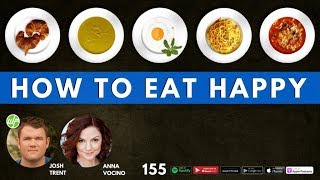
This content was created by Josh Trent. This content was uploaded by Josh Trent. This is a YouTube video titled "155 Anna Vocino: How To Eat Happy" featuring a conversation between Josh Trent and Anna Vocino. The discussion, recorded on January 14, 2018, covers topics related to wellness, emotional intelligence, and dietary habits, particularly focusing on gluten-free and grain-free lifestyles. Anna shares her personal experiences with celiac disease, emotional eating, and the development of her cookbook 'Eat Happy'. The conversation also touches on the impact of diet on mental health and the importance of creating content in the wellness space.
Questions this video answers
155
January 14, 2018
Since 2002
Eat Happy: Gluten Free, Grain Free, Low Carb Recipes for a Joyful Life
Hashimoto's (autoimmune thyroiditis)
Chapters
Wellness Force Radio Feelings are essential, but they can't dictate our actions.
We literally inspect each other with our emotions. We came here for a special purpose.
Let the purpose unveil itself. Knowing without doing is the same thing as not knowing. They're not just trackers. I'm gonna wear this and it's gonna help me do the right thing. Wellness force Radio Episode 155 with Anna.
Bocchino I had to peel back the layers of the diet onion. I had to peel back the counting. I wanted to count calories. I wanted to count grams of fat and grams of carbs. And I wanted to count my macros and make sure my ratios were correct. I wanted to look at the glycemic index. We should just be cooking and eating. And you should know these are vegetables and this is meat. You don't need to count that. My brain changed when I changed the way that I ate. If you're going to cut out the sugars and grains, you've got to up the fat. People write saying like, I've been doing this for four days and I'm starving and it's because they're afraid of fat and you can't be.
What's up, my friend? It's your host, Josh Trent. And welcome back to another episode for your weekly access to global experts in all things wellness as we discover the physical and emotional intelligence we need to live life well. In this episode we're talking with my new friend and best selling author of Eat Happy Anna Vacino. This episode is perfect timing as we look at 2018. Holy schnapp. 2018. Can you believe we are at this new precipice of unlimited human potential called 2018? Well, since 2002, Anna has been gluten free after discovering she had celiac disease. And on today's podcast we're talking about the no sugars, no grains lifestyle in a mirror of last week with Vinny Tortorich. Also, the mental health aspect of food, how understanding the bridge and connections between emotions and food can powerfully shift, at least in Anna's experience and for millions of others across the world, the scientific reports of higher intake for quality fats, which fills the gap for letting go of processed foods and sugars. So if you're looking at a brand new you in 2018, this show will inspire you to dig into your relationship with food and speaking about our relationships with food and with ourselves. If you have not tuned in to our Wellness Force Wednesday show live on Facebook with our new co host Ali Waddell, what are you waiting for? Your show artwork. Tap it or head over to Facebook at 12pm every single Wednesday Pacific Standard Time where we do live Q&As and breakdowns of podcasts as well as new topics around our relationships with other people, with ourselves and with food. So in 2018, we're bringing you three powerful episodes every single week to hear on the podcast spread out over itunes and Spotify and all the other major channels. Just listen on your iPhone or Android, whatever you do, wherever you listen, we got be sure to join us every Wednesday at 12pm Pacific Time on Facebook Live with our new co host Ali Waddell, who I'm just loving diving into these deep conversations with. Okay, here is your breath break. This podcast is brought to you by our show sponsor, Organifi, creators of Organifi Green Juice as well as so many other healthy products including the Red Juice and the new one. If you saw on Instagram stories this past week, I've been going to bed with a new ritual of Organifi Gold, which has turmeric and all these great micronutrients that give me better quality of sleep, which I'm actually backing up with the Oura Ring, which is a totally side topic. We have such an incredible show coming up with the founder of Oura Ring. Make sure you tune in the first week of January for that. But going back to Organifi, it's become my favorite way to get in micronutrients without having to spend 10 minutes cutting up all my veggies, getting them spread into the Jack O. Lane Steel juicer and then cleaning that. It's a full production if you know what I mean. And I don't even have kids. I can't even imagine the moms and the dads out there trying to juice while having kids in the kitchen. It sounds like a total tornado. So to make it easy this week and in 2018, getting in your micronutrients, pick up some Organifi green juice powder by heading over to shoporganifi.com because you are here and listening to the show, you get 20% off the entire website. The red juice, the green juice, the Organifi gold, the proteins, everything for your jam packed day. Give your body some love in 2018. Save some green. Enter your code wellnessforce at checkout for 20% off over@shoporganifi.com okay, onto the show and I have a question for you. Whatever happened to enjoying whole nutritious meals that you can cook at home with simple ingredients like vegetables and meat? Why did Everything. And when did everything become so complicated? Well, in this conversation with Anna, you're going to understand her viewpoint as a mother, comedian, actor, voiceover talent, and a best selling author. How healthy eating can be simple and enjoyable. And by the end of this show, you're going to have some groundwork, some real practical, pragmatic things you can do in your day right now, tomorrow morning that'll actually move you closer to where you're going in 2018. And we know that there's a cycle of recommitments for everything. So tuning into this show is a support line for you because as Anna says, life happens, things are going to happen. Sometimes you'll be able to stick to a way of eating, but other times, emotional issues will get the better of you. And that's okay. When you're done emotionally eating, you'll simply be done with it. Let's jump in with Anna Vochino. So I am talking with my new friend. She's a comedian, an actor, a voiceover artist, a bestselling author, and she's the co host of the top itunes health and fitness podcast, Fitness confidential with Vinny Tordorich. Today we get to drop in with the one and only Anna Bocchino. How you doing today, Anna?
That was such a nice intro.
Well, look, you're a great person, so I have to at least deliver a nice intro.
That's so. Hi, how you doing?
You know, I'm fantastic. We've been trying to do this for a couple weeks and now we actually get to talk about all these fun things, emotional things, and great things that we all deal with in this wellness world. You're celiac and we're gonna talk about you being Gluten free since 2002. Emotional intelligence, how to have a different diet than your spouse, making waiters roll.
Their eyes since 2002.
Can I have no cheese, no dairy, no grains, no sugar. But then extra, extra lettuce, please.
Extra lettuce, extra olive oil. Thank you.
I am just so. Because you have such a dynamic personality, I feel like on our first call together we could have recorded that. But I gotta ask you, we probably should have. We probably should have. You have been all over the Internet since 2002. Was the Internet even around then? I think it was, yeah. What is something about you that most of us don't know? You're a comedian. You're out there in the media. Like, what's something you don't normally share that's fun or unique about you?
Well, after 18 years of marriage, my husband And I. My husband is a comedy writer and he will reluctantly do standup, but because he's a comedy writer, I make him punch all my jokes. He reluctantly agreed to go start do stand up. And he's so great. But we decided after 18 years of marriage and we just sent our daughter off to college, we decided to write a dual standup act about marriage and we get up on stage and just kind of lovingly rip into each other. And we don't have any evidence of this online because we don't wanna put any clips online. We don't want our daughter to. But it's an exploration, it's a delve into what a long term relationship is like. And it was actually completely therapeutic for us to write it. If you could take those painful areas of your life and then make a joke about them, you're doing pretty good.
Oh, my gosh. A lot of comedians actually have kind of darkness and then they bring out the light. And that's what makes them so funny. Right?
You have to. It's almost an alchemical sort of experience. That's why we all laugh when we see comedy and you're like, oh, my God. You hear a premise and you're like, oh, my gosh, that's me. Oh, my gosh, that's my husband. Oh, my gosh, that's my best friend. You hear the joke about it, you relate and you blow off steam. You know what I mean? It's a nice thing. So we're doing that in comedy clubs in LA and New York, and that's something people probably don't know.
Well, I guarantee people in the Wellness Force community have heard your voice because we did an episode with Vinny Torch that's coming out soon. I've already published a little bit of information about Vinny. But how did you and Vinny actually meet? Just tell the audience real quick. Like, what got you into podcasting? You actually had a podcast called Yoda and Me.
Yes, I produced that podcast. And it was a comedy podcast. And the setup was basically like, what if Yoda was like a character actor who lived in the Valley and he's just trying to get acting jobs and he moves in. He sees an ad on Craigslist and moves in with a regular old roommate called Bill. And since it was done by my husband, who's a comedy writer, and David Hornsby, who's the executive, was the executive producer of Always Sunny at the time. And they're very specific and it was very exacting and it was very laborious. And this was back When I still had to write XML code to put up a podcast.
What is that?
Okay, XML code is some sort of code. It's some sort of voodoo where you have to update with a specific language to get a podcast to sync to itunes. Wow. Okay. And now, you know, there are plugins that take care of all of that. It's a lot easier now, which is also why everyone and their brother has a podcast, because it's just so easy to put one up.
Sure.
But back then, it was not. My friend Nancy, who is a voiceover coach, Nancy Wolfson, plug for her. She's amazing. She knew Vinn Tordorich very well. They've known each other 20 years. And she called me and said, you gotta do this podcast with Vinnie. And I was like, no, it's a ton of work. I don't wanna do it.
Yes.
And then he sent me his book, Fitness Confidential, of the same name as the podcast. And his book was so good. It was so good. I felt the same way that I was like, all right, I'll do it. And so I wound up producing three episodes a week for two and a half years. And now we're at five years, and I only do one episode a week now. But he does four total. He's a madman.
He is a content machine. And when I look at the way that you rose up, I mean, Hollywood and la, it's not exactly the most kind place to artists. Some people make it, some don't. What did that journey look like for you to actually be successful in kind of the valley of heat there? The valley of judgment, the valley of success.
I mean, it's really hard. Like, I could probably just sit here and tell, like, a million failure stories. The rejection is so much. And then when you're not being rejected, you just don't hear anything. And it's tough because when you don't hear anything, you don't know why. What am I doing wrong? Am I not a good enough talent? Am I too short, too tall, too pretty? Not pretty enough. Fat too. Not fat enough. Like, what am I? Like, what is it? Gosh. I remember when I first moved out to LA, when I was 28, I had a meeting with a number of agents, and they were all like, you're too old and you don't have enough credits. I was like, I'm 28.
Too old at 28.
Too old at 28. So the thing that we wound up doing is there were a group of people, we started a theater in Atlanta when I was 20 years old, and we all got together and just started creating content. So when one of us hit, Lance Krall, when one of us hit, he was able to pitch shows and we all made a couple of shows together. So I am a big proponent of creating your own content. And that's why I love podcasting too. Cause you can just get it out there, it's immediate. You could just put it up, whatever you want to put up.
At what time did you have your daughter? Because you're a mom, you've written a book, you've done so many things. By the way, Anna, when did you have this daughter and how did that work into you actually climbing the ranks there in the Valley?
We were in Atlanta, still working at our theater and I basically, my husband and I were only dating a short time and I got knocked up and we decided to make a go of it and everyone was like, don't do it.
I love your honesty, by the way.
Oh yeah, absolutely. Well, we talk about this in our act. I mean, we have to make jokes about it because it's like, I'm sorry, how many? I'm sure there's many marriages that start from people getting knocked up and trying to make a go of it. So if we can like tell our story honestly and make people feel a little better and sometimes it works out and sometimes it doesn't. And for us, we worked really hard on the marriage and we continue to work really hard on the marriage. And now 18 years later, a bunch of friends of ours who've been together, who got together right around the same time we did a breaking up and we're like, well, we're gonna stick it out. So we moved out here with a two year old. And so it was just one of those things where honestly, we were kind of lucky to have this self employed lifestyle because we were there for our daughter. We were able to go to every soccer game, you know what I mean? And able to do stuff like that and work. And then when we worked, we would bring her to set and things like that. You make it work. And also too, because people I know who are very established in their careers are terrified to have kids. And I'm like, if we could do it at 25 with less than $0, you guys will be fine.
You bring up such a great point. Because I'm 37 and I look at how much work my brother does. He has two daughters, right? Two and four. And I go over there for uncle duty and I'm like, oh my God, I watch these beautiful girls for, for like four Hours. And I'm so exhausted afterwards. Yeah. So people that complain that are single about their health concerns or whatever they're going through. You've been through that yourself. 2002, you found out you were celiac. Tell us about that. Like, what shifted massively for you? How did you even find out you were celiac?
I remember saying I was eating, like, a sleeve of JoJo's, which are, like, the Trader Joe's version of Oreos. And I was like, man, it would take, like, a doctor telling me I have a medical condition to stop eating cookies.
I remember saying. You actually said that to yourself?
I feel like I manifested it just from that moment. And I had heard from a friend of mine who's a type 1 diabetic about. She was avoiding gluten. And I was like, what's gluten? And she told me it's the protein and wheat. And I was like, okay, that sounds crazy. And she goes, but she said, Type 1 diabetics, if you have an autoimmune, you might develop another autoimmune and this thing called celiac. And I was like, what? And I'm so glad she told me that, because I told my mom after she was tested for everything. She was so sick. She was the point. She had to get blood transfusions every few months because her body wasn't manufacturing enough blood. I said, have them test you for the sync celiac. And then she had to tell the doctors. The doctors didn't know about it. I remember sitting. Because then my daughter had to be tested too. She doesn't have it, but I had to sit with her pediatrician and look up the medical codes to order the right test with that big book of medical codes. And so sure enough, she has it. And she calls me and she says, you have to be tested. It's hereditary. And I was like, I'm an actress. Like, I barely eat carbs, not realizing that gluten's like, in everything. And sure enough, I had it too.
Wow. So this put you on a different path immediately because most people have sensitivity. And it's interesting. We're gonna link this in the show notes as well as all your fun links from Chris Kresser. Celiac disease versus non celiac wheat sensitivity.
I like that Chris Kresser guy.
Have you heard of Chris's work?
Oh, yeah, he's awesome.
Oh, this guy is phenomenal. I'm interviewing him in a couple days, and I'm gonna ask him this question. I'm curious what you think. Celiac dis versus Non celiac sensitivity. How does one know? Does it have to be the test, Anna? Or can you kind of start feeling like, hey, I'm inflamed. Every time I ate gluten, I feel like I'm gonna pass out. Like, what is the real differentiator here?
The problem is with me. I was so young, I was 28 when I was diagnosed, that I thought I had allergies, and I developed some really bad allergies out here. I developed some night asthma, and I had gastrointestinal problems always. And I just kinda thought that was normal. That was just my normal. But other than that, I didn't any of the symptoms that they talk about@celiac.com. so when I gave up gluten, the allergies cleared up. I got off of allegra and Flonase and all those things that I was on for allergies and asthma. I keep an albuterol around because, like, once a year I'll get a little asthma attack, and sure enough, I always get sick right after it. So I know that that's like a precursor to getting the flu, but it's not like a regular asthma thing. So gastrointestinal stuff cleared up and. But I felt so much better. But the difference between the two is, from a vanity standpoint, if you give up gluten, but you're not giving up other grains and sugars, you're not gonna lose weight. Because I hear people all the time saying, if I give up gluten, I'm gonna lose weight when I give up gluten. And it doesn't work that way, unfortunately. Some people, it might, because when they give up gluten, maybe they're actually giving up other carbs as well, other grains. Because what I did is I wound up saying, okay, I love food. I love cooking. I started blogging at Gluten Free Anna. That was my site for years. And I was like, well, I'm half Southern and half Italian, and if I'm gonna make these, I'm gonna not miss out on good foods. I'm gonna make, like, you know, gluten free lasagna, red velvet cake, and key lime pie. And then I slowly started putting on weight.
Well, it wasn't really slow. I mean, in your Amazon page, you actually wrote that you were gaining weight faster than a tick on a labradoodle.
Yeah, but that's just. That's just for dramatic effect.
But how much weight are we talking about here? I mean, so you had transferred.
I lost about £30 over the years. Keep in mind when you're celiac, at least for me, I hadn't digested a nutrient in my life. Whenever the onset of the celiac was, which doctors are not sure when that happens, they say sometimes it could be caused by a virus, which I had mono when I was 22. Maybe it kicked in then. Maybe it kicked in for my pregnancy. We're not sure when it started, but I was always super skinny. I could eat whatever I wanted, and that's because I was not digesting anything. And the celiac is an autoimmune that kills off the villi in your small intestines. If you don't have any villi in your small intestines, you don't absorb nutrients into your body. Your gut is inflamed and you're a mess.
Oh my gosh. I have like 40 questions. I'm just gonna ask you one though. So you're going through all this evolution with your diet. You're cutting out no sugars, no grains, 10 years of celiac and then 2012. That's what kind of inspired you to write the book. Tell us about the book then. So how did this book come through you? Did you get a download from higher intelligence?
Haha. Maybe it was an unexpected one. I never thought I would make a cookbook, although I always loved food and food blogging and cooking ever since I was little. No. Vinny Tortorich and I, when we started the Fitness Confidential podcast, he's the one who told me about no sugars, no grains. So what I was trying to do was like Weight Watchers, like every few months I'd sign up for Weight Watchers and then I would do like. I would do like four days and I'd be starving and miserable. And I was very much in the diet mentality of like, if I just starve myself for long enough, I'll lose the weight and then I can eat again. Yeah. And it's crazy. So he told me about no sugars, no grains, nsng. That's a thing that he invented, which is basically you cut out the sugars, you cut out the grains. Grains and sugars included in that are potatoes and corn and rice. So you cut out those things that are high glycemic and you focus on eating meat, vegetables, up your fat intake. And if you can tolerate dairy, you can do dairy. And if you could tolerate some legumes, you can do legumes. I don't really tolerate dairy and I don't have legumes too much because they are a little higher in carbs, but. So you basically clean up your eating. That gets rid of the processed foods. Weight comes off, blood sugar stabilizes. I was up to, like, a borderline. What is it called? Pre diabetic A1C. I was up to, you know, things weren't looking good. Like, if I had stayed on the path I was. I would have become type 2 diabetic.
How do you deal with emotional stress, though? Because I think your intelligence around your nutrition, just based on the thresholds you've gone through. Most people emotionally eat, let's be real. I mean, I think food is the number one abused drug out there, more than alcohol or weed or anything else. So something happens, you know, a threshold, something really traumatic. Maybe someone goes through an accident or they lose a loved one.
Sure.
Rob Wolf talked about this. Anna. He lost his mom. His mom had celiac. Rob found out that he was celiac. He's the author of Wired to Eat. Just such an incredible guy. I definitely. I want to introduce you to.
Yeah. But anyways, I love that guy.
This happened because he started to feel his own illness, and he found out he was celiac. He actually lost his mom. And I know that you also lost your mom from health complications from celiac.
Yep.
How did you move through that?
Well, when I actually flew back home, because it was. My mom actually went in. She had had kidney failure six weeks before she went in for a heart valve replacement. And so she was already kind of a mess, but they were like, you have to have the heart valve replacement. And she was like, okay. You know, she was down. She's like, I can do this. And what wound up happening was that she went under for the heart valve replacement, which went fine, but then she never woke up. And then she wound up passing from sepsis from a MRSA infection. And it was a very ugly way to go. And I was lucky to be there for the last 48 hours of it. When I flew in, I was just thinking to myself, like, this is just. This is crazy, but I'm going to really stick to the way that I eat. And when I was in the hospital, the moment I got to the hospital and I arrived on a Sunday, so not all the cafeterias were open. And it was funny because I was like, I am gonna stick to this diet. And there was literally no food to eat. Everything had gluten in it. Everything had sugars or grains. So I was like, okay. And I managed to get them to make me a salad with iceberg lettuce and a couple of green peppers and some Black olives and some salad dressing, which definitely had sugar in it. All processed. All commercial salad dressings have sugar in them. But it was really funny how, like, I was really trying to, like, stick to this way of eating during a really stressful time. Probably the most stressful time, hopefully that I'll ever have to go through. Once she passed, I was like, ah, screw it. I'm gonna eat what I want. And the reason why I'm being honest about that is because life happens. Things are gonna happen. And sometimes you'll be able to stick to a way of eating, and then other times those emotional issues will get the better of you and it's o. And when you're done emotionally eating, you'll be done emotionally eating. I will say it's been five years I've been doing this, and I feel like every time something like that happens, I learned something new about myself. I do try to check in every day. Like, for example, yesterday I got an email which was basically, it was a rejection and it was a sting. And I had that impulse to go in and, like, munch on something.
Yes. Because the calming effect of food. Right. This does so many good things to our nervous system.
I'm anxious, I feel bad, I feel rejected. I want to crunch on something now, to be fair, now I'm to the point where I'll have some almonds to crunch on, and I'm not going for the food that's going to damage me metabolically. But the urge is still there. The emotional thing is still there. It still has to be dealt with.
You bring up such a great point. This is why I do men's work. I mean, last night I had a men's group. We talked about this. The one thing that separates people from sticking to their plan, whatever it is, whether it's gluten free or healthy eating or anything or whatever that might be, it's human connection. So how have you plugged that in? Because are you in any groups where you're all being healthy together, you're all showing up for your wellness together, and you reinforce that from an emotional standpoint? Because look, I mean, if you're in the kitchen and you get a rejection letter and your daughter's screaming and the trash is all over the floor, you're probably gonna reach for the cookie.
Welcome to life. Well, here's the thing. When you cut out sugars and grains and you up the fat, what happens is you feel fuller for longer, so you don't make as many crazy emotional choices. So if you even think about Me in the hospital, me having this nasty little salad with some nasty salad dressing. That's not gonna keep me full. So even hormonally, from that aspect, if you are pretty consistently cutting out the sugars and grains and upping the fat intake, it's going to make you feel fuller, longer, and then you'll be able to make more rational choices. Good. So that when the emotional stuff hits you and all hell breaks loose in the household, it'll be a little bit easier. I also am a big proponent of throwing out the junk. Getting it out of the house.
Yes.
Just get it out. Clean it out. But wait, what was your question?
Well, no, I'm like you. I'm not a moderator. You know, Gretchen Rubin talks about this. Can you abstain or can you moderate? Like, I can't moderate. I just don't have the crap in my house. That's kind of what I'm hearing from you.
Yeah. I feel like there's a million opportunities to eat crap out in the world. Let's keep the home clean. You know what I mean? You can eat whatever you want when you go out there to the big, bad world, but here we have this place to eat. Now. You were asking about having a group to show up with wellness. I mean, a lot of my friends do this as well, which is nice, and they understand where I'm coming from. But when I was first starting this, you know, I joked that my husband and daughter were asag all sugars, all grains, because I was the only one doing it. And then it took. You know, my husband, you know, he's such a supportive guy. He's like. He's actually a terrible taste tester. Because when I would make a recipe, he'd be like, that's great. And I'd be like, okay.
Are you just saying that cause you love me? Yeah.
No, he's just saying it. Cause someone made him food. You know what I mean? Like, he's like, everything tastes great to him. He doesn't care. He'll eat whatever I cook. But it took him getting some questionable results on his blood work about a year and a half ago to go, okay, I'm all in. I don't want to see those numbers. I don't want high blood sugar. He had some weird liver results, something else, like, oh, kidney something. So I was like, yep, no problem. And it took him getting the bad blood. And I think it takes people to where it takes them. Sometimes you won't be on board until you have that little, like, personal. What is it called? Realization Epiphany. That's the word I'm looking for.
It's almost like you need evidence that behavior change must occur. And so that's kind of what your husband got. Let's shift here because Eat Happy. Gluten free, grain free, low carb recipes for a joyful life. By the way, I don't think I've ever loved a title as much as Eat Happy.
Oh, that's nice.
Yeah. Like, who doesn't want to eat happy? I think a lot of people in the fitness world, they preach, like, food is just. And depending on your personality type. Look, you're Italian, okay? Italian culture food is a massive deal. How did those habits of eating and the family connections around food did that play into you even writing the book? Is there some of your Italian flair in this book?
Definitely. There are actually a lot of Italian recipes. The recipes that I really gravitate towards are usually Italian, French, and Mexican with some good old American classics tucked in there, like pot roasts and chili and things like that, burgers. But, yeah, I found Italian food, French food, and Mexican food are all very easy to do. And that seems crazy, but what about the pasta? Well, you make zucchini noodles and you can still do the exact same Bolognese or pesto or Arabiata sauce. Like, you can do a whole bunch of things. So to me, yes, culturally, there's a lot of that in there overall, even more than the Italian influence, because for me, food is a happy thing. To be able to make choices on food because I'm not addicted to carbs anymore. To be able to choose what I want to eat and make it really yummy and make it fresh and whole foods is really important. And that's where the title comes in. My brain changed when I changed the way that I ate. My mom suffered from such terrible depression. I wish that I was able to get her on board with this so she could have enjoyed not being, like, having her brain stabilized. Fat will stabilize your brain, and it's a very nice thing, especially if you're subject to blood sugar swings and moods.
Yes. Oh, my God. So powerful. My brain changed when I changed the way I ate. The gut dysbiosis that people have. The food that we feed this body, we only get one, and it's so connected to the brain. There's not probably a day that goes by where some new NIH study doesn't come out, Anna, that links our gut health to our brain functionality and our cognitive strength. What did you feel? What was the biggest benefit when you shifted in 2012. What kind of clarity did you have upstairs?
Gosh. Well, first of all, I had to peel back the layers of the diet onion. I had to peel back the counting. I wanted to count calories. I wanted to count grams of fat and grams of carbs, and I wanted to count my macros and make sure my ratios were correct. I wanted to look at the glycemic index. Ooh, thank you. My husband just walked in with three pieces of bacon wrapped in a napkin for me.
Sounds like an angel.
He's an angel. Okay, thank you. No, that's. I want those. He's trying to take one of the pieces away and keep it for himself. I want all three. Thank you. Yeah, I wanted to count, and that's a very pervasive, like, think of, like, people 100, 200 years ago. They didn't count count calories. I didn't count fat grams. I want to just be able to eat and know that I'm feeling my body. And I say very clearly in the book, because that's actually a fairly common question I get, is, where's the nutritional information? I'm like, where's the nutritional information in a regular cookbook? It's not there. You know what I mean? We should just be cooking and eating. And you should know these are vegetables and this is meat. You don't need to count that. There's no counting. I understand to get a grasp on things, some people need to count, but I also know that the counting, for me, comes from a place of having to control things. And I suffered from anorexia when I was 15 to 17, and that is. Luckily, it never got too advanced, but the mindset is always there, and counting, for me, plays into the control issue. So that was a big thing to peel back. Wow.
I mean, going back to the brain piece, too, I'm just feeling, like, the habits we learn as kids. Anna, I used food to numb, okay? If I didn't want to feel something, I would just eat food when I was a kid. And, you know, no surprise. I'm like 280 at 21 years old. And that's what got me into being a trainer, because I lost all that weight. But when I look at what you said about your brain change when you change the way you ate, and then now you've shared with us that you had this eating disorder. How have you gotten through that? I feel like we learn these bad habits as kids, and then we, as an adult get over them and get through them.
I was lucky because at a very young age I saw I was not happy. I was going through some bad teenage years and I could see that I was trying to control my body as a way of expressing that I didn't have control over what was happening in my outside world. So I wouldn't say I dabbled because it got pretty intense. But then it didn't last that long. And I didn't manage to hospitalize myself or get into a position where I didn't have my period anymore or hair loss. I didn't get to there. But I could see how that kind of set the tone for a diet mentality. So whenever things got bad, I would just go on a diet. You know what I mean?
Yes, I do.
It was like, it became like tinges of anorexia light that would keep resurfacing. So when I had to, oh, for example, intermittent fasting, which I think is a really good thing for me. I noticed when I first was experimenting with intermittent fasting and going, you know, from 12 hour fast to 14 hour fast to 16 hours, I noticed that it made me go, huh, I haven't eaten in 12 hours, let's make it 14. And then I would get to 14, I'd be like, hmm, let's see how far we can take this. So there's a little bit of that that I have to be careful not to trigger because it's like again, a control thing. Ooh. If I controlled it for that long, what happens? If I control it for this long, it ultimately winds up becoming more about control. So I have to be careful. Cause there's triggers in there. And I don't know if anybody talks about that of intermittent. Because everyone's so into intermittent fasting, which is great. It is great for most people. But if it triggers some emotional things like that, just pay attention to what your body, what your mind is trying to do to your body.
I mean, intermittent fasting is not for everyone. Same thing with ketogenic diets are not for everyone. Have you ever done any testing? I want to circle back to the book here because I have a specific question about the Eat Happy book, but have you done any testing besides the celiac testing? Have you ever done a wellness effects panel? Have you ever done any testing from a biomarker standpoint to kind of see where you are? Is that part of your yearly check in process?
Yes. I work with a functional medicine doctor near me in combination with. I have a very progressive endocrinologist because I've got a little bit of hypothyroidism happening. So I'm on a little bit of T3 and nature throid. And we work very closely together, the team, the three of us and I have done everything from a stool test to every saliva test to the cyrex array number four, which will tell you all the foods that are cross contaminant foods, meaning the body. The autoimmune system is recognizing all the elements in dairy for me and still doing the same attack thing when I have dairy. I've done food sensitivity tests, I've done, you know, the 23 in me and to find out I have the. What is it? Mthfr. I can't remember that, Mother.
Yeah, you're missing the snp. Right, for the methylation.
Exactly, for the methylation. So that affects what types of vitamins. Which actually was very freeing because now I don't waste money on crappy supplements anymore. Like it has to have the methylated form of the vitamin so I can absorb it. Gut absorption is a big thing with celiacs and things can get triggered. If I eat at restaurants, even if I've eaten a totally clean meal, if there's some gluten in there, I will go and have like an IBS episode for like four hours afterwards. So I've got to be. My gut is very sensitive and I have to be careful of that stuff. But yeah, the stool test was very illuminating. I found out I had three times the standard deviation of strep in my gut and that's what they think is probably causing that. So I'm always trying to tamp down the bad bacteria, the strep, and amp up the good bacteria. So it's a process. Oh, and you know what else I had, which I recommend for anybody over 40, is thethe calcium score test where you just go and lay in a thing and they see if in your major arteries in your heart if there's been any calcification.
Interesting. Were you laying in like a DEXA scan or what was it?
It's like a dexa. It's exactly like a DEXA scan except for they're scanning your chest instead of your whatever, whatever they scan in a DEXA scan at least my DEXA scan was just like my knees to my waist.
I'm so glad you shared this with us because when I look at your work through the cookbook and just kind of just how outwardly expressive you are, it's cool to know that you also have delved into the science and you're doing this self quantification process.
I wish I knew more about it, but I'll go do any test just to see.
Right. I think you're generally curious. Well, when I look at your book and I look at the book and I see what you're putting out there, real solutions for people. Is this book only for people that have celiac or can this book also be tailored towards people that want to go low carb? I mean, who's it for?
Look, I definitely made a keyword rich title on purpose because I want the gluten free people to find it. I want the low carb people to find it. And oddly enough, you know, Zooey Deschanel tweeted or no, Instagrammed the book. And then I wrote her, I direct messaged her and she did write me back and she's like, I, I try to eat grain free and people think I'm crazy, but I'm like, no, it's cool, it's good, you know, so hopefully the grain free people will find it too. But I. Wait, what did you say?
So the differentiation, like, you know, one carb is low.
Look, it's a recipe book intended to be really yummy food that's easy to make at home. Whether you're gluten free or grain free or low carb, it will appeal to all of those. Now I will say, as far as low carb goes, I do have a different philosophy. I'm not like a lot of the ketosis low carb people who are into artificial sweeteners. I am not into artificial sweeteners. I am not into having those artificial sweeteners as a substitute to get rid of sweets craving. I am about getting the sugar out of your diet. And then when you want to make a sweet treat, you make a real sweet treat. And eight out of the 12 dessert recipes in the book have the least amount of sugar possible to make that dessert work. Like the pumpkin pie. If you personally want to sub artificial sweeteners for that, you can. But I'm not down.
The reason is because of the brain disruption. Right? I mean, we learn more and more about this. Also the hyper palatability, even if it is stevia. I had an ex girlfriend, I had an ex girlfriend and she used to always put stevia every single day in her water. She would dump it in there in her water. You know, eventually your brain is going to be like, where's the sugar? Right?
Yeah, you gotta get off it. You gotta get off it if you're gonna. And also your taste buds come alive. And then you become that jerk at a party who's like, if you guys had These strawberries, It tastes like candy. People are like, all right, you know what tastes like candy? Candy.
The real thing tastes like the real thing.
Yeah, exactly. Things taste better, for sure.
So in this marriage, you're married to somebody who kind of, in the beginning, wasn't really into no sugar, no grains, but had a shift. How do you think for people listening that are in marriages that are in dedicated relationships, when one partner is eating a certain way and the other partner is kind of learning or maybe resistant? How did you and your husband work through that?
He wasn't resisting me. He was a sugar addict. Full on. Like, that was his rep with everybody. Like, is it like, you know, you have your friend who's like, the big drinker, and you're like, oh, you know, so and so just drinks a lot. Lauren's reputation was, well, Lauren will just eat all the cake, you know, and he's thin and he's ripped, and he's one of those body types that can get away with all of it.
Kind of hate him a little bit, by the way.
Kind of hate him.
Yeah. I have a friend like that. He can eat, like, a whole sleeve of Oreos, and he wakes up the next morning with a new ab muscle.
For sure, we hate them. But no, because it's only because it's such a struggle, especially as women. Women are going on hormonally, and it takes us a little longer to get the weight loss kicked in. But he can be like, I won't have Ben and Jerry's for two days. And then he's, like, ripped. But you know what's interesting? I have a Facebook group. Vinny and I have a Facebook group. And I have a Facebook group. And it's total about 20,000 people. And watching what people say about. Some spouses are very supportive, even though they don't want to eat that way. Or they feel skeptical because high fat seems threatening, which I totally get. There's a lot of paradigm shifts that have to happen to convert to this way of eating. I get it. I went through it. But then there's a lot of couples who. Their very way of life is threatened when one of them does this. And people will lash out. And then I say, that's an opportunity to work through some stuff together because something's going on. Something deeper in the relationship is going on, you know?
Yep. You change the food, you change the dynamic of how you communicate. Love language, right?
Yeah. And some people get so threatened that they act out and they're. They're mean or they're not Supportive. And some people don't get threatened, but they're like, eh, you do what you want to do. And then other people are like, oh, that looks cool. Look, you've lost 20 pounds. Hey, I want do that too. It's, there's a range. It all depends on where the relationship is and where the weakness is in the relationship.
Such a good point. The weakness in the relationship I've seen multiple times. I can flashback to many clients when I was training on the floor where people would have their spouse sabotage them. This is a real thing. Because if that person starts to change their dietary habits and step into their power and their wellness, the other person must do it as well. Because, you know, both of those boats have to lift with the same tide. But then if one person doesn't want to rise, it creates friction in the relationship. Have you, have you seen this among your friends or peer groups?
Well, it's like if any couple, if they drink too much together or if they smoke together and one of them tries to quit, it's tough and it threatens a lot of the codependency of what's going on with the relationship. I mean, that's just like Codependency 101. You know what I mean?
Yes.
And so if you're gonna do this with food, it's a lot easier to support. Culturally, we support people quitting drinking or quitting smoking. I think a lot more than quitting eating that way, because there's a lot of misinformation. So they think that's crazy. You're gonna, if you eat just steak and vegetables, you're gonna die of a heart attack. And it's like, so I don't really support that and I'm gonna use this misinformation to judge you. You know what I mean?
Wow.
Nobody would say you shouldn't quit smoking. Everyone says, yeah, you should definitely quit smoking, of course.
Because people know this, right? Anna? I feel like whenever tobacco went into the superior supreme court and got their asses grilled, I do believe that's eventually gonna happen to big food. Do you feel like there'll be some point in the future where all of these chemicals, all of these additives, all of these things that are, quote, healthy that are being sold to us by these mega corporations, they'll have to pay the piper at some point.
They're have to.
Just like tobacco, they're going to have.
To, it's going to shift. It's already. The tide is rolling. And in fact, when you see companies like, well, first of all, when you start to see companies do gluten free everything you can tell, oh, there's a market there, they can make money.
Yes.
When they start to do you see more like, like Paleo or low carb products at Whole Foods, it's because they see there's a way to make money grain free. Now, as I'm seeing grain free tortillas at Whole Foods and things like that, which if you read the ingredients, still has quite a bit of carbs in it, but they're slowly shifting because they don't want to not make money. You know what I mean? But I think that the sugar stuff is going to have to be held accountable. And I'll be shocked if in 50 years, Coca Cola still in business in the States, at least.
I would love. I actually had a dream the other day. I'm like, what would happen if like half the McDonald's in the world just burned down like, and those people got other jobs at healthier places? Don't worry, I'm not trying to get people out of a job here. But it's like, I don't know, I just, I think back to when I was a kid and the way that, you know, we're talking about how we eat food in relationships food for me, like we were on welfare and my mom would take us to Burger King when I was a little kid and that would be like the biggest treat. And so for some reason, my emotional body, my heartstring has a connection to Burger King. So even when I drive by a Burger King now, I would never go in. I haven't been in a Burger king in like 20 years, but it's still connected there. So you talked about counting calories being control and dogmatic eating, maybe even relationships. Mindless eating gives us that full sense of control. When people shift, what's an action step? They're in this relationship. One partner is going towards their wellness and they're having a struggle with their other partner, kind of not supporting them, not changing with them.
The only thing that's worked for me is to just model behavior. You model behavior for your kids, you model behavior for folks around you. And then people will start to ask questions. And I got into trouble the other day because I was at a friend's wedding and at the table, somebody said something just so wrong. They said something so wrong about. I mean, I've spent five and a half years interviewing the luminaries in this field and it's just so funny. And all these amazing science authors and docs, doctors and researchers. I'm so lucky. And then because I had had a couple vodka sodas in my system, I was like. And I barked. I barked and that's the wrong thing to do. That was wrong. And then I immediately went, I'm sorry, I'm very sorry, please forgive me. And then that person at the table who said that didn't talk to me for the rest of the night, which is totally understandable, but at least I apologize in the moment. But listen, you have to model behavior. Yelling at people doesn't work. Preaching to people doesn't work. People will naturally come to you. Everybody has been in that position where you're up late at night and you're googling an answer to a thing that's really on your mind, that's really bothering you. We've all Googled like low carb or diets or you know what I mean? We've all been in that thing like, help me, help me, dear. Google, help me. Yes, people will ask you questions. You just have to keep living by example. And also if you're the person in the house that cooks all the food, that's a big responsibility and a big chore and a big nice thing that you're doing for everybody else in the household. So guess what? They eat what you cook or else they cook themselves something else. You get to make that rule.
I loved how you said leading by example because I found, and I don't know if you can relate to this, the more you try to tell especially a family member what they should be doing or how they should be eating, they'll almost not do it to you out of spite. So only you being the example will truly breed that inspiration in other people, especially in your tight knit circle.
Nobody likes a bossy know it all. Especially if you're at a wedding and you're there to have a good time.
Yeah, I wanna shift here because we've talked about your cookbook. We're gonna link that in the show notes. Eat happy gluten free, grain free, low carb Recipes for a joyful life, by the way. Not just for people that have celiac, also for people that just wanna ditch the sugar and the grains. But there was something that came out yesterday and it was from club industry. I wanna get your take on this. US obesity rates reaching historic high. CDC has came out with 70%. Now 7,0 of Americans have a body mass of 25 plus classifying them as either overweight or obese. What is the deal with this? I believe it's a sad and massive wake up call to all of us, not just in the fitness space or the wellness space. I think, Anna, it's a combo of economic, educational, and societal and kind of fear mongering. And I do believe that fear mongering of the news media, I mean, if there's a time to rise, don't you think it's now?
I mean, we're both, like, trying to get the message out there as much as possible. Look, we keep getting the message out there, and people who are seeking the information will find it. Keep sharing the articles, keep sharing. That's all you can do is just keep being vocal about it and keep choosing with your wallet, too. Yeah, if everybody stopped buying Pop Tarts tomorrow, they would stop making Pop Tarts.
It's such a simple concept, but it's so radically true. It's like. And this is why I believe, shifting back to the media narrative, we see in the media our fight with fat, how we're gonna beat the battle of the bulge. Like, there's all this language around how stressful and tedious and everything. What if we actually just focused on more? Like, what if we focused on gaining. Gaining quality of life, gaining energy, and then weight loss is the byproduct. How powerful do you believe language is for people, Anna, when they look at changing their eating habits or letting go of weight?
Well, I tell you what, letting go of weight has always been a vanity trigger for me. And what's interesting is that the real benefits are the health benefits and the being happier. Benefits, like not having to. Just stabilizing my brain. It was a much better benefit than losing weight, which is hard to say because it's like, yeah, but losing weight is everything. But it's like, it's not. It's so weird. Like, the losing the weight becomes like a secondary benefit of it.
Oh, my gosh. Drop the mic right there. Pause. Take a breath. What Anna just said kind of was everything in the underbelly of our episode here. It's like the health part. Driving and seeking these health factors. Yeah, the weight loss will come, but it's almost like, paradoxically, if you seek only weight loss and you're willing to do whatever it takes to lose weight, the health is harder to find.
It is. And it becomes about comparison. It becomes about all those other things. And it's funny, but also at the same time, if vanity is the trigger to get you in the door, cool, it's fine, Whatever. Doesn't matter, right?
If you want to look good naked, that's fine. That's one motivational piece. But what continues to motivate you now. So you've written the book, you're on the podcast with Vinny. You're helping literally millions of people at least become a little bit more aware.
I hope so. Yeah.
What motivates you now?
Every day about 4pm Pacific, I start to get pictures of people's dinner, of what they've made from the book, and tweets and Instagram stories and Facebook messages. And it makes me so happy, like, that somebody would take one of my recipes and make it in their house. Also, I love because I have a bunch of recipes on my website since the book has come out as well. And so I can put up a recipe, and within a week, hundreds of people have made it and are putting up pictures. And it makes me thrilled that I'm helping people find good things to eat, that I'm getting families back in the kitchen. That's important to me, too. It's like we've lost this evening dinner thing. And I get it. I raised a kid. Life is busy. But the times that you can make food and sit with your family or cook food together. My husband now knows how to make everything that I know how to make because he's now in there. He didn't used to know how to make anything. Yeah, he grills all the food now. He grills all the meats. In fact, I have to ask him. I'm like, hey. I have to stand with him and be like, hey, how long do we grill this chicken thigh for? I don't know, because I don't know about the grill. He does it. So it's become like a family thing and getting families back into the kitchen now. My daughter, about a week before we took her to college, was diagnosed with Hashimoto's she, which is a autoimmune disease of the the immune system attacking the thyroid. Yeah, she's exactly like my husband. They're built exactly the same, tall and thin. And she had lost 18 pounds over the past year. And I was like, you know, something's going on because the kid eats. I watch her. Took her to my endocrinologist, took her to my functional medicine doctor. Get all the labs back. Sure enough, it's Hashimoto's. Now there's not much to do. Two because she's producing so many thyroid hormones that that's why she's lost all the weight. This will happen when you're young, and then when you're about 30, 35, your thyroid just gives out because it's been attacked so long that then you Put on a bunch of weight, and then you're like, how do I fix this crazy thyroid? So she's lucky to find this out at a young age. But when someone's about to go to college for the first time and then you find out, you have to deal with this. So basically now she's had to give up, up gluten and honestly, she's gonna have to give up dairy too. But that's. She doesn't know that part yet. Let's just get her going on the no gluten. And it's a very interesting thing. But listen, if you find out these things at a younger age, you're gonna save yourself a lot of heartache down the road.
This is so powerful. And I love where we've gone in this conversation because we talked about, yes, the scientific portion of it and how to, you know, the nuts and bolts of changing the diet. But I also feel like we've touched on the emotional part. And my last regards to this emotional piece is around the change. People go through a behavior change element. There's so many books, so many speakers, so much information out there about what really takes successful behavior change to the next level for your daughter, for yourself. I mean, what do you believe is maybe one to three things that really drive success? When we look at behavior change, long term behavior change in regards to our food and our exercise and our sleep.
I guess the first one that I would say is, which seems a little counterintuitive, but I would say be more easy about it. We have a tendency to want to beat ourselves up. We have a tendency to be like, oh, I ate that thing and I shouldn't have. I had a bite of that and I'm such a jerk. And you're a loser and you're never going to lose weight if you do that. Just calm down. And I'm the worst at it too. I'm the hardest on myself. And I have now learned that like, okay, okay, if I'm out at a friend's birthday and I had the best intentions to not have sugars and grains and I got caught up in it and, oh my gosh, they have gluten free cookies. I'm gonna have one. And then I'm like, oh, you dummy, why did you have that cookie? Da, da, da. Calm down and just say, you know what? Just get right back on it. Just get right back on it. That's a trick. Because if you beat yourself up too much, guess what you're gonna do? You're gonna go binge some more Cause you feel like a piece of junk. You know what I mean? So you're gonna keep binging. Another thing that I liked was a book called Intuitive Eating. They're not talking about any particular diet, but just it helped me to get in touch with, like, the emotional thing that's happening behind the thing. And their. Their philosophy is that we should be able to use our intuition to eat when you're hungry and stop eating when you're full. And if emotional stuff is getting in the way of that and you're binge eating, I just like that book Intuitive Eating, and I can't remember who wrote it, but definitely it's a very powerful book.
Well, we will link that in the show notes for sure. Anna, thank you so much. This has been awesome. This is the.
I want to hear your interview with Chris Kresser. This is going to be cool.
Oh, yeah, I'm going to link that. Now, look, you guys have had him on the Fitness Confidential podcast, I'm sure, right?
I don't think I've had him on when I've done an episode, but I would love to.
Okay, well, he's coming out with a new book. It's called Unconventional Medicine. You got to check it out.
Sweet.
Now, this is the very last part of the show. It's really fast. And it's seven questions for an author who happens to be a mom, who happens to be a comedian, who also happens to be a podcaster. But the first question is, Anna, what makes you laugh the most in life?
My husband.
What about your husband?
Well, he's very. He's the funniest man I've ever met. And. But, you know, that being said, he has to work for it. Like, not just any old joke of his. He's gotta, like. He's a very quick guy, and he makes me laugh the most, which is good because we write comedy together.
I feel like he's gotta be quick with you. I mean, you're an actor and a comedian. Like, he's gotta be fast.
Yeah, he's got to be fast.
What is your greatest edge right now in life? In other words, what's a lesson that you're coming back to and continually learning on the.
The rejection that happened yesterday? Just dealing with rejection and getting. Getting shot down and not. Not taking it so personally and working on that.
What is a book or maybe a few books that you've read in your life that have really empowered you the most either in your diet or your exercise?
Oh, goodness. Well, Intuitive Eating was what Gary Taubes is. Why we're fat and what to do about it. Is that what it's called?
I think so, yeah.
Or why we get fat?
Something like that.
Why we get fat. And I love Gary Taubes. I love Nina Tysscholz's book. And I loved. I should have googled all this beforehand. The lady who wrote like, the Secret Life of fat.
Oh, yeah. Dr. Sylvia. Tara.
Sylvia, Tara. That's it.
She was so great. I love that episode with her. What changed the most when you became a mom about the way that you approached your wellness journey? In other words, what changed in your eating, sleeping and moving when you had your child?
My daughter didn't sleep through the night till she was two and a half, and I still have messed up sleep because of that. So that's something that I still struggle with.
What is one food you take with you no matter what travel plan you're on? What's a healthy snack or a few that you just throw into your bag for you? That works.
I always bring almonds and one of those epic bars. The bison kind of.
Do you do the jalapeno one?
No, the bison with. No, you're talking about the habanero one. That's too much. The bison with it has cherries and some kind of nut.
Now, if somebody's inspired by you because obviously they're looking at your cookbook, they want to give this a shot. What is one action step besides picking up Eat Happy that they can do today to start living this lower carb, no sugar, no grain lifestyle?
Don't forget to up the fat fat. If you're going to cut out the sugars and grains, you've got to up the fat. People write saying, like, I've been doing this for four days and I'm starving and it's because they're afraid of fat. And you can't be. You have to, like, drizzle olive oil over your vegetables. Eat the marbling in the ribeye steak. Get full.
Anna, this has been great. The last question here is around wellness. So you talk a lot on Fitness Confidential about fitness, nutrition, mindset, but here on Wellness Force, we always talk at this intersection of truth, at emotional and physical intelligence. When we look at that intersection for you and all you've created and really all the people that you're helping now. What is wellness to you? I mean, how do you define wellness in Anna Vacino's life?
Oh, gosh. Well, let me just come up with the most perfect, pithy phrase off the top of my head. What is wellness to me? Wellness to me is just every morning I get up and I decide that I want to feel good that day and then everything that chips away at that I try to soothe or be in touch with and make peace with and take as a learning experience. So wellness to me is that and whether it's about food or my career or my weight or whatever's going on, wellness to me is being in touch with what I want and always be working towards it.
Anna, thanks so much for sharing your gifts on the podcast, your website.
Thanks for having me.
Anna Vocino A N N A V-O-C-I-N O.com where you spell you can get the Eat Happy Cookbook and write you on social. Where can people find you on social? Can they post pictures of themselves enjoying miracle noodles while taking a swim?
Absolutely. Anna Vacino on Instagram, Anna Vacino on Twitter. On Facebook. There's an Eat Happy Facebook group as well where there's lots of people. If you ever have any cooking questions or anything or low carb food questions, that's a great resource. People are very active in that group. Yeah.
Hannah, I like you. Thanks for coming on the show.
Me too. Thank you.
Hey my friend, thank you for hanging out and growing with me on today's show. Remember to hit subscribe Share this podcast with somebody you care about that you think gets to hear this message. Support the show by leaving a five star review for the podcast right now simply by tapping on your show artwork. On your iPhone, click that purple link that says review this podcast. It helps the show reach more conscious and smart people like you and your voice will attract more world world class guests that want to come on the show. So let them hear your voice. For all the downloads, videos, links and free resources mentioned on the episode go to wellnessforce.com radio. And while you're at my house on the web, join us in the Wellness Force Community newsletter on that page and I'll send you four free guides around staying healthy with your eating, moving and sleeping while you travel. Join a group of people like you over at the Wellness Force Community Facebook page. This is where we talk about the things that really matter. We share our wins, inspirations, struggles and a lot more. So join us. Tap on the show artwork on your phone and hit that purple link that says join the Facebook group and I will welcome you at the door. Okay. Now you get to go out into your world and create impact for the people that you care about. So until I see you again real soon, I'm wishing you love and wellness.
More from Josh






Your child's future start before pregnancy... and even before conception! #podcast

MD Reveals: Your Healing Creates Your Child's Reality (The Souls Coming In Need Strong Bodies)



