159 Dr. Heidi Forbes Öste: Digital Self Mastery
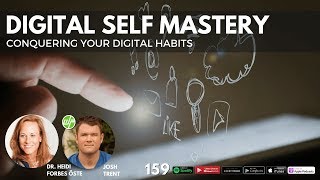
Podcast interview (Wellness Force Radio, episode 159) in which Josh Trent interviews Dr. Heidi Forbes Öste about "digital self mastery": how to form mindful, health-promoting relationships with smartphones, wearables and social technologies. Dr. Öste describes six "technology types" (averse, resistant, cautious, balanced, curious, hoarder, addict), explains using wearables and apps to support healing (her Lyme disease recovery), and offers practical practices (gratitude toward tech, kindness, high-value actions, boundaries).
Questions this video answers
Episode 159
January 14, 2018
tobalanceu.com (2balanceu.com)
Yes — she states she made her book available for free for download.
Chapters
It has become so ingrained into everything that we do, whether we like it or not. Take the time to really explore what the potential of the technologies are. We have the opportunity to really grow together and take care of each other and building interconnectedness and awareness. We can actually spread that well being to far reaching areas that haven't seen it before. Just the awareness of of how we engage with technology and what that relationship is and the fact that it is a relationship and to manage that dynamic just like you would any other relationship.
That was Dr. Heidi Forbes, host and this is episode 159 of Wellness Force Radio. What's up my friend? It's your host, Josh Trent. And welcome back to another episode for your weekly access to global experts in all things wellness as we discover the physical and emotional intelligence we need to live life well. In this podcast, we're growing our emotional intelligence around technology. We're learning and growing from Dr. Heidi Forbes, OST, the author of widely acclaimed books Being at Work and Digital Self Mastery. Conquer your digital habits to boost your relationships and business growth. Heidi has over 20 years experience consulting in the public and private sectors on the strategic use of so many technologies that are out there, including education, technology, international marketing strategy, knowledge management and community building. But what we really talk about today on the show in depth so much and one of her great specialties is humanizing technology. How do we consciously use social tools and train our minds to really rewire them and let go of the bad habits around tech that are plaguing our society, especially our youth. This can make a difference between struggling to make ends meet with no free time at all and the contrast of having a life that plays nicely and is uplifted by the tech. So this episode is for you if you've been curious about how to develop a more conscious and mindful way to use technology in your life and to identify what Dr. Heidi calls your technology type, a personality type that you might have, how it relates to technology, how respecting and being grateful for technology can suddenly change the dynamic of a relationship you have with it, creating more flow and peace. We'll also learn how Heidi used technology to heal herself from deleterious health conditions and so much more. And speaking of health, it's absolutely no surprise that health and vitality come from the way we move, sleep and eat and breathe. So this is your breath break. Take a deep breath. Trust that eating well and getting in all of your micronutrients, especially right now, during the winter or honestly, whenever you're listening to this podcast. It does not have to be so challenging. And for me, over the past few months, my easy way to set up my environment to win and my best choice for getting in my micronutrients and greens into my system is through our show sponsor, Organifi, creators of Organifi green juice. This is actually not a juice. It's an easily transportable powder you can have in a container or packets on the go. But the great thing is it's dairy free, gluten free, soy free and GMO free, 100% organic turmeric trustable slow dried greens powder with turmeric for fighting inflammation as well as chlorella to help support a healthy immune system. If you've been on the market for a new greens powder, this is the one. Hop over to organifishop.com Enter code wellnessforce@ checkout and actually not just on the greens powder, but the entire website over@organifyshop.com you get 2,0 20% off the entire website. Just enter your special code because you're here with the Wellness Force crew. Enter code wellnessforce at checkout over@shoporganifi.com so we know it's become such a habit to take our phones literally everywhere because a lot of us just haven't really developed the routines and the emotional presence around disconnecting so we can really be present in conversations. You know what I mean? You've been out to dinner with somebody you love or friends, you look across the room and people have their heads cranked down with the tech stack, texting, not talking to each other. I've been guilty of this myself. I'm raising my hand. You have been too. I know you have. Well, Heidi has a unique approach to train our minds to have a higher level of emotional intelligence and presence around what she calls digital self mastery, including phones, computers and anything else where technology is weaving its way into our psyche and our life. So sit back if you're a passenger in the car. If you're on a workout, turn up the volume a little bit. This podcast I know you're gonna enjoy as technology is not going anywhere and it's up to us to cultivate a healthy and mindful relationship with it. Let's drop in with Dr. Heidi. What fascinates you the most about technology?
It's incredible potential to connect people and connect things and ideas to really have impact.
I think we're in this interesting time. I know you can relate to this, being someone that's involved in behavioral science and technology. There's just this incredible potential right now. Heidi, for people to become addicted. I was actually driving yesterday. I was listening to a podcast. Shocker. I know. And I was typing on my phone as the car was moving, and I'm like, what am I doing? I know it's unsafe, and I know people right now are listening, and they're like, oh, I've done that too. What actually is going on in our brain there? Can you tell us, like, what that channel is? Why do we do the behaviors that we don't want to do in the car with the phone?
We've gotten so habitual to just sort of pop out the phone and type that we haven't really developed the routines and the habits around sort of that disconnect. It's kind of like when we first started using these seat belts. We're just building an awareness of what's safe and what's not, even though consciously we know that it's not a safe thing. I ride in a car with my mother, and she holds the seatbelt, and I'm like, you got to click it in. It's not going to work. But see, when I got my driver's license, they were just starting to institute the laws where you have to wear one. Right? So to me, it's a natural thing. And I think it's the same thing with texting. For a lot of us, it's this new toy, and we haven't really developed these habits where you connect it. But now the younger generation are coming into cars that automatically have Bluetooth and they automatically have sort of, you know, the carplay, where they can text by, you know, by voice. It's more just we're in this transition period that we're still sort of playing, and we haven't really learned how to develop the right behaviors around it.
Well, maybe it's even the title of your book. I mean, we're in this process, Heidi, of becoming more digitally self mastered, aren't we?
Absolutely.
As a humanity. I mean, there's people that are just kind of even finding what a podcast is at some point, and then there's people like you and I that know what podcasts are, and we've listened to probably hundreds or even thousands at this point. But wherever we are on this kind of technology evolution curve, is there something where we can take an inventory of how much technology literacy we have? Let's talk about your book a little bit. You actually mentioned this section here. Am I digitally averse, resistant, cautious, balanced, curious, hoarder, or addicted? That's a huge question.
Well, and the thing is, you're never statically in one, or we hope that we never are. And obviously, when you're on the outliers and the fully averse and fully addicted, those are really extreme behaviors. But when you're in the middle, there's so much motion in there, especially as new technologies come. And there's different experiences that we have with them that can either cause triggers that help us evolve further, or they make us go back because we've all of a sudden have this trauma experience that we relate to technology, but it may not be the technology itself. But the biggest thing that I really try to work with when I teach people about the digital self is just the awareness of how we engage with technology and what that relationship is and the fact that it is a relationship and to manage that dynamic just like you would any other relationship.
And relationships take work, right? Whether it's, you know, tending to a garden, it needs sunlight and water. Whether it's being in committed relationship, it needs love and attention. So how do we kind of start to begin this relationship, this healthy relationship with technology, specifically when we look at the phone? I think most people have a phone. Nine out of 10 people in any room have a smartphone. Let's talk about that relationship first, if we can.
Yeah. So the smartphone is a funny thing because, you know, I always laugh when people call it a phone because how many people actually use it for telephone nowadays?
It's more like a little pocket computer.
It is really a pocket computer, but, you know, we'll call it the smartphone, whatever, that smart gadget that we carry around with us. But it has become so ingrained into everything that we do, whether we like it or not. You know, it ends up being our. Our plane ticket, our access to things, our access to people, our access to information, our sort of portable brain for when we're not really in check our calendars, et cetera, et cetera. So start putting it into that perspective and really appreciating how it's consolidated and sort of created that continuity for us so we no longer have to carry all of those things anymore as physical objects. It creates this different dynamic. Instead of thinking of it as this burden, it becomes something that you can appreciate and developing a gratitude practice around that, but also recognizing that, okay, you're not going to go to bed with your plane tickets, right? Yeah, there's certain things that you don't need when you go to bed. Maybe you want your book to read or you want to listen to a podcast. You don't necessarily need the whole device. And all of those different things with you. And there are other ways to achieve that without having to have everything there that can be sending notifications and doing all these other things that can trigger neurotransmitters like cortisol, which make us stressed and feel awful and can't sleep, or dopamine that gets us all excited and then we're not able to fall asleep. So it's really about just building an awareness of what those different things are instead of just clumping them all together and just being appreciative of the value that that device creates.
And I think this is a really nuanced conversation as well. It's not like we can just apply some kind of reductionistic model here. We're not going to be able to say, here's the phone and here's the three steps you can do to not fall victim to technology addiction. It doesn't work like that. This is a much more contextualized, a much more deeper, cavernous conversation. You actually had your dissertation on wearables and wellness, how wearables relate to our wellness. Of course, you know, on Wellness Force, Heidi, we talk so much about how technology can empower our wellness. What are a few things in the positive light from your dissertation work, your research that wearables can actually do for us in the wellness regard?
I think it's actually really exciting where the wellness wearables are evolving to. I mean, I did my dissertation research almost three years ago now, and the advances in the development design and the user experience design that's been integrated into the thinking of developing these things so that they fit more seamlessly and they really function better. When I did my study, one of the biggest problems was that the design wasn't quite there for a lot of things, so people didn't get the full benefit and outcome that was promised from the devices. Because you were still thinking about, I have this thing attached to me. I have to remember to go charge it. I have to do this, I have to do that. And people were losing bits and pieces or it was uncomfortable to wear or whatever it was. And I think now we're getting to a place where we can use them much more seamlessly. There's all kinds of great apps that you can use for meditation. There's more devices that consolidate all the data rather than everyone developing their own app and own structure that you have to go to. It's kind of the thing is, you don't want to have to pull people's attention in lots of different directions. If you can just have it Tracking passively and then you get all your information in one place. That's much more effective. And I think we're getting much closer to that space where we can passively track what's going on with our body so that we don't have to constantly be thinking about that.
Yes.
But it's supporting us in our own personal awareness and development. We can check when we need to, or we can send that information to our doctors so that when they ask, how are you doing? You can give them a lot more information so they can treat you better.
This is truly the new evolution of medicine and wellness because we look at passive data collection, Heidi, and we understand that in the future, I believe within 10 years or less, maybe you can attest to this, we are going to have completely 100% remote monitoring of all of our biometrics. We're going to have kind of like the Jetsons medical facility where we don't actually have to go to the physician. We'll have different sensors and devices and just different machine learning algorithms that actually help us understand how we can show up more powerfully in our wellness. One of my favorite chapters in your book, it's called Healing our Relationship with Technology. I want to dive into that with you because there is so many aspects of technology, whether it's an iPad or an Android or an iPhone. People kind of know intuitively that this relationship can be unhealthy at times. Talk a little bit about how you personally, I know you have a good story behind this healing your relationship with technology.
I unfortunately, or fortunately, in a way, I kind of feel like my getting sick was a gift because of what I was able to learn about how to apply the technology. But while I was doing my dissertation research, I ended up getting Lyme disease, which is pretty nasty for any of you who know anything about it. I mean, I was basically couch ridden for quite a long time and I got everything from the brain fog that gets you to the point where you're just not functioning. I mean, I couldn't even watch a 15 minute television show without losing concentration. It was not fun. But what was amazing to me was partially because I was in a somewhat peaceful relationship with technology, and that was not an obstruction for me. I was able to actually identify the technologies that supported me in that process. Everything from tracking my heart rate passively and being able to communicate that with my doctor so that when Lyme disease actually got into my heart, they were able to track it and get me medicated right away, to having notifications to get me up off the couch every 20 minutes so that my, you know, my body didn't get all stale and stiff to just, you know, tracking my access to sunshine and movement. There was all kinds of different factors that came in. And not just on the wellness side, but also using tools like Evernote, being able to basically compartmentalize my brain and keep everything organized in a way that, you know, it basically took up where my capacity left off. And I was able to finish my dissertation in three and a half years. And, you know, half of my cohort graduated a year and a half later. And that was in the middle of having autoimmune syndrome issues.
How did you even get the Lyme in the first place?
Oh, you know, those darn microscopic ticks, they're pretty nasty.
So when you're going through this healing process, it sounds like you're using Evernote, you're using maybe some other trackers. Did I hear you say that you were tracking your sunlight exposure? Why were you doing that?
So before I even contracted the Lyme disease, I have seasonal affective disorder. And when I started studying, doing my PhD work, I was still living in Sweden. I now live in California. There's a reason for that. It was just, you know, it was too much darkness. And, you know, living in Sweden and seasonal affective disorder are not a good combination, basically. And you have very short hours during the day when you have actual sunlight. And so I had an alarm set that made me go outside, whether it was just minimal sunlight with cloud cover, had to get out there and make that happen. And because I wasn't feeling well, it took that much more momentum to make that happen.
This must have been so challenging. I can't even imagine somebody with your experience and the type of level, really the kind of gas pedal that you operate on, having to pull back the speed and really drop in and figure out, how do I heal myself? How do I use technology to do that? Looking back, I mean, is there a moment that you felt like it was at the bottom of the well? How did you kind of transcend that part?
There were many moments. Just have to say, josh. But you know, for me, you know, I think it's like with any kind of trauma, when you hit the bottom, you really realize, and I think, you know, I've seen this in other people who have cancer and other types of things where you become much more protective of your high value actions and your time and your energy. And I think that was the biggest gift coming out of these illnesses, is that I really learned how to manage my Time and my energy and be respectful of rest and the importance of my body taking rest. I would wake up in the morning and do a full assessment of my body. You know, lying with my eyes closed and just, you know, where is my energy today? And, you know, my biggest symptom with my Lyme disease was what I refer to as heavy legs, which is basically, it felt like someone had put cement bags on my legs. I just, you know, just couldn't lift them out of bed. Intellectually, I knew that I could physically move them. They were capable of moving. It just felt, you know, it was like this extreme lethargy. And being able to sort of do that assessment each day sort of helped me really appreciate, okay, today I'm not capable and my body needs rest. On those days when I did feel capable, it was like, okay, go to the Evernote. What's a bunch of things that I can power through right now while I have the energy? Because I don't know how long this energy is going to last.
There was a point probably where you reached the threshold. I think many people do, whether they're healing some type of autoimmune condition or Lyme disease or whatever it is, where they feel almost helpless. In a way. That's how I felt when I was £80 plus Heidi. You know, I was so upset. I didn't know where I wanted to go, but I knew I didn't want to stay where I was. Was there a tool or a couple tools or maybe even. You talked about high value actions, doing an inventory of that that really allowed you to move forward, and how did you actually heal from that process?
Oh, I tell you, Josh, I can't dedicate that one to technology. I think what happened for me, like, with the sad, I was at a seminar in California in the month of January. Coming from Sweden, I was deep in sad, very depressed, almost suicidal, to be honest. And I came to California and it was sunny for a week and I was out hiking every day. And it just made me remember what it felt like to feel good. Where technology came in is I was seeing how much more productive I was by tracking what was going on with my high value actions. I was cranking through my lists and I was looking at my Fitbit and seeing, oh, my God, look how much more active I'm being and how do I feel. And being able to see that in quantitative measures made me call my husband and I said, we're moving to California.
Literally, like in that moment, literally. High value actions. I love this term. I haven't Heard it stated quite like that before. How did you come up with this? What are high value actions?
Well, the term I can't credit for myself. I actually Simone Jansen is a dear friend of mine and an incredible executive coach and she really introduced me to the term, but it just resonated so much with me. And it's really, you know, when you're looking at sort of what things are most important for you to do and you know, in a business, it's what's the most important thing for me today to make money. Because if you're not making money as a business, it's not a business. Right. So in a business context, that's your high value action. But there's so many other parts of our lives that are also important. So really recognizing what are those key things for you to accomplish each day so you feel like you have accomplished something, you have creative value in your life. And those don't have to be big. Sometimes they're very small. Sometimes. You know, when I was at my absolute worst, sometimes it was just, you know, getting a lunch made and sending my kids out the door and being able to reply to two emails. But based on what you have to offer, sort of what your bandwidth or your capacity is completing those things that are going to create the greatest value for you and in your life and your business, those are the things you want to focus on. And the other stuff can go down on the priority list.
If people want to understand high value actions, what kind of inventory should they begin to take around these high value actions, which ones they could be implementing in their own life?
When you think about technology, it's thinking about what are the things that you're wasting a lot of time on. Maybe you need to clear those things out. The clutter. When you're thinking about your business, what are the things that, that are really profitable for you and are actually generating either new business or money for you and put those at the top of the list in terms of frankly friends and people that you're interacting with, who are those people that really nourish you and that you feel like you're giving and taking equally and can just really have a positive relationship where it's, that's a high value friendship. Not necessarily they're going to have the best connections and, but those are the people that actually really you have that quality connection with that feed your soul, essentially focusing on those pieces and the other stuff is still there. I'm not saying throw it all away. I'm just saying that those are the Things that you need to put at the top of your list. And if you're realizing that those people that nourish your soul more than anything else, you're not seeing them. You need to prioritize making time for them. And if it's someone in your business that you feel like, you know, whether it's someone in your mastermind or it's someone that is a mentor or someone that's a client, that you really get great quality and high value of your interactions with them. Prioritize making time with them.
Yeah, I almost feel like for me it would be like health, wealth, relationships. I mean, those are the big three for me. Heidi. Absolutely everyone listening is nodding their heads, right? We all want to have this abundance, don't we, in health, wealth, relationships?
Well, relationships. Make sure you have time to have sex with your spouse. I mean, come on, we're all busy. But those are things that you get caught up in life and business and everything else. And if you don't take care of these things, taking care of your body, putting good things in your body, as we talked about before, those are high value actions. Eating a big pile of sugar, that's not a high value action. In fact, it's really not going to feed your soul or your body. So, you know, being able to really think about those things in terms of what is what you're getting a really good added value from the time and energy you commit to it. You increase the quality of your life and your business.
This is why I was excited to bring you on the show. And when I met you, I knew right away, I was like, okay, we're going to talk to a behavioral scientist, an author, a mom, and somebody who's overcome her own wellness journey through the use of technology. And really the conversation we're having today, Heidi, is awareness. Your whole book around awareness, you know, understanding mastering the digital self. These high value actions you've mentioned, I mean, I can't think of something more important right now in 2018 for people to really take a breath on and just do an inventory. If you're listening right now and if you're feeling kind of inspired by what Heidi's talking about, take the inventory. Is there something that you can let go of in your attention span for people that aren't serving you? I feel like really, that's the number one cause, Heidi, we see so many reports coming out now around the lack of human connection, the lack of people having deep, meaningful relationships because they think that social media is a real relationship. Do you talk about this in your work at all. This contrast of kind of fake connections via social media versus the power of getting our heart and soul filled by real human connection.
You know, I don't directly end my book, but my former life as a consultant prior to my scholarly work was teaching social technologies within organizations. I probably have a little different perspective than a lot of people do about social media because a lot of people say that they're not real connections. For me, because I've been an expat for majority of my life. I've now actually moved back to the States, but I have friends all over the globe and those are people that I consider high value connections that really feed my soul. I love having that constant interaction. I love being able to track them and find out what's going on in their lives and being able to have five, 10 years in between our interactions, our face to face interactions, and being able to sit down with them 10 years later and be like, oh my God, looks like you had so much fun two months ago at such and such a thing. And I love what you've been doing. So it's all a matter of perspective and learning how to enhance our real connections by using social technologies rather than relying on pure social technologies as the basis of our relationship. So for me, I think that there's an incredible value in connecting to sort of the global consciousness or the global interconnectedness of all of us by using social technologies, whether it's a Facebook or whether it's simply email or whatever people are using. I mean, for kids it's Snapchat. You know, when we use these tools to enhance existing relationships rather than relying on them and relying on the network of strangers to be those, I mean, we're talking about high value connections and high value actions there. Do they really feed your soul? Probably not, but they feed your ego, but they don't necessarily feed your soul. So I think, you know, there's a balance there where we can use it to enhance our lives. But there's definitely a tipping point where we need to build boundaries on when that other part becomes obstructive on our real world.
I want to shift. There is a chapter, the digital self, and it's really identifying that you laid out here. Who do we identify with most? There is six different types. Adverse, resistant, cautious balance, curious, hoarder and addict. I know we're not going to have time to go deep into each one, Heidi, but can you explain so we can identify who we are, our relationship with technology? Can you briefly go over these six categories of the Digital.
It was funny. Somebody asked me yesterday and I said, there's no way I can do that quickly. But I did. So I'm prepared for this question. Josh. So really, you know, the digital averse is they're sort of the proclaimed Luddites. They, you know, they think, oh, you know, I can't do technology at all. I'm incapable. But, you know, in today's world, you really cannot participate in society without having some connection to technology. And part of, you know, what we work through is really understanding that the technology is really there. You may not even recognize that how technology has touched everything. And so the resistance is really not necessary, nor the fear. So the averse, they're really, you know, just, I don't want it, don't want anything to do with it. I want to go hide out in the cabin in the woods. Digital resistant. We do see this a lot in business, particularly where people. Right now we've got a lot of traditional businesses that are converting into online businesses. And it's sort of this. I know it's out there, but I really don't want to go there. And I'm not sure how to do it. And there's just a lot of. There's a lot of fear and anxiety around it, and it really limits sort of taking that step. Then you have the digitally cautious, where they're very aware they need to make this move. This is what we see a lot in the online entrepreneur space, where it's sort of like they're dabbling in things, but they're not really putting together a plan because there's still some anxiety there. And they maybe are delegating to someone that's a super nerd, but then they can't communicate. They're not speaking the same language. And so then they feel even more anxiety. So that's more the cautious. They're putting a toe in, but they're a little bit scared. And it's getting in their way of communicating. Digitally balanced is what we all really strive for, is when you're in sort of a flow state with your technology where it's become integrated into your life and to your work, where it just becomes part of how you do things. You don't think about the technology itself. You just think about the actions that are happening and what you're able to achieve and the impact. Then you have the digitally curious that they're excited about it. They're trying a bunch of different technologies, but they maybe haven't learned how to delegate yet. And they're really just testing A bunch of waters. But they're sort of getting a little bit overwhelmed with there's so many things and they're kind of like, wow, I.
Feel like you're talking to me right now. I feel like I'm in the curious segment.
There's a lot of people in the curious. I would say cautious and curious are the biggest that we see in the online entrepreneur space.
It's like I see the value, but I also feel the overwhelm at the same time. Can you relate to this?
Oh, totally. I mean, I balance in between there too. I actually am probably more on the hoarder side because I'm always testing technologies. The digital self hoarder is really. They're always got the latest, the greatest, the best, the next they've got.
These are the people that wait in line for the iPhone X.
Yes. And they've accumulated so much, but they spent all their time learning these new devices and apps. You know, they're not getting enough done. That's really obstructing their ability to get to that high value action. And then you have the digital addict, which has very similar behaviors to any other addictive behavior. So there you're dealing with other behavioral issues besides the technology. It's really sort of that can't put it down. And it's not just like, oh, I'm so busy and I like this dopamine rush. It's more like, you know, you have people that, you know, that are so addicted to technology that they're playing video games through the night and, you know, wearing a diaper so they don't have to leave the screen.
Oh, my God. Is that a thing?
Oh, it is, yeah. These are extreme behaviors. That's why I'm saying you have like the averts.
Yeah.
And the, you know, the addict. Those are on the extreme ends. But then you have. We're gradually moving as new technologies come in. We sort of move along this pendulum, but we're always trying to strive for that place, that ultimate sweet spot of balance.
Do you feel like in the next three years there are going to be more people that fall into the hoarder or the addict category? I mean, what are the forecasts that you're seeing out there in the networks?
I'm hopeful. First of all, we're building better tools and rules around the ethics of use and the design. There's definitely more people that are speaking out about the ethics, even people that are in the design space. And so some of the stuff that was initially built for addiction to really encourage that people are actually thinking more about how do we take care of this. The hoarder is always going to be there. I think it's not so much the technology and how it's developing. I think what we're going to see more of is maybe less on the averse and probably more on the upper end where it's curious and hoarder and probably some cautious too, because you're going to get some backlash where people try too much and then they feel like, oh, I can't do this. This really, it's damaging my business, I'm spending too much time on it. And so they go the opposite direction and they say, okay, I'm going to shut it all up. Well, you can't shut it all off and have a functioning business these days.
You and I right now are talking through technology. We have this amazing connection, this incredible conversation. It is the double edged sword. It really comes down to intentionality, mindfulness and awareness. And this is the work that you delve so deep into from all your years. It's been like almost 30 years of you exploring not just social dynamics, but also how technology interrelates into this. How do you see this changing our humanity for the better? What is the positive aspect of the way technology is going to uplift and empower us in our wellness?
For one thing, it helps us understand the interconnectedness of all of us and how our well being also impacts others. You know, the whole interconnected piece is really important to recognize. And I think that a lot of people, you know, they think about globalization or they think about sort of the web interconnectedness, but really about how our energy is interconnected and how waves of, you know, positive energy and negative energy are being moved with the way people are having conversations, or the way that we're caring for each other or not caring for each other, or the whole wave right now where we see a lot of people working in the mindfulness space and thinking about taking a pause to share a moment of mindfulness and see how that can spread. So there's a lot of different levels to it, Josh. It'd be hard to actually boil it down to one. Like I said, I'm very hopeful and I think that the more we share what we learn and we take the time to really explore what the potential of the technologies are without fear, without resistance, then we have the opportunity to really grow together and take care of each other and building interconnectedness and awareness. We can actually spread that well being to far reaching areas that haven't seen it before.
This is so great because I'm seeing the spectrum too, Heidi, of who this affects, this mindfulness component, all the way down to the 10 year old who is using the screen without blue blocking technology, all the way up to a senior who's in their 90s who can use virtual medicine and concierge medicine to uplift them and to give them a great quality of life in the last 10 years that they're here on this planet. So it's such a huge spectrum. We're kind of like scratching the tip of the tip in this conversation. But we also know what you speak so much about is the mindfulness component. You mentioned it there in How Technology is Uplifting Us. It brings me to an article that I read just last week. I saved it for our episode and it's from inc.com why meditation and mindfulness training is one of the best industries for starting a business in 2017. We're talking about a 1.1 billion with a B industry in the US market. That's up 10% from the year before. So why do you believe that this is growing so drastically here? Is it that we have this kind of disconnection from ourselves? Is technology pushing us towards not being connected? Is that why mindfulness is coming more in?
Well, I think there's two things that are really pushing it. One is organizations are seeing the return on investment of integrating mindfulness into the organizations and that in itself is making it more of an industry. And that's great because I mean, what better than to have more mindfulness and where people are really aware of their, you know, what's going on internally and externally and, you know, you feel better and you end up being more productive. And I mean, there's just so many incredible benefits to it. Yeah, but I think that the, in terms of, you know, why it's grown so fast is because there's been some key corporate players that have really made it their platform to share that, whether it's within the education system or whether it's within organizations. And I think it's having such an incredible impact when you look at what the Search Inside Yourself Leadership Institute that spilled out of Google and where that's spreading for all these global organizations, not just California anymore. And then you have things like Will, which is now rolling out in all kinds of schools where they're doing yoga and meditation in the schools and they're seeing these kids that formerly were not able to focus and had no energy, all of a sudden fully engaging and improving their grades and their fitness. So when you can See those benefits happen so fast. I think it's pretty easy to spread a movement.
I love this because your movement, this movement that you've created around digital self mastery, unpack this for us. I mean, how did this come through you, by the way? Was this from your own journey of you getting healed? Like, why do you believe this is literally coming through you as a human being here on this planet? This message, this mission?
You know, I think it's because I've always been a connector. I've always loved the capability that technology had to connect me to my community and to my world. And I taught social technologies for many, many years. But what I saw in all of that teaching was the behavior behind it, the resistance to the technology. It wasn't the technology itself that was the problem. And it's only becoming better and better at interconnecting us. But if we sit on that resistance or we develop bad behaviors, we never get that full benefit. So to me, it's about connectedness, and it's about sort of continuing to be that connector that I've always been. But for me, now, it's developing, helping people connect to that relationship with technology as if it was a relationship with anyone else.
Heidi, what you're doing is honestly so important right now. I can't think of something as we look at the way that we eat, move and sleep, we talk about this in our physical intelligence, but the way that technology can either help or harm us in our emotional intelligence, intelligence. One of my favorite chapters in your book, Making Peace. You started it by saying something unique here. You said, are you a skeptic to the metaphysical? I ask you read this chapter with an open mind and curiosity. Let's talk about this as we go to the last part of our show here, Making Peace. Why is this chapter so important?
Well, I think actually that's one of the most critical chapters. And it was one of the last chapters that came in, actually, through a conversation with a friend of mine. And he, you know, he works with enlp, lots of various other things. He had this sort of aha moment about conscious technology. And he's like, I got to talk to Heidi about this. And we just had this incredible conversation. But what we realized was, you know, we had the same thoughts about the importance of having a conscious relationship with technology and consciousness of technology. But the way that we communicated it was so different because our communities were so different. He was in sort of the woo woo space, and I was in the space of working with either corporations or big tech. And it was so Fun to pull those two pieces together because really it's the same concept. It's really about recognizing if we develop a gratitude practice and are kind to our technology and respect it, all of a sudden it changes the dynamic of that relationship to one where it becomes in sort of a flow state where you really are at peace with it. And it no longer becomes that obstruction that, you know, that's keeping you from really, you know, having your great impact or doing the things that you want to do. And it gets you closer to that digital self. Balance place. Writing the chapter, it was sort of fun to ping pong back and forth with Jeff about how do we say this in a way that people aren't going to go, whoa, she's going way off in the woo woo side.
Yes.
But that they can relate to and maybe even just absorb a little of it and just so go, hmm, okay, well, that's something to consider.
Yeah.
Like I said, it's all about just being more aware and, you know, plant that seed. And, you know, he's taught me some practices to help people make that progress, but it works for some people. For other people, you really need to just get down to the details and put it into practice. And if they're ready, then you can work on some of the deeper work because everything is interconnected, the interconnection of.
The lighter and the deeper work. Let's give people some action steps here. You know, they're listening to us, they're understanding. Wow. I can be a lot more mindful when it comes to my use of technology, and I don't have to be. So as you talk about adverse or resistant, I can maybe shift more to the balancing or the curious. How do people do this? Nuts and bolts on the ground in their everyday lives?
Dr. Heidi, those three things, I think, are the most key for getting to the first step of awareness progressing. And so it's actually waking up every morning and developing a gratitude practice with your technology. So just look around you and see, you know, what's connected, what things in my life that are influenced by technology have improved the value of my life, you know, improved my quality of life. And it's everything from, you know, the ability to have a soft light or a quiet alarm that wakes you up with your biorhythms or whatever it is, just taking that moment to breathe and focus on appreciation and gratitude for how technology has enhanced our lives.
I don't think there's been one guest, by the way, that's come on the podcast and hasn't mentioned the power of gratitude. I mean, from a psychological. From a psychosomatic perspective, what's going on there Give people the nuts and bolts of that. When we practice gratitude, literally being in gratitude, how does that shift our biology?
Well, it shifts our resistance. So, I mean, everything from the cortisol, the stress hormone that is released, that it's no longer. You're no longer sort of triggered by that first glance at technology. Instead, you go. You know, it's actually replaced by more of a relaxed body stance. You know, it can actually impact whether, you know, if you've got neck pain or headaches. A lot of times, it can actually minimize that. But it's also just getting to a place where you're in a good relationship, just like a relationship with anybody else. When you. You know, when you think about when you were a kid and you're. You're in a fight with someone and. And the teacher pulls you away and say, okay, take five deep breaths and then say, you know, I'm thankful for you for this. All of a sudden, it changes that whole interaction. You think about that one good thing about that person, and all of a sudden, that resistance, that chaos, that thing that's getting in the way, becomes a lot smaller and inconsequential. So when we can create that with technology, it affects our whole bodies and the way that we engage with it. So gratitude is certainly a really big one. And another one is just kindness. And think about kindness like, that's. What do we mean by that? Well, think about how many people walk around with cracked screens or they're complaining that their phone is dead because they've been basically running it on. 20% have these major demands for it, and then they're not taking the time to actually fully turn it off and then turn it back on again so it has a chance to reboot. Just like us. They need to reboot. So being kind to your technology and treating it well and treating it with respect, all of a sudden, it will treat you much better, too. It's actually going to perform better.
What you said right there just blew my mind, because how we treat our technology, I'll never forget. I was in a relationship a few years back, and she, like, threw her iPad on the ground. I'm like, why are you throwing your iPad on the ground? And then I realized that was kind of what she would do late at night. She would swipe late at night. So the very thing, our relationship with technology, we get to treat that with kindness as well. That's such a great point. And I Love where we've gone today. Again, we've kind of scratched the surface here on your book, so we'll link your book in the show notes. This is the last part of the show. I'm going to get to know you a little bit deeper, Heidi, in five to seven questions. Are you ready?
Sure.
As a mom, what's changed for you the most? Considering that, you know, years back you were single and you had a certain way about your health. How has your health practices changed since becoming a mom?
I'm much better about prioritizing my health. I wouldn't say it's just since becoming a mom, but since turning 50. It's sort of this shift of, you know, it's not something that I should feel selfish about, but rather it's selfish not to take care of my health because if I'm not healthy, I can't be there for my family.
When we look at gratitude, you talked about how powerful that is. What are you most grateful for in this point in your life?
For being here. I am just grateful to be alive. I mean, having gone through some pretty nasty autoimmune stuff, I am so grateful to be upright and just be able to be here and have this conversation with you and have the energy to do it. I'm just grateful to be here.
What are a couple pieces of technology that you use on the daily for your health and your wellness?
I can't live without my Apple watch, so I'm the first to admit I'm an Apple person, but I love my Apple watch. It saved my life twice, and I won't go a day without it.
The people that are listening to the show, you know, we always want to explore how do we get more energy? How do we let go of old weight if somebody wants one or both of those things, Are there a couple ways that we can do that? Through technology. What comes up for you when you think of more energy and letting go of old weight through the use of technology?
You don't necessarily even need to get new technology for it. I think it's more using what's in your hands. So whether you have a fitness tracker or whether you just use the tracker on your phone, because if you're carrying your phone with you everywhere you go, it's tracking your steps and your movement. So take the time to learn those apps that are on your phone or use a fitness device and really just make sure you're moving. I think that sitting is a terrible disease that most of us are suffering from. We spend way too much time sitting so just getting up and moving and, you know, holding ourselves accountable for that by using some kind of a device to make sure that we're hitting our marks.
We look at the way that old school policies really, you know, before virtual concierge medicine or wearables even existed, these policies around HIPAA and around health information have existed for decades. If you were in control and somebody hired you for the government wing of health and digital health, what's the first policy you might put in place or change that would allow technology to help people in a greater regard?
I think it would be allowing people to have more control over their own health data without so much paperwork to be able to say, I'm willing to share my data for the greater good so that we can understand what's going on on a meta scale, but also so that my doctors can serve me better. Because right now there's so many loops that you have to go through, hoops and loops to get through. You know, for research or for doctors, you know, it's hard for the patient to actually get the best service.
When you look at technology maybe making you laugh or empowering your life in some way, have you come to a realization that technology can make people have more joy in their lives? And if so, what brings you the most joy around technology?
The connectedness to people that are far away. Half of my family's in Sweden. And then, you know, my side of the family, they're mostly on the east coast. I have a dad that's living in a nursing home that pretty much is a shut in. He never leaves his room. And yet we FaceTime, you know, I mean, I'm able to talk to my husband, he's in Sweden for three weeks and we FaceTime and chat while he's having dinner. And just that gift of being able to have that closeness without the obstruction of, oh my God, it's an expensive phone call and I have to call and it's, you know, I'm not gonna see their face. It's a beautiful thing to be able to have that intimate connection over a long distance, you know, regardless time and.
Space, which is kind of funny. It's exactly what you and I are doing right now. I feel like I know you so much more even than when I met you in person. And here we are talking, you know, half the way across the world. So, Dr. Heidi, this has been such a fun conversation. We've explored so many nuances. Is there anything you think we missed when we look at this digital self mastery?
Oh, well, there's so Much more. And I gotta tell you, Josh, so I just made my book available for free for download if people are interested for me, I want as many people as possible to read it and learn more about it because I think that this is important. I think it's really, it's a valuable tool to learn, to build that awareness, you know, just understanding what your digital self is, being aware of, you know, where you sit in that. And try to move closer towards balance by just taking time to take care of your relationship with technology, because it's not going away and it's going to continue evolving. So if we don't evolve with it, we get left behind, and nobody wants to be left behind.
Whether you're listening to this podcast today, live when it comes out, or six months from now, it's timeless. The things we've explored today with Dr. Heidi are not going to go away. And in fact, as we see the technology curve go up and we look at the work of Ray Kurzweil and, and everyone else in the space of exponential tech, this conversation is something you can listen to again and again. So just such a fun time with you today. Our last question is for wellness. And at this point in your life, with everything that you've created and will continue to create. Dr. Heidi, what is your definition of wellness? How would you personally define wellness?
Balance. A balance between yourself, the world and how you engage with it and how you engage with your body and everyone beyond it. I mean, I'm a systems thinker, so it's really not about just taking care of me. If I can take care of me, I can take care of everyone exponentially in some little way, including the dog.
I love how your puppies like agreeing with you. Yes, you are correct. Well, thank you so much for coming on the show. Where can people learn more about you if they're curious more about digital self mastery? We will link your free book, which is super generous, by the way, in the show notes. But if people want to learn more specifically about you, your work, where can they go?
They can go to tobalanceu.com and that's the number two. Balance. B, A, L, A, N, C, E, the letter u.com.
Dr. Heidi, thank you so much for blessing us with your expertise, intelligence, and honestly, just your authenticity. You know, sharing so openly about what you've gone through and all the things you're creating for the future. So I'm looking forward to seeing you at ces, by the way.
Yes, that'll be fun.
Thanks for coming on the show.
Thank you.
Hey, my friend. Thank you for hanging out and growing with me on today's show. Remember to hit subscribe Share this podcast with somebody you care about that you think gets to hear this message. Support the show by leaving a five star review for the podcast right now simply by tapping on your show artwork. On your iPhone, click that purple link that says Review this Podcast. It helps the show reach more conscious and smart people like you and your voice will attract more world class guests that want to come on the show. So let them hear your voice. For all the downloads, videos, links and free resources mentioned on the episode, go to wellnessforce.com radio. And while you're at my house on the web, join us in the Wellness Force Community newsletter on that page and I'll send you four free guides around staying healthy with your eating, moving and sleeping while you travel. Join a group of people like you over at the World Wellness Force Community Facebook page. This is where we talk about the things that really matter. We share our wins, inspirations, struggles and a lot more. So join us. Tap on the show artwork on your phone and hit that purple link that says Join the Facebook Group and I will welcome you at the door. Okay, now you get to go out into your world and create impact for the people that you care about. So until I see you again real soon, I'm wishing you love and wellness. Sa.
More from Josh






Your child's future start before pregnancy... and even before conception! #podcast

MD Reveals: Your Healing Creates Your Child's Reality (The Souls Coming In Need Strong Bodies)



