161 Ryan Michler: What's Masculinity In The Modern World?
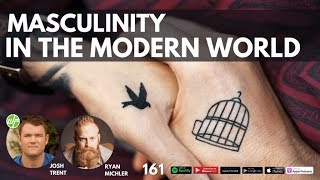
Podcast interview (Wellness Force Radio, episode 161) featuring Josh Trent and guest Ryan Michler (founder of Order of Man). Michler describes his background (National Guard, Iraq deployment, family), defines masculinity as protect, provide, preside (drawn from LDS Family Proclamation), argues society dismisses masculinity rather than attacking it, and promotes reclaiming manliness by harnessing masculine virtues (strength, grit, discipline) in service of family and community. He recounts near-divorce and recovery via taking responsibility, improving health, and developing leadership; outlines eight skill sets men should master (relationships, intellect, leadership, manly know-how, wealth, fitness, self-mastery, style); and gives practical advice for men and women about polarity, boundaries, and application of ideas.
Questions this video answers
March 2015.
About 18 months total with training and approximately one year in Iraq.
Episode 161.
Chapters
Throughout the history of the ages and thousands of years that men have been on this planet, our job has always been to protect, provide and preside. So a man's responsibility and a man's obligation is those three things. One of the things that you said is you said the attack on masculinity. I believe it's more of a complete dismissal. Society in general seems to put men aside until they need some sort of masculine response. But then when times are relatively peaceful, calm, safe, comfortable, we have things like, quote unquote, toxic masculinity. My goal, my battle, if you will, is to reclaim what it means to be a man in a healthy way that is productive for ourselves, our families and our communities.
That's Ryan Mickler, and this is episode 161 of Wellness Force Radio. What's up, my friend? It's your host, Josh Trent. And welcome back to another episode for your weekly access to global experts in all things wellness as we discover the physical and emotional intelligence we need to live life well. In this podcast we're talking with Ryan Mikler, an Iraqi combat veteran and financial advisor, the founder of the Order of Man blog and podcast dedicated to helping men develop eight key areas of their lives. Relationships, intellect, leadership, manly know how, wealth, fitness, self mastery and style. Now, Ryan is well known for having a strong personality and we need people like Ryan in this world right now. One of my favorite quotes from Paul Newman, if you don't have any enemies, then you don't have any character. That's something that I think about when, when I reflect on this conversation with Ryan, who is a man, has accomplished an inordinate amount of success while being a busy father, professional and husband, which I know you can relate if you're a parent, how challenging this can be, the upkeep and the refreshing of the polarity, the spark between a man and a woman in a committed relationship. Now we're talking about this with Ryan in depth today where he gives the conscious men out there a shake and a wake up call that's much needed in 2018 as we see the examples of toxic masculinity continue in our politics and across social media, where we now live in a world where somehow it's now okay to if you have a big enough social media following, you have permission to do anything you want, including be a poor example to other men. Well, Ryan is the antidote for this poison. And the order of man, which is something I've been following closely, will not disappoint both the women and the men. Listening to the show today because this year is the year that many social scientists and behavioral psychologists agree we can have the greatest impact and in our rising of the collective consciousness in combination with technology. But we can't be more conscious unless we're breathing. So this is your breath break, brought to you by our show sponsor, Organifi, creators of Organifi Green Juice. We partnered with Organifi last year and have been getting some incredible feedback about just how easy it is to set up our environment to win at home and in work from the people in the wellness forest community. So they've been getting in their greens and their adaptogens, more importantly, ashwagandha and turmeric with the single serve juice packets. I've been loving the packets. I've also been loving not to have to use my juicer, which was getting really frickin old and cumbersome. So hop over to Organifyshop.com, enter code Wellnessforce at checkout and get 2,0 20% off the green juice and everything else on the site, which is a really great chunk of savings for you. Make sure you enter code WellnessForce for 20% off at checkout. Over@organifyshop.com now we're getting right into this conversation with Ryan and learn about the eight skill sets that Ryan believes every man gets to master. And not just because they should master them, but because he believes it allows them to show up in their relationships with the feminine and hold that kind of powerful space that's needed in 2018. As you guys know and gals know, this has been a culmination of Women's empowerment in 2018, which I see as much needed as the woman's voice becomes louder. I believe it's also important for us as men who are conscious to. To stake a claim to owning our biology and physiology, to be able to hold that space for women that they deserve and express our unique genetics and epigenetics. For whatever reason, we're put on this rock in the middle of outer space, which we're all still trying to figure.
It out, aren't we?
But I believe as a true masculine man in this world, we get to show up and have fun and be in touch with that masculinity inside of ourselves. And I believe as a true masculine man in this world, the emotional intelligence, that journey we're taking right now, we need each other. Men need other men and women need women and women need men. And the more we can realize that we grow together, we're going to be able to have more Fun and care deeper about each other. Let's drop in with Ryan Mickler. Ryan, I'm so stoked for this podcast, man. You know, looking at your work and just. I'm so glad we got to connect in Tahoe, because I didn't really know too much about you. I had heard of Brett McKay, and I had listened to a few of his episodes maybe two or three years ago, but I've just been kind of out of touch with the men's community. Even though I do a lot of men'. Men's work, I follow the work of David Dieta. I've been doing men's work for, gosh, six years. So I'm in this band of brothers. We meet twice a month. And just the way that you're impacting this planet, man, your journey. I am so excited to talk about some of these things. You started the Order of man, I think, three years ago, correct?
Yeah, it was March of 2015, so not quite three years, but pretty close.
And in this modern age, helping men master relationships, health, and wealth, I can't think of a more pivotal time where, you know, really, I think Ryan, masculinity, some people believe it to be under attack right now. Some people also think that we have this MeToo. There's some ambiguity around why that's even occurring. So just super stoked to talk with you about this stuff today. Now, people don't know you because a lot of our audience is female, so we're talking to the men and the women today. But for people that don't know you, I mean, who is Ryan? In a couple sentences.
Yeah. Well, anytime anybody asks me that, I always say I'm a father and husband first. That's the priority. So everything else that I do in my life is I try to revolve it around that. So, again, at the end of the day, yeah, father, husband. But I also own Order of Man, which is, like you said, a website and a movement dedicated to helping men step up in their lives more fully. So that is the. The very quick version of who I am, what I do.
Well, that's the tip of the tip of the tip, my friend, because you actually have been on a friend of mine show, a guy that I hold in such high regard, a really conscious man. And that's the front row factor with John. And on his show, you actually said, I have a moral obligation to share what I've learned so that men don't experience the same things that I've gone through. You served in Iraq. You have four children. You let go of £50. I mean, what it means to be a conscious man. You've gone through the thresholds, my friend. You saved your marriage. We're going to talk about all these things, but take us back to the National Guard, the beginning of your journey. You know, before you were selling in California, before you had really these responsibilities in serving this community. I mean, take us to the very beginning, man, when you felt the call to join the Guard.
When I was a senior in high school, frankly, I just didn't have a plan. I didn't have any idea what I was going to do. So me and two of my high school buddies ended up joining the National Guard as a way to, yeah, pay for some schooling, but then, of course, display and show the patriotism that we had as well. We were raised and grew up with the belief in American values, and I felt like there was a great opportunity to serve that way. So I did. I joined the National Guard. Spent a lot of time really kind of wandering around and not knowing what to do. I got married. Let's see, it was about five months before my National Guard unit actually got activated to go to Iraq. So my wife and I were in Southern California. We were working down there, and I get a call from one of my sergeants, and he says, hey, man, we've been activated. This was the day before Thanksgiving. So my wife's already at home in Southern Utah, which is where her family's from. I get there for Thanksgiving, and her dad says, you know, what's wrong with you, Ryan? Because obviously there was something visibly wrong with me. And he's like, did your National Guard unit get activated or something? And I'm like. And this was. Everybody was there at this point because this was at the Thanksgiving dinner table. And I'm like, as a matter of fact, yes.
Wow. Is this the first time your wife was learning about it, too?
First time my wife learned about it. First time everybody learned about it, because he called me out, he didn't know, and he felt horrible for bringing it up that way. It was just one of those things. So, yeah, I actually went to Iraq. I was gone for a total of 18 months with some training, and then a year in Iraq.
Isn't the National Guard supposed to be part time?
Traditionally, yes, but more and more, especially with all of the wars and battles and on different fronts that we're fighting, whether it's Afghanistan or Iraq.
Yeah.
More and more National Guard unit gets activated.
Did you know you'd be gone for that long?
When I signed up, my recruiter was actually really good. I know there's a lot of recruiters that, you know, you hear these guys of horror stories. When I went to basic training, there was actually a guy who we were doing a briefing in basic training, so we were already there in Fort Seal, Oklahoma. And he just starts bawling his eyes out and everybody's like, what's going on? This was like the first day. Well, it turns out his recruiter had told him that he was joining the Army Reserves, but he had in fact joined the regular Army. So. Yeah, so, I mean, there's. There's horror stories. My recruiter was really good. He was a moral guy, told the truth. And he said, look, traditionally we don't get activated. There are National Guard units that have, and there's a likelihood that you will. So he didn't hide that from us. So I knew that there was a likelihood that we would. In fact, we got activated maybe two years or so earlier.
Yeah.
And a week before we were supposed to deploy to Iraq, they ended up saying, hey, you're not, you're not going to Iraq anymore. You're going to go to Fort Lewis, which is in Washington state, and you're going to train ROTC cadets. So the writing was on the wall. It just hadn't happened yet.
The part time aspect of this, my grandpa was one of the first Italian Americans to be a brigadier general in the Marine Corps. So I see how, you know, being of service to the country, I think people forget how serious of a task this is and what kind of loss that people go through. You know, in Spartan Race, I got to interview Jonathan and Earl from Operation Enduring Warrior. I don't know if you got the chance to meet these guys, Ryan.
I didn't meet those guys. Is that I'm not even sure what about their movement.
Yeah. So just a way that we're really honoring the people who have been, you know, given the. The deepest sacrifice they can, either losing a limb or losing a loved one. Just going through these thresholds. And when I look at what you've gone through, just. It blows me away, man. Seeing the narrative that you're leading now with your podcast, with your community, really speaking to conscious men, kind of redefining, Ryan, what it really means to be a man in this modern, sometimes honestly, crazy, disconnected world. There is a massive story between those two. I'd love for you to fill in the gaps there. So, you know, you were selling in California, you went to the National Guard. Now you're leading, you know, hundreds of thousands of people every month. Like, what's the middle of that story, man? There's a lot of meat there.
Well, I do want to say one thing. You said redefining masculinity. And I don't look at as much as redefining as much as I do reclaiming. Because I think there was a time in my history even, and growing up, where men were honorable, they were noble, they were very involved in their families, they were very involved in the communities. And they had some of these moral obligations I'm talking about. And they were strong mentally, physically, emotionally strong, resilient, gritty, tough men. Yeah. And I know that we have those. I mean, I got to spend time with warriors, and I've had conversations with some of the toughest men on the planet. But it seems like the growing trend is moving away from that. Society is specifically with men, is more and more feminine. It seems that society in general is trying to strip away. One of the things that you said is you said the attack on masculinity. You said that, I think before we hit record. Yeah. And I just had a really interesting conversation with a gentleman by the name of John Eldredge. He wrote a book called Wild at Heart. And I asked him that same question. I said, do you believe there's attack on masculinity? And he said, I don't think it's an attack. And this was a really interesting perspective. He said, I believe it's more of a complete dismissal of masculinity. And I thought that was a really, really good distinction. And frankly, men are dismissed. I'm in the process of writing a book, and one of the analogies I made in the book is that men are, in a way, like the ax that we put on the wall in the case that says break here in case of emergency. That's what men are like. Everybody. And I don't say everybody. Society in general seems to put men aside until they need some sort of masculine response. For example, you look at Hurricane Harvey in Texas. Nobody complained about masculinity. You have thousands of men pouring into Texas doing what men do, donating their time, service, energy, resources, and saving lives. Nobody complained about masculinity. But then when times are relatively peaceful, calm, safe, comfortable, we have things like, quote, unquote, toxic masculinity. So it's kind of an interesting perspective. And my goal, my battle, if you will, is to reclaim what it means to be a man in a healthy way that is productive for ourselves, our families and our communities.
Reclaim is a great way to describe it then. So let's be honest. How do you define it? How do you define masculinity in 2017, 2018 in this current world?
You know, it's the same as it's always been. If you look at. Throughout the history of the ages and thousands of years that men have been on this planet, our job has always been to protect, provide and preside. So a man's responsibility and a man's obligation is those three things. And we can get more specific about that. And the way that we've gone about that, of course, has changed over thousands of years and the modern times in which we live. But we still have that obligation to protect, provide and preside.
Yeah, the three powerful peas, man. I can't say. I mean, those are the best. And I'm curious about this too, because when you created these P's, I don't know if they came to you, if you were, you know, endowed, these gifts. Did that come to you in like a fortnight? I mean, what happened there? How did you formulate these three P's?
It's really interesting. So I don't talk a whole lot about this, but I am spiritual, I believe in Christ. And that's a conversation for another day. But I'm a member of the LDS Church, Mormon, and there's a document that came out called the Family A Proclamation of the World. And they talk about the importance of the family unit, they talk about the importance of men in the family and of course, women in the family as well. And they define the roles of men and women in society and within the family unit. And they actually use those three words. So that is not a new concept. That is not something I've created. I've just picked it up and ran with it and interpreted the way that I feel it's meant to be interpreted.
Well, it's an interesting contrast though, because when you grew up, those three P's did not exist. I mean, your dad left early. I think drugs were in the family. Like you didn't have that shining example of a solid man to look forward to seeing and to have that home base be safe and secured. How did you formulate those beliefs throughout your journey, knowing that in the beginning it just wasn't like that?
Yeah, I mean, you're right. My dad was out of the picture by the time I was three years old. I had two other stepfathers come into my life. One was an alcoholic, not abusive, but not present. The other one was very talented, very gifted, very charismatic, very successful in business and taught me a lot of wonderful things in Fact, a lot of the lessons that he taught me still apply today. And I use these things every single day. But at the end of the day, he was verbally and emotionally abusive. And he used his tools and gifts and talents to push other people down rather than lift people up. And so I never really had a great example of what it meant to be a man. Fortunately, my mom recognized this and she got me involved in sports and Boy Scouts and then my time in the military service where I was able to be surrounded by men of honor, men of integrity, strong men. And I realized and understood, okay, this is how a man behaves. This is how men engage with other men. It's been said that masculinity is bestowed, that you don't get to just be masculine. That is bestowed upon you. It's bestowed upon you as a, from a father or a father like figure or a man in the community. It's always been this way. And fortunately, I have been in the situation where that masculinity has been bestowed upon me through sports and my time on the battlefield. So, yeah, I mean, you don't have to have a dad, right? You don't have to have a background that's, that's just perfect. Nobody does. Everybody's got their story. But there's ways to develop and grow beyond what hand you were dealt.
Frankly, I'm thinking about Ricky Williams in one of the best 30 for 30 documentaries I've ever seen from ESPN, and his dad abused him. And reporter asked him, ricky, do you ever just hold transgression? Do you ever blame your parents for how your life turned out? And he said, if I blame my parents for how my life turned out, then I take any power of me to change away and put it in their hands.
So true. I mean, that's such a poignant statement. And what's really interesting is I go down this journey of writing this book, and that's basically the subject of the book, is that we give away all of our power when we craft and fabricate excuses, legitimate or not, excuses as to why we do or don't have what we want in our lives. When we do that, we strip away any power that we actually had to do anything about it in the first place.
Man, let's talk about power then. You obviously teach men how to be powerful in this age, age where, let's be real, their power is kind of almost a threat. It's a threat to this new narrative that we see across our culture, the MeToo. I believe that there is, let's be even Deeper here, there is attention that needs to be put on the hashtag MeToo, because it's a complete tragedy that women are being abused or even disrespected in any way in that regard. But then we also see people kind of, Ryan, bathing in the negativity and just bringing it up and over and over again. What do we do with the hashtag MeToo? Do you feel like this is something that men. We can rise to? How do men rise to hashtag MeToo?
So there's a really interesting perspective between the difference in masculinity and manliness. I was talking with Brett McKay, who you mentioned earlier and have had him on the podcast a couple of times now, and he brought up this really interesting distinction. And he'll tell you it wasn't his idea either. You know, we. We always gain new ideas from other people, Right? But what he said is, he said that the distinction between masculinity and manliness is that masculinity is something that most of us as men are born with. And you think about the masculine virtues. Strength, grit, determination, violence, maybe even aggression, competitiveness, all of these things that we think, generally, we think masculine type virtues, they're not bad in and of themselves, but without them being checked and harnessed, they create some real problems. Sexual abuse. You look at violent crime, drug abuse, addiction, pornography. You look at the wars and atrocities that have been committed across the planet through thousands of years, and quite honestly, most of them have been perpetuated by men because of these masculine virtues. Now, that's not an opportunity to beat up men. But what it is an opportunity is to recognize that there's gotta be some sort of bridge between taking these virtues that we inherently possess and harnessing them in a way that produces positive outcomes. For example, businesses, the application and sharing of knowledge, bestowing manliness and masculinity onto our children, stepping up into the community, serving as leaders. All of these things are very, very important and require masculine virtues harnessed in a quote, unquote manly way. And that's the distinction.
So protect, provide, preside. I'm thinking about someone who I've mentioned on the show a lot, Ryan, I'm sure you've heard of him, David Dita. And he has, you know, this incredible book where he talks about the way of the superior man. Not just a man, but the superior man leads with his heart, but he also leads with his sword. That knowing to apply love and just hold fast or to attack and to show that masculine side, this balance between holding fast and coming from a Place of love or attacking and using the sword? Do you think that's changed? More now than ever. How does that relate to the time we're in now? The ability for men to be both spiritual but also still powerful?
Well, I'll give you an example of this. A couple of days ago, my son comes home from school and he says, hey, Dad, I have something to share with you. And I try to be pretty open, which is hopefully why he's willing to share with me. And he said, dad, I got into a fight. I pushed a kid down at school. And I said, well, why'd you do that? And he said, well, I was protecting one of my friends who he was picking on. So I pushed him down and I got in his face and told him not to do it again. And then he said a couple things and then left. And at the time, I congratulated him. I said, good job, son. You made the right decision. A hard decision and one that not everybody's gonna like, but the right decision because you stood up for somebody. Now, what's really interesting about this is one might look at it and think, well, this is violence. This is aggression. These are these masculine virtues, and this is bad. And society would probably say that. But on the other hand, it's also love, right? It's support, it's protection. It's leading with honor and integrity and sticking up for somebody who was incapable of sticking up for himself. So the display of aggression and violence towards another individual, in my son's case, a kid at school, was actually simultaneously a display of love for this other individual. This is the difference. If he's just getting into fights and he's being a bully, he's being masculine. It's not harnessed. But if he's using his masculine energy to produce positive outcomes, in this case, I consider it a positive outcome. He's being manly. He's leading with both love and using his masculine virtues to display that.
Man, that is an awesome example. Thank you for sharing that. And I'm thinking about this phrase, toxic masculinity. We'll actually link something in the show notes today. Abc. Toxic masculinity. Will the war on men backfire? And there's a big, huge picture of President Trump. I want to be really, you know, honest with everyone listening here. We have toxic masculinity as the leader of our free world. So, of course, I think this is probably why we're seeing this ripple, Ryan, of masculinity being seen in a negative light. We have somebody who's leading our country that is probably the worst example of what masculinity can be. What are your thoughts on that?
I see both sides. I mean, you look at President Trump, and I see ingenuity, I see ambition, I see drive, I see determination. I see a lot of positive characteristics. And of course, I see some negative characteristics as well. I mean, all of us possess the ability to do great and the ability to do wrong. And when I'm talking about masculinity, I'm talking about taking the things that are wonderful and great about mental health and all the power that we possess and then harnessing that in a way to serve ourselves, to serve our families, to serve our communities. I just had some boys in the community come over and I taught them the basics of lifting weights all the way up to the President of the United States. I mean, we need men who understand what it means to be a strong man, but doing it in a way that lifts up the people that he's serving, in this case, the country or your community or whatever it may be.
And as men, also as women, but especially as men, I mean, we have a purpose on this planet. There are physiological and psychological differences between men and women. And I think this, Ryan, this one part, our biology and our mind, how those two are so different. We get to respect both of these things. The war on men, the war on women. In my opinion, it's all bullshit. The only reason these wars exist is because they're perpetuated by people's pain bodies.
Yeah. And you know what's really interesting is we talk about this attack or this war on masculinity, which you alluded to earlier from this article. It's really just an attack on gender itself. Right. I mean, you think about the whole notion of making men more feminine, and then what are we doing to women? We're asking them to be more masculine. Yep. So it's. It's this notion of let's all of us be the same, and therefore, you know, nobody feels left out. But the reality is that men aren't more important than women, and women aren't more important than men. We're different. We possess different gifts and talents and abilities, generally speaking. So why, instead of making us the same, why don't we just play to our strengths and who we are and come together in a union, which, for example, marriage and be better because of it?
A lot of people that might look at LDS or Christianity or Catholicism or anyone that's involved with these sectors, and I just want to play devil's advocate here, no pun intended, but people might think, oh, well, I can't trust Ryan because he has this specific type of religion he believes in. Would you define yourself as spiritual or religious?
I mean, I definitely would. I believe in God. I believe that there's a purpose for us being here. I believe that this opportunity in life is an opportunity to learn and grow and expand. And hopefully, at the end of all that is said and done, we return to live with our heavenly Father. That's what I believe. But here's the other thing I believe. I believe there's truth everywhere. I believe that just because I may hear truth within my church organization doesn't mean that I can't hear a truth somewhere else. And so to anybody who says, well, I can't trust Ryan because X, Y, and Z, I would just probably challenge that a little bit and say, what can you learn that is true? Take that. And if it's not true or you don't believe it to be true, leave it. I can't find any one individual that I agree with 100%, but that doesn't mean I can't learn something from that individual.
I love the way you put that, too, because really, it comes down to finding one's unique truth. Okay, so we're having this incredible discussion, Ryan, about the definition of masculinity in this world, how we're seeing so many changes to the way that men are perceived and the way that women are perceived as well. You brought up that women are constantly in their masculine. You know, they're running around, they're doing, they're doing. And a lot of what I felt from women in my close circles here in San Diego, it's like they really have lost that art of just in the being. I think what I love and respect most about women is they remind me that it's okay to be. I don't have to constantly do all the time. And that arc of polarity that Dita talks about, I'm curious if you could describe this arc of polarity, you know, the attraction between men and women. What can men do, conscious men do to be most attractive to women? What are the characters and kind of attributes they have?
I mean, it's a very simple answer. Do manly things. Women are attracted to men. Who are men? And what do I mean by manly things? I mean those who are ambitious, those who display harnessed aggression, those who take care of their bodies and are strong, those who possess the ability and desire to learn the skills that help them become better protectors, whether that's martial arts or firearms training. Or situational awareness training. And all of these things are what anybody, I think would generally consider masculine traits. It's really funny, anytime I say that, people say, well, it doesn't take that to be a man. Yeah, it doesn't technically. But women are attracted to men who are better able to protect, provide, and preside. So if you want to be attractive, do manly things, women are attracted to manly things and vice versa. I'm attracted to nurturing. I'm attracted to caring. I'm attracted to, like you said, just being and empathy and beauty. I'm attracted to all of those things. And those are generally feminine characteristics.
And the pendulum can swing, right? I mean, sometimes a woman can be in her masculine, and that's normal, but it's when that pendulum gets stuck, Ryan, even for men or women, it's like there's a habitual way of being where men can kind of become soft over time and the wife can start controlling the entire family. And the next thing you know, the man's depressed and he's just really kind of left what it is. And to be what you call as the provider, the person who presides over the family. So if people haven't heard of this concept, really, presiding, it's kind of an old school term, right? I think that's left over from maybe like the ages where there was castles and whatnot. I haven't heard that word. Maybe.
I don't know. But I do get.
How would you define the word preside?
It's leading. It's leading your domain, whatever your domain is. So presiding within your family, and you're the four walls of your home. It's leading in your business, it's leading in your community. I mean, you're leading this podcast, for example, and I can tell that you've put a lot of research and time and effort into this. And you're being a leader. You're presiding. You're leading over this podcast, you're leading over the people that are tuning into this show. These are all ways that we preside over our specific domains in life.
I think about a king on a big chair with a crown. That's really someone who's presiding. But look, if we want a queen, a lot of my friends are talking here, people that have their own podcasts, Ryan. People that are maybe leaders in their own right. They don't have their queen yet. I don't have my queen yet either. How did you attract your queen? Were you being a king when you attracted her?
No, frankly speaking, I mean, that's the Truth, I was young, I was immature and so was she. I mean, she was young and immature as well. There was something that she saw in me, there was something that I saw in her. I don't know if it's potential or whatever it may be. And for a long time I lost my way. And because I lost my way, I was going to go back to a point you made earlier about the masculine and the feminine energy. What ended up happening in my marriage is I ended up giving away a lot of my power to her because I relied upon her for everything, for support emotionally, physically, mentally, to lift me up as I was going through some difficult times, transitioning out of the military and growing the business. And what ended up happening in a way is I was asking her to be the woman, the feminine energy, and also be the man, the masculine energy. And so what happened is that through time and years of this, I eventually depleted all of her energy. Not just her masculine, but her feminine energy as well. And a lot of guys run into this. And you know, you've run into this when you hear things like this. My wife says she's no longer attracted to me. Me. My wife says there's no we've fallen out of love or there's no spark left. These are all things that to me signal that she's out of energy. You asked her to provide the feminine and yours the masculine. And in order to be successful in a relationship, you've got to bring the masculine to the table. You've got to bring something to the table because if you're not bringing something to the relationship, there's no woman or man who's ever going to engage in the relationship with you. And even if they do, it's only going to be short lived.
You guys almost got divorced. You were separated. When you came back from Iraq, your business nearly kind of killed the relationship. What were you doing then? How did you correct that?
For me, it was learning to stand on my own two feet. That separation was the most liberating and transformative time in my life. It was the darkest time of my life. Anybody who's been through a separation or a divorce actually knows what that feels like. It's. It's horrible. And I was down and I was depressed. And I came to this conclusion somewhere during our separation that, you know, this marriage might be over. And as difficult as a notion that was to wrestle with, it was actually very liberating for me because for the first time I said, you know what, if this is relationship is actually over, then I'm Just going to go to work on myself, because up to that point, I was trying to win her back. I was trying to help her, I was trying to manipulate her, I was trying to get her to do things so that she would come back to me. And what was really fascinating is as I went to work on myself, regardless of her approval or reaction to what I was doing, I was going to work on myself. And when I did that, it was like flipping a switch on the wall. And she responded that positively because she saw that, oh, Ryan does have something to bring to this relationship. I don't need to do it all.
It is the memory I'm having right now when you say this. I did the 20x with Mark Devine. I don't know if you're familiar with that event. And I'd finished the 20X. And there was this one moment where Mark was talking to us in the group and he was like, we have these things that happen for us in life if we can just see them as the universe or God or whatever it is, just forging us, turning us into a tool so that we can be stronger for the next thing that's going to happen to us. But that mindset, Ryan, where we have this ancient brain, we're going through, in your case, you know, almost losing someone you deeply love, or maybe another person's listening to the show and they've lost someone they love. That decision point, that inflection point when a tragedy happens, when drama is occurring, when we're under that control of the ancient brain, how do we tap back into what's true, that love, that, that real edge of masculinity?
Well, I think we alluded to it earlier. You talked about power, for example, and power comes from taking control of the one thing that you can control, which is yourself. So I think you have a decision to make. If you're running across this scenario or any number of scenarios that might happen in your life that gets you down or beat you up, you can decide to give away your power and say that it's because of President Trump or the economy or my boss or my employer or my girlfriend or my wife or this or that or my upbringing or whatever, and you give away all the power and you can keep living the way that you're currently living, and that's just what's going to happen. That's the reality. Or you can say, you know what? Life happens, some bad things happen, some things that happened outside of my control, that's over. Wash my hands of that. Now I'm Going to take power by focusing on the one thing that I actually have control over, which is my thoughts, my beliefs, and therefore my actions. So are you going to be a powerful man and take ownership, or are you going to be a weak man and pawn off every responsibility and your burden to somebody else?
And I think we learn so much of that from the men who brought us into this world. You know, my dad did the absolute best he could, and I've talked about this on the show before, but in my opinion, I don't really think he ever wanted to truly be a dad. Especially when I think back on some of the conversations my mom and I have had. And I just feel like there are men that are just incredible fathers, and then there are men, you know, like yourself, that are taking it to that next level. Would you say that Order of Man was built for men who are kind of learning what it's like to be a father and to be a man, or is it for men who really want to take it to the next level?
You know, that's a good question. And it's probably evolved over the past two and a half years, which I recognize isn't a long time. But essentially, when I started this business, I created something for me, and what it was is an opportunity for me to learn how to be a better man in general. I was lost. I was floundering. I didn't know what to do. I didn't know how to take care of my health. I didn't know the right mindsets. I didn't know how to connect with other men. I didn't know how to be a fan father and a husband. And so I really went to this. This journey with other men.
Yeah.
Where I said, how? How can we do this together? How can we uplift each other? Now, that said, I feel like I've got a grasp on some of these basic and principled understandings now. It might be elevated, and we might be taking these conversations and discussions to the next level. It will continue to evolve as. As I continue to evolve.
We teach the lessons we most need to learn. I think that's been stated over millennia. When you started Order of Man, what was that deepest lesson that Ryan was learning?
For me, it was, how do I show up as a man? I mean, generally, there wasn't anything specific, but how do I do this? How do I. Here's the deal. I didn't know what was missing. I just knew there was something missing. Right. Like, I didn't. It's almost like turning a puzzle upside down. And putting it together upside down. Like, you can see that there's a piece missing, and yet you have no frame of reference to actually determine what piece that is. It's the same thing with where I was. I could feel it in my heart and my soul, in my mind, that, man, I don't have this thing figured out. I don't know where this is. And yet I have no frame of reference to really understand specifically what it is. And that's the journey I set out on is like, how can I know what I'm missing? Why do I feel this way? Why, even though I have a successful financial planning practice, do I feel dissatisfied? Why do I feel like in my marriage I've got this beautiful, attractive woman who I am attracted to, and yet it feels like we're roommates? Why do I have kids who I love and adore, and at the same time, I don't really have a deep and meaningful connection with them? What is the piece that's missing? And these are all of the questions that I set out to answer, and.
That'S what I feel from you right now. I mean, that hunger still just as powerful as it probably was in the beginning. Has your fuel source changed, Ryan? Like, do you have different things you're interested in now compared to when you started? How has that evolved for you personally?
I mean, it's different on every level. You know, within my relationship with my wife, yeah, it's just to. Just to connect more meaningfully, and it's also to have experiences. One of the experiences that we're going on later this year is I'm taking my family to Hawaii for three weeks. And that was a goal that I had earlier this year, maybe even the beginning of last year, to do that. I feel like we've got a lot of good things going on, but that advancement in that growth and now it's experiences with my family, there's a lot of things, quite honestly, I could do in my business that would throttle the business up, but I do deliberately and intentionally throttle the business back at times. I'm not interested in traveling as much as maybe I used to be, and I'm not interested in growing this business to the nth degree as much as I used to be, because I've got other priorities, and those priorities are my family. And I feel like I've got the mental and emotional maturity to be able to say no to some things. That sound pretty enticing, actually.
Yeah. This intuition, it's a sword that you've sharpened, this decision making faculty. And I Think about what you did for so many years. I don't know if you're still doing financial planning, but it's kind of a dirty word, money for people. People feel the energy of money. It can bring up a lot of trauma, a lot of pain, like money is suffering. We've heard, you know, money is the root of all evil. I know just based on my trajectory, money is simply energy. And so energy can be, you know, taken one way or pulled in another. How do you see money in your life? Do you still involve conversations with men and money?
You know, I've still got my financial planning practice, and I work with my existing clients, but I don't take on any new clients at this point because I am so consumed and busy with what I'm doing here with order of Man. But my relationship with money is one of value. I mean, money is, for me, just a metric of perceived value. It's what people perceive from me to be valuable. Now, there's other ways to determine value. Love, guidance, strength, support, direction. All these things that I provide to my family, well above what I can provide financially and monetarily. But it's just one metric of value. So I love money. I love making good money. I want to make more money because that means I'm more valuable and I'm impacting the world in greater ways. I don't see any disconnect between wanting to make a lot of money and then being a good human being.
Time, you know, essentially is free. And so we have a very finite, very limited amount of that. How would you contrast the gift and value of our time versus how we measure money as a yardstick?
So, yeah, there's all kinds of different ways. There's things that are valuable to me and valuable to other people that go well beyond any type of financial or monetary gain that somebody could have. You just have to determine what's important for you. So for me in the business, like I said earlier, I throttled back in the business because the metric of of value through money at this point is not as significant as the metric of value provided to going and coaching my son's baseball team, for example. You have to decide what's important for you. And of course it's going to change throughout your life. And I feel like I've been fortunate enough to put myself in a position with the help of thousands of other people, that the financial metric isn't quite as important to me as it used to be.
I want to pivot to leadership, too, because leading by example, I mean, gosh, you know, you let go of 50 plus pounds. I myself, I was 280 at one point. Ryan. I know exactly what that feels like. You know, being a leader isn't always about what you say. It's about what you do. You know, leading by example is the most powerful thing, especially when we look at friends and family. I can't tell you how many people have written in the Wellness Force community about my sister's trying to sabotage me. You know, I'm on this new nutrition program and she's putting pizza in my face. Well, it takes you growing as a leader to resist and be the good example. How did you let go of this weight, man?
You know, I got to a point in my. In the relationship with my kids. I came home from work one day and my kids were jumping on my knee and leg and said, dad, dad, dad, let's go jump on the trampoline. And I had to look my kids in the eye at that point and say, I'm sorry, kids, I can't. Not that I didn't want to, but that I literally could not. I was exhausted. Breath or what? Right? I was exhausted. I was drained. I was tired. The day got to me because I was carrying a 45 pound plate plus around with me every single day. I took a picture. It was really interesting at the gym the other day, and I'm sitting there with a 45 pound plate at my knees, and it's like, no wonder I was so tired. I was carrying this around on my gut and on my back and everywhere else, all day, every day. No wonder I was tired. And that look of disappointment in my children's eyes really woke me up to the fact that I needed to do something different. And what's really fascinating is with the fitness journey that I've been on over the past several years is it literally permeates every other area of my life. I mean, the skills required to succeed on the health front are the exact same set of skills required to succeed on every other front.
Break that down for us, man. Tell us those.
Yeah, I mean, discipline is one sacrifice. Doing things when you don't want to, pushing yourself, voluntary hardship, all of these things that make it difficult. And learning to master yourself and your mind, and really that's what it is. I was doing my workout this morning and I was like, I don't want to do squats. This sucks. This weight's too much. I can't do it. And I just bear down and I did it. And so it wasn't that I physically couldn't do it, it was that when my mind was trying to trick me into the fact I couldn't do it. I mean, the mind is always playing tricks on you.
This is such a good point, man, because I remember talking with Tom Bilyeu and he was like, you know, Josh, I've just become a great sufferer. I'm someone that just has grown that part of his brain. You know, the synapses are wired for me. And he said, I actually enjoy the suffering sometimes. Do you feel like you've trained the brain through conscious repetition to just maybe enjoy the suffering, or do you just kind of grin and bear it?
It is a really interesting perspective, and Tom is a really interesting guy and has a lot of amazing insights into that. Yes, I would agree that one can train the mind and the body to embrace suffering. The way that I frame it is that when I am suffering. So one of the things that I did. I know. You did 20x. I did the Spartan Agogi last year.
Yes.
Yeah. And it was difficult. It was challenging. Physically, mentally, emotionally, it was challenging. But I frame it as every time that I'm struggling towards a worthy cause. I mean, I don't want to struggle just for struggle's sake, but if I'm struggling towards a worthy cause, then that is, by the very definition, what makes me a man. And so when I'm at the gym and I'm doing a workout I don't want to do, I simply tell myself, this is the work of a man. Because being a good man is important to me. And therefore, if I believe that struggle and suffering towards a noble cause makes me a man, I'm going to embrace that even though it is difficult.
You did a video. I loved it. I watched it twice, actually. It's called eight skill sets. Every man must Master man.
That was the early days. My beard was probably little at that point.
The beard was not as long. You did not have as much beard then. But, you know, the lessons still ring true now. And it's relationships, intellect, leadership, manly skills which I want to talk to you about right now. Money and finance, physical fitness, self mastery, style and fashion. Let's go to manly skills. A manly man is someone who knows his way around the tools. Let's be a little bit honest here and candid. I've had many women that are like, Josh, you know, when you fix something for me, when you like, that was attractive. What is that about masculinity? When we're doing things in the home like that, like, like, what's the attraction.
Factor there that's what they want. They want a protector provider and presider. So when we go out and we're participating in the very projects that help us to fulfill those callings and those responsibilities, it's enticing. It's attractive to women. So, yeah, I mean, chopping wood, fixing the plumbing, building a house or some sort of structure, all of that stuff is very, very attractive, in my experience, to women.
Yeah. And I want to speak to all the women listening. I mean, if we don't have the space, if you can't the feminine create the space for us to do these masculine things, you know, build you something, chop your wood, carry you up the stairs. What are we here for? Like, why are we actually here if we can't do things for you and fulfill kind of what you called being endowed with the masculine?
Ryan, I think it's really funny when I hear women who think that somehow that's an insult or an attack or that they can't do it. Like, I. I know my wife is fully capable of doing a lot of. In fact, you know what? Yes. Just yesterday, she fixed the. The sink in our. In our kitchen because it was backed up and she was, like, on her knees, like, pulling the fixtures off and getting the clog out of there and everything. Like, I know that she's fully capable. When I open a door for a woman, I know you're fully capable.
Oh, my God. I'm raising my hand right now.
That.
That triggers me the most when I open the door and they're like, I can do it. I'm like, I know you can do it.
I'm not telling you you can't. I'm just simply telling you that I appreciate you or that you're a human being and I want to treat you right. Like, it's not an attack about anything that you can do. People have a tendency to go get so upset about the just the weirdest things. So, anyways, I kind of went off on a tangent, but.
No, and it's a perfect tangent, too, because a manly man that, you know, knows his way around the tools. He also knows just how to be that man. But it requires, Ryan. It requires that space given by the feminine to allow this manliness to flow for the women listening, how do they do that? How do they create this space for men to be men?
Let me give you another example here, and we'll kind of give you the inverse, because what's really interesting with the relationship I have with my wife is that there's days where she just wants to vent. Right. And I know everybody, every man who's listening to this has a wife or a spouse that wants to vent. And our job as men primarily is to solve problems. So when she comes to me and says, hey, I'm having this thing going on with this friend or this project or whatever, like, I'm in. I'm in, like, solving mode, Right? I'm going to solve this problem here. Do this, this, this, and this.
Yes.
And some days she just wants a shoulder to cry on or just somebody to just, like, tell. Like, don't fix it. Just tell. So when she comes to me with stuff like this, I'll simply ask, look, are you looking for solutions or you just need to vent? I ask her that, and she's like, I just need to vent right now. Great. Cool. So what she's saying is she wants me to give her the space to be feminine and yet. But it's really fascinating when the same woman won't give a man the space to be the man, to like, to provide and to be strong and to show off who he is as a man. It's the same principle as a woman asking for a man. Just to listen to me for a minute. It works both ways. We need to give each other the space to do what it is we do and feel good about who we are.
I feel like you just hit a truth gong. That was amazing. Because this space that we create, this takes in what we talk about on the show. Ryan, emotional intelligence. How do you believe you've driven this in your life, this quest for emotional intelligence? It doesn't just come to us. We're not, like, born with a beautiful handbook, you know? So how have you done this in life? Just this forging of emotional intelligence? Where do you go to? What do you do?
Well, I think the. The best thing that you can do is put yourself in difficult situations. Not dangerous, but difficult. Put yourself in challenging situations. And the more challenging situations that you expose yourself to deliberately and intentionally, the more that you build up the strength. Emotional intelligence, Emotional strength, mental fortitude, emotional resilience to overcome these types of things. It's physical strain on your body. It's public speaking, which I know a lot of people are afraid of. It's all of these things that you're afraid of. Those are the very things that you should engage in, because those are the things that are gonna build up the strength that you need to drive on in the wake of things that could potentially otherwise derail you.
What have you done in speaking your truth? You know, starting this podcast, public Speaking, doing all the things that you do. Can you look back and think of a moment where you really grew the most? I mean, something that you were super scared or maybe intimid, your palms were sweaty, but then after you did it, you're like, I just felt myself going up level.
Public speaking for me, man, I have never been a great public speaker. I remember the very first time I had to speak in public, I was in seventh grade and I had to go back to my elementary school and talk with 500 elementary kid students about what it's like to go into middle school.
Oh, man, kids have no, they have a huge BS meter too. Right. They know if you're not on point for sure.
And there was, I think there was probably eight or so of us that were speaking and they had us in a line and our teacher, our seventh grade teacher said, okay, I want you to rehearse your part and we'll go in order. And so everybody, I was the last person. And so everybody went, this is during rehearsal. And I went and gave mine. And it was great. Well, we get to the actual assembly and the seven or whatever eight people that go before me give their lines. The gal in front of me actually stole my part and she said exactly what I was supposed to say. So it gets to me and I completely choked, completely choked. Like I stumbled. I didn't have anything to say and I just basically ended it. That was humiliating. That was really humiliating. And so for me to get up in public became a very, very difficult thing for me to do because I drew upon that past experience, that negative experience.
Oh, man. So the transcending of that, it's like, you know, you have this old memory that's logged in the hard drive. How'd you delete and re upload a new one? One?
Well, you don't delete it, you just replace it. Right. And so because it's always going to be there and it shouldn't go away, like those things that are negative experiences should be foundations or frameworks for growth in your life.
Good point.
So it actually caused me to, if I look at it the right way, to want to overcome that, want to be a great public speaker. And so for the first time, I had to speak in public. It was very scary, very nerve wracking. And I did it and I was like, oh, this is what it was supposed to feel like 20 years ago. Yeah. And then you just replace that now with a new framework, a new frame of reference. And I still get nervous and I still get excited and every time I do it, I feel better and better and more confident with it.
Do the thing and you will have the power. It's Ralph Waldo Emerson.
I like that.
Sometimes in life, I think everyone can relate to this, Ryan. You know, we want to have the path. We want to have the clarity. We want to have the template before we do the thing. But it's actually, paradoxically, 180. We have to do the thing in order to have the power, the courage, the wherewithal to actually move through it. On that same note, I mean, what's something that you're doing right now that's the thing? Is there something you're currently leaning into that might be a little intimidating or that, you know, you're growing towards?
Yeah, it's writing the book, man. Like, I'll tell you what, I'm not a writer. I'm a communicator, for sure. But I communicate best auditorially and through video. I am not a great writer, and yet I set out to write a book because I feel like this is a great way to share my message. This is a great way for me to expand my tool belt, if you will, of things that I'm able to offer to other people. And so it's been very, very challenging for me to sit down, write words, put my thoughts together on paper. But I know. I know because I feel it already, how exciting it's going to be when I have the book completely written and I get the very first review. And even when I get the very first critique, I'm excited about that because I get to say, you know what? Screw you. I'm here. I'm doing it. I'm exposing myself to your critique and your judgment, and yet I drove forward. That's something not a lot of people can say.
Why are you writing this book?
To grow, to expand. I mean, it's a personal journey for me, and it's a way to get, again, the message out into the world.
What's that message? You have a title for the book. I mean, who's it for?
I do have a title for the book. I'm not going to share that just yet. I'm going to share that here in the next 30 to 45 days.
You don't want to ruin the surprise. Okay, that's right.
I got to keep that element of surprise. But really, maybe it's for the man who has given away a lot of his power in his life through some different activities, beliefs, and thoughts that he's had and how to wrestle control of your own life. Back we go into the skill sets and the virtues men need to adhere to and our role here on this planet and feeling powerful and regaining control of our own lives.
Well, we don't have time to go through all the other six skill sets, but we'll link them in the show notes. Eight skill sets every man must master. And by the way, way all these skill sets that women can help their men forge and that men can show up for to be of service to their women. This is a relationship here. You guys. Like, let's put down the weapons. Let's just start working on our internal selves so we can show up and up level together. Metoo. Wetoo. It doesn't really matter anymore. So, Ryan, this has been so fun, man. This is the last part of the show. Seven fast questions for seven of your truths. You ready?
Can I say one thing before we get into that, Please? I think there's this really weird and misguided movement among men, and you may have heard of it called megto. Men going their own way.
Not heard that.
You should look it up. It's really fascinating. It's misguided, but it's fascinating nonetheless. And it's this idea that men don't need anybody else and that we're the lone wolf and that we're supposed to go out on our own. And while there's elements of truth to being able to stand on your own two feet, at the end of the day, we as men have some responsibilities and some obligations to other individuals. And our job is not to show up only for ourselves. It's to show up in big ways for our spouses, our kids, our communities, and the people that we care about. I just want to make sure I make that distinction because I hate seeing that type of trend pick up any traction because it's completely misguided and way off base for what it means to be a man.
Man. Thank you for bringing that to light. I had not heard of that, probably because I know we have this empathetic wiring built into our brain that connects us to tribes. So I don't think we're supposed to do this thing alone.
Right.
Well, let's dive in here. The first question is about your health. You lost 50 plus pounds. What changed the most, Ryan, about your health and wellness practices when you became a dad versus being single?
Man? When I became a dad, it was actually not a positive thing for my health because I got so consumed with raising the kids and all the activities and everything else. It became a very difficult thing. So I Put that on default mode, which is why I gained all the weight in the first place. I became, I lost my intentionality for doing what I knew I needed to be doing. But maybe to your question about getting back on track, very simply went to the gym every day, stopped eating so many carbs and processed sugars, and just drank a ton of water. Like, this isn't rocket science for me. I did those things and lost the weight relatively quickly.
Do you feel like the carbs was.
The hardest thing so hard? I mean, like, I could down a bag of chips in the salsa right now. Like bread. My wife made spaghetti last night and like French bread, I'm like, oh, this is way more than the processed sugar for me.
Do you have a deepest purpose? That's your calling as you know it. I mean, sometimes our purpose can change. And Dita talks about this, but. But Ryan, what's your deepest purpose right now as you know it?
Well, so I always go back to the protect provide preside. And what's beautiful about that is that my purpose can change within that context. Right. So the way that I protect might be different because I have kids right now than it will be in 15 to 20 years when the kids are out of the house. The way that I provide it might change. It might not always be order of man. Right now it is, and it's guiding men and leading men to accomplish big things in their lives. It might always be that and it might not, but I can still provide in other ways. And so it's always, always in the framework of protect provide preside. So when I'm faced with a decision, should I do this or should I do that, Should I go into the gym, Should I not, Should I eat that bag of chips or should I eat this? It's always what's going to help me be a better protector provider and presider. And I strive to make the decision that will lead me towards that solid answer.
Man, I'm thinking about the power of imagination. Napoleon Hill was one of my kind of early mentors, as he was to many. And he took, talked about the power of imagination, what we can create. And I'm curious for you, if you had, you know, $500 million, someone gives order of man, 500 million towards creating more grounded men, more conscious men in the United States, what would you do for men and for masculinity with $500 million?
Whoa, that's a good question. I think right off the bat, my knee jerk reaction is I would have some sort of a. And this is going to sound funny because it isn't well thought out, but a way to codify, if you will, masculinity. Like, how do we actually go through a series of skill set traits and projects and challenges that actually move us and move the needle from not as masculine or not as manly to now more manly? I would do that. I would also have something in the way of young men, young men who could also go through these types of programs and activities and challenges with other men that will help lead and guide and direct them into their own masculine power.
This is why I'm in a men's group. I mean, if we don't connect with other men just like women, there's been women's circles forever. These women. And they figured it out way before we did. Right?
I don't know if they figured it out before us, but I don't think they ever left or moved away from it.
I think that's a good point.
Yeah. And I think we did. I think somewhere along the way, society led us to believe that men are supposed to be the lone wolf. I mean, you think about James Bond and. And Jason Bourne. You know, these guys are the epitome of perceived masculine strength. Right. Gritty, tough, resilient, charismatic, good with the ladies and alone. And that's just not reality.
Yeah, we're never alone. Thank you for that awesome reminder, man. I feel like that's come up three or four times in this conversation when we look at reframing. One of the skill sets around emotional intelligence is reframing if someone is stuck in an old memory, Ryan. Like, maybe they didn't have that father figure. If a man is listening or a woman is listening, and they never had that masculine energy in their life, how can they take a breath and reframe currently where they are to move forward in life?
So there's a process that I use called the after Action review, and this is a process I learned in the military. And the way that it works is it's five very simple questions about your day or your experiences or interactions or conversation. And I'll even do an after action review after this podcast. And the simple questions are, what did I get done? What did I accomplish? Number two, what did I not accomplish? So if I set out to do something, what did I not get done? Number three, where did I thrive? Where did I do really well? Like, what about this project brought to light my strengths? And then number four, what were my weaknesses? Where did I fall short? Where did I drop the ball? And the most important question that you can Ask yourself is, what will I do better next time? So to your point about, hey, I didn't have a father growing up, cool. That happened. There's nothing you can do about that. So you can own that fact, or you can continue to bury your head in the sand and think it didn't happen and not learn from it. Or you can ask yourself, what can I learn from this? You know, what can I learn from my dad being out of the picture? Well, I can learn that I want to be a great, great father, and I'm not going to do exactly what he did. I'm going to do something completely different to change the trajectory of my posterity, if you will, my children. Yeah. So always be looking for what can I learn and what can I do with the information that I have?
Positive or negative, Women are listening and possibly they've been hurt by a man, Ryan, or, you know, they've been experienced in some kind of traumatic event. How can they operate with trust and confidence in this world? What's a message that women believe that is really important right now? What do you think just from interfacing with all these men that are in marriages and you yourself, you know, being in a committed relationship?
Yeah.
What is that conversation around trust and women? What do women need to feel trust?
Well, I mean, first, if anybody's been through that, if any woman has been through that scenario or man has been through a scenario like that, I. First, I'm sorry that that's the case. I truly am. I wish that weren't the case, but it is. And there's ways, although it may not feel like it, for you to become stronger because of. Of it. I would not suggest hardening your heart to men in general or whatever it may be, but there are ways that you can protect, of course, yourself and stay safe. That's important. The other side of this, too, is that making sure that you are holding the men in your life to a high standard. I mean, holding your. Your young boys to a high standard, holding the men in your life, your brothers, your father's people you spend time with to a standard that you will not tolerate anything less than a man of character and somebody who leads and protects and provides and presides the way that he should. You are fully capable of doing that, and you have strength, whether you feel like you do or not. But you're going to need to display that strength, especially if you've gone through a traumatic situation and scenario like that.
What is a conversation that you want to see more of in our media?
I would like the media to honor men and women specifically for being men and specifically for being women. I think we don't see that. I don't think we see the media really talking a whole lot about the great deeds that men do. And I. And I think that even women are downplayed. Their role in society is downplayed. I look at my wife, for example. Since the time that we started having kids nine years ago, she's always been at home. And for the longest time, she's wanted to be a homemaker. Now, what's really interesting about that word, homemaker is I think generally speaking, that's frowned upon. It's like, oh, don't. Homemaker. Don't say homemaker. It's like, what are you talking about? That's a noble calling. Why would you ever tell a woman who wants to stay at home and raise her children and, and lead her family and lead her home and love and, and empathy and guidance that that's somehow less than a woman who wants to go out into the workforce? Neither one of those is bad. But don't assume that, you know, a woman going to the workforce is somehow better or more noble than a woman who wants to stay at home. I think both are great. Figure out what works for you. But let's celebrate the things that make us women men and celebrate the things that make women women.
And that is the conversation I also want to see in the media. So just so enjoyed this conversation. Man, I feel like we're just getting warmed up here. I can't believe it's already been an hour.
That's crazy. It's going fast, man.
Last question is around wellness. So here we are. We're coming into a new year. You've written this book. You're almost finished with the book. You've done a lot of conscious work. As a man in our current society, how would you define wellness? As a conscious man in your life, As a father and as a creator.
Man, how would I define wellness? For me, part of it is being well rounded, definitely. I think it's very easy to become obsessed with specific areas of our life, whether that's business or family or health. I see guys that spend way too much time into the gym at the expense of their other obligations and priorities. So when I think about wellness, I think about a man who is well rounded or a woman who's well rounded physically, mentally, emotionally. The emotional intelligence, the things that we've talked about, somebody who's well, has a good, healthy balance between all of those things and can show up in any environment and create a positive situation out of that environment.
Orderofman.com, ryan Mickler what do we miss? We explored so many things.
I don't know man.
Anything we can leave the audience with.
You know, I think the one thing that I would say is that it's very easy for anybody to consume this podcast, right? It's very easy to consume information. It's very easy to consume anything on social media. All of this stuff is easy. So please do not fool yourself into thinking that you're getting better just simply by consuming this information. I would suggest that you really take what you've learned today and take you what what you've learned throughout all of the episodes and all of the blog posts and videos that you've watched and actually apply that stuff. That application of that knowledge is really where changes is implemented. And that's what I'd like to see more of.
Thank you for reminding us about the bridge between knowing, just consuming information and doing. Ryan, such a pleasure to have you on the show. Everyone listening, please go to our group wellnessforce.com group continue this conversation. Brian, we might have you in there. You can answer some questions about people that want to have this narrative between conscious men and conscious women. Man, we really appreciate you.
I love to you man. Thanks for having me on the show. Such an honor.
Hey my friend, thank you for hanging out and growing with me on today's show. Remember to hit subscribe Share this podcast with somebody you care about that you think gets to hear this message. Support the show by leaving a five star review for the podcast right now simply by tapping on your show artwork on your iPhone, click click that purple link that says review this podcast. It helps the show reach more conscious and smart people like you and your voice will attract more world class guests that want to come on the show. So let them hear your voice. For all the downloads, videos, links and free resources mentioned on the episode go to wellnessforce.com radio. And while you're at my house on the web, join us in the Wellness Force Community newsletter on that page and I'll send you four free guides around staying healthy with your eating, moving and sleeping while you travel. Join a group of people like you over at the Wellness Force Community Facebook page. This is where we talk about the things that really matter. We share our wins, inspirations, struggles and a lot more. So join us. Tap on the show artwork on your phone and hit that purple link that says join the Facebook group and I will welcome you at the door. Okay, now you get to go out into your world and create impact for the people that you care about. So until I see you again real soon, I'm wishing you love and wellness.
More from Josh






Your child's future start before pregnancy... and even before conception! #podcast

MD Reveals: Your Healing Creates Your Child's Reality (The Souls Coming In Need Strong Bodies)



