162 Dr. Jordan Shallow & Dr. Jordan Jiunta: Movement As Medicine
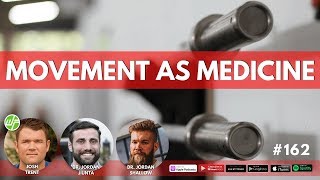
Podcast episode (Wellness Force Radio #162) with hosts Josh Trent interviewing Drs. Jordan Shallow and Jordan Jiunta about 'movement as medicine.' Key themes: using mobility, stability, and strength as therapeutic tools; integrating chiropractic care with smart training; the psychological/emotional role in injury recovery and high-intensity training; biotensegrity/Anatomy Trains ideas; corrective progression strategies for injured athletes; Prescript (prescript.com) and RX Radio podcast mentioned. Includes personal anecdotes (bike accident; powerlifting/CrossFit competition) and record references (deadlift ~928 lb).
Chapters
It's a system, right? It all works together. So if I jam my big toe and I'm limping on my left foot all day, it's going to work its way all the way up.
Then once that's set, manage the psychological and foster them back to the point where they can pursue the thing that they're passionate about.
Not just attack where the pain is, but you have to attack everything that's been affected by that.
Because we understand the physical and the biomechanical. The psychological is the variable.
It's okay that you're not squatting three days a week. It's okay that you're not pulling bars off the floor right now. What we're going to do right now is going to be the things that allow you to do that down the line.
It's this idea of dose dependency. If some is good, more is better. It's the western model.
And that's what we spend a lot of our time doing, is teaching these people how to stay healthy, not being their crutch to being in pain.
More isn't better. Better is better.
All right, I'm going to adjust you. I'm going to work on your muscles. We're going to figure out, you and I together, what the real problem is here, and then we're going to solve it.
If movement is the medicine, then it's like, let's dish it out.
That was doctors Jordan Shallow and Dr. Jordan Junta. And this is episode 162 of Wellness Force Radio. What's up, my friend? It's your host, Josh Trent. And welcome back to another episode for your weekly access to global experts in all things wellness as we discover the physical and emotional intelligence we need to live life well. In this podcast, we're talking about why movement is medicine. We for the body. In continuation with our Standtal series with our partner Intelliskin, we're talking about how chiropractic care timed with smart training can help heal years of improper training. And why whatever age or current condition you stand today, right now is the perfect time to begin your new program for the new you. And speaking of the best version of you, this is your breath break. Take a deep breath. It might be the first time today or even this week that someone's given you permission and the reminder to take that deep breath. And as you breathe in slow and exhale, I'd like to thank our show sponsors, organifi for giving me all this energy today and creating this amazing green juice that I've been posting all over Instagram. I know You've seen it. Let me tell you why this is my favorite greens powder for 2018. First is the adaptogens like Ashwagandha. It's been studied extensively for its anti inflammation and anti stress properties. And secondly, let's talk about portability. You know, the number one thing that blocks people from making healthy changes is stacking their environment, setting their environment at home and works for them to win. Well, it's easy to get in your greens when it's a powder, not juice. You don't have to go to the store and buy a bunch of produce. All you have to do is hop over to organifyshop.com, enter code wellnessforce at checkout. And because you're part of this podcast with us, you get 20% off. Just use the code wellnessforce at checkout over@organifyshop.com so today's guest, Doctors Jordan Shallow and Jordan Junta, the founders of Prescript Movement Prescription. These guys are super smart when it comes to the body in training. They're both in their 20s and you know, when I was in my 20s, I was nowhere close to where these guys are when it comes to knowledge around physiology and programming. I think you're gonna have your curiosity sparked. Where I got to sit with Jordan and Jordan live in person in the studio here in the apartment where they unpacked for us. Why weight training and CrossFit are similar to therapy and can actually help people relax. Why a burst of strong emotions that come about through intense exercise can be healing the tensegrity model and how it can be applied in medicine. How to ramp up your training from body weight to heavy lifting for men and women both. And the emotional component, the emotional intelligence behind sports and fitness training. Why Jordan and Jordan believe emotional intelligence is so important as it's another lens beyond our physical that creates impact on our body. So no further waiting. Make sure you head over to the show notes page@wellnessforce.com 162 learn more about Drs. Jordan and Jordan. But right now, let's drop in to this conversation with the docs.
Where do you want me to start? You want to bring it all the way back?
There's. We can go back to childhood. This is honest for us. Man. I love to know the people behind the mission. Like we're gonna talk about your mission. It's pretty obvious that you guys have a very serious edge in health, but through mobility, through movements, through strength, you know, I want to know the gist of it all.
Yeah. So I was. I was born in Newfoundland So not many people, especially the United States, know where that is. Go to Maine, get in a boat, try and find Iceland. You'll run into my.
I'm gonna be ignorant right now and say, I don't know where that is.
It's cool, man. It's really remote. It's an island province off the northeastern shore. So my sister. All my extended family's there. My family moved. Immediate family moved to southwestern Ontario, so a town called Windsor, which is actually a city south of Detroit. So we look north to see the United States, where I live. We kind of tuck underneath that little hand of Michigan. So grew up there all my formidable years, like any good Canadian, played hockey, and I think I could skate before I could walk. So pursued that literally.
Is that true or.
Yeah, that's what my mom says.
Your parents put your little baby shoes on ice and you.
Yeah, I mean, it's frozen, like, six months of the year, so you got to learn. Pursued hockey, played up to the junior level, and then, you know, kind of aged out. But preparing for hockey in the off season just got bit by the iron bug. Just really enjoyed training and the objective outcomes of, like, just progressive overload with. With weights and. And putting on size and strength. And moved out to California after my undergraduate degree in. In Toronto, and in doing so, just sort of by osmosis, ended up paired up with a pretty prominent powerlifter. And I got into powerlifting after graduation. So I've been competing now for almost two years. And it's. Yeah, it's taken me farther than I ever.
Instagram videos, like, it made me immediately want to go to the gym. And I thought that, like, you know, I have a good blend of training, and a lot of people listen to the show. You know, they might not be into powerlifting, but there's so many lessons that you can pull from powerlifting that apply to anything we do in life, whether it's strength training, whether it's yoga. Right. It's kind of like what I like about you. And I'm interested to know the other Jordan as well. Well, I see you as this strong man where you obviously has this massive physical presence, but you also have, like, this deeper side to you that I can tell. It's funny because I think you're, like, a weightlifting philosopher.
I think you have to be, because, like, we were talking with Alex V. About this the other day. I'm like, we just went deep, deep into philosophy. And it's really strange because for the longest time, as. I mean, as a. I'm going to Air quote meathead as I've been labeled and rightfully so to the uninitiated. It's like when you pushed to a certain limit. And Jordan and I have talked about this numerous times just in different limits of energy systems. I mean he's, his cardiovascular capabilities is like nothing I've ever seen. His ability to move his own body is like, it's poetic to watch. And then you. That you see the passion come through in movement which is, I mean it sounds weird for me to say cross legged on the floor like the 16 year old we're sitting like little kids. I love it. Yeah. But I mean, I think for me it's like you gotta, when, when no one's looking and no one cares. Right Then you're the only one that cares and you're the only one that holds yourself accountable. It's. It's what it means to you. And I mean to me I always go like my best lift and my favorite lift is a deadlift. And it's literally how I approach everything in life where it's like no matter what happens, you try as hard as you can, you're literally going to be standing in the exact same place you are right now. Yeah, I mean that was the thought process I had when I first approached my now wife five years ago was like, dude, she's. I mean my wife is.
It's like an emotional deadlift.
Yeah, no, it's literally. I mean if that's like if you can kind of, you know, buck up and bite down and just heals down chest up against the world and it's. Yeah, to me it's a strong image for me that helps me in things like, I mean, pursuing my. I saw my wife for the first time and I was like, okay. And I was sort of told. So she's quite the athlete herself. She's been. There's a book called the Sports Gene by David Epstein. He actually references her in the book. So she's.
That's pretty awesome to be in your 20s and be. Is she in her 20s?
No. She's a little bit. Yes, sweetie. She's listening. She might listen. Yeah, yeah. She's magical. God's birthday.
Don't say her age. Anyways, she's in a book. She's quoting a book. That's pretty awesome, man. And did you come together with her through your chiropractic training? So you guys met in school, but then you and your wife Jordan. Shallow. Where'd you meet her at, Jim?
I mean I saw her in school.
And then did you hit on her at the gym?
No. So here's the thing. I'm not, I'm not too good with words when it comes to the ladies. I mean, really had at the. I mean, had nothing to offer. Have nothing to offer, but in a, in a, in a commercial gym setting, I might be able to squat more than most people. So that was my game plan. She was at a gym that I wasn't training at, and I sort of got wind through the grapevine. So I told my friend, sorry, man, I'm gonna have to go train somewhere else. I got a bicycle the next day and biked the six miles to the gym. And sure enough, there she was. And I was like, all right, man, you hadn't been on a bike since you were 12 and your legs are tired, but you got one, you got one chance at this. So I just put plates on the bar until she, she kind of noticed.
So let me get this straight, dude. You're squatting in the like 24 hour fitness and you just kind of look over the corner of your eye and you notice that possibly she's looking at you and that's.
She was at the squat rock right next.
Yeah.
And it was like. And again, I'm not one to approach. And knowing she was, I mean, she was in the Olympics in 2010. She's a two time world champion in two sport, two other sports. She's knowing her background. Going into it, I was like, if I approach her and like, hey, can I have your number? Like, what's your sign? And then again, that's not, that's not.
Something that definitely would not work if you use that voice.
I mean, it's just not something that resonates with me. And it's knowing how, how. I mean, what I think to be myself, competitive athlete and just competitive from like a mindset standpoint. If someone were to disrupt me in the gym, probably not someone that's going to identify with my value set. So I just kept my head down and just kept putting plates on the bar until she said something.
Wow, that is like a match made in barbell heaven. I can't think of a better way to really connect with somebody. You know, you're both doing things you love. And before I even hit the record button, that's how we got connected through the mind pump. Guys, who I love. It's like we're all doing things that we care about, and then at some point we all look around and say, let's do this thing together. Let's raise all the Boats with the same water.
That is literally my favorite. Rising tides raised all the ships.
Maybe you grew up by water. Is that why?
Yeah. So being an island province, Newfoundland is water everywhere. Yeah.
Jordan, tell the audience a little bit about you, man. Your last name, your passions.
Yeah, absolutely. My name is Jordan Junta. I grew up in Northeast, but the United States, so I'm from Pennsylvania. A little different than Southern California. Here in Northern California, where we live. Wrestling is really big there. So that was my main sport, my main tr. Will say, growing up, my dad, my grandfather was big into wrestling. So a big wrestling family.
Your grandpa, the Italian.
Yes.
Okay.
Yes.
What's it. What was his last name?
Genta.
Ah, yeah. Fantastic. Yeah.
Just like mine. Yeah. Funny how that worked out, but kind of like Jordan. My story is the same. I. I started strength and conditioning. I started training for doing weightlifting so I could get better at wrestling. And then eventually there was a point where it kind of switched, and I'm like, you know what? I kind of like this more than wrestling. It was early on, it happened pretty quickly. I finished out my wrestling career, got back to. In college, got injured, got away from it again. And that's when I found CrossFit is. I started, actually through an old wrestling Coach. I found CrossFit. I did it a couple times. I'm like, yeah, that's cool. I guess. Didn't go back to it. And then as I moved out here for chiropractic school about five years ago, I didn't have time to spend, you know, two, three hours in the gym like I wanted to. So I just bought a bunch of CrossFit equipment. I would do it at my apartment. Got into it that way, and I'm like, hey, this stuff's really fun. I want to compete in this. So I found a CrossFit gym. I'm like, hey, I'm gonna do the Open here, which is the worldwide CrossFit competition. Did the Open with them. I planned on kind of going back doing my own thing after, but our gym actually qualified for the next level, which is regionals. So they do regional competitions all over the world. It goes open regionals, CrossFit games. So it's like the qualifying process. So we, as a team qualified for that. I competed in that, and it just. It pulled me in because I'm also a very competitive person. I'm driven by performance.
I love.
I love moving. I don't know this guy see me work out a lot.
Yeah.
Yeah. So I like to move. I don't care if it's you know, stuff like this, just sitting, cross leg, doing yoga, doing CrossFit, weightlifting, squatting. I just love it.
All is that same mindset, man, of being driven. And I feel like in this world right now, one of the most important things is to be driven, but also still have your heart open. Yeah, that's the challenge for a meathead philosopher. Like, you guys. Like, you know that we're in this crazy time right now. There's so many social trends that are shifting us and kind of ripping people's attention from things they should be caring about, they get to care about to things that don't really matter. This physical, this emotional, these are the things that really make a difference. You guys, you know, focus a lot on the physical. But I'm curious, like, from an emotional perspective, do you have somebody that you really look up to or respect or how have you done your emotional training in life? And then how does that relate to the barbell?
Well, I think it's for us. And it's funny, we talk a lot about this off air because both being chiropractors and both being what I think to be fairly, like, proficient in the sports that we excel at, it's. It's almost like magicians trying to do tricks on each other. It's like we know all the tricks, right? Like when we talk biomechanics, when we talk injury prevention, I can't say anything that he's. He doesn't know already or he can't. Like, I can learn from him, but we've been around each other for so long that it's like if I come across something or he come across something, it's like an instant. Like he, we, we. We talk about work all the time. Yeah, it's almost telepathic. But that. What does that leave us to talk about? What is the only variable? Right. And I like that you touched on like the, like the bifurcation into different. Almost like. I don't want to use the word cult because I think that has a negative connotation.
Well, everything's a call. I mean, sports are a call. Weight is called anything.
Yeah, I just think, like, I just think it's the monetary aspect of it. Right. And we spoke on this in the past where it's like, that's what pulls people. Like, I'm a crossfitter, I'm a powerlifter. And like, in the brief history of RX Radio, our podcast, it's like just spending time. I mean, we record at his gym. Spending time in that space. And like, it's like, oh, they're not so different. They're not so different, right? They got. They got a mortgage and kids and all that, and they're just. You identify in the passion and you realize that everything else is just an institution built up in a way to make money. But when you get to the reduced essence of it all here, because when you push yourself that far, there's. There's nothing else that would drive you, right?
Like, think about this interview I had with Mark Devine, and when he was training in the Adirondack Mountains in New York, he would go up and as a young man and he would get to this physical point where he would push himself so hard that he would, like, trip out almost like he was having an ayahuasca experience, because he would get his body and his mind to that state so far beyond what most people where they'd ever go. And he would see and feel things that he could never feel if he didn't push his physicality that far. Do you feel like weight training and lifting and strength training can push people to that same point? What do you feel about that?
I think it can almost be like a therapy or a release. You know, I coach CrossFit. That's what I do. And I mean, I'm obviously a chiropractor, but I. I take these people through an hour a day where they get to forget about what else is going on. They don't have to worry about, you know, the. The kids have this going on later tonight or this was a stressful day at work. My job is to come in, have these people forget about all that stuff that's stressing them out all the time and just have a good time move, take their mind off of that and just, you know, just forget, let go.
Of it all for.
For an hour out of the day.
That's why I go to the gym. The only reason that I work out, honestly, is because I. I know I've been educated on the AS training in both mind and body, but I also just love the fact that I can let everything go for like 45 minutes or an hour.
What are you letting go?
Oh, stress tasks, incessant monkey mind, sympathetically driven nervous system, everything, right? So I'm getting into this space where my real work is to get into that space even when I'm not there. But every time I go back there, it trains me how to be there again over and over.
Is it. I mean, might be a very powerlifting, specific mentality, but, like, I don't know where I go When I lift, like, third attempt stuff, I can't tap into that. I don't know what that is.
Yeah.
Like, I'm starting to cry. Like, it's the strangest thing. Like, third attempts, it's like I can't consciously tap into that. And maybe it's just a way to, like, subdue stress.
Yeah.
But, like, if I didn't have that, I don't know where I'd be. The thing about powerlifting is it's so concentrated. Like, you get a minute for each lift. Like, you go up there, do what you got to do. That bar has got to be off the ground or squat to depth or off your chest.
You get minutes.
Go up there, do your thing. And if a lift takes longer than, like, six seconds, that's a long time with a lot of weight on your back. And it's like, I don't think my last three weeks, I don't think I've. After my last lift, I don't think I have had a dry eye. Like, I've cried after every. Whoa. Yeah.
So like, almost like an emotional release, like, catharsis.
Yeah, it's just like. It's just a summation. Like, it's a crescendo of, like, you.
Trained so hard for so long and again, like.
Like no one cares. No, no. But no, it's true. Like, it's such a. We talked about it last night, and it's like the fact that, like, no one cares, but you still do it. Because it's like, I mean, with. With CrossFit, with powerlifting, it's like, I'm never gonna make a living doing this. I have. And we have a podcast. We have prescript.com. we both run our own practices. I work strength conditioning job on the side. And it's like, you know, you're trying to make it in the Bay Area. It's like I live in the backyard of someone's house in a small little studio with my wife and dog.
The area ain't cheap. Even if you work at Stanford.
Yeah. Oh, no. And it's. You gotta. You gotta have, like, a bunch of side hustles to pay the G. So at like, the end of the day, it's like you gotta prioritize a million other things before you get to that one thing. And it's. I don't know if it's, like, frustration or where. What it is, but, like, if without that, if that were to ever come out in another medium, I don't know what it would be.
Wow, that's fascinating, man. I can think about moments in my life where back in the day, ran a marathon, which I'd never do again because it just crushed my soul. But I cried after I got off the finish line, and I also cried at the top of Mount Whitney. So there has been, like, a few key, like, physical things that I've done in my life where afterwards, yeah, I've totally shed tears. And I think it's actually pushing the body to a place where it would probably never go most times for, like, almost like an emotional permission to open up and for maybe any stored bullshit to pour out.
Ye.
Have you had that experience?
Oh, absolutely. Yeah, I've. So I compete in CrossFit. The first time I qualified for the regional competition as an individual. Same kind of thing. It's a little bit of an emotional release. I'm not a big crier, but I remember I was sitting in my car and it's all online. You're just updating, updating, updating. It's an online leaderboard. And I sit there with my girlfriend and, like, it finally settled into place. It takes, like, you know, a couple hours. I just felt a tear roll down my cheek. It was not so subtle, actually. I burst into tears. Yeah, but it's. I mean, I get what you guys are talking about. It's the culmination of all your training, right. You've been working so hard for. For one common goal, and then whether you accomplish it or not, this is what it comes down to. Right. Thankfully for me, I accomplished it. I probably. They would be different tiers if I didn't. Yeah. It's a great feeling when you set your mind to something, whether it's 26.2 miles, whether it's ripping, you know, almost 800 pounds off the floor. It doesn't really matter what it is. Once you put that much energy into something, that much focus, especially over that. The amount of time it takes to train to. You know, it took you your entire life of deadlifting to be able to pick that bar up or, you know, however long that training cycle was to. To run that 26.2. And you know, for me, how it took a lot of determination to be able to get myself to a point where my fitness level was enough to be able to accomplish that. And it's. It's awesome when you can accomplish something like that.
So I just think, too, that the fact that everything we like, there's no. There's no monetary value. I think that's. I mean, yeah, college sports, to me, is a really new experience. It's not big in Canada at all. The pursuant of college sports is a way to maybe a stipend, your, your college tuition. Like it's, it's not, they're not110,000 stadiums for college sports in Canada. So moving to the United States and really seeing this culture now being a.
Part of Money Machine man, but the.
Kids aren't seeing any of it. So the passionate and like that's something for me like I identify with because it's like, you know, I see the stresses in my life. But dude, we're working right now, right? We've had like the best two days ever. We flew. But it's like here you have kids who are pursuing education at like the highest level and it's, you know, this is, this is the pressure cooker the Silicon Valley will make or break in at the same time. They're still, you know, they're still in the gym, they're still, you know, they're still trying to get it done. But keep a 4.0 and graduate with that MBA. So it's like, I look at that and it's like, God, man. And it's like, you know, they might not be like, you know, ripping heavy deadlifts, but. And that's the thing, even that powerlifting meets, right. Like my last competition, there's a range from guys literally setting world records, like moving weights that have never on this human earth.
What was the lift?
The biggest deadlift that was broke or the biggest? In my opinion, that was just like, just astronomical. Kaylor Woolham pulled 928.
And what's his weight?
220 pounds.
What, a 220 pound guy pulled 900 plus pounds?
Yeah.
And that's the first time in the world that's ever been done.
Yeah. So they've just been shipping the record. So he had it. So went. I think he had the record already. So he broke his own. But in August last year, someone went 926 or 925. Someone went 926 and then he went 927 and he chipped it to go 928. 929.
This is what blows me away, man, is like you look at Roger Bannister and the four minute mile, the only way the mind will change is if it kind of gets permission to see it in the reality. And then with the eyes closed they can create their own. And then somebody breaks another one. So there's a new snatch record, there's a new marathon record, there's A new Olympic. There's a javelin throwing record. No matter who you are as an athlete, the mind has to be changed first before the physical can do anything.
Blowing my mind right now, literally, like, I've said this in the past 24 hours.
Yeah, that's so true.
Yeah. It's. I don't even know if this was on air or not. The elephant metaphor.
Yeah, I think.
Was it on air? It's just like somewhere along. Yeah. Honestly, we don't know what we said on podcast or just like, listen to or said to each other. That's good, though.
That's a good sign. Yeah.
You can, like, if you, like, raise an elephant from in infancy in, like, Thailand or India, what they'll do is they'll wrap a rope around its ankle and drive a stake into the ground.
Yes. And then when it gets to be £10,000, it doesn't test. It still thinks that the rope can hold it.
Yeah.
The human mind is the same way. This is why we explore so much about, you know, emotional intelligence. To be intelligent is to have the power. Physical power is something that you train. So how do you guys see this in the clients you work with? Maybe an injury. I know you've had an injury yourself. How does the mind get over injury A and then B, when you're training with an injury, how do you not fall into the depths and kind of go into the woe is me kind of pity party?
I actually just went through this on a very close level. To me, my girlfriend actually, she had a low back injury she's been trying to train through, and it's been very difficult for her mentally. But that's what Jordan and I do is we. We do preventative exercise or corrective exercise to help prevent entry or to. To recover through an injury. So you can either keep training or get back to training the way that you were. It's a very mental process. It helps a lot to have someone to keep you accountable, to almost hold your hand through it and to tell you you're doing the right thing.
Yeah.
This is. This is what needs to be done. It's okay that you're not, you know, squatting three days a week. It's okay that you're not pulling bars off the floor right now. What we're going to do right now is going to be the things that allow you to do that down the line. If you want to go and do those things and you're not ready to do those things, you're going to hurt yourself and you're going to Be out of commission longer than you are now. So it helps a lot to have that person there to hold you back and be like, let's stay on course. This is what we need to do right now. At this time, we're going to work on stabilizing that low back. We're going to work on strengthening that core in ways that aren't going to put tension on it, that are going to keep it injured. So we're going to let that heal as we strengthen the weak links, and as those weak links aren't weak links anymore, and we're stronger than we were before, and that injury has calmed down a little bit, we're going to start to slowly incorporate those things. So maybe we're not pulling bars off the ground. Maybe we're pulling them off blocks from the knee, or maybe we're not doing squats with bars on our back, or we're doing a goblet squat for right now, but we're taking load off that SI joint and we're progressing in a way that makes you feel the progress along the way.
It's almost like you're earning little blocks of confidence.
Absolutely. Absolutely. It's piece by piece. We're going to start here. And yeah, baseline kind of sucks because you can't do much. So it's boring to plank. It's boring to do, you know, these quarter range of motion.
I don't know. Plank can be pretty hard if it's.
Done the right way. Yeah, it can be hard. It's still boring because the better you get at it, the longer you're sitting there. But then as we add something in. Okay, today we're going to do glute ham raises. Okay. Oh, that's something new. That's cool. I wasn't able to do that last week, and now I can do it, so that's awesome. All right, we get through that week, the pain's down a little bit. All right, what we're going to do is we're going to do a single leg deadlift. So I'm on the floor, I'm hinging at the hip. This is kind of cool. I'm getting back to the range of motion that I wasn't able to do before. And maybe the next week's. Like I said, it's pulling off the blocks, so. All right, I have a barbell on my hands. It's those little progressions and having someone take a step back to look at the bigger picture and keeping them accountable along the way.
Yeah, man. Harvesting the joy can be the Biggest challenge, I think, for people that have gone through injury. I believe you were in a car accident, correct?
Yeah.
Oh, boy.
A pretty serious one.
I doubled as a hood ornament for a 91 Chevy Suburban.
You literally were on the hood?
Oh, yeah. I was riding my bicycle and I got just girl ran a. Girl ran a stop sign and just. Yeah, took me out.
How old were you then?
Oh, geez. I was the third quarter. So what, four years ago? Three years ago?
Yeah, yeah, something like that.
Yeah, probably about four years ago. Maybe 20.
23.
23.
How did that change the way that you look at training?
Well, it's funny because it's the best thing that could have ever happened to me. Like, Jordan just touched on. You use the word like, you know, to get someone to stay the course. And it's almost like you think of. I mean, have you ever spoken to, like, a mountaineer?
Yeah.
So, I mean, I have friends out of, you know, K2 or Summit @ Everest. And it's like, they go with a Sherpa. That's what we do because we've walked that path back and forth. Right. You don't want a Sherpa. That's like, all right, I think we're gonna go left. It's like, oh, wait, have you done this before now? It's fine, we'll go. But it's like the psychological component, because we understand the physical and the biomechanical, that the psychological is the variable. Right. So navigating and being able to be empathetic because you walked those. Those shoes like you walked that.
Road.
Yeah. I think is just like a good training program. It's just like, you know, with. With coaching, it's like, you. You want to have empathy and not sympathy. You want to be like, there's a difference between me looking at you and going, you know, that must be really tough, or I know exactly what you're going through. Been in your shoes. Yeah, exactly. So, I mean, we. With what we do and how we train, we're more like, we'll let it kill us. Like, we'll. We'll go out on the shield. So it's like when we. When we have come back from that and people, that's where the buy in comes from, and that's where the progress, because there's. There's trust in the. In the process. And I think whether that's strength training, whether that's just trying to get back in shape, you're trying to run a 5K, you got to have trust in the process because you need people that have seen the bigger picture, that have. I mean, I don't want to like loosely quote Martin Luther King, but have been to the mountaintop and have seen it and then have come back down. It's like, hey, here's the path, here's what we're going to do. And to have that reassurance, I think is the biggest thing. So honestly, the biomechanical almost becomes logarithmic. And if this then not kind of situation, it's a lot of input and then it's just managing, controlling the body and controlling the.
Emotions. I have loved the way we've laced the beginning of our conversation with this emotional fortitude. The way that we've talked about injury already and the mindset that's behind that and fortifying the body through first, fortifying the mind. And now I'm thinking about how does all this really relate to chiropractic? Because there's so much ambiguity out there around chiropractic. Joe Rogan did an episode with this woman. It was like a three hour episode, I think it was last year. People talk, talk a lot of about chiropractors. I've been to some good ones. I've been to some ones where they put like a heated doll on my back and they told me that they would, you know, see me every two weeks for like six years to heal me. And I thought, doesn't a great coach or a great therapist see someone as few times as possible to heal them and put them on their way? So first, like, you know, let's jump in. Like, what is true chiropractic? What is.
It? Chiropractic is using your hands to heal someone at a time. That's the core of what it literally the.
Lot. It's chiropractic.
Right? Healing through the.
Hands. Yeah, exactly. So it's, it's physical medicine. I 100% agree with you that a good practitioner should use as little visits as possible to get their patient healthy. Jordan said this before. I've said this a million times. It's, it's teaching someone to fish instead of giving them the fish right you want. And that's what we spend a lot of our time doing, is teaching these people how to stay healthy, not being their crutch to being in pain. Right. It's not, you know, I'm gonna give you an ibuprofen, you're gonna come back in two days, I'm gonna give you another ibuprofen or I'm gonna give you adjustment, you'll come back I'll give you another adjustment. Right. It's alright. I'm going to adjust you, I'm gonna work on your muscles, we're gonna figure out, you and I together, what the real problem is here and then we're gonna solve it. You're gonna do most of the work, not me. What I do with you in here is gonna have some impact. Yes, but the bigger impact is what you do. You know the. I don't even know how many hours are in a week, but I'm gonna. 168. All right, so 167 and a half hours of the week where you're not with me. That's what's gonna make a difference. Right. Are the things that you're doing, how your, your lifestyle choices, if you choose to take the stuff I'm giving you to take the tools that I'm giving you and do it is first of all compliance or how you're.
Doing. Do you think most people actually believe that chiropractors have your vantage point on.
This? I don't think most chiropractors do, to be.
Honest. Yeah, this isn't what I've.
Heard. I mean there's. You can either be defined by what you do or you can redefine what you do. And I think we're on the latter side of that where it's like we're on an edge where you're going to start to see physical therapists and chiropractic because on paper, from a legal standpoint, our scopes of practice are overlapping and as people start to move away from the insurance space and honestly like everything bad, it all comes down to money. As people move away to just like cash based practices, it's a meritocracy. Then it's like, okay, who, who can bring it? And that rack and crack stuff isn't going to fly. Especially if in our space where we're trying to deal with people who are more aware and more mindful of like their own, their own bodies, it's like they're going to be able to tell. Jordan made an interesting point about like you know, the 167 and a half hours left in the week and then we're not just going to give you an ibuprofen, it's like, no, we're. But what we're giving you is still medicine in a sense that medicine. So ibuprofen, you leave your doctor's office, you have some sort of ache or pain, he gives you 800 milligrams of ibuprofen that's an intervention and a dose. With what we do with our patients, with what we do with prescript.com, we're doing the same thing. The idea with anything is you want to isolate variables and scale stimulus. That's. That's the name of the game. Variables meaning everything in your life. I mean, that's like, you know, from whether it's a diet standpoint. Like, I've worked with people on their diet and it's like just such a mess. Their nurse, swing shift, smoke, whatever. They don't eat breakfast. All right, let's. I usually start with breakfast. Let's have this wild intangible variable and give it a concrete value. Eat Pop Tarts every day for breakfast. I don't care. But when you normalize, we'll have a value that we can then.
Deviate. Quantify something.
First. Exactly. So I think. And that's, that's the same with Powerlifting. It's the same with CrossFit. It's the same. I mean, basically it boils down to, you know, as practitioners, we have to be evidence based. With the people we see, they don't do research on the athletes that we work with. They're so high performing. It's the difference, and I spoke on this before, it's the difference between optimal and maximal. When the high end of performance comes in, when the, when someone's willing to go out on their shield, it's like, all right, man, I'll march into about. I'll try and make you that. That unstoppable force and not a movable object. That paradox, right? But I think when it comes to like just scaling stimulus out, you have to, you have to use research as a guiding standpoint and then, and then extrapolate out from there. And then that's when your own experience, that's when the patient values comes in. I just think it's just kind of a change in tide. You're going to see that old model quickly fall the.
Wayside. Something I've heard from Nick Bartolotta. He's the founder of the Resistance Stretching Association. He also talked to me about this biotensegrity component which Buckminster Fuller actually started. The biotensegrity and how the body relates to that body's a column, right? I mean, everything that gets affected on that column affects everything else. The same way that we have a neural lace is the same way that we have, have our fascia that laces all of our tissue and everything else. I'd love for one of you guys to jump in here because this tensegrity model, how this actually applies to us living a healthy life. Let's dive into this. I mean, this is fascinating to.
Me. Yeah, yeah. I mean, to me, like one of my biggest influences in that space would be, I mean, Thomas Myers anatomy trains. I think anyone who's looking to pursue athletics from a corrective exercise or even exercising correctly standpoint needs to understand the difference between, like, creating movements or activating muscles. Right. Like the bodybuilder that's doing bicep curls is going to end up with a squat rack. Yeah, yeah, exactly. But it's like, I think that's really good because we can know a muscle's action, we can know it's secondary action, we know it's tertiary action, but how does that muscle play with the other muscles in the chain? And I think anatomy trains and the work that they're able to do as far as, like, giving us a predictive framework to help build off and then understanding that and then applying it, taking that knowledge, taking a patient's input to you, but also taking the demand of the sport and whether that's sports CrossFit or whether that sports powerlifting or whether it's just everyday life, like life's a pretty unbalanced sport to kind.
Of. Yes. Life is never like template by template based.
Man. Yeah. So I don't know what that's. That for me is huge if you really want to have a greater depth of knowledge and give you that predictive value, because, I mean, obviously you want to avoid injury as best you can if you're. If you're going to redline it, you know, that's kind of.
The.
That's. The point is to get as strong as you can, maybe before something breaks down. For me, it's like I want to. I want a number on the board that's bigger than the number on the board the last time I was on the.
Platform. When we look at the physical body, this tensegrity model, when it comes to, like, you know, actual muscles and tendons and ligaments and bones and everything in our central nervous system, what does that mean for our body in a complete system, you know, as an ecosystem? What is tensegrity in that.
Regard? I think you said it's. It's a system, right. It all works together. So if I, you know, jam my big toe and I'm limping on my left foot all day, it's gonna work its way all the way up. So it's, you know, maybe my knee starts to hurt, then my right low back Because I'm putting more strain on that right side. I feel my si. So I start to rotate over, and I feel it in my rib cage. And then, you know, I'm trying to do some overhead work at the gym. My left shoulder starts acting up. It works its way all the way up. And there's always a consequence to every. Every action here. So same thing goes when we're correcting that. Right. So we have to kind of undo that in a way that's gonna. That's gonna be conducive to how we did it. Right. Or those symptoms that we're having. So you have to not just attack where the pain is, but you have to attack everything that's been affected by that in, you know, ways that will apply to.
It. And I think that doubles back to psychology because that really separates, in my.
Opinion. You read my mind on that.
One. That was exactly what I was thinking. Well, it's just. I mean, it's something that we. We struggle with a lot being very. Cause rooted in our addressing of the clients we work with online or the patients we work with in our office or the athletes we work with in our facilities. It's like, I need to educate. That's literally the crux of all of this, is to teach them how to fish. Because it's like, when I'm. When I'm addressing their left adductor because they're having right oblique pain, I need to explain that anterior oblique sling to them. I need to understand, like, I need to tell this powerlifter that, okay, here's why you're having this imbalance. Or I need to tell this pitcher that it's your left hip flexor that's giving you the right rotator cuff issue. Because if you. A certain discrepancy in hip flexion is going to decrease the. Or increase the demand on rotation of the shoulder. So, like, yeah, we're going to address this because this is the cause. Your symptom is here. So it's like. I mean, all. That's usually the last.
Place. It's like the pain is just like a little mirror of something way.
Deeper. It's the check engine light. You don't replace the light. You just. You. You plug in the thing into the.
Computer. And then you definitely don't stick tape over the light.
Either. Yeah, I mean, I think. Yeah, it's. It's. It's a light on the engine. It's the last. Well, Jordan says it best, and I think I've quoted this like, she's in front of him a thousand times. So how many times, Cole, you.
Get quoted in front of.
Yourself? Oh, yeah, it's pretty fun. Well, I figured I have to because I play it off. I play it off as my own when he's not around. And it's pain is the last symptom to appear and the first one to go.
Away.
Yeah. So I think once and I say that to people and it's just light bulbs and it's like, shit, man, how come you didn't say that to me like three years ago? But die. I've been dying out.
Here. This is so good. So then what's the misconceptions like? You guys have done a good job of great job of describing what a great chiropractor does. We also talked about the tensegrity, but what about the misconceptions? All the lies that are out there about like chiropractors are a scam. There still seems to be, you guys, this fighting edge between MDs, NDs and chiropractors. It's 20 freaking 18 and there's still people that are fighting and saying MDs are the only ones. Chiropractors have snake oil, NDs don't know anything. We don't need essential oils. It's like, you guys, we're all on the same team.
Here.
Yeah. What causes this.
Rift? I think a lot of that too is just because the spectrum of chiropractors out there, the spectrum of beliefs, it's a lot of his philosophy based. So you could go to me or Jordan, probably get some pretty similar care. You can go the guy down the street and he's, you know, waving a magic wand over you and saying that you're healed. It's all under the scope of chiropractic. Yes, but you don't really know what you're getting into unless you do some research and you understand the way that person is practicing as opposed to an md. And it's by the book. Right. You have this condition, okay, this is an intervention, or, you know, we're going to prescribe this for it, or we're going to send you the ortho, he's going to do his thing. But chiropractic, it encompasses a lot and it can be interpreted a lot of different ways. And not saying that, you know, well, objectively, you know, one may not be better than the other. Of course, my bias, I think there's a better way to do it than some other people. A more effective way to do it it that you're going to get better results from but it's, it all falls under the scope of chiropractic. So that's, there's a lot of misconception on what you're getting because you're getting a lot of different things depending on who you're going.
To. I think they just need to tighten the reins, honestly. Like, I think as just like anything where there's moderate and extreme, if the moderates don't check themselves within the scope and say that no, no, they're chiropractors, they're good, they're with us. It's like it's no different than religions or it's no different than police.
Officers. That is such a good.
Point. Well, it's just, yeah, I mean like as someone like chiropractic, by and large even manual medicine, physical therapy, osteopathy, Jordan's father's a do. So it's like we fall on a spectrum of left and right and it's so chiropractic, let's say is left of a spectrum of conventional medicine. But even in that there are wavelengths that are, that are deviating away from that, that right or that center point. So it's like when we're on the fringe, more towards maybe the research basic. I don't like, I don't like saying when people come up to me and they say oh, I believe in chiropractic, like that's great. It's not a religion. It exists whether you believe in it or.
Not. Do you believe in.
Gravity? Yeah, exactly. And that's, it's, it's a just, you have to start changing the paradigm and it comes back to, I mean, yeah, we, we bear the cross of. I mean honestly, I think it comes back to money again. When we're in school, they march, they march through these speakers that come in and you should see these guys. They've been, they've been in the game 35 years with insurance, would pay anything for.
Everything. But that's changing.
Quickly. It is changing quickly. Look at the work of Chris.
Presser. We had him on the show and we look at how all these models are being unraveled and decentralized so fast. Everything's changing so quickly. Like you know, five years ago you guys were still in.
School. Oh.
Yeah. Okay, so by 5 years ago what were they saying that you know, now is.
Complete. Well, it's funny because they tell you two things really. Like the level headed professionals will tell you you have to but study for practice and also study for the boards. Yeah, right. So like I've given answers I've known to be just empirically untrue to pass a test. But there's such a lag time in the. In the. In the bureaucracy of. Of that turnover because it takes.
Years, decades to turn a freaking battleship. And that's what that paradigm.
Is. Yeah. And too, it's like the United States. There's 17, if I'm not mistaken, 17 or 18 chiropractic colleges in North America. Three are in the state of California, making it the most dense concentration of chiropractors in the world. 25% live in this. Live and operate in the state of California in the world. And three institutions make it the most dense chiropractic academic state also in the world. So California is on the leading edge. And I mean, whether we're a part of that or not, I mean, we're not marching on Washington. We're coming on podcasts and trying to get, like, the word out there. Yeah, but I think, too, like, there is a responsibility on the patient, Right. I think that's true of anything. Like if. And that's why we get athletes, because they do their homework. I mean, I have a Yelp account, but I don't get a lot of patients from Yelp. I get a lot of patients from other patients. Right. It's people who that value their body and say, it's like, hey, this is the only one I got. Right? Because, yeah, you can do damage. You can absolutely do damage. Like when they cited that thing on the Rogan podcast, like, that that happens. There's a risk, right? There's a risk with anything. But it's like, it's the vetting process of who you're literally going to put your life in their hands, who that's going to be when. Like, and that should be true of anything. Like, I mean, I drive like a 1 Toyota 4Runner. I vet the hell out of the people who are going to work on it. My mechanic is vetted. Who do you like? I don't know. This guy, all right? I'm not going to him. Where it's like, if you're just going to throw caution to the wind. I think that's why athletes are on the leading edge, Right. I think is because they have that value. And there's a difference between value and price. And once people start to see that, then they'll start to gravitate towards that, that practice style, and then ultimately that will. That will reign true of the.
Profession. The crazy part about this, too, is, like, I'm seeing that the majority of pro athletes have probably the best medical and chiropractic care in the world, bar none. By far. Even in college, it's probably 10 times better than the average Jane or Joe. Would you say that's.
True?
Absolutely. So when we look at that paradigm changing, how do we allow everyone to be an everyday athlete and treat their bodies like the pros do, even if they do have a job where they're sitting at the desk? That's a massive.
Question. We don't have to allow them, they have to allow us to themselves. Right. So they have to put that value on their health and their body that they're willing to spend the money, they're willing to take the time, do the research that it takes to take that.
Responsibility. Well, that was one of the driving forces behind starting prescript was. I mean it's literally a way to scale that influence outside the geographical bottleneck of our two offices in the Bay Area, where it's like if movement is the medicine, then it's like, let's dish it out. Right? And it's. We operate off kind of two, well, I mean, three major pillars that operate through two kind of avenues. I mean it's mobility, stability and strength. The old model is just, you know, what's the stretch to fix this? And it's like, well, maybe we're missing the boat. And then we get it, you know, you get them into unstable positions so we can, we can train that stimulus of instability that's the rate limiting factor, that's, you know, bottleneck or the kind of looping them back to that immobility. So building that tributary out of that cycle is, I mean for us it's been, I mean, wildly successful in our own training and being able, to my estimation, we've come up in our respective sports extremely, I don't want to say extremely fast, but we've been able to do it relatively.
Unscathed. And your sport is rugby.
Right? Strength and conditioning coach for rugby. But powerlifting now would be my, my main.
Sport. But you coach and treat athletes for Stanford.
Rugby. Yeah. Oh, I'm the strength and conditioning coach for stuff. Strength and conditioning coach, yeah. But ye. My own athletic pursuit now is.
Powerlifting. Yes. And you are damn good at it too. I'm looking at the stuff on Instagram and I'm literally inspired. I'm like, I gotta go to the gym. I'm watching Jordan.
Lift. But it's just, yeah, it's. I mean to me it's just like, it's the reduced essence where if something in that pillar is off, that 10 secondary model is off. You're gonna find out real quick.
When you grab that bar, like, what's going on in.
You. I honestly don't know if I could put it into words without bawling my eyes out. And I don't know if the words are.
There. Let's go there.
Man. No, I honestly don't know if the.
Words. I've been in the podcast.
Before. I don't even know if the words are there, man. It's just, it's. It's the summation of like doubt and self doubt and it's just like, it's. I mean, it's the ultimate test, I think it's just, I think it's the objectivity of it. It's not open to.
Interpretation.
Right. There's no, there's judging in depth and you know, there's press commands and stuff like that. But if you lift with integrity, that all that doesn't.
Matter.
It's. It's a number on the board. It's really binary and it's, it's a manifestation of the work you put in. Like, we're not pro athletes. So when he trains, he was just doing like overhead squats and snatches with like, he's got to been over his body.
Weight.
Yeah. You know, we took like a, I took like a half hour nap. We. He slept with his head down at a coffee shop today because it's. We got three hours of sleep last night because we got to come here to do this to pay the bills because, you know, we live in the Bay Area and we're pursuing what we love to do. So I think, think when he trains, it's not like, you know, the, the NFL player that has the, the training staff there and the Gatorade spiritual advisor. No, I mean, not that glorious. He is literally. He is my life coach and spiritual advisor. So I think when, when you're getting to the lift and like in training and we, yeah, it was, we were talking about this just in the car where it's like, you know, this is where you get stronger, where we're doing this and it's. And you talk. You said the word mental fortitude, which I love because that's what you're.
Training. You guys make me think of the Invictus poem out of the night that covers me black as the pit from pole to pole. It's what I memorized when I did the 20x, which is this 14 hour physical crucible with Mark Devine, Navy Seal, training for 14 hours. And at the end of it I was like, oh, I actually can do 20 times more than I ever thought I could. And that might be what you're trying to put into words, that kind of essence that maybe everyone's unique. It's its own definition for all of us. Everyone's got their own barbell, Whether it's being a great dad for their family or showing up powerfully for their work or their. For their career, for their patients. Like, you're the way that I see you lift a barbell, and the. The seriousness, but also playfulness that I see from you when you do it. There's not necessarily a branded statement or words that we need to put on it. I was just curious if you could put those on.
It. No, I mean, to me, it's like. And it's funny because that's how me and Jordan really connected, was like, I was a meathead. I was absolutely a meathead. And like, CrossFit was the counterculture. Like, but you see him do it, and, like, it's because his face, like, he's killing himself. Like, his lungs are.
Bleeding. He's just.
Dying. And I'm looking at, like, how in the hell get down from there? You're gonna hurt yourself. But I think to me, like, yeah, but we get it a lot, right? Because, I mean, we're. We're with each other all the time. And I think a lot of people approach us and they go, man, you guys must be so disciplined. It's like, there's no such thing as discipline. There's just love, right? You're gonna. You'll gravitate to what you love to do more. Like, if you love to eat cake more than you love the idea of, you know, being shredded or whatever. And until that love balances out to the other side of the scale, then that'll be.
It. God, Jordan, this is so powerful because, like, not everyone is put on this planet to be a power lifter, to be a chiropractor. Some people are put on this planet so they can be a professional.
Chef. Yeah.
Exactly. Like, you know, if you're Mara Batali, you're not really concerned with barbell and strength training. Like, that's his love. I loved how you said it's not really necessarily discipline, it's love. That's the deeper core mission. That's the deeper energy. That's the undercurrent of it all, man, is that you find something in this world. World that you freaking care about so much that you'd be kind of willing to die for.
It. Yeah, well, I think the discipline comes in. Like not training.
Sometimes. Yeah, yeah, those. When you have to have that person holding to hold you back. Like we talked about before. I mean, but it all comes. Yeah, it comes back. It comes down to.
Passion.
Right. What are you passionate about? What would you die for? It might not be deadlifts or, and squatting and bench press, but if it's, you know, cooking, if that's what you would die for. Yeah, then die for it. Do it. Live out your dream, Find what you're passionate about and do it to the best of your ability. I mean, that's all this is for us. I'm passionate about what I do and I'm not going to stop doing it. Whether I'm broke, whether my hands are bleeding, whether I slept for three hours. I've had six cups of coffee today, can't hold my hand.
Straight. It's passion on one side. It's also like a lot of people listening might say, Jordan. And Jordan, you don't understand. I want to get more into strength training. I want to be more powerful. I want to be a better athlete. But you guys don't know my responsibilities. You don't know how many hours I, I have to work at my corporate.
Gig. I get that. But at the same time, it doesn't have to be time consuming. Right. I think it all starts up here. It starts between your ears. Then learn something today. If you want to do something, start by learning something about.
It. Just do one.
Thing. Yeah, learn one thing about it today. Learn one thing about tomorrow. Learn another thing the next day. And then maybe the next day you try it and you try it for the first time, you suck at it. And then you try again. You suck less at the end it. But be persistent. If you really want to do something, do.
It.
Yeah. There's no other way to get. There's no other way around it. You know, it's. No one's going to do it for.
You. This is why Nike's a multi billion dollar company. Because the phrase just do it is so freaking true. Yeah. I don't know if it's always that easy, like for us to say just do it. If you want something, just do it. Because I think the universe or God or higher intelligence, I don't know if you guys are spiritual or religious. Whatever, it doesn't matter. There's something out there that makes this rock spin in the universe. Okay? Whatever the hell that is, is. And we're all putting our own definition on what that is. But that's kind of why we're here is to find our mission in this world in this current time. I know my mission is to speak about conversations that really matter in both the physical and the emotional. What would you say is your deepest mission right now.
Jordan? I think it's just being able to help as many people as possible. Because it's like we went back to the. Where we talked about the empathy thing before. Like, when someone walks into my office and it's like. And again, I draw from, like, maybe a. Maybe a real niche demographic of people who identify with that passion. But it's when you see that and you see, like, what it does to them when they can't pursue it. You feel it because you've been there. Like, you've. I mean, I've torn muscles and got hit by cars and all this stuff, and it's like, what that does to the psychological. That's the crippling. Right. That's. There's no. There's no prosthetic for that. Right. To quote Al Pacino in Scent of a Woman. Right. You can't. There's no prosthetic for the soul. So. So when to see that in someone else and know that you have the potential ability or even that they've had the trust in you to come to you to bring them back to that point, it's like, that's as if I was taking it on myself. That's as like if I couldn't squat, bench or deadlift or train, it's like to the end of the earth, I wouldn't go. There's no money I wouldn't spend to get back, to be able to do that one thing that I want to do. So I think this is something true of both of us. That's why we started Prescription, because we. We can only help so many people in such a finite.
Period. There's only so many hours in a.
Day. Yeah. So being able to, you know, develop these predictive patterns and being able to recognize, like, where these pitfalls are in people's training or in their lifestyles, and then being able to effectively program around that and then. Then once that's set, manage the psychological and foster them back to the point where they can pursue the thing that they're passionate about that. I mean, it's as if every day I walk into my office and some. And it's. It's. It's taxing, man. Like, imagine every person you came into contact with was in pain. Pain. Right. Like, every time someone came in here, it wasn't happy.
Positive. I feel like I contact people in public that are in pain all the time. It's the lady in the coffee shop that's screaming at her kid. It's the person that cuts me off on the freeway. I mean, how can pain of our physical body ripple out into the way we treat other people? It's hard to be a good person and be loving to others when you're in physical pain yourself. It's such a demand on your nervous system. What do you. What would you say, Jordan, your biggest mission is? And we look at this like, you know, know, contribution to the.
Planet. Yeah. It's a similar thing. If I had to put it in a few words, it would be to help people to make a change. Right. I've been in places in my life where I was not really sure what direction I wanted to go. And hell, I might be in that place now. I don't know where I'm going next, but I want to be there to foster people into something that I know about. Right. If you come to me, you say, hey, Jordan, how can I get healthy? How can I get stronger? How can I improve my snatch? How can I. I get out of pain so that, I don't know, I can pick up my kids? It doesn't matter what it is. If it's something within my scope, I want to help you do that thing that I know something about that you don't. Right. So I. I guess it's education, maybe. Maybe that's a better way to put it. I want to spread my knowledge to the people that are willing to take it. Right. I can sit here and talk at that wall all day and it's not going to make a.
Difference.
Right. But if I can find the people that my knowledge is going to help and make a change in their life and improve their life in some sort of way. Even if it's a little way, if it's a big way, it doesn't really matter. That's. That's a pretty cool thing to.
Do. To Jordan's point about, like, being able to teach and disseminate the knowledge that we've come across. And I think we're in a unique place where the knowledge has been. Has been put through the forge. Right. Like where we've relied on, you know, six months, eight months, nine months. How long were we in a cadaver lab.
For? Too many.
Months. Me and this guy just in.
A room full of cozy and sandy hands inside of. Have a dead.
Body.
Yeah. And it's like. Well, I mean. But honestly, my, my training exponentially Improved from that. Just being able to see that. And I was. I was squeamish as all hell. Like, you got some fresh ones in there. It's like, dude, this guy had like a Social Security number three days ago, and now it's like, you know, you're wrist.
Deep. You know what, though? That's just a reminder of. Of what's real. And I think people sometimes forget, like, death is the most beautiful perspective as to why we can show up in love, as to why we get to show up as healthy and as physically and emotionally powerful as. Forget that we all die. If you get scared of death to the point where you don't even acknowledge it, I mean, how. How much did you learn from cutting bodies up? A.
Lot.
Right? It'll put things in perspective. Yeah, for.
Sure. But I.
Think. And then just applying it. It's the application. But it's funny you. You mentioned, like, that's the thing that allows us to love. And you. You touched on the Invictus quote. Have you. What's the movie? You're a big movie buff, dude. I am, yeah. No, I just. It was just. It's one thing that really stuck out, and it was a space 1. Matthew McConaughey.
Interstellar. Interstellar through the bookcase and there's the.
Dust. But when he comes out with that quote, like, don't go gentle into that good night. Yes.
Right. I don't know who that is either. That is a beautiful.
One. I knew it's not.
Twain. What was the take home from the quote.
Though? It's basically like, yeah, like, literally, like, find something. Find something you love and let it kill. Kill you. Right? Let. Let that put you in the ground. Because, like, if it's just, I don't want to die, like, I want to go out mid set. I want to go out mid. Just. Just flatline. Just. That's the way I want to go, man. Like, just out on the shield. Because, like, if I. I mean, yeah, sure, I mean, health and happiness in old age, but like, that's literally the extent to which we. We like, are passionate about the things we pursue. And that's why we, you know, we look to disseminate this knowledge and we look to reach as many people as we can. If you would have told me a year ago that we would have, you know, owned an e commerce based platform for helping people, I mean, we're in 16 countries across the world right now, and it's like, I'm looking up like these places, like, do you know where this country is Like, I've never heard of this before. So it's, it's really, I mean, it's powerful just to, to outreach your, your geography and be able to, you know, you get these messages from people and it's, it's faceless and it's just, it's just binary code and emails. But it's like you've seen that face in your office. You've seen that. You see the intake form and you look at it and you can visualize how this person moves, because you've seen 100 people that move like this and you've seen the look on their face when you've been able to get them back to whatever it is they're passionate about, whether it is barbells, whether it is, you know, whether it's running or obstacle case or just. Or off school course or just picking up the kids. Right. So it's like knowing that on the other end, when you're, when you're working and you establish a relationship with that client, it's like, like, I mean, that to me.
Is. It's.
Fun. We'll double back to the chiropractor thing. The big sticking point with a lot of people is the doctor title, which, again, going back to the Latin definition, just means teacher. And I think that to me is. That's it. It's like, you know, we, we learn things and we apply it in a way that's applicable to people that identify with the passion that we pursue. And then by that exclusion criteria, we want to help as many people as we.
Can. Somebody's listening and they're like, I really want to grow stronger. What do they do? Like, obviously, breathing, meditation, emotional intelligence. These are all great tools. And they might set you up to train hard, they might set you up to get in the weight room and be able to do things and knock things out. But when it comes to the first few action steps of somebody truly getting strong, there's a lot of theory out there around just doing bodyweight sets and not even ever touching a barbell for a first month or two. You know, being able to do 50 air squats, being able to bang out 30 pushups, 40 pushups with rigid form, being able to do 10 dead hang pull ups, being able to run 2 miles or a mile without feeling like you're gassed. Do you guys believe in that kind of framework for training when someone's starting.
Out? We're gonna have probably.
Two. Yeah. Well, I mean, I think, I think we should start with, if we start with an analogous starting point I think we'll end up in a similar, similar place. It's like, I think if someone comes to it goes to Jordan and goes I want to go California regionals or I want to qualify for.
National. I'm talking about somebody that like literally sits in a cube for seven to ten hours a.
Day. Yeah, well first you just got to get the movement moving. There's, I mean there's no way like that's what I said. Just do it right for someone like that. You should find someone to teach you how to move. I mean it should be intuitive but it's not. You have to learn these things. That's again your responsibility is to learn how to use your body in a way that is gonna be good back to you. Right. So you're not gonna injure that knee doing what you thought was a squat or so that you're not gonna get low back pain because you've been running like shit. So it's, it's finding someone to teach you how to do these things to bridge that gap from, from I want to do something to actually doing it but doing in a way that's going to be conducive to your actual health or you progressing.
Right. I think that's two prong. I mean if you look at the like the stages of decision making it's like pre contemplation phase, contemplation phase action regression and then reaction or something.
Like that which is essentially is a smart way of saying do you believe you want it or.
Not? Yeah. And I think accountability is big as far as you know, having someone to hold your feet to the fire because, because if someone wants to do something and he's a 9 to 5 cubicle guy and when Jordan was speaking earlier about in a very PC way as he seems to be the more logical and level headed of the two about like you know, talking about time and like I don't, you don't.
Understand. It's.
Like. No, you don't understand. 3:30 in the morning exists for people that love to do what they want to do. I've closed the gym, I've opened the gym. 3:30, 4:30 midnight, 12 hour shift, 16 hour day. International flights like to me like there's no excuse but. And again that's, that's just me but probably the meatheadedness in me coming through. It's, it's something that I've been working.
On. I think that's anyone's passion will agree with you. There's, there's someone that has a Forbes 500 company. And that's because they were up at 3am grinding. That's because they were doing what they had to do, not what they wanted to do, what they had to do to make their dream come.
True. Yeah. So, I mean, I think, you know, someone. Your original question was, you know, someone wants to get strong. I think you. To, to enjoy the journey, you have to. And that's the thing. There's. There's like this common. I don't want to say like myth, but there's maybe fallacy is the right word, but, you know, like, fitness is. I think maybe even Sal put this up today, and I totally agree. And Sal and the guys at Mind Pumper are awesome. But I think in the pursuit of strength and, and that could just be being a superlative at something in fitness. And that's. It's hard to take that, that, those, those filters out of our eyes because that's, that's all we, like, that's all we talk about. That's when we wake up in the middle of the night. That's what I think. When I get off the toilet, I mimic me standing up with a.
Deadlift. Wow. I mean, that is really awesome.
Dedication. Yeah, but it's. No, it's not. And that's the thing. It's not dedication. It's like, it's just. It's what I want to be doing all the.
Time. It's almost like I'm hearing from you guys, there has to be a decision made before they think about modality, before they think, should I go to CrossFit or a barbell or anything else, or just use my body weight? What decision have I made about why I want to do.
This? Well, I mean, you can try everything. Yeah, but what's the driving force? Because if there's no. If you go to a CrossFit class and your driving force is not in CrossFit or like, or maybe it's like, you know, we. I've. He's CrossFit level one coach. I've done personal training in the past. And it's like identifying pain points is. Is a way from a sales standpoint. Right. And. And I think that that's for someone that may not be initially passionate about it. Like, you got to get bit by the iron bug. Yeah, but you need to be in a gym to do that. Right? So if that's what it takes, like, if you got to grab someone's chair, then pull them close, it's like, listen, you're not going to be able to walk your daughter down the aisle, you're going to be dead. If that's what it takes. And it's. Yeah, it's. It's a thing to hear. But you know what? It's. It's not all sunshine and rainbows.
Man. Like.
Yeah. It's. It's. You could drop dead tomorrow. And if you don't train to be hard to kill, then guess what? You could be next, man. Like. Like, again, I'm a little bit more on the blunt side of.
Things. I think that's a really good point because it's. It's not necessarily what you're doing, it's why you're doing.
It. West P.
Right.
Yeah. Remember what he said about being.
Selfish?
Absolutely. I think that's resonated with me ever since he said.
That. Yeah. West Pyatt is. He's just an awesome.
Guy.
He's. He's a CrossFit coach. He's on a level one staff. He's one of those guys that just spreads his knowledge with the world. But, yeah, he. He wrote an article about being selfish so that you can be there in those later years. He unfortunately lost his parents at what seems like too young of an age. And it was due to health conditions. Right. Heart problems, things like that. Things that are, as we know them now, preventable. Right. So if you're selfish and you take that hour out of your day where maybe you're not mowing the lawn or doing the dishes, whatever it is, or you just take that hour for yourself, it doesn't have to be a full hour. Maybe you start with a half hour, hour, and you're just doing something that's gonna make you live a longer life, make you be around those people that depend on you or that love you. So you can be around there. Maybe if it's one year, maybe it's five years, maybe it's 20 years, who knows? But you're doing a selfish thing for a very unselfish.
Reason. Yeah. Or even like what I took away from it was you'd be selfish not to. Right. And because like you said, like the ability. I mean, what. Nine of the top 10? And I could be getting this wrong and this could be dated. The top leading cause of death in the United States are from preventable.
Disease.
Right. I think that's true across a lot of developed nations. And it's like to. And that's the thing. And you got to appreciate people's. People's dedication to their responsibilities, as you mentioned. Right. And like their families. You don't understand it's like, no, no, listen here, like. And you pull them in close. Like, you don't understand. Like, you don't understand, like, the principle of creeping obesity. Yeah. You put on five pounds this year. Extrapolate that out over eight years, you put on 40 pounds right now. Now you're at this level of risk for these diseases that'll kill you before you meet your goals.
Grandkids. Yeah, we're always fighting this battle between the black wolf, the white wolf, and, you know, wins. Is this one you feed? I'm sure you guys have heard.
This. Well, that's Freudian ego. Super ego in the id.
Right? And even beyond that, too. It's like, I've lost 80 pounds of body fat in my life. I know what that feels like, and I know what I was doing to pile up that weight. And for me, it's because I didn't want to lift the emotional issues that were going.
On. Oh.
Sure. And so when I found 24 Hour Fitness and I found the gym and I trained clients and I did all these things for a decade, it was. It was like that became so much of my identity. But when I was really taking the deeper inventory, it's because I was doing it because I was actually afraid of what might happen if I took a real inventory of my fears, the things that I was afraid of in my life. And I was using the weight room, I was using being a trainer to kind of COVID that up, to not actually deal with that. So it took, like, me getting kind of knocked on my ass, leaving the fitness industry and then getting to a place where I found coaching again online and now doing this podcast with where I know what I was supposed to be doing all along. All those hours of training clients and meeting with them and motivating them. That's where I was getting my skillset. I wasn't the best biomechanist. I wasn't the best posture trainer. I wasn't the best trainer at all. But you know what I was really good at? I was really good at connecting with someone, like, why they were there, you know, and talking to them and fueling that kind of conversation. Do you guys address that with prescript and really talking to people about, hey, we're going to show you the anatomy training, we're going to show you the periodization. Do you talk about the emotional aspect of that as.
Well? A lot of people. Oh, sorry, go.
Ahead. No, it's all right. I think it just comes down to goal setting. And we do address that with our. Especially with our one on one clients, not so much with some of the other stuff that we do. It's just to just preset programs kind of for specific issues that are pretty common. But with our one on one clients, we will talk about, why are you doing this? What is your end goal? To get out of this? Right. Maybe it's to set a world record. Maybe it's to deadlift without pain. Maybe it's something in.
Between. Maybe it's to pick up your keys off the.
Floor. Yeah.
Exactly. Your back hurting.
Right. It doesn't really matter where it is on that spectrum. But once we have an established finish line, then we know how to get you there and how to progress you in a way that's going to do.
That. But I think too, like, it's difficult and it only comes with experience of dealing with, you know, certain or not certain. A lot of people, like, the more people we treat in person, the better we can kind of of interpret what we're dealing with when we're looking in front of a screen. Right. That's why I'll never give up private practice, ever. I mean, that's an invaluable tool because that gives me real data points for myself for preventing injury with myself for preventing injuries and rehabilitating injuries. My clients online, that's tried tested and true information, the final results you can get and the permutations you have to make that scales your interventions based off the demand of the sport and the need of the athlete based on the condition that they're in. So for me, it's. Sometimes it has to be subliminal. Like, it's one thing to sit in here and read a room and kind of like feel this energy and it's like, you know, you can connect with.
People.
Yeah. And that's the interesting thing about private practice. It's like, you know, when, when Jordan sees pages in office, it's not just crossfitters. Like we're in the middle of Silicon Valley. Yeah. He might, you know, do three, four classes a week, this guy, but he's works at Apple and he's working on the watch and there's a deadline. He's been in China for two and a half weeks. So it's like coming over the top and be like, hey man, what's your goal? Right? But it's like you got to be, you got to be subliminal with.
It. It's not going to.
Work. No, you gotta, you gotta, you gotta read signs. And it's like even the way people word things online, like being able to, to interpret, I think is really big. And that's across the board, like interpreting research. Like you can read the Bible or you can interpret the Bible, you can think a guy lived in a whale for a couple days, or you can interpret like the underpinning story that goes along with.
That.
That. And I think it's the interpretation that you can only get from experience. And that's something that, that's going to accumulate over.
Time. What do you guys feel like is a common thing right now that people believe about either chiropractic or what they should be doing in training that you just hate to hear. Like when you see it in the media, it literally makes you cringe and you're like, I wish I could just change that. One thing about how people view.
This, I mean, has a list of about.
40. No, I just, I think it's. And it's something that I, I'm sure you've spoken on in the past and I may have actually, I might even be paraphrasing you. It's this idea of dose dependency. If some is good, more is better. It's the Western model in which medical, Western medicine is built on, I think is. And again, I think it all comes down to money. Like the way the insurance companies are incentivizing, inflating bills and all this stuff.
That. And money's not evil. It's just energy. So they're just harnessing. These conglomerates are harnessing their.
Energy. To me, it's trust. Currency is.
Trust. That's a way better way to describe.
It. That's the way I look at it. And it's. You. They've, they've wrongfully allocated that trust. And it from that stems this idea of dose dependency. This is true of me. Like when I was 16 years old, it's like, yeah, I had one protein shake and I put on. And what if I had 10? What if.
I. Right.
Right. And like, forget about my.
Digestion. Yeah, no, forget about it. And it's like. But understanding that that more isn't better. Better is better. Right. And that's the, the qualitative approach that we take and the cerebral approach we take to the programming that we do. You. And it's identifying with that and it's being able to say, like, hey, listen, I've, you know, I've torn muscles off the bone and I've wanted to go more, I've wanted to put the foot through the floor. But it's like having that awareness that comes with experience of dealing with people in that situation and had reading the research and going through the education, it's like, okay, listen, I've been there, but it's time to take the foot off the gas. And having that Sherpa that's walked the trail to take you through that path is like, okay, there's a. That's.
True. And we're wired for that, you guys. Like, we have. Jason Silva talks about this. We have wiring in our brain that literally tells us to care for the tribe across from the valley, from us. Empathy is built in. It's hardwired. How does empathy build into strength training? Like, there's kind of a crew that forms in a gym. Right. I mean, you care about each other more than just in the gym because, you know, you might go through pain together. Pain forges beautiful relationships.
Yeah. I.
Think. What do you think about.
This? I think this is what crosses.
Nailed.
Absolutely. I think it's what they've nailed. I also think they've used that kind of. To their detriment as well by making training and periodization not the focus. And like, oh, we're going to focus on the community being built. It's like, well, can you put that much focus on the.
Periodization? But are you not. But I think I've been in his box and I've had. I've looked through those eyes as a meathead and as an uninitiated outsider and seeing what they do and what he does in the culture that they've established. I think that's. And this is someone who's gone on record and taken shots at the CrossFit brass from behind a keyboard. And I can honestly say that's an unfair blanket statement to.
CrossFit. I said it before I had the.
Chick. I think it's a.
Misconception.
Generalization.
Yeah. Take.
It. No. For.
Sure. So it's absolutely a generalization we do use. It's a very real feeling. So if you were to take a CrossFit class, you would see it has to be at the. At the right facility. So there's. Again, Just like chiropractic. Just like anything else in.
Life. I don't hate CrossFit. There's good and just the shitty.
Ones. And.
It'S.
Yeah. And it's how. It's how it's delivered to you. Right. In an effective CrossFit class, you'll have good coaching. So it'll. It'll be safe. It'll be entertaining. You know, you'll be engaged. You'll. You'll feel like you're getting your money's Worth from. From whatever you're doing or your trustworth for whatever you're doing, you're putting your trust in this individual. Whether that's literal or you know that. Monetary, monetary, whatever it is. This person here is to guide you through this experience. Right. And it's not just you, it's you. A collective you. So say it's a group of 12 people. People. And what we're doing is we're all going through the same thing together. It could be. Do you know Rich Froning.
Is. Yes, yes. So it could be richest man in the world two years ago, three years.
Ago. Yeah, yeah. It could be him in a room with the three of us. And I don't know. My, my great aunt. I don't know. It doesn't matter who it is. Some 90 year old lady, someone who's trying to lose £100. And we're all going through the same emotions, the same feelings in the course of this workout. Right. And that's what builds the community. It doesn't matter who it is, what it is. It's maybe, you know, grandma over here is doing push ups on the wall while Rich Froning's doing, I don't know, cleaning jerk. £6 million. It doesn't matter. But we're scaling it in a way where everyone's getting that stimulus that's appropriate for them. And then you, you have this one relatable thing. Not with, you know, me and Jordan did a CrossFit class together. So we have this one relatable thing. But it's not with that person. But it's that cycle that you go through, that cycle of emotions in that span of an hour that not only you went through in that one hour, but every single person in every single CrossFit gym all around the world went through. So that's what builds the community is that we all have these very similar experiences. Whether the details are changed or whatever, it doesn't really matter what it is. We went through that, that whole cycle and we, we do it again and again. So we have that kind of mutual respect for each other in that.
Way. And this is what I feel is missing from the planet right now. As technology grows, as exponential technology expands your reach, you know, prescript, you're actually serving people through the Internet. So you're doing the good side of technology. But technology can steal, it can provide this kind of fake connection, I believe. How do you guys seeing training progress in the next five to 10 years? As tech grows, as programs are out there, what kind of check ins will we need like how many times per week will you actually, as a movement professional, need to see someone to keep them aligned through a program that they're also being accountable to.
Online. I think it comes down to. So I'm really glad that we're touching on this because I think living in the Silicon Valley and being amidst of like the revolution in the biotech industry when it comes to tracking.
Right. A lot of these guys are like it, we're just going to give you a wearable and everything will be.
Great. Thank.
You. It's not like.
That. No. And I think too it's, you know, you've spoken on the fact that maybe technology can reconnect.
Us. It's a sword, man. It's, it's a.
Tool. It's a beautiful tool, but it can be abused, like even die by it. Right. And then I think, I think for me it's, I don't think it's able. The one thing that artificial intelligence will never have ever have is artificial emotion. Right. It'll never, it'll never be able.
To. You'll never feel like we.
Do. Yeah. Like I've almost cried seven times in the last hour.
Talking. That's because we're with wellness.
First.
Yeah. But like talking about picking things up off the floor, you see, like, it seems so arbitrary and it's so silly. But it's like I feel like, like that the technology side of things is definitely overreaching and it's giving people a false narrative of, of what it is to be healthy, what it is to be strong. It's like, I think we need. You talked about the tensegrity model. We're working currently with some people on the back end of our, of, of our website of just user experience and stuff. And one of our good friends Mark works in robot and they're, they're desperately trying to be able to machine this tensegrity model into robots. Because when a robot, you know, surfaces mars and it's. Something breaks off, it doesn't have that compensation patterns that we.
Have. Have you seen the Boston Dynamics robot that can do a.
Backup? I just saw that this.
Morning. It blew my mind. I was like, is this real.
Life? But I can, I could cut the blue.
Wire. Exactly right. Or eventually that thing's going to run out of.
Power. Power.
Yeah. So the tengrity for robots, I mean, is it.
Possible? And it's the thing that's what drives it is a battery. What drives Jordan, when he's flown back and forth from Pennsylvania, was in freaking England, was about to go there, but then had to go back to Pennsylvania. But he still trained when his battery was on empty. He still had more in.
Reserve. Robots won't know how to love. You did that because you love what you.
Do.
Yeah. So robots don't understand.
That. I think it gives people. Because just as it can tell you like, oh, yeah, this is awful. Optimal, which I think to me is a word in my space that I almost cringe when I hear. It's. It's the core training of the biotech industry as it comes to buzzwords and optimization. Yeah. It's just to me, it's like, I think education has to be on the forefront. It's like, I can. You can give me these metrics. I don't care. Like, I don't care what my HRV is. I don't care that I had three hours of sleep last night. We still, I mean, we made it happen. Like, we both worked out today. And I was, you know, I was gassed. But I think it's overcoming that is going to be the difference between optimal and maximal. And it's like if. And then, you know, maybe it's not for everyone. Maybe people want to go home and sleep. But that. And then that comes back to the discipline thing. It's like, well, okay, you love that more. It's like, come hell or high water, this is what I want to do. So back to the.
Wearable. Go back to the robot too. Blend the, the robot into your answer, please. I was.
Fascinated. I just. They'll never be able to do that, in my opinion. And who knows what they're able to. Every time I talk to Siri on the phone, because 90% of our correspondence is me driving somewhere talk, texting into the phone. And every time I look at the messages I send, this guy is like, okay, maybe we're really far off. How did you get.
This? Tell Jordan I'll be there in five minutes. Screw you, Jordan Funds. Meet him at Ralph's. No, that's not what I.
Said. Yeah, I don't know, it's just like there's so they're trying to do that because obviously if you, you know, you surface something on the moon, you want to work and if something breaks off, you want to be able to it. To still be able to perform the task. But I just, I don't see it, man. I don't see a more intelligent design than this. And it's funny, one of my, one of my clients at, at Stanford kind of explained to me like, the, the possible frontier of Artificial intelligence. And really, in a way I've never heard it before. If you think about, like, evolutionary biology, if you look at, like, you know, coming out of the sea and all that stuff, when the species really started to, like, sort of diverge away from that, you know, unicellular organism, is when they got sight. And that's the frontier that I think we're on, is that we're now going to open up another. A new sense, almost right. A sense that we're imperceptible to. And I just fear that it be at the loss of one of the senses. We already have externalizing something that needs to stay with us to keep us, kind of keep us driving, keep the battery on even when the lights or even when the tank's on.
Empty. The intersection of human evolution and exponential technology. I think six years ago, if you look at Moore's Law, they crossed to where human evolution, it's like an ANIM analog clock. It just kind of goes tick, tick, tick, tick. But technology, as of five years ago, it's gone straight up like a hockey.
Stick.
Yeah. So we've surpassed human evolution. And Einstein actually said that, like a mark of intelligence is if we're able to see that we've surpassed with all our smartness and we've surpassed with all our technology and how intelligent we are, we still have to stay connected. True intelligence is staying connected to our humanity. When technology supersedes humanity and the race for technology is more important. Important than us being an awesome human, then we're in trouble. And I think we are in trouble right now. And I also think that just through this conversation, you know, this will ripple out to tens of thousands of people, and there's going to be people that will possibly change their behaviors tomorrow because of what we're talking about. That's power, you guys. Like, that's what we're doing here. And the intelligence aspect. You guys are educators, your chiropractors, your teachers, your movement coaches. If we're not educating, like, what are we actually doing? If we're not helping people, if we're not giving people information that they can use, they can take action on, why are we here? Now? That could be just my approach in my upbringing, whatever. But I'd love to kind of round out the show with this. This. How do we leave a mark on this world with our education, with our intelligence that we're teaching other people? You guys are doing it through prescript. Is there any other ways that you're serving people for the global collective about movement, about.
Health. Yeah. I mean, I think prescript is our reach right now. That's, that's how we're making our splash and it's, you know, I guess what you're talking about is a legacy, right? What's, what's our legacy are we going to leave behind? And that's, I mean I, I like to feel the people I'm in contact with every day. I can make a bigger impact on. Of course it's a little harder online, but that's a bigger reach. Right. So you can impact more people that way. But I love, I love one on one coaching. I work with a lot of people throughout the week in my practice and in the CrossFit gym that my practice is inside. I have a great group of people so if I can make any impact on them or reach that out and over the Internet, use that to make someone else's life a little bit better. That's what it's all about. That's pretty.
Cool. That is pretty cool. We live in a pretty cool time, don't we? We have all these awesome tools where you can like take a module and ship it off to somebody in Indonesia who has back pain. That's pretty awesome. My grandpa didn't have that. My dad didn't have that. I mean he has it now but he didn't have it back in the day. What do you think about this learning edge of intelligence and spreading that.
As far as like legacy and what you want out of what's the mark and making the splash and it's like basically you say you just. I think as far as maybe extrapolating out from what we're saying and what we're doing with prescript.com is like Jordan, when he talked about it, the hair on his arm stood up. Right. And that's just, that's passion, right? Find what you're passionate about, let it take over, let it, let it bring you to freaking Encinitas and you know, sleep on a freaking park bench outside a coffee shop because you got three hours of sleep last night and you know, again, because you are trying to spread.
This. Right. Like I doesn't always have to be like that, but sometimes it's okay that it.
Is. Yeah. I just think like with what we're doing and what we're passionate about and like we are at. And with technology diverging with human evolution diverging with like the healthcare mess, it's like we're at a crossroads where I think we're going to start to see, you know, people are going to start to live longer and they're going to live, they're healthier and better. I mean, it's one thing quantity of life is, is a number. But it's like, like, you know, put a feeling behind that number. And I think that's where we come in is I want people to be able to pursue something that if they sat down on this awesome little pillow in this, in this, like, you know, across from you, I want them to be able to talk about pursuing something to the point where they're almost gonna cry. Like, that's, I mean, that to me is like, if you don't have that, like, and that's weird. That's a weird thing for me to even hear myself say because it's like, you know, like, you don't cry, blah, blah. But it's like, nah, man, people.
Are gonna see you after this podcast and they're gonna be like, damn, I can't believe that guy had emotional range. Because I think there is a stigma about weight loss where they're just kind of like, they don't feel like you even said, like you're not a big crier, but like, you'll go there if you, if you really get to, if you really can. There is a stigma out there for people. How do we change this stigma about making a philosopher meathead? Something that's, you know, expounding and growing and evolving as strength and fitness really becomes so much more important in this world.
Man. Well, I mean, I think it's, it's on par of changing all the stigma. I mean, I think what we're trying to do is really be on the leading edge of toppling. Not toppling, but rearranging the hierarchy of healthcare. Honestly, I think that's what we're doing. Like, that's with what we have planned in 2018 with like being able to take all these data points. And there's companies that are already doing it for things, but they're, they're doing it for things that could actually be prevented by people being able to move better, to move with intent, to move with integrity, to be able to move often and always. Like, Gluco is a major startup out of the Silicon Valley that, okay, maybe let's not allocate all our time to building a new pancreas. That sounds really hard. We have tens of thousands, millions of people living with diabetes. Let's gather all this information and make their life better. Like it's. I use the, the self driving car because my office is down the street from Google. So there's all these little things just buzzing around. If a self driving car gets into an accident, all the other self driving cars get better. They're able to take that data point and then teach everything else. And it's like, that's what I think that we're, we're attempting to do do is do that with movement. So glucose is doing this with, with diabetes. Right. But diabetes by and large can be prevented. I mean type 2 anyways by moving type.
1. I mean the beta.
Cells. Sure, yeah. The genetic predisposition or however you want to look at it, where it's like with type 2 diabetes and the other eight of the nine leading causes of death that can be prevented by movement. It's like to me, a true healthcare practitioner is a mindful personal trainer. That should be your input, that should be your quarterback. Right. And then be like, okay, you know, if you're not feeling well, then start to delegate out to the specialist. Not have that portal of entry be at the very top. Because if your only tool is a hammer, everything's a nail. So I mean I really think that in pursuing our passion we're, we're really trying to make like when we, you said the word legacy. I think that's, that's really what I'm after is, yeah, let's collect all these data points, let's all get better at moving together. That everything else beneath that will start to slowly kind of fade away.
Way. I have two questions for each of you guys. The first one is around one of the. If you want to share the hardest, that's great too. One of the hardest things you've ever moved through as far as a threshold that you look back on and you can be like. That grew me so much. That one thing grew me almost more than anything. I'd love to hear what that one thing might have.
Been. That's a thinker.
Now. I mean I could do it from a physical standpoint, no problem. You get like a workout or.
Something. But it doesn't always have to be an injury. I mean it could be.
Anything. Can we go too? We go like an emotional and a.
Physical.
Absolutely. Okay. Emotional. I just went through something. Oh God, I'm going to cry.
Now. Dude, you're in a safe space right.
Now. I. The death of my grandmother, it was, it was hard to deal with. She was, she was like a second mother to me. It, it was pretty recent. Fairly recent. It was hard. But the thing that I remember is the love and the lesson she's taught me. And I've realized that she Lives on within me, within those things that she's taught me over that time. Right. So that's what helps me get through it, is just realizing that she hasn't gone anywhere. Maybe physically she's not here, but she lives on within me. So that's a pretty cool thing to think.
About. Can we go.
Physical?
Yeah. Because I'm gonna start.
Crying. Pause. I just want to acknowledge you for having that much love and for having that be a fuel source for what you do. Like, that's. I wish everyone was sitting in this room, and I know they can kind of feel it anyways, but I just want to acknowledge you for that, because that's what connects all of us. That's why you train hard. That's why you do what you do. We suffer because we see beyond the suffering as love. So thanks.
Man. Yeah. Thank you.
Yes. We go physical now. Let's go talk about your workout with.
This. And he said he wasn't that much of a.
Crier. So physical. It's. I think the hardest I ever went in a workout was my first time on the floor as an individual regional athlete in. In the state of California through CrossFit. The workout was. Was called Randy. So for any CrossFitters, you may have heard of it, probably not. It's actually kind of one that you wouldn't really.
Notice. They're usually named female names.
Right? Yeah, so. So the. The male names are typically called hero workouts. So they're ones that are like Merc. Yeah, exactly. You got it. You got it. So Randy is one of the shorter hero workouts, but it's extremely painful if it's done the intended way. It's 75 power snatches at £75, which to anyone who does CrossFit, they're like, oh, yeah, I could do that. But the intent is to get it done as fast as you physically can. Can. So there are guys doing this in, like, less than two minutes. This is my first time out on the regional floor, and I wasn't. I wasn't the top of the pack by any means, but I was somewhere in the middle, and I was just going so hard. I remember just going so hard that my grip physically gave out on me. I couldn't hold on to the bar. They had you advance every 25 snatches. So I'm going. I see people pulling ahead of me. I'm like, I physically cannot go any faster. I'm like, my lungs are on fire. The worst part of the workout. So the way they arrange the workouts is after you Finish. You have to run to a finish mat and that's when you have like a little time tracker on your ankle. And most of the time. So I got to run. I could not fully extend my legs because my hamstrings were cramped up so bad. And by the time I finally got to the finish mat, I just collapsed and I could not move. I was physically sick because of this workout that I just went. But if you look at the workout, it doesn't have to be a hard workout. It's as hard as you make it. So I just put myself in that intensity period, where it was just. I was going as hard as I possibly could where this 75 pound barbell just crippled me. So that's one that sticks out in my mind, man. Definitely, that.
Was. I could definitely see that struggle as you were explaining.
It. And it seems so ridiculous to those who are uninitiated to it, but it's like lock, stock. I mean, I get.
It. It's a weird.
Concept. We said earlier, everyone's got their bar barbell. Yeah, that was that for him. That was.
Like. That was his.
Barbell. Take us home, man. Like.
Oh. I mean, I'm gonna, I'm gonna try and keep it a little light because I've. I know. I didn't think it was gonna.
Get that deep that.
Quick. We're gonna have to like. I don't know what we're gonna do tonight, man, but we're gonna. We have to talk it out. No, for me, I guess the emotional thing that's made me. That has changed me the most. You know, getting married 100, hands down, bar.
None. Like so much about yourself in a relationship. Yeah.
Holy.
Yeah. No, it's. It's just.
Like.
Right. It comes down to passion every single time, regardless. I mean, that's the base of everything that you're going to pursue, everything that you're going to do. So from, you know, maybe. Oh, God, maybe I am going to start crying. No, but I think from an emotional standpoint, as far as like growing up or getting stronger in that, in that facet, hands down, bar none. For me, it was being married to my wife for the past year from a physical. Yeah. I mean, it's the same thing. It's like, why would you do something so silly? And when you talk to about, you know, what's your barbell? Our barbell is our barbell. Right. And that's. For me, it was. Yeah. My, my biggest squat to date is.
727. For people listening, that's 727 pounds. And how much do you.
Weigh? So I compete at.
242. 242. So that's quite a bit more than you.
Weigh. It's a three. It's like a three times body weight squat. But yeah, it was. If you ever see the video of it, maybe I'll text it to you one time. It's cool. I can watch it and see me where in my head. I was on the brink of losing consciousness. Numerous. So like a squat should take, I don't know, two seconds, I think all told, from unrocking it, walking out and finishing the rap. It was 1520. Like I, I hyperventilated into a discarded chipotle bag and cried for 15 minutes after was like to me it was like people describe near death experiences. Like you see lights and it's like it almost started looking like an old home movie where you. I just saw the.
Countdown. Like all the graininess.
Too. Yeah. It's like I honestly thought they grabbed the bar. I thought they scooped me up. But yeah, that was so for me. Emotional, building strength. The wife wins every single.
Time. This has been such a great conversation, you guys. I had no idea we're going to go to the places we went in this and I'm just stoked to see what you're both going to create in 2018. This has been super fun. Your mission is empowering people, using movement as medicine and enabling you to pursue your passions. Jordan and Jordan, thanks for sharing with us so deeply and just so raw on today's show, man. Super.
Fun. Been a slice, man. This is equally as unexpected a conversation, I think. I don't think we were expected.
This. Yeah, I don't think anyone could have predicted.
This. Where do people learn more about you? Give us the website and then we'll say.
Bye. Www.com you guys were gonna say the same time. So prescript.com so that's P-SR IP so pre-script.com our podcast is RX radio, RX positive radio on on itun. If you're in the Bay Area, Santa Clara and Mountain View, California, stop.
In, say hi, look up Jordan and Jordan also we're going to talk about this with Ali, my co host on the Wednesday Facebook Live. We'll talk about this the day after this episode comes out. And so maybe we'll invite you guys to the Facebook Live and you can answer questions for us around this physical and emotional which we went so many different places today. We'll keep.
You. Thanks for coming to my.
House. Thanks for having.
Us. Hey my friend. Thank you for hanging out and growing with me on today's show. Remember to hit subscribe Share this podcast with somebody you care about that you think gets to hear this message. Support the show by leaving a five star review for the podcast right now simply by tapping on your show artwork. On your iPhone, click that purple link that says Review this Podcast. It helps the show reach more conscious and smart people like you and your voice will attract more world class guests that want to come on the show. So let them hear your voice. For all the down downloads, videos, links and free resources mentioned on the episode, go to wellnessforce.com radio. And while you're at my house on the web, join us in the Wellness Force Community newsletter on that page and I'll send you four free guides around staying healthy with your eating, moving and sleeping while you travel. Join a group of people like you over at the Wellness Force Community Facebook page. This is where we talk about the things that really matter. We share our wins, inspirations, struggles and a lot more. So. So join us. Tap on the show artwork on your phone and hit that purple link that says Join the Facebook group and I will welcome you at the door. Okay, now you get to go out into your world and create impact for the people that you care about. So until I see you again real soon, I'm wishing you love and.
More from Josh






Your child's future start before pregnancy... and even before conception! #podcast

MD Reveals: Your Healing Creates Your Child's Reality (The Souls Coming In Need Strong Bodies)



