164 Anders Varner: The Yin & Yang Philosophy of Strength
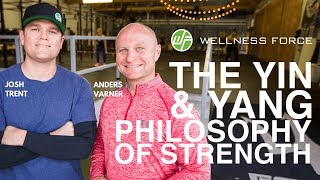
A podcast interview (Wellness Force Radio episode 164) in which host Josh Trent interviews Anders Varner about his journey from intense CrossFit/strength training to a more balanced approach emphasizing breath, mindfulness, and longevity. Varner describes burnout and injury from continual high-intensity training, the role of breath/meditation in nervous-system regulation, and his Breath–Balance–Behavior framework (and partnership with Dr. Teresa Larson) applied to programs like The Low Back Fix and Yin Strength training.
Chapters
In learning CrossFit, it was awesome. I opened a gym. I got my chops. I learned about movement. I learned how this whole system goes together to train people and talk about movement and connect with people. I am forever grateful. But there's some holes in it, and the holes are that if you do it every day, forever, you're going to get so burned out and your body's not going to be able to handle it. I have no problem with intensity, but what do we need for happiness? Longevity, joint health, tissue health, mindset. Where's the mindset in go hard? We can't slow down enough. So you have a whole bunch of people training like warriors when they sit at their desk all day. That's not a system for help.
That was Anders Varner, and this is episode 164 of Wellness Force Radio. What's up, my friend? It's your host, Josh Trent. And welcome back to another episode for your weekly access to global experts in all things things wellness as we discover the physical and emotional intelligence we need to live life well. In this episode, we're bringing you a bombshell conversation recorded live here in San Diego with my new friend, Anders Varner. We bring you this podcast in partnership with our hashtag standtallseries from Intelliskin and Dr. Tim Brown, the creator of smart compression technology that cues our body through.
Tactile response to stand taller and slouch less. And today, we're talking about balance.
It's kind of a word that most.
People strive for, yet in my opinion.
It'S the balancing of our behaviors and what Anders calls the yin yang, the dark and the light, the masculine, the.
Feminine, the in, the out. This is the philosophy that we can.
Apply to strength and body intelligence. And it's why we're actually doing the work, so we can become more smart in our body. And we know that movement is medicine, but Anders believes actually that meditation is vital for a healthy mind and body. And coming from the co founder, strength coach and movement specialist of the low back fix and the strength specialist at Movement rx, Anders is here on the show to talk about his own personal journey from ego to service, from CrossFit to injury to discovering his own yin and yang inside through stillness and breath awareness. So take a deep breath and be aware of how amazing that feels right now to give yourself an instant state change. And while we thank our show sponsor, Organifi, creators of Organifi Green Juice. Now, this is cool because as I'm recording this message for us right now, I'm looking out my window, there's a beam of sun coming in and there's green juice. For my third serving, I actually had three packets today, which I typically only have two, but I had one of those days. I know you can relate where the.
Tasks were like piling really high.
So rather than grabbing a third coffee, I chose to get in my micronutrients. And you can do that too. Right now, just hop over to organifyshop.com, enter code wellnessforce and because you are a part of this podcast with us, you get 20% off the entire website. Not just the green juice, but the entire site. Head over to OrganicShop.com and use code WellnessForce for 20% off your nutrient dense juice powder that can give you more energy and rise to the demand of your day. And the day that we recorded this podcast with Anders, I actually had my.
Videographer, my friend Colin Leibold with me.
So make sure you go over to the show notes@wellnessforce.com 164 Watch the vlog with Anders. It was a really cool video shoot that we did where you got to see kind of behind the scenes of a podcast. And by the end of this podcast going to have a much deeper level of physical intelligence. You'll learn why Anders teamed up with physical therapist Dr. Teresa Larson. How Anders believes that CrossFit has changed and unfortunately has lost somewhat of its authenticity. How this relates to your life. Somebody who's seeking a higher level of physical intelligence and the secret sauce to becoming a fit and healthy human without getting injured and burnt out. Because as Anders says, when you get to know your body through breathing, you don't have to worry about living in pain anymore. When you focus on your breath, you're nurturing your own body from a place.
Of self love and self care.
Let's drop in live and in person with Anders Varner.
So we're hanging out at Anders Varner's gym, which is above a CrossFit gym, which is actually not a gym. This is a chiropractic office. It's also a movement therapy office. Where are we sitting, man? I feel like we're in the epicenter.
Of movement glory, Movement Rx, integrated health. So that's our physical therapy, hormone therapy, I guess you could call body comp, nutrition therapy. There's massage therapy, there's some chiropractic, and then I do some personal training and stuff in here. And this is our home.
All the health people, all the health peeps are here. And it's like, you know, we met digitally first. It's so funny. You know, there's this like dual side of technology where it can disconnect us. But you and I are sitting here because of technology. You reached out to me and you had this incredible article which is really like the undercurrent of why we're here, man. And it was this intersection of like yin and yang and strength. And your story of charging for like two decades only to come to this point where you're like, something's not working. And you had met up with Dr. Teresa Larson and you know, walk us through the beginning of this, because at.
13, that was your real training.
That's where you cut your teeth with training at 13. How, how much did you weigh when you were 13?
I couldn't even tell you. But whatever it is, I was leaving home and the people that I was going to play sports against were much larger. And that was when my dad introduced me to the gym and was like, hey, we need to learn how to squat.
Was your dad in strength himself?
Yeah. So that was probably something that was like very consistent in his life as well, like training. He played college baseball, so he was aware, like, hey, when you get to this level, you're going to have to do this anyways. We might as well get a four year head start on all this stuff. So as I was shipping out, we spent the summer getting strong and learning. I mean, I say getting strong. I was 13 years old. I had no freaking clue what I was doing.
It's so funny that some people don't want 13 year olds to train.
No, you should totally do that. You should just work hard for something. Yes. I don't care if it's.
That's a lifting weight there.
Just work hard.
Yes.
Learn how to work hard at that age. So yeah, I trained all through high school and even that training was rather lost. Like I was following programs. My dad was really smart. He knew what was going on. I was training. If any of those wrestling nerds out there, Great Bridge High school was the high school that I would have gone to. So I was training with the wrestling team and they won like 13 state championships in Virginia. So really high level, like people getting after it. Like my first introduction to the gym was probably significantly more aggressive and a much higher conversation or a much more elevated conversation than like many people ever get to. Like they go to a 24 Hour Fitness because like that's where the gym is. Mine was at the bottom of the stadium in like a dingy weight room and there was kids trying to be state champions.
You Were like Lou Ferrigno and Pumping Iron. But you were 13.
Honestly, like, that's exactly what it felt like. It was like, why is everything so dirty? There'd be, like a fight, like an actual fist fight over the music. And I'd be like, who are these people? Like, oh, they're just wrestlers. Like, this is what they do. This is how they solve problems. They don't really like cauliflower ear. And you're just like, where? What? How did I get stuck, man?
So when you're at that age, you're coming from, like, you know, the forged process of iron and not exactly like, a flower field where everything's polite. Like, you talked about yin and Yang. That came a lot later way that awareness of meditation and breath work and things like that.
You play this story out over, you know, six years or so. And we get after College and this CrossFit thing hits, which is not just intense training, but it's competition on top of that. So it's like I had this huge background. I already knew how to do all the movements. Wasn't really, like, into Olympic lifting, but I had this baseline of strength. Like, I'm already stronger than the majority of people I know. I already have this idea of the weight room. I already understand training methodologies. So when CrossFit hit, it was like, okay, I'm just going to train myself to be better than my training partners. And it was 2006 when we found this. 2007, maybe.
When was the very first year of CrossFit?
I want to say, like, 2002.
It had, like, the clown throwing up as their mascot.
So you can go way back in the archives if you really want. And there's actually. So that was when I fell in love with all of it, where it was really, really small group of people doing it. I like to say that I'm like, inside the first 2000 people that ever did CrossFit. Do I know if that's the right number? I don't know. But it was just. It was so small and such a. I knew three people. And I would go to a gym to learn how to be better at this thing or, like, find a set of rings, and I'd have to travel 30 minutes away. So even when I moved to San Diego in 2009, 2010, I was training for what was the sectionals at that time, because they couldn't even field a big enough thing to have the Open. I would leave PB Pacific Beach. I would get on a bus. I didn't even have a car out here. I would get on a bus. I would take the bus to Old Town and then I would get on a train and I would take the train downtown. Me getting to the gym just so I could do CrossFit and train with bumper plates was like an hour long process every day.
And this is dedication.
I wanted to be the best.
Yeah.
I couldn't go to 24 Hour Fitness to do what I needed to do.
Plus, they'd be looking at you weird. They don't have the right equipment. And, you know, I'm thinking about even like going back to when you're 13, your dad's like, this is what strength really is being forged in the basement, basically in your community. And now I'm thinking about like you've risen to, you know, search really within yourself.
Yeah.
And find a new way to continue on in this fitness industry. Which, by the way, I'm so glad we're talking about this today. Man, it is so perfect timing to talk about yin and yang and how that applies to the fitness industry because we have still kind of this old adage, this old paradigm that's broken where it's like if you act a certain way and if you have a certain looking body, well, then you're accepted in the fitness space. And I would say it's over half the people that still believe in that. So we're here to cut that out. How would you describe that paradigm?
Well, if you look the part, then people just assume, you know, what's going on. But I can just promise you, whatever's going on, if that intensity thing is the thing that you chase and you believe, the commercialism that goes into that intensity and the vibe of feeling like you're dead at the end of your workout, you're just going to burn out.
Yeah.
Like, how long do you want to be in shape for? How long do you want to have this idea of physical freedom? It should be forever. I want to live and I think with some technology and modern day medicine, I think I'm going to get to 120.
Peter Diamandis here in San Diego has this Life center, like Life Extension Center. There is tests coming down the line, Anders, that will blow anyone's mind.
I think 120 is very doable.
It's absolutely doable. So. So to go back though this fitness paradigm, it's like we have people that really. It's a bit of posturing. It's a lot of posturing, you and I. I think I fell into that when I was a trainer.
I thought I Was like, were you.
Really good at puffing your chest out? Yeah.
Yeah. Or like the. The in gym, stare down. We're like, right, what's that guy doing? I'll do a little bit more. And like, yeah, it's. It's. There's a lot of ego. And the ego chases us around when we're 20 years old. Like, you're not going to escape that. But when you get to a point where you realize, I'm either injured or I can't figure out how I'm going to do this for the rest of my life because I'm just beat up. So the thing that happened to me in learning CrossFit, it was awesome. I opened a gym, I got my chops. I learned about movement. I learned how this whole system goes together. I learned how to run a business. I learned so much. I am forever grateful to Greg Glassman and putting this platform together that we learned how to train people and talk about movement and connect with people. But there's some holes in it, and the holes are that if you do it every day, forever, you're going to get so burned out and your body's not going to be able to handle it. So then you get nicks and dings and little injuries that build up. And because the answer is, hey, let's scale it and do less, that's not a system for health. You should be able to do the thing and be able to answer questions about longevity, answer questions about joint health, tissue health, mindset. Where's the mindset? And go hard.
Yep.
We can't slow down enough. So you have a whole bunch of people training like warriors when they sit at their desk all day. Let's have a conversation about what do we need for happiness, Longevity, and how do you piece all those together? So if there is this yin and the yang side of things, and we have to train down, regulation and moving slowly. Yeah. I have no problem with intensity. But what about training to move slower?
Yeah.
Like, we have to satisfy both ends. Or what happened to me is you get burnout. And that burnout starts with little nicks and dings. And then you start asking these questions, like, man, I've been dealing with this, like, shoulder thing and this knee thing for six months now. What am I doing? Why am I doing this? And then that leads into your nervous system, and you're like, God, I gotta show up to this gym. And if these people keep doing what I tell them to do, they're gonna be burnout and hurt like me. So how can I change the message to make that a little bit better. I had no idea you had operated.
In one way for so long. For quite a while, too. You had like a 2000 pound three lift max. What was it? Bench, squat and clean.
So.
And you have your name on a garage door somewhere in like, in like the annals, history in strength training land. Tell us about that. Because once you got to that point, then you were like, hold on, I need the breath.
Yeah, that's a really cool story. So in 2012, John Cena walked into my gym and.
John Cena, the WWF guy?
Yeah, if that's how you remember him. I think a lot of people know more as like a movie star.
Is he a movie star too? Yeah, I don't watch TV anymore, man.
I love that I got rid of mine too. If so, this is all part of it, I guess, and why it's such an important and phenomenal relationship in my life. But he is incredible. So he walked in in 2012, worked out, it was super simple. I was planning on taking the day off. And he walked in. Clearly, we're not taking the day off now. We lifted. He handed us $300. Asked if him and his now fiance, Nikki Bella could be members at the gym. I literally thought, like, this is just what he does. Like, he drops in and he's over generous and we'll never see him again. He showed up a lot.
How did he find you? Like, how did he know about you? Had you built a name in the CrossFit community and he just understood who you were?
I think that a lot of these people that are into strength training, like, know that you can go into a CrossFit gym and you're going to get bumper plates, you're going to get pretty good bars. You're not going to have to deal with a bunch of machines. So let's just call the local CrossFit gym. They'll let us come in. And that's kind of what I assumed we were. Yeah, he came back, though, and he came back a lot. And he would come back, you know, for like a day and then have to go back out on the road. Or sometimes he'd be home for like three months and that's when things would be really awesome. But my job just turned into being his training partner. Like, it's not about me. I need to make sure that the music's right. I need to make sure that the conversation.
What kind of music did John Cena listen to?
Well, he's got like a number. He's like, on the Billboards back in the day. He's got a rap album that he does. Yeah. Like his intro song is his own rap album that he did with. I don't even know who he did it with. But love some 90s rap. Like, it's just, he's just a regular dude. Right. And. But when someone like that comes in, like he's working, like he's not training for. He's. He's got his body to take care of. Like he's getting slammed by 400 pound men on the nightly.
Yeah.
And so it's his job. So as the gym owner, your job is to. Okay, like I'm here, let's get to work. Do you need some more energy? Well, I'll kill myself today. Let's go.
When you started training with John Cena, were you already experiencing the tweaks and the pangs? Like how far along that journey were you already?
So it was a three and a half year long thing. So we met and I was ready to rock. Like, I was at my highest. So it's like 29 or something like that. Like I'm, I was in my, I was in, I was in good shape. Yeah.
Hormones are popping. At 29.
I was ready to go. Like, I don't know, there's this thing that happens where like you've trained your whole life and you have no clue why you're really doing this. It's just like, I enjoy this. And then one day John Cena walks in the room and you're like, oh, I can play. Like, let's go. I know that I can do this. And there's a weird confidence and a lot of ego of like, okay, like, John Cena's here. Let's rage. I'm not afraid of this.
Yeah, it's really like you tap into your ego. I feel like there's always this pendulum, especially in the fitness space of. Here's the line of perfect balance. Balance, right. We're never going to be there. But the pendulum goes, ego, heart, ego, heart. If it stays on one side too much, like if you're all heart 24 7, well, then your training is probably going to suffer. But if you're just in your ego 24 7, well then your heart's definitely going to suffer and you won't know how to go down to the beach and breathe.
I got to this point, he invited us after three years or so. It was right around three years, my partner and I, he kind of walked over and he was like, hey, you guys want to come to Florida? I Was like, yeah. So after SummerSlam or something up in la, he chartered a jet for us and we went to Tampa. Inside their gym, they have this. It's a private gym. They have this thing called the One Ton Club. And snatch, clean, jerk, deadlift, bench press, squat, get to £2,000. However, whatever it takes, get to £2,000, you get your name written on his door for forever.
Wow.
So, yeah, I hit those numbers. They're all in the article, but they're pretty good numbers to get there. It's tough. It was like 2011 pounds, I think I hit. And if you watch Total Divas or whatever, any weightlifting videos, that's the biggest trophy of my life. I started this thing when I was 13. I had no idea where I was going and where the barbell has led me. Like, it led me to John Cena's home in Tampa, Florida. And I have my name written on this, like, Legends Garage door man.
I feel like this is what happens in life when you just follow something from a place of pure curiosity. Like, that's why you and I are sitting here.
Totally true.
I, like, genuinely want to pick this article apart, this yin yang strength article, because I think it came to you based on you receiving this contrast for a long time, that it made you change.
Yeah.
Like, there wasn't a choice for you not to change. And when you wrote in the article about really achieving this kind of continuum of balance and how that leads to longevity, contrast that for us, man. Because you get to this point, Theresa Larson tells you, go to the beach, take some breaths. You couldn't take 10 breaths and walk down to the beach.
Yeah.
And for a guy that can hit 2,000 pounds in lifts, but you couldn't take 10 deep breaths, hard to go slow.
So after this moment happened, I kind of had this thing. I had really, like, broken up with the CrossFit methodology. My professional life had led me far away from that. Even though I owned a CrossFit gym, I had rebranded the gym. I just wanted out of that world. It was too much of a container for me. And as it grew, the messaging got really weird. And I just didn't want to. I just wanted my own brand.
What was weird about the messaging?
Like, kind of everything we've talked about, like, it just. It exceeded. You know, what I often compare it to is, like, if you went to college and your favorite college band, like, you saw them every Thursday night, you had a couple drinks, like, it was just like they were your band. And then all of a sudden, like, now they're Winning, like, Grammys, and you're like. But the messaging just got so washed up along the way.
Changes. The authenticity gets lost.
And all the. Like, you go to the competitions and it used to be like, I get that person. Like, we are friends, even though I don't really know them. It's small, it's tight, it's aggressive. And now you go there and it's like, all the weird shirts and, like, the socks, and it's just like, those aren't. There's nothing wrong with those people. They're just not my people.
Yeah, the message, I just misconstrue.
I lost ownership of that word. So, like, if you Google CrossFit and Pacific beach, four gyms show up. There's not enough space in there for, like, a personal trainer that owns a gym to succeed because you have to share that word with everyone else. So on a professional level, it drove me crazy. You commit all this time and all this energy to somebody, and then they walk out into the real world. And it's like, I'm going to tell my friends how awesome this is. They go, so, what have you been doing? I've been doing CrossFit. Let's Google that. Now there's four gyms. And it's like, no, no, no, no, no, no. It's my brain. It's my time. I'm the one that's giving you this message and this belief system. We got to change this. And so that became really frustrating on a. Just on a professional side of things. But then the methodology, it's too intense. Like, a lot of people, it's. It's just not for everyone.
Don't you think that that's true for all, though? Like, not one thing is for everyone 100% yet. It's so intoxicating. It's almost like this syrupy, sweet liquid that people pass out, not just at CrossFit, but in anything. Yoga is like this. It's easy for somebody to fall into a trap of like, well, this is my one thing, and I only do this thing.
People love attaching themselves to something, right? It's like, no. And then they'll defend it, like, to the death. And I was that person with CrossFit. Like, I would just defend it.
Like, how do you know somebody does CrossFit? Don't worry, they'll tell you.
They'll let you know very quickly. Yeah. So I had broken up with the methodology. I had kind of like, achieved this just, like, unknown, massive goal of getting to Tampa, training with this just prolific human being that Was had become, like, my friend and mentor and someone that I could just. I just watched him grow even 15 years later down into who he is now, this, like, movie star. And, like, I just watched from the first day I met him to even today. Like, I know how hard he works.
Yeah.
And it was always very inspiring. And then, like, you just kind of hit this thing where it's like, man, the barbell took me to this place. Like, that's incredible. And I was broken. I was totally broken. My ankles suck, my knees suck, my hips, like, my shoulder sucks. I've dropped barbells on my back and, like, had my arm, like, feel like it was about to rip off. Like, there's so many things that happen in this progression to being the absolute best that you can be in something. Like, you have to commit everything to it. And in that commitment, you're not thinking about, am I going to do this when I'm 70? No, you're thinking, like, I have to do this today. And every day there's this pressure on yourself. Like, I have to be the best. I have to be better than yesterday.
And it just sounds exhausting.
It's terribly exhausting. So when you break up with the methodology and you break up with. And you're. You're going through this, like, growth state, like, I got married. That's a really crazy one. I have, like, a mortgage. I have to, like, run this business. And, like, the priorities, whether you want them to shift or not, your life is going to continue on. So you think, man, I love this movement. Like, how am I going to do this forever? Now I gotta change some things up. I'm really unhappy. My body physically doesn't want it. Emotionally, I've disconnected from this. The messaging of what the gym originally set out to do. And I don't want other people going in the same direction as me. So Teresa Dr. T, she had just launched her book Warrior. I had talked to her multiple times of just, like, her struggles that she talks about in the book and how she gets over them and, like, some of the work. And I just kind of called her and I was like, hey, we got to sit down. Going through this kind of thing where I have to. I need a rebirth of me. Like, I don't know who it is. I've been doing this thing and been defined by this thing so long. I don't know where to go. I don't even know how to start. And she was like, look, I'll be your coach. Go down to the beach and just try and count 10 breaths? Yeah, right. That's super hard. Like, that's so incredibly challenging because I'm like this meathead. Like, I can do anything. No, no, no, no, no, no, no. That is hard.
Yes.
You can't do that. Three and a half years later of learning how to meditate and do all this, I still struggle with that. And that really keeps me coming back to it because I know it's such a skill to be able to slow down because it's also one of those skills where it's like, the slower you breathe, the better you get at it, the harder it becomes. Like, now you have to focus longer. Your ten breaths may turn into a four minute long thing. And, you know, there's just such a process to understanding. And then all of a sudden, now you're in it. Now you have to sit there and watch your brain. And that's a wild process. So I started heading down this path of like, man, I'm questioning all of the stories that I've believed in my life. Like, I'm watching my brain just like run through everything. And then you have to kind of question, like, is that a real one or am I making that one up? Is that a real story?
Am I my thoughts or am I the observer behind the thoughts?
Yeah, like, I don't know. I don't know which one's really true. So you have to work through that and then you get through that level. It's like, should be, nope, you're not good. There's more to get through. Like, we got to keep peeling this thing back and find out what really motivates you. Where do you want things to go? And then let's create a path instead of like, attaching yourself to the next thing or continuing to be somebody that's unhealthy. Like, work through some of the stories and then rebuild from there. And that is where learning how to breathe and slowing down and creating this idea of like yin strength training came from was, hey, let's just train going slow, and then we can build on it to start going fast.
This came into your messaging too, because now you're about breath, balance, and behavior. These three things that all of us need in life. And by the way, we deserve them. It's not like, you know, I have to have more balance, I have to have more breath. It's even in the striving and the tension to get those things that actually can block us from just allowing those things to be this breath and balance and behavior. Why did you choose that methodology?
The simplest way is the what? How? Why? Right. Like, what do we use to heal people? Let's just sit down and breathe. Sit still. Don't do anything. How?
It's so hard for so many people.
How? Well, when we learn how to breathe, then we can start to create some balance in our lives. And why are we doing this? Well, we're doing it to create behavior change. We're doing it so that we can design our own life and listen to the stories that we find important. And then we can create a system around that. Like, so many people just let this life happen to them. Like, oh, I got to go do this now. I got to go do that. No, no, no. You're actually choosing to go do all those things. You're choosing to go to a gym and do a workout program that you may not like. You can create an experience in your workout or in your physical life that's inspiring to you, that keeps you going because it's built around just the things that you find important. And that became the message of, like, if I can just sit down and work on, like, a transition into my workout, like, what does my body really need? Well, I'm an entrepreneur. I'm married. I've got. Just like everyone else. We all have shit.
Everybody's got shit.
Right?
Isn't that so freeing just to talk about that? Yeah, we all have shit.
Like, if I were to tell you the shit, it'd be stupid because no.
One got yours, too.
Yeah, yours. You're like, well, mine's more important, but we all got it.
Yeah.
So how do we deal with it? Well, the easiest way to deal with it for me is like to focus on the transitions. I'm always going to have stuff at work going on. I'm always going to have stuff at home going on. I'm always going to. Every aspect of your life has this stuff. So in the transition of that, instead of bringing work with me home or home with me to work, let's just work on that transition point and try and create a little bit of space. And now it's. I recognize that I need to deal with that later. And now I'm here. Now I'm at work. I need to get all these things done, and they need to be good. If you carry all that stuff with you, your performance is going to suffer. All the things suffer because you're just carrying everything with you. Get rid of it. Work on the transition period. Create space so that you can enter into the next place a little bit more mindful, a little bit more aware, a little Bit more emotionally attached. And maybe not even emotionally attached, but more present, I guess you could call it.
What would you say is one of the biggest things that you learned from the barbell? Like, what did the barbell teach you? What does it continue to teach you?
Man, this is so great. So, so grit, the ability to just tenacity, like being 100% committed to something. So the barbell is just this, like, it's a widget, right. Of the personality traits that allow you to be successful. So you have to show up every day, just show up. Most people don't do that.
That's like more than half.
It's unbelievable, right? Like most people. And then when you show up, be there, fully present. Are you going to make that lift? Well, that's the same as. Are you going to get the article in on time. Us entrepreneurs, we don't have deadlines. No one's really telling us when we have to do it. So you got to put that stuff. You have to show up. It's 10 hours a day. If you want to just be average, like, you have to show up and put your time in and dedicate yourself to a skill. So it took me 20 years to get my name written on John Cena's wall. I didn't even know that was the start. How long am I going to work as a fitness person? The rest of my life. So how do I put all these little tiny pieces together? How do I learn all the intricacies of back squatting? In the same way that I'm learning business, and in the same way I'm learning helping people, teaching them how to breathe. The expansion of knowledge goes in all directions. And if you can stick to the personality traits of grit, tenacity, showing up, like being fully present, fully committed, everything works out.
And I don't care who you are or what your discipline is, whether it's martial arts or swimming or Olympic sports or weight training or yoga or anything you do, you have to continuously show up and be present. And that is a thread that applies to relationships, to committed partnership, to everything else. And I think sometimes parents that have kids miss this. Like, they don't get their kid involved in sports because they don't want them to get hurt. But yet, paradoxically, if they were to put their kids in sports, I think all kids, it should be mandatory to get kids in some type of athletic. Yeah, it doesn't have to be barbell training, doesn't have to be strength training. But they need, they must, they deserve, so that they can build their emotional Acumen to do a sport or something that gets them out of their head and into their body. Because there's trust when we get people there, man.
And just being around community of people, like, stuff like that. Like, you're going to. You have to work hard. People don't freaking work hard. They don't understand. Like, how long have you been a trainer? Coach?
I trained for 10 years.
Yeah.
So now I'm just having real conversations that matter about physical and emotional intelligence with experts like you.
Yeah.
But 10 years in gyms, like, I learned some things.
Yeah.
I understood what it took to actually take someone from thinking they can't do something to helping them and guiding them and putting my arm around them both physically and emotionally. To allow them to step up on a box holding 20 pounds when they didn't even think they could step on the box.
Totally. And this is the. The really goes back to what you were talking about earlier. It's like, when do you, when do you have this? Like, what does it all encompass after 20 years? Like, well, now I realize, like, if I hand someone a workout and they're like, oh, that's hard, they're not going to do it. So I don't even worry about like programming, whatever. How do I program a life so that you actually want to show up and feel inspired to take action. Like, that is a way harder problem.
There's nothing sexy about running on a treadmill anymore.
No.
And this is why we see, like, we're coming up to the new year here. This show's gonna come out in January, so people will kind of be at the tail end of like, okay, the whole gym thing didn't really work. Let me actually go to a movement place. Let me go to a studio. Let me go to an actual club where people care about me. And I don't want to talk total shit about 24 hour fitnesses and all these different places. But they're built on breakage. These big clubs, these big box clubs, they're built on people not going in and just collecting eft in the background. Does that just drive you insane? Being in the fitness space?
It. It's a model, it serves its purpose. And to be honest with you, now that my fitness is such an internal process, I don't mind going to them because I don't have to talk to people. I don't have to get wrapped up in the culture. It's just what I want it to be. So hotel gyms, which I used to hate because they're like so bland and now I Can go into a hotel gym and it's like, this is a really good place to like meditate for 10 minutes and then I've got some weights in here and I can just kind of like no one's going to be using it. No one ever goes into them. But now it's like I can do some like cool movement things. Like your movement flow. If you did that in the middle of a 24 Hour Fitness, it looks kind of weird. Yeah, really weird. If you go into a CrossFit gym.
Especially if your shirt's off.
Even if you go into a CrossFit gym where people are like actually training and everyone's really dedicated to what they're doing. When you do some of the more flowy, maybe attacking fitness from like if there's a feminine and a masculine, maybe more on the feminine side of like flowing movement, linking things together where it's not so aggressive and weight based, you're gonna get some weird looks.
Yeah.
So it's cool to find some places here and there that you're allowed to go in and like explore yourself. That's why I love yoga studios. And I, I was the most adamant. Like yoga is terrible. Like I would have argued that forever. One I didn't understand it. Take some practice to understand these things which I'm learning still. But it's cool to go into a group and go to like a meditation class or a yin class and that is where. So when I went to the beach to start learning this, just like counting 10 breaths, realized there's a lot of benefit to this. Then I downloaded the Headspace app and it was like, oh, there's like a practice to this. Like super cool. Like I can get better at this and like learn and there's like steps to it. And then the final, well not even the final, but the, the next step for me was like, now I'm able to go and do this around other people. Like I'm confident in my breath, I'm confident in being in that space. Like how do I do this around other people now? And going into like some yin yoga classes was like really, really cool. So that's like the really hardcore dedicated practice that I have. And then I have a daily practice that is, you know, 20ish minutes of just get my day started at a lower stress level than if I just went and checked my emails.
Man, the progression is real. I think for a lot of people, you know, they might be doing one thing and they're like, okay, I'm feeling this transition. Why don't I just go immediately to like a core power hot yoga class and sweat it out for 90 minutes. No, do not do that.
Yeah.
Do not start there. Like, go to the beach and just breathe. Or, you know, you talk about breath, balance, and behavior. Like, there's a reason you put breath in the beginning.
Yeah, that's. It's the simplest way to just recenter yourself. I mean, it can be a minute, it can be three deep breaths. It's the perfect tool to just look internally for a second. And then on top of that, if you really want to get into the nervous system, benefits and all that stuff. Yeah. You need to get into the parasympathetic. Imagine when I work with clients, it's okay, so where do you think on a scale of like 1 to 10, your general stress lies on a daily basis and it's, oh, I'm probably somewhere around like a six or a seven. It's like, okay, so if something bad happens, someone cut you off in traffic where you're just going to jump to a nine, and now you're flipping people off and you're yelling at your windshield, basically you're not solving anything. But if we can maybe do 10 minutes of breathing before your day starts. What if we entered that conversation at like a four and now that person cuts you off and you're just at a six? It's like, no, it's like you got out of bed yesterday.
That's such a good point. It's almost like you're emotionally priming your nervous system to not react with such a big needle sweep.
Yeah. Such a mechanism to just being able to like, yeah, whatever. Cool. I'm not getting wrapped up in that. It's the easiest thing that I have ever found to just enter every situation and transition into them in a manner that I am in control of my own emotions and the way that I react.
You work with a lot of people here in this studio that really, I would think the breath would be pretty challenging to cue on a lot of different lifts or movements because it's easy to just be like, pick up that barbell, throw that ball against the wall. But to cue someone to breathe, it can be a really kind of. Not scary. That's the wrong word. It's not a scary thing to do, but it's a little bit like teeter totter. In the beginning of learning how to truly breathe and be in your body.
It'S the thing they least expect. So they give you the weird look. But it's also the thing that is it opens the gateway. I wish more trainers and more people that are in my field understood it. Because as soon as I get you to sit down for two to three minutes, I own that conversation. Now I've entered into your brain like, we're not here just working out now. Now I've got you dialed in on. I've calmed you down and made you more present. And now everything I say, you're actually listening to instead of thinking about what's going on at work, what's going on at home. Now we can actually train. Now I have the ability to get you inside your body, talk about how it affects outside your body, your physical space. I have the ability to have that conversation with you not because I'm the greatest trainer in the world, but because we worked on that transition. Like, hey, now you're here with me. Everything else doesn't matter.
This is the biggest part about, like, a real relationship. So there's a lot of wearables coming out right now. There's a ton of technology that's, like, driving, not just fitness, but all things wellness.
Yeah.
Like, anywhere you look, whether it's breath or movement or strength or nutrition, there are people that are making devices and they're doing their best thing. They're trying to figure it out, but nothing will ever replace a human. Working directly shoulder to shoulder, breath to breath with a human. That's something that I don't believe ever.
Should be scaled, which is super cool about this podcast. Doing how many? I don't do many of these things in person, so. Awesome. Sitting down with a human being, right? Yeah. We have real conversation.
It's a very different thing than compared to Skype.
Very much so.
And so my question for you in that regard is, like, how do you see training transforming in the next three to five years? We're going to see technology just explode. It's like a hockey stick on the graph chart. Right. I mean, it's everywhere. There are people like, you know, I'm wearing the ring, the OURA ring. I like it because it does give me better cues, so that when I sleep poorly, I'm like, okay, let me be mindful. Let me think about what I did yesterday so that I can show up in better sleep tomorrow.
Yeah.
So that's my angle. I think technology can be wielded towards better wellness. But what do you feel, man? You're in sleep right now.
There's no way you haven't read Andy Galvin's book.
I had Andy Galpin on the podcast.
I saw that.
One of my favorites.
He's awesome.
One of my absolute favorite guests because he kind of like smacks the fitness industry on the side of the head. And he's like, you guys, wake up. There's a mindful way to use the tech. You do not have to fall into the trap.
Some people are so.
And I also interviewed Phil White on a different show as well.
That's awesome. Yeah, some people are really smart.
Like, some people are really smart.
There's like, hey, I'm a really great trainer. And then Galvin's like, I study muscle fibers. And you're like, oh, I'm gonna go over to my trainer hole over here.
Yes. But he's a very humble guy, though.
Awesome. He's a really, really nice guy.
He's not like in his ego even. We went on Joe Rogan.
Yeah.
He wasn't just like, well, I'm the best. I mean, he actually triggered a lot of people because he was talking about, like, well, you know, the answer is. It depends.
I love that answer. And it's only you can really answer that.
He's not trying to not take responsibility. And even in our conversation, man, like, you know, when you talk about breath and balance and behavior, it's not like once you achieve one of those things, you got it.
No.
It's a continuum of all three of those things.
And you mentioned the pendulum swinging from, you know, which side are you on? Like, it's all day long and it's. And that's in everything. So it's. It's very important when, if you get into the technology thing, don't get so attached to your numbers that you've lost your mind.
You are not your measurement. Your measurement's trying to tell you something, but you're not your measurement.
And it's. Which ones do you look at? Like, which readings?
I look at my temperature because I know that if my body's heating up, then my body might be fighting something. It's a great way for me to understand my athletic readiness. And then I also contrast the HRV reading.
Love that.
So if I have a low score hrv, I'm not going to go do sprints that day.
Yeah, right.
I'm going to take it easy. I'm gonna go for a walk or, you know, treat my body with love, man. The way that I see your work and why this is such a fun conversation is like, you have this breath, balance, and behavior, but then I almost get from you. Like, you also have a compass. One side faces love, one side faces fear.
Yeah. So if you get to make Through a smooth transition and understanding that you get to choose which lens you look at everything through. So enter each situation with a little bit more love. And all of a sudden, everyone around you is going to show that back to you. It's not like they're. Maybe this is tooting my own horn, but if you go out of your way to ask your Starbucks barista, the lady working the cash register at the grocery store, and look her in the eye and say, how are you doing? Do you know how many people they see every single day? They're on their phones. You're a nuisance in their life. If you're at working the cash register, you're that person taking money. Before you get to your car, before you're on your way to the next thing, take a second and just ask that person how they're doing. And you'd be amazed at how friendly that person is back to you. Just because you've gone out of your way to be mindful and say, like, hey, how you doing? Is today a good day? And just being present in there, it makes such a difference in walking into a situation of, I'm just gonna love everyone here. Like, how do you do that? Because it's so easy.
I love that we're sitting in a facility where some of the athletes that are just at the bleeding edge of growth train, and then we're here talking about emotional intelligence. This is why I enjoy your mind, man. And I'm thinking about the way that we can drive this narrative in the fitness and wellness spaces. This podcast is one channel, so a lot of people are going to feel connected to our message. But what are the other ways that you put your message out there online? And what are the ways that you talk about this breath and balance and behavior and this love and fear compass?
Yeah. So everything that we do in the way that we're able to affect anybody's lives really comes down to storytelling. And, you know, love it or hate it, social media is here, and what a beautiful platform to be able to tell stories. I'm here sitting with you. This is a different person than the three paragraphs you read on Instagram, but on that Instagram, it's still me. It's just a very edited version of a story that probably played out over, like, six years.
There's still clues in the highlight reel. Yeah, isn't there?
It is that. But, you know, I put a post up the other day about my relationship with Cena, and it's like, how many people did I, like, come up to? Me that don't see me that much. Don't see the daily grind. Don't see everything. Like, oh, you trained with that wrestling guy. That's awesome. Like, no, you don't get it. Like, when he comes in, I'm working. Like, I respect that guy more than anyone, but I'm working. It's my job to feed off his energy. It's my job to make that better. And with me there, you know, I have to make sure everything is just crisp. Like, it needs to be clean, it needs to be elevated. It needs to be all these things. So, like, yeah, I'm working out, but I'm working. That's my job. And if we can tell stories about that and get past maybe that, like, highlight. Like, check me out. I'm on the podcast today.
Yeah.
Like, no, I'm not just on the podcast telling you these stories because I want you to live a different life. I want you to find out who you are and design your own life, create your own opportunities. Really set everything that you're doing in a direction. And, you know, what are you paying attention to? Are you paying attention too much to Instagram? Like, you should probably break that up a little bit.
It's so funny, though, to see how many people like certain photos. And then there'll be somebody that's being raw and authentic, and it'll have, like, 20 likes. And then there'll be a girl's ass that'll have, like, 10,000 likes. And I'm just like, okay, it bothers me, but at the same time, I understand it. Like, I understand why it's like that. Because we're half beast and half spirit, Anders. Like, you know, and so we get to respect that. But you and I are talking about something that deserves just as much respect.
Yeah.
And it's our emotional evolution. How do we do this, man? This is a big question, but I'd love to hear what you think about this. So how do we respect the beast and the spirit?
To think that, like, I've just escaped the Matrix would be like, I'm still that same person. It's, which one do I pay attention to? And if you want to go downstairs and, like, get after it, I can tap into that thing. Like, I can still turn on the weights. I could still turn on. When I opened a business, I lost all my friends that I used to hang out with because they were still at the bar. I had to change. When I sold my gym, I went from having, like, 300 and something friends to, like, four. It's because I Had to move on. I had to recreate everything about me. And you have that opportunity. You just have to be okay with your own personal growth and knowing that, like, you're going to. You have to keep going. And if where you're living isn't authentic and it's not coming from a place of love and you would like to be more authentic and like to lead your place from a little bit more of a place of love or compassion, you can make that choice. And the best way to do that is to sit still, focus on your breath, find out who you are, create a little bit more balance in your life so that when you make a decision, that decision is authentic to you versus being led by all these external things that you can't control.
Being reactive versus being responsive. Like, if you can respond, you have to learn the skill of breathing.
I think you were the first person that I heard say that, like, reacting or reacting versus responding. And I was like, ooh, light bulb moment. I like that.
This is why we're sitting here, man. Because we're on the same wavelength, right? If there's rings of Saturn, we're on the white one, spinning around right now. And I want to ask you a few more questions before we wrap, because the way that you approach your training and methodology, how do you feel like this is going to grow? Like, what are you going to do online? What are you doing in our community here? How are you getting your message out there?
So partnering with Dr. Teresa. She's a physical therapist, and I'm a strength coach. And what we've created together is taking these three ideas, so breath, balance, and behavior. And we're putting them into programs. And every day we want people breathing. Like, that is step one. We teach not just strength conditioning. We change people that are in pain. Pain is our entry point into helping people realize there's a better way. We're learning so much about the behavioral patterns and understanding how the brain controls pain pathways. There's no pain pathway in our body. Like, we don't have a system designed for pain. Pain is a response that happens because something's not right. And your brain doesn't really have many mechanisms to handle those dysfunctional movement patterns or the inflammation in your tissues. So what does it do? It sends the pain signal. Like, stay away from your elbow. Well, why are we staying away from our elbow? There's nothing wrong with it. Well, you're probably missing, you know, you got a short bicep, you got a bad tricep, you've got a bad shoulder. We don't really know where it comes from. But if we can unravel all the tension and tightness that you feel, we're going to have a lot better. A much better chance of success. If I can just get you to chill out.
Yeah.
Like, some people have things that are wrong with them, and they need to be at doctors. Most people don't. Most people need to get rid of all the BS in their life.
Yep.
They need to slow down. They need to live a life that isn't so tense and tight, and they need to create a little bit of flow and smooth the process to getting into the gym. So it's not. Are you. Is. You know, like, sitting is the new smoking. Yeah, that's totally true. But you know what else sucks is taking on all this stress and not having a physical way to exert it. So it's. It's not just the sitting. It's stressed and tense and tight. And then the phone rings, and now your boss is. And if you handled all of that and then went on a walk, it would all kind of relieve itself.
Oh, my gosh. I'm flashing back right now to an interview we had with Dr. John Sullivan. He wrote the brain always wins. He works with NHL and NBA and all these top players. He's a psychologist, performance psychologist, and he was talking about how our body is this battery, and we have all these charges, all these stressors that come up all throughout the day. If we can't finally like, connect the negative side of the cable and let all the negativity out, then we're literally going home to the people we love. We're going to be intention around them, and then we're going to go maybe drink something or smoke something or just, like, numb it out, which is what I went through in my first kind of two decades of life was just numbing myself because I didn't know how to get it out there. And then football was actually kind of like the great equalizer, and then strength training and barbell. So I think for a lot of people, Anders, you know, they find movement or fitness as a way to just take the deep breath.
Yeah.
And just to kind of let out tears, emotional pain, and kind of discharge the battery here. Do you feel like that'll be your edge in 2018 is to help more people discharge the battery?
Yeah, I just. I want people to find a way to have a conversation with themselves and understand what they actually need. And for the majority of us, what you actually need is to slow down. You need to learn how to relieve Tension and stress out of your life. And then let's talk about lifting weights.
Yeah, let's go to your PR after you do your emotional PR first.
That baseline is in slowing down because everything else in our lives is so fast and it's not very sexy to talk about. We all want to be in the commercial dripping sweat, crazy six pack abs and like, look, that thing. But you're only going to get there if you can chill out and actually be able to make a decision and create a life aimed in that direction. The people that are just stressed out at work, stressed out on the five, stressed out, and then they go to the gym and it's like, man, now I'm in, now I'm hurt. I wonder what happened. You haven't chilled out all day long.
You know what I found too, and it's been like a year of real big growth for me on a personal level and even for the business is that the more that I've tried to force wellness force, the more my body and my health has suffered. And I had something that happened recently. It was a healing ceremony that I went through and I just saw everything as it really was. And this isn't airy fairy and I don't even care if it is because I just know it's true. It was this moment where I thought, wow, I've been making it so hard on myself. I've been kicking the shit out of myself. It doesn't have to be this challenging. And all the things that I had learned about breath and mindfulness and I've done a 10 day Vipassana and I've done all these things, none of that occurred to me because I was just so stuck in this sympathetically driven nervous system state. And it took going to a healing ceremony to kind of snap me back into reality, literally. And I thought to myself, okay, now I can see the success. Now I can see what's truly possible. Have you ever had a moment like that in your life? I'd love for you to share, man. For the people listening, like, what's been one of your biggest transformative moments when it comes to your relationship with yourself?
Breaking up with the CrossFit thing and selling my gym was the most recent gigantic turning point point that I had in my life. One I learned about so much. Like one being like marriage is a very real thing. Like when your wife goes through that process with you where you're, you don't know where the future really is. You just know you're being pulled in a very different direction. And where you have to show up to work every day is very unhealthy. Like it's not where you need to be. And what I'm doing now, very similar to what you're talking about is it feels like the right message. It feels like this is what people need. They need to learn how to kind of live by these three things, like sit down and learn how to breathe. Awesome. It's there all the time with you. If lifting weights is your thing, you have to go to the gym to find it. The breath, it's just right there. You can just hang out, go to your room anytime, you don't need it, right? And it sounds so hippie dippy, but it really, it's a tool. And you can make it as hippie dippy as you want. Just like you can make the barbell as meatheady as you want. It doesn't have to go there, but everybody should have a system in place for how you handle these stressors in life and events that happen to you. And you know, we talk about the balance piece, it's like, well, how are we managing external stressors, internal stressors, the structural balance in our body, all of those go into that. So that's kind of that next layer and I'm just being pulled in this direction. I'm not forcing it. If you try to force breathing down people's throats, it's not going to work. It's not going to work at all. It's like I walk up to some 22 year old right now that thinks I know everything, me, 10, 12 years ago, and it's like, I'm not going to listen to you. But when people want to hear, they get to this mid-30s, whatever magical age that is where things start getting weird. It's like, what are you guys working on over there? I'm really digging the messaging, I'm digging the voice you guys have created. It's like, well, come and hang out with us. We're on some really cool stuff right now. And your body's in pain. You're dealing with all these things, but I'm going to teach you this really simple thing. And then on top of that, we're going to layer some movement patterns in that are really healthy to your life. It's not the most sexy workout you've ever done, but you're going to learn about how your body moves so we can take these things and then like you don't have to worry about living in pain anymore. Your workout is just this time where we're Nurturing our own body. You talk about fear or love. Well, why don't you create a workout program where you enter it through a place of love? Like, I'm just going to love myself and how the external result doesn't matter to me.
The embodiment and the integration of all the lessons that you've learned. For someone as parting guidance here, like, what's one way that they can embody some of this breath, balance and behavior? If they wanted to do one, two, maybe three things today after watching this or listening to this, what can they do? Man? Like something tactical on the ground.
I would love if people woke up and had a simple morning routine of mindful movement. Lay on the ground, sit on a pillow, whatever it is. A minute to three minutes. And then just think about each joint in your body. Like, get some slow neck rolls in just to loosen up your neck. Learn about some range of motion in your shoulders. Put your arms over your head. Awesome. Like, if we can do that five times now, all of a sudden, everything we do for the rest of the day is going to be a little bit more of a corrective exercise than the terrible posture that you're going to be carrying with you. Right. Turn your abs on a little bit. Maybe do some glute bridges laying on the ground so your glutes are turned on, your abs will be turned on, and then we can get some knee movement in there. Like hit a couple squats. Squats. All of a sudden, we've slowed down. We've entered our day at a four instead of a six. That person cutting you off, you're going to be able to chill out. It's not a big deal. We've incorporated just this idea of mindful movement. Like, when you move mindfully, you learn what your hips are supposed to do. It's not a back squat. It's not a deadlift. It's no, my hips are supposed to go back. So let me push them back and turn my glutes on to squeeze my butt and open my hips up. So if we can incorporate some of those principles just into the first 10 minutes of your day, everything you do is built off of that structure now. And you know, where are you focusing your attention when you wake up? If you're focusing your attention on all of the things you have to do, it's a disaster. You have no idea where to focus.
We have an ancient brain, so all these stressors come up and it's so easy to fall into a trap of like, oh, my God, there's so many Things I have to do today. But if you just. Just make that commitment like you're talking about to do the mindful movement, I'd love. We're gonna actually. We're filming this. If you're watching this, if you're listening to this. And we'll have Anders maybe show myself where he can show us a few things that we can do in the morning.
Yeah.
Before we take off from the facility here, man, it's been such a rich conversation with you. I really enjoy how your brain works. I think that's why I've enjoyed this the most, man. But if people want to learn more about you and what you're up to, where do they go and tell us about your program for the low back fix?
So the low back fix is, I guess you could say the how Dr. Teresa and I. So the platform that I have kind of been working on and created is yin strength training. So it's this idea of slowing down, working on transitions, and then layering mindful movement on top of, you know, in. In a direction with a purpose that you have created in your own space. But here's our basic movement patterns that we need to be working on just to create movement nutrition. Dr. Te, in her book Warrior, created this leadership type platform, holding yourself accountable, leading you first. And when she was creating that, I was creating my strength conditioning, this yin strength training program. And we realized, like, these things need to be together. And the way that we're going to make the most change is find people that are in pain. Right. So we have a program called the low back fix, in which we're taking these breath, balance, and behavior pattern ideas, incorporating them into programs for people that are dealing with low back pain. We have shoulder programs, knee programs. Inside there is morning routines, clinics, accessory programs, the works. You can see us on Instagram at the low back Fix. I'm Anders Varner on Instagram and all the socials. Your movement Rx is the name of our company, and we would love to have anybody and everybody that is looking for a little bit more mindful way to approach training, come hang out with us.
And we've played at this fun space that really is whether you want to call it love or fear, whether you want breath, balance or behavior. I really just think it's what we were brought on this earth to do, which is to truly come from a place of how do we continually get just a little bit better each day, but not fall into the trap of the striving and have that be so uncomfortable? This has been what I'VE so enjoyed from you man. So thank you so much for coming on the podcast and make sure you watch our movements that we'll do. He'll take us through maybe a three part or two part or five part movement series that you can do in the morning. So check him out in the show notes as well. And Ali and I will be talking about this on the Wednesday Wellness Sports Wednesday podcast. We're going to review our top takeaways from Anders where we'll really unpack. Hey, we know we went over a lot because we went to some fun places today. What are maybe the five to seven things that you can do from this podcast? So this is Josh and Anders from San Diego signing off.
Hey my friend, thank you for hanging out and growing with me on today's show. Remember to hit subscribe Share this podcast with somebody you care about that you think gets to hear this message. Support the show by leaving a five star review for the podcast right now simply by tapping on your show artwork on your iPhone, click that purple link that says Review this this podcast. It helps the show reach more conscious and smart people like you and your voice will attract more world class guests that want to come on the show. So let them hear your voice. For all the downloads, videos, links and free resources mentioned on the episode go to wellnessforce.com radio and while you're at my house on the web, join us in the Wellness Force Community newsletter on that page and I'll send you four free guides around staying healthy with your eating, moving and sleeping while you travel. Join a of group people like you over at the Wellness Force Community Facebook page. This is where we talk about the.
Things that really matter.
We share our wins, inspirations, struggles and a lot more. So join us. Tap on the show artwork on your phone and hit that purple link that says Join the Facebook Group and I will welcome you at the door. Okay, now you get to go out into your world and create impact for the people that you care about. So until I see you again real soon, I'm wishing you love and wellness Sa.
More from Josh






Your child's future start before pregnancy... and even before conception! #podcast

MD Reveals: Your Healing Creates Your Child's Reality (The Souls Coming In Need Strong Bodies)



