166 Craig Cooper: Your New Prime
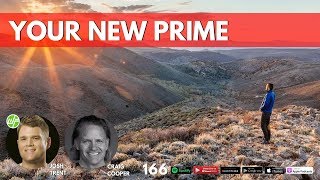
This is a recorded interview (Wellness Force Radio, episode 166) between host Josh Trent and guest Craig Cooper about thriving in middle age. Craig recounts a lifetime of inflammatory illnesses and genetic risks (type 2 diabetes, prostate cancer predisposition) that motivated his focus on 40+ men's health. Major themes: sexual health (physiology, risks of testosterone therapy, role of blood flow), lifestyle interventions (sleep, nutrition, fasting, exercise) that improve natural testosterone and metabolic health, social connection/tribes as a public-health issue (loneliness epidemic), concerns about pornography and dating apps reducing real-world intimacy, and cognitive health/Alzheimer’s prevention (diet, turmeric, ketosis, early detection). Practical takeaways: prioritize sleep (7 hours linked to ~20% T increase in studies), weight loss to raise testosterone (~1% T per pound lost as discussed), consider intermittent fasting (Craig practices 18–20 hour daily fasts), monitor fasting and post-meal blood glucose (pre-diabetes and diabetes thresholds quoted), and emphasize social connections and prevention over quick pharmaceutical fixes.
Chapters
So often you get to your 40s and your 50s and you think, you know what? This is it. You know, my sex life is like this. My partner relationships are this. I play golf with my buddies in the weekend. My physical shape is this. Whatever it might be, right? You feel like that's your lot. And my message is that it doesn't have to be like that. Your middle age is a time of thriving. It's not a time of complacency. And you have massive opportunities ahead of you at any level. You know, we're victims of the media. And my message is it doesn't have to be like that. There are a massive amount of lifestyle and other changes that you can make which can get you back on track. And sexual health is a big part of that because it's easier to pop the pill and it's just not going to help you. It's actually going to harm you in the long term.
That was Craig Cooper, and this is episode 166 of Wellness Force Radio. What's up, my friend? It's your host, Josh Trent. Welcome back to another episode for your weekly access to global experts in all things wellness as we discover the physical and emotional intelligence we need to live life well. In this podcast, we're talking about living life in the prime and no, I'm not talking about when all your hormones are fresh and kicking in your 20s. Today on the show, we're talking with TV host, Men's Health expert and the author of youf New Prime, Craig Cooper, about how all of us, well into our 40s and 50s and beyond, can live life to the absolute fullest, regardless of our past experiences or health journey. I'm stoked to bring you this podcast today in partnership with Intelliskin for our standtallseries bringing out the best of the best in physical intelligence. And today is going to deliver. I had a knockout conversation with Craig about better sex, eternal strength, and living a life of passion and energy as we age with grace. I mean, look, we all know that we're getting older. It may be inevitable. Well, it's totally inevitable, but it's actually no reason for us to give an excuse to sit back and let the natural quote, aging process occur. Craig has a really down to earth impactful way of writing. I know you, you're gonna love this episode and conversation where we kind of scratch the surface of Craig's deeper work. In his new book, you, New Prime, I also learned what Craig has overcome personally. This is not a man who's had perfect health his whole life. He's overcome some incredible odds to forge massive success both personally and professionally through eating, moving and sleeping, which we talk about a lot on the show, as well as controlling his thoughts, feelings and actions to now be able to help so many people across the world live their new prime. And also I've been getting a lot of positive messages about our breath reminder to start these podcasts knowing that everything we do starts with our breath. So take a big belly breath right now, hold it in and breathe it out because this is your breath break. And if you're on your phone, not if you're driving. If you're driving, do not look at your phone. But if you're walking or you're by your phone, make sure to check me out on Social Elnessforce on Instagram and Trent SD as well on Instagram. I've been posting the way that I keep my energy up throughout my day, especially getting rid of my 3pm crash from my friends over at Organifi, our show sponsor and creators of Organifi Green Juice. And for this month, let's talk about sleep more. How pivotal it is to get a solid night's sleep. I know you can relate to this. It's why I've actually created a new night ritual where I have the candles, I drink the turmeric and the reishi found in the gold infused superfood powder. It's got lemon balm, turmeric and other adaptogens to help me get that long, restful, nutritious, quality night's sleep. I've been actually seeing my data on the Oura ring reflect this as well. So if you're looking to have more nutritious sleep for February and any month anytime, hop to organifyshop.com enter code wellnessforce for 20% off, which is such a great discount when you combine it with the monthly auto ship. That's Organifishop.com and enter code Wellnessforce to save 20% off the gold. And they were kind enough to discount their entire website. So let's get right to the podcast with Craig, where by the end of this episode you'll have a higher level of intelligence around intermittent fasting, the power of social connection, cognitive health, intimacy with our partners in relationship, and the body's role to it. Why the amount of pornography people are consuming is affecting both brain and relationship, the data behind that and how Craig sees intermittent fasting playing into a life of wellness as we continuously fortify our body, our heart and our tribe. Just like the tribe we have in our Wellness Force community We know we're all walking this journey together. And as Craig says, loneliness and isolation have been studied to be the equivalent to the same effect as having a mental illness, smoking, and being obese. It's not just a social issue, it's a public health issue. Let's drop in together with Craig Cooper. So we're talking with Craig Cooper, world renowned author, entrepreneur, venture capitalist, mental health expert, and actor. And he also managed to be a husband and a father somewhere inside of all those things. Craig, welcome to Wellness Force Radio. Just so stoked you're here.
Hey, what's up, Josh?
I'm so excited for this man. You know Tim Brown, our partner with Intelliskin. He introduced us. That's how we're having this conversation. We're talking about, obviously, multiple degrees of physical intelligence today on the podcast. But I got to ask you, Craig, have you actually worn the Intelliskin? Have you put it on during a workout yet?
Yeah, that's crazy. And I kid you not, I have it on right now.
This is interesting timing. You're literally wearing it. Do you feel like your shoulders are pulled back a little bit?
I not only have the vest, but I actually have the pants on because I've been struggling with some back injuries due to obstacle racing training for the Spartan World Championships last year. And so I've actually got the pants on, which are realigning my hips to the right in order to direct that sort of stability on my posture as well. So how about that? And we didn't plan this time.
This is not scripted, you guys. This is actually coming through right now. When people look at you now, you know, your books and across television and the Internet, most people might look at you and they're like, this guy, Craig, he must be genetically gifted. But that is totally not the case. You had quite a bit of health problems, a lot of scares, actually, that needed medical attention when you were younger, but you did not. And this is what I love so much about your work we're diving into today. You did not let that control the outcome and the quality of your life. Craig, can you tell us what got you so passionate and fired up about health? Men's health specifically?
Well, I think far from being genetically gifted, I'm actually genetically cursed because, you know, ever since I was young, starting from nine years old, I've sort of struggled with sort of massive inflammatory disorders from, you know, I was in a coma when I was nine from encephalitis. I was. I nearly lost my left leg when I was 11 from osteomyelitis. I had sort of recurrent bouts of pericarditis through my later years starting when I was 18. And if you can sort of hear the sort of pattern here, they're all itises which are inflammation based. So if you sort of jump forward in sort of life, you know, 20 or 30 years, when I found out that I had sort of a genetic predisposition to type 2 diabetes as well as prostate cancer, you know, I've had this whole sort of package of disease which has surrounded me most of my life, which has kind of driven my passion around, you know, particularly sort of 40 plus men's health, you know, as both, you know, a personal endeavor and a selfish endeavor for myself, as well as, you know, a platform to, you know, educate other men who, you know, are not getting that information from, you know, traditional media. And, you know, most, you know, particularly from, you know, their health professionals. You know, I've struggled along this sort of genetic tightrope, as I call it, which is, you know, really a line that I walk which is either going to tip me into better wellness or tip me into more disease. And my passion and sort of mission is around giving myself and other men and their partners, lovers, wives and network the tools to be able to do that for themselves as well so they don't slip into disease, they thrive forward in life, they don't fall victim to all these diseases of sort of affluence and complacency. That's really been my mission, Josh.
Now, I'm curious too, because when I look at what you've been creating over the past five years, specifically, you're doing a lot, Craig. I mean, adventure capitalists. And you have many projects, many things going on. And I love quotes. You seem like you love words too, otherwise you probably would have not written this incredibly powerful book. Your new Prime. 30 days to better Sex, Eternal Strength and a kick ass life after 40. Right from the start, man. You added this quote from Calvin Coolidge and I really enjoyed this. It reads, nothing in this world can take the place of persistence. Talent will not. Nothing is more common than unsuccessful men with talent. Genius will not unrewarded. Genius is almost a proverb and education will not. The world is full of educated derelicts. Persistence and determination alone are omnipotent for sure. Why did you place that quote as a keynote?
I love that quote. And to me that's just driven, you know, my whole mission in life going forward because, you know, my parents got divorced when I was, you know, nine. I was out on the streets as a Kind of a professional skateboarder and surfer. Moved to literally before my 15th birthday on my own, camping in a tent on the Gold coast, surfing. I had no sort of platform or tribe around me or mentors to sort of drive me forward. And all I had was myself and my now wife of 30 years and asked for the plan. And it took us as individuals to sort of push forward and get me back to university and study economics, law and found all the companies that I founded. And so to me there is nothing more important than just continuing to drive forward in life. Luck obviously plays a huge part of it, but there's sayings around creating your own luck, but what is it? Luck is where opportunity meets circumstance.
Well, you're no stranger to luck. I mean, you were on a golf course with a friend in your 20s and you guys got hit by lightning. Talk about luck.
It was funny. I got sent a photo from a friend of mine yesterday who's actually golfing, an American Goldman Sachs banker actually golfing on that golf course yesterday and said, hey, I'm playing New South Wales Golf Course in Sydney. I said, dude, stay away from the six hole in storms. Because literally that's where it happened. Struck down and struck out by lightning when I was like 27, I think 28 years old.
I can't even imagine what that would feel like. And it's kind of just a mirror, Craig, of the other things that have happened for you in life. And I said that keyword for you because this is a real big question I want to ask you. I'm kind of burning for this one. You've had a lot of things happen for you. Some people might say, oh, well, it happened to me. I had to dodge cancer, I had to dodge disease, I had to dodge multiple itises, as you've had. If you were to take a breath and look within, what makes you realize that those things happen happen for you instead of to you?
I think the turning point for me was when I was 39 and I had my PSA tested, which is the prostate specific antigen test, which all men I think over 30 should get, because prostate cancer is occurring more and more in younger men and more and more aggressively in younger men. And the American Medical association and the U.S. preventative Task Force recommendations are still tied to the fact that prostate cancer is an old man's disease and that you shouldn't get tested until you're 55 or you've got a family history. I was tested when I was say 38, 39. My readings came back extremely high five six on the prostate cancer scale, which in the sort of traditional medical world, that's kind of the scary zone. So I got put through a whole medical system of biopsies and invasive testing. And at the time, Josh, it was all driven towards what I saw, the medical community's failing, which was just aggressively trying to find cancer rather than providing a support platform to prevent it. So, you know, I got put through two prostate biopsies. I got sort of spat out, you know, this whole medical system of, you know, oncologists and radiologists who wanted to burn and your surgeons who wanted to cut. Without any advice or information for me as to how I could move forward and actually prevent myself from actually getting prostate cancer. My tests all came back negative, but I had a very high reading of psa and I had this thing called prostate interepithelial neoplasia.
P I n say that 10 times fast.
Yeah, but it basically says that within 10 years you've got a 30 to 40% chance of getting prostate cancer. And so for a 39 year old, sort of like, you know, highly charged and active and, you know, sexually driven guy, it was just not a lifestyle that I wanted to embrace. So, you know, that basically was the wake up call for me. So if anything's really thrown me down, you know, a path and really sort of pivoted me onto focus around personal wellness, it was that because, look, men are basically useless, right? We don't get tested. We rely on our wives and partners as the chief health officers of the household. If you walk into any oncology clinic or any prostate oncology clinic or the like, 90% of the time it's the wives that have driven them in and they're always couples sitting in there. And given my experience in the sector, because I'm now 15 years immersed in specifically sort of 40 plus men's chronic health disorders with a focus on, you know, prostate health and sexual health and all those metabolic diseases that afflict us, you know, 40 years and older, it's the woman that's driving this because, you know, we just don't take responsibility for ourselves. You know, we rely on the 6 o' clock news to give us our health reports. You know, institutionally, there's no focus on men's health. There's been a Office of Women's Health for the last 27 years in the United States. There's no Office of Men's Health. I've been actively involving myself in lobbying both at the federal and state level for that. So there's no recognition around it. Because if you look at the two top health issues, particularly around cancers with men, women is obviously from the point of view of breast cancer and male prostate cancer. Men's prostate cancer isn't sexy enough. It just doesn't get the attention that a woman's health market does, which is awesome, and I love that. But as far as equivalency is concerned, there's just no focus on men's health. So we're kind of left on a while.
Why do you think that is, Craig? That's pretty obvious to me. We see all these awareness programs, and they're definitely lopsided for women's health. They deserve that attention. But why do you think that is specifically in America? I'm curious. You travel around the world. Is it any different around the world with a focus on men's health?
Oh, absolutely. I just got back from Australia. Every day there's reports in the news media about studies in Australia around men's sexual health, Men's social isolation, suicide prevention list goes on and on. There's an extremely high focus on it in, for example, a country like Australia, where I spend a lot of my time. Look, the White House, even during Obama's years, who I'm a big supporter of, was lit up pink every year for Breast Cancer Month. Not once was it lit up blue for Prostate Cancer Awareness Month in November. It was just one year and 15 years that started happening. I think it's happening more now, but it's a big problem. I mean, there's institutional reasons for it, and believe it or not, when you start researching some of the reasons behind it, it's just pathetic. You'd think that given 90% of the Senate and Congress are men, there'd be a focus on it, but it's exactly the opposite, because they're scared of actually alienating the women's vote. And this is fact. This is what comes out from the studies.
Wow.
Because the view is that by putting a dollar into men's health that it's actually taking a dollar away from women's health.
Okay, well, we need love, too, Craig. We get to have some attention on this as well. And my heart goes out to you. But also we're going to contrast the way that you've completely transcended that. And now you're serving so many other people who are purchasing the book. And you, like you said, there's been a decade and a half plus that you've really been diving deep into this. Really one profound question. How do you continue to perform at your peak age as you Grow older. One of my favorite chapters in your book sections called Sex, stress and other confusing stuff, Turning up your brain and your balls for the long game. Why'd you name it like that? That's just definitely caught my attention.
That might have been a editorial sort of decision made at HarperCollins. Genesis of it was similar. Look, I think, you know, part of the whole message, you know, and the message of the book is effectively how to get out of complacency, particularly in middle age, and start sort of thriving forward. Because so often you get to your 40s and your 50s and you think, you know what, this is it, right? You know, my sex life is like this. My partner relationships are this. I play golf with my buddies in the weekend. My physical shape is this. My mental whatever it might be, right? You feel like that's your lot. And my message is that it doesn't have to be like that. Your middle age is a time of thriving. It's not a time of complacency. And you have massive opportunities ahead of you at any level. And I wanted to give you the tools as to how to tap into that. And sexual health is a big part of that, right? Because particularly if you've been in a long term relationship or you're subjected to the media message that you're low energy, joint pain, you know, your low sex drive and libido is all just a natural part of aging that can be fixed with a pill or a gel of testosterone or whatever it might be. You know, we're victims of the media. And my message is it doesn't have to be like that. There are a massive amount of lifestyle and other changes that you can make which can get you back on track. And sexual health is a big part of that because it's easier to pop the pill or, you know, put on the patch. And that's not gonna. It's just not gonna help you. It's actually gonna harm you in the long term.
I can't think of something that would sound the alarm louder than a lack of sexual health in a relationship. I mean, talk about the wheels falling off the wagon. I'd love for you to give us a high level, Craig, of this section, because there's just so many gems in here. We'll link your book in the show notes. But the psychology, the physiology of sexual health, as we grow into our 40s and 50s, give us a high level on the physiology. Maybe a couple things that we can really do on, you know, on the ground, pragmatically, as we age and as we thrive.
You'll look sex, you know, it's both a physiological and a physical act, right? So, you know, you obviously got to be physically able to have sex. And, you know, a lot of that comes from, you know, obviously you know, the state of your physical presence. And because it all basically comes down to blood flow. So, you know, all the ED drugs, everything, all they're geared around is, you know, triggering blood flow, flow. You've got to be in a physical state, but more importantly, you've got to be in a psychological state for it and you've got to recreate intimacy. There's a whole bunch of things I talk about in the book about how you do that and how you take what maybe has been a traditional long term partnership which has gotten complacent and how you reinject energy into that as you move forward. And then from the physical side, so many aspects are important. Nature of diet, you know, impact of smoking on sexual health, the impact of, you know, both prescription drugs and recreational drugs. Number of aspects come into it. People talk about sex being aligned with low testosterone and, you know, and low libido. It couldn't be further from the truth. You look at all the studies around low T and sexual health. I mean, those studies have equal equivalency when men are taking. It's not a guarantee of better sexual health. If you start swabbing or ingesting testosterone, it's actually a dangerous drug. It's a dangerous environment to get in. And I talk about that in the book, about blood clots and risks of stroke and heart failure and more than that, your dependency and addiction to the drug once you get on it, because your adrenals and your testes basically shut down testosterone production once you go on it. So you basically, I call it the deal with the devil. You basically go on it for life. So there are things you can do.
This is fascinating too, because I think about how many men are taking T right now and they maybe don't know, like you described, Craig. It is sort of a deal with the devil. Well, it really is. Because once you do it, there's no going back from that, correct?
No. And I. Look, we're all guinea pigs because if you look at what happened with hormone replacement therapy in women, you know, 15, 20 years ago, and how that was taken off the mark because of the risk of breast cancer. I mean, we're very, we're sort of three to five years into this testosterone therapy experiment. And it's been driven by all the drug companies because all the ED drugs are coming off patents. So that's a $15 billion hole that's being left in Merck and Pfizer and Lilly's balance sheet. And they're looking for the next big, big thing. And that thing is this sort of makeup disease of low testosterone in men. And it's been shown, and we talk about Australia. The last Australian study by Handel last October, showed that categorically that low testosterone is not a natural function of aging, especially at the levels that we're seeing today. I mean, we have today, a guy of my generation, and I'm 54 years old, has 20% less testosterone than my equivalent male 20 years ago. So that's a 20% age drop in testosterone levels across 20 years. And that's across the board. And so you've got to look at what's causing that, you know, obesity, stress, you know, lack of sleep, you know, endocrine disrupting hormones like bisphenol A and phthalates and fragrances in our products, our shampoos, everything we touch. I mean, we basically have had this sort of drip, drip, drip for, you know, most of my generation, you know, of poison that's now coming home to roost in, you know, all these diseases which have been called and labeled lifestyle disorders when they're not.
Ah, Craig, you bring up some salient points here. I'm thinking about all the plastics that people use, the aluminum in deodorant, the phytoestrogens that are in soaps and pills and powders and everything that people are consuming here. We are the guinea pig, like you're saying here. I want to shift, though, because I think about nutrition. And we know that nutrition is vital for any man, by the way, or woman who wants to have a healthy sex life for men. I remember on a previous podcast, I was talking to Aubrey Marcus, and he mentioned nitric oxide, that arugula was high in nitric oxide. Also pomegranate and walnuts, which was kind of one of my favorite nuts out there. In your research, Craig, what are your favorite foods for kind of keeping the basement of men in healthy order?
Look, nitric oxide production is fundamental because anything that increases endothelial function, a widening of the arteries that is promoter of blood flow, is great. You know, there's a. You know, ED in the medical world is actually an acronym for early death, because, you know, usually it's a comorbidity with cardiovascular disease, because effectively, if you are under cardiac risk through hypertension or, you know, high cardiac load, then it's pretty much 90% guaranteed. That you're going to have erectile dysfunction as well, because, you know, what's, you know, what's pumping through the heart is also pumping through the heart, through the penis. They're very closely aligned comorbidities. So basically, anything that activates better heart health is going to activate better sexual health. And I suppose if you look broadly across that, the Mediterranean diet is probably the best as a general diet for that. Too much of anything, Josh, is actually counterproductive and has been shown in the studies. So too much protein, too much fat, or too much carbohydrate has been shown to actually decrease sexual health. And by the way, also testosterone levels and too little of each as well. But if I was looking at one in terms of focusing on more, it would be the role of fats and healthy fats. You know, and we hear a lot about this, you know, the ketogenic diet. And my diet is sort of like 70% ketogenic. But if you look at, you know, the role of, you know, high, good, high fat foods like walnuts, like almonds, like sardines and mussels, which I'm addicted to, beets are probably the highest nitric oxide activator, and cruciferous vegetables, you know, broccolis and cauliflowers and the like. But anything that's good for heart health generally drives better sexual health.
I love what you said earlier, too. You're like, whatever flows through the heart is going to flow through the penis. I think that is the ultimate tweetable.
What's good for the pump is good for the penis.
Absolutely. Now let's close up this sexual health because I want to get into cognition. You're on the advisory board for the Cognitive Health Institute. But I have one more question here because. Because there's also another powerful section, and by the way, we're scratching the tip of the iceberg here, but it's called the porny dilemma. When you cite research in your book that porn sites have 450 million unique visitors every month, more than Netflix, Amazon, and Twitter combined. I mean, I had to literally check on Google to make sure that you weren't BSing us. I can't believe what porn is doing. Yeah, it's absolutely true. And actually, there's figures that are more than that now in 2018, 2017. So what is porn doing, Craig, to the brains of people that actually, on one half of their body, want to be committed to a loving, passionate relationship? How can porn cause a rift in committed relationships?
Look, I think it's super healthy in a Lot of cases, right. And you know, anyone who says they haven't watched porn is just bullshitting. And you know, I think the statistics, you know, in the US actually, particularly in relation to males, are so great that, you know, men are watching it like three times a day. So, you know, either. But look, it's super healthy. I think in a lot of relationships. The problem is when it becomes twofold, when it becomes an addiction and it supplants real world intimacy and relationships. But my biggest fear is not so much for guys my age who maybe mentally be able to manage it better because it can become an addiction. My concern is what it's doing to the younger generation. I have two daughters, 21 and 22, and they live in Australia. And if you have, you know, kids around that level and you layer on both the digital dating platforms as well as their access to sexual content online, it's the whole, there's a whole generational shift in dating, relationships, sexual interaction and the like. I mean, no matter how committed you may think someone is or you see someone in a relationship is, you know, let's call it, you know, technically single. But dating, I can guarantee you that those people are swiping 30 to 40 other opportunities every morning when they wake up. I mean, that's my biggest fear around what I see happening. Because there's just no sense of commitment because there's always something better. There's always potentially something better. And I think the dating apps are driving that and it's not. People say these stories around, oh, we met on Tinder, or the founder of Tinder met his wife on Tinder. I say, oh, that's great for them. But I think generationally we're creating a very lonely group of individuals that ultimately are forgetting how to connect at the real level. And that's a problem and it's a social problem and it's a public health problem as well.
You talk about tactically two weeks, right? You were mentioning in the book, if you notice this, Craig, if there's certain things coming up you recommend to readers take a two week fast.
Yeah, I think Tim Ferriss, you know, as we, you know, we all know, talks about, you know, I think there's a challenge every year in Silicon Valley. It's, I think it's called Nomad or something. No beer, no masturbation. But yeah, absolutely. If you can't take a fast and you can't sort of, you know, reconnect, then there's something wrong with you, you know. So my problem is more, more addiction than anything. Else, because otherwise I think it's, you know, super healthy.
This is so powerful, Craig and I love the way that we transition from our sexual health and nutrition to social connection. You know, you mentioned your daughters are out there in the digital world. Everyone in that kind of generational gap right now, they're digital natives. They were born into the world where they don't know what it's like to not have technology. We had on the show to start out 2018, the founder of Meat Mindful, and that's their whole ethos, is to kind of beat this fast food, frenetic, swiping mentality that only delivers to the bottom line of immediate gratification. So I'm so happy you mentioned that and you talk about this in the book for social connection, that as we age, especially as men, we tend to become pulled back from generating new friendships, really being present with our male friends, not having that band of brothers that we can connect with and depend on. Why do you believe that tribes are so vital in our 40s and 50s and 60s?
There's a number of things. One is, if you look at the studies, you know, over 60% of men have lost all their earlier friendships from their sort of early years. You know, over 50% of them never talk about personal issues amongst themselves, which, you know, I thought would be, you know, probably less in America. The latest studies, you know, over over 30% of men have nobody to talk to. Like, nobody. So it's a big social issue. And it's also, as I mentioned before, a public health issue because loneliness and social isolation has been studied to be equivalent to the same effect of having a mental illness of smoking or being obese as far as metabolic and public health disorders. So it's a public health issue for me. I actively promote my tribe and I kind of had two tribes. I have an older tribe who actually have three. I have an older tribe. I have sort of a tribe of my sort of age and then I have a younger tribe. And everyone aspirationally either pulls me up or pulls me down. And I'm learning at sort of both ends of the spectrum. And I've actively tried to promote that as I age because it's so easy to just fall into isolation, you know, especially if you're in a long term partnership. And, you know, I live in Orange county and, you know, you live in, you know, Southern California and you know, we live in a car culture, so we're not connecting. You know, I just spent six weeks in Australia. I literally just flew in last night. And when I walk in Australia, everyone's connecting. When I get out of my house and go along, walk along the beach in the morning, you know, there are tribes of, you know, 60, 70 or 80 year old men and women all on the beach, beach, swimming together, talking, reading the paper. There's an active community in countries like that. And look, I'm isolating that example, but I don't find that we have that here, particularly in California. And I think as men, particularly sort of alpha men who are either CEOs or entrepreneurs or company founders, we live in this isolationist world because we're all lone wolf. We can't reach out to people for advice, otherwise we show weakness. So we're kind of left on our own. As I said, it's not only a mental health issue, it's a public health issue. You look at all the suicides that are happening up in Silicon Valley at the moment, it's an epidemic amongst early stage Silicon Valley company startups. And that's because these guys are one, under so much pressure and two, they just don't have any social support system that they can reach out to. So. So I think it's fundamental as you age to proactively build and maintain your tribe.
And I'm thinking about the first of the seven effective habits of amazing people in this world. Stephen Covey. The very first thing that came up for me was being proactive in life. And you're right, Craig, over 42 million adults. I was just looking at some research here. It's called a loneliness epidemic. AARP. We'll link this in our show notes. 42 million people. If there's anyone listening right now, go to wellnessforce.com group. Talk to us about what Craig and I are diving into today. We'll involve Craig in this conversation because this is probably the most important thing. Craig, if we're eating, great, if we're sleeping, great. But if we're not in love with ourselves and we don't have a great relationship with other people, why are we eating and sleeping and training anyways? Right?
For sure, yeah. What's the objective?
Let's pivot to the last part of the show, Craig, because this intermittent fasting piece, there is so much information online about people that skip breakfast, people that don't eat for 24 hours. I think of the work of Dr. Jason Fung. A lot of other, you know, physicians and clinicians, nephrologists, seem to be a lot of like kidney doctors that find this. They're citing a lot of studies that 24 hour fast every couple weeks or maybe even once a week for some people can bring autophagy, cellular cleanup. What's your experience personally with intermittent fasting in our 40s, 50s and 60s?
It's interesting that this has become the thing, right? You know, I've been fasting probably for, you know, seven or eight years now in sort of various formats. I've never done an extended sort of multi day fast or, you know, a fast because most of them previously were juiced based and I just didn't feel that they drove the sort of health benefits that I wanted from fasting. It's kind of out there now with sleep, right? Sleep is the new big thing and fasting, they're the two things that people are sort of jumping on.
It's funny, they're the oldest things that everyone's known for millennia that are so beneficial it's crazy.
Well, look at just a quick statistic as far as testosterone and sexual health, because I know that's been a focus, you know those. The best study around testosterone, natural testosterone production has been done around sleep, which effectively said that those who are sleeping seven hours a night on a consistent basis, who were previously hypogonadal with low testosterone, increased their Testosterone levels by 20% after six weeks, which is more than any testosterone therapy will give you. The other increase was in respect of weight loss and it was effectively switched. So for every, every pound you lost of weight within a certain framework, you'd increase your testosterone by that same. So if you lost 10 pounds, you'd be up 10% in your testerone as a rule of thumb.
Wow, that is fascinating. Can you repeat that? Because that was a really big gem for people.
The two main naturopathic prescriptions, let's call it, for natural testosterone production. The first is get more sleep. It's just a no brainer. I mean, burning the midnight oil. If you think you're charging forward in life and with raging middle aged hormones and that's doing a great thing for your testosterone levels, it couldn't be further from the truth. The best thing you can do is get consistent sleep. So every single study supports that. So seven hours sleep, maximize your testosterone. That's the number one thing. The second thing is weight loss. If you're 10 pounds overweight, lose 10 pounds, you'll get a 10% increase in testosterone.
This intermittent fasting piece too, I wonder how that plays into the weight loss.
Fasting helps your testosterone levels. It increases your natural, natural growth hormone, it activates the hunger hormone. So, so it sort of trains you to Eat less. After a consistent period of fasting. It also decreases your insulin resistance. So if you're struggling with blood sugar, it's going to help you. I mean, the studies as far as.
Life extension, Jason Fung, right, he's done these studies that people are getting so much cellular cleanup. And it's not like you have to schedule these fasts every single week. You can do it, it spread out. I'm curious for a normal, you know, maybe quarter in your life or two quarters, how many times might you personally do an intermittent fast, maybe a 24 hour fast?
I fast every day. I still haven't eaten today and you know, so my fasting window is about sort of 18 to 20 hours a day. So I'll eat either within a four to six hour window. So I went through a whole period of a year or so that, you know, I'd fast for longer periods. You know, I was going through overnight and do 36 hours and then 24 hour fasts. But I find that's what works best for me. It's what alerts me more mentally, it's what gives me more energy. I actually feel stronger in the afternoons when I go train. I know it's increasing my sexual health and my natural testosterone. I don't lose any muscle mass, which is a concern over fasting. You still need to maintain a certain caloric load, particularly in respect of your daily protein intake. For men my age, because we tend to lose muscle as we age, so it's a balancing act. But generally, once you condition yourself to fasting, you literally don't feel like eating because as soon as you have something to eat in the morning, you just collapse no matter what it is.
Yeah, this is so good, Craig, because I'm thinking about blood sugar here. The way that you've overcome so many challenges in your Life. You know, 36%, you grew your own testosterone, you warded off diabetes. There's a section in your book that you go into much depth. We're just going to go highline here on blood sugar testing. I'm not sure if you're familiar with the work of Rob Wolf, Wired to Eat.
I know Rob Wolf, but I don't know that book.
He did a seven day carb test which is essentially doing a finger prick after 40 grams of just a carbohydrate measurement. You talk about this healthy men having a blood sugar level of 70 to 99 milligrams per deciliter after a FAST. You know, eight hours or more when they wake up in the morning and then Also, you know, after they've eaten a meal, having something around 142 hours after eating, if they're outside of these ranges, and we know you're not a doctor, but just this is your own experience, is this meaning someone is shifting towards pre diabetic if they're out of those ranges?
So the technical measurement for prediabetes is sort of anything up to 100 milligrams per deciliter. And after that between 120 to 125, you're considered pre diabetic and anything after 125 is considered to be diabetic. So I test myself normally 45 minutes after I wake up, which is important because even though I don't have diabetes, I have a genetic predisposition to diabetes type 2. But I'm also cognizant of all the other aspect health aspects of high blood sugar, most particularly as it affects our mental health and our declining cognition as we age, be it early stage dementia or Alzheimer's disease. So blood sugar is a huge part of that, if you look at all the science and sort of research around it. So I try and keep my blood sugar around 80 to 85, 90, which is kind of low for me, and that's even when I eating a lot of fats and I'm sort of semi in ketosis. But I have friends who are in ketosis most of the time and their readings around sort of 60 to 65. So I test myself every morning, but it's important to do it like 45 minutes to an hour afterwards. Josh, most people sort of probably aren't aware of this because there's this whole thing called the morning syndrome, which is when you wake up, your body basically floods your bloodstream full of insulin. So you can get a false reading because your body goes, oh, Craig's up. Let's give them some energy.
Interesting.
So they flood some sugar in. So got to wait a little bit, but I use it and I've, I've just, as I said, I've just come back from seeing my daughters in Australia. I brought them both blood sugar monitoring kits while I was there and taught them how to monitor their blood sugar so they could, so they could see the impact of, you know, diet and alcohol and start to understand what they're doing to their body more. You know, my wife does it in the morning and I give her a little prick in the morning. And it's not what you think it.
Is, but Greg, you are an awesome dad, man. How many dads out out There can raise their hand and say, I've taught my kids and my wife or my significant other about their blood sugar by pricking them in the morning with a tool. That is such a powerful way to be man. So just want to acknowledge your work so much here. The cognitive health that we talked about, it's kind of fourfold. It's how we show up in our relationships if we're not able to have cognitive strength. My grandma unfortunately passed from Alzheimer's myself. I'm curious why you're so passionate about this. Why did you choose to be on the board of the Cognitive Health Institute? What does this mean for you personally, man?
So you probably don't know this, but my, my wife's father is sort of very late Alzheimer's patient. So he was diagnosed about four years ago. He's now in a home for about six or eight years. I suppose we saw sort of some indications, but we always kind of blew it off as just like that's just, you know, normal aging and sort of normal loss of, you know, cognitive capabilities as you age and, you know, subsequently through you know, various tests and, you know, and other diagnosis. He was diagnosed with, you know, early stage. And then it's been a really a four year downhill slide with him and he's now at home in New Zealand and he's, he hasn't got long. We're all sure to live because it's an incredibly debilitating disease. And anyone who's been around an Alzheimer's patient just knows the impact on the family and how devastating it is and how it just crumbles away at the very, very, you know, nature of your being. So I've gotten involved with the Cognitive Health Institute in Florida in terms of looking at med tech and health tech opportunities and clinics around driving better cognitive health and advancing stem cell research around the sector. So it's very close to my heart.
This is fascinating to me. By the time people have heard your voice, Craig, I'll have come back from ces. I'm moderating a panel this year.
I'll be there as well.
We should definitely link up for just a coffee or something.
Yeah, right on.
We won't eat breakfast, though. Because what fascinates me the most about this health space is that we have all these companies that are coming out with devices and platforms, but they're not really addressing the human side of it. And when we look at how personal, how deeply personal Alzheimer's is, I guess that's really my fascination. How are these devices going to help people in Their longevity and how do we humanize the technology? So if anybody is going to be in Las Vegas here in the next six months, I'm going to be back there doing another talk as well. So make sure that you reach out to me. Joshellnessforce.com Craig, this piece around Alzheimer's you talked about, why it's so important for you, I think there's probably one in five. I think that's the research now that it affects so many people. What are the ways that we can get away from this as a society? You talked about healthy fats. We've had Dr. David Perlmutter on the show who, who mentioned the gut health connection to the brain. Is there a couple things you can tell us just to help us stray away from having such Alzheimer's take over our society?
It's now being called type 3 diabetes. Right. Alzheimer's is effectively at that level and has become that much of an epidemic. So the claim is that there's no cure for Alzheimer's. The public perception is there's no cure for Alzheimer's. And from diving into the sector and understanding it and meeting with all the top professionals around it, that still seems to be the case. But if you start, talk to some of the more progressive doctors, they'll tell you that yes, it's not treatable, but it can be halted. So if you get it early enough, if you get it sort of 10, let's say 10 to 15 years early through some of these sort of more modern diagnostic tests that they can do, like take cerebral fluid out of your spine and some of the more modern memory tests and there's a whole bunch of stuff that's done. And there's doctors here at the Hoag Hospital in Orange county in the cognitive health unit who run those tests. If you can identify it early enough, there are drugs, like, I think I'm pronouncing it right, Namibia, Namibia, which they will prescribe, which can basically hold off any of the sort of later stage onset symptoms that you may otherwise have experienced if you didn't have treatment. Now look, you can choose to take the drugs or not. I mean, most of these doctors are progressive enough that they're massively prescribing lifestyle and other nutritional aspects as well. And if you look at, I mean, look, I don't want to overblow the importance of it, but you know, I think the number one supplement that everyone should be taking is turmeric. Because if you look at, you know, all the studies, particularly on prostate cancer and inflammation, and if you Type turmeric and Alzheimer's into PubMed, which is the clinical database here in the U.S. i mean, you'll find literally hundreds of studies around the impact of turmeric on Alzheimer's and early stage dementia. It's unbelievable in its effect. There are lifestyle aspects, obviously, exercise is a huge part of it because it's all about blood flow and keeping the plaque and amyloids out of your brain. So exercise, turmeric, the ketogenic diet, if we want to highlight that, it's kind of the poster child for Alzheimer's treatment from a dietary and nutrition point of view, putting yourself into ketosis, which has twofold effect as far as maintaining your cognitive health and decreasing blood sugars. And in your body, which most of the doctors are blaming now for Alzheimer's, it's level of insulin, it's very closely aligned to diabetes. So, you know, I'm rambling a bit here, but there's a. Because I'm passionate about it.
But, you know, there's a reason that you're on the board for the Cognitive Health Institute. And for people that don't know, I've talked about this a little bit. Three weeks ago, we had a show with Dr. Gil Blander from InsideTracker. He's the physician that's driving all these tests around, how people can be really proactive, which it's funny, we've talked about proactivity in health that we read about in your book, the APOE gene. It's an allele. I did my test through 23andMe, and then I sequenced my data through Prometheus. I found that I was APOE3.4, which means I have a 40% more chance of getting Alzheimer's. So turmeric, a huge one. We actually have a sponsor for the show, Craig, that I'm stoked on and it's organifi. They have it in the gold. It's the first ingredient, turmeric. So thank you for reminding us about turmeric and how powerful that is. Now, as we wrap up the show here, I just want to get a take for 2018. And you, you've done a lot in your life. You've created many things. Craig, is there one thing when it comes to your own health as a conscious male? I consider you to be a very conscious male compared to the narrative that's out there in the news media. What's top of mind for you as far as your own health as a conscious male in 2018?
I think I've had a couple of sort of high Charging years physically. I've been doing a lot of obstacle course racing and age grouping and winning my age group in Spartan and other obstacle course races. And I've kind of like, you know, just been pushing it, you know, hard in respect of training for sort of that discipline. This year. It's all about sort of getting back to, you know, things I love, like, you know, I want to get my, you know, my surfing dialed in again, you know, hike more. And I'm kind of just dialing it back a little bit this year. I'm still going to compete, you know, across obstacle course racing, but I'm just not going to be fanatic about it. I'm going to concentrate on my sleep a lot. I'm going to really focus on my nutrition. You know, I'm just coming off, you know, three months of, you know, double herniated discs, which has kind of taken me out of the game. But it's really to my benefit. It's focused me on my nutrition and, you know, other aspects of, you know, being physically active that I'd kind of lost connection with. So this year's all about sort of functional mobility, you know, strength, flexibility, you know, balance. All the things that I'm going to need as I move forward and just trying to. Trying to maintain a sort of more focused mental approach around it. You know, those. Those are the keys for me this year, as well as, you know, training myself to sleep better and maximizing my tools to do that.
So great to hear you say this because what I sense from you is radical intelligence, but also there's just an approachable humility with you, Craig. And, you know, you realize that this is a continuum. There's no finish line for this self care and this book. Everyone's going to at least if they have a husband, if you're in a relationship, get this book. Make sure you read the first section, especially where we focus on the lifestyle aspects. Craig, this has been such a great conversation, man. I'm looking forward to reading the book even more while talking about this in the Wellness Force group this coming Wednesday with my co host Allison on Facebook Live. We're gonna wrap the show and I have four fast signature questions for you. 2018. The first one's around consciousness. How do you see your work as a voice for better health? You're a venture capitalist, you're an entrepreneur, or what does it mean to you to be here on this planet right now in the middle of outer space that you and I just happen to find each other on? Craig, how do you Feel your work is helping to raise consciousness on our planet.
I think there needs to be a voice for my generation which literally doesn't exist because the men's health industry is so focused on six pack abs and better biceps. That's the world that we live in. We're not thinking about true men's health as we move forward and the things that matter to us as we age and you know, mental, sexual, physical, emotional health. Those are the things that I want to focus on and that's the message that I want to get out to men.
With Wellness Force, we contrast this powerful intersection of emotional and physical intelligence. We know how important it is more than ever in 2018 to be emotionally intelligent every day. Can you share with us, Craig, maybe one lesson or the impact that growing your own emotional intelligence has had in your relationships with yourself or with other people?
I'll talk to meditation just quickly because I think it's just been a foundation of the shift in my own mental, I'll call it health over the last sort of five to six years, even though I don't have mental health issues unless you talk to my friends. But it's been a big shift for me in order to sort of calm because everyone has anxieties and fears and hopes, dreams and desires. And it's been a, a fundamental platform for me to, to stay consistent with which I think is the most important thing. And you know, lots of apps out there, Calm, Headspace. I use calm more and more nowadays as well as another one, but I think that's been the foundation for me.
Josh, check out the Muse when you're at Vegas. I know they've been on the show once and their device is powerful. The head.
Are they exhibiting now? Yeah, I think they are awesome.
The physical intelligence part, it's been said by so many teachers on the show, Craig, like yourself, that our physical intelligence, our body, it's a lens we experience and see the world through. So what does physical intelligence mean to you? Do you have an awareness or a definition of how you describe physical intelligence for yourself?
For me, I can't be productive in life unless I'm physically at my peak. I'm not sure whether that's answering the question or not. But, you know, when I'm injured, when I'm, you know, when I'm not at my prime and when I'm struggling to get my health and my, you know, strengths and, and get back in the game, that's when I have the biggest challenge. Because for me, physical health drives everything. It drives who I am. And my presence and the spirit that I put out to the world, being someone that hopefully others want to be around and get inspired by, that's a big part of my life. So I couldn't imagine not being in peak physical condition for my age. Every year as I move forward, which is effectively my goal, I want to be the best I can be for my age. I'm not trying to look like a 20 year old. I'm not pumping myself up with testosterone or dyeing my hair. I want to be the best I can be for my age and generation. That's kind of my mission.
Craig, side question here, but how has this changed since your 20s? Because I'm thinking about you now, you're in your 50s. Do you feel like for people that are in their 40s and 50s, kindness and awareness of the body is a big deal. Almost as much as the training and the pushing hard.
I think, you know, you can do whatever you like when you're in your 20s, right? You just keep charging, curling, pushing, benching, pulling. It's all about, you know that at that time, your 40s and 50s and beyond, you know, the key focus changes and you know, it's about staying in the game. You know, I talk about in my book that, you know, the head coach for the Stanford physical conditioning squad, not concerned about the actual physical conditioning as far as the player's ability on the field is concerned. He's concerned more about one of his lead players jacking his back when he goes down to tie his shoelace or get the groceries out of the car. And if you look at all the injuries that occur generally as we age, it's the stupid shit, right? It's tripping, it's losing your balance, it's falling, whatever that might be. But I think the ability to put yourself in a physical condition that just allows you to participate in the life at a certain level, I think that's the most important thing.
Craig Cooper, last question. Man, this has been such a great conversation. I'm 37 years old, so I'm about to go into in three years now, the 40 year old mark. Where you're at now in your life, what is wellness to you? How would you define wellness in your life?
I think the physical aspect flows from everything else, right. Because you can't just train to be physically. Well, when you look at wellness, the sort of the holistic pie chart of what that means from a physical, mental, sexual, emotional perspective, I think they all need to be in balance in order for you to thrive forward in life. And we're all tipping the tightrope one way or the other in respect of each of those components. But I think just because someone's got six pack abs and big biceps, that person is not in my mind, fit or healthy. You know, just like when I look at marathon runners, you know, and sports, specific athletes. Fitness is one aspect, but health is much more holistic. And I'm focusing more on being healthy and, you know, hopefully, you know, my physical capabilities will continue to sort of be at a level that I can, you know, you know, perform at my peak. But, you know, I'm not, I'm not focusing on my, you know, my max squat rep. That doesn't mean a thing to me anymore.
I feel like that's the case too. As we grow with wisdom, which you have been so wise on the podcast today, man, really appreciate you and your time and your work. People can get the book at your new prime.com Tony Robbins quoted, if you want to live a life of passion and excellence as you age, this is your blueprint.
Right on. Tony.
We covered a lot of ground, man. Is there, is there anything you think we missed about living in our prime?
I don't know, probably. Yeah, we missed a lot, but we got a lot of in.
We got a lot in, man. Greg, thanks for coming on the show.
Right on, Josh.
Hey, my friend. Thank you for hanging out and growing with me on today's show. Remember to hit subscribe Share this podcast with somebody you care about that you think gets to hear this message. Support the show by leaving a five star review for the podcast right now simply by tapping on your show artwork. On your iPhone, click that purple link that says review this podcast. It helps the show reach more conscious and smart people like you and your voice will, will attract more world class guests that want to come on the show. So let them hear your voice. For all the downloads, videos, links and free resources mentioned on the episode, go to wellnessforce.com radio. And while you're at my house on the web, join us in the Wellness Force Community newsletter on that page and I'll send you four free guides around staying healthy with your eating, moving and sleeping while you travel. Join a group of people like you over at the Wellness Force Community Facebook page. This is where we talk about the things that really matter. We share our wins, inspirations, struggles and a lot more. So join us. Tap on the show artwork on your phone and hit that purple link that says join the Facebook group and I will welcome you at the door. Okay, now you get to go out into your world and create impact for the people that you care about. So until I see you again real soon, I'm wishing you love and wellness.
More from Josh






Your child's future start before pregnancy... and even before conception! #podcast

MD Reveals: Your Healing Creates Your Child's Reality (The Souls Coming In Need Strong Bodies)



