168 Dr. Greg Doerr: Connecting The Mind & Soul Through Movement
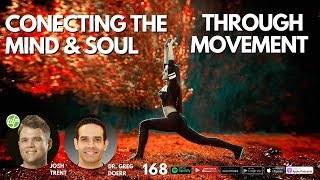
Podcast interview (Wellness Force Radio episode 168) with Dr. Greg Doerr exploring the integration of movement, soft-tissue treatment, and kinesiology taping with emotional and nutritional aspects of wellness. Key claims: taping works via neurologic stimulation of skin mechanoreceptors (Merkel cells) to reset muscle tone; effective taping requires assessment algorithms (e.g., fascial pulls/tab tests and soft-tissue pretests) and a minimum symptom reduction threshold (~50%) to justify taping; Functional Soft Tissue (Factor) treats tissue under provocation through a hierarchy (position, motion, resistance, function, proprioception); three main practical benefits of taping are postural correction, instability protection, and neurologic resetting of movement patterns; typical kinesiology tape wear-time ~3–5 days but varies by individual.
Questions this video answers
About 3–5 days (varies by individual; skin irritation is a sign to remove sooner).
A minimum of ~50% reduction in symptoms on manual testing.
Chapters
I don't know anybody who lives in our area that doesn't go under high stress all the time. The question then becomes what are your methods of controlling that? You cannot eliminate stress from our lives, but do you have proper outlets? You know, TV is not a proper outlet, Exercise is a proper outlet. Music is a proper outlet. You know, are you finding ways to actually relieve your stress so that you can actually create some kind of a balanced seesaw within your own brain? I think that becomes the one that gives us the greatest challenge is trying to find some kind of a homeostasis within our mental well being.
That was Dr. Greg Duerr and this is episode 168 of Wellness Force Radio. What's up my friend? It's your host, Josh Trent. And welcome back to another episode for your weekly access to global experts in all things wellness as we discover the physical and emotional intelligence we need to live life well. In this Episode I with Dr. Greg Duer, master movement practitioner, world renowned chiropractor and professional sports team doctor and the co founder and developer of Factor Functional and Kinetic Treatment with Rehab. If you're a health and wellness pro or just simply been curious about how to use kinesio taping as a way to support your or others healing, movement and mobility, this is going to be a thought provoking episode. Now whether you've had an injury yourself or want to understand at a deeper level the connections between our emotions, our soul and movement, this show is bringing you the best of the best in physical intelligence as we continue our standtallseries brought to you by intelliskin. Now. Throughout 2017 we've been talking a lot in regards to posture, how smart tactile compression can help you stand taller in your life and perform better in sports. And in this conversation with Dr. Duer, you'll also learn how connecting those dots between the mind, body and movement is truly a skill set we all get to develop in this discovering process of how to have inner peace and essentially homeostasis within our well being. Make sure you bookmark this podcast and step over to the show notes page@wellnessforce.com 168 to learn more about Dr. Greg and all the exciting lectures and events coming up for the rest of this year. Get ready to grow your intelligence now and learn why someone would use kinesio tape in the first place, how this kinesiology tape helps your body align and improve your movement and range of motion, what functional soft tissue means to the healing process and and the practical pragmatic steps to go down the road of healing your body to connect our soul to movement in order to heal through any threshold or any injury we have. I mean, let's face it, we're all gonna experience injuries and pains in this life. And Dr. Greg believes that all of our injuries start with poor mechanical posture that doesn't always relate to our spine only or if we're slumped over at the desk. Literally every single body part needs good posture. Our shoulders, hips, knees, feet and ankles, they all work together as a system and that's how we talk about physical intelligence on the show. Everything relates to each other. So let's step in together with this thought provoking conversation with Dr. Greg Duerr. So excited to continue on with our standtal series with our partner Intelliskin. Today we're diving in deep connecting the soul to movement and healing with Dr. Greg Duer. Greg, welcome to Wellness Force Radio.
I can't tell you how much I appreciate you having me on, man, this is exciting.
We have not gone this deep on functional soft tissue. We had the founders of rock tape on last year. We were at the rock stock event in Huntington, but we didn't go as deep as I know you and I are going to go today. Tell us Greg, like what even got you interested in this? We know a little bit about you from your bio, but how did you get to be able to serve so many people and travel and do this work?
I kind of decided I was going to become a chiropractor very young in age. My father happened to be a chiropractor, so I'm actually a second generation. Interesting though. My father was a chiropractor. He graduated back in 1962. So you can imagine, you know, what was available in the chiropractic education back then versus what we were getting even when I was in the in the 90s. So education obviously changed quite drastically associated that. But even when I was graduating chiropractic school, this was really just the start of all the sports med, you know, at least as a large functioning group it was, you know, art had just come around. Grass and technique had really just come into existence in the mid-90s. So these were the new soft tissue techniques before it was like cross friction and nimo and barnes myofascial release and things along those lines. So the new advent of soft tissue really kind of came about at the same time that I was in school and just graduating school. I was really fortunate and this is where so to speak, the luck comes into play. Yeah, that I was 28 years old and I mean, look I am so wet behind the years. It's ridiculous at 28. But I was very fortunate to get linked up with some of the best sports chiropractors in the country in New Jersey. And I started working sporting events when I was about three months into practice. And I'll never forget the first injury I ever saw was a fractured wrist. And all I kept thinking to myself is, I'm a chiropractor. What the heck am I supposed to do with this? But that was really the onset to me actually getting involved into just a little bit more than what the normal, every frame of a chiropractor would be. You know, obviously, we're looking at joint mobility and neurologic function and things along those lines. And we're looking at a holistic full body aspect, but really the sports med aspect of things, like, you know, being able to look at a shoulder for the shoulder, and then look at the kinetic chain that actually provokes the shoulder problem. So that stuff was. I was really, really fortunate to get involved in certain things when I was very young. And at 28, I actually started lecturing, which was absolutely crazy. That was when I first started teaching for Graston Technique. I was given an opportunity, actually. My mentor at that time literally said to me, if you don't go to this seminar, I won't speak to you anymore.
That's some good motivation.
Yeah, because I actually turned down going to the class about three times. And I finally went to the class and I was like, oh, cool. They were showing everything statically. I already had an art background. So basically I started putting things into movement almost immediately with instruments, which was very unique. Nobody in the classroom was even. They were even looking at me going like, what are you doing? So that's where I started, like, bringing in instrument assisted and movement aspect. Now I was with Graston Technique. Let's see, that was until about 2002, where all of a sudden the. There was another paradigm shift. It was. It was more about adding in resistance, putting things under load. And by a sheer accident, Dr. Tom Hyde and I basically were working on each other in a hotel room. And all of a sudden we realized that when you put tissue under provocation, you healed very, very quickly. And it was one of those light bulb aha moments where you're going, what the heck did we just do? Like, why is the pain gone? And we spent years actually backtracking. You know, we spent a lot of time trying to figure out, okay, it worked on a knee, does it work on a shoulder, does it work On a neck, does it work on a back? And after, you know, Dr. Haida retired, by then, I was basically taking all this stuff back to my clinic and testing it and finding out whether or not this material, this provocation treatment actually worked. After, you know, a year of doing it on almost everything, I'm like, this is. We're onto something, but I don't know why. And then we were lucky enough to run into friends that would, you know, PhDs that would eventually start explaining, hey, maybe you guys are doing this more than this. Because of course, in Grafton technique, we were constantly told you break up scar tissue and adhesions, and it's really not the case. We're really not breaking up scar tissue adhesions. In fact, that's a very small application as to what you're doing with soft tissue work.
Let's talk a little bit about this, too, because people listening understand what tape is. You know, we had the founders of rock tape. There is many different kinds of tape out there. Kinesio taping, Spider tech, sprt, rock tape. Can you paint a quick picture, Greg? For people that don't know anything about taping at all, why would someone tape in the first place?
That's actually a really good question. Because quite frankly, I think people are taping and don't know what they're doing. It's one of the challenges that you live with with taping nowadays is you have people say, well, that tape didn't work for me. And again, I go with the same thing as, that's because you didn't get taped properly, or nobody evaluated you to find out whether or not taping was going to be effective for you. And there's really a couple of very simple algorithms that you can go through to determine whether or not taping is effective for a specific condition. My first algorithm actually is don't tape. The second algorithm is if you have an area that is dysfunctional, let's just say let's keep something very, very simple so everybody can kind of follow along. If you have a tennis elbow on that tennis elbow, you test for those muscles and it says, ouch, it hurts. And then what you do is, and I use Tim Brown's methodology of fascial pulls, that the SPRT method, which is using tabs to pull on the skin to determine if you get a vector of relief.
What is a vector of relief?
All right, so if I pull on the skin, let's just say from the outside to the inside, that's a vector going from outside to inside. And all of A sudden, the manual muscle test stops hurting. Okay. All right. Or let's just say, as I use as a gauge, it has to be a minimum of a 50% reduction in symptoms in order for it to be something that's worthwhile.
Got it.
So if you pull that tissue from outside to inside, and all of a sudden the person goes, oh, my God. If my muscle test before was a 10, that's the way I always start it, by the way, is I always start people at a 10. If it was a 10 before, what is it now? And they say, well, now it's a two. You know, the tape job is going to work. The tab is just going to pull the skin the same exact manner that you're pulling on the skin. Yeah. So it's a guaranteed success. There's no guesswork in this. And it's the same thing. Let's just say you don't find a pull that makes it feel better, but you do a soft tissue treatment right over the same exact tissue, and then you retest it, and the person goes, wow, that's like a one. Now, if you're basically stimulating the receptors in the skin, these are the nerve receptors that help reset those tissue spindles. In other words, the length tension of that muscle. If you're able to do that with a soft tissue treatment, taping stimulates the same exact receptors that you would associated with soft tissue treatments. So if the soft tissue treatment is going to be affected over the area and create that kind of a reduction in dysfunction, the tape will do the exact same thing. So that's another algorithm that I go through. If the soft tissue treatment reduces the symptoms or dysfunction, taping is going to do the exact same thing. If there's a fascial pull that makes it feel better, that vector pull we were talking about, then you switch to a tab taping, an sprt style of taping. So these are like the methodologies, the way of going down different pathways that lets you know your tape job will be effective, not maybe it'll work well, it hurts. So just put tape over it. No. Yeah, that's not really the way we should be doing things. That's guessing.
I remember talking to the founders of Rock Tape, and Steve Capobianco mentioned that really what tape is, is it's a second skin. It's a piece that you can have a tactile response. Yes. But it's actually almost more of a physiological to a psychological connection because that tape represents a piece of your body moving into the right alignment. Can you talk a Little bit about taping and alignment. The tape actually moves the body so that it can have greater range of motion. Or is it just to reduce pain? Or is it both?
The way that tape truly works is via neurologic methods. It's a stimulation of receptors. So in the movement aspect, what you're doing is resetting tones of tissues so that it fires properly. Now, that could be over an individual muscle or that could be over a fascial chain. So in other words, let's say somebody has dysfunction on throwing. Well, if we do that same soft tissue treatment over a region and the throwing mechanics start looking better, well, the taping effect is going to create that same improved movement pattern. Yeah, that's the power of it is that it creates the neurologic balancing, I call it. Like you balance your sea soils or you hit control alt delete on a frozen computer. Another analogy that I use all the time, basically what you're doing is you're resetting the tone of everything so it's all functioning in proper balance with each other. That's how tape can be powerful. And the reason it's so powerful is because the intervention lasts after they leave treatment.
Because it's actually pulling them into the proper position or because they've had that tissue work first?
No, because the tape is constantly stimulating the receptors that are normalizing the tone of everything.
Oh, this is fantastic. Okay, so the fascinating part of this, you have functional soft tissue. Tell us about the approach with this and then how tape plays into that role.
Oh, absolutely. So functional soft tissue is basically a class that I developed and a methodology more than anything. It's a concept where we're looking to evaluate and treat and stabilize soft tissue injuries. And it's through a couple of different pathways. Now I use factor as the soft tissue treatment, which is again, treating people under provocation. Now, the hierarchy on that is going from anything from a position of provocation. In other words, I turn my head to the right and it hurts, or it's limited range of motion. That would be a position of provocation. Motion would be the second in the hierarchy, which would be more like turning your head to the right while you're doing the soft tissue treatment. Third would be adding in resistance. Like for instance, if you had a tennis elbow using an eccentric load on those muscles in order to establish proper collagen alignment and fibroblastic proliferation. Fourth one is adding in functional positions or activities. That's the exciting one. That's like you have somebody who is. Has poor throwing mechanics and you put them into those throwing motions under load because you obviously it's really hard to treat somebody while they're throwing a baseball 90 miles an hour, but you put them under those load positions and then you start treating the soft tissue through the full kinetic chain. And then lastly you add in proprioception, put the person in unstable environments and then start treating them as well. All of this is neurologic bombardment of the central nervous system, which is the massive control alt elite, resetting all of those tissues, allowing for proper neurologic function.
I love that you said control alt delete. All the video gamers and computer people out there know exactly what that is. It's a reset of the cns. You know, I think about the patterns of movement and early in my training career, when I was first starting out as a trainer, I was going over to function first and Anthony Carey and I learned about how really when people are recovering from injury. Greg a lot of it has to do with their psychology, you know, beyond just training new movement patterns. They this is something that you actually talked to me in the Art of Healing. We had a call about a month ago and you mentioned this relationship between the art of healing people. What did you learn from your father in this regard? Because you're very skilled in this. But the emotional side has a big component as well.
It's so important. I say this all the time. And there was a study that was done. Forgive me, I can't give you the quote reference right now, but the gist of the study was they asked patients as they were walking into a doctor's office, do you think this person was going to help them? And there was an interesting statistic that actually found the overwhelming majority of people that walked into the doctor's office saying, this is the person who's going to help me got better. They were helped. The people that walked in going, nah, I don't really think this person's going to help me. They didn't get any better. So the psychosocial aspect of what we're doing is positive thought. I mean, the bottom line is, and I joke about this, we even talked about this on our last phone call is I like, I consider myself the hugest placebo on the planet. I'm upbeat, I'm smiley, I'm happy, I'm constant high energy that actually gives your patients a positive emotional state. When you're actually able to transpire that kind of energy, that kind of enthusiasm, that kind of excitement that definitely transpires into your patients and your patients actually want to get better, they Feel this emotional state that's allowing their physical to also come along. And. Yeah, and I gotta be honest with you, that's one of the biggest challenges that we see within our allopathic profession is we all know that I mean, they tend to be less hands on, less touching, a little bit more stoic, a little bit more back off. Well, that eliminates that whole psychosocial aspect of everything. And all you're doing is treating the physical ailment.
I love that you brought up the allopathic too, because we look at this, you know, what is the difference between allopathic medicine and the other two, three, maybe even thousands of types. There's many different types of medicine out there. Tell us just in a couple sentences, what is allopathy?
The classic medical model that encompass a lot of the, you know, your primary care physicians, your surgeons, your specialists. Along those lines, more of your hospital based care. Yeah. Although many hospitals are moving towards a holistic environment as well. I don't want to make it sound like they're not. So that's all stuff that you have to consider from a perspective of. There is a holistic model that is happening within the hospital based care, but the standard allopathic way is again, more of that medical model, surgical injection, pharmacological intervention that tends to fall a little bit more into the allopathic world. Yeah.
More of like the band aid rather than the root cause. And if you look at the work from Dr. Dan Lord or Roger Bignosa, these are men who are really driving the needle towards looking at the body as a whole system. And you mention this when you talk about your job, you know, your job, you treating the whole human. Greg.
Yes.
You can't do this work unless your soul is actually helping getting people better. You told me this on a previous phone call. Can you share more about this? I mean, you have to connect the movement to the soul here to heal.
Yeah. And you know, it's actually funny even just saying that. And you're to take a step back because I obviously talk to a ton of students, whether it's from lecturing or they're coming into my office to shadow and things along those lines. I just before I left for South Africa in December, had met with one of my former patients who decided he wanted to become a chiropractor. He said, you know, what should I do? Should I go into nursing? Should I go into health and chiropractic? What are your suggestions? And I literally said to him, if you're going to go into healthcare, it has Got to be your soul. You have got to want to take care of people. Unless you're living in a wonderful environment where you truly have a cash business that you are just taking care of what you want to take care of and treating people the way that you always want to take care of people. If you're stuck in some of that third party payer system where you unfortunately get dictated to a little bit, the administrative aspect is very wearing on you in those things. The only thing that eventually brings you back to why it is that you're doing this is your soul. Your soul has to be in taking care of people. You have to. It literally has to be almost every single fiber of your body. Because there's a lot of other jobs that you can do that are less demanding. Like to fight tooth and nail every single day just to take care of people can become very frustrating. That's why you see so many doctors retiring younger than they would have is because they're just like, I'm tired of it. I'm tired of having to fight for everything, to advocate for my patients on such a regular basis. It's a very frustrating thing. But if it is your soul, nothing should ever get in your way of doing this because it's the most rewarding job on the planet.
Oh, and you bring up such a salient point here because we talked about this kind of reinvention, you know, unconventional Medicine with Chris Kresser on the podcast last year. And one thing he mentioned is that, like Amir of your statement, so many physicians are getting burnt out. They're just so burnt out. They have so much red tape to go through, they can't effectively manage their patient load. So we look at this and we understand the specificity of what you do. There's so many people being taped right now, Greg, more than ever. I think there's a lot of confusion out there, not just for athletes, but science is kind of unclear about what kinesiology taping systems are doing besides this proprioceptive feedback. Why is this?
Unfortunately, I have two very dear friends of mine, Dr. Phil Page, who's a physical therapist in Baton Rouge, and Dr. Mike Schneider, who is a chiropractor, Ph.D. at the University of Pittsburgh. And both of them have done wonderful work on meta analysis of the literature in taping. I have unfortunately read about a thousand articles myself. And I say unfortunately because this is the reason why the research is horrible. It is poorly constructed. They frequently use sham taping as their control. And the problem is, is if you understand how tape works, like we Just discussed that it is a neurologic stimulation, that there's no such thing as sham taping, because whether you put the tape, you know, top to bottom across on a diagonal, you're still going to touch the same exact skin receptors. So the significant change between somebody who's sham taped for somebody is shaped is not going to be large enough to make taping look like a relevant treatment. Yeah. This is one of the major problems that we're dealing with, is that the studies are so poorly constructed. And as I said before, clinicians are being educated via technique. In other words, here's how do you tape the shoulder? Shoulder has pain, do this. Nobody is giving them the if this, then that. In other words, this is the pretest. If the pretest shows up positive, then you'll tape them and have success. There would be no such thing as experimental if everybody went through the if this, then that taping method, which is, again, what I teach in my classes, it's as simple as learn why you're taping, how taping works, the different applications as to why you're doing it, whether you're trying to neurologically reset something, whether you're truly trying to structurally change something like posture or an ankle sprain, or are you trying to reduce edema and swelling. What is the purpose of what you're doing? Rather than just going like, it's hurt, throw it on it. And I think that's the biggest mistake that we have in the taping world is that people are unfortunately not getting educated well enough. The first person who ever showed me an if this, then that was Tim Brown. When I first saw Sprt taping, he used the tabs as a perfect methodology to start going, if I pull the tab this way, does it feel better? If I pull it this way, does it feel better? It wasn't exactly how I teach my classes, but if it wasn't for Tim showing that simple little basic thing, and I joke about it all the time, this simple little tab changes the world.
Yes. It doesn't always have to be complicated.
Right. You can just get the right information.
From the right person. What do you think actually happens, though, Greg, when you apply the tape? What's going on with our physiology?
The physiology is secondary to the neurology. So if you are stimulating those receptors. Now, we always talk about within the taping world, that the Merkel cell is the one that's constantly being stimulated because the other ones are fast adapting, which is why we don't feel our clothing on our skin. After a few minutes, you Just don't recognize anymore because those receptors shut off. But the Merkel cell can constantly bombard the central nervous system with information. And Merkel cell is like a highway. It's a, a beta fiber, which means it's a very, very fast moving neuron. And most of our pain fibers and things along those lines, they're slow moving, they're like dirt roads. So they get to the central nervous system much faster, giving our information of positive feedback to the central nervous system. And then through reflexive loops, we're able to go right back to these tissues and normalize our tone. So again, I don't like to talk about inhibit or facilitate. I'm sorry, I haven't inhibited or facilitated anything in my life. The central nervous system did. I just put a stimulation into the central nervous system and it figured out what to do with it.
These are the tactile pieces, right? So the little mechanoreceptors. This is like the light touch mechanoreceptors.
Exactly right. So these are all those things that are actually allowing us to normal those tone of tissues. This is why we get, you know, if you want to use one of Rock Tape's methodologies of using fascial sling taping. Taping for movement. Yes, you're taping for movement by stimulating the nerve receptors over an entire movement pattern, which helps normalize that entire movement pattern.
This is the interesting part too, because I've worn the Intelliskin product for, gosh, probably eight months now. And there was actually a couple days when I first put on the foundation, my rhomboids were sore to the touch. And I realized, oh my God, am I slumping forward? Am I protracting throughout my day? And the answer was yes. So we look at this tactile response. What are other ways that taping helps us from a tactile perspective?
All right, so a great one like you just brought up the postural control. That's another structural methodology upon what we use with taping. So the way that I look at taping, and I didn't come up with this one on my own either, I give Kevin Jardine all the credit in the world with this. He came up with basically a three application methodology. Are you neurologically resetting the tone of tissue? Are you structurally changing the position or something? Or are you trying to do something anti inflammatory? Postural taping is a structural type of taping. Now the way that we're doing this is, you know, a couple of different methodologies. And this is always the interesting. So if you look at rock tape's way of doing postural taping. It's different than spider text, which is different than kinesio tapes, and so on and so forth. You know, this is a very interesting point, and I'll get back to the reason why we're going to do the tactile one in a second. If you notice all these different wonderful people, they're all bright. Don't get me wrong. Every single one of the people that we're talking about, these are very, very bright people. But how come everybody's methodology is slightly different? Who's right, who's wrong? The reason we don't know is because, number one, research isn't good yet on taping, so we're failing at that aspect. And number two is because if you're simulating neurology, if it's on the skin, it's been stimulated, does it necessarily make a difference if the person is being placed in a good postural position or the bad postural position? When the tape is applied because you're stimulating the same receptors, then that starts becoming more of a clinical decision. What am I trying to accomplish? So the tactile aspect of what you're just talking about, I tend to put people into a good postural position and apply my tape at a little bit more of a significant stretch, somewhere around 50%. So what will happen is as that person starts slouching like you were talking about, am I slouching all day long? Am I protracting my shoulders all day long? Yes, we are. We don't even know we're doing that. And we are.
Yes.
But what you can do with that tape at a 50% stretch is now you're applying a tactile response so that every single time that person starts slouching, they feel a slight pull on the tape and it reminds them to get back into a good postural position. So we can use that as a cue to assist them in learning their postural corrections. And if they keep that tape on just for a few applications through, it's amazing. They start holding that on their own. Wow. They start not needing the tape anymore.
This is what we really want, right? We want the tape to train the body, to train the neurophysiology, the mind to muscle connection. So we've been talking in depth about this today. Just for people who are following, what would you say that the three, maybe four main benefits of taping can be to the human body?
Let's go. Number one, definitely postural correction is massive because with bad posture, basically almost Everything in our body will shut down and go poorly. I'll harp on the posture one more second is, let's even just take something as nasty as a disc herniation. If I have a patient that comes in with a disc herniation and pain shooting down their arm, and that person holds their posture like a ballerina, flawless, I go, oh, we got trouble, because they're already in good posture. But if you have somebody who walks in with that bad disc herniation, one of the greatest gifts you can give them to take pressure off the disc is get them back in good posture. Yeah, it is that powerful. It's where almost all of our injuries initially start, in poor mechanical posture. Now. And we say posture. Right now, everybody's thinking about spine, but there's proper posture for every body part. The shoulder, the hip, the knee. All of these have ankle, foot, and ankle. All of these have their own proper postural positions, neutral postural positions. And we can assist them with taping techniques to actually achieve all of those. But, you know, depending on where you're at, spine is obviously one of the easiest ones because it's so visually aware of seeing, like, somebody's shoulders rounded forward, head carriage, being able to say, okay, let's bring them back into a good postural position and then take them. One of my fun things that I love talking about, tactile response. Again, put somebody literally flat up against the wall. Touch every single body part you possibly can, right up against the wall, heels all the way up to head. Find out how miserably uncomfortable you feel, because none of us know what it means to be in that kind of good, solid posture. Then try taking a breath. This is, again, one of the major problems. If we're not in good posture, our diaphragm shuts down, we stop breathing properly. If we're not breathing properly, we're not even oxygenating our tissues well. So posture, to me, is one of the major, major, major ones.
And gravity's always working against us. I mean, gravity. You think of the human head, it's like £10 if we're in perfect alignment. But if it's forward a half an inch or an inch, I mean, 40 pounds, the head becomes a load on.
The paraspinals and the discs. So, yeah, that's. That's a critical one. One of the other major things that I think is. Is fabulous with taping is instabilities. Now, granted, this gets a little bit away from the kinesiology tape, but goes a little bit more towards, like, Leukotape, which Is one of the tapes that Tim uses for his SBRT methods. Using Tim's techniques, I developed a tape job on an ankle. I've never had somebody sprain an ankle using those techniques in 20 years of practice. That's working sidelines. And I've worked everything from pro volleyball all the way down to peewee stuff. I've worked olympic level events, I've worked, you know, club level events, But I've never had anybody sprain an ankle using like Tim's sprt methodology. I changed the tape jobs around a little bit from what I initially learned from him. And again, 20 years of practice, nobody's ever sprained an ankle with that tape job on. That's pretty powerful. Could you imagine having every single athlete tape that way where we could possibly eliminate. And I'm saying from my experience, you gotta assume at some point somebody will sprain an ankle. But even if we could reduce ankle sprains by 80%, that's a massive change in ability of people to actually stay on the field. And not to mention long term deterioration of the ankle, which eventually deteriorates everything else in the body. If you're not walking properly, that range of motion has to come somewhere else.
So we talked about postural and instability. And is there one more big one that you think just the everyday weekend warrior would benefit from in taping?
That's the neuro resetting. That's like the ability to actually apply tape to the skin. That using again, more kinesiology taping methods that allows for the normalization, the seesaws, the balancing out of all those tissues. So a patient's mechanics are now proper. That is extremely powerful. But again, you should have tested to know that those are going to be appropriate and effective. Otherwise you're slapping tape on somebody. I joke about this all the time. The old classic, somebody does a squat and their shoulder dips in. Okay, that's great. So does that mean we tape the back oblique line and that's what you know, a lot of people teach. Yeah, just tape the back oblique line. Well, how do you know it's the back oblique line and not the anterior one? How do you know it's not the front of the body? Well, now again, slap tape on because you saw a dysfunction or put tape on because you know what was dysfunctional. The easiest way of figuring that, do a soft tissue treatment over the back line versus the front line. Find out which one normalized it better. Guess what? If neither of them did, why are you taping it?
There's a unique way to Assess people. That's what I'm hearing from you, too. And so from movement professionals, for trainers out there who are interested, we are going to link a lot of information about your work about functional soft tissue in the show. Notes. I want to reiterate here, it was postural instability, neural resetting. Those were the three that came up. But there's so much more to learn about kinesiology taping. So somebody's going on a trip or travel and they want to be taped. They work with a clinician to be taped. How long does that tape actually last?
That largely depends on the person. However, the standard thing that we tend to say, and this is no matter what company, they all say about the same thing, about three to five days. There are a couple of caveats. Obviously, if your skin is highly sensitive, I always say this. Any time you feel like your skin is getting itchy, and I don't mean you just got out of the shower, the tape is wet. Which, by the way, you can shower with kinesiology Will, with most of these taping techniques that we're talking about. It's not that it's just wet and it feels a little itchy. It's dry, and you feel like you need to claw at your skin. If that is the case, you should definitely take the tape off because you're running the risk of irritation.
Okay.
Yeah.
Because I think a lot of people might travel, especially athletes.
Yes. Now, that being said, I've had people, you know, for instance, myself, I don't really get skin irritation. I can leave tape on my body for five, seven, ten days, so long as I'm getting the positive benefit of it. And you will notice it. You'll. You'll notice that, oh, my knee's now not feeling as good as it used to. In other words, the tape might have loosened and it's not stimulating the receptors quite as well. It needs to be changed. So those are things, functional changes, you're going to notice pretty quickly going up. It could be something as simple as, I'm going up and down the stairs. I'm going like, oh, don't really feel quite as stable as I did just a little while ago. As my patients say all the time. My God, when the tape is on, I feel perfect. Tape comes off, I start noticing my injury again. That's one of the great powers of tape is the ability to treat the patient or person outside of the office. And, yeah, I teach almost all of my patients eventually how to tape themselves, especially in the athletic world.
Yeah. So the tape is on they're in the right motion, they're going in the direction they want to go. They're more aware, actually, they're in the right posture. But when they're not wearing the tape, I mean, how long does this learning curve take for people to have the correct posture without the tape? Or do they always have to have the tape?
And that can largely depend on how long the motor dysfunction has been around. In other words, if our central nervous system recognizes bad as normal, it takes a lot longer to retrain central nervous system to figure out good is good. Again, what's the old thing in martial arts, you have to do that move 10,000 times in order for it to become instinct.
Bruce Lee, right?
Yeah. But it only takes a hundred improper movements to create a bad motor pathway. It depends. If this has been around for a decade, it could take a lot longer to get that person into proper movement patterns. But that's why I reassess those situations every two weeks in my office is to find out whether or not is tape still appropriate for him. Are they still showing me if this then that, in other words, the test that showed me I needed to tape them to begin with, is it still present or are they going, you know what? No, I don't really notice a change now when you do your test versus when I just do it on my own. That's telling me I've already created enough of a neurologic change that now what we need to do is stabilize and, and retrain motor pathways through their rehab techniques and things along those lines. Symptoms again, I tend to do a little bit more associated with that soft tissue aspect.
How much does curiosity play into this? Because this is. You can go into the depths of education here, probably years of training, maybe even decades yourself. You know, it's been almost 20 plus years for you in this field. How much does curiosity play into this? If someone's dealing with pain, do they have to stay curious about how they can alleviate their pain?
I think curiosity is extremely important from the patient perspective because quite frankly, a patient who asks questions, those are ones who actually want to get better. I love a curious patient, but more importantly is the clinicians are staying curious. Yeah, because if the clinicians are still asking questions as to why is this happening, what can I do to do it better? How do I make this better? How do I what's the new thing I can do to make my patient get better? Your clinicians never get stale then. They're always pushing the envelope. I joke about this all the time. I've Been taped. I've been teaching taping techniques for close to 18 years now. The reality is I probably make up a new tape job every week, even though it's using the same concepts. But I might have never applied it that way before. You have to stay curious. That's where a lot of the excitement of what we do is. That's what prevents us from getting too stale and just doing the same things over and over again.
And really at the core of what you do, Greg, is you're healing people. You know, chiropractic, you're healing people with your hands. And then your tape becomes almost like a tertiary or a secondary way that you're continuing the healing. When we look at the healing aspect, you know, someone's listening. Maybe they're not a professional trainer or a movement pro, but they're really interested in the healing. How do they do this? I mean, what's the starting steps, the one to three things they do where they just go down this road of healing their body?
If we want to talk about healing and you had made a mention about wellness, the bottom line is there's the nutritional aspect, what we're putting in our bodies. There's the physical aspect of how we're training our body, and then there's the emotional aspect of how, of our psychosocial state. What's our mental state, both subconscious and conscious. The biggest challenge that you have in life is we have a very strong control over what we're going to put in our bodies from a nutritional standpoint. Again, barring socioeconomic issues. You know, sometimes it is an education that drastically needs to happen in a socioeconomic situation.
Sometimes they're in a food desert, right?
Yes. To train people how to eat properly physically. You know, if there's anything that we're probably pretty darn good at, it's actually exercising. You know, even if people are just getting out and walking, that's something. But there's also that fine line between overtraining and injury. But we're pretty good again at the exercising component. We have control over that. The biggest challenge we have is the emotional state because there's so many stressors in our life. You know, I live right next to New York City. I mean, without an exaggeration, my practice is two miles from the George Washington Bridge. I don't know anybody who lives in our area that doesn't go under high stress all the time. Yeah, it's kind of also geographic where you live. And the question then becomes, what are your methods of controlling that? You cannot eliminate stress. From our lives. But do you have proper outlets? You know, TV is not a proper outlet. Exercise is a proper outlet. Music is a proper outlet. You know, are you finding ways to actually relieve your stress so that you can actually create some kind of a balanced seesaw within your own brain? And I think that becomes the one that gives us the greatest challenge is trying to find some kind of a homeostasis within our mental well being.
Wow. Really eloquently put, man. And I'm thinking about wellness too. It's something that, you know, we always discover this physical, this emotional on the podcast. In your life, you know, you've healed so many people. You're continuing this work, you're going to go moving in the direction of healing others probably for the rest of your life. How would you define wellness in your life and Greg's life?
Oh, God, my life is a challenge and a half because of the juggling that I do in the air at all the times. Now, granted, I say this all the time. A lot of my emotional homeostasis really comes from the joy of taking care of people because running businesses is stressful and there's no way of getting around that. So you have to find the balance of that stress with something else. And the easiest way of balancing that emotionally with me within the business is actually the joy of care, the joy of healing, the joy of seeing people get better. And that seems to wash away the misery and the stress of the other things. But it's finding that ability to balance, to be able to actually step back every now and then and go like, wow, that really worked out well for that person. And sometimes it could be as simple as a patient literally picking up a phone and just saying, you know what? I just wanted to tell you I'm feeling really good today because you usually only get phone calls in the office from a patient if they're feeling bad. Yeah. An email every now and then from them saying just, oh, my God, I can't tell you. I just, I just ran my best time. Things like that give me that emotional balance, the physical. Well, look, I'm thankfully now an old retired athlete, at least competitively. I still love to play my sports. I've changed around a little bit. I wish I was a little bit more California oriented or Florida oriented because now paddleboarding is one of my great loves of keeping myself exercising and balanced. I'll still run. I just don't play competitive soccer anymore. I don't play competitive volleyball anymore. I had a, you know, transition myself to different areas to keep myself Physically healthy. Now, it might be just running 5Ks now instead of playing 90 minutes on a soccer field. But you know, those are the physical things that help keep me well and nutritionally. I've always eaten relatively healthy to begin with. Now I'm going to tell you right now, you're not taking ice cream away from me. I might only have it once every month or two, but you are not going to take that away from me.
That's the ultimate cheat meal for Greg Duer.
Yeah, but one way or the other, you know, I really do try and look at eating a relatively anti inflammatory healthy diet. It's a little bit harder on the east coast to find some of those organic or grass fed or things along those lines to keep nutritionally, you sound, it's, you know, I noticed having traveled throughout the country that, you know, in certain regions the difference between organic and non organic isn't that high a price. You come over to our area and sometimes you go and like, it's $5 a pound for grass fed beef and it's $1.99. Not if it's not. Yeah, that's a pretty big difference in price. But again, unfortunately that's part of geographic locations and the ability to at least try and eat as healthy as you possibly can.
This physical, nutritional and emotional. You've really tied this in, Greg, to healing the soul with movement, with proper posture, with taping. There's a lot of segmentation in our conversation, but it all stems down to the underbelly of healing. So thank you so much for what you do, man. I want to acknowledge you on the show here. This work, this healing work that you're so involved in and so connected to your soul. I think we felt that throughout the conversation. Functional soft tissue is the website. What did we miss? If there's one thing you want people to feel or do or maybe take some inspired action from our conversation, what would that be, Greg?
Well, I'll use a little bit of a statement that I say to all my patients. There's nothing wrong with getting hurt. There's something wrong with not doing anything about it. So if there's something I could give to people one way or the other is live your life, be active, stay healthy, find balance, and if something goes wrong, don't wait. Take care of yourself before it becomes more of a problem.
Dr. Greg Dewar, thanks so much for coming on the podcast.
My pleasure. Thank you so much for having me.
Hey, my friend, thank you for hanging out and growing with me on today's show. Remember to Hit Subscribe. Share this podcast with somebody you care about that you think gets to hear this message. Support the show by leaving a five star review for the podcast right now simply by tapping on your show artwork. On your iPhone, click that purple link that says Review this Podcast. It helps the show reach more conscious and smart people like you and your voice will attract more world class guests that want to come on the show. So let them hear your voice. For all the downloads, videos, links and free resources mentioned on the episode, go to wellnessforce.com and while you're at my house on the web, join us in the Wellness Force Community newsletter on that page and I'll send you four free guides around staying healthy with your eating, moving and sleeping while you travel. Join a group of people like you over at the Wellness Force Community Facebook page. This is where we talk about the things that really matter. We share our wins, inspirations, struggles and a lot more. So join us. Tap on the show artwork on your phone and hit that purple link that says Join the Facebook group and I will welcome you at the door. Okay, now you get to go out into your world and create impact for the people that you care about. So until I see you again real soon, I'm wishing you love and wellness.
More from Josh






Your child's future start before pregnancy... and even before conception! #podcast

MD Reveals: Your Healing Creates Your Child's Reality (The Souls Coming In Need Strong Bodies)



