170 Dr. Kirk Parsley: Sleep Science For Better Health
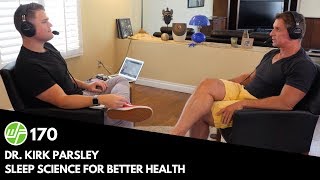
A recorded interview (Wellness Force Radio, episode 170) with Dr. Kirk Parsley about sleep science and practical strategies to improve sleep. Parsley—drawing on his experience as a Navy SEAL physician and work with executives—argues that chronic sleep deprivation underlies many problems (including ADHD-like symptoms), estimates 85–90% of Westerners carry sleep debt, explains a 3-part functional definition of sleep (environmental barrier, ability to be awakened, predictable neuronal patterns), reviews sleep hygiene (light exposure/blue light, GABA/melatonin pathways), discusses supplements and tech as supplemental aids, and promotes his book Sleep to Win.
Chapters
I personally think it's completely irresponsible to diagnose somebody with ADHD if they're not sleep adapted. I got diagnosed with adhd after about 15 years of chronic sleep deprivation. Guess what? When I slept, I no longer had adhd. Like, once I got out of residency and started sleeping normal amounts at normal times of the day, all of my symptoms went away. And if you. In fact, if you look at the symptoms of chronic sleep deprivation, you can, and this is in medical literature, you can look at the symptoms of chronic sleep deprivation or chronic insomnia and then look up, you know, go to a DSM 4 or 5, whatever they're at right now, and look up the symptoms of ADHD and tell me the difference. Indistinguishable. And it's actually the same process. I mean, what's going on with ADHD is that your prefrontal cortex isn't functioning as well as it should. It doesn't have as much blood flow. The neurotransmitters aren't there. It's not using too much glucose. So same thing happens. That's the first region of your brain that gets shut down when you start sleep deprived.
That was Dr. Kirk Parsley, and this is episode 170 of Wellness Force Radio. What's up, my friend? It's your host, Josh Trent. And welcome back to another episode for your weekly access to global experts in all things wellness. As we discover the physical and emotional intelligence we need to live life well, in this podcast, we deep dive into sleep. Yes, it's well known that the quality of rest drives real wellness for us, but knowing it's not not the same as always doing which we explore so much on the show. That bridge between knowledge and execution sometimes can be forged through experience, or in this case, on the podcast today by growing our physical and emotional intelligence. We're doing that today with Dr. Kirk Parsley, Straight from the Archives125 now brought to you in partnership for our standtallseries with Intelliskin, creators of human technology and smart compression that pulls your shoulders back into retraction. So if you sit at the desk, this is your product. Make sure you head over to the website, click on our banner that says stand tall. Learn more about this incredible technology that's saving posture and people's back pain, releasing their shoulders, pulling them into an upright position, especially if your job involves you being on the computer. And speaking of being on the computer, all that blue light before you go to bed from iPads and phones. Dr. Kirk, as well as his Research is showing us that blue light and sleep hygiene are two important factors for us to pay attention to that actually give us more energy the following day. Everyone knows that a good night's sleep will make us feel better, but science is now showing us the impacts from chronic sleep deprivation that are far more reaching than we thought before. Not only will a lack of quality rest affect mood, feelings and overall wellness, but it can degrade memory, decision making, faculty, life expectancy, and a ton more. So if we want to make drastic improvements to our mental and physical wellness, we ask ourselves a very important how can we actually remedy our sleep habits and lifestyle to to maximize our wellness and live life well? We're exploring this topic in depth today with Dr. Curt Parsley, the author of Sleep to Win. In an exclusive in person interview, Doc Parsley uncovers the tools and strategy we need to receive all the benefits that come from making sleep a priority in our lives. We're talking about Doc's relationship with Rob Wolfe, his work with Navy Special Warfare, how overstimulation in today's society affects our sleep, what we all can learn about sleep debt and how the secret to weight loss isn't always nutrition. More times than not, it's sleep. Doc Parsley believes that in our Western civilization, 80 to 90% of us are carrying around some type of sleep debt. Let's step in with Doc Parsley to learn how to get rid of that debt and sleep to win. Dr. Kirk, so great to have you on the show, man. This is going to be an incredible conversation. I actually read in Rob Wolf's book recently, Wired to Eat. He put you in there. How long have you known Rob Wolf? What does that relationship look like?
I want to say I Met Rob around 2010, so he was lecturing at an NSW event. I mean, kind of before that. A bunch of SEALs. I get back to the SEAL team as their doctor. In 2009, a bunch of the SEALs would come in my office and talk to me about, you know, the stuff they were talking to me about. And one of their top, one of their favorite topics was nutrition. And we would chat about nutrition and performance and they were like, oh, you got to listen to this guy's podcast, man. He's awesome. You're going to love him. I didn't even know what the hell a podcast was, to be honest.
I'm like, yeah, it's crazy how many people don't still.
Yeah, I was like, I'll check that out. Like, I don't really know what that means. And then you know about Six months later, whatever. I figured all that out and I downloaded his podcast. I was like, I really like this dude. He's a smart guy. And you know, Rob's just like perennial. He's kind of like Moses gracious and nice and humble.
Yeah.
And so I'm, I'm meeting him at an event. We're both lecturing at an NSW event. Naples Special Warfare. I'm lecturing on sleep. I'm the sleep guy that talks a lot about nutrition and he's a nutrition guy who talks a lot about sleep. Right. So there's overlap there. But I mean, I still don't know him. I mean, this guy's got like a best selling book and this badass podcast. You know, he's like got this quasi celebrity status to him, you know, and I'm just like a guy in the Navy. Like, I'm just the Navy doctor who happens to be attached to that unit. So I'm lecturing there and he comes up to meet me and he's like, hey, man, I really, I really love your stuff. And I'm like, what's my stuff? I don't know what the hell you mean. Like, I don't have your stuff. I don't have a book, I don't have a podcast. But yeah, so we kind of, I think like he lectured and then had to take off and then I lectured after that and we probably did that like two or three times. And then we were at an event in Hawaii where we were there for four days. So he had like a one hour lecture over those four days and I had a one hour lecture over the four days. The rest of the time we just hung out and, and planned world domination. And, you know, the whole bromance started and just became good friends. And the first podcast I was on was his. He was.
What year was that?
Probably 12. I'm guessing 2012. Yeah, maybe as early as late 2011. But he was, he was in town to do another spec war event and I said, you know, you just crash at my house, you know, don't, don't bother getting a hotel room, you know, kind of get rid of all that, you know, that pain in the ass part of lecturing. Yeah, we were literally just sitting around breakfast and chatting and he's like, oh, shit, I'm supposed to be doing a podcast right now. And I was like, oh, okay, like, you can go up. And I had this theater room upstairs and I'm like, you can go up there. And he says, well, do you want to be on my Podcast, I don't have a guest right now and I'm.
Like, sure, so talk about being in flow, man. So that's the relationship that I definitely feel from you two. And it's interesting. You were a medical physician. How did you make this jump from being an MD to, to doing really high level concierge practice? Yeah, I mean, that's a dynamic story in a snapshot.
Most people wouldn't believe or think this about me, but I'm a horrible rule follower and I'm horrible at doing things just because that's the way it's always been done or because that's what everybody says is true. If my personal experience doesn't match that, then I'm like, well, there's a good chance this isn't true, even though this whole body of people believe it. You know, it was pretty soon after I got out of medical school, well after I got a residency, pretty shortly thereafter, that I started seeing really big holes in what I could actually do. When you become a doctor, at least when I became a doctor, and I think most people this way, you have this vision of what it's going to be like to be a doctor, right? You're going to be the guy with all the answers. You're going to tell them what they need to do, give them, write a script or do something, and you're going to improve their lives and they're going to be healthy and happy and everything's going to be great. And being a doctor really isn't that. It's really disease management. And until it gets to the level of disease, the doctor really not supposed to be involved. And I'm like, hell, is that like I want to help people way before it becomes disease. So, you know, I was a certified personal trainer when I was 17 years old. I was managing a gym when I was 18 years old and I was, you know, counseling people on nutrition just from books that I had read, you know, and some stupid shit back then. But it was what it was what.
People believed was Jack lalanne connected to what you're doing in any way or.
I was a big fan of Jack Lane's. I remember reading a book called Eat to Win, which is basically like a vegetarian kind of book. And it got me off of meat for a while. But then again, experientially, my performance wasn't there. And I'm like, well, if I add in a little bit of meat, I actually perform better. And so then I just kind of settled into my own thing, which was by and large kind of Paleo, kind of what everybody teaches. And I was like, just eat whole foods. Get rid of box stuff. So anyway, when I got back to the SEAL teams, as their physician, I say this a lot, that being a SEAL is like being a professional athlete. Right. The worst thing you can do to a SEAL is put him on the sidelines. Like, he's not going to tell you anything that might disqualify him from his job. And believe me, it's a big bureaucracy, and there's a lot of things that can disqualify him from his job. So they hide it. They go to see. You know, they go get their mandated checkups from their doctor, and they just hide everything. Everything's fine, Everything great.
No, can't hide biomarkers, though.
Well, but the Navy just does super, very superficial stuff, right? So they're getting, like, their cholesterol done and, you know, whatever. You know, they're. They're getting like, a small chem panel and a CBC and like, I don't know, psa, like, just a few, you know, random things. They're not testing any hormones. They're not. They might. They probably test a few inflammatory markers, but nothing major. No major oxidative things. Definitely nothing along the anabolic or catabolic pathways. Nothing to do with insulin sensitivity, anything like that. And these guys wouldn't have showed in disease anyway. Right. So even if they came back, even if they did do those markers and there was things a little off, you know, the doctor mantra is, like, until you hit that number, it doesn't meet that definition. And so you don't do anything other than say, oh, you know, something really big like you should tune up your diet or make sure you're exercising enough.
Which kind of means nothing.
Right? Right. Which means nothing, because the doctors don't know anything, because we don't learn anything about nutrition in medical school. We don't learn anything about sleep. We don't learn anything about exercise, and we don't learn anything about stress. We don't learn anything about mindset, and we don't learn anything about optimizing health. We learn about how to diagnose, identify, diagnose, and treat disease. That's it. Most of the time, we can't even cure a disease. We're just treating that disease until you die. Right. Yeah. And that was just, you know, one. It wasn't my population. Seals didn't have any disease, but they weren't performing like they wanted to perform. They weren't performing like they knew they should be performing. They weren't performing like they were performing five years ago. And some of them would come in and just be like, well, you know, maybe I'm just old, right? Just, I'm just getting old. Like, dude, you're 35 years old. That's not old by any, by anyone's definition, but very common stories. Like, the stories were so similar that, you know, by the time the 50th guy sat in my office and, you know, and that was the advantage of me having been a seal, they knew I wasn't going to disqualify them. They knew I was going to keep everything.
They trusted you.
Yeah. Yeah. So I mean, I kept shadow files. I got in trouble for it, you know, but whatever. I kept shadow files so that nothing entered their record unless they wanted it to. And then I gave them their shadow file and I left, you know, But I wasn't doing disqualified things. I wasn't putting them on drugs. That was disqualified.
Yeah.
Which is probably what would have happened had they told somebody else what they told me. If it's just like you have motivation issues, they're motivated guys, they're hard working guys. They're still getting after it, sure. But they don't feel like getting after it. It's like drudgery. They're forcing themselves through every day. Body composition shifts, you know, like eating cleaner than they've ever eaten, really dialing in their exercise, you know, they're their periodization, their metcon, like getting everything really well aligned, you know. But they're still getting fatter, they're still getting weaker, still getting slower. A lot of memory stuff, A lot of, like walk in a room, have no idea why I'm there. That's when they say, I'm just getting old.
And these are like 30 and 40 year olds.
Yeah, yeah. Like 42 at the oldest, probably, right? Yeah. And they're saying stuff like, it takes me five times. This was so common. Five for some reason is the number five times to actually leave their house in the morning.
Like they forget their keys and go.
To the car, realize, forgot my backpack, go back in, get their backpack, get up, I forgot my id, go back, get their id, oh, I forgot my lunch. And then half the time they'd pass the exit, like going to work and like have to circle back around. And then they'd just be like, man, I'm just getting old, man.
What you were seeing with these teams is exactly what high powered executives deal with. I mean, some of the work on your site. We'll link this in the show notes. See these Hard charging executives have a restful and solid night of sleep, they'll gain an hour and a half in productivity. Now, this flies in the face of people like Gary Vaynerchuk. You know, hustle and grind. There's two things going on. There's this duality of, like, hard chargers in our world, and then there's the people that just want to live life well. They want to be healthy in their body.
Yeah.
Where do we find the middle between those two?
So I think the middle is a lot like every other example on the planet, Right. There's seasons for everything. There's a time to grind, and there's a time to hustle. But you also need a restorative phase, Right. I mean, I'm an entrepreneur now. There's times when I just have to work, man. It's not an option. Because if I don't work, I don't make any money. If I don't make any money, I can't, you know, I can't live. So. Yeah, you know, I think that if you have a, you know, for lack of a better word, I'd call it periodization, like you would with exercise, Right. Like, you just have, like, an intense growth period where it's like, you know, for the next four months, my head is down. I'm gonna destroy myself, and I know it. I'm gonna do everything I can to mitigate it, though, Right? This is what I do with my executives. Because entrepreneurs, and executives, especially entrepreneurs, are horrible about taking care of themselves because, you know, their life is so intertwined with their job, and their job is like their identity, and it's their social, structural. And, yeah, I mean, I'm the same boats. Like, all my friends are business partners, you know, or business colleagues. You know, like, last night, my wife was going to bed, and I'm like, I'm gonna read. She's like, you mean work? I'm like, no, just read. Just. What are you reading? I'm like, this marketing book. And she's like, that's work. I'm like, no, it's just fun. Like, I'm just interested in it. I really think the way to do it is just to realize that you will break, Right?
Yeah.
People don't want to believe they're going to break. And, you know, I freaking love Jocko to death, right? You know, one of the guys I just admire and respect more than anybody and a dear friend. And. And I think what he's doing is he's getting, you know, the soft and not necessarily. I'm not That's a wrong word.
Kind of like demasculated males.
Yeah, I mean, he's take. He's taken these people who've kind of settled into this watered down way of living, they're like, you know what? I can actually. I can be a badass again. Right. You know, most of the guys who follow Jocko, they were really badass dudes at one point, and they've just kind of settled into, like, this, you know, fatherhood, husband, business kind of blase life. And Jaco's like, reinvigorating. I'm like, get your ass out of bed. Go get after it. Go get some. Like, do things that scare you. Push yourself. And that's exactly what every man on this planet needs to do. But there's a reason that professional sports have seasons. There's a reason that people don't fight every single week when they're professional fighters. You. You have to recover from that type of stuff.
God, such a good point, man. Conor McGregor is not gonna do a heavyweight fight every Friday. No fricking way.
It's not gonna happen.
And the data's in. I mean, you deal with a lot of data sets. One of the pieces was high school traffic accidents. That is crazy. So the correlation, if school starts just a little bit later, there's less traffic accidents.
Yeah.
Why isn't school starting later?
This is really sad commentary on where we're at as a society. But it's primarily for parental convenience because parents have to start work at a certain time, so they need to get their kids to school before that. And because the busing system is no longer an affordable way to get kids to school. And, you know, helicopter parents don't really want to leave their kids with that sort of autonomy. I mean, like, my generation is completely normal to walk yourself to school in third grade, fourth grade, you know, like, your mom might get you out of bed, but that was it. Like, everything else was up to you.
I walked to school.
Yeah, pack your own lunch. You know, get yourself to school on time. Like, that was completely normal. No one. No one does that stuff anymore. But there's no. No dispute over the data. The data is 20 years of very robust data. There's an organization called Start School later that I'm. That I'm part of, you know, that I. I contribute to when I can. And they're a lobbying group that have been trying to get school times pushed back. A very interesting aside is that, and I want to say it's like 1901, 1903, something like that. The US was dominating the world in education, like laughably just crushing the world in education. They tasked some academic and I'm just, I'm not somebody who remembers names, I don't even try. So they test this academic and I could find this article, if you're people are interested in it, to figure out why we're doing so well in education. And so he studies all these other western cultures, education system and he comes back with one recommendation, literally one. And he said, as long as we keep starting school at 9:30, we're going to beat everybody else because everybody else is starting school too early. And if you've ever had a teenager or ever been a teenager, there's that adolescent period which now because of lots of environmental reasons can start around 12 years old sometimes. Right.
Wow.
You start getting prepubescent, you know, changes some girls, maybe even 11, but boys very commonly 12, 13. So the rest of their school career, including college, usually they're sleep deprived. So you're completely wasting the first two or three hours of school. And it's not just the education. Right. It's the health of the children. Right. I mean, I always tell people it would be exactly the same as if our job started at 3am wow. And that was just normal. Like we were just supposed to get up at 2am every day and go to work at 3am and just be expected to start cranking at 3am we couldn't do it. Like we'd go in there and we'd do it, but we would suck for a couple of hours.
Yeah.
And then we'd gradually kind of get into it and then we'd get off work at whatever, I guess whatever that would be 9:00am or 10:00am or something. 11:00am yeah. And that's what we're doing to our kids. And plus kids need more sleep than we do because they are growing. Right. They have so much going on. But it's not just, I mean it's not just the traffic accidents, it's delinquency, it's drugs, it's violence, it's emotionality, it's injury rates in sports. It's.
The fascinating one for me is ADHD in kids.
Right.
So ADHD can be intensified by sleep debt.
Well, I personally think it's completely irresponsible to diagnose somebody with ADHD if they're not sleep adapted. I got diagnosed with adhd after about 15 years of chronic sleep deprivation. Guess what? When I slept, I no longer had adhd. Like once I got out of residency and started sleeping normal amounts in normal times of the day, all of my symptoms went away. And if you. In fact, if you look at the symptoms of chronic sleep deprivation, just, you know, you can. And this is in medical literature, you can go to like a Harrison's or something, and you can look at the symptoms of chronic sleep deprivation or chronic insomnia and then look up, you know, go to a DSM 4 or 5 or whatever they're at right now and look up the symptoms of ADHD and tell me the difference.
Wow.
Like indistinguishable. And it's actually the same process. I mean, what's going on with ADHD is that your prefrontal cortex isn't functioning as well as it should. It doesn't have as much blood flow, the neurotransmitters aren't there. It's not using as much glucose. Same thing happens. That's the first region of your brain that gets shut down when you start sleep, depriving yourself. And that's your simulator, right? That's the. That's what you use to make decisions. That's what you use to predict the future and figure out if what you're doing right now is a good idea.
That's how you stay in the present moment, too. It's really hard to be in flow or just be in conversation if we're in sleep debt. How would you define sleep? This is a question you always ask your audiences when you lecture. What is your definition of sleep?
So my definition of sleep is there's three components to it. Two of them are from William Dement, who's the grandfather of sleep medicine. He invented sleep medicine. Essentially, the first one is there's a barrier between you and your environment. This is actually how I teach people about sleep hygiene, too, because there's so many opinions and tweaks and hacks about sleep hygiene. And sleep hygiene is very simple concept. It's like there's two concepts you need to keep in mind. So the first thing is there's a barrier between you and your environment, which simply means that your brain is not paying attention to the environment as much as it usually does. You're not feeling as much, you're not smelling as much, you're not hearing as much, you're not seeing as much. You're just not as involved with your environment. There's some barrier between you and your environment. If you're home in bed snoring, that's a high barrier. If you're dozing off in a classroom, we'll agree you're still asleep, right yeah, there's some barrier between you and what's going on, but, like, you know, pencil hitting the floor can pop you awake. So that barrier is pretty low.
Or the teacher smacking the desk. Right, right.
Or your name being called, like, something fairly innocuous can bring you out of that. So there's still a barrier, but the barrier is low. So there's a barrier between you and your environment. You also have to be able to be awakened. Right. So if I get the other Josh up here to volunteer and I smack him in the head with a baseball bat and he falls on the ground, would you say, oh, he fell asleep? Like, no, that's not sleep. He's unconscious. Right. Which is what sleep drugs do. They make you unconscious. You can't truly be awakened. When you wake somebody up on Ambien, they're not awake. They might sit up and have a conversation with you.
Yeah. They're in a fog, though.
But they don't. They don't have any memory. They don't have any idea what they're saying because their brain is dissociated. So you have to be able to be awakened. And because of the myriad of sleep drugs and sleep aids and sleep hacks and all that stuff, I added a component. The third part of my definition is that there has to be predictable neuronal patterns. So when we do an EEG on people's head and, you know, we get their respiratory rate, we get their pulse, and we get their pulse ox, and we get what regions of the brains are firing, what kind of wave, like generalized wave patterns are going across their brains. That's what a sleep study is. Right. A polysomnograph. You compile all of that information into one sort of chart and, you know, sort of a cartoonish chart, but it'll tell you stage one state. A lot of these sleep trackers look like this, right.
Sleep.
Stage 1, 2, 3, and 4 of sleep. And there's an architecture that's supposed to be there, Right. You're supposed to go from stage one down to stage four, and you're supposed to stay there for 90 to 120 minutes. And then you're supposed to come back up and do a little bit of REM and then do another slightly shorter deep sleep. And then progressively over the night, it's less and less deep sleep and more and more REM sleep. And that architecture is predictable. Now, if you use alcohol as a sleep aid, if you use Ambien as a sleep aid, if you use Benadryl as a sleep aid, if you Use, you know, you name it.
What about marijuana? A lot of people might smoke marijuana and then go to bed. What do you feel about that?
Marijuana has probably the lowest level of sleep architecture disturbance. It's non discriminatory, right? So certain drugs really crush REM sleep and certain drugs really crush deep sleep. Whereas, whereas marijuana just kind of seems to mute everything, so you get more stage two sleep, which we don't really think is the super restorative stuff. And it makes sense to me logically. Again, I approach everything in this sort of a very common sense, practical. I mean, we don't know shit, right? Like I can get you a pile of papers this high that say one thing and a pile of papers this high that say that thing. And they're completely contradictory. And they're both from Ivy League education, they're both peer reviewed. We don't know what the hell we're talking about. Like there's so many things we don't know. Act like we know, right? And when you're in that conundrum, I'm just like, well, let's step back and just think about it. How did we evolve? I mean, it took millions of years for us to get to this place.
We're running on really old software, right?
Very, very old software. It's like very, very old software. So why don't we hedge towards that, right? So that just makes the most sense to me. Right?
Yeah. There's the bunker test that I've heard you speak about. This was back in the day before polysomnographs. Polysomnographs. So you'd put someone in a bunker, no light, just basically no interaction whatsoever. They would essentially go from 12 hours sleep and then they would end up somewhere around seven and a half or eight hours. But there was a three week period. Where does the body just need that? Do you feel like what's the percentage of people that just need that 12 hours and then titrate down from there?
I would say in western civilization, probably 85 to 90% of us are carrying around some sleep debt. I commonly make the correlation. It's not mine. I think I got it from William Dement. That's like credit card debt, right? It's really hard to pay off credit card debt, especially if you're paying the minimum. Right. Takes a really long time to pay it off. And every now and then you need to go back into more debt and then you're kind of starting over. Sleep debt is very similar. We don't know how long you carry sleep debt, right? If you say let's see, you know, let's just do easy math and make it simplistic. Let's say you need exactly eight hours of sleep. Like that's what you need, that's your magic number. Doesn't matter what you do, how hard you exercise, how hard you work, what you eat, you need eight hours. If you sleep six hours in college and in the first three or four years that you're at this new job, whatever, and then you start sleeping eight hours, you're not really paying anything back, are you? You're just kind of, you're paying that day, but you haven't paid back any of that sleep debt. So when you're 50, do you still have that college sleep debt? We don't really know, but it's hard to know because very few people just go to start sleeping eight hours a night and then do it consistently. So the Bunker trials was one example of that. That's been recreated a countless number of times. And it always turns out the same way. People sleep a lot. And even like with my sleep supplement, I'm kind of giving people permission to sleep, right? They'll hear me talk, they'll come and talk to me in my booth, I'll give them the sample. And they have like this permission, they're like, yeah, well, I'm, I'm going to really sleep tonight, right? And I'm not going to feel guilty about it and I'm going to, I'm doing this for my health.
They're like, it's like an indulgence, like.
I'm doing this for my well being, right?
Yeah.
And so they come back the next day like, man, I slept 12 and a half hours. Like, that's awesome. Yeah. There's nothing in my product that lasts more than three hours. But you know, you slept 12 hours because you got into a good rhythm, you allowed yourself to sleep, you valued sleep, you did what needed to be done and you got a great night's sleep, man. And you know all of these trials, when they do them, like, like you said, that data is really consistent. It's about 12 and a half hours a night on average that whoever you put in there will sleep. And then it's like anywhere from three to six weeks before they average out at that seven and a half hours. And it's seven and a half hours, plus or minus half an hour, which it bores out every time. If they don't have an alarm clock, they don't have any cue, they don't have any sunlight, they have no idea what time it is. That's how long people sleep. And then people, you know, some guy was blowing me up on Twitter because I said people needed eight hours and everybody's different. And that's like, who? But tell me who's different?
The data yields that. It's somewhere between the seven and a half to eight.
Right. Right. So it always turns out to be that way. And if you look at hunter gatherers. Yeah. That still have never been exposed to electricity, guess how long they sleep.
I wonder what it would be like to take someone from 10,000 years ago, put them in this physical body, in this current experience. How do you think they'd react?
I think they'd have a psychotic break. In the first 10 minutes of being in our society, we are so inundated with stimulation that people just are not used to.
Yeah, but we're the same, though. That's the dichotomy.
Yeah, but it's the same machine. Right. It's like, you know, we've whatever, you know, we've taken a 911 and turned it into an off road racer or something. You know, like, I don't know. You know, there was, there was an article in biology a couple of years ago that I kind of wrote a rebuttal to because I, I think they kind of skewed the title and data to make it sound different than it was interpreted. The data, I should say to make it sound different than it really is. But people do this all the time. They go on vacation and, you know, they don't go to a fancy resort. They stay in some little beach hut or they go out into a cabin. I mean, this type of behavior, very common. And they go camping even. Right. And camping socks. Right. Like, how comfortable is camping?
I love camping. But not comfortable.
It's not comfortable. You come home with sore hips and sore backs and sore shoulders. Right. But yeah, but you go camping and you actually use the sunlight as your cue. Everybody gets really sleepy about three hours after the sun goes down.
Yeah.
You know, unless you're actively doing something to not make yourself sleepy. Same thing when you go on, you know, you go down to Costa Rica and get like a little beach hut or you go out to Wyoming and you rented a little cabin off the grid. Everybody does that. It's what we're designed to do. Yes. We can do other things. Right. We can eat donuts for every meal and we can survive. Right. We can eat McDonald's for every meal and we can survive. It doesn't mean it's optimal. It doesn't mean you're thriving. It's not the best life you can live. It's not your highest performance, but you can get by on it.
So then circadian rhythm, there's another term too, for our cells, and there's the difference between circadian rhythm and there's one that's actually based on ultradian. So what's the difference? That's the first time I've ever heard that term.
Yeah.
What is that all about? And how does that contrast to sleep, wake cycle?
There are things going on right now like our hormones are fluctuating, our heart rate is fluctuating, our blood pressure is fluctuating, which side of our nose we're breathing out of the most, which bronchial tree we're breathing out of the most, what sort of functions our liver doing, how quickly it's doing it, how much peristalsis we have going on in our gut. All of that stuff is ultradian. Like, every cell in your body has a clock, but not every cell in your body gets exposed to sunlight. And not every cell in your body is completely controlled by the circadian rhythm there. It's all like every cell in your body is influenced by the circadian rhythm, but that's not necessarily the dominant cue for everything, which is my opinion, why shift work is so deleterious to your health. Because even if you sleep nine hours every single day, but you do shift works, and you're completely out of phase with the sun, your circadian rhythm and your ultra rhythm are mismatched. Right. And your body is doing things while you're asleep that it should be doing while you're awake and vice versa. So you kind of have like, Mac OS and Windows running on your computer simultaneously and kind of. And trying to make one cohesive program and make sense out of it. They don't talk to each other, and they don't talk very well. And there's things going on, you know, I can't say specifically. Well, it's this factor in your liver that's leading to that. And that's whatever. I don't know to that detail. I don't know that anyone does. You know, you're basically. Your body has all sorts of rhythms, and no surprise, it's, you know, it's. It's very well matched with the rest of the planet and every other form of life on the planet that uses all, you know, that, you know, primarily uses the season and the sun.
And it's like our body has this innate intelligence. It's giving us all these clear signals what to do all the time. But yet the current modern day responsibilities just put a stake right in that. I know a lot of parents, a lot of moms listen to the show. So they're watching, they're listening, they're like, yeah, we understand, Dr. Parsley, but you don't get it. Like, I have to put my kids to bed, I have to do this, I have to do that. I'm curious if you could contrast that with the way you talked about the seasons. You know, life for a busy mom is way different than for a single 22 year old.
It's a conundrum. And you know, and I'll preface it with what you sort of alluded to at the beginning there. We aren't just meant to be aligned with this, with everything else. We are everything else, right? We are just as much a part of this earth as that tree in my backyard and the ants crawling around in it and the animals out in the hills. Like, there's no difference between us and them. We just have this big brain that's allowed us to build structures and light bulbs and kind of take ourselves out of that environment. And we do it to our detriment a lot. There's a lot of what we do that's bad for our health because we pulled ourselves, we've ridden, we've been known this big spinning organism that we've been a part of. And then a couple hundred years ago, we're like, thanks for the ride, but we got it from here. We're going to do whatever the hell we want to. And there's some consequences to it. So, like when I work with moms, my biggest, like my biggest. And it's true for single parents. I mean, I've been a single parent as a father and I know how crazy it can be working full time and getting your kids to all their events in the schools. And man, I mean, I've been there, I've done all that stuff. You know, there were clear choices that I made that made that harder. Primarily what I have to do with those people is I have to work on the mindset and we have to say, all right, what's really non negotiable, right? Like, we all want our kids to have everything. We all want our kids to be able to do every activity they want to do. We all want our kids to have 4.0 GPAs and go to Ivy League schools and have a beautiful life and all this stuff. And guess what? That's just not the way the world works. You can't do everything you want to do. Right. You know, as an adult, like I'd love to have a private jet. I don't have one, you know, but my kid is supposed to get like a $600 gaming system if he really wants it. Because that makes me a responsible parent. Right. And you know, that's, that's a banal, you know, example of that, but really it's, it's a prioritization issue. And I have a business partner in Austin and she, I mean I admire so many things about her, but one of, one of the things I admire most about her, she was a single parent, a very busy single parent, you know, solopreneur for a few, probably 10 or 12 years of her kids lives. And she just sat them down and told them and said, look, there's a lot of stuff you're going to want to do. We won't be able to afford all of it. And there's a lot of things you'll want me to be at, but I'm really busy and I won't be able to be at all of them. But if there's something that you really, really want me to be at like you, like this is just imperative and it means the world to you. I will make it happen. I will be there. But I'm not going to go to every soccer practice I'm not going to go to. Right. I'm like, that's part of the game, you know. I'm going to have to learn to do some slow cooking because I'm not going to come home and cook dinner every night. You're going to have to get up a little early and pack your own lunch.
So you have to get really practical with these.
You do.
It's beyond just knowledge.
Yeah. And I try to do everything sort of conceptually and philosophically, like here's the concept. You figure out how you make that work in your life. Right. Like my kids are, I mean I have a kid in college and I have a 16 year old son and a 14 year old daughter. It just occurred to me, right? And I'm a guy who teaches this stuff for a living, right? Yeah. Just occurred to me like two years ago. These kids are plenty old enough to make their own lunches. Like I was getting up, like I'm getting up every morning and I'm making their break. They're making them breakfast and, or they won't eat breakfast and I'm packing their lunches for them. So I'm losing an extra hour of sleep to get them going. Then I have to come Home and work until they're done with school because then I have to go get them from school and then have to run them to football and dance and like what all their activities are. And I was like, you know, it's really stupid. They, they can do their own thing, you know, and my kids can do the dishes, my kids can clean up this and they can do their own laundry, you know, and, and I just started putting more and more responsibility on them and then, you know, carving out my time so that, okay, dad can get a little more sleep and dad can get a little more rest and dad can get a little work done at night so he doesn't have to crush himself before, you know, 2:30 pickup from school. But it's just, you know, my life is different than, you know, the woman across the street's life. But the concepts are the same. The concepts are just basically, even if you really, really, really, really want to, you can't do everything. Like, you can't have everything. Even though you really, really want it. You can't. It just doesn't work that way.
This is the ultimate truth is like there's some intelligence out there when it comes to how moms interact with their life and then even busy dads. But then when you look across the board, there is something to be said about just how conscious people are. We don't have to get too in the weeds here with spiritual babble, but consciousness and sleep, you've said before, if people are sleep deprived, they're essentially walking around and being in life less conscious.
Yeah.
So we have a society that directs us towards working and grinding and doing which is good in seasons, as you've mentioned. But the lack of consciousness that sleep debt promotes, can you expound upon that?
Man, there's so many facets to that. I mean, I could go on for hours about that. I mean something very, very simple like you talked about. You deprive yourself an hour of sleep, you lose an hour and a half of productivity. Negative sum game, right? You're losing every single night. You can't talk people out of that, man. It's the hardest thing. I talked to these brilliant London school of economic grads who've built hundred million dollar businesses. I can't convince these people that sleep is the most important thing for them. I give them all the damn data in the world. I can't do that. They'll do everything else I say.
Why is that?
I think it's social programming. Social programming has convinced us that sleep is a form of weakness. It's A form of laziness. It's a luxury. It's not a luxury. It's no more of a luxury than not eating, right? Why do you have to eat? You have to eat every day. Come on, what kind of glutton are you? You're gonna eat every day, three times a day, really? Like, you could get so much more work done if you didn't eat. Nobody does that, right? That doesn't make any sense. But this other biological need. So you lose the productivity, you lose emotional intelligence, right? You sleep deprived. Or we call it sleep restrict. Basically take away two hours of sleep from a partner in a monogamous relationship. Doesn't matter who, you have them spend the whole day together. At the end of the day, you have them go in separate rooms and evaluate how the day went. And they say, well, he wasn't quite there, she wasn't quite there. Like it was okay. Wasn't quite emotionally as attached, not quite as communicative. Like not quite as affectionate. Doesn't matter which one you sleep deprived. They both say that about the other. Now imagine both people being sleep deprived all the time. And now take that to the workplace. How are you communicating at work? What is your mood? Like, how much you, how much joy are you getting out of it? You know, I mean, I study a lot about business now and team building and all this stuff. And one of, one of the most important things about having a successful company is people really enjoying working together and getting along with their co workers and having like this sort of, you know, group identity, this tribe mentality. Like those are the businesses that just.
Crush it and thrive.
And it's the same thing in your community, right? Like if, you know, four or five moms hang around together and all their kids hang around together, they all have the same values and they all like bond. Like those are the kids that like, you're leading the pack in their sports and their academics and, you know, their social structures and all that stuff. And they just go on to have super happy, productive lives. But again, for some reason we've been talked into believing that sleep is a luxury. And so people don't consider that to be a component of it. But I would submit it is the most important component there is. Man, there is nothing that will screw up your communication, your mental focus, your attention, your presence, like your ability to actually be a parent. I mean, this is something I've had to, I've struggled with. You know, being a doctor and being an entrepreneur now is. I don't have nearly as much time with my kids. I wish I did. But guess what? If I'm really present with my kids and I'm like, we're super engaged and we're having great conversations and we're doing fun stuff together, and I'm able to really be there. I mean, you can look back in your life. Like your memories of your parents are small, right? There's like little bits.
Yeah, little flashes, little flashes of really.
Good times and like some pearls of wisdom that you're just like, wow, you know, that was such a clever, like, you know, I learned that lesson, like, from my father was like, great example of that or my grandpa or whatever, like something somebody said. Like, you know, life is. We're by and large shaped by very selective experiences. Very small selective experience. 90% of what we think about every day, we think about every day. It's the same stuff we're thinking about every day. It's like that 10% difference that shapes us, that allows us to grow, that allows us to expand, allows us to get better. That performance is, you know, seriously degraded if you're physiologically broken. And the fastest way to physiologically break yourself is sleep deprivation.
Give us the hygiene then, because there's a lot of data online about hygiene. But there is some core tenets that you talk about. We know the consciousness can be affected, but now we're talking about really raising consciousness with better sleep hygiene.
The very first prerequisite to getting really good sleep is to really believe that you need sleep and evaluate and whatever that takes until you get there. Don't bother doing anything else until you can convince yourself this is really something important. Or I'm at least going to give this a week or a month. And I'm just going to. I'm going to believe it's important. I'm going to put everything I can into it. So until you get there, it's not worth doing anything. Because if you have asset, you get no results whatsoever. In fact, you'll probably feel worse. We kind of get used to beating ourselves down in a certain way and that becomes normal life force. And if you vacillate that, you can actually end up feeling worse, even though you maybe got a little more rest. Value sleep. Once you value sleep, it's pretty damn easy from there. If you have the Internet, if you have access to a computer, you can find all sorts of little gadgets and tricks and tenants as you talk about rules for sleep hygiene. But I say value it and then think about your children. Think about when you were a child. Nobody takes a three Year old kid while they're playing with their Thomas the Tank Engine and watching television and puts them in bed and walks out. Would that work? Hell no, it wouldn't work. Yeah, There's a long protracted period of getting a kid ready for bed. Like I told you, the hunter gatherers. And when we go camping, we go to the beach, we spend three to three and a half hours after the sun goes down getting our brains ready to go to sleep. And that is, you know, part of that photo period, getting the blue light out of our eyes. So that's what the electronics are about. Not that the TV's bad or your iPhone is bad, is bad or your gaming system is bad, whatever.
What if we use the iris or the different filters to get the blue light out?
So that's a way of handling that. And that's something I do and my wife does it. And I have just some blue blocking amber glasses that I put on and go about my life. But I put on my own about 7 o' clock because I want to go to bed around 10 o'. Clock. It's kind of my norm. However you reduce the photo period, I don't care. Like if it's a filter on your iPad, if it's a flux on your computer, if it's glasses, if it's buying $150 Phillips light bulbs that don't have bullets, the red lights, like, I don't care. However you do it, get the light out of your eyes, the blue light in your eyes, the decrease of blue light in your eyes starts to cascade towards the melatonin production. Really the end result of the melatonin, although there's thousands of things going on, but, but to be overly simplistic, the end result of the melatonin is really reducing stress hormones, stress hormones. I don't mean like anxious. I'm stressed. You and I have stress hormones keeping us awake right now. Your stress hormones are allowing you to pay attention to me. My stress hormones are allowing me to pay attention to you. It's keeping us alert in proportion with our environment. If somebody burst through my door with a machine gun, our stress hormones are going way up. If you go lay down and take a nap, your stress hormones are going way down. So you have to, you have to get the light to start that cascade. And then the other thing I told you in the beginning when we were talking about the definition of sleep, the barrier that exists between you and your environment.
Yeah.
That's what most people mess up. Right. So people wear blue blocking glasses. They Put F locks on their computer. They, you know, do all the stuff. They have it on their iPhone, they get the special light bulbs, but then they think they can work until 9:30 and go to bed at 10. You have to decrease your interaction with the environment, which is why you can go out to happy hour when you're tired as hell and sleepy as hell and you just want to go to sleep. And after drinking some CNS depressants, which should make you more tired, you're all of a sudden completely awake because you're really interacting and you're really aware of your environment. The neurotransmitter neuropeptide that is responsible, by and large responsible for that is gaba. And GABA starts getting produced in your brain when the sun goes down. And so GABA levels are increasing and it's just kind of slowing down that neocortex, which is what people think of when they think of a human brain. That's the neocortex, right? It's like the wrinkly gray matter and it has, you know, my hand is moving because of that. I'm feeling the wind when I move my hand. I'm feeling the chair under me. Like all of this, my mouth is moving. All of this stuff is happening because of that motor cortex I'm seeing, I'm smelling, I'm tasting because of, because of that neocortex. But I have to turn that off. And GABA lowers what's called the resting potential. It makes it harder for your brain to get stimulated. So that's why my supplement is all it is. All it is is the melatonin production pathway with a little bit of melatonin and then it has a form of GABA that they can get in the brain and that's it. And I'm basically trying to take that three and a half hour window hyper concentrate everything in your brain. Like it would have happened over three hours. We're just going to do it in 30 minutes. It's still going to all go away really quick. It's not going to linger around for 10 or 12 hours. It just doesn't work that way.
So then through supplementation we can increase the hygiene, right? I mean, that's kind of what I'm hearing from you. So in sleep remedy, tryptophan, GABA 5, hydroxytryptophan. Why is it so effective for increasing the hygiene?
So the hygiene has to be a component that you maintain. There are certain people that just are never going to get enough sleep. That's because they're shift workers or they're overly busy, overly committed parents or overly busy or using or whatever their issue is. There's certain. There. There are people that just are never going to get enough sleep. Yeah, you have to do something to mitigate that, all right. Because chronic sleep deprivation takes about 16 years off your life. I mean, there's very few things that take 16 years off your life increases your risk for every disease, every kind of problem. But as to me, I think more importantly is what we talked about earlier is like, it numbs you to your environment. It's. It decreases the whole purpose of being here. To me, this is all about squeezing as much joy out of life as I can possibly get. And if I'm walking around numb and dumb all the time because I'm sleep deprived, but I'm getting more work done, that's defeating the whole purpose. My goal isn't to accumulate more work than anybody else. If you've heard of the tryptophan coma, where it's the turkey at Thanksgiving, totally. It's not that turkey has a lot of tryptophan in it. I mean, it has tryptophan in it, but so does every other meat. But we just don't tend to eat two pounds of steak, right? We eat two pounds of turkey, right. So we just eat a lot more of it. And tryptophan becomes 5 hydroxytryptan, and that becomes serotonin, and serotonin becomes melatonin. And our stress hormones get relaxed and we have this, you know, our gut, like our gut brain is, you know, digesting our food and not secreting a bunch of GABA neuroinhibitory things. And, like, everything's just kind of slowing down and we feel like fading off to sleep. We have a little nap and we get up and go. This is the same process that happens at night. And so I could give you the sleep supplement right now while we're doing this interview. And you're not going to be able to tell that you took it. It's not going to make any difference. You have to actually still do things. Right. To get yourself ready for bed. And that's the sleep hygiene component. That's the valuing sleep component. That's scheduling and planning around sleep. All of that stuff is important. And if you can do all of that without a supplement, then do it all without a supplement.
Sure.
That's what supplement means. It's supplemental. And for most people, you know, there's. There's the ideal. And we know pretty much what the Ideal is it's kind of what we evolved to be and how we evolved to exercise and eat and, you know, think and stress and behave and sleep. And then, you know, there's life stuff that gets in and like, maybe here's reality and that's as, that's as good as it's ever going to get. And then here we supplement that might be like a nutritional supplement that might be a gadget that we use to help us get to sleep or a gadget we use to help calm our nerves. If it's, if that gap is stress or an electrical stem thing to work out, if we don't have time to work out and that gap is exercise, whatever, that's what supplemental things are for.
And I think there's a unique fit for some people because like Ben Greenfield, he might sleep with lasers attached to his thighs. Right. So different things work for different people. Have you seen across the board though, with these high powered executives, people that are inundated, you know, running a business, have you seen technology, any kind of sleep tracking? I know the Oura Ring has some really deep insights. Now they just published that. What are your thoughts around technology helping people in their intelligence for sleep?
So I don't like to stress anybody out and tell them that they need that. There's obviously a large subset of the population that really enjoys that stuff and really likes to play with that stuff. And I have the Oura ring and if they'd make it a little bit bigger, I'd wear it every night. But I can't get it off. I put it on one time, it took me like two hours to get it off. I'm like, I'm not wearing that again. That's a great device. I would say that's probably the best sleep tracking device on there. But you know, I have, you know, 65 year old clients who don't even have a smartphone, aren't interested in any kind of gadget. Yeah, a journal works just fine, right? Like if they just say went to bed at this time, got up at this time, felt this way, that works, right? You just have to have some way of tracking it so that you don't fool yourself and so that you're actually aware of it. You know, it'd be like, you know, having body composition goals but not having a scale or a mirror.
Right. So do you feel like the act of measuring increases the consciousness? Asking that first big question that you talked about, where, hey, do I care about sleep?
Right.
Once they go from there, how effective is it to use the Tech, is that more effective than the hygiene and the supplementation, or are they all kind of comprehensive?
Again, I think all the tech is supplemental. You know, there's this huge biohacking, neurohacking, whatever the. You know.
Is sleep meant to be hacked?
Well, my argument is that nothing's meant to be hacked, right? My argument is that the only time to use what these people are calling hacks is that supplemental, right? That's between the ideal and the reality. And you need something to supplement in that. And if sleeping on a grounding mat and putting and your coffee makes the difference. And fine, I'm not here to tell you whether it's true or not, but lifestyle is. That's the way to do it. When you can't quite get there with lifestyle, that's when you use these things. But I always remind everybody, the original biohackers as a pharmaceutical industry, in my mind, a hack means you're trying to improve upon evolution. You're trying to do something that your body wasn't meant to do or make your body do something better than it would ordinarily be able to do without you tricking it, like coming up with some trick to make your body better, your brain better than it evolved to be. I don't think that's realistic. I think that if everybody just lived to their potential, they would be phenomenally happy and performing so much better. And life just isn't fair. I mean, like, not everybody is as smart as everybody else. Not everybody is as athletic as everybody else. Like, one of my favorite Joe Rogan bits is the salmon never gets to eat the bear, right? The bear always eats the salmon. Life is not fair. Like. Like, you know, I'm never going to kick Anderson Silva's ass, no matter how much I try for the, you know, train for the rest of my life. Never going to happen. Yeah, not that he want to, but, you know. You know, the point is that all of our aptitudes aren't equal, but our ability to get joy and live our lives to the fullest is equal man. And that's a lifestyle choice. That's a philosophical choice. That's a prioritization. You know, again, my business partner in Austin, she talks. Her primary thing is she trains people on money, like how to maintain their. How to build their wealth and how to plan their wealth. And one of the questions she always asks people is, how much is enough? Nobody knows. Nobody has any idea. Like, they just throw out these arbitrary numbers, and she shows them a way to figure out how much is enough. And like, oh, that's pretty smart. The same thing is true with your life. Like, how much is enough? Like, how much physical performance is enough? How much work is enough, how much money is enough, how much time with your kids is enough. That's an individual. An individual decision. But you need to systematically think about that. And then you need to build your life to do that. And if that includes a few gadgets and a few supplements and a few hacks, if you want to call them hacks, fine. But the lifestyle is the way to do it.
I have loved the nuances of our conversation today. I want to give people some info about your book. You said it's been three years in the making, plus it's called Sleep to Win.
Yeah.
Tell us about that, man.
Well, because it took me three years to do it. Because it's taken three years or so. It was actually Rob Wolf and I were doing a joint venture originally. That was. That was originally the plan. And, you know, I was going to segue directly from clinical medicine into sort of the information space like I am now, like, you know, education, information, training. And I was just, you know, and I developed this sleep supplement with the seals, and I was just going to let some supplement company build that for me, and I was just gonna, whatever, own the IP and get royalties. I didn't really care. That was an integrity issue. I told the SEALS I'd get it out there and I would. And what happened is the supplement deal with companies just kept falling apart for various reasons. I couldn't find anybody that I really wanted to do it with that I really trusted. And so either they wanted to market it in a really smarmy way, or they wanted to use crappy ingredients, or there were just a lot of things I wasn't comfortable with. There was different approaches. So I just said health, and I'm doing it myself. Totally naive. Like, I knew nothing about business. And I'm just like, yeah, I'll just crank this thing up, you know, six months, we'll get robbed to promote it and it'll be fine, right? Yeah. And three, two and a half years later, I'm still deeply ensconced in that business, although I am extricating myself more and more every month. So, you know, that kind of derailed me. I had. Instead of writing, I had to do a ton of reading. I had to learn. I didn't even know what the hell the sales funnel was. I didn't know E Commerce platform was. I didn't know how to produce supplements. I didn't know how to package. I didn't know how to, like, I didn't know Q and A qcs. Like, I knew nothing. So at some point, actually we were talking about that Colby. So I did my first Colby test. I was one of the coaching organizations I was in was strategic coach, and about a year and a half ago that did the Colby, when you do the coli, they'll tell you, here's how you, here's how you preferentially behave. And something that I always kind of beat myself up on over my whole life was that I did everything at the last minute, but they looked at my thing and said, you're always going to do everything at the last minute. You only work on deadlines, so just give yourself a deadline for anything you need to do. Just give yourself a deadline.
Yeah.
So you can pre launch your book on Amazon.
It's on Amazon right now. Yeah, yeah.
So you can pre sell your book on Amazon and then you have 88 days to get the book completed. And if you don't, there's all sorts of bad boy hand spanking, but you also get banned from Amazon for a year. So I threw it out there. You know, like, I have the book written. It's just, it's really a matter of me curating what I've already written and organizing it. I don't think it's going to be the book that I wanted to write if I just, you know, if I had the proverbial cabin out in the woods and, you know, nine months to write it. It's not that book, but it's a book that. It's a book that's going to answer 90% of the questions that I get asked. Every, you know, every podcast or every time I go on stage or every event I go to, there's some low hanging fruit that, you know, some people do a decent job of presenting and some people don't. And I really think it's, you know, I think my, my experience and interest in how performance is enhanced by sleep and really use. Really thinking of sleep as a performance enhancing tool as opposed to a physiological need or disease risk mitigation or those types of things that really don't excite people. But if I tell you I'm gonna make you smarter, faster, stronger, better looking, like all this, anything that you measure yourself by, I can help you do that as not only is that just sleeping well, but I can, you know, there's gonna be a little bit about how nutrition's affecting that and how that's affecting your sleep. And there's gonna be like, how do you plan little naps in there? And how do you catch up if you don't sleep? And if you have your druthers? Like, what time of day should you perform this task based on when you sleep? That type of stuff will be in there. And, you know, and then just, like, some of the stories of my. That my clients have just made, like. Like, I literally have patients who've lost £100 because they. Because I got them to sleep.
Yeah.
That's all I did. Like, I didn't. I didn't coach them on anything else. I just worked with them for, like, three months to get their sleep dialed in. And then the next thing you know, they felt like eating better, and they felt like going to the gym, and they felt like working out, and they felt happier, and they didn't. You know, they weren't. They weren't eating out of emotional displeasure. And, like, all this stuff happened. You know, three to five years later, they're still 100 pounds lighter. And I never. I never did anything for their weight loss.
I think it's so easy for people to forget, like, you know, this ghrelin, this. Our appetite signal to eat food if we're not sleeping enough. You've talked about this quite a bit. Ghrelin rises, and then you're eating almost.
Unconsciously, actually, and your insulin sensitivity drops, and your satiety cues are off. And so your desire to eat food is almost 100% driven by your neurochemistry. And your neurochemistry is almost 100% driven by how well you're sleeping. If you take two hours of sleep away from somebody, they'll eat 30% more calories the next day. But almost 100% of those 30% calories will be refined carbohydrates, just to kill the stress response. It's to kill the stress response. But remember we talked about the prefrontal cortex? Yeah. So eating does settle people down because it's parasympathetic. Right. You put food in your gut, and it starts balancing out your autonomics, which get out of balance. When you just deprive yourself of a little sleep, you're sympathetically dominant. So we're trying to balance those out. Food does that to some degree. But the prefrontal cortex actually senses a change in blood glucose. Right. It doesn't matter what the total number is. It's the rate of change. You could be diabetic and have a blood glucose level of 300, but if it drops down to 250 too quickly. Your brain says, we're starving. No way we're heading into famine. You need to go get some high impact, which is sugar, Right? The brain wants sugar. Unless you're in ketosis, the brain wants sugar as its primary fuel source. So you need to go get some sugar right now. In fact, that's the only time that any animal on this planet sleep, deprives themselves other than humans, when they're starving. So when their blood glucose is low, when they're asleep, the sort of the last, maybe third of their sleep, when their stress hormones are starting to come back up and their stress hormone is coming back up, starts increasing physiology, and they get a big drop in their blood glucose, and then they get up and they go out and forage for food. And their prefrontal cortex is deliberately shut down. It's deliberately muted because they need to take more risk. They need to try novel foods that they haven't because they're starving. It's survival. So they're going to get closer to humans. They're going to go eat out of human. Bears are going to eat out of your trash can because it doesn't have any of its other food. There's this disinhibition. Humans are exactly the same. What was it? There's a book on willpower.
We've talked about this concept. It's decision fatigue, essentially. Right?
Yeah. Yeah. Really interesting. I mean, she has a. She has a lot of great stats in that book. But one of the most interesting things to me is I think men were either three or four times more likely to have an affair if they were dieting, like if they were calorie restricted. Wow.
Don't tell that to crossfitters who are doing intermittent fasting.
Yeah. So that shows you how important your prefrontal cortex is. It completely changes your decision tree. Robert Sapolsky, why Zebras don't get cancer. Leading cortisol researcher in the world. He calls the prefrontal cortex your simulator. And it's a great metaphor. Right. It allows you to sit here and think about something that you've never done before and figure out if it's a good idea or not. But I said, hey, Josh, let's go jump off my roof into my pool.
It sounds like fun, and it sounds.
Like it sounds like fun until you see that my roof is on that side and the pool's like 50ft away. And you're probably not, you know, there's a chance you're not going to make it. And you go, that's probably not a Good idea. You don't actually need to do it. You just look at it and go, I can simulate gravity and how far I can. No, I'm not going to do that. But you start interfering with the prefrontal cortex, which is why young men are so willing to take risk. They're so brazen with it because their prefrontal cortex isn't fully formed. It's also why the military and even colleges can shape people's behavior and thought for the rest of their lives with just like a four to five year window when that prefrontal cortex is finalizing. And that just really kind of wires how you're going to make decisions until you really take the effort to undo that wire.
This reminds me of the boot camp experience. My grandpa was a brigadier general, Marine Corps, and he always talked about that. I mean, even in his latest years of life, that was like as vivid for him as it was when he was 80, as when he was 21.
And that's actually the example I use all the time, is Marines. Marines are fanatically Marines. Right. Marine boot camp is 12 weeks long. You could go out to any VFW hall, go out to any parade and find a guy who's in the marine Corps for four years and he's 78 years old right now, and he's in the marine Corps from 18 to 22 years old. He still has his Marine ball cap on, still cuts his hair super short, still has a certain posture, still has a certain way of talking, still has a certain belief structure. You can call that brainwashing if you want, but you know, it's, it's really just, you know, selective conformity. It's like, you know, choosing your group, your tribe and saying, like, I'm going to be part of that tribe. What, what else is that powerful? Like, I mean, you tell me. Like I, I find very few things in the world that's, that they can shape somebody's life that much. I mean, you think about how many four year blocks have you had in your life where things were drastically different and how much, how much that has stuck with you. Not that much, but that super intense period. I mean, 12 weeks, like that's not a, that's, I mean, even people that get injured and you know, they're out of the Marine Corps less than a year later, they're still Marines for the rest of their life.
Yeah.
And this is the process that we're ignoring when we're sleep depriving our kids. Right. We're just pissing on that and Saying we don't really care. Like, I gotta get to work by 9, so I gotta drop you off at school at 7:30, or we can't afford the bus system to get you to school. Like, whatever the excuse is, the data's there. Man. Man.
This has been such an incredible conversation. And I always ask guests about wellness. You have, I consider to be, one of the most unique, eclectic paths with the people you've trained. What is wellness to you now in your life? You know, you're a dad, you serve people in your own unique way. How would you define wellness now?
It's interesting that. And I'm not. I'm not plugging my Austin business partner at all with this, but that her program is wealthy, wealthy. And our whole shtick together is that wealth and health are the same thing. And I mean, I would use wellness as a synonym for health, right? Like, what does it mean to be truly healthy? And to me, to be fully healthy is to have the energy and vitality and ability to do anything I want to do. Right? Like, I can't go climbing Mount Everest tomorrow, but I'm in good enough shape to where I'm in striking distance of that. And I could actually train and I could go do it. You know, I could go. I could say I'm going to go enter a jiu jitsu tournament, and I could do that. I could say I want to go cycle across Europe and I could do that. I can say I'm going to, you know, put my nose at the grindstone and crank on my business, you know, 18 hours a day for the next four months. And I can do that, right? I can, you know, be emotionally, intellectually, playfully engaged with my kids because I'm healthy, Right?
Yeah.
And what it really means is freedom, right? It's freedom to do what I really want to do with my life, not what other people think I should do. Not, you know, not getting credentials, not getting metrics, not chasing numbers. What do I really want to do with my life? And those two things are the most important thing. You have to have enough wealth to be able to do what you want to do with your life. You know, at least enough cash flow to be able to do what you want to do with your life. And you have to have enough health. And that health is, you know, it's different for everybody. I mean, yeah, some people work at a computer and they just need to be cognitively sharp and they don't have an active life and they don't ever want to climb a mountain. They don't ever want to compete Anything, who cares? Like, you know, stay alive, stay healthy, you know, don't, don't give yourself a disease and optimize your cognitive performance behind the keyboard. And that's wellness for that guy.
Thanks so much for what you're doing in this world. Not just in wellness, but I feel like we touched on a bit in our conversation. You're using sleep as a way to help people be more conscious, I feel like. And that's really admirable, man. So I appreciate you having me at your house and on your show. Thanks, man.
Thanks.
Hey my friend, thank you for hanging out and growing with me on today's show. Remember to hit subscribe.
Subscribe.
Share this podcast with somebody you care about that you think gets to hear this message. Support the show by leaving a five star review for the podcast right now simply by tapping on your show artwork. On your iPhone, click that purple link that says review this podcast. It helps the show reach more conscious and smart people like you and your voice will attract more world class guests that want to come on the show. So let them hear your voice. For all the downloads, videos, links and free resources mentioned on the episode, go to wellnessforce.com radio. And while you're at my house on the web, join us in the Wellness Force Community newsletter on that page and I'll send you four free guides around staying healthy with your eating, moving and sleeping while you travel. Join a group of people like you over at the Wellness Force Community Facebook page. This is where we talk about the things that really matter. We share our wins, inspirations, struggles and a lot more. So join us. Tap on the show artwork on your phone and hit that purple link that says join the Facebook group and I will welcome you at the door. Okay. Now you get to go out into your world and create impact for the people that you care about. So until I see you again real soon, I'm wishing you love and wellness.
More from Josh






Your child's future start before pregnancy... and even before conception! #podcast

MD Reveals: Your Healing Creates Your Child's Reality (The Souls Coming In Need Strong Bodies)



