172 Dr. David Minkoff: Detox, Amino Acids, & Healthy Hormones
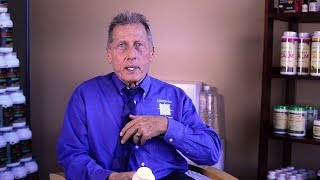
Podcast interview (Wellness Force Radio, episode 172) with Dr. David Minkoff discussing environmental toxins (glyphosate, mercury, heavy metals), the degraded nutrient content of modern soils and implications for population health, and the importance of ongoing detoxification as a lifestyle. Covers clinical stories (wife's mercury-related autoimmune illness reversed after targeted detox), links between gut health and systemic illness, and specific nutritional approaches: essential amino acids (including BCAAs) and a formulated "Perfect Amino" supplement used for repair, athletic performance and recovery. Also discusses hormones (cholesterol as steroid precursor, testosterone decline), genetics vs epigenetics (MTHFR and homocysteine example), and practical recommendations (organic food, reverse osmosis water, sauna, bowel regularity, intermittent fasting).
Chapters
The environment is so toxic now that everybody has to be detoxing all the time. You have artificial things being put into the soil which plants will grow in, but the nutrient content of the plants is way lower. And then that's what we're depending on for our sustenance. I think the important part is you've got to figure out where your abnormalities are and then adjust your lifestyle, nutrition, et cetera, et cetera, so that you can get those things in range the way they're supposed to be.
That's Dr. David Minkoff, and this is episode 172 of Wellness Force Radio. What's up, my friend? It's your host, Josh Trent. And welcome back to another episode for your weekly access to global experts in all things wellness as we discover the physical and emotional intelligence we need to live life well. Welcome back on this beautiful Friday, my friend. This is Josh Trent coming at you again for another physical intelligence podcast. Now this show is a best of the best 121. Dr. David Minkoff. We're driving forward with our standtallseries with Intelliskin, a human technology company that cues you into proper posture throughout the day. This smart compression. I know you heard about it on our episode with Dr. Tim Brown. And if not, do not wait another minute. Bookmark Wellness Force 137 on the website. Stand tall. That's the episode number. Also, while you're there, be sure to hit the banner that says stand tall. To check out intelliskin.net, enter code WF15. That's WF15 for your big discount and test drive. This posture. Cue this smart compression. I've definitely been noticing this. I've been swinging kettlebells a lot more this week. And if you're a kettlebell enthusiast, if you swing bells, notice in between sets how your posture might slump unless you're cued. I do these on my porch when I'm resting. In between sets, I'm breathing with my shoulders back. This posture cue technology. I don't need to tell you how big of a deal it is to breathe, especially deep breaths when you're recover. And breathing is a big part of how we detoxify. If you've been curious about detoxification, taking amino acids or branch chains, and the relationship of healthy hormones that support us to live with the most energy and athletic performance, this is the podcast for you. Now let's be honest. This is a toxic world we find ourselves in. From environmental toxins and plastics and off gassing and even pesticides found in our food Dr. Minkoff is delivering some action steps for us and easy ones, pragmatic ones, so that we can understand at a deeper level how to detoxify when amino acids and branched chains are the best for us and the relationship of these healthy hormones in how we perform in life and show up in relationships. We're understanding how to identify heavy metal toxicity, amino acid deficiencies, why it's important for women to detox before pregnancy, and how men can maintain healthy levels of testosterone. We also understand genetics and epigenetics and why having a strong and clear life purpose can be one of the most powerful building blocks for health. Now let's drop in with Dr. David Minkoff. Dr. Minkoff, I'd like to welcome you to Wellness Force Radio.
Thank you, Josh. Happy to be here.
You know, 41 times, 42 times. How many times have you actually finished and came across that Ironman finish line?
42 times and 8 times in Hawaii.
At the world championships, and you're still vital and healthy. What do you think the secret is? We're going to dive into a lot of details on health and really the details in the dirt today, nutrient deficiencies. But what's your secret right now? What do you think comes top of mind?
I think really when I, when I was in my first year of medical school, my dad had a heart attack. And it really was sort of a wake up call to me. Like, it's really important to eat well and to exercise and to have a good balance in your life and to live with people that you care about and who care for you and have a strong life purpose to help other people. I think that combo seems to work.
Such a beautiful sentence there. I definitely want to stamp that in everyone's memory. And you've been in health and wellness since the late 1960s. I'm curious, what's something that may have been surprising to you that's either changed or not changed in this industry since then?
You know, when I first, in my first lecture in medical school, the professor kind of introduced us to medical school and there's 125 of us sitting in there. And he said something that I never forgot. And that was that he said, education or knowledge in general is increasing at just exponential rates. So this was 1970, and he said about every five years there's a doubling of information and probably since then it's even more. And he said, we have an interesting challenge in medicine. He said about half of the things that you learn in here are actually true and half aren't true. He said the Biggest dilemma you're going to face in your career is we don't know which half is which. And that is really true. If you look at the various things in medicine like fats are bad. No, fats are good. Smoking's good. No, smoking's bad. Standing's bad. No, standing is good. Getting a lot of sleep is good. No, too much sleep is bad. I mean, you can just run these things and depending on who's pushing the oh, soy is good. No, soy is bad. Vegetarianism is healthy. No, vegetarianism isn't healthy. And so, you know, you have watched this now for 35 years and it never stops. And it's always sort of regenerates itself. The one idea burns itself out and another idea takes over. If there really is a truth or if the truth are really known and it really worked, then it would be, you know, there would be an understanding by people and they would just do the things that work.
Why do you think people shift from subject to subject and trend hop so much? Is it because there's some financial interest behind these changing behaviors? Or is it just people don't want to get the results by taking the real time?
No, I think it's driven by some of it's financial, but some of it is just fame. Fame and fortune. The guy who had this whole hypothesis about cholesterol causes heart disease, you know, I mean, he was probably a well intended guy, but he knew the evidence that he went forth with was very cherry picked and that it wasn't true. But he had such an investment in his own fame and notoriety and then back up by people who were willing to finance these efforts that for the last 35 years we've had don't eat fat, go low fat, eat lots of carbs, take statin drugs, and it's created a diabetes epidemic. An obesity epidemic has not changed heart disease one iota. Just as many people are dying, just as many people are getting it. The whole thing is flawed. And now you have organizations that are American College of Cardiology and American Medical Association. I'm doubling down on this stuff.
Yeah.
Even more it's sad because lots of people are actually hurt by this. I think that's just the way of all flesh, kind of, because these forces have been going on for a long time. But I think the more people are aware of it and what really is true is that for each particular person there are things that are very workable and that work for them and give them health and energy and longevity. And it isn't exactly the same for every person.
And I think at the root of everything, you know, we come from the soil, essentially the plants we eat, the animals that eat the plants that we eat, the animals. If our soil does not have the nutrients, we need those essentials. I can't think of a more sold and bought or even stolen topic online than supplements. This current state of our soils and how supplements can address that. Dr. Minkoff, I was at an event last year. Dave Asprey was on stage. He was bringing up some research that even when people eat organic foods from, quote, healthier soils, in order for us to get all the essential vitamins we need from eating just real food, we'd have to eat almost 25,000 calories a day. No one's going to do that. We'd be way too fat. I'd love to know, based on your research, your clinical experience, is this true? We have to eat that many calories to get all the essentials?
Well, I don't think with the environment currently the way it is and with the soil the way it is, that you could eat enough food to keep healthy. And maybe that's an estimate that he gave. I'm not, I'm not sure about that. But I know that the soil is in just as bad a shape as we are like as a population. Our health is going down, longevity is up, but health and well being are way down. This pesticide that's being sprayed all over the universe right now is called glyphosate and has for the last, I think since 1986 or 1984, somewhere in there, three quarters of the rainwater samples detectable now in the United States have glyphosate, have Roundup in them, have glyphosate. And this stuff is poisonous. And not only does it poison insects, which is what it was designed for, but it's poisoned the microbes in the soil so that they're not healthy. And when the microbes in the soil aren't healthy and then you put plants in that soil, then those plants aren't healthy either, and they don't absorb minerals. And then when you don't allow the earth to, you know, in biblical times, every seven years, the fields had to lay fallow. They had to, like, let them regenerate and recuperate. And that isn't being done now. You have artificial things being put into the soil which plants will grow in, but the nutrient content of the plants is way lower. And then that's what we're depending on for our sustenance. And so I feel like without without supplementation, we just don't have a chance.
What I'm hearing from you is that the glyphosate, really, this is something that can poison us on many different levels. We actually talked about this with Dr. John Gray and I'll link that in our show notes today. I want to pick your brain because you had so much experience around this sustainable health. How do we sustainable health if our agricultural system isn't sustainable?
Well, I think some of it is the poor people who are trying to do sustainable agriculture. So your local farmers that are doing organic farming and raising livestock organically. I think that the more we can support them, the better. Obviously, this is big business. Not that Whole Foods is the best example of everything, because I think they've colluded with some of these. These dark forces as well about labeling.
They just got purchased by Amazon, right? Yeah.
Well, I'm saying this is like huge, mega business. Now. Amazon bought them because there is definitely a trend this way. And I'm glad they're there versus that they're not there. But I think people are waking up and hopefully as more people get on board that they will overpower these forces that run the pharmaceutical companies and the big agricultural companies that have a big say in our food and advertising. I mean, people, you know, the Average person watches 20 hours of TV every week, they're susceptible to ads that are pushing things that just aren't good for people.
And I believe that we are seeing a shift in this. A lot of people in the Wellness Force community have been posting all over social that we think it's a good thing that Amazon was actually the purchaser of Whole Foods because there is going to be a big shift financially. And what do you believe might have to take place for the soil to get healthy again? Do you think it's going to be just businesses trading hands or do we need like a government, government policy level, Dr. Minkoff, to get these soils healthy again?
You know, every time the government gets involved, things get worse. So I don't trust the government to do it. I think it's going to be public demand. I think people as they learn. I have a medical clinic that sees people who are mostly challenged with being sick. You know, they have Lyme disease or cancer or Parkinson's or Alzheimer's or als, and they've been through the medical system and they're not getting help. And the only way that we can help these people and get them better is that they have to be on whole organic foods and supplements and build up their bodies with Things so that their bodies can return to a natural state of health. And I think as people, as this population grows, because, I mean, it's interesting. I was at UCSD in 1978. The chairman of the Department of Pediatrics at that time's name was Bill Nyhan. He's a very famous guy in pediatrics as a researcher and as a clinician. And I remember walking down, making rounds at University Hospital. There was a little kid in a crib. And he said, when we're done with rounds, I want you guys to all come back and examine this child, because you'll never see another kid with what this kid has. And so everybody said, well, what's wrong with him? And they said, well, this kid is autistic. And in 1978, the incidence of autism was about 1 in 150,000. The incidence of autism today is 1 in 57 males. 1 in 57. Now, that's not an accident. It's not better diagnosis. It's not more screening. This is toxic mothers, toxic babies, babies being poisoned with wrong food with toxic immunizations. And these kids are sick because they can't handle the environmental stress. If you project this another 25 years, there's going to be nobody that's going to be able to work. And this wrecks families, it wrecks school systems. When I was going to school, there was no ADD kids, no kids were getting amphetamines because they couldn't concentrate. Honestly, today these kids can't concentrate, but you put them on amphetamines, you wreck their brain. You have to restore their brain function with good nutrition and supplementation, and then they can get better. But this is an epidemic today, Epidemic of childhood cancers, of cancer in adults. You know, by 2020, cancer is going to be the most diagnosed disease worldwide. Now, cardiovascular disease. But cancer is increasing fast. So this is a result of our lifestyles.
Do you feel like detoxification and digestion? I mean, at some point, do all roads for healing lead to the gut? It seems like digestion and bowel movement quality. It's one of the biggest mirrors we have as a human being for Overall Health.
Yes, 100% of sick people have a bad gut.
And so in that regard, the healing path to this, this is really true to your heart detoxification. You reversed your wife's Ms. By detoxifying the mercury buildup in her body. Can you share with us that story? It's a really incredible story.
Yeah, it was 1995 or 1996. My wife was always into health. She's always Careful about diet. She's a terrific triathlete. She's a podium triathlete, and she's a registered nurse. She was always careful about nutrition. She was always going to seminars and learning about things. And she learned about mercury and the bad effects of mercury. And she had had a lot of amalgam fillings. Amalgam fillings are the gray fillings that are in people's mouths. And the way they make those is they take liquid mercury. About 50% of it's liquid mercury. And they pack into the mercury silver, tin, copper, and it makes that hard thing called an amalgam. Mercury at room temperature is liquid. It's the only metal that's liquid at room temperature. But it boils at 110 degrees. So if you take a hot cup of tea or coffee or Soup, it's probably 140, 150. Well, when you put that temperature on liquid mercury or even amalgamated mercury, it will boil, it will aerosolize, and the mercury comes off and it goes into your throat, into your mouth. You swallow it, it's uptaken by nerves in your mouth. It'll be taken into your brain. So she's got like 10 of these amalgam fillings. She goes to a dentist who didn't really have the technology to remove them safely. He takes a high speed drill, he aerosolizes the mercury. It goes all over her body. Shortly thereafter, she got an autoimmune condition. Her thyroid was inflamed, her liver was inflamed. And then a few weeks later, she wakes up in the morning. She says, you know, I'm trying to brush my teeth, but I can't lift my arm up, and my leg is weak, my gluteus muscle in my buttock is weak. And this was like, holy cow, this is serious. She's a young woman with three children. I'm working at a community hospital in the emergency room. I take her to the best guys I know. She saw an endocrinologist, she saw a liver specialist, she saw a neurologist. And they said, this looks like an autoimmune disease, kind of like Ms. We better put her on some steroids and some interferon. And I was like, this is like, crazy. Something's wrong. This does not make sense to me. She's a nurse and she owns a home health care nursing agency. And in her building, shortly before that, a dentist had moved in. And on the marquee, it said natural dentistry. So I went to pick her up one night, and he's walking out to his car and I stopped him and I said, hey, listen to this story. Does this make any sense to you? He said, oh yeah, it makes complete sense to me. When the mercury was drilled, it went all over and it got into her body and into her brain. And the symptoms that you're seeing are from that. Wow. He said, but nobody around here, we're in Florida, nobody around here, they don't know any of this stuff. I'm the only natural dentist in the whole 3 million population in Tampa Bay. So he says, you have to go to Seattle. There's a doctor there who's real smart and he teaches other doctors how to diagnose this and treat it and you better go there so that you can help her. So I got on a plane, I went to Seattle, spent a bunch of time with this guy, he taught me what to do. I came back, I treated her according to what he told me and she got completely better and all her symptoms went away. This is now 20 years later. She did sprint triathlons the last two weekends, podiumed both weekends. She's completely back to health. She's very dynamic and she's, you know, she's, her health is excellent.
This is such a powerful story because I can only imagine how many people out there might have had something like your wife and then never got the care treatment they needed. Do you feel like heavy metal toxicity is something that people are mostly aware of or is it still in the shadows?
Well, it's more aware. I mean now at least if you look on a tuna fish can, it says don't eat, don't feed your pregnant woman more than one can every two weeks or something like that.
Because of Fukushima?
No, because just tuna. The oceans are so polluted with mercury that big predator fish bio concentrate, they eat little fish and they concentrate it. So tuna is very high in mercury. So are shark and mahi and grouper. These big predator fish, they, they concentrate mercury and anyone who eats a lot of them will have high body mercury levels.
Well, the soils are depleted, the ocean has a lot of issues. So we know there's problems. I don't want to paint doom and gloom here because you're one of the people on the front lines who are giving solutions. The real skinny on detoxification, whether it's liver or anything to do with our body. What does that look like? We see so many of these 30 day detox programs. What's your clinical opinion of short term detoxes?
Well, I think that detox has to be looked at as a lifestyle. You Know, the main original detox things are you urinate and you poop and you sweat and that people have to have bowel movement every day. You know, sometimes people come in and I'll say, well, what's your new patient? What's your usual bowel habit? Oh, normal. Well, you know, how often do you go? Well, every couple days for sure. You know, and it's. I had a nurse last week, she's an Ms. Patient, she's in a wheelchair and she's a nurse. So she comes in because we treat a lot of these patients. And I said to her, what's, you know, are you going to the bathroom regularly? Yeah. What's your usual habit? Oh, she said, normal. I said, well, when's the last time you went? She said, at least three, three, four weeks ago. Wow. Now, I could not believe that she would say that, but she did. You know, people get used to whatever they get used to and if they don't know any better, you can't really blame them. But if I don't go to the bathroom every day, the next day is not a good day. So anyway, those things, those go to the bathroom every day, drink plenty of good water. If you're drinking tap water, chances are high that it's full of bad stuff. So get, you know, least, at least reverse osmosis water. Don't drink out of plastic things, don't cook your food in things that are going to enter the food. You know, nonstick pans in aluminum. Use materials that are safe, that won't enter your food. Don't store your food in tin foil and plastic and eat organic food and then get in a sauna five to seven days a week and sweat and work out and, and then eat organic food. And then these are like basics. And then on top of that is people may need periodic cycles if they're doing well, where they'll do some fasting for a few days, they'll clean things out. And that can be very helpful.
So when we see these juice fasts where people are doing cayenne pepper and, you know, there's a lot of trends out there and what I'm hearing from you is that this, you know, cellular cleanup, this autophagy that happens in the cells, this can be something really beneficial once a month or whatever it might be to get that fasting effect. So that's a real big way to detox, correct?
Yeah. And even intermittent fasting, you know, if a person just eats within a six hour period during the day, so you have lunch at noon and Dinner at six and then you don't eat anything the rest of the time. Drink all the water that you want. If you want a hot beverage, you can do that. But it can make a huge difference for people. And we see, you know, blood work just transform by doing these simple things. Five, six weeks. Okay. Eat a paleo diet, all organic. Make sure you have a bowel movement every day. If you don't, here, take some extra magnesium before you go to bed. Take these supplements. Here's a multivitamin with extra herbs in it to help your liver process toxins. Take a green foods concentrate. Eat some seaweed or add some iodine. Take an amino acid supplement. Because most people aren't digesting their proteins very well. Most people over 40 need a digestive enzyme. You know, these simple things. You know, get in the sunshine every day for half an hour.
Yes.
Get your body moving so that you some sweat and get your muscles working for, you know, 20, 30 minutes a day. And people would feel completely different in six weeks. They do.
I totally agree with you and what I'm hearing from you is these basic fundamental ways of human life that have been practiced for millenn, you know, sweating and pooping and you know, just natural things that we can do to detoxify. I'm not hearing any clear answer from you around a 30 day approach. Is there a short term approach that you've actually seen be successful for people or is it more of a continued lifestyle for detox?
It's a lifestyle because the environment is so toxic now that everybody has to be detoxing all the time and a lot of us need extra stuff so the detox, you know, can keep up with the negative force in the environment. And I think people just have to understand that you're getting poisons every day. If you drink a lot, you're making it worse. If you smoke, you're making it worse. If you grill your food on tin foil, your aluminum levels in your body is going to be high and you're going to. This is a great example. In 1966, I think, or 67, I was in college and I did a weekend intensive with this yogi that came over from India. And the thing I remember the best about what he says, we're sitting around one night and he's kind of talking to us about life and health. He said, listen, here's the rules. The first 20 years of your life you can do anything you want. The second 20 years you sort of coast on Grace. The third 20 years of your life, your body will take you to hell unless you take care of it when you're younger. And what I can say now is there is no 20 years of grace now. There isn't any grace. That if a mom is going to get pregnant, she ought to clean herself out before she decides to get pregnant. Because the mother uses the fetus as a dumping ground. The mom will detox into the baby. And we see now babies that are born where they have high mercury, high aluminum, high lead, formaldehyde, all kinds of environmental toxins that their mother has in the body because she hasn't been careful about her lifestyle, and they dump into the baby. Now the baby's born already contaminated. And this whole field of epigenetics, which is, you know, the genes have a certain program, but which genes are turned on are determined by the environment. So now you have this baby coming out where his genes are already programmed by the toxins that the poor thing has seen inside. Now, on day one, he's given a hepatitis vaccine, and he's got stuff, poisonous stuff, put in his eyes, and he's given another shot of something else, and then, boom, there we go. This isn't healthy, and this isn't how you build healthy bodies. And so there's no grace, period. Now, people have to be more intelligent if we want our species to survive and to thrive.
And I'm so glad you said the word intelligence, because this is truly the message here. We're understanding our physical and our emotional intelligence. You know, there are people that believe that flesh proteins are not part of a diet. And what I've heard you say on a few different podcasts is that these essential amino acids are missing if we're not eating flesh proteins. Why is this?
You know, I've screened probably way over a thousand people who are vegetarians or vegans, and if they've been on the diet for more than three years, and we measure their serum amino acids and their serum fatty acids. So these very important things, which are the building blocks of the body, nearly, not all, but nearly 100%, are very severely deficient in both categories in EPA, DHA, which are the two essential fats that our bodies need. And in the eight essential amino acids that are required for all the proteins in our body, you know, from skin and liver to immune cells, to enzymes that detoxify and create energy, to neurotransmitters which run our whole brain and nervous system, they're deficient. The food that they're eating just isn't up to par, and it isn't with our sort of our genetic heritage. Now it can be worked around. We have this perfect amino product which can nurture vegetarians. It's a vegan product where they're able to get in amino acids so that they can, they can actually nourish themselves on that level. And sometimes there are food algaes that contain epa, DHA where we can get their levels up to normal. But it takes real effort and it takes real know how.
Yeah.
And your average person who's doing it will feel better than they felt on standard American diet for a while. But they'll find after a couple of years or maybe sooner, they're tired, their energy isn't good and they just don't feel well. And when we measure them, we can say, holy cow, your hormone levels are low, your amino acid levels are low, and you're malnourished.
This is a thing we've gotten questions on before is foods and testosterone. So we know that fatty foods, healthy fats, meats, animal flesh, this is what can also help to fuel in males, healthy testosterone levels. What is the connection between that, building testosterone through animal flesh?
Well, testosterone is a steroid hormone and the steroid hormones. The base of the steroid hormones is cholesterol. So there's no cholesterol in vegetables or fruits. In non animal foods, cholesterol is only found in animal foods. And if a person is like egg yolks or in fleshy meats or fish, and if a person isn't eating any cholesterol, it may be that they're not getting enough to build their hormones. And I had a personal experience with this. I was eating probably a pretty standard paleo type diet, not heavy emphasis on flesh foods, but I was certainly eating those foods a couple times a day. My testosterone levels were in decent range, like around 600 for my age. That's good. I don't take any hormones. And I went on a diet that was high cholesterol. I started adding butter and coconut oil in heavy amounts to my food and I did it for six weeks. And I then retested my cholesterol and it went up 200 points just on adding high amounts of cholesterol to my diet. I repeated that two different times for myself. I mean, there's an epidemic of low testosterone in males in this country, and we see it starting at age 25. Now, sometimes it's because they're on drugs which block cholesterol production, which is like the worst idea anybody ever had. But people aren't either getting enough or digesting it. And when they do their Bodies do better because genetically, that's what we've been doing for the last 2 million years.
This is such a great point. Have experience in that as well. I did a WellnessFX panel. We had clinical officer Dr. Murdoch Kalehi from WellnessFX on the podcast. And we talked about my intervention where because of stress, Dr. Minkoff, not nutrition, my testosterone dropped 200 points. And so getting my breathing back in order, getting my stress and my yoga practice in alignment with the path that I was creating for my health, that's what made the biggest difference. But there are people that are extremely nutrient deficient. Can you tell us about these branched chain amino acids and also the perfect amino product? I actually got to try that after an event, but I'm going to wait to tell that story when you're done.
Okay. Now, officially, branched chain amino acids are three of the essential eight. These essential eight are called essential because if you don't take them from the diet, the body doesn't get them. There are about 22amino acids that the body uses to make the proteins in the body. But if you get the eight your body can make the other 14 branched chain are three of the eight. It's leucine, isoleucine, and valine. These are known as the branched chain amino acids. Now, if you just took branched chain amino acids, you cannot build protein from those, because in order to build a protein, you need all of these eight essential ones at the same time in the right ratio. So if you decided, okay, I'm just going to eat fruits and vegetables, virtually no protein, and I'm going to live on a diet of branched chain amino acids, your body would not do well. You would not build protein, because those things aren't enough to make the proteins that are in the body. So you need 8. A real smart guy about 25 years ago was experimenting with trying to find out what food could you give someone that would be the optimum protein for their bodies. And an optimum protein would mean that when you eat it, all of that gets converted into body protein, and none of it gets converted to either waste or carbohydrates. And so this perfect amino formula is what came out of that. It is eight essential amino acids, including the branch chains, because those are three of them. And it's in a very specific ratio so that when you eat them, the body takes them and it manufactures protein. Now, if you need heart cells or liver cells or enzymes, that's where it goes. If you eat a food protein, let's, let's say you have some whey protein. So whey protein has been promoted as, like this great, great stuff that is like a perfect protein. But if you take it and you measure it and you say, okay, eat whey protein, and then let's measure how much of the whey protein got converted into your body's protein, which is what you're eating protein for, and you'll find that only 16% of it is 83% of that protein. When you eat, the whey protein gets converted into carbohydrate, and it just adds calories to what you're eating.
There's a really unique article on the body health side. It's from outer space to inner healing. Amino acids are central to life and health. And there's a section on our body's natural prioritization process. For example, if we start taking amino acid supplements to build muscle, but our digestive system is in need of repair, the supplement will only be diverted to fix the gut before we ever get results in muscle gain. Why is that? Why does the pathway shift like that?
Well, I think it's a priority. It's sort of a survival priority. And if there's deficiency of stuff coming in, it sort of goes where the most survival is at stake. And so we find that sometimes it makes sense and sometimes it doesn't make sense, but that most of the people. I can tell you, before I started taking perfect amino, I had been a vegetarian for a long time.
What is a long time?
Since like age 14. So like 40. Some 40, 50, like 45 years. I grew up in Madison, Wisconsin, and I was a boy scout. And at age 13, they took us. The Oscar Mayer meatpacking plant headquarters was in Madison, Wisconsin, where I grew up. And they took us on a tour of the meatpacking plant. After I saw that, I was like, I'm not doing that. So anyway, I broke down. I was doing triathlons. I pulled a hamstring in a race. And then for three over two years, I could not get it to heal. I did massage, I injected it, I did chiropractic. I did. You name it, I did everything. It wouldn't stably heal, and every time I tried to run hard, it would hurt. And then I was always afraid I was going to tear it. I met somebody who had this perfect amino formula and he gave me some. And I started taking 10 tablets twice a day. And in five weeks, my hamstring was like rock hard. I went and did Ironman Canada. After that, I had the best race I'd ever had. It was A PR for me. I set a new record for maximum heart rate. You know, maximum heart rate beats. It was 12 points higher than I'd ever been able to achieve before. It was like a performance upgrade. But the thing that was most interesting is that I gained 12 pounds without a noticeable change in my waist, my arm size, anything else. And when I called the inventor of the product, I said, what is going on here? The scale is going up. I don't look any different. I don't feel any different. My clothes aren't tighter. He said, you're filling in all of the backlog list in your bones and your organs and in your enzymes that you have been missing all these years because your diet was inadequate. And that was really interesting. And I see that now with people, we measure body composition now, so I can track this with people, like, their bone weight goes up, their lean muscle mass goes up and they're filling in, or if they're exercising, they're making their body actually stronger because they're building body protein.
I loved three things there. Now, we'll probably have another show just on that exact topic of performance and supplementation. But when I hear you speak about the backlog being filled, it's almost like rent hadn't been paid for so many years. All of a sudden, everything filled up. Did you notice anything from a clarity perspective, like a cognitive perspective, or is this something more for physicality and repairing and replenishing the muscle spindles?
It's both. It's all because in these people that are protein malnourished, the other thing we measure in our clinic routinely are neurotransmitters. So serotonin, dopamine, epinephrine, norepinephrine, gaba. We measure these on virtually all the patients. And in sick people, they're always low. And when their amino acids in their blood are low, their neurotransmitters are low because these neurotransmitters are made out of these amino acids. And so it's global. And so when you restore adequate nutrition, then you restore neurotransmitters, you restore, you know, the simplest, really, protein in the body is thyroid hormone. It's an amino acid tyrosine with three or four iodines on it. And we see people, they're hypothyroid, okay, we measure their blood test. You're hypothyroid. Well, we measure their. We look at the tyrosine level in their blood, and it's low. We measure the iodine level in their blood, and it's low. And you replenish them with perfect amino, they will then make tyrosine and you give them an iodine source and then, you know, three, four months later, they're not hypothyroid anymore. Their body can make it because it's now got the things it needs to be able to do the job.
And I had an experience too. I did a 14 hour crucible. Mark Devine here in Encinitas has seal fit. So I've talked about this a few times on this show, but I was able to take 15 tabs at a time. I put them in a little baggie and I put them in my pant leg. So I would take them in between the sessions and I noticed an energy burst. So when I take these on an empty stomach, why do I get an energy burst?
They're going into your system. And I think what happens is that your brain, your muscles, your overall system is like, wow. Because here's what happens. The minute you start to do exercise, the cells are on alert of we're being sort of traumatized, we're being worked and we need to make sure that we can heal everything back. And so we tell people to take perfect amino pre workout because these amino acids are then in the blood. And I think the cells get the message of, oh yeah, replacements are on the way, no big deal, go ahead and work it hard because we're not going to get caught out short.
So that's the energy spike. Then the body's just getting these aminos that it actually needs. It's almost like a car getting a little shot of jet fuel.
Exactly. And the other interesting thing is, and we did a, it wasn't a, it was sort of a trial with, this was back about 10 years ago where we knew that the guys that were doing, one of the teams that was the American teams that was racing at the Tour de France, their doctor was a patient of mine and a close friend and he said, you know, these guys have chefs and they have IVs afterwards and they have, you know, like the best that nutrition knew how to do. Because if they're doing the Tour de France, the trauma on their body is so overwhelming that they're trying to maximize their nutrition. And he said, no matter what we did, by the third week of the Tour, these guys were breaking down. They have tendonitis, they're sore, they're tired and they couldn't really recuperate adequately. So for some of the team members, we supplied Perfect Amino 10 tablets three times a day. In addition to everything else they were doing in the tour. And what he said to me was they didn't break down. In fact, they were fitter at the end than the beginning. And the moral of that story was that if you give the body what it needs, even under severe duress, it will be able to keep up if it has the stuff that it needs to be able to do it. And I think for all of us sort of warriors with work and play and families and things that we want to make sure that the nutrition that comes in and important among that is amino acid nutrition, that you can maintain your warrior lifestyle and not break down and remain healthy.
That is so great. Thank you for mentioning that too. Because in my mind I'm thinking, how did these athletes get judged on how they weren't breaking down and how they were performing? Was this just anecdotal? Was it their performance based or did they actually do like a muscle sample or some kind of serum sample to figure out that the aminos actually made a difference?
There was actually a published study on this where nobody had ever walked across the Kalahari desert in China. It's a 325 mile temperatures vary from freezing to 100 something degrees during the day. Sandy, hilly. And nobody ever had walked across it unassisted. So a professional race walker took on the challenge and she was taking a vitamin mineral carbohydrate mix for most of her calories. And she took eight perfect amino three times a day as her sole protein source. She was the first one to actually make it all the way across. Took 25 days and she had performance and fitness testing pre and post. She was fitter at the finish than she was at the beginning. Her VO2 max was better. Her hemoglobin went up. She'd lost a little bit of weight, but it was fat. Her lean muscle mass increased. This was another one of these challenges where they actually tested it, where she was better at the end even with this very difficult task.
I want to ask you this question that came up for me. We look at the branch chains, the three that are most important, the BCAAs, but then there's so many more that are included in perfect amino. If bodybuilders, if people that are trying to actually add lean body mass tissue, if they're just taking regular BCAAs, are they missing out on the other essentials?
Yeah, because BCAAs don't build protein, they will spare protein. But the BCAs get turned into carbohydrates and they're used for fuel. And instead of the body using the Proteins in the body for fuel, they will preserve the proteins. You can't. You feed somebody BCAAs all day long with no other food. You don't build protein, they're incomplete. Every protein has the eight essential amino acids and if you're only giving three, you can't do it. So they have other effects. They have some hormonal effects. They do trigger MTOR and some things like this where you can, you may get some hormonal response, but in terms of straight nutrition, you need the full complement. And I can, I have another just little anecdote. A very prominent strength coach in South Florida was having his, his bodybuilders do. He was trying to get them to do 100 grams of whey protein three times a day as a way to provide enough protein so that they could maximize their strength. Yeah, and all of these guys were having trouble with their gut because that much whey protein with bloating and gas and things like that, they just couldn't take it. So he called me and I said, look, stop all that stuff. Give them 10 grams, 10 tablets of perfect amino three times a day and do that for a month. And I bet you anything you get better strength gains and you won't have all the GI side effects from trying to stuff all this whey protein down these guys. And he called me back and he said it's brilliant, it's working. And that's what they use. Now, a lot of professional ball players, a lot of professional athletes and cyclists use it because they professional speed skaters because they can tell. It's easy on the body, it's easy to take, and there's a real effect on the system. You will build body protein and you will speed recovery.
We'll definitely link that in the show notes for the perfect amino. And a little blurb on my story there too over at the show notes page. Dr. Minkoff, while we have you on the line, I have to ask you, there's been a few questions about this MTHFR gene. It was something we blinked from bulletproof on a previous show. This is something that keeps our body methylated. There are people that are born without a copy. There's some people that are born with two copies with methylation and genetic predisposition. Can you explain this and why people may want to consider getting tested for this gene mutation?
Well, I think that there is some importance, but I think it's just the latest medical fading. I've done my genetics, I'm lacking an MTHFR. There's like 20 genes that do this, and I'm lacking some of them. Now, this is very common. About 28% of everyone walking around has this. So I think it's a fad these days. I think people need a good complement of B vitamins, and they need a good complement of essential nutrients. And I want to tell you, this is another thing that I learned on myself. So one of the risk factors for having this MTHFR gene is heart attacks and heart disease. So I go back. Great grandfather, grandfather, father, brother, everybody's got heart disease. Okay? I don't have any heart disease, but I have a marker in my blood called homocysteine, which is a marker for this MTHFR gene not being good. Now, when I see this in patients, I give them supplements, because there are supplements which can kind of override this gene defect. And there are certain categories of B vitamins. So for five years, I have tried every company's brand of these vitamins, both orally and IV to try to get my homocysteine down into normal. Mine was double what it should have been. I didn't like it, but I couldn't get it to go down. I didn't know what else to do. I gave up. Just a couple years ago, I decided to do intermittent fasting and a ketogenic diet. I did it for six weeks, and I remeasured all my blood levels. My homocysteine, which had been running 14 or 15, which is this marker, went to 8, went to normal. First time in my life that I've been testing it on a high cholesterol, intermittent fast diet. That's like, holy cow, that's crazy. My cholesterol goes up, my Testosterone goes up 200 points, and my homocysteine goes to normal. So I did it for three more months. I rechecked all the values. Everything stayed the same. I went off of it. I went back to sort of my paleo heavy vegetable diet. I remeasure my homocysteine back to 13. Okay? So I have the genes, but what I ate made a total difference in which genes were being expressed. And it went to an expression which is healthy.
Sure.
So I think most of this is Madison Avenue latest fad do this. I think the important part is you've got to figure out where your abnormalities are and then adjust your lifestyle, nutrition, et cetera, so that you can get those things in range the way they're supposed to be. And supplementation for me, didn't work, but correct diet did. And so that's something I can do.
This biochemical individuality. Your story is yours. Someone else, they have different needs. Is there any testing that you do for understanding what nutrients or if someone needs to get a panel to see if they have any genetic markers that aren't going to move them towards good health?
I find that doing the genetic markers isn't very helpful, but doing the downstream things that we're looking at are. So if you look at fasting insulin, at homocysteine, at lipoprotein A, at amino acid levels, at essential fat levels, at detoxification markers, at detoxification pathways, these are all available. And so in the patients that we see, we do this stuff and you get a very nice picture of, look, here's where your abnormal biochemistry is being expressed. And if we do this, this and this, we might have to provide these nutrients or we might have to alter your diet or alter something like that, and then do that for three months. And then let's look again like you have the wrong bacteria growing in your gut. You've got all these bad guys, you've got not enough good guys. Let's make an intervention. Let's do it for three months and then let's see. Do you feel better? Is your bloating gone? Is your digestion better? Are you having good bowel movements now? And then look at the stool again and say, hey, now it's looking good. This is how it's supposed to be. And then the person can continue that to maintain their health.
This is such a great diversion between what the media is pushing out there and what you see from a clinical perspective. So thank you so much for mentioning that. Now, this is the last part of our show. I did not prepare you for this at all. It's seven back to back questions for seven of your truths. Are you prepared?
I'm not prepared. I'll give it my best.
We look at self awareness in optimal health and wellness. Do you believe it's possible to be truly well in our body and in our mind and our spirit if we're not connected to spiritual health or spiritual growth practice?
No, it's impossible.
If you could go back in time, just for a minute though, and look at yourself when you were 21, would you tell him any specific message or would you say nothing at all?
Oh, that's a good one. What would I do differently? I probably did as good as I could at the time. And, you know, I always felt like I was a seeker. So I was always looking for what's the truth? What's the answer? And I think it, you know, as you look around at life and you experience life and you get involved in life, I've always been sort of a bookworm, and I've always been, you know, I was interested in knowledge and education, and I think that sometimes that gets out of balance. And that experience and doing things and looking, you learn more than you get from having someone else's experience and then them telling you what they saw. So there's just no substitute for getting involved in life and looking and participating and getting your hands dirty and getting sweaty and looking. And then, you know, there's this saying, if it isn't true for you, it's not true. I don't care what anybody says. If you look and you know it, then you go by that.
I'm nodding my head. I'm a seeker as well. You recently spoke at a health event. This year you caught up with Dr. Mercola. Can you share with us any topics that were top of mind for both of you behind the curtains?
Yeah, I had lunch with him twice last weekend. We were together. You know, he's another guy who's always looking, looking, looking what's right, what works, what will help the most people and what will do the best. He really is just completely dedicated to that. And you could see by his own lifestyle that he's experimenting all the time with his own body and with himself to try to optimize things. And I just was amazed at his curiosity about what is true and what works and how have we been brainwashed where we don't even know it and what actually is true. He's very much into electromagnetic fields and their influence on the body. And I learned a whole bunch of things from him about, like, this stuff's really bad.
Yeah. He doesn't even use the phone next to his head. He has the phone on, like a selfie stick.
Right, right.
What foods do you take with yourself when you travel?
In a Faraday bag.
Oh, interesting. What are the foods that you take when you travel?
Well, about half my suitcases is supplements of one kind or another. I take Kansas sardines, sometimes oysters. My wife bakes some really good keto muffins. I usually take a bunch of those. I always take nuts with me. I'm manned and armed. No matter what happens, you take the.
Supplements and the healthy fats with you no matter where you go.
Yeah.
Who inspires you now to be at your very best? You know, you're such powerful and continued service to health and wellness. Who inspires you? Who's in your circle that gives you fuel to do what you do.
I listen to podcasts, I read and then I have a laboratory that I'm in every day so that I have a, you know, I have super high end athletes, like world champions that I work with and I have a whole stable of like really sick people. They have cancer and heart disease and Ms. And ALS and rheumatoid arthritis and Lyme disease where I can test out these hypotheses in these people. Like what do I see, what am I measuring? I make this intervention and then I see them. And about, at this point, about 85% of the time it's like, it works, it works. It's like the guy can't, had a limp and he couldn't walk because his muscles weak because he's got Ms. And now he's walking like a big time marathon runner. Couldn't run for nine months, exhausted, figured out that she was being poisoned from the almonds that she was eating because there's a fumigant that was put in them and now she's running again. So I think my best source is my patience and me being able to test them and work with them and then seeing before my eyes where they're like, yes, I'm back, it's working and you helped me. So I think that's the best thing for me.
You know, this next question I'm going to ask you, it's almost our last one. And it's funny, in the first minute of our talk today you already mentioned this, but I want to circle back because my curiosity is around purpose. If we have a strong purpose in life, how does that affect our health? In other words, can a lack of contribution or connection to a deeper. Why literally block someone from being the best health they can be?
Absolutely. And you know, it's funny because right before I came on to talk to you, the last patient I had of the day is a 28 year old guy who had a sexual experience that he regretted. He was afraid that because he'd had this sexual experience that he had contacted a sexually transmitted disease. And within probably eight hours of him having this contact, he started to feel sick and feverish and swelling and completely obsessed with this. I think on a sort of spiritual level he had so betrayed his own kind of purpose and moral code that he had taken it upon himself pretty much unconsciously to do himself in. Now he came to me and I discussed this with him and he just couldn't have it. He was sure he had this very rare. It's called htlv. It's a virus that causes cancer, that he's got this. And no matter what anybody said, he had this. And we did all the antibody testing and he didn't have it. And then he had a little tiny lymph node in his neck. And he said, I know I've got this lymphoma and this is what's wrong with me. And he said, I want it biopsied. And I said, I don't think you can get anybody to biopsy that because the thing is small and gee whiz, I don't think it's abnormal. And he went and found somebody to biopsy it, and they biopsied it and it was normal. And he's been obsessed with this. So I've been treating him for the last two months because he was positive for Lyme disease. So we're treating his Lyme with nutrition and IV vitamins and minerals and ozone and silver and the rest of the stuff that we do. And I met with him tonight and he said, you know, you've helped me. My energy is better and I'm feeling better, but I know I still have this cancer.
Wow.
And I just said to him, I said, you know, I'm just going to tell you some things that I don't usually tell people, but you got to just stop this. You got to stop this. This guy has a, he's got a marine body. I mean, he's got a beautiful body. He's 28 years old. He's broad shouldered, he's a handsome guy, he's muscular. And I said, you got to find a purpose besides deciding that you're going to just kill yourself because you did something that you shouldn't have done or you decided that was not something you should have done. You got to have a purpose to go help somebody else out. And you better go in a hospital and volunteer or, you know, figure out some way to be of service to mankind. Because when you put your attention on yourself, you are just going to. You are going to do yourself in.
That is one of the best answers I've ever received to that question. Thank you so much for sharing that story. You know, 30 years, 40 years, actually. For you in health and wellness, what's wellness to you now at this point? How do you personally define wellness?
It's well being, it's satisfaction that you're alive at the end. What you want to have said to yourself, you know, you're on your last five minutes and you reflect on what you did, and I think it comes down to just a couple things that you accomplished what you wanted to accomplish and that other people were happy that you were there to do that. And if you can say that, then you had a good life.
Dr. Minkoff, thanks so much for coming on the show. You can learn more about Dr. Minkoff and body health@bodyhealth.com also his clinic, lifeworkswellnesscenter.com I just want to pause and thank you so much, so much for sharing your time. After a full day's worth of seeing patients and running a business, you're here with me on a podcast and I think that's totally admirable. Thank you so much.
Thanks Josh. Love doing it.
Hey my friend, thank you for hanging out and growing with me on today's show. Remember to hit subscribe Share this podcast with somebody you care about that you think gets to hear this message. Support the show by leaving a five star review for the podcast right now simply by tapping on your show artwork on your iPhone, click that purple link that says review this podcast. It helps the show reach more conscious and smart people like you and your voice will attract more world class guests that want to come on the show. So let them hear your voice. For all the downloads, videos, links and free resources mentioned on the episode, go to wellnessforce.com radio and while you're at my house on the web, join us in the Wellness Force Community newsletter on that page and I'll send you four free guides around staying healthy with your eating, moving and sleeping while you travel. Join a group of people like you over at the Wellness Force Community Facebook page. This is where we talk about the things that really matter. We share our wins, inspirations, struggles and a lot more. So join us. Tap on the show artwork on your phone and hit that purple link that says Join the Facebook group and I will welcome you at the door. Okay, now you get to go out into your world and create impact for the people that you care about. So until I see you don't real soon, I'm wishing you love and wellness.
More from Josh






Your child's future start before pregnancy... and even before conception! #podcast

MD Reveals: Your Healing Creates Your Child's Reality (The Souls Coming In Need Strong Bodies)



