173 Michael Neeley: The Truth About #MeToo
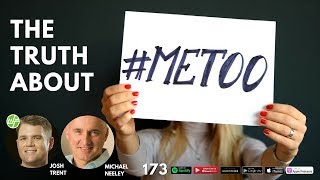
This is a transcript of Wellness Force Radio episode 173 (host Josh Trent) featuring guest Michael Neely. The interview (published Feb 27, 2018) covers: (1) definitions and practice of consciousness (observer vs mindset, meditation, the Eightfold Path), (2) Michael Neely’s personal biography and path (actor in LA, left after birth of son Tristan around 2002, moved to Santa Cruz in 2004 and ‘landed’ on coaching/podcasting around 2013), (3) emotional intelligence practices (art of forgetting, truth-telling, shortening the path back to awareness after triggers), and (4) a substantive discussion of the #MeToo movement (origins, women coming forward, men’s responsibility to police peers, gray areas around flirting vs harassment, systemic/justice responses). The episode ends with Michael mentioning an upcoming live event (Authority Blueprint Live) and his site MichaelNealy.com.
Questions this video answers
Episode 173
February 27, 2018
Son named Tristan; around 2002
Around 2004
About 2013
Chapters
We're going to get triggered, but the goal is shortening that path to coming back to awareness, back to consciousness. If, for instance, you get triggered and maybe you blow up real quickly at your partner or a friend or whatever the case may be, even someone at work, you blow up, and then quickly you can get back to. Oh, wait a minute. I'm sorry. That was totally out of place. I. I didn't mean that. Let me tune in and see what's going on for me over here, because that's where it all starts. Over here, not out there anyway, even though we feel like it's out there.
That's Michael Neely, and this is episode 173 of Wellness Force Radio. What's up, my friend? It's your host, Josh Trent. And welcome back to another episode for your weekly access to global experts in all things wellness as we discover the physical and emotional intelligence we need to live life.
Well.
In this podcast, we're talking with my friend, fellow podcaster, author, speaker, and emotional intelligence leader, Michael Neely. Now, hold on to your hats, your phone, and your keyboard. This is going to be a controversial episode. I mean, anytime MeToo is brought up, it becomes controversial. Which is honestly why I was so compelled to have this deeper discussion, so that the men and women in our Wellness Force family can understand at a deeper level their role and responsibility in the MeToo movement. Now, if you haven't heard of MeToo, it started out as a call for change, which spread virally October 2017 with a hashtag on social media which demonstrated a widespread prevalence of sexual assault and harassment in the workplace. And what soon followed was the sexual misconduct allegations against Hollywood mogul Harvey Weinstein. But most people don't know the phrase actually was created by Tarana Burke and popularized by Alyssa Milano when she encouraged women to tweet this to give people a sense of the magnitude of this problem. Since then, the phrase has been posted on literally millions of times across the world. We've seen in the past few months emotional and social contagion. However, change, the true core of this MeToo movement that Michael and I are discussing today. This danger and the solution for a much needed and long overdue driving force of women's empowerment. Now, I'm gonna warn you, this episode may spark you, it may upset you, and if it does, that's okay. Let us know in wellnessforce.com group. Just having the conversation alone is a place where not many people like to go. But Michael and I, especially with his decades and in positive psychology, as the host of the Consciously speaking podcast, interviewing world class people around behavior change and positive psychology. This conversation we're learning not only about MeToo, but the real difference between mindset and consciousness and how to deal with triggers and negative thoughts by changing our state. And the easiest way to do that is by taking your deep breath, which is always there for you. So take a deep breath. This is your breath break right now, actually take a couple deep breaths. Feel how good it feels to change your state. I wanna give a huge shout out for the love and support from our premier sponsor, Organifi. I know you've been seeing our contest details and I want you to win a 60 day supply of Organifi. All you have to do is go to wellnessforce.com review, click on your iPhone right now as well, leave a review for the podcast and you're automatically entered to win. We'll announce the winner in just two weeks. And check this out. Organifi has given you 20% off their micronutrient rich greens powder. You can take it to the gym, on a hike up a mountain, use the single serve packets. Getting your micros, it's what's missing honestly, from food right now. Anyways, you can easily do that by heading over to OrganicShop.com, use your special discount code WellnessForce for 20% off the green juice and everything else that's code WellnessForce for 20% OFF over at Organifi Shop today. And today on the show we're peeling back the layers of what Michael calls the art of forgetting. Letting go of made up thoughts and stories and anything else that's weighing you down, what the noble Eightfold path is and how it can help you to achieve greater consciousness and the ownership and and everyday steps that us as men can take to better support the women in our communities. Be sure to stick around to the end of the show where Michael talks about his authority Blueprint Live where you can continue this conversation as well as meet Michael in person. But no matter what you get from this podcast, which I know is going to be a lot, let this quote from Michael land for a moment. To really master the art of forgetting, you have to ignore all the made up stories. You have to successfully remove the made up thoughts and ideas you've invented inside your mind. So now let's talk about The Truth Behind MeToo with Michael Neely. Well, man, consciousness is something that you are a master on and it's been probably, gosh, almost four years now since I've met you at the podcast movement. You're the Host of Consciously Speaking, as well as so many other things. Michael, it's such a joy to connect with you again in person. We were here in San Diego and I realized I have not shared Michael's message, his powerful voice on Wellness Force yet. And so, as the host of Consciously Speaking man, how do you see consciousness in 2018? That's a big question. I'd love to slowly unpack that with you, but what is your definition, your understanding of consciousness as we find ourselves in this new year, this 2018?
Yeah, you know, Josh, I think that's a fantastic question. And it leads me to recall, just literally a few days ago, someone put a post out on Facebook about what do you think is the difference between mindset and consciousness? And the easiest way I could encapsulate that is in the phrase I think, therefore I am. And the way I break that down is I think that is what we do. That's mindset. Our mind is built to think. The part of us that says, therefore I am, that's consciousness. That is the awareness that we are thinking beings. And so for me, the important part of being conscious, you can do your mindset work all day long, but until you're able to step into that consciousness part and kind of as an observer outside of the box and look at yourself and go, oh, there I am thinking again. There I am doing that stuff again. For me, that defines consciousness, and that is part of my goal to be able to go into that space more, to really then make choices from there.
Science is still trying to figure this out too. Michael, what exactly is consciousness? You know, they have terms like the observer effect, where the act of just observing something will influence the way it's outcome. How do you define the scientific aspect versus what we all kind of know? When we're little kids playing in the sandbox, we all know we're conscious. Then we haven't figured out the rules, the regulations, how we should quote and should not be acting yet. How do you explain this? When you interview so many guests and. And you dive into these really, really unique conversations, how do you dissect between the scientific explanation and what we all know to be true about consciousness?
Yeah, you know, it's really hard to tell on a scientific level what that means, because if you talk to, for instance, I have a friend who is an anesthesiologist, and he describes multiple layers of consciousness or even unconsciousness. And by example of that, if you're going into a surgery, there are levels of unconsciousness. They can take you to where you can still talk to them and communicate stuff, but you will have zero memory of when it's all done. And then, of course, they can take you all the way under. And so there are levels of that, scientifically speaking. But the easiest way that I can describe it from that kind of could give an analogy that makes it a little simpler, is like, imagine a movie screen. You've got this big white screen there, and a movie is being projected onto it. That movie is. To me, that's not even necessarily reality. That is our experience of it. But the consciousness is the screen, man.
I'm thinking about Alan Watts. He's one of my teachers, and he's always been, and he continues to be. I come across his content. And I'm curious for you, man. Who have you looked for, for education inspiration around this journey? Has it been 30 years now you've been diving into consciousness and the work from that?
Yeah, there are very many. And so I kind of consider myself a little bit of a soup of all of these different ingredients. And I can say probably some early starts of it were with people like Tony Robbins. I started doing some of his work way back. I mean, way, way back. And then I did some work in landmark education. I've continued on to study with people like Gay and Katie Hendricks. And then I had a mentor whose name was Marty Weiner, a dear friend and mentor of mine who left us four years ago, no longer here on this planet. And he's on to the next iteration of wherever we go beyond this. But it's been kind of a mix of all of those that I've kind of started to really formulate my own theories around it all.
A lot of people don't know this. You were an actor for quite some time. Not only are you a father, a contributor, a podcaster, a coach, you're doing all these things. But back in the day, you did a lot of acting in Los Angeles. I'm curious how you pulled consciousness from that. How did that shape you, man, when you were acting on set, compared to what you do now?
Yeah, yeah. You know, Josh, again, that's a fantastic question, because a lot of people don't necessarily see the tie in, but as an actor, you know, especially if you're really practicing and studying your craft, is that you want to dig deep into the psyche of the character that you're playing. You know, what is the makeup of that character? How does that person think? And so as you dig into that, you really have to start to tap into your psychological awareness. And so that was kind of I guess what triggered all of this exploration for me is as I was digging deeper into character study. Of course, I'm digging into my own study as well. Like how do I relate? How am I the same as this person? Or how am I different? And if I'm different, what can I pull on within myself that I think this character may have as a personality trait?
There's some of these events that happened for us or to us, however you want to have that mindset. Around 2002, you had your son Tristan, you decided to leave, as you described the LA smog to look for what you were meant to do, who you were meant to be, and why you were here on this little blue dot. Can you expound upon that, man?
Yeah. You know, one of the mentors along the way for me was a guy by the name of David Data. You may be familiar with his work.
He talks about David's work so much and he's very special to me. I've been studying him for six years now. He's really a key component in our men's groups.
I love it. Yeah, so David is wonderful. And one of the things I had the great fortune to spend a three day retreat with him, which was an all men's retreat. And he talked about this point in his life where he kind of didn't know what to do. I mean, he has a background in engineering and degrees and all this stuff and was doing fine in that, but then he just kind of lost that purpose, if you will. And so he said he sat and meditated for weeks on end. I don't know how long the total of it was, but hanging out in Hawaii, living on the beach, pretty much an example that he gave for me, which really resonated was that at some point in your life, maybe your purpose is to carry boxes. And one day you might be carrying this box and all of a sudden go, that's it, I'm done. I have no interest in carrying boxes anymore. Then you have to set out to find what your new purpose might be, however long that may take. Bringing that back to me, I realized after my son was born, I didn't want to continue acting and raising a son in the smog of la. So we left there, moved up to Santa Cruz and I floundered for several years, just, you know, I got into. I was in advertising for a while. I got into pharmaceutical sales, I got into the tech industry, actually ran and founded a tech startup. And then all the while this other piece was brewing in me to figure out what was Coming out and. And then it started coming out through my coaching, and then the coaching led to my podcasting, which still, I kind of combine the two now. And so that's kind of been the evolution. And now I feel like I know my purpose again.
Man, I'm loving this because I'm thinking about the layers of purpose that Deda describes. And sometimes for men and women, our purpose is to be still and find out what our purpose is. In other words, our purpose is just to sit there and receive a download about what we do next. But a lot of people don't do that, Michael. They don't cultivate the skill set, that mental fortitude to actually meditate and be still and understand that the message is coming if they would just kind of get out of the way.
Yeah, you're absolutely right, Josh. And if I could share a little bit of a story that David shared with me. And so I'll try to keep this PG rated, but no, you can go.
Anywhere on Wellness Force, man.
Okay. So he says, so I'm sitting there and I'm meditating, and I'm meditating, and I decide I'm not going to do anything until I get in touch with what my purpose is. And he says, and after a few hours of this, he's like, man, I got to take a shit. And he's like, so that became my purpose. And he went and took a shit. And he says, and then I came back and I started meditating again. But he's like, that's how it has to be. You know, you've got to be able to just sit with it and deal with things as they come until, you know it, you land on it, and you get back to it. And so that kind of cracked me up, but it made me think, yeah, that's what I need to do.
Oh, my gosh. Because we still have responsibilities. Like, you took a big turn. You pivoted in 2002. You created this new life in Santa Cruz. But like you said, man, you didn't happen to find the exact clarity of purpose overnight. It took you years. Like, how long did that process take, Michael, where you actually moved, did the big pivot, and then you started in a line of work that you really felt your soul light up to.
I think it was probably. Let's see, what would that have been? So I left and came up here in 2004, and I would say I didn't land on this until about 2013. So, yeah, maybe like a full nine years.
And now just millions of people are understanding how they can find a deeper level of their consciousness through you. Every single year. I want to pivot on my end because I think about the conditioning that happens. Societal conditioning, which I want to dive into MeToo later in the show as well. That's been a requested kind of hot topic lately for all of us, just understanding the dynamic between men and women. But it really starts with our conditioning. So, you know, whether you follow Coote Blackson or Tony Robbins or any of the people at the bleeding edge of consciousness, we understand that kind of. In the first 10 years of our life, Michael, that's where we get a lot of conditioning, both in the way we should and should not do things, or what's accepted and what's not. How do you view societal conditioning? When we look at consciousness, there's still a big part of our country and the. That even hears the word consciousness, and they kind of laugh at it. Where does that conditioning come from?
You know, I wish I had a better answer for this, but I think the thing about it is it's kind of been overused. It's one of those things where it starts to. It becomes. I guess it starts out as. What do they call the sound bite? And then it starts to get overused and everybody picks it up and people start using it wrong and it starts to get a bad rap. And so I think that could be part of it, but other than that, I think it's just, you know, people don't get it. That is another piece is that, well, yeah, consciousness, I'm awake kind of a thing. And I've actually had that experience where someone wanted to be in my show. They weren't really a fit. They said, well, I'm conscious. I do, you know, what it takes to do what I do requires consciousness. I'm like, just. Even that statement shows me that we're not even talking about the same consciousness.
So this understanding, too, of consciousness. A lot of people, we've talked about this in the yoga community, they might have a false flag that when really they're spiritually bypassing their condition at an early age, they don't even know. They don't know which. If you've done landmark, then, you know, we all have blind spots. We all have things that we don't know. We don't even know. So when we look at the conditioning piece of this, how have you really stepped into that to let go of the conditioning that you received? What was maybe one thing, man, that when you look back, you think, wow, I really gave that way of being the Gift of goodbye. In regards to conditioning, you know, Josh.
There'S this habit that we have that is kind of ingrained in us. And it's interesting because someone even on one of my podcasts recently just brought this up to me, which I never really thought of it this way, but she said, as couples, we are programmed to lie to each other. And it took me back for a second, but then I realized, you know what? We're programmed to lie just in general as human beings, and, of course, maybe even more so as couples. But the point of it is that we have these things inside us that are in conflict. Like, you may ask me, hey, how do I look today? Well, if you look like crap, this inner conflict kicks in in me, which goes, well, gosh, I really like Josh, and I don't want to tell him he looks like crap because he might feel bad, but the truth is he looks like crap. So which way do I go? Do I go with the truth, or do I go with not hurting my friend? So this inner turmoil creates this part of us that we think we have to lie. And I say the think part because this is where consciousness then comes back in, is to bring a new level to it of realizing that, hey, Josh is an adult. He can handle the truth. I don't want to take more than 100% responsibility. Let me just tell Josh what I feel in a loving way. And so, yeah, I think that is a key element that I learned along the way that has been massive in my life, is that I don't try to, you know, sugarcoat or lie or make stuff up just to appease somebody else, because I know that in the end, that doesn't really serve them anyway.
Yeah. And I'm feeling the truth of what you're saying, but I know somebody's listening, and they're like, michael, wait a minute. You're telling me that when my wife asks me if she looks fat in a dress, that I have to tell her my truth is that. I mean, there's always nuances with this, right? What we share, what we don't share.
Yeah, you're right. And, you know, maybe it's a fault. I mean, sometimes my wife might consider it a fault when I just tell her the truth, you know, because here's the thing, too, is, like, we'll go shopping. And she wants me to tell her what looks good and what looks great. And I'm very honest with her, and I'm like, eh. And she's like, oh, then it's terrible if I even go that you know, if I'm not super excited about it, she just doesn't want to wear it. But what I do when that particular question comes up is, like, I try to shift it away from the fact that maybe that dress doesn't look good on her to the fact of, like, you know, what dress really looks great on you, honey? Is that burgundy. Well, why aren't you wearing that one tonight? So maybe shift it away a little bit without having to say, yikes, that looks like hell on you.
God, man. And I think the truth really will set everyone free. But it's like, you even wrote about this in Elevant Journal a few years back. Conscious Divorce Turning pain into Pleasure. And a lot of what you talked about in the article was around truth, like just telling the truth to yourself first. And I think that's the emotional inventory that really relates to not only just me, too, but the dynamic between men and women in committed relationship. The divorce statistics you wrote in the article have passed 50% a long time ago. And while you're not an evangelist for couples splitting up, you are an advocate for facing reality. Can you tell us about that?
Yeah. And this is. I mean, this is a hot topic. I don't know if you had a chance to read any of the commentary below, but it got a little bit heated at points because there are people who are firm advocates that believe we are meant to mate for life. And quite frankly, I just don't buy into that. And I've seen too many couples who stay together for life who are absolutely miserable, making each other more miserable and destroying the lives of their children through all this miserableness. So I'm a firm believer that if it's not working, don't try to hang on to it, Be honest with yourself, be honest with each other, and then move in a direction. And you can do that lovingly. By the way, as my former wife Grace and I did, is we moved away from each other lovingly. And, I mean, you probably know this part of the story. You've met my current wife. She's one of the best friends of my past wife. And we double date together now, and we do family holidays together. So you just. You can be out of relationship with someone that you were married to. It doesn't mean that you have to stop loving them. You can still love them in a different way, and you can still be friends.
God, there's so many directions I could take this conversation, Michael. But when we understand the conditioning, it sounds like what you've gone through in creating this new relationship and all the possibilities you have with your current wife is that you've really done what you call the art of forgetting. You've forgotten all of the pain bodies that are talked about in, you know, so many books, and just letting go of all the old things that psychologically, emotionally weigh us down and block us from loving and our power in this moment, in a new relationship, whatever it is. Looking back, I mean, how did you formulate that kind of emotional strength? This is the intelligence, this emotional intelligence that I love talking about on the show.
Yeah. You know, it boils down to this for me. Something happens there is the truth, the fact of a matter that we can witness that is undeniable, no matter which angle you may look at it. And so, for instance, let's use my divorce as an example. We got a divorce. That's physically proven by a piece of paper that says, you are officially divorced. However it's worded, however, the thing that we do as human beings, this is one of our. I don't know if you want to call it a flaw, but something that I've always tried to work on is that we start to make up stories about that divorce. And as a prime example, I know that when we were first decided to split up, that people. The first thing out of their mouths was, oh, I'm so sorry to hear that. That's conditioning. I was not sorry. Grace was not sorry. We were moving in a good direction, in a healthy direction. And what is wrong with that? Okay, you can see I get impassioned about this. I love it.
Yeah.
Yeah. I had to work to educate people who are saying that. They would say, oh, I'm real sorry to hear. Hear about that. And I would say, oh, yeah? Why? I'm not. And you shouldn't be either, because this is a positive thing. And so it's kind of a shift of that paradigm. And to bring it back to the part of what I was talking about with the Art of forgetting is that we create these stories about what it could mean. Now, as an example, someone could say, I got a divorce, therefore I'm a failure. Well, everything after the therefore is made up story. That's the part that we need to forget. And that's why I call it the art of forgetting, because you have to selectively remove the stuff that you make up about things, because the fact of the matter was, we got a divorce. End of story.
I love how you did the pattern interrupt, too. You're like, oh, yeah, why? This is what we see. So many people that are kind of like automatons out there in the world. And look, it's not a judgment thing. I personally have a trigger, and it's something I'm aware of when I'm in the grocery store and I hear people go, hey, how are you? Fine. How are you? Fine. They didn't even look at each other. They didn't even look up from scrolling on Facebook. They're either on their phone. This is the type of real world conscious actions that we must change if we're gonna come together and really understand what it is to be human to one another. To really act from a place of love or a place of, oh, I'm too busy, and I'm just gonna act however I want to act. This is the conditioning, Michael, that I think is such a big deal right now. And there is a line between being overly conscious. You have people that use this esoteric verbiage and wear flowing garbs and big crystals hanging around their neck. They've kind of given consciousness, like you said earlier, a bad name. What is maybe one thing that somebody can do when they're looking at being more conscious in their life? Where does it start? Where do we begin with that?
Oh, man. Josh, you are asking some wonderful questions that need to be asked and explored. And so this is why I was.
Excited to get you on the show, man, because I know you have the answers.
Well, hey, I wish. But my thought on this one is that there is this other challenge you mentioned, the spiritual bypass earlier. And there's this other thing that a lot of people in the world of consciousness do, and that is that they use it as an excuse to act in ways which are still not really conscious or acceptable. And so as an example, someone might lead with the question, well, my truth is this. And then they blurt out some negative thing about you or some rant about something that really is berating and not very conscious. Again, that's kind of a spiritual bypass. But I think the thing to kind of rectify it, in answer to your question, is people really need to do their homework instead of just taking on that title. Do some work in reading and learning. And there's one of my favorite things in Buddhism is the Eightfold Path. And if you just do some work on that, those types of things, I think, and really get that, everything else will start to fall into place.
It's just taking that pause, man. You mentioned the Eightfold Path, which I have not heard of. Is that something that's Buddhist specific?
See, I wish I were more of an expert in that to Say. I mean, I would say that it's. As far as I know it is, but there may be other religions that hold something to that as well. Yeah, let me just give it to you in a nutshell of it, and then you can tell me, or maybe some of your listeners will know. So the Eightfold Path is right view, right intention, right speech, right action, right livelihood, right effort, right concentration, and right mindfulness. And I guess one of the challenges of it could be in our Western way of thinking is, well, who's right and who's wrong? What is right? You know, we could go into that, but if you really study that, you'll start to see that it's not like there is a wrong. It's not like right as in right or wrong, but as in, you know, this is the path that will lead to better enlightenment, better consciousness, better mindfulness, all of that. So, I mean, again, it may be just Buddhism that teaches the Eightfold Path, but we'll see.
Yeah, and the path keeps developing, too. We've talked about saying the truth and how there's so much energy locked up for people that aren't telling the truth. I recently went through a healing ceremony here, and I'm completely open to talk about it, because people know that we've explored holotropic breathing on the show or even microdosing or ayahuasca. And something that happened to me this year that was profound is I just realized not only is everyone doing the best they can, but the only thing that blocks them from doing any better is if they're coming from a place of not being in love with themselves, with other people. That's hard to do because there's such a narrative out there, Michael, that you talk. Really. I feel like you're a freedom fighter for consciousness. You know, there's so many gang. Katie Hendrix call it weapons of mass distraction out there. Right. Whether it's billboards or news media, or now they've even redone the Facebook algorithm. So I don't even see my friends anymore the way I want to. We're just kind of on an onslaught here. It's almost like a war that's happening. I don't want to fight. I think the way that we win this is that we don't fight, and we just surrender to the fact that as long as we use love as a guidepost, nothing could really ever harm us as long as we're coming from that space.
Yeah, you know, man, here, here, let me jump on that bandwagon, because I'm serious, because that is the thing. It's like, if we're on that, and I think, you know, tying it back to the Eightfold Path, if there were a center of that path, it would be love. Because if everything is done from love, then you're on the right path, you know?
Yeah, but that's easier said than done. I mean, it's simple in theory, right? But it's not easy in action because we all have triggers, right? I mean, we look at the work of the Untethered Soul. I forget his name. I read the book, but I forgot the author's name. Do you remember the author's name of the Untethered Soul?
No. It's slow.
All right. But we all know the book, right? And one of the things he talked about is that when one thorn, we all have these emotional thorns on our body. When one thorn is brushed against, it reminds us of all the other thorns that we've had in our life. And this is the work that you contrast with the art of forgetting. But I'm curious, for people that want to have a better dialogue, a better loving, connected dialogue, and not, you know, just be so triggered all the time, is it really about fighting those triggers, or is it about surrendering to the fact that they're there and just loving yourself anyways?
Yeah, I think it's closer to the second one. And I would say something to set as a goal is very similar to what I teach people in guided meditations that you should set as your goal is, we're going to get triggered. And in meditation, that would be the same as you're going to drift off into thoughts and into some other rabbit hole. But the goal is shortening that path to coming back to awareness, back to consciousness. And so if, for instance, you get triggered, and maybe you blow up real quickly at your partner or a friend or whatever the case may be, even someone at work, you blow up, and then quickly you can get back to. Oh, wait a minute. I'm sorry. That was totally out of place. I didn't mean that. Let me tune in and see what's going on for me over here, because that's where it all starts. Over here, not out there. Anyway, even though we feel like it's out there.
Man, you're making me take a deep breath, Michael, because this is the conversation that deserves so much attention, and it's the same amount of attention that the MeToo movement deserves. Your podcast about this. I want to turn and face this here shoulder to shoulder with you, because I posted something about three months ago, and the quote was, you know, we hear you, MeToo, but now it's time to also shift into a focus towards the world we want to create. So for all my feminine leaders out there, can you share a time that you did feel supported and uplifted by the masculine? And that was my quote. That was just a question that I posed to the community. And Michael, I was lit on fire. I mean, tens of almost like a hundred plus comments from people and all those thorns came up. All the thorns where they'd ever been in a bar and you know, they'd been hit on by the wrong guy or whatever it is. I'm not marginalizing me. MeToo deserves radical attention, but don't you believe that it also deserves programs and high school seniors being taught about interrelations and how to properly treat a woman and when no is actually a no. There's such a fine line and this is such a charged, voltage conversation right now. I'd love to get your take on first, what is MeToo? And then how do you think we should be leaders of the change?
Yeah, this is such a. It's like an onion. There are so many layers to this. You just gotta peel back layer after layer. And I know frequently when issues like this come up, someone likes to place the blame, like, who's responsible for this? And then also who's responsible to help correct it, help to fix things. And so the part of it about what is the me too thing is this whole element of women coming forth, coming forward and saying, hey, I was mustard, and even not just women. Because if you've been watching the newsdoll, you'll see that there have been a lot of men out there who were harassed, sexually harassed or abused or molested. And so there's a lot of that coming out right now. And while, yes, I do believe the majority of the MeToo movement is about the women and men's abuse of their power positions around this. Not just in the physical power, which, let's face it, for the most part, guys are bigger and stronger. Okay, not in every case. I mean, I know there are women out there who could totally kick my butt.
Yeah, there's those Russian shot putters, right?
And then there are men in power who, you know, they're just. They have, you know, either, well, the Harvey Weinstein's of the world, let's just call it what it is. Okay? So they're in that position where there is something they have over the other person. And so I think to really, gosh, get into the situation, I think We've taken a great first step, and I say we collectively. I mean, it's the women who are coming forward. The women are taking this great step now to actually come forward and start to talk about it, because that's what I think is going to be a big element in getting it cleaned up. And I have to say, don't stop, because I don't want to have this be one of those things that's almost like a fad where it gets a lot of press and it's big in the news for a couple of months and then it disappears. You need to keep stepping forward again and again and again. And then, as you mentioned, Josh, on the episode that I did about it, unconsciously speaking, you know us guys, I mean, we need to help too, in the respect that we need to police our gender as best we can. And maybe it's by putting subtle pressure on each other to let other men know, hey, this isn't acceptable. What in the world ever made you think that that was okay to be that way with a woman? And so to kind of double down on that as well so that we can help from this side. And I have to say some of the feedback I got was that. And this is where we have to be cautious. I'm sure you've probably got some advice on this as well, because I know you are really tuned in.
It brings out the pain body for so many men. No matter. Just even going into space brings out the pain body, let alone talking about it.
Oh, heck, yeah. And then we have to deal with this element that it's back to that 100% responsibility thing. It's like women don't need us to be their heroes, because that's more of the same. And so we have this balancing act as men to find that spot where we're in support of a woman in her own power, if that makes sense to you.
Absolutely. Because really, what is universal to all humans, it's what is right and what is wrong when it comes to hurting others. We all know. I mean, look, it doesn't take a rocket scientist to know that when a woman looks at you and says, absolutely not, you just stop. And I think everyone in my community that I know, Michael, you included, we, of course, would stop in that moment. We have a lot of people that kind of deem it almost like the challenge, the conquest. It's based on this old adage of when women were traded as property. And I think we're still experiencing the ripple of that pain body. And that's why I Think so many women right now are charged by this MeToo. Let's face it. There are a lot of men out there still that abuse this relationship. Now, like you said, we have to kind of take an inventory of this and immediately course correct it. Dude, I can't even imagine. I have a niece who's 2 and another niece who's 4. And if they ever were touched in that way, I would lose my mind. I mean, I would do any steps necessary to protect them and to make sure that. That the persons that were involved in that were taken care of. Right. With true justice. But violence, anger, that doesn't solve anything because all that does is just kind of intensify the charge. So I think what we're really talking about here and the question I'd love for us to explore, is what do we do now? We know that there's this massive heartbreak. We know that there are women that have been so disrespected. Can we take a breath and can we move forward with a solution now? A lot of people might say, josh, that's such a masculine thing. Well, you know what? Like, we're masculine and feminine, whether we're in a male body or a female body. I want to have a solution. What do you feel like the solution could be? There's so many different ways we could take this.
Yeah, it's again, back to that onion. There are so many layers, and I think we need to solve it on every layer. And it may mean multiple facets to the solution, one of them being that women need to continue to step forward. Men need to continue to police other men and educate other men and make sure it doesn't happen. And we need to all support the system that puts these perpetrators on trial, puts them on display, whatever we need to do to bring it into the light. Because it's one of those things that transpires in the darkness, in the shadows, and we need to get it out into the light in order to smash the cockroach that it is.
That is so well put, because the darkness is where everything occurs as far as addiction or eating behaviors. Anything that you do. I've heard this quote, and I don't know who said it, but children are afraid of the dark, but then adults are afraid of the light. And I think that's where we find ourselves with MeToo. We all kind of know that all the porn sites are in the top 50 of the most popular websites in the world. What is that doing to drive MeToo? Do you think there's a connection, Michael, between The obsessive compulsive disorders for people to not connect in real sexual relationships. And then all of their energy is kind of spent on pornography. How does that translate into MeToo? Do you think there is a corollary there?
Gosh, I haven't really thought much about that part of it. But what it's really directing me to, Josh, is, okay, like, let me look at the reverse of it. Like, if I were someone like a Harvey Weinstein, what is it that would make me want to abuse my position of power to take advantage of these women? And that's a challenge for me. And maybe this could help us evolve some of the answer here, because I don't know what would even cause that. Do you have any idea? I mean, it's hard for me to even fathom.
The conversations we've had with people in the Community page have been around, really coming from a place of the golden rule, do unto others. Right. So whether you believe in Christianity or not, that golden Rule applies to everyone in the world's way of being. So if we understand, like, my actions are hurting someone else, it's a disconnection of Harvey Weinstein from his actions to how they affect other people. And I think that really relates to the bigger conversation, Michael, of conscious relating. Really having a conscious and loving, committed connection with somebody that you care about. I think really what happened to him and what happens to a lot of the masculine in this situation is that they become disconnected from the fact that we are all connected. They forget about it in that moment. They're driven by, you know, their limbic brain, their reptilian brain. They just want to kind of hook up and have sex. And that's great. We can't dishonor that part of it. But we also can't let that completely drive our behaviors and decisions.
Yeah, you're 100% correct on that, Josh. And I think one of the things that happens in the cases of, you know, someone in a position of power like Harvey is that.
But.
That in and of itself can become a sexual release. And what I mean by that is it may not even be about the sex anymore. It's more about this power. It's like that becomes a thing that he gets off on is his ability to use that power to wield that power in such a way. And to me, that is, you know, that's plain old, something is wrong with you psychotically. I mean, that becomes one of those things where, hey, the FBI's Behavioral Analysis Unit should be getting in on this.
I mean, that's like really psychosis. It's this crazy condition where it just involves a person's loss with reality. Like Harvey Weinstein is not connected to frickin reality, okay? Yeah, he's just not because he's been in this position. And I think this is maybe exploration we can take here. When we have movie stars or even people in our podcasting community that might be, quote, mini celebrities or micro celebrities. I've seen them get affected by this, Michael. I've seen the limbic brain kind of go into a default mode where it's received so much reward, so much novelty, been put on such an emotional pedestal that unless it receives that kind of hourly or daily dose, which now is even fed more by social media, it goes into kind of a revolt pattern or a default pattern where it needs that new stimuli, it needs that new fuel. And that is why I think Harvey Weinstein and people like him make the choices they make. They become addicted to the novelty aspect and just wanting that new input to the limbic brain. Do you see that as a possibility?
Absolutely. Yeah. As you were talking about that, Josh, it just made me think of this whole piece of it. I mean, let's break it down. If he wanted to be in a relationship, he could be in a relationship, you know, I mean, come on, the guy's not exactly good looking or anything, but because of his power, because he's.
Not that good looking.
Yeah, but because of his power and money, he could be in a relationship with some pretty gorgeous women. Right, who would be willing to be. Even if they were just there for the money, they would be in a relationship with him willfully. Okay, so it's not about that. And if it's not about that, then it's got to be all about this power piece, which is, like you said, it's you. You know, it's a psychosis that is, you know, it's unhampered and he's going for that next high, that next fix, and it's got to be stopped. And I mean, again, bringing it into the light I think will help. And the only way to do that is for more and more women to step up and say, hey, this is what's going on and it's not acceptable.
You and your wife both work in this space of development and emotional intelligence around conscious relating to the feminine and masculine. What have you seen as far as feedback or commentary from the clients you're working with, the workshops you're involved in?
Yeah, I think one of the biggest challenges, I hate to say it, but as we're talking about this whole male issue is on the men, that the men are just now starting to learn to communicate more, starting to become more conscious and aware. You know, there are more men. I mean, you know, thanks to shows like yours, Josh, where you address these topics, where you're bringing it up, where you're helping to wake men up, I think is super important. And I think the more men that do wake up, that this is just going to get better and better. And as an example, I attend, you know, lots of these events where it is based on consciousness and conscious relating and relationships. And I would say 80 to 90% of these events are made up of women. Now, I do think it's growing. More and more men are starting to step into it. But to me, that's just a sign that women have been wanting to communicate this way for quite a while and have really been working on this. And the men are just now starting to catch on. And I gotta say, for any guys out there who are looking for conscious women, there are plenty to be had yourself.
You make me laugh, man, because that's been my angle, too. And I love this conversation we're having so much because there are so many women that are ready for a man that wants to really have a sword and know when to strike, but also have the ability to hold space. For women, we hear this term a lot, hold space. A lot of times, you know, a wife, you're in a relationship, or anyone listening in a relationship, your wife doesn't always want a solution. What she's probably wanting in that moment is just for you to hold space for her, for you to understand her, for you to allow her to feel received. I think this is the skill set. These are the synapses that we must build. Build in the masculine brain of it's okay to not have a solution in this moment. But there's kind of a slippery slope there, too, Michael. You know, if we let something go on for too long, then it can fester and it can infiltrate in a relationship. And we're seeing this possibly with me too, right now. I guess the question I want to ask you, which I almost feel like sorry for you asking this, because I know it's a big question, but on the other side of the coin, what action can we take? What programs can we put in? How much space do we hold before we take inspired action?
Yeah, I think the first step is to listen. And, you know, it's part of that whole element of holding the space is to listen to someone and especially you Know, in my situation with my wife, frequently she's not looking for a solution. She just wants to be heard. And of course, the male brain leading with our masculine energy is, we want to fix things. That's what I do, honey. You know, give me a wrench, and I will get to work. And I think it's a challenge for us to then just pause and listen and not hear frequently, too, is we'll hear criticism about it like it's our fault, like we need to fix it. And I think if we can just get beyond that, take a breath and just listen and hear, sit with it for a little while, and then instead of going into fix it mode, is if we go into solve it mode. And for me, the difference is solving is something you do together. Fixing is typically something as a guy, we want to do on our own. Let me just fix this. But solve it would begin with questions. So after sitting with it and hearing and maybe even sit with it for a day or two or however long it takes to then go, hey, sweetie, so how's it going with that? Ask some questions. Is there anything that we can do to make things better Now? Notice a couple key points there. Is that. Is there anything that way you're asking. You're not suggesting a solution. Is there anything that we. Again, not that I can do, because you don't want to take that more than 100%. And you also want to be sure that it's something that you're coming to together. And so I think that's a key question. Is there something that we can do to help make things better?
Such a gem that you stated, man, we're gonna put that in the Facebook group. We're gonna create a video from you saying that because, you know, the real solution happens together. Like you mentioned, you know, fixing it might be something that we could even say is something that could be done in the dark. You know, contrasting that light, dark connection. Then where is the line then, between flirtation and playing and harassment? I think, you know, we understand now. You've painted a clear picture of holding space versus, you know, having to fix it and just being there. But what about the line between what men can do now, what a conscious man can do in 2018 with this flirtation and playing and harassment? It's so nuanced. It's so contextual. It's so case by case. I kind of feel like a lot of men, even the ones that I'm friends with, that are conscious and that really understand, like, hold on, you can't just do anything you want. You must pay attention to how your actions are affecting other people. There's still a lot of ambiguity and confusion around men just being allowed to kind of be a man, I guess you could say. And I could be, you know, I could be totally slaughtered for that comment. But really, like, there are certain things that I think a lot of men enjoy doing, which is, you know, grabbing a woman by the waist or, you know, doing something where there's healthy flirtation there. That's the part, I believe, of masculinity, that there's a lot of unclear lines drawn right now.
Oh, yeah. You're so spot on with this, Josh. And the challenge is that, you know, it would be pretty simple if it were, hey, here's the line. Don't cross it. But sadly, it's like, okay, here's the gray area. Be careful in there.
It's like, what do we do? Yeah.
And so instead of it being a line where we know, it's like, well, okay, is it okay for me to do this? And one of the two things happens, typically for men is if we tend to back away. Okay, I don't even want to go into the gray zone. Then we become a little too mamby pamby, if that's a word, and then.
Scientific verbiage, I believe.
Thank you very much. Yes. And then the women are going to be less attracted to that. And so the converse of it is, of course, these men who step way the freak, over the other side of the gray and into the other end of it, and that is also wrong. And so it's a matter of navigating that gray zone carefully. And I think one of the key elements to being able to do that is to tune in, look for the subtle nuances from the person. Like, okay, so let's use as an example this grabbing a woman by the waist. So there are certain women who. That would be totally unacceptable to. And they put off a vibe that says that. So it's important to kind of be able to tune into it. And if you missed that first cue and you grab by the waist, you may notice right away, oh, it's not good with this person. Back off immediately and apologize.
Yeah.
You know, I think those are the things that will help. And it's interesting. You know, I was hanging with a group of. We call ourselves the Shockerpreneurs. I don't know why we just came up with that. It's a group of solopreneurs here in Santa Cruz, and we were out at one of the restaurants here in town, and we'd ordered some drinks, and we're getting ready to order appetizers, and the waitress comes up and says, you know, ask us what we want. And. And I ordered some fries, and she said, would you like those dirty? Because they have a thing in their menu of dirty fries. And I was like, oh, yeah, I'll take them dirty. Now, that could be construed in many ways. And I meant it as such that it could be kind of the innuendo, the double entendre going on a little bit there. And she was totally cool with it. But immediately after I said it, I went like, oh, was that okay? And I second guessed myself. And so then, of course, the conversation ensued at the table about that. And, you know, that's the gray zone. And so it's just something we have to learn to navigate dirty fries.
And I think a nuanced conversation like that happens at. Pretty much at every second across the world. And this, like you said, tuning into the surrounding, that right there is not easily done, because sometimes, depending on what you ate that day or sleep or whatever it is, it just really boils down to, can you pause in that moment? And like you said, if you've done something, just take radical ownership of it. It doesn't have to be so complicated. And I almost feel like when we look at MeToo, this construct of asking for forgiveness rather than permission, also in combination with being a great human being, a loving human, put those two together, that could be the guideline for how all of us interact, women and men.
Yeah. Yeah. You're 100% spot on with that. And quite frankly, had she been upset with my comment, I would have totally apologized profusely, because that was not my intention. And so I think. And she didn't, by the way, she didn't get upset with it. She even teased back a little bit. And it wasn't even that I was flirting, but it was just kind of one of those humorous little things, and it wasn't said. I think this is the other key element is intentional. And so, like, what you just said about love, Josh, is that if we have a loving intention underneath and there's no malice and there's no hidden agenda, then I think we're on a much safer ground. But it's when we have this underlying motivation, which, sadly, many men do, there is that underlying motivation of, I want more, I want you, I want sex with you, whatever it may be that, you know, hey, if that's where you're coming from, man, just try to check that at the door or don't have it be hidden. Just say, would you like to go out with me, man? You get a no. It's a no.
Bringing this conversation into light has been so fun for me. And it reminds me of a quote from Dita where he talks about one of the deepest feminine desires in intimacy is precisely not to have to always figure it out for her man and guide him. We're looking for you feminine leaders to guide us. Not like you have to. It's not your responsibility. But if we're gonna dance together on this dance floor of life, can we do it together? We don't wanna solve it alone. We wanna come to the solution, like Michael said, together. Man, this has been such a beautiful exploration. And I feel like we just touched the tip of the tip of the tip of the iceberg here. I can't even imagine the messages that I'm gonna get for this because. Because, look, at the end of the day, whatever you feel about me too, it's really a conversation that we're bringing into the light. Let's talk about it more. Let's explore this together. Because that's, like Michael said, is really the way that we have the solution. So, Michael, I have a few questions for you. And the first one is, looking back on all of the trainings you've done. Have there been one or two that have really grown you the most? You mentioned Landmark. I've talked about my emotional intelligence trainings. Have you had something where you look back on with fondness that really shaped who you are now?
Yeah, I would say Landmark was huge. Doing the original course, the Landmark Forum, was a big step for me. I completed the whole curriculum later. But just that step into the forum was a big eye opener. And then the three days that I spent with David Dataman, that was just awesome.
He doesn't do any workshops anymore.
This was the thing. He had opened this one up at the time. And this was, gosh, I guess, probably close to 10 years ago. And I'd love it if he'd do another one. He does these little couples things and these other private stuff, but no big workshops like that.
That which is a bummer when you work with people. And just from all these years having conversations at this level of consciousness and raising more. Why do you believe that a lot of people fail at letting go of old emotions? What price are they paying for that? And what's a story, a common story that you hear over and over again to why someone just can't allow themselves to let go of A memory.
Yeah, you said the key words there, Josh. And what price are they paying for it? And the challenge for them is that the price that they're paying for it is not more than the value they're getting from it. And what I mean by that is people will hang on to a story, to being right, to being justified about it, because they get some juice from that. And that juice is worth more in value to them than the cost or the price that they're paying. And so until they can make that shift, until they start to see. And part of the challenge is they probably aren't even seeing the price that they're paying, but when they become aware of that, then they'll start to let go and they'll go, holy crap, I have been, you know, just. I've had this all backwards. I'm upside down on my payments.
And when it comes to emotions, right, anything in the bank gathers interest. I mean, anything that we continue to not look at continues to grow. It kind of festers in a way when we look at the change aspect. Someone that really wants to change, but maybe there's a bit of lack of courage or whatever it is. How have you cultivated courage in your life for somebody that's listening that is just really open to being more courageous? How do they be more courageous in their life? It's a challenging question.
Yeah, it totally is. And there's a practice that I actually, this is one of the things I got through landmark as well. I learned about this, and it's helped me ever since. And that is this thing of. They call it throwing your hat over the fence. And so as an example, and just from the literal story of that, so let's say I want to get to the other side of this fence, but there's nothing really motivating me other than I just want to get over there. But if I throw my hat over there, oh, crap, now I got to go get my hat. And so then I'm going to do everything I can to get over that fence. Okay, so that's my translation of the story. But what it boils down to in life is that. But do something that is going to pull you into that commitment, that is going to draw you towards it. Because if you're doing it from the push side, if you're just going, oh, yeah, I'm going to try to push. It's much harder than, for instance, let's say you've been wanting to go to Italy for years. I'm just tossing out a crazy example. But let's say you've been wanting to go. Yeah, I know. I love Italy. And so let's say you've been really wanting to go, but you don't. You're worried about the cost. You're worried about, you know, what's going to lodging, anything else, whatever you might be worried about, do this. Go buy the ticket. You don't have to have plans of where you're going to stay yet. All you got to really have is the date. If you're going to buy the ticket, do something that now you're committed to and then everything else will start to fall into place because you've made that commitment. You've thrown your hat over the fence. And maybe it's not buying the ticket, maybe it's something else, but when you commit it to doing it, like right now, if I were to say to all of your people, hey, I'm going to sell you a pre ordered copy of my book, the Art of Forgetting, and let's say 20 people bought it, well, dang it, the book's not even done yet. I would have to get out there and write the book to fulfill those orders because I committed like that. And that to me, helps with my courage.
I can't even tell you how strongly that resonates with me because there's been so many opportunities in life where I haven't had any plans or any tools to execute something that I've agreed to. And then it's in the fact of me just committing that allows me to garner the tools and the courage. So, powerful man, what are you creating right now in the world? What are you putting out there? What is your ethos? What's the ripple effect that you're creating in 2018?
Oh, it's almost like you planned this segue, Josh, because I am planning a live event in 2018 and I'm about to throw my hat over the fence. I'm about to commit to the dates and book the hotel, but I have not sold a single ticket. I don't have the outline of the event. There's not a whole lot I firmly know about it. But I know that once I commit to that hotel and this event, that I've got to follow through. And so that's what I'm about to do. It's going to be called you'd Authority Blueprint Live. And it's going to be a big event where people who have a message to get out to the world, as you know, I'm a big advocate for spreading the message that they will learn through the course of this weekend, how to put their blueprint together to grow their authority, build their platform, and get their message out to the world in a big way.
Man, I could not have planned that even if I tried, just how contextual that was in the way that you're leaning into your edge, as Dita talks about. So thank you for this work you're doing in the world. Last question. Michael, coming from this space of consciously speaking, I've so enjoyed this time with you. How do you see wellness? What does wellness mean? To be physically, emotionally, and spiritually well in this world, in this kind of exponentially technologically growing pace that we're seeing ourselves grow in. What is wellness to you?
To me, I think if I were to have to put it in a nutshell, I would say it boils down to balance. We need to not have too much of any one thing because that will upset the balance and therefore frequently our wellness. So too much sitting in front of a computer screen, like I've been known to do, really throws me out of balance and out of health. And so I try to really keep that balance, which keeps me, well there. The balance of what I eat, the balance of what I take into my mind as far as I like to get a good balance of meditation as opposed to all of the other stuff that's inundating. So I think for me, and by the way, in wellness, of course, is tantamount, especially as you get older, we want to. To be here as long as we can. That wellness is key, and balance, I think, is the big supporting factor for that.
We explored consciousness and metoo and social relating. What do we miss, man, when we see the ripple effect you're creating with your upcoming live event? Is there a message you can leave everyone with so that they can take a breath and just take one inspired action right now when they put down their phone or wake up tomorrow morning?
Yeah, I would say pause. You know, just take a moment whenever you can and as frequently as you can to stop and bring awareness to whatever it is you're doing, even if you're just bringing awareness to, oh, hey, I'm here in this body right now. Isn't that interesting? Let me. Let me feel that. Let me feel that I'm in this body and. And tune into that as frequently as you can. Just that little pause to do that every day, every chance you get. I think you'll find some massive differences in the way you feel in the world.
Michaelnealy.com is your website and your podcast, consciously speaking, been such A joy to connect with you, man. And it's really been a joy to get to know you even more in person and just across our Internet space, which is really a big connector for all of us. So just thank you for the work you're doing in our wellness industry and and across the world, man.
It's my pleasure, Josh. And thank you for what you're bringing forth with this Wellness Force Radio and the other work that you do in the world too. It's absolutely phenomenal and I love it every chance we get to connect, either online and especially in person. I'm hoping to see you again at some event coming up in 2018.
I'm actually thinking about when you said the event, your live event. Is that going to be in Southern California?
It'll probably be up here in the Santa Cruz area, San Jose, but.
But who knows, even better for me to travel up north. Michael, thank you for coming on the show, man.
You guys, my pleasure.
Hey my friend, thank you for hanging out and growing with me on today's show. Remember to hit subscribe Share this podcast with somebody you care about that you think gets to hear this message. Support the show by leaving a five star review for the podcast right now simply by tapping on your show artwork. On your iPhone, click that purple link that says review this podcast. It helps the show reach more conscious and smart smart people like you. And your voice will attract more world class guests that want to come on the show. So let them hear your voice. For all the downloads, videos, links and free resources mentioned on the episode, go to wellnessforce.com radio. And while you're at my house on the web, join us in the Wellnessforce Community newsletter on that page and I'll send you four free guides around staying healthy with your eating, moving and sleeping. While you travel. Join a group of people like you over at the Wellness Force Community Facebook page page. This is where we talk about the things that really matter. We share our wins, inspirations, struggles and a lot more. So join us. Tap on the show artwork on your phone and hit that purple link that says join the Facebook group and I will welcome you at the door. Okay? Now you get to go out into your world and create impact for the people that you care about. So until I see you again real soon, I'm wishing you love and wellness. Sa.
More from Josh






Your child's future start before pregnancy... and even before conception! #podcast

MD Reveals: Your Healing Creates Your Child's Reality (The Souls Coming In Need Strong Bodies)



