179 Josh Tickell: Kiss The Ground
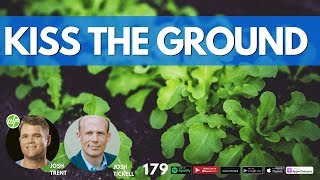
Recording of Wellness Force Radio episode 179: a live interview (YouTube) between host Josh Trent and guest Josh Tickell (author/filmmaker of Kiss the Ground). Tickell connects soil health, regenerative agriculture and composting to reversing climate change and improving human health. Key claims and themes: soil as the largest carbon sink and a solution for removing atmospheric CO2 (mentions 400 ppm, ~1,500 gigatons total and ~800 gigatons since 1980); industrial agriculture, chemical fertilizers and pesticides have degraded topsoil and microbiomes; regenerative agriculture (cover crops, managed grazing, no-till, compost) can rebuild topsoil and sequester large amounts of carbon; composting and reducing food waste are high-impact individual actions; community policy actions include banning pesticides in public spaces and improving local pesticide transparency; critiques of revolving-door regulation and subsidies (mentions $20–25B in farm subsidies) and promotion of organic/regenerative labeling. Practical guidance: vermicomposting for apartment dwellers, freezing kitchen scraps to avoid odors, supporting regenerative/organic producers, participating in farmer’s markets. References to resources: KissTheGround.org, Kiss the Ground book and film, joshtickell.com.
Questions this video answers
~400 parts per million (ppm).
~1,500 gigatons total since civilization; about 800 gigatons since 1980 (he also mentions ~2,000 gigatons as a future total mass).
200 peer-reviewed studies (as stated in the interview).
Three pounds per American per year.
$20–25 billion per year (as stated).
Chapters
At the community level, people fail to realize how much power we have as cities, as towns, as counties. You can actually go online and see where the pesticides and which pesticides are being sprayed. If you have that deep level of data and knowledge, it's time to start to turn the dial back and say, okay, this area around my kids school, yeah, no pesticides there. This area around that park, yeah, we're not spraying the park anymore. And those places where we live as human beings need to be safe and protected. That's number one. That's a community political action. Okay, get the pesticides off your sidewalks, get them out of your lawns, get them out of your kids playgrounds. There's 200 peer review studies that link these pesticides to ADHD, ADD, prenatal cancer, lymphoma, leukemia. You know, look, you don't spray your kid with poisons.
That's Josh Tickell. And this is episode 179 of Wellness Force Radio. What's up, my friend? It's your host, Josh Trent. And welcome back to another episode for your weekly access to global experts in all things wellness as we discover the physical and emotional intelligence we need to live life. Well, my friends, I'm back from the other side of the moon. If you've been following me on social or you're a part of our Wellness Force community, our Wellness Force family over@wellnessforce.com group, then you know I've recently been through a personal transformation, to say the very least. We'll be talking a lot more about this over the next month. My trip to Rythmia in Guanacaste, Costa Rica, where part of me died. But don't worry, it was actually a part of me that I've been wanting to die for over a decade. Much more on that to come. Stay tuned for the podcast and the weeks ahead. But right now, I am so grateful to get to connect with you twice a week. I just want to reiterate how grateful I am to that you're a part of this community, this Wellness Force family. And right now I'm gonna give you a huge hug. Or don't worry, I'll give you a high five if you're cool like that through the microphone. Chest to chest, heart to heart, breath to breath. Thank you, my friend, for being a part of this community and the ripple of change for the healing this world needs right now, starting with doing the work on yourself. That's why you're here with us on the podcast and every single choice we make about eating, moving and sleeping as well as the thoughts we entertain, the actions we take and, and the ways that we allow ourselves to feel and the deeper exploration of that. This is what shapes the fabric of our wellness journey in life. And that's why today on the podcast, I am so excited to share with you a live conversation with Josh Tickell, author of Kiss the Ground book and the director of the upcoming feature Kiss the Ground film. How the food you eat can reverse climate change, heal your body and ultimately save our world. Check out this quote from Deepak Chopra when when he talked about Kiss the Ground book, he said kiss the Ground gives us the most practical solution for reversing climate change. A must read for anyone committed to healing our bodies and the earth. Ah, this is so good. My friends. It can be easy to forget that we're all connected energetically, physically, but most of all by the foods we eat and the breath we take. So this is it. This is your breath break. Breathe all the air out of your mouth now for five seconds. Now breathe it in. Hold your breath, Fill your belly. Feel the exhale after you've held it for five. How amazing that feels to take a deep breath. It might be the first one you've taken all day. That deep breath that you deserve. This is the life force that connects our bodies, our head to our heart and what's more important than our breathing and the foods that we eat. It directly impacts the way you feel, which is why Wellness Force partnered with Organifi in 2018. Creators of the Organifi Superfood Greens powder. All your nutrient dense energy promoting detoxification and all the other health benefits found in both the travel packets and in the big plastic tub. It's interesting. I was actually flying back from Costa Rica this past week. I was feeling tired, kind of jet lagged, a little fatigued. Been one hell of a voyage to say the least. I'll be sharing so much more in depth about this on social and our upcoming shows about the rythmia experience. But I did take these travel packets with me. A fistful of Organifi green juice travel packets. It's cool because I can have one a day. Actually I had two on the flight back to San Diego. It just gave me that beautiful feeling of sustainability, sustained energy which does not always come from coffee. You can do this when you're traveling or you're going to the gym or just on the trail on your weekend. If you've been listening to the show for a while, don't wait another minute. Hop over to Organifi.com WellnessForce and enter code WellnessForce. You'll save a huge chunk 20% off your green juice. That's Organifi.com WellnessForce AND use code WellnessForce for 20% off your entire shopping cart today. By the end of the show, you're gonna feel deeply inspired by the raw honesty and the that Josh Takel articulates his vision for climate change food connection, how this can actually heal your gut, brain and body. By eating what Josh calls the regenerative diet, you'll understand the deeper and darker sinister history about the agricultural industry. Why the health of our soil is so important for our wellness, the importance of composting and how to join the composting movement. And the impacts of glyphosate in our water, food and in our bodies. How babies are being born with this pesticide already in their system and what we all can do about it. So let today be a different day where even in all your busyness and fullness and freneticism you might experience during this podcast, treat yourself with those deep breaths. You deserve it when you're done. Let this quote from Josh Tickell land for you on how to feed your body that you only get one of when it comes to your wellness. This regenerative diet. Josh says if you're experiencing problems, one of the first things that this new wave of medical science will tell you is to increase your gut bacteria. So how do you do that? The real gut bacteria actually comes from the soil. If that good gut bacteria is not in the soil, then it's not in your food. And if it's not in your food, it's not going in your gut. Let's step into this powerful in person conversation with Josh Tickell. And don't forget to check out our YouTube and Facebook. We had live old media with us filming the entire experience with some fun outtakes. And you can watch me pet a cow on camera. Let's step in with Josh. Welcome to Wellness Force. This is Facebook Live. We are here live at Josh Tickell's Big Ranch. Big Picture Ranch.
Big Picture Ranch.
Big Picture Ranch. We're doing a podcast today and we're going to. Wait a second. Actually. If you're watching this and you care about healing yourself, healing the soil, actually doing something in this planet, in this busy, frenetic world that takes a deep breath that allows you to show up more powerfully in your life, share this video right now with somebody that you care about. So, Josh, thanks so much.
Hey, man. Yeah, thanks for coming up.
Now what's interesting is that A lot of people know you as a filmmaker. You've had multiple books. I saw you on Jay Leno, which was fascinating. But a lot of people don't know this about you. You actually, I think it was 1998. You had a lot of big puffy hair then, and you went around the country on vegetable oil in the veggie. Tell us about it. Tell us about that.
Well, it started as a college project. I wanted to find a way to run a vehicle not on oil. And you got to rewind the dial. So we got to go back in time, back to the 90s, right.
We're in a time machine there.
Yeah. Pre Facebook. Right.
Pre social media.
Pre social media, you know, and the 90s were, for a lot of us, I'm Gen X. So maybe a couple years ago, 1980.
Yeah, okay, I've been there.
Yeah. So it was about the Gulf War, it was about Iraq, it was about these huge military interventions that were happening overseas. And of course there were all these smokes, greens, weapons of mass destruction. Yeah, we all knew what it was about. It was about oil. So that was the context for us growing up in that time period, media wise, the 24 hour day media cycle that was focused on that. And so coming into the late 90s, I had seen in East Germany working on a farm as a woofer, a willing worker.
What's a woofer? A willing worker.
Willing worker of organic farms. And if you want to do something that'll blow your mind and you don't have kids and you don't have a mortgage, go be a woofer. You can check it out. Wolf.org, wwoof.org you want to make sure it's not the World Wild Wrestling Federation. So it's woofing. But you volunteer on farms, right?
Yeah.
And you just, you work for room and board, but the education is invaluable. So I had gone across Spain and most of Europe, uk, ended up in East Germany working on a farm. And I saw them growing wraps, rapeseed, this yellow flower. And they pressed the rapeseed, they turned it into an oil and they put that in the tractor.
And I was like, hello, instant fuel source.
Instant fuel source called make fuel not war. That was the moniker.
And you're 17, 18 at this time.
Yeah.
And then you go on for two years, you travel the country. And this is what you talked about Jon Jay Leno 1998, right? Yeah, right about then. So looking back on that, we're gonna talk about all you've created now with this Kiss the Ground movement, the book, the film, there's so many exciting things coming out. But at the core of this, it really started with a lot of illness that you were around. I mean, your mom had like nine miscarriages and you were living next to, I think it was oil fields and petroleum companies. Do you feel like that was really the ethos, the driver of what you do, Josh? Because I feel like we all have this threshold that we go through as young kids, and that's what really feel fuels us as adults.
That was a defining moment for me, you know, as a kid when you see these big oil refineries. We lived in Louisiana. There's an area between Baton Rouge and Houston. It's about 100 miles. There's 150 petrochemical facilities in that stretch. Of course, it travels along waterways so they can move this stuff up and down. But the interesting thing, as a kid, you just see these industries and you're like, what? Why do we need this? The ground is dark, the water is dark, there's rust everywhere, rusted machinery. And I didn't know it at the time, but the cancer incidence in that area is 1,000 times the national average. So it's called cancer. The Cancer Corridor.
This is in Louisiana. Yeah, still. Is that the case still today?
All of these refineries were built prior to 1978. So a lot of the environmental restrictions are grandfathered in. So what you've got is an old industry producing 50% of the nation's gasoline, polluting tremendously, emitting phenomenal amounts of toxic gases. And what it's not emitting in gases, they just dump into the waterways. So it's literally seeping into the ground, into the food supply, into the water supply. That's, you know, the locals know it as the cancer allergy. Cancer Corridor. So watching my family get sick and many of them dying prematurely, that to me as a 9, 10, 11 year old kid, spurred me on this life mission, all about solutions. We've got huge environmental problems. We haven't surpassed them yet, but that's been the focus. How do we, okay, great. Awareness is important. Getting people's attention on environmental problems, super critical. But beyond that, and this is the step that I think most people, you know, as a society, we're very good about lamenting the problem.
We're not very, we're great at complaining.
We're good at complaining. We're not as good at finding the solution. And so that's been the focus of.
My life for 20 years and this book. How many years did it take to write Kiss the Ground. We're gonna link this in our show notes all over the web. Was it four years? Was it a life's work? Was it a culmination of like that kid who drove around the country for two years? I mean, what's this book all about?
It is all of those things, you know, the journey to finish the book was four from the first word to the last word. But it really is a culmination of everything that I've worked on for the last 20 years. It's a global thesis because if you think about the situation that humanity is in, big picture, civilization level, right? Pull back, you see the planet Earth, the blue marble floating in space. You go, okay, we're like 7ish billion people now, right? We're going to get to 10 billion theoretically by 2050. What the heck are we doing? You know, we've got two thirds of the land mass is desertified. The available fresh water on the planet, what's actually accessible could fit on a marble sized ball on the side of the Earth. So just imagine the earth floating in space, a little marble on the side, that's all the available fresh water on the planet. And that supply is shrinking. So we're shrinking available land, what we can grow crops on. Just since 1980, we've lost a third, a third of our available crop. You know, farmland and cropland in the world, 33%. And we're shrinking the available fresh water and we're expanding the population. Now you can look at all the other resources from copper to zinc to gold to aluminum, you know, and you start to go, whoa, this is not a scenario for success. This is a scenario for cataclysmic failure, like civilization level failure. And if you look at history, if you look at big historians who've spent their life looking at civilizations, Arnold Toynbee was the most famous. He's a British historian, he's dead now, but he wrote this opus and basically he said, look, there's 20 some odd civilizations that have come and gone and they've all followed the same path. And the last piece of the path is a time of troubles. It's a time in which the leaders fail to innovate, they fail to recognize innovation, they fail to look beyond the current circumstances and say, whoa, we need a breakthrough in thinking. And usually that failure has to do with food. Yeah.
And you take away a commodity that really people depend on, like food, like water, even clean air, this is where you really can stranglehold and kind of bottleneck human sustainability. You Know, people being able to have the highest quality of life possible. We're gonna dig into the pragmatic steps. But one thing that I found fascinating when I was prepping for our interview is we look at how many gigatons. 800 gigatons of carbon dioxide in the atmosphere, which is essentially a unit of explosive power equivalent to 110 to the 9th billions of TNT. Why is this happening, Josh? Why is there so much carbon dioxide up in the atmosphere? Why isn't it in the ground?
And the amazing thing about that number is, is the majority of that's occurred just since the late 70s, early 80s. So, you know, it's.
We've done work.
It's a rapid increase over a very short period of time, and it basically tracks population industrialization. So as we get more people, as we get more gadgets, we burn more coal, we burn more fossil fuels, we clear more trees, and all of those things release the CO2, the atmosphere. So I think there are a couple of things that are really important when we talk about how do we reverse the big picture, you know, because you got shrinking water, shrinking land, and accelerating carbon dioxide.
Yeah.
First thing is you need to be able to conceptualize everything. You need to be able to see it in your head. If you can't, if there's not a quantity, if it's not definitive, we can't address it. Right. So we know from noaa, from the Mauna Loa Observatory, from all of the carbon testing across the world, that we've now crossed 400 parts per million of CO2 concentration in the atmosphere. 400 ppm. That was a defining moment, happened last year. When we talk about the climate movement, the climate movement's always throwing out numbers. Oh, we need to get to 350ppm. We need. We need to reduce. The ppm is a concentration. That's not something me or you can address. How do you address a concentration?
We don't know. There's no PPM tester given to you in high school. Yeah, it doesn't exist.
It's like there's too much salt in my. My food. I don't know. It's just a concentration. Yeah, It's a completely undefined thing. What we do is we talk about gigatons now. And a gigaton is a measurement of mass. It has weight. Just like, you know, I weigh 165 pounds. Well, if I weighed a ton and then I weighed a thousand tons, and then I weighed a thousand thousand tons, I'd weigh a gigaton. I'd weigh a lot and if you conceptualize what a gigaton of carbon looks like, take them all in Washington D.C. the Washington Monument, all the way up to the Lincoln Memorial, and do a block in your head, make it a big brick that goes up to the top of the Washington Monument, and. And it goes all the way over to Lincoln. Now is a big brick. Now make that four times larger. That's a gigaton of carbon sitting there. So in total, since the birth of human civilization, we've put 1500 gigatons into the atmosphere. Right. A lot of it since 1980. About 800 gigatons since 1980. We're probably going to put another 500 up there before things calm down. Right. So when people go, oh, we've got to put solar panels and wind, and there's sort of this green, techno, utopian ideal. Absolutely. We've got to do all that stuff. That's what I've been talking about for 20 years. A lot of us have been talking about that for 20 years. The new conversation is not about solar panels or wind. Those things are happening. They need to happen faster and they need to happen more. The new conversation is you've got a 2,000 gigaton mass of carbon floating in the atmosphere. Where are you going to put that? Because you got to put it somewhere.
Where are we going to put that? I mean, we look at. There's different phases of how this atmospheric pressure really affects us in a negative way. Also the oceans, the soil, the fossil layer and the biosphere. The problem with modern farming, besides the pesticides, the fungicides, everything else that happens and the bees dying off, is that what we are seeing?
Just those few problems?
Just those things. But also it's this degradation of our soil. I mean, it's so funny. I feel like it's ancient wisdom that we're applying to modern times. This is very ancient wisdom. I mean, our ancestors for 10,000 years, they've known way before that, they've known that the soil is everything. But yet why aren't we focusing as an agricultural ecosystem, as a nation, why aren't we focusing on the soil? Is there not enough money to be made in it? Is there forces at bay? Is it something to do with Monsanto? Like, what's really happening here, Josh, as to why our soils are becoming dry? They're losing their nutrient value. Like, this is the root of all issues.
It is literally the root of all issues. Pun intended. Right? So, you know, this is new science. And whenever you deal with new science, you deal with an inertia. There's A policy inertia in terms of D.C. and the United Nations. There's a industry inertia in terms of how we've been doing things for a while. And then there's a brain inertia, like an education inertia that has to do with the sciences. And so if we look at how all those things are connected, it's pretty simple. We built the current modern industrial farming complex. We built that whole thing in about five years. So from the end of World War II until the early 50s, we built the whole thing in five years. We haven't changed it much since.
And we learned the technology from the Nazis, which I think is. No one really knows this, right? This is kind of like. It's not really a fun fact. It's just a fact.
Yeah, well, it's a, it's a dark fact in that the Nazis really developed chemical warfare based on that chemical warfare. They developed the pesticides. And the United States, we were the industrial might. So all of the agricultural machinery companies, John Deere included, case all of those guys, they built pieces of the war machine all the way down to the casings of the two bombs, the two A bombs that were dropped on Japan. Those were built by an agricultural company here in the US So after the war, we brought German scientists, we grabbed patents, we brought all that stuff back to the US all that chemical knowledge from IG Farben and the chemical industry. Chemical agricultural industry in the US Got about two or three billion dollars worth of cash infusion in that five year period of time. That's when the majority of the chemical industrial agriculture complex was built.
Is that when Monsanto was born or were they Pre World War II?
There were pieces of that company that existed during that time. IG Farben was really, you know, if you want to read a great book on the subject, Hell's Cartel, it'll blow your mind.
It's got a really exciting title.
It's about IG Farben, the Dark. So getting away from the sort of that, that story, what we built was we built a way to separate crops and animals. We built a way to use tremendous amounts of chemicals to prop up, prop up production so it looked like production was increasing. We built a way to use pesticides to reduce pests for a while. And all of these pieces of infrastructure would get tweaked over the next 50 years. And what happened was an exponential increase in agricultural chemicals in synthetic fertilizers and an incremental increase in per acre yield. Meanwhile, we had an exponential decrease in available land because as the soil became more brittle as it absorbed more chemicals. As it was not able to retain water anymore, it became brittle. When soil becomes brittle, it erodes mostly through wind, but partially through water.
Yeah.
And so we have had the greatest soil erosion in the shortest period of time since the advent of industrial agriculture.
We're literally killing the soil. It's interesting. John Vroman, a good friend, he's the reason that we're here at the ranch. I remember you talking about this. Your daughter, you would watch Eat the dirt. There's the same microbiota in the dirt as there is in our biome. All these EU biome tests and biome and Naveen Jain and everything that he's up to, it's exciting. But what are you actually gonna do with that data? And how does that data of our gut microbiome actually have a deep contrast with the soil? We are from the soil, Josh. I think people forget this. Can you contrast those two for us a little deeper? The biome in us versus the biome in the soil. Like, why are we ignoring this?
Right. We're basically dirt on legs. So if you think about it, roughly 50% of your cells are not human cells. They're microbial cells, the same microbes that live in the soil. In a handful of healthy soil, there are more living organisms than all humans who have ever lived.
Let's let that sit for a moment.
There's more deep thought.
So millions of microbiota in a handful of dirt.
Trillions.
Trillions, yeah. So it completely outnumbers the human population.
Yeah. Healthy soil. Handful of healthy soil. Now contrast that. Now, look, a lot of people listening to this podcast are gonna be like soil, dirt. Ugh, whatever.
What does this mean to me? Yeah, it means a lot.
Here's the deal. If you are experiencing health problems, one of the first things that this new wave of medical science will tell you is to increase your gut bacteria. How do you do that? Well, you can go and you can buy some gut bacteria in the store, some acidophilus. Right. Well, guess where the real gut bacteria comes from? The soil. And if it's not in the soil, it's not in your food. And if it's not in your food, it's not going in your gut. So herein lies the cycle. We are. Our health is directly connected to the soil and vice versa. You want to know how the health of your food is? Very simple. When you're driving out past a city, whether you're listening in la, San Diego, New York City, just get out there. Get out There on the freeway, you'll see it. There's a field of crops right there. Pull over, get on the service road, take the dirt road, pull your car over, walk out into that field and do something you've never done. Look down between the crops, between the roads, stick your hand in that dirt, get a handful, pull it up and look at it. My guess, nine times out of 10, what's going to be going through your fingers is like silt, it's like dust. It has no aggregation, it has no darkness. The darkness comes from the carbon. It has literally been whittled down to the basic mineral content of dust.
Why has it whittled down to this point? I think this is kind of the big question here. It's like this looming dark force of. Some people are looking at it and they're recognizing, yes, we do understand that the soil is lacking right now. Some people just kind of want to turn a blind eye, and I think it's because they're not making the connection. This is why I was so stoked to come up here, to make this connection between our human health. How do we heal ourselves and heal the soil Right now you have radical thoughts on this. You're on the bleeding edge of this conversation, especially with your book and the movie that's coming out. How do we do both of those things? Josh, it's a really big question to unpack.
You know, we talk about the macro level and the micro level. Macro level. There's policy, there's Washington, D.C. there's education, there's science. You look at all that stuff, and it's all in lockstep. Okay? We've got policy that subsidizes corn and soy production in the U.S. corn and soy production in the U.S. totally depletes the soil along with hay and wheat. Okay, that's ridiculous. We need to stop that policy. We need to stop subsidizing farmers to kill the soil. By the way, that also kills off farmers, which is why we're losing so many farms every day in America. The policy is literally paying farmers to go out of business. That's insanity. That needs to stop. Then you look at science. Soil science is biologically based. And if you look at our society, the majority of what we've built, we've built through chemistry and physics. Very predictable, very simple, very linear. It's the same thing over and over. How do you build steel? How do you build cement? How do you build a freeway? How do you make a car go down the road? There's a formula, there's a Formula for that biology is infinite and it's far more complicated than chemistry or physics. So the next trillion dollars, after a trillion dollars is made and lost in the blockchain world. The next trillion dollars is in biology and it's in biology. Because the only way we're going to unlock the power to feed, clothe and give water to 10 billion people is through biology. So that's where the real future is. And that's when we get back to the micro level and we go, okay, science needs to catch up, policy needs to catch up. Oh my gosh, don't even get me started talking about the farm education system, which is mostly paid for by chemical agriculture companies.
It's the same thing. When we look at the food subsidization for the curriculum in nutrition programs and colleges, it's the same thing. It's like, who's directing the narrative here, by the way? This isn't to create controversy. This is to talk about what's really happening.
Just what's.
So let's just talk about the real truth here. The reason why this is so important is because every single decision we make, every single time we purchase food, every single time that we purchase anything at all that directly impacts this carbon footprint, which then impacts the soil because all the carbon gets locked in the atmosphere. And I think people are forgetting how simple the solution could be. You've detailed a phenomenal solution in the book and across your media, and it starts with composting. Yeah, it starts with one simple thing. And I'm giving a huge shout out to my sister in law, my brother James, I love your garden. They have a garden in City Heights. They compost in their backyard. She may know about your work, actually.
Yeah.
Now tell people if they live in an apartment, Josh. If they live in a place where maybe they don't own their home, I think that's why people are pushing back. You know, we're very frenetic in this world. We're up to things all the time. Yeah, people don't want to take that deep breath and identify, why is composting so important for me? I don't even live in my own home. I live in a high rise in New York City. Yeah, I'm sure you get people that push this at you. This question totally.
Look, people live where they live, right? And the majority of people in this country live in urban or suburban environments. So if you live in an apartment building, if you live in a rental house, I don't care what you live in, you can compost. Okay, Vermicomposting is a way of composting with worms in a box in your kitchen. Yes, it requires a little maintenance. It requires a little. But it's fun. You're managing an ecosystem. It doesn't require any more maintenance than your frickin Netflix account. Okay, so that's just think of this like a Netflix for the soil. All right?
Netflix for the soil. Yeah.
You will literally make healthy soil out of your vermicompost in your apartment in the Bronx in New York City. And you will be able to put that in a potted plant. And if you have a balcony, you can even put it on the balcony in your potted plant. Okay? And you create that little ecosystem. Yes, you are not changing 900 million acres of production, agriculture, but you are changing something that is just as important and that is your own ecosystem, your own brain. Yeah, because really the goal here, the goal is to create a million peaceful soil warriors, people who understand this information, who've educated themselves, who can speak about this to policymakers, to scientists. We need to create a broad based movement of understanding. You see, when Copernicus said to the church, you know, hundreds of years ago, he said, listen, guys, I don't think that the whole universe revolves around the Earth. In fact, I can mathematically prove it to you that the sun is actually the center of our solar system and we're revolving around the sun. They went, great. We're gonna put you in a tower and keep you there pretty much for the rest of your life.
You're ostracized, you're crazy.
And that's essentially the danger that we face in today's world. We still don't have a truth meter, okay? We don't have a way to go, okay? This is right and this is wrong. You know, this is alternative facts that are made up. But let's face it, we know that food comes from the soil. That doesn't take a genius to figure that out. Yeah, you go out in any production, agriculture, you can see the soil is degrading. We can run the numbers for you. We can show you that we've lost most of it. That doesn't take a genius. It doesn't take a genius to figure out we've got more people on the planet, we're going to have even more. So we're looking at really fundamental truths. And then we're extrapolating this one big, huge piece of information that is going to be pivotal to the future of our civilization. That's this. Where are you going to put the 2,000 gigatons of carbon. Where are you going to put it? You can't put in the atmosphere. It's at max capacity. The oceans in the biogenic cycle will work to absorb any excess CO2 in the atmosphere. That's what they've done. So the oceans are pretty much maxed. They'll absorb a little more. The result is ocean acidification, which kills the phytoplankton, which makes 50% of the oxygen that we breathe. So phytoplankton die off. Is happening already because of the acidification. So we got to get the CO2 out of the atmosphere. We got to let the Oceans release the CO2. The only way to do that is to remove it from the atmosphere. Leaves exactly one place to put it. The largest carbon sink on the planet is the soil. And the soil can store literally thousands more gigatons of CO2 than it's currently storing. How do we know that? We know that because we used to have two thirds more topsoil on the planet. And a vast majority of the carbon that is currently in the atmosphere, mathematically speaking, can go back into that soil. And soil is very quick. It absorbs a tremendous amount of CO2 in a very short period of time. That's the big aha. Whether you're in New York City, whether you're in San Diego, whether you're in a rental house, maybe you got a front lawn. Lawns are the most chemically sprayed crop in America. Most highly chemically sprayed crop.
And what's interesting is that people are discouraged from growing lawns. I'm almost wondering, like, what would it take if there was a policy enacted where somehow, some way, city governments would give a refund to people that were proactive in making their front yard a garden that they ate from. I mean, these are the kinds of things San Francisco really leads the edge with their composting and their recycling programs. What can we do here? We talked about the worm farm right now. Also, also what I saw. We'll link these resources from Kiss the Ground. There was a way to compost where people complain about the smell. It's like, I don't want to have like this like fly buzzing container in my kitchen. Well, you can actually put it in the freezer. Totally. So you can take the compost and you can have like a little compost container in your freezer. You also can do something on the side of your house. Give us a little more pragmatic steps, because we know that we have, with the food we eat and with the way that we choose to Compost those two choices alone. We were driving up here to the ranch and I was just thinking, what if 20 million people chose tomorrow morning to compost? How would that change the quantifiable metrics of the footprint of carbon? I mean, a radical change would occur.
Yeah. What Paul Hawken has determined in Drawdown, project Drawdown, that's really the. The hundred top solutions to reverse global warming is reducing food waste is one of the number one ways we can change the global warming paradigm. So compost is a direct way to reduce your food waste. You can, of course, you can vermicompost in your kitchen, you can vermicompost outside. That's composting with worms. Put the container of the compost bits in your freezer, as you said, take it out. You can also just have a compost heat. You put the food scraps down, you put some leaves down, you put some cardboard down. There's millions of websites on how to compost. Kiss the ground, put out a great little short film on how to compost. There's the compost story that we made about compost. A lot of great information about compost.
It's interesting, too, because we are the only species on the planet that is not zero waste. Every other species takes care of itself and its environment, and it's a beautiful. You know, Paul Check calls this the closed organic cycle. And so looking at the closed organic cycle, understanding that if we just took a little deep breath here, maybe a big deep breath as a society, and said, what are the things we can do tomorrow morning? What I'm hearing from you is it's composting. It's also eliminating food waste. That's a huge one, big one. What are the ways that we can also step outside of those two things? Let's give us maybe one more, and then I want to talk about ways that we can change this from a policy level. Your ideas on that, not that this is a political show, but I think that would be an interesting food to explore.
You know, every time you eat, you make a political decision.
That's true. That's true.
That's all there is to it in terms of what else can you do? You know, it goes back to food choices. As I said, we vote three times a day. We vote three times a day. Most of us in America who are lucky enough to eat three times a day, each time we put something in our mouth, we vote. And what we vote for for is an entire system. It's a chain reaction that begins with the calorie that we consume. But it ends with a farmer or a rancher and a plant or an animal. And if that plant or that animal is building soil, then you're voting for a future of plenty for all people. But if it's doing what 90 something percent of agriculture does today, which is degrade soil, you're voting for not a great future. That's not the future we want. So the first thing I say to people is, look, this is not a vegan omnivore paleo conversation. Plug into this wherever you're at, okay? Your food choices are sacred. They're personal. Within those food choices, you have the option of supporting farmers and ranchers that build soil, or farmers and ranchers that don't. How do you know the difference? Well, go in your cabinet, go in your pantry, go in your cupboards. How many of those items that you eat on a daily basis come from box, bag, carton or tube? Flip them over. First or second ingredient. If it's going to be corn syrup, throw that out. If it's corn syrup or some sugary thing, then that item that's in a box, bag or carton is probably bulk commodity food that's been reprocessed and made to taste sweet, to trick your brain that you should eat it, meaning it's corn, soy, hay or wheat that's been reprocessed into junk.
And also for context, these are mega monocrops.
Mega monocrops.
So we've linked in previous shows the work of Joel Salatin and Polyface Farms. And you know how incredible his work is, where he actually does crop rotation. So he has different livestock that are feeding off of different areas in the land. And guess what? He makes a beautiful living from this farm, feeding hundreds of thousands of people, or however many people he feeds. So why are the monocrops so devastating to the wildlife, to the land and to the soil?
Well, you think about it this way. If you fly over the country and you look out your plane window and you see those flyover states, those big circles on the ground.
Yeah.
That's where a pivot, a large trellis that sprays water, it just goes around in a circle. And mostly it grows corn, sometimes soy. What happens in a monocrop? There's no ecological impetus for roots to grow at different levels. There's no ecological impetus for plants to share minerals. The mycorrhizal fungi and the other structures under the ground get broken up by tillage over and over and over. So the life that's in the soil begins to get dormant. Okay. And the soil Is usually grown with the same crop over and over. So any replenishing that would ecologically happen has to be done through synthetic inputs. So now you're losing your biological base and you're moving toward a mineral only base. What's in soil? Soil is made of carbon. So as the life in the soil goes dormant and diesel, the carbon structure in the soil falls apart and you're left with silica, you're left with sand. Essentially that's what's happened to 20 civilizations. We're trying to get there as fast as we can As a civilization, we're trying to get to our end.
What's challenging for I think people to accept is how just one meal, one choice, one trip to the grocery store, choosing to compost or not could be so pivotal. And I think we forget that human beings, we come together, like you said, a million peaceful soil warriors, that's it. When we come together, I mean this is how everything changes. And it's a real thing. It's not some pie in the sky. I mean look at how much energy goes into sports teams.
Right?
So you fill a Stadium with 50, 60, 100,000 people for these college sports games. What if people were as excited about the future of our planet as they are about sports? And look, I'm not knocking sports like I play football in high school, it's all good. But this is really the narrative that we're driving here. This narrative. How do we continue to drive this narrative that has the same efficacy and makes people feel just as excited as they do about sports or race cars or anything else. Right. Because those are all movements that have a narrative. So is yours.
Yeah. I think this is an interesting moment in our evolution as a species. We as animals go toward the shiny thing. Yeah, the fast car, you know, the explosion movies, media, they very focused on the things that, that pump the amygdala, you know, fight or flight, fear or excitement. And if we're going to survive as a species and continue along our technological progress, we are going to have to take a step back from reptiles brain and we're going to have to take a step into the world of. Okay, can we as conscientious and conscious creators create a future? We've never done that. As a civilization, as a species, we've always sort of been, oh, shiny thing, you know, reactive. Yeah, War. Let's go get some oil. Oh, this guy's got some water. Bunk him over the head and I'll take us.
That actually is the voice of a reptilian brain. By the Way. Kind of what it would sound like.
Exactly. So this is our opportunity, and it is a crisis moment. You know the Chinese proverb, crisis is an opportunity for change. So we find ourselves at a precipice, and as you said, 50, 60,000 sports fans, your daily decisions isn't making a difference by itself. Is your daily decision making a difference? What if you're the hundredth monkey? What if you're the tipping point? What if you're in the moment where that product or that company that you're purchasing or not purchasing from goes, ooh, we've got to change everything, because the consumers just want a different. There is no greater fear in corporate America than Facebook, Millennials and social activism. That is a dangerous, dynamite combination.
Why is it so dangerous?
Think about it. You get a million people doing something they're not already doing. Boom. You know, look at blockchain. Look at the economy failing to sort of grapple with this new invention, and the stock market crashes and it falls, and, you know, literally, somebody invented a computer program that is now toppling the world economy.
Yeah.
Why? Because people can deal with it online. So we need to start to think about. Yes. Our daily decisions. And how do we. Great. You're on Instagram. You're taking a photo of your lunch. Great. You're on Instagram. You're taking a photo of that ice cream. Great. Why don't you take a photo of the farmer that grew that ice cream, that grew that cow that had that dairy? Why don't you take a photo of the rancher that made that steak possible? Why don't you take a photo of where that lettuce was grown? You know, that's when you start to get into a powerful conversation. We know that food's important.
Yeah.
You know, Instagram got built because food's important.
Basically, it's either food or girls kind of showing their butt, which is another weird conversation.
But they're related.
Yes.
Let's face it.
They're very primal. Right. They tie into that response to the amygdala.
Oh, food. Good. You know. Right.
This is what I feel from you. You have such a stronghold on the science and the academia. It's been like almost 30 years you've been studying this, these climate changes. But when we look at how we eat, how that can directly impact climate change. It's one of the core tenets of your book. I think we understand from a health perspective how pivotal it is. But for climate. Tell us that story.
Imagine this concept that we have of these 2000 gigatons. Of CO2 that are going to be in the atmosphere when we start to cool the planet. And global cooling is a complete possibility through soil restoration. Soil will store carbon as soil is built. When you put your hand into black soil, it's black because of the carbon. That's why it's black. That's what makes it black. Carbon makes soil black. When soil is brown, it doesn't have much carbon. Okay, so if we want to restore the ecosystemic balance, we need to build topsoil. How do we build topsoil? We rotate crops. We don't always grow the same crop. We keep the soil covered with a cover crop. Okay, so you plant alfalfa or you plant some mix of seeds between the cash crops. We let the animals out of their cages. Okay, so no more feedlots, no more factory farms. That is a total World War II. That's like a concentration camp for animals.
And that is what's being highlighted on Facebook, which I'm loving. The more these cafos get exposed through social media, the better.
Yeah, that's disgusting. It's despicable. It's wrong for the animals. It creates an unhealthy cycle on every level. And of course we subsidize that. We're paying government subsidies to keep those things afloat. Insanity. Right? So take the animals out of the cages, move them across the land, Keep them moving on a daily basis. Never let them stand still. What do they do? They fertilize. They pull the grasses, they strengthen the roots. An ecosystem has both plants and animals. That's what we mimic in regenerative agriculture. Within one year, topsoil can be built. Within three to five years, you will literally begin to actually build up layers of topsoil. And that's the possibility to take deserts and turn them into lush ecosystems. Yeah, to take rock dried, hardened mountain sides that have been denuded with grazing and, you know, deforesting and reforest them, recreate new ecosystems.
And the clear connection is if we buy the food that supports that change, we are helping guide it in the right direction.
That's it.
Now, a big pushback that a lot of people have, Josh, is I can't afford to eat healthy food. There's been so many studies. I'm sure you have a ton of resources that help people in this way. But we also look at the negative impacts, kind of like the one action and then there's the ripple that comes out from that. How do we quote, feed the world? This is something that's touted by the people that are against the organic movement or against eating real food? Well, how are we going to feed the world? How are we going to feed the world? It's just this narrative that we know. We've already seen it. Be successful with Joel Salatin and in your work, too. But tell people how we can actually feed the world. For the naysayers, the simple reality is.
In a regenerative agriculture system, you produce twice as many calories per acre as you do in conventional agriculture. You don't produce twice as many calories of corn or soy, but those are useless calories. I cannot eat a mountain of field corn. The only reason we grow field corn is to feed cattle. Humans can't even eat it. So the number one crop that we grow in the Western world cannot be eaten by humans. Tell me how we're feeding the world by growing that garbage. It's a lie. Okay? That is a complete lie. Here's the reality. If we took the 900 million acres of production agriculture in the United States and converted them to regenerative agriculture, within three to five years, we would be sequestering as much carbon dioxide as the United States is putting out. We would be growing twice as many calories as a nation shipping half as much from overseas, because the majority of what we'd be growing would be direct to consumer, meaning we would be supplying grocery stores, not supplying feedlots. You got to understand human diet, according to the Harvard Medical Science, according to Harvard School of Public health, should be 50% fruits and vegetables. Okay? They've studied literally thousands of studies over 20 years. 50% of our calories should be fruits and vegetables. Tell me why in the United States we produce. Less than 5% of our land is producing fruits and vegetables.
This is a big question that I don't know the answer for, and I think most people don't.
It's because it's 95% profit. We want to import from cheap labor countries. We want to import their foods. Well, when you import a food from a cheap labor country, it's been sprayed with tremendous amount of chemicals. You're not earning money. You're going to spend that money later. You're just going to spend it on kidney dialysis, you're going to spend it on a heart transplant, you're going to spend it on diazepam or one of a hundred thousand other drugs that they're going to shove down your throat when you're an aging baby boomer. So here's the big question that people have to ask themselves in terms of human health. Where do I Want to spend my money? Do I want to spend it on having a healthy, vital life now, or do I want to spend it trying to prop up my body that I've abused so badly with the garbage that I ate? The age is getting up. It used to be 65 that we had to do this. Now you're looking at heart transplants at 55. You're seeing guys drop dead in their 40s. You know, heart disease is the number one killer of American men. And prostate cancer. Why do you think that these things are affecting men? Here's why. Three pounds of toxic chemicals per American per year. That's how much is sprayed on our food. Three pounds per American per year. Where does that go when it's sprayed on your food? You've only got three choices, the water, the air, or the land. And the land is where you grow your food. So here's the. This is the, you know, people go, I can't afford to eat healthy. Yeah, okay, no problem. You're going to pay the money somewhere. And the reality is, if you've ever gone to a farmer's market, and I've worked both sides on the farmer's market. I've been on the farmer's side. I've been on the stand, I've sold the produce, I've grown the produce. I've been that person. And I've. Every week, I'm the consumer with my daughter at the farm Farmer's market. I've never seen somebody go up to a farmer and go, you know this bushel of carrots that you want six bucks for? I only got two bucks. Yeah, it's really what I have. Will you take two bucks for it? I've never seen a farmer say no to that. Yeah, they want you to buy that produce. They don't want to put it back on the truck. 9 out of 10 farmers markets now accept food stamps. So if you have EBT credit, you can spend that money at a farmer's market instead of going to a grocery store and buying things that are packaged sugar. So, you know, and I don't mean to be classist, because some people will hear that and they'll go, oh, look.
You know, he can only do it because he has money, blah, blah, blah.
But Josh is white. He lives in an upper middle class.
It's a different story than that, you.
Know, And I realize there are food deserts, there are inner city problems with food, you know, and there are revolutions happening in the city. Look at what's happening in Oakland. Oakland had organic food trucks that it got. Neighbors got together and they, they put together a nonprofit and they put organic food trucks on the road to stop at neighborhoods to sell those. They're now putting together an independent nonprofit grocery store. It's like a Whole Foods, except it doesn't have the brand name. And it's there from the community, by the community and for the community.
It's almost as if I'm feeling from you, like, yes, we've learned so many things about the way that our soil, if we heal that we actually heal us. I mean, there's a clear connection there. And that's been really fascinating to me as I've done research for this talk today. And I'm thinking about what are the things that we can do from this governmental level, from this policy level. And again, it's not a political show, but like, let's talk about the truth, Josh, the real truth about how we instill this massive change. Yes. It comes from our daily habits. It comes from the food that we choose from completely. It comes from how curious and how excited we can be about being a part of our community. You know, I mentioned my brother earlier. It's like they're a part of their agriculture, cultural community. From a policy standpoint, if you were to wave a magic wand, what would that look like?
Well, again, there's community level and there's big level. Okay. At the community level, people fail to realize how much power we have as cities, as towns, as counties. You know, most counties in the United States know exactly down to the pound, how many pesticides are being sprayed. They have maps of that, some of them are interactive and online. You can actually go online and see where the pesticides and which pesticides are being sprayed. If you have that deep level of data and knowledge, it's time to start to turn the dial back and say, okay, this area around my kids school, yeah. No pesticides there.
Yeah.
This area around that park, yeah, we're not spraying the park anymore. You know, and those places where we live as human beings need to be safe and protected. That's number one. That's a community political action. Okay? Get the pesticides off your sidewalks, get them out of your lawns, get them out of your kids playgrounds. There's 200 peer reviewed studies that link these pesticides to ADHD, ADD, prenatal cancer, lymphoma, leukemia. You know, look, you don't spray your kid with poisons.
Dr. David Minkoff, we had on the show, we talked about glyphosate, how it's literally showing up in every Part of society. The water babies. Babies are coming out their first day of life and they have glyphosate in their system. I mean, what's going on here, Matt?
Yeah, we have let the fox guard the hen house essentially. And that's where as counties, cities, states and federal government, the oversight committees for these chemicals are so non existent, we've literally got to create them as citizens. We have to create them. Neither the FDA nor the EPA does regular testing for the three major carcinogenic chemicals that are sprayed across our food. There's no testing agency that does testing for your food.
Why is that?
One can only surmise that there is a revolving door in Washington D.C. as in many counties in the U.S. between these agencies and between the industries that profit from them. If we really want to safeguard our health and our kids health, we need to move toward minimum 100% organic foods in the United States. Minimum. And organic is really version 1.0 of where we want to go. Regenerative is version 2.0. Regenerative doesn't till the soil. It also doesn't spray the chemicals, but it does not degrade the soil. We need to build soil health. So could this be done at a national policy level? Absolutely. Again, we built the current industrial model in five years, the current farm bill. You know, we're going to pay 20 to 25 billion dollars next year as American taxpayers to subsidize farmers to grow foods that necessitate tremendous amounts of chemicals that make us sick, that make the animals that eat them sick. And then there are only going to be a few companies that really profit from that. So we pay the 25 billion and the companies at the other end make it in between everybody gets sick and.
The perpetuation of illness and the broken system of really cutting into this closed organic cycle continues to roll on. I mean this, what you're touching on, Josh, like this is the core of the whole problem here. It's what is the policies that we can vote with every single day, with our dollars, with our behaviors, and not to mention, you know, health and wellness perspective, how this can have such an impact on people that are in the process of letting go of old weight. Right. I mean, you actually posted a blog post. I think it was the two secrets as to why you're not actually letting go of old weight. And one of them was all these three pounds of pesticides that we're consuming without even knowing it. It's just totally mind blowing. I think the more that we have this kind of a conversation, the better man this has been so enjoyable with you.
Good fun.
And I want to ask a little bit deeper about, like, what's your plans for the future here? We know you have the film coming out. You're writing another book, really in touch with the millennials. What do you see in the next three to five years? And how can Wellness Force support you in this, continuing this conversation? That's so needed. So needed right now.
Yeah. Well, the next step for me personally and for the Kiss the Ground team, you know, those here working at the ranch, as well as the nonprofit, it's the release of the film, which we are every day getting closer to. And whereas the book focuses more on food, the film focuses more on climate. So the film really puts all this climate connections into place where people are. Okay, I get it. I watched An Inconvenient Truth. I watched An Inconvenient sequel. I watched Leonardo DiCaprio's important movie, and now I see how we're gonna turn it around. That's cool. Got it. So that's what the film's about coming out soon. It's also called Kiss the Ground. The thing I want people to take away from this is it's very simple. Food is politics. Food is power. Food is activism. Food is life. Food is medicine. Food is nutrition. Food is reversing global warming. Food is your access. Right now, you may not think you have a lot of access, but look in a grocery store. Why are all those things there? Because you buy them.
Yeah.
If you bought other things, there would be other things there. Case in point, the organic food revolution in the United States. Literally growing by multiple hundreds of percent every year. That's how fast organic foods are growing. Why? Because people figured it out. Oh, these are better for my kids.
Yes.
Okay, so let's continue that pressure. Let's turn it up. It's probably at about a 1 right now. Let's turn it up to an 11. Let the companies that are feeding us sick foods and perpetuating a sick cycle that's making our soil sick, let them feel a bit of heat. Okay. Let the demand go elsewhere to the great companies that are making strides, that are doing. You know, there's so many of them. Annie's just came out with the first regenerative label. Food actually going back to the farmer. Their food, they trace it, and they're growing it from specific farms all the way to the package.
So that's the special regenerative food label that is now coming out in 2018.
There are different entities trying to agree.
On what the label it's way different than just organic.
Right. I don't even know if they have a little logo for it, but they're calling it, this is our first regenerative food.
Yeah.
Okay, so there's Annie's, that's participating. There's Patagonia, there's Dr. Bronner's soaps, there's Nutiva.
Shout out to San Diego. Dr. Bronner's.
You know, there's great companies that are starting this trend. And, you know, I don't want to push a bunch of product. I want people to do their own, you know, investigation here. But it is that kind of power. We know that companies can change because we've. We're seeing it at the small to mid level now. Let's see the big ones change. I want to see Costco regenerative.
You know, something that struck me as so exciting. We had the CEO of Paleo fx, which is in alignment with your values. And she talked about the biggest seller of organic foods is actually Walmart, which blew me away, but it makes sense because there's so many Walmarts. So people are starting to wake up here, Josh, like, I'm excited. One thing you've been quoted for is you are 100% in the belief that we can heal this climate change. Absolutely. And it starts with our food man. So just such a pleasure to talk with you and having us at the ranch. Make sure you share this conversation. Josh, where can they learn more about you? And honestly, how can we get involved? How can the Wellness Force family get involved in what you're up to?
Yep. Well, three websites, of course. Kisstheground.com, the nonprofit, kisstheground.com. kiss the Ground book. If you want to learn just about the book, get a hold of the book, Kiss the Ground Book, and then my personal website, joshtackell.com always some new and exciting information there as well. And of course, we're on Facebook, Instagram, so connect with us.
And I want to do a challenge too. You know, Colin and I were driving up here and we were talking about this push up challenge that we did for the community and people were like, I love that I'm in my body and I'm out of my head.
Yeah.
So get out of your head about this composting story. We're gonna link specific resources. Let's do a 30 day challenge for composting. It doesn't have to be crazy expensive. You can actually start with a box.
Yep.
We'll make sure that we get all your info so that People can easily do this, but this is Josh and Josh signing off from the ranch. We will see you guys next week with our Friday podcast and also our Wednesday with Alison Waddell. So until next time, we will talk to you soon. Hey my friend, thank you for hanging out and growing with me on today's show. Remember to hit subscribe Share this podcast with somebody you care about that you think gets to hear this message. Support the show by leaving a five star review for the podcast right now simply by tapping on your show artwork on your iPhone, click that purple link that says Review this podcast. It helps the show reach more conscious and smart people like you and your voice will attract more world class guests that want to come on the show. So let them hear your voice. For all the downloads, videos, links and free resources mentioned on the episode go to wellnessforce.com radio and while you're at my house on the web, join us in the Wellness Force Community newsletter on that page and I'll send you four free guides around staying healthy with your eating, moving and sleeping while you travel. Join a group of people like you over at the Wellness Wellness Force Community Facebook page. This is where we talk about the things that really matter. We share our wins, inspirations, struggles and a lot more. So join us. Tap on the show artwork on your phone and hit that purple link that says Join the Facebook group and I will welcome you at the door. Okay, now you get to go out into your world and create impact for the people that you care about. So until I see you again real soon, I'm wishing you love and wellness.
Sa.
More from Josh






Your child's future start before pregnancy... and even before conception! #podcast

MD Reveals: Your Healing Creates Your Child's Reality (The Souls Coming In Need Strong Bodies)



