182 Dr. Andy Galpin: Fitness, Performance, & Consciousness
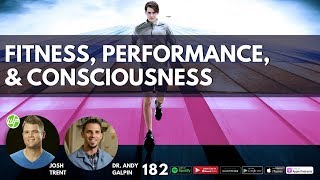
Podcast episode (Wellness Force Radio #182) — Josh Trent interviews Dr. Andy Galpin about the intersection of technology with fitness, performance and consciousness, centered on the book Unplugged (co-authors: Andy Galpin, Brian MacKenzie, Phil White). Major themes: how exponential technology and wearables affect health behaviors (calibration vs. long-term change), the necessity of stress/hormesis for adaptation, using technology as a bridge to build self-awareness (not a crutch), the distinction between optimization (hacks) and adaptation, ethical implications of emerging biotech (CRISPR), and the enduring value of human connection in healthcare. The tone moves between practical coaching advice and wider philosophical/ethical implications of tech on human wellness.
Chapters
Since there's been advancements in technologies, people are always warning about the consequences of that. No one's really applied this line of thinking to health, wellness, performance or fitness. This is this critical junction of humanity. I mean, if we look at biologically what it means to be a human being, if we look at what's happening with integration of physiology into technology, that's never happened before. Let's build a good quality relationship with this technology because it's coming. It's not going anywhere. We need to get off that boat. We need to start building solutions. Because if you don't set up that infrastructure, that foundation, that lifestyle now, you're going to have no prayer in 25 years.
That was Dr. Andy Galphin, and this is episode 182 of Wellness Force Radio. What's up, my friend? It's your host, Josh Trent. And welcome back to another episode for your weekly access to global experts in all things wellness as we discover the physical and emotional intelligence we need to live life well. In this episode, we're talking with Dr. Andy Galpin as we continue on with our standtallseries on Instagram and across social arm in Arm with Intelliskin for this 134 Best of the Best show, we're exploring Dr. Andy Galpin, Brian MacKenzie and Phil White's book Unplugged, covering all aspects of technology's impact on fitness, performance and consciousness. With decades of wisdom, these movement pros have come together to write this bestselling book featuring exclusive interviews with Tim Ferriss, Laird Hamilton, Steven Kotler and a ton more experts. Now, why this book and this conversation is so interesting is that being a healthy human in the age of technology, exponential technology, it's not so easy. Especially when we look at how many coaches, movement professionals and trainers are using wearables now online with services for training clients. Now, I'm not in any way saying that this is wrong at all, but with the rise of exponential technology, technology comes an equal rise in our responsibility as trainers and people who care about quality movement and human health to pay attention. We know we cannot depend on technology all the time. We get to change this from being a crutch, which is a narrative. The fitness industry is preaching so much right now to more of a healthy habit approach, an external mirror of mindfulness. I'm super stoked to let you know I want to meet you in person coming up this month here in April for my birthday. My birthday is coming up April 29th, and I'll be helping our partner Intelliskin live at the Surf Movement Masterclass, a two day summit hosted at the Hurley headquarters in Costa Mesa, California. If you're a movement pro, a personal trainer, anyone that works with humans hand to hand, chest to chest, this is the event for you. This event is put on by Dr. Tim Brown, Dr. Michael Rintala and hosted by the World Surf League and USA Surfing. Not to mention one of the co authors, Brian McKenzie, breath and movement specialist, Dr. Andy Galpin's partner in writing the book Unplugged, his colleague and is diving into this breath and movement specificity with us live at the Hurley event. Join me. I'd love to meet you in person as we interview these phenomenal movement pros and healthcare leaders that treat and train the top surf athletes in the world. Just hop over to wellnessforce.com hurley that's wellnessforce.com hurley learn more about this phenomenal event. Join me for my birthday 4-28-29th at the Hurley Headquarters for this two day surf movement Masterclass. Now coming up in the podcast, if you've been curious about how to be a healthy human and use technology for your movement, this conversation is going to spark deeper curiosity and answer some of the questions you may have about combining these two things. We'll also talk about how to navigate information overload in this digital world. New wellness and health technologies that are helping us to reduce physical stress, why gamification loses potency for motivation over time, how to take data from tech and wearables to to design a strategy for better wellness and why Dr. Andy Galpin's response when it comes to almost every question for health and wellness and fitness is it depends. Well, if you listen to his interview with Joe Rogan, you'll know exactly what I mean. Let's drop in for this Best of The Best with Dr. Andy Galpin. Dr. Andy Galpin is a former competitive weightlifter, co host of the Body of Knowledge podcast, exercise physiologist, tenured professor for the center of Sport Performance at CSU Fullerton, holds a PhD in Human Bioenergetics and is the co author of Unplugged. Evolved from technology to upgrade your fitness, performance and consciousness. Andy, welcome to the show.
Hey man, it's a pleasure being here. And I gotta say, like, that was a pretty dialed intro. That's pretty good.
Well look, I dig into people's past so I can explore the gems, right? And that's what we're gonna talk about on today's show, man. So I really pride myself on making people feel comfortable at the Wellness Force House.
Easily the top 5% of intros I've ever had. Well done.
Well, this interview has been really, really shining in my brain. I've been looking forward to this for a couple weeks. As we talked about quickly before we recorded, I got to read your book Unplugged, when I was unplugged in the wilderness. And it was just 300 pages of just dynamic wisdom. That is so right on time in this intersection of what I believe is digital overload for most people. Man. So super stoked to have you on the show and talk about the book later on. I want to give people a picture of who you are though, and I want to start it with a piece of your website where you mentioned, at heart, I'm a simple storyteller and a teacher. What do you love most about your work?
I think that's honestly it. I think one of the things that makes me a little bit different if you've seen any of my stuff or heard me on shows before, it's people always make the comment like, I can't believe you're a scientist. You don't sound like a scientist. And it's honestly, I don't identify with being a scientist. Like, I sort of forget that sometimes. I'm like, oh yeah, I have a PhD. Like you on the outside see me as a scientist, but I don't see me that way. I see that as a part of me. And I think the reason I got that is because maybe three years ago or so, me and some close friends were working on a project that was really close to our hearts and we had a lot of emotion invested in it and it ended up falling through sort of abruptly. It was really painful. But it was nice because literally within minutes after, you know, sort of the hard cut happened, I was like, well, what is it? Why did I want to do this project and what is it about my job? And I had all this awesome time for reflection and it hit me at that time where I was like, honestly, what I do, when I teach, when I coach, when I do all these things, like what makes people drawn to me. I guess if I want to use that. I don't mean to sound too self centered, but like the positive feedback I get is those are the comments like, wow, this is stories. The stories. And it sort of finally settled in my mind. I'm like, that's what I do. Yeah, sometimes I use my education, sometimes I use science, sometimes I use my experience. But that's really what I'm doing is I'm trying to communicate information that I think is Valuable when it all hit me, too, is at the same time my wife had made a comment. I don't even remember how close it was. At the same time, this project about me being a storyteller, and when people say that, like, often folks get mad about that or they get insulted, because when we use the term storyteller, it's sometimes a euphemism for, like, you, you know, quote unquote. You're telling stories. In other words, like lying, you're hyperbole, you're exaggerating. And while we all do that, like. And that's sort of what she meant at the time, like, she was teasing me, of course, but she's like, you can't have an intersection with any of her friends without, like, what you do is. Everything you do is in the form of story. And I'm like. At the time, I was insulted by it, and then I was like, like, you know what? She's actually, I took some ownership over, and I'm like, you know, she's totally right. Like, this is exactly what I do. So it was a real nice moment of clarity for me, really, honestly, over my life, to feel like that's exactly what I do. And so I need to do something professionally that matches that mission.
Man, this storytelling aspect. I mean, our life is a freaking story. So kudos to you for being a storyteller. I mean, I think taking complex things and reducing them down to a story is really the mark of intelligence. I know that it's something that Einstein did very well. And I'm curious, you know, you're a scientist. You're a muscle physiologist. You're dissecting, literally, arms and legs throughout your course of the week. Einstein said, the more I learn, the more I realize how much I don't know. Which I think is one of the most true things for me. You know, 10 plus years, I trained clients on the gym floor for 10,000 sessions. And I started to ask myself, wow, the more I work with people, the more I really kind of doubt and then go through phases of clarity and then go through phases of confidence, and it's like the sine wave going up and down. I know, and I don't know, do you feel like that rings true for you as a scientist?
Well, absolutely. The best way I can actually describe this is more of akin to what Karl Popper said. Carl came a little bit after Einstein, and he was an amazing philosopher. And he. Akin to saying, like, look, science doesn't prove anything. It just reduces uncertainty. That hit me. True Because I remember growing up specifically coming through and getting into science again, sort of the backwards way, which is from a training perspective and a strength conditioning perspective and a human performance perspective. And I remember having a pretty good grasp of those things when I stepped into education and stepped into exercise physiology. And I remember thinking like, no way, no way, this doesn't work. This isn't lining up. And so I just remember looking at it and going, like, how could the people who are writing these things and saying these things is absolute truth? What could their perspective possibly be? I realized quickly, well, it's not the same perspective I'm looking at it from. And so what has to be happening here is this is not a question of truth or not true. It's a question of what circumstances is it most likely to be true? What circumstances is it not likely to be true? And what are the perspectives in which the people are communicating and seeing the world. And I think as we transcend that and we start moving up and saying, you're seeing this is good or bad or whatever it is, well, I have to actually step back and look through the eyes of which you're seeing it and say, okay, I see how you can see red there, but let's realize there are multiple eyes that we can look at this through. And so as I approach science that way, I sort of realized, like, oh, man, this is just. This is. Is what it is. And so I like this, this little kind of cheesy saying that, like, there is no such thing as truth, especially in the biological or medical fields. There's only lack of perspective. So when you think you've got something down to where it's absolutely fundamentally true, it's because you haven't considered enough perspectives yet.
Man, this scientific method, I think when we look at the Socratic method and the scientific method, there are some similarities. But how would you personally, with your experience, define science? What does that mean to you?
So that's a really good question. I don't think I've ever been asked that, but it's something I think about a lot. Because if you can look at, there's a major difference between science and belief, right? And so the common basical way to describe belief is how you think about the information. But the science is supposed to be the information. And so I'll give you an example and I'll circle back and try to actually answer your definition. So I'm not dodging the definition question, but I want to set it up a little bit so you understand where I'm coming from. So there is a difference between information and we'll call that science. So here's the data, but then there's this. The second piece is what do you think we should do about it? And that is actually. People confuse those two lines. That's the difference between science and belief, or as some people say, science and politics, science and ideology. And so let's say we agree that two plus two is four. And there's no. We've come to some sort of scientific agreement, 100%. There's no debating that anymore. Well, the next step, though, is, okay, so does that mean we should take two people and put two people in a room to get four? Those are actually totally different questions now, because now you're asking, what do we do about that information? Or how do we handle that situation? What people do we put in place? Those are totally different things. So to me, science is supposed to be about those undisputable as possible facts, not interpretation of those facts. It's not what to do about them. It's not how to organize them. It's not best how to implement. Those are beliefs, and those are ideologies and those are concepts. So that, to me, science is actually a set of as provable as provable information or data that can be rigorously measured, tested, and objectively quantified. All of those things. How we interpret the significance of that or what to do about it. Now, those are separate questions entirely, I.
Think, as this relates to wellness. Wellness is this continuum that's always changing. Especially Andy, if you look at our current kind of modern, digitally focused, industrialized society. Your new book, Unplugged, you partnered up with two other gentlemen, Brian McKenzie, Phil White, to make this book. Why now? Why did you feel like this was the right time for this book to come out?
Well, that's actually another good way to put it because that's exactly why we did it. And what I mean by that is I initially said no to the book. So this was Brian McKenzie's idea. It was his thing. And he approached me and I said no, like, I don't have time to do a book, it's not what I do, etc. Etc. And the argument of now is why he convinced me to do it. And once he hit me with that information and I started to think about it, I was like, you know, you're actually right, is this is the message that needs to get out now. And it's not a new message. Since there's been advancements in technologies, people are always warning about the consequences of that but why I think I felt now is important for this one is because of the. No one's really applied this line of thinking to health, wellness, performance or fitness. And that's what hooked me. And going like, you know what this is, this critical junction of humanity. I mean, if we look at biologically, what it means to be a human being, if we look at what's happening with CRISPR technology and what's looking with integration of physiology into technology, that's never happened before. This is the turning point right now, and it's about to hit your face. And so if we can at least save some of you, we may have a chance because we're not stopping technology. The book is not a complaint. Well, it does complain a little bit about technology, but that's not the whole point. It's really more about a let's build a good quality relationship with this technology because it's coming, it's not going anywhere. We need to get off that boat and stop the complaining. We need to start building solutions. Because if you don't set up that infrastructure, that foundation, that lifestyle now, you're going to have no prayer in 25 years.
This is what we explore in the show. Andy. You know, in the first quarter, there's figures here listed on Amazon of 2016, Americans bought almost 20 million fitness wearables. It increased almost 70% from the previous year. But by 2020, the global market is going to be growing to 30 billion. This is something that I explore on my second podcast, the Fitness Technology Show. And we dive in deep here because we want to understand, hey, how do we have a correct intention behind the technology tool that, that uplifts humanity? I don't care what tool we have out there. I don't care what wearable, what kind of biohacking procedure, what kind of, you know, Ben Greenfield applies lasers to his legs and balls. None of these things matter unless we have the correct, authentic intention behind it to uplift the human. Is that one of the core tenets of the book? And can you share a few other core tenets of what this book really means to the reader?
You can think of the book maybe in three parts. So fitness, performance and consciousness. So I'll tackle the middle one, and that is performance. So this is really for the people that are maybe college football coaches, etc. These are real high level performance people. Of course, I would argue the things that make you perform better in a sport are the exact same things that you should be striving for in your own health and wellness. But I'll set that one aside just for the sake of time. The other two parts are really about consciousness and fitness. And so the easiest quick ones for the fitness one are literally a direct discussion of, well, is this actually physically improving your health? Are you getting better physically? Are you reducing the amount of pain and suffering you're in? That's really what it's about. Step number one, physiology fairly measurable relative to something like consciousness, which is it is something like what you just mentioned. Are you aware of what's happening in your own body? Are you sure? Have you really thought through? Is this the choice you want? And I guess the most metaphysical way I can explain that is for however long we've been around as a species, the entire goal, if you boil it down to one thing as a species, has been to reduce suffering. When you reduce suffering, you increase the likelihood of longevity, which means your species stays around. So for our entire existence, we've done things like, well, let's minimize the likelihood that we get super hot or super cold by building shelter and clothing. Let's minimize the chance that we go hunger. So we'll set up cultures. Well, you know what? In fact, we realize if we have more than two or three people around, we're much more likely to have food around. Okay, so then agricultural revolution, etc. Well, let's make actually more access to health and medicine, industrial revolution, etc. Technology revolution. Everything's been done to reduce suffering. But the core problem with that is we've never really actually been able to do it very well. We've had these big jumps in housing tech. Well, we are at now, for the first time in the history of life as we know it, we have a pretty good ability to reduce, if not eliminate suffering entirely. Yeah, and the problem is that was actually a good goal until we accomplished it. And now it's a problem. I mean, if we think about it this way, do you realize that getting humans to Mars is not a rocket or a technology problem. It is 100% a physiology problem. And the only problem physically in getting to Mars is we can't find ways in space to induce enough suffering. It's the stress that we're missing. I mean, NASA's entire budget in terms of physiology is trying to find ways to engineer stress on the human body in space. That's the problem. So when we think about it, it's no different than here in space. When the body is not stressed, it dies. Just like when it's overstressed. There's not good and bad, there just is. We evolved to have some level of stress, some level of recovery. And what we've done now with technology is we've eliminated a lot of what we thought to be stress in terms of physical. We're not hungry ever. At least not in these countries.
Right. Everyone's preaching, eat every two hours no matter what.
Not only that, you have access to food. I mean, especially if you live in a city, you're never going to go more than a mile or two without a grocery store. And that grocery store is going to have protein and vegetables and different kinds of fruits, and it's going to have everything. You're going to have access to this variety and you can get organic or non GMO'd like. You have all this abundance within miles of you almost everywhere in this country and most of the developed countries. You got air conditioning, you have clothing, you've got Kevlar. You're never really going to get physically stressed with the exception of you're going to be slightly under slept, slightly over abundance stressed. What I mean by abundance stressed is you're a little bit anxious because your business isn't working or your team lost or someone didn't like your Facebook. Like, but these aren't real stresses. You're not really stressed to the point of thinking like, oh my gosh, I'm not going to eat tomorrow. And again, I'm not trying to insult anybody. There are some people that are suffering like that, but the vast majority of us are not really living in that type of stress. And so we have access to way more slight emotional and mental stress that is a little bit higher than we'd like, but it's constant and it doesn't go away for years on end. And we're not matching that with a reduction in that mental stress. And we're certainly not matching it at all with the physical stress. And so we end up looking for technologies that can reduce all that for us. And now finally, we've hit the place where the technology is at that spot where it can actually do that.
Man, this is the lightning bolt in our conversation because there's like five things I wanted to interrupt you on, but I was being patient. That's okay. The first one was hormesis. When I hear you speak about stress tolerance, that's what comes into my mind. You know, we talked about that a little bit on the show. This stress tolerance for people to grow and how this actually aids in longevity. You know, Dr. Rhonda Patrick talks about the heat shock proteins, and I know you do a lot of work with Laird Hamilton and his wife in cold shock therapy. So we, we know what you're saying is grounded in science, but it's also, don't you think it's grounded in our intuition? How great do we feel when we go through a bout of athletic suffering and we're finished with a race or we climb a mountain? You don't need any kind of device to tell you that yet. I do feel like for some people, if we look at the upholder type of personality versus the obliger type of personality. Andy, people that do really well with external frameworks for behavior change. Don't you think that technology can be that support for people that when it's used with the right intention.
Oh, sure. Oh, absolutely. Well, we would argue that. I mean, sort of the whole point of the book is that we have to find ways to use the technology appropriately. And so what one of our main tenants is, is that technology needs to always be grounded in you. And so whichever personality you are, if we can come to first of all, that self realization of what we are, that's a huge, huge, huge step. I mean, I know personally I am generally driven by ego. I want to do things right.
Like a lot of us are right. That's so honest.
I don't understand why people walk around saying like, ego is the enemy. Like, are you kidding me? Do you know how much shit I've got done because of my ego? Yeah, a ton. Drives me to work all day and I love it. Right? So for me, the internal dialogue is always okay, Andy, are you really doing this for you? Are you doing this because this is helpful for people? And a lot of times we can disguise that saying, like, oh, hey, I can make this post. You know, some people will learn from it, but really it's gonna get me a shit ton of attention. Okay, that's not really the point. And so I just have that realization and I just make sure now I choose and I don't do things, I don't say things, I don't do shows, make posts that are fully ego driven. I try to make sure, like, no, Andy, if it's only about you, don't put it up anymore. Which is sort of counterintuitive. And this is exactly gonna give you an example. Let's take the technology of Instagram and social media. I, first of all, I initially was like, I'm not going to do it for a lot of reasons. I didn't want to do social media, especially scientifically. It's still looked down upon for the most part. Most of My colleagues.
Why is it so looked down upon?
Well, it's sort of like, well, if you, you know, how many more papers could you publish? How much more science could you be doing if you weren't wasting time on Instagram?
Got it.
There's merit to that. To which I finally came to the conclusion because my friends, you know, Doug Larson and Mike Ludsow had to sit me down and kind of walk me through it, and I had the realization of, you can actually help a lot more people. No one's reading your papers. You can help people. You can have. I think I'm up to almost 20,000 followers on Instagram. So it's like now 20,000 people are seeing my papers when they come out instead of seven and they're like, okay, so you really want to help people. This is part of the process of actually helping people. And for me, it was easier to say, I'm not going to do that, to line up all the reasons why. But the honest truth was that was the easy way out. Because I didn't want to manage the time. I didn't want to deal with it. I don't. I didn't want to do anything that promoted myself anymore. I didn't need that. Well, I had to come to the realization saying, okay, well, let's develop a better relationship with this technology for me, which is to say, you're only going to use Instagram under these certain conditions. You're only going to make posts that do these certain things. And so initially I had lost that. And what I found was I would make a post with me with some celebrity or some high profile client I was working with, and I would get like seven likes. And I was like, what the hell? Like, I'm just with this mega star. Why isn't, like everybody like this?
Your ego was lighting up totally, right?
I'm like, this is what people are gonna know. I'm famous because I'm with famous people, right? I'm gonna get famous because I know famous people. That actually helped me realize, Andy, that didn't help anybody. Nobody learned anything or got any better because they saw you, you know, trained Kevin James. And I had to realize, oh, you actually have to help people. You can't just post things that are like, pseudo helping people. You actually need to help people.
Unless you have a perfect ass and you're Jen Sutler, then you can just post pictures in your underwear. And somehow our society has deemed that okay now, which just rocks my world. I don't understand it.
Yeah, well, for a thousand things, like that so I had to come to realization of saying like okay, this is how I'm going to integrate this technology with my consciousness so that it doesn't overwhelm me and I'm not just on it all day and I'm not outsourcing my self worth to how many likes I get. And I wanted to build a following that I didn't care and I still don't care If I have 100 followers and they just love the science and they're using it in their training. That to me was more important than having 100,000 followers who just want to scroll past and feed my ego even more. So I had to develop that relationship which is to say I'm more interested in building a quality group of friends on my social media that are implementing things that I'm finding that's actually helpful to them.
This is powerful because in your book there is a chapter section Narcissists Anonymous Taking the social out of social media. And there was a study from Brunel University in London found that narcissists were much more likely to post about their fitness and diets on social media than people with less self aggrandizing motivations. This report found that the narcissism was really tied to low self esteem.
Yeah.
And so we see this with particularly teenage girls. There's been studies on this as well where the more you post, the people that are posting on social where their life is perfect and you know they're coming back from their seventh vacation this month, those are the people that may possibly have the deepest insecurities of us all.
Actually I think our backgrounds are pretty similar. I came from the country, I came very, very poor. And so it wasn't confidence issues I needed but it was I think wanting to be seen, wanting to be famous, wanting to be like to prove to everybody I got out like I can do this. And so it wasn't about that but it was the same thing but exchange for something else. Right. It was the attention. And so I had to come to the realization that like I don't need that attention. I don't, I'm not emotionally needy for it. I just didn't really even understand that I wanted it for that.
Yeah.
When I came to the realization going okay, like you don't even care about that you're not an attention person. Like if you told me right now would you rather be famous or rich? I take rich every day, no problem. I have friends that have the self realization of the opposite. They say I'd rather be Famous than rich. Okay? And that's fine. Like, I'm not judging either way. But I realized, like, I don't even care about fame at all. Like, that's. I just want to have money enough so I can go buy my mom a new house. And, like, that's all I want, right? Or whatever. So I can. In this case, right now, the point I'm at, my life is, like, I want as much money as I possibly can so I can keep making as much. These videos for my website, giving out all this information, like, that's the only reason I want money is so I can buy my time back and I can make cool shit that actually help people.
Man, you bring up such selling points here. And I actually just got the pleasure of flying back from San Jose at the Mind Pump Studio. We did an episode called the Duality of Wellness and Technology. I think you'd actually enjoy this one.
I love those guys, man. I'm going up in a few weeks to do their show, too.
You're gonna love it up there. And one thing, though, make sure that when you go into the studio that you dress cool, because it's pretty frickin hot in there. It's like 107 degrees, dude.
Guys, come on.
But we talked about this fitness industry piece where it's using tech to lure customers in to become addicts. I mean, look, millions of people are trying really hard. A lot of busy working parents out there with more stressful days than anyone could imagine. They have this challenge of letting go of old weight. They have this challenge of how do I actually get back in tune with the natural body signals that I have this body intelligence so that I can live life well. How do you think that the positive sides of technology can do that?
This is what really is about. And I had the same frustration. And this is why I actually formed my little podcast with Kenny Cain and Josh Embry. And this is why I teach the way I teach. And this is why I do things, because I get very, very irritated with the noise. And it honestly breaks my heart because my family, my mom, my sister, who won't listen to this, they're the exact same people. They've been overweight their entire life. They've had all these problems, and they want to make changes, and they've tried. And they bought a treadmill at home that's collected dust, and they've joined a gym for a month and then couldn't afford it, and they've done all these things. I actually live. I work at Cal State Fullerton right Now, which is an extremely low for the most part, even though it's in Orange county, it's the highest percentage of minorities, first person in their family to go to college, students of any university in the country. So the vast, vast, vast majority of my students are extremely uneducated and not well off at all. All this kind of combined a couple of years ago and culminated, I should say, it hit me being like, man, people actually want help. And there are a lot of companies that are being extremely malicious and they're preying upon that desire and that self confidence to really want to make change. And I'm selling you a Solution in a $300 watch. And I had no problem with it initially. I still don't have a problem with that per se, with the exception of saying like, okay, is this actually going to make a change? And now that we've had enough data, it suggests it's not. It's not doing anything for the vast majority of people. And as I watched my family members buy watches and wearables and nothing happens, then I watched my wife's co workers making $20,000 a year, folks. And they're in their 30s and 40s, and they're 60 pounds overweight. And you're like, they're trying. And every month they go through weight loss challenges in their little group and they put money in the winner. Whoever loses the most weight gets the money. And every month, the person who wins the pot loses like a pound or two, which they're then also the person who gained the most weight. So basically what I'm saying, like, there's no change at all, even after years of these behaviors. So I just got so frustrated. I'm like, I wish somebody would just go out there and cut through the noise.
Yeah.
And so this is legit, what needs to happen. And so honestly answer the question. I'm sure you've kind of asked this. Really what the book is about is saying, like, look, if you can take technology to help you get started as a calibration tool, for example, I think wearables are fantastic. For example, you take a client and say, like, okay, you want to lose weight? Okay, great. Well, how physically active are you? Yeah, I don't know. Like, let's use a terrible metric, like 10,000 steps, something that we've all heard a bunch of times. Okay, is it good? Is it not good? Scientifically, that's a whole separate conversation. But as a general rule, if I can put a wearable on somebody and say, hey, look, you're walking 2,000 steps a day. Oh, okay. That's a good calibration. Like, I thought I was being pretty good, but no, you're not even close. And now we wear the wearable for a month, and all of a sudden they picked up their average daily stepping to 10,000 case. That is a huge win. That is a 5x of physical activity. That's a great start. Now, I've probably captured your behavior since we do know that it takes, you know, 20 to 30 days to set a new behavior. So if we can use technology to get us past that motivation or that behavioral change, that's a really good start. The problem is, what we also know about gamification is after 20 to 30 to 40 to 50 days, somewhere in that ballpark, I'm no longer interested in beating the game.
Well, don't you think it loses its novelty then? I mean, we got to keep it fresh. And I think that only happens through human connection. So the smart coaches out. I don't care if you're in a CrossFit box or if you're in a big box gym, it's how do we make this gamification piece new on a consistent basis?
I mean, you're exactly right, and sorry to cut you off, but how that happens in this world is. Okay. We'll launch a new metric on your app. We'll give you a software update, or in one of the chapters in the book we talk about, this becomes an arms race. Okay, so your motivation went down after three or four months. Oh, that's because. But good thing this new watch has come out. And this has this new thing on it. Ah, there's a new feature on this one. And so you end up buying these wearables every three or four months, which is basically a way of just doing something new to keep you invigorated. And so what that tells us is that is not the sustainable practice. It's not the wearable, it's not the technology that's making the change. It can help you get started and it can help you get calibrated to saying, like, how many grams of carbs are you eating today, Bob? Oh, I think I'm doing pretty good. That was 10,000 grams or whatever, right? That was 600 grams of carbs today. Like, oh, shit, I thought I was at 30. Yeah, okay, now we're roughly calibrated, but you want to make a sustainable change. And this is exactly. That's what you're bringing up is, okay, it has to come from building in internal calibration, which is to say, did you also notice how that day you had 600 grams of carbohydrate. Did you notice how you felt compared to the day when you had three?
Right?
Oh, I did. Did you notice how you had that fight with your wife that day? Did you notice how you actually maybe felt better? And do you notice how you went on two extra walks that day? Look at your productivity test. You notice how those got better? Oh, my God. And did you notice? But. And now what we can do is we can start matching that stupid, very limited motivation through the gamification and we can start matching it with, wow, I felt better. Did you notice again, like, the communication you had with your colleagues? Yeah, we had a great day. Like, everyone's super happy and this is sustainable. This is going like. So you realize now when I tell you to eat less carbs or eat more carbs or it doesn't matter what your stance on carbs are, but did you notice how that wasn't just about you losing weight or beating the app. Did you realize how it made you feel? Did it realize the relationship changes? You had to realize all these other things, that you slept better that night because you were relieved and you were happy. Oh, my God. That is the sustainable shit. Like, that is what's going to help people actually change over a year or two years or three years and not have to be like, okay, I'm gonna go on another crash diet or I'm gonna buy a new thing, because that's all looking for that new motivation.
I really want to highlight this too, because you're bringing up probably the most powerful point of our whole interview so far. And it's use the technology to get through a bridge of I have data now, am I willing to execute on it? Am I willing to use this data and this behavior for the long term? And we look at Rob Wolf's work, we look at anyone's work where they use nutrition for a reset. I think when it comes to awareness, the body signals, Andy, can be blunted. You know, our emotional intelligence, our physical intelligence. We have people listen to the show where they might have a 15 hour day and it involves screaming kids scraping the cheese off of a pan, you know, at 10 o' clock at night and just literally feeling exhausted. Those types of environments can make people blunted to what their body's actually trying to tell them. Have you found in working with a broad spectrum of people that we all have certain things, maybe a couple core tenants that we can tune back into to understand what our body's trying to tell us?
I mean, it's another super good, salient, deep point that you're making here is again, one of the major parts of the book is not to take our way. And I can't emphasize this enough, like, I don't have like a. This is what you do. So it's the opposite. Rob Wolf, and this is only a compliment to Rob. Rob's been great. He actually super supported the book. But for example, I'll just take one example where he was able to say, let's do this glucose tolerance test and let's see how you react to glucose. Okay, fine, great. Amazing. I think it's great. Love the book. It is awesome stuff. But we want to go the opposite direction and go, okay, let's take a look at bigger things and say, that is one example. But how can you find things in your life that matter to you? And let's see if you can figure out how to listen to your body enough to, where you can figure out what you need to listen to, to. And maybe glucose is one of those things, maybe it's not. But our point is, if you can start paying attention to your body, you're going to start to hear what it's saying to you. I think a number of ways that we promote to achieve that is let's reintroduce that stress we were talking about earlier that's been gone for your life for a long time. We can do this a lot of ways. You mentioned cold and heat. Fine. When's the last time you were really, actually cold? Let's maybe play with that. When's the last time you really got physically thirsty? I mean, really dehydrated? When's the last time you got hungry? And I don't mean like, I haven't eaten all day today. I'm starving. It's been six hours or it's been 12 hours. I mean, people don't realize the vast majority of us have enough physiology to go 10, 15, 20 days without food. I mean, without dying, we could all go 20, probably 20 to 30 days without dying without food. And so when you realize that your body has a physical ability to go 20 or 30 days without food, and now you're complaining because you haven't eaten in six hours, that's not real stress. You're not really physiologically hungry. And this is a difference. And so I think you can get from things like fasting is you get a real strong sense of the difference between hunger and hunger. Yeah, right. Are you, Are you habitually hungry? Are you behaviorally hungry? Are you Emotionally hungry? Are you bored hungry? Are you habit hungry? Are you any of these other hungers or are you really physiologically hungry? Now I can start understanding your relationship with the food. And I'll give you a fantastic example. A friend of ours together, Mike Bledsoe, he came to this realization a couple maybe a year ago with coffee. And he was saying, look, what I realized is when I was fasting that I would start making coffee when I got to periods of work that were really difficult. And so I would start a task or I'd hit a block or be like, I don't know how I'm gonna. And then I would default to going and making coffee. And that was my way of getting out of bearing down and doing the work. When I took that option away because I was fasting, he's like, I realized, oh my God, every time something hard came up, I wanted for coffee, I didn't want the coffee. I just want an excuse to get out of the hard work. And I think that's just one example of the self realizations that you can come to. And there's nothing magical about fasting or cold or hunger or like anything else. And again, we would, I would thoroughly encourage you, come up with your own strep, whatever it's going to be.
Dude, I got to tell you, mine was vipassana. I did a 10 day meditation, silent, fantastic, literally no exercise. They didn't allow us to eat meat, which kind of triggered me a little bit. But I think what was interesting is that I realized my mind races all the time and for someone like myself, it's constantly curious, constantly asking people that I respect questions. I'm just hungry for the truth all the time. And so in those 10 days I was able to reset myself and see, you know what, it's really good in the rest of your life to take those moments of pause, the power of pause. I want to shift here, man. Because you are so skilled in the scientific field in regards to body intelligence, this emotional, you know, this physical intelligence that you tap into so much and the term biohacking comes to mind. I know for scientists that we've had on the show, they don't like this term, term. Do you believe that biohacking as a term will continue to grow in popularity and if so, why?
Oh, totally. I mean it's just a new catchphrase in terms of it's the magic pill, it's the answer. This is all my problems. It's the quick, it's the solution, right? And we want to get to the solution faster. To be clear, I think that a lot of scientists react adversely to biohacking for several reasons. It tends to be unsupported by science for the vast majority of it. And for me it actually goes far beyond science. I don't like it because I think it is the exact wrong thing for most of us. And we were fortunate. Tim Ferriss, who's somebody that most of you have probably heard of. Who's that? Yeah, he contributed to the book as well and he actually brought this up in his sections in the interview that we did with him and the little section he did at the end for it, which was his, I think top 10 tips for how to use science or to do data in your own fitness and stuff. But he basically was like, look, I don't like the term hacking, but I do like looking for elegant, unique solutions and I like that a lot better. I am totally for that. I am totally looking at a problem and going like, everyone else has tried to hit their head against the wall on this. Maybe we should just think about stepping over the wall or going the other direction, something like that. I think that is an excellent use of quote unquote hacking, but really against the nature of the book itself is just saying the hack itself is the problem. The fact that you weren't willing to put in the work, the work is the stress that was probably needed to fix the problem to begin with. And so if you're using hack pejoratively and if you're using it as to circumvent the problem and just to cover up the symptoms, then I think you have a real problem with the temporary hack. And so we have this section in the book called optimization versus Adaptation. I think hacking fits perfectly into this. So I'll give you two examples because I'm not anti hacking. I'm more. Let's be conscious and aware of when you should use hack and when you should not use a hack. That's my approach. And so the Optimization versus adaptation. So say for example, tomorrow you've got a really important business meeting or you've got a hectic day with three kids, whatever it is to you, that means you got to be an A game. Well, maybe you wake up in the morning, you take your nootropic, you optimize your sleep and you take every hack possible and you just crush the day. That's great. But eventually what happens is that ends up sliding. And so every single day you fall into this trap of going, oh, I gotta be on today because of this. Well, this is also important. And this is also important, and you stop listening to your own body and you start actually fixing the problem and saying, you know what? I hacked one day, so that means tomorrow I need to actually be able to execute under the exact same conditions without the hack. And yes, I know I will be under slapped. And that's fine. I know I'll be underfed. I know I'll be under this, but I'm still going to execute. And you have the ability to circumvent all that crap. The hacking can lead you into being what, Laird Hamilton and Kelly Starrett. Both of them use the same phrase for the book, which is, it makes you too precious sometimes.
Yeah.
Like your liabilities. Like, oh, I can't. Like, I used to hate this with coffee people all the time. Like, we're out here and it's like, you know, we're out in the woods or we're gonna do whatever, we're go hunting. It's like, I can't. I gotta get my coffee first. Like, we gotta find Starbucks. I'm like, damn it, you're a liability right now. Like, you're so precious that we can't do anything without you getting everything lined up and perfect. Like, we have to be able to understand when do we really need that? And, yeah, sometimes let's optimize. But when we're optimizing, we're not adapting. We're not getting any better. So if you spend your entire time optimizing, you'll never actually be improved.
This is powerful because, you know, if you're spending so much time trying to perfect this lifestyle, trying to optimize, then you lose your adaptation faculty. I mean, tell us more about that. That's really interesting.
You lose the ability to be pliable, number one, because you're now so dialed in. And the routine becomes so important that if any deviation from that routine happens, your whole day is crushed. What it comes down to is the reason why you underperform on the days that you're not optimal is because you don't care enough about what you're doing. And so what I mean by that is, for example, imagine that you've got 10 things you have to do to optimize your day. You wake up and you have your tea, and then you do your meditation and you do your blah, blah, blah by your five morning hacks or whatever you're going to do. Right? Yeah. Well, what happens if that same day happened and all of a sudden your alarm failed and you wake up an hour late? Well, if you're going to a normal day, you're probably going to have a very crappy day because you became so reliant upon that routine. But if that exact same thing happened and you woke up and you had 15 minutes and you had to be on a call that was worth a billion dollars, I guarantee you, you would either collapse mentally, you're ready or you're ready. Exactly. And you're going to perform and it ain't going to matter anything else. The same thing can happen if you wake up in the middle of night and somebody's robbing your house. You're not going to need to stretch, you're not going to need to mobilize and like warm up. You're going to be on physically, you're going to be on mentally, you'll be in flow. I mean, pick whatever you like, you're going to be there. And so the real difference is you just weren't motivated enough for that daily task. You didn't care enough, you didn't have enough skin in the game for it to really matter.
This is so huge because there's a massive difference between someone who's motivated and someone who's inspired. I mean, when you're inspired, it's because it's your ethos, it's why you do what you do. Motivation is temporary. I mean, how many people in the wellness, fitness and personal development fields talk about this, Andy, where it's like motivation comes and goes. It's really the underpinnings and the underbelly of inspiration that fuels us for the long term. So you talked about your inspiration, you know, exploring this body of knowledge. I have to ask you right now, it's a little bit out of context, but it's so on point. And it's Carl Sagan. You mentioned his work a lot. What is, what has been his effect on you? Why do you talk about him so much?
Well, I love Carl just like I love Alton Brown from Goodies. I mean, if you can see me right now, I've got goosebumps everywhere. Just like bringing those guys up. It almost puts me in tears for several reasons. Number one, I love Carl Sagan the way that a couple of things that he did, I love how he talks about. Well, number one, perspective in terms of Pale Blue Dot. If you're not familiar with the Pale Blue dot, it's sort of like it's.
One of the most powerful videos on YouTube I've ever seen.
It's just unbelievable, right?
Unbelievable.
His ability to be a legit, high functioning scientist, like way more legit of scientists than I am. I mean, the guy that NASA turned to for answers and at the same time be able to inspire seven year olds. Like, cool. I mean, yeah. Like you can't tell stories better than he can. And just to make. I mean, he changed a generation of people into thinking science was cool. Nobody could take like. I mean, you talk about like physics and everyone's like, oh my God, I hate physics. And I just, I wish I could be in the boardroom meetings where he went in there and pitched like, look, I want to do this show on physics and put it on tv. Like, the board members have been like, no, we're doing Disney again because you're an idiot. Like, yeah. But he. Not only did he do it, he pulled it off. And he did it in a way that, like, I mean, you still watch those videos now. You still. He's captivating. His charisma is just unparalleled. Yeah. For those reasons, I feel like Alton Brown was a fairly similar thing, but for cooking and for nutrition with food science. So those people, I think the storytelling aspect of them and their ability to help us understand our perspective in terms of how important we are, but how unimportant we are at the same time and how we can make a change, but really the universe doesn't care. We're not entitled to anything. And no, we're not really that important. So we have to get over the self centeredness a little bit.
Yeah.
But still keep the empowerment that we can help people. It does come down to us at the individual level. But let's also not think too high and mighty of ourselves.
I really love that you are connected so deeply to him and we will 100% link that in the show notes. If you have not seen the Pale Blue Dot video, you must. It is one of the best inspirational five minutes of your life. And when I say inspirational, I mean you will understand that we are just a speck of a blue dot in the middle of the universe. This is the last part of the show, Andy. This is seven fast questions for a scientist. Are you ready?
Oh, my God, let's do it.
What's been a big mistake? Or, you know, personally, I call these lessons that you might have made in your work over the years. Can you share a lesson or a mistake, however you want to put it that you've learned from?
Well, dude, that's going to be a longer episode than all the things I've done right. I've been wrong about nutrition, I've been wrong about supplements. I'VE been wrong about muscle physiology stuff. I mean, I, I can give you one example. I guess the top of my head right now, I guess supplements. I used to be in the position that absolutely none of them worked and that they didn't matter. And now I have a completely different perspective on that. So that's an easy one, I think.
When we look at measuring and management. How would you define the usage of these tools? The VO2 Max, the RMR, things like this? How do you think they're going to play into the wellness industry in the future? Do you think they're going to grow or do you see the trend line just kind of staying put there with these advanced tech tools?
Yeah, I don't think it's going to go much. I think the technology is going to go up. But one of the things that we point out in the book is the fact that technology and data is not insight. It will always lack context. And that's the problem that I don't care what artificial intelligence you're going to get, because the artificial intelligence will only be as good as the question we have at the ask. And we still don't do a very good job of asking the right question.
Tell us about crispr. We've touched on it on few episodes, but this is literally some of the most groundbreaking science. We're actually linking a post that you did on Facebook and it was that these scientists have officially cut out a defect gene saving massive heart disease in human embryos. Tell us about CRISPR.
So CRISPR is a CRISPR. CAS9 is what it's officially called, but it's basically technology that allows you to go in and cut out and more importantly insert in a new gene into the genome, which has never been possible. And this is, I think the technology was put out in 2000, 2001 or something like that, but it's really become popular in the last seven years and now it's actually extremely cheap to do. And what's groundbreaking about the post you just made is they've officially announced, China announced just last year that they had officially started using CRISPR in humans. And then this paper came out that I believe it was from ohsu, so Oregon Health Science University up in Portland, that they had actually put it in use with human embryos and they had basically found a gene that was extremely highly correlated or responsible for a certain particular type of heart disease. They cut it out and insert a new gene into there which would obviously assumedly dramatically reduce the likelihood of this cardiovascular disease. And that's really a Monumental change for a lot of reasons. And like everything. Pick your movie analogy here and 1984, the Matrix. Yeah, whatever, right? Viva Vendetta. Like my favorite. Pick your favorite. We didn't have the ethics discussion in time and now it's too late.
It literally is too late because this science is already out there. So it's the same thing with tech. You know, whether you're resistant to science or resistant to tech. You guys, can we just take a breath and be aware of what is. Can we just go very Zen with this? Like it's not going anywhere. Tech and science are both going to continue to grow. Can we just learn to dance with them so that we empower the human condition? Man, I love this conversation.
I think that you brought it up earlier and I'll keep this short, but the thing I keep bringing up, we bring this up in the book a little bit, is the technology is not going anywhere. All this stuff. Yeah, that's true. So what we can do about it is the human connection is the piece that we'll never get. So think about it this way. We're not that far away from having three food. We're going to roboticize food in such a fashion where food will basically be free. And I would not be surprised if it was a governmentally free distributed thing soon, right?
Sure.
Entirely free. Universal basic income is coming. Like it's not an. If it's going to be, it's going to be so cheap, like this is going to be a standard of living, etc. What's going to happen then is your health care is going to be roboticized too. You're going to get sick, you're going to the hospital and you're going to be in a hospital for three or four days or three weeks and you're never going to interact with another human being. All going to be taken care of robotically. This is not sci fi, this is here, this is already available. So you tell me this, let's say you make $100,000 a year. How much would you pay if you're sick? You just found out you've got cancer, you're going to be treated, you're going to go through a 50, 50 cancer treatment. You're going to be in the hospital for three weeks. How much would you pay to have a real nurse right there to hold your hand the whole time? You'd pay what, 50 grand. You'd probably spend your whole salary for the year just to have somebody by your side to ask questions and talk to as opposed to a Robot, even if they have the exact same information or less information than the robot. Yeah, I fundamentally will go to my grave dying that you will pay anything to have that person there. Because that's one thing. Artificial intelligence and this stuff. So when you ask your heart rate or RMR question, like, it's not going to take. The technology will get better, but the people who are really going to care are going to be the actual people who get to interact with a real person.
What's really hitting me right now is as technology exponentially grows, so must human connection. If we lose that, if we don't have the intention behind these tools and we start to become mentally lazy and just allow technology to rule our lives, we're done. I mean, I really think it will harm our species to the point where it could possibly take us out. So I don't want to go too doom and gloom there. But you guys, like, that's why we're here having this conversation with Dr. Andy.
Well, you're honestly, like you're going to have a real question to answer. I mean, we're going to get to the point where. I mean, I don't know if you've read the Circle or that book yet, but the point is very, very simple. We're really, really close, and I mean this generation, to having to make a critical decision of what are we going to do? If I could say, hey, take this pill and I'll insert some nanotext in your body and everything will be controlled from the technology. Use the analogy of the Matrix, too. Would you rather be in the Matrix or not? A lot of us are going to choose the Matrix. That's just something we're going to have to grapple with really, really, really soon. Because if we don't choose the Matrix, we're going to choose suffering. And we're going to choose pain, physical pain and discomfort. And we're going to choose that because we don't want to give up that central tenet of what it means to be human. So we're going to either have to do that or turn into what's called energy beings. So it's gonna be like Dr. Manhattan from Watchmen if you've ever seen that. But we're going to have to step out of the physical body to maintain our consciousness because we're going to exceed the limitations of the biological entities because of the lack of stress.
Wow, man. This conversation just went to the stratosphere. And I appreciate it, personally. I know people that are listening do. And this brings up my next question in Perfect synchronicity here. You interviewed Linda Rosenstock about human health and she talked about the 97.3proble. 3% is for proactive care. 97% of all the money that's spent in our country is on people that are deathly sick, people that have these long term chronic conditions. My question for you is, with this UBI raising and with food becoming something that'll be presented possibly for free by the government, how does public policy with an intention for the public good succeed in the capitalistic model?
I honestly don't think, I haven't answered that question because there's a difference between individual truth and what works in terms of public policy. And we can continue to fight those little battles and bitch and whine about the individual truce because we won't ever forget it, but making that in terms of public policy, I don't think that's something we can do. And I just, I don't know, man.
I think in my opinion that technology, you talk about fitness, performance and consciousness and unplugged, I think the consciousness aspect must rise in order for us to have a clear answer for that question.
Well, it's going to have to rise or we're going to have to acknowledge that we're not going to deal with it and step out of it. That's it. Like, we're going to. We're going to step to choose into the matrix or we're going to step to choose out. And that's sort of what I was alluding to earlier is like, it's not going to. I think we're sort of past that battle. And when you put people in that choice of saying, well, do you want your genes to be edited or do you want to get heart disease? Like, it's going to be hard for people to not choose that gene or any option, I think that's just too much of a carrot for us to pass up. And so I don't know how many people are gonna choose to be cold and wet hungry the rest of their life.
Man. We're gonna have you back again on the show because we could take literally five podcasts from just this one conversation. Last two questions. One of them is that many people in our community were very, very sad and deeply saddened and shocked by the passing of your close friend Chris Moore, otherwise known as the Barbell Buddha. Can you share with us how possibly any parts of your life or your work give homage to him and his effect on you?
I think the thing that was unique about him is that I viewed and the reason That I was so sad when he passed is because he was the one person in my life that brought things to me, intelligence wise, that nobody else could. His perspective, his dynamic, his what some would call arete, so A R E T e. It's like the new version of the Renaissance or the old version of the Renaissance man sort of thing, but his perspective from just so many different angles. And I always knew, like every time we hung out, like, you know, he was going to be talking about some stuff that I had. No, like I've never heard of this before. And as someone that has a PhD and it was tenured at 33 years old and fellowship in my early 30s, like that doesn't happen often. That's the one thing I was like, man, I just missed the fact of all this learning that I can't get. And so I actually, I'm touching it right now. Like his book is within arm's reach of me at all times. It's the bar, the collective writings of Chris Moore. It's this amazing journey, I guess, of philosophy and training and powerlifting and all things relationships and love. So I just don't know anybody who had a ability to orchestrate that. Especially put pen to pad in the way that he did. That blended it all together and gave me a whole unique perspective. I mean, if you would listen to this show from me five years ago, 90 plus percent of the things we covered would not have come up. And so he opened up a whole new understanding in me. I mean, he's the one that introduced me to Christopher Hitchens and Sam Harris and all these people that I had no idea what consciousness was other than like the stupid little thing hippies did.
Do you feel like he grew that part? In lack of a better term, do you feel like he opened up your heart?
I think it was fairly open. I would say he opened up my eyes more than anything. And so I saw things that were right there that I just couldn't see because I feel like the heart was probably there. It's just I didn't see the whole thing. I didn't see all the lights on the room.
Well, we'll definitely link his work in the show notes. Thank you for answering that question because I know it took a lot of people by complete and total shock. And it dovetails into our last question for the show, Andy, and it's around wellness. We explore physical and emotional here and they both blend in. But in your definition, you know, a kid from Rochester, Washington, you used to do work at grocery stores, then becoming an athlete, then becoming a scientist now working with some of the most powerful athletes in the world. I'm sure you have a unique take on what wellness is for you. How do you think wellness for your definition plugs in to the modern world?
So I think it's really a positive relationship with your body in terms of an understanding it's not a fight. I think we have this really weird sense of it's us against our own body sometimes and it's our consciousness against our physical being and I don't necessarily think that's the best relationship. So to me, wellness is synchronization between the consciousness and the physical presence and I think that puts us in a pretty Damn good spot.
Andygalpin.com is your website we are going to link unplugged, evolve from technology to upgrade your fitness performance and consciousness. Consciousness, by the way, is what I feel like we touched on so much in our conversation man. So really enjoyed having you on the podcast.
Likewise man, anytime.
Hey my friend, thank you for hanging out and growing with me on today's show. Remember to hit subscribe Share this podcast with somebody you care about. If you that you think gets to hear this message, support the show by leaving a five star review for the podcast right now simply by tapping on your show artwork. On your iPhone, click that purple link that says Review this podcast. It helps the show reach more conscious and smart people like you and your voice will attract more world class guests that want to come on the show. So let them hear your voice. For all the downloads, videos, links and free resources mentioned on the episode go to wellnessforce.com radio and when while you're at my house on the web, join us in the Wellness Force Community newsletter on that page and I'll send you four free guides around staying healthy with your eating, moving and sleeping while you travel. Join a group of people like you over at the Wellness Force Community Facebook page. This is where we talk about the things that really matter. We share our wins, inspirations, struggles and a lot more. So join us. Tap on the show artwork on your phone and hit that purple link that says Join the Facebook group and I will welcome you at the door. Okay, now you get to go out into your world and create impact for the people that you care about. So until I see you again real soon, I'm wishing you love and wellness.
More from Josh






Your child's future start before pregnancy... and even before conception! #podcast

MD Reveals: Your Healing Creates Your Child's Reality (The Souls Coming In Need Strong Bodies)



