189 Kelly Claes & Dr. Tim Brown: Shaping Future Generations Through Movement & Sports
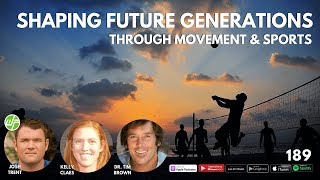
Episode 189 of the Wellness Force Radio podcast (YouTube) features host Josh Trent in conversation with AVP pro beach-volleyball player Kelly Claes and Dr. Tim Brown. The discussion covers how movement and sport shape future generations, athlete mindset and authenticity, practical training/recovery habits (breath, sleep, nutrition, routine), injury experience and recovery, partnerships in beach volleyball, and upcoming Surf Movement Masterclass (April 28–29, Hurley HQ).
Chapters
If you see someone else being successful in a field and it's not your passion, don't try to do it just because someone else is doing it. Do what you love. And I love beach volleyball and I love video games, and that's what I do, and that's what I passionately pursue.
There's a lot of different pressures on you, you know, from the crowd to your parents to yourself to your coach. You know, you have to quiet all those things and that's a character builder. You have to learn where to put those things because if they're in your head during the D, your dance is going to be short and it's not going to be pretty. I mean, for me, that was my big deal is where do I put my head, right? I know I can do this stuff. I've done it a whole bunch for a lot of years. But if I am in the future thinking about, well, what if I'm in trouble, my game's over. But if I take a deep nose breath and calm myself and bring myself back into the moment, that's another great lesson to learn and another great characteristic that you can build as an athlete. That's where life is lived. That's where happiness lives. That's where success lies.
That's Dr. Tim Brown and Kelly Claes. And this is episode 189 of Wellness Force Radio. What's up, my friend? It's your host, Josh Trent. Welcome back to another episode for your weekly access to global experts in all things wellness as we discover the physical and emotional intelligence we need to live life well. In this episode, we're talking about how movement and sport can shape future generations with our returned guest to the podcast, Dr. Tim Brown and and AVP Pro Beach Volleyball player Kelly Claes for her debut on Wellness Force Radio, this is our Stand Tall series. Be sure to follow all of these physical intelligence podcasts on Instagram and across the web using Standtall. Now, what's most interesting about this conversation I know you're gonna enjoy is that we're blending decades of Dr. Brown's experience in chiropractic and surf movement with an up and coming Olympic hopeful, Kelly Claes to discuss this role of sport and movement for so many kids and young adults engaged in sport. We're also talking about the power of being fearlessly authentic, being yourself, no matter what the haters or naysayers may shout in athletics, and how that transfers to personal development. So for all the parents listening to the show or for anyone that has a family member or friend that's a young athlete or even themselves a weekend warrior. Today we're talking about practical tips from Dr. Brown and Kelly on how we can apply movement and lifestyle practices that are found at the highest levels of sport to support the everyday athlete in us all. Kelly is a motivational speaker and recently presented at the Rose Bowl Stadium for the Pasadena School District for National Girl and Women's Day in Sports, a simple reminder that women are continuing to strive for positivity and growth in the realm of sport. We learn from Dr. Brown more details about the upcoming Surf Movement Masterclass April 28th and 29th at the Hurley Headquarters in Costa Mesa, California. Be sure to check out our show notes today for this wellnessforce.com189 if you're a trainer, movement pro or really anyone please that works with clients or athletes, this is a premier event you will not wanna miss. And you'll only have a couple weeks once this podcast airs so you can attend the event coming up. Right now on the podcast we dig into practical takeaways for the athlete and all of us, no matter what age we are or what our ability, including nutrition, sleep and recovery and the power of breath, which Tim Brown has talked.
About on the show.
But we're diving deeper into this one thing that is most overlooked, especially with hectic travel schedules and responsibilities piling up for all of us. We'll also learn why Kelly has been using Smart Compress through Intelliskin since she was in high school and how this is helping her train for the upcoming Olympics in 2020. We'll learn about mindset as well when it comes to injury and so many more takeaways in this compelling conversation with Dr. Tim Brown and Kelly Claes live and in person from the Zen Den in Newport Beach, California. Let's step in.
I think the fun part about this meeting here, I'm sitting here with Dr. Tim Brown Kelly Claes. Kelly is a pro Veatch volleyball player. She's also a motivational speaker and she went to usc. She's an alumni there in her free time. She's a self proclaimed comic conqueror and video game lover. You know Dr. Tim Brown from episode 117137 Kelly Dr. Brown, thank you for meeting up here for this podcast. It's gonna be so much fun.
I'm stoked. Thanks for having me.
Yeah, this will be fun. Thank you.
So we look at our breathing, I think like this. It's interesting. We're sitting in Tim's house. 15 benefits of breathing through your nose during Exercise. We're talking about how we tactically do things in life, like breathing, but also self awareness. I feel like so many things we're gonna talk about show is like, how self aware we are. We're understanding more and more that future generations, you know, they're 13 to 17 now, and it's a big deal what we're putting out there for social media and just the energy around athletes. You actually grew up. Your dad was a baseball player.
He was.
How did you even get into volleyball in the first place?
So, yeah, my dad plays baseball and a little basketball, so I grew up playing those two sports. And he'd coach me through it, and we'd get frustrated with each other because he tried to coach me. And I wanted to kind of figure it out on my own. So we fought there, but we. We love doing it. We go out in the front yard every day and throw a ball or throw a football or just hit each other, you know, having a great time. But it wasn't until I was, I think, 12 or 13, I found out about volleyball, went and tried it, fell in love. And another reason I fell in love with it was my dad had nothing to do with it. So it was kind of. It was my thing, and I was good at it right at the start, and it clicked and it felt right. Everything about it, how. How the movement is with the sport, the communicate, the team aspect, I just. I loved every little aspect of it, and I dove right in.
Yes. And you've been wearing Intelliskin since high school. The first time I've heard that. It's funny, we had an episode with Craig Cooper, your friend, and he was like. I was like, are you wearing Intelliskin in your life? And he's like, I'm wearing it right now on the podcast episode, which is interesting, you know, since high school.
So how, Tim, how did you and Kelly even meet?
Like, how did this happen?
Well, she has a great agent. That's how we met, through her agent, Andrew. He just, you know, he had spoken with Kelly, and Kelly had shown some interest in finding out about this company that she's been supporting under the kind of under the wire for, you know, for years and years. And, you know, my heart's pretty close to volleyball, too. That's a big part of my life as well. And. And so it was just an automatic, like, yeah, that's just. It sounds fantastic. Let's meet and let's see if there's some synergy there and if there's something I can do to help support Kelly's success, then I'm all in, 100%.
So your background is in sports? Chiropractic. But if people haven't heard 117 or 137 with you, how many years were you in volleyball as well?
Yeah, a while. Yeah. Well, I don't know about too long maybe?
Is there ever a too long maybe?
I think others would say probably too long. But you know, I was 14 when I played my first tournament on the beach and I'm 60 now, so it was a couple days ago. I remember seeing my first professional tournament. It was a, it was one of. It was before professional volleyball happened and it was down at Big Corona Beach. It was John Vallely who was a star for the UCLA Bruins under John Wooden and he was kind of the first big name volleyball player. And so I had gone to a couple opens at the Manhattan at Manhattan beach and I was just enamored by the sport, the soulfulness of it. There was no money in it. You would play all weekend long for maybe a dinner at the Chart House and a pair of shorts if you're lucky. And these guys were men. I mean they played all day long in the hot sun and just were just iconic to me. So it's like, well, guys surf in the mornings. What a great way to spend the rest of my day. I'm going to become a beach volleyball player. And so kind of that's what I did. And just like Kelly did, I just fell in love with it. You know, it fit my lifestyle. It was a great place to meet people of the other sex and because, you know, it was just a great place for kids to. A healthy place for kids to grow up and to socialize and to train and to be in a really great environment. And so, you know, I started playing tournamen tournaments and, and did my best to get better, but I was playing football too. So I'm 6ft and, and when I played football I was up to about 220 pounds, so with no jump and no speed. So as a volleyball player that's pretty important. And so, but I had a lot of heart, you know, that's what got me through. And, and then there weren't as many great athletes in the sport back then when I played. So that allowed me to not have to play all year round and still come out and be able to compete with them. So I ended up qualifying for the avp, you know, tour and many events. And so I wouldn't call myself a professional volleyball player by any stretch of the means. I respect Those guys that came before me too much to do that. But it was great to be able to play with some of the best guys in the world. And to close out my career against old Karch Karai at the Manhattan Open was a great way to go down, you know, if you got to go down.
So this shared passion that you both have, it's like, you don't necessarily have to be over six feet to be a pro volleyball player. Is that true? I mean, what's one of the shortest people in your sport?
I'm. Oh, I don't know who the shortest, But I mean, misty is only 5, 9.
Yeah, 5, 9, maybe 5, 10. With. With some high heels.
Yeah, right around there. I mean, three gold medals. I mean, you like. Like Tim just said, you. You got to have the heart. And that's, I think, one of the biggest things about this game.
Yeah. And Misty's. Misty's papa. I got to play against him. Butch May. Nice. Who was on a 1968 Olympic team, I believe, and iconic guy, and what a stud. So he was the world champion in mixed doubles for a decade, maybe 12 years, something like that. And I got to play against him. I had a really good female partner that I used to play with, Dale Keough, and she was an unbelievable athlete. She was on the national team at 18, which was kind of unheard of back in those days. And then she came out on the beach and was. We used to play. We used to do superstars competitions together. Co ed superstars. Because I was pretty good athlete. A lot of different things. Not good at one thing, but pretty good at a lot of them. And she was great at everything. So she put me in her backpack and carried me through these competitions. It was just great. But my point about Butch was heart. Talk about heart. And. And. And in mixed doubles, the guy would literally put the gal in a corner and he'd cover the court and he'd try and get his hands on the ball first so that his partner could bump it up to him and he could hit it. And his partner had to be maybe 5, 3.
Wow.
Unbelievable speed, unbelievable hands, unbelievable ball control. And they just crushed everyone. It was a wild thing to experience.
So height is not like a determining factor. It's really about hard and attitude.
Yeah.
This is something that I see on Kelly's site. You know, your site, you actually have this phrase, this shaping future generations through sport, through example. You know, example is a big deal to you. What's the example that you're putting out there to the world right now?
Right now, kind of the heart piece that Tim was talking about. But I love advocating that anyone can come out and play this sport. And I think the AVP is doing a great job with that, like bringing friends, family, just trying to grow the game. I think that's a big thing that needs to happen right about now. And that's what I'm trying to do. I'm trying to get more people involved because it's. The culture of this sport is amazing and the atmosphere is great. You're out on the beach all day and it's, it's a great place to be. And I just feel like when more people are aware of it, more people will be inspired and see it more and fall in love. And that's what we want. We want more people, people around, more people involved. And that's what I'm trying to do.
The interesting part about meeting you is that you're very open about the fact that you're this self proclaimed video nerd. And I think nerds run the world. I mean, anybody that loves anything, they put their whole heart into it. They put their whole soul into it. What do you think about volleyball itself, specifically outdoor versus indoor? People that go to an indoor sport, it's a lot more tactical. It's a lot more like six people on the court, obviously. Right on each side.
Yeah. Not as much open court. Yeah.
Only two with outdoors. So why did you choose that? Why do you feel like that called to your soul, the outdoor?
I chose beach for one reason, one reason only. This is a total joke. Because I don't have to wear shoes anymore. I hate shoes. So I, I just, I chose to switch over, get rid of the, rid of the indoor shoes and knee pads and go on the beach. But I fell in love, I think, with beach, because I love that it's two people. It's just you and one other person on the court. And the chemistry that goes in to a partnership like that I think is so important for the game. And it's, it's, I think it's so much more than like a business relationship. It's, it's a relationship out there and it's, it's so important to know that person on and off the court. And I'm right now working on, you know, developing a new partnership and working on those little nuances and it's, it's been really fun and kind of an adventure. But I love that about beach and I love, I love that I get to be outside all day. I get to be out in the sun. Jump in the ocean when I'm done playing. It's, it's great. I, I grew up a gym rat and I, and I miss it and I love it, but geez, being out on the beach all day is great.
And I'm stoked to talk about the tactical things, you know, when you travel. Like we talked about breathing in the beginning. What's your breathing practice, what's your nutrition practice, what's your movement practice when you're out there on the road? But I want to go back because I'm thinking about this 13 year old girl who's like her father's a baseball player. There was a few years after that that you met Tim. This environment that you were in, it was a very athletic, focused environment. Is that like what you grew up in? Did you feel like all around you there was examples of health, wellness and athletics?
For sure. Athletics. Very much so. Not, maybe not huge on the health. I grew up in a family that loves to cook. Not the healthiest things, but I mean, are they Italian?
What are they? What is classes?
We're kind of German, kind of, kind of just a mutt. We're a mix of lots of, lots of things.
You eat everything?
We eat everything and we love to eat. My dad's six, seven, he's a huge bear of a man. And I remember, gosh, I think since I was born I've been trying to out eat him and it's always been a competition for us. So when I kind of turn pro, it's been a challenge for me to kind of portion control the things that I eat and fuel my body instead of just eat till I'm happy, you know. So trying to find that balance has been something I've been working on. But yeah, I totally grew up in a very athletic and competitive environment and I've loved every little bit of it.
By the time you met Tim, you were already many years into the game.
Just a few.
Do you remember what it was like meeting her the first time? Like what was that interaction?
Oh, well, you know, I didn't know that she had worn the stuff, you know, since she was in high school. So I mean, it was like meeting somebody from your family, you know, because I mean we have a terrible marketing budget, so you never know who really has spread the word about this stuff. And to understand that a volleyball player at her caliber had heard about it, needed it understood she needed, adapted it to her everyday routine, using it not only to plan but also to recover in and then also to study in. I mean she just she's the perfect example of why I created this. You know, without ever meeting Kelly, she'd have been the prototypical reason for me trying to give this to the world.
So did you come over wearing the Intelliskin the first time you met and then that's when it happened?
No, no, no.
Okay.
You already knew Andrew. Andrew hooked that all up.
Andrew knew. Andrew's sitting in the room with us. He's the manager. So you guys listening? We're in this beautiful Zen den. We're overlooking this water. It's bright and sunny. There's a Buddha in the backyard. Tim just got working done working on an NFL athlete. And I'm just feeling the energy in this space, too. And I think about something that we talked about before we even sat down where you're like, you know, I'm really interested. Wellness. Kelly, you're like, I'm really interested in wellness. What is fascinating you, as an athlete about wellness? Because you would think from an athletic mindset that performance would kind of be like the top of the realm. What fascinates you most about wellness?
Well, I think I grew up mostly, I mean, through high school and mostly through college, just focusing on the performance aspect. And how I get better is I work harder on the court. I put more hours on the court. I would. I remember freshman, sophomore year of college, and a lot of the times in high school, I'd go out to the court and hit balls, work on my shots, work on serving. I love the courts at sc, the Merle Normans one. So I'd turn on the lights and go out there with a teammate and just serve balls, like, for a few hours in the night after I'm done practicing or studying. And I loved it. And that's, to me, how I'm gonna get better. And I don't think it really clicked for me until maybe my junior year of college that, you know, there's a lot of. Lot more factors coming into this. I mean, I wore. I wear the Intelliskin a lot to study and to kind of get my posture in check, but I didn't really think about food as a huge factor. I didn't think about, you know, the hours of sleep. That greatly affects your performance. And there's. There's so many little nuances. There's so much recovery to do, and I never really thought about it. And I've really integrated that into my training now. And I think it's really helped me.
Tim, the cueing that you do. So she's wearing the Intelliskin, but when you have somebody over and they're coming in for treatment. Like, what was she going through when you first met? Was it a shoulder piece? Was it like a movement pattern discrepancy?
What was she doing? We haven't known each other that long, you know, personally, anyways, I've definitely known of her prowess on the court, so we've just worked together a little bit. And you know, she's got the typical stuff that volleyball players have. I mean, they, they hit countless amount of balls with one side. You know, any type of a rotational athlete that's unilateral, pitcher, quarterback, whatever it might be, volleyball player. There are inherent dangers to playing with one side of your body only, you know, and I, I know you like go up, probably hit like left as much as you can, but I love hitting lefty. Yeah, well, that's great. And so I encourage all my athletes to be ambidextrous, to play both sides of the game because the body will become imbalanced. We're right handed or left handed. We use one side of our body differently than the others. And as we spoke about before, there is no symmetry, there is no balance. We know that biologically and anthropologically that the human system or anything that's mobile in our atmosphere on earth, bacteria, virus, doesn't matter, bugs, everything's in balance. It's the way we work in the field of gravity. It's the formula and chemistry of how our bodies are put together with this mathematical formula called the golden ratio. And so, you know, understanding my injuries that I had as a volleyball player helps me to understand what Kelly's going through too. You know, it's, it's just a matter of taking the imbalances that volleyball creates and that life has created in Kelly and testing her body through movement methods that allow me to understand what's been overused and under stretched and simply what's been underused and undertoned. And so I work on those things that have been overused and understretched. I create length, I create circulation in those areas to allow Kelly or others like her to move towards that symmetry that we never ever reach.
Have you experienced an injury that sidelined you for a period of time? Have you been through anything serious that you wanted to play, but you're like, you know what? My body won't let me.
I've been through quite a few injuries. I've dislocated this ankle, I fractured my spine. I've had shoulder pain since high school, and it's put me out of commission a few Times I wrecked my thumb in high school. The list is a little long.
So are people that, that chase their sport, you know, the thing they love on the weekend. What's the mindset that you adopt when you go through something where, especially with your life, I mean, your whole life depends on your body, like your body functioning correctly. Your body is your meal ticket. It's how, it's how you're surviving in this planet, thriving in this planet.
Yeah.
When you go to that space of an injury, how do you deal with that? Where do you go mentally? What's your, what's your framework inside?
I pray a lot. I, and I just take the time that I am sidelined to make myself better. So lots of times I watch extra film, I make sure I do whatever recovery or, you know, prep that I need to do for that injury. And I probably do too much of it. I've, I've tried using ice and not using ice and kind of dove down both paths to try to see what works better. But I think I try to make myself just better in those times. And I probably play way too many video games around those times too.
It's interesting that you play video games because a lot of people, they might do an instrument. Some people play. My grandpa, for example, he played the accordion, those big keyboard things. That's so cool that opened up and he just was kind of fearlessly authentic about who he was. And I sensed that from you too. It's all over your website, which we'll link in the show notes. But why are you so vocal about your video games and like being this self proclaimed geek? Like, why do you believe that's just as important as your athletics themselves?
I think it makes me me and I think everybody's interests are different and whatever you love, you speak more passionately about, you do better. And I think those are the things that you should advocate for and, and do. Don't try to be anybody else. Don't try. If you see someone else being successful in a field and it's not your passion, don't try to do it just because someone else is doing it. Do what you love. And I love beach volleyball and I love video games and that's what I do and that's what I passionately pursue.
You also speak, though, and I think when you speak this probably comes out naturally, right? Like your love of sport and also video games. Because the Rose bowl stadium actually brought you on to Pasadena School district. Tell us about this talking series that you're doing. What's this all about?
It was super fun. They kind of called me out of the blue to come and speak to about 200 seventh, eighth graders just about my story. And I don't really think they knew exactly what to expect. And I just, I just went up there and. And chatted a little bit about my experiences. I've been through, like I kind of said a lot of injuries. I've been through a lot of coaches and people online and fans kind of telling me that I'm not good enough and I'm not going to make it in, you know, the goals that I have kind of set for myself. And lots of people have said a lot of things about, you know, my attitude and my work ethic, but none of those people see what I do 24 7, but they make claims. So I just kind of went out there and spoke to these kids and told them that you can't listen to what these people say about you. You need to go out there and kind of like what I said. Fearlessly pursue what you love and who cares what anybody says, because it doesn't matter. It was very challenging for me having a coach kind of tell me to my face day in and day out that I'm kind of worthless and I'm lazy. And that just, it forced me to kind of reevaluate my goals. And I came out with the same conclusion. I want to be the best at what I do and I want to go to the Olympics and I want to win gold. And none of those things have changed. And it doesn't matter what anybody really says to me. Those are my goals and that's what I'm gonna go do.
Yeah. And your example of kind of the word that came up maybe multiple times already is this word fearless. Fearlessly, authentic. Fearlessly just being yourself. This is, I think, the ethos of what truly shapes these future generations. So, Tim, I'd love for you to answer this question. What do you think when you look at Kelly, that she's being. What's her way of being that's helping? What example is she putting out there that helps these 13 to 17 year old young men, young women watching her? What are they feeling and how is that authentic in your view?
Well, I think all those kids need to listen to this podcast because what she said is right on point. It is becoming. It is becoming comfortable enough with yourself to be fearless. It is recognizing that you are unique and your path is unique. And like most people, they might not want to walk down the same path that others have walked before. So they choose to be Bold and take a different approach to things and a different angle. And that's. I mean, that's the stuff that we need to celebrate with these kids. That's the stuff that's going to make us grow as a community and as a society as a whole. This stuff where people are, as Kelly mentioned, reaching out and poking you without knowing you and without doing the diligence to understand you, but to have an emotional response to what they've read about you based upon their background and their experience, not your experience. It's a dirge to our society. It's a dirge to what's happening now, and it won't allow us to progress. I think it creates a digressive direction. So I'm all about what Kelly's saying. It makes me like her even more. And, you know, I'm for anybody that's genuine and authentic because it's a real. It's not the path of least resistance. Yes, it isn't.
And I've always felt this from you. The truth has no agenda. We've talked about this multiple times. What is your truth? Truth right now when it comes to social media. So you're starting this kind of evolution where you're posting more things on social. We talked about it on the deck here. There are brands that might approach you and there are people that are like, hey, hold my tea in a photograph. How do you maintain centered and truthful to your message? And what is that message on social media for you?
That's been a kind of a challenge for me because I, I really honestly feel like I was born in the wrong generation. I really am not a huge fan of social media or posting a lot. I'm. I feel like I'm more of a private person. I don't like putting out there 247 every day. Oh, this is what I'm doing. And I don't. I think it's fun and cool to do, but I don't think that everyone should do it as much or lots of people. I feel like just post the good stuff in their lives and try to portray that and emphasize that when it's, when it's not the truth. Life is dirty. Life is messy.
Yeah.
But nobody wants to post about that kind of stuff. So one, I've been trying to post more about just, you know, the normal things that I do. And you know, what I'm starting to get involved in and just trying to stay true to me and, and what I honestly advocate for and believe in. And that's why intelliskin's on my website because, I mean, before I even met Tim, I mean, I love talk about law of attraction. Yeah, I just.
It's like the law of attraction in action right there.
The, the product works. I love it. And that's, that's why Andrew and I spoke about it and that's why he reached out to Tim and that's why I'm here. And I love it.
And this is the authenticity piece too, because it was National Girl and Women in Sports Day and you posted today is just a simple reminder that we as a collective group of women are continuing to strive for positivity and growth in the realm of sports in the world. What do you think about sports specifically? Drive better character for young women? Like, what is it about training and athletics that really brings out that great human. What is that for me?
Well, I. That really hits home for me because growing up I was kind of a troublemaker. Just didn't really have my head on straight until I got into athletics. And that the. The camaraderie of it, the, you know, practicing every day at a certain time, it got me on track with school and just life in general. And it, it kind of gave me a purpose. And that's, that's where I fell. My. Fell in, you know, in love with. With sports and competition and just so many. I had so many, you know, team interaction, coach interaction, you know, found mentors and all of those little pieces I think. I think go into that.
It also allows us to fall on our face and get bloody and dirty and have it still be okay and.
You learn from it.
Isn't that. What do you think about this, Tim? Like the aspects of sport that drive better character, like it's all about failing and not really feeling like you're a failure.
Yeah, it's an interesting dichotomy and you know, for me, it's all about character. Right. It really helps to you to find your character because oftentimes as we get into sports as youngsters, we don't know ourselves very well. We know how we respond and so forth. So it's learning how to respond appropriately in situations that are of consequence. And I think that that's one of the things that you get as an athlete that you may not get in other areas is there's a lot of different pressures on you, or at least you can imagine all those pressures on you, from the crowd to your parents, to yourself to your coach. You have to quiet all those things. And that's a character builder. You have to learn where to put those things. Because if they're in your head during the dance, your dance is going to be short and it's not going to be pretty, but if you can put them in the appropriate place. I mean, for me, that was my big deal is where do I put my head, right? I know I can do this stuff. I've done it a whole bunch for a lot of years. But if my head's not right, if I am in the future thinking about, well, what if. Or if I'm in the past going, I just hit that thing into the net, my game's going to hell, I'm in trouble, my game's over. But if I take a deep nose breath and calm myself and bring myself back into the moment, that's another great lesson to learn. And another great characteristic that you can build as an athlete is learning how to live in the moment. That's where life is lived. That's where happiness lives. That's where success lies.
Do you meditate, Kelly? Is that a practice? What's your kind of practice to drop in to just that moment?
I am a big fan of kind of singing a song in my head to kind of quiet because really feel like I'm one of my worst critics. And the voice in my head constantly, like, saying mean things to me, especially when I make a mistake. And kind of like what Tim just said, you know, just thinking about the past, those mistakes and not letting me. Not allowing me to be present. So I'm a big fan of taking a breath, a nose breath, and I. I'm a big fan of kind of singing a song and just that. That keeps me in the moment. And I. I kind of feel more when I play volleyball and. And that's just. That's how I find my groove.
Usually faith is a big deal to you as well, this connection to a higher source, right? Higher intelligence.
Yeah.
What's that play in your training? How do you depend on God? What's your definition of God?
So I'm a Christian, grew up a Christian, and I pray before every meal, and I like to pray before games. And I believe that, you know, everything kind of happens for a reason and that I was put on this earth for a purpose. And I'm still trying to figure out what that purpose is and.
Sounds pretty collective.
Yeah. You know, so I'm just trying to live. Live by his word and try to use. Use my voice to. To share His Word and kind of. Kind of be a light for. For everyone. And I love that. Where I am right now with volleyball and video games, my Two, you know, passions. I'm just trying to be who he wants me to be in those two spaces. And I'm still. Again, I'm still trying to figure it out and. But that's. That's what I'm trying. Trying to do.
Yeah, you and everyone listening to this podcast like this. This journey continues for all of us. This learning journey, for sure. Looking at physical intelligence. You know, these. These shows that we do in partnership with Intelliskin are understanding the human from a physical perspective. You know, this intelligence that we all have, we're all born with it. What is your deepest edge when we look at physical intelligence? It could be training, it could be sleeping. I'd love to give people listening some tactical stuff, but what's something you're leaning into right now? Maybe a physical practice or a training practice?
The most recent thing that I've been working on. So throughout high school and college, I've been dealing with the shoulder pain and with the trainer that I've been working with, we've been working on kind of a new arm swing. So I'm. My old swing was very softball because that's what I grew up. Very kind of short arm, all from my shoulder, a little bit of core, but not a ton. And I would just hit the ball as hard as I possibly could. And that's worked out well for me because I can jump. But now I'm kind of working on this new piece of, you know, using my entire body, raising my arm a little higher, and I'm. I'm learning about all these new angles. And trying to put that mental piece with the physical piece has been a huge challenge for me. But I'm slowly putting it together in every practice. And I've had a lot of conversations with the partner I've been working with. I'm like, hey, give me this cue if you see me drop my arm. Give me this cue if I'm coming in too early. And she's been really helpful, and I do the same with her. And that's kind of what I was saying before. That chemistry and that dance with your partner, it's so important because it's just you and them out there on the court. So you have to have that camaraderie, that chemistry there. So that's. That's one thing that I've been working on.
I could imagine how challenging it might be to. Since your sport depends so much on a true partnership, you literally have to have sense memory. You have to understand what that person's feeling and thinking before they even Tell you have. Is that a skill that you've grown emotionally being on the court with just one other person?
Yeah, yeah. Before the girl I'm playing with right now, my old partner and I had played together for eight years, which is a very long time. And I felt that we kind of felt each other on the court, which was really cool. And I'm kind of waiting for that to crop in and the new partnerships that I've been playing with, but I think that's something that comes with time. But that was a really cool aspect of my game that came up like I want to say two or three years in until I honestly, it was one game and I remember I was blocking and I felt where she was defense wise and I didn't even. And I knew where the ball was. I didn't even look. I came off and I set her and it was one of the coolest moments ever. But I think that's a big thing about partnerships and that chemistry that, that just grows with time.
Yeah. And this is a nuanced process. Tim. I feel like surfers do this so great in the water. They know exactly where the wave is going to break so far before it even gets there. What exactly is going on there scientifically?
Oh, well, your signs and symptoms, you know, just like the body, you know, you see stuff happening out there in the ocean and, and I've had this, you know, it's. It's been said a few times for guys that I've taken out to learn how to surf where, you know, they see me taking off for something that they don't even see. It doesn't even exist in their mind yet. But I see signs and symptoms of, okay, how shallow is it over there? To my right or my left. And depending on the direction of the swell and the tide height, I know that this sandbar is going to break probably in an hour from now. So I may slide over during the session and, and get the first few waves of that little sandbar before every anybody even knows it. Because I've been surfing longer than most people have been alive. You know, I've been surfing for. Oh man, I haven't thought about this in a while.
A long time.
55, six years, something like that.
It's almost a six sense. And I think it relates to surfing and volleyball the same where because you've been doing something for so many years, there is a bit of like muscle memory when it comes to it. Do you feel like people learn can learn bad habits? Kelly, when, when especially in volleyball, you know Striking with one hand. It's like, how do they get through that? How do they get over that? When they're going through their weekend and they're playing sports all the time and they have these nagging injuries, how do you actually figure out from your perspective as an athlete, like, how do they get through that?
For, for me, what has really helped me through my career with. With bad habits or when I'm trying to, like, learn something new, is I'm a big advocate for watching film because I'm a visual learner and I need to kind of see it. And sometimes I might feel like I'm getting outside and taking my approach with the speed that I need to. And my coach is like, you're like, walking into your approach. What are you doing? And I'm like, what do you mean? I'm coming in with like such fire right now. And we, we turn on the film and being able to see that and put that into action at the next practice has been really beneficial for me.
You travel a lot, Tim. You work with athletes that travel all over the world. Are there keystone habits that you have when it comes to nutrition? You said that you tried to out eat your dad for a long time. That was one big piece. But now, as an athlete, somebody that's traveling all the time, is there a habitual framework that you use for food, for nutrition? And then afterwards, I'd love, Tim, for you to talk to us about some of the athletes you work with when it comes to food. What do you think?
It's. It's challenging, especially on the road, because, I mean, last summer I went to a ton of new places and we don't really know what food to expect. Yeah, exactly. So I, I try to bring my own food. I. I love oatmeal in the morning, and usually the first day I get there, I try to hit a grocery store and get some fruit and some bread and some lunch meat if they have it, for like lunches throughout the week. And I just, I just try to pick through kind of the bland things because you never really know what's in the food when you're traveling. Just try to be careful. And the more tournaments I've gone on, the more food I've packed.
Athletes don't always eat. Perfect.
For sure.
You talked about asymmetry, Tim. Like, no athlete, you know, has a perfect body where they're perfectly aligned, but food's the same way. This is a challenging piece for so many people. What have you seen as a common thread for successful habits for athletes that are out there on the road.
Yeah, it's, it's, it's really, you know, and this is, you know, you talk about physical intelligence and emotional intelligence. Well, both of those things can be collectively put into the same ball, and that's routine. Athletes thrive on routines. And if you can make Monday like championship day, you're. You're on your way. Every day should be the same. The routine should be the same. Kelly mentioned, you know, I packed my oatmeal. I got. She's got a routine, man. And so there's no reason for her body or her physiology to go completely bonkers. We can never control it 100%. You don't know what you're going to get every day. Sometimes with our bodies, you know, you may feel great and play terribly, but at the very least, we want to control the things that we can control, and nutrition is a big part of it. So, as you know, I talk about what you are, what you eat, think, and do. So the more we can put that into a routine where Monday is the same day as. Same routine as game day, your chances of victory are going to be great. And, and certainly I've noticed this a lot in, in surfing, working at the. With the top guys and, and now knowing who they're talking to on the sideline. You know, it's not like, I mean, it's heavy competition, and it's a, it's a. The surfing tours, you know, 10 months out of the year. So these guys really need to understand, like, where do I put my mind? What's the best and healthiest way for me to progress in my career emotionally? And so I think it comes down to routine.
Yeah.
Physical routine, emotional routine, chemical routine. The more it can become a routine, the less there's a reason for you to have to worry about anything else. And, and as an athlete, that's the last thing they want to do, is have to worry about a bunch of stuff when they got to focus on playing.
We're really talking about decision fatigue. It's like you want to have a system, Kelly, when you go out there to where you don't have to think about what you're going to eat, what you're going to wear, where you're going to be. You want to have it planned beforehand. Do you take an inventory? Like, if you're traveling, you know, you have a month out. And this goes for anybody that wants to be an athlete and travel. You know, we're all warriors in our own sport. So do you look ahead? Do you see what kind of grocery stores are there or do you proactively kind of scour the environment that you're traveling for?
Sure, yeah. My partner and I sitting down tomorrow and kind of kind of doing exactly that. But yeah, I. I plan out exactly. Okay. How many days am I going to be there? And so I don't overpack. And then I don't even have to think. I'm at this part of my suitcase is what I'm wearing. And. And I go. Cause just like Tim said, I. I don't want to have to think or stress about anything else. I just. I want to go out there and play and play my best and not have any other worries or thoughts on my mind. And that's being proactive with that and kind of planning ahead allows me to do that.
Parents that are, you know, have kids, they're listening and maybe they have a son or a daughter that's not really stoked on sports right now. Have you ever seen this, where that child changed, you know, people that you had when you were younger? How do parents instill this love and this passion for athletics in their kids when their kid is struggling with that? Have you ever dealt with that from friends or anyone in your community?
I've. I've. I've dealt with a lot of athletes who. Who love the game. And I've. I've had a bunch of. Some girls came up to me after the Rose bowl and were talking to me about a similar situation that I was talking about, you know, coaches and friends kind of getting on them about a, B, C, D and E work ethic, whatever. Whatever it may be. And it. Honestly, she was telling me all these things and it just kind of sounded more like overwork. What's the word?
I'm thinking of like an over training or.
Yeah, like over training. Yeah. So. So we just kind of chatted about how kind of like I said before, not listening to those other things and if this is what you want to do, kind of going for it. And we kind of talked about the advantages of that and. Because that's. That's all that really matters. And we kind of talked about, okay, what are your interests outside of this sport? And kind of managing that time on and off the court of the gym. She was a gymnast, and I think that's really important. It was really important for me in college with the hours that we had, taking the time for me, my D charge and video games or whatever it may be. And I think that's very important. And we kind of touched on that. So I think Having a balance of on and off is. Is really, really important.
Would you consider yourself to be more of an introvert?
Oh, yeah, for sure.
How do you balance that? Because you're in the light a lot. I mean, you're out there in the world.
I've got. I've got a little window of where I'm. I'm all good and I can chat and then I need to. I need to recharge. So I just kind of. It's just kind of a feeling and I just kind of roll with it. It's hard when I'm at an event and then I have media after, and then there's. There's been nights where we have, like a banquet and I just. I have to, like, go outside and kind of.
It's a lot for you.
Yeah, yeah. Thankfully, the last. The last few events have been on the beach, so I kind of just go out and like, look at the water, kind of just chill for a little bit. I just. I need that me time. And then I kind of go back in and I'm all good. But it just. It makes me uncomfortable being in that, like, kind of light too much. So just balancing that and managing that is what I do.
Yeah.
I was just going to say kind of an interesting sidebar here is I'm friends with some guys, a guy that used to room with Tiger woods. And so in college, when he started to have some success up at Stanford, he'd go away on tour for a bit and then he'd come back and, I mean, he loved to just get in there and spend as much time as he could playing video games. That was his decompression chamber. Right. And it was something that he could count on, something that he could control, an environment that was his. And I could completely relate to. You know when you said that that's kind of what you do, and you need to pay homage to that because it. What's. It's what makes you click. And that's part of your routine, by the way, right?
Yeah, exactly.
Is that part of your recovery where video games you actually use as recovery?
Yeah, I have, like, games on my phone. So, like, when I'm normateching, I'll. I'll be just kind of de charging or I'll bring my switch. But I want to get a Norma tech for my house, and I just want to be sitting there with my PS4, like, legs up, just getting, Getting that recovery. And while I'm decharging and kind of multitasking, that's. That's the Dream. We'll get there.
So this has really been a conversation about self awareness and what message we're putting out there. You know, the shaping of the young women that are watching you. What do you want them to feel like, what inspiration do you want them to feel when they've seen you on a screen or seen you on an Instagram? Like, what are they taking away from you?
I want them to kind of see what I'm doing and see that I'm following my passion. And I want that to inspire them to go and do their passion, whatever it may be. And I kind of like that video games are kind of seen as maybe more of a guy thing or sometimes dorky. And I love being dorky and I, I love advocating for that and getting the dorks of the world kind of out there more.
Embrace your inner dork.
Exactly.
We all get to do that.
Yeah. So I just, I just think those things shouldn't be, you know, looked down on. And I'm just, I'm trying to be me and advocate all those, all those weird things about myself because it's okay to be different. It's okay to be weird. And I want everyone to go out and feel comfortable being themselves and pursuing things that they love and they want to do and not. Not be wavered by others opinions or what anybody says.
An old saying brings up an old saying, you know, let your freak flag fly.
I love that. I love that.
That is a great pull out of the 60s, right? That was one of the great things that came out of there because, you know, and it's taken us this long to realize perhaps just how important important that is and how wonderful it is. It's like, it's like flavoring a soup, you know, in our society. And the more freaks we have out there, the better the flavor.
In my opinion, this physical, this emotional, this is wellness. How would you define wellness in your life? You know, you're curious about it, you're an athlete. For you, it's different. I'm curious how you see this in your life. Like, what is Kelly's wellness? What's wellness to you?
I'm trying to make it a bigger piece of my life. For me, the, the recovery piece is, is huge that I'm trying to incorporate more because right now I'm commuting from Fullerton to my training in Hermosa. So every day. Yeah. Ouch. So every day I'm up at 5 and make a little breakfast and I head out by six. Otherwise it takes me an hour and a half to get out there. So I get out there pretty early, do a little bit of my rehab and warm up before everybody's Anybody's really on the beach, which I love. It's kind of another piece of my me time. And then I train, I go lift, I condition, and then I try to bust out of there to miss traffic again. And then I'm at home and I. I'm trying to put more recovery pieces in because that commute for me, I still. I still haven't figured it out, but it's. It's pretty killer. And, you know, I think rolling out is a huge piece. Piece stretching. Just. I mean, sitting in the. In the car in this hunched over kind of position for, you know, two, maybe three hours of the day is. It's hard on anyone. I think it's harder on an athlete who needs to, you know, everything needs to be loose and ready to go to compete. So I'm still trying to find that. That balance, but that's what I'm. I'm kind of working on.
I almost feel like what you just said is I'm figuring it out. And wellness, a big part of wellness is like, figuring it out.
Yeah, because, I mean, it's. It's different for everyone. Everybody's body is different. Finding that balance, all those little nuances, it's different for everyone. So I think trying new things and seeing what works for you, that's what I'm trying to do. Take things from different aspects and making it work for me.
The Olympics are coming up. There's 939 days until the Olympics. When you were five years old, this is something that you focused on. How do you see it now? What are you excited about for that now? Do you see it happening in your mind?
It's. It's crazy how close it is. I'm trying not to really think about it because I get too amped up about it, so just kind of taking it day by day. I still haven't kind of picked a partner for the Olympics, which is a little stressful, but I know I'm going to be there and I'm going to work my butt off to get there, and I'm beyond excited. You kind of gave me goosebumps talking about it.
Tim, what do you think, man? You know, it's been 60 episodes since we had you on the podcast. Has it changed at all? Has your definition of wellness changed since then? In this moment, how do you see it?
Oh, gosh. You know, it's. It's multifactorial, but it really Comes down to. I mean, there are so many things that you better keep it as basic as possible. And I think as we see trends in healthcare, trends in diet, trends in training, the emotional components and so forth, what I've learned at this old, savory age, Josh, is that it all swings back towards the middle. You know, going into, you know, these diets that only allow you to eat one thing or doing that, it's too extreme. The body loves moderation. It loves to be in a pattern. It hates to be taken out of a pattern, even if it's a bad pattern. That's why if someone's a heroin addict, bad to get off in a day, even though it's terrible for the body, the body loves patterns. You have to respect that. And I think in changing your training method and treatment method and all that stuff too, it's timing as well. It has to be timed properly so that you give it the right dose and the right amount. And what's right for Kelly is going to be different for me and different for you. So it's an adventure. There's no straight line. There's no, oh, I finally found it day. It's a constant working and reworking of things that have already worked for you in the past. So it's a. You know, as a professional athlete, it's more difficult to trust all these different possibilities that are out there. So you always come back to yourself and, you know, you ask your gut and your heart, you take in all the information that you can find, in my opinion, and you intellectualize it through your heart and your gut, and you say, well, what do I feel? And that's how I answer those questions these days. There's so much science and there's so much evidence that could go this way or that way. It comes down to, really, how does it feel to you? And I think if we swing all the way back to the start of this conversation, it's like, I'm me and this is how I feel, and I'm going to dance about it, you know, And I think that's, you know, that's the take home here, is that trust yourself. Know that the lesson is ongoing. Know that you'll never. You'll never see life in a straight line. It's always going to be up and down and all around. You know, it's once somebody showed me a picture of a. Of an extension cord one time and said, well, I'm gonna. I'm gonna do this project and it's gonna be super simple. And then by the Time that they, you know, they show the next picture of the extension cord. It's got 55 knots in it and it's going to in 45 different ways. And life's just not that simple. But we have to battle to keep it that way the best that we can.
What I've enjoyed most about sitting with you both, and I know people are feeling this too, is Tim, you bring this incredible wisdom to a show. And Kelly, you're coming at this from a completely different stage of life, yet you're so advanced and you're so on point and just honestly, like this word of fearlessly authentic that's come up so many times in the the show.
Have to interview her dad.
I think so.
He's a blast.
I think so. I don't know if I could out eat him though. He sounds like he's a pretty big dude.
We could all have a little contest. That'd be great.
Yeah, we aspire.
I still like to do it before.
Before we say goodbye, I want to remind everybody listening that there is two weeks left to join Dr. Tim and myself at the Two Day Surf Movement Master classes at the Hurley headquarters, just a block or two away from here in Costa Mesa on my birthday, April 29th, also the 28th. Head over to wellnessforce.com hurley or click on the link right from your phone right now. Don't do it if you're driving though. Pull over if you're driving.
If you work with clients in fitness.
Or chiropractic or sports or honestly any field of movement, this event is not to be missed. Go to wellnessforce.com hurley Tim, you've been working on this event for six months plus somebody's on the fence. What do you think? What little gem can you give them?
Well, it's, you know, it's called the surf Movement Masters class, but it's really, you know, could have another name too. You know, it's. We don't make better surfers, Josh. We make better athletes. So it's really, I don't care what sport. Somebody who is a treater and trainer of athletes would benefit from this. We have, you know, Mike Gervais from one of the greatest sports psychologists in the world. We have Brian McKenzie who teaches the art of breath. He's studying breath up at Stanford Medical School now. And just an incredible list of those that treat and train. And the idea is that no one can do it in isolation. And if we're truly there for the athlete, truly there for the patient, then we're gonna talk to each other. And we're gonna work together to make that athlete's dreams, help that athlete's dreams come true by giving them the truth and teaching them how to fish instead of just handing them fish every day.
And you get to meet Tim and I. And if Kelly was here, she would be there too. But she's gonna be traveling, chasing down her passion.
She got bigger games.
She's got bigger games.
Dr. Tim Kelly, thank you so much for coming on the show. Where can people learn more about you, Kelly? What's your website let people know where they can check you out on. On social. If they have a daughter that wants to be a pro athlete.
Yeah.
Where can they go?
So you can follow my journey on my website, which is Kelly Clays us. Or you can follow me on Instagram or twitter @kelly clays3. And then I'm also on Facebook and it's Kelly M. Clays official fan page.
Awesome, guys. Thanks so much. We'll do this again.
Yeah. Thank you so much.
Thanks, Josh.
Hey, my friend, thank you for hanging out and growing with me on today's show. Remember to hit subscribe. Share this podcast with somebody you care about that you think gets to hear this message. Support the show by leaving a five star review for the podcast right now simply by tapping on your show artwork. On your iPhone, click that purple link that says review this podcast. It helps the show reach more conscious and smart people like you. And your voice will attract more world class guests that want to come on the show. So let them hear your voice. For all the downloads, videos, links and free resources mentioned on the episode, go to wellnessforce.com radio. And while you're at my house on the web, join us in the Wellness Force Community newsletter on that page and I'll send you four free guides around staying healthy with your eating, moving and sleeping while you travel. But don't let this conversation stop here. Join a group of people like you over at the Wellness Force Community Facebook page. This is where we talk about the things that really matter. We share our wins, inspirations, struggles and a lot more. So join us. Tap on the show or work on your phone and hit that purple link that says join the Facebook group and I will welcome you at the door. Okay, now you get to go out into your world and create impact for the people that you care about. So until I see you again real soon, I'm wishing you love and wellness.
More from Josh






Your child's future start before pregnancy... and even before conception! #podcast

MD Reveals: Your Healing Creates Your Child's Reality (The Souls Coming In Need Strong Bodies)



