200 Top 10 Wellness Force Guests (Best of The Best: Celebrating 200 Shows)
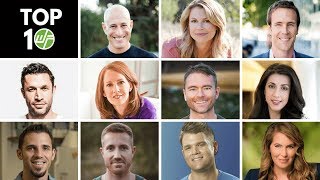
This YouTube video (May 22, 2018) is a highlights compilation marking Wellness Force Radio's 200th episode. Host Josh Trent introduces a 'best of the best' set of clips from ten top guests across the show's run; topics include emotional intelligence (ego, anxiety, acceptance), habit design and relapse, ancestral nutrition and appetite regulation, the role of technology/wearables in behavior change, conscious communication, and proposed reforms to prioritize lifestyle interventions in healthcare. The episode also includes a sponsor giveaway (Organifi; 90-day supply) and a contest asking listeners to leave iTunes reviews between May 21–31 to enter.
Questions this video answers
A free 90-day supply of Organifi (red, gold, and green juice) delivered to the winner's door.
Contest period: May 21 through May 31; reviews must be posted on iTunes by May 31 at 8:59 Pacific Time.
Aubrey Markus; Jason Prall; Robb Wolf; Christine Hassler; Gretchen Rubin; Chris Kresser; Adam Markell; Mary Shores; Dr. Andy Galpin; Dr. Kyra Bobinet.
Chapters
If you're always in motion, if your mind's always in the future, if you're always anxious about what you're going to have for lunch on Thursday afternoon when it's Monday, then that occupies the mind enough and keeps you out of the present moment so that everything you're trying to suppress can stay suppressed.
So that ability to navigate forward is about you making a better choice in this moment, me making better choices moment to moment, or what I will sometimes refer to as spontaneous right decision making. How is it that you can retrain yourself and be trained and just be open and vulnerable enough to more often than not make spontaneous right decisions? Everybody's saying the same thing, which is basically acknowledge and identify with who you really are beyond the ego. Identify as that force of love, as life itself, self. Express that force of presence, consciousness. There's a million names for it.
Those are some of the top voices that lead our wellness world. And this is episode 200, celebrating 200 shows on wellness Force Radio. What's up, my friend? It's your host, Josh Trent. And welcome back to another episode for your weekly access to global experts in all things wellness as we discover the physical and emotional intelligence we need to live life well. What's up, everybody? Welcome to the show. In this podcast, we hit the double century mark. Episode 200, you have arrived. Damn. I cannot even tell you how excited I am for you to hear this upcoming podcast. Our Wellness Force team work really hard on this one. Scouring through the data of 200 shows. Well, actually it's been 216ish if you count the Wellness Force Friday shows and our Facebook lives. We found the top 10 wellness force radio guests for a best of the best show highlighting these heart centered wellness leaders. I say leaders because all of the upcoming guests you're going to hear. Aubrey Markus, Jason Prall, Rob Wolf, Christine Hassler, Gretchen Rubin, Chris Kresser, Adam Markell, Mary Shores, Dr. Andy Galpin and Dr. Kyra Bobinet. They all have one thing in common. They're discovering the physical and emotional intelligence to live life well. Just like me. Just like you. A perfectly imperfect human being as part of this Wellness Force family, this Wellness Force collective that has reached across the globe, all the way from Encinitas, California, to Dublin, Ireland, to Bells Beach, Australia, to Iceland to China to Italy and Asia, literally. Looking at our downloads this past week, the show has covered the globe. And it's emotional for me because when I started out in early July 2015, I told myself the show would grow to reach a million people. That was my North Star. That was my fuel for literally hundreds of nights up at 3am before I had a podcast editor, before I had a virtual assistant or a team or anyone else that would help me. It was just me, solo, standing at the desk, sitting at the chair, behind the microphone. I had experienced enough pain in 2014 from committing spiritual suicide in a cubicle. I knew there was no going back for me. I made that decision, which is something all of our speakers today in the show did at some point in their lives when they took that powerful deep breath and claimed what they knew to be the right path for them. So as you listen to the top guests on the show, make sure you bookmark each one of these 10 episodes to go back and and listen to it in entirety. Because if you're like the million plus people who have heard the podcast, there's something deeply impactful for you and each one of these shows, which is why they've proved to be the most popular across our double century mark. You know, I can remember when I first started the show interviewing Dr. John Gray. I had just broken up from a relationship. I had six months previously gotten fired, which, looking back, it was the most beautiful gift of my life from a job in the sports technology industry. And I had just finished one of the most powerful emotional intelligence trainings of my life. But at that point in 2015, my money did not match my mindset and my outer environment did not match the dream that was on fire inside my chest. So I actually had the photographs to remind me where I had all my possessions in a suitcase outside my Subaru, sleeping in a spare bedroom of my friend's house for three plus months. All this during the beginning of the podcast, which goes to show, there's never the right time for you to follow your dream. So as you listen to this podcast, think about when you're starting. Think about whatever you're doing and where you can go if you just get clear on what it is you actually deserve. Because whatever it is, you do deserve it. There's just voices that tell you different. I want to thank you for being here and I want to thank our sound engineer and production team, Buzzy Toric. Over at Epicast Network, our community manager and copywriter, Lauren Bryant, our director of Business development, Mary Goldman, and everyone else who's been a huge brick in the wall of success for this show. My hands are together for you and most of all, my. My heart is full today. My head is bowed to you. The curious, wellness minded Wellness Force audience member who's not satisfied with the current world as it is, either the one inside of you or the one you live in. This is why we've recommitted and doubled down to our focus to bring you the best of the best absolute world class influencers in both the emotional and the physical intelligence for the next two years, five years, whatever we're gonna do here in this show. So episode 200 celebrating this double century mark with our show sponsor, Organifi. I really don't have the words to describe just how honored I to be able to partner with this company. You know, we have a lot of conversations from brands and supplement companies that want to sponsor the show. But when I really dig into conversation and I look at the label on their products, even in their marketing approach, it does not always resonate. And I take trust in your time and your dollars very seriously. So the fact that Organifi believes in Wellness Force, our mission, what we're creating across itunes. And because of this, I'm announcing this special giveaway. We're giving away in celebration of of episode 200, a free 90 day supply of Organifi red gold and green juice delivered right to your door. A free 90 day supply. To celebrate this massive milestone, all you have to do, it's super easy. Oh, and by the way, it's free. Is tap your iPhone right now. Hit the link in purple that says review the podcast. You can also go to wellnessforce.com review it'll take you right to the review screen to leave us a five star review for the podcast on itunes or from your desktop right now during the contest period May 21st through the 31st and and you'll be automatically entered to win the 90 day supply. The winner will be selected by a randomized computer and all entrants must leave a podcast review for Wellness Force Radio on iTunes by May 31st at 8.59Pacific Time. Okay, this is it. I'm really feeling that lump in my throat right now because the fact that you're here about to listen to the 10 best of the best clips pulled from over 200 shows. I could not have imagined being able to be at the standing desk talking to you about this right now. Interviewing some of the minds that I've respected over the course of my 20 years here exploring this physical and emotional. Thank you so much for being here. And get ready for the 10 best of the best on Wellness Force Radio. Starting off with episode 196 with Aubrey Markus.
Stop punishing yourself for it so that you can actually apply that self love to yourself and open yourself back up to love and abundance from the universe instead of punishing yourself relentlessly for everything that you've done in the past.
Yeah, it just doesn't have to be so hard. But yet sometimes the subconscious, the ego, makes it that challenging because it's really a way that people can stay safe. And this is a concept that's talked about so much in personal development. It's, can the ego stay safe by not actually challenging you? And therefore it'll kick the shit out of you for years. Because at least that's known. At least that's familiar. And this contrast of growing from that, though, that is very scary. If somebody's listening right now, they're like, yeah, I know. I'm in a war with my ego constantly. Is there a starting step? Is there a beginning modality to actually get out of that, get out of that cycle?
Albert Einstein says you can't solve a problem at the same level that it was created. You know what I mean? And there's a famous Buddhist named Muji Baba, who I follow, and he calls these fires that the ego starts, these fires that the ego starts. If you go and try to put out the fires as the ego, the attention that you give the fires is just going to create more fire. And you see these lessons over and over again. I actually asked an Namboga shaman, which is a psychedelic plant from Africa. I said, you know, how do you deal with the ego? How do you bring the ego down? He says, you don't bring the ego down. You bring your true self up. You bring who you really are up. And then the ego becomes less important. In all of these different ways, from Albert Einstein to Mugenda, the Aboga shaman, to Muji Baba, the Buddhist, the Buddhist master, everybody's saying the same thing, which is basically acknowledge and identify with who you really are beyond the ego. Identify as that force of love, as life itself expressed, that force of presence. Consciousness. There's a million names for it. Identify as that and allow the ego to just be along for the ride instead of identifying as the ego and then putting your consciousness along for the unconscious ride that your ego is taking it on. And, you know, there's a lot of practices for that, but you find your true self in the stillness. You find it when you quiet the mind. And how do you quiet the mind? You quiet the mind with meditation, with yoga, with ecstatic dance, with sensory deprivation, with plant medicines, with any variety of different ways so that you can bring who you really are up. And that puts your ego much More in proportion and in balance with your life.
And it's also not a fight anymore. Like, I've never heard someone explain it where you don't actually put the ego down. You bring your authentic, beautiful self up. I mean, I love that for so many reasons, because that's a different way of describing this fight versus can we actually love the ego? I mean, the ego has brought us this far. It's allowed you to create on it. It's allowed you to write this book. We can't diminish our ego because if we do that, we, we lose our flavor of our soup. Like, we gotta have some flavor in this life, man.
Yeah, totally. Yeah. Ego ultimately is a force that. It's a motivating force that ultimately moves love. It gives us an identity, it kind of allows us to assess things. It's a very useful tool. But when it's entirely running the show, it's ultimately a fear and comparison based organism. It only knows itself relative to other things. And so if you only know yourself relative to other things, you're constantly in competition, which means you're constantly in fear and you're constantly in scarcity. The real self knows itself because it is I am here. Like one of my favorite guides, Paul Selig. I am here. I am here. I am here. That's our true name, you know, that's who we really are. I am here. And then Aubrey is just the identity form, ego form. But if we don't know that I am here is who we really are and all we think we are is Aubrey, then we're only going to know Aubrey in comparison to what other people think about Aubrey or what Aubrey's doing or blah, blah, blah, and everything's going to be out of whack. So find our true name, which is I am here or I am. And then you'll be able to navigate the ego a lot better. And I know this sounds somewhat esoteric, but truly it's the only way. First, awareness of the ego and then awareness of the self as I am, and then start building up that other part of the cell.
So I guess it's safe to say that Aubrey Markus liked to go deep and live his life on the edge. And in our next clip pulled from Jason Prall, episode 192, filmmaker of the Human Longevity Project, we're talking about feeling out of alignment. Let's drop in with Jason and make sure to bookmark episode 192 for the full show.
We're feeling out of alignment, right? And it's no question and you're seeing it now in these things like digital detox retreats, right?
And.
And people are trying to find ways to go get back into a normal state. I mean, we are. We are. We've gone so far off track. And I think technology in its extreme advancement in the last 15 years has really propelled us in that. In that direction, Right.
It squeezed us very tight.
It's very bizarre, right? I mean, I remember being in Italy. I think I was in Rome a couple years ago, and I was there by myself. I was just traveling around and. And I went to this really nice restaurant, Italian restaurant, of course, And I was having a glass of wine and sitting there with my red wine, and I'm like, this is awesome. I'm in Italy at a really good restaurant, drinking good Italian wine, about to have an amazing, probably gnocchi or something, some Italian food, right? And I'm going, this is awesome. You know, I grew up in a small town. It wasn't wealthy. You know, this isn't what the normal person did where I'm from, right? And so I was like, wow, I'm really lucky. This is cool. And so I'm sort of counting my blessings and sort of getting emotional with myself, right? And. And I look across and there's. There's four younger girls and probably American, Canadian, hard to tell, but they were from a western country, and they're probably there studying abroad, I'm guessing. They look to be about 20, 21. And they're sitting down and they're all on their phones. Now, this is common when you travel because there's WI fi, right? So you can tap into WI fi. And so, yes, when people go into coffee shop, right? So but they're all on their phones and they're all sitting there, and I'm like, wow, this is crazy. And I'm watching them. I'm just sort of studying, right? And they're all on their phones, and then the waiter comes up, takes their order. They kind of put their phones down and they place their order, and then they go back to their phones and the food comes and they put their phones down and they eat and they're not talking. I think there's probably a couple food pictures and wine pictures, but, like, there was no discussion. And there definitely wasn't this sense of, oh, I'm here and I'm enjoying this. This is amazing. You know, so it's those type of things, right?
So we're.
And another great example that somebody pointed out to me and I thought was such a beautiful illustration of this is things like Uber. Uber Eats. You can now run a podcast from your home. You can live in a complex with hundreds of people. You can call Uber Eats. They will deliver your food, and then you eat it while you're working. And you don't have to go anywhere, talk to anybody, cook anything. You don't have to get real food. You don't have to do nothing. So what was once a big part of our lives, and this is what we saw in the places we. We traveled to most of their day, was either taking care of food, harvesting food, you know, planting food, something that was based around food, because that's the sort of sustenance of life.
And that took up the majority of the day.
Yeah, absolutely. And. And this was also why they didn't overeat. Because if you. If you ate more than you needed, that means you just had to plant more and you got to go find more, you got to do more. That's stupid. Why would I create more work for myself or my family if I don't need to eat more? So they.
Fat.
They had this sort of natural buffering of food intake. Right. So you start to see the rhythms. You start to see how off base. But now we have technology and we have to recognize sort of our addiction and the negative qualities that it's brought and also the potential that it can bring. So what if you had a technology that was able to connect local organic farmers? Maybe you had. Maybe you were growing squashes out here, Right. And let's say you had a technology that was able to sort of connect, oh, there's a guy down the road, he's selling squashes, and I can go buy one directly from him because I know he's got an organic garden. What if there was an app that was. That was able to do that? Or what if there was a technology where, you know, everybody brought their own food together in this sort of courtyard and everybody got together. So there's no restaurant there, but we're sort of creating a quasi restaurant because everybody's sort of coming together and mingling.
Yeah.
So these are possibilities. But if we don't understand where we want to go, then we're just going to be. Continue to lead more towards convenience. Right. And this is what Uber Eats is. Fantastic, convenient technology. I use it frequently when I'm in a rush, but it's also the exact opposite of what it means to be in a parasympathetic state. You know, pre cephalic phase of digestion, creating saliva flow, you know, digestive enzymes, and Stomach acid and secretions and all these things happening while you're cooking and growing food and being in touch with it with the microbiota of the food and then consuming the whole food and all these things.
Yeah, right.
So we're losing touch with all of that because of convenience. So I think we really have to be aware of this stuff. And it's, again, it's not, to me, it's not about longevity. It's not about living to 120, and that's the goal here. It speaks more to what we were talking about, which is there's this low level anxiety, this feeling of imbalance, this feeling that things aren't right and you can't put your finger on it. And we're searching and we're searching and we're searching and sometimes all it's going to take is just to go out and go to the beach for a minute, go hang out with some friends.
Yeah, right.
It's basic stuff. And these are the things that we're lacking.
Man, I love Jason. He is such a good friend and an incredible filmmaker. You have to check out the Human Longevity Project. In the next clip pulled from episode 103 with Rob Wolf titled Wired to Eat, we talk about the host of issues that all of us deal with when we stray away from a more ancestral and Paleolithic lens of eating, moving and sleeping. You know, Rob picked Wellness Force Radio in his top five podcasts during his book launch, along with Joe Rogan, posted them on his website. One of my friends, Ted Rice from Legendary Life, he was like, hey, Josh, did you know that Rob picked you in his top five for podcasts from Wired to Eat? Which then I checked and then, seriously, I almost had a nervous breakdown of excitement. You're really gonna love this episode. Rob goes deep. Make sure you pick one zero three for your bookmark. Listen to the whole show. Let's drop in with Rob right now. And Wired to Eat, the title of your book, you're talking about turning off cravings and rewiring the appetite, you know, to let go of weight, but also to determine these foods that actually work for each individual person. And what was crazy about that story, Rob in the video is that he actually ate a big fistful of fries and then he was able to eat more ice cream. How does that, on a much smaller scale actually relate to how people show up in the way they have a relationship with food? You know, maybe they're at a dinner and they have that feeling like, oh, I just ate like 3,000 calories at like, you know, some huge plate like Cheesecake Factory, I can probably have a piece of cake. Now, is that that same mechanism where they're like, yeah, I can put more calories in there? Exactly the same mechanism. And it is characterized within kind of dietetic sciences. It's called the dessert effect. You eat your main courses and you.
Say, oh, I couldn't have another bite.
Dessert tray comes out and lo and.
Behold, you can have much more than a single bite.
And it's. What's happening is you're just really dramatically.
Changing that palate experience so that it, you know, bypasses the neuroregulation of appetite.
It's different enough that the, the, the novelty factor that is a really key.
Feature of our survival. We want to look for new experiences.
Yes. You know, it ends up working against us. And if, you know, this is one of the things that on the implementation.
Side, I ask folks right out of.
The gate when they start going towards.
Changing their eating and lifestyle, you've got to clean out the house.
And there's just no negotiating on this. We don't lay in bed at night.
Dreaming about pork loin and broccoli.
We dream about the sea salt and vinegar potato chips and the little Debbie.
Snack cakes and all the rest of that stuff. And it's not to say you never.
Have that stuff again, but we go.
Out to eat to have it, or if you really, really want to go.
Go get something, you get out of.
Bed, drive to the 7 11, eat it in your car, don't bring any home, you know, so there's at least a barrier there to it instead of it just being super easy and super accessible. And the flip side of that is that all of the foods that we do want people eating, proteins and vegetables and fruits and roots and tubers, we do want all that on hand, and.
We do want to make that easy and we do want to make that accessible. So, you know, the direction that we want to drive success, we want to minimize the barriers between ourselves and that.
Food and the things that maybe are more cocaine like and addictive. We want to put some barriers between.
Us and that stuff you talk about. Eat a whole unprocessed food diet, get out in the sun, move a lot, sleep like you're on vacation, and surround yourself with loving relationships, which that is such. That is like the alt. If I can live my life like that until I perish. Do you think that that sentence really encapsulates really the message and the energy behind Wired to Eat just this way of ancestral living?
Yeah, I mean, if, if we could.
Have people watch that man versus food.
Video and then just wrap up with that sentence.
I'm going to link that in the show. Notes.
Yeah, you know, it, it's, you don't need 400 pages.
That's really all you need there. The whole thing is boiled down to that. There's a normal fed state that you talk about. It constitutes the normal optimal feeding state for, you know, any given person. It might vary depending on genes, stress, sleep, exercise and the type of food they eat. Can you talk to us about the normal?
Yeah.
The normal fed state is a moving target to some degree and it's hard to perfectly match up if we're using this kind of calories in, calories out model, because are we really going to get.
And some people do this and they.
Can make it work.
They approach eating more like an accounting problem where if they have a low activity day, they, they dial their calories back and if they have a high activity day, they ratchet their calories up.
But what's interesting is if we eat foods that are generally, you know, a little bit more akin to what we would experience in the ancestral environment, if we have a low activity day, we're just less hungry.
And if we have a super high activity day, we'll be more hungry and.
Potentially more hungry for multiple days such that we make that stuff up.
And so over the course of weeks.
And months and years, we stay at.
Kind of a balance point where our weight may go up a couple of.
Pounds, it'll go down a couple of.
Pounds, but it really doesn't change that dramatically.
If we're eating foods though, that tend.
To bypass the neuroregulation of appetite and.
Really that go a step beyond this, if they start pushing us into this.
Overfed state, this hyperinsulinemic state and this.
Inflamed state, then what happens is that.
Even though we are awash in excess calories, even though we're overweight, even though we've got potentially millions of calories stored on our body that we could live.
On for months, our brain can't sense that it's become resistant to the existence of this state of overfed and we feel hungry. And this becomes a feed forward mechanism.
That just keeps going and going and.
Ultimately drives us into these states of.
Obesity, type 2 diabetes, and a host of other issues.
In our next clip pulled from episode 132 with Christine Hassler titled Surviving the Expectation Hangover, we learned from Christine where I got to sit with her live and in person. With waves crashing in the background and conversations about moving through emotional thresholds in the foreground. Make sure to bookmark this show. It was one of my all time favorites. Number 132 with Christine Hassler. Let's dig in. Yeah. And I know there's been many times in my life where I'm like kind of stuck in that. Like I'm going to explore my emotions until I figure out why they happened. But then there's this other paradigm where it's like, do we really need to know why something happened or do we really get to just surrender to the fact that it did? And where do we choose to go from now on?
We follow the feeling.
And from that feeling, that's when we can identify the belief systems and judgment that came from that feeling. Because a lot of people will say, your thoughts create your feelings.
And often that is true.
If I'm thinking of the future, I'm going to feel anxiety. Yeah, but feelings also create belief systems. So if my parents were fighting like crazy as a kid and I felt scared, then I'm going to create the belief I'm not safe. People yelling is scary. And then I'm going to avoid conflict.
And I'm going to become a people.
Pleaser and I'm going to constantly be looking for people to make me safe. So our emotions, our response to something, especially as a young child, those emotions created belief systems. So when we start to explore our emotions and ride the wave of them through, then we start to unlock and uncover some of these belief systems that are creating a reality that we often don't want.
Anxiety. I've talked about a lot. I actually have focused so much on breathing in the past three years that I got something tattooed on my arm as a reminder for this. Because breathing, even holotropic breathing or just any type of breathing, it can get someone out of the future and into the present. You talk about anxiety as being future based thinking. And this is really the core behind fueling anxiety for most people. It's they're not living right now. Like, here we are on your couch. We're just here having this conversation. How important is it and what does the training look like for people to get out of their head, get out of the future and just be here, just be in the now.
Well, I think a lot of it is to do the kind of work we're talking about. Because what's hard about being in the now is if you're working to suppress feelings, you never want to be in the now. Because if you are in the now then that you're unconscious and your body's going to be like, oh, he's finally sitting still. Maybe he'll feel this. Because suppressing feelings is similar to holding the beach ball underwater. Like you're holding it underwater, but it's still there. And eventually your hands are going to get slippery and it's going to hit you in the face. And so, but if you keep moving, if you're always in motion, if your mind's always in the future, if you're always anxious about, you know, what you're going to have for lunch on Thursday afternoon, when it's Monday, then, then that occupies the mind enough and keeps you out of the present moment so that everything you're trying to suppress can stay suppressed. So anxiety is, is, yes, it's thoughts about the future, but it's also a feedback system for you of if you're consistently feeling anxious, what's underneath that? What are you scared of discovering? What are you scared of feeling like, why can't you sit still? So a big thing for me with.
People I work with and people that.
Take my training programs is to learn how to be in acceptance of like whatever they're feeling. So the first step is really something I teach in acceptance meditation of when you're just sitting and you're accepting whatever comes up and not judging it and just being like, I don't like this, but I'm not resisting it because it is the resistance of feeling that creates the anxiety.
In the next segment, we learn from best selling author Gretchen Rubin. Episode 129 the Four Tendencies. So what are you? Are you a questioner, upholder? An obliger like me? Or are you a rebel? Learn why these tendencies actually show you the deeper aspects of self awareness. How you can learn how to navigate with other people. The language and ways of being that allow you to be, be your best self. That's the hardest part, isn't it? Well, Gretchen's gonna help us do that. Let's drop in and make sure you listen. And bookmark to 129 for the full show. Sometimes these four tendencies, they can bleed into one another. Both your husband and your literary agent are questioners. You talk about in the book exploiting our tendency to our highest benefit. So what's the best for us as a questioner? How do we celebrate this aspect of being a questioner within ourselves?
Well, being a questioner is, it's so valuable and as you say, some of the most important people in my life are questioners and they're good for everyone. Because they're the ones that keep everybody from wasting their time. They're the ones that are like, why are we doing it this way? Why are we doing this at all? This doesn't make any sense. Somebody's asking us to do something that we don't have to do. And I have to say in my own life, because as an upholder, my instinct is to say yes when people ask me to do something. Sometimes I do things that I really don't need to do or that are a waste of my time and energy. And I've learned to say to my husband or to my agent, and is this something that I should do? Do I need to do this? Because if they say yes, then I know that it's justified. And if they're like, no, why would you do that? I'm like, oh, that's right. Help me remember I don't have to say yes to everything. Especially in organizations. You want somebody who's like, well, why are we doing this? And by the way, this comes up a lot with children. So you have a question or child who's like, well, why should I. Why should I learn about ancient Mesopotamia? Why should I memorize the multiplication tables? Why should I learn how to write cursive? And you should give that child a legitimate answ. It's not enough to say, all fourth graders do this, or because I say so, or because you're going to get a bad grade if you don't do it. Because they just won't. Because they're like, this is dumb. Why should I do it? Give them a real answer. And here's the thing. If you don't have a good answer for why children should learn cursive, then why are they learning cursive? You know, this is something. This helps everyone to stay focused on. Why are we asking ourselves to do these things? Because it's very easy to just. And this is what questioners say. You get a bunch of questioners together, I guarantee you the first thing that they'll start saying is, why are people such lemmings? Why do people do all this dumb stuff they don't have to do? Like, I don't understand it and they don't see, you know, why do they just do blindly what others ask of them? They're very puzzled by it.
This power of language comes up so much in the Wellness Force community, on Facebook, and just in my life, Gretchen, I really pride myself on being articulate, on saying what I feel and delivering it to somebody so they can actually feel what I'M saying. And for a lot of these tendency types, the most powerful thing is language, how we speak to them, the words we choose to either motivate or inspire them. When we look at the questioner and then the obliger, what are the best types of language we can use to motivate and inspire them?
Well, you're 100% correct. And this is the thing about the tendencies. It's not like you have to create like giant systems in place. A lot of times it's simple messaging. It's just using certain words or phrases or explaining certain things. So if you were going to talk to a questioner and you would always want to embed in an expectation why you would do this. You should run two miles a day. Why two miles? Why should I run? Why would I listen to you? You want to say something like, research really shows that when people run at least two miles a day, blah, blah, blah, blah, blah, blah, blah, blah, blah, blah. And then the question is probably going to say, what if instead of running, I decided to cycle 10 miles a day? And you're like, that could work too. Let's think about that. Let's customize it for you, for the obliger. It's like one of the things that can work for some obligers is thinking about the future self. I know you don't feel like getting up and exerc, but by the end of the day, when you've had more focus, you've had a better mood, when your blood sugar is down, when you're going to sleep more soundly, you're going to be so glad that your self right now went for that run. Your future self is going to thank you. Or you might have a different kind of accountability. You need to be healthy for your family. Like if you are sluggish or you have bad or you get diabetes or whatever, that's not going to be good for them. You have a duty to your family. Or you could say, I'm going to be a role model for other people. I'm going to show people what it looks like. I'm going to keep a commitment to myself and I'm going to model good behavior, or I'm going to join a running group, or I'm going to have an accountability group. There's a million things that you could do. But if you're dealing with a questioner, you want to hit certain button, you know, you want to push certain buttons. And if you're dealing with an obliger, you want to hit other buttons and it could just be as simple as like a couple things that you say in conversation could have dramatically different results.
I think my favorite upholder in the entire world is Yoda because he mentioned there is no try. You only do or do not. And I find that when people say this, I'll try. Maybe I should. I kind of might. Oh, I'll think about running in the morning. Isn't that really just disempowering language no matter what tendency type you are?
Yeah, it is. I mean, and I think that that's when you really want to drill down and be like, I don't want to hear what you should do. I want to hear what you want to do and what you're going to do. And this is a thing to use on yourself. Whenever anybody says to you, you should be able to, you should prick up your ears and push back. Because that's often an indication that somebody's gonna give you advice that works for their tendency, but not for your tendencies.
In episode 140, we talk with Chris Kresser, the author of Unconventional Medicine. Chris lives and operates at this bleeding edge of what we truly need right now if we're gonna heal people and get over this sick care that we've accepted as healthcare. Chris talks about how an unconventional approach to. To addressing the root cause is the way we can all find collective healing in the world. Make sure you listen to 140 in depth. Bookmark140 for this incredible show with Chris Kresser.
We know that information now is not information is not enough to change behavior. Like when people are making the wrong choices about diet and lifestyle. They know that.
Amen.
It's not a question of someone eating pizza and grain based desserts like cakes and cookies and drinking sodas. They know that those are not healthy foods. But knowing is not enough to change behavior. Behavior change is hard and we actually need to give people meaningful support in that. So imagine if you went to the doctor and you had high cholesterol. What happens now is they give you a drug, statin drug, to lower it, and there's no investigation into what causes it. And what's more, the insurance company will pay for that statin drug. If you really had to pay the full cost of that statin drug, most people would not take it, right? They would say, forget this, it's way too expensive. Imagine if you went into the doctor and the doctor said, look, you've got high cholesterol, but we could give you a drug. But that's not really going to solve the underlying problem. That's just going to put a band aid on it. What we're going to do instead is we're going to assign you a health coach and we're going to cover that. Good news, your insurance company is going to cover that. And they are going to come to your house and do a pantry clean out. They're going to take you shopping, show you what kind of foods to buy. They're going to give you a meal plan and some recipes. And also we're going to hook you up with a gym membership. And good news, your insurance pays for that as well. And we're going to set you up with a trainer at the gym to get you started so you know what you're doing there. You're going to have a check in with your health coach every week. You're also going to have a check in with our nurse practitioner who can take some labs and help make sure that you're getting the changes that we want you to get. And within six months, your cholesterol is going to be normal. But not only that, you're going to feel a million times better. You're going to feel more energetic and positive and confident and you're going to be empowered to take control of your own health instead of just being a passive recipient of a drug that doesn't do any of that. And we're going to cover all that. And you know what? That would actually be cheaper in the long run than just giving the patient a statin, because you're going to prevent cardiovascular disease and something like type 2 diabetes. And those diseases cost thousands of dollars to the healthcare system to treat.
This is such a powerful point. I wanna pause you here so people can really take this in. We look at medicine and pharma, the subsidization that you talked about, where it's perceived as cheap. You know what's interesting, Chris? It's the same thing with the food system. Big food and fast food. We think that a 99 cent hamburger is cheap. We don't realize how many subsidies came in on the production line to make that hamburger $0.99. And it's the same way that people have their mindset around insurance. You're actually saying that if we fix it up front, it's cheaper than if we wait till somebody has that chronic disease.
Yeah. I'll give you a very real world example of this. It costs $14,000 a year to treat one patient with type 2 diabetes. And so let's imagine a patient gets diagnosed at age 40 and they live to age 85. Which is possible. We have this amazing technology that keep people alive for a long time. So they live 45 years, $14,000 a year. That's $630,000 over the lifetime of that one patient to treat that one disease. But, you know, they're not going to have just one disease because type 2 diabetes has all kinds of complications and comorbidities. So as they get older, they'll probably get cardiovascular disease, they'll develop tissue damage and neuropathy and things like that that have to be treated, and eventually they'll become disabled and they won't be able to work. So you have indirect costs related to loss of wages and productivity. So we could easily assume that that would be a million dollar cost to the healthcare system for just that one patient. Now, if that patient comes to me with pre diabetes and even early stage type 2 diabetes, I am 99% confident that I will be able to reverse that completely with diet, lifestyle, behavior change, and maybe some functional medicine. And I can do that for, you know, far less than $10,000. But let's just be super conservative and say it's $10,000. So we just saved the healthcare system, you know, more than $900,000 for that one patient for that lifetime. And that's not an exaggeration. Those are real costs. They're not costs that are coming out of the patient's pocket directly, but they're costs that we are incurring as a society. There's no free lunch. We're paying those in the form of insurance premiums. We're paying them in the form of our taxes. We're paying them in the form of growing financial burden and debt that's predicted that the US Will be bankrupted by healthcare expenditures if we don't get a handle on them by 2035. That's within most people's lifetime who are listening to this show.
Mr. Adam Markell, he's talking about the evidence, something that we all get to do on a daily basis. How do we collect the evidence that we're loved and that were supported and that were on purpose? Do with it what you wish, but the evidence you collect and what Adam talks about in this Incredible show, number 156, titled the Art and Science of Self Reinvention. What do you do when you first wake up in the morning? And how do you narrate your life as you go about your day? Make sure you bookmark episode 156 with Adam Markell for the full show. The evidence is always out there. Yet I think where Many people struggle. We talk about the emotional intelligence, how this intersects with the physical is someone gets up and you explain they're waking up, but they're waking up with if they don't allow it to close. All the old stories, all the old fights, all the old relationships, all the old baggage, right? So there's this duality, I feel like at every second, Adam, of there's joy, there's hurt, there's peace, there's danger. Like this duality exists in every single second. How does one become aware of the duality and then lean and grow into these seven steps of relationships, starting with that love for ourselves?
I think it begins with awareness. Everything does. You get a choice. This is the difference between, I don't know, we're sentient beings. We get to have free will. We're not robots. You know, I know we're moving toward robotics and everything, but we are not robots. We get to choose. And so the quality of our life is equal to the quality of the decisions we make, the quality of our lives equal to the quality of the choices we make. And we get to choose every second of the day. And this is one of the hardest things for people, is that they've made so many choices in their life, and so many of those choices have been the ones that have led to challenge, to pain, to suffering, to being broke, to being, you know, having inconsistency in so many areas of their life, their business or other, their money or what have you. And they may not yet realize that in this moment, in the present moment, they get to make a new choice and their life going forward, which is. That's the only thing we're engineering, is our life in the forward direction. We cannot engineer our life in the reverse. It's like trying to drive your car looking in the rearview mirror. You know, you can't do that and go forward unless you want to hit something. So that ability to navigate forward is about you making a better choice in this moment, me making better choices moment to moment, or what I will sometimes refer to as spontaneous right decision making. How is it that you can retrain yourself and be trained and just be open and vulnerable enough to the learning to new awareness to more often than not make spontaneous right decisions.
Oh, this is so good, Adam. And I think about the work of Joe Dispenza when he said in print multiple times by age 35, if we're not conscious, if we're not doing the inner work by age 35, the neural pathways are set. What do you think about that? As A true statement. And the route to change from that. I mean, at 35, I kind of felt like my brainwaves were set. Yet if I look at my past two years of my life, I've grown so much. I've adapted all kinds of synaptic pruning techniques, new ways of being. So I believe he's correct. But where do we go looking forward as we talk about this self love and relationships part in that change of the hardwired synapses?
It's fancier language for the old expression that an old dog can't learn new tricks. All right? And that's been around for a really long time. And it's cliche. And a lot of times cliches unfortunately become cliches because there's an element of truth in them. But at the same time, there's also an element of not truth. And what I mean there is that I am a firm believer that anybody can change their mind, change their habits, change their rituals, their practices, change their life at any level, at any moment, at any age. So don't buy that 100%. It's true on some level for some people and it's a cop out. And it's an easy way out for folks that just flat out don't want to change. And that's okay, man. Nobody's required to change your life. This journey is your own. Do with it what you wish.
So many of us struggle with the knowing and the doing. It's the doing that's actually the hardest part. You know what to do. You just can't figure out why you won't allow yourself to do it. In episode 183, Dr. Kyra Babinette stops by the show to explore her book In Living a well designed 10 lessons in brain Science. This will we talked about the relationship of the amygdala to the habenula, this record keeper for failure. And in this clip we're exploring self image, how you can change that narrative so you can step through any threshold that comes your way. Make sure you bookmark episode 183 with Dr. Kyra Bobinette for the full show.
Your self image is the filter of everything you do and don't do. We just don't always know in the moment which self image is governing. So is it the self image of myself as an aspiring healthy person? Is it the self image of myself as an overweight kid? Those kinds of things are constantly negotiating and the strength in the moment of one versus the other is this kind of stability, instability of motivation and so in my case, I do a lot of research on weight and eating and health and those kinds of things. And one of the more recent findings in the literature is a study where they had people in an MRI machine which scans your brain, and they had them make food choices within this context. And the people who were overweight or obese inevitably chose things based on taste. That's a very immediate gratification, motivation. But people who were normal weight or were leaning always thought about the health benefits of the thing they were eating. And so just shifting what you focus on in that moment and which self image you're coming from dictates what ultimately is going to happen.
These choices, it goes up and down. There is peaks and valleys. And there's a chapter on relapsing that I thought was just incredibly fascinating. And there's a quote here from Lawrence Gonzalez to lead off one of your chapters. In Nature adaptation is important. The plan is not. Can you tell us about that?
I think the biggest mistake in behavior change right now is that we don't acknowledge relapse as a actual phase of change. We resist it, we ignore it, we judge it. I feel like we should embrace it. It's not a matter of if you'll relapse, it's a matter of when. Why are we, you know, working against nature? Why are we denying that this is going to inevitably happen? And then, ooh, big surprise, it happened. And then I feel like a piece of shit. In order to save people from that unnecessary suffering, I feel like we need to say, okay, plan for relapse and watch it happen, watch it evolve. For example, I do a cleanse every month with my husband. And we started out with the clean program, which is a 21 day, very strict with smoothies, the whole bit, very restrictive list of foods that you can eat. It's supposed to be helpful for inflammatory response. And I did it very rigorously for the first couple months. And then I started to rebel. Then I started to say, I don't like smoothies. I'm not a smoothie drinker. Self image. I adapted and I iterated it. Now where I'm at is I make a giant thing of wild rice chicken soup at the beginning of my cleanse. And I kind of eat off of that for days at a time. I have a couple other safe foods, but I couldn't do the smoothies normally. In my past self, before I knew about design, before I knew about iteration, and before I knew about relapse, I would have just given up. I would have said, I Can't do this. You know, this isn't for me. I can't cleanse. And I probably would have told all my friends, I can't cleanse, I'm not a cleanser. But now I have adapted it to myself and I watch myself relapse. Sometimes certain months I relapse hard and I will cheat just because I've got so much pent up energy of resisting my past self for, for putting me up to it and I'm not in the mood to have a cleanse this month or whatever.
Yes, it's really what avoids the shame spiral. I feel like this shame spiral of, hey, when I look at life and you talk about this through a lens of a designer, there's compassion and love baked in. You can avoid the pitfall of having a two week or a month shame spiral because the ego's like, hey, you need to be perfect. And then this shame spiral can literally be hopped over by just being a designer. It's like the failures don't exist there. It's just, how do I iterate next, Right?
Yeah. And if you look at research studies, I think a 10,000 person weight loss study that they did actually people who relapsed the shortest had the greatest results over time. So the length of time that you wallow in your relapse, in your story of relapse, the worse it's going to get for you. So it behooves all of us to be, okay, let's just get back on, you know, let's just iterate our way out of this, you know, okay, I've relapsed. You know, I'm fully. Sometimes you watch yourself relapse. The hand is going up to the mouth and you're watching it happen kind of in slow motion like, no.
But.
We have to just again, compassion, apply compassion liberally and just try again like as soon as possible. Just try anything as soon as possible to see what you can do to get yourself to do that thing again.
What does the Bronx tale and conscious communications and the power of language all have in common? This episode number 191, Mary Shore's conscious Communications Harnessing the Power of youf Word. We're talking with Mary, a best selling Hay House author, about decluttering the mind and why all roads, no matter what steps you take, eventually lead to self awareness and self love. Bookmark episode 191 for the full podcast with Mary Shores. It's the decluttering of the mind and also incessant inboxes and all these Things that distract us. How important then is it to really get clear? You know, we do this inventory, we cleanse and clog. But how do we actually do that? Like, how do we get clear on these four?
Well, for me, it was based on goals. So, you know, as you know, in Law of Attraction, they'll say it's a lot about what you're focused on, a lot about how you feel. So I am really big into what I call end result thinking, which is basically like, I just, I just know what I want my outcome to be. That was my big thing I learned from Tony Robbins in 2005, is always know your outcome. So if I want my outcome to be write a book, then I say, well, what do I need to do in order to write this book? What needs to be true for me to reach that goal? And I come up with a few things and then I focus on doing those things and doing them to the best of my ability.
This devotion that you have to word, I mean, you study words, you speak with powerful words. How do you find the balance in this when people push against you? In other words, have you been kind of reached out and assaulted for the work that you've been doing? How do you deal with the hatred that might come your way when really you're just coming from a place of using love through word?
Well, so that's really interesting because, well, I told you I own a debt collection company. And the mission of my company is that I want people to feel good about paying their debts because having a debt is a psychological burden that gets in between people and living the life that they want. So very similar to all of these other concepts, right? So I created a strategy that was always based on making them feel good about the fact that they wanted to pay instead of feeling shame for having a debt in the first place. And my mission soon became, I want to change the entire industry. Like, I don't want to just do this this way at my company, but I want to change the entire industry. And when I first started approaching the other debt colle collection companies and the organizations like the American Collectors association and stuff, they were really very not wanting to hear this. They wanted me to go away.
But why?
Because they don't do it that way. There's a negative stigma in debt collections for a reason. And it's because their weapon of choice really became words where they would use intimidation, shame, and anxiety to fear to get people to pay their debts. And I wasn't about that. But here's what I learned. So here's another one of those character building exercises, right? So over about a 10 year period, because I stayed in my integrity and because I stayed in my own authenticity, that eventually I won out. And now I am getting invitations from all over the country to teach my methods. And I'm so proud of that because I feel like this is my chance to make a dent into the collective consciousness of especially the United States. But I had went through this pretty powerful crisis of meaning several years ago because when I wanted to take a spiritual path, I was really worried because I thought, you know, how can I be a debt collector and take a spiritual path? That did not seem incongruent, that didn't feel like alignment to me. Josh.
It doesn't seem like they fit right, but you've somehow figured this out.
Well, so I'll tell you what happened. I was at Omega Institute, and I love Omega. It's a spiritual retreat center in upstate New York. Well, anyway, I met this woman and I was talking to her about it, and I said, I'm really worried because I don't really have a fallback career and I don't know how I would support myself. This is the only job I've ever really done. I was telling her about my mission, and she goes, don't you see? She said, you are living a spiritual path because this is the work you came here to do. All of a sudden, it clicked in my head and there's that passage from the lost gospels of Thomas from the Dead Sea Scrolls that says, when you bring forth what is within you, what is within you will save you. And when you do not bring forth what is within you, what you do not bring forth will destroy you. And I think what I realized in that moment is like, we're all searching for this purpose. Like, purpose is the big P word, and it's hiding behind some elusive curtain, and you have to go through some sort of hero's journey to discover your purpose. But truly your purpose is whatever your skills, gifts and talents are. And all I needed to do to be on my spiritual path was to allow those gifts to come out into the world.
You used the word allow, which before to people that maybe hadn't heard you speak with eloquence and power, might have said, what do you mean, allow? But I think we all get it now. I think we understand. It's the allowing through our work, through this deeper dive into our emotional self, understanding how many facets, how beautiful we are, all of our challenges. And just honestly, Mary, it's like all roads lead to self awareness and self love. In our last segment, we're learning from Dr. Andy Galpin. Episode 182, Fitness, Performance, and Consciousness. What do these three things have in common? And a bigger question is, how do we use technology? Whether it's fitness or wellness trackers, rings, Fitbits, aura, anything at all, how do we use that as a facilitator of positive and sustainable behavior change and not a crutch that we tend to lean on, which actually takes our power away from us? This new motivation in our age of digital, in a more connected world than we've ever lived before, Dr. Galpin talks about navigating this space where we can use fitness technology as a tool for cueing, learning and sensing instead of as a taskmaster. That stresses us out. Make sure you listen to the Full podcast, episode 182 with Dr. Andy Galpin.
People actually want help. And there are a lot of companies that are being extremely malicious and they're preying upon that desire and that self confidence to really want to make change. And I'm selling you a Solution in a $300 watch. And I had no problem with it initially. I still don't have a problem with that per se, with the exception of saying like, okay, is this actually going to make a change? And now that we've had enough data, it suggests it's not. It's not doing anything for the vast majority of people. And as I watched my family members buy watches and wearables and nothing happens. Then I watched my wife's co workers making $20,000 a year, folks, and they're in their 30s and 40s and they're 60 pounds overweight. And you're like, they're trying. And every month they go through weight loss challenges and their little group and they put money in the winner. Whoever loses the most weight gets the money. And every month, the person who wins the pot loses like a pound or two, which they're then also the person who gained the most weight. So that basically what I'm saying, there's no change at all, even after years of these behaviors. So I just got so frustrated. I'm like, I wish somebody would just go out there and cut through the noise and say, this is legit, what needs to happen. And so honestly answer the question. I'm sure you've kind of asked this. Really what the book is about is saying, like, look, if you can take technology to help you get started as a calibration tool, for example, I think wearables are fantastic. For example, you take a Client and say, like, okay, you want to lose weight? Okay, great. Well, how physically active are you? Yeah, I don't know. Like, let's use a terrible metric, like 10,000 steps. Something that we've all heard a bunch of times. Okay, is it good? Is it not good? Scientifically, that's a whole separate conversation. But as a general rule, if I can put a wearable on somebody and say, hey, look, look, you're walking 2,000 steps a day. Oh, okay, that's a good calibration. Like, I thought I was being pretty good, but no, you're not even close. And now we wear the wearable for a month, and all of a sudden they've picked up their average daily stepping to 10,000 case. That is a huge win. That is a 5x of physical activity. That's a great start. Now, I've probably captured your behavior, since we do know that it takes 20 to 30 days to set a new behavior. So if we can use technology to get us past that motivation or that behavioral change, that's a really good start. The problem is what we also know about gamification is after 20 to 30 to 40 to 50 days, somewhere in that ballpark, I'm no longer interested in beating the game.
Well, don't you think it loses its novelty then? I mean, you got to keep it fresh. And I think that only happens through human connection. So the smart coaches out there, I don't care if you're in a CrossFit box or if you're in a big box, Jim. It's how do we make this gamification piece new on a consistent basis?
I mean, I mean, you're exactly right. And sorry to cut you off, but how that happens in this world is. Okay. We'll launch a new metric on your app. We'll give you a software update, or in one of the chapters in the book we talk about, this becomes an arms race. Okay, so your motivation went down after three or four months. Oh, that's because. But good thing this new watch has come out. And this has this new thing on it. Ah, there's a new feature on this one. And so you end up buying these wearables every three or four months, which is basically a way of just doing something new to keep you invigorated. And so what that tells us is that is not the sustainable practice. It's not the wearable. It's not the technology that's making the change. It can help you get started. It can help you get calibrated to saying, like, how many grams of carbs. Are you eating today, Bob? I think I'm doing pretty good. That was 10,000 grams or whatever, right? That was 600 grams of carbs today. Like, oh, shit, I thought I was at 30.
Yeah.
Okay. Now we're roughly calibrated, but you want to make sustainable change. And this is exactly. That's what you're bringing up is, okay. It has to come from building in internal calibration, which is to say, did you also notice how that day you had 600 grams of carbohydrate? Did you notice how you felt compared to the day when you had three?
Right.
Oh, I did. Did you notice how you had that fight with your wife that day? Did you notice how you actually maybe felt better? And do you notice how you went on two extra walks that day? Look at your productivity tasks. You notice how those all got better? Oh, my God. And did you notice? But, and now what we can do is we can start matching that stupid, very limited motivation through the gamification and we can start matching it with, wow, I felt better. Did you notice again, like, the communication you had with your colleagues? Yeah, we had a great day. Like, everyone's super happy and this is sustainable. This is going like. So you realize now when I tell you to eat less carbs or eat more carbs or it doesn't matter what your stance on carbs are, but did you notice how that wasn't just about you losing weight or beating the app. Did you realize how it made you feel? Did it realize the relationship changes you had? Did you realize all these other things that you slept better that night because you were relieved and you were happy? Oh, my God. That is the sustainable shit. That is what's going to help people actually change over a year or two years or three years and not have to be like, okay, I'm gonna go on another crash diet. I'm gonna buy a new thing. Because that's all looking for that new motivation.
Hey, my friend, thank you for hanging out and growing with me on today's show. Remember to hit subscribe. Share this podcast with somebody you care about that you think gets to hear this message. Support the show by leaving a five star review for the podcast right now simply by tapping on your show, our artwork on your iPhone, click that purple link that says review this podcast. It helps the show reach more conscious and smart people like you. And your voice will attract more world class guests that want to come on the show. So let them hear your voice for all the downloads, videos, links, and free resources mentioned on the episode, go to wellnessforce.com radio. And while you're at my house on the web, join us in the Wellness Force Community newsletter on that page, and I'll send you four free guides around staying healthy with your eating, mood, moving and sleeping while you travel. But don't let this conversation stop here. Join a group of people like you over at the Wellness Force Community Facebook page. This is where we talk about the things that really matter. We share our wins, inspirations, struggles, and a lot more. So join us. Tap on the show artwork on your phone and hit that purple link that says join the Facebook group and I will welcome you at the door. Okay. Now you get to go out into your world and create impact for the people that you care about. So until I see you again real soon, soon, I'm wishing you love and wellness.
More from Josh






Your child's future start before pregnancy... and even before conception! #podcast

MD Reveals: Your Healing Creates Your Child's Reality (The Souls Coming In Need Strong Bodies)



