210 Brad Burge: Healing & Human Optimization Through Psychedelics
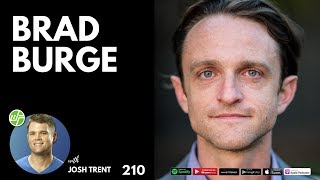
This is a transcript of Wellness Force Radio Episode 210 (host Josh Trent) featuring Brad Burge of MAPS (Multidisciplinary Association for Psychedelic Studies). The conversation covers MAPS' scientific and public-education work to legitimize psychedelics, especially MDMA-assisted psychotherapy for PTSD (focus on veterans), including clinical-trial results and regulatory progress. Key points: MAPS is a nonprofit doing FDA-style trials; a phase-2 pilot (n=26; 22 veterans) found 68% of full-dose MDMA participants no longer met PTSD criteria after three sessions vs 29% in the placebo group; FDA granted MDMA-assisted psychotherapy Breakthrough Therapy designation (Aug 2017); MAPS aims for possible MDMA approval/rescheduling and clinic rollout around 2021; Brad describes his own transition off long-term lithium after an LSD experience and emphasizes the necessity of integration, safety screening (cardiovascular, psychosis exclusions), and community support. The interview also discusses microdosing, ibogaine for opioid addiction (24–36hr intensive protocol), stigma reduction strategies (data + patient stories), outreach (conferences, TEDx, volunteer/donation asks), and practical wellness practices (rock climbing, therapy, bodywork).
Questions this video answers
26 participants total: 22 military veterans, 3 firefighters, and 1 police officer.
68% did not qualify for a PTSD diagnosis after three MDMA-assisted psychotherapy sessions.
29% of the placebo control group did not qualify for PTSD after the study period.
August 2017.
MAPS projected possible approval/rollout around 2021.
Chapters
What MAPS is doing is taking these drugs that have historically been excluded from science, excluded from science funding, and just generally kind of laughed at and sidelined because of all the decades of propaganda and making them real, at least as far as our culture is concerned. Running through the FDA trials, doing double blind placebo controlled trials, speaking the language that our biomedical industry needs to hear in order to approve and regulate medicines.
That's Brad Burge, and this is Episode 210 of Wellness Force Radio. What's up, my friend? It's your host, Josh Trent. And welcome back to another episode for your weekly access to global experts in all things wellness as we discover the physical and emotional intelligence we need to live life well. What's up, everyone? Today on the podcast, we're talking with Brad Burge from the Multidisciplinary association for Psychedelic Studies, otherwise known as maps, an organization that has partnered with so many leaders and top influencers in our wellness world to help optimize the human experience through the healing power of psychedelics, as well as alternative medicines that allow for some of the deepest healing possible. Now, this is going to be a controversial show. I'm not going to sugarcoat this one. If you have no interest in psychedelics whatsoever, this show is going to light a spark in your mind for the renaissance we're experiencing as a nation and a world around the power of these plants and substances. Now, what's most fascinating about today's podcast is not only are we diving into human optimization through psychedelics, but we also find ourselves at a very pivotal time in the rise of human consciousness. With marijuana now being legalized at the state level, soon to be federal and CBD sales at a record high, we're exploring how to use these powerful tools in our arsenal to help transcend mental illness and anxiety. Now, a quick caveat about the show today. It in no way is designed as medical advice. Just like all of our shows. This is more about gathering knowledge that you can have the highest level of your physical and emotional intelligence from so you can make the best decisions about what's right for you when working with your qualified healthcare professional. But you don't have to be a health pro to know that breath is the biggest lever we can pull down to regulate our nervous system to a calm state. So this is it. This is your breath break. Take a deep breath. 20 to 30 seconds. Right now do a box style 5 second inhale, 5 second hold at the top, 5 second exhale, and a 5 second hold at the bottom. This box breath is the key to change Your state and breathing can sometimes be just as powerful as foods and micronutrients we take into our body. Which is why every single day, sometimes actually two or three times a day, I take the Organifi red juice from our show sponsor, Organifi. It has adaptogens like acai and cordyceps as well as reishi mushroom and beetroot powders. I mean, let's face it, we need these things, yet they're not found in our current food supply, which is why it's so important to get in our micronutrients. And you can do this for less than three bucks a day. Way cheaper than coffee. Way cheaper than a bunch of stimulants. Get all these micronutrients with a huge discount. Just go to organifi.com wellnessforce use code wellnessforce to get 20% off your entire cart. And there's also some deeper discounts if you want to recur these orders every month. So drop the afternoon coffee. Just step away from the 3pm mug. It's gonna tweak you out. Start drinking the red juice instead. Get the natural energy boost from inside your body through these adaptogens. Remember to use code WellnessForce for 20% off over at Organifi.com WellnessForce and after you breathe and eat your healthy foods, notice how much better you feel. Because feelings direct are actions. And in today's show, we're exploring how the assisted therapeutic use of plant medicines can help people liberate themselves from feelings that just don't serve them anymore. We're learning about the vast amount of research that's going on right now about the psychedelics and plant medicine industries. What people usually get wrong when considering their use. How Brad personally addressed his own mental health through psychedelics. What the integration process really means. Stacking on last week's show with Jamie Wheal, how to go from using these alternative healing methods to actually applying the lessons and new ways of being into your life. How the MAPS organization is helping society change its views on these powerful medicinal tools. And our war veterans suffering from PTSD when they return. How they're now being guided to a brand new life with a nervous system that can be trained for peace. Show notes from today are@wellnessforce.com 210 make sure you give Maps and Brad a shout on social. Let them know you heard about this incredible information on Wellness Force Radio today. Now let's drop in Exploring human optimization and healing with Brad Burge. So anxiety disorders are the most common mental illness in the United States affecting 40/ million adults age 18 and older, 18% of the population every year in depression. Only the reported amounts, by the way, affects over 20 million people in the USA. We're talking about this today in depth and the healing modalities with Brad Burge, the director of strategic communications at the nonprofit multidisciplinary association for Psychedelic Sciences, about the science of psychedelics for our collective healing and transformation. Brad, welcome to Wellness Force Radio man. So happy to have you.
Thanks so much for the invitation, Josh. I am really excited to talk about what's going on in the field right now.
There's so much, I mean, we could do a four hour podcast. We're gonna condense it down. It's a very important topic at a time when the healing in our world, Brad, could not be more needed. Let's dive right in. Our audience is well aware of my experience with plant medicine at Rhythmia. Also, just a few days ago, Michael Pollan released his Earth Shattering. And I say earth shattering because it was the first time that Stephen Colbert had talked mushrooms and psilocybin, the power of this. On his show, Michael Pollan wrote the new book how to Change youe. The New Science of Psychedelics teaches us about consciousness, dying, addiction, depression and transcendence. Brad, can you give us from your vantage point, we're going to talk a lot more about your story, but what is your take on the state of the Union, on the current regulations or blocks that are holding back the progress of psychedelics and other plants?
Well, you know, Josh, it's really exciting to be around a really exciting time to be involved in this research, and I think an exciting time to be paying any attention to what's happening in contemporary psychiatry right now. So we are seeing at this moment the most psychedelic research that's ever happened. Now we talk a lot about the long history of psychedelics and how in the 1950s and 1960s and even the early 1970s, before the criminalization really took hold, there was quite a significant amount of research into LSD and psilocybin and MDMA and interest in all of their uses for enhancing therapy. But at that time, there wasn't any clinical research. There was no experimental research. And scientists were just getting started with that and just starting to figure out what these substances were. So now, for the first time in 40 years, federal regulators in the US and other countries, other countries have yet to catch up. But at least here in the US they're very open to research into the beneficial uses of psychedelic substances. And that's because scientists have emphasized the balance of the benefits and the risks. Emphasize that it's not just the drugs, but it's how they produce certain states of minds in the context in which they're used. And just the remaining blocks are really all about the stigma, the 40 years of stigma that we have on these drugs, the idea that the only way to use these drugs is to abuse them, and the fact that they're scheduled drugs, they're designated as drugs with no possible beneficial use and a high potential for abuse. I think what a lot of people misunderstand, though, Josh, is that people think that these drugs were placed in schedule one out of some sort of scientific process, that there's been research into them that's determined, well, they're dangerous for this reason and that reason. But that's actually not the case. It was an entirely political process why the Controlled Substances act was created and entirely political reasons why these drugs have been cast as so negative for so long. So we're doing the research now, and we're convincing regulators and we're convincing a lot of people. But the stigma has still made it very difficult for us to get funding for this research. And that's why MAPS is a nonprofit, because the major for profit pharmaceutical industry is not interested in these drugs which cannot be patented.
You bring up such a great point too, because we look at, you know, for thousands of years, Brad, thousands of years there have been shamanic roots in healing with medicines. And also we also look now at the pharmaceutical land where I have actually read some different research that's coming out where, you know, companies like Bayer, companies like other high potential pharmaceutical companies, they're trying to patent these plants, but they're not gonna be able to. And for people that don't know, please tell us, what is maps? What does MAPS stand for?
MAPS is the nonprofit multidisciplinary association for Psychedelic Studies. M A, A P S. That's why we have an acronym, we have the word psychedelic right there in the name. Because we don't want to hide from what we're doing. We don't want to pretend like we're not working with psychedelics. We know the word psychedelic has a lot of charge to it, but we also know there's a lot of education that can happen around it. So our main goals are, on the one hand, scientific research into the relative risks and benefits of psychedelics for a whole variety of mental illnesses. And then on the other hand, public education, which has to go hand in hand with the research so that people understand that research and they don't think. Think we're just, you know, a bunch of hippies running around with a bunch of drugs all the time. But actually, actually, you know, a lot of neuroscientists and therapists and people from the pharmaceutical industry are all involved in this work.
So with maps, people know about this. A lot of randomized, double blind, placebo controlled studies. There was actually one that I want to start off our conversation with, and it's around war veterans. So a lot of times when you look at ancient wisdom from, you know, decades and decades of shamanic healing, it's not always a clear bridge, Brad, between the modern day alien, the modern day things that are happening, especially when we look at war veterans. What is the MDMA assisted psychotherapy for PTSD? Talk to us about these Phase 3 clinical trials. How does that relate to our war veterans?
Yeah, great question. One of the focuses of our main research right now is on veterans. So we're just going into this summer phase three clinical trials using mdma, that's the active ingredient in ecstasy, or what's supposed to be an ecstasy, using MDMA to enhance psychotherapy for the treatment of post traumatic stress disorder. So we're not just focusing on veterans in those trials, but also women who are survivors of sexual assault and abuse, survivors of natural disasters and violent crime and terrorism, and just all over the map as far as the cause of ptsd. But one of the focuses has been the veterans. We know that as many as 20% of Iraq and Afghanistan veterans are suffering from PTSD right now. PTSD being characterized by sleeplessness and paranoia, anxiety, depression, suicidality, and a whole host of other things. It's not just the mental illness, it's all of the things around it as well. And people come back from military zones suffering from PTSD at higher and higher rates. So we've just published our largest yet published study. This was one of our six completed phase two pilot studies of MDMA assisted psychotherapy for PTSD where we had 26 participants. Of those 26 participants, 22 of them were military veterans, three were firefighters, and one was a police officer. So these are all people with post traumatic stress disorder as a result of some kind of service. We found that 68% of those who received full dose MDMA didn't qualify for a diagnosis of PTSD anymore after just three sessions.
Wow.
So let me unpack that just a little bit, because I think often what's missed is that we're talking about taking the drug on just three different occasions. This is a 12 week course of psychotherapy involving several psychotherapy Sessions, and then the patients come in in the morning and they receive a single pill of mdma, and they stay in the psychotherapy room, they stay in the doctor's office the entire day, and they have a psychotherapy session where everything they say and think and express is shaped by, in some way, the mdma, thereby making it more effective, at least. So we're seeing in the studies, so 68% of those people didn't have PTSD anymore, compared to 29% in the placebo control group. So the difference there between that 29 and 68%, we can attribute that to the MDMA making it better. Also, just to unpack it a little bit more, is we're not talking about a reduction in symptoms. We're talking about not actually qualifying for PTSD anymore. So the symptoms being so low that they wouldn't have been allowed into the study again after just three sessions. So with SSRIs, so antidepressants, the currently approved treatments for PTSD, people have to take those drugs every day for weeks or months or usually for years in order to keep their symptoms down. And then they have to deal with the side effects of those drugs for the entire time they're taking those drugs with MDMA again, on just three occasions.
The fascination in my mind, I'm just sitting here kind of nodding my head. Selective serotonin reuptake inhibitors. We know that these block the reabsorption of serotonin to the brain. This makes more serotonin available. But yet there's so many drawbacks, so many side effects to this. I mean, we're really meddling with higher intelligence here. You know, the pharmaceutical industry. I'm not going to sit here and demonize them. But we know that there are some power that are found in the plants. How do you contrast the healing power of MDMA with things like psilocybin and ayahuasca? What's the differences between the three? Maybe give us some use cases of what MAPS is seeing.
Yeah, good question. All these drugs are in schedule one. So it sounds to the uneducated, or even to those who have been through the DARE program and have listened to the war on drugs say no, exactly.
That works.
The idea, not for me. The idea is that they're all the same in some way, but actually they're completely different chemicals. They're completely different compounds coming from totally different places. MDMA is an amphetamine, so it causes increased blood pressure and heart rate and body temperature, and it's used to enhance psychotherapy. So MDMA has These qualities where it can produce feelings of intimacy and bonding and trust, and also the direct reduction of fear. MDMA turns down activity in the amygdala, which is the deep part of the brain that's associated with fight or flight or fear. And people with PTSD tend to have a hyperactivated amygdala. So small things that remind them of the trauma get filtered through that amygdala and then just made to seem even more scary than they really are. And that's why psychotherapy is often so difficult for people with ptsd. So MDMA actually turns down the volume of that amygdala so much that people can talk about difficult emotions or difficult memories without being so afraid that they lock it down and stop talking about it.
Wow, Brad. You know, it's funny. It's not funny, actually. It's very sad. But I think sometimes the truth can just really hide in plain sight. So we look at the ancient brain, the amygdala, the habenula, the feedback loops that are established in this ancient brain. Why not apply ancient medicines to fix our broken, ancient brain in this digitally focused modern world? I mean, this is something that you've had so much experience with yourself. A little bit more about your bio. You actually graduated with a communication and psychology placement from Stanford, Communications degree from the University of California right here in San Diego. But you started with maps in 2009. Way before that, though, you dealt with your own health thresholds. I think this is really important as we paint our conversation here so that people can understand what you personally have been through and what led you to Maps. Brad, can you give us the quick story on that, what you went through as far as your own health thresholds in regards to mental health.
People come from all over the map as far as their.
No pun intended.
No pun intended. It just works. But for me, it was the fact that these compounds and the way that MAPS is exploring them, the way they're being looked at as adjuncts to psychotherapy, is totally different from how conventional psychiatric drugs are developed and used. So my experience had been with conventional psychiatric drugs, along with millions and millions of other people, ever since I was 11. I'd been on antidepressants and mood stabilizers. I was diagnosed with bipolar disorder when I was very, very young. That diagnosis never really stuck for me. It never felt useful. I didn't see myself in the writings of bipolar writers. I didn't really identify with that, But I definitely internalized that sense that, oh, well, something's wrong with my br. Better find a chemical that can fix it and can help me manage my emotions. Of course, human beings are supposed to have emotions, but that's not something that the pharmaceutical companies would have us believe. So I grew very disenchanted with conventional pharmaceuticals and found that taking lithium, which is really one of the more psychiatrically innocuous, probably, of the drugs that are now prescribed for mental illness, if you look at antipsychotics and antidepressants and antianxiety medications and opiates and all of these other things. But I took that for 10, 11 years, and I found that it made it difficult for me to develop emotionally, to really have a full emotional experience and to learn how to deal with those emotions. The experience of being a human being.
Did it just kind of numb everything? That's what I've heard. I've had a lot of people in my life that have had issues, and so it's almost like you feel nothing so that you don't feel any emotion at all.
Yeah, it's certainly feeling less. And I found when I would get off of those medications, because I hated them so much, you know, I had to take the drug every day, and it was this old doctor man who was telling me to take it. You know, it's just so much resistance there. And I know a lot of people feel that too. And when I would get off of them, just the emotions come rushing back, and it's like, there they are raw, and you have to deal with them. So that's where I was for maybe 11 or 12 years, all through my adolescence and high school and early part of college, and then thank goodness for college and some folks I knew at Stanford in particular, I ended up with two paper squares of LSD in my hand at one point. And I'd been reading a lot about the history of lsd, about how it had been criminalized, how it been used in secret Army MK Ultra experiments, and watched all these movies about Ken Kesey and the Merry Pranksters and how suddenly these relatively boring people took this drug and suddenly became super cre. So I was like, well, that looks interesting. And of course, I'd been taught my entire life that there's nothing wrong with taking drugs. It's just you have to take the ones that are prescribed to you. You know, we're living in America here, we love drugs. Drugs are all over the place. You're supposed to use drugs. It's just you have to use the ones that the doctor prescribes, otherwise you're going to jail.
Yeah, I look at the studies that have been done over millennia through, like you said, I actually saw dmt, the spirit molecule. And I was thinking about the work of Rick Strassman and understanding how the army and the special forces have played around with this for performance. And then they kind of got kicked out of the arena of what was possible. And I'd love to dive back into your story though, because, you know, my mom actually suffers from bipolar and so I've also had many friends who have had this as well with lithium. What was the turning point, Brad? Did you have a turning point where you stopped taking the mood stabilizers?
Yeah, it was about two days after I took those two little LSD squares. Now, I don't want to say that you take the LSD and you don't have bipolar anymore or you have this psychedelic experience and something is fundamentally forever changed.
You're not telling people to take lsd.
Yeah, yeah, yeah. Not for that reason anyway. But what happened is a lot of people encounter psychedelics in these crazy environments. Raves and clubs and festivals and there's flashing strobe lights and loud music and it's hard to focus inward. And I think that's what those lights are for. I think people like them and they're enjoyable. But also it makes it impossible for you to say, how am I feeling right now? Where am I coming from? So what I did is I took those two tablets and I went for an eight mile walk around the Stanford Lake, which is this artificial man made lake which is covered in oaks. And it's just absolutely beautiful. It was a beautiful summer day and that's what I did. I spent most of the time by myself, just appreciating nature. I felt this deep appreciation for nature. I felt very vulnerable and exposed to it. That, you know, if somebody were to come up and talk to me, I wouldn't quite know what to say because I was so blown away by the majesty of this lake. And at one point I looked up at the sky and I saw the clouds part and the sun came down and it was just literally the most beautiful thing I had ever seen. And I was just standing essentially in my dorm's backyard at the time. And it was such a pristine experience. And I saw it with so much clarity, appreciating the nature so much that I realized. And this took a couple of days for me to process that this was the realization. But I realized there's nothing broken with me. There is nothing wrong with the way that my brain is processing information or feeling emotion or experiencing things. It's just that things are so intense. And a couple of days later, I called my psychiatrist. I said, you know, I'm not coming back. I didn't tell him why, because I thought I would be met with all sorts of disapproval or locked up, and I stopped taking my medication. So I would be completely lying, Josh, if I said that everything was perfect after that. Not at all. But I think what that did was showed me, you know, these drugs, this lithium, is not getting me anywhere. It's not allowing me to accomplish my potential. It's not allowing me to recognize how effective and efficient my brain and my emotions really, really are, how useful they are for me, and how these drugs and my whole approach to diagnosing myself. What's wrong with me, what's wrong with me was preventing me from achieving things in my life. And so it's been a long process since then, and therapy and exercise and art and, you know, there's a lot more things I have to do now that I'm not taking these prescribed psychopharmaceuticals. It's a lot more work, but at the same time, I'm a hell of a lot happier.
Let's talk about this, then. I mean, the real science of psychedelics for healing. They might be a doorway to what is possible, but they're not the golden ticket. There's integration that must occur after having one of these experiences. I've experienced this personally, Brad, and. And so many people. You know, it's almost like there's a buzzword out there right now of like, ooh, psychedelics. You know, we mentioned Michael Pollan's work and how he's shining a light on what's possible. I think it's really important, though, and I'd love for us to dive into this for integration. Holding time for integration after the experience has happened. What did the integration and the work of that look like after you stopped the lithium?
Well, it's still going, and it will be going probably for the rest of my life.
Yeah.
You know, these are. These are realizations that I've had to incorporate. I'm trying to figure out how to do more, trying to get more in my body and be more healthy. Trying to eliminate tobacco, eliminate alcohol, to the extent that's even possible in this culture. Yeah, Integration is absolutely key. We include integration in our research. So, again, it's not just a few sessions of mdma. It's preparatory sessions and integrative sessions and talking about how the experience impacts your. And that can take a whole lot of forms. There's more and More interest in, More attention to integration. There's a group called Entheogenic Research, Integration and Education here in the Bay Area. There's other integration groups that are popping up, recognizing that people are continuing to use these drugs and lacking the context. You can't just go to a party, take a bunch of LSD and then go back to work the next day and expect everything to be the same. Yeah, yeah.
And this is not for everyone. Let's talk about that as well. I mean, who are these psychedelic substances, this altered states of being? Who are these not for?
Well, we're still finding that out. That's part of the reason of doing the clinical trials, the MDMA research, the psilocybin research that's also happening. Ayahuasca research. We're trying to find out for whom this is most helpful and for whom. This is not necessarily going to be helpful. With mdma, certainly. I mentioned earlier, it's an amphetamine class, it's a stimulant. So anybody with a history of cardiovascular problems or cardiovascular disease or neurological disease, certain ones, they're excluded from the study. Anybody else for whom MDMA would be. Would be unnecessarily risky. LSD is very different. LSD has even less toxicity than mdma. There's never been a known death from overdose of lsd. You can easily psychologically overdose on these drugs and have a lot to deal with. It can bring up mental illnesses, it can bring up psychosis. People with a history of psychosis are generally excluded from the trials because it can exacerbate that.
I think we look at psychosis as well. Maybe defining that might help the audience too. It sounds like we might understand it. But how would you define psychosis?
That's a very good question. I would have to ask a professional about that one. Psychosis is still very much not understood. We do tend to drug it with antipsychotics, which work on the serotonin system and other, other parts of the brain, but we don't know really what it is. But psychosis is in and of itself characterized often by hallucinations and paranoia and challenges with boundaries between the ego, the self, our sense of who we are and the rest of the world. That's exactly the same effect that a lot of psychedelics have. So without preparation, those effects can just be too much to make sense of.
Well, maybe we're experiencing a collective psychosis in America and honestly in the world. I was looking at the definition here using to describe conditions that affect the mind where there's been some loss of contact with reality. Brad, let's get real here, dude. That we are not living in a reality that is egalitarian, that is supportive of emotional states for men and women. It just doesn't exist right now. And you know, Daniel Schmachtenberger from the Neurohacker Collective here was on the show before, and he really referenced the work of Buckminster Fuller, this biotensegrity and this integrity model, really piecing how we're all connected. It's not woo woo. We're not sitting around a campfire talking about how we're all one, but yet we are. And I think that's the challenge where we're combining this practicality with spirituality. We look at the way that people are using psychedelics. I think of psychedelics at a party being used to check out. I don't believe in that actually, and I don't recommend that in any regard. But I do see something very powerful for the use of psychedelics and plants through a lens of personal development. How have you seen that grow, that narrative shift from partying to personal development when we look at psychedelics?
Oh, great. You know, that is exactly why I thought Maps was so on point when I first found its website when I was back in grad school. I thought, these people are not just developing treatments for mental illnesses. We're not just working within the system. What it's doing is challenging the system. The idea that there's something broken in our brain such that we need to medicate it with these laboratory designed pharmaceuticals. The idea that we as human beings are kind of essentially damaged, that we're not perfect, that we need to reach outside of ourselves to be healthy and happy. And that's why we have our culture's fascination with drugs. What this is doing is actually using drugs to help people get off drugs again. Just two or three sessions with these substances is producing lasting changes. People don't need to stay on their existing medications. So we're helping people liberate their consciousness from these straitjackets of conventional pharmacotherapy.
I look at coffee, cigarettes, overworking pop culture, carrying so much emotional attention around. Things that have honestly no bearing to our life at all. No way that by us focusing on Kim Kardashian's puppy sweater that we're actually gonna grow as a human being. But yet these things are all accepted as. As totally great topics of conversation. And of course, why we're here and why this is so powerful with you, Brad, is that we're shifting this narrative towards how do we use these psychedelics? Through that lens of personal development. I'd love for you to talk about what you saw at Stanford. You know, I'm sure at an environment like that where people are hard charging, some of the greatest minds in the world have gone through Stanford. And you yourself, what'd you notice about yourself and other people when it came to students using any kind of plants, maybe cannabis, anything else to manage mood or stress or creativity?
At that point, you know, I wasn't asking, you know, what are you doing this for? At that point I was, I was very much curious myself and doing my own explorations here. But you know, often what blew me away was that when you see these drugs in action, whether it's in therapy or in recreational setting, there's something very embodied about them. And the experience is very much not just one of the outer space exploration, consciousness exploration, but there's a real embodiment that happens. So I think in addition to getting us off prescription pharmaceuticals and showing us that we're not fundamentally damaged and that we have capacity as individuals, I think they also get us down deeper into our body. When I took that LSD that first time, what I did is I spent the entire day in my body. I spent my 8 mile hike around this lake. I was physically exhausted and I think that was part of it, part of this feeling of there's nothing wrong with me because my body was fine, my body was happy, my body was moving around. There's also an association between people who are using these drugs and eating a little better. Maybe, you know, it's not always the case, but you know, it depends on the context of use. It depends on a community of use as well. If you're just reading on the Internet about these drugs and you go out and you take them, who knows what kind of experience you're going to have. It's going to depend what blog you read before taking the drug. But, but when there's community, and this may have been your experience at Rythmia, where there's a community around ayahuasca and that's part of the integration and it's part of the preparation is connecting with others. There's that cultural reminder that, well, there's other things we need to do. We need to get in our bodies, we need to stretch, we need to move, we need to eat well. There's diets involved in ayahuasca and there's this attention to the body that also has to happen and that just completely flies in the face of our digital culture where we're completely isolated from Each other sitting in front of our, our Skype screens, although talking, but we're still.
Connecting though, we're having a connected conversation. So I've always felt this, Brad, that tech is a double edged sword, right? I mean, Jamie will quotes in his book Stealing Fire that Americans look at their phones more than 8 billion times per day with a B. This novelty based feedback loop, it's literally killing us, it's killing flow. How can psychedelics get us back in touch with these ancient ways of being that. Honestly, we were designed for all sorts of ways.
Josh. People talk about microdosing all the time. That's becoming a much more hot topic of conversation and that's microdosing. Taking small doses of these drugs, very different from the traditional 1960s mentality of take as much as you can in a dark room with eye shades and just kind of see where it takes you. But microdosing, that's about kind of turning on, tuning in and staying engaged or being more productive at work. So for me personally, I have microdosed. I've taken small amounts of lsd, but when I do that, I want to get as far away from the computer screen as possible. Something about its expansion of my awareness, something about how it impacts just our perception of where we are, leads me to say, well, there's more out there, there's more out there than just this. I need to be in my body, I need to move it in order to be comfortable and happy. And that is absolutely what it is to be human. So there's something about that reminder. As part of the MDMA assisted psychotherapy studies, we include body work there. These drugs are psychedelics. So the word psychedelic was originally coined to mean mind manifesting. So bringing up material from the mind that was not previously available, we can think about that more broadly. It's not just bringing out stuff from the mind that wasn't previously available, but also stuff from the body. Bodily sensations or emotions just as well as thoughts are also brought up with the use of these psychedelics. And that's why context is important and support is so important because you never know what's going to come up when you reach down there and bring something thing up.
And I want to reiterate too, this is obviously we're not doing a podcast today to make you think that you need these things. It's more opening the door for curiosity and what's possible because I look at the research, Brad, and we'll link this in the show notes today for the Phase 3 clinical trials. This was August 2017 so very recently here, FDA granted Breakthrough Therapy designation to MDMA for the treatment of PTSD. And actually, this is even closer to my heart. I'm seeing the parallels here. Brigadier General, retired Loree Sutton was quoted in the New York Times. When it comes to the health and wellbeing of those who serve, we should leave our politics at the door and not be afraid to follow the data. There's now an evidence base for this MDMA therapy and a plausible story about what may be going on in the brain to account for the effects. This is close to my heart because my grandfather was a brigadier general in the Marine Corps.
Oh, wow.
And so I'm looking at this quote, and I'm thinking, how do we get out the message here? How do we. Beyond just maps and wellness force, what do you see as all forces coming together so that we have a louder microphone for the youth of these psychedelics? In the context of healing.
There'S two areas that shift stigma the most, I think, and sharing that information and sharing those stories is key. So one of those areas is the data. And here you have the quote where Brigadier General Sutton is talking about, follow the data. In the presence of vast stigma and misunderstanding, data can do a lot. So we can bring this data that we're finding in the studies and that we're about to find in the phase three studies of mdma. We can bring that to the most skeptical people. We can show. Look, this is some extremely careful science. This is better science than most pharmaceutical companies do because it's so open to criticism. So it has to be very, very well done, carefully, statistically analyzed, and so on. On. So sharing the data and actually looking at it is very important. The other side is sharing the stories of people who have actually experienced the therapy because it doesn't look like what we've been taught to think that psychedelics look like. It's not a party in a room. People are not just getting off their heads and having a great time and realizing that what happened to them didn't matter or they're not to blame, that doesn't happen. People come out of these therap session saying, that was not a party. I don't know why they call this ecstasy. So changing how we visualize what these drugs are and what they're doing away from being purely recreational drugs or drugs of abuse into tools that involve a great deal of hard work in order to use. Well, that can shift. That can shift a great deal.
Man, this is so powerful, Brad, because I. And I'm sorry to cut you off there. But I want to mention this while we're on the same topic, this was actually, you know, MDMA psychotherapy, the future of PTSD treatment. You talked about this in a TEDx. You're a TEDx speaker. TEDxSalem really rethinking the role of psychedelic drugs. How long did you prepare for this talk? Can you tell us a little bit more about this talk?
Oh, this was so much fun. This is back in early January, independent ted talk, the TEDx group. So there's, there's TEDx talks all over the country, actually all over the world, hundreds of them. There's local organizations that put together these local TEDx events and they're branded just like TED, the TED national talks. And they give you all these amazing resources as a speaker, they send you the TED book and they help you through the outline and all of that. I spent four plus months working on a 15 minute talk condensing down what is MDMA assisted psychotherapy? How does it work, what is ptsd? How does it affect people and where are the trials going? Just down into 15 minutes and for a general audience. So in a way that just hopefully anybody could understand. And of course a 15 minute talk is a lot more difficult than an hour long talk.
I would say that's kind of like condensing down decades of wisdom into five minutes. That must have been really challenging.
Super tricky, but super, super fun. I could not have been happier with the reception on that talk. It's got a couple of thousand views right now, but it just came out. We had 800 people in the room. And you never know, when you get up there, you start talking about psychedelics, what people are going to say and what are going to think. But people have seen the New York Times, they've seen the Washington Post, they've already heard about this research a little bit. And when they realize that it's just using the drug two or three times, that changes a lot for people. At no point, for example, once MDMA is approved, are people going to go to a pharmacy and pick up a bottle of MDMA and take it home. You're never going to be taking it home. You go into the doctor's office, they hand you one pill, you take it right there, you stay for therapy and you go home when it's done. That takes off a lot of the suspicion. I think the prescription opioid epidemic has finally really come to light and especially the role of for profit pharmaceutical companies in creating and perpetuating that epidemic. So people think, oh great, just another Drug where people are going to be getting bottles and distributing on the street. But that's not at all the case. We're aware of that. And so just, just taking it in the clinic, that that changes perceptions a great deal.
What's some of the numbers? When we look at the opioid epidemic and we're not trying to focus on the negative here, we're just taking a breath and looking at what's real. I mean, this is a complete plague in our society. This moving away from what's in our body, what's in our heart, what's going on with the collective energy that we experience as a nation, as a world. Do you know any data around the opioid episode?
Well, the only data that I'm really familiar with is there's a high correlation between deaths related to opioids and Trump voters in this country. So what is going on there? Right. The areas with the highest number of opioid related fatalities, we're also more likely to vote for Trump. And what's going on? I think it's that people are still stuck. People are economically stuck and feeling frustrated. We're feeling let down by the American dream right now. And opioids are one way of dealing with that problem. If you just stop feeling, then you don't need to deal with that. Similarly, people who voted for Trump were looking for a huge change. Regardless of what they were looking for, they needed a change like Trump represents a totally different thing as far as the political world goes. And so there might be a relationship. So for this reason, MAPS is exploring ibogaine assisted therapy to help people get off of opioid addiction. And that's using ibogaine. Again, a very different psychedelic, but it's a 24 to 36 hour, extremely intense hallucinatory trip. One of the more powerful psychedelic experiences one could have. Ibogaine is not a recreational drug. You're not going to see it at a party. And we found in some early observational studies that ibogaine can be used, like you said, as a doorway, as a window to making change happen. And people come off of ibogaine, these ibogaine assisted therapy treatments, and they're no longer addicted to opioids. They have minimal or no withdrawals, and they have a period of time, sometimes a month or more, before re experiencing the cravings, where they can make big changes in their life, change their habits, change who they hang out with, maybe relocate. So in that sense, a window for people to make changes. And it doesn't work for everybody. And if they don't make these big changes and do that integration work, then it doesn't work and people go right back to using. But it can be a window, Brad.
It goes back to what you said in the beginning with your story. You had done the LSD because you felt intuitively, man, that it was a path that you could go back to what was real. I mean, go back to actually what you felt in your body. And like you said, we're meant to feel. We talked about this with so many guests on the show. It's like we are numbing ourselves in so many ways. I did this when I was a young kid. I used to food, right? Food is a drug just like anything else. Yet somehow, some way, these assisted therapy devices, really their tools. They're powerful tools. They became so demonized. What would you say looking at maps, looking at the narrative of maps, how are you doing this for our collective to put less demonization and to shine light on the healing aspects of not just ibogaine, but also marijuana and ayahuasca and psilocybin. How do we shift this narrative?
What all these drugs have in common is that they're demonized and stigmatized. That's the only thing they have in common. They're not chemically the same. So we talked about this a little bit before, and we live in a drug happy culture. We eagerly promote and sell and distribute legally drugs that numb us and that turn us off. Alcohol, tobacco, opioids, antianxiety medications, antidepressants, antipsychotics. These are all drugs that turn down our experience in some way. What MAPS is doing is taking these drugs that have historically been excluded from science, excluded from science funding, and just generally kind of laughed at and sidelined because of all the decades of propaganda and making them real, at least as far as our culture is concerned, Running through the FDA trials, doing double blind placebo controlled trials, speaking the language that I, our biomedical industry needs to hear in order to approve and regulate medicines. So we're speaking the language, and hopefully MDMA will be the first one through the gates. If the phase three trials are successful, if they are able to replicate to any degree the phase two results that we have already gotten, then the FDA could approve MDMA assisted psychotherapy for the treatment of PTSD as early as 12, 20, 21, in just four years. So there we'll have an approved Schedule 1 drug, which means the DEA is going to be forced to reschedule it, move it to schedule two or lower, and that will open the door for changing minds. And getting more of these drugs into the scientific system and finding out what they can do, what they can't do, what are their risks, and so on, rather than just relegating them to some category of drugs that have no beneficial use.
Brad, I'm thinking of this metaphor. You know, as a human species in the blip of time, we're literally just coming into adolescence here. You know, I look at the early 1900s, when marijuana was literally put out on posters to kill people, marijuana was gonna make you crazy. Now, look, I can go just here in Torrey Pines and get marijuana with no certificate, no card. It's completely extreme, accepted as a healing tool. And I think Brad and I know that Maps is doing such a powerful job to help this. I think that these psychedelics and mdma, in the right context, with the right intention, through that lens of healing and personal development, it's going to be the same way, man. We're going to see the exact same thing happen. Can you speculate on what this timeline might be? We know you don't have a crystal ball.
Well, for MDMA, we're looking at 2021 for approval. And what's going to happen there is again, it'll be rescheduled and then available in specific clinics. There will be a way to certify clinics and a way to certify practitioners in the administration of the MDMA combined with psychotherapy. So that's 2021 looking at rollout. 2022, 2023 and so on. That'll be the first. Psilocybin, the active component in magic mushrooms, is looking like it's close behind and may enter phase three trials later this year or possibly now, next year. After that, we're looking at ayahuasca and ibogaine, possibly DMT and so on. But also, I want to make the distinction between cannabis and psychedelics as far as treating mental illness. Cannabis is a little bit more like the conventional pharmaceuticals where it's about controlling symptoms. People still need to use the marijuana every day or multiple times a day in order to sleep better or eat better or reduce anxiety or reduce pain or worse, whatever it is that they're using the cannabis for. With the psychedelics, it's just a few occasions or only occasionally once every few months or once every year or two, and that kind of thing. So we're not going to be seeing a bunch of storefronts opening up with psychedelics available for sale?
Yes, and I think that's a good thing, too, Brad, don't you agree? That's kind of a good thing. We don't want to have these powerful tools that are available to everyone anywhere yet until there's the right intention in education. Correct?
Yes. That's key. I think the key word there is is yet. It's going to be some time. We can't just drop these amazing tools on stuff. It's like handing a little kid a chainsaw. Yeah. You want to include instructions and training with that.
That's so true, man. This is why, you know, with a hammer, I know you know this analogy, you can build a home, you can do so many great things. You can also kill people. A hammer can also hurt. And I think of these tools, these powerful tools in the same regard. I want to get to the end of the show here with you with some takeaways for the audience as well. Because support is something that we all deserve through connected conversations like this, Brad, where we're talking about things that, honestly, man, really matter. I would much rather have this kind of a conversation with a friend in a coffee shop than talking about, as we mentioned before, Kim Kardashian's puppy sweater. Like. But that is the narrative. And so changing this narrative. How can people support maps in helping to change the narrative? What can they do on the ground person by person?
Well, of course, there's the usual sharing. Every time that there's new results or a new study, please be afraid to share it. We do a great deal of work to frame the research that we're doing in a way that's going to be palatable and accessible to as many people as possible. So guaranteed there's something out there that grandma will read. Guaranteed there's something out there that you can show your boss. I'm talking about New York Times or Washington Post or the Sunday magazine or Oprah Magazine or CNN or Fox News, depending on your political orientation. There's all sorts of ways to share it. So please share it and don't be afraid to. There's a great deal of legit research going on here. The fda, as you already pointed out, granted breakthrough therapy designation to this treatment last year. So there's a great deal of legitimate, above board, mainstream support for this. You know, you're not going to be cornered or labeled as a drug using hippie just by mentioning this stuff.
Thanks for that designation. And I'm waiting for the day too. Michael Pollan has been on Oprah, gosh, five, six, seven times.
Michael Pollan, one of the most respected journalists. Journalists in the country ever, is talking about this. And he was super reluctant. You know, his book is fascinating. I highly recommend picking that up. It's available from maps.maps.org store. There's lots of other ways you can get involved. You know, of course I'll ask for donations. We're a non profit. There's no government support for this research yet. So if you have the means, that's awesome. Otherwise, we host events. We host occasional conferences. Our Psychedelic Science 2017 conference last year drew over 3,000 people from 30 plus countries up here in the Bay Area, in Oakland.
When is 2018's conference?
I wish we had the resources to do them every year, but the next one is looking like it's going to be probably 2020 or 2021. We'll be sure to make a big announcement when that happens. We also have lots of volunteer opportunities. You can volunteer at events, you can volunteer in the Maps office. We're actually. We have a few job positions we're hiring for right now in the clinical research side of things. We also host or help people host global psychedelic dinners. And those are super fun. At psychedelicdinners.org, you can get resources for bringing people over to your home or at a restaurant or at a picnic or at the beach or whatever you want to do. You're in San Diego, probably at the beach and talk about these issues. We have little fact sheets and all kinds of things. You can ask for donations for maps, you can send them in. So we're trying to help people host conversations about this, about this work in order to shift some of that stigma.
Well, no doubt that'll all be linked in our show notes. And I just had these three last questions for you. I told you, man, we needed like four hours to go over this information. But I think we covered a lot of valuable ground today. This physical and emotional, we contrast so much on the show. And I understand also with that physical and emotional, there is the spiritual. I'd love for you to tell us just quickly here. Do you have a physical practice, either eating or moving or sleeping that you're leaning into? In other words, is there one of those practices that you're currently learning more about yourself in?
Yeah, climbing. Rock climbing. Yeah. I don't have a lot of time to get outside because I'm doing too much PR for maps in order to do that. But we have a great climbing gym here. And you know, there's something about, something about that, that tact, tactile aspect of climbing up a wall, that feeling of success, of getting to the top, and that combination of the intellectual figuring out which way to Go. And the physical and the integration of those two, that is just super focusing for me and super calming and helps me do better work in other areas.
Plus, it makes your hands really strong.
Yeah. And you get these cool calluses.
You show those off to all your friends. How about emotional then? So emotionally intelligent is something where I've always defined it as, am I present in the moment and can I articulate my thoughts from a place of being authentic? How would you define emotional intelligence?
Oh, great question. You know, I was not very emotionally intelligent for very long, and I still wouldn't count myself as emotionally intelligent. So go to therapy. That stuff is awesome. I know there's some, like, stigma around going to therapy in some circles, but oh, my gosh, like, pay somebody to take notes and listen to you as you blabber on and figure out what's important to you and what. What's not. Super good. And in the near future, be able to combine those with psychedelics and go much further, much faster.
Much further, much faster. And honestly, more intuitive to how we naturally operate. These medicines bring us back to a complete trusting. It's almost as if the ship is course correcting the whole time and we just have to get out of the way. I feel like the plants and the medicines bring us back to really having that navigator be in control Again, last question, Brad. And it really regards to wellness. How would you define wellness in your life?
It's got to be holistic, man. You know, it's got to be all areas because all areas intersect with all other areas. For me, I think it's balance. I think it's balance. I think it's doing great intellectual work and getting intellectually exhausted and then going and doing the same thing with my body. You know, we're. We're. We're not spirits in bodies, and we're not bodies with spirits. I really think we're both. And we need to take care of all sides in order to do that mic drop.
That was awesome. I so enjoyed this.
It.
We really scratched the surface of the tip of the iceberg. And we're going to link everything from maps.org including a $4 million grant from the Pineapple Fund, this cryptocurrency philanthropist. So much going on as far as Dr. Bronner's as well. You know, they're here in San Diego. We have so much community. And I just want to pause, Brad, to just honor the work that you're doing in this true science of healing through psychedelics and with maps and everything you guys represent. It's so needed in our world and we really appreciate what you do.
Likewise Josh. Thank you so much for giving us a platform for having this conversation and just encouraging people to be attentive and responsible with their bodies and minds.
You're so welcome. Show notes from today are@wellnessforce.com radio. Make sure you go there, support Maps, get a copy of Michael Pollan's book and also tweet Brad, where can they find you on social and maps on social before we say goodbye?
Well, Maps is maps. M A P S super simple. I'm also on Twitter occasionally and I'm Bradburg B R A D B O R G E and then make sure.
To get that underscore maps.org thank you so much Brad.
Thank you so much Josh. Been a pleasure.
Hey my friend, thank you for hanging out and growing with me on today's show. Remember to hit subscribe Share this podcast with somebody you care about that you think gets to hear this message. Support the show by leaving a five star review for the podcast right now simply by tapping on your show artwork. On your iPhone, click that purple link that says Review this podcast. It helps the show reach more conscious and smart people like you and your voice will attract more world class guests that want to come on the show. So let's let him hear your voice. For all the downloads, videos, links and free resources mentioned on the episode, go to wellnessforce.com radio. And while you're at my house on the web, join us in the Wellness Force Community newsletter on that page and I'll send you four free guides around staying healthy with your eating, moving and sleeping while you travel. But don't let this conversation stop here. Join a group of people like you over at the Wellness Force Community Facebook page. This is where we talk about the things that really matter. We share share our wins, inspirations, struggles and a lot more. So join us. Tap on the show artwork on your phone and hit that purple link that says Join the Facebook group and I will welcome you at the door. Okay, now you get to go out into your world and create impact for the people that you care about. So until I see you again real soon, I'm wishing you love and wellness.
More from Josh






Your child's future start before pregnancy... and even before conception! #podcast

MD Reveals: Your Healing Creates Your Child's Reality (The Souls Coming In Need Strong Bodies)



