214 Mansal Denton: Plants, Nootropics, & The Circle of Life
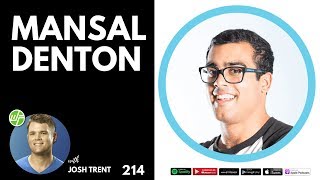
Interview-style podcast episode (Wellness Force Radio Episode 214) featuring filmmaker/entrepreneur Mansal Denton. Topics include nootropics (history, mechanisms, use/misuse, cycling), Denton’s personal journey (childhood, jail sentence, rehabilitation), and a documentary project ‘Below the Drop’ exploring conscious hunting, plant medicines/psychedelics, and society’s relationship to the life–death cycle. The episode blends practical discussion of cognitive enhancers with philosophical reflections on presence, ethics of meat consumption, and the psychedelic renaissance.
Chapters
You know, I went from using nootropics to run an SEO agency that I didn't want to do, but that was getting me through it to make money, etc. To now using nootropics to further this mission because I'm so passionate about, you know, having people re understand the life death cycle and what it means to feel like, truly connected to the food that you eat.
That's filmmaker and entrepreneur Mansell Denton. And this is Episode 214 of Wellness Force Radio. What's up, my friend? It's your host, Josh Trent. And welcome back to another episode for your weekly access to global experts in all things wellness as we discover the physical and emotional intelligence we need to live life well. In this podcast, we talk with my friend Mansell Denton, well known in the health, fitness and paleo world as the founder of Nootropedia, a go to resource for everything, nootropics and cognitive enhancement. But what's most interesting about this interview, live and in person recorded in Austin, Texas, is that Mansell's focus on productivity and nootropics actually brought him to a deeper exploration of an intersection that not too many people have ever connected. The contrast of hunting, consciously harvesting animals in an ethical way, and the use of plant medicines. How combining these two can shape a different narrative around a cycle of life that is pretty uncomfortable for most people to talk about, and that is death. We know that we're all going to leave the planet someday, and until we do, we're exploring the physical and emotional intelligence to live our life well. But when it comes to these subjects in our conversation today, you'll learn why they're all interrelated and connected. Why, when you have a more cognitively enhanced mind, you can start to explore different states of awareness and consciousness that will uncover some of the biggest blind spots for all of us that may be holding us back in life. Now, as you listen to the podcast today, keep an open mind.
We talked about nootropics on the show.
Before, but never the combination of plants, the cycle of life, and cognitive enhancement. All of these things are tools for our learning and growth path, and they're part of the circle of life. Whether you look at the closed organic.
Cycle model from Paul Check or the regenerative cycle model from Josh Takel and kiss the ground.
What's most fascinating about this conversation is how sometimes in life, what can be perceived as disparate subjects are actually more connected in the background of both quantum and molecular biology than we've ever understood. Now, no matter where you Listen to the show today. This is your breath break. This is your opportunity to take a deep breath. If you're not familiar with box breathing, go over to wellnessforce.com Morning 21 Sign up for the Wellness Force newsletter. We've just created a brand new Morning 21 system that's 21 minutes long. It integrates box breathing with examples and guidance. That's wellnessforce.com Morning 21 Pick up your guide for free today. We're giving actually more free stuff away today. Make sure you leave a podcast review because when you leave us a 5 star review review, you're automatically entered to win a 90 day supply of Organifi Red, green and gold juice from our show sponsor Organifi who have become my nutritional best friend. Seriously, this red juice has become my all time go to afternoon energetic resource and inside it it's got three blends to support our total wellness. An antioxidant berry blend, an endurance blend and a metabolic boosting blend with one of my favorite ingredients, Reishi mushrooms. Used for like thousands of years in Asia. But now we understand through science that these adaptogens, these plant compounds help us deal with stress. So if you're stressed, which is pretty much part of being human in our modern world, go over to organifi.com wellnessforce just use code wellnessforce to get 20% off your deep discount for the green, the red, the gold juice with the reishi in the red as well as the other adaptogens. Organifi.com wellnessforce use code wellnessforce for 20% off so you can save some money and and use that money to go play out in the world with your increased energy. Coming up right now on the podcast, we're talking about what Mansell learned from going to prison early in life. How nootropics have helped him to heal from the inside out. Why he's chosen to begin filming a.
Documentary called Below the Drop Between Psychedelics Hunting and death.
Why our society is disconnected from this cycle of life and death. What he wants to change about this perception through this upcoming film. How nootropics can actually help reduce anxiety and allow us to be more connected. How to cycle nootropics, stimulants and hit our reset button. Understanding who should and should not be using nootropics and how to identify the parameters around this and psychedelics for healing, which I know is something we've talked about on the show quite a bit in the past six months. But we also discover the shadow side of these plants, how they've become abused. Unfortunately, by people as a party drug. But we also know there is a deep healing renaissance with the plants that.
Is happening right now that we're all.
A part of and we're all in the process of understanding. Show notes from today are@wellnessforce.com 214 Share this podcast with somebody you care about Today, let's drop in with Mansal Denton.
Mansal Denton. Such a pleasure to be able to, like, sit with you, experience you, stay in your place, meet all these amazing people. And somehow along the way, we're going to talk about how the brain works and how nootropics play the role of that. But, dude, it's been probably two years since we actually met. We met at Paleo fx.
Yeah.
We did here in Austin at Palmer Event Center a couple years ago.
Yeah.
And now flash forward 2018. So many exciting things to talk about. We could take this podcast in probably 15 directions. But let's start in the direction of you, because this is really a spotlight of you, man. I feel like this Nutripedia. Most people know you from nutripedia, but what is something that they don't know about you? So there's so much about you online, man.
Yeah.
You put a lot of yourself on video, on blog. What's something that you don't normally share in an interview or in a podcast?
Yeah, it doesn't. I guess the first thing that comes to my mind is like, what's the deep, dark secret that I don't share? But the truth is, yeah, pretty, like, pretty open with all that kind of stuff. So I would say the thing that I don't share often is my incredible love for history. And that is, that's been since I was, you know, in high school. And I have a real, real reverence for some of the figures that we still, you know, recall in not just history class, but just like in, you know, you think about, like, Martin Luther King, you think about, you know, a lot of these, like, JFK and figures like that, and then some not so politically correct fig like Stonewall Jackson and understanding their lives, what sticks out about their life today. There's something there for me that's really special, like, whoa, these are the guys that stood the test of time, but we still talk about. And then there's also something about military history specifically that I find super compelling because it feels to me like in life or death situations like war, it brings out all aspects of the human condition. It's like an exaggerator of the human condition.
This is why I'm so stoked to talk about your project, this plant medicine, and also contrasting death, how you're rewiring this narrative around something that, I'll be honest, man, like, death is a topic that no one really wants to talk about yet it's a part of life. Let's start at the beginning of your life journey. Tell us everything about your childhood in two words.
Oh, my gosh. Mother's love. Wow.
That's a really good way to start, actually.
Yeah.
Now, when you founded Nutripedia, looking back, there's been, like, different time in jail. There's been you playing soccer on a professional level. And then there's also been you in college where you didn't really have the normal college experience. And then before that, there was obviously you living with parents who were both educators. One of them was a biochemist. Give us the skinny story.
Yeah, well, I mean, about my parents, I just grew up with kind of intellectualism. Always there. There was, you know, both of them have PhDs. They are both very scientifically minded. My father's like, idea of a, you know, father, son kind of connection was to talk about meteorology and the weather and things like that. And so, I mean, as far as my parents are concerned, from an early age, it was just like a lot of mental stimulation. And so I think I developed from that a bit huge sense of curiosity about things. And that has. Yeah, I mean, that's continued and it's kind of permeated all the projects and things that I've ever focused on my life.
Nootropedia. Is this Wikipedia for all things Nootropics?
Yeah.
I've always, like, heard two opinions on this. Some people call it nootropics, some people call it nootropics. What's the correct pronunciation? Like, how. What?
What is it?
Dude, I'm as lost as everybody else just because I, you know, have a website that' focused on it. Like, not just the nootropics term, but also like piracetam, aniracetam, like all these synthetic drugs that were developed, like, you know, the last 40 years. I don't know the pronunciations of most of them. I know my pronunciation.
Yes. But what's funny about nootropics is that they've been used since the 50s and even earlier. It's only in the past, probably five years, maybe even 10 years, that there's been a heavy focus on how do I actually make my brain work to its most efficient capacity.
Yeah.
And that's what most of these nootropics do. We've had Daniel Schmachtenberger on the show, Dr. Daniel Stickler, who actually got you into nootropics. Like, how did you even find that?
Ooh. You know, I think that it was Reddit that really brought nootropics to me. A friend of mine, a South African friend of mine, showed me, you know, that the nootropics subreddit, and that was at a time in my life when I was doing work that was giving me freedom. But I wasn't really jazzed about what I was doing.
What kind of work was it?
I had a SEO agency basically, so I was like doing search engine optimization for clients. And I'm super glad that I did it. Paid my way through the last couple years of college and it gave me a real useful skill that helped me with all the other projects that I've worked on since then. But at the time I was definitely looking for something a little bit more meaningful to me. Nootropics, oddly enough, what I found is they very readily go hand in hand with the kind of self improvement community. And so people who are looking to better themselves as far as their emotional state or mental state, psychology and things like that often are also drawn towards biochemical mechanisms to improve their performance or their self in some way. And there's, you know, there's shadow and gold to that, which we'll talk about. But, but that was kind of the first introduction was like, oh, you know, and a big part of that was actually me being arrested and having, you know, pretty serious, like, legal charges, that I was just in this constant state of like, I messed up and I need to fix something in me kind of thing. And nootropics was one step on that, on that ladder, by the way. Can we curse?
Yeah, absolutely. I feel like from what I know of you, at least in the past couple of years, just understanding you and nootropics and Nutripedia and what this contribution is that you're giving to at least the health and wellness world. But now you shifted gears and yes, you still operate Nutripedia, but there's a documentary film that you're in the process of working on here. And I think what's most fascinating to me is like, what has actually inspired you throughout this entire time, coming from the nootropics area and then now transitioning into like more of a plant, plant medicine and this contrast of death. What did you learn when you were understanding nootropics? And how does that play a part in what you're creating now? Because I'm sure there's some contrast and also some bleed over, oh, 100%.
What I really learned, not just from the audience that I was gathering with Nootropedia, but also my own experience, was how frequently nootropics, just like anything else, could be a tool that was motivated by shadowy kind of behavior. A perfect example is like, I'm not good enough to do this work that I want to do, so I need some kind of a stimulant or something like that in order to make me good enough. Or just plenty of other people that come to me looking for some kind of a magic pill so that they can make more money, so they can get, you know, job opportunities or whatever the case may be. And I'm not immune to it. I just. I notice it in others and I notice it in myself. And so it just. It really moved me and Nutrapedia more in the direction of getting to the root of people's motivations and by shining a spotlight on those, helping them to determine whether nootropics could be helpful, you know, within their lifestyle for achieving whatever goals there are they have. But then, what else is useful as well? And more and more, I found, like, we're all. We all have trauma. We all have wounds from childhood, from relationships, et cetera. And in healing those, we have an opportunity to, you know, connect more with ourselves, love ourselves, and from that place, really contribute to our community and to the world in the way that we were meant to. So kind of reversing this process to get back to, like, that. This original state so that we can, you know, come forth with some kind of beauty.
What's the name of the documentary that's coming out Below the Drop and what's it all about? Like, give us the Below the drop.
Description that basically my thesis is we're too disconnected from death. And that shows up in a number of different ways for me. Most specifically, it showed up in how disconnected from the meat that I was eating I was. So I wanted to go down this. This, you know, rabbit hole of hunting my own meat and eating my own meat. And there was some, you know, ayahuasca experiences that helped me to make a commitment to only eat meat that I killed. And so I'm. I'm currently doing that. And so the documentary is going to cover a hunt that I go on in September for elk in Colorado. But it's more. It's far deeper as a philosophical question about what our relationship to death is. What. Why are we scared of death when it's part of the life Cycle. Why is it wrong in many circles to take the life of an animal when it can be done consciously? It has been done consciously for thousands of years by indigenous tribes. And the other component of it is really the psychedelic component, which has been powerful for me in my personal experience, combined with hunting. But I think again, for indigenous cultures, almost every indigenous culture except the Inuit used some type of mind altering substance. And through that they had, you know, this ego death. They had just different perspectives on their relationship to death that I think was super valuable. And I don't want to romanticize indigenous cultures and things like that.
Yeah. And I definitely don't even feel like in any way that you're romanticizing the hunting portion either. It's more about an honoring than a romanticizing, for sure. But yet we see in our society right now, it's like there's hunting shows and there's like all these different shows where we're really getting people excited about going back to the old ways, back to nature, living life through more of this natural ancestral lens. Does that play a part in what you're creating with this? Below the drop 100%.
For me, it's a very, very spiritual practice, taking the life of another animal. I mean, there's nothing that feels of greater significance to me than seeing the life of an animal that's not that far removed from humans. I mean, they have emotions like you can sense. They have strong ties with their families. And taking that life, that's so powerful. That's such a powerful experience. And I think that many of our ancestors did have reverence for the animals that they took. And they realized that this animal fed them, clothed them. And I'm an advocate, but most importantly, I just want to practice this for my own sense of gratification. And I find, yeah, immense value in kind of this spiritual approach to, to the animals into the life cycle that I get to.
I think. I think what scares most people about hunting though, is they're like, whoa, I have to go kill an animal. But yet they've seen the animals meet and brothers and sisters wrapped in plastic for probably their entire lives in grocery stores. And it actually brings up a memory. I remember when Rob Wolf did a challenge. I think it was on this major news network. And he and a bunch of people spent 30 days with like no food, no electricity, no water, just like a loincloth or something out in the middle of nowhere. And he was the guy with the outlaw that actually killed a big deer, like this big. I think it was like a five or six Point deer. And I remember when they walked up to the deer, everyone was crying. There was this one woman that was crying, and they all kind of, like, stood there and just, like, honored the animal. And for him, it was this exploration that he had gone on where he had been in the Paleo community for a while. He had had, like, the narrative of being like. Like, one of the leaders in Paleo, you know, but he had never actually had that experience, and it changed him in a really drastic way. And I remember him talking about in his show multiple times, where he now had this incredible deeper amount of respect and honoring for this animal. And I've, in multiple times in my life, I've been like, I would really like to go on a deer hunt. I would really like to go actually see what it's like to have the blood of an animal that I've killed and honor and go through that process, because, man, how many people are disconnected from their food? And it almost makes me wonder, what.
If men and women were to be.
Able to hunt in a integrous and honoring way to these animals, in a conscious way? Like, is that really what you're creating, this conscious hunting mindset rather than just, like, killing animals just for the sake of sport, which I don't know if I believe in that. I think if we're gonna kill something, we have to honor it by eating it.
Yeah, well, there's a couple things to that. One, it's like you gave me a layup. Like, a big part of what I want to do is create conscious hunting experiences and, you know, bring people into a space that they have the opportunity to tap into that. Because there's so many people that are from urban environments that I speak with who have heard of hunting or they've, like, seen it in a different context from other people, maybe the traditional way, like you're talking about. And it just puts them off. When I explain my experience, they're like, oh, I want that. And so I think there is kind of a resurgence in a lot of communities. I think the Paleo community is going to be very receptive to the message. And I think that, honestly, there's a lot of overlap, even with vegans, as far as being conscientious of our ecosystem, what kind of actions we're taking, being connected to the land. And also, I mean, I'm not really a huge fan of factory farming or anything like that.
Neither am I. And we've talked about CAFO on the show before, controlled animal feeding operations. So we have these thousands and thousands of Yard facilities, especially the one in California. Norco, Norcal, the middle of California, right by, by a different Hesperia location. There are cows that are like as far as the eye can see and they're sitting and bathing in their own shit. There's nothing healthy about that yet. That's what's actually feeding this appetite that we have for meat. So I'd like to pose this question to you. Do you actually feel like we should be eating less meat? But actually the meat we eat should be devoured in a conscious way, 100%.
I think we should eat less meat. I think we should consider. Really, really, you know, we get to vote with our money. And if you can go to a local farmer's market, you can ask a few questions, find some of those vendors that have the free ranging animals and things like that and use it as a treat. Maybe have it like once every few days or something like that. But I do think that it's really, really valuable to have just be really mindful of how much we're eating because I think I told you this the other day, 40% of the US is arable farmland. A big part of that is like different grains, corn, rice, all that kind of stuff. But also a lot of that corn is going to feed livestock.
Yeah.
And so it's, you know, it's not, it's, it's just a, it's a huge ecological problem that we face. And the more connected we are to all the manifestations of our actions, the, the better off we're going to be, the more thoughtful we're going to be with our actions.
This thoughtfulness though, the way that you've formulated Nutripedia. And then also now with below the drop, there's a lot of thoughtfulness, a lot of conscientiousness, a big connection as to why you do this on a moral, like a guidepost. Actually, that wasn't the case for you though, because at one point in your life you were in jail and you weren't very conscientious then. Your moral compass didn't exactly exist from your heart out into the stratosphere going from that point to now. Like, who have you become since then? Why did you even go to jail? What was that all about?
You know, it took a long time for me to get to this place, but that was all about my own like pain and inadequacies and insecurities. And I went to jail because to make a really long story short, there was a woman in Switzerland. I was a virgin at the time. I Questioned my masculinity. I questioned, like, I had all these insecurities around being a man. And I wanted to go be with this woman in Switzerland. And I was willing to put anything that it took to, you know, make that happen. And that included stealing documents from a museum and selling them in order to go be in Europe. And, you know, it took me like many years to realize this, to realize that it was coming from a place of insecurity and coming from a place of, you know, not feeling enough self love. But once I finally came to that point, I could forgive myself because I realized that I was just doing the best that I could to find love and to have a sense of connection with somebody. And that was really important, forgiving myself for that. And I think the biggest change from then to now is just like a deeper sense of love for myself.
The self love journey came almost from a description I heard from you right now. Like a James Bond episode. You had to steal documents from a Swedish museum in order to go find love in a different country. What are you talking about? What does that mean?
Well, so I was working as an intern in a small private museum. Basically, this man had dedicated his garage to creating a small museum. And they had original Nuremberg trial documents. So they're documents that lawyers and journalists and a bunch of different people would have had.
Some very important documents.
They're important. There were copies. So, like, there was many, many different copies of these documents, but they're old still. I mean, they're from the 1940s, you know, the Nuremberg trial. So I was working with them because, like I said, I was very interested in history and I collected World War II stuff. And, you know, when my parents said that I needed to come up with the money myself to go to Switzerland, I just had that temptation that was right there staring me at the face. And the. The inadequacies and the pain and insecurities around my relationships with women made it so that I ignored that voice, that moral voice that, you know, my parents taught me, right, that that was stealing, but I ignored it to fulfill whatever, you know, needs that I had or desires that I had. And, you know, obviously it was the best thing that ever happened to me. Yeah.
How long were you actually in jail?
Well, I was in prison for six months. So I got an eight year sentence and got a six month, you know.
Timeframe that I was there when you got out. Like, what was the day, what was the reckoning that you had in your heart, in your consciousness, leaving the jail, leaving prison, going, okay, what Am I going to create now? Like, did you visualize neutropedia in jail?
No. Honestly, like, the days coming out of jail were. Or it was. Which, by the way, big distinction between jail and prison. Jail is like, you're there. You, like, you could have gotten a DWI or something. Like, you know, could have had a marijuana charge or whatever. If you're in prison, it's legit. It's felon. Like some hard, hard guys that are there. Big difference between the two that I experience. You know, when I first got out, it was just like, so much stimulation because I had been used to seeing no women. Same thing every day. I had my rout. I had just, you know, I was just focused on doing the best that I could with what I had. And when I got out of prison, it was like, there was just so much, so many options. Just like, oh, my God, I can eat whatever I want. Yeah.
It was like a newfound sense of freedom.
It was. It was also. But it was in sometimes in a negative way. Like, it felt like very overwhelming. I felt like I kind of had ptsd because, you know, people would be behind me, and I'd feel real uncomfortable with people behind me. Because in prison, it's like something you're, you know, pretty conscious of. And. And women. I was just like, oh, my God, I don't know how to deal with you anymore. Cause I haven't had experience with a woman in six months. And it was just an interesting dynamic that I found.
How do you feel that this experience prepared you to actually lead this nutripedia community? Because you probably get a ton of, like, Fortune 50 CEOs and all these high performers that reach out to you, and they're asking, out of the thousands of options out there, what do I take from a pharmacological level, from an actual chemistry level that'll help me in my life? How did being in jail and what did that experience do that actually prepared you to lead this Nutripedia community?
Well, I firmly believe that it was the rite of passage that helped me become a man from a boy. And that level of maturity gives me the sense in myself that I can tell these Fortune 500 CEOs. This is what I know. Here are some things I don't know, like, humbly, I can do some research for you. And, you know, this is what I know to the best of my. My knowledge.
Yeah.
So I think there's a healthy balance there of humility with confidence in myself that came from prison. Because when you go to prison, When I went to prison, it was like all my power stripped away. I don't even have control of my schedule. They, they bring breakfast at like 3:30 in the morning. It's incredibly like. It's almost like they do it on purpose and, you know, can't control what I eat. I don't have any possessions, no possessions whatsoever. So a lot of, you know, stripping away of my ego in a lot of ways that allowed me to just be a little bit more humble. And then by the same token, like, I fucking survived that shit. And there was a point, there was inflection point where I went from, you know, eating just like food that would make me feel better for a moment and watching TV and stuff to waking up early. I was working out, I was fasting, I was eating the right stuff. I was going to the library and reading books. Like, I read every single book. And it was really broken into like two halves. Like, the first half was just like spiral down and the second half was like, I hit rock bottom. Like, I'm doing the best I can when I'm here kind of thing. And so I got a lot of confidence from that experience.
I could see that becoming a man was a rite of passage. It reminds me of that scene 300 where the boy goes out and he's just by himself and he has to kill this huge beast. You kill the beast really early in your life. I don't think a lot of men go through that that early. And I think you're right. Like, maybe looking back, that did allow you to have more leadership, more presence. And this presence part is what I think most people are lacking now. It's harder to be present in this current society than it's ever been. And nootropics and these cognitive enhancements, they help us with that. You know, I've had great experiences with Qualia, but what do people get wrong? Like, when people start out, they start fishing for the right nootropic. What do miss?
Typically, I think they miss their motivations. And that's the biggest thing. Again, like, it's kind of coming down to a more esoteric conversation. But if you go in to start taking nootropics and you don't understand what you want out of them, it's really, really easy to go down the wrong rabbit hole because these are very nuanced chemical compounds. And, you know, so there's nothing wrong with doing like, Adderall necessarily. Right? It's a tool. Adderall's a tool. And there's plenty of people who use it without prescription, I don't recommend it, but it's still a tool. And if you have a specific purpose, then that could be better than some more benign nootropic that's used without a purpose that creates like all kinds of problems and side effects. So, you know, I really want to encourage anybody who's getting into nootropics to find out what are your motivations, what are your goals. That helps to eliminate so many different nootropics and put you on a path that you can actually get something done.
I know what got me into it is because I was experiencing decision fatigue. And so the more I do these podcasts actually, and the more I have these really interesting high level conversations, the more verbal fluency I naturally tend to lean into. But nootropics really helped me in my first year of podcasting, like 2015 into 2016. It really allowed me to. I was playing around with alpha brain for a while and then I found Qualia in 2016, and it allowed me to just depend on something that could almost unlock greater connection in these moments. Have you found the same? And what exactly is going on in my body when I'm taking the nootropic and when I feel more connected to someone else?
What is that that you know, it depends on the nootropic? I imagine, you know, a lot of these nootropics, actually, their mechanism of action, how they work is to specifically with cognition. So if you take tests like performance of your cognitive abilities, they improve your cognition by reducing your anxiety. So think about a test you might have had in high school, a big test, it was super stressful. More than likely, that's reducing your capacity to perform on the test because you're.
Not thinking you're stressed out about the test.
Exactly. Central nervous system's overactivated. And so a lot of these nootropics actually work by, by reducing that stress response, reducing anxiety, and allowing you to perform mentally. I wouldn't be surprised if it's a combination of that and you're consistently getting used to and comfortable with the podcast thing. But there's certain nootropics, like for me specifically, phenylpiracetam is one that I very clearly identify as improving my verbal fluency. I'm just able to use words more eloquently. Specific words frame things in ways that I don't feel capable of doing when I'm without it. So I know that certain nootropics specifically work on verbal fluency regions.
The phenylpiracetam say that 20 times fast. What's going on there in our. In our cognitive capacity is what is this decreasing the time that the synapses have the response with one another? Is it increasing the myelin sheath around the axon and the neuron complex? Like, what's actually going on, so that we have these faster thoughts which allow us to articulate those. Which, by the way, it's still fascinating to me that we have this brain that tells our voice box to move, and then that's why I'm talking to you. These things happen in so fast, like microseconds, in microseconds. Yet these cognitive enhancement tools, these nootropics, this phenylpiracetam that you talked about, what's going on there? What's actually happening in the brain?
Well, piracetam is one of the earliest nootropics that was. It's actually the nootropic that was developed in the 1960s that led to the term nootropic. And it's a memory enhancer. It's a gabaminergic, which means it's a GABA derivative. So it looks kind of like the neurotransmitter gaba, and it interacts with the choline system, cholinergic system, and specifically like in the hippocampus. So there's a lot of studies that show piracetam improves memory formation, learning ability. And the phenyl group, it's very similar to piracetam, but it's got an extra phenyl group if you're looking at, from a biochemical perspective. And that, according to Dr. Andrew Hill, it actually helps to get through the blood brain barrier more effectively than piracetam and works in some of these verbal fluency regions of the brain. More specifically, how it interacts with those verbal fluency regions of the brain, I think fully understand. In fact, I don't know that anybody does, but that's kind of the gist of it. And that's why phenylpiracetam can be so much more stimulating than piracetam, because it crosses the blood brain barrier much quicker. And according to Dr. Hill, on brain scans, it actually looks like cocaine to some degree.
Wow. But these are not addictive substances, though. I mean, nootropics can addict people, right?
Depends on the nootropic, and it depends on what your definition of nootropic is, because there's a lot of compounds that, you know, have been used in a medicinal sense for thousands of years in Ayurvedic medicine, like Bacopa, Monieri and Gotu, kola, et cetera, that are nootropics. And there are, you know, people who would consider things that could be addictive. Like there's a drug called gabapentin. There's a drug called Phenibut. Phenibut is a better example. Phenibut is. It helps with anxiety, relaxation. Actually, it was made for cosmonauts in Soviet Russia who are going in, handles the G force. The G force, okay.
Something tough to balance their inner ear or something.
Right. And that's quite addictive for a lot of people. And it creates withdrawal symptoms, tolerance issues. So, for sure, some of these nootropics can be addictive, but like any tool, they can be abused. There's, you know, you start to realize, like anything, it doesn't matter how healthy it is on a physical level, can be abused.
Well, and in health and wellness, too, sometimes somebody finds something that works, like, let's say, a low carb diet or a keto diet or whatever, and they do it for years, and they're not getting results. They're not changing, they're not getting the results they want at all. And they keep doing it because they're like, wow, it worked in the past. So cycling, nootropics, if you take the same nootropic for too long, what does that look like for cycling? What do you see being successful for most people with the top nootropics out there? Is it a month and then take a week off? Is it five days, like quality and then take two off? Or does it truly depend on just the compound itself?
Depends on the compound, depends on the person, depends on what kind of work one is doing. I find, you know, caffeine is one of the best stimulants, you know, ways to improve mental performance. That's out there. That's why it's so popular. But as anyone who drinks coffee every day can attest, it loses its efficacy over time.
Yeah. And people aren't cycling coffee. Like Starbucks is open seven days a week for a reason.
Right. And that's. And that, that's one of the first steps is to, in my judgment, is to take a closer look at how we're using stimulants and using stimulants a little bit more mindfully. I don't have anything wrong with them. I use them myself. But taking caffeine maybe twice a week instead of every single day, multiple times a day is really effective. And people can start that by taking one or two weeks off of caffeine to kind of totally Restore. I typically find that when I travel, it's a great time for me to reset all of my tolerance with nootropics completely, because it's easy. You know, I'm not planning to get a lot of really good, deep work in anyway, and so I can just enjoy that environment wherever I am. But what I find is that, you know, many people are using stimulants, nootropic. And with focus and concentration, those are somewhat linear mental processes. So if you think about it, you have specific tasks and you need to do those tasks. So you kind of have, like, tunnel vision, and you're like, these are the tasks. Do, do, do, do, do. And then when you. You have certain, like. Like nootropics that help with working memory, it helps to often see, like, a wide number of different topics and kind of bring them together. That's where creativity comes from, because you're seeing, like, you have, like, in your mind space, you kind of have all these disparate ideas, and you can pick and choose and put things together in different forms. And I find oftentimes that those are very different processes. Creativity and concentration sometimes can be very different. Sometimes they come together in great ways and like flow states. And then there's also this great mental freedom when I'm not taking any nootropics that I also benefit from. I think a lot of people are scared when they take nootropics, that they'll take them. And then when they're not taking the nootropics, they'll be like, you know, blunt or dull or something.
Not super well, I have to depend on that. Almost like a crutch. And it's the same thing almost as somebody always wears an ankle brace, they'll never get their ankle stronger. And so that's why taking out the nootropics, cycling them in, can actually allow the brain to unlock even greater levels of comprehension and cognition. So I've even noticed, too, I take nootropics maybe three, four days a week, and that's about it. The other days, though, I find that I do try to time it to when I'm doing something like I don't want to do. Like, nootropics really help me when I have to do analytical spreadsheets or like some task that really doesn't feel good. Like, I'm not a great math person. I'm like you. I love hitting. And so when I need to do these tasks that aren't really fulfilling to my soul, they don't make me super happy inside. I've Found the nootropics really help me. Have you seen this as well? For these people that actually ask you for coaching and support with nootropics, like, what do they really want? Do they want to push through the analytical stuff, or do they want more creativity to be maximized?
It seems to be that most people want stimulants. And if you zoom out on our culture as a whole, that makes sense, like Adderall and some of these, like, highly stimulatory drugs are drugs that improve productivity and efficiency. And these are all things that we value as a society, especially Western and American society, which is, you know, built very much on capitalism. And so I think it's a cultural thing, and I think, you know, stimulation is a huge factor that people are kind of looking for. And then, you know, the other part, part two is just we. So many people are doing work that they don't want to do. And, you know, I pretty much only work on projects that really light me up, and they're like what my heart's calling towards. But even then, there's stuff that I don't want to do within those projects.
Yeah. Just because you're working on a beautiful dream doesn't mean there's days that don't feel like it's a dream. Right. I don't care who you are. It's not always sexy.
No, oftentimes not sexy. But using stimulants to get through those kinds of things is huge. And I think there's a lot of people that are just working in office jobs or something, that they really are on so many levels, just feeling like they need something to get through it.
Yeah, that's where stimulants come in. So it's interesting because there's a correlation between the mindless consumption of animal protein, because there's just like this kind of inner hunger for flesh. And then there's also capitalism, which doesn't follow the laws of nature. It's the only force on our planet that doesn't have a beginning, middle and end. And maybe it will have an end just in our lifetime, we're not sure. And so I look at, like, a tree in the forest. It grew from a tiny sapling, and it came all the way up to be kissed by the sun. And eventually it will die. And when it dies, it gives fuel and life force to the things around it. So there's two things we're not respecting as a society. We're not respecting the natural habitat of honoring the animal and consuming the animal. And then we're Also taking all these stimulants, like maybe excessive nootropics so that we can feed this hungry ghost that is capitalism. And I'm not anti capitalism, but I think that there's a way to make capitalism more egalitarian. How do you feel that this correlation actually exists? Have you ever thought about these two things being together?
No, but I have thought about the, you know, what psychedelics do in comparison to these stimulants. So stimulants are very much like, you know, do, do, do create like efficiency and productivity, et cetera, for this capitalist machine, no matter what. But when you tap into psychedelic experiences, it's so mind expanding. It's such the opposite of a stimulant. It creates a sense of being in connection to the planet. Planet and being not removed from capitalism. But putting capitalism into context, it's not a runaway, you know, I don't know what you would call it, but like some kind of runaway demon that when we, you know, when we don't have the ability to step back and connect with nature, it just kind of goes off course. And so, I mean, I definitely see how stimulants feed this machine. And in my judgment, psychedelics can, when used, you know, in a, in a good context, feed the opposite, which is, you know, a lot more love and you know, hugging a tree, which I do, and I love trees.
You're such a dirty hippie.
I'm a dirty hippie. But at the same time you take that, the, like the gesture and how to. How do I come back to reality and set my intellectual, scientific and all of the prowess that I have as a man with a mission to do just like the capitalists are doing, but in service of something greater that is connected to nature. So I kind of use both. I use the psychedelics to get perspective, then use the stimulants to make it happen.
Yeah, and the fascinating part about this is I had that awareness, I had this understanding of those two things I mentioned to you, where if you looked at them on paper, you wouldn't think that there was any correlation. Oh, CAFO meat and the amount of meat that's processed and consumed in the United States versus how we're ignoring the laws of nature. At first glance, it may not seem like they're connected, but it was actually in a ceremony where I had that connection where I understood, you know, how we truly do one thing, and a lot of people overuse this phrase, but how we truly do one thing is how we do all things. Like the way that I interrelate with you, the way that I care for you, and our friendship and my body and the people around me and my car and everything in our life, it's all connected. Yet we do see these short term things that are driven by almost like a feedback loop that is just allowing people to have temporary release of suffering. Maybe for some people, nootropics aren't the answer. What is the kind of personality or who are the kind of people that should not be using nootropics?
Well, obviously there's the medical kind of caveats. If you have certain disorders and things like that, and you have been told by a doctor that you should take certain things and you're kind of tinkering and tweaking on your own, then that's something to be concerned about. Because, you know, even with Adderall, which I'm not a huge fan of, for off label.
Have you tried Adderall?
I've never tried it, but even for off label use, I'm, you know, kind of not a proponent of it. But for many people who legitimately are prescribed and should be prescribed Adderall, it's life changing in a positive way.
So.
So I don't think that anyone is necessarily should not use it because there's some basic things like let's say fish oil, for example. We are so far removed from our ancestral environment that there's so much science that suggests the ratio of omega 3 to omega 6 fatty acids should be 1 to 1 in the standard American diet is like 20 to 1 omega 6s. And so taking fish oil is really, really effective for balancing that ratio, which comes with a number of different downstream effects, including, you know, like reduced inflammation and things like that. And so there's not really, I think everybody needs to take kind of a skeptical approach and take it on a case by case basis. But nobody comes across, you know, to me as like you should not take any kind of nootropics.
Got it. So this is totally different than psychedelics where if there's schizophrenia in your family or if you have certain mental health issues, there should be no exploration of psychedelics whatsoever. What actually got you down the road of exploring psychedelics because you came from this environment again where there was heavy education and then going to jail, then being released, Understanding freedom. This is like a quick summary of your whole life. You're doing it well to then founding this, this website where anybody can learn about nootropics. And now coming into this film, psychedelics seem to have played a massive role in the development of this documentary film. When did you get involved with psychedelics and how do you view them? Do you see psychedelics as a creative and an inspirational piece in your life, or is it something much deeper?
Yeah, it's definitely something much deeper. I see psychedelics as, you know, one thing that came to me recently was every problem in our world that's man made, all the ecological disaster, the pollution, the everything poverty that we can think of, that's all a manifestation of collectively what is going on with our minds. And if we can fix the traumas and the addictive behaviors which oftentimes are rooted in trauma and really, really come to a place where we are loving of ourselves and in touch with ourselves, we can fix the problems that are occurring externally. And I personally believe psychedelics are one of the most transformative ways to heal ourselves and thereby, you know, create the change in the world.
How so? Why do you think it's that powerful?
Well, I mean, there's so much. There's plenty of science around, you know, different experiences. I'm reading a book by Stanislav Grof off right now where he's talking about LSD experiences and specifically the percentage of people that do psychedelic experiences that have a greater connection to nature using psychedelics. If not saying that everybody needs to, but if many of the most important people were doing psychedelics regularly and reconnecting to that connection with nature, nature. I firmly believe a lot of the problems with how capitalism has run amok in certain instances would be reversed or would go down a different rabbit hole and really just connecting to what our actions are creating, kind of seeing all perspectives of it.
But this hasn't been that long for you. I mean, your exploration has been what, two years or than two years, right?
Yeah. And, you know, the interesting thing is I had some big breakthroughs with psychedelics, like, you know, after I got out of prison. It was all done after I got out of prison. And I had some big breakthroughs around, you know, my relationships with women, my relationship with myself. And I, you know, felt a strong sense of empathy for the first time. I mean, I felt empathy, but this was like a different level of empathy while I was on, you know, psilocybin. But it's been more recent that I've had some major, major epiphanies that they're very personal in the sense that I find a connection to a higher power, which is something that I have never had in 27 years of life. And only in the past six months have I felt really connected to a higher power. And that doesn't mean Mean the traditional God in the sky with a beard, whatnot, but just higher power.
That's funny. That's how I always describe that as. Well, it doesn't have to be some old white dude with a beard in the clouds, right?
Yeah, I mean mine, mine is. Yeah, my version is very, it's very unique to the kind of scientific background that I grew up with. And it involves many of the phenomena that we have scientifically identified and then many of the phenomena that we have not identified that maybe we will eventually down the line.
Yeah, I was listening to Michael Pollan recently and he's actually here this weekend, which I'm so excited about. And he was talking about how on many interviews when he started to do his book tour, that there were reporters that would click off the microphone and they would say, listen, I have to tell you this, but I didn't want to tell you when we were recording I had a life changing experience through psilocybin or through ayahuasca, through iboga, whatever it is. And he said that there's such a stigma around psychedelics that part of what he wants to do do is unpack this stigma and shine light on all the dark spots of what people have really seen for probably 50 years plus where the inventor actually of LSD, the guy that discovered it, he had this life changing experience where he rode a bike and he wanted to share it with everyone. Somewhere along the lines though, people did start abusing these psychedelics. That is a real part, that is the shadow side of psychedelics. I do see though in our current society there is a beautiful renaissance happening right, right now around all types of psychedelica. Why do you think the renaissance is happening now? Like what's going on collectively with us as a species as to in 2018, why we're seeing so much energy and so many conversations around the revisualization and the destigmatization of psychedelics.
Well, I think what happened with kind of the, you know, they have, there's like three waves they consider of psychedelic use. The first wave is indigenous use for thousands of of years. Second wave was in the 50s, 60s and 70s to some degree. And now we're kind of experiencing the third wave. And what stands out most to me is this deeper sense of connection. Like all these open minded experiences that come from psychedelics were extremely dangerous to the administration in the United states in the 60s and 70s and Nixon and the conservative elements of society cracked down and they controlled information and information just ran amok. As far as taking these isolated experiences of People abusing psychedelics and exaggerating them. And because for so long everybody's just reliant information wise on mainstream media resources, of course, everybody is just being fed the information that these things are dangerous. And we've entered a decent, decentralized era where information is readily available, experiences are readily available. You can go outside the country to places where these are completely legal to experience. And you can't keep the cat in the bag when information is so decentralized. I mean, you reach thousands and thousands and thousands of people with this podcast. And even if some administration didn't want me talking about how great psychedelics are, they can't really do much.
Yeah.
So I think that is part of the renaissance is just the ability that we now have to educate ourselves and empower ourselves to make the decisions for ourselves.
There's many pieces of history that I think even if you look at some people in biblical times and the understanding that the whole thing about manna actually in the Bible, the research on manna, is that manna actually a psilocybin mushroom. And that's actually something that Joel Osteen mentioned in the Reality of Truth, in the documentary about the experience of not just everything that's happening in Peru, but also like the Rhythmia experience in Costa Rica. And just understanding how so many dots are connecting back to biblical times. Thousands and thousands of years ago. These tools, these ancient tools, which really, that's what plants are, they're just tools, like a nootropic. It's the same thing as far as humans evolving, yet now we live in this hyper connected world where I feel like we're at this, where it's also the psychedelic renaissance. And also there's a greater scare around psychedelic medicine as well. How do you think that this film that you're coming out with will actually revamp that and shine the light where it gets to be shined for healing, for the collective healing.
Yeah. Well, I think that there's definitely some conservative elements that still are scared of or resistant to psychedelic experiences. And they have a certain kind of connotation because in the same way that you and I might have been raised in more liberal environment where we've been taught that, okay, wait, psychedelics can be good to some degree. We both have kind of hippie tendencies, but there's a large swath of the population that I don't believe have that Middle America doesn't necessarily always feel that way. And I'm glad that Michael Pollan wrote this book because a people, lot of, of people in that Neutral kind of zone.
This is the same guy that wrote In Defense of Food. He's been interviewed by Oprah. I mean, this is a big deal. It's a very big deal.
Big deal. And I think my film specifically is going to reframe and push the boundaries in a specific subset of people, namely hunters, namely conservative elements that may traditionally be involved with hunting. To recognize that, at least for me, and I also believe for everybody else, there is a very powerful element of conservation that comes with hunting. And many hunters will say that they're conservationists, but with psychedelic experiences, I've been able to tap into that side so much more, to really tap into the love that I have for nature. And even though that I'm taking a life, having a super strong connection to that animal. Animal and to nature itself. And so I think there's going to be a lot of conservative elements that might be resistant to the idea at first. Maybe people who are into hunting, who want to watch something related to hunting, that are going to now have a different perspective on psychedelics and what that means for them. Basically, hunting is a way that I can relate to this. Them it's like, oh, he's one of us, but he's also doing this other thing that I never thought could be, you know, combined with this or in any way related to this. But I see how it does connect.
And I think it's really important, too, to mention that it seems like this is a documentary film that's more about the blending of consciousness through this lens of psychedelics in a practice right now that's pretty unconscious. I mean, hunting is a very, in most cases, a very unconscious thing where you have these people shooting massive animals, cutting their head off and leaving the body there. I mean, it happens way more times than people even realize. It's a very big deal. Have you researched kind of that deleterious side of hunting in preparation for the documentary?
Well, yeah, it's a really tricky situation because I think that the number of people who are in that camp who just waste the animal or they are trophy hunters, I think it's a small percentage, in my judgment, of the total population.
I wonder what the data is on that. I'd be so curious to learn that.
But most hunters really are just like, to some degree, they're subsistence hunters. They live out in the country. They have, like, land, or even they just live in regions where they can go hunt. It's acceptable. Texas is one of those regions where they can just go hunt and eat venison and have that meat and so I think just like with psychedelics, a small number of people take super high doses of these drugs. They shouldn't be taking them and they're not doing it in the right set and setting. The same thing goes for hunters. You get a small percentage of people who have gone down that rabbit hole of thinking that they need bigger bucks and more exotic animals and everything. And they do things that I find, you know, I find very uncomfortable. And that being said as well, there's a real, not that I condone the small percentage of people that do that kind of, of thing, but there's a lot of conservation that comes from somebody spending $40,000 to go hunt an animal. They go hunt an animal and I abhor the fact that they don't honor the animal. You know, especially with like predators, like going lion hunting and something like that. Like something inside me feels like that's like kind of, you know, uncomfortable, but it, but with a lot of these, these predators, like grizzly bears for, for example, if hunters don't go out and cull the population of grizzly bears, they come into settlements and then government agencies have to kill the grizzly bears. And so why not sell the tags for those for thousands of thousands of dollars, use that money for conservation. Which if there's one government organization in the United States that has done well, it's the conservation organizations. And so I, you know, I don't have, I don't particularly want to make the argument in favor of people going out and killing predators and killing animals and not eating the meat. And I recognize that it's not black and white.
Yeah. What's the dream then? If you could snap your fingers and this film comes out, what's the change that you'd want it to have?
You know, I thought about that question because if I snap my fingers and everybody stopped eating factory farmed foods and only ate food that they hunted, it would be unsustainable because there's only 21 million white tailed deer in the country, 300 million people. There's no way it's going to be able to manage that population. So really, realistically, what I'd like to do is I'd like for every successful business person, entrepreneurs, scientists, people who really have intellectual, financial, political capital where they can make change. I want them to have the experience of taking a life consciously to be connected to that. And therefore when they, when they can draw on that experience, just like a psychedelic experience, it's life changing and it changes what they create in the world. Maybe a scientist that is Working on, you know, erectile dysfunction pills, has this experience of killing an animal and decides instead of working on ED pills, they're gonna go work on this synthetic meat. Because synthetic meat is, you know, it's gonna come out, it's gonna be biologically identical to regular meat and hopefully reduce.
I think a lot of it's already out.
Yeah, yeah, yeah. It's just getting cheaper and cheaper.
Yeah.
And the more that. The more. Yeah, the more capable people that have this perspective, I think the better.
Oh, this is so exciting, man. I'm so stoked for this to come out. And also, too, I think a byproduct of this film and of the awareness it's gonna create is a ripple of the change possible where if somebody's killing an animal for the very first time and they make this connection, this spiritual, emotional connection to the animal, I wonder how much less meat would be consumed if 10 million people saw this film. If 10 million people saw this film, how that would impact global warming. From less animal feed, lots. From less animal production, from less CAFOs, less greenhouse gas, lower carbon footprint. I mean, the ripple of. Earlier in our conversation, we talked about how we do one thing is truly how we do all things. Somebody sees this film. The ultimate dream that I have for you, too, is that this actually lowers meat consumption from the CAFOs, and it allows people to tap back in with what's real.
Yeah.
So let's both put that as a seed of the garden in the universe.
Absolutely. And I think that even when consuming meat, there's a real. So if you look at, like, vegans and a lot of the, you know, vegetarians and a lot of the foods that are commonly consumed by, you know, that people who identify with that. I don't mean to point fingers or anything like that, but as humans in society, we contribute to the death of animals. Doesn't matter what you eat and what you put in your mouth, we are contributing to it. If you ever go out to see corn fields that get cleared by the combines, there are baby deers, there are mice that get poisoned in every single silo. There are tons of ecosystems that are completely destroyed. And it takes way more space to feed us with vegetarian and vegan sources of foods than it does the animal protein. So I'm not saying everybody needs to go to a carnivorous diet only, but I will say that in simplifying my diet to be more. More like the meat that I either fish or kill myself and then some veggies, I predominantly am reducing that. The impact. The total impact and it's not because it is a conscious choice, but I feel it. I feel the impact that I have when I buy certain foods from the grocery store. So anyway, that's obviously I'm passionate about the subject.
And this is an exploration. This is an exploration for you that it really stems from this fire, this, I guess, generalized curiosity. But for you it seems way more specific. You know, your curiosity with nootropics and up leveling human function there is so different than this exploration of consciousness and hunting. Looking back, like these two connections, where do you see these two connections in the future? Like, what do you want to contribute in the future with these two connections that have been made in the past?
Oh man. Well, I do believe that the, you know, as far as the psychedelics are concerned, I think that's a really big component with the nootropic side. So I think that's kind of where the overlap is with this kind of like being really focused on like our consciousness and where we're going as a species and as individuals having a greater perspective and connection to everything around us. And you know, kind of like I said earlier, I kind of feel like the consciousness piece is really, really coming to who we are as individuals and shedding all of the nonsense, what we should be, all the things that we're told we need to do in life and get to the root of who we are. And that's been quite a long process for me. I'm not there yet by, you know, by any stretch, but. And then using the nootropics to create what we're really meant to create. And so, you know, I went from using nootropics to running it, to run an SEO agency that through it to make money, etc. To now using nootropics to further this mission. Because I'm so passionate about, you know, having people re understand the life death cycle and what it means to feel like truly connected to the food that you eat.
Why should people care so much about the life death cycle? Like, how is that going to make them live their life?
Well now, oh my goodness, we're so, not only are we disconnected from the food, like you go to a grocery store and you buy some already prepackaged meat, you don't have any, you know, experience with that animal that's alive. We do the same thing in our lives. We oftentimes are living in a way that's as if we're never going to die, or it's like hedonism where we're going to die. We're going to try and live it up as much as possible. And so we have this odd. It's like an odd kind of relationship where we're scared of it, but we know it's there. And so we try. It comes out in weird ways like, oh, I'm going to build this nonprofit with my name on it, the John D. Rockefeller, whatever, so that even when I die, it's still there kind of thing. And, you know, there's nothing wrong with that, but it's just an interesting relationship that we have with our own death, the death of our families that I think detracts from that presence that you talked about. And for me, being so intimate with death has been really, really powerful because I can go outside my house and I can see a squirrel run by or see a blue jay come by and I'll stop everything that's going on, like, conversation, like, forget my phone, forget everything. And just like in wonder at this beautiful creature. And it's almost like the acid or the psilocybin or whatever is like really still there. It just kind of pops up every now and then. And I just like had this sense of wonder about what's going on around me.
And presence is living well, man, that's so profound. And it brings up something for me that I've read from the Buddha many times. And he said, the trouble is you think you have time.
That's the trouble.
And it's the thinking that we have more time or it's, oh, I'll get to what is scaring me later, or I'll do the thing in five years when I can. It's like the trouble is you think you have have time. And that's actually the fear component, which I've said on the show before, like, I'm still understanding and I'm sharing with the audience, like my discomfort around death, which is why I'm so fascinated to see this film. Man. Where can people go to sign up for the early release? Like, where can they get involved for the film?
Yeah, well, they can go to belowthedrop.com just like it sounds. And there should be information to who sign up for email and stuff like that. We are planning to crowdfund the post production of the film and it's going to be for equity. So in contrast to the traditional Hollywood model where it's like only wealthy people invest in films and so you have some of them lose money, but only wealthy people get the big knockout home runs, we're trying to allow people to get involved in a great, you know, Film, hopefully something that resonates with them, but also get to experience the upside because I personally, you know, I don't particularly care about T shirts and coffee mugs and stuff like that as far as perks are concerned. So why not give equity to people in the upside of this film and, and really just be a part of the community. So anyway, we're going to do a we funder campaign to, to raise the post production funds and again, you just go to below the drop dot com.
Cool. Belowthedrop.com, we'll link that in the show notes. And then also, man, I just want to honor you. I'm 38 years old and so you're still in your 20s, correct?
Yep.
And so seeing the impact that you're making now, it really inspires me and people that are, you know, within 10 years, plus or minus of you to.
Do their deepest work.
And I think a lot of curious soul seekers, whatever you want to call it, spiritual seekers, listen to the podcast because they know what you're talking about to be true. They know that this different lens that we can see death and this different lens that we can see life is truly possible. But it just takes cool conversations like this to bring that truth out, man. So thank you so much. Absolutely, Helen, for sharing your space with me and for coming on the show. Last question for you. Yeah, this below the drop, this living life. Well, this question of wellness, this is like the best question that I love asking all the people and it's wellness. How would you define this? What is wellness for. For you? And how is this film gonna really, truly allow your wellness to increase?
Wellness is living a life of meaning and fulfillment and connection, connection to oneself, connection to others, deep, meaningful relationships. I think that's. That would be my best definition. The film. What's most interesting about this film is in this project is I have, like I said, I've never felt a connection to a higher power until now. And I have never felt a project was the reason that I'm here on this planet right now. As strongly as I feel right now, like it is the mission that God, universe, source whatever is coming through me. And my, my job really is just keep the channel as clear as possible so that the higher power can work through me. And that feels like an incredible opportunity, responsibility. And I just feel super honored that I feel that way because it makes the project so much more fulfilling to feel like it's no matter what. This is my mission. I'm willing to do anything that it takes to put this out there.
Well, we support you and we'll keep it on this channel of discovering this physical and emotional man. Thanks for coming on.
Absolutely brother.
Hey my friend, thank you for hanging out and growing with me on today's show. Remember to hit subscribe Share this podcast with somebody you care about that you think gets to hear this message. Support the show by leaving a five star review for the podcast right now simply by tapping on your show artwork. On your iPhone, click that purple link that says Review this podcast. It helps the show reach more conscious and smart people like you and your voice will attract more world class guests that want to come on the show. So let them hear your voice. For all the downloads, videos, links and free resources mentioned on the episode, go to Wellness Force. And while you're at my house on the web, join us in the Wellness Force Community newsletter on that page and I'll send you four free guides around staying healthy with your eating, moving and sleeping while you travel. But don't let this conversation stop here. Join a group of people like you over at the Wellness Force Community Facebook page. This is where we talk about the things that really matter. We share our wins, inspirations, struggles and a lot more. So join us. Tap on the show artwork on your phone and hit that purple link that says Join the Facebook group and I will welcome you at the door. Okay, now you get to go out into your world and create impact for the people that you care about. So until I see you again real soon, I'm wishing you love and wellness.
More from Josh






Your child's future start before pregnancy... and even before conception! #podcast

MD Reveals: Your Healing Creates Your Child's Reality (The Souls Coming In Need Strong Bodies)



