217 Steph Gaudreau: Harder To Kill, #MeToo, & Strength
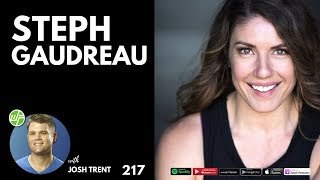
This YouTube interview (episode 217) features Josh Trent interviewing Steph Gaudreau about coaching boundaries, resilience, and her Harder to Kill brand. Key points in this section: Steph describes resisting the "righting reflex" (a motivational interviewing concept) when coaching empathic clients; she reframes "Harder to Kill" from physical strength to broad resiliency (emotional, spiritual, mental) and antifragility; she mentions a forthcoming book with the working title "The Harder to Kill Handbook" based on her four pillars, an upcoming website rebrand (stupideasypaleo.com redirecting to stephgaudreau.com), and a community called the "Harder to Kill Club" (over 5,000 members). The tone is reflective, pragmatic, and growth-oriented, with personal anecdotes about entrepreneurship and self-care.
Questions this video answers
The Harder to Kill Handbook.
stupideasypaleo.com (will redirect to stephgaudreau.com in the fall).
Harder to Kill Club; over 5,000 members.
Motivational interviewing (the "righting reflex").
Chapters
It sounds so basic. It's like we can't change everything all at one time. And then we have these habits that are behaviors that are dominoes for things in our lives, that if we just focus on a couple things and do those really well, the journey will begin to unfold, the path will begin to lay itself. But when we get started on these journeys, we're like, I've got to change every single thing. And for a lot of people, they're either cohabitating with roommates, they live with a family. You know, they're not just in that bubble. And so how do you navigate that space? I still think there should be an aspect of, like, I'm invested in this process. I'm open, I'm curious, I want to experiment with this or check this out. And if you're not in that space, I don't know if you're ready, you know, to have at least a little bit of curiosity and openness. Like, it's okay to have it not be the. The right time. On the flip side, if you've been saying that for like the last eight years and you just are having resistance, like, find someone who can work with.
You, That's Steph Godreau. And this is episode 217 of Wellness Force Radio. What's up, my friend? It's your host, Josh Trent. And welcome back to another episode for your weekly access to global experts in all things wellness as we discover the physical and emotional intelligence we need to live life well. In this episode, I got to sit down with my friend and powerhouse podcaster, health and fitness influencer and best selling author, Steph Ghaudreau. This episode brings up a lot of questions for all of us who care about wellness in this very exciting and also challenging time in human evolution. And the question is, with the growth of women's empowerment and the ripple effect of older forms of patriarchy still being felt in the waters of our existence, what does the dance between men and women look like now? Not only in dating, but in cultivating inner strength while respecting and honoring one another's differences. Many people know Steph as the creator of Stupid Easy Paleo, a world renowned expert on how to build unbreakable humans with her podcast Harder to Kill and her Women's Strength Summit. But what's most fascinating, I know you're gonna get a kick out of this podcast, is that I got to record live and in person with her cat walking around in her sunlit living room next to the green garden where she grows her vegetables for a person who's constantly sharing so much of her heart and soul online. She she's actually an introvert. And I think what you're going to find interesting about what you get out of the episode, beyond the powerful takeaways about building internal and external strength, how to navigate the MeToo movement, and why Steph is choosing to pivot at this stage in her game as a creator. But most importantly, how Steph's lessons around reframing situations, proper communication, and setting healthy boundaries will give you the unique tools to transform your life. Now, part of being harder to kill is having great posture. We talked about breathing from the diaphragm so much on the show and and I'm excited to bring you this podcast in partnership with Dr. Tim Brown and Intelliskin, the creators of Human Technology Smart Compression, which is an apparel top made of cutting edge materials clinically proven to improve posture and alignment. This posture cue tech that actually works with your own body to create awareness of improved posture throughout the entire day. So if you're swinging a kettlebell or lifting with a barbell, or even standing at the standing desk or sitting down, this tactile response uses the thousands of nerve bundles on top of your skin to gently pull your shoulders back all day long. Great posture. All you have to do is go over to intelliskin.net and enter code WF20. They gave you the hookup 20% off a test drive of your new Smart Compression. Give it a go intelliskin.net, enter code WF20 today and today coming up Right now on the podcast from San Diego, we're talking about Steph's road of body image in an industry that praises perfection. How to find a gym where you feel comfortable, the biggest limiting beliefs around women and lifting weights. How Steph honors both her strong, confident self and a highly sensitive personality. And we talked about everything from nutrition pre and post workout to her upcoming book. Share this podcast with a man or woman who's interested in these topics, you will make their day and you will help other physically and emotionally intelligent people like you find the show. Now let's drop in live and in person with Steph Godreau. You know, you were one of these people that like when I first started I I saw you having massive success and I was just so genuinely excited because there's so many fakers out there and I've come across this so much lately actually, like as the podcast has grown Steph, I've been like almost experiencing disposable hero syndrome where I'm realizing Like I'm interviewing some of these people with amazing followings and then when the camera turns off, it's like they're nothing. I thought they'd be. Do you feel like this sometimes?
You know, they say, don't meet your hero. It I. The interesting thing is the more I'm in this world of online marketing and obviously when you're online, you don't necessarily always see what somebody's like in person. Oftentimes people have big teams behind them. Yeah, sometimes they're very sort of behind. They're. They're almost more behind the scenes than their team is in terms of the day to day stuff. And I think the more I do this, this is five years now that I've been working for myself. The longer I do this, the longer I'm just like, things aren't always what they seem. You know, take it as take. Take everybody else's perceived success with a grain of salt and understand that people are coming from vastly different places. I mean, even sometimes people that you see that have success in a particular niche or market, it may be their fourth or fifth iteration of what their business is or, you know, they may. My favorite thing is, you know, like, and money is my biggest hang up that I'm still working through. That's one of mine too, because I grew up that way. You know, we didn't have money as a kid. As kids, like, it was always very thrifty, very frugal, like we don't have money for this and that. And anyway, you know, I will see all of these things, like have a seven figure launch or whatever. It is, like a lot of stuff that's marketed toward entrepreneurs. And I'm kind of like, okay, I get it, but how much money did you actually take home? I mean, what's the measure of success here? Is the measure of success how much money you grossed? How much money you took home? Is it your quality of life at the end of the day?
You know, how much is your health suffered?
Yeah, and I think that's a huge thing that not a lot of people talk about in this, in this area. This is like online world, is what is it costing you? And I say this to my, to my clients and the folks that I coach all the time. They always want to know. You know, they just, sometimes they just want answers, they just want permission. And so sometimes it's like, is this the right thing for me to do? What should I do? And I'm like, I don't know how, like, is it worth what it's Costing you? Is it giving you more than it's taking away?
Yeah.
And to me, that's the best heuristic for people to self reflect. What am I doing? Because there's always a cost. There's a cost benefit to everything, right? There's positive consequences, there's negative consequences. And when we can get people to, to become proficient at assessing this for themselves, they're able to have more autonomous decisions and really stay true to what's important to them rather than looking out into the world for. And I'm not saying like coaches are great every. I think, you know, I have coaches, I've had coaches. I think, do you have a coach right now? I do not have a coach at this very present moment. I transitioned out of working with my old coaches. I do work with somebody now who's kind of a de facto coach for me, even though she's more of a consultant. But we've sort of taken on this coach client relationship in a lot of ways. And I think it's really important at times in your life to have that objective view has somebody to be reflecting things back at you to suggest things that you hadn't thought of before. But when it comes down to it, even a coach can't necessarily assess exactly is this thing right for you in your life right now? And so I, I try to default to that a lot and suggest that people think about that. And so that, that guides me with a lot of like, am I successful? What does that mean to me? What is it costing me if I'm sort of working toward a new project or like pushing things to the next level? Am I, do I still have quality of life? Am I still able to enjoy myself now? What's that like?
And what's the cost to benefit ratio if you don't change? Because there was a huge part of your life where you're like, I kind of want to change, but I'm not exactly sure, like, what's the threshold to get there? Three years ago, we interviewed episode 16, which is blowing my mind right now. It's actually surreal to be in your home. So thank you for having me. I got to meet your cat, Ellie. Like, this has been so cool so far. And I'm thinking about, like, when I started, I actually was just moving through fear. But when you started, you were actually letting go of a teaching gig. A lot of people don't know that about you, especially if they don't know anything about you, that you're a teacher. Like, that's kind of always been in your Genetics. What have you learned personally in the last three years since you started the podcast? I think we kind of started almost at the same time. Like so many people have heard your voice now. But what have you learned about Steph since you started?
Oh, man. I mean, to me it's like a continuous peeling back of layers and, and a lot of the things that I've come up against professionally and personally in the last three years have been this sort of, you know, when I left the Classroom in 2013. So it's been five years. It's been about five years since I launched the podcast or three years since I launched the podcast. Those first two years of self employment, doing my own thing were just sort of getting my feet under me. And I felt a lot of pressure. It was probably very self generated, but I felt a lot of pressure to sort of grow and get the numbers and, you know, get as many people in my community as I could. And you know, it's all about metrics and it's all about. That's sort of like how I perceived that I would know if I was moving in the right direction. And it's interesting because when I left the classroom and started doing stupid Easy Paleo full time, I felt sort of like, okay, well, I've got to grow this thing. I've got to sort of do all the things that I've been been told are going to help me be successful. And I lost my voice in that process quite a bit. And so I started focusing a lot on, you know, the recipes and the, and I love all that stuff still. I, I think food is the gateway drug to better health, food and fitness for a lot of people. Like, food is very approachable for a lot of folks. It's like something we all have to do. We don't all have to go exercise if we don't really want to. I mean, I think we should be exploring movement in whatever way makes sense to us, but we all, we've all got to eat. And so that's a very approachable place for people. And that became a way for me to try to cultivate this business right around food and all of that stuff. And I feel like I said I lost my voice along that path in the first couple years and, and I would say, you know, the first year of the podcast, it was still kind of in that transitional phase. Obviously I was getting on and interviewing a lot of people, yourself included, which, you know, the early ones, one of the early ones, you know, and that's really, that was really, I think Kind of the, the way for me to start exploring that voice. But about two and a half years ago I started feeling really like, oh, I don't know, like, is this what I want to do? Really starting to feel like I wanted to return to having my voice be more central to what I do and like food is a part of it. But I actually started a new website, a different website. I was like, I just need a new space. I just need a different spot. I need to just be me.
Yeah.
And I did that for about a year. So I launched a new website and then I ran up against this conundrum where I would write content, I would write pieces and I would kind of freak out, like, where is this? What, which site does this live on? I want everybody to hear this.
What was the new name of the site?
So the, the new site that I launched was Steph Godreau.com so just my name. It was, and it actually is still alive. And this is the site we're rebranding to later this year and completely redirecting everything. But I, you know, it. I felt like I was running two different. I was running two websites, two social, two sets of social accounts. And I, you know, I am the child of divorced parents and I felt very much like a person that was sort of like, whose house am I sleeping at this weekend? You know, it was very like, where do I go?
Where's the headquarters?
Where's the home? And when you feel like you don't have a home, how can you be, you know, feel safe and comfortable and protected and, and like you have a spot to launch that creativity from? So I did that for a year and completely kind of burnt out and was like, you know what? I can't do both of these. This is killing me. So I'm going to go back to Stupid Easy Paleo. I'm just going to write about whatever I want there. I'm going to make that the home base. And so I've been doing that for the last year and a half, but, but again, still have run into this. Like it's just time to move on. It's time to change things up. And yes, again, food is part of it. But to me, that wellness, that health, that health seeking journey that so many people are on it, ha. We have to pay homage to the diversity of things that go into that for any particular person. And yes, it may start with food, it may start with exercise. But at the longer people are in this journey, they're like, that's the support that's the, the foundation, but there's so much more. Yeah. And, and also the, this idea of personalized nutrition is very important to me. Now I'm in school to be a nutritional therapist. I've changed my views quite a bit on like, yes, Paleo is like an on ramp. It's not the only on ramp. Eventually we need to, again, we need to consider the individual, their unique bio, individuality, what's, you know, what their goals are. We need to tailor things for them. And so I kept running up against this, this same song of dance of like, potatoes aren't Paleo. And I'm like, oh, my gosh, you guys, can we just move past this? Like, you know, green beans are a legume. They aren't Paleo. And I'm like, holy.
Well, do you feel like at this stage of your game that the word Paleo even rings just as true as it did in the beginning? Has it lost its luster?
Um, it means so many different things now to a lot of people. That being said, caveat. You know, I think the ancestral sort of model for approaching nutrition was always like that. And somewhere along the way, it became something that meant a very strict dogmatic rule, list of rules and yes and no foods. And like, how is that any better than, you know, we're all going to be low fat. We're all going to be, you know, we're gonna be super dogmatic about what we do. And the more I go through this, I'm just, can we. I get it. Labels help people navigate the world. But at a, at a certain point, labels become constricting and they don't necessarily serve the greater purpose.
Yeah.
So, you know, a lot of what I do, a lot of how we eat is still along those, that Paleo framework. I just, I'm just tired of arguing with people about what isn't, isn't Paleo. And I'm like, but what works for you?
Well, and you've, you've been a teacher for the most part, for the biggest portion of your life, you've been instructing and teaching. What even got you into teaching in the first place? I'm curious about that because your parents were like, very work ethic. They weren't entrepreneurial. Right. Your parents. I'm always curious about people's past because it really, like, shapes how I see them through a lens in the future.
Right.
So, like, where you're going now with this new version of yourself, it's gotta be scary. And then why did you actually get into teaching in the first place?
Yeah, that's a really good question. And so a lot of people. I've only recently kind of started talking about this publicly in the last probably a year or two, is that I've been married three times. I'm married to my third husband now. I was. I got married really young for the first time at 21. And then I got married again when I was in my late 20s. And I got involved in a relationship with my first husband when I was still in college. And for the longest time I wanted to be a doctor. That was like my thing. I was like, I want to be a doctor. I used to watch surgery shows on tl.
Would you want to be a doctor?
I don't know. Just something about it. Just something. I always loved the human body. I always thought it's so fascinating how we work, how I'm still fascinated. You know, Like I said, I would watch like the. The surgical shows on tlc, like people getting knee replacements and weird stuff like that when other kids are off doing other things. And just always was super fascinated by nature. My grandfather, my maternal grandfather was very important in my life. He was like my father. He died when I was 8. And those early formative years with him, though, he was very much. He introduced my sister and I to things in nature. And I. I just, like, I always. Because of him, I really believe I. That's what planted the seed of being curious and interested about science and the natural world and, you know, human body and all these things. So I think that was a huge part of it. That ignition was there for me at a very early age. I studied lots of sciences in high school, went to college, and actually started off college as a physical therapy major at a college that was very close to my high school. Very competitive program at Springfield College, very small program. And I got in and I did a. Like a. An observation rotation at an outpatient PT place. And I was like, I don't want to do this. This just isn't what I'm really interested in. So then I transferred Schools, went to UMass Amherst in the biology department. And while I was there, I was working at a grocery store that I had worked at since I was in high school and was decorating cakes. So that's a skill not a lot of people know I have. And I, while I was working there, met my then future first husband. And he was older, a little bit older than me. And I just gave up a lot of my ambition because I wanted to be with him. And so I changed my. You know, I was like, okay, I'LL be pre med. And when I started getting involved with him and was in a relationship and we got engaged, you know, and I was like 20 years old. Yeah, I'm 39 now, so I'm like, what were you doing, child? You know. But I decided that I didn't want to pursue the, the medical track because then what would that mean for our relationship? And you know, this is very, this is a very common story along my life is giving up things that were really important to me, sacrificing those things. And you could say, well, there is compromise in any relationship. But I've looking back at myself, especially when I was a lot younger, I think for me abandonment is a big part of the things I'm afraid of. And so I was like, well, I don't want to lose this relationship. And so what am I going to do? I'm going to actually change what I'm studying. And so I didn't really want to go into research. A lot of people that I knew in my department were going into research and working in labs and I was like, I, the idea of looking at a microscope all day just doesn't appeal. You know, working at a bench and pipetting things. And yeah, I wasn't gonna go to the pre med, pre med track. And so I thought, well, what is there for me that I could do? And a friend told me about, you know, they're like, why don't you, you know, check out teaching? You could teach science.
Oh, this was a suggestion from a friend.
I mean there were sort of like three options. You could go, you could go down. But yeah, that was one that was sort of like floated my way and I was like, yeah, you know what? I always loved school. Turns out being a great student doesn't always make you a great teacher. I struggled a lot, especially in those early years and I taught for 12 years. But I struggled a lot in those early years with finding empathy and relating to my students who struggled in school because I was always like the teacher's pet. I mean, gold stars.
Were these low income kids or were they just normal kind of economic level?
No, I mean when I worked here in Southern California in Chula Vista, the first school that I taught at was, you know, we had 50 of our students were on free and 60 were on free and reduced lunch. Yeah, definitely worked in a food desert special lunch line.
I remember that. I was raised on welfare.
Yeah, same thing. We had tokens, you know, when we were growing up. So that, yeah, I don't know, I just, that I Struggled a lot in the early years to find, like I said, empathy and relating to my students who were like, screw school man. Like, I'm just getting through this and now being an entrepreneur and seeing like, okay, I punched my ticket, I got all, you know, good grades and like, I loved school and I loved, I loved my teachers and I loved, I loved the attention that I got from being a performing, high performing student. That fed a lot of my perfectionism and you know, that goes deep into a lot of different things. But for me, looking back, I'm like, and now as an entrepreneur and somebody who works for myself and I'm my own boss, I think about those kids who are kind of like, eh, school. My husband is, is sort of one of those who just didn't do great in school. And I think he's brilliant in so many ways. I sort of think back to those kids and I'm like, man, you have, you have a zone of genius. We just gotta find a way, find a way for you to be able to express that. So yeah, that was a really long winded way of me sort of explaining that. But you know, I, I don't know. I actually later on went, ended up going back and taking the GMAT and did pretty well, but I just never pursued that. My uncle was a pediatrician for his whole life and he just retired a year or two ago. And I remember thinking, Uncle Eric is almost never around on holidays. He's always on call, like, do I want to do that either? And so I don't know. I think I've ended up in a good spot. But those, that early decision was very much motivated by wanting to not up in the apple cart of my relationship that I was in at the time.
And it's a little challenging too because you told me before we recorded like, you're an introvert, like, that's kind of your default. So somebody that now like, it's lights, camera, action all the time. You know, whether it's social or being on a podcast, it's like, that's gotta be an edge that you're constantly leaning into. This edge of like taking your introvert is. I'm still respecting that. But then growing the other part of you that really gets to be seen, this being seen part. And I feel like that's actually why, you know, helping women build stronger bodies and minds and own their power, that's what this is really about. I'm almost getting this flash for you, like early in your life at 21, you're like, I'm going to dim my light and kind of go and lessen my power for him. And now you're actually finding that power again at this age and helping other women do the same. I mean, that's fascinating.
Yeah. And when. When my second marriage was ending, there was this. Was. This predated my leaving the classroom by a little bit. And it was right around that time where I realized I. I don't think I want to be in the classroom anymore. There's something else for me. I don't know what it is. And that was a very much another sort of confronting time where it was like, how am I going to navigate this? Like, there we have a life, we have a house, We've got all these things. And how do I operate in this new construct that I feel like I don't want to be in this spot? And so I feel like that was sort of a. Like a really tumultuous time for a lot of reasons, but it was definitely a. I feel like there's huge amounts of growing pains and I don't know how to deal with it. And now I'm like, just like, let's just do this. I'm just tired of waiting around. Yeah.
At that time, though, January 2010, no culinary training. You know, 2013, flash forward, you're in the middle of a divorce. When did you actually leave teaching and then go into being a voice for Paleo? Did you take, like, one step and fall and then get to the ledge or did you jump right over to the ledge?
I started the website in September of 2011. I had been blogging previous to that, though, probably about 2009. I wish that blog still existed.
What was the name of it?
My original blog was just my married name at the time, and it was a. It was truly just a place. I would write about mountain biking, and I would take my little camera with me and, you know, take pictures and write about the places that I wrote.
Mountain biking's no joke.
Yeah, I did. I. That's what I did for eight years before I, you know, started strength training.
Yeah.
And I would write recipes. I have always loved to cook. I would write recipes, and I put them on this personal website. And again, somebody was like, you should start a food blog. Okay.
So were you like, what's a food blog?
I was sort of like, I don't know, first thing about food blogging.
Yeah.
I've got a blog. Okay. That can be very different. So I started putting recipes on this new. I bought a domain, bought Stupid Easy Paleo, and started putting recipes on there. And I did that for, you know, basically a year and a half. And when I finally left the class classroom, June of 2013, that's when I transitioned to doing that full time. And you look back, and I look back in sort of like a year and a half. That's not very long to sort of go all in. Luckily, I was able to take a leave of absence from my district. I put in for that leave, and I said in my principal at the time, I think he was bluffing me, but he said, you know, they're only approving leave of absence for pregnancy, but you can try. And I was like, well, I'm gonna try.
Yeah.
And so I. I appealed for a leave, and I said, look, I have this thing I want to do. I think it's really important. We're always telling our students to follow their dreams, and I want to try something new. And they gave me the leave of absence so I didn't have to quit outright. I think had I had to quit outright, that would have huge. I would have felt like I was under a ton more pressure. But with the leave, it was unpaid, but I could come back in a year. They would hold my position for me. So during that first year, I just remember, okay, sink or swim. And that's really when I had to jump off the cliff.
Yeah. And then you. Paleo Comfort Foods was your first book, right?
No, Stupid Easy Paleo was the first book. And that came out 2015.
No. That you actually bought. Learn from.
Yeah, yeah, yeah. Very early on in. In sort of me going Paleo, which started in 2010. I. There were, like, two books at the time. Paleo Comfort Foods, Charles, Charles Charles and Julie Mayfield, and Make It Paleo by Bill and Haley Staley. And so those were the two books that I had very early on in. In sort of this new way of eating that. That inspired me. But there wasn't a ton. There weren't a ton of people who were blogging about this and doing this sort of thing. And so it felt very brave new world and in very much like the Wild west in a lot of ways. But, yeah, that's. That was sort of the. So I had been doing it for about a year and a half by the time I left the classroom and thought, all right, well, we're gonna. We're gonna see how this goes. But it was scary. Even that. That year leave of absence was scary. I moved to Scotland for four months, came back here. You know, it was just. There was a lot of transitions.
Steph, let's Talk about the money part, because that's still one of my biggest triggers, actually. And, you know, I'm a 38 year old man and I'm constantly looking at like, okay, can I be aware that that younger version of myself continues to speak and I think about money for most people. Like, you were raised for some time by a single mom. I can totally relate to this. A big one. Because it's like, unless we have money and resources, then we're really not satisfying the bottom of the triangle that Maslow talks about. Right. So if we don't take care of safety, if we don't take care of the structure around us, it's really hard to have space to live a life of wellness.
Yeah.
How did you work through that? How are you continuing to work through that?
Like I said earlier, I think this is one of my biggest upper limit problems that I have, which is this fear of wealth, not knowing how to handle those. Not just the, the physical. Like, I go to my bank account and I see I have this much money. But what that means about me as a person and growing up. I, I grew up very much, you know, blue collar. My mom was a waitress for a really long time. And then when she married my stepdad and they had two more kids, she stayed home and took care of the kids. So we were six people living on a truck driver's income. And. And this is in Western Mass. And you know, it was just a very. I just remember this narrative of like, we don't have money for that. There's not money for that. We need to buy. I remember, you know, having long hair. I have long hair now too. But getting, you know, my parents were like, well, if you want a better shampoo, because you get White Rain. White Rain was the.
Oh, and suave.
Yeah, White Rain was the, was the shampoo. And they were like, if you want something other than White Rain, you got to save up your money. You know, save up your allowance or whatever it was. And I just. Growing up, that was always a thing. Like there wasn't enough money. We, you know, we would take like one nice vacation a year. I never felt like I was truly lacking growing up. I mean, I went to private school, Catholic school. Like my cousins, I remember though, like, they're. They always had like, really super nice. They would go to Disney World and like Hawaii, and we would go to Maine. You know, this is growing up in Massachusetts and stuff. And so, you know, they would learn. They were learning to ski and we would take the tubes to the local golf course. And sled down Franconia golf course on the, on the hill in the winter. And like, that was the sort of like, disparity that I saw. And so I think for me growing up, money was always like a, they have it and I and we don't. And like, what is the deal with rich people? They're all assholes.
Do you feel like it was a sentence? Like, this is going to be for my whole life. That's going to be the meaning.
I just feel like that was just, it's just what it was. And so, you know, growing up, when I went to college, I got some scholarships. I worked to afford the rest of my college education. So I was working part time in the bakery, make decorating cakes and stuff like that and paid off my college. And you know, it was. I don't, in a lot of ways, like, I don't fault my, my upbringing. I mean, I learned the value of hard work and what things meant and in a way like minimalism and being frugal. And I think those are all very good qualities. But it was almost like, you know, what that meant to me. And so now, even still today, this is something I struggle with, with my business too, is like that feeling of either I want to hire someone to help me grow and I can't do everything. And I am used to, when I started, I was bootstrapping everything. I did everything.
You were writing the code yourself, you were doing the splash pages.
Oh, I know how to, I know how to edit CSS and like a million things I never thought I would know how to do. Like, I can, I'm the jack of all trades. If it's, if it's very high level, advanced, probably not. But I learned how to do everything. And so that has been a process of like untangling that as well. But if I'm going to hire somebody now I'm like, okay, now I am responsible for being able to bring in the income to pay them because then they're going to be depending on that. I want to make sure that I'm growing in a way that is very aligned to my purpose and my mission. And I don't want to just have like, I don't want to be a manager of like 30 people.
Yeah.
It's just not what I feel like I'm here to do. On the flip side of that, I know that unless I, I delegate more things and I've, I've. I'm probably the world's slowest delegator and I've started to do this and, like, hire people and, you know, do things like take things off my plate. But it's been. It has been a process. It has been very rot with just pain and, like, anxiety and are we going to end up broke? And, you know, it's. It's a crazy, like, taxes. Tax season comes around, and I'm like, you know, and I have an accountant, and, like, all the. All my ducks are in that row. And I still, like, the first quarter of every year, I just feel this impending doom about money. And. Yeah. And so, yeah, I mean, it's something I continue to kind of work through, but I don't know. I don't know how I'm going to get 100% past it. I know people have money, coaches and, like, yeah, books about it.
Money belief. And money's just energy. And we know that, and I think the logical mind accepts that on some level, like, okay, we know that money's just energy, yet the imprinting still remains. And so that's what we're working through. And I found that, like, a lot of creators like yourself that are powerful, that are leading people, you have this great responsibility, because if you're being authentic and honest about truly what you're going through, you're gonna give them permission to explore the same damn thing. And, like, that's what I've always felt from you. And that's been cool to get to know you in that regard, because I'm thinking, like, how many people out there right now are saying one thing, but then, like, behind the scenes, they're doing another? And we don't have to name names. This isn't. I'm not trying to be, like, controversial here, but. But how do people trust? Like, is it just a feeling they have when they're looking at an influencer? Or, like, what's the barometer for bullshit?
Ooh. I. I feel like it's sort of. How honest do you want to be with yourself about why you're following that person? Um, I think that's a pretty good test, a pretty good barometer. Like, am I following this person? Because it's coming from a place of love and exploration and curiosity about myself, and what I see reflected in them could be what I see reflected in me. And what am I open to learning about? And, you know, what am I going to get emotional and triggered from and, you know, understanding where that presents an opportunity to learn more things. But I think, you know, if you're following somebody because it's like the hate follow, you know, like, hate following is the thing Like, I hate this person, and I hate the way they make me feel when I'm going to follow them anyway, because I just want to hate them for what they are. And. And I think it comes down to those two things. Are you following someone? You know, are they. And I. Angie Alt, who's one of the, you know, her and Mickey Trescott are the autoimmune wellness leaders of the autoimmune Wellness community. Autoimmune Paleo. Angie had a brilliant post on Instagram yesterday. Is like, what's the difference between. Between a leader and an influencer?
It's a great question.
And she, you know, defined it in multiple ways. But I think that's ultimately, that's the. The barometer for. Is like, are you following somebody because they. You feel you can trust them as a leader, or are they just influencing you to buy things or, you know, follow their exact. Their exact path, or are they challenging you to follow your best path? And I think that's a huge difference. But, you know, ultimately for me, it comes down to, like, am I following this person because they're inspiring me to be my best self? Or because, you know, I feel like, a lack of. And I want to just get to where they are, and I just want to be like them. So when people are always like, sometimes I'll post pictures of myself squatting or whatever, and I get a lot of people who say, like, hashtag body goals. And I'm like, no, no, no, no, no, no, no, no.
This is my body.
Have your own. Like, don't want my body. Because your body may just be strong and comfortable in your body, how it makes sense for you. And I get it. Like, I get why people do that. And I feel very, like, I feel very flattered. But I also feel like a huge responsibility, like you said.
Yeah.
To be like, wait a second, we're.
Gonna post this in the show notes. A couple days ago, you posted something on Facebook. Let's talk about cellulite.
Oh, yeah.
Holy schnikes.
Yeah.
Like, when I look in the mirror still, I'm like, okay, I'm gonna change this thing. And I'm constantly breathing between self judgment, self love, and just accepting what is. I'm always rotating between those three. And in your post, you talked about this. It's like, how do we actually give ourselves the permission to accept the body exactly how it is, knowing that that's all the power that we'll get to change it from the other way? If we're angry at how the body is, then we're just stuck in that cycle. How do you shift out of that cycle of hate and get into the one where you're like, I love myself and I'm perfectly imperfect right now.
So body, I will say this body positivity I think has been a great movement for a lot of people for a lot of reasons. This idea of making health and wellness more inclusive, showing different bodies, making non traditional body types not only okay, but the norm. Right. I think all of that has been fantastic. However, and I've talked about this before on Instagram too, is like, I feel like the pendulum is always swinging, right? So if it's like, if we over here we're all dealing with self hatred, we've got to swing the whole thing back to self love. And I find that for most people, like for myself included, most of the time I walk around right in the middle and I'm pretty neutral, meaning I take care of myself because I respect myself, because it makes me feel good. I do the things I do like, you know, do my best to eat a nourishing diet, to get some movement, to go outside and be in my garden and, and all these things because it makes me feel amazing. But that being said, I'm not walking around every day just being like, you're the, like, look at how so sexy today. Look how great you look. You look amazing. Because I think that that also puts an inordinate amount of emphasis on the body. And if we're talking about this from a body perspective of self love, certainly we can extend that to the entire person. But I feel like when we're in that space of self love too, that for a lot of people from self hatred is it, you might as well be asking them to swim across the Pacific Ocean. It's just so huge.
So incredibly foreign as well.
It's so huge. And your subconscious is like, yeah, right. Okay. So you know, for a lot of people they self sabotage because they're like, I'm never going to get to the place where I love myself. Like, that's such a, like you said, a foreign concept. So I feel like for a lot of people we sort of exist. There are high highs and low lows and that's, that's certainly the extent of, of human experience. But a lot of people, myself included, kind of the day to day are in the middle. It's very neutral.
I sent this out to the email list today when I got questions for you. A ton of people were like, I want to ask her 20 questions. I only have time for like five of them.
But.
But one thing that I loved is that you said, over time I came to appreciate my body for what it could do instead of what size my thighs were.
Yeah.
I love that because it's like shifting the polarity of. Instead of focusing on the body, it's like, oh, what can my body do? And how can I make that doing more powerful? Like, that's a big reframe.
It is a big reframe. And. And yet there have been people who are like, but what if you couldn't, you know, what if you couldn't squat tomorrow? You woke up, you couldn't squat for the rest of your life. You couldn't weightlift for the rest of your life. That. So I see it along a continuum, you know, being. Putting all of our worth in what we look like is certainly a very, very difficult place to be in. Shifting it to what we are capable of doing despite our. Like, doesn't matter what our size is, is, like, the next step for a lot of people. And. And that's what, you know, CrossFit helped me with just so many things of, like, I don't need to be a specific size to feel strong and capable and powerful.
Yeah.
Yet I. I feel like there's still a. An acceptance, a movement in this direction of, I. I am good and worthy, full stop. No, it doesn't matter what I can do. It doesn't hinge on what I can do. It doesn't hinge on how I look. And so, yeah, like, it's a process. And I feel like as you get older. I'm 39, so we're very pretty much the same age.
Yeah.
That things start to sort of shift in that too, where it's like, am I, you know, do I respect myself? Do I have those. Those moments of, you know, appreciation and kindness and to myself and compassion. And I still get stoked about the things, like, I can do, like a, you know, I can. I just deadlifted that or whatever. And I. Or I just, you know, went on a backpacking trip. And I think those are amazing moments for people, but I think that there is still a layer below that of. Beneath that of, like, am I okay? And I see this a lot when people get injured in their sport. So they're like, okay, I do this sport, or I have this physical activity that I do. It takes the emphasis off of what my body looks like. And for the first time in my life, I've been able to let that go. It's so freeing. And they're like, I got Hurt and I can't do that thing. And it's driving me crazy because now what do I do with myself and.
What'S my identity now?
Yeah. Yes. So it comes down to. To that in a lot of ways. And so y. I feel like that's been a very important stepping stone for me. And I do frequently ask myself that, like, if this got taken away from me tomorrow, would I be okay with it? And in the fact of the matter is, I just love physically moving my body. I love that expression. I love that physical culture. Yeah. I have for the last, you know, year and a half or so, taken time away from competing, which is a huge, you know, step for me, just to give myself some space. But in that space, it's been like, can I do these things just for the enjoyment of it, for the love of it? And I have competed in sports since I was little, so this has been an interesting, you know, like, people are, what is the next competition? And I'm like, I don't know. Yeah, just not doing anything right now.
Don't you feel like it's because you're focused on creating something new and that's kind of taking all your chi? Oh, there's almost like no room for you to compete for sure.
If I. And that was sort of a conscious decision, which is like, if I'm pushing forward and we've got this book in the works and like all these other things, there's only so much of my energy that can go.
There's only so much Stephanie to go around.
There's only so much energy that I have. And so. Yeah, so I just sort of like, you know, I. I'd love to put this out there for people is just to start thinking about, you know, have I considered this idea of, like, I'm very happy with what my body can do, therefore I'm not worried about what it looks like. Is that my stopping point or is there something beyond that? Is there something deeper than that? What's underlying? Have I accepted myself as is now, no matter what?
I love your analogy of the pendulum swing, and I think we could apply that to multiple movements. One of them I want to talk to you about later in the podcast is me too, because I know it's a very charged issue. Right. And it's one that deserves attention as well. But I think about this pendulum and it's like, if people are just focused on the self love and self care, there can almost be like, almost a passivity or a pacifying of progress. Right. If they're just Focused on self love. And then on the other side, if they're just like, oh, my God. I only care about, like, how I look and exactly what my body feels like and how I look in a swimsuit. There's got to be this middle.
Well, it's this idea of fluidity. And are we. Are we able to move in and out of things as are necessary for us? And. And I, you know, the older I get, the more I'm in this world of health and wellness, the more I'm like, we have so many complementary. You could call them diametrically opposed. You could whatever you want to call them, but we have so many of these things that's like. And I love this idea of like me to we. You know, are there times where you need to buckle down and, like, get your house in order, get your together?
Yeah.
Take care of yourself so you can then go out and do good things in the world and serve people and. And start living into your idea of, like, your highest self. Yes. But too much inward. And I talk about this with my clients. Like, too much inward focus can be really stifling for people. It can serve to reinforce we are where we are, not at it. And this is one of the reasons why positive affirmations don't work for a lot of people. Again, it's like that part of your subconscious brain that's like, okay, like, come on.
We're not sure.
We're not there. They work for some people, not for others. But I think the point is that, you know, if we're too much focused on we and we don't ever consider ourselves, then we start to lose ourselves. We start to perhaps not take care of ourselves. We're only caring for others before we put energy back into our own system. Like, so what's the right answer? I don't know. I think the answer is to be able to be fluid and flexible and surrender when necessary and take a stand when necessary. And so I. When I talk to people about strength, I'm like, look, strength isn't always just the ra Ra charge forward. I'm gonna, like, hulk out and go squat all the things. Sometimes strength is realizing that you need to give yourself a rest day.
Yeah.
That you've been focusing too much on yourself. And that if you start reaching out into your community, connect with people, you may find a purpose to sort of drive you forward. Can we be flexible enough and fluid enough to do that and recognize that we're going to have to move between these phases at different. Different points in our life? And that maybe it's not just two opposite sides of the coin. There is a continuum, and in how we navigate that and we flow. But the more rigid we are, you know, the more, you know, young we are. And all these things, like, just going crazy, like, strength means a lot of things. Strength is also quiet. Strength is surrender. Strength is letting go of things. Strength is retreating into yourself. Strength is taking time off. Like, it. It means so many different things. It's so multifaceted. Um, the more we can do that, I think the better able we are to navigate the pendulum swings. And perhaps we need to. We do need to swing to one side, but I. You know, just like anything in motion, we're probably gonna then move in some direction. And are we okay with that?
Let's talk about strength, then, because strength is a huge part of your life. You're a coach still in strength, right? Certified CSCS.
I'm a USA Weightlifting Level 1 coach.
Okay. I feel like that's just as badass. Same thing.
I don't know exactly what the requirements of a CSCS are, but I've been coaching at 40s here in San Diego for three years in the Olympic weightlifting program.
So for someone, I'd love to talk to that person right now who's, like, really wanting to get stronger, but they are just kind of unsure. A little bit of trepidation and actually, a great question from Instagram from Amber. She said, what is the biggest limiting belief you see in women about their ability to lift heavy or to transform their physique?
Such a good question. The biggest limiting belief that I run across with my female athletes is that I will get hurt. I will get hurt. And it's crazy to me because I hear. I never hear this when people are talking to guys. If a guy comes along and he's like, hey, I just joined this new gym. Like, I. I really want to check out weightlifting or powerlifting or I want to go to CrossFit. Never have I heard somebody say or read somebody say to this, this gentleman, be careful. You might get hurt ever. Yet the number of times I've seen that somebody in this woman's life will say this to her. It makes me so mad. It makes me so angry when I hear that, because I'm like, you have now planted a seed that was probably there all along, and now you put some water on that seed that she should be careful. She could get hurt. This could be dangerous. Yeah, I could, like, walk across the street right now and twist my ankle. I could like being physically active. Does not automatically cause injury. You know, we need to take ego out of it. Yes. Ego is the most dangerous thing in the gym, period. Working outside of your limits, knowing that you're outside of your limits, like really outside of your limits, and continuing to push it because you want to keep up with everybody else or because this is, that's dangerous. Doing stupid things, that's dangerous. I broke my, I broke my finger on a barbell in the gym a few years ago. You know how I was doing? I, I was rolling the bar to put it away and I broke my finger. Wow. Like, it's just such freak things that happen. Most of the injuries I've seen in the gym have been complete freak. Just freak things.
So why did that trigger you so much then? What was that? Why were you so upset about that? I guess my mom has been like, be careful, Josh. Be careful when you drive today. She says it every day, you know.
Yeah, but it, but because we have this narrative that women are inherently weaker, that they don't know how to handle themselves and, and that, yes, I think there are more guys out there who, when they were in high school were like their older brother was, you know, benching in the garage and they would go mess around in the garage or their sports team was weightlifting or their dad, I've talked to a lot of people are like, my dad used to be in the weights and like, yeah, I would learn from him and that. I think that's less common for females. And so I understand where it comes from. But I'm like, can you just check yourself before you limit that woman? Before she's already scared, she's already overwhelmed, she's already unsure of herself. And so for the women that come into the gym, it's very, this is, you know, generalization. But what I tend to see more often than not is, you know, I'm there, I'm working with them. I think that's huge to have a female coach. I'm very used to being kind of the lone fee. I go to bjj. I'm like usually the only chick there. All the, almost all the coaches are.
You took me there almost a year ago. Just like so intimidated. I'm like, she's the only one.
Yeah. I mean, we have, we have some, some females that go. We have a great female black belt professor and stuff. And it's a great environment to learn in, but I'm very comfortable with being a male dominated. Fitness environments, CrossFit, I mean, you name it. I think though, for a woman to have another woman There is very powerful. And I also see that women. And I remember my own journey at the beginning was very much like, I can't do that. And, yes, like, as a coach, I don't want to force somebody to do. To do something that they're completely uncomfortable with. So that's my job as a coach, is to walk that line. Consider the athlete's goals. What did they want to achieve? Yet to be. Can I put myself in her position and go, she's very unsure. I look at her movement patterns. Her movement patterns are fine. We're at a safe weight. She's not gonna get hurt. But can we move the needle a little bit more? Can we. Can we push that a little bit more? And so I think for. For women, finding a coach or a gym where you feel comfortable, there's somebody there who listens to you and what you actually want to accomplish. I can't tell you the number of women. I have a community on Facebook with over 5,000 people. The vast majority of them are women. The number of women who have come to come to this group and said, like, my trainer is pushing me to, like, they want me to do this. This is not what I want to do in the first place. They're not listening to me. That's a huge problem. So, like, we could just talk about that. But I think, you know, it's finding a way to help women be comfortable, progress, but understanding that a lot of the limitations that. That women have on themselves is because of this narrative, right? This narrative that girls can't be strong. Women can't be strong. I don't know about you, but I look, I watch the Olympics. Um, I watched somebody like Morgan King, Jenny Arthur. These are all female Olympians from the United States in the sport of weightlifting. You know, if you. If you look at their Wilks calculation, which is basically their. The amount they're lifting per their body weight, they're. I mean, women can be very strong. Steffi Cohen is powerlifting.
I've seen her on Instagram.
I mean, come on. She's 128 pounds. Ish.
Yes.
Right. Deadlifting. Five. Five something. She's. She's amazing, right? So we have these things of, like. And then it's like, oh, well, she must be on. So then we get the backlash of people, oh, she must be on steroids. She couldn't possibly be that strong. Oh, she's just a. She's just lucky, you know? And I think that that narrative of the fact that women can be strong is very. It's just Very unusual. And, and it's just not normal. And so I get where it comes from. But I have to say, like, if you're somebody who, a female in your life is thinking about going to the gym or getting involved in a fitness program, like, I'm gonna go to Orange Theory. I'm gonna go whatever it is, I'm gonna go to Crossing. I'm gonna learn power lift, support her in a constructive way.
Yeah.
And I think that's the biggest hesitation that I see. A lot of women, they're like, I'm gonna, I'm automatically going to get hurt just by stepping into a gym. And I'm like, okay. Working on your strength in a way that's within your capacity in a controlled environment is probably a lot safer than other things you're going to do. And actually the sport of weightlifting itself proper, the injury rate is much lower than some of the like field sports, basketball, soccer. I mean we see like, you know, twist and sprain injuries and a lot of those other sports. Knee injuries.
Oh my God. Well, with weight, weights, I mean, you have to be present when you're running or when you're doing soccer or whatever. It can be like a little lackadaisical. Right. There's lots of people around when you're at the barbell.
Yeah.
It's just you and your body and your breath in the barbell.
Yeah. And you're going to progress like in your own way. And that's. You know, I think learning on YouTube, it has its limits and like learning on from videos has, has its limits. And so I really encourage people, if they want to get involved with this, they want to be in the best environment to ask their friends in their area, where do you go? Do you like it? Check it out, see what you feel like. How does it feel in your. Do you get a good gut feeling? Do you get a good vibe from the place? And I know a lot of people like to shop on price and I get that. But if you go to a gym that you don't really like the vibe there, you're not going to really want to go. So. Yeah.
And also, depending on what personality type you are, if you spend a bunch of money for a gym, it's going to give you that outer framework, that external framework for accountability and motivation to go. It's like you're investing in the strength of you. I got to ask this question too because like, like you've talked about this, like the, the weight room is like a very male dominated place for the most part.
Right.
A lot of masculine energy in there. How do you operate? You said, like, you have no problem being in those environments. How do you operate in that environment and also still have a strong, grounded pull to your feminine side? Like, how do you balance the. Both in the weight room and out of the weight room? I think a lot of women might get scared, like, oh, I'm gonna get too masculine if I go in there.
Well, this comes down to honoring who you are as a person. I am not a very girly female. I just never have been. I feel like I'm feminine in a lot of ways. I, for me, like, I don't do my nails. It's just not something like, I don't wear. I usually don't wear makeup, and I don't fault anybody who does. Like, if that's who you are and you feel fantastic when you do it and you do it for you, then rock. Rock it. Rock it. Be who you are.
I've seen some photos of you online with makeup.
Yeah. And I. I do it for usually promot stuff. Okay. Okay. But it's not my everyday. And so for me, I just, you know, I just go and I show up and I do my thing and I'm. I am who I am. On the other hand, we have some. Some lifters in our gym. Nicole comes to mind. Nicole loves pink. Pink is her favorite color, and she's got a pink belt and pink knee sleeves and pink shoes, and she wears pink shirts, and she just loves. That's just her. So she's who she is, and she can still be who she is within that space. Some people come in and they put headphones on and they just want to go into themselves and be quiet. And other people want to connect with other folks in the gym and be boisterous and loud and celebrate the environment and get the energy from other people. And so I really think, for me, that when I honor who I am, that that just means that I am able to stay connected to both sides of me and both sides of who I am. And I've been told by a lot of people, like, you're very. You're very intimidating.
And I mean, you're pretty intense.
I don't like. It's interesting. So recently, I sat down with a friend of mine online who is. Her name's Eliza. Eliza's a. A bruja. She just loves to read people's cards and stuff like that.
And I want to go see her.
She's amazing. She. She does stuff online, but she was like, you're so I've always felt this very conflicted sort of. Of energy and parts of my personality where I'm very. I like, you know, feeling strong and I like to. I feel very practical and very black and white on a lot of things. And there's a huge part of me that's very like, oh, dreamy and, you know, intuitive. And come to find out, I'm very. I was. I am a Pisces, but everything else about me is Capricorn, which is very grounded and earthy and practical. Um, so that was really interesting when she, she read all that for me. I was like, this makes so much sense. I'm so glad to know this. But the point being that I am very. I wear my emotions on my sleeve 100%.
I remember the first time we interviewed, we were finished and you were like, hey, that was cool. And I was like, yeah, that was so great. Thank you so much. And you're like, yeah, I'm glad you weren't a douchebag. And I was like, wow, she really speaks her mind.
Yeah, I. Maybe it's because I'm the oldest of four kids, you know, I. I just. I don't know. But I. It's very hard for me to. To hide my emotions. I am. I feel like a walking contradiction sometimes because I feel like, yes, I am very strong. I have a strong physical outer shell, but I am also extremely soft and squishy.
What is your way to drop into that? Because, like, everyone sees you as strength. I mean, harder to kill is a pretty strong name. But how do you drop into that part where you are soft and squishy? Like, what does that look like for women?
I. When I coach people in my community especially, and I don't always get to coach them in. In person, which is, you know, one of the things I kind of regret about working online the most is I don't get a lot of personal in, in person time, but I. I try to care for people as I would want to be cared for. And it's constantly walking this line between knowing and having an intuition and having a. Knowing about who needs what, when and showing up for those people. So I'm not a mother, I don't have children of my own, but I feel that this is a very feminine part of. Of my energy, is to be a nurturer of people in. In my own way. And so, you know, for. I have a lot of friends who are very much into different aspects of spirituality and just. They rock it. You know, they're like, they, they read people's cards. They are very big into crystals. They love that stuff. They see huge benefits for the people they work with. I am very drawn to plants, and I think this is sort of the direction I'm going in, is to learn more about herbalism and stuff like that. But for me, I. Even though I am not a mother in a biological sense, I feel like part of my role is as this female nurturing figure for a lot of the people in my community. That was hard to do when you're putting up just a Facebook post. But when I'm coaching my folks, like, I really try to hold. Try to hold space for them.
Yeah.
And to me, that's how I. I honor that part of who I am. That's how I show up with that piece of me. I'm very empathic. I'm an hsp, so highly sensitive person. I pick up on.
You're sitting across from another hsp.
Yeah. So we're all gonna. We're gonna go home later and go lie down in a quiet, dark room.
I'm gonna go for a walk after this.
Yeah. You know, so for me, I. I do spend a lot of time being quiet. I do spend a lot of time. You notice we don't have a couch. I spend a lot of time on the ground. I like to be outside barefoot. I love my plants.
We're sitting within 18 inches of plants.
Yeah.
It's a beautiful garden right here.
My garden. I had. I. I was a beekeeper for three years. So nature is how I feel connected in my own way. I mean, we're here in kind of the urban jungle of San Diego, and I've cultivated these little areas for me that regenerate my energy. So being close to the ground helps for me, being quiet. And, you know, Z works from home here, and you were like, you guys both work from home. You know, it could be challenging. It can be challenging. We're very. We're both very good about sort of dropping into work mode and. And then we are in home mode and stuff like that. But I'm able to go and lie down and close the door and sit in a dark room if I want.
Skill set, though. I mean, this rest component in a world that's, like, incessantly trying to break our attention into a pile and then earn money from how many clicks we push on our phone, it's hard to rest. Like, how. How do you give yourself permission to rest? How do you give your community permission so. So they can rest?
Some people need permission from somebody else, and it was Interesting. I think it's. Brene Brown was talking about permission. I may have, I may be getting this wrong. It may be somebody else.
I mean, she's definitely talked about permission.
Yeah. And it, it. The way that I remember it being talked about is, and it was summed up so perfectly is like people need permission when they do not have, they do not have power. Their, their sense of inner power is eroded, is not there for whatever reason in whatever aspect of their life. And um, so sometimes, you know, hearing permission from another person, you think it's like, oh, that's a sign of weakness. I think it's a sign of strength to say, I need help. Can, like, can I do this? And somebody's like, you have, like, yeah, take the day off, don't go to the gym, spend time with your family. However, you need that permission for yourself. Um, I think that that's a sign of strength to be able to ask for that. But at the same token, for me, you know, being away from this thing and I'm holding up my phone, being away from that thing is something I'm trying to do more and more. I have in the last. It's interesting, in last two, like two last week, I legit forgot my phone twice.
How good did that feel?
And I was going out of the house for a while. You know, I was like. And I usually like to film stuff at the gym and like get content to post up and, and that stuff. And I was like, well, guess I'm not filming anything today. And I didn't have the sense of freak out, but I was kind of like, actually, this is kind of nice. And so what's that all about? You know, conveniently forgot it. But you know, for me, I try to do things during the day that replenish my energy. And I think so many times we feel under pressure in our work environments. I mean, I don't have an excuse here. I create my own work environment. So I can either be the world's best or worst boss, depending on how you look at it. But so many people in their day to day feel like they just cannot slow down, they cannot take a step away. And I, you know, it. Maybe you can't leave for an hour on your lunch break and go sit in a park, but there are things that you can do to just switch the channel. You know, if you have a very mentally taxing job.
Yeah.
And you're, you know, you're sitting there standing at your desk, whatever it is, and you've got to be thinking, thinking, thinking, and Creating and doing all these things, even if it's sort of more, you know, just routine tasks, is like, find a way to switch it up, like do something physical. And I'm not saying you have to go to, to an hour fitness class.
Yeah, you might be wearing a tie. Maybe you can just get in like.
Squats and push ups your own ass, but just walk around the building or get outside and just take some fresh air. That stuff can be really renewing for people in very, like, small doses. And so I think there's this big misconception that what we're going to do for our health has to come in these big blocks of time. And I don't have, you know, 20 minutes to meditate. And it's like, can I just go outside, sit on my steps, close my eyes, do some, you know, take some deep breaths, soak in the, some of the sunshine and come back inside and do some work. And so a lot of times my midday break now is I go out and I just putter in the garden. Now, not everybody can do that at their work. That's, that's totally fine. But I, I like challenge people to create some kind of experience that works for them. It could be you're gonna take a book and go, go sit outside in your, I don't know, maybe you have like a, a nearby park, maybe you have just an employee break area outside.
I would say there's always a place where people could go if they look for it.
Yeah. And just getting out of that, that normal environment and I feel like now there's so much pressure. People feel either there is pressure from their, you know, upper management or who on task all the time. All the time. And I'm like, is that, are we really actually being productive and getting things done? Because I know for me, if I don't take breaks enough, I'm like, wow, I've been scrolling, scrolling, you know, the Internet for 25 minutes.
Yeah. Your nervous system, I need a break. Your nervous system wants a break. So it's like, I can't allow you to do this work anymore. I have to pull you over this way. So how have you seen the contrast then? Because your husband's not from this country. Was it different when you went over there? Did you see the culture differently?
I, you know, the UK in a lot of ways, I feel like is similar to the United States in a lot of ways. I don't want to offend anybody from either country how they feel about that. But for, you know, I've, I've spent A little bit of time in Southeast Asia, I've spent some time in New Zealand sometime in, in the UK And I would say the UK in, in my experience is probably the most similar to the, to the US and you know, people are working their jobs and you know, have a million things to do and feel like they're under a lot of pressure. So I don't feel like things are actually all that different from when I was there. It was a, it was a similar experience for me. And the thing is, and the biggest like take home lesson about permission is no one's going to give you the permission on a daily basis. Like you, like, you just sort of have to say what is the priority for me right now? And like, what's gonna put a little bit of energy back into my tank? And I know that's hard for people when you feel like you have a lot of obligations. But I would also sort of challenge you to think about how many times am I saying yes to things that aren't things I really want to do because I feel guilty or I feel obligated and how can I free up some time and energy with just being a bit more discerning? So one of the things I tell people is like if someone asks you to do something, volunteer for something or you know, get involved in a social thing is just say, I would like to get back to you in 24 hours with my answer. I'll let you know tomorrow. Don't ask them, can I? You tell them I will get back to you tomorrow. That's it, that's all it takes. And that for some people gives them the space to just like, woo, saw, breathe out, go like, do I really want that? Actually really want to do this?
Yeah.
And the more I feel like we say yes to things that we don't want to do. We take that small amount of energy that we potentially did have and it's just we either end up resenting the thing, we resent the person, we don't really want to be there, we're not fully present. And doing something out of a sense of guilt is like, I don't know. I just, I just sort of question whether or not that's a great place to operate.
It's like sometimes the platitudes that are the most spoken are the most true for a reason. The degree between the truth from what we know, what we feel is right within ourselves versus what we actually allow ourselves to do. That space is the degree of our suffering, it's the degree of disease, it's the degree of everything that really feels pressurized and tensioned in our lives. And I want to go more tactical with you because we've done a lot of neck up today, so I want to go neck down, like, learn a little bit more at Steph's heart a little bit fast questions like, Liz Lemon is your hero. Like, why do you love Liz Lemon so much?
Because she is just, she just owns it. She's not. She's imperfect and she's a hot mess half the time. And she doesn't really hide it. She's just who she is. And she is very clear about, you know, not having all, all it all figured out. And I think that that's a huge, that amount of vulnerability and just like.
Shit, that's the hardest part.
We're all kind of a mess, you know? Yeah. I think she, in a lot of, a lot of ways I, I admire that about her.
What's been one of your biggest food failures? In other words, have you had something explode and get over the roof and the ground? And we're actually sitting in her place and I can see her kitchen right now. Now it's a very, like, modest kitchen. It's not a photo shoot kitchen. But have you ever had something explode and just get totally crazy in the kitchen?
I've definitely had a lot of. I've burned a lot of. I burn a lot of things. Sometimes we have a 70 year old oven. As I say, I've burned more things than not. And I am one of those people who really doesn't use a timer. I always know something's done when I can smell it. Going back to being an hsp, you know, being able to like smell that that's done. And Z always jokes about that with me, but I, you know, I haven't had anything really explode. I would say I had. I was making kombucha a year or two ago. And the jar, you know, in the second fermentation, you can put in fruit or whatever you want and, and try to capture some carbonation. So you put a lid on it. Unlike the first fermentation where it's sort of a. Open and you just. I just put like a rag on top of it, but it accumulates pressure. And I lifted up this jar because I was like, hey, this looks done. And the, the, the ass end of the jar just fell off. It was cracked and it was just like a flood, a flood of kombucha. So I would say more often than not, it's not an explosion. It's like, I Have knocked something over. I'm such a messy person.
Okay.
Yeah.
All right. Sometimes the ass falls out of some things. That's just how it goes. If you could see Tony Federico wear. He's a mutual friend of ours. He actually was kind of like the genesis to you forming your podcast. A lot of people don't know that. He really helped you out with that. If you could see him wear anything and then post it on social, what would you ask him to wear that would make you laugh? What could you see Tony wearing that would make you crack up?
A SpongeBob SquarePants costume.
Yes. I think definitely.
Yeah.
Or maybe like an apron.
I think he could pull it off. I mean, Tony is such a good natured guy.
Yeah.
And I think, I think I would like to see that for Halloween. Tony has SpongeBob SquarePants.
I'm gonna ask this because you already posted this morning that you didn't know the answer, but I'm ask you anyways. Melanie from Instagram said, how do I make paleo raviolis? And you were like, listen, I don't exactly know.
You buy capello. You buy capello's pasta, which is, they have a really nice grain free, gluten free pasta dough. I don't think they have ravioli, but they have like fettuccine. So you go and you buy it from them because they're pros at what they do.
So you did know.
I. Here's the thing. So I used to work in a bakery. I, I used to bake all the time. And now I could give a rat's ass about baking because it's just, for me, it takes too much time. I'm all people ask me all the time, what do you, what do you eat? And I tell them the recipes that are on the website. You know, if I'm going to make a recipe, most of the time it's like meat and some vegetables on a plate. And that's about it. It's very simple. And for me, baking right now is just takes too much precision and accuracy. And I just, I like to cook by intuition. I just like, you know, I just put things. This is why recipe creation for me is sometimes a difficult thing because I'm like, I gotta measure things. This isn't how I cook. But baking takes a lot of precision, a lot of very. You gotta measure things, you gotta be very careful because it's very much like alchemy cooking. Not so much. Yes. So I don't do a lot of baking anymore, which is sort of like pasta dough. I Feel like falls under that realm. But I would say zen belly Simone, she may have some, some good ravioli stuff.
She's got good stuff.
She's a, you know, she's a caterer and she's got some good stuff stuff. Or Jenny the urban poser. She, she's got some stuff too. So I would look into both of those ladies and see what they have. Or go buy your capellos.
Capella's is good too.
Yeah.
And I've seen them in most grocery stores.
Yeah.
My brother James actually asked this question.
Oh, hey, James.
What's up, James? I need help selecting the right foods. I feel like it really boils down to shopping. Right. Steph, can you weigh in on what foods to choose at the grocery store? Which foods to avoid?
Yeah. The million dollar question. James, thanks for, thanks for throwing me a softball. The, you know, I think people get really caught up in like, you know, diet rules and what's, what's the right. He used the word right and he. What's the right thing? I would just encourage people to do the best they can. And for some people, that's going to be like, today I will eat a vegetable. I'm going to eat something green. Great. How do I cook it? I don't know. Whatever way you like. You can eat it raw. Like, I mean, I would say if somebody's looking for a guideline, it would be, you know, trying to avoid processed foods as much as possible. Um, you know, the, the majority of what you eat is colorful, right? So trying new fruits and vegetables, having some protein on your plate, whether that's from a plant based source or an animal source, you know, do what's within your budget. A lot of people inevitably will end up selecting better quality things as they learn more about sustainability and like animal welfare and what's good for the environment. And I mean, this can get so overwhelming that it's just like, just start where you are. If you're eating processed food and frozen Lean Cuisine for every meal, like for you, a good first start would be, let's eat some, some vegetables. We'll cut down on the sodium. We'll maybe make a chicken breast and, you know, put some avocado on the plate. Keep it simple. You know, shopping the perimeter of the store, it sounds like, really cheesy, but it can, can be a great, easy step for people. Is like, okay, I'm going to just eat fruits and vegetables. I'm going to include more of those on my plate. Maybe I still keep rice around. I keep potatoes like that don't get too worried about that stuff in. In the short term.
What's your view on protein powders?
It depends. You know, I feel like so many of my answers when I talk to people about food are like, well, a general depend on. So first of all, a lot of people just do. They're. They're doing so much physical activity that for them to get their protein requirement, it's real. And I find this for women especially, you know, protein's the most satiating Mac macronutrients. So if you're like, well, I'm gonna try to get, you know, one gram of protein per pound of body weight, and I'm currently at half of that, that's gonna be a huge gap. And so for a lot of people, a protein shake after they do their workout can help to close that gap. You know, for weight loss clients, I try to recommend that they stick to eating their food instead of drinking their calories. It's very easy to accidentally end up with, like, an 800 calorie shake.
Almond butter.
You're like, man, I put some almond butter, and I used coconut milk.
You can do, like, 500 calories in almond butter in one scoop.
Yeah, it's a lot. You know, it can. And so I try to recommend that for. For clients who really want fat loss, they're trying to normalize their insulin response and stuff like that and just try to. To get back on track, that they stick to chewing their food most of the time to produce that satiety signal. Because that's very, very important. Even for people that are using a protein shake and. And they've got no issues, is like, include something on the top of it that you have to chew. Coconut flakes, cacao nibs, sliced almonds. I mean, something where you're. You physically have to chew to kick on that satiety signal. Because I don't know about you, I can. On the way home from Jiu Jitsu, I'll usually drink whey protein mixed with water, sometimes a little bit of coconut water. So I've got some protein and carbs there, and. And, you know, I can drink that and. And be like, I feel like I just drank water. I'm super hungry still.
Yes.
So I, you know, I think for most people, it's like, visualize a plate. On half that plate. We want veggies.
Half.
Yeah, half. Right. So half the plate. Veggies. Maybe fruit. A couple, once or twice a day. I mean, in the summertime, I'm like, give me all the berries. Just give me the berries and no one gets hurt the rest of the year. I'm kind of like, you know, apples in December, Like I'm not really all that interested in that, but. And so then I take the, the other half of the plate. Um, I usually try to have people visualize like two thirds of what's left would be a protein source and about one third of that, that piece that's left would be some kind of fat. So.
So you get all your starches from the veggies?
Yeah. And it depends on the person. For some people, white rice works really well. It's gluten free. It tends to be very non allergenic. However, for some people, it makes their blood sugar just completely go crazy.
Did you do the carb test that Rob talked about in his new book?
I didn't do the carb test. I kind of know just based on feel because I've been eating this way for so long how certain things make me react. Like I don't digest legumes all that well, so I tend to just stay away. It's not really a blood sugar thing. It's more a digestion. Digestion and FODMAP thing for me. So I tend to not do a lot of beans or legumes. But you know, sometimes it depends. If I have just come back in the morning and I just rolled for half an hour and I was at chicken in the morning, I'll put some potatoes on my plate. I'll have some. Occasionally we'll do rice after. If we lift, we'll like come back even sometimes go to Chipotle and, and get a, a bowl with rice and that sort of thing. And, and you know, for fo folks that are looking for some kind of body composition change, if they can try to stick a big dose of their carbs after their workout, that can be very helpful to still maintain and not feel like maintain their energy levels and maintain their thyroid health and not completely get drained but, but still make progress toward their goals. I feel like sticking your carbs after your workout just because you're more insulin sensitive can be like a really good rule of thumb for people so they don't have to worry about it. But yeah, for folks that aren't really super active in the morning. I just really like a protein, veggies and healthy fat kind of breakfast to help stabilize blood sugar. I used to be hypoglycemic, reactive hypoglycemic, so I would like eat sugar all day long. My breakfast used to be when, when I was living In Arizona. This is after I got divorced from my first husband and I was like living alone and like in a new state and just my life was completely upside down. And so I would go to the Circle K next door to my apartment.
That's always a bad first sentence, isn't it? So I went to the Circle K. Yeah.
And I would get like the biggest coffee that they had and, and you know, put like a million in international creamer in international foods, creamers in it. And my breakfast would be a Metrex Big 100 chocolate chip cookie protein bar. That's what I ate for breakfast. And then I would, you know, eat sugar all day long. And then I would come home and drink like a bottle of wine. And that's like how I ate for a really long time or for almost like a year during that, like post divorce phase. So I, when I talk to people about nutrition, I'm like, like, trust me, there isn't, there's no judgment. And I come at this from a place of compassion because I get what it's like to just be like, my life is in such a turmoil. I can't even think about feeding myself right now, like, and being healthy. Like, I just have to survive. But you know, I would say just sticking to as many sort of like, can you recognize that as a food? Trying to cut down on processed food, trying to reduce sugar. I mean, some people get really carried away with like, I have to eat zero sugar in my diet and it's making me stressed because then I need to.
Don't you feel like that's a way to hide though? And I found this with like 30 day challenges. It's like, can I be perfect on the challenge? And by me focusing on the 30 day challenge, I'm actually going to ignore the emotions that are driving the bad, healthy.
Some of it for sure. For sure. And it's an artificial environment because when you do a lot of challenges and programs, you end up sort of becoming a hermit for that amount of time. Right.
You can't go out with your friends.
You don't go out, you stay home. You cook a lot real, you know, it's like you can kind of isolate yourself. And I feel like while you can learn some very important skills, and I certainly don't fault those programs for a lot of people. They work, they, they help people to realize things that they had just had no conception of before. They get them interested in cooking again. Lots of positives is to, is to realize that that, that may not represent your real life. And like, what Happens when your kid, like, wakes up in the middle of the night puking, and you just like.
Yeah, real life happens.
Real life happens. And you're like, oh, no, now I've gotta. I can't meal prep today. What am I gonna do? Or, like, I have to. I'm traveling and I. There are no options for me here that fit within my paradigm. What am I gonna do? Or I get invited to an event and I don't know exactly what the food is like. And I mean, obviously look like real legit allergies aside, like, I think sometimes we get so used to being in that space of, like, the rules are this, and as long as I can be in my little bubble, it's going to be great. And then I go outside of that and I'm like, I don't know how to navigate the world. For a lot of people, that's a bit challenging. So, you know, just baby steps. And I always say this to people, okay, so your brother, like, what. What are you interested in changing? Trying what sounds good to you, what feels right. And, you know, so many people, again, are looking for that. Just like, give me. Give me direction. If somebody wants direction, that's great. But if I can get a client to have. Buy in and have autonomy in that process, it's going to be a much different scenario than if I came to you and I was like, all right, Josh, you can't eat all your favorite foods that you've been eating for the longest time.
I mean, anytime a sentence starts with that, it's going to cause tension in most people, right?
It does if you take it away.
In the beginning for sure.
And I mean, obviously there's guidelines, but when I work with clients, I. I try to focus on adding things, you know, you know, there to me, it's. It's usually not like, you can never have. It's like, well, given these things, we may want to limit. Start cutting down. But I oftentimes try to start with, we're gonna, like, add some of these things, make a swap, you know, so for a lot of people, it is just like, can we eat another vegetable today? It sounds so basic. Or like, can. Can we try making a pot of bone broth on the weekend and see what that. And it's like, we can't change everything all at one time. And then we have these habits that are. And behaviors that are dominoes for things in our lives that if we just focus on a couple things and do those really well, the. The journey will begin to unfold the path will begin to lay itself. But when we get started on these journeys, we're like, I've got to change every single thing. And for a lot of people, they're either cohabitating with roommates, they live with a family, you know, they. They. They're not just in that bubble. And so how do you navigate that space? Changing everything can just make life super stressful. And if you're not, change is in. Is inherently uncomfortable for a lot of people. But. But I still think there should be an. An. An aspect of, like, I'm in. I'm invested in this process. I'm open, I'm curious. I want to experiment with this or check this out. And if you're not in that space, I don't know if you're ready, you know, to have at least a little bit of curiosity and openness, like, it's okay to have it not be the. The right time. On the flip side, if you've been saying that for, like, the last eight years and you just are having resistance, like, find someone who can work with you, Find somebody who can support you.
But, yeah, so let's talk about change then. Because I think it was eight months ago is really when we felt the surge of energy around me too. Right. And we understand that it's such a needed conversation. It is such a needed conversation. And in no way are myself or any of the men that I feel who are up to good things and are in the conscious space, I guess you could say, are belittling the me too movement. Yet we do see that there is an edge of it where it's actually hurting the dynamic between men and women. So what are your thoughts on this? I'd love to kind of wrap our conversation with this because I really wanted to talk to you about this. I posted something on Social, and I was like, hey, let's turn that M into a W. Let's flip it. So instead of it being MeToo, which in a way has somewhat of a victimization to it, but yet we also know that there's a side of it that's necessary to be focused on. How do we turn that into a wisdom?
Gosh, yeah. It's such a huge question, you know, And. And I'll preface this by saying that I have not personally been the victim of any kind of sexual assault or anything in my life, so I can't speak to being in that position. I've certainly had moments where I felt perhaps unsafe. I've had moments where I was. I received comments from people that I didn't appreciate, you know, about my body and, and cat calling and, and stuff like that. And, and so I don't have that I haven't lived through the absolute devastation that some women have. And so I, I, I cannot know what it's like to be in their position and to know the anger that comes with that, the emotion that comes with that, and how this movement really took off and in a lot of ways for women to just finally feel like, I've, like, I've had enough, like, I've had enough of this and it's time for me to say something and I, you know, I am going to put this out there so other women feel safe to say that. But I have been there as well, and I think that there is. And so I, I'm very fledgling in, in learning more about social justice and race and, and, and all of these, these issues that are inevitably interwoven. Right. This idea of intersectionality. So I'm probably going to mess up in this conversation, and I'm still very much learning about these things. But I will say is that, but I know that the, one of the sort of cruxes of the issue comes where it's like, do women have to continue to do the emotional labor that is involved to educate men about what is right, what is wrong, why is this wrong? And that in that way, asking women to continue to do that does not respect the position that they've been in in terms of patriarchy and stuff like that. So that's an aspect of it. And then on the other hand, I do see an opportunity here. And this is sort of the space I'm in is like, how can. Elizabeth Dialto shared an image on her Instagram the other day that I thought was very powerful. And it was a, a woman, you know, in a list, an illustration of a woman holding up a sign. And it had the male and female symbols, and it said, said, you know, female greater than male. Like, is this feminism? And then the one below it was like, female equals male. And there was like a man and a woman meeting together in the middle. The, the image on the top was very much like the woman was, she looked angry, she was yelling. She, like, it just, you know, it had the energy of being very like, we're really pissed off. And the one underneath it was one that was like, let's have a dialogue. And so I think, you know, in a lot of ways, we're in a, we're in a time where things are, are quite unprecedented. There is like, you know, social media has opened up the chance to dialogue. But I think I said this to you in this discussion that we had on social media, which was like when we're having a discussion across a screen and a keyboard like, like that can, that can help move things forward. Like we might not even to a point. Yeah, well, yeah, like let's say we lived in completely different geographical places and we would never have a chance to dialogue about this. I mean we could get on the phone. Not that people use their phones anymore and how online forums can be a way to sort of find groups and begin conversations. But I feel like now more than ever things just end up devolving. People aren't being understood. They feel like they're not being heard. It's easy to dominate the conversation. It's easy to gaslight people, it's easy to shut them down. It's easy to, I mean you, you name it. And so like having a face to face conversation, I feel like in a lot of ways is, is potentially going to be the way to try to come to a mutual understanding and, and a way to work together and to see and ultimately everybody wants to be heard and understood. And I cannot pretend for one second what it's like to be a man right now. And this is one of the reasons why I do not tailor my message to Men are welcome in my community for sure. Like I try. Like to me, health and wellness is not an exclusive thing for women. If we're talking, even if we're talking about periods in the menstrual cycle like, like men still can be involved in that conversation. So good to know their, you know, husbands, their, their, their dads, their, they have women in their lives. They want to understand it. But I don't speak to what the male experience is because I can't know what that is like. And so I think women feel like it's hard to know who to trust because there's not a lot of diet. Like again, having these dialogues with people in real life is difficult sometimes there's a lot of, you know, fear.
Well there's. Gretchen Rubin describes it emotional contagion. Right. It's, it's almost like any time that any woman's ever been wounded, like me too can be a channel for them to be like, yes, I've been wounded and then pour that in there. Regardless of the severity and different angles of how actually women have been mistreated. And I'm talking about just little things like as men, I think the challenge is, and I'll just kind of speak for myself only the challenge is when I'm a single man, and so I'm approaching these women, and it's almost like, because I know so much about me too, and because I have these conversations all the time, I'm really aware. I'm really attuned of how she's feeling. So I'm, like, taking that responsibility and being like, you know what? I'm gonna take ownership of, making sure that I'm attuned to how she's feeling. And if no means no or if I get the wrong vibe, I'll just stop. But I think that attunement process, Men aren't being taught that. And what a lot of men do is they'll just get angry about it and be this me too movement is just causing a bunch of women to be pissed off. And, like, you know, it's actually just making it so that we can't date and we can't approach women. It's actually not true. But it also. And I want to ask you this question. Don't you think that it's also the woman's and the way that the man owns the attunement? It's also the woman's role, really, to be attuned within that herself and to give him the clear signals that it's okay that she likes him? I feel like that's really the skill set that men and women together can build.
Yeah, I think for a lot of women. And this goes back to sort of what we were talking about in our early conversation about strength training. Meaning is that we've just the. The. The ways in which we've been told to value ourselves. You know, how we've been seen as having value the beauty industry. I mean, we. Women receive very mixed messages as well. So being able to then send clear signals and messages out into the world becomes very muddy. And I'm not saying, you know, like, if. If a woman is like, I'm not interested, that's one thing. But when a woman is unsure of will she be seen as. And this is the thing I talk about all the time. Women, I feel like they're. The double standard is just insane. You're either A. Or you're prude. You're either a. Or you're a pushover. You're. You're, like, dumb, right? You're either, like, you're either too masculine or you're. You're, you know, you're hyper feminine. Like, we can't. We just can't win. And this is with women and other men. So women, I feel like, the women that I know, even myself as a woman, have had a difficult time understanding, like, how am I supposed to exist in this world even. Because the messages that we receive from other people are very mixed, right? So if I'm assertive at work, then I'm a. Right. But if I don't say anything, then I'm like a airhead who doesn't know anything. Or if I show emotion. We're talking about this in my Facebook, Facebook group yesterday. If a man shows emotion, he can. People are like, he's so powerful, he's so self assured, you know, and like is if a man is impassioned about something, I shouldn't say necessarily emotion, but if a man is impassioned about something, you're going to get up in a, in a room full of people and like, give this like, rousing speech and people are going to be like, oh, wow, he cares so much about that thing. And a woman, the edge between being, you know, an emotional wreck, crazy, you know, if she's impassioned, is very razor thin. And so I feel like a lot of the times the, it comes down to the mixed messages that we send women about what we value about them and this impossible Goldilocks standard that we're supposed to maintain, right? We're supposed to be beautiful. But if we're too into ourselves and we're, we're vain, you know, and some of the other examples that I gave, you know, if, if we're almost like too ambitious, then we're seen as too masculine. You know, we're not seen as being warm and receptive. And so it's, that's part of it. And I think ultimately it comes down to people talking. And the problem that we're seeing now in, in just the world in general is like, we have lost the ability, we in general have lost the ability to just sit down and talk to each other. You know, and I feel like there's, I've seen some good videos on social media recently about, you know, people of different races sitting down. And these were like, you know, they had a, an interaction online that didn't quite go the way either party intended. And then these, these people got together in one room together, person to person, face to face. And it changes the dynamic. It's like, you know, and Simon Sinek wrote about this in, in Leaders Eat Last. And I'm not going to remember the name of the actual phenomenon, but it's basically the more removed from seeing someone we are, the more likely we are to treat them as not A not a human. You know, we become aberrations. We become this image of something that we're really not. And it's easy to go, like, all of you, you know, all. Everybody's. Me too. Like, oh, you're just, like, you know, you're just all angry or.
Because it's a clear heuristic. It's just this shortcut to being like, oh, they're in that box.
Yeah.
I have to spend energy actually learning what it is.
This. Right. And in the. And because technology has allowed us to be so anonymous, so we don't. We're not sitting together. We're not connecting on that level. We become. We just become completely inhuman, dehumanized to each other. And it's really easy to hurt people and. And to assume things about them.
I want to speak to this because I. I acknowledge what you're saying is total truth. Like, it is difficult right now for a woman to just figure out, like, what does that actually mean? And I'll tell you, like, it's really challenging for men as well, especially single men. Right. Because for so long, women were on, like, property. And then for so long, it's like, to the degree that a man was, like, doing and strong and successful and making money, like, that's kind of the spear. Tim Ferriss talks about this. Like, money has become a man's spear. And so we have all these fucked up ways in which men are valued in this society. And I think that is the toxicity that really, like, I'm here to help lessen, and I know you are. So for the men and women listening, like, we can have this conversation all afternoon. So where can they go inside themselves? What is one step that a man can do to address flipping the M to a W? And what is one step that a woman can do to doing the same thing?
Listening, Being willing to listen. And this is what I'm learning as I dig into social justice stuff and intersectionality and learning about my own racism and learning about my own privilege and learning about my feminism. And like, all of these things is. Is like, we need to stop. We need to start listening to each other. Not just listening, but hearing each other. And when we can't even sit down to listen and hear the other person. And. And we live in a very, like, reactive society. A lot of us have been taught, like, we need to fix these problems, so we want to go to work right away. We just want to like things to be better. But part of it is not being willing to sit down and really hear the other person and it's like everybody just wants to be heard. But as soon as we sit down and we're like, I want to be dominating you, and I'm going to tell you how it is it believing someone's experience when they. When you tell me it's really hard as a single man to know how to approach this.
It's a rocky road sometimes. And it's not victimization. It's more like just perspective.
It's like, part of what I can do is to believe your. Your experience and to, in. In my heart, acknowledge that and vice versa, you know, and. And I think that. That if we're unwilling to do that, and I think this is what happens online is like, we just get into, like, flame wars.
And, like, it's easy to hide.
It's easy to hide, but it's easy to just vomit what you want to say and run away. Yeah. To not hold space for that person, to not believe their experience and try to automatically invalidate their experience by like, well, but, you know. Yeah, and that may not be your personal experience, but to. To completely, you know, to say things that. And then invalidate that person's experience. I mean, that is dehumanizing. And I feel like that's where all communication completely crumbles right from the outset. And so is to, you know, if. If you do want to get involved in. In having these greater conversations, just to amplify the voices of, you know, people who you believe have something valuable to say in terms of women who are doing the work that you believe in, like amplifying their voices, women who are coming to the table and saying, like, I want to learn how to repair this relationship between men and women. And this is what I'm doing in my own way, you know, for me, in sort of in the fitness and health spaces, trying to do better, to amplify the voices of women of color in this space, you know, and so it's more of like, can we put our ego aside and give people that chance to. To speak and listen to them and hear them out? And when we don't, and we just are like, but that's not what I. That you're wrong. That's not what I experienced. That's not how I see it. Like, then, I mean, the wall has. Has gone up, and I don't know how we can get over that. So, you know, it comes down to basic communication.
Yeah. And I love that you said, like, it's about the listening, but listening is a skill set. Like most. Most podcasts that I'VE been on. I'm sure you can attest to this. Like, I almost have felt sometimes that the host is just like, get ready to the next question. And it's like this connectivity. It's an art form that I think is declining because of this thing on the counter, which is the phone. And so this is one of my last questions for you today. It's like, how do we, in this world of having the world in our hand through a phone, how do we practice this art of talking, this art of communication? Do you schedule it in the calendar? Do you make play dates with adults? Like, where do we go as a man and woman together collective to allow this to unfold so that, honestly, we're not a victim to this phone? Because it's like. Like, kind of freaking me out lately.
Yeah, it is. It freaks me out, too. And, you know, having relationships with people takes work. It always has. And this goes for platonic relationships, friendships, romantic relationships. I get annoyed sort of at people who are like, you know, I don't like it when people call me. Don't call me. I don't want to talk to anyone. And I'm just sort of like, what pain are you dealing with right now? Because that sounds like a really crappy place to be and to be, like, I don't even want to hear from my friends or my family. And I get it. Like, sometimes it's not convenient. There's this really great sketch comic on the video I've seen on. On YouTube, and he's like, you know, I grew up in an Italian family, and it used to be like, oh, everybody's coming over. We're gonna. It's like a Jersey. My Jersey accent isn't very good. Like, we're all gonna come over. Like, oh, I used to be like, break out the back. Just, you know, we're gonna make coffee.
And break on the table.
Yeah, like, grandma's gonna bake a cake and, like, all this stuff. And like, oh, everybody got excited. And now the scenario is someone knocks on your door, and the lights go off and you all hide, you know, and so that's sort of the. The dynamic that exists in our world now is, like, connecting with people has become. It's become something we can opt out of. And so it's like, which came first, the chicken or the egg? Did we start opting out because we could, or are we just overwhelmed? Has the tool enabled us to. To opt out more? And so I don't know. To me, one of the simplest things that I've started Doing. And I got this idea from Jill Coleman. She was like, I try to leave people voice texts.
I've been doing this like walking, talking messages.
Yeah. And so I've been doing this more with my friends because it just adds, it does a. It does add that level of connection.
I have left you a couple of those.
Yeah, yeah, yeah. And I really like that as a way. First of all, it' way easier than texting. It's so much faster.
I know. Plus, don't text and drive. If you're driving right now, stop it.
Yeah, no texting and driving. So I feel like that that's a way that you can take a baby step. Right. Or use Vox or, or something like that. Beyond that, I really do think it takes discipline because we get so much dopamine from our phones and it's like the, it's such cheap. It's such a cheap hit.
It's digital junk food, so.
Oh, it totally is digital junk food. And we need, you know, we need more and more of it to get the same response and stuff. And so I, I just think some people, myself included, it's all about boundaries, setting boundaries. And so, for example, for some people, it's like my phone lives on the technology table. Like, you know, we've got like WI fi and then airport extreme and whatever. That's where the phone lives. And if I want to go use the phone, I have to go to it. For some people, it is scheduling. If you're, you know, an entrepreneur and you, you're handling your own social media, it's like scheduling time an hour a day where you do your social media. That doesn't work for me. I don't do that. But I'm saying this has worked for some people that I talk to. Yeah, definitely. Taking your phone out of your bedroom and sleeping with it in the other room. And some people are like, but I need to be able to get calls. And I'm like, put it, then get it off your nightstand. At least.
You know, buy an old school alarm clock.
An old school batteries alarm clock. Yeah. Some people need to be on call. And I'm like, can you put it, you know, do you have a bathroom that's nearby? You can put it on the, you know, the counter in the bathroom and still hear the alarm go off.
Or do your room have no technology where you sleep?
Yes.
Okay.
No technology at all. So we charge our phones, you know, right over here. No phones in the bedroom. No TV in the bedroom. We don't even have a tv. But, you know, I think the more we, we have to take step, steps to, to literally like set those boundaries in, in the way that makes sense for us. And for some people that's going to be completely a baby steps process. I know, you know, some people, it really works for them when they go out to eat and they're like all first person to pull out their phone.
Hey, stack the phones on the table.
Brene Brown had a post she put up yesterday, I guess it was her, when her daughter turned 13 and it was like a basket of phones and everybody put their, all the kids came and put their phones in a basket and it was like, you know, it's getting to the point where because these things are extensions of, of us now and they're so convenient and it's like really having to, to wind the clock back in those ways and, and, and trying to like connect because it is so, it's so insidious in how it takes over.
Wow, Steph, this has been like a two hour conversation, which I didn't plan on talking to you for two hours, but like it's unfolded so organically and so fun, fun with you. And I think this is why people connect with you. This is why the time I had lunch with you, I was like, she's just so easy to like sit next to. And I feel that from you. And the last two questions that I always ask people, but I want to ask you them in a different way.
Okay.
The first one is around this emotional and physical intelligence. It's this intersection that we live at. What is something emotionally from an education or intelligence perspective that you're leaning into? Right. In other words, is there a practice of emotional intelligence that you're currently kind of like, like looking at and allowing to soak in?
For me, it's the thing that's been on my mind a lot more lately is meeting seeing people with more compassion for where they're at. And some of that comes back to compassion for self. Right? Because if I can't see it, if I, if I can't see it in other people, I'm not going to be able to see it in myself. But giving people the benefit of the doubt more often than not. Not. And I read this, I read the book Self Compassion by Kristen Neff not too long ago and she sort of gives this example of like when you see, you know, here in San Diego we have a lot of transient folks who have a lot of homeless people because of the, the climate and stuff. In our neighborhood we have a lot of homeless folks. And it's like, when I walk by that homeless person, you know, what is my thought about them? If I see, you know, if I go to the mall and I see somebody, you know, trying to collect money, you know, what is. What do I think about them? What. How do I see them? What's the story I make up in my head about that person? And more often than not, I'm trying. This is a practice, but trying to see people more from that place of compassion, not knowing what they've gone through to get to that point, what they're struggling with. And we all have the things that we're struggling with. And I think, again, it's really easy to dehumanize people. So I would say that that's. That's something that I'm, you know, trying to do a lot more to reserve judgment.
Do you feel like empathy is still a skill set that you're growing?
Oh, for sure. Yeah, for sure. And it's hard in. In, like, nutrition and fitness and stuff, because so many people are like, this is, you know, this is what I want to do, and this is the right way. And I walk a fine line. I'm like, okay, as a. As a nutrition professional, what I see you engaging in is potentially harmful for you. On the other hand, I have to try to honor your journey as unfolding in the way it needs to unfold, and I can't live your life for you. And so can I, again, hold space for you to make your mistakes? And that is something that I'm really.
Working on and not going to judgment, judgment, not.
Not going to judgment or not going right into, like, I want to fix everything about you, and I want to help people. Absolutely. But is, you know, what is my job? How do I compartmentalize? And as somebody who's empathic and hsp, like, how do I not soak up everybody else's problems and make them my own? And how do I respect my own energy and my own boundaries? So that's all kind of like going into it, because my first thing is like, I just want to help you. I just want to fix what's wrong. I can. I have the answer right. And as a coach, certainly we have knowledge, but this goes back to, like, listening and allowing people to the space to. To make the mistake, because the mistakes sometimes are just as powerful as the knowledge is in them figuring things out. So when somebody's deep in the struggle, then I see this a lot in my community is like, somebody's deep in the nutrition struggle, deep in the struggle about getting Their fitness back on track, deep in the self. The self. Talk, struggle, whatever it is, is like, can I, can I ask the right questions? Can I plant the seed, but respecting my own energy as well. To go like, you can't fix Everybody. Can't fix 5,000 people. You can't fix 200,000 people.
This is so big. And I know you've probably heard of her, and I think she'd be an incredib powerful guest for your show. Her name is Christine Hassler. She has the over and on with it podcast. Have you interviewed her before?
I haven't, but I've heard of her.
Oh, my God. So she has this quote and it's like, do yourself the honor of not robbing someone of their process. Don't allow somebody to shorten their processing, which they're gonna earn as almost like an internal strength marker by you wanting to fix them.
Yeah.
That is gonna be the number one thing that actually robs somebody of the growth they deserve.
Do you know about motivational interviewing?
I know about inspiring interviewing.
So motivational interviewing is, is a, is a process of, of learning to talk with a client or somebody who you potentially.
Oh, like getting them on a yes ladder or something.
Yeah, similar to that. Like listening again, listening for, for change talk and, and things like that. But one of the things that we, that they talk about is resisting the writing, the writing R I G H T the writing reflex, which is like the reflex like, oh, I just. But I, I can, I know the answer. I can help you. I can. I know what the right thing is.
Going to be for you.
Right. The, the, the, the first instinct that a lot of people in our, you know, coaches and, and things like that in the coaching profession and the teaching profession want to default to, which is like, I just want to make everything right for you. And so that, that came to mind as you were saying that as well. And so that's been an area that I've been trying to set more boundaries with too, because it is a way that I very easily overextend myself with, folks, is over teaching and over giving.
Too much information and healthy boundaries. It's honestly the only way that we can be harder to kill. Because if we're taking on people's energy, we're going to be freaking exhausted all the time. Last question. Harder to kill. You started it three plus five plus years ago, right? This theme of this, what does that.
Mean to you now?
What exactly does that mean to you today compared to when you started?
Oh, it's such a good question. And I was talking to my, my editors last week, and this is one of the questions that Sydney asked me. And she's like, you know, tell me about Harder to Kill. Like, what is, what does that mean? And like, how do you define it? And to me, you know, at, at the beginning, it started off a little bit more meaning, you know, being physically robust and strong and all that stuff. And over time, you know, to me, it, it, it really means, like, what are the ways that we're resilient? Not just physically resilient. Are we emotionally resilient? Are we spiritually resilient? Are we mentally resilient? And so, you know, sometimes the word kill is very loaded for people. And so we talked about this, my editors and I, like, how are, you know, we, how are we going to. Like, what's the manifesto about this? And like, what does it mean to you? And I'm like, well, I mean, I think it means different things to different people, and people are going to take away from it what they need at the moment. But it's really about this idea of resiliency, being anti. Fragile. If you know anything about anti fragility, you know, not only being able to be strong when things are great, but when things are hard and things are challenging, how do we react to that? I mean, certainly feel the feels and process the emotions, but what, what do we do with that as a result? And, and how do we use that as a potential for transformation? And I think that for me, Harder to Kill encompasses all of those different, those different things and how we help people practice the skills. Because so many times I think folks are like, oh, I either know this or I don't, or how am I ever going to be good at this? And it's like, you show up, you give it your best. Some days you're not going to have it all figured out. You give yourself the grace to make mistakes and, you know, step away when you need to step away. But to continue to come back to that process and to continue to engage and to continue to explore. And I think, I think for me, learning and, and being a learner of, of all different things in life, like, I really believe the minute we stop learning, we just, we stop thriving totally. And, and so it's like, can we stay open to new things? Can we listen? Can we engage people with different perspectives than ours? And, you know, getting older, again, I think this is a function of that. But it's like, I don't know anything about the world. And I very like, the more I do this I'm like, I don't. Can we be open to that?
Yeah.
Can we. Can we continue to unfold in our own way? Or do we become stuck? Do we become stifled? So it sort of means all of those things that ultimately, ultimately comes down to flexibility and. And resiliency.
What's up with the new book? Can you tell us? The title is a secret.
The working title is the Harder to Kill Handbook.
Ah.
So I don't know if it'll stay that way. You know, there's a lot that goes into naming a book, but that's a cool.
What's it called? Alliteration. When things rhyme.
Yeah, it's cool.
Alliteration.
Yeah. So it's about the four pillars that I teach in my program, the four pillars that make up my, you know, philosophy of how I see the world. And it's gonna be good.
Working people soak up more of you right now. And how is that gonna change?
So right now you can go to stupideasypaleo.com and everything that I do is linked from there. The podcast, Harder to Kill radio, all the social stuff, stuff. In the fall, it's going to turn into Steph Godo dot com, but if you go to any stupid easy Paleo URL or you type that in, it'll be redirected.
So that must have been a beast to fix.
We're. Well, we're in the process right now. We're in the soup of that.
It's like hand check every link.
Well, that's what it's going to be. And it's. It's a. It's an amazing process. It's an amazing opportunity, you know, and, you know, we're talking about, like, emotional intelligence and stuff like that. And the thing I'm learning a lot right now is to just be okay with what is, you know. So I got this tooth pulled a couple weeks ago, and everybody's like, aren't you freaking out about it? Like, you have no tooth there. It's right in the front. It looks, you know, can you talk? Like, does it hurt? What do you feel about the process, people? You know, like, are you upset about it? And I'm like, what is there to be upset about?
It is what it is.
It is what it is, man. You know, like, yeah, do I. Do I want to spend my caring about this thing, like, and getting mad a bit and angry about it? I'm not necessarily like, it. I knew it was going to happen for like 15 years, that this was an inevitability, but the same Thing with the website. I look at that, some of that stuff, and we've got some, like, really, Like, I didn't know anything about SEO and blogging and optimizing content and all this stuff. And I, I think back and I'm like, part of me says, wow, I wish I knew that stuff seven years ago. And I'm like, wait a minute. But if I knew that stuff and I was like, I've got to do all these things, I probably would have been overwhelmed. I was overwhelmed as it was. But, you know, and so I see this opportunity of going back and looking at old content and. And, you know, part of me is like, oh, my God, this is such crap.
But it's a cool way to reflect on. On where you've come from and where you're going.
It is a cool way. And then I go, yeah, it is what it is. And, and. And, you know, Gary Vaynerchuk is somebody that I, I loosely follow. I find I. I would love to talk to him someday, but I got.
To ask him a question last month in person.
Yeah, I saw that sometimes. Sometimes he's. His energy is a little intense for me as an hsp, but I really like something he posted the other day, and he was like, like, you know, in terms of entrepreneurs, like, you chose this. You did. Like, there's going to be things that come up that are part of this because you chose it. And, you know, I think things happen to us sometimes that we don't choose, but I think in terms of the whole journey and the fact that, like, teaching was very predictable. Like, there's paycheck every two weeks. It was comfortable at, you know, 12.
Years in, but it had its pain as well. Either path, there's pain.
There is pain. And it's like you, you know, remembering that that was the path that I, That I chose for, you know, I chose that. I chose this. And it's just like, well, are you gonna complain about it and be upset about it, or are you just gonna deal with things? I think, you know, when it comes to the website and all that stuff, I'm like, well, I mean, we just. We just gotta do it. Just gotta do it.
Sitting with you today, I just want to say, yeah, this was so fun. And people are gonna dig in. We're gonna talk about this a lot in the Wellness Force group. Sweet. I'll add you there. And people can also go to your group. It's over 5,000 people. I just joined it this morning. What's the name of the group?
Harder to Kill Club.
Harder to Kill Club. You guys, look at Steph's work. It's been a joy to sit with you in your home here. And honestly, I just want to acknowledge the voice of truth that you have. Like, you speak your truth even if it shakes and that's a platitude, but like you still do the damn thing. So thanks for being this powerful feminine force that people can learn from and also thanks for being so open and authentic about your imperfectness on the way. It's been really cool to sit with you, Steph. Thanks.
Thanks, Josh.
Hey my friend. Thank you for hanging out and growing with me on today's show. Remember to hit subscribe Share this podcast with somebody you care about that you think gets to hear this message. Support the show by leaving a five star review for the podcast right now simply by tapping on your show artwork. On your iPhone, click that purple link that says review this podcast. It helps the show reach more conscious and smart people like you and your voice will attract more, more world class guests that want to come on the show. So let them hear your voice. For all the downloads, videos, links and free resources mentioned on the episode, go to wellnessforce.com radio. And while you're at my house on the web, join us in the Wellness Force Community newsletter on that page and I'll send you four free guides around staying healthy with your eating, moving and sleeping while you travel. But don't let this conversation stop here. Join a group of people like you over at the Wellness Force Community Facebook page. This. This is where we talk about the things that really matter. We share our wins, inspirations, struggles and a lot more. So join us. Tap on the show artwork on your phone and hit that purple link that says join the Facebook group and I will welcome you at the door. Okay. Now you get to go out into your world and create impact for the people that you care about. So until I see you again real soon, I'm wishing you love and wellness.
More from Josh






Your child's future start before pregnancy... and even before conception! #podcast

MD Reveals: Your Healing Creates Your Child's Reality (The Souls Coming In Need Strong Bodies)



