219 Kyle Kingsbury: A Hero's Journey & Human Optimization
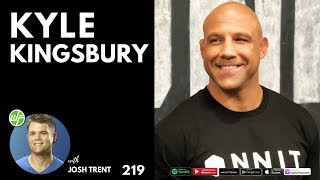
Episode 219 (YouTube podcast, July 27, 2018) — Host Josh Trent interviews Kyle Kingsbury (Director of Human Optimization at Onnit) about his life arc: turbulent childhood and parental divorce, high-level athletics and UFC/fighting career, a near-suicide event in college, and recovery through diet changes (gluten elimination), meditation, breathwork, plant medicines (psilocybin, ayahuasca, 5-MeO), and lifestyle practices (cold baths, sauna, NAD support, berberine, genetics-informed nutrition). The conversation covers mental-health biology (gut–brain links, medication effects), practical tools (Breath of Fire, box breathing, Wim Hof method, chest-freezer cold tubs), approaches to forgiveness and meaning, and Kyle’s public work (Onnit podcast, social handles).
Questions this video answers
219
July 27, 2018
@kingsboo
Approximately 1,500 mg daily (about three 500 mg capsules)
Chapters
You got to do the work. So how can I look introspectively at what's going on inside? What are the techniques that I can have to really influence and check in on a regular basis? So I know, like, oh, fuck, I feel fear right now. I have anxiety about this thing. I'm worrying too much. Right? Meditation has been instrumental in that. Like, you have to check in. One of the things people ask me now, even this week, doing other shows, is like, do you think it's an error to constantly want to search, to constantly want to desire more? Right. They talk about that in Buddhism, like, to feel this need to learn more, the need to have more, to be a better athlete, or what's the next goal? But now, when it comes to wanting more for myself and wanting more for others, it's really just fine tuning what makes us feel better, what makes us feel more whole, what gives us the most out of life, what encourages us to do better for ourselves, and what gives us the most bang for our buck in the shortest amount of time.
That's Kyle Kingsbury, and this is episode 219 of Wellness Force Radio. What's up, my friend? It's your host, Josh Trent. And welcome back to another episode for your weekly access to global experts in all things wellness as we discover the physical and emotional intelligence we need to live life well. In this podcast, we spotlight the Director of Human Optimization at Onnit, a company who has become such a trusted friend of wellnessforce. After so many conversations with the change makers and thought leaders from Austin, Texas, where they're headquartered, I got the chance to sit down live it in person with Kyle just a few days after his interview on the Joe Rogan podcast in Los Angeles, which was much different than where we went in this conversation. You know, Kyle is what I believe to be the modern day definition of the peaceful warrior. He is this true beast of a man. Yet when he speaks, there's a deep knowing of kindness and gentleness and service to others. I know you're going to enjoy this conversation. Truly one of my most favorite podcasts to date. We talk about the hero's journey and Kyle's quest and passion for human optimization. But the truth is, we cannot optimize ourselves with any powders or pills or even training routines unless we have a dynamic relationship with our breath and our posture. Which is why this episode is brought to you by our partners@intelliskin.net, a clinically proven technology to help you correct your posture by giving you a tactile response throughout the day. So whether you're a weightlifter, a runner, a yogi, or doing anything else that involves proper posture, like sitting or standing at your work desk for multiple hours, this actually allows you to take deeper breaths because when your shoulders are pulled back, you can breathe more from your diaphragm. So breathe deep and stand tall. Head over to intelliskin.net, enter code WF20 and give this product a test drive for 20% off. I'm also beyond excited to offer five more people in our Wellness Force community and our audience a deep dive call. A free Q and A where you can pick my brain about everything for physical and emotional emotional intelligence, including many of the subjects we explored with Kyle on the show today, just head over to wellnessforce.com call and sign up for a free call the first five people with me. This is such an enjoyable way that I get to give back to our community and support you in your wellness journey. Wellnessforce.com call, sign up for the first five people for your free brain picking session and deep dive with yours truly. And I truly believe that Kyle is in the upper crust, the top percentile of leaders in our wellness world when it comes to human optimization. And on this podcast we're learning from him about his challenging road in childhood, to college and becoming a highly ranked professional UFC fighter. To take a breath and leave it all behind. To go through his huge lessons and thresholds in his own health, both mentally and physically, what he considered when ending his life at one point in college and the story that saved him. We talk a lot about depression, how this can happen to anyone and it doesn't always have a face. You can see how Kyle found Paul Check's work that drastically changed his life through an elimination diet where he found he had a gluten intolerance, how Kyle found a higher truth through plant medicines and psychedelics. And we explore many nuances in this quest for human optimization for all of us human beings, including NAD production Berberine cold baths 23andMe carb testing. So much more. Let's dig in right here, right now live in Los Angeles with Kyle Kingsbury. And as always, we do the work for you all the show notes today for all the podcasts, today's episode is at wellnessforce.com tv219. Don't forget to give Kyle Kingsbury a huge shout on social media, especially on Instagram. He will respond to you at kingsboo. Now let's jump in with Kyle. Bro, you got a lot of responsibility like this position. By the way, how Badass does human optimization director sound.
It's pretty dope. I'm happy you got that right. Some people are like, oh, he's a trainer at on it. I'm like, nah, I don't train people anymore.
No, this is, like, this is a very highly specialized position at a really groundbreaking company. Like, I love Onnit. I love everything Onnit stands for. Had Aubrey on the show a couple times and got to be with Connor and just meet, like, more on it people, and they're all warm and inviting and open. I think it's because they explore a lot of things that a lot of people are scared to explore.
I'll say that. Yeah, we're kind of. We're kind of not everybody. I can't speak for everybody, but a lot of us are on the same page when it comes to the exploration of consciousness and just really, what are all the tools that help us get better?
You've explored your whole life, man. Pro football player, almost rode the bench. There were some issues there that we'll talk about, which your story is fascinating. Like, I had. I had the most enjoyment prepping for you of almost any guest because you've been through so much, and it's really the story of the hero's journey. Like, that's the conversation I want to have with you, man. It's really like human optimization and this other intersection of the hero's journey. Because the way that you've come from these early years, like, in the very beginning, when I first met you, we talked about this already, man. But, like, it's the first time in my life I've ever been interrupted by a guy in a Speedo. Especially a guy like, when I first met you. I'm not going to lie. Like, I was pretty intimidated. Cause I'm like, this dude's really muscular. He kind of looks like a fighter. And you're like, hi, Hello. I'm Kyle. And you shook my hand, but you were wearing a Speedo. And I thought, okay, he's got a cool sense of humor. And so then it opened you up to the whole room. Where do you get your sense of humor from, man? Like, where is that for you?
Both my parents are pretty funny, but my mom is just nonstop, like, you know, everybody always thought she was the goofy old lady, you know, when we were growing up. And she's younger. I think she had me when she was 20 or 21. She's got such a great sense of humor, you know, just always laughing. And that's her medicine, you know, I absolutely Love that about her.
What. What is a Director of Human Optimization? Like, what does that actually mean if somebody doesn't know what that is?
Yeah, that's a tough one to answer. It's funny because I was prepping for Rogan's with Aubrey, and, you know, we had some bullet points of things that I wanted to mention, and I was like, you know, he's like, is there anything you're uncertain of? And I go, unless you're in the room, anytime somebody asks me what I do at on it, I think I leave 90% off the table. I'm like, well, I have the podcast, and I'm kind of the office guinea pig. And, you know, I work in product development on supplements and food lines and everything that we're doing here. Yeah. And I help with this. I help, you know, I do with social media posts for the life hack of the week. But there's. It's just. It's more than that because, really, Aubrey's so busy, and there's a lot of people that are. That are higher up than I am, that have, you know, they're really good at the one thing they do. My job, really, if I think about it, is to learn. I mean, they're paying me to learn whatever the cutting edge is, and that. That includes physical, mental, emotional, and spiritual, all of that. Whatever moves the needle. On Total Human Optimization, I just had.
This shot of excitement in my chest. What a dope job. Yeah, it's like a dream job for you.
It is 100%.
There's nothing else that I like. I think for you, this will be something that carves out for eons. Right. This is going to ripple out into, like, your lineage, your son. You're a dad also, too. Like, this is the first time you've had a 9 to 5. It's also, like, how do you navigate this space of being a family man, being a husband, being a father, and having the first nine to five? Like, was there an adjustment period there?
Major adjustment period. And thankfully I had gone. When I had my own podcast before coming to on it, I drove a thousand miles each direction to podcast with Ben Greenfield. And I've mentioned this before, so I apologize if people have heard this story, but I had this idea that he was gonna be, like, Captain Fantastic with Viggo Mortensen, you know, like, he was homeschooled K through 12. I thought these guys were gonna be completely off the grid, naked family on the banjos. And it wasn't that, you know, and he told me he's out of town, so much traveling, and that's kind of where I'm at. My wife was homeschooled up until high school, and it's something we've talked about often. I see a lot of benefit there. I don't think what we're force feeding kids to learn in school, especially in public schools, is very beneficial, you know, except at Waldorf. Well, yeah, Waldorf's a great school. That's not a public school, though, right? And they allow kids to excel in different directions, certainly on our radar. Talking with guys like Paul Check, who's a huge Rudolf Steiner fan. Rudolf Steiner obviously put Waldorf together, you know, but I mean, thinking about that. So Greenfield, I'm with him in it, and I'm like, why'd you put your kids in school? And he said, you know, because I'm gone so much. It's a lot to ask of my wife. And even though we have family here, it's just too much. It's. She needs a break, you know? And I thought, man, that's a good idea. And he said. And I said, so how do you really teach them what they're not learning in school? And he said, I have a job to do as provider for this family, but the second they're done with school, I'm full time dad. I'm 100% invested in them, so I make sure everything is done. That way, when they're done with school, I can take them out and teach them about foraging for edible plants and mushrooms, how to shoot the bow, how to throw an axe, and just how to connect and really get out there and play in nature.
He's such a present dad, too. I got to meet him at the Mark Devine, the Seal Fed event, the Beetle Mind event. And he's there, his kids are running around the hallways. He's like, come here, guys, I want to show you this. And he's opening up a plant that he found outside. Like, he is just a very present father. And that's not the case for a lot of us, man. You know, my dad left when I was 2 months old. Your family structure, like, it really forged you to be this now Director of Human Optimization. But I'd love to give somewhat of a story about your childhood because, God, man, it was so inspiring, like, reading about this and like all you've been through. And really the question is, like, this relationship with your dad now is amazing, but it wasn't always that way. Can you share what it was in the beginning?
Yeah, I mean, one caveat I like to mention When I talk about my childhood is that it's not. It's not a woe is me story. And it's certainly not, you know, I had it worse than other people because everybody carries shit with. Everybody has stuff. When I did the solo podcast where I really dove into my depression and my upbringing. You know, there's a study that. That said kids who were beat felt more love from their parents. And this is not advocating beating your children. Right. But kids who were beat by their parents felt more love from their parents than the parents that were never there. The parents, you know, the rich kids who had a nanny and their parents were always gone on vacation or work trips and just didn't give a shit. Like, yeah, you can go out. I don't care. Go, go hang with your friends, spend the night. I don't care. Like, zero discipline, zero interaction. They're just not there. Right. So that was interesting to me. I certainly didn't have that. My parents cared, you know, and they. They just fought a lot. They were like two rams. No one would give in. The communication style was complete garbage, you know, And I saw the writing on the wall. From a young age, my mom talked to me about getting divorced, I think when I was seven or eight. Two thumbs up again. She brought it up when I was 10. Let's do it. I've been waiting for this. At 13, I was ready. And I had a prediction that they would both be less stressed and that my relationships would improve with both of them. And that was true. Completely. My sister didn't take it as well. She's a year younger than me. And obviously most kids want to see their family stick together. You know, they don't know what that looks like. You don't know why mommy and daddy don't love each other. And the crazy thing is, I think my dad would have stuck it out in hell the whole time. But I'm thankful my mom pulled the plug, you know, and both of them are better people because of that.
But, you know, like you said, the relationship now is love based, understanding based, empathetic based. Just because we go through these thresholds doesn't mean they'll be that way forever.
Yeah, it's certainly the case, you know, and I've had the fortune. My dad still was my dad, you know, my parents, we live in California, so mom gets full custody, mom gets alimony. What part of California were you in? Bay Area.
Yeah.
Sunnyvale, Cupertino.
Okay.
And, you know, looking back on that, like, I didn't see him as often. He didn't get to be, you know, he still came to all my sporting events, still talk with me on the phone. We go spend the night at his house every weekend or every other weekend, and he's still involved. But there was definitely like, all right, now I have a little bit more flexibility now I can kind of be the man of the house. I can kind of do that stuff on my own. And, you know, at a certain point when I was starting to get into ayahuasca and different plant medicines, I. On my fourth ceremony with ayahuasca, I saw. I was a little boy crying in my room as a seven year old. And I saw my parents fighting constantly and how much that was affecting me. And I was like, fuck. And the thing was, that was beautiful, was that in that experience there was no blame. I didn't look at them like, look what you fucking did or any of that stuff. It was just compassion. Like, I was like, damn, these guys lived in so much fear. And that fear and lack of communication skills and lack of tools for. For them to find some sort of inner peace. They didn't have it, you know, like, they just. And they didn't know when to use it. Like, they both studied meditation and different things. I didn't find out about that until later either. But to have the tools and not use them is just as bad as not knowing to begin with.
This is Dan Pardee's ethos. Absolutely. And knowing and then not doing is the same thing as not knowing.
Yeah. And Bruce Lee. It's not enough to know. We must do, let's do right. Same thing. So, I mean, but in that experience, there was so much compassion for them and understanding, like, oh, okay. And really just love, love for my parents, love for them, and like a feeling of sorrow that they were in that position for so long.
But there was one moment, though, where you had gone through just nights of like, darkness of the soul multiple times over. And then flash forward to college, you're naked dude, on the top of a parking structure about ready to end your life. And I'm just thinking, like, I'm like, as I'm listening to you talk about this in the onit podcast, I was. I could really see it. Like, you're a master storyteller. I really enjoy how you tell story. And I thought to myself, what the hell happened for him to get there?
Yeah.
What was that like? What. What actually took you to that edge? Thank God there was a security guard there.
Yeah, Well, I think, honestly, thank God. Thank God. Yeah. I, you know, had been in church as a little kid, nothing really resonated with me. There's many more things stuck out to me that didn't seem right than seemed right. And even though I believed in God, it was like it was on the surface, you know, I never felt touched or felt moved or any of that stuff. And, you know, I. I can talk all day long about the. The upbringing and things like that, but really, you know, I fought a lot growing up. I had shit that I hadn't unpacked, you know, and I was doing the bad drugs. I was doing bad drugs. My rule of thumb on that, like, what's a bad drug? Does this leave me more whole? Do I feel like the next day. Do I feel like shit for weeks after taking this drug? That's a bad drug. If I feel great the next day and there's no hangover, that's a good drug.
Would you consider alcohol a bad drug?
Yeah. 100. There's no doubt. I mean, then there's still a right way and a wrong way to do anything. We did a podcast with Todd White from Dry Farm Wines. I don't get hungover drinking that, you know, so, like, there's, you know, there's some wiggle room there, and alcohol is America's drug, you know, But I still took a long break. I quit alcohol for nearly two years when I was working with ayahuasca. And I think that was a really transformative time in my life. That was very necessary. My relationship with that drug changed during that time.
A trainer? Actually, it was either a colleague, like a fighter of yours, or one of your guys in your circle is the one that introduced you to ayahuasca, right?
Yeah. Huitzi. He passed away. He introduced me to. He would do traditional sweat lodges before and after every fight camp as a way to kind of hone in on what we want to accomplish in the fight camp.
And.
And then for healing after each fight, you know, like, let's let go of the things that we did wrong. Let's help our body, our mind, and our heart heal, and then we move forward from there. And after a few of those, I had asked him, like, when are we going to use La Medicina? You know, I had heard about these traditional sweats and how the natives would do it. And he said, I was just waiting for you to ask. So introduced me to psilocybin in a proper way, with set and setting and an intention and a reason for what you wanted to do and journaling and meditation and prayer and all these things. And it's it changed the way that I worked with it. You know, I had done stuff recreationally in the past, and the bad drugs, not much. Well, even the good drugs, even psilocybin I had done in the past, but it was. I just wanted to feel different or what's this gonna do? Not really having an attention, not really trying to work on stuff because I was unfamiliar with the possibilities. Right. So he kind of gave me, he opened up that doorway to really understand, like, this is a tool we can use that can be one of the most transformative things in your life. And from there we started working with ayahuasca and that really changed things quite a bit. But this all happened in fighting, you know, so if you rewind to that time where everything boiled up inside and I find myself standing on that rooftop, you know, I had a doctor that prescribed me anything I wanted. So I had Xanax, Valium, Vicodin. Half the time if I was going out at night, I'd do coke or ecstasy, which has long term consequences. I mean, I don't even think cocaine's that bad in and of itself, but you drink so much more and you don't sleep. And now we look at sleep, it's.
Definitely a bad drug.
Sleep, Sleep will mess up neurochemistry. Like one night of lost sleep messes you up for like a couple weeks. It's a bad deal. Right. And certainly you have a neurochemical response from ecstasy, from really bad ecstasy. That's. That's cut with a ton of things.
How many years was this? This is Arizona State University. What was the span of you, like, really finding yourself experiencing the darkness, Getting saved by this security guard who honestly probably was like a freaking angel.
Yeah.
You know, did he have wings? Like he really. I don't want to make light of the situation.
Yeah, like, you're starting. I had, you know, it was, it was not. Certainly not in football season, but outside of football season, which is the majority of the year, I would play with my consciousness and I was using tools that were not leaving me more whole than when I started. And because I didn't have tools like meditation or anything to really take a deep inner look at myself, it just went unchecked. You know, you go through life and you don't pay attention to things like that. And you're kind of on fucking autopilot, you know. And I would drink to the point of just like, it wasn't like this. I feel bad. I'm gonna drink because I feel bad. It was like, nah, I Just want to tear it up tonight. You know, there was this itch that I had to scratch and that was consistent from 13 years old on, you know, so football ends and I have. I lose this sense of camaraderie in team and I'm training by myself. You know, I feel like a fucking rat on the wheel on a treadmill and lifting alone and not having real, any real direction in life and knowing the light at the end of the tunnel is having a 9 to 5 desk job doing sales or doing what paralyzed you.
I mean, that's like one of your biggest fears that you said you experienced.
It was absolutely horrible thinking like, this is what I'm going to do. I'm going to become one of my parents. Like I had zero, zero drive to have that come to manifest.
And it's like no knock to people that are listening that have these nine to five jobs.
Yeah, I got a nine to five now, you know, so like, hey, I'm a part of it, right?
So.
But at that time came around.
But at that time I so relate.
I wanted to be a pro athlete. I wanted to continue on. I loved what being an athlete and being on a team did for me, you know, and when I lost that, I lost a big part of what my outlet was. So now I had all this stuff inside that I hadn't dealt with that I was kind of just managing through football and training with my team and having guys that cared about me and that was gone. You know, you hear about the same thing with people in the military. This is one of the reasons I connect with those guys and gals so much is that that's a big piece. Same with fire, the fire department. That's why I looked into doing that. But you know, facing all this, it was really hard. And then it just kind of boiled up to the point where I didn't want to live anymore. And I thought that there, you know, when you're that depressed, it hits you with this. It will never get better. There's no way out. And you know, people say it's selfish and, and that you don't really. Oh, they don't care about their family or they're really selfish. And it's about under. Like you have to understand, like they're not seeing any possible outcome or solution to the problem. And if you feel like this is how it's going to be the rest of your life, I see why people take their lives. Right. It doesn't mean I don't want to give them tools now. Now that I have Them, I feel, like, called to teach people these tools on how to live better. But at that time in my life, I didn't have any of that. And, you know, when I was up on the, on the, the side of parking lot 7 at ASU, just completely naked, I had taken every pill I had in my cabinet. Thankfully, there wasn't enough to kill me at that point. I just felt this wash, like this warm wash come over me of, it's okay, it's okay. Not yet, you know, and that was like, my man. I knew it wasn't me. Like, that was. That's the only way I can say it. Like, whatever I call that, whatever we are, consciousness, souls, whatever you want to. Terminology you want to use. Like, it didn't come from me. And I was like, fuck, all right, okay, I'm not going to do this. And right when I thought, I'm not going to do this, I heard, hey, come on. Come on down. Are you okay? Come on down. He's like, oh, you're naked. You know, like, yeah, sorry, I've got a robe. And, you know, I blacked out completely. Woke up in a hospital a couple days later. My family had flown out and, you know, I spent about a week in a psych ward or whatever. You know, my mom called it the loony bin. But, you know, even in that, there was people there who had real issues. And they're looking at me like, you're a good looking guy. You're in fucking college. What are you doing out here? Yeah, why are you here? You know, like, you got all this stuff going for you and it's like, you don't know. You don't know. You know, like, you don't know, like, depression can hit anybody.
And people don't understand, too, the biology of this. And it's like, interesting timing. Man with, you know, one of the biggest stars in food right now just took his own life. And it's like, I think about how little the conversation actually happens about suicide and suicide prevention, the biology of this thing. All the blood rushes to the prefrontal cortex. The body literally feels like it's under attack all day long. And it could be a multitude of things. It could be the gut biome. It could be, like, the food that people are eating. It could be that they actually have, like, a legitimate chemical imbalance. My mom was bipolar, so I understand this. But what do you think it was, man? Like, was it the gut biome? Was it the upbringing? Like, there was a multitude of factors.
All the things, right? It's all of it. It's not any one thing. Diet was certainly an issue, you know, and that people gave me for that too. Like, oh, you can't say, like, you go gluten free and you're not depressed anymore, but if you have a gluten intolerance, which I did, like, that's literally ripping my insides apart, you know, and it's causing my body to attack itself, it's causing autoimmune issues, it's causing systemic inflammation which impacts the brain. 80 to 90% of our neurotransmitters, the good ones. Serotonin, which is what SSRIs are based around, is made in the gut. So if I'm eating like shit, and unknowingly at that matter, I may not be producing a high amount of serotonin or may not be working properly, right? So that was an issue, you know, But I think a lack of meaning, a lack of purpose and a lack of drive packaged with trauma from my childhood all rolled into one with the shitty diet, all rolled into one with seeing, like, no brightness in my future, that really was the nail in the coffin, you know, and. And coming out of that, I knew right then, like, man, these, you know, the anti anxiety medication, that's a factor for sure.
How many years have you taken those?
Oh, man, I don't know. A couple. Okay, yeah, but that's a factor.
You said take that.
It was, it was. Lithium is what I got later. And I'll dive into that in a second.
Ye.
So Xanax and Valium, you feel high, it's euphoric, you feel great, your anxiety goes down. What happens when you stop taking that? The body wants homeostasis. That's why you have to scale up. If you take that stuff every day, if you did coke every day, you'd have to scale that up. My friends who smoke weed every day scale that up. Like, look at Joey Diaz. He's eating a thousand mgs of thc. Nobody on earth can do that, right? That took time. He didn't start there, you know what I'm saying? So with those pills, I mean, if you stop taking that, what happens? All your anxiety is still there. You haven't worked through any of the reason you had fucking anxiety in the first place. I certainly hadn't, you know, and so when I. When I finally cleaned up, being in the hospital, they wanted to put me. I had a psychiatrist put me on lithium. I said, sure. And again, I know people that have really been helped by lithium, but for me, it turned me into a Complete mute. There was no high, there was no low. I just felt like I was watching a movie. In life, you feel like there was.
Just like a perpetual fog around you all the time.
Yeah, I was just along for the ride. Like, nothing tickled me, nothing made me laugh, nothing made me smile, nothing hurt me. Like, it was just. I was just here, like, observing, like, and there was no purpose or point. And like, you kind of want that in life. And that's one of the beautiful things about psychedelics, is that you learn to appreciate all of it. There is no bad without good. There is no up without down, no fat without thin. Like, all these things. And oftentimes now you look back on the bad thing and there's gratitude there. You realize that was the catalyst for growth. That was what I needed. The stress that I needed to change, to want something better or to learn something new, right? Without that, why would I want to learn all the stuff that I've learned? When I figured out that I was gluten intolerant, I had done a 30 day elimination diet.
From Paul Check.
From Paul Check. From how to Eat, Move and Be Healthy by Paul Check. And it was while I was fighting early on in my career, like, I think first year, and I added it back in to my diet. I was eating gluten, three square meals a day, cereal, sandwich, pasta, every day, my entire life for 30 plus years in there, 26 years, you know, and then cut it out for a month, add it back in. I can't breathe through my nose, I'm farting like crazy. I feel terrible. My knees swell up. So I'm like, I had this weight vest on my entire life, didn't realize it. Took it off, I put it back on. And not everybody's gluten intolerant, but I was. And it was a big deal for me if that planted the seed for me. We want to learn more about diet, wellness, health and nutrition. And so the same thing can be said for this mental health aspect, right? Like seeing where I was at and which chemicals are allowed by law. Like, this will fix you. It doesn't fix a damn thing. You got to do the work. So how can I look introspectively at what's going on inside? What are the techniques that I can have to really influence and check in on a regular basis? So I know, like, oh, fuck, I'm in. I feel fear right now. I have anxiety about this thing. I'm worrying too much. Right? Meditation has been instrumental in that. Like, you have to check in.
But before you Found the meditation though, there was a lot that you had processed. Like you didn't find meditation in college, right?
Not at all.
This is during fighting.
That came through fighting. So much, so much came in fighting. Because I had a reason to learn and I used to play. I play John Madden football. I'd wake and bake from a four foot bong and play John Madden football for fucking 12 hours. Not see daylight, order delivery food and just fly through seasons of football.
I think most people have that phase.
Yeah. And it's okay. But I'm just saying, like it's not. It doesn't serve you. You know we're in this game, right? Aubrey talks about the game we're in. It's the greatest game. It has all the challenges. It's you might win, you might not, right? And you've got all these people that can be on your team and there's enemies and there's. And how you look at things. It influences all of that. And you know, you play the game where you've got unlimited lives, unlimited ammo, like the game sucks. You put it down. If you beat a game in 30 minutes, the game sucks. You don't like it. Bad review, right? So we're in the most challenging game known to man. Why play the game within the game? You know, why do that like that? That doesn't serve me. It doesn't do much for me. So in fighting, I saw this pie chart of how much time I spent playing a video game or watching distracting TV or something. So I was not feeling what was going on inside versus how much time can I actually spend working on mobility recovery, getting massage, doing an ice bath, or just reading so I can learn about these techniques that help improve me as a fighter.
Yeah.
And what's beautiful in fighting, because it is the ultimate test, is that you have to hone your mind. You have to figure out ways to drop from that fight or flight state into a more calm, parasympathetic state where now you can see things. It opens up your field of vision. You can't have tunnel vision, Right.
This is fascinating to me that as a fighter you said you have to get out of Fight or Flight as a fighter. Why is that so?
Well, you're going to be nervous. I mean, you have to have some level of nervousness. You can't go in there and just think like this is going to be a walk in the park. Right.
It's so primal. It's like primal fear.
But at the same time, if I get tunnel vision because I'm Scared. There's a difference between being nervous and being scared. Or if I'm angry and I just want to destroy the guy, I'm not going to make great decisions. If you ever see a guy in a bar fight try to muscle a haymaker, like, dig that punch. That's not a fast punch. Right. Usually the guy cocks back and gets drilled three times in the face by a pro boxer. You know, he'll get jabbed to death if he's doing that in a fight. So finding that balance of. All right, I have this level of nervousness. I'm tuned in, I'm awake, the juices are flowing. But I can also take a deep breath and relax. I can see things from all angles. I can be calm in the storm. That translates out into everything in life. And there's so many of these tools that we have that can train that level of calmness in the storm. Right. The cold bath does that. Breath of fire and different forms of meditation that jack up the heart rate, but ultimately calm us on the inside. Where I Forget how Brian McKenzie and Rob Wilson say this. Common alert. Common alert, Right. That's what the Navy SEALs want to do. You read a book like Stealing Fire. That's what they're talking about. That's how you hack flow.
Yep.
You can't be sleeping on the job. Right. You have to have a certain level of. All right, I know I'm in combat. I know I'm. I know I'm in the cage. I know I'm wherever the shit is. But let me be calm while I'm in the heat of this battle. Right?
Yeah. But when you found fighting, it wasn't calm. You said it was the best drug you'd ever felt, like the Art of fighting was the best drug you ever felt. This wasn't a calm stimulus for you? No.
All this stuff happened over time. You know, when I first fought, I wasn't sure I was gonna fight, and I kind of was just like, yeah, all right, I'll try it. And I won my first fights in under 30 seconds. And that was better than any drug I'd ever have. You know, like playing football, you're on a giant team. Maybe you get one or two sacks a game. Playing defensive line, if you're good, and. And that's your big thrill. It's not like you scored a touchdown. It's just one play that you did well. Single sports, I think, are tremendous because you feel lost. It's all on you. You feel the win, and it's all on you. You know, so having that, it's like a home run magnified by whatever, you know, like you're just, it's all on you. And to physically dominate somebody, especially when I had that much anger inside and really a lot of self work not yet accomplished, it was, it was, it hooked me in hook, line and sinker.
The fighters that go through the UFC and most fighters, I would say, do not have the spiritual grounding that you have. Like, why do you think that came to you?
It certainly came to me from ayahuasca and psilocybin. You know, like it's, it's hard not to have a deeper sense of connection to reality and what this is and, and this one layer of reality that we have on a day to day. I don't know if you've ever heard Graham Hancock talk about that.
Love Graham Hancock, he's so amazing.
But this idea that our brains are receivers like a radio and we're tuned in to radio station Earth.
Is this where Corey Allen got the meet radio thing from? Where he's like, the mind is a meet radio. I wonder if he learned that from Graham Hancock.
Yeah, but Graham talks about that so well and he just says, like, look, when we take this substance, or if we do holotropic breathing, or if we're in the float tank or fill in the blank, to alter our state of consciousness, we change the dial. And so it's, it's weirder. It's. The truth is stranger than fiction. Like that those substances and those things that you do are the realest thing you've ever done. Michael Pollan talks about that, how meaningful it is when you go through, you know, an ayahuasca ceremony or a breakthrough heroic dose psilocybin journey. And in that experience, I don't give a fuck who's telling me which scientist is going to tell me. Well, this is what happened. Chemically, it fit into this spot in the brain. And what you saw was a hallucination. It doesn't exist. It's not real. It's like bullshit. I became my mother. I watched Kyle grow inside my mother's belly. Time lapse. I saw Rick, my husband Kyle's father, come over and kiss my belly. And I could feel fucking love go in my body as mom and touch my son and come back to Rick, my husband, Kyle's dad. I fucking felt it through my body, right? Like it's not like you're watching a movie. Like you experience all the feels and it's 100% real.
I saw something on the Same note that you're talking about, man. When I was in Costa Rica, I was a baby. I was like a year old, and I had fallen off the bed. I have a flat spot in the back of my head. And I looked up and I could see my mother through my baby's eyes in, like, the fourth night of ceremony. And there was this moment where I was like, oh, my God, all we actually have is just to bleed gratitude. When we get stabbed with adversity. This is all we have. Like, we get stabbed with adversity, and then we just get to choose to bleed gratitude. Because all we have is each other in these crazy moments. And I wonder if for you, it's like, do you think that that feeling of, like, understanding what gratitude even is, like, maybe you weren't taught that. Maybe your parents didn't even know how to teach you what gratitude was.
No. And that's.
Those.
Those are the things that make it the most impactful to me is that you can read about all this shit. You can read about ayahuasca, you can read about gratitude, you can read spiritual texts, but to embody that, you know, there's been so many ceremonies where words have stuck out to me in gold letters. Gratitude's been one of them on many occasions. Right. And to feel that through every fiber of my being, like, to know what that is through everything, right. That's powerful. To know, to see discipline in gold letters and to know that doesn't mean beating your kid or getting in trouble, that means that discipline is to do what's right. For me, to make the decision to eat the right food, to meditate when I don't feel up for it, to go for a walk outside, to do tai chi, to get in the water when it's freezing cold, whatever, fill in the blank, just to do the thing that serves me well, the thing that's.
Going to help me the most, what was the moment? Where do you think the plants are? The ones that told you? Like, did higher intelligence tell you to stop fighting through the plants?
No. You know, it's funny because, I mean, I would have liked that they went down that way. I was gaining so much knowledge. I had, you know, I had the shoulder injury in 2012, and, well, I had a face injury in 2012. Left side of my face got fractured again for the second time. And I really was considering, like, do I retire? Do I go back? I'm not making any money. There's no future in this.
You had to have a side job.
At this time for seven years. I bounced and bartended at a pseudo strip club. And not the best environment, but ultimately gratitude for that as well.
Yeah.
You know, and so I get this shoulder injury in training, coming back from it, and I was introduced to ayahuasca all in this time, and, you know, I took the time off that, you know, sidelined me for about another year. But ultimately I wanted to come back one more time. Like, can I put this? All this knowledge and wisdom that I have on being present, on not fearing things that aren't real, you know, like, all right, I shouldn't have to worry about that. I shouldn't stress about the outcome of a fight and go back in and fight one more time. And I realized in the fight, like, this is no longer important to me, me. And that's not to say, like, I could have won. Like, that guy Pat Cummins might have beat my ass 99 out of 100 times. Like, he was just a great, great bad opponent for me and a great guy, you know, But I think I wanted to do it one more time. And what was cool was when I dropped into ayahuasca ceremony after that fight, I was still living in a very polarized way. I would meditate every day, eat perfectly clean organic food, gluten free, read books, be in nature, train. But equal parts, as Palczyk puts it, working out and working in. I was taking care of myself. And then after the fight, coke, ecstasy, alcohol, gluten, bad food, no meditation, no reading, shitty tv. Because I've been a good boy for eight weeks. And I deserved it, right? This reward for being so good. And ultimately, if you fight three times a year, that was eight weeks I was doing it right. Eight weeks I was doing it wrong times three. That's fucking half the year. I was living like shit. So in this ceremony, I was like. I asked, why did I need to fight again? And it pulled me into this. It showed me how I felt. And I could feel the best I've ever felt in fight camp. Like, I was alive, maxed out. And then it would show me after the fight, and I would feel just fucking ruined. Like I couldn't move my body. I felt sick to my stomach, sick from the alcohol, cracked out from the lack of sleep and the blow. And just I felt all of that. And it shifted back and forth multiple times until I got it and said, okay, I understand. Please don't show me this anymore. And it. And, you know, ayahuasca kind of relinquished that hard lesson of understanding. And I really understood, like, oh, I don't need to have a fight on the schedule to live properly. I can live this way all the time and it just takes discipline.
It's crazy that the fighting, such a visceral, primal, like really the part of violence that I think so many men are disconnected from, brought you to a place where you were doing so much intuitive self care, you know. And Paul Check, being one of the guys that like really helped you with that. It was a book that was given to you by the same gentleman who led you to ceremony or a different guy.
Different guy. This was much earlier on. Great guy too, you know, who had been working with Paul Check in the past and taken a lot of his courses. But yeah, you know, like things. It's funny, you look back and like seeds get planted at different times and the ones that are important, they all grew and blossomed and planted more seeds that grew and blossomed and from there it continues to be that, you know, like there's this idea. One of the things people ask me now, even this week doing other shows is like, do you think it's an error to constantly want to search, to constantly want to desire more? Right. They talk about that in Buddhism, like to feel this need to learn more, the need to have more to be a better athlete or, you know, what's the next goal, you know, like if I'm not fighting now, I wanted to run a 50k ultra and I did it or I wanted to, I was training with power lifters and I wanted a 600 pound deadlift and there's some truth to that, like you always want more. Like had I accomplished the 600 pound deadlift, it just would have changed, the number would have become 650 and then 700. Right. So there's no limit there. But now when it comes to wanting more for myself and wanting more for others, it's really just fine tuning.
What.
Makes us feel better, what makes us feel more whole, what gives us the most out of life, what encourages us to do better for ourselves and what gives us the most bang for our buck in the shortest amount of time.
Well, also too, Brene Brown says in her work, I think braving the wilderness, if we lose our curiosity, that's actually the moment that we start to die. If we lose our curiosity, if we're not learning, if we're not like excited about learning, that's actually when the nervous system starts to feel like, well, why should I stick around?
And you see that, what's the point.
Of this for me to be here if I'm not going to Learn.
You see that in the elderly. People get so fixated on routine. And routine is great. Kids need it. We need it more than we think we do. Right. As adults. But when you get to be. You know, you see this in film. You see like an old person who's. They got their schedule down and I don't want to do that. And there's fear about walking in a different direction or. Or doing this thing that they haven't done before. And you never, you know, it's like the. The. If you don't. If you don't. What is it? If you use it. If you don't use it, you lose it. So, like, we have to tickle that creativity, we have to tickle that curiosity. And if we stop and become obsessed with keeping things fixated, everything's fucking transient in this space. Everything. Right. There was a poem I think Aubrey posted. Maybe he wrote it or he just retweeted it on. We're all sandcastles, you know, and that's what it is. Like, we build this beautiful thing and it's gone. The second the high tide comes in, it's gone. That's what we are. We're here for the blink of an eye in this one life that we're in. And ayahuasca has shown me things on reincarnation. I'm not going to shove that down anyone's throat. It's my belief now, but even if it's not, it's that much more important that we make the most of this existence, you know?
Do you feel like right now, though, that there's any fear of death for you? How have you dealt with fear of dying?
Far less so through ayahuasca. I think that's a common trip report when you understand, like, oh, I'm not my body. Like, whatever they talk about with soul, consciousness, whatever that is, that's infinite. And there's been even not. It was first. That idea was first introduced to me in ayahuasca sessions, but. But through 5 Meo DMT and higher doses of mushrooms, it's been confirmed time and time again for me that when I die, I will go somewhere else. I don't know what that looks like. Certainly. If it's anything like the 5 Meo Toad trip, I welcome that. It's pure bliss.
But there's a lot of people, Kyle, that medicine's not for. I know many guys that I hung out with on a regular basis years ago, and I was like. After my ceremonies the past five years, I was like, there's no way that my friends from the past could do that. And even my friends from now, many of them. What do you think, though, are the characteristics of people that should not be experimenting with plants?
I don't know that it's my. You're 100% correct. And I felt the same thing because when I first started doing ayahuasca, I wanted to shout about it from the.
Fucking mountaintop, just like anything.
Everyone. Yeah, everyone. I was like, I can't believe this exists. Like, I went through my whole life and this exists. Like this level of introspection and self reflection and healing and unpacking and perspective shift. I had no idea it even existed, you know, and how transformative it was for me. Like, I wanted to give that to everyone I loved. But ultimately that's. That work is for me to do and everybody gets to walk their own path. Right. So one of the things that I'm working on now is something I talked about with Mind Pump, because they're like, well, you know, you might. You might ruffle a lot of feathers or lose a lot of listeners if you start talking about God and start talking about ayahuasca. And I'm like, look, man, you gotta hit the lowest common denominator. We both agree about that, right? So it's not my place to say, this is for you. This is not for you. People have to have a calling to do the medicine. You can't just show up and say, hey, let's see what happens. It doesn't work that way. You really get more the more you put into that. If you follow Dieta correctly, if you meditate on it and have an intention and journal and write everything down like you get. And I've known this even of myself from the times where I just was like, I think I got this down. Let's, you know, see what information you gave me.
You're in for a slap. Yeah.
Or even just less information, you know, like. Like less. Less transformation, less healing, less everything. Because nothing's on my mind. I'm not giving this medicine something to work with on me. Right?
Yeah.
So I think knowing that there are people that may never have access, they may be afraid of the legality, they may not be able to take two weeks off from work or save up to go to the Amazon, because that costs a lot of money. And also it's a lot. It's a big time commitment. Right. Knowing that it's what tools outside of that are really gonna move people and help. And that's where breath work and the cold and Yoga and jiu jitsu, a form of martial arts where you don't get brain damage. Like, those are all extremely impactful for people.
There's also a reason, though. When I got to hang out in Austin, I got to go to Jamie Wheals house and interview him. Just. Just his synapses fire so quickly. There's no other way to explain it, man. The guy's brain, I think, from whatever work he's done, maybe exploring these altered states, the way that he can articulate information and make it understandable for people is unsurpassed. And so one of the things he's talking about, though, is he's actually going to be writing this new book where he's like, listen, it's not all about the plants. The altered states economy is not just about the plants. It's about everything else, man. So let's dive into some of this stuff. Because, by the way, before we move forward, man, I just want to thank you and acknowledge you for sharing your story, being so open and authentic. Like, we really appreciate that from you. Because I know someone's going to hear that, and they're going to be like, oh, Kyle's not just some perfect model. He's not like Adonis. He's had a life like me. So thank you, man, for going there with us. But I think about these other pieces of altered states that Jamie talks about, and it's like, we have breath. It's on my arms, which means if I can, I can breathe, I can choose. Like, breathing, for me, has been my biggest tool for anxiety. What does breath meant to you? Like, what's the breath work for you?
It's been massive, you know, And I continue to push the envelope on learning more there because it's something that hacks consciousness. It hacks our state of being. It changes our neurochemistry, like, instantly. It doesn't take a long time. And something that I found with people, you know, I can't sit quietly in a room for an hour. It's like, well, you know, yoga was really what we understand it with. Yoga is the first part of four pieces. And the fourth being you get to sit quietly in a room for an hour, but to move your body, to stretch, to open it, the same thing they do in Kundalini, you know, if. Did you watch Wild, Wild country on Netflix?
It's on the queue.
All right, all right.
It's on the queue. Don't ruin it for me.
No, I won't. I won't. But he practices Kundalini in that they don't talk about Kundalini. But you can see that they're doing forms of Kundalini. Yeah. And what are you doing when you're shaking violently and moving and screaming? You're moving energy out. OSHA was big on that. Paul Check learned it from Osho. Elliot Hulse does a grounding camp. Learned it from Osho.
That's right.
Right. So if we can shake and move and get this energy out. Ah. And move that out, odds are we'll be able to sit quietly much easier. Right. You don't sit. You know, if I haven't moved and I haven't done some form of breath work and I try to sit quietly, it's hard for me too. Right. I got a little kink here. I feel some anxiety coming up. Right. I haven't really moved that out of me. So if we find a way where we can dump that and you can do it through Breath of Fire Pranayama. That's quick. One to three minutes.
What's the Breath of Fire for?
People that haven't practiced just belly breathing. That's really short. In the nose, out the nose, tongue pressed to the roof of the mouth. Like if you swallow, you leave your tongue up there. Jaw relaxed, sit upright and then.
So you're seeing the belly come in and out really fast.
Yeah. On about a half breath.
Yeah.
And if you have to swallow or stop for a second, that's fine. Don't beat yourself up. Just get back to it. Set a timer for three minutes or five minutes. You feel way different. Way different. And it's kind of like an adaptogenic herb. If you're tired and want to wake up, it'll wake you up. If it's at the end of the night and you've got this anxiety and you're just trying to sleep and you do that, you'll dump your anxiety and be able to fall asleep. It's medicine.
Do you oscillate between the Breath of Fire and then also any other variations of holotropic? Like, have you played around with box breathing? Like a five count box breath?
I've done box breathing. I'm into all of it. You know, Wim Hof was kind of the first big tool for me with that, the hyperoxygenation, you know. And then from there, you know, you could feel that the chi, like your hands just curl in and you feel like you have balls of light in your hand. And I would even see colors and things and realize like, oh, maybe holotropic breathwork is real, dude.
When I was arrhythmia, there were people that didn't even take the medicine and all they did was breath.
Yeah.
And they got just as profound results because when you hyperoxygenate, you have hypoxia, you know, the clam hands and your mouth clamps up. You take your consciousness to a place where you're creating a barrier between yourself and the outside world. And it's just you and your thoughts and your breath. The breath work. Have you seen this with any colleagues or friends? Be just as powerful as the plants.
Yeah. And I was skeptical. I really was. I was kind of a breathwork snob. And I got to do shama Angelic breath work with Anahata as one of Aubrey's teachers out in Sedona. And they do this at Spirit Ranch, which is one of Aubrey's retreats that he does. So fun. And it's pretty much modeled similarly to Holotropic, but there's a much. You know, her playlist and the drumming, it's much more Native American wisdom based with that style of breath work. And it was full blown fucking visionary. Like, I was having deep visions, lots of color, like medicine, without any substance at all.
And it's just through breathing.
It's just your breathing. It blew me away because we do produce dmt, you know, it's in our bodies, produced in the lungs. They haven't verified it's in the pineal gland, but probably is.
You know what I was thinking about the other day, man? For some reason, when I scroll on Instagram, out of nowhere, there was this like, child being born. I kind of half threw up, but then I was half in wonder and I thought, oh, my God, is this the moment when DMT is released? Because this is what I've learned from research. It's like the DMT comes out when we're born and the DMT comes out when we die. So when a baby's literally coming out of the mother's womb, there's DMT being released in that moment. What do you think about that?
I think that's gotta be true. And we see this with.
Before the baby takes the first breath.
I think I can forget the name of the guy, but dmt, we now know, is one of the most neuroprotective chemicals on planet Earth. So if someone has a near death experience where they drowned and they die for four minutes and they are successfully resuscitated, they come back to life. What's their trip report? It's a fucking trip report, right? They're like, dude, I went to the light, I was in heaven. Or I saw all my relatives who have passed away and they have what sounds like a DMT or ayahuasca trip, right? DMT protects the brain and we can get that. We can rig the system through breathing. Even if we don't get the DMT space, we still shift our brain neurochemically, right? That's why Wim Hof says feeling is believing, right? And I love that because it's not. Don't knock it till you tried it. Like just give it a go. And it works quickly. It works really quickly. And that's something I trickle in on all through, interspersed throughout the day. You know, that's been absolutely transformative for me. Even, you know, Aubrey talks about that in on the Day in his book on the Day on youn Life. Six deep breaths. Science verifies six deep breaths. In the nose, out the mouth.
Remember he was on the show, he's like, it's six deep breaths, motherfuckers. Just take the breaths.
Yeah, that's it. That lowers blood pressure, right? That changes neurochemistry. That helps you feel good. That shifts you into parasympathetic, especially if you double the exhale. If you inhale for four seconds and exhale for eight, that's an easy hack to shift you from fight or flight. Type A go, go, go beta brainwave state into flow state into parasympathetic. Rest and digest.
This is huge, man. And this is why we have a new guide for the Wellness Force community that the very second thing on the seven steps is actually breath work. It's priming yourself for the day. And you know, Aubrey, I know, has spent time with Tim Ferriss and Tim Ferriss has talked about breath with so many guests. But to bring it home for people that like, are a little bit uneasy about even trying to do this breath, like what's something they can do, you know?
Well, you can easily do and you can YouTube. If I didn't give you a good enough example on the audio, but, but YouTube breath of fire, that's a very quick one that you'll feel if people are willing to pony up a little cash. I think that one of the best courses I've ever taken was on Wim hofmethod.com It's 200 bucks. It's a 10 week online course through with video. You get to learn his form of breathwork, which is transformative and yoga, different forms of stretching in yoga. And you get to learn cold. So he gives you an entry Point on. All right, we're going to do cold showers. We're going to prime your body with the breath. We're also going to start hot, then we'll go cold, then we'll go hot. You know, it doesn't really work if you're close to the equator, like just being in Austin, which is further south than San Diego. I just realized we never really have cold showers. Right. But ultimately that's to train you so you can get into the cold bath.
Yeah.
And that's a hack like, you know, that tackles so many things. It's the best investment I've made In the last 15 years, probably.
And that's just one of the tools. We had like three or four questions from the community. One of them was from John. He said, kyle, for mood enhancement, how do you use theanine for anxiety and stress? It's one of the tools that I've seen, but I don't know much about.
Yeah, we, we have theanidine and some different products. I don't take it by itself. You know, I think one of the easiest ways to get theanine is to just have Matcha green tea. And that's beautiful because if you're not a big caffeine person, it's balanced, Right. You get that slight upper from the moderate amount of caffeine. But theanine is very calming, you know. And you can take theanine in supplement form. I think the dose is between 100-200mg. But play with that because everyone's different, you know, like this one diet for everyone bullshit. You know, one movement type for everyone bullshit. Like, I encourage people to look into their diet. I think Wired to Eat is a great way to navigate that by Rob Wolfe.
Did you do the carb test?
Oh, yeah, I did it for like seven months now.
Did you wear the continuous glucose as you did it?
I did get to do that. I didn't get the Dexcom, so I was just finger pricking the entire time.
Wow.
And I did it every meal.
What did you learn about yourself from doing the carb test?
I don't do well with white rice. I look like Rob Wolf. I look pre diabetic. Another thing I found out there are some genetic factors in this. Obviously my fasting blood glucose was pretty high. And I was like, this doesn't make sense. Even when I'd go keto, it was pretty high. And then I found out later through some genetic testing and working with a guy named Brian Frissender who's a genetics specialist. If I eat saturated fat from animals, really high amounts, like pork shoulder, pulled pork, super high amount of animals.
Or like a white beef or something.
Yeah. That will cause insulin resistance and cause my blood sugar to stay up.
Are you Apoe 34 or 4? 4 or something.
One of the fours.
Yeah, one of the fours. Yeah, me too. And I found that out through taking 23andMe and putting it through Promethease.
Yeah. So you could. And that's a little bit harder to do. Rob will have me do that too. If you go to foundmyfitness.com Rhonda Patrick will take your raw data from 23andMe. And it's a $10 donation. And she doesn't give you everything Prometheus does, but she has a number of really important health markers, like vitamin D3. Do you produce it? Do you have enzymes that break it down quickly? All those things. So my wife and I Both need more D3. My wife and I both can't take plant based vitamin A and turn it into usable vitamin. We have to get that from animals. We have to get that from organ meat and cod liver oil. We have to get omega 3 from animals, from fish oil and krill oil. We can't take alpha linoleic acid from plants like chia seeds and flaxseeds and turn that into usable DHA and epa, which you have to have for the brain. Right. So absolutely critical. And then of course, the same thing. If I'm eating saturated fats from mcts, no big deal. From butter, no big deal. But if I have a big old pile of ribeye, then it's gonna be a big deal for me.
This is so cool, man. And this is why I love having you on the show, because you are just generally on fire, curious about this stuff. It's what you eat and sleep every day. What's one of the most fascinating things you've learned about yourself, specifically from testing like a 23andMe or like, Rhonda Patrick's work. Like, like, did you find anything that shocked you?
Yeah, I don't produce a lot of D3, and I have enzymes that break it down rapidly. So I can take copious amounts of D3 and just look normal. And D3 is like, wow, this guy's talking about a vitamin. Why is that the most important? Like, it's now recognized as a hormone. And sunlight affects 500 plus on off switches on an epigenetic level. Obviously, you can overdo that. You can overdo water. But my point is, like, we need the sun. Right? We're like plants, we soak that in. It influences far more than we have any idea about for our health, for our wellness. And D3 is a big part of that. Right? So supplementing with D3 is absolutely critical for my wife and I and my son, who's 3 years old, and it's the only supplement he takes outside of fish oil. You know, we give them the Onit joint oil. It's got high level of fish oil and different things in there.
Nice little plug for on it.
There A little plug for on it. Little plug for on it. But, you know, like, there's. There, there's. I can't put my finger on any one thing.
Okay.
You know, really, I can't. But I think the things that hit home on so many different areas, that's what fascinates me the most. And that's why I'm obsessed with the cold bath. So I was spending 40 to $60 a day on ice and putting in a horse trough. That added up quickly. Right now, Kelly Sturrett, the author of Becoming a Supple Leopard, was like, dude, get a chest freezer. So 500 bucks. Home Depot.com, zero affiliation with them. I get this delivered for free. We fill it full of water, Epsom salt and hydrogen peroxide. Every bath will last about a month or two. If I shower before we get in and I plug it in only like three days a week for six hours and it stays between 30 and 50 degrees.
This is the ultimate hack. Thank you for telling us about this. This is gonna be in the show.
Notes, by the way, Greg Greenfield's into this. Luke's story. I mean, the biohacking community. I mean, a lot of people are into this because ice does add up. And it's fifteen hundred dollars for a fucking ice machine. I don't wanna po.
I can't wait to do a session. There's a guy in San Diego that I'm going to go through for this. And then something that's fascinating that came up for me right now too, is you interviewed a physician around nad, which like, a lot of people have been talking about, but we haven't explored that at all in the podcast. I consider it to be one of these human optimization tools. Are you playing around with nad?
Yeah, and it's been massive. I think. I think I butchered the name of it. It's nicotinamide. It's got a long title. Adenine or adenosine dinucleotide.
It's mitochondrial food.
You can get. Yeah, it's mitochondrial food. And you Know, there's ways we can optimize that through temperature extremes, like a really hot sauna or a cold bath, through fasting, like extended fasts, high intensity interval training. Also very good for NAD production. But ultimately, anything that helps the mitochondria helps your entire body. I mean, mitochondria, whether you eat ketogenic or eat carbohydrates, they're. They're the little energy factories that are going to take food at its smallest level and turn that into usable ATP, which is everything that the body runs on. The brain runs on it, the heart runs on it, the lungs run on it. I've seen enhanced cardio, enhanced recovery, enhanced cognitive function, enhanced memory. Everything's improved through optimizing your ATP, which optimizes mitochondria. Like, you want mitochondria to be performing at its best.
We're going to link people to your show on that because it was a fascinating show. Who was the physician you interviewed?
Dr. Craig Conover from Conover Wellness.
Yes, it deserves its own show, but it's one of these tools just like berberine, this kind of, like, natural way to replace metformin. People that have crazy diabetic issues that take metformin. There was a woman that owned a yoga studio in San Diego, and she's like, I'm taking metformin. And I literally told her. I was like, have you looked into natural ways to do this? How did you even come across berberine? I think you took so much that you felt like you were gonna be sick, right?
Yeah, that was dihydroberberine. So it was definitely a more potent version of berberine. But I played with berberine for a while. It's something Greenfield turned me onto. And it's a way, like, you know, I'm not going to eat cake, but it's a way I can eat cake and have my cake and eat it, too, in a way. You know, like, if I'm going to eat carbohydrates, and I know, say I'm at a Thai restaurant, and I know what white rice does to me personally, genetically. Right. I can work out that day. So that way there's a demand for it in the muscles. My muscles want glycogen, my liver wants glycogen to replenish. That's one way to curb that so I don't get inflamed and have a ton of weight gain. The other way is to take something like berberine, where it's going to help manage that and slow that down so I don't get this giant spike in blood sugar in an insulin crash where I'm in a carb coma and two hours later I'm starving for more sweets. So I think berberine is excellent. It's been used for a very long time, very well researched and it's fairly cheap, so it's an excellent thing to add in.
What's the dosage like for the average person?
I think 1500 milligrams of regular berberine. It usually comes like a 500 milligram capsule and you take three a day. Other people, that dose could vary. It could be more, it could be less, depending on insulin, you know, it takes some fine tuning, you know.
You were at Paleofx. I missed you because I was at the Hurley event with Wellness Force. It was like our first show that we've ever, like, I guess co. Sponsored. Co helped whatever you describe. But I got to interview some amazing people. I'm curious for you, man, like, for anyone that didn't go to Paleo fx, was there one thing that you took away or maybe a handful of things that you took away that just lit you up, that just fascinated that curiosity.
Part of you from this past one? Yeah, I got to speak on a panel. We were talking about this before coming on the show. It was the death of the American male panel and there was three girls, three guys. And, you know, Aubrey calls me the night before. He's like, this is a no win situation. If this goes bad, it's a PR nightmare, you know, and we were going to talk about the MeToo movement and some different things, like what's going on with males in general, not just the American male, but what's happening in society right now that's causing these rifts. And it blew me away because not only did everyone speak in a. In a cooperative and constructive manner, people were learning from one another, you know, and it would. We weren't playing the blame game, you know, and that was transformative to see people communicating that way. That was the first of three lectures I had on the first day of Paleo Effects, and that was the only one I was nervous for. And like, five minutes in it, I was like, this is great.
It's such a charged topic.
And John Durant's there. John Durant. I'm a huge fan of him. I think he's out here in la. I'm definitely going to have him on the show. Have you had him on before?
I haven't.
I would. You should definitely have him on him. He has such a wealth of knowledge, but, you know, There was so much wisdom coming out of his mouth that really, that was the thing that kind of just left me just glowing the rest of the day because I was like, yeah, man, it's nice to know there are people out there who have thought critically about what's happening in our society. Because for me, a lot of my wheelhouse is, what can we do to improve one person at a time, you know? And it's a tough pill to swallow to think about how we change society as a whole. I think plant medicines can be instrumental for that. I certainly want to see the legality on them changed. And I love what Rick Doblin's doing with Maps and with PTSD and psychoassisted therapy with mdma. I think that's going to be a game changer. Ketamine has been a game changer for a number of people that's legal now suffering from depression. So we should have these tools available, right? But with that, you know, there's a lot of other things that go into this mindset, victimhood, mentality, sure things of that nature, and they don't serve anyone.
Let's talk about that, Kyle, because, man, one of the episodes you did with Mind Pump, I was just sitting there just like, feeling, like, deep breaths, just feeling so connected to what you're talking about. Because the Me too does have an aspect that deserves radical attention and focus. Because for so long, for millennia, women were on, like, fucking property. And they were literally, like, passed with. With title and land, so they weren't.
Allowed to develop in a lot of the world.
And I know you study the work of Eckhart Tolle and he talks about the pain body, right? The pain body left over from women's suffrage from being owned, like, property for millennia. That's still rippling, the water's still moving in that pain body. And so I think right now, tell me what you think about this. I almost feel like MeToo, it's had its limelight, but now it's at the point where we really take that M and turn it into a W. Like, how do we. How do we turn me too into we too. Where men and women, the masculine, the feminine approach this thing together so we can let go of any kind of victimhood and really find a solution, man.
Well, we the issue. You're 100% correct. Like, we should draw light to situations like this. We should make people aware of what's fucking happening. You know, John Durant said it best. He's like, look, Harvey Weinstein, he had everything coming to him that he got coming to him. The guy was a real scumbag. Yeah, right. No doubt. But for the women that went to his house at 9pm for dinner solo, to say that they didn't have any idea the potential that awaited them, that's like, all right, okay. But at 1am and at 3am, like all timelines, that really happened, like, you have to know something, right? So it doesn't mean that what happened was right. And that's not what John Durant was saying. It's not what I'm saying. What we are saying is you cannot be absolved of all responsibility. That's a fucking child, right? Like our children are absolved of all responsibility and still not. Right. You'd still have juvenile hall for adolescent kids, right? So there's still some level of responsibility for everyone that's on this earth. And if we take ownership of these things, that's empowering when we play the victim. That's disempowering. It's disempowering for women. Right? And ultimately it just pulls people apart. And as we set ourselves apart, we end up. It's this me versus you. It's us versus them. It's tribe mindset in the bad. Not the good parts of the tribe. Right? It's the bad parts of the tribe. And when we have that, that divide, that space gets wider and wider and wider. And then we see social justice warriors and people trying to piggyback, you know, like, yeah, this is, this is the envelope. The way that I'll navigate through this is to join sides with women and all men are pigs and I'm not like the rest of them just so I can try to get a piece on the side. It's all bullshit.
Even. Even the word me means that I'm separate from you. It's me too. It's not we too. And that's why there's actually a guy in San Diego, Johnny Blackburn, shout out episode 149. He is going to lead this movement of we too, because he's one of the most grounded guys. He's received training from David Data. Like really doing solid work for the masculine. Because I think you're one of the voices, Kyle. Like people. See you. Director of Human Optimization. You had this incredible story that we've explored. You are the epitome of wellness. Like people, People perceive you as a very well put together man. You have such a responsibility, like, you have a great responsibility to be able to have this conversation about not just shifting people's health, starting with their spiritual health, their Emotional health, their physical health, but also, like, the way that society has health as a whole. How do you see that shaping for you with Onnit?
Well, everything starts with one, right? You know, you have to be the change you wish to see in the world. And I know personally, certainly when I. Some of the hardest times of my life are when I've been sidelined with injury because I didn't have that outlet. I wasn't able to scratch that itch where I feel alive, you know? And with that, that forced me to go within, and then I could find a new way through breath, work and meditation and different things like that. But. But without those tools, like, when I'm in pain, I'm a piece of shit. Like, everything bothers me. Don't sweat the small stuff. Fuck all that. Everything fucking pisses me off when I'm in pain, whether that's physical, mental, or emotional. Like, if I'm in pain, I'm not my best self. So how do we become the best version of ourselves and operate from that space? That's your foundation right there. From that point on, seeing one another as yourself. Like, Aubrey has this drill where you introduce yourself as the other person. I shake your hand. Hi, I'm Josh. Nice to meet you. You know, and you do that, and you see, like, what if you are this fractal piece of consciousness of the universe, or whatever you want to label it, and that we are all living this life, and we would be living the same life if I was born as you, and you would be living the same life as you were born as me. And one of the things we get in these plant ceremonies when we look back is, like, everyone's doing the best they can with what they have. And ultimately, that doesn't absolve people of responsibility. But there is forgiveness. There is compassion there, right? And that's in every spiritual text. To learn forgiveness, to truly embody that, to learn compassion and to feel what other people are going through and then try to operate, you know, to walk a mile in your shoes, to try to see where you're coming from and to not play the fucking blame game, right? It's not, you're wrong. You did this thing. It's like, I feel this way when this is happening. To take that. That's in every therapy session I've ever been with. Like, how do I take this blame off of our conversation and communicate in a way that's constructive? How can I show you that this is how I feel, and it's on me, with my feelings? It's not. You triggered me. You did this. It's just. No, this is how I feel. And then for the other person to say, like, oh, that's how you feel, and really give a fuck, to really care and be like, oh, I don't want you to feel that way. I meant this. Yeah. I didn't mean it that way. I'm sorry. I've been feeling this way and I did something I shouldn't have done.
Hana, does these masterminds with Aubrey, the Mastermind Weekend that just happened, do you feel like that can be something that will grow from an emotional intelligence perspective? I think about the kind of people that were there, like Christine Hassler, which we've had on the show, just love her so much. And really this dialogue of doing the healing together is completely different than the dialogue of MeToo. Do you think that on. It will ever take that on in some way?
Yeah. I mean, that's. Mastermind weekend just happened. We're going to be rolling those out more often. It's double the numbers from last year, so they're certainly growing. And that is open to the public.
And it was a lot of men.
Yeah. And Hassler brought up two guys in front of the whole crowd and helped them work through their stuff in front of everyone. And they were so nervous. And ultimately, that's the exact medicine Christine was talking about. She's like, what if we talk about these things and there's three people or 10 people in this audience that resonate with what you're saying? And there is some healing, some level of healing for them, too. Right. Just watching you go through this same. When I did the solo podcast, what if other people have been through some shit and can resonate with what I'm saying? Like, that's important. It's important to be. You don't have to walk around waving your flag. This happened to me. But in the right context, to be able to tell your story and to have other people resonate with that is quite healing, you know, and it's healing for the person listening. It was healing for. I fucking cried watching these guys that were up there because I saw them moved. I saw them level up their understanding and realize, like, oh, okay, that's what was going on. Right. And to be touched in a way. And that's the vagus nerve. Like, that's. That's our mirror neurons interacting right there in the room with them. Like, man, I feel you right now. I see you. I know you.
That understanding, that understanding you mentioned walking in someone's shoes, which, like, I've never really actually seen you wear shoes, but you're always barefoot, which is a hack in itself, which is optimization in itself. But walking in somebody's shoes, I think can be so challenging because the ego wants to keep us really selfish because the shoes we're in cause us so much pain. If I'm in pain, why should I go to someone else's shoes and see myself in their shoes? What about the ones that are hurting my feet right now? I think that's a big. That's a big one.
It is a big one. But that. That goes back to what is this base layer? What is this foundation that I stand on?
Right?
I have to understand my inner workings a bit better in order to operate from a place of giving a fuck about anyone else. If I don't fix myself and at least come to this place of intermittent peace, where it's not always peace, we're not designed to be happy 24 7. But if I can touch that periodically and return to that, and I have different tools to return to that, then I can be in a place not every day, but more often than not, where I actually care how other people feel. Right? And in all that, there comes this. Something I've really been working on in ceremonies is like, I don't need. I no longer need to be right. Right? How many times are we in a discussion with a loved one or a co worker or your kid or anybody, and the driving factor in you not backing down, you not relinquishing is, I'm fucking right, you're wrong. Acknowledge that I'm right. Right? If you no longer need to be right, the conversation changes, right? You can operate from a different place. You can really see eye to eye or at least attempt that, right? There's no attempting some level of understanding from the other person. If you're dead set on letting them know, like, I'm fucking right, you're wrong. You did this thing right. If you at least operate from. I no longer need to be right. There's a whole different layer that you can attain from that.
Michael Pollan was in Austin when I was there. I didn't plan it, it just happened. And he talked about platitudes, Kyle, which in a way you're talking about. And he was like, listen, the fact that all there is is love and everything else gets in the way, it's a platitude. Because the biggest platitudes in the world have so much truth that they almost can't be digested. Do you feel like that's something that, in a way, you're helping to shine more light on that. The fact that in this world, all there is is love and. And everything else does just truly get in the way.
Yeah. And so many people say that in different ways. Right. I mean, they're all like Eckhart Tolle says, they're pointers towards the truth. It's not the truth itself, but they're pointing us in that direction. Like, these things that help us understand that. Paul Selig talks about that from the Guides. If you listen to him on Duncan Trust.
I'm on the fence with Paul Selleck. I got to figure him out.
Yeah. I got to sit. I was on the fence, and then Aubrey had him out for a podcast. He had 11 of us sitting.
Did you get to spend time with him?
Yep. Dude is dialed in. And the other thing is reading his book, the Book of Mastery and the Book of Truth. If the guy's not channeling, and I'm not big into channelers, if the guy is full of shit, it doesn't matter, because what he's saying is pure wisdom. What he's saying is true. And in his terminology, God is synonymous with love and is synonymous with truth. Right. And that's all there is. And that's all I feel when I really break through, when I get that healing and I go through the darkness and the work on myself and I'm in ceremony. It feels like pure ecstasy. Right. And then I come out of that, and there's no, give me more, take me back, or, you know, I feel like shit. I have to pay for this now. Like, none of that stuff that's. It left me more whole, you know, that. That is a good drug, you know? But ultimately, it's that. That understanding that's been taught to me by so many people and so many ancient traditions from the east. And also in my direct contact with Source or whatever you want to call it, through ceremony. Yeah. You know, so I think that that's pretty important, like, to have one message continually reign in that, this is love. I am love. I'm not judging you.
This connect, this connection with Source, that I think a lot of people want to have at some point. I had a lot of anger towards God when I was a kid because I was like, well, if God's real, how come he can't fix my mom? How come he can't make my dad come back? Or whatever it is? And I think what we're seeing now is there's this rise of spirituality. There's this rise of engagement with people, wanting to know about meditation, wanting to know about human optimization. You're such a cool voice for this man. This has been a rad conversation with you. I have this space left over for all these definitions. I'm only going to ask you three. I had like 10 of them written down. But I want to ask you about the forgiveness part. Like, when you hear the word forgiveness, what comes up for you there?
Yeah, that's definitely something I've learned more about through plant. Plant based ceremonies similar to gratitude, I think, in forgiveness, you know, like, if you. You have like, this idea, like when you're a kid, you get in trouble and. Or somebody does something, you know, that your. The mom says, oh, you go apologize to Kyle right now for doing that. And then he says, I'm sorry, and you say, oh, it's okay. I forgive you. You know, but you don't really forgive him. Like, you want to fuck him up. Yeah, yeah, I know. You're just saying that because mom's here. Right? And then there's this other layer, this, like, true forgiveness, where you understand they are doing the best they can with the best, with everything they have. And you understand, like, whatever happened, like, it is water under the bridge. Like, it's a wash. It's cool. I forgive you. I love you. You know, it's deeper than just, I forgive you. It's like, no, I forgive you. It's okay. And we don't need to talk about it again because I love you. And we can move on past this thing. Like, ultimate forgiveness is really knowing that I'm not going to hold this thing in me anymore.
Yeah.
You know, and that. That goes into letting go, and it goes into surrender. All teachings from the plants, right? So if I truly can forgive, that's me taking this weight off me, because I'm carrying that with me until I do that. If I don't forgive you, I'm holding that in me. Paul Selig says, anyone you cast in the cave, anyone you talk about or say, that guy's a fuck up, I hate that guy. You're in the cave with them, holding them in there. And it's an odd analogy, but it's so true. You cast him into darkness or her into darkness. You're fucking right there. Holding them in the darkness. There's a piece of you that doesn't see them as God. There's a piece of you that doesn't see them as the light, as an equal.
I think about Lao Tzu, it's like holding resentment is like A hand filled with hot coals, you're the one getting burned. And it's easy in theory. My logical mind's like, oh, yeah, just, just forgive. It doesn't mean forget. Yeah. It doesn't mean that you're going to allow somebody to do the same thing to you that caused you the pain.
Yeah, that's. It's funny. I have George W. Bush fucking up the fool me once. Well, you ain't gonna fool me again.
That was so good.
You're gonna fool me again. But that's. It's like that, right? Like you don't, don't forget it. Right? And there's people that are fucking super close to me and my family and I've learned to love them at a distance. Right. That's okay too. I don't have to. I can set boundaries. I can know what that means. I can know that I don't have to loan people money that I know it's not going to come back if I give it to them. I give it to them. I mean, there's a million ways you can play that out, you know. But ultimately forgiveness is just about. It's about you as much as it is about the person, right. It's about me letting go of that thing that's bothering me because holding that inside just fucks you up, right? It'll eat you away. The longer you have that.
The perception of higher power, higher intelligence, God, Buddha, it's been like a touchy word for you. You've mentioned like the word God. How would you actually describe that? Like, what is God to you?
It's, it's. Well, it's indescribable, right? It's the thing that can't be named, right? It's the nameless. And I think it was funny. I had an ayahuasca vision where it was three nights in a row. And on the third night, going into the third night, I was chatting with a friend who was in ceremony with me and I was laughing about this depiction in the west of a white bearded God, you know, who's white skinned and sits on a fucking golden throne with the pearly gates and all this shit, you know. And so the third night comes and in comes like a Simpsons caricature of God with a yellow face and a white beard and a white robe. I just started laughing. I was like, oh, here's God. And God held his hands out and just fucking blasted me with so much love. And I felt it coming in through everything. I was too much. I leaned my head back and Drank it in, it went down my throat into every part of my body. And I was like, no, That was God to me, that love.
When was that.
Man? I think a year and a half ago.
Yeah. And it's still that powerful.
Yeah.
And this is. This is a testament to your work, bro. And before I ask you the last question, like, for all the people that have just felt you so strongly on this podcast, when it comes to the amounts that they get to explore, you know, Jamie Wheel calls it the hedonic calendaring. What is your calendaring for this? For people that take it slow. It's not for everyone. Do your research. This is not advice. But just. Just in Kyle's life, what's your hedonic calendar?
So I. I mind pump asked me this once and I laughed because if I had a hedonic calendar, would not say that on a podcast. Like, hey, June 15th, I'm microdosing LSD. You know where? Yeah, yeah, I would say, you know, I. I haven't done ayahuasca this year. I definitely feel called to do it again. But we're gonna go at the end of July to Peru to Don Howard's place with Aubrey and my wife and a number of other people and. And that will be for Wachuma to work with that medicine for a few days. I like, a couple times a year, really getting to leave and go to work with medicine elsewhere. I also like, maybe quarterly doing a heroic dose of psilocybin mushrooms. It's a more accessible thing. I don't have to go to the Amazon for that. And it can be every bit as powerful when now I have enough. Enough experience with ayahuasca and with psilocybin, and thanks to my coach and things of that nature where I can work with that in a way where it's just as transformative. But microdosing, I ran in the psychedelic explorers guy with Jim Fadiman. He talks about the every fourth day protocol. And we did that for about two months with a microdose lsd. And it was transformative. It was really beneficial for me. Now it's more intermittent. You know, it might be once a week or once every other week. And then there's times where I want to reconnect to just being me, like just a. It's important to do that from time to time. No substance, just breath work, just connection. Just feel what's going on inside because it's easy, you know, LSD is euphoric. You know, it's fucking awesome, even at a microdose. It's awesome and it shifts perspective, and there's many beautiful reasons why I do that. But at the same time, there's beauty in fasting. There's beauty in not only the food fast, but the substance fast, where now I'm not even taking supplements. I'm just going to sit with everything and drink water and eat whole food and be in nature and meditate and then just feel what's going on inside.
Yes. Almost like a vision quest. Like a total purity path where there's nothing involved besides you. And maybe water or even no water at all. You ever think about doing a vision quest?
I've been talking with Porangi about this, and he did an excellent episode on the Aubrey Marcus podcast where he about talked about becoming a Lakota Sundancer. It's four years in a row, nine days long. They have a five day prep, and then for four days in a row, they don't have food or water. And they dance from sun up to sundown. And they do the inipi, the traditional sweat lodge, twice before sunup and twice after sundown. And on one of those days, they pierce their body and they're lifted into a tree where they dance until the piercings rip out of their body. Now, for a lot of people, they're like, this guy's lost his shit.
Nobody signed up for that.
Yeah. The goal of that. And there's many tribes and traditions across the world where if they didn't have plants available that could alter their consciousness, they figured out a way to do that. And it's completely visionary. And in that experience, you're in prayer, you're in meditation, you're calling on the things that you wish to have healing on, and so many answers. I found this just from fasting for five days with water only, instant downloads, figuring out shit that I hadn't thought of before, like even, you know, figuring out answers to questions I didn't have the question for.
Wow.
You know, so. But in that experience with the dance and with the drumming and with the community all around supporting you, really guiding you, it's completely transformative, you know, and that's something that I would love to learn. My coach would sing Lakota Sundance songs in the sweat, you know, that I feel like that's. Even though I'm not Native American, that's definitely something I've been drawn to because that was my first introduction to Native American wisdom. And thanks to, you know, big thanks to Huitzi, my coach, who's passed on. It's. It's. He planted the Seed that continues to grow as well.
Man. This is the perfect segue, then, because the. The last question for you is, as a father now, and as you see the world here, 2018, when you go, when you pass, when you're out of this meat suit, what do you want to leave behind? Like, what kind of wellness ripple do you want to leave behind when you're not here? Man, I don't.
You know, it's something I haven't really thought of. Paul Check talks about legacy quite a bit, you know, and he has a.
Whole course on that.
Yeah, I think that's the ultimate meaning to life. Right? That's the ultimate purpose for this place. Most people don't think about that. It's not on their radar. And I certainly haven't been in a position to reach the masses the way that I can now, you know, And I think podcasting is a great tool, right? The cream rises to the top. But in that, you know, I think as the podcast grows and just everything we're doing on it, it's just going to continue to touch people in different ways. But to have a. To have a plan on how that looks now, I think is premature. You know, Aubrey asked me if I wanted to write a book, and I was like, dude, you've been through more than I have. You're in a place where you're writing.
Your book would be fucking awesome.
I think. I think I need to wait, though, because everything I've learned in the last two years has been more than I learned in the last five. And in the last five, I learned more than I learned in the last 10 prior to that. Right. Palczyk said he learned more between 35 and 55 than he did from 0 to 35. That's a statement, right? To understand, like, if we keep working, we keep learning, we stay hungry and thirsty for that knowledge and embody it and actually make it wisdom and usable, that it's limitless, you know, we'll keep going, and from there, who knows how many people that'll touch.
Yeah, well, I think you're in the perfect spot, man. And you have such a solid heart, and you're such a genuine dude. So it's been a pleasure to get to know you. People can go to the Onnit podcast, which is a badass podcast. How many episodes? 50 now. Yeah, I think we're close to 50. So right now, subscribe to the Onnit podcast. Where else can they go to interact.
With YouGSboo on Twitter and Instagram? K I N G S B U. And then I'll be running back the Facebook lives every Wednesday, 6pm Central on on its main page on on it Facebook.
He was also just on Joe Rogan when we were gonna come out here. He was like, yeah, I'm coming to la. We should do a podcast on this.
Great. I should warn people. Much different conversation on a different conversation. Much different conversation. We probably spent 30 minutes talking about Trump and another 30 talking about genital weightlifting. So definitely a different conversation.
Totally a different podcast, man. But seriously want to acknowledge just the force of wellness that you are in this world. It's so. It gives me hope and I know like demartini says, hope is for beggars, but. But it truly does. Like you're giving people hope for the position you're in with, with the Director of Human Opposition on it and just the soul that you are, man. I really feel like I'm glad you're out there. I'm glad you're doing what you do.
Thank you, brother. Well, you can look forward to an episode with yourself on the on it podcast next time you're out in Austin.
Oh wow. We can go into my dark, dark caves. Yeah, brother, I have plenty of dark caves, man. Kyle, you're a badass. Thanks for coming on the show.
Thank you brother.
Hey my friends, thank you for hanging out and growing with me on today's show. Remember to hit subscribe. Share this podcast with somebody you care about that you think gets to hear this message. Support the show by leaving a five star review for the podcast right now simply by tapping on your show artwork. On your iPhone, click that purple link that says review this podcast. It helps the show reach more conscious and smart people like you. And your voice will attract more world class guests that want to come on the show. So let them hear your voice. For all the downloads, videos, link links and free resources mentioned on the episode, go to wellnessforce.com radio. And while you're at my house on the web, join us in the Wellness Force Community newsletter on that page and I'll send you four free guides around staying healthy with your eating, moving and sleeping while you travel. But don't let this conversation stop here. Join a group of people like you over at the Wellness Force Community Facebook page. This is where we talk about the things that really matter. We share our wins, inspirations, struggles and lot more. So join us. Tap on the show artwork on your phone and hit that purple link that says join the Facebook group and I will welcome you at the door. Okay, now you get to go out into your world and create impact for the people that you care about. So until I see you again real soon, I'm wishing you love and wellness.
More from Josh






Your child's future start before pregnancy... and even before conception! #podcast

MD Reveals: Your Healing Creates Your Child's Reality (The Souls Coming In Need Strong Bodies)



