225 Don Saladino: Stop Resisting Your Resistance Training
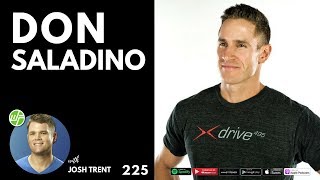
Episode of Wellness Force Radio (host Josh Trent) interviewing Don Saladino about resistance (strength) training: benefits for longevity and metabolism, common myths (especially women's fear of getting 'bulky'), how to integrate resistance training into a holistic, sustainable lifestyle, and Don's personal journey from collegiate baseball to celebrity and everyday coaching. The episode mixes personal anecdotes (stuttering/hearing challenges, early career), case stories (e.g., client Laura Summers), coaching philosophy (performance-physique, consistency over extremes), and practical guidance (breathing, periodization, trainer selection, Playbook app).
Chapters
The point of my story is that it didn't have to be this biggest loser approach. You know, it doesn't have to be where someone's vomiting after every workout. It's just about making better choices. It's just about moving in an intelligent way. And I think most people would realize if they took that approach, they'd probably get to their health and fitness goals a lot quicker and a lot easier than they ever imagined.
That's Don Saladino, and this is episode 22025 of Wellness Force Radio. What's up, my friend? It's your host, Josh Trent. And welcome back to another episode for your weekly access to global experts in all things wellness as we discover the physical and emotional intelligence we need to live life. Well, in this podcast, we're talking about the resistance, the truth about the benefits and mindset for resistance training, using weights to strengthen your body. But what's really fascinating is that the majority of research yells out loud to all of us about the life extension and optimal health benefits of resistance training. Yet research from Gallup states that only 27% of Americans actually engage in resistance training. So why is this? Why are 3/4 of Americans actually resisting resistance training? We'll talk about this in depth on the podcast today with a world renowned health and fitness pro who has trained some of the top celebrities and pro golfers of our time. Featured expert in men's health and men's fitness magazines, who just happens to be a father and a husband as well as a business owner. So this podcast will relate to you personally as we learn from the one and only Don Saladino. Okay, before we get into the show, quick question. Did you win? Did you win any of the hundreds of dollars of free gear from our partner intelliskin? Today is the last day. If you're listening to this live, you're in luck. All you have to do is go to the Wellness Force Facebook page or Instagram page, actually. Oh, wait. Do this because I want you to win some free stuff. Go to the Wellness Force Facebook page. Well, not if you're driving. If you're driving, do not do that. But if you're at the computer, just simply reshare the photograph from today or any of the past five days this week and tag WellnessForce and Intelliskin and that's it. You'll be entered to win. We're announcing the winners next week. And don't worry if you missed the contest, you can still get a huge discount. 20% off@intelliskin.net just use code WF20 huge thanks to our support from Intelliskin over the past year and taking a deep breath to honor Dr. Tim Brown, his powerful work in the wellness industry over the past two decades. Thank you Dr. Brown for for all that you do now. Coming up on the show, we talk about the myths surrounding female strength training. How Don's background and challenging childhood experiences actually shaped who he is today, the contrast between fitness and wellness. Don has a unique vantage point on how these two are blending currently in the industry, why it is from a physical and emotional perspective that 3/4 of our nation is not actually engaging in strength training. And some practical steps on how to integrate strength training into a holistic lifestyle that's based on self love. We'll talk about mindset and longevity and breathing when it comes to strength and so much more. As always, you can get the show notes. We take all the notes for you over@wellnessforce.com 225 let don know you heard him here on Wellnessforce. As we grow, it's people like you who are kind enough and caring enough to share this podcast with your family and friends. Thanks for all you do. Now let's drop in and get stronger with Don Saladino. So we talk about strength training, but so many people are resisting resistance training, specifically women, because of fear. You know, this love or fear contrast that we always talk about on the show. And Don Saladino is coming on the podcast today. This man has been through 20 plus years in the health and fitness industry. This is a world class and world renowned health and fitness pro. He's actually trained some of the top celebrities and pro golfers of our time. He's been a featured expert in men's health and men's fitness magazines as well as the Today show. And he actually sits on a board for the Don Monte Moral Research foundation which is a dedication towards cancer research, education and patient. But Don is also a father. Firsthand knowledge of children and he's a husband. As you can probably tell, he's developed an incredible intuition over the past 20 years in health and fitness to walk men and women across the bridge between knowing and doing to actually lead them to the results. Don, welcome to the show.
Thank you. And wow, that was one of the best intros that I've ever heard on myself. So I appreciate that.
Well, I enjoyed doing some research for our podcast today because this is a timely topic and really timeless. You know, there's so much mismarketing out there, dawn, about getting bulky with women and there's a lot of fear that we see in our industry around strength training. So I'm stoked to clear this up today. But I want to ask you this question because at 40 years old, you've now appeared on a fitness cover recently, just a few months ago. What does this mean to you now to see yourself on that cover? Did you ever visualize this when you were young?
You know, what I did, it was something, you know, why did I get into athletics and training? I mean, I remember seeing Arnold on the COVID of fitness magazines and Lou Ferrigno is the Incredible Hulk. And I've always been infatuated with strength and muscle and energy. It was just something that I was drawn to it as a very young kid. So to see myself get on the COVID in March was a really exciting moment for me. It was actually my second cover. But Muscle and Fitness for me was kind of the pinnacle. So for me to be on the COVID of Muscle and Fitness in March was. It was just fun. I mean, it was granted, yeah, it's great for business, it's great for notoriety, but if anything, it really was a special moment for me.
And I think the real specialness is that you actually started your career as a trainer. Your mom was the one that suggested you be a trainer. Tell us about that.
Hysterical. So, yeah, I went off to play Division 1 college baseball and naturally I wanted to go on from there. And when that didn't work out, my love, my, my passion was with getting into the gym. And I remember just at the time, it was 1999, you know, I was 21 years old, 22 years old, and, you know, I just remember saying, how am I going to do a job where I can't be attached to the gym? I just needed to be there. I remember having a conversation with my mom and she said, just go be one of those trainers. And I'm like, they don't make money. Like, how am I going to do that? How am I going to survive? She's like, listen, you know, you've always been good at everything you've done. You're going to figure it out. Just go follow your love. Do what you love. Go to work every day excited. And that's what happened. I remember going to the city and running around the city, not knowing north, south, east from west and, you know, going, getting a job at a big box chain and, you know, going in there and having to clean up weights in the beginning and work until, you know, 10:30, 11:00pm and I just remember being excited about it and then just learning and getting myself educated and everything. I'm Learning I'm applying myself and the people. For me, that was a real joy to be able to kind of see, I don't want to say a finished product, but see taking someone from point A to a level that they've never gotten to. So yeah, 20 years of experience and then, you know, getting into the celebrity role, that kind of happened to me about 13 years ago.
The celebrity training aspect is a little bit different and I know there's some similarities and some crossovers between the everyday person, you know, training to just live their life well, to have good mobility, good health and just general readiness. I think that's really what we're trying to achieve here. And as we talk about this on the show today, you have a term for this, Don. You call it a specific type of physique training. It's not just about getting big. It's not just about looking a certain way. It's about more functional approach to fitness. Can you tell us about that?
Yeah, I like to call it performance physique. It's something for me where obviously looking good is very important, but I think movement, energy, the ability to hop out of bed in the morning and feel good and recover and to do things in life that you enjoy. And I was just on the phone with an editor from a major fitness magazine and she, she loves to train and she's like, well, I want to be in the gym. I don't want to be in the gym three days a week. Part of what makes me tick is going in and getting that sweat and that feeling. I think for a period of time. A lot of strength coaches, we only need three days. We only need four days. The gym is part of my survival. That's part of what makes me tick and that's part of what allows me to do what I do. You know, what allows me to attack my day is getting in and breaking that sweat every day.
You said the gym is your survival. Was it more of an emotional piece or a physical? Are we talking about both?
Both, Yeah. I mean it's not just the, it doesn't have to be in the gym. And that's what I'm trying to explain to people. Go into your backyard, you know, play around on your kids monkey bar sets, you know, go down to the park, do some sprints, jog on the beach, move. Let's just get a bear crawl on the grass. Just, just, just move. And that's something where I think over the last 20 years my, you know, my approach has really evolved because we're in the beginning, you Know, it had to be about grabbing the iron. Now I'm realizing that you can still get, you know, cover ready without having to go into the gym every day. But, you know, let's break a sweat and let's be healthy and let's move.
Yeah, And I think we're all kind of trying to be on the COVID of our own Life magazine because I think about the way that people really want to show up. It's, yes, looking good is one piece, but I would say that a more important piece is actually, how do you feel about yourself? What's your self identity? And I'd love to pull the E break here and go back, because I think people will understand you don a lot more if they know where you came from, you know, the fabric of your upbringing. Because your dad was a ballplayer, you actually dove into baseball to excel from a space where it was uncomfortable. A lot of us can relate to being, you know, bullied or having trouble when we're kids. You had a stuttering issue. You had a hearing issue. How did that shape the leader you are today?
Yeah, it was. It was everything. I mean, I still think about, you know, what at the time, what a. What a negative thing. And listen, we all have issues. A lot of us do, and we've all battled with specific insecurities as a child. There might be that moment that just kind of haunts you, and we're at that time. I remember it was something that, you know, I used to come home from school just, you know, miserable at a very young age. I was in second grade. You know, I then realized that, you know, physically, I was made a little bit differently than most kids. And that built inside. I was able to kind of push and go, go, go, go and recover and bounce back. And this word resilient became something that was just. That I just prided myself on being. So, you know, I took something that was negative, and if that didn't happen to me, I don't know. I mean, I don't know if I would have been on the COVID I don't know if I would have been in fitness. I don't know if I would have been. I would have learned from the mistakes that I made and was able to be, or am able to be the parent to my children that I am now, or I wouldn't go back and change it. I think that's what I'm saying is that I'm really proud of the direction that I went and the direction that I'm going, and I attribute it to Partially that happening to me.
What actually was it? Was it something like when you were born premature? I was born without a sinus cavity in my left side. I think we all have issues when we're born. What actually was it?
It was just, you know, hearing problem as a young child and developed a stuttering problem and, you know, kind of borderline, you know, learning disabled. So I remember having to go into a special ed class in second grade and, you know, deal with that. And other kids, you know, just being kids, it wasn't them. You know, they don't know what they. You know, a second grader making fun of another kid that he or she doesn't know what they're doing, but still having to deal with that as a young child. So, you know, I think going through that and then kind of fighting through it and bouncing back and, you know, going off to school and graduating college and, you know, now if I think if I bring this up to people, they're almost like, really? That happened to you? And I'm like, yeah. But, yeah, listen, I went through it and I'm happy I went through it. But at the time, you know, it's something as a young child, it's tough.
Tough to cope with this strength that we get from a barbell. You know, it takes a lot of emotional strength to go to the gym when we're not feeling like it. And I think there's this old adage in the industry, no pain, no gain, which honestly I kind of feel like is really bull. There is a way to make your life feel good as you train hard. But let's go back to this here. When you were in baseball, what was it specifically about the baseball that allowed you to really start discovering this process of fitness?
You know what I think it was that I love the fact that it was in my control. So even fitness, I felt like with baseball and fitness, the more I put into it, the more I got out of it, even more so fitness. Listen, if you're going to sit there and eat right and get sleep and train smart, you technically should be getting into better shape. And I said smart. I didn't say harder. I think baseball was the same thing for me. I felt like it really became a sanctuary for me to be able to go practice and hit. And I got so much pride and self fulfillment out of being a successful ballplayer in college. But then when that ended, you got to fill the void. And I think that was an easy way for me to transition from baseball to fitness. Was that now fitness? Where to Be honest with you, in college, it almost started becoming my main focus. You know, I almost started to realize that, wow, I'm spending as much time in the gym as I am in practice. And, you know, that was a lot. So it was great for me to have that transition. And if I didn't have that, I don't know, I don't know how I'd be.
I gotta be honest, man, it's really like you fell in love with the paradigm of fitness. And I think that's my story as well. I used to be 280 pounds plus. And so I became a trainer in 2004, which led me to this 10 year window of discovering what most people discover, Don, and that is most people want wellness, but they're actually kind of starting through the doorway of fitness. Do you see this contrast of fitness and wellness changing right now in our industries?
I do. I see where there was a time when people thought everything was solved on the treadmill or throwing a barbell in your hand or a dumbbell in your hand, or going out and doing something athletic. And I think we're realizing now that it's so much more beyond that. I think the majority of the people on this planet probably don't like fitness or they do not like going to the gym. Statistically, that's a very solid fact. But I think we can realize that you don't have to be in a gym to get in a better shape. A woman that I was blessed to be in contact with three years ago through social media, Laura Summers was 872 pounds. And she reached out to me and was like, I'm in trouble and this and that. So I get reached out to a lot of people from social media. But I saw this consistency and sweetness out of this woman. So I got in touch with her doctor and I got some permission to start doing specific things. And when I went to restructure her diet, she's on food stamps, she can't afford diet. So I was doing all this just to help her out. But we got her from 872 pounds down to 413 pounds in three years. And we did this from just moving, you know, one of the gyms, Planet Fitness, wouldn't allow her to join because they said there was a weight limit there, which I was shocked about. I was going to pay for her membership. So we said, listen, Laura, let's start doing this, let's start walking the stairs, let's start walking outside. When she started, she couldn't walk 2000 steps a day without A cane. Now she's up between 8 to 10,000 steps a day. So to see that type of improvement, to see someone who couldn't get on and off the ground, to start doing that, and to see that rapid weight loss in a period of time, which is three years. Listen, this wasn't a year. This wasn't a Biggest Loser challenge. We're taking our time. She's losing two pounds, three pounds a week now, max. And some people might even think that that's fast. But I think the point of my story is that she didn't have to be in a gym killing herself. It didn't have to be this Biggest Loser approach. It doesn't have to be where someone's vomiting after every workout. It's just about making better choices. It's just about moving in an intelligent way. And I think most people would realize if they took that approach, they'd probably get to their health and fitness goals a lot quicker and a lot easier than they ever imagined.
Wow, this story is so compelling for so many reasons. Man. I just want to pause here. What is up with Planet Fitness not letting her in? That must have been the worst PR nightmare they ever experienced.
You know what? It was? It was terrible, actually. I'm not big on Twitter, but I'm big on Instagram, and I passed a comment and I've got someone who helps me out from pr, and they called me up, they said, take that down. Listen. That was me, you know, getting hot headed and being annoyed. But, you know, listen, in fairness to them, it was probably some kid working at the front desk that didn't know or some manager, you know, not to defend them, but I was upset about it. But now, you know, Laura, fortunately, a treadmill company called Trueform is mailing her a treadmill for free because they love her story. And we're gonna, you know, get it in her hands hopefully pretty soon. And, you know, we're gonna get her below £200. That's our goal. So, you know, we got some work to do. But, man, is this woman has turned into such an inspiration. And we haven't done it with any weights.
Wow, Don, the passion that's pretty prevalent in your voice, it comes from your own thresholds that you crossed from using something where it could have been, quote, a disability, it could have been something that, you know, not even led you towards fitness at all, but yet you pivoted. And I think this decision point for so many people, it's actually what keeps them out of the gym. I remember I was training clients My first year in Las Vegas on North Craig Road, and I had a client that told me, you know, Josh, I sat out in front of the gym for 10 minutes and had to talk myself just to get into the gym because she was. She was grimacing. She was. She was kind of bracing from the pain of going into the gym. How do we begin here? I think this is a good place to start. When we look at resistance training, why do most people flinch when it comes to going into the gym and doing strength training? What is that?
I think it's an insecurity. I think it would be no different if you're picking up a golf club for the first time and you're standing in front of people who know how to golf, you know, or you're going out on a field and playing a sport or doing something in front of someone or a group of people that are a lot better than you. So I think what happens is when someone's not used to being in the fitness environment, call at the gym in front of people, they're immediately, there's an insecurity, and rightfully so. I get it. But I think what really, it's a good thing to think about is no one cares if you're in the gym and you're putting an effort in. I don't care what type of shape you're in. I don't care what you look like. If you're a good person, if you're a good quality human being and you're in there and you're witnessing this, you're going to have respect for that person. I have respect for people. If I'm traveling or I'm going into a gym. I have respect for people when they're in there just putting in an effort. I'm not talking about whether they're doing things right or wrong. I mean, if I see someone doing something wrong, it kind of. But as the trainer in me, I obviously want to help them and I want to give them some guidance. That's another conversation. I think there's ways people can go into gyms now to make sure that they're doing things correctly that are really simple, by downloading specific apps or following coaches like you or myself who might have videos out there. But I think the first thing that you got to do if you're someone who's insecure about the gym, get in there for 10 minutes, do something really simple, a three movement circuit. Run a stopwatch, see how many rounds you can get in 10 minutes, get out of the gym, build confidence. If you're calling me up and you're saying, well, 20 minutes, I lose motivation, then go in for 15. I don't know who ever invented that. Workouts have to be six, seven days a week at 60 to 90 minutes a pop. I mean, no wonder P90X works. I mean, you're turning around and you're taking someone who might be sedentary and you're putting them on a program, regardless whether it's a good program or not. You got to admit there's some quality movements in there. And people are sweating and they're moving six days a week for 90 minutes a day, and they're changing their diet. Why wouldn't you lose weight? Why wouldn't you change? But a lot of us don't have that time. And what I'm trying to show people is that even if I'm working with a celebrity who's getting ready for a movie, Blake Lively is the best example. And I could talk about her and why I love her so much is that she's a real mother. She'll come in days and she's tired and she doesn't have a chef and she's taking care of her kids and she's doing all these things that moms do. And some days we come in and we may only have 10, 15 minutes, 20 minutes because she's got work. So I think there's a misconception out there on what these celebrities. Is training a celebrity any different? It's really not. The only difference is sometimes is we have a definitive goal and we might have three months to get someone bikini ready or winter soldier ready. And when you have that timeframe, yeah, things change a little bit. But the people listening to you right now, they're trying to just get ready for life. They want to look better and better as they get older. And what I'm trying to tell people is that you just need consistency. Some days you can go in there and run 40%, 50%, 60%. It's all good. It's all better than not doing anything for weeks at a shot. And that day off sometimes might be exactly what you need.
Let's talk about the periodization aspect, though, because a lot of first year trainers, they come out with a NASM cert or ISSA or even sometimes CSCs, and then they actually haven't trained someone yet. What should people be looking for when they actually go to a fitness professional? Should they just avoid first and second year trainers, or is there other things where it's not so cut and dry?
You know, What? There's a lot of young new coaches that I think are exceptional coaches. There are a lot of guys who've been in the business for 30 years that are terrible. You know, I think you should, I think a part of you should look for someone's education. I think you should look for their, for their passion, and you should listen to their voice. And I think you should kind of witness them on the floor and put two and two together. Look at their bedside manner, look at how they control a room. Look at how they, how they talk to their clients. Yeah. Go over and ask their client, how long have you been working with that guy for? He looks really interesting or woman, and get some feedback on that person. So I think that's the best way to approach it. Where I get a little upset is you look at these influencers on social media and listen, I'm big on social media, but you get people and you get coaches out there with millions of followers that never coached anyone. They've done what's worked for themselves or they've done what's worked for specific competitors. You're a coach, I'm a coach. That means every single day there is a different hand being dealt to us. That person might come in when you're on a specific plan, call it a periodized plan, and you're, you know, whatever the program is that you're doing, that person may have had no sleep, travel, fight with their spouse, et cetera. Now you got to be a coach and you got to call an audible. Or what I think is not coaching is someone saying, well, we have to stick to the plan. Let's push through it. That's bullshit. And we're seeing a lot more of that out there now. And to me, that makes me cringe because I think it's unfair to call someone like that a coach and then someone like you or I a coach as well. Putting both of us into a category, I think is doing. Doing us a disservice. But, you know, it's also, you know, people out there aren't really going to know and they don't really understand what's good or what's not good. You know, they're distinguishing success through how much someone sweats, and that's not right.
You bring up such a powerful point. I'm so glad you brought this up, man, because you're right. Like, we live in this interesting time. You know, I'm old enough to know what it's like to use a rotary dial phone. Okay, so social media didn't exist when I was a kid. And so we're in this experience of being a human being and evolving as a human race. But we've never had social media. We're literally the guinea pigs, Don. We're learning how to use this in an integrous way. And you're right. When you see somebody who's just showing their butt on social media with 2 million followers and giving people the wrong advice, that's actually gonna set them up for a life of not enjoying fitness. I mean, I mean, how pivotal is this?
It's huge because you can take someone who might be motivated by some posts or someone's words and you can give them a bad experience to where now they never want to get back in there again. So I think if you're following someone on social and you want to do their program, look for a coach. Don't necessarily look for an influencer. I have no problem if an influencer is influencing you into a better life and making good choices, fantastic. But it's not a one size fits all. Make sure that you're really paying attention to coaches, people out there who've actually trained people. And that's something where I think in the future with social media, we're going to start. I just know from working with Instagram and speaking to these different social media platforms, where I have a feeling in the future they're going to be able to distinguish who the real players are and who the fakes are.
Absolutely. You know what I love about video, too? We're going to talk later on in the show about your Playbook app. This is way that people can get quality information on the fly and they don't have to filter through, honestly, a bunch of crap on social media. You know, really, we get what we pay for. And I remember Payless shoes when I was a kid as well. I'm talking about myself as a kid a lot today, Don. I remember Payless shoes. And, like, we'd go get shoes. We were raised on welfare and, like, we'd go get a pair of shoes and then two months later we'd have to go get another pair of shoes. Sometimes, you know, sometimes when you just invest in your health and fitness and you have some quality time with a trainer, that can make all the difference. And I'll just say this one last thing before we move on. If your trainer is texting while they're coaching a client and you see that that is a clear sign to not train with that person, do you agree?
No. No. I mean, there was a time frame where I battled with this at my club, drive495, because we have templated programs for our clients. And there was a time where you remember it, you'd be on the floor with a clipboard. Now we're on the phone with our cell phones. And what's tough about that is that even though a lot of my guys, they pretty much all put their templates on their cell phones, where the perception of a new client coming in would be that their trainer is looking at the cell phone, they're really looking at their program on the cell phone. So there was a time frame where I battled with it. I was saying to myself, wait a second, should I just have them carry clipboards around? And then we ended up just dealing with it. And I think all the clients in our club, because we only have 400 active members, know and understand that they're looking at templates. But if you're going into a gym and someone's looking at their cell phone, most of the time they're not looking at programs, they're looking at text messages, and they're preoccupied. That's a no, no. And as a client, I think you should almost have a conversation with your trainer and say to them, listen, you know, I'm paying you money for this, and I understand you got stuff going on also, but when I'm here, I'm here, and I need your attention. And if they don't do that, find another coach. Wow.
And I think, really, when we look at the research coming through right now about strength training, let's pivot here, because there is a resistance still. It's crazy to me, don, that in 2018, we still have major outlets saying that resistance training will make women bulky or that resistance training isn't as quality as cardio. It just blows my mind how everybody has a voice. Can you please give us the truth, based on decades of experience, about strength training versus cardio? Is strength training something that you can actually do in the place of cardio? Do we need to do both?
Well, you know what? I enjoy balance. I enjoy the outlet of cardio. I don't need cardio, though. Through my training and through how I structure my resistance training, sometimes resistance training might become somewhat cardiovascular. I do like to separate it. I mean, if I am putting someone on a strength training program, I like having the strength to strength portion of it and not running them around so much. But I might have a client come to me who absolutely hates cardiovascular, and I'm like, fine, no problem. We're going to turn around and we're going to have somewhat of a work capacity day, or we might run a work capacity program for a few weeks. The part where I kind of just shake my head is women who just want to or even guys. Well, I'm going to start with cardio because I got to burn the fat and I got to lose the weight. I'm like, well, resistance training, like, it's not just going to come from cardio. You're going to burn more fat calories through resistance training. It's going to make you stronger. Putting muscle on for a female should not be something where they cringe. Putting muscle on doesn't mean they're going to get bigger. The word that I hate is toning. There's no such word. Toning, to me, doesn't exist. But what toning really is, I think, is a woman putting on muscle. Because if a woman puts on muscle or a guy puts on muscle, he or she is going to have more of a toned look. When we put on size and bulk is when we consume an excessive amount of calories. So if I put. Let's just use. Since 60% of your audience are right around, there are females. Let's use as an example, if I put them on a resistance training program and we start putting on muscle, yet they're out drinking alcohol and eating tacos every other night. Yeah, they're going to hold a layer of water, they're going to look a little bit more puffy, and they're going to probably gain weight. Are you going to blame it on the resistance training? Are you going to blame it on the diet? Because I can put a woman on a power training program or a hypertrophy program, which is somewhat bodybuilding. And if I monitor their caloric intake and monitor their macros, they're not going to gain weight, they're not going to put size on, they're going to be more toned. But we always blame the training because that's the easiest thing to blame. So I've taken this approach with Blake Lively. I've taken this approach with Scarlett Johansson. I've taken this approach with Emily Blunt. These are women who have female bodies, and I'll say it to their face, they have sexy physiques, they look phenomenal in a dress, but they kick ass in the gym. So, yeah, I mean, you can do cardio. I have no problem with it. But don't make that the foundation of what you're doing. You know, do that for recovery. Do that to break a sweat. Do that to. Yeah. To enhance and burn a little bit more fat. But in my opinion, in the 20 years I've been doing this, in all the research and science I've read, with all the, you know, trainers, doctors, guys, you know, people I've met with to have this discussion, resistance training should be your foundation.
Thank you for that absolute truth bomb. Let everyone just kind of feel that for a moment because that is my truth as well. That's what I've seen work for most, most people. And I say most because, look, we all have this resting metabolic rate. So the more muscle we have, the more calories you're gonna burn at rest. Can you talk about resting metabolic rate a little bit?
Yeah, absolutely. Listen, it' sitI like to refer to it as a fire. Envision this. So everyone listening to this. Your metabolism is a fire, okay? And the higher we get that fire to burn, you know, the hotter it's gonna be, the more wood we're gonna burn and the longer it's going to burn for. So it's the same thing with your body. If you can take the focus of putting on muscle, your body, the fire in your body will burn hotter and longer. And that's the best way to simplify it. If we can try and put more muscle on, we will burn more fat calories throughout the day. That's a fact. And we're not going to put a lot of muscle on from doing the elliptical, if any. So stop being so afraid of putting muscle on. Stop saying to yourself that that's going to relate to putting on size. If you look at some of the best physiques that I've seen in the world, their foundation is resistance training.
And what's interesting too about this is that they're not really focused on creating the most size. We're not talking about size. We're talking about muscular density. How would you approach training for someone that's interested in more muscular density rather than size?
Well, it wouldn't be gluing them to one specific rep range or rep scheme. I mean, would I potentially periodize them over a block of time? Yeah, sure. I mean, I would. Look, first thing I would do is I would dive into what type of training they've been doing. If there's someone who's been doing low reps, I might start them from a high repetition and start periodizing down or vice versa. So I think it's something worth, with my training specifically, I never like to lock into one tool. What I will do, though, is based off of what they've been doing, I'll find a tool to utilize for, say, A month to four months. And we'll live in that range and we'll get them really, really good at that. And then when that block is over, we'll end up moving to something else. For instance, someone's used to doing a lot of barbell training and they're feeling a little monotonous from it. I might get them into a lot more kettlebell work and I might start doing some hard style kettlebell training, which I absolutely love. So I don't glue myself to one methodology. I use everything. I use Olympic lifting, I use barbells, I use dumbbells, I use kettlebells. But when I commit to something like a powerlifting program, a hypertrophy program, it's for a period of time. I don't believe in muscle confusion. I don't believe that we should be every day mixing up rep ranges so much, because we do want the body to adapt a little bit. We do want the body to improve at those qualities that you're working on. And sometimes when we mix things up way too much, we don't allow the body to practice and get better at what we're trying to get better at.
Oh, man. You know, one of the other myths that I hear about too, I'd love your take on, is that, you know, the media talks about using lighter weights, might be safer and it'll give you, quote, long, lean muscles. You and I both know, though, there's an origin in insertion, you can't make a muscle longer. But why does this myth continue to perpetuate about the long, lean thing?
Because it's sexy and it sells. And it's the way of people who are uneducated in the fitness business to be able to sell their products. So everyone, I mean, just because you could be great at marketing, it doesn't make you great at coaching or great at understanding anatomy and kinesiology. So to turn around and to pass a comment like that is completely false. It doesn't make any sense, to be honest with you. If you look at the majority of the bodybuilders out there, they train high reps, getting a hypertrophic response. Bodybuilding, they train probably a lot more high reps. You could build muscle on low reps, you could build muscle on high reps. So I don't really understand how grabbing a three pound weight and pumping out 30, 40, 50 reps, I don't really. Is that working for you? Like, yeah. All right. For Gwyneth Paltrow. But Gwyneth Paltrow never really had a weight problem, and she Seriously. But let's just, let's just keep it real. Look at Gwyneth Paltrow's body. She never had a weight problem, okay? So she can endorse something and it's going to end up, they're going to think it works. So they can package it and they can sell it. But I've seen some women that look absolutely incredible. I've had women lose 50, 60 plus pounds from pushing heavy sleds, from carrying kettlebells, from swinging kettlebells, from doing alternating dumbbell presses, split squats, plyometrics. These are athletic based movements where we're trying to implement speed and power. And I've seen them lose weight. So, yeah, I mean, I don't believe we should live in one zone for an entire year. I do believe that we need to mix things up after a period of time. I think it's really important from a mental standpoint too. I can design the best program for you, but if you find it incredibly boring, then what good is it? You've got to enjoy what you're doing. So if someone comes to me and they're like, I love spinning and you hate spinning, I'm like, no, I didn't say I hate spinning. I don't like spinning for you because you're doing it six days a week and your hips and backs are killing you. So let's implement another style of training in there that can help with your foundation to make you better to spin. So when I have people come to me and they're CrossFit coaches and they want me to help build them a program and they're like, but you hate CrossFit. It's not that I hate CrossFit. I hate the overuse and I hate taking specific, I don't want to say techniques, but specific lifts, like Olympic lifts, and doing them over a period of time because it gets really sloppy. I'm not trying to talk someone out of CrossFit. It's my job to make them better and more resilient for CrossFit. It's my job to make someone better and more resilient for spinning because these might be specific exercises, techniques or programs that they really just enjoy and they love doing. Why am I going to take someone away from that unless they're seriously injured? Baseball is not good for you. Soccer is not good for you. Ice hockey is not good for you. Golf's terrible for you. But we still do these things because we enjoy them. So with training, I think we also got to understand that there's a Cost to doing business and some of the things that you might be doing out there, even though you enjoy it, might not necessarily be the best thing for you.
Oh, such a great point. Because you know, I was listening to an episode you did with our friend Sean Stevenson which we love and you mentioned, man, we're all going to get older and we're going to run into problems exacerbated if we're not taking care of ourselves. And I think this one piece here again, I'm going back to my childhood when I was in school. There was a video and it showed this guy and he was eating a bunch of steaks and he was trying to lose weight really quickly. And I remember at a very young age I thought that's no way to live these fast short term results where we're trying to like, like get losing 50 pounds in two months to go to high school reunion. How would you say that you've seen people shift their mindset around living a holistic lifestyle. How do we integrate strength training into holistic lifestyle that's really based on self love?
Well, first things first, I think people are realizing with these quick fad diets that it never really stays off. I mean very rarely do you see somebody. I'm not saying it never happens because I know I'm going to have one person, a couple people commenting. Well, this worked for me. Great, I'm glad it worked for you. But statistically the quicker someone loses weight is related to how fast they're going to put it back on. And take your time, Follow good values, enjoy the process. Understand that by going out and having some pizza or having a couple of cocktails once in a while. If you enjoy doing that, that's fantastic. What I urge you to do is not to abuse it and not to make that up the majority of your life. Yeah, 80, 20 rule, but be that 80%, let it be really good. I want you to feel good, but I want also enjoy the other things. So, you know, I think a lot of this comes down to again, you know, coaches and influencers out there that are applying what's worked for them. And it does work, but it's just not what should be put in the hands of our general public, especially the ones who struggled with this sort of thing. There's a lot of things in life that I'm terrible at. You know, this happens to be something that's come very easy to me and I'm good at and that's fine. But I recognize that, I recognize the people that I work with out There struggle with this or they don't want to do this so. Or training for them is painful, it's not enjoyable. So it's my job as a coach to fix that and to enable them to build confidence over a period of time to where they want to do more.
And I love that your motivation comes from this place where it's something almost from a higher power. And I'll ask you a question about that later, kind of what really drives you because I think for so many fitness professionals and honestly anyone that has an identity don to being a healthy person, being a trainer, being a coach, that is actually the majority of what drives them to go to the gym, to walk their talk, to have their body be their billboard. But the clients are not like that. And I think we have to understand that people have motivation sources from different places. Intrinsic versus extrinsic. When we look at longevity, how do you see being motivated around strength training for longevity, being for clients? In other words, is there a mindset when we look at strength training for longevity?
Yeah, absolutely. I think it's. You got to understand it's the same line I used earlier that people are going to come in on different days and they're going to have a different hand dealt to them. And I think it's just about the one rule I've lived by as a trainer is every single session that person leaves there feeling successful. Feeling successful. I don't mean setting PRs. I don't mean doing something or being pushed to a level. I mean feeling successful. So I think part of it is almost blending in this feeling of success and that even on a day where they came in not feeling their best, we were able to focus on a quality to where that's what we should focus on that day. And that's what it's all about. It's giving them a good experience. Don't allow them to leave there with a bad experience. If you have someone coming into you and they're supposed to, let's just use a really simple example, do a deadlift. And they're supposed to do a max deadlift and you find out that they slept three hours hours and they haven't eaten and they were on a flight in from Singapore the day before, probably not the best decision for you to go for a max 3 rep PR, right? So let's shift, let's move laterally a little bit and say to ourselves, all right, maybe not today, but I'm not going to tell them that or I'm not going to tell her that, but we're going to make an adjustment. We're going to make a move to where I can allow them to leave their feeling successful. And I think in fitness, there's been so much unsuccessful behavior out there. There's been so much negativity with diet, with exercise, with training. There's been this correlation with the person on the, you know, the woman on the COVID of Shape magazine. Well, I'm not a trainer. I can't do that. I have kids I don't have. Of course she looks like that. She's 23 years years old. There's always this negative. But what I'm trying to show people is that it's not as hard as you think. You just took an incorrect approach, probably because someone steered you in the wrong direction.
This training to failure, too. Let's shift here because a lot of people want to train till failure because that's what's popularized. We don't need to do this every single session. How many times a week would you suggest that people, specifically women, train to absolute failure?
Honestly, like, I don't train people to failure much. I really don't. I mean, I. I don't really see. I mean, I kind of live in this 80 to 90% range with the majority of my clients. I feel like when we start getting into failure, it really takes a few things that have to be in order. Your stress level really has to be good. It's got to be minimal. Your sleep really has to be good. I mean, getting your seven to nine hours of sleep a night, your technique, you've got to be rock solid. Because once we start, because failure and technical failure are two different things. When I see people training to failure, they're training till they potentially cannot move the weight. And maintaining proper technique when you are going that hard might is something that someone like myself or you or someone who's been doing this for a long time can do. But bringing it closer to technical failure, that I'm okay with on occasions. Granted, it's a movement where they're successful on, and it's not something where I'm not gonna like if someone's struggling with their deadlift or their squat, I'm never gonna have them trained to failure on deadlift or squat. It's just I'm not going to have them do it because they're going to end up breaking technique. There's some people that are just, you know, I don't mean to say this, but just lazy. I just see them as the exercise starts getting hard, as it starts getting more difficult, I'll see their form start to diminish. I'm not calling this person out in person, but there's someone who works out in my gym and she, anytime she does a split squat and it starts getting difficult, you see her range of motion start coming higher and higher and higher. So you got to find, you know, you either got a killer before that happens, because I just don't believe in doing things partially or move them to exercises where they can't cheat. Like a step up, you have to step up. A sled push, you have to push the sled. It's got to move. It's hard to kind of fake that. But there's, there's other reasons why, you know, I'm going to steer away from movements with specific people. But to answer your question, because I know I kind of got a little off topic, but training to failure, I really don't have to do it much. I think we need more of consistency, and I think we need more of proper technique and making sure that we're executing the movement properly. And if we are training for aesthetics, making sure that we're focusing on tension and creating tension in that muscle, but also understanding that there are periods of your training program where you need to focus a lot on movement.
I'd love to go really practical here, man. I've enjoyed so much the places we've gone in this conversation so far. But let's go a little practical as we wind down, because I am going back to that person sitting in their car, you know, having the mental war of should I walk through those doors at Light Fitness or not when they get in there. One thing I notice you do with a lot of your clients is you have them do a 90 degree leg angle with the belly breath on the floor. Why do you start with belly breathing?
You know, and I do that with not all people, but some people. You know what? Sometimes in the beginning, when I learned about this, some coaches argue with me, well, you don't want to get the body parasympathetic before you get it sympathetic, but I like it more for rib positioning, and I like it more just to get the ribs expanding the way that we want the ribs to expand. I know a lot of us breathe incorrectly, so it's my way to kind of get the individual breathing properly before we get the body sympathetic, which means getting that body stimulated. And I find that when the ribs are in a good position, it makes it that much easier to squat, that much easier to deadlift, that much easier to move, and it's Also a drill that I'll have implement after a training session to get the body parasympathetic, to get it to calm down or throughout the day with meditation. So I think proper, you know, I don't call it pri. I don't call it anything like that. I call proper breathing really. Just, it's the way. It's what I like to refer to it as proper breathing. And I think it's something that we just can't implement enough.
Well, it's natural to our human state. I think about Brian McKenzie. We had on the show the Art of Breath. You know, he's trained some of the greatest athletes in the world, and. And all he does with them in the beginning is work on their breath, sometimes for weeks at a time, because he's having them breathe just through their nose and not so much through their mouth. And he's found that this actually can increase over time, their work capacity. How much time do you spend with clients focused on their breathing?
Three to five minutes. You know, one, I'm not. I'm not a physical therapist. So. Wait, Brian's a strength coach?
Brian is a strength coach. He's a performance coach. He has power, speed, endurance. He really focuses on that aspect of training.
And listen, I, you know, I'm sure Brian's great at what he. At what he does, but, you know, I. I also believe if someone needs that much of an overhaul with their breathing, maybe they need more of a physical therapist. And. But they're still. They're coming to you to train. And I, And I still believe that we can spend probably a little less time on it. I know a lot of clients, if they're coming in on day one and you're spending, you know, 50 minutes with them on breathing, you're probably not gonna have a client for long. Is it going to help you? Sure, it's going to help you, but, you know, who said that you need that much of it early on, you know, and how are you determining that you need that much of it early on and maybe five minutes of it, or maybe assigning it to them as a homework assignment for them to do at home or post workout might be a better usage of your time. So I'm not taking anything away from Brian. It's just not the approach that I would take. And if someone's having issues to where they need that much breathing, I'm calling up Charlie Weingroft, who's my physical therapist, or Kyle Balzer, and I'm sending him into my pt and I'm Going to allow them to get a set of hands on them and really get to the root of the issue.
So going back to the practical, then, you know, somebody walks through the doors and I know you're not giving anyone advice right now, but just as a general format here, what does someone do, you know, that's starting this journey? They go through the doors, they check in, and now they're looking at 15 treadmills.
Right. There's really a couple of different approaches that I would take. One might be a little bit more costly, but if you have the money for it, I would really, I would go into the gym and just kind of, you know, know, speak to the fitness manager and try and get some feedback who might be a good coach for you to hire. And the reason why I'm saying that is that if you can find a good coach early on, they're going to implement some really good rules, some really good laws to follow. And I think if anything, following that early on is the best thing to do. You know, I work with a lot of golfers and you know, in the beginning, if you're just sitting on the, on the driving range pounding balls, you can really instill some bad habits, some poor movement patterns that are going to be that much more difficult to correct. That's one approach. Another approach is, and honestly, not to sound like a salesperson here, but that's why I created my Playbook app. You know, it's a way for people to be able to go, men have their suit up programs, women have their tone up programs. And I know it's kind of contradiction, men and women be trained the same. Absolutely. The only difference is that the tone up programs don't have any arms because most women are so freaked out about that that we just removed it and we separated two programs because a lot of them aren't ready to hear what we have to say. So we're kind of like almost walk, we're almost like holding their hand into this whole process. But downloading an app like that, like My Playbook, you're going to be able to follow the way that I want exercises executed. You're going to be able to follow sets and rep schemes. You're going to know that we're not so dominant in one area where you can develop weak links or inefficiencies. This is all important. If you're sitting there just training your anterior chain, which, why would most people understand what that is? What's that doing to your posterior chain? What's that doing to your posture? You know, that's the difference between front, side, and backside. Everyone, if you're not aware, but you shouldn't know these things. It's not your job to know these things. For those of you who are listening, who might be an accountant or a banker or a financial advisor, I'll come down, I'll have a seat with you, and you guys will school me from morning till night.
Exactly.
There's things I know I'm really good at, and there's things that I'm not. But I try and surround myself with a team who can help me out in the areas that I'm not good with. And I think something like Playbook might be a great way for you to have that team at your fingertips. To where you have nutrition questions or execution questions, myself and my team are always there to answer.
This is really cool because one piece for sustainability is having accountability. You know, without the accountability, nothing really sustains for too long. And that can come dawn, you know, from ourselves. But most likely in the beginning of someone's journey, it's going to come from a professional man. So this has been a phenomenal conversation. I just have these last three questions for you before we link everything about you in the show notes. You know, we talk about this intersection of our physical movement, our breathing, this intelligence, really, that we have in our body. And then we also talk about our emotional intelligence. Is there something you personally are leaning into right now to grow your emotional intelligence? It could be meditation. It could be stillness. It could be anything involving our thoughts, feelings, or actions. What are you personally leaning into right now for your own emotional intelligence?
You know, meditation is something that I've always struggled with. I mean, for me to lay down and meditate, five to 10 minutes is something I try and do every day, but I really struggle with it. What's been really helping me out is I'm an usher at my church at St. Patrick's in Huntington, is I try and make it a point, and I'm probably about 90% successful after work to stop into my church and just sit down and pray and reflect a little bit and just almost say to myself, what could I have done better today? How can I get back a little bit more and listen, I'm in there for three to five minutes. This is not where I'm going in there. And I'm sitting for an hour, hour and a half, but it's three to five minutes, and I really feel like mentally, it kind of keeps me in a relationship, very good spot. It makes me much more aware throughout the day. There's things that, you know, I'm a. I'm Italian. I'm very passionate. I'm very, you know, sometimes you can call me aggressive. And even in the workforce, you know, I have to be a good leader, and I have to be able to address my employees a certain way when things don't go well, you know, how am I handling those situations? So there's things that I've always battled with, but I really, I've been. It's probably been one of my. I'd say my best years of almost self improvement in that aspect. And I think it's because I've been going in and I've been reflecting a lot more, if that makes sense.
Man. The power of prayer. No matter who you believe in, there's always a higher power. And we've talked about this on the show so much. You know, it could be if you're born in India, then you might worship a certain deity, but we're all kind of talking to the same thing. You know, having a force that's bigger than ourselves, it can really drive us. And this is one of the questions I wanted to ask you here. What drives you from a spiritual perspective? Like, what's spiritual about your work?
I don't know if this is going to answer that, but there's a feeling that I get not only from my work, but my workout. When I finish with a client, I'm giving them a hug, or when I'm finishing with my own workout, there's that feeling of satisfaction. It's accomplishment. It's why I do what I do. It's that moment after the workout. It's that moment when I'm hugging the client and I'm sending them off. It's this consistent feeling of, like, wow. Like, that was great. Like, wow. That's how I want to feel in life. And we all feel that way at specific times. It could be something as simple as holding a door for someone who needs it. It could be as something as helping a woman cross the street with her bag of groceries. We all have goodness in ourselves. To where I think when we exemplify that we have this feeling inside that we're all good is kind of the way that I like to approach it. So I think when I'm in. Me being in this business gives me that feeling a lot, and that's something that really drives me.
Yeah, Matt, great answer. And I think no matter who you are, it's really the love, the energy that we're all talking about here. So when we look at the physical intelligence. Don, what physically are you leaning into right now as you're a man in your 40th year of life compared to your 20s?
Yeah. You know, it's funny, I feel like I'm, I'm physically in better shape. I feel like I'm, I feel like my body, fortunately, you know, looks better, I feel like I'm stronger, I feel like I'm able to execute things better. I feel like I'm that smarter of a coach. I mean, I think what's definitely changed is recognizing and you only know you're not going to recognize this. As a 25 year old coach, I don't care how smart you are, you've got to almost go through waking up and being like, oh, wow, I've been sore for four days. That's unusual. I used to only or turning around and going out. And I play a lot of ice hockey and I play a lot of golf and being on a powerlifting program. When you try and do all three of these things at the same time, it's wow, your body really takes a toll on your body. You got to recognize that no one's invincible. No one's ever won that battle. No one's ever won this fight. It's like there's a cost to doing business is a line that I used earlier. You can go out and drink, but there's a cost to doing business. And as we get older, you can go out and you can train for four hours a day, but there's a cost to doing business. Your joints after a period of time are going to hurt. So at a specific time where we were able to do things and feel great from it, the approach has to change and not to take any more time. But the best example is when I take a college athlete who's on Wall street who comes into me and goes, well, 30 years ago my coach used to have me run six miles a day and we'd have hour weight training sessions and then we'd have four hour practices. And they're almost affiliating that with how they, they're like, oh, wow. Well, that's the only way I could be successful. But I don't want to do that. My body can't handle that. Well, who said your coach even had you doing the right things? It's just something that you were forced into having to do and you got into great shape doing it and you recover differently. You might notice that 15 minutes a day, 20 minutes a day is all you need to get back into incredible shape. And I'M even finding out as I get older, I almost need less. Where my workout routines used to look like a Chinese menu 20, 25 years ago. Now I'm getting in some of my workouts. Could be two movements. Wow, Three movements. That's it. I'm done. One day might be going in, it might just be assault bite work intervals on the schwinnardyne bike, and that's it. Another day might be, I call play in practice, where I work on. It's just going in 5.5 intensity. We always call it a little more than 50% intensity and just moving. And while taking my shirt off, I'm like, holy Jesus. I'm only probably a week out from being able to get on the COVID of Muscle and Fitness Again, where 20 years ago it would have been bodybuilding programs and all this crazy stuff. And it's shocking how a little goes a long way.
And I love the fact that you reminded us all what we do today. And our approach today is for the man or woman that's here today, it's not the one that was 20 years ago. I mean, I think about what I was doing when I was in my twenties versus what I'm doing now. It's such a difference. So thank you for simplifying this understanding for us, dawn, today about resistance training. You know, it's such an important factor in female health. It's everything from sarcopenia to resting metabolic rate to increasing everything that we do for our energy with other people. Man, where can people go to learn more about you and tell us about the app for this accountability? I think really this is what we're talking about here.
I love it. Well, first things first is, you know, I pump a lot through my Instagram. I'm very active on that. So it's Don Saladino is my Instagram and hope everyone's gonna follow me on that. And I have an app called Playbook and you can just download the Playbook app and you'll see tone up workouts for women and suit up workouts for guys. And, you know, I'm always launching weekly individual workouts, so people will request, well, I need a travel workout or I need a beach workout, and I take these requests and I build workouts. And we know we launch several workouts a week. So they're always getting their program, they're always getting additional workouts if they need bonus workouts. But they're also getting customer service. If they have questions and they ask them, we're always answering them. I've got myself and My team was able to field questions in bulk and nutrition. And it really is. I mean, it's like a Netflix subscription. It's $9.99 a month, and you get your programs and you get everything at your fingertips. So it's incredible value. And it's the same programs that I've used with a lot of the clients I've been working with for my entire career. So that's been. That's been great. So I would just say Instagram, check out my playbook. I got a free trial on there, and I hope everyone enjoys it.
Yeah, give it a download. Give it a test drive, honestly. And, you know, the business that you have is drive 495, right?
Yeah. It's in Soho. It's been open for 13 years. We've got some exciting licensing deals about to go down right now, so I'll let you know when that comes into play. But listen, our business, it started with golf and golf fitness, and it really morphed into so much more. So, you know, my brother Joe and I started it, and we're just having a great time doing it.
Well, I want to pause here and acknowledge what you're doing. You know, there's many routes you could have taken in life, and you took something when you were a young man, and you turned it into something magnificent, and now you're just sharing this passion. Honestly, what I feel from you, dawn, is you just have this constant curiosity, man, for the fitness industry and making this something that we can actually open the door of wellness for. So, last question as we say goodbye. How would you define wellness? What does wellness mean to you? When we look at wellness defined wellness.
It really is the combination of fitness, it's the combination of nutrition, and it's the combination of recovery. It really is. To me, it's one word. And fitness doesn't have to be getting into the gym. It's just. It's everything good in the human body. It's just getting the human body to that state of health and happiness and mental is such a huge part of wellness. So I really think it's everything good in the human body. And it's just trying to find. It's like this. It's this constant puzzle that we're trying to figure out. And what's so interesting about it is, you know, it's always changing. It's different. Finding wellness in February in New York is way different than finding wellness in July. And finding wellness when you're 25 is different than finding wellness when you're 30 or when you're traveling. So it's always changing. So it makes it very discouraging for people. But that's why we've created things like the Playbook app and there's coaches like yourself and myself out there to be able to help people. We've taken our experience because like as you said earlier, you know, you and I have used a rotary phone before, which I thought was funny. When you're in the business that long, it doesn't make us. It doesn't give us a right to say we're the smartest coach, but it definitely gives us the right to say that we have experience. And experience is something that only time will tell.
Don saladino.com Don, thanks so much for coming on the show, man.
My pleasure. Thanks for having me.
Hey my friend, thank you for hanging out and growing with me on today's show. Remember to hit subscribe Share this podcast with somebody you care about that you think gets to hear this message. Support the show by leaving a five star review for the podcast right now simply by tapping on your show artwork. On your iPhone, click that purple link that says review this podcast. It helps the show reach more conscious and smart people like you and your voice will attract more world class guests that want to come on the show. So let's let them hear your voice. For all the downloads, videos, links and free resources mentioned on the episode, go to wellnessforce.com radio. And while you're at my house on the web, join us in the Wellness Force Community newsletter on that page and I'll send you four free guides around staying healthy with your eating, moving and sleeping while you travel. But don't let this conversation stop here. Join a group of people like you over at the Wellness Force Community Facebook page. This is where we talk about the things that really matter.
We share.
There are wins, inspirations, struggles and a lot more. So join us. Tap on the show artwork on your phone and hit that purple link that says join the Facebook group and I will welcome you at the door. Okay. Now you get to go out into your world and create impact for the people that you care about. So until I see you again real soon, I'm wishing you love and wellness.
More from Josh






Your child's future start before pregnancy... and even before conception! #podcast

MD Reveals: Your Healing Creates Your Child's Reality (The Souls Coming In Need Strong Bodies)



