231 Dr. Michelle Perro: What's Making Our Children Sick?
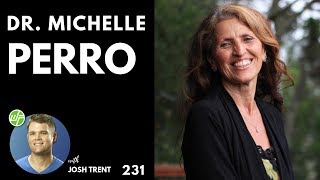
Episode 231 of Wellness Force Radio (host Josh Trent) interviews pediatrician Dr. Michelle Perro about her book What's Making Our Children Sick. Dr. Perro (35+ years in pediatrics) links rising chronic childhood illness to industrial food practices—GMOs, glyphosate/pesticides, and resulting microbiome disruption (leaky gut, dysbiosis). She shares clinical experience (thousands of patients; high prevalence of intestinal permeability among complex cases), case stories (e.g., a 5-year-old "Juan" improved after organic/elimination diet and microbiome support), and practical advice: prioritize organic foods, eliminate gluten/dairy for many symptomatic kids, increase fermented foods, filter water, cook more, and pursue community/school-level change. The episode also discusses politics (industry influence on research and curricula), the economic leverage of consumer choices, and a proposed shift toward "eco-medicine" that treats environmental and internal health together.
Chapters
So this is the balance that we're seeking. It's a consciousness that we can no longer be in the dark about what we're eating. Everyone has to wake up regarding our food. We have to stop the ennui and the laziness about food preparation and get back into making food and have that spill over in how we treat the environment and what's around us. It's related. This is a holistic viewpoint about health, overall, environmental and internal.
That's Dr. Michelle Pero, and this is episode 231 of Wellness Force Radio. What's up, my friend? It's your host, Josh Trent. And welcome back to another episode for your weekly access to global experts in all things wellness as we discover the physical and emotional intelligence we need to live life well. In this podcast, we're taking it to the kids, your nieces, your nephews, all the little boys and girls, your daughters, your sons, now, for the first time in history, are sicker than their parents. The polarizing reality is that based on scientific data, one out of two children now has a chronic disease, which was unheard of as little as two to three decades ago. This drastic health change in our lifetime, we are diving deep into, as we've mentioned on the show, the intersection of gut health and brain health and overall wellness. No doubt, just children as well as adults are affected by gut intestinal permeability called leaky gut. In other words, we discussed this imbalance of the microorganisms in our gut's microbiome, called dysbiosis, with Dr. Michael Ruscio. Now, this podcast is going to be quite compelling for you if you enjoyed that episode, because we're talking about a medical doctor, a veteran pediatrician with over 35 years of experience in acute and integrative medicine. Ten years ago, Dr. Michelle Perrot transformed her clinical practice to begin including pesticide and health advocacy. With her partner, Vincan Adams, she wrote a highly disruptive and powerful book called what's Making Our Children Sick, How Industrial Food Is Causing an Epidemic of Chronic Illness and what parents and doctors can do about it. We'll talk about commonly overlooked digestive and allergic issues for children, how GMO foods are a major contributor to leaky gut, the fascinating facts and myths surrounding genetics, epigenetics, stress level and nutritional intake to its corollary of leaky gut. And yes, we can. We'll talk about feeding the world outside of a pesticide GMO monocropped approach. Why crop rotation and the lie that's perpetuated so much in our world of quote how are we going to feed the world? We'll actually talk about how that is bullshit with A capital B. Dr. Michel also gives us tips for the everyday strategies on how to buy and prepare healthy organic foods, even if you're on a budget. And the reason we're so excited to bring you this podcast is because we know the first seven years of life from a microbiome, physiological and psychological lens literally shapes the quality and health outcome of human life. And I think about the power of this information and if my parents only knew just how pivotal these facts were, how much it would have impacted my life. But the great thing is you're here now. You get to learn and share these facts with your family and friends to help ease the suffering and most importantly, empower greater health for the children now so they can live their lives well as well as their parents. Show notes from today are@wellnessforce.com 2, 3, 1. Let Dr. Michelle know you're here to hear on Wellness Force. Now let's discover the truth behind what's making our choice and what we as a collective can do about it. So this episode is a very strong one for the gut to our health, brain and everything that's involved in between the bridge between our stomach, our brain, our emotions, our physical. It is such a big deal, especially for the parents out there that love their children and that want to give their children the best possible life of wellness they can provide. We're bringing on Dr. Michelle Perrot, a food focused pediatrician who's been practicing medicine for over 35 years. Think about that. Three decades plus, last of 15. She's been in pursuit of integrative strategies that work to help kids with troubling disorders caused by this improper food that's injecting into the gut, penetrating holes through it. But she teamed up with Dr. Adams to explore this in her new book, what's Making Our children the glyphosate, GM foods and gut health connection. Dr. Michel, welcome to the show.
Josh. Thank you for having me. I'm glad to be here.
You know, over 10 years ago, you transformed your clinical practice to begin including pesticide and health advocacy. Did this come to you in a download from higher intelligence? Like, why did you make that shift?
Well, Josh, I'd like to think I was just super bright, but oh no, not no. It was serendipity that tapped me on the shoulder because I was contacted by a group of moms here in Marin county, where I live, to help them stop the spray of a pesticide here in Marin. And I Had no intention, knowledge, interest in doing this. I was a busy mom, kids, medical practice, running my own business, etc. And like many good women, I said, sure, I'll help you reluctantly, so help these gals. And lo and behold, we stopped it. They did all the work, they used my md and then they said, hey Michelle, what do you think about GMOs? And you know, Josh, I didn't know a thing about GMOs. I'm embarrassed to say. This was 2006. And I said, I don't know, what should I know about GMOs? And one mom said to me, read Jeffrey Smith's book Seeds of Deception and educate yourself. So being a good listener, and that's what a pediatrician should be, is a good listener. When smart women speak, I listen. Read that darn book. And lo and behold, I read the work of Dr. Arpad Pusti, which I later investigated, and I can talk about that. And light bulbs were popping off in my head, understanding for the first time this change in the kids health that I was seeing clinically and the relationship to the change in our food. And that's, that's the quick and the long answer.
Yes. And it's a very deep story which you know, quite frankly in the last 10 years we've seen a lot of incentivization for people to eat organic, which we're gonna talk about the value of that, but we're also gonna explore some things that people don't know. You know this book, how industrial food is causing an epidemic of chronic illness. And really the takeaway here, what parents and doctors both collectively can do about it. It's been about six months plus since the publishing of the book. I'm curious to start off our conversation, any stories or feedback from a reader who has digested the book, no pun intended, and the information has changed their life in some way.
You know, we've gotten great feedback, particularly from grandmas and other people like that, you would think, I was hoping. And Vincenne, my fabulous co author, we were hoping to get the hands this book into the hands of healthcare practitioners, medical schools, et cetera. And how quickly that's happening, not sure, but kids are sick today, you know, not in ten years from now. So we need to make change now. Been to talks where people have come up to us and said hey Dr. Pero, read your book. I kind of sort of figured out what to do, did what you said and lo and behold, little Susie and little Johnny are better from fill in the blank. Often digestive in nature And I've heard that repeatedly. And this is from average folks, moms and dads, teachers, because don't forget, teachers are with our children six, seven, eight hours a day and often feeding them one or two meals a day at school. So I have heard it. And this is also what I've practiced because people say, well, your information is anecdotal. Well, I've been doing this for about 12 years now, Josh, and I've treated a few thousand kids. And if you want to call that anecdote, feel free. But I and have been very careful in this book with Dr. Adams to really cite our information and get into the science, especially for reluctant constituencies.
I love the way that you've broken down these super complex pieces so that the moms, dads and the grandparents that are reading the book can actually understand this. And Jeffrey Smith, the author of Genetic Roulette, actually quoted your book saying this should be required reading for every doctor, every mom, and anyone seeking to prevent or reverse a chronic condition. And I think the way that this really applies to 2018 and beyond is that, you know, we've seen this kind of diametrically opposed piece where we have one side of the fence that says, how are we going to feed the world if we don't do gmo? And then the other side, we're all aware of this, Dr. Michel. It's like we know there's enough food all across the world to feed everyone and then some. It's really about who wants to pay to transport that food, even if we grow it organically or not. I'd love to get your opinion on this kind of opposing force. This number one argument where people say, if we don't do gmo, how are we going to feed the entire world? What do you think about that?
I think the producers of genetically modified seed such as Monsanto, now, Bear, Syngenta, et cetera, have done an excellent job inundating the Internet with repeated messages based on poor science. Their PR campaign is so profound, so wealthy, so well run, it's really hard to combat this machine. So this information that they keep reporting, because I've spoken to plant biologists, researchers from New Zealand to Canada to the UK. Do GMOs, can they feed the world? Do they increase yield? And the answer is not only do they not increase yield, they decrease yield. And over time they require more water. The seeds have to be replanted so farmers have to re buy the seeds every year and they require increased chemical additives so farmers expenses have increased. So this idea is, erroneous, based on incredible scientific documentation. I've read and I have spoken to these biologists. I am not a plant biologist, and I've gone to the source. It is shocking how misinformation keeps getting repeated. And organic farming is not only doable, but it can feed the planet. And it does it in a way that is helpful to the planet in addition to doing other things, like, oh, for example, combating climate change, because regenerative farming and organic soil takes up CO2 from the environment, carbon dioxide. So there are so many reasons that we. I don't want to get into specifics, but there are so many reasons and so much of what we hear is alternative truth. Not. It's just, they're just lies. It's. I, I don't. I say alternative truth, but it's factually incorrect.
Yes. And what I love most about your book is not only does it break down these concepts so that everyone can understand it, but there's also 50 plus pages of resources with specific links. I mean, you can go, you read this book, you can get every single URL that states and links to the study that you're describing in the chapter. And so I want to start with this threefold. You know, we understand, Dr. That gastrointestinal issues are so prevalent. You know, I remember back to our podcast with Dr. Perlmutter, and he mentioned, 75% of Americans have, you know, some stage of leaky gut. Are you in alignment with that quote? Do you think it's less? Do you think it's more? 75% of Americans having leaky gut?
You know, truth be told, when my previous practice, I was seeing mostly chronic, complex ill children. And when I say chronic, I mean anything from asthma to constipation to inflammatory bowel disease. 95% of those kids had leaky gut, I believe now. And I'm in agreement with Dr. Perlmutter, if you're eating GM food and its associated pesticides, because you don't eat either one alone, you can eat pesticide food without GMOs, but you don't eat GMOs without pesticides. That if you're eating that food, and we all are, because it's ubiquitous, it's everywhere. I suspect that all of us have some degree of leaky gut. Now, some of us may be able to handle this better depending on other factors like our genetics, our epigenetics, our nutrient intake, our stress level, etc. However, I can tell you without a doubt that children are now sicker than their parents for the first time. In history. And one out of two of children now has a chronic disease. And that's the same for adults, by the way. And this was unheard of as little as two to three decades ago. This is a change in our lifetime of this change in health, and most of it stems with the gut. So I am in agreement with Dr. Perlmutter, and I believe our ability to handle it varies. But no doubt we are all affected by this intestinal permeability, leaky gut, as well as dysbiosis, which is an imbalance of the microbiome, the organisms in our gut.
We see so many companies now, doctor, having these breakthrough tests where you're gonna get a viome or a ubiome or any other kind of test where they can just name it something that sells well. But what are these tests actually doing for people? Are we just recording everyone's data about their gut health in some repository somewhere so that these medical companies make more money from it, or do these tests have actionable things that people can do once they learn about their dysbiosis?
Yes and yes. So I believe that is what they're doing. They're warehousing our information, like ubiome, for example, not to pick them out, but they're the company right now which seems to be on task. However, once people get the results of their ubiome and their PCRs and their genetic profile of the bacteria in their gut, what do they do with it? Western practitioners are not trained to analyze these pcr, the genetic makeup of the bacteria, so far, bacteria, but there's also viruses and fungi in their gut. And how do you switch it? And this idea of how you affect microbiome is complicated. And for an average listener just to be able to look at that data, who doesn't have a science background and to know how to implement change, I'd say is extremely difficult. So they're in a real dilemma receiving those results. What do you do with that information?
The fascinating thing that you bring up here is just because you get a test, just because you even have a book or the information, does not mean that you're gonna take inspired action and really drive your own curiosity to become a health detective for yourself. I wanna go back, though, because this gastrointestinal piece, you know, we talked about the percentage of people with leaky gut. It's almost as if Americans or just anyone that's experiencing these symptoms in the world can operate from place where they can do somewhat of an elimination diet. Do they even need to do the test? Is the test really required, or could they just operate from the fact that they have leaky gut?
Josh, you could be a practitioner in my clinic any day, sir. You get it. You know, 10 years ago I was doing the test. Now I'm not so sure I need the test. I can make the assumption that most people have leaky gut and this abnormal microbiome. And there are certain things you can do depending on what your issue is. For example, if you just have a little bit mild bloating and that's all you've got, it's just a simple problem. I would say go organic, see how you feel. But let's say you're that person with eczema or asthma or perhaps your child has a neurocognitive dysfunction, it's a little more serious. Then I start some food eliminations, which are the most inflammatory because there's a basis of chronic inflammation. When you do have leaky gut and go organic now, then we have to start to factor in different treatment plans depending on, on how you feel and what we're dealing with. The more significant and concerning the health history and the, and the symptoms of the patient, the higher is the ante, the more we need to do and. But you just don't slam someone. You start into kind of layering change. But the basis of all change is eating organic, drinking filtered water. And I start with elimination. Diets for most significant things usually focus on gluten and dairy, since they are the most inflammatory foods, as well as.
Sugar, Getting rid of gluten, getting rid of dairy. We see this as a common thread across so many diet camps. And I want to make this more contextual too, because in your book, there is an incredible story about Juan who was brought into your clinic from his mom. This is a five year old boy. He was brought in, he was experiencing abdominal pain for multiple weeks, actually six months, he wrote in the book. Can you walk us through this story? I think this would be a great window into how foods, how glyphosate, how certain things are irritating children's stomachs and the parents just don't know what was Juan's story.
So when you have a kid like Juan who just had chronic abdominal pain, which is the most common complaint of childhood, is abdominal pain. And often with that abdominal pain is constipation, One of the second most common complaints of childhood, with I think about a third of all visits to pediatric gastroenterology specialists looking at constipation. So right there we're dealing with almost an epidemic of childhood issues. So when you have a q with 1. The pediatrician did a good job looking at for the most serious things that could cause chronic abdominal pain, looking at lab work and urinalysis and things like that. And those were all my little fingers over the air, doing quotation marks. Negative. So it depends what you're looking for. But in one, when we looked at his gut and we looked for at low grade, food intolerances or sensitivities, he had significant amounts, his microbiome and his stool was abnormal with evidence of dysbiosis, inflammation, not enough digestive enzymes. And when we began to change his diet from organic, eliminating offended foods such as gluten and dairy, this kid remarkably got better. And I did treat him with other things. Josh, I don't want to oversimplify this. I gave him herbals, homeopathics, nutraceuticals. But over time, I did do other things. But just from dietary change and elimination, not only did his gut start to feel better and he would start to able to poop, but his mood got better. Mom said, I'm getting my kid back. Because when your gut is inflamed, it can cause a secondary brain inflammation. Leaky gut, leaky brain. And when your gut is not feeling well, children most commonly have secondary mood disorders, irritability, sleep disorders, lack of school performance, et cetera. And so, Mom, I'll never forget Millie, his mom, saying, oh my God, my kid is back. And how profound is that?
I don't think there's anything more important than a child's health. You know, I'm thinking about, I was actually kind of a version of Juan. Dr. Michelle I remember I would be in school, I was like 7 years old. I would always go to the restroom at about like 9 o', clock, you know, after I had digested my kick cereal with my skim milk, and I'd be like hurting every single day. And it was only when I started to educate myself in 2009 from Paul Chet, learning about the four doctors, the dairy being the culprit for so many people. Then I actually got my 23andMe results back. And guess what? Shocker. I'm lactose intolerant. So it's like we're not listening to these signals that the body is giving us. And what's funny is that Juan was brought into your clinic because of his pain, because of the signals his body was giving him. But his mom actually gave you a little bit of pushback. And I think a lot of parents can relate to this. She was talking to you about her Fear of going full organic because of the cost. How have you had conversations with parents when they do care about their children? They want their children to have a healthy inside, a healthy outside. Yet we do know that organic is quite a bit more expensive. How do you circumvent that?
Josh? This is key. And my goal is not to bankrupt families. And I practice with a significant degree of pragmatism when I treat a patient, you know, and I'm looking at their budget and what can they afford. And organic is not subsidized like, you know, commodity crops. So organic food does cost more and that should be changed immediately. So what I tell families is, what can you do? Can you buy in bulk? Who can get in the kitchen? When we cook more and buy less processed foods, we can probably offset the cost of organic. I've done this for a daycare and we came in under budget when we did more cooking. Now this becomes linked to the women's movement, social movements, cultural movements of who's in the kitchen? Not Dinah. Right? So I say it's not just mom, it's dad, the kids, everybody in the kitchen. There is no reason why mom's name has to be tied to this because everyone can begin prepping and cooking as young as five. Kids love getting in the kitchen and getting their hands dirty. Perhaps not using, you know, Ginsu knives, but they can begin to learn to make food. So what I have families do. This is what I tell them. Josh, Sunday, most people tend to be off, okay, make your meals for the week on Sunday. Use the same ingredients and several dishes and make enough for the week. And cut all the fruits, all the veggies that you're going to be needing for the week. And then you can dish that out and bring it for lunches, etc. And eat dinner for breakfast. Forget this breakfast food idea. Who thought of pancakes and kick cereal was a health food?
Well, I'll tell you who and you already know. But for the people, listen, the breakfast industrial complex, which we talked about with Aubrey Marcus on the show, there is billions and billions. Literally so much money. It could probably fill up an entire football stadium that sells pancakes and cereal. I mean, think about the cereal aisle at grocery stores. It's one of the biggest aisles. It's like 15 shelves from floor to ceiling with sugar laden wheat products. And most of them honestly are the cause of so many people's discomfort. Yet it's like, what? You don't know, Dr. Michel, you don't know. It's a big blind spot. What actually happens with Juan, how did he heal and what were the things that you removed and added in for him specifically?
Well, we did remove the basic offending agents, which were gluten and dairy in his diet, and we went organic. I say that a zillion times filtered water. Mom was skeptical. She did make the change because she was so tired of him being sick. Now remember this, Josh. Every time a kid is sick and they're home from school, guess what? You don't send them to school. You don't send them to daycare moments or dad or somebody is home with that kid. So based even on financial incentive, as kids get better parents lose less time from the job. There is enough, and I offset that. I say calculate how much time you've been off from work to stay home with one. And can you put that cost into organic food just as a little sidebar? So what I began doing with one was healing his leaky gut. And I do that using a host of a type of medicine called German biologic medicine, which I'm a big fan of. They're based on homeopathy, which gets me a lot of pushback. I use homeopathy in mostly all my patients with great success. And I am not here to, you know, defend that, because when western practitioners hear homeopathy, they cringe. I'm not sure why, because it's a very effective tool, very safe and pretty cost effective and low to no toxicity. So I start with healing the leaky gut. And with one, he also had nutrient deficiencies. But first I heal the leaky gut. I rebalance the microbiome, bringing in various probiotics and or fermented foods. I start to repair and replace the nutrient deficiencies that they have. And for most kids who have issues that they're often magnesium and zinc deficient, which could also be due to pesticides. The herbicide glyphosate, which is a metal chelator, no data on humans about that. So I assume that to be true, but I don't know that to be true. But we have it in animal data. We have good studies and plants and animals. And then I start to slowly bring that in. And one literally transformed. Most kids like one. It can take anywhere from six months to a year to get them better. They did not get there overnight. So when you have a five year old or some, you can start. It'll take about six months to year. And he and he actually made remarkable improvements. And oftentimes kids like Juan have signs and symptoms, even from infancy, that their gut is not happy.
Let's talk about those. That's fascinating to me. One thing you mentioned was the dark circles under his eyes. What does that typically mean?
So, you know, people often say, well, my whole family looks like that. Well, your whole family probably has food sensitivities or food allergies. That's why they all look like that. It often can reflect food intolerances or food allergies when I see those profound dark circles. The hair quality is also interesting because kids who are nutrient deficient often have a coarseness to their hair. Juan also had a bloated tummy where they're literally gassy. They look drum like and they're protuberant bellies which are abnormal. And they may also have certain findings on their nails. I can't remember in the book if Juan had this or not, but kids who have nutrient deficiencies often have these ridges on their nails that are horizontal. They may be pale because they have low serum ferritin which binds iron because of malabsorption of nutrients or their stomach's acids not working well. Remember also, Josh, that our present food, even organic, is less nutrient rich than it was 50 years ago. And that's a whole other topic. And we can talk about that. These kids often are tired, they're doughy and to say that it's just food. No, there could be other things too, like kids and friends of their freaking screens all the time. However, when you felt musculature, the kid, they're doughy and unhealthy feeling. And I see this over and over again. And I work urgent care too. Kids coming in for ear infections and sore throats and oh by the way, they look like heck. I can see a lot of these findings in our children where they just don't look robust or healthy. And so by the end, Juan had, I'd say within a year, Juan had made a complete turnaround.
This is so inspiring because one thing I dealt with, I was born premature. And so I was not passed through a natural way of just like being born from the uterus. And so I never got washed in those healthy hormones and everything else that happens when a baby is born naturally. And then for the first two weeks of my life I had certain infections and so I was in an incubator. Flash forward, Dr. Michelle. I had a ton of antibiotics for like 10 plus years, which led to me getting a completely wiped out immune system which then led to me getting more sick. It was like this cascade that I think myself and so many kids from parents that love their kids, they just don't know that they don't know are actually taking them away for not having a life of wellness and not having a life of true health. Do you see this? Where antibiotics are prescribed, which knocks out the flora in the gut, and then they come to you. When the kids are so sick, how do you help them repair this flora? Do you use probiotics, prebiotics? Where do you begin when you have a child that's suffering like that?
Josh, you are like a poster child for the type of kids I'm seeing now. Absolutely. And thank you for sharing your story, because you are not alone. One third of American births are now cesarean. So if a baby's born by cesarean, including one of my own, they don't acquire the mom's vaginal flora. They have the flora of the operating suite or the surgeon. And what that flora does, it talks to the thymus, which is a little gland behind their sternum that sets up a whole system called innate immunity. So they're already impaired. And then if mom doesn't breastfeed for any reason, and there are a whole bunch of reasons why babies don't acquire the microbiome in the breast milk. Breast milk is not sterile. Formula is an inadequate replacement for breast milk. Yes, we have to do it sometimes, but it's not the same thing. So now you have a baby born with an impaired microbiome, a thymus, that is not completely educated by the microbiome on what it's supposed to be doing. Then they have recurrent ear infections because they're on dairy. Perhaps they have food intolerances. Their mom is eating GMOs and pesticides. Dad refuses to buy organic. We see this over and over. So the child has their microbiome wiped out, whether from antibiotics and. Or glyphosate, which is an antibiotic, the leading ingredient in Roundup. It's just about in all our foods. So the microbiome loses the beneficial bacteria, such as Lactobacillus and bifidobacteria, and likely gets an overgrowth of more pathogenic strains, various types of E. Coli, proteus, Pseudomonas, and candidal overgrowth. And we have this data from chickens and cows, but no human data, which is shocking. I extrapolate a lot of my science based on livestock literature, if you can believe that. So now we have this kid, one kid in our book. She was on 20 antibiotics by the time she was two. And the microbiome after two does not repair. Well, little kids can repair the microbiome as we get older. We lose that ability and we have to supplement. That's what we think is going on as of the literature as of today, and this may change by next year. So now we have to start supplementing. And most kids in America are not fed fermented foods. And if they are, they're just given yogurt, which is okay, but for so many kids, they're dairy intolerant and they're getting a dairy vehicle to give them some probiotics, whereas we need to be giving them fermented foods, which in America is just not a thing. So now we have these kids, impaired microbiome, malfunctioning immune systems, recurrent infections. They become set up for a whole bunch of host of other issues. And don't forget that microbiome not only talks your immune system and detoxifies you, it can also dictate your mood. There's a lot of literature now on the microbiome, certain organisms and mood disorders. And so now you have a cranky kid or a kid who can't focus, or a kid who's having emotional meltdowns, which I'm seeing like crazy. And it could also be often be based on that microbial composition.
Oh, wow. So the kid who's screaming next to me in sprouts about why he wants the Doritos is probably dealing from dysbiosis.
Likely, yes. Those microbes are smart. They talk to each other through quorum sensing. They're dictating and telling your body what to eat. And they want sugar, particular yeast. So this microbiome, don't underestimate the effect of the microbiome on health. It's profound. And when you have this imbalance, because lactobacilli and very sensitive germs keep the whole thing in check. And when it's out of check, certain organisms can affect your mood, function, and particularly depression and anxiety. And you can alter that. Beginning with diet.
Before this conversation, some of the research I was doing was around the politics of this. The foods that are out there that are causing the dysbiosis, that are causing all this digestive stress. This is really a big part of, of your work and your colleagues work. How have you seen this change since the book came out? Or is change very slow when it comes to the politics of these foods that are causing the digestive issues in the first place?
This is a topic that is so frustrating for me, Josh, because change is not happening among my colleagues. I have found in my own colleagues resistance to this topic. The moms out there, and for some reason it tends to be mostly moms taking up the battle cry here. And in the book we call them worse. Warrior moms are dealing with the sick kids.
I love that. I love that. Warrior moms. We have a lot of warrior moms.
Listening and hey, yo, dad. I mean, I'm all for dads for seven years.
Warrior dads too. Yeah.
But in my practice, I mostly saw women, Josh. I'd say 95%. So you've got these gals out here, they're taking up the charge, like with the battle cry. The Don Quixote's and these women meeting up with frustration, resistance in their regular pediatrician's office have created, created a parallel health universe of figuring out what to do on their own. Some of them have gone back to school and become holistic practitioners. Every kind of network, from autism to ADHD to Crohn's and ulcerative colitis disease, they have formed their own networks and treating their kids on their own. And a lot of the treatments are relatively healthy, whether it's foods or lifestyle or some nutraceuticals, etc. And I am, I'm always amazed what these gals have done. I've spoken with them, I've gone on their podcast. And so we now have a western system and a parallel moms network working not together, but in parallel. Because when you're faced with a sick child, a research study five years from now is not gonna cut it. Josh.
Yep. Oh, man, this is so powerful. And I'm so glad you're mentioning this because at the end of the show, we're gonna give some specific calls to actions for the parents listening to what they can actually do, you know, not just to improve the lives of their children, but also their community. This everything that we're experiencing in one child. Think about how many kids are experiencing that same thing that just aren't talking about it. That's the most sad part and that's the frustrating part. So we know that clean organic foods are the best fuel to light the metabolism fire. But the truth is that even when you buy clean organic foods, many of them are missing adaptogens. These plant derived compounds, the optimal fuel for your body because they adapt almost like a nutritional chameleon to what your body truly needs. Whether it's stress reduction or more energy, the power is in the plants. Which is why we're always stoked to give a huge shout to our sponsor, organifi. We've been talking about eating organic on this podcast, why it's so important. But included in the Wellness 4 Superfood Bundle from Organifi is 100% organic, gluten free, GMO free and vegan superfood powders that you can have every single day for less than a few bucks. It's interesting. Most of the people I've worked with in the past typically would say that money is the biggest barrier to health. But if you buy one cup of coffee per day, most people buy two for less than one cup of coffee a day. You can have the Adaptogen rich energy boosting blend from Organifi. The red green gold powders in the bundle give this a test drive. If you've been curious about using Adaptogen rich superfoods in an easier way and saving some money as well, head over to Organifi.com WellnessForce today. Use code WellnessForce. You get 20% off. That's big@Organifi.com WellnessForce Use code WellnessForce to save 20% off your brand new Superfood bundle. I want to shift gears because we mentioned a lot about the microbiome and I think about the different ways that the microbiome gets fed a certain food, right? Whether it's sugar or whether it's, whether it's healthy probiotics or fermented foods or lean meats and nuts and seeds, fruits and vegetables. Yet the more the microbiome gets fed food, the more it craves that food from the same source. So literally, you are what you eat. And we have people that are being fed these school lunches, Dr. Michelle, that are absolutely horrific. I mean, they scare me to think about. I don't have kids myself, but I do have two nieces that are going to be going into school in the next couple years. And I'm like, I kind of want to look at the menu before they even go to school to figure out which school they should go to. You know, like, what are your thoughts on this, Josh?
Oh my gosh, you must be sitting in my office this morning. So I am working on a piece as we speak for a group called Conscious Kitchen. They are a group of folks out of Marin county and they're working on bringing organic lunches to schools because some kids are eating anywhere from one to three meals in school per day, if you can believe that. And, and they are having tremendous success. UCSF is piloting a program studying these kids. And I'm writing the State of Our Children's Health now right as we speak, so they can get a big grant to begin to really get this program into neighborhoods where, for example, in Richmond, 99% of certain schools receive reduced lunches because of financial concerns. And so this is a huge opportunity to get via school in any way we can. Healthy foods into kids mouths and that's what we need to do. You're absolutely right. You are what you eat. Hippocrates said it, not Michelle Pero not Josh Trent, but Hippocrates said it and let food be thy medicine, I add, and not thy poison. So you are right to look at your niece's food menus at school and parents can begin changes because we do it here in Marin county can insisting that schools begin to look at what they're feeding and switch to organic menus. We're doing it here. So there are some parents who can only fix their own family. And I say right on. There are some parents who can get into the school, the PTA stops pesticide spraying, change the diet. Right on. Some folks like this amazing woman named Kathleen Halal right not far from you in Orange county, who created non toxic Irvine, who stopped the spray in Irvine, California of pesticides. Yay for that mom. Absolutely. Zen Honeycomb, she started Moms Across America. Another mom with sick kids. So depending where you're at, there are different levels involvement from the personal to the school till this is to the society. And I say do what you can, but change begins at home.
Okay, if you're a mom and you're inspired, go to the Show Notes right now and make sure that you sign up for the newsletter. I'm sure that you push out a ton of different pieces, but we're going to link some of the those at the Wellness Force website because this is something where it's gonna take a collective. This is not gonna be like, oh, I'm gonna write one email to my congressperson. There has to be a community focus on this issue so that they can actually be changed. How have you seen this develop in the past maybe six months or so? Have you been inspired by anything you're seeing in the past six months when it comes to the collective coming together to change community and governmental policy?
Yes, indeed I have. And I'm inspired. I mean that we have slow gains. And I think when I for example, look at what Zen Honeycutt is doing with Moms Across America, she has a massive following of parents on her website with calls to action, you know, conversations, parades, resources, et cetera, and information on, you know, things that parents can do at home who are affected, for example by GMOs and pesticides. So there are those kind of changes too. But we need to Work at the state level. We've been involved myself, California Guild and others, incredible people with a bill that's coming up now in Sacramento to stop the spray of pesticides in schools. And I've got to tell you, I've been in Sacramento several times working with this group. The Education Committee has chopped up the bill into pieces. Our own Education Committee. So we are fighting at the state level to institute change and putting pressure on our assemblymen and senators to write these bills and get them through. The senator who was working was from, I believe, Palos Verdes. The parents complained. He got inspired. His own kid was in that school. He wrote a bill, and that's what we're working on right now. So, yes, changes afoot both at the community level, we're trying. At the statewide level, it's uphill battle. But don't forget, there's an economic tipping point when parents switch to organic. Industry is paying attention. They are watching what we buy. And so many of these bigger companies have taken over these smaller organic companies like Applegate by Hormel or honest tea, etc. Toms, because they see these trends, they're watching the data, and this is how we do it. It. So on the school level, on the state level, and on our own credit card level, where are we putting our money, Josh? That's what's important.
And honestly, it brings up a lot of, I think, both excitement in me and both frustration at the same time because we know that change is slow, but yet in the meantime, we're living out our lives. You know, these kids deserve a healthy life. They need education. They're not getting this education in the large amounts that they need. From an educational standpoint, beyond just grassroots, how do you see this working into the different food wings in colleges when we have Kellogg's, who is sponsoring the curriculum at San Diego State, things like this, I mean, how do we even get in there? Because it seems to me that from a RD and from any kind of dietary perspective, we have companies that are getting in so early that they're literally dictating the way that people eat food and are taught to eat food.
This is a massive problem, Josh. We now have industry dictating curriculums, university settings. Absolutely. And laboratories. We've been bought by industry. For example, if you look at Cornell, for example, I think we should call it, you know, Cornell University. No. How about Bill Gates University? We have infiltration by, you know, political influences from Silicon Valley. I think it's pretty shocking and yet disgusting how we've been bought. So how the heck do we get these folks out of our institutions? Well, I can say that pressure needs to come from students as well and from parents who support these schools. Like, instead of the alumni writing that check for UC San Diego, perhaps we should be saying, listen, I will send my alumni check. I'm a graduate. When you clean up your kitchen and, you know, switch to an organic menu, that we, as both, you know, supporters of education institutions as well as the students, say, no, we want a different type of food, a different type of eating. Certain colleges have done it. I know Reed College has done it there. I know other colleges have done it, but it's certainly few and not enough. How to get industry with deep pockets. The university has to not accept these donations. I think they're all guilty of it. I think BP Oil had a facility at UC Berkeley that they were operating. I don't know how you do it, Josh, but all I know is that we as the consumers need to protest and we need to form coalition. And that's my group. I have a group called gmoscience.org we are working on, again as we speak, the ability to form coalition. So we create a larger voice in this movement of healthy eating.
You know, the most powerful tool in this modern world is money. And money is a tool. It doesn't hold any charge except for what we give it. You know, it can build a school. It can also tear up an entire land preserve, just the fact that it's there. So I think about this powerful tool of money in our current world, and I think if we really want to hit these big food companies where it hurts the most, let's hit them with our money. The money that we spend every single day could be five bucks here, three bucks there, maybe ten bucks for an organic plate. Whatever it is, that's the way that we win. Don't you think it's our daily choices of where we spend these dollars?
Well, there is at one point, Josh, I'm in total agreement with you that I even on Facebook, I wanted a campaign boycott a company per week. If we, you know, if something were to go viral, targeted various companies that are not adhering to these policies to say, you know what? We across America are going to boycott, fill in your company for the week and really hurt them where it counts. I agree with you. I think in America, money speaks, you know, profit over children for sure. That is the only way we're going to really affect change. And the other thing is, you know, it's really hard for us to compete doing research as small science scientists and researchers, because we don't have the deep pockets of industry and we rely on often private donations, which can be problematic. Josh?
Yes, and these donations, like this is what's going to fuel change, is donations for health or donations for specific industry interests. And I think this is really the point we're at in our conversation where it comes down to a quote that I actually want to pull from your book. It's so profound. It reminds me a lot about what Jason Prall and I talked about with Human Longevity Project, where we had discussed, discussed that really, if you look at these blue zones, you look across the world. The key to longevity is truly caring about our inner and both outer environments. And you mentioned this in what's Making Our Children Sick. You said we want to empower others who might or might not already be involved in the political effort to think about human bodies in the same way we must think about sustainable environments in and through clean and nutritious food. This is such a beautiful metaphor because the way that we feed ourselves, the way that we treat ourselves and our children, it's the same way, way that we're treating our environment. How did you, why did you write that? Why was that so profound for you to write?
So when, you know, when Vincenne and I were looking at this, you know, we talked about both the, the clinical view, which is my view, and her bigger worldview as a medical anthropologist. And we said we not only need to clean up the gut, but the external milieu as well. And you are absolutely correct in your statement that we are only internally as healthy as we are externally healthy. If we pollute ourselves, we pollute our environment. If we don't pollute ourselves, it's not okay to pollute our environment because there is an equation of arrows going in both directions. So when I even talk to families and when we talk to the bigger community at large is, yes, clean up your internal milieu, your diet, clean up your external milieu of what you're using on your body, your cleaning products, your personal care. What are you using in your garden, if anything other than healthy supplements for your soil. And so we need to create a bigger awareness of how we're treating our Mother Earth. Now. This, now, you know, we, everyone always accuses us of sounding too, you know, Marin county too, you know, hippie, dippy. I'm saying Mother Earth needs our support. And we are a direct reflection. We, our bodies are a direct reflection of what's going on externally. Our tummies are so much like the soil and tummy health is very similar to soil health and we, and we talk about that as well. So this is the balance that we're seeking. It's a consciousness that we can no longer be in the dark about what we're eating. Everyone has to wake up regarding our food. We have to stop the ennui and the laziness about food preparation and get back into making food and have that spillover in how we treat the environment and what's around us. It's related. This is a holistic viewpoint about health, overall environmental and internal.
Gosh. And the power of this for me, I'm like stand. I actually got out of my chair and I'm standing up now talking to you because this really lights me up. You know what I've been through in my life. I know that my life story is a ripple of millions of lives out there where when I didn't have this information, when I didn't know just how much damage I was doing to my own body, it can be somewhat of passe. I mean people, we live in an instant gratification world, Dr. Michelle, where if people don't get some kind of response immediately, well then they're less likely to change their behavior. But if you look at what's really inspiring about your book and specifically chapter 17, evidence based medicine and Ecosystem of Health, why not eco medicine? This is really the point that we're at. Just rethinking of our industrial food system and our pharmaceutical system that are now combined. Earlier you talked about this Monsanto and Bayer teaming up. It's interesting. I don't know why more people aren't just yelling and screaming about this. Maybe because they don't want to be perceived as someone who's complaining or like you said, hippie dippy. But you're right. It's like Mother Earth needs our help. And I don't know if she's going to get it from a partnership between Bear and Monsanto.
Oh dear. Clearly not, not for that profit driven, you know, $63 billion, whatever arrangement that was made. I'm not thinking. So I see, you know, 60,000 fans roaring at a football game, you know, and I'm thinking, huh, I'd like to see 60,000 fans roaring over what food they're putting in their mout else. So we, we have been lulled into complacency thinking that we're going to be taken care of by industry, okay? That industry has our best at heart in terms of food they're producing. And nothing could be further from the truth. That is Just not correct. They don't have your best interest. They put increased fats and salts and toxic colors and dyes in there for you to buy more food and increase profit, not for your health. So this idea that we are cared for has to be changed. You have to take responsibility for your own health. And that's what I tell my patients. I'm not taking care of you. You are taking care of you. And I'm guiding you to create your innate ability to heal yourself. We're giving your body the tools to do what it knows how to do. And so there has to be consciousness. And I think that's where we're lacking. This drive through mentality of health will not work. This idea of pill for ill medicine with quick fix drugs for symptoms and not getting to root causes and understanding holistic biologic systems is not going to work. Modern medicine will not work for the masses of chronic health disorders that are now plaguing children and adults. It's not just our kids. So there has to be a paradigm switch, Josh, of what Vincent and I call eco medicine, of understanding root causes of health and supplying the body with what it needs to get better. And that's not a drug. It includes nutrition, clean water, often nutritional supplements to kind of replace and restore what's been depleted or not supplied and restore health. The body knows how to do this.
And all we're trying to do is really just for the majority of our lives at least, is get out of the way so our body can do naturally what it was brought here to do, which is be well. But in order for us to allow it to be natural, we have to live in a natural way. And that includes eating the types of foods that for millennia our body has required. And that is, like you said, clean water, organic foods. It's funny, I think about my grandparents generation. There was no such thing as pesticides and different things that were sprayed on foods because people just let foods do what they do. It's like we've gotten in the way so much. And I think the reason why people can feel the emotion and the passion in your voice and why the book came through you and your colleague is because you've seen firsthand in your clinic what happens to kids. And honestly, like, it breaks my heart to think about how many kids are being set up for a life of disease and poor health by just people not wanting to rub up against confrontation. Isn't this really where we're at? We're at an intersection of are people willing to shout and speak their truth? About what they want in their communities, or are they going to go the route of fear? We're looking at a paradigm here of love and fear.
Don't you think there can be nothing further from the truth? We have to question the way we do things. It has gotten us so far, but now we have to reorient and reinvent ourselves. And I don't see any problem with that. I am not saying all Western medicine is bad. Absolutely not. There's been tremendous change. And for acute issues, oh, my God. Western medicine is the best. However, it has to be expanded to care for and assist with these chronic health issues that we're seeing because of what we've done to ourselves. I couldn't agree with you. You. I couldn't agree with you more, Josh. But. So what we have to say is not attack it, but to say, let's expand it. We can have a medical curriculum for healthcare practitioners not just based on pharmacy industry, but based on nutrition and supplements when needed, or herbal medicine when needed. But herbals have been around for thousands of years. So we need to expand our thinking, not contract it. We need to be positive, not negative. I don't say get rid of western medicine. I say say expand it to include many forms of healing that, you know, western medicine negates. There's no reason we need to do it. This is what people want. So people will seek out integrative, alternative people, some people call it. I don't like the word alternative. I like integrative or complementary or functional. Other alternatives to heal themselves that their doctors don't even know about. So we need to switch the way we think about this issue. The passion does come from me. I see sick kids. This is. I am on the forefront. And every night that I work, whether it's in the clinic or the urgent care, I am seeing these desperate families. And I also appreciate that they're not receiving the tools that they need to get their children truly better. And knowing what I know is frustrating as heck. I'm telling you, I come home ready to kind of. I have to do a little boxing, shadow boxing to get all the. But it's so true, you know, take a look. So, you know, we have to. But we stay committed. I have one goal. My goal is to get kids better, period. I am a child advocate. That's what I do. That's my passion, and that's what drives me. And I will do what it takes to help families themselves garner that. That belief. Well, because that's what they want. So we're in alignment Total alignment.
And I want to talk to the mom and the dad or honestly, the uncle, the aunt, just anyone that's a human being that has breath in their lungs. If you're feeling something right now, if you're feeling upset, if you're feeling inspired, if you're feeling motivated, trust that intuition. That is what's directing you to take control in your own life. And then that's gonna ripple out to your community and then governmental, and then that's how we change the world. You know, I've so enjoyed this conversation. I've loved where we've gone. We really talked about not only the practical things that people can do that have children that they care about, but also now I wanna leave a space for you to talk to that person who's feeling this emotion right now. What can they do in this, Mom? Do they make a change from a community level, personal level, governmental level? Where can they go to help the movement that you've actually created?
Absolutely, Josh. So I say, first of all, parents say, why should I believe this gal? You know, I've been hearing a whole bunch of different stuff from my pediatrician, my mom, you know, Monsanto, whatever. I'd say make the change yourself. You be your own judge of your family. Your n equals 4 or 3 or 8 or how many people are in your world. You make the change, give it about four weeks and see how you feel. You be your own judge, and then you come back to your practitioner like me. So let people figure this out for themselves on how they feel. As you aptly said, trust your own intuition. So what can people do? Well, they can begin with their own diet. It all begins with what we're eating, Josh. And it sounds so simplistic. Can you make some switches to organic food? Can you incorporate that in budget? And if you can't, can you avoid the genetically modified food? And that's so corn, canola, and sugar from sugar beets. Those are the main. In general, the main genetically modified foods. Is that possible? Can you cook more instead of eating processed foods? Can you get your kids or your husband or grandma, whomever, in the kitchen with you? Can you share meals with your neighbor who's also in the same predicament? And one night they make a meal. One night you make a meal. What an idea of community, sharing of food. So can we begin to do this? This. Can we incorporate more greens in our diet? Eat your veggies. Grandma said it. So can we make green smoothies? Can we put some very detoxifying herbs which can help not Necessarily cure like cilantro or parsley or those types of herbs in our green smoothies. I drink them, have your kids drink them and incorporate this mindset, change in the way we eat. And can you be the parent who brings oranges or pineapples to the soccer game and not cupcakes? Can you be that mom, that dad? So this is what I'm saying is you be the model for change. It begins with you. Don't pass it off to somebody else. It's you.
That's the question that everyone's asking themselves right now. What am I willing to change? And really essentially below that is, who am I willing to be today? What choices am I willing to make today that are gonna allow me to show up from a place of love, from a place of care? Dr. Michelle, this has been a phenomenal connection and conversation with you. You, we're going to link everything in the show notes today. My signature question that I'm very curious with all your decades in medicine and caring for other people, I really want to know what you think about this. How do you see wellness for you? How would you define wellness?
I define wellness as balance, as a balance between not just physical health, which is what we always focus on mental health, which is not the brain cut off by the neck. Mental health is part of your physical health. And I don't even like describing it separately. And I don't, you know, people always stay away from those spiritual health. But what I'd like to say is your overall sense of well being and stress modulation. We are all living under increased stress. Can we modulate our own stress, whether it's through yoga, meditation, kicking a soccer ball so that we can live in a better balance? And can we teach our children and ourselves techniques how to deal with modern stresses? The Internet is not going away. GMOs are not going away. You know, kids getting tons of homework, not going away. How can we create and teach our children to live in balance with these stressors? And when we do fall from grace, which we all do, and we eat a GMO meal or we're super stressed out, what tools can we teach our kids and ourselves how to recover from these things? Because, and I like to say, can we live the 8020 rule where 80% of the time we're doing pretty well and 20% of the time, ah, not so well. And you know what, that's okay and we can recover from that.
I love this 80 20. And I think there's a reason it's become somewhat of a platitude in our industry. But you know what? As Michael Pollan said recently, sometimes the platitudes in life that are the most spoken about are the ones that are most true. Thank you so much for sharing your wisdom on the show today. We are going to have to have this conversation again in another year because I want to check in and see how this movement has grown again. We're leaking everything in the show notes for Dr. Michelle Per and her colleague, the authors of what's Making Our Children Sick. Thanks so much for coming on the show.
Josh. Thank you so much. I really enjoyed having this conversation.
Hey my friend, thank you for hanging out and growing with me on today's show. Remember to hit subscribe Share this podcast with somebody you care about that you think gets to hear this message. Support the show by leaving a five star review for the podcast right now. Simply by tapping on your show artwork on your click that purple link that says Review this podcast. It helps the show reach more conscious and smart people like you and your voice will attract more world class guests that want to come on the show. So let them hear your voice. For all the downloads, videos, links and free resources mentioned on the episode go to wellnessforce.com radio and while you're at my house on the web, join us in the Wellness Force Community newsletter on that page and I'll send you four free guides around staying healthy with your eating, moving and sleeping. Sleeping while you travel. But don't let this conversation stop here. Join a group of people like you over at the Wellness Force Community Facebook page. This is where we talk about the things that really matter. We share our wins, inspirations, struggles and a lot more. So join us. Tap on the show artwork on your phone and hit that purple link that says Join the Facebook group and I will welcome you at the door. Okay, now you get to go out into your world and create impact for the people that you care about. So until I see you again real soon, I'm wishing you love and wellness.
More from Josh






Your child's future start before pregnancy... and even before conception! #podcast

MD Reveals: Your Healing Creates Your Child's Reality (The Souls Coming In Need Strong Bodies)



