232 Yuri Elkaim: Making Fit & Healthy Simple Again
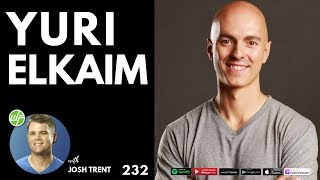
This content was created by Josh Trent. This content was uploaded by Josh Trent. This is a YouTube video titled "232 Yuri Elkaim: Making Fit & Healthy Simple Again" featuring a conversation between Josh Trent and Yuri Elkaim. The episode, created on September 18, 2018, discusses topics related to health, wellness, and personal development. Yuri Elkaim shares his journey from being a pro soccer player to a health expert, emphasizing the importance of internal work, self-identity, and simplifying health and wellness. Josh Trent hosts the discussion, exploring themes of decision fatigue, self-worth, and the power of choice in personal transformation.
Chapters
I really think that in any given moment, we just have to make this conscious decision to say, you know what, I'm here for a reason and I'm going to figure this out. And that's part of the spiritual journey of, you know, figuring yourself out and self actualization. And it's honestly, the majority of the work is always going to be internal. It's like never the tactics, it's never the strategy, but 90% of the game is internal. And I've realized this so much more now than I used to as a soccer player. And I wish I had known this back in the day when I was playing soccer, because it's not sexy. People don't want to hear about it. They want the latest little gimmick. But the reason stuff doesn't stick is because all the change happens between our ears, not necessarily what we put in our mouth, because what we put in our mouth or what we do with our body is a reflection of what happens between our ears.
That's Yuri Elkain, and this is episode 232 of Wellness Force Radio. What's up, my friend? It's your host, Josh Trent. And welcome back to another episode for your weekly access to global experts in all things wellness as we discover the physical and emotional intelligence we need to live life well. In this episode, we're talking to the health whisperer. Yuri Elkaim is coming on the show to talk about healthy living and fitness from a place of simplicity. What's most fascinating about today's show is that Yuri himself has been to the bottom of the well, both literally and figuratively. After losing all of his hair and going through asthma and low energy in his adolescence, he chased a dream of being a pro soccer player and then found holistic nutrition. He calls that the most single important discovery in his life for transformation. Now, this superpower that Yuri has, he says it's his ability to simplify the complex world of health and reduce our confusion with clear, actionable and science backed advice to that cuts through the nonsense. And before we drop into the episode together today, I want to warn you that this upcoming podcast is only for people who take 100% responsibility for their life and their health. And in order to take responsibility, we stack the environment and the odds of health behaviors in our favor. So with that, we have one more week of entries for you to win the free 90 day supply of Organifi from our show sponsor, the Red, green and gold juice powders, which, by the way, I'm so excited. In just a few weeks, we'll Be having Drew Canole, the founder of Organifi, on the podcast. I actually just wrapped an interview at his home here in San Diego last week. I cannot wait, cannot wait to share it with you. So make sure you hit subscribe right now in itunes on your phone. Don't miss the updates for that podcast. Anyways, back to getting you free stuff. All you have to do to win this free 90 day supply of Organifi is tap your phone right now, scroll down and click the purple button that says review this podcast. It does a couple things by you leaving a quick five star review right from your phone. The show will grow. We'll reach more smart and conscious people like you and that allows us to have even more world class leaders on the podcast that we can all learn from. So do this right now, win that free 90 day supply of Organifi. Just tap your phone, scroll down to the show notes and hit the button that says review this podcast. Do that right now. I'll wait for a second. Okay, cool. Now you can also go to wellnessforce.com review and do it there as well. We'll announce the winner at the very end of this month. Okay, now we're gonna get into this outstanding show with our friend and trusted expert Yuri. And although we'll be learning about food cravings and decision fatigue and how discipline is actually the highest form of freedom, we're actually gonna be talking a lot about self image. How the image of ourself is the catalyst for all of our beliefs, thoughts and actions when it comes to health and behaviors. We'll learn about Yuri's self identity crisis, how he separated himself from being a pro soccer player to transform into what he calls a healthpreneur. We unpack how to change the negative voices in our head through empowered thinking. Why self awareness is the first step towards moving in the right direction of changing and creating healthy habits. We also get really practical, really ground floor nuts and bolts towards the middle and end of the show as Yuri talks about the key to front loading the day and the benefits of stacking health activities early in the morning in your favor. And we really dig into the truth today. For all the coaches and authors and healers and speakers that are in our community. This episode is going to be profound because Yuri gives us his proven steps on how to speak your truth to your audience and community. The people that follow you online. Show notes from today are at wellnessforce.com 232tweet Yuri Facebook Yuri, just hit up Yuri online. Let him know you heard his voice here On Wellness Force. Now let's drop in and discover that this physical and emotional intelligence we're here for does not have to be so complicated. It can be easier. So let's drop in. So our health and wellness world is completely complicated, sometimes supersaturated with too much information. And we have a incredible guest on the podcast today, Yuri Elkaim. Making fit and healthy simple again. Yuri, welcome to Wellness Force Radio, man. Thank you for coming on.
Yeah, buddy. Thanks for having me, Josh.
Well, people know you so deeply. I mean, gosh, how many years has it been that you've been the no BS fitness and nutrition expert now? Almost two decades.
It's pretty crazy. Yeah, almost two decades. 13 years online. So it's been a good run and it's just beginning.
Do you feel like you're just getting started?
Yeah. So, I mean, like, I totally believe that my future is always bigger than my past. So I don't sit on my previous accomplishments. I'm always like, all right, what are we doing next? What are we creating next? And that's just the way I live. So it's fun.
Yes. And we're going to talk about the road to you getting there. But before we do that, man, I love on your website you say, my superpower is being, being able to simplify the complex world of health and reduce your confusion with clear, actionable and science backed advice that cuts through the nonsense. Do you have a cape that says simplify on it?
I don't know if I do. But you know what, you know what? Now that I think about that, I don't really think that. I mean, I think most experts are experts because they can simplify complexity. So I think maybe that's not the most unique tagline anymore. But I think I've done a. It's just come up over and over again where people say, like, man, you just make it so simple. It's not easy. Right. But it's simple. And that's hopefully what I try to bring to our audience, whether it's on the health side or on the business side or life in general. So that's. I guess that's what I do. Yeah.
Yeah. And among everyone that you serve, though, you've also gone through multiple thresholds yourself. I mean, people have heard of alopecia. We know that it's a condition that starts sometimes early in life for some people, sometimes later. But Yuri, I'd love to talk about this because the way that you, you actually published a video and it was my coming out and you talked about how you know, you gone through a threshold at 17, and I'd love for you to just paint that quick picture, man. Because looking at you, people might think, oh, Yuri's been healthy his whole life.
Yeah, I mean, I definitely. Other than the fact that right now I've got this, like, nasal congestion. I don't even know why. But mostly I'm pretty healthy. I feel pretty good. But growing up, I was a mixture of do whatever I want because I'm invincible and really, like, had nice flowing hair. Like, that's probably a very bad summary of me as growing up.
It's really honest.
That makes sense in a second.
Yeah.
So I grew up eating terrible foods. I remember having. I don't know if you ever had the. Growing up. The banana tasting like amoxicillin, antibiotics sitting in the fridge.
I remember that distinctly.
Yeah, so that was like our. That was like a staple, like orange juice in our fridge. So I grew up with a lot of antibiotics, all the immunizations, all that stuff. At the time, I had no clue about any of this, Right? But growing up on, like, toast and bread and cheese and cereal eventually. So I was very active. I was playing soccer my whole life. I eventually played pro in my early 20s. That was my lifelong dream. So I kind of masked like I was fit, but I was unhealthy, but I was too fit to realize it. And then I was kind of a bit of an asshole to my brother, so I was kind of like one of those meaner older brothers. So I think karma really kicked me in the butt just before I was 17, because I was kind of like this good looking, smart jock. It was like I had everything going for me. And then all of a sudden, my hair started falling out out of the blue. And I remember getting home from soccer practice one night, taking a shower, and my hands are covered in hair. I was like, what is going on here? My dad's Moroccan. Just to give you some context, I had, like, really, you know, bushy eyebrows in the whole bit. And long story short, I lost all of my hair. Like, eyebrows, eyelashes, body hair, everything in the space of. And that was a very, very humbling experience. A lot of people, they're like, hey, dude, you must have been shell shocked. And quite honestly, I think I took it pretty well because even at the time, I always felt more mature than my age. Maybe I'm. I don't know, like, wise soul type of thing, but I knew that even though it was my hair. And yes, it sucked. Looking like an alien walking down the high school halls when previously, you know, I had like this long, you know, flowing brown hair, and it was a little bit of a different vibe. I got over myself pretty quickly, and I realized that other people have it way worse. But that was also a really big trampoline into me being like, dude, figure this out. Figure out why this happened, and let's figure out a solution. Because the medical community was a disaster. They wanted to inject my head with cortisone. They had no solutions. I'm like, this is a frigging farce. So I went on this journey for about off and on, eight years, and eventually came back after I finished playing pro soccer. I went to school to study kinesis, then played pro soccer, then came back after I retired, went back to school to study holistic nutrition. And that's when everything clicked for me. I was blown away by, man, if I had known this stuff even when I was playing soccer, I would have been so much better. But I was like, holy cow. My body was a frigging wasteland. And as I started piecing the pieces of the puzzle together, I started to realize why that happens, at least from my understanding, from a physiological standpoint. But. And I'm just like, you know what? People don't know this information if I didn't know this. And I was pretty active and I went to university for kinesiology. There's got to be billions of people who don't know this stuff.
And Amen, Yuri. And I'm thinking about you being a pro soccer player, dealing with health complications at the same time. How did you juggle being a pro soccer player and dealing with this?
Well, I think by that point I kind of forgot it, but I kind of, like, let it go because. So by this point, yeah, I mean, I was kind of doing my thing. I was playing soccer, and I was just to give you some context, I was eating like I was in France. I would have a whole baguette, a whole plate of pasta, corn flakes for breakfast. I'd have crepes before my games. Like, it was just insane, right? It was like Halloween every single day. So I was just so focused on soccer and pursuing my dream that I really didn't care too much about the hair at that point, because I had been shaved, kind of like clean shaven now for five or six years by that point. So it became a little more comfortable. But what was interesting is when I figured this stuff out. I regrew all my hair when I was 25, 26. So that's why on YouTube, you see some videos with, like, I'm still, like, shaved head. Because I. By that point, it was just so much easier. But I had my eyebrows back. I had my facial hair back. And then about five years ago, I was taking my oldest son to the doctor. And while I was there, she's like, hey, while you're here, you should probably just get a tetanus booster. And I didn't. I did not even question her. Got the shot, and within two weeks, all my hair fell out again. And since that time, we have not taken our kids back to the doctor, and they've been totally fine. And I was just like, all right. That was like, the needle that broke the camel's back. I'm good. Or the straw that broke the camel's back. So, anyways, it's just. It's just been a really cool journey. I really do believe everything happens for us. Like, that is one of my biggest beliefs. So I've never been a victim in this whole process. I've never, like, why did this happen to me? I'm like, how do I. What do I. What can I learn from this? How can I make it better? How can I take this journey and now help others end their suffering? And that's really why I believe this happened to me, because I would not be doing what I do now if that didn't happen to me at 17.
Oh, Yuri, my fist is in the air, man. Because you made this choice. Not everybody can make that choice depending on a lot of external and also, let's be real, mindset and internal factors. So I love that you talked about karma kicking you in the butt early. Whether you believe in the Buddhist faith or the higher power or even a bearded guy in the sky. Like, there is something out there that we're all in the process of continually understanding. How would you say that your connection to a higher power or faith maybe in general, has helped guide you along the way? Because I could identify with you where karma sometimes kicks all of us in the butt.
Yeah, totally. I think it's something I've grown and embodied over time even more. And I just like. Because here's the thing is, like, everything is a choice. Like, you can decide to believe that whether you're, you know, you're religious or not. I just like living life believing that everything is happening for me. The universe always has my back or God has my back, you know, whatever you want to call it, and that I'm always protected. You know, I live through this belief that I have my higher self, my inner being that is at the End of the raceline. Like, is that the. It's at the finish line of this 400 meter track, and my entire life is me getting closer to that higher self so that when I leave this planet, it's like, good to see you. You know, you've. You've accomplished. My higher self is like the best version of myself. Everything I've ever wanted, everything I've ever wanted to be. And I really believe that I'm kind of tethered to that. And everything I do, even when my Facebook ad accounts get shut down and all this crap happens, it's like, all right, what's the benefit here? What's the good. How is this happening for us? How can I pivot? What can I learn? How is this supporting me? And I just think that's a better way of living than being like, poor me. All this shit happens to me all the time. And I just think that's a choice. So that's just the way I look at it.
The power of choice is always ours, but yet it's our internal work and everything that we do before we get to that light switch that we can kind of flip. Because you're right, there is a decision point, I think, in inflation point. You know, Joseph Campbell, the hero's journey, he talks about this, like, separation, and you get initiated. I feel like looking at your story, Yuri, you've had multiple initiations because you were in your twenties when it came back, but you received so much support and love from your audience. And like, I was watching a couple videos on YouTube and I was just feeling like, wow. The reason that people care so much about the messages you're putting out is because you don't suffer in silence. You know, you give people this understanding that, guys, if you're going through something, the first step is actually to talk about it, to open up. Why do you think, as we dive into this conversation about simplifying health and wellness, why do you think that it's so challenging for people to actually open up? What is that in our psychology?
I think it's the need to be perfect. And I think that's even worse now because of social media, namely Instagram, which I like and hate at the same time. Yeah, I think it's a great platform for sharing a valuable message. But when your message is, like, taking pics of your ass and that's the value you're bringing to the world, I don't know. I mean, I've got my opinions about that, but I think, you know what I recognized when I lost my Hair again. I was at a point of. I had built this following. I kind of at this point, was a bit of an expert, and I felt shame that I wasn't perfect. So what I did was I actually used my wife's makeup and I painted on fake eyebrows for two years. And I think one of the coming out videos that I shot was, I'm like, all right, no more makeup. I'm done. And that was the scariest. One of the scariest moments of my life. And I love doing videos. I shot more than 1200 videos on YouTube. I'm like, I love doing videos. I love speaking on stage. But that was the most challenging moment, I think, that I can recall. Probably even more so than when I first lost my hair. Because now I was like, what are people gonna think? Are they gonna think I'm a fraud? You know, that I don't kind of walk my talk. All this minds. All this mind frick. Right? And when I published it on YouTube, the big revelation for me was, number one, almost everyone is super supportive. And the people who weren't were, you know, not my true followers in the first place. Anyways. Yes. But second, and the reason I actually published the video was not about me. It was actually to give permission to be themselves. Because I just. I finally, like, so many people pretend. And, like, I mean, I think I pretend a lot. I mean, I try to, you know, as a high achiever. You know, we try to make our stuff look cool and sometimes bigger than we are, but at the same time, I try to be as real as possible. That's why, like, when people meet me in person, they're like, dude, you're the same person. As I saw online. Like, it's the same person. And I'm very conscious of that. That's. That's never been, like, a strategic ploy. It's just. It's just who I am. It's just how I operate.
Yeah.
But I do think I really. Part of my mission has been to help. I think at the core is to help people be the best version of themselves and to recognize that they're okay. They're. They're good enough as they are, and they can always get better. But, you know, trying to live up to dogmatic diets or, you know, calling themselves specific labels like, I'm Paleo or vegan or whatever. I just think it's too constraining for who these people really are. Yeah. I'm just like, you know what guys? Like, screw it. Just be yourself. Live your life. Do what you want. To do and enjoy it.
And I'm thinking about, I'm smiling as I'm listening to you because there's so much identity that gets wrapped up into how you eat, what food camp you live in. Totally even defining yourself by for men, how much money we make, or for women, what our bust size is or what our waist size is. And it's just such a bullshit. Yuri. And this is why I so enjoyed being on your show and love the questions you asked me. Because in studying your work and in understanding really the fabric of who you are, I just think that you've cultivated like one foot in the practical health world and another foot honestly in emotional intelligence and spirituality. Would you say that's true?
Yeah, totally. I would definitely say I'm a very spiritual person. Yeah, I don't know how to describe it, but I would, I'd say you're pretty bang on for sure.
This identity conflict and some people call it imposter syndrome. So we have health and wellness pros that listen, people that you maybe want to be a health and wellness professional or a wellness pro in some way. And then we also have Yuri, you know, the everyday parent, somebody listening at home that just wants like more energy. They want to let go of some old weight. When we look at identity, what the role of this? If someone has a narrative inside, they identify themselves a certain way. Can you talk about what you've seen in almost 20 years, how identity relates to weight loss, how identity relates to letting go of old things?
Yeah, this is a big one. I really do think self identity is the biggest factor for how we behave in life. So I'll give you context. When I played pro soccer, I identified myself as a pro soccer player. Even to this day, I resonate at a very deep level with that life of, you know, like the pro athlete, going to training, getting treatment, performing, you know, that lifestyle. And it's kind of deeply embedded in who I am. Not so much as it, as it used to be, but it's still there. And when I transitioned from pro soccer player and eventually into business owner, I had a bit of a self identity crisis. I'm like. Because I would still think of myself as this like 16 year old soccer player. Like I always had this, like, I'm like a young guy. It's always kind of how I felt and I never really felt like I was old. Like I'm like, you know, a mature businessman or not. You have to be. But I think that when you and this. So this is tricky too because when you give yourself A certain identity, you kind of box yourself in to a certain stereotype to some degree. Because if I'm saying, okay, if my self identity is like a Fortune 500 CEO, what would that type of person look like and dress like and do? So I'm kind of like boxing myself in if I wanted to do that. Right. But for, I think for a lot of people with their health, and we see this a lot with weight issues, a lot of people with weight issues don't identify themselves. They can't even visualize themselves as a lean, thin, energetic person. It's not even in their repertoire. And the problem with that is that if you can't even see that for yourself as a possibility, then you're not going to act in accordance with that. Because our brain is never going to act, or our body or the way we behave is never going to be in discord with how we see ourselves. So how we behave, our beliefs, all of this has to be congruent with how we see ourselves showing up in the world, which is essentially our self identity. A really good book on this is Psycho Cybernetics by Maxwell Maltz, and he's a plastic surgeon. I don't know if you read the book, but he's a really good read. He's a plastic surgeon who worked for decades doing plastic surgery. And he would notice that after a lot of facial reconstruction or nose jobs for a lot of his patients, they would come in and they'd be like, I want to feel more confident or better or whatever, they would get the surgery, their nose would be reconfigured and looking, quote, unquote, more normal. And within a couple of days, they just felt the same as they did before. Because even though visually they looked different, their self identity, their self image looked the same. Yeah. And they hadn't shifted that. And so that led him down this huge process of understanding. It's not we see in the mirror, it's what we see in the mirror of our mind of how we show up internally in this world almost. So I really do believe that self image, if you want. The nice thing about self image is that it's tied very closely with our standards. So if you change your self image, your standards change automatically. And if you want better results in your life, start by changing how you see yourself. And as a result of that, your standards will increase to the point where the actions support that to get you better results.
Damn, Yuri, this is powerful because I'm thinking about how you're mirroring some of the phrases we've Heard from Tony Robbins over the years. You know, if you want different results, change your standards, increase your standards. And I love, by the way, that you brought up Maxwell Maltz, you know, auto suggestion, the servo mechanism. We've talked about that earlier with John Gray on the show. And I think about this narrative that we all have sometimes, which is, I'm not good enough, I'm not worthy. And we don't need to spend too much time on this, but I do think it needs a little bit of a spotlight because until we can execute and kind of have a foundation poured for this new identity, we have to explore the dark, you know, the understanding that, hey, those thoughts that you have, that narrative that you have, it's not always true. And I would say nine times out of 10, it's not. It's an old mechanism built on the limbic brain so the amygdala can keep us safe. Can you talk about how you've explored this, this dark side to actually bring in the light?
Yeah. So I've recognized that the mind navigates to where it's most familiar. So if you are conditioned and habituated at thinking negative thoughts, that's where your mind is by default gonna go. So if you don't believe in yourself, if you have low self worth, all this kind of stuff, that's naturally where your mind is gonna go and it's gonna be tough to go back up the hill and push the boulder up. But it's work that all of us have to do because on the other side of that is just amazing amazingness. So I think with respect to kind of self worth, this is a big. I mean, it's such a big thing. Whether we're talking about people who do. They feel they're worthy enough of being the body that having the body that they want or achieving whatever goal it is that they want. You know, I don't know where it stems from, whether it's, you know, a childhood specific issue or whatever it is, but regardless of that, I think, you know, in any moment we have the power to choose. We have the power to focus on, here's what I want, or focus on, I don't have what I want. And it's, it's really a choice in any moment. So it's like, yes, we can, we can spend years working with shrinks and we can look back all the time. But I really think that in any given moment, we just have to make the conscious decision to say, you know what, I'm here for a reason. And if you, I think it's important to believe that all of us are here for a reason. There's a very, like, I don't think we'd be here if there wasn't a reason. So if you have that belief of like, I'm here for a reason, not too sure what it is, perhaps, but I'm here, which means that I'm here for a reason and I'm going to figure this out. And that's part of the spiritual journey of figuring yourself out and self actualization. But if we have that belief and we just say, okay, cool, I'm here, maybe I don't have everything figured out, but I'm going to choose in this moment to focus on what I want and I'm going to build my beliefs over time that I can do this, that I'm worthy of this, that I can serve people, that I can achieve this goal that I want to achieve. And honestly, the majority of the work is always going to be internal. It's like never the tactics, it's never the strategy. I mean, sometimes, but 90% of the game is internal. And I've realized this so much more now than I used to as a soccer player. And I wish I had known this back in the day when I was playing soccer, because it's such, it's not sexy. People don't want to hear about it. They want the latest little gimmick. But the reason stuff doesn't stick is because all the change happens between our ears. Not necessarily what we put in our mouth, because what we put in our mouth or what we do with our body is a reflection of what happens between our ears. Wow.
And I'm thinking about every time I used to be 80 plus pounds before I went down the road of being a trainer. You know, for 10 plus years, every time, Yuri, I would have those negative thoughts, I had this old wiring in my brain that would say, oh, you know what? Instead of feeling the uncomfortable feeling, go just eat something that'll make you feel better. I'd love to shift gears here because I think a lot of people deal with this, especially people that might have chronic stress. Can you talk about what you've learned in your research and working with so many people, man, about this connection of when I feel the stress, instead of feeling the feeling, I go to the food.
Yeah, I think there's the physiological side of things. I mean, you can, there's certain foods that might be able to help with quote unquote cravings. But honestly, most cravings are not physiological or psychological. Boredom, anxiety, feelings out of controlness. So when stuff is happening where we feel powerless, we tend to make choices that are not necessarily the best, but that feel like we're in control. So, for instance, the use of porn shopping, it's actually been shown that when people who shop a lot feel. I can't remember where the study was, but they found that people who shop a lot, not all the time, but in this specific situation, shop because it gives them a feeling of control in a life where they often feel powerless. And I think the same happens with food, right? It's like you feel like this is the one area of life I can control. I can control what I put in my mouth, and it makes me feel good. So I think part of it is like, with anything, being self aware enough to recognize what's happening, because that's the first step. If you have no idea that what you're doing is happening, it's very tough to change. But if you're aware of it, even if it's not like changing the way you want it to, that's okay. At least you're aware of the fact that, all right, I'm aware of this. I'm not making the best choice. Shit, okay, that's fine. At least you're aware of it now. We can kind of move one step at a time in the right direction. And then it's about. There's a couple things. I mean, number one, I think you have to have the right environment, because environment will always trump willpower. So. And this is easier said than done, especially if you're at home all by yourself and the kitchen's right behind you, it's easy to make those choices. And that's why I think shows like the Biggest Loser are powerful during the show because those contestants are in an environment where their food is controlled, their exercise is determined, and they just do it. And I think if everyone had that type of environment, with the right type of support, the right type of coaching and accountability, we would all reach our goals. But left to our own devices and our own willpower, there's only so much we can take before we're like, you know what? I'm just going to lay on the couch and have this chocolate cake and watch some Bachelorette.
Yes.
And I say that because, number one, the Bachelorette or the Bachelor is my second favorite show. Second is I've gone through periods where even to this day, I catch myself. I'm like, I feel shitty and why am I turning to this food? It's just, can I choose a better. Can I choose A better option. Can I just go meditate or can I move my body or can I just get out of my funky state? And honestly, for me, a lot of times the easiest way to change how I feel is by moving my body. And if that's like jumping on the trampoline or going for a quick run or a workout, that's the easiest way for me to change how I feel. So I think you have to find your mechanism and a healthy one. Because some people turn to weed, some people turn to food, and sometimes weed and food go together. But I think we need to find healthier outlets to really move our body, move our mind in a more positive manner.
Being aware of our relationship with sex and porn, food, work and drugs and shopping. I mean, some of these things are kind of fun, sure, but you know, left to our own devices. I love that you said this. Left to our own devices, if we don't have that bedrock of self awareness, the environment will always trump the willpower. And I really want to focus on this too, because we have a decision fatigue mechanism in our brain. We've discovered this on the show with Dr. John Sullivan where we talked about 1, 150 high quality decisions is all we get every day, Yuri. So if we're spending our decisions on, well, should I buy the chips, Should I do the thing that I promised myself I wouldn't do? It just exhausts us. I mean, we all can relate to feeling so incredibly stressed out because we have to make another decision. I'd love for you to talk about how you actually stack the environment then, man. How do you make it so that you don't experience decision fatigue?
Yeah, totally. And I want to preface this by saying, kind of just following on the last point was, you know, shopping, eating certain foods, I think that all that's fine, but I think it depends on the state in which we make the decision. So if we're coming from a state of happiness and joy and bliss and we're like, hey, let's go shopping, I think that's a very different, and it's a healthier approach than being like, I feel terrible, I'm going to make myself feel a bit better. So with decisions, I really believe that structure equals freedom. And I really don't believe that most humans want as much choice as they say they do. I don't know about you, Josh, but I hate going to a restaurant that has like 10 pages of menu items.
Yes, totally.
I'm like, there's actually we have a restaurant in Toronto where every day of the week they have one thing you can have for dinner, that's it. And you don't know what it is until you show up. And I really do think that most humans, especially in 2018 and beyond, because of how inundated we are, are looking for these types of. Just make the decision for me. So when I talk about structure equals freedom, when we look at our lives and we look at how we live our days, a lot of people need, I really think it doesn't matter if you're an entrepreneur or not, you have to structure your day. And it sounds like an oxymoron, like, how do I get freedom by giving myself more structure? Well, the thing is, when you plan ahead of time, you're not having to think in the moment. And when you do the thinking ahead of time, that alleviates the need to make those decisions. So, for instance, with respect to the world of nutrition, everyone, a lot of people talk about, you know, plan your meals or make your meals on Sunday, right, for the week. And a lot of, you know, bodybuilders and stuff do that because I think part of the power with that is the worst thing, the worst question asked if you're in a family or yourself is what's for dinner? If you ask that question when it's time for dinner, you've already lost the battle. So the key is you want to make your decisions ahead of time. When that battery power, that decision making power is at its highest and then just run on autopilot, you know, for everything else. That's why, like, meal plans are so important. So knowing what you're going to have for dinner two nights from now, even though that sounds a little bit structured, is super important because in the back of your mind, you know that's already been taken care of. You more or less have the ingredients, and if you're missing anything, you know what to get at the store. But in those moments where we're stressed, when we've had a long day, we get home, the kids are going crazy, or we're just tired, those are the times when we have to make some important decisions, like, you know, what are we going to have for dinner? Or what are we going to do here? And in those moments, we end up choosing the wrong thing, the easier thing, because we haven't made those decisions ahead of time and because we're just exhausted from resisting temptation all day long and making those decisions all day long. And that's why I think it's a lot easier for most people to start the day healthy than it is to finish the day healthy. So whatever you can do to front load your day, get in the workout, get in the green juice, get your most important stuff done, get your meditation in, get as much of that stuff done early in the day as much as possible. Because just allow yourself to be human and understand that later in the day it's gonna be a little bit more of a write off. And I think that's kind of how I operate is I get all my most important stuff done early on because I know later in the day I'm pretty much useless. I'm very honest with that.
I'm cheering for this right here. Front load the day. Front load the day. So powerful. Let that sink in. This is why, Yuri, in our community, we're so stoked about our new guide. We have wellnessforce.com from incredible experts like you. We've just learned these kind of wisdoms that are all connected throughout older, you know, 2,000 years of wisdom, the ancient and contemporary people that have actually understood. When we front load our day, when we have these morning practices, it literally sets the fabric for the entire day. So if you're curious about this, just go to wellnessforce.com m21 now, when it comes to mindset and the identity of self, the best question to ask is do I deserve to eat healthy and clean foods today? Well, the obvious answer is yes. But knowing and doing are two separate things. So to make it easier to decide that micronutrients are going to be a part of our life every single day, Wellness Force partnered with Organifi to create the Wellness Force Superfood bundle. Now, this bundle is specific to our audience. It contains the red, green and gold juice powders at a significant discount. For less than a few bucks a day. You can have all the adaptogen rich, organic, vegan, non GMO superfood powders right now. And here's the big and most important piece of this whole equation is that you'll be able to consume these superfoods with less time and less money. Those are the two biggest factors, money and time. So both of those we have covered for you. All you have to do is go over to Organifi.com WellnessForce and use code WellnessForce to save a 20% off block for your superfood bundle. Get your bundle today. Don't wait any longer. Ditch the second cup of coffee and get the energy from the inside out. Clicktoorganifi.com wellnessforce Use code wellnessforce for your special discount and get that bundle mailed straight to your door today. I want to shift here because there is a lot of coaches that listen, Yuri, you are someone that helps coaches become the higher versions of themselves. And I think when we talk to a coach, maybe who's dealing with a client who is in overwhelm or decision fatigue, how would you work with a health and wellness or fitness coach, someone that does business online, to begin this conversation with their client about decision fatigue and overwhelm?
I think first and foremost, exposing them to that is important. And then I really do think most health experts are really, really good at what they do. I rarely come in and say, you know, here's something I think you should do with your clients because they often come to us being like, okay, I've got this, this magic, this ability to turn lead into gold. I just don't know how to get more of those people into my world. And that's kind of where we come in. So we help them on more on the client generation, on the marketing side, but also helping them. So a lot of our work is on the mindset because we've recognized that someone, you know, they may have been in practice as a doctor or they're a coach working with clients for years, they got this magic. They can help someone's life in a big way. But there comes a point, and this is one of the biggest stumbling blocks I found in the health space, is that most healers, which I think we all are for the most part, have this notion that we're very good givers but very poor receivers. So a lot of times we undervalue ourselves. We don't want to charge what we're truly worth. How do you put a price on, like someone's dealing with emotionally for 20 years? I mean, how do you say, okay to work with someone at that level, it's a hundred dollars an hour versus to help someone overcome that problem is $10,000. How do you put a price on that? And I think that's one thing that a lot of people struggle with, that we're able to help them understand and really implement. Not everyone's gonna be able to pay higher prices, but we really believe that when you can step into your true worth and command a higher price, you can transform someone's life at a far greater level than you ever could at a lower price point. So, you know, we see a lot of these self worth issues, like, I'm not good enough, I don't have a New York Times best selling book, will people take me seriously? A lot of this stuff. And the thing I continue to tell People is that the message does matter, but more importantly than the message is the messenger, I really believe that even though the health and fitness space is extremely saturated, there's more than enough for everyone. And there's always going to be a segment of this pie that is going to resonate with you or with you, or with you or with you, assuming you're authentic to yourself. And that's why I don't really think that even though there's competition, there is no competition. Because, you know, your tribe is going to gravitate towards you, Josh. My tribe is going to gravitate towards me. And it's not about, like, our fancy way of doing things. You know, maybe part of it is, but a lot of it is just like, I just jive with you, right? It's like, I just resonate with you. And there's a reason people say I resonate with you is because they're vibrating at a certain frequency or energy or whatever it is, and it resonates with the way you are. And I think if you are you and you show up in the world as you, you will never have a problem working with the right people. So I don't know if that really answers your question. It's kind of a long winded way around it, but that's just one of the things that we see pretty much pretty consistently.
Well, I think you hit the nail on the head because this frequency we talk about so much on both shows, our physical and emot Yuri and just want to pause here and acknowledge the fact that you do talk about frequency because some people get a little scared. It's like, oh, frequency. What are you like, woo, woo. You watching Oprah too much? But we believe that when we're speaking, even right now, the modulation of my voice, the frequency of your voice, people kind of know now because of this intimate medium called podcasting. If somebody doesn't sound right and there's something in your body that like an existential alarm goes off, trust that, like trusting ourselves, I think is a huge component of this entire process. Whether you're a coach or a client, letting go of old weight, I think it all breaks down to is someone actually being real? Let's go into this subject for a moment here, this authenticity subject. We have some people that actually go online and they'll say, guys, I'm about to be really authentic. I'm going to be authentic right now, so listen to me. It's like, wait a minute, why don't you just speak and let the authenticity unfold? Can you Talk about this in our space.
Yeah, I think you just nailed it on the head. It's such a buzzword that people are, that they're trying to be authentic in kind of a weird forced fashion. But I think just show up and do you like, you know, some people swear, other people don't. I mean some people are, you know, like whatever it is just I think if you do you that's the most important thing and that's the trouble in today's day and age is we're comparing ourselves to everybody else. We can never measure up to their so called perfect life, even though we have no idea what's happening behind the veil of beautiful images. And it's tricky because, you know, and I'll be very honest, so we had. I decided to step up my Instagram game a little bit a couple months ago after being off of Instagram for a long time. And I'm like, all right, let's kind of see how this works. So we met a friend of mine who's a photographer in traffic. He did some shoots at one of our workshops and we decided to do a day of shooting just to get some more kind of lifestyle pics, a bit more professional type stuff done. Alright, let's kind of play around with this and see what happens. And it's so interesting what happens. You know, you post a couple images on, in this case on Facebook and it's so interesting to see how certain people respond to certain images. So images where I might be a little more styled out, a little more, you know, you know, showing some of the bling. I don't have bling, I don't wear jewelry. But like that kind of stuff, it calls a certain person forward to comment on that. I've got a buddy of mine who was very honest about this. He rented a Maserati, actually. Sorry. He rented a Bentley for some pictures for Instagram and as a result of that he enrolled a number of clients. And he's like, hey guys, I just want to be very upfront with you guys. Like, I rented a Bentley. Apparently I maybe should do more of this more often because it led to a lot more business. But like the way I, the thing I said to him was like, this is not you, right? Like I knew when I saw the pictures of him on Instagram with a Bentley, I'm like, he's very successful, but he's not the type of guy who's gonna like go blow, you know, 200 grand on a Bentley. And my, like, in the back of my mind, I'm like, yes, you might be attracting some clients because of that, but there's, for me, there's a resonance mismatch. It's like you're attracting clients on a false premise. Right. It's the same thing that I was doing when I was panting on my eyebrows. Right. It's like, this is not who I truly am, but I'm trying to pretend like I'm this person. But now, even though we do have a couple more professional images done for our business, like some of the ones that I actually wanted to do for fun were like, me dressed up in a suit, sitting on like a broken down car, just to have that funny juxtaposition, because I want to kind of poke fun at this whole, like, everything has to be perfect and polished type of look. But I think that's also why Instagram stories are so much bigger now, because people see past the veil of the veneer and stuff and they're just like, just show me the real stuff. Show me what's happening behind the scenes. And so I think people want to connect with people. Whether you're business to consumer or business to business, it's always h, human to human, heart to heart. Big businesses know this. That's why you see all these commercials now or for the last couple years that are all emotion based and they're story based. You can put any product into the end, at the end of those commercials, it wouldn't matter if it's Coke or a car or like sometimes you don't even know what's coming. But it's about the story and the emotion that it evokes because that's where people resonate. Yeah. And that's where I think you just have to be you and you can't try to contrive anything.
It's almost like I'm thinking of this as you were speaking, just so connected to this message. It's like our authenticity, our authentic reflection, it can bring out others projections. And sometimes those projections are completely not the creator at all. And it's people just kind of pouring out their hate or, you know, their frustrations onto a creator. How have you dealt with this when people sling fire at you, when people try to knock you down? Because I think that's honestly a big fear for a lot of health and wellness creators, Yuri, is they don't want to be shit talked to. They don't want to be torn down online. But I believe that actually haters are a sign you're on the right path, I think.
So I think if you're not if you're not getting any kind of polarization. You're just playing too safe, like you're not speaking your truth. I really believe if you're. I shot a video this morning on how to become a thought leader. Step number one is share your thoughts. So be a thought leader, not a thought repeater. I said if you want like a very easy test for me to see if somebody is like on the rise of becoming someone, you know, I don't want to stereotype anything but like a pronounced thought leader is go to their Facebook feed and see how many other things they're posting of other people or memes or cat videos. If that's their entire Facebook feed of other people's stuff, they're not really bringing much to the table. But if someone is posting a lot of their own stuff, some really cool insights and some ahas making you think in different ways is that's interesting. And so I think when it comes to haters, you have to understand they're always going to be there. The more successful you get, the more they're going to be. And that's just the way we're kind of like crabs in a bucket. As soon as one crab tries to get out of the bucket, the other crabs try to pull them down. So the way that I've dealt with this, and again, this didn't happen up front like initially, this is something I just kind of thickened my skin over time.
This is a process.
Yeah, I created this thing called the circle of trust, which is kind of like imagine a bullseye and the middle, the bullseye itself is my closest family. So anything that they say, I will listen to. The next circle outside of that are my closest friends and people I hold in high esteem. If they tell me, hey, Yuri, man, you are way off the mark on this. Okay, I'll take their word a little bit more seriously. Not as seriously as my family, but you know, the next level out about, you know, outside of that, I'll look at my client, some people that we actually work with closely and who I value their opinion. And if they say, dude, like you are like, I don't know what's going on here. That email did not sit right with me. I'll take that and I'll really consider that. And the final ring outside of that are just everyone else. So If I'm on YouTube and I post a video about something and someone's like, f you, man, you have no idea what you're talking about. You're a friggin cancer patient. I'M like, okay, I'm just gonna laugh at the that because I'm like, I can only. I don't even respond. I don't debate, I don't respond. I don't do any of that stuff online because it's not worth my energy and it only fuels their fire. So the closer the person is to my inner circle, the more I value their opinion. But at the center of all that, even before my family, is me. And I value my opinion more than anybody else's. So if in my heart, if I'm doing something that I know without a shadow of a doubt is the best thing to be saying and doing, that's all that matters. But if there are times or maybe sometimes I kind of lose my cool a bit, or I kind of step off my rocker and I have to be brought back down to earth. But like, hey, dude, maybe you shouldn't have said that in that way as a little bit, maybe a little bit of lack of compassion or whatever it might be. I'll take that to heart if it's someone close to me who said that. But for the most part, you have to believe in yourself. You have to honor yourself. You have to have a voice, and you have to speak up. And I think it's. You have. The more. The more you honor yourself and the more you share your ideas, the more confidence it builds. And the challenge online is, are you okay sharing your ideas and thoughts even if nobody engages with you? And I think there's this because, you know, initially everyone wants to be famous until you're famous, and then they're like, it's the worst thing ever. You have paparazzi all around, but most people would rather be famous than rich. Because we all want to be loved. We all want to be adored. And I think the toughest thing that a lot of people deal with online is they put something up and it's like crickets.
Crickets.
And I think that's worse than having no like people. Humans want negative emotion more than no emotion. So it's like, you know, bad PR is better than no pr. It's the same thing. I think people would rather have haters than like crickets. But I still think you have to develop your own self worth and that tough skin to know that what people are saying about you is their opinion has nothing to do with you.
I could still relate to what you're saying, man. Cause for a long time, I would say probably like six months in the podcasting world, three plus years now, but it was crickets and I was like, wait a minute. I had to really go inside. I had to figure out, like, why am I actually doing this? Am I looking for external adulation? Or am I coming from a fire that burns within man? So thank you so much for bringing this up for our consciousness. You want to help 100 million people by 2040. How far along are you in that process? And honestly, how can Wellness Force help you do that?
Well, if, you know, let's see, 99 more million people, that'd be awesome. Yeah, so we're about 1% of the way there. But, I mean, quite honestly, it's not. It's. The biggest lesson I've learned in this journey is focusing on being satisfied with where you're at, wanting more, and being extremely grateful and appreciative of what you have and what you've done and who you are. Because if I were to focus on the fact that, oh, my God, we're, like, nowhere near our goal, and I lived in that gap, that's a recipe for misery. So thank you for. I mean, having me on the show is pretty much the best thing. I think that's why I love podcasts.
Right.
Because it's an intimate experience, as we talked about earlier, that allows your listeners to be like, yeah, I resonate with this. This makes a lot of sense. Maybe there's something that connected with the audience here. And I think that's honestly the best way for. For anyone to kind of get their message out is to just share their message, whether it's on a podcast like yours, which is awesome, and doing it that way, or having their own thing and doing it that way. So, yeah, we're getting there one step at a time. But that's also why we're so passionate about helping other health coaches and entrepreneurs build their presence, so that through them, we can impact more people. So that's what I'm excited about, and thank you for having me on the show.
This has been such a great conversation, Gary. I knew it. Going to be rich, but there's so many takeaways. Guys, if you're listening right now, just go to your phone, click on the show notes, head over to wellnessforce.com radio, learn more about Yuri. Also Yuri for the coaches listening. For anyone at all that wants to succeed online, tell us about HealthPreneur before we say goodbye.
Yeah, so HealthPreneur is our training and coaching company. We help health entrepreneurs build predictable and profitable coaching businesses that create awesome results for your clients and more income and freedom from you. And that's what we do. So we have a very, very simple business model and we help our clients deploy the very same simple business model in their businesses so they can attract more clients without necessarily going one on one if they don't want to, but doing so in a way that gives them a lot more freedom in their life and a lot more predictability. Because a lot of people are doing all sorts of stuff online they think they have to do. And we just kind of cut through all of that and get to the good. And so we're really, really pumped about what we're doing. It's a huge need in this market for it and that's why we do what we do. And yeah, yeah, that's what we do.
HealthPreneur is in the Arizona Scottsdale area September 14 through 17. If you want to attend, there'll be links in our show. Notes Yuri as we say goodbye, let us know. What's your definition of wellness? How do you define wellness?
Oh man, I don't know if I've ever thought of that. I probably have, but not in the specific concept context. I would say wellness is just, you know, living a life that feels good to you and whatever the recipe is that creates that, you know. So whether that is, you know, the occasional indulgence and, you know, working out seven days a week or it's doing Pilates twice a week, whatever fuels you, whatever makes you feel vital and as long as you enjoy the process, that's I guess that's kind of what wellness means.
Thank you so much for being on the show, man. Just taking a deep breath to acknowledge the work that you do, the work that you're going to continue to do. And we'll help you with our community in sharing this podcast to get to 99 million more people by 2040. Thanks so much man.
Thanks so much Josh.
Hey my friend. Thank you for hanging out and growing with me on today's show. Remember to hit subscribe Share this podcast with somebody you care about that you think gets to hear this message. Support the show by leaving a five star review for the podcast right now simply by tapping on your show artwork. On your iPhone, click that purple link that says review this podcast. It helps the show reach more conscious and smart people like you and your voice will attract more world class guests that want to come on the show. So let them hear your voice. For all the downloads, videos, links and free resources mentioned on the episode, go to wellnessforce.com radio. And while you're at my house on the web, join us in the Wellness Force community news newsletter on that page, and I'll send you four free guides around staying healthy with your eating, moving, and sleeping while you travel. But don't let this conversation stop here. Join a group of people like you over at the Wellness Force Community Facebook page. This is where we talk about the things that really matter. We share our wins, inspirations, struggles, and a lot more. So join us. Tap on the show artwork on your phone and hit that purple link that says join the Facebook group and I will welcome you at the door. Okay. Now you get to go out the of into your world and create impact for the people that you care about. So until I see you again real soon, I'm wishing you love and wellness.
More from Josh






Your child's future start before pregnancy... and even before conception! #podcast

MD Reveals: Your Healing Creates Your Child's Reality (The Souls Coming In Need Strong Bodies)



