234 Darin Olien: Hunting For Optimal Health
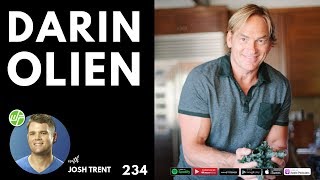
This is a Wellness Force Radio episode (234) — an on-site interview between Josh Trent and Darin Olien about "hunting" nutrient-dense foods and bringing them to market. Central threads: definition and testing of "superfoods," the discovery and nutrient promise of the baru (Barucas) nut from Brazil's Sahadu savannah, responsible sourcing and reforestation commitments (multi-million-tree goal), and Olien's personal story, spiritual practice, and community-driven approach to product development and conservation.
Chapters
You know, the brucas is a fun thing because no one loses, but there's a lot of things that gain. We cannot build this business if it's not supported by the people because it's a wild collected food. We have to work with them and we have to have them happy, period. And I know that you're going to go home and eat those and a, you're going to enjoy the taste, B, you're going to get the micronutrient dose and C, and D, you're going to help the indigenous people directly and you're going to help the environment by bringing value back to what's being wiped out and also supporting a planting program that we're dedicated to to get the trees back.
That's Darren Olien and this is episode 234 of Wellness Force Radio. What's up my friend? It's your host, Josh Trent. And welcome back to another episode for your weekly access to global experts in all things wellness as we discover the physical and emotional intelligence we need to live life well. In this episode we're talking about hunting for optimal health with a real life superfood hunter, the founder of Super Life and the author of the super life book, the five simple fixes that will make you fit and internally awesome. Darren Olien. Now, this episode is an amalgam of behavior change, ecological and scientific case studies around nutrient discovery as well as the discovery of the baru nut from a tree in the Brazilian sahadu. How this baru nut can improve our health and leave a smaller water footprint while helping to put an end to the deforestation and preserving the original flora of a huge part of the Amazonian sahadu. So this episode is perfect for you if you've been curious about nutrient values that are found in superfoods, using nutritious foods to allow natural detoxification for a healthy lifestyle. And we also talk about food allergies and sensitivities. Why especially in children, they've been increasing so much in recent years. We talk about the depth of Darren's personal story. This is such a gem of a human being. We go everywhere from his travels across the globe to to his time at Beachbody in supplement formulation. And also the impact of Darren's loss of his father, how that forged gratitude for him on his path. And of course, as always, we also explore Darren's thoughts and decades of experience in the health and wellness industry to uncover his own emotional intelligence tools, why he believes it's so important for us to live our life using our own belief set without the judgment of other people's. We also discover what really motivates him to drive this mission. He wants to plant 21 million trees in the Sahad to keep it from being destroyed. We also can see how Wellness Force can help him do this. While eating these amazing optimal nutrient Baru nuts, which by the way my friend, I tasted this nut. It's not only a combination of like a creamy almond mixture with the satisfying cashew. Imagine if you combined an almond and a cashew together. That's as close as I can describe how these nuts actually taste. They're freaking awesome. Make sure you head over to Barucas.com that's B A R U K A S I can't wait to get your feedback on this show on Social A in the inboxes. We're talking about this as always in the Wellness Force private Facebook group. You can continue this podcast with us. Come join the family. Just click over to wellnessforce.comgroup for all things wellness, including this physical and emotional and also spiritual. Because as you'll learn from Darren, the more we all go down our path for hunting for our own optimal health and in this mastery process of the emotional and physical aspect, at some point we all lean into our faith. This world gives us certain gifts of adversity and hardship which sometimes we just can't find the answer for. And this higher power, this connection to spirit, God, Buddha, whatever you want to say, this is actually what drives us forward. This is how we can live our life. Well, the show notes for today are found@wellnessforce.com 234 make sure you don't write down anything when you're in the car. Don't text and drive. Just tap your show notes on your iPhone or your Android and discover all the links, resources, videos and everything else mentioned on the show today. Now let's drop in live and in person for this unique conversation recorded as the sun was going down at Darren's ranch in Malibu, California with the one and only superfood hunter, Darren Olien. This is Josh Trent live from Malibu, California for Wellness Force. My guest today is a world renowned exotic superfood expert, supplement formulation expert, a superfood hunter and an environmental activist who spent over 20 years traveling our planet Earth in search of nutrient dense foods that'll actually heal the human body. He's the author of SuperLife the five simple fixes that will make you healthy, fit and eternally awesome. And most recently he's founded a company called Barucas, which by the way makes the Most tasty nut I've ever had. We're going to talk about that in depth today. He is a health advocate, to say the very least. He's also really a modern day wellness warrior. I've had the chance to research his work over the past week and just emotionally, energetically, financially and spiritually, he is connected to health, helping humans thrive and supporting indigenous cultures and as a leading voice in our wellness world. Welcome to Wellness Force. Darren Olin.
Man, I want to meet this person. This is, this. That was a great intro.
He is a cool guy. Man.
Thank you.
You know, I'm here. We actually took a little pathway down to your home. Describe where we're sitting so that the audience can be here with us.
Yeah, it's, it's a very special spot and, and kind of didn't exist in Malibu. We didn't know it existed. And I, I came upon this place that was, it's. And we' right now a 1937 kind of old hunter's lodge. You know, it's not a cabin. It's 2,400 square feet and the way it's built, you just can't find it anymore. It's potentially one of the oldest buildings in all of Malibu and it was, it's sitting on 50 acres surrounded by national park with a river in the backyard. And I just got super lucky with the timing. I was looking, I had been looking at property for 10 years around Malibu and this popped up. It was owned by a trust. It was one day on the market. I responded because I had financials moving around, I was able to respond pretty quickly. We locked in an escrow and then little did the sellers know that there was a line of people willing to pay a lot more for it and they were already locked in with me. So we dug into it because it's an old, it's an older house, it's a lot of land. It's biologically sensitive because of the 300 year old oak trees and the rivers and things like that.
So is this a preserve? Are we in a nature preserve in some way?
In some way, yes. I mean it's a. So, so anything I do, a biologist has to come by and look at it and see if, if you can in fact do something without disturbing the natural ecosystem. Which is awesome. Right? My intention was not to build or do anything to disturb that. In fact just be a part of it. And it's proven to be just a, an incredible kind of battery for me to just be in this space. And, and, and it's Very active. Meaning that there's, there's, you know, 30 pound owls and a 30 pound owl. Yeah, they're huge, like a small child. Like I've seen them and I can't even believe it. And, and of course, hawks and bobcats that have hung out in the backyard for hours. While I'm on a call, I'm staring out the window. Mountain lions I've ran into three times and they're big and they're here. And that's kind of like running into the ocean or running into a shark in the ocean. It doesn't happen.
There's a synergy that you have with your environment and it's a testament really to your work. I think it's been two decades plus you've been kind of traveling the globe looking for the foods that'll actually give people better health. But, you know, not everybody has, I guess you could say the time or the resources because they don't have the right intention. And we could go a lot of different places in this conversation, but I wanted to kind of step off the ledge here with you and start at this place of really like, can we define superfoods? It's a mismarketed term for sure. So people know you as a superfood expert. But it's funny, your book is about super life, not superfood.
Right.
And we'll talk about that too. How would you actually define superfoods for people that don't know or are confused?
Yeah, it's as easy as saying, listen, per calorie or per bite, it has more nutrients and moreover, more micronutrients, vitamins, minerals, antioxidants, polyphenols, phenolics, all of these things has more potential for cellular right down to the core health for the body as, as opposed to, you know, the extreme of a donut. Right. So if you eat, say, call it a handful of moringa leaves and then you eat a donut, let's say calorie for calorie. Let's just leave off the fact that you're getting trans fats and chemicals and gnarly things in the donut. Let's just leave that off for a second. But you're really getting, of course you're getting, from the macro perspective, you're getting fat, you're getting a lot of carbs and you're getting very low protein. So leave that off for a second. But then you're very, you're getting very little calcium, magnesium, potassium, antioxidants. In fact, the opposite. You're getting free radicals and all of that stuff. So every bite we take is contributing or degrading our health. And so from my perspective, a superfood is, yes, it's a term, it's kind of silly in some respect, but it's really pointing at the idea that, I mean, you could have a whole plate of superfoods and they're all superfoods and one's maybe a little better than the other and all of that stuff and hella, you know, a really wild blueberries. A superfood. Yeah, you know, all of these things.
Would you consider salmon to be a superfood if it's, if it's grown the right way?
Yeah. I mean, yeah, again, if you want to really, I mean it would be fun to do at one point get into the modern day problems that we have within food itself. Because just to have a conversation about philosophically the food being a superfood or contributing to your health is one thing, or not contributing to health, the other thing is actually looking at data to support like, okay, is that salmon? We're assuming, for example, that salmon has not affected my modern day, the modern day world. And it's almost impossible now in our overpopulated world that everything isn't already affected by it. So now you have, you have to look at, you know, from a meat perspective and a predatorial perspective, from other types of fish or animals. You have bioaccumulations. Right. So, so now you have densities that are building up. How we have bioaccumulations of heavy metals and electromagnetic fields and.
Yeah.
And toxins and stuff like that. So from my point of view, I want to go also a step beyond just philosophically having the conversation into the reality of having the conversation. And so that really is the jump off point of why I went and go to these areas so that I can see it, I can meet them, the people, we can audit a facility, we can observe the processes, improve upon these things. And largely it comes down to relationship. But really there was no other option that I felt like I had other than if I'm going to play with these things, if I'm going to formulate, if I'm going to dig into stuff, especially things that people don't know about or not common. I have to, I have to show up. Yeah, I have to. Like that's. That there wasn't. So I wasn't, I didn't have this idea like, you know what, I have this dream where I'm gonna be a superfood hunter. Like that. That wasn't at all it sounds really.
Cool though, superfood hunting.
Of course it does. And it was like, I think a Businessweek article said Indiana Jones and then superfood and super guy and all of this shit that was given. But it really was come by way of I, I have to do this. I'm fascinated with, with herbs and nuts and fruits and things and I'm fascinated with the, the need for the nutrient density because of our, again, our modern day world of our food is stripped. Sure, our soils are depleted, our stress levels are at an all time high, but they're at a stress when you, so when you talk about stress, you're talking about low grade stress that's always on.
It's like a constant drip all throughout the day. And I'm flashing back to when we had Dr. Minkoff on the show and we talked about glyphosate actually being found in the placenta of mothers. So when you say this fallout, this accumulation of toxins, detoxification gets to be a lifestyle. Now my curiosity for you though is when we look at superfoods, by eating the superfoods and bringing in these rich nutrients, are they helping us to detoxify in some way or are they really just adhering to the nutrients that we need to live? Well.
It'S all of it, because the body is brilliant. The liver, the gallbladder, the kidney, all these things are built to filter, recycle, transmute. So, so in one respect, and this isn't substantiated, but a researcher that I've known for about 17, 15, 17 years, he said, I've never seen the research, but, but I, but it stuck. And that is, he goes, well listen. And he probably cited, because he wasn't a guy to fling out things, he probably cited a text. This was the kind of guy that, that would find books that were being destroyed throughout time and had a semi full of nutritional information that, that was lost.
I'd like to read his library. It's probably similar to Paul Checks where it's like four rooms of books.
Totally, totally. Yeah, so he said that, he said, listen, the, the immune system, the circulatory system, the endocrine system, the electrical system, all of these systems are spending 80% of their energy all the time balancing and detoxing. So you could largely say every time your body's trying to stay in homeostasis and equilibrium, it's essentially taking in nutrients or also trying to detox something. So on one respect, the body's doing everything it can to stay in that balance. So of course but what happens over time, obviously, and you know this, that you know, if you're being exposed to something and you don't know it, and you keep eating your said food that has a heavy metal that no one's ever tested, so people don't know it's even there, then all of a sudden, why do I have propensity to forget things? Why am I sluggish? Why is my thyroid off? Why is my endocrine system? Why do I then 10, 20 years down the road, why do I have a tumor? Well, you know, from a tumor perspective, a tumor is an incredible protection mechanism of. Okay, there's a. There's a issue and a problem. Let's isolate that problem away from and into a condensed situation. But if it's not addressed again from a cleansing perspective, it just gains and then gains momentum and then turns on the other, you know, the apoptosis and all of these other things that then carcinogenic environments start to show up.
Well, it's obvious that you're an expert in so many different systems in the body. I mean, I couldn't think anything less. After 20 years of traveling and studying, I've never heard someone describe cancer as a protection mechanism. That's really interesting. The actual tumor cell. You know, people don't know this about you. You actually provided formulation for Beachbody. This is kind of in a past life for you. I'm curious, like, what's the process of this to actually test a product, test a food to see for the people listening, like, how do we actually know it's healthy? Tell us how we actually find the nutrient contents of food.
That is a really great question. Yeah. Well, again, you know, it starts by showing up. Of course. I got curious with a lot by reading and researching and all of that stuff. And you're like, whoa, Schisandra and Ashwagandha and Maka and Yacon and Sasha and she. And.
And ones you probably haven't found yet. There's probably thousands. You have.
Well, every trip. And that's the thing. Every trip I come away with 20 other things that I hardly ever heard of. And. And some of which will never see the market because it's impossible to. To. To create it. And it's only in the wild and everything else. And so, you know, so you show up and, you know, Brukism, we'll get into that as a very similar situation because, I don't know, I mean, I'm eating it and I'm researching it, and it looks amazing, but there's a zillion Factors that go into seeing if that's even possible to bring to the masses. So, you know, by showing up, let's say, for, for lack of a, you know, let's say you find something that's extraordinary, let's say you find something that's unique, then you're going, okay, is it commercially, can you grow it? Can you control that environment? Is it wild collected? Is it even possible to grow it outside of the wild? And if it is, who are the experts? I mean, because inevitably every trip I've been on, especially the first ones when I'm digging into something I may have, in a 2, 3 week trip, I may have 15 sit down interviews from PhDs that you will never find on Google on research facilities in the middle of India and, and whatnot. A village elder that has this information that has never been written down. You know, Eileen, I always give a shout out to Dr. Michael Ballack, who's one of the greatest ethnobotanists of our time. And, and he spent 45 years, and he's a, he's a good friend and he saved healing modalities and cultural knowledge based in plants that would be gone. So you look at all of these things and then let's just say, yeah, you can grow it, you can find a group of people that are trusted, you can figure out what is a fair way to work with them. Because every indigenous culture is different. Every, every work, every cultivation, every wild collection, every transportation, every processing, every testing is, is different based on what you're, what you're dealing with.
And then once you find it, you actually have to bring it to, I guess some sort of a lab, right, to test it. And I've always been curious about this. Please satisfy my curiosity, man. Like when you get the food to the lab, especially with your work with, you know, beach body, like there had to be very strict standards to know. Like, look, just because something's written down in a book or somewhere else, there actually has to be scientific data that backs it up. What does that process look like?
Yeah, it's, you know, largely, some of it is, isn't in English and you got to dig into it. So you have to look at historical, epidemiological stuff. And some of which, you know, some of these plants have been used for 10, 20,000 years.
So there is as long as there's been writing.
Right.
Which is very similar to what we talked about with Aubrey about plant medicine. It's the same, same thing.
Exactly, exactly. I mean, when you look at some of the earliest plant medicines back 60,000 years. You're. You're talking about cannabis certainly was one of them. And you look at historical data, you look at, you know, 15, 20,000 use of turmeric and throughout Ayurveda culture in India. Yeah, so. So that is. Obviously, you're digging up that stuff, but then also, what are the active compounds? What are. What are the active constituents that you want to definitely preserve the best that you can, and then in that process, the preservation of them, in what kind of way can you process those to preserve those things? So. And then you have to test them again. So. Yeah, it's a very expensive. Especially in countries of origin and certainly from. You know, luckily, the gamble we took at Beachbody is that the trust that they put in me and then the gamble of doing something really difficult, going around the world and. And. And auditing every facility. Meaning, like, did you have to fly.
To each facility and check them out?
Yeah. Well, it was beyond me at that point, too. So I had relationships and all these things. But then. Then there's real teams, and that's millions of dollars and that you're sending around. Not just once. It's not like you. You can just show up in these weird places and, oh, yeah, they're good. Like, no, you gotta.
We can't let the tribal leader give us his word. We have to actually test it.
Oh, yeah. I mean, all this stuff is. Is scrutinized to a big degree, and then you have to set your parameters. Not an FDA's parameters, not. Not whatever the white paper shows is the minimal testing for Listera and E. Coli and salmonella and all this stuff. And we have our own protocols that. That take it way beyond what the lowest common denominator of most of the commodity guys are trading with.
Because.
Because you could go. If you want to, say, Josh's podcast supplements, right? You could. You could literally run down to a broker and go, I want. Let's. I want schizandra with camu. Camus and coffee fruit. And I want to turn it into this incredible neuro generative.
You can make it sound sexy with words.
Yeah, yeah. And. And they would go. They would go, okay, no problem. And then they would start calling around and they would find their own connections. And you're getting that. So you'll get it. It'll be on the label, but you have no idea what you're actually getting.
Because you haven't been to the source.
You haven't been to the source, and you haven't understood how that particular plant needs to be Grown, how it needs to be dried and how it needs to be tested to prove those procedures. And. Yeah, not to mention being exposed to a lot of things that you don't want.
You have been to the source. So we're sitting at your table. This. This nut. It's the Baru nut, right? How do you pronounce that? Baru.
Baruna.
Baruna. It's from this place in the Amazon that nobody really knows about. It's the times of tech. It's the size of Texas times three, times three times three. I mean, guys, think about how big Texas is and then multiply that by three. This area. How do you pronounce that? The Sahadu.
Sahadu.
Sahadu, yeah. How the hell did you even find this place?
Yeah, well, it found me. So I was in Brazil for the Amazonian side. So this how to is like a lower savannah, right, from the Amazon, but they're intimately connected, right. They need each other. So the low kind of. Kind of call it the lower half of. Of Brazil is. Is the. The Sahara. It's huge. And so I was on the Amazonian side looking at different types of palm fruit. And when I got back from that trip, a Brazilian reached out to me. And I never get these messages. And for some reason I did. And we started digging in. He started showing me some stuff. Do you know of this thing? I'm like, no. Which is great. You know, I love it when I don't know because I'm in a career that I'm never gonna know there.
Why did he reach out to you? I didn't even know about you.
He saw what I was. He saw some pictures or something. Okay, my Brazil. Yeah, of my Brazil trip. And he knew that I was in. I was doing this stuff. He goes, if anyone's gonna be able to help me, I wanna. I wanna. I wanna bring it to America. Like, that was his dream. And so. And that's no small feat. And so as soon as I started, of course, reading, immediately there wasn't a lot of information. He translates some stuff from Portuguese and then he sent me some as soon as I ate it. And as soon as. And that was backed up on some of the stuff I was reading about it. I was like, oh, my God, what is this thing? This thing? Because here's the thing, you know, this. You know, there's a lot of crazy superfoods and botanicals and. And medicinal mushrooms, and they have powerful phenolics and astringents and tannins and all of this stuff. And that largely, that's where some of the power of the constituents are. So it's hard for an American to just take that straight in. And that's where formulation gets interesting, because you. You have to blend these things not only from a synergistic point of view, but from a palatable point of view without turning on all of these other. The nasty side of the flavor world and all of this stuff. So when I tasted the baruca, which is our trade name, I was. I was like, oh, my God, this is. There's no barrier to. To our palette because it tastes like something we know.
Yeah, it's kind of like a cross between a peanut, a cashew, and an almond, but, like, with a little more fattiness to it, but yet it doesn't have a lot of fat right there. Tell us the specific nutrient density of this. Give us the proteins, carbs, and fat of this. Because to me, like, I can't do peanuts. We also know, like, Dave Asprey's talked about aflatoxins. You know, peanuts carry a lot of.
Mold from the ground.
What's so special about this nut?
Right, so it's a tree, so it's up in the air. And technically, if you want to get technical, it's a seed. So it's a droop. It's got a. For the audience, I actually have a full baru fruit, so that's what we call a brew fruit. So on the outside, there's a hard fruit layer, and then you have to crack that bloody nut. And that thing's really difficult, and you crack that. And there's one nut per fruit, so it's 1 gram per. About 25 grams. So that thing has all the amino acids, which. That right there alone will just blow your mind. And then in terms of a. The. The highest protein, right. Peanut is coming in at a close equivalent to protein, except it's got. You know, peanuts got baggage, man. Yeah, they do a lot of baggage.
And we see the rates of. Especially for kids, you know, the sensitivity and the allergy reaction. It keeps growing.
It keeps growing. And I wouldn't necessarily demonize. Well, it's two things. It's our. Our food sensitivities and allergies are going up for a lot of reasons. And the guy that. I don't remember his name, but the glyphosate's a big, big reason for some of the. Yeah, the inflammatory explosion, for lack of a better word, that's going on in our digestive systems, that's actually truly what it is. Yeah. Yeah, and then, and then that's a cascade effect. And the cascade effect is increasing the food list that we are unable now to actually break down and use. So our body reacts to it. So peanuts, there's that going on. And plus peanuts. Just the lack of the better processing is allowing for this mold to exist as well. And the monocropping. Monocropping, you're always going to, you're going to have an issue unless you figure that out from a more of a food forest kind of permacultural place, because you need to balance.
And for people that don't know, the monocropping is where you have like thousands and thousands of yards of corn or soy or canola. And it has to have, you know, Monsanto sprayed on it. Glyphosate, which actually was just in court. The whole community is really celebrating this win, this $290 million when where this gentleman unfortunately got cancer, so he's gonna die for this cause. But we're seeing so much consciousness rise. And your work, what I see you doing with Boruca's, beyond just the nutritional aspect and the density of the nutrients, there is a moral imperative that you're shifting to. And I read this, actually, in your work, you said that the size of France, an area the size of France is being destroyed in the Amazon every single year. How does your work with Baroukas help to deaden that? Help to lessen that?
So the gnarly thing is it's kind of like it's both. So the Amazon, let's say it's its own biome, and then the Sahara is its own biome, more of the savannah, the, the Sahadu is being destroyed faster than any biome on the planet. So it's, it doesn't have a PR agent. Right?
Yeah.
The Amazon, there's been a lot of NGOs and a lot of work around with good people trying to save the Amazon. Right. You hear it all the time, but no one knows of this cousin, that when the Amazon wins, the Sahadu essentially loses because the GDP certainly of Brazil is pushed so heavy on cattle grazing and then all of the unsustainable agriculture that comes with it. You. Then I can't do it in the Amazon. Okay? We're going to do it in the Sahara because it's a big landmass and they can do kind of the same thing. And the, the, the Sahara is so precious. It's got a huge biodiversity of plants, tens of thousands of, of insects and mammals and things that you never have heard of. And the, the biomass largely lives below ground. So it's deep, deep tap roots tapping into aquifers because largely there's a rainy season and that's it. Right. It's kind of starting now, which is in August, it'll go for two to three months and that's it. Or actually the, the, the baruca harvest is now in about three months from now, in October, November, the rainy season starts and then that's it. And they get a little rain for a little bit and that's it. So they've developed a very unique biome there. And when you take down the Sahadu, you're losing what you don't see. And some experts that we found out in Brazil is comparable to losing the Amazon in terms of the oxygen that it would produce and the CO2 gobble up it would do. But you're not seeing it, so you're not. People are not perceiving that it is doing as much damage, but their data is showing. And a good friend of mine at UC Davis, a botany expert, Paul Fine, has supported this too, in the sense that the biomass that you're using is detrimental as the Amazon itself.
So this humus is being decimated. So that's how actually the earth breathed, which is fascinating to me. And we talked about this with Josh Takel, the author of Kiss the Ground, where we know that sequestering our footprint from a carbon creation standpoint, we all can do that. We can only do it though, Darren, with our money.
Right.
That's the only thing we have now. So by buying your product, that's a big part of it. But I want to circle back to that size of France being decimated. Yeah, it's not funny. I'm smiling because I'm just like blown away by it. But how do you feel your work is directly impacting that?
Yeah. So in the last 40 years, the Sahara is being. Some stats say it's, in the last 40 years, it's already destroyed by 50%. Some other stats say it's 70. So if they don't perceive the natural biome as valuable, then they want to feed their children, the indigenous people, they want to feed their families. So when big companies come in and they go, hey, for X amount, we'll give you this for this land and you can still live over here and we're going to farm this. And they take the money and they said, but if we go, listen, just like you were saying, if we create an economy where that value, they're looking back up at the tree that's indigenous to that area, to them, to their ancestors. If we can say we will buy that for the next 20 or 30 years or the life of that tree, that's what we a we're going to do. And that's what we've promised them down there. The second thing is we have a goal, a very serious goal of planting 20 million trees. Planting those. We've. We've been. So we're not just entrepreneurial people looking in to sell these things. We've spent some serious time at university in Brazil with the top botanists, with the top nurseries, figuring out how can we create a program so that we can give the indigenous people the trees back so that they can repopulate over time. So these are the programs that we are now putting in place and we're super excited. And you know, it's kind of like that thing. If you build the foundation right, it may take a little more patience, it may take a little more money, but there's trust and there's power in numbers. And looking at yourself in the mirror at night knowing that we cannot build this business if it's not supported by the people because it's a wild collected food. We have to work with them and we have to have them happy, period. So organizing the landmass that that is with tens of thousands of families. Do you think the last three years that has been like, at the root, pun intended of what we're doing? Meeting with the chiefs, meeting with the elders of the villagers, sending our people, going back, showing up. What did we say? We're going to follow up with exactly what we said. Given the money, give them the things, create the ease for them, give them equipment so they don't have to hurt their shoulders trying to break this open. Just give this stuff to them, buy trucks, buy. But you know, do this, right? That to me is so rewarding because at the end of the day, I don't know if we're recording or not, but my greatest desire is to give great food to people.
Of course we're recording.
Yeah. So I just, I so the fact that I can give you those nuts and I know that you're going to go home and eat those and a, you're going to enjoy the taste, B, you're going to get the micronutrient dose and C, and d, you're going to help the indigenous people directly and you're going to help the environment by bringing value back to what's being wiped out. And also supporting a planting program that we're dedicated to, to get the trees back.
I think what scares people is that their vote, their dollar, it's not going to make an impact. But I say to that the other side of the coin is if this area of France is being decimated every year, it still happened one dollar at a time. It still happens one dollar at a time. So I think about people losing their power. You're giving the power back to these indigenous tribes. And I'm flashing back, I don't know why this came into my consciousness right now. We interviewed a gentleman from Australia and he did a film called that Sugar film, Damon Gamow and he talked about how the indigenous in certain parts of Australia had been completely disempowered because they would bring in Coca Cola and all these different like products there and not only did the tribes get fat and sick, but they had to depend on external forces for economics to actually run their entire country. What are the companies that are actually decimating the rainforest specifically? Do you know these companies? Like what's really going on there?
Oh geez. Jesus. That's a. Well, you, you can't help but to, to look at the big boys, the Cargills, the Monsantos, the, and I'm sure there's, there's good fractions of people in those companies doing their, you know, trying to do the right thing and stuff. But you know, I'm not gonna, there's a couple that I, I'm not gonna name just because it would put a target on my head. I'm not, you know, Monsanto. I'm not going to out them for any specific thing, but they've got plenty.
Of heat on them right now anyway.
Yeah, I'm celebrating that too by the way, that, that lawsuit and I think we all are in honor of that, that man as well. You know, there's a few companies that I know and actually was almost employed by one of them and that turned down really early, before we even got much into it, because I could see we want to do this, but we're only going to give you this amount to do it. And I'm like, it's impossible to do it right. So I just walked away. And I know that that company is consciously putting genetically modified ingredients and things into their product and it's literally just an economic choice. And you know, I don't know why people do that. I, I don't, I, I, you know, I'm a, I'm a small town kid from Minnesota. My father was an agricultural professor at the University of Minnesota. I grew up going to farms and ranches and my cousins and are cowboys and still like, you know, like that's me, like, so I don't know a. How you can send a product to anybody and do it just for money. I just don't. It just doesn't make sense to me.
I think it's because of a moral and a spiritual crisis that we find ourselves as a world right now and we're all doing the best we possibly can every moment. But I think about how much is being taken out. I think you even mentioned it was like a football field a second almost. And it just hurts me. And I've had experiences where I've actually, you know, had healing through plant medicine. And I've heard, I've heard this message come through from the very plants that are being decimated and pulled out of the ground that I take into my body for my evolution of my spirit and my personal growth. And the messages that I've heard is we're here to help you, but you have to use us. It's your choice to use us. And so I think the further away we get from consuming plants, from growing plants and from honestly healing our bodies and our minds with plants, this is really the intersection we find ourselves at. This is why I was so excited to meet with you, man. Because whether you're plant based or whether you're paleo, whatever you are, there is something to be said as a collective for us eating less meat. We don't have to be 100% vegetarian or vegan. But what would happen from your perspective at 20 years of research, if we just took maybe two days a week where we stopped eating meat, just two days as a country, as a nation, would that impact the rainforest more powerfully.
Than anything we've ever perceived at this moment? More powerful than any idea that some politician has had and never manifested anyway, but more powerful the numbers on that would be so incredible to allow a chance for the planet to detox itself. I just, yeah, it is. It almost, you know, just by that question it almost gets me into tears in a sense because we, we do have power and we do have choice. And I think we underestimate the power that we have. And it saddens me that people just go about every day just as automated people. But I'm with you. My desire is like, just because I'm 100% plant based, I never take the position that I need to tell anyone what to do or what not to do or. But I do go away with and I'm, and I Appreciate you saying it in the way that you did. I do want people to consume the miracle that plants are just eat more and better, more of them and better, better plants, you know, more, you know, if you can grow your own, if you can find your own, if you can support companies that are doing it correctly in the best way that you know how and literally vote with your money, that's a good thing.
I could tell that question really touched you, man. And I know people can feel this from you on the podcast and we're going to have so many resources in the show. Notes, I think about what people can do on the ground floor. You know, if someone's in a food desert and they're in New York, let's get real. We have somebody listening right now who has a shitstorm of crappy food around them and no healthy foods. We're going to see things like thrive, market evolve. We're going to see things like healthy organic places online that are cutting out the middleman, you know, able to deliver like your healthy nut, other healthy foods. But we find that it's really just things that can last. You know, sometimes fruits and vegetables, they can't last. Nuts, however, this, this thing that comes from the earth, they have a longer shelf life. Do you feel like that's why this is going to be successful? The Kickstarter is now, right? It's out on Kickstarter now.
Yeah. So whenever this airs, I don't know if it's gonna be now, but there is a Kickstarter with introducing the fruit from the outside of the nut, the trail mix. Making a trail mix.
I loved it, it was so good.
Making a perfect alchemy. And that bell went off for me when we were there because what happened was when we were looking at the fruit, you know, a variety of different places over thousands of miles. One guy who's been in like one of these old time guys, it's been in to the Baru business for a long time. And he pulls out this fruit that was five years old and I held it up to one that we just found and brought with us. And I looked at it, I'm like, I couldn't tell the difference. How is it that fruit on the outside hasn't even broken down at all in five years? Not to mention the hermetically sealed natural nut that's inside it. Like we are already starting to do long term use. If you don't break that open, you can sit on that nut for a long time. So that's what we've been doing We've been gathering all kinds of fruit without cracking it open. We can sit on it.
It's like a nutrient diamond. I mean, formed over pressure and time, but five years later it doesn't lose any value. How is that even possible?
Well, so, so we have. Yeah, so it's when it's sealed. But then for me, when I saw that the fruit layer wasn't broken down, then we did additional testing on the. So I was in the back of a car and in a bumpy nine hour ride, taking a little utility knife that I bought at a shop and I started cutting this fruit off and gathering a bunch of it and I took it back to the States and we started doing. I'm like, okay, so there's no data on it. There's very little nutritional. There's virtually no nutritional data in any place that we looked. And so I'm like, well, something has to preserve this fruit. So there has to be antioxidants, there has to be potentially vitamin C, vitamin E, there's got to be some polyphenolic tannins in there. There's a little bitter astringent, but it's super sweet. But there's a lot of fiber. So I still. We started lighting up at the lab. We started just talking to the lab and going, let's just spend whatever it takes to start bringing this down. And that's where we saw like the antioxidants went through the roof, the vitamin E and the C and the A and all of this stuff. And then we're like, well, let's add that back because it's just being discarded. So that alchemy of the nut with the fruit dehydrated was a, it just, it was a no brainer.
It tastes like cookies, but it's super low in sugar and it's high in fiber. And you know, all these things that we're missing in our, in our current diet. And I actually heard, I remember hearing Dave Asprey say this once at a conference. It takes 25,000 calories of even regular organically grown food to have the nutrients that would happen in a healthy humus, healthy soil in our past. In other words, who was going to eat 25,000 calories in a day? Nobody's going to do that. So we get to, it's not a have to, it's not a pressure thing. We get to put things like this in our diet. It's even if it's one step at a time, one dollar at a time. So practically. And I want to shift too because you have a tremendous story that even brought you to Barouka's. Give somebody a takeaway, they're listening. Like how can they actually get involved on the ground floor with these nuts with what you're doing?
Yeah, well, you know, as much as give them to your kids and your family and the, and the kids go crazy over them. That's, that's a.
Kids like the nuts.
Kids go crazy.
Why? How so?
I don't know, they just, they, they, we've done little things where we gave a bunch of their favorite bars and put these nuts next to them and these kids just naturally grab these. I've had friends videotape a two and a half year old, three year old crying, just saying I want my Baruca nuts. And so kids, when I saw that, because I've done formulations before and, and when kids have that reaction, you know that you're onto something because there's no, they're not trying to eat something because it's healthy. They are just eating it and if it tastes good, they're going to keep eating.
Kids don't lie. I have a 2 and 4 year old niece and they don't lie. They'll do whatever they feel in the moment. So that's a testament to the taste of the nut. So they're affordable as well. Like you can get this right now. They're shipping now.
Yep. Amazon and baruch is.com and we're just gearing up the Superfood conservancy to help with the plant the reforestation project. And if, and if you're listening to this and the Kickstarter is still going, support that at the end they put, they told me later that if someone wants to come on a superfood trip and see what superfood hunting is like, you can pay for that.
Wow, that must be like the extra gold level on the Kickstarter.
Yeah, you got to pay for that.
Let's shift, man. We're going to link that in the show notes. You know, I think about, you know, my path like 10 years in fitness and then like, you know, I used to be 280 pounds so I lost a bunch of weight and then I realized like when I put, when I put my foot in the door through fitness, it's really my greater desire for wellness. We all want to live well but some people find it first either through diet or nutrition. And typically it comes from childhood. You know, like my, I was raised in an environment where it wasn't really healthy mentally or physically. And I Know that your story is very similar to a lot of high achievers in the world, and it's one that requires respect. And also, even as an adolescent teen and in your 20s, you've dealt with a lot of very intense things, one of them being addiction in the family. So I'd love for you to talk to the people that are listening out there that have family members themselves who have dealt with maybe a father, a mother, a brother going through addiction, and then paint that lens for us as to how that led you to do your work now.
Yeah, you know, I grew up in a household of my dad being an addict and this, the viewers can't see it, but this scar on my chin was a gift of my dad when I was four, then he was loaded. And I, the story is, I don't know that he knew I was there, but he slammed a door and it threw me into this sea of beer bottles on a concrete floor and, and cut my chin open. And that's when he got sober for the first time. He was pissed off for my entire adult life and, or my childhood. And then, you know, kind of came around for a little bit and then he started drinking again and passed away in 2005. Incredible dude. Incredible guy. And was caught in between this what I should do and what I. What I should do, who I am, who I should be, what I should do, and actually who I am and who I want to be. So that was my dad and he largely lost that battle. So he never really gave himself the permission to fully explore who he was. And so I heard that, I heard that at 7 when I asked him, when I asked my dad, don't ask me how I came up with this or why, but I asked him what he wanted in his life.
You asked him that at 7?
Yeah. What do you want to do?
That's a deep question for a seven year old man.
It is. It was probably like something probably just came in, asked the question, then I got to, I got to hear it, you know what I mean? And, and so, you know, he talked about, you know, I want to motorcycle again. The feel of wind on my face. I want to sail because I felt freedom as a, in the, in the Navy. And I want to be in the sun and around the ocean and the beaches and all that stuff. And the guy lived in Minnesota and didn't allow himself fully to do that. He got a motorcycle, but then created some scenarios where he had to get rid of it and all of these things. So I, and I developed a great relationship with him later in life, like, we had an incredible connection because I saw. I saw the spirit in him, and probably I did when it. When I asked that question, he. He revealed it to me. And some ways I. I started to nurture that spirit. And I just decided if I'm gonna live this life, I'm gonna do the best I can living it mentally, emotionally, physically, spiritually, as high as possible.
What made you choose that? Because so many people could have chosen a different path where it's like, my dad died. I'm not gonna be like him doing. Living life out of spite. Living life out of anger and tension and fear. Yeah. What inside of you made you flip the script?
I don't know. I mean, I. I mean, I was, you know, I've told this story a million times, but I was born three and a half pounds to two months early. I wasn't given a. I was given 50. I think it was a 50, 50 chance of even living. Not on mom stuck in an incubator, poked and prodded and sat like that for three weeks. This, the. The miracle that I even survived. That was crazy because I could fit. I could fit in my hand end to end. I was tiny. And my dad saw something that he saw kind of one day where I just, as a little fragile thing, I just decided to live. And he told me that he linked a bunch of things that I had to overcome in my life and linked it all the way back to when he saw me doing that as a little being. And then he saw me struggle with weird physical things, with having problems in school and having headaches and eyesight problems and resting heart rates and high and thyroid issues. And. And he, he saw a point in my life where I always would go, okay, what do I need to do to overcome this now? And so I kind of chalk it up now as to a blue collar way of working hard. But there has to be a shift first, and the shift comes in a deep place inside of myself.
We just don't know all the answers. Like, it's funny, as a podcast host, I always want to know all the answers, but when I ask you that question, of course you don't know, because there's probably a higher intelligence that planted that in you.
100%.
You know, I was 4 pounds when I was born. This is crazy. I was born premature. I was in incubator for three weeks as well. I had chronic sinusitis and a bunch of like, you know, gut dysbiosis when I was a kid and led me to other illnesses which Then probably led to my weight gain. And I think about, we had a guest on the show. You really remind me of him, Dr. J. Teeta. He said once on a show, he said, when it comes to your purpose, what will you bleed for? What are you willing to bleed for? And I think in order for you to lead Barucas and do all the things that you've done, you really have to have some deep roots into that tree. Like what will you bleed for right now? As you find yourself at this point in your career, what are you willing to bleed for?
Now this for sure still is something where I don't like. I want people to have a chance to live a greater life than they maybe know that they can. So to eliminate some of the factors in terms of their a sluggish body that's not working well, I want to get them great botanicals and fruits and nuts and everything else and, and intimately involved in that is community to me because every ingredient I've ever played with, every nut that I've ever found is intimately connected to the community. It's the community that we have as a, as a, as a business team who I love my guys, I love these guys. They come from the same place. We don't even have to discuss certain moralities and ethics. It's in the fabric. And when I know that these nuts, these nuts that are sitting in front of us, I know these people and that's community, man. So when you have kind of that entanglement in such a good way, I'm just driven by that. And then some, some media projects that I'm working on and gathering and working with legends and, and researchers and people who have a DNA similar of dedication and passion and, and weirdly sustainable technology has got in there because in the, in the kind of the, the, the aftermath or the sidebar of superfood hunting, you run into sustainable issues everywhere, right? You run into like, oh, this village doesn't have clean water. So I got on the board of rain catcher.org and we get clean water to people around the world and have spent a lot of time because it's so bad in Africa and we've gotten like half a million people clean water, those kind of things. And then guys that I know that have the DNA of me that have in their world traveled around and figured out ways of using, utilizing redundant energies and capturing it and creating free energy systems and all of that stuff. And you can't even find these guys on Google, like they, they purposely made themselves dark.
And I'm not All the badasses are like that. You can't find them online. It's almost like this secret world of, like, wellness warrior leaders that are so intelligent and they're so connected and, you know, you are all over online. Like, how long have you actually seen yourself online now? It's been 10, 15 years of you being online. Yeah. What are the kinds of people that you are attracting? You taught you said community is something you'll bleed for.
Yeah.
What are the kind of people that come to you? Like, what's your community look like now?
A bunch of misfits, man. You know, we have a great group of guys I see every day and sweat with and. And give shit to and. And. And give a hard time to. So, like, you know, Laird Hamilton and Gabby Reese and. And Randy Wallace and Hutch Parker and like, Dave Anawa. Like, some people, you know, and some people you don't. But. But Steve Wright, NFL ex. NFL guy. Like, you know, we have just this. And some other actors that have come and gone, but there's a DNA that shows up that. That hang that stays. Because we support each other. The kind of. The muse is working out. We all love it and we go for it and do some crazy and do underwater, you know, stuff that we've developed. And people show up and Navy Seals show up and MMA guys show up and NBA players show. Like, all kinds of people show up and kind of sit in this. Like, I just had a very good friend of mine, Dr. Eric Goodman, who does Foundation.
Foundation training.
Foundation training. So. So Eric just showed up today and he hasn't been around for.
Eric was here today.
He was. He was. He wasn't here, but he was up at the pool.
Wow.
But he's coming here? I think he's coming on Sunday. Cool. He's gonna come on over. It's been a long time. And so he showed up and he goes. And this kind of sums it up. He was like, man, it's been a long time. And there's a lot that's. That I've done and accomplished, but, God, I missed what you guys have created here. It is so special because we love each other, we support each other. All these guys are up to their own worlds. They're doing and they're kicking ass and they're committed and they're passionate. We may not be doing the same things, but for two hours every day, we are. And we support each other, and that is very powerful.
Let's talk about your spiritual connection, because right when I came in, Bretton, we shook hands I was. You struck me as a very spiritual person now. Not like woo woo, smoke and mirrors or maybe so, I don't know. But you know, we think about the connection to higher power, having a faith of some sorts, even whatever planted your will to live when you were, you know, three pounds. What exactly is that for you? Like, what is a spiritual connection for you? How does that play into business?
Great question. Father, mother, God, universe, angels, all of it. Like, energy, vibration, color, sound, current, feeling. Like all of that's God, all of that's the universe, all of that is communicating. And if that isn't a part of my choices, it's proven not good for me. Like, things don't. I literally have to sit with something in silence. And if it doesn't, if it doesn't ring the bell of my highest thing that I can perceive, my highest self, I can't do it. And that's cost me time, money, resources to figure that out. Sometimes, like, I'm like, what am I doing? Like, I remember I invested. So I knew these guys and they were cool, and there were some cool other things they were doing. But then on a whim, they were like, we know this prince in the Congo. We're gonna harvest raw gold. We're gonna da da da da da. It's the people. It's gonna help the people. We're gonna pay them. It was like all of the right things and they did a couple things. I lost it all. I'm like a few of those things. You're like, what am I doing? Like, I'm. I'm gonna invest into this things that I care about, into the things that aren't quick. So anyway, my. I. Part of the reason I'm here under the oak trees is I like space, the space of me. I like cultivating the inner side and so that I can build a certain energy so that I can be effective when I need to extrovert it out. And I want it to come from that place. So for me, in my way, I. It's. Everything I'm doing is. Makes sense to my highest spiritual self.
The power of superfoods could not be more pronounced, as we're discovering from Darren today on the show. But did you know the fun fact fact about cordyceps? Cordyceps is an ancient mushroom that's been used for millennia to increase optimal health. And this can be found in the organifi Wellness Force bundle that we're so excited to always consume. Well, actually, I consume it two to three times a day. I just got back from The Spartan race, the world championships, which I took seven packets of my Organifi green juice. Well, in the red juice, as part of the bundle you can get this cordyceps and also acai as well as the other yummy amazing tasting stuff. Soy free, dairy free, vegan, non GMO and USDA organic superfood powder. This is part of the WellnessForce bundle. You can get it@organifi.com WellnessForce you get 20% off, which is a huge discount for us. You can just use code wellnessforce over@organifi.com wellnessforce there's also other amazing things in this red juice powder, including organic beetroot, organic mushroom extracts from Reishi, Siberian ginseng. Give yourself the gift of up leveling your health from the inside out with these amazing superfoods. And by the way, save some money while you do it. Now let's go back to Darren and learn more about hunting for our optimal health. What is your highest spiritual self? Because is that only something you can get in tune with if you have a practice of being still?
No.
When can you get in tune with it?
Anytime, all the time. Like when I did. We don't have to get into it because it's a bigger conversation probably, but the first time I did ayahuasca, which I don't anymore for the reason that ayahuasca told me that I didn't need.
To, we could totally talk about that.
Okay, so this was in 97, maybe 97. I'd never done a drug in my life, never smoked pot, nothing. And this guy mentioned ayahuasca. He wasn't. He wasn't really a shaman. He wasn't really just this wickedly kind of smart, Terence McKenna type of guy.
Okay.
And a bit of an alien too. Like, he's just a bit of a. Something very interesting about this dude. And he's grilling me, like, some physiological stuff, like, and working out stuff and like. And then all of a sudden, he pops on me one time, started talking to me about DMT and ayahuasca and all that stuff. And as soon as he opened his bloody mouth, I knew I was gonna do it.
Wow.
I just. I was like. It was inside of me. I was just like, huh? And so then I didn't even want him to tell me anymore. I didn't want my brain to kick on and try to figure it out. So in the mountains of Colorado, seven hours later I spent in that ceremony, my stomach hurt, my mouth was sore from smiling and laughing. And the first message in the first Two minutes. The plant said. This is. Back to your question. The plant said that it's just right here. Always. It's just here. It's your breath. It's your intention, your mastery, your access to the universe. It's right here. I'm going to show you. Never take me again. That was my personal message from the beautiful ayahuasca plant.
How did you find what the right there actually was?
The point of that is that if we're willing to allow and receive, you're willing to have and receive anything all the time. So if that's awareness, if that's consciousness, if that's peace, if that's joy, if that's, you know, it doesn't. You're not infallible. You're going to stub your toe, you're going to hurt yourself, you're going to find, you know, do things, but the opportunity is always going back to knowing. This is what it all comes down to. There is no lack. There is no place I need to go. I am an infinite being always. And I have a body and I live in this plane of existence, but I am that. I am all of that. And the moment you cut that off is the moment as soon as you form a point of view, you employ the universe to support your point of view. So let's say I am Darren. Okay, well, now I'm limited. Now I'm Darren, like. But am I not an infinite being? Don't I have access to more than what I perceive Darren to be? Yeah, we run around. Of course I'm Darren, but just kidding. But the reality. The reality is that just so happens through the breath, through the stillness, we're able to potentially through the intention. Yeah, we're able to start to touch, hint, perceive, receive some of the entirety of infiniteness and, and consciousness and, and largely you could say, maybe it's a question. Well, what else is possible? Universe, What. What would it take to. To be. To reveal my true nature?
Do you have conversations with a higher power of some sort? Like, do you actually feel like, okay, I'm having a conversation with this infinite source?
Yeah, absolutely.
Does it always happen in the morning? Because you have, you have a really interesting morning preparation that you do. You go to bed when my grandpa used to go to bed at like 8:30 at night. And then he was really smart. And then, and then you wake up super early, like, like 4 or 5 in the morning. Is that circadian rhythm discovery for you that fit you for your whole life? Is that recent? And is that when you have the Clearest downloads.
Yes to that last question for sure. Like, that's like. I literally feel like I'm cheating because no one knows this information. I'm, I'm excited to be up between 3:30 and 4:30. I'm excited because it's, it's a special, special time and a special time that I create for myself. So the discovery of that was interesting. I was a, I was in college. I had transferred, I had started physiology, nutrition, kinesiology. I was in all that. I was cramming for tests and I couldn't stay awake. Nine o', clock, I was just like falling asleep going, I'm either gonna have to drink some caffeine or cheat my ass off. Like. And I just was like, I can't even stay awake. So I set my alarm for 4am and I woke up and I was like, oh my God, this is, this was so hard last night. And now I'm like, certainly a lot more clear and wow, no one's up. Of course no one's up. It's four in the morning, there's nothing. And, and what I also felt was there's no this kinetic energy that's distracting me in the same sort of way.
What do you mean, kinetic energy?
Well, it's just like, you know when the sun comes up and the emails start coming in and the phone call.
Collective energy.
Yeah, it was just like this, this, it was so calm and it was like just a special thing. And I started cramming for a test and that was it. I just kept waking up at 4 o' clock and I was like, this is, this is the best discovery I've ever had. And so to spend a couple hours in the morning in the routine of even, I mean, even my sweet little dog knows the routine. Like, he'll get a second sleep in, he'll look up, check in on me. Like, I'm sitting there, I'm doing breath work, I'm doing nose breathing stuff. I'm doing some brain entrainment stuff. I'm doing some journaling, some stream of consciousness which kind of folds. And this is kind of part of your question too. In the sex that, that once I've meditated once I've kind of a stream of consciousness and I have gratitude and I'm acknowledging, and I may be talking to the spirit of the universe or God or the father, mother, all of that. And I'm just going, okay, cool. Reveal my true nature. Love me and let myself love myself unconditionally. I am grateful for that dog. I am grateful for this home. I am grateful for the things that are coming in for my friends. And then I will just boogie on that vibe and then inevitably it starts tapping into things that I need to do for this, this job or this thing or that thing. And it just, it becomes this one source of me. So that place is coming to. I'm, I'm. See, I'm seeing, I'm not saying I'm seeing the future, but I'm, I'm tapping into my intention of the future. My intention, my goals, my, my desires. From what I know now because I'm a big fan of. Once you open a door and you've done other things, you get access to new information. So you need to upgrade goals and intentions.
Yeah.
Once you've taken action and it never.
Goes away, you know, once you've opened that door, it's like sometimes I'm like, God damn it. I wish I never tried to up level my consciousness at all because I'm like Cypher with the stake. You know, ignorance is bliss in the matrix. But I don't want that. Actually. That's just my egoic mind telling me, oh, you might want that. How do you use the tools, the practices to stay on purpose connected to the higher power serving us here in this world, in this meat suit, in this consciousness here? What does that look like for you? Because I'm sure it's challenging as crap to launch a company and to do all the things that you do. There's probably a ton of reasons why you could sleep in, stay up late, go out, do things. How do you stay on purpose? What's your true north?
There's a. Well, once I've, once I've felt those projects and kind of what I just described, I am, I am like a rabid dog. Like, then it really comes down to, okay, now I'm, now it's in my body. It's in the blue collar Minnesota kid. I'm gonna, I'm gonna freaking go for it. And, and so once I start taking the action from the deep intention I am. If you're not gonna be participating and you're a part of my, the team and not stepping up, it's going to be uncomfortable for you because I will stay on. Like, I get obsessive with like, let's get this done, we got to get this done. Come on, we gotta, you know, and I have to also catch myself. I gotta pull back because I'm seeing it and feeling it out here and I want it to happen as fast as possible to match what it is that I'm seeing. And sometimes people have different timing, right?
Yeah.
So there's a. There's a constant surrender that is there. And I don't often know, Josh, I don't often know. Sometimes, sometimes I'm like, oh shit, I went way over. I got to really back off and trust this thing.
Don't you think? In a way, I'd love to hear what you think about this, that all of this stems back to 2005, when you lost your dad. Because that was the wake up call, man. We all have experiences, but yours was very specific. Does that drive you in any specific way now, knowing that day that everything changed?
Yeah, well, it does. And now it's so integrated in me that there's no stopping, there's no retirement, there's no, there's only a. For lack of a better word, there's only a push towards bettering this place.
Planet Earth, you mean?
Planet Earth and the people in it. And, and I, I'm going to fight my ass off for it, but I'm going to do it in an interesting way. Sometimes I'm going to do it head on, sometimes I'm not. You know, the Brucha's is a fun thing because no one loses, but there's a lot of things that gain. The planet gains. People eat less almonds that are consuming way too much water.
What's wrong with, with consuming almonds? Well, I love me some almonds.
I know, they're great.
Yeah.
I mean from nutrient standpoint, when you compare them to Baruch is they're really a poor choice.
Well, Verruca's is fresh on scene for most Americans though they don't know about it yet. They're know about it more now.
They are. But from a water footprint, for example, I just said this the other day. So it's, it's what we've seen in terms of the water footprint is the amount of water all of Los angeles, of the 10 million-plus people in Los Angeles area, the amount of water that they use on a yearly basis is the same amount of water that the almond industry uses in California to grow their almonds transplanted here in California. So 80% of all the almonds are grown here in California. Completely unsustainable, like one of the worst sustainable agricultures on the planet. And so that is a. Especially us in California when we're kind of in a desert and our water supply is in a crisis, that's not a good thing. But it's so far away from consciousness that you just go to the store and it's an element. So, I mean, of course people like almonds and they also don't want to be inconvenienced by a higher price. Yeah, right. And that's a thing. But you're going back to superfood conversation again from the nutrient density. If you calculate. We got to calculate this. But when you calculate the per gram basis, you're actually. It's actually more economic for you to be biting in to a baruca, for example, and getting those nutrients for the money that you're actually paying for an almond.
And obviously you have an interest in saying that, but the data shows that to be true as well.
Yeah.
So this is like, you can't argue with data. For the analytical people listening, is there a place on your website where they can go and look at some of the studies and nutrient density values and things like this? Yeah, because I'm sure, you know, people listen. We're spiritual, but we're also analytical.
Right.
Healthy skepticism is a good thing.
Absolutely. You know that. That's a good point, I think. I don't know if we've put up some of the research, but you're. We're going to do that by the time this is out. We're going to put some. The studies up and yeah, we have a comparison chart, which is a great one comparison chart of the actual tests we've done with the barucas and showing that against all the other knots. And it's fascinating when you just look at, look at all of the nutrients and all of the micronutrients and you're just like, oh, my God, that's crazy. And then you're, you're enjoying them like an addiction is. You're just like, how is this possible? Is that really helping the environment? And then you're just like, oh, my God. What? Why wouldn't you want to consume this thing?
What is the cost of these nuts? I mean, are they something where it's a treat once a while or can you have these every day from a cost perspective? I mean, is it any more expensive than like organic almonds per se?
No, I mean, it's right in the. It's right in that range. Yeah. If you call, if you call it, I'm. I care about my food, I'm eating. You're not going to find this as a barrier to entry. Cool.
But it's not just for the people that shop and buy 50 mayonnaise at Erewhon.
Right.
Okay.
Right.
So it's doable for all of us.
Absolutely. And listen, we spent a lot of time because it was, it was even unsustainable in Brazil because they were so inefficient at their processes within the country, not even exporting it. The people in Brazil couldn't even afford it. So the actual industry was going down. Guys were shutting their doors. We came in exactly the right spot. The Baruna would have almost gone away. And you know, I can't for sure say that, but I know we've met all of the suppliers and I'm telling you, all of them were moments away from going bye bye. And what that means is tens of thousands of indigenous people definitely have no way of providing a sustainable income. And then the Sahadu is screwed by the factor. So we know that for a fact. Like that's so. So yeah, when you can add all that up and you look at the nutrient density and you look at the price, you're like, God damn, that's a deal.
And people that are listening, like, we care about organic food, we care about the soil, we. We give a shit, for lack of a better term. Sometimes, Darren, like just one brick in the wall of behavior change, lifestyle modification can be the spark that unravels so many other changes. So someone could start by just saying, you know what? I'm gonna eat these Bruka nuts every day for a week, see how I feel. Next thing I'm gonna drink more water for a week, see how I feel. I'm gonna eat organic for two days next week. And on those days I'm just gonna be aware of how I feel on those days. Do you feel like when it comes to behavior change, there are a couple low hanging fruits or nuts, you know, for a cool metaphor, what is it, man, that you've seen because you're a very healthy person? What is it for people that. What's the beginning of that, this behavior change process?
Great question. I would say positive mental attitude for one.
And then before that, isn't there more of a spiritual connection as well?
Absolutely. Well, you know, for people that get caught up in the spiritual side, be positive.
Well, everything's kind of spiritual in a way. Whether you believe in God or Buddha or anyone.
100. I don't even care about the things, but it's an energy thing. And yeah, and listen, the long term longevity studies and the blue zones and the centurions and the people that have functionally the highest long living lives, they know without a shadow of a doubt, the research is definitely in that believing in higher power is good for your health, period.
Let's Let that land for a moment. Having faith in something outside of yourself will actually make you live longer.
Yep.
Let's just get an amen to that.
Right?
And I'm not saying there has to be a bearded man in the sky, but that's actually an interesting point that you brought up for behavior change, our connection to higher power. That's fascinating.
Yeah. But also, then take away the judgment, because all these. Some of these people then have judgment towards the other people believing in something else, so it sticks them in the ass on the other side. So, yeah, believing in something outside yourself, but then judging other people for having a different belief. For fuck's sake. You're. You're. You. You have something good, and then you're stabbing yourself in the gut on the other side. Get rid of the damn judgment, man. Leave it alone. Live your life. You know, the man in the mirror. That's it. Woman in the mirror.
What's the antidote for judgment?
Look at yourself because it's just a reflection of you. You're just afraid of something. You're angry or something. If someone stuck you with something, someone stuck you at the point of view that you think is yours anyway, and you're walking around with, it was never yours to begin with. What. What if thoughts, feelings, and emotions were barely yours? What if you're just grabbing them from past, present, future, something, just deciding that that's true, or it was decided for you and you don't have the consciousness, and you haven't had the consciousness to investigate that enough and going, oh, that's a record that's just been playing in my damn brain. Is that truly me? Is that me? Is that my choice? Is that what I believe? What do. Who am I? You know, so that. That's the thing that. That investigation, if, you know, we talk about the. The one thing that could change the thing, if people were willing to do that and stop blaming and judging and all of that stuff and investigate themselves and take responsibility for themselves and their lives, that would change everything.
I had a phrase come through the other week, and it happened a while ago, but it's happened recently. And I. I just emailed our list about this, about how I've had some physical challenges, and it's because I've been pushing the gas pedal down, trying to achieve as much as humanly possible, grow wellness, force, reach millions of people, blah, blah, blah. I forgot my breathing, I forgot my message, my reminder. I forgot my core principles. And I want to give everyone listening here permission to forgive yourself. Just forgive yourself if you've gotten to a place where you've let things go and just commit in this moment and say to yourself, I am going to take loving ownership of collecting the evidence every single day that I'm loved and I'm supported and I'm on the right path that actually might be, in a way. And you brought this out of me, man. I know we're focused on you and your story here, but you brought that out of me. So thank you for that. Thank you for reminding me that actually behavior change doesn't start with eating healthy and going for a run. It starts with more of an emotional inventory.
For sure.
This process for you, this unfolding, do you feel like in any way you will ever serve people on a higher scale in that regard? I mean, right now you're helping people with their nutrition, but do you feel like, from a spiritual or even like a communicative gathering that you will lead larger groups of people of some. Some sort in your life?
Yeah, I know it. It's in the works.
It's in the works. Some things are okay.
Yeah.
Anything you can share. Is that like, kind of under the, under the line right now?
Yeah, I have to keep it under the radar not, not to be mysterious, but just, Just because there's people involved in the certain things. But when it's going to be clear when it comes out, it's I think to. To kind of answer your. I think as an evolution, as a desire. If you keep things to yourself, then that's kind of selfish. So if I can share something and it can affect that person, I don't. Everyone doesn't have to agree with me. You're never going to have that. So you don't have to, you know, they don't have to agree with. They come away with something like, you give a. About my principles, about what I eat or what I drink or whatever. But if you walk away going, yeah, I kind of gave up on my belief system, then cool, you know, whatever. You know, that. That's the thing. And I think, you know, at the core, again, you know, I'm. I followed. I've been in countries, I followed shamans, I've followed gurus. I've dug, dug in. I've spent time and unafraid of sharing who I am. That's the. That's the fun place to be.
It's the lack of expression. It's, you know, the opposite of depression is expression. So we actually heal depression by expressing ourselves. Dancing, singing. Those. Those are the things that we see no matter where we are in The Blue Zones. I remember Jason Prall, Human Longevity Project. He traveled to all the blue Zones. He was on our show, and he did say that they all had some sort of faith practice, but he also said that they involve daily walking and movement, but not necessarily something like a CrossFit workout once a day. No offense. If anybody's into CrossFit, I think it's cool if it's done the right way. But it's the slow kind of movements. Walking, climbing, maybe crawling, things like this. I'm gonna take an animal move workshop in a month with my buddy Cliff, and I. Look at the way that you live your life. You know, we're here. It's been so great, man, to hang out with you at your place and just to see, like, you've built your environment so that you move for practicals, for people listening that want to have an environment where their environment actually constitutes movement. What might that look like for an everyday person in terms of, like, where.
They'Re living kind of thing? I mean, you. We have to get outside, and we have to take off our shoes, and we have to expose our skin to the sun without chemicals, without. For periods of time. We don't have to get into that. It's a big discussion. But largely, don't be afraid of some of the great things, the natural, grounding, vibratory aspects of the planet that help regulate and guide our inner systems. The eyes looking not directly at the sun necessarily, which. There's a way you can do that. But being out without sunglasses in that shuts down the pituitary and also doesn't allow for the mechanisms of vitamin D and calcium and melatonin to kick on. If you have sunglasses, therefore increasing your. Your skin susceptibility just by having your glasses. Like, there's a lot of stuff. So there's a lot of natural things. And you don't have to get into the. All of that stuff, but just get back into the primal aspects of, like, okay, some cold exposure is really good to turn on a lot of systems in the body, get out in the sun, have your feet touch real earth. We know what that feels like.
Yeah. And I want to go practical, too. If you have a job where you have to wear, like, fancy shoes, take your damn shoes off on your lunch break. Sometimes it's just these little reminders, right, that they can allow us to step back into these. These primal ways. What are your thoughts on standing versus sitting while we work?
Yeah, I. Right in there. I have a standing desk. I stand up, and if I've standing all day. I just take a call and I lay down like and this is as much as I sit down right, right here doing this podcast for a couple hours, you know, like, but standing at least opening the windows, getting fresh air, looking outside like that's for. For sure. I liked my desk. So I love the fact that I could buy. Bought this thing Vera desk that I could have my cool little desk, but also I could raise it up and I just keep it, keep it up. So those kind of things. And running golf balls on my feet when I'm standing sometimes.
Yeah.
You know, that kind of stuff.
We carry so much emotion in our feet. There's so much locked in there. What's give us a quick blueprint then before we shift. Because I look at the way you get up so early. I mean really, man, like you're, you're an advanced model, I believe, of, of kind of like human behavior and health and wellness practices. Most people aren't in that kind of league yet. But if we had a basic blueprint for someone, what would that look like for the first maybe two hours of their day?
Water, wake up. Water, breathe. Water, breathe. I mean if that, if, if you have a couple things to do and water is a huge topic. I love getting into that. You know, I have, I have to get you some. I have some on demand hydrogen water and filtered 12 times. And that's a little excessive, but see.
I told you you were advanced.
I just know people. So I just go, let's try that. I have a fortater and you know, structures the water and all that stuff. So quality water, which is another discussion. Yeah, and, and breathing. So becoming a good friend. Patrick McEwen the oxygen advantage. If you haven't read it, read it, listeners read it. It will change everything.
The oxygen advantage.
It will change everything.
It's in the show notes now.
Nose breathing. So we're the only mammal aside from the dog, because the dog has to perspire through the mouth. So it has to open its mouth to breathe. We don't. And so we're depriving ourselves or staying into more of a sympathetic nervous system. We're not gaining the nitric oxide that comes by way of the nasal passages and doesn't dilate as well. And there's a lot of other physiological and down regulating mechanisms that go on. But that. And then training with nose breathing too starts to. And then getting CO2 tolerance up and then all of a sudden you're start starting to mimic elevation training and all kinds of stuff.
This is fascinating. We had the Hurley surf movement masterclass. I got to interview Brian McKenzie and he said, like, hey, Brian's a good friend.
Yeah, Brian's the best.
I'm sure he probably would run in your circle, this advanced, you know, mouth closed, nose breather, people.
Yeah.
And he said, like, a good thing to do is just to start on the treadmill. Just start on the treadmill and just see what it's like to progressively, you know, raise your incline or walk faster. You don't have to like climb Mo Kilimanjaro with this nose breathing. But, you know, this makes me feel so good, man, because we came out with a guide about two months ago. It's wellnessforce.comm21, you guys are listening. Go there right now. It's the exact order that Darren talked about where we get up, we make our bed, we do water with sea salt and lime. Charles Paulaquin says that lime's good for digestion. Intestinal motility.
Absolutely.
And then right after that, we get into our breathing and then comes the movement and our journaling and everything else. So this is such a great moment for, for me to sit with you here. Now I want to shift into this last section of the show because so many people are listening. They're inspired by you, man. You've. Look what you've created, you know, look at the, the impact you're making in the world. How do they actually find that whisper? Because sometimes, you know, Gay Hendricks calls it, like, you know, if you're paying attention, the universe will give you a little whisper. If you're not paying attention, then something will come along and strike you with a sledgehammer in this world. Like the volume is turned up everywhere, man. We have so many distractions all day long for people that want to have a bigger purpose, that are inspired by your work. Like, how do you give them maybe some guidance to find their purpose?
Well, I can go from my own experience. I was down and out frustrated. So I screamed at the universe and God and I said, this was. I said, you need to make it really clear what I'm to do next. And you have until noon. And I was crying and screaming and pissed off at the same time saying that. And this was in 2002. There's a many different steps up to that, but this was. This was when I have a point to this. So. So essentially I went for a hike and I had a full on lucid experience where I just got downloaded with something I couldn't even explain and I went home going, holy, what just happened? The point that you can tell, and all the people listening was I walked away going. I have no idea how to even decipher that. So what I did is I sat down every morning, had some green tea, I did a little breathing, but I started writing from the energy of what I perceived, the little whisper was. And I didn't even know it, didn't even have barely had a voice. What do I. Like, who am I? What do I. What am I inspired about? And I literally just sit there and let my fingers start typing. And I spent two years from that very kind of small. Call it a small place of like, I didn't know what I was, but I. But I sat in that energy and I just started writing. And then stuff would just start forming and formulating and people would start. I literally, people would magnetize to me in a weird way, and I'd be like, oh, my God, I felt that this morning while I was reading. And then that person is matching that energy that I was, that I was feeling. And I'm like, holy, that's weird. And the more I did that, the more that muscle just, like picking up that first dumbbell when I was 16 years old, I'm like, holy, this body's not so fragile. I'm not that three, eight and a half pound kid anymore. I can pack on muscle and I can kick some ass. It's the same thing. We have to stop the chatter and. And create a space where we can just start to listen and literally just let yourself write, type, feel, sit, and just let it out and you. And, and don't edit it. Don't think you know where. Where it's going or don't go. Well, how am I going to make money on that? How is that going to impact how it. Don't get into any of that shit. Nothing. You don't have to know all of that stuff, but you have to work the muscle of allowing yourself that freedom of that energy to come through you. And that's the best thing I can say.
It could take months, it could take years. It took you two years to kind of get like the guidepost from God in a sense. Right. I think what trips people up, Darren, is, is we have responsibilities and screaming children and, you know, bills to pay.
Right.
And so I want to play devil's advocate because someone listening is feeling right now. Yeah. I think he's saying the truth. They're also saying, you don't know what it's like, man. I have these kids and I have these responsibilities and all these things. You Mean to tell me that writing in a book every morning is going to help me find my purpose?
I would say, yeah, but take 30 seconds, take a minute, take five minutes. You don't have to take two hours. Just start it. And this is my belief that when you start doing that, you create opportunity for yourself that you weren't creating before. And. And then maybe it's, hey, I had this thing, I had this feeling. Call my buddy Mark. So you call them and then you're like, oh my God. Wow. Yeah, I was. I just quit my job, I'm doing this thing, and I thought of you. Or like, you know, you never know. And that's where I think we. We cut ourselves off. And we. And our minds want to know before our hearts will express or magnetize, you know, so we cut ourselves off. Well, I have to know the answer. I have to know how I'm going to get there. I have to know how I'm going to become a millionaire before I'll even make a step. So I. I'm a big fan of taking a small action and then add that shit up over time. And I promise, like, if. If you did that for the next week, the next month, you. The thing is, it is a quantum entangled world. By doing that, you are giving yourself and tapping in to the infinite. You're tapping into the universal infinite energy that doesn't go away, it doesn't diminish. And if you do that, you are saying yes to it and is fueling your cells and your body and your being. I guarantee you add that shit up over time, without fail, your life will be different. And I bet you it will. You will be better for it.
You're really speaking some truth right now. I'm thinking about the hundredth monkey effect where quantum entanglement was proven through a study of monkeys on an island where 50 miles separated these monkeys. One monkey on this side was observed washing coconuts. The sand off the coconut 50 miles away. No contact to that tribe of monkeys whatsoever. The hundredth monkey in one of the tribes started washing the coconuts. They never talked to each other. Quantum entanglement is real. It's actually been proven not only in what the bleep. The documentary, but also from like Dispenza's work and everyone else. So we know that there is some truth to this. And I love blending this too, this practical spirituality, because, yes, a spiritual practice, or like you said, turning down the volume on all the distractions. We actually have to choose that. So what part of personal responsibility plays into Finding our purpose. I mean, that's got to be kind of the genesis of everything. I don't think our purpose finds us. I think we find our purpose totally. What do you think?
Yeah, I think that. I think the light and the air and the wind is always shining. Until we open the door, we won't get it. So I feel like the universe is always there all the time. You know, you're going for a walk and are you seeing that little bird that. Or that little bird that spends a little extra time and has that little extra flare or drops a feather right in front of you? Those kind of things? We are. You. You said it. Because I've also. Also. And there's a lot of similarity to how you describe things and what I. And how I describe things. And. And because of the distractions in this reality, it's just loud and almost annoying. It's all this loud.
It can be paralyzing at times to people. People feel paralyzed.
Yeah. And then when you're out, and the thing is, we're so disconnected from nature, and nature is the kind of. The, like representation of. Of a clear, harmonious, kind of universal symphony, in a sense. And so when you're out and I. I just happened. Happened that this the other day, and I was thinking about something and thought about my dad. And like, I would love to have told him about this. And I looked down and this beautiful, huge owl feather. And that moment, I just sat there for a second. Of course, I could have just blown it off and yelled at my dog and said, get away from the well. But the truth is there's space for us to receive stuff if we're willing to have the space. And you don't have to be. The universe is still with someone in the city. It's not like the universe doesn't choose. It's just loud as in the city. And there's a lot of people screaming and crying and. And honking horns and shit like that. So cultivating that awareness of, like, maybe you're hearing a word or a phrase or a sentence from some stranger in a subway that opens up a world or an idea. And that's the thing. Here's the other part of the writing. As I was writing, I was feeling that. So you're gifted with what I was saying before. You're gifted with feeling the source of feeling, your connectedness, even if it's writing for 30 seconds. But what was starting to happen for me is my tuning fork. My antenna was raised higher and higher and higher every day. So I would Then start to see and perceive and receive equivalent energies. Showing up in my life with the people or places or things and. And the more I would acknowledge that, the bigger it would get. And I'm feel like I'm in that space now where I have projects and people and situations that I know can move the needle on certain things that I'm just utterly grateful for. Like, almost on my hands and knees grateful for. But it's hard work, and there's part of this reality, and it's like, embrace that shit, man. If not. If not, work your ass off for the things that are telling you you love and are passionate for. And may take 20 years. It may take blood and sweat and may take burning friendships. It may take divorces and may take all that. Well, guess what? If you're gonna be in this reality, that shit's gonna happen anyway, so it might as well do it towards the thing that, you know, is at least pulling you in a spiritual, deep, passionate way. Because I don't know about you, but that, you know, looking down, seeing those star scars, I'm like, God, that was a hell of an opportunity that I gained from that.
There's. There's. There's pain and pleasure on either side of the pendulum. If we look at somebody that goes to a job that they hate, but they have responsibilities, they have, like, their little away time from the job, and that gives them solace. Or there's the entrepreneurial path or even an intrapreneur, where you're in a company and you're treating that business like it's your own, that has its pain, too. And you're right, Darren, there's pain either way. Like, there's going to be hard work involved. I mean, I'm experiencing that right now. It's like I'm in, like, a lean year. You know, speaking of nature, this is an interesting metaphor. Sometimes the rings in the tree are fat because they got so much water and so much nutrition that year. Sometimes the rings are really skinny. And I'm in a skinny time right now, and I'm feeling that. And I don't feel ashamed of saying that. Like, that's where I'm at. And I feel like the degree that we're not telling the truth, either to ourselves or to other people, that's what really creates disease, man. That's what I'm seeing more and more and more is like, the further away we stray from the truth and with a connection to a higher power. This has been incredible to talk with you. Like, I knew that it was Going to be a great conversation because I had done some research on the Baruch and nut and just understanding like who you were, but you have blown me away, man. And this last question I want to ask you is around wellness. You know, we explore this physical and this emotional on the show. In the middle of that, with 20 years of traveling the globe and you know, nutrition and lifestyle and all the things that you've seen evolve for yourself, like how do you define wellness? If you had to put wellness into a life description, what was. What is that for you? What is wellness for you?
The first instinct I have is that it's a balance and it's equilibrium on every plane of existence. Mentally, physically, emotionally, spiritually, in harmony, in purpose, committed to yourself, in your life, beyond yourself, in your life. And at least try to do no harm and at least try to do good. Like to me that's, that's wellness and yeah, that's what I'm. And that's, you know, that's kind of bringing the super back in life. That's why I created the, that's why I wrote the book Super Life because it's about. I want people to live their super life. I don't want them to live my life. I don't want to live all. I want them to live their life and don't be dragged down by a body that's not working well. And also don't over obsess about it, learn about it, do it, but then tune in to exactly what we've already talked about and that is what the hell you're here for.
Yes, there is something to be said about purpose and self care, self love practices and also forgiveness. We have covered some seriously incredibly powerful ground on this podcast. Super Life is the book. SuperLife.com Barracuda Aruka is where you can learn more. But how can the Wellness Forest community support you? Like what can we do to not just purchase the nut? I mean, we'll go do that. I'm going to buy it when we're done here. But what can we do to help you in, you know, increase your, your signal, increase the volume of the consciousness up, leveling that, that you represent for the world.
Well, thanks. I mean, you know, the first of the year there'll be some more programs for us to, for, for you all to follow and support. The Superfood Conservancy with the Barucas, the Kickstarter campaign with the, with that program, helping the Savannah, helping the Sahadu and then, you know, honestly live a healthier life. I mean, the more people we get on this bandwagon of living a life that they're passionate about and, and they're taking care of themselves and they're honoring themselves by eating healthy is really a gift and really a gift to me and there'll be things around the place. So yeah, follow, follow me and super life living on all social media platforms, you, you definitely will want to follow in the next coming year.
Sounds exciting and mysterious at the same time. Darren Olene, thank you so much for having me at your home.
My pleasure.
What a treat, man. Guys, make make sure we're talking about this in the group wellnessforce.com group. We're continuing the conversation with Darren there and you know, have a beautiful day out there. Do not take this as anything other than a guidepost from God for you to eat healthier foods, move, get some sunlight, get some breathing in. Listen to Darren. This has been almost two hours of wisdom here re listen to the podcast. Share it with somebody you care about. We'll talk to you guys very soon. This is Josh and Darren signing off from Malibu. Hey, my friend, thank you for hanging out and growing with me on today's show. Remember to hit subscribe. Share this podcast with somebody you care about that you think gets to hear this message. Support the show by leaving a five star review for the podcast right now simply by tapping on your show artwork. On your iPhone, click that purple link that says review this podcast. It helps the show reach more conscious and smart people like you and your voice will attract more world class guests that want to come on the show. So let them hear your voice. For all the downloads, videos, links and free resources mentioned on the episode, go to wellnessforce.com radio. And while you're at my house on the web, join us in the Wellness Force community newsletter on that page and I'll send you four free guides around staying healthy with your eating, moving and sleeping while you travel. But don't let this conversation stop here. Join a group of people like you over at the Wellness Force Community Facebook page. This is where we talk about the things that really matter. We share our wins, inspirations, struggles and a lot more. So join us. Tap on the show artwork on your phone and hit that purple link that says join the Facebook group and I will welcome you at the door. Okay, now you get to go out into your world and create impact for the people that you care about. So until I see you again real soon, I'm wishing you love and wellness.
More from Josh






Your child's future start before pregnancy... and even before conception! #podcast

MD Reveals: Your Healing Creates Your Child's Reality (The Souls Coming In Need Strong Bodies)



