238 Sefra Alexandra: The Seed Huntress
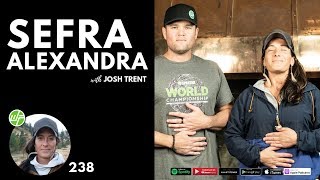
This Wellness Force Radio episode (238) features Josh Trent interviewing Sefra (Sephra) Alexandra, the "Seed Huntress." The conversation covers the importance of seed saving and seed sovereignty, threats from monocropping and corporate patents, and the role of seed banks (including the Svalbard Global Seed Vault and the Crop Trust network). Alexandra describes ex situ vs in situ conservation, community seed exchanges (Seed Savers Exchange, Rocky Mountain Seed Alliance), practical seed-saving steps, permaculture and edible forest gardening, sea reforestation/kelp restoration (Project Greenwave), and the cultural/ethnobotanical value of crops (Hopi blue corn, taro). She notes biodiversity statistics and advocacy: large portions of crop diversity have been lost and most calories come from a few crops, emphasizing grassroots seed saving as resilience.
Chapters
You can either focus on the doom and gloom of the big corporations or realize that the power is inherently exactly the opposite. It's completely in our hands. When we take those seeds and we plant them and then we're saving them and we're not relying on these bigger industrial agricultural systems, then that's how we build our own resilience. The cornerstone and the keystones of resilience is maintaining our own diversity.
That's Sephra Alexandra, and this is episode 238 of Wellness Force Radio. What's up, my friend? It's your host, Josh Trent. And welcome back to another episode for your weekly access to global experts in all things wellness as we discover the physical and emotional intelligence we need to live life. Well, in this episode, we're talking about seeds, but not just any kind of seed. The kind of seeds that can save the world. We're learning about this from the Seed Huntress herself, Sephra Alexandra. Now, I met her live and in person over three days in Lake Tahoe, which I know you're going to love this podcast for so many reasons. First of all, Sephra is a complete dynamo when it comes to creation. Not only is she the Seed Huntress, but she's also one of the co hosts on the Spartan podcast, the Spartan up show, which I got to be a guest on, that is coming out very soon. This episode, though, really got to me because I learned brand new things, which you're going to learn as well. Like, for example, did you know not only is there a global seed vault in Norway that. That the Norwegian government paid $45 million for, but also that we find ourselves in a pinch of time when it comes to seeds and saving seeds. With the recent landslide vote in court against Monsanto and all the other informational pieces coming out about our genetic biodiversity, how this planet is in rapid decline when it comes to seeds and bugs and all the little things that are under our feet. Well, these seeds. These seeds hold the knowledge of our land and, and the memory of our ancestors, but they're being ignored and forgotten. 93% of vegetable varieties have actually gone extinct. Why this is so important and why we're having Sefra Alexandra on the show is because not only is she the ethobotanical explorer, but she is also a voice on the bleeding edge of athletic performance. She's also explaining to us how we can nourish the world through seed saving compared to monocropping. We'll also learn from Sephora about how edible forest gardening is helping to save plant life and why we shouldn't and no longer have to rely on only, only the large nutrition agribusiness companies for the four monocrops, canola, corn, wheat and soy. She is a very outspoken and loudspoken woman and she's all about solutions. What I think you're gonna love most about this conversation is that this solution actually just starts with what we do in our kitchen. She'll give resources that are linked in the show. Notes today@wellnessforce.com 238 this is gonna be a unique one with me and Sephra Alexandra recording live at the Spartan up podfest in Lake Tahoe, California. I am Josh Trent, this is Wellness Force. But we're live from Spartan today. This is beautiful Lake Tahoe and I'm sitting across my wonderful guest who I had the pleasure of meeting a couple nights ago. But this woman is very interesting. She calls herself the Seed Huntress. She's an ethobotanical explorer on a worldwide endurance race to preserve the biodiversity of our fields in forest through the establishment of seed banks. I've never said a sentence quite like that. I'm really, really fascinated by your. Also, she's the director of expeditions for Tactivate Now. This is an expeditionary entrepreneurship company that deploys special operations veterans in all areas of natural disaster to socialize resiliency training through startups. She's also the co host of the Spartan up podcast. Welcome to Wellness Force, Sephra Alexandra.
Thank you so much for having me, Jen. My pleasure.
Now this, this name, Sephra, where did you. Where did you get that from?
My mother, the queen. She made it up. She wrote a book in college and the heroine's. She had dark hair and dark ey and her name was Sephora and she said if I ever have a daughter, I'll name her Sephora. And here I am. I'm Sephra Alexandra and my twin brother is Jesse Alexander. Yeah, it's my. And Tactivate is my twin brother's company that I help him out with.
So it seems like you do quite a bit for the world. Would you say that you're someone that's very concerned with the state of the world right now?
I think it's too late to be pessimistic, Trent. I think it's all about optimism and I think people often forget the power they have in their hand to be stewards and caretakers of the earth. And it's a lot more fun and easy than people think. So, you know, in disaster zones we have a lot of not. Not that it's fun in terms of the people's plight and what they've lost or anything. But it can be a lot of fun to see how communities are rebuilt and regenerated and things that you can do. And the same goes for the environment and the ecosystem.
How long have you been doing that?
Hopefully since birth.
Now, this seed huntress, this collection, this fascination of collecting seeds when people don't know what that is, how do you explain that to them? SEED HUNTRESS?
Well, being from Connecticut, I tell people I finally went into banking. It's my only joke, seed banking. So basically, as much as from the gloom perspective, let's start there. As much as we know of a lot of the animal species that are going extinct, the same thing is happening with our varieties of vegetables. They say over 90% of most of our vegetable varieties have already gone extinct. This is because our grandmothers and all the caretakers of the earth before us have always saved the seeds that grow in their backyards, that grow in their land. Why? Because those seeds are most bioregionally adapted to where they are, meaning that they're most high yielding, most pest resistant, and also can be selected for flavor and vigor for your exact terroir, your exact location. Right. And when you do that, you have, what you're doing is you're preserving something called seed sovereignty. Right. Having the ability to maintain the integrity of the biodiversity of your bioregions, of your ecosystems, for yourself, for your gut flora, for the surrounding flora, and for the winged and four legged friends as well.
Yeah.
So basically I've come at it from the perspective that with how few people are still stewarding and caretaking, there's a huge movement of people that are building these seed vaults and seed banks and. Which is called ex situ conservation. Right. Ex situ means it's in a cold storage, means it's cool, dark and dry. In situ conservation is when you still see the plants that are in the farmer's fields, that's obviously preferable. Right? Because then they're still adapting to the climate, they're still being able to change and grow with what's going on around them. But as we see, oftentimes when I deploy with my brother, in cases of natural or man made disaster, if all of your crop gets wiped out and you don't have a backup that has those exact genetics adapted to where you are, and different aid organizations fly in seeds, maybe from the US you're doing a couple different things. You're paying farmers in the US which is not paying farmers in the local country. So you're undercutting the agroeconomic system. You're bringing in oftentimes non viable seed. You bring in rice from North Carolina, it goes to Haiti and it goes, I'm so hot here, I don't know how to grow here. You can possibly bring in new pests. So there's a whole plethora and like litany of issues that come along with having to bring in outside seed rather than having food security protected through seed sovereignty and bioregionally adapted seed banks.
I love this. Food sovereignty and seed sovereignty. That's, that's very interesting.
Right.
I haven't heard that before and I think I've seen things online where people are saving seeds in cold climates. There's a huge seed vault I think in Iceland or in Sweden that I've seen. It's like built into this close. It's built into the side of a hill and it's just in case the human race stops.
Very interesting. Well, it turns out that that is called the Svalbard Global Seed Vault.
Yeah.
And it is run by an organization called the Crop Trust. It's actually in Norway and Long your Barden. It's the farthest north airport that you can fly.
Have you seen it with your eyes?
Ah, I shall soon. You're not allowed to be born there and you're not allowed to die there. It's a very small, beautiful, remote area. There's more polar bears per capita than humans. And when you're walking around there, it's mandated that you walk around with a gun. With all of that said, the Crop Trust actually is the organization that maintains 12 of the main seed banks throughout our world. Right. Those seed banks are placed in center of origin, mapped out by Nikolai Vavlov. Where crops first emerge is where they have the greatest centers of diversity. So we look at maize and wheat, and in Mexico you have your pulses and grains. In India you have your potatoes in Peru. Right. And in those major seed banks you have 6,000 varieties, 125,000 varieties. The massive collection of the biodiversity of those species. Okay. And the smaller seed banks in the different parts of the world, they'll send their accessions, as we call them up to the bigger multimillion dollar seed banks to be stored in situ. And then from that global network, that global system, a backup from all of those is then sent to the Svalbard Global Seed Vault. So in cases again of natural disasters, such as in Syria, when they were no longer able to operate their seed bank, it was the first time they had to take seeds out of the seed vault. And now they're growing them in Morocco and. And it's not, I forget the second place. But they've been able to remultiply like the 38,000 varieties of the 138 that they have because they'll take them out in staunches. Anyways. It's a really brilliant system. And I'm actually this year was chosen as one of seven fellows with the Crop Trust. And in about a month I go to on a floristics assessment which is gathering what plants grow locally in Fiji and the Pacific island countries and territories. And I'll be gathering ethnobotanical basically footage and knowledge which is the interaction between plants and people, especially as it relates to indigenous wisdom, medicinal oral histories. There's a whole plant profile of things. Those are also seeds of wisdom that we don't want lost as these crops change with climate change, where it becomes more halophytic, have to be more adapted to the oceans. So I'm going there to study taro and show how the seed bank in Fiji was able to save taro from something called the taro leaf blight.
And taro is in Hawaii. It's the stuff they make poi out of.
Exactly correct.
This purple pasty, kind of like gooey food.
Right. So it's a, it's a, it's an aeroid. Right, so it has a tuber underground that's edible.
Yes.
That you cook in different ways. So I'm.
Yes, the Hawaiians are huge fans of this. Have you had it?
I think it's been a while since I've been in Hawaii. But yes, it is also like a sacred crop in Hawaii as well and a deep part of their oral histories and culture.
Sephora, how did you get even involved in this? Like how does one do a Spartan up podcast and travel the world and learn about ethnobotanicals and capture seeds and know so much about seeds. How did all these things come together?
Well, my twin brother was co founder of something called Brooklyn Boulders, which is a rock climbing gym that now has several locations. And we were invited up to. It was called the 431 Project. It was a dinner at Joe Decenta's farm up at Spartan Race World headquarters in Vermont. And as we were sitting there, you know, with eating crudite and fine food, we were looking out these snowy windows and there was a dear friend now, Mark Jones, standing outside in the snow with a sandbag above his head. And for the one hour that we ate dinner, he just stood there smiling at us with the sandbag above his head. And we learned that something called the Death Race was going on. So after our dinner where it was really lovely and all of these, you know, great conversations and brilliant minds were gathered, we went and watched them do ballet in the barn after the racers had been up for three days straight. And we sleep in something called, like the pony barn, the stables, right on Joe's property. Because he has. He's retrofitted the beautiful barns on his property to be one of the preeminent wedding venues in Vermont.
And he rents out his house to do weddings.
His property, it's called Riverside Farm. So not his house. But on his property he has. He owns the general store. It's actually run by my dear friends Katie and Kevin. And then he has. He bought the mountain, the mountainouses and the barns, and just has this brilliant ecology of an entire little village that people have had beautiful weddings at. And also it's the home of peak races. So we have so many endurance races that have gone through their 500 mile or obviously the Death Race and just great mountain biking and snowshoeing events. So that morning my brother and I got before sunrise, we kind of. We peel back the barn door and we see this figure backlit, like by some light, climbing up a rope before the sun is even up with, like, the little kids there. And as we walk closer, we realize it's Joe and his kids. Like Mr. Miyagi, right? Like before. So my twin brother looks at me and he says, I don't know what this place is, but you're doing a project here. So I looked at Joe because I had just finished my graduate degree at Cornell in agroecological education, but my entire professional background had been in austere environment, luxury wilderness hotels. So I've. So that's like making dreams reality in really difficult places, which is a challenge I love. And so I said, joe, have you ever heard of something called glamping, right, Glamorous camping as it. For lack of a better portmanteau and the stoves, right. I call it wildernessing. So I did a pitch to him and he said, I love it. And I said, great, everything's in my car. I'm ready to move in. He goes, great, go move in. Top of the barn at Amy Farm, that used to be a sold hostel. So for about a year and a half, I lived up at Spartan Race world headquarters. And with old Spartan wood and Spartan build crew when they came home and football teams that came up to visit to do workouts, I built this Beautiful tent camp on the side of his mountain. Now, I was probably my best guess, but I was able to wake up in the Misty Mountains and know what time it was by what bird was singing.
Do you feel like you have a deep spiritual connection to this work? Because you seem like a very spiritual person to me, like a very spiritual soul. Yes. You have this academia background, and you know quite a bit about soil and seeds, but there's also a part of you that's very connected to spirit.
I thank you. I honor you for honoring and seeing that in me, I think. Deep nature connection, Right? So that's my brother, and I grew up going to something called the Tom Brown Junior Tracker School. Right. He's kind of one of the grandfathers of all the wilderness awareness and primitive skills schools in the country. And his lineage comes from an Apache Scout who studied. He studied with an Apache cat from the time he was 7 years old. So there's a lot of, like, deep philosophy, Scout wisdom, Flint knapping, foraging, shelter building, fire making, and also a lot of philosophy. And I think sometimes people recognize perhaps the deep nature connection, like an appreciation of the patterns and principles we find flowing around us maybe is marked as a type of spirituality, because I think all humans innately have that deep connection with the Earth. Not to sound. I know how bohemian that sounds to many, but the truth is, is when you're jumping in cold water or you're walking around barefoot, or you're taking 10 minutes a day to just go sit and listen to the birds, that makes a difference, folks. And nature wants to live. And I do have deep reverence. Deep, deep reverence for all things wild.
I think it's easy for people to forget we're not on the planet, we're from the planet. Like, we're a product of the planet. And then the planet is a product of something that actually brought the planet here. So there's a much deeper lineage than just like, oh, we're here on this planet and we're human beings, and we're actually in a meat suit. We've talked about this with Aubrey Marcus and with Paul. Check. We're in a meat suit. There's a soul in your meat suit talking to my soul in a meat suit. And that's actually what put the seeds here, whatever created all of that. How would you describe that?
That's a new theory for me. I've never heard of the meat suit. I've heard it described as, there's a spirit that moves through all things. And I think the easiest way to Say that from a seed perspective, right? Is if I've gone up and stayed with the Hopis on their reservation and they have Hopi blue corn, right? Let's look at Hopi blue corn for a second. Hopi blue corn, when you see it growing, is a thriving, very productive crop. And it looks like it's growing out of the Serengeti. The soil's cracked, there's no irrigation for miles. It doesn't look like they have the beautiful brown soil that everyone thinks you need to grow things in. And you look at these old Hopi women and you say, like, what do you do to steward and caretake these beautiful plants? Because to them, seeds or their ancestors, they still have that deep connection and they have that reverence. Knowing they say, don't water our corn, it makes it weak, right? So what they do is they dig down a foot and they plant their seed a foot down in the ground. And then they wait for those rains. And after a thousand years of selection from people in that culture and in that place, saving the seeds that did well there, they now have a thriving crop that doesn't need water and doesn't need inputs.
So, well, it needs some water, right? I mean, you can't just grow a seed without any water.
But it's a but. But it's from like the torrential downpours that happen very infrequently, but it's adapted to that. So I probably went off on a tangent because oftentimes I'm like a wind pollinated seed, you know, like when you see dandelion seeds. But the point is, for me, spirit is I look at a seed. Even when you eat an apple or you eat anything and you spit it out or you put it in your garbage, you have to understand that each one of those seeds is each corn cob, each corn kernel you don't eat is a whole corn plant. Each apple seed, even though they don't breed, two because they have so much wild vigor, is an entire apple tree. An acorn can grow into an oak. And when you start to have reverence and understand the magic embryos that you are encountering with every day, you start to have a different relationship towards being around those things.
Why do you think people care so much less than you do? Because it's obvious that you care tremendously. But I think general wisdom in our culture, there's not this conversation about seeds and capturing seeds. It's not really happening. Why not?
I think oftentimes there just needs to be stewards and caretakers and role Models and mentors that are meeting people where they're at. And that's why I'm grateful to be talking on this podcast because I think there's kind of an aha. Moment. There was for me when I. When I met these elders who ran a seed vault of all the, you know, Southwestern Native American tribe. I walked in to the seed vault where it was the Hopi and the Navajo and all these seeds, and it was kind of just like this awe inspiring. I fell to my knees and I kind of. I put it all together. Even after living in eco villages and all these things. I think when you go back just a few generations, right. And you look at all the people when they came to this country, when there was a lot of. When they emigrated here, many times there are the stories of those people sowing the seeds like that into their clothing. Right. Of the peppers that they love from where they're from, or the tomatoes where they're from, or the basils. And so it's only been up until maybe the last 150 years where seeds weren't an absolute integral part of the conversation. Where I'm from in Connecticut, near Southport, Connecticut, it's now a very affluent area, which is. Which has a lot of big mansions and all of those types of things. Right. But in our history, we used to be the onion capital of the world. With over 200,000 barrels of something called the Southport Globe onion variety shipped every year on sloops, which are sailboats, to the New York City markets. And especially during the Revolutionary War, they became a stable food crop because of their high vitamin C content. So our entire area, we were all onion people. Right. I call us the alliuminati. Like, alliums.
Do you feel like you connect with the onion as a plant?
Oh, absolutely.
What happens when you cut an onion, though? You cry. It's a very emotional plant.
I know. But you know what? I think for a lot of our. So as Brock Dolman says, we need the restoration of the ecosystems of the watersheds of our mind. Right. Which means, like, the restoration of the ecosystem, of the watershed of our mind is kind of a play on words. I think as a society, we need to peel back some layers and we need to cry a little bit. You know what I mean? If you're cutting open an onion, right. There's. There's more to this world than the flesh. And I. And I, again, I say that with a lot of respect for whatever lens people can hear that through. Yeah. But I think that there needs to be a slowing down A reverence and a respect for a second for the great diversity and abundance that still lies ahead of us. Because it's cliche, but you walk into a supermarket and it's this gorgeous cornucopia. I mean, granted, locally foraged, organically grown, obviously is better. But at the same time, a lot of times in this country, there are very few countries where everyone's dieting. Most countries, people are dying. And I think it comes from a huge point of privilege to, to look at that abundance and not have an appreciation for it and not. You know, I think that seed saving is actually so much easier than people think, Right. It's like you eat a tomato that you really like, right? You scoop out the seeds, you let that gel sit in an open jar for a couple days, little mold forms, you put it through strainer, you wash it off, put those seeds on some parchment out of the sun, they dry out, keep them cool, dark and dry, you'll have more than could fill up your whole field of that exact variety.
But they have to have a garden to plant them in. So a lot of people don't have a garden.
No, you can plant it in your window box.
Oh, let's go there.
It's accessible.
Someone's listening to you and they're like, cool. I love this woman's message, but I live in a city. Like, what's the practicality of saving seeds if you live in a city and you don't even have a backyard?
Well, there's a couple different ways to go. Perhaps you won't always live in a city and then you'll have a delicious cache of seeds you can bring with you when you do move out to the country. There's also rather inexpensive grow lights that exist and having plants in your existence and in your being and around you, regardless of you live in some idyllic rolling hill farms in the middle of nowhere, or if you're living in New York City. I have plenty agrarian, organically minded friends who live in cities and they have beautiful forests by their windows and there are lights and there are hydroponic systems and there are, you know, ways to water and care. Take those plants aside. Oftentimes in the urban environment, friends, folks, you have it easier. You don't have deer and raccoon and little chipmunks coming and eating all of your herbs. Your herbs are going to be just fine and they're going to thrive, right? So actually, urban folks, you're lucky and you want to know it. I guarantee you, any urban city you live in now, there's a lot of rooftop farms. And if you would like some advice and help find the rooftop farm, go talk to that farmer and he will tell you exactly how this can be done where you are. And along those same lines, there's something called permaculture and it's a regenerative design solution. Right.
Permaculture is really big in la. Like, there's a lot of energy. Yeah, yeah.
It's becoming, it's, it's great to see that word, find, that movement, finally have a lot of traction. It's a portmanteau between the words permanent and agriculture. Right. It's like, how can we create ecologically designed areas that look at all the inputs and the outputs and try to feed them all together into. To make it cyclical, to have no waste. If you look at nature, there's no waste. The tree falls, the mycelium, the mushrooms decay it, the bugs eat it, the birds eat the bugs, they re poop out the local seeds, those shrubs start going back up, back into succession. So there's no waste.
Yeah.
And we can design our systems to facilitate stack. Our functions have everything, serve more than one function, then we're really getting somewhere. So with that said, there are people who teach permaculture all over the country now. And you tap into those people and then you're starting talking about passive solar design, gray water systems, you know, spheres, zones, concentric rings, how gardening, perennial polycultural guilds.
You know who I think you'd love and who you remind me of is Daniel Schmachtenberger.
I've never heard that.
He's the CEO of Neurohacker Collective and he studied the work of. I'm blanking on the name right now, but it was Integral Theory, Integral Systems and Buckminster Fuller.
Oh.
And so really understanding, like how there can be permaculture and this adage of, oh, how are we going to feed the world unless we do it with one type of seed that resists pesticide? What do you think about this? What do you think about what's happening right now with. We just saw the court case. $289 million that Monsanto is now going to have to pay because of Roundup causing cancer. It's the first one of, I think 2000, 2000 different lawsuits that have been brought against Monsanto. Yet we see this seed technology that they've patent, they're trying to patent life so that if you save your seeds, there's farmers that save their seeds and they'll actually go to jail for saving Their own seeds. How do we flip this? I'm sure this is a hot topic in this industry of seed collecting that I honestly just didn't even know really existed.
Well, okay, so it's an interesting thing. So just. So for folks out there who need a little bit more clarification on some of the things you just said. So if you look at corn, for example, right. That's obviously the one that we have a lot of reference points on that there's GMO corn. The problem with GMO corn is the way it pollinates is it's the pollen grains, right, that go on the silks of the corn. The silks become the kernel. So that's how they get pollinated. That that pollen is wind dispersed up to five miles. So if you are Billy, organic farmer, and everything you do is totally just biodynamically epic. Right? But you're downwind from one of those farms and a big gust comes when it's, you know, pollination time for your corn. Those genetics get in your corn. And if, you know, people from within the Monsanto Corporation, they come and they. If they check the genetics of your corn and they see that their genetics are in it because they own that those patented genetics, they can rip out your crop. And there have been some cases where people get sued, right?
Yeah.
And corn's kind of, you know, it's an ancient sacred crop that a lot of, you know, maize has been used by the Aztecs and there's a long lineage of that. So obviously it's a huge contention when that's owned.
It's essentially this. There's a lot of things that affect people's even knowledge of this even being there. And then after they, they, after people are even aware that this exists, this crisis of seeds and life being patented, what do they actually do? It's like, it's like, I feel like at the end of the day, it's just about what they buy. So if somebody's buying organic food, doesn't that help it? And that's their only vote.
Well, okay, so the thing is, though, about the crops in Monsanto has. It's really not that many. Right. They don't. And their reach, when it comes down to seed law, okay, there's a lot of confusing wording in there, but there's still open pollinated varietals and there's plenty of great seed catalogs. When you look at Johnny's and High Mowing and Frank Morton Wild Garden Seed and you look up Siskiyou seeds, there's a Whole culture of these small seed companies, well, all of their seeds are open source. You can take it, you can breed it, you can save it, everything's fine, right? And it just. The point is you can either focus on the doom and gloom of the big corporations or realize that the power is inherently exactly the opposite. It's completely in our hands. When we take those seeds and we plant them and then we're saving them and we're not relying on these bigger industrial agricultural systems, then that's how we build our own resilience. The cornerstone and the keystones of resilience is maintaining our own diversity because we save the seeds from all these different locations, right? So whichever way the climate's going to shift, if we have seeds saved from wet, cool, dry, humid areas, then whichever way our climate shifts, we're able to share those seeds bioregionally and it can adapt. Now when you talk about how modern day agriculture plants one seed, right? Or they just have what's called a monoculture when you're just taking one variety.
Right, Those are corn for thousands of.
Yards, right, or miles. But those are absolutely the most susceptible crops that there are to pest and destruction and possibly famine, right? Because basically if you get a pass that comes up, he's like, oh hallelujah, I have found, like why wouldn't him and his uncles and every one of his friends just come and devastate that field? So there's been time and time again when we've seen societies relying on a monoculture that then fails due to a new disease which then causes famine, right? So that's the exact opposite thing that as a fellow of the Crop Trust, where we have something called the Food Forever Initiative, right, is we're trying to maintain that diversity. So whichever pest comes or whichever new climate situation happens, we can go back into our seed banks and our seed vaults and look for ones that have most likely the genetics to be adapted to that and we can rebreed that. And to be honest, all of those seeds are open to anyone, right? There are ways to access that if you're a farmer or scientist or a breeder. So as much as modern day focus is on something like Monsanto, and honestly the people there, a lot of the people that work there that I've talked to, they honestly think that they are doing the work to feed the world. And I understand all the contention around it, and the bioregionally adapted seed companies I work for, we just say as it's a party, like come join the party of seed saving.
Come to the seed Party.
Come to the seed party.
We also see it work, though. Like, look at Polyface farms, look at Joel Salatin's work, the way he's doing crop rotation. So it's obviously a model that if we scaled that model that's already proving to be workable, that we would see this claim of how are we going to feed the world? Completely die.
Well, it is an interesting fact. See, a lot of the questions about how we feed the world right now, what we're feeding the world, just because we're giving them calories doesn't mean we're giving them nutrition.
Damn right. Let's let that land for a moment.
Yeah.
Just because they're eating doesn't mean they're actually being nourished.
That is very true. So there's like quite a bit of rhetoric around we're giving them food, now they have something that they can eat. It's biofortified with these different vitamins and minerals and things such as that. But there's also another side that says we're dealing with a lot of malnutrition. And for me not to go down that rabbit hole, because it is quite a rabbit hole. But when we look at some of these underutilized and forgotten crops, Right. We have moringa and tiger nut and we have breadfruit and we have kelps and we have so many beautiful crops.
Yeah.
That, you know, the thing is about it, right? There are 12 crops. That is 90% of our diet. Okay. And we get something like 85% of our caloric intake from four crops. Okay.
Wheat, corn, canola and soy.
There's 120,000, I think, different varieties of edible foods. And my friend Joseph Simcox, the botanical explorer, is in a new country every week finding these lost and forgotten foods. When you want to talk about real health, you're talking about getting the diversity in your diet. Yes. Okay, I understand bananas and apples and oranges. But the real thing is, is like when you're foraging wild foods, I get it. A lot of people are in the city and they can't do that. I'm not saying that, but I'm saying when you're eating these micro and macronutrients from some of these other crops that can grow in non fertilized, non irrigated areas that actually are solutions to places that need a staple food crop that can grow in the soils that they have, those exist, there just needs to be a larger conversation about what those crops are, how they can be shared without becoming.
Do you talk about this kind of Stuff on the Spartan podcast.
I do. But I get made fun of as.
Like, the fairy hippie that floats around.
Yeah, exactly. Which I love. Which I love. I've been, you know, like the seed queen and, you know, Seed huntress.
It's a cool title.
It's often me being like, and I think this relates to permaculture and ecology, blah, blah. And Joe goes like, that has nothing to do with permaculture. And I think it's funny. So they joke around about it. But now Johnny and Colonel Knight and Joe oftentimes will be like, well, you know, because the tree species is thriving, and horticulturally, I think that's actually more accurate. So they're learning, and they actually do quite appreciate the botanical knowledge, and they're just the best people ever.
How do you think we can do a better job at saving seeds from the sea? Like you mentioned kelp.
Oh, right.
How do we do that? What does that look like from a policy perspective?
I don't know. From a policy perspective, it's a great question. But I have a wonderful friend named Bren Smith. He has Project Greenwave, right? And so what he's doing is he's reforesting the sea. Because his premise is the fact that. All right, so he does. We have different trophic layers, right? So if you look at a forest, you have your ground covers and you have your canopy and your vining and your shrub and. And so the true, real. I think ecological gangsters are the ones that are doing edible forest gardening, Right? Oh, so we're putting in.
Tell us about that.
Oh, this is a party.
Yeah.
So basically, Dave, Jackie and Eric Tones Meyer wrote kind of these two epic textbooks on edible forest gardening, which gives you guilds and matrixes. Guilds are just like groups of plants that grow together and depending on your zone and your location and shade or not shade, blah, blah, blah. So what you do is you mimic a natural ecosystem, right? So you want. You choose a ground cover that's either medicinal or a good forage for your local animals. You can stack your functions however you want, Right. But you want everything to have a food, fiber, fodder function, Right? And so what you do is. It takes a while, right? The inputs are huge on the side of putting it in. But then your forest goes into succession, the shrubs grow up, then things that are ground covers become shaded out, and it becomes a little bit different. Then by the time the trees become maturity, then the shrubs fill out, and you design it so that within those different years, it successively fills out. But what happens is then for you and your family and the next generations, right? Because it takes a little while for nut trees to start producing or fruit trees.
How many years?
It depends what nutrit is. But like you're looking at like 10 years, 15 at least for a good crop, right. So it's when we stop thinking about these annual vegetables that we are planting and we're ripping out of our gardens every day. And then, you know, when your soil is extreme exposed, it's not happy, right. We have someone called Masanoba Fukuoka, the one straw evolution.
Say that name again.
Masanobu Fukuoka.
It sounds like a song. Honestly, it sounds like a fun song.
He's Fukuoka every day. So Fukuoka. If you've seen seed balls, right?
I've seen this, right?
So seed balls is kind of. He started something called the do nothing no till farming. So before he was cutting down his crop, he was throwing these seeds with ground covers and everything. So they got germinated and stuff started. And then he would cut down the crop above it and then they would get sunlight and boom, pop up. So there was never a time when it was totally fallow or totally empty. And again, he did a lot of patterns of principles based on things he observed in nature. But. But back to your question about the oceans. So for layering those same trophic levels, what Brent Smith did is he would. Because seeds, right, again, are mussels and oysters and kelp. Like there are still those. All seeds. We come from seeds. And everything is seeds. You know, once you start to reframe your mind and see through the lens of seeds, I sometimes I feel like Forrest Gump, you know, and it's like shrimp tacos, Bubba. I'm like seed vaults, seed banks. But he has all these different layers and then. So he'll seed them all so that he has productive things at each layer. And then he'll seed the kelp, right? Which it's a kelp forest. He was trying to make kelp the new kale, which is hilarious and amazing and awesome because it does a lot for antinuclear stuff. It's really healthy for you. There's so many more macro and micronutrients due to like what all dies and decays in the water rather than just nitrous NPKs that we put in our soils. Basically he recreates these forests and then the native fish come back and then it's a party. And then as a fisherman with actually, you know, he's able to have a good harvest, a sustainable harvest, a regenerative harvest, because we need to move beyond sustaining what we have. We need to regenerate it. And he can actually make an income while restoring the ecosystems. And so in my mind, right, because 70% of our earth is water, 70% of our bodies is water. If you're bioremediating the seas, right, it's going to do a lot more to oxygenate, cool it off, offset the heat for climate weirding or whatever you want to call it, than even reforcing on the land.
I want to kind of slow down here because you've gone to some really interesting places and I think that they're home for you. But it's probably the first time that a lot of listeners are even hearing some of these terms that you're throwing out. So to make it more nuts and bolts for people, there's gonna be a lot of links in these show notes. I can already feel that. What can they do from a practical, everyday thing? Like, pragmatically, if somebody is like, okay, you know what? Yeah, I would like to actually grow something inside. Do you have a preferred brand or tree stacking method or whatever you do to actually grow something inside your house? Is there a brand you like?
A brand? I would say if you want to join this conversation in this party, like, look up something called the Seed Savers Exchange, right?
So the Seed Savers Exchange.
The Seed Savers Exchange is basically where all of these heirloom vegetable gardeners have been going. They have a yearbook of all the varieties that they're sharing, where they're growing it, how they're growing it, who's stewarding it, saving it. And you can become part of the Seed Savers Exchange and you can request to have seeds. And basically, I don't know if you guys have ever looked. I'm sure you guys have all looked through clothing catalogs. There are seed catalogs, and if you.
Want to party, you can buy special tomatoes.
If you want to party, they have like yellow tomatoes, purple ones, green ones, green beans, white eggplants, yellow ones, long ones, thin one. I mean, it's like, okay, it starts to sound a little bit erotic. But the point is, is like, the point is, if you want to see the glorious, magic, delicious things of the earth, start ordering some seed catalogs. Okay, so Seed Savers Exchange is great. High mowing is great. Siskiy seeds. You know what? If you. I'll send you a link of a whole bunch of really great fruition seeds. Petra is doing a lot. A lot of these people are my friends. You know, it's actually, there's a movie called Seed the Untold Story that will help you clue into this party. And then my great mentors run something called the Rocky Mountain Seed alliance and they teach something called Seed school. You can take Seed school online, which takes everything that I'm kind of just throwing out there and makes it a digestible, understandable, curriculum, organized way to join the seed party.
And I love what the most about this is, is that we're connecting, getting our hands dirty again, getting in the earth. This is where a lot of the healing properties of nature are missed, is from people just forgetting about, like, getting their hands in the dirt. My brother has a little garden in his backyard, and I was digging in it the other day with my nieces and it was like, it reminded me about, like, what times must have been like when there was Native Americans here. And it really connected me back to that time. And I was like, oh, back to my iPhone. So there is a remembrance process when it really comes to this. And I think from what I can tell, I'm just learning about this from you here at the event. This is going to continue to grow like this seed collection. How do you think this is going to look in five years? Do you think there's going to be another Norway seed collection vault?
Well, a. I think your iPhone's a great resource. Right. There's something called. I think I forget, but there's an app. You can identify plants and so, like, use it to your advantage. Anytime you like a fruit, vegetable, look up how to save those seeds. Right. There's so much information presently there. And just first I want to finish your comment about what people should grow inside Again, Herbs. Great herbs. It's like whatever you like to eat, whatever you use most.
What's your favorite herb to grow inside?
All of them. The one I haven't met yet. And then. And I'm really super into oregano oil. I take it with me everywhere I travel. It's antimicrobial, antibacterial. Whenever I feel a little whatever, I just heavy dose it. I don't recommend that for other people because it's a bit strong. But I was hunting for the dittany of oregano in Crete, which is one of the strongest oreganos there is. It used to be the greatest sign of love because these people would hike up to the high granite cliffs of Crete and you. They would take back these little flowers that grow on the ditany of oregano and give it to their lovers. And many people actually fell to their death harvesting this. Now, the oil that's made from the dittany of oregano is the strongest oregano oil there is. And so that's kind of where I say endurance race, ethnobotany, because I travel all over the world and walk to remote places to find these last stands and vestiges of these. These rare plants. But so my great mentor, Bill McDormand, he says that we are the people of the pinch, right? We're at a pinch in time in our genetic biodiversity when you can either stand by and watch the mass extinction of. Of our. Our flora, or we can step in as caretakers and stewards, right? So we call ourselves the People of the Pinch, or the Pinch House Mafia.
The People of the Pinch. And the same way that that you're guiding people to be, like, in their pain through these Spartan events so that they can achieve glory from it. I mean, there's glory to be found in pain.
Pain is glory. Pain is glory. Pain feels good, and you want to know it. People remember that. They're not going to remember a lazy day. We talk a lot about frame of reference, right, on the Spartan up podcast. And so my friend has an oyster shack. It's out on this little island in Connecticut, right? And there's something called Bridgewater, which is, you know, Ray Dalio's hedge fund, right? It is Connecticut. So a bunch of their interns came out, right, for an oyster and a cocktail. And I said, I'll help my friend, but it's on this lock where the locks open and the pond can drain, right? And so it became low tide and the pond was draining, and they're all in super fancy gear, and we're trying to, like, push the dock and the boats out, but basically we have to get in. I'm in white pants, getting into, like, five feet of mud and pushing it out. And it was at that point that I'm like, saying, like, oh, this finally just got so much fun, right? It's like it's become from a baseline of, like, when people consider everything that's perfectly cadenced and calm, like, that's to be normal and fun to now, once things turn a little bit awry, I'm like, now it's fun, and we're, like, pushing in the mud, and they're kind of having a hard day. And I'm looking up at them like, no one remembers a hard day. And my whole point in that story is I love Spartan because it makes people remember how much fun doing something challenging is. It's such a party. It's like the glory. It's like joyful suffering, you know, and that's why. That's why the people in the community that's around Spartan are just the best hearted, best people. And it's like after, you know, teaching, forging or whatever in a death race or in a Gogi or helping out, and you see those people 60 hours in that are generally like, oh, sephirah. You know, and saying like sweet things with a smile on your face, and you get to see the core and the soul of people. Those are the people. Like, that's humanity, that's real.
And where do we go when we're at our absolute worst as far as physical load or stress or pain?
Maybe that's your best, right? Maybe your worst is being the honking person in your SUV mad about getting your manicure or whatever it is. That to me, like, if that's the baseline and someone who's covered in mud, who just did 10 miles under barbed wire is the worst, I'll take worse any day.
Hmm. Let's cycle it down right there. Because I'm so stoked to be here at this event. And I think you're one of the rare people that have found something you're so passionate about with this, like gathering seeds across the world. And also to find Spartan, there's some unique recipes as to how you found the land that you live in, the world that you operate in. So this has been really interesting to talk with you. If people want to go to your website, it's seedhuntress.com you got it. They're going to hear your voice on the Spartan up podcast. Do they just go to Spartan upodcast.com or where do they go to actually hear your voice on the show?
Yep. Spartan Up Podcast.
Spartan Podcast.
Yeah, we're there every Tuesday. And then, yeah, now we have Joe. I think Joe wants it to be like a full week thing. So Tuesday it's Spartan Up Podcast and Wednesday it's with Dr. L. Get your mind right. And then we got Zach Evansh on Thursday and then we have Kevin Giglotti on Friday. It's a party, but it's a pleasure. And all the Wellness Force people, you guys are on the force of good. And anything I can do to help, mentor, inspire, or lead any of you toward the great seed expedition, then let me know. But find something that you love. Find something that tastes delicious. Just save those seeds because they're magical things that just have in your pocket every time, last thing, and I'll let go. But I think every time I do my laundry I hear like ta ting t t tink tink seeds falling from so oh, not change, not change seeds.
And I think the seeds of change.
I think seeds may be a rather vital currency of the future.
Well, thank you for introducing so many new concepts to our minds. Really appreciate the work you do. And to be honest, I love conversations like this where they're organic and I had no idea what somebody did. So I think you've done an incredible job of at least educating us somewhat of the tip of the tip of the iceberg about seed collecting. So Sephora Alexandra, thanks for coming on the show.
Save seed, seed save. Thanks for having me. Blessings.
Hey my friend, thank you for hanging out and growing with me today. Everything you learned on this podcast starts with your morning practices. So from over 200 world class guests and counting, we've distilled the gems, the best of the best science backed by practices down into a 21 minute morning system guaranteed to increase the positive flow in your day. Get this free and powerful 21 minute life changing system over@wellnessforce.com M21 if you enjoyed this episode, tap your phone, share it with someone you care about because that is how we all get better together. Supporting the show is easy. Leave us a five star review right now from your phone. It helps us reach other smart and consciousness people like you. Either tap your phone and hit the link in purple that says review this podcast or go to wellnessforce.com review. And this show doesn't stop here. We're continuing the discovering process in our private Facebook group. You can be a part of it. All you have to do is go to wellnessforce.com group and I'll welcome you at the door. Okay, now you get to go out into your world and live your life well. So until I see you again real soon, I'm wishing you love and wellness.
More from Josh






Your child's future start before pregnancy... and even before conception! #podcast

MD Reveals: Your Healing Creates Your Child's Reality (The Souls Coming In Need Strong Bodies)



