242 Aaron Hinde: Mastering The Mind For Business & Life
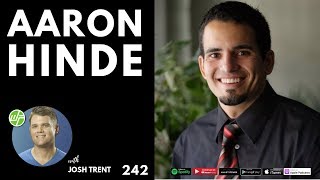
Interview (Wellness Force Radio #242) with Aaron Hinde, co-founder and president of Life Aid (Fit Aid). Recorded live at the Spartan Race, the episode covers Aaron's origin from chiropractic to beverage entrepreneur, product R&D (liquid delivery, nootropics), early startup story (original 'Party Aid' concept), go-to-market tactics (targeting CrossFit gyms, free-fridge model), company growth and scale (first-year revenue ~ $250K; recent year ~ $30M), team and hiring lessons, leadership philosophy summarized as ATM (Alignment, Trajectory, Momentum), the influence of language on culture (avoiding phrases like "no problem/no worries"), and a multidimensional definition of wellness. Episode also mentions co-founder Orion, ~72 employees, heavy early travel (52 flights in one year) and company retreats for culture/personal development.
Chapters
You know, the team is the brand, but if they're not the right cultural fit and don't believe in the core values and are seeing that vision in alignment with that ATM mentality, then it's not going to work. And it's going to cost you a lot more in time and resources and headache to part ways than if you would have just really brought on the right players. You know, and this is the same thing with customers, employees, vendors, doesn't matter. It's the same approach. And so the more we can develop our team as human beings, the more they're going to be optimal performers at work. And crush.
That's Aaron Hind and this is episode 242 of Wellness Force Radio. In this podcast we're talking about mastering the mind for both business and in life. Live from the Spartan Race where I got to sit down with the co founder and president of life Aid beverage company Ehrenheim, where he shared the difference between having a time issue and an intention issue, between business and life lessons he's learned from the growth of Life Aid and why saying no problem and no worries. You know those people when they shake your hand after you've missed an appointment or you know you're late for something and someone says no worries. We talk about the power of language, how the power of language and these phrases no problem, no worries are actually taking away from improving your daily gratitude practice. We talk about a three pillar formula that Aaron uses in business and life when it comes to mindset and getting things done, but also staying present in the moment. This ATM acronym he talks about alignment trajectory, momentum. We will explore what these actually mean, how they apply to your life, why Aaron came from chiropractic to now launching this world class world renowned beverage company. We explore some of the hurdles they've experienced as a company and we talk about the real steps, the ground floor to get on a positive trajectory and how to change the things you're actually experiencing. If you're on a negative path right now, make sure you go to wellnessforce.com 242 you can learn more about Aaron Hind and Life Aid. Focus Aid Golf Aid many many aids that they give people that supplement a.
Healthy and active lifestyle.
What I love most about this podcast is Aaron is a no BS kind of man. He also has a foot in spirituality, a connection to a higher power and he talks about the nuances that he's explored inside himself to to be able to create this massive company that serves so many people. Let's drop in live and in person with Aaron Hind at the VIP area at the Spartan Race World Championships in Lake Tahoe.
Josh Trent with Wellness Force here with Aaron Hind, president, CEO, creator, founder, voice, figurehead, and just overall badass of life aid. How are you doing, man?
I'm doing great. Thanks for having me on.
We have been trying to do this.
Podcast for, I feel like two or three events over the course of a year. Tell everybody, like, what. What you do on a yearly basis. How many events are you personally at representing your company every year?
Oh, man, it used to be crazy. So two years ago, I flew 52 flights in one year. Last year, I was, like, in the mid-40s. This year, I'm probably down to right around 30, 32. Yeah, the team's great. So the team handles a lot of shit that I used to have to do.
I see you everywhere, and I think the unique part about being a CEO.
And a president and a founder is that you wear a lot of hats.
Now.
Right now you're wearing a fit Aid hat. But at these types of events, what.
Is your presence here?
Like, we're here at Spartan. It's the World Championships. What does this mean to you guys as a company?
This is a great community. I mean, we love everything Spartan stands for. I mean, a lot of our core values as a company are very much in alignment with, you know, kind of the Spartan the heck up mentality. Yep, we're here. We've got athletes here, so here to support them, here to give back to the community. You know, get cold cans in every region. Racers hands when they finish, when they cross that finish line, when they need it most.
Right now we're doing life aid. This is turmeric, magnesium, rosemary. But earlier today, before I recorded a couple interviews, I actually had a Focus Aid. And I have to tell you, man, that's like a really strong drink. How did that formulation come about, this Focus Aid?
It is strong. It is strong. I mean, the nootropics in there, like, they'll kick you in. I know Mike Bledsoe says he can only drink a half of one. Then he gives it about an hour.
I drink about 3/4 of a can, and I was like, I'm ready for the day. Thank you.
Yeah, I know it'll snap you out of it, especially after lunchtime. If you've had a big lunch, you feel like taking a nap. That's where I go to Focus Aid. But, yeah, I mean, we basically reverse engineer all the drinks. You know, it's like, okay, what nootropics, you know, are out there that can Be water soluble that have some efficacy behind them. There's PubMed research and it's just a process, you know, working with PhD, you know, food scientists and chemists and just work it, work it, work it till we're all in agreement with what's going to go in there.
Aaron, to be able to launch a company. How many years has it been now you guys have been doing this?
2000 2011.
So in the past seven, eight years you've seen it grow how much? Like 100, 200, 300, 400%. Like thousands of thousands of percent.
Our first year, you know we did like 250K. I mean this year we'll probably do over 30 million so.
And I saw you at Sprouts, I was telling you before we recorded that's when I know things are mainstream, when I see them at my local store. Go take us to the humble beginnings. Because I know in the beginning like of anything it's probably just you in a garage, right?
It was humble.
Yeah. Tell us about the humility, man.
Yeah, I mean Orion and I, my business partner, we met in a CrossFit gym, CrossFit North Santa Cruz actually in Scotts Valley, California. He was writing for the paper at the time as a certified financial planner just bagging on gold and silver in his articles and I was a sports chiropractor and I had pretty much bars of gold and silver in my safe as my stash. Right. So I'm like this guy doesn't know what he's talking about. I was all pissed off. I can't wait to run into him in town. We'll always see each other in the gym and you know, start bullshitting and we end up like both having daughters in the same school in the same class who happen to be best friends. And you know, long story short, we started working out together. We used to golf together once a week. Orion's a very accomplished house dj. I love house music, My wife loves house music. So we just hit it off and became good friends and we invited him and his wife up to a festival, kind of a Burning man type of festival. And you know, I'm handing out five HTP and milk thistle and B vitamins to everybod. We're up for a few days in a row and people are getting deplenished and we had this concept of like gosh, instead of buying these full bottles we should just put all of them, all the pertinent supplements in like a little single serve grab and go and have it at, have it at convenience stores. And call it Party pills. Right. So if you're going to go out and have a good time, you just grab one of these packets.
This is like 2010. 2011.
2010. Yeah, yeah. And so we actually started a company around party pills and that was the original concept. But as we started getting artwork going and formulations and talking to co packers for the supplement company, we thought, you know, if supplements in pill form were the way to go, no doz, which I grew up on in the 90s, I didn't take it, but it was around the 90s, would be a massive billion dollar company. Red Bull wouldn't be what it is. So we're like, maybe we should put these in a drink. So that was the first concept was, you know, a drink called Raverade, which we've now toned down to the, the modern day Party Aid, which some people know. And, and then on Orion's birthday in January 2011, we're like, well, if we're going to do Party Aid, like we work out in the CrossFit gym, you know, every week, why don't we do Fit Aid and we golf, let's do Golf raid. And over one weekend we registered 80 domain names. We even got boneraid.com for $12.
So I want to go back even further though because it sounds like you've for maybe a big part of your life had an interest in the medicinal and the healing properties of plants, supplements, nootropics. Like how did you even get into that? Because that's kind of the underbelly of your company.
Yeah, my whole life, I mean, I grew up in Santa Cruz, which is, you know, very hippie, dippy, like very ahead of the time as far as naturopathic type medicine. And you know, so I grew up, my parents, you know, I never was vaccinated. Vaccinated?
Was your mom a hippie? But like a very conscious one.
She had all of us at home, you know, home births, if we got an ear infection, we used to get minced garlic and olive oil shoved in there. You know, I didn't even know people, literally, I didn't even know people took Aspirin or Advil for headaches. Until I got to college, like it wasn't even part of my reality. So I grew up a certain way and in college I made money by selling supplements to all my friends. I set up wholesale accounts and sold supplements to all my workout buddies. And yeah, I've always been, I've been a personal trainer for, you know, since the very beginning.
So you were a trainer? But then into chiropractic.
Yep.
Was your passion for the power of plants and supplements still as strong in chiropractic or that change afterwards?
No. Absolutely. Yeah. The whole time, you know, I'm just big on, you know, nutrition, eating, clean, healthy lifestyles. This is right when, like, Zone was getting big and stuff like that. I always knew and just from my own body's reaction, like, this sugar thing is a. Is an issue. You know, it's causing chronic inflammation in so many people. And people got to get active and get off, you know, get off the sweets, get off the sugar.
You got to this place, I'm sure in chiropractic, where you're like, you know what? I don't want to do this anymore.
Yeah.
What was that for you?
Well, I had been practicing 10 years, had a great practice. 30 new patients a month, all by referral. I only was putting in 25 hours a week in the office, you know, 350 grand gross. Never grossed under that in 10 years. So it was a great practice. Like, it was about as good as it can get as a solopreneur and doing what I was doing and doing good work.
Right.
Like, doing really good work.
Helping people, changing their lives through their body.
Yeah. I mean, there's so much mediocrity and unfortunately in my profession or my previous profession, as there is really in all professions. Yeah. But, you know, I'm proud to say I was probably in top 1%, just in my approach, very collaborative, worked great with the medical community. It was awesome. It was a great practice. I still really miss certain aspects of it, but at a certain point in time, you reach, you know, your ceiling, and it's like, okay, where else is there to go? And. And that's, you know, where my passion really started to turn towards life. Because our vision of that future was so much greater and bigger than anything that I had could visualize as a chiropractor.
Has things changed with you and your co founders? Orion is your co founder. Has things changed and evolved with the two of you? Like, what have you guys learned together in the past eight years? The markets change so much in wellness and health.
Well, I mean, just in our relationship, it's like being married, you know, for eight years.
Business is kind of like a marriage.
It's a marriage. So, yeah, I mean, in the early days, we had huge, you know, blowouts and yelling matches and. But it always came from a place like, we want what's best for the company. Right. But now we have a, you know, I mean, we've always had respect for each other and we have a great working relationship. And you know, we see the movement towards customized nutrition continuing, I think with what's available now with genetic testing and you know, all these different tests. You could do microbiome and you know, I think your nutritional approach is going to get more and more personalized, more and more dialed in and we want to stay on the forefront of that.
So the delivery mechanism with liquid compared to solid food. Let's talk about that. Yeah, because the rapid delivery system of specifically, let's say life aid. Right. Talk to us about the recovery aspect and how there's the delivery of these nutrients versus eating it in a bar or something like that.
Yeah, I mean, from just looking at supplements, you know, a lot of people are taking supplements. I think it's 70% of the U.S. now take supplements. Supplements in pill form. The absorption rate has been studied. It's very low, as low as 5%, as high as 30% depending on what you look at. But liquid form, you're like over 85, 90%. So the absorption rate is there. The fact that there's slight carbonation, there's been some studies that show that that aids absorption as well. That's why.
Can we dig into that? I haven't heard that before. That's really fascinating.
It really came around, the alcohol stuff. Remember alcohol and like 4Loko and these companies getting demonized like 10 years ago, getting yanked off.
To be honest, I never drank a Four Loko. I don't know what that is. Is that like a party beer?
Yeah, exactly.
Okay, I'm out of the loop on that one, dude.
Yeah, but they were measuring that. It was getting people jacked up way quicker. Yeah. So anyways, back to the healthy stuff. Yeah. You know, we try to put, we put an efficacious dose of the supplements in there. So, you know, life aid, we've got turmeric and a decent dose. We've got magnesium, cayenne, ginger, you know, all the natural anti inflammatories coming back to the sugar thing, chronic inflammation leading to pretty much every freaking disease that's out there now. So how can we get a Diet Coke out of someone's hands, give them a Life Aid instead. That's going to help help out with the inflammation and. Yeah, so all of our products, you know, are catering to a different niche need.
It's interesting because in the food industry, you know, we see like Kraft and General Mills and all these big companies hiring hundreds of thousands, if not in the millions of money invested into food scientists. And so with your company, I'm sure to prove the efficacy and also like, you know, for these athletes that come to you and the people that want to consume your product, you probably had to do a lot of R and D when it comes to food scientists. What was that process like, getting somebody from a scientific perspective to see this?
Yeah, we work with a few food scientists. We have one in our flavor house, we have one at our supplement manufacturer. We have a chemist that we work with as well. And so just finding, you know, right team of very, you know, sharp, smart people that kind of understand what we're all about, what we're trying to do and then getting feedback. So I'll usually kind of rough out a formulation backing into, you know, whatever need we're trying to fill, like Focus Aid, you know, natural caffeine with nootropics, basically, you know, party 8, 5 HCP, milk thistle electrolytes. So we back into it and then I'll send that out to them independently and say, hey, what do you think of this? Here's a dosage, here's why, here's the science to back up that dosage. You know, here's the reasoning for these different ingredients. And then everyone chimes in and I'm kind of getting all the feedback, looking at it, if there's consistent themes and that gets put to the top of the list, you know, they say, oh, maybe try this supplement versus this. We need to make sure that there's. It's bioavailable and that there's enough supply out there to scale it. And, and so it's a bit of a process, but we always come to.
Consensus what's been like the biggest hurdle. I can only imagine from a R and D perspective though, what's one of the biggest hurdles you guys experienced? What was one of the hardships in that?
We've had key supplements. I can't remember which ones that just you couldn't get before. And so if you can't get key supplements, Remember we're printing 202,000 blank cans at a time, unfilled cans. So if you can't put the ingredients that's on the can, you can't fill the product. So it's really challenging to have everything come into perfect alignment with this, from the can manufacturer, the supplement manufacturers, to the co packers, you know, lining up with purchase orders. And it's challenging to manage all of that from a cash flow perspective.
And I could also think like, you know, we've interviewed a lot of CEOs and business leaders, and they're typically like, very driven. Obviously you consider yourself to be very driven. When you're driven, though, there are sacrifices that you have to make from a family perspective, you know, relationships, things like that. In creating your company, is there something that you really had to readjust? You know, like, have you made any mistakes with relationships as you've grown the company?
Lots of mistakes, yeah. Yeah. My wife could get on and do a whole podcast on that, I'm sure. Great question. So, yeah, back in 2011, 2012, 2013, you know, really struggling to get traction. When I sold my practice, the guy that I sold to was the wrong guy. He basically tanked it in less than a year, stopped paying me. So, I mean, we lived very, very thin for a long, long time. And so stress around finances or lack thereof, you know, flying 50 plus flights a year, you're gone every single week. So having young kids at home that don't get to see you not doing all the little things that I used to do, you know, to make my wife feel, you know, nurtured and what got her to fall in love with me in the first place. Yeah, that has, I don't want to say it's fixed or it has totally changed, but my attitude towards it, because that's a scarcity mindset. Right. Like I, I have to put all my time and energy into the business, therefore the family must suffer. And you see that over and over again. It's.
Unfortunately, that's a really common narrative.
That's probably why you're asking me about it now. I don't look at it that way. I think you can have total abundance at work and total abundance at home as well. Because it's not a time issue, it's an intention issue. Right. And the problem is, for most of us entrepreneurs, when we got our 10 minutes with, with our kids at home, our mind is thinking about, oh, crap, I got that meeting tomorrow. I got rescheduled this. I got to get that email out. Right. So it's not intentional time, it's short time. That's unintentional. Yeah. And that's where the divide is created.
Which leaves them super hungry for you.
Correct, correct. And it can create a lot of animosity over time because your spouse, who's been very supportive of you going on this endeavor, doesn't want to derail that. But at the same time, it's, you know, taking small emotional withdrawals out of the bank account. And you can only do that so long until you get a negative balance and then you know, things. Shit hits the fan.
How did you shift that, man? Because it seems like the stress of that would be cumulative.
Yeah.
A lot of leaders, like, they'll deal with things until they absolutely have to. Was it a breaking point for you or was there something you saw on the horizon where you got to change your approach to family and work and balancing the two?
I wish it was the latter. Yeah. I wish it was the latter. Yeah. You know, my wife had a couple serious talks with me, like, hey. And I realized, like, okay. That she's serious. Like, things need to change. And then I started looking at, you know, my motivations and like, do I want to succeed as a husband? Do I want to succeed as a father? Do I want this to be a long term, meaningful thing? And the answer kept going. Yeah, I do. I don't want to be successful in this part of my life and completely fail over here and then be miserable, you know, so it's like reverse engineering. What's it take to succeed? Okay. I've already experienced success to. In my relationship. That's why we got married to begin with. So what do I need to start doing again? Being intentional with that time, Doing all the little things that we all used to do that we get away from, you know, and this is the same thing with customers, employees, vendors, doesn't matter. It's the same approach. I call it. I call it, you know, we go to the ATM to get money out, right? Go to the atm. Well, I think there's the ATM of life. And if you follow atm, you will always have abundance, regardless of whether it's relationships, business, anything. The A being alignment. Right. Alignment starts with ourself being the person that you want to be, even when no one is looking, even when no one's holding you accountable. I think a lot, a lot of us don't have true authenticity with our own self. Yep. Okay. Then that authenticity, that alignment, comes with your significant other, with your business partner, with your team. Making sure you're in alignment is absolutely necessary because just a little bit of unalignment over time creates catastrophic results. So keeping an alignment is extremely important in my mind. The T being trajectory. Okay, we're all on a trajectory. Are we on a positive trajectory or a negative trajectory? So many young people tend to focus on velocity. Like, I want things to happen, I want it to happen now. Right? But we've all seen friends that are on a negative trajectory and then they get fueled with, say they come into some money or whatever it is. What happens? You just crash and Burn even faster, right? So focusing on trajectory, making sure that trajectory is positive, that the fundamentals are in place. When you get private equity money or you get quote unquote lucky, or you get a break from a buyer or whatever it is, if the trajectory is right, the velocity will eventually come right. So trajectory is important. Alignment, trajectory and then the m. Momentum. Yeah, momentum. Business owners can definitely attest to this. And I think if we start to look at our personal lives, we see this phenomenon happen as well. It is challenging to create momentum and is much easier to maintain that momentum. And I think we get momentum and then we stop doing all the things that created the momentum, the little things in life, right? And then we lose momentum and then we're like, shit, we just lost momentum. It's very obvious when you lose momentum, right? So keeping that momentum, keeping doing all the little things in your relationships with your wife, your kids, your employees, your, you know, your vendors, everybody, keeping that momentum going is huge. And you that fueled with the right trajectory and alignment towards a common goal, you're going to crush it.
Let's break down the atm. I like the analogy because literally money's energy, right? And you figured this out, I'm sure, has your viewpoint on money. We'll go back to the ATM in a second. I'm just so curious about this, Aaron. How have you viewed money? Has that changed in your life? I mean, without money, nothing really breathes right. Cash flow is oxygen. But I'm curious from Santa Cruz and your upbringing, like especially with your mom being somewhat of a naturopath, like did the family have a positive viewpoint on money? Because your ATM concept is interesting, like what was it for you to have money around the house and the conversations around money when you're a kid.
We never grew up, you know, with a ton of money. We were fairly middle class. I mean, I come from seven brothers. Six brothers and sisters are seven of us. Wow. I don't care how much money you make. There's a lot of California with that many kids. Yeah, you're, you're pretty much tapped all the time. But I did hear some of the typical scarcity stuff like money doesn't grow on trees and that type of thing. And when I was a Cairo, I was bringing in big money as a solopreneur, but I was pretty much in scarcity mindset. So I'd find myself high income earner but broke at the end of the year. Which is interesting because when we started Life Aid, it was all about this grand vision, this plan, this abundance, mentality and even though we were totally broken, I'm now have a much greater net worth than I did 10 years ago. So having that abundance mindset around money and knowing that, you know, money is. It's a medium that people are giving you. Like you said, it's energy. I provide value out to the universe. It comes back in the form of thank yous, in the form of money, in the form of, you know, a lot of things. But money is one of those tangible things that say you're doing a good job in the world.
I want to go back to your.
ATM concept because I love it. I've never heard it. And alignment. You know, we think of chiropractic as being aligned. If somebody has a subluxation, they need to be realigned.
Yeah.
What in your business have you realigned like a subluxation?
Yeah.
What have you had to realign to make this thing actually grow? Because there's a lot of people listening to the show that are health professionals. Maybe there's chiropractors that listen to the show that are like, huh, what did he actually do to transition as a business owner? What were the subluxations in this business?
Yeah, the subluxation was me, you know, and honest. Yeah. Because when there's just two of you and you're starting a company, you're doing everything. I'm in every investor pitch, I'm formulating. I'm in the art department, I'm the trash taker outer. I'm everything. Right. And that is not scalable. When you start getting pulled things that you're. You feel like you're. It's your baby that you've always been involved in, away from you, it's like, oh, am I not good enough? Or the. There's a lot of insecurity that happens around that. And so getting in alignment with my business partner and I and saying, okay, that's the area of the business that you have ultimate authority over. These are the areas that I have ultimate authority. Of course, we collaborate on everything, but this is my area. Okay. This is my lane, and that's your lane. So from there, that's step one. And then the second thing is the team, you know, the team is the brand making sure you're bringing on a tier players. We made some significant hiring errors early on out of desperation and necessity, which is the worst thing you should do when you're hiring. Just, oh, the resume looks good, bring them on. You know, they could do this role. But if they're not the right cultural fit and don't believe in the core values and are seeing that vision in alignment with that ATM mentality, then it's not going to work. And it's going to cost you a lot more in time and resources and headache to part ways than if you would have just really brought on the right players.
I think of alignment too as a metaphor. Like, if you're out of alignment, it's either due to something that's out of your control or it's a belief system or a way of operating that's pulling you out of alignment. Was there ever a belief system that you could admit to us that you let go of to be back in more alignment?
I really, I just love personal development and everything. So, I mean, there's probably lots of stuff that we've done that we no longer do. Certain use of the English language, for example, like, I do not tolerate no problems. Quote, unquote, no problem. At Life Aid, if someone says thank you, you never say no problem. Emotional deposit. No problem is an emotional withdrawal immediately.
Whoa, talk about that. I haven't explored that before. Why is the no problem such a spark for you?
Part of it comes back to, like, Cialdini's research in the psychology of persuasion. When, you know, it's like, oh, Aaron, thank you so much. You came over to my house this weekend, helped me move. You're my only friend that showed up. Oh, no problem or no problem? I would have done it for anybody. You've put me on an emotional pedestal and all of a sudden I've chopped the legs off of it by saying no problem, like, no big deal. Right? And it's not even a conscious thing. So there's so much that happens kind of in the subconscious as a result of the type of language that we're using. You know, a lot of people are problem oriented, so you hear a lot of can'ts and don'ts and negativity in their language. Well, the problem, the challenge, is our thoughts become our words. Our words become our actions. Our actions over time become our trajectory. So if you're not controlling this shit or conscious of it, that trajectory is going to be going negative and crash and burn, dude.
I want to let that land for people for a moment. I interviewed Mike Matthews a couple days ago and he was like, I don't have to be anywhere. I don't have to do anything. I get to. This replacement of have and get. It's almost the same thing with you talking about, oh, no problem, rather than, hey, you're welcome. Yes, there's an authenticity there's an emotional connection when you say to someone, hey, you're welcome.
Yeah.
And I hear this phrase, no worries. I've always hated no worries.
I hate that.
What's up with this phrase, no worries? Why do people say this?
I'm convinced that the US has the GDP we have and Mexico is quite a bit behind us because they, they say, what do you say after someone says gracias? What's that mean?
What does it mean?
No problem.
Oh, I thought it was your welcome.
No, it's totally up. It means no problem.
Like it screwed up the entire, whole time. I thought I was saying you're welcome. Okay, I'll adjust that when I'm getting tacos.
And yeah, I don't know how you actually say you're welcome in Spanish.
Maybe one of our listeners, they could definitely chime in. If you're listening right now, just please send us a message at Wellness Force. What's your handle on Instagram?
For your name? Aaron Hind.
A R O N. Aaron Hind. Watch, somebody's going to listen to this when it comes out and they're going to put the perfect phrase. Okay, good. Let's go back to the tea. Because, you know, we talked about alignment the trajectory. We've all heard the phrase of a plane is off 1 degree. It could end up in like Barbados when it was supposed to go to Alaska. Just one degree off for the trajectory. How have you adjusted your own personal trajectory? Because I'm sure. How many employees do you have?
72.
So with 70 to 70 plus people, everybody has to be in the same trajectory as you. How do you make that happen?
Yeah, and I don't look at trajectory like, okay, I'm a degree off with the plane I'm going to miss. Because I think our trajectory is constantly being varied a little bit.
Okay.
Like people would look at it like, oh, here's a point in time, here's where I want to be. Here's the future image of myself or my company or my family or whatever it is. It's not a straight line as we all know to go from those two points. It's a lot of zigzagging. Right. But as long as it's going in the right direction, it's not that we don't F up, we don't stumble, we don't have the demon on our shoulder talking in our ear. We're not good enough. Or you're a piece of shit. Or all the negative programming we may have gotten from our 5 year old self or 12 year old self or Whatever it is. The key, I think, is keeping that in check, saying, I'm not going to let you take over my reality here and let this thought just circulate in my mind. And then I'm going to. What happens is we end up obviously manifesting that negativity. Right. I'm going to put us into that. I'm going to be totally present with what I'm doing right now. And I love being outside for this because it's so easy to be, like, present with nature with your conscious about it.
Yeah.
With presence comes appreciation. If you notice that, like, being out here in Squaw Valley, like, you're like, wow, I'm so lucky.
I've been feeling that a lot the past three days.
And when you have appreciation, guess what? The demon goes away. So it's not. We never get rid of the demons, I don't think. But there's a. I think there's tactics to really control the negative head talk. And when we control the negative head talk, we switch it to an appreciation mindset. Then we become very abundant. And then in abundance, we're able to see the possibilities. We start talking, communicating more confidently. Our chest is out, our shoulders back. We have an abundance mindset. People feel that, they're attracted to that. Then we start manifesting that through our words, through our actions. And what happened when we have positive actions over time? We hit the target. Yeah, Right. So that's what trajectory in my mind is all about. It starts really with the. The what's going on between your ears, and then eventually to the action steps necessary to get to that future goal.
I'm really enjoying this because on Wellness Force, we always talk about physical and emotional intelligence. This is the contrast of how to live life well, you know these two things, right? And then, of course, once you explored the physical intelligence, you know, for you it was chiropractic. For a lot of people that listen, it might be personal training or massage therapy or something like that. But then there's also this emotional intelligence part that, honestly, man, I'm really excited and, like, I'm loving where this conversation has gone. I did not know about you, that you had this ATM model that you lead your company in this way. Do you guys do events as a company where you'll talk about the power of language, you'll take people on retreats for personal development? Like, is there a part of your company that does personal development as an ethos?
Last weekend we were at Lake Don Pedro. We had 65 people there of our team, six houseboats seven speakers came in. Mark, that has procabulary, you know, all about controlling your verbiage, keeping that positive verbiage. Lauren came in, who's worked for Tony Robbins for 20 years and spoke on communication. The incredible thing about this company is we had three people internally give talks that I just went up to a few weeks back and said, hey, I want you to do a talk at the retreat. What? On what? Doesn't matter as long as you. Whatever you think brings the most value. And our people crushed it as good as the professional speakers. And it was a through line that talked all about what is our purpose. We are getting people off of the high sugar, high caffeine, artificially laden, you know, quote unquote, sports and energy drinks off this crap.
Yeah.
That literally will crash and burn their trajectory through diabetes or cancer, who knows what. And getting them onto a clean, healthy alternative. And in that and doing that and part of that mission, you know, we get to go out on houseboat trips and we get to have all this fun time together and live life. Because there is no work life and personal life. It's just life.
It's the same thing.
It's life. Right. And so the more we can develop our team as human beings, the more they're going to be optimal performers at work and crush. And I couldn't be more proud of the 72 people we have working for us. I mean, they are all firing on all cylinders, 110% and really putting it out there. And that's being seen in the growth of the company that we're experiencing.
I did not know about your retreat. I'm glad I asked because I felt that from you. And this last part of your model is the M, this is the momentum. It's like, okay, we've aligned ourselves. We know that as a unit. Whether it's like a family, by the way, a family is the same way a business is, the same way a chiropractic practice, a personal training practice. Everything has to have alignment trajectory. But then the momentum, I think is where, Aaron, a lot of people, like, they get hit up and they get kind of shooken. Because creating momentum in the beginning of any endeavor can be challenging even if you are aligned and you're on the right trajectory. How did you create momentum in a market that, you know, had a lot of drinks and it still does, but yet I'm seeing you guys at Sprouts, you're here at Spartan. Like, how did you create the momentum?
Yeah, well, it's like the coefficient of friction, right? Like Pushing a heavy object is much more difficult getting it going than keeping it going.
Totally.
So for us, it was choosing a single target market created our momentum. You know, when we first launched, we tried to do what every beverage company does and, you know, get our product placement at your local grocery store. The problem is when someone's going into a 7 11, they're in there for like 72 seconds. They know exactly what they're in there for, exactly what kind of drink they want. They go to that section, grab it, and they're out. It is not a great place for discovery of new products. So we were spending a lot of money getting no traction whatsoever, zero momentum. And it wasn't until, you know, I was over at Genius Network and I think it was Dean Jackson told me, you know, you gotta choose a single target market. You guys have three companies. We had Fit Party and Golf Raid at that time. You know, three different websites, three different target audiences, three different social media accounts. Like, we're doing outfit changes. I mean, we were just spread too thin. And he said, choose a single target market. We looked at the business, and even though Golf Ray was bringing in the majority of revenue at the time, we saw the trajectory of Fit Aid and what it was doing specifically in the CrossFit channel. And we went all in on that. All in, Pushed all the chips in, said, we're going to crush this in the CrossFit channel. And then we, through direct marketing, we had a month where we opened up 30 new gyms. Record month. We're ringing the bell. Every day the new gym opens. Then the next month we open up 100, then we open up 200. For a while, we were at 250amonth. We had to stop the whole bell thing. It was too disruptive. But that's when I was like, all right, we got something.
Yeah. What do you think? Looking back, though, intuitively, how did you make that happen? Was it just by going all into CrossFit? And then how did you even form those relationships? Because I don't think that's an easy world to just get into. Like, you have to have a unique way in which you offer value, Right?
So we basically follow the Red Bull model. I mean, you go to any bar in America, they're not giving you a monster vodka, right? It's like Vodka Red Bull. It's still Vodka Red Bull. Why the Vodka Red Bull? Because Red Bull put their refrigerator at every bar in America back in the early 90s. Okay. So we offered a free refrigerator to CrossFit gyms. And at the time they were only selling water they got from Costco, there was no other products or drinks in there. So by putting a branded Fit Aid refrigerator in those gyms and stocking it, we got a lot of discovery going. And then we aligned with some of the influencers in the space. You know, I started flying out. I met Mike Bledsoe from Barbell Shrugged, Christmas Abbott, Jackie Perez, Kenny Santucci, people that I'm still really good friends with to this day. And we connected as human beings and had a good time hanging out. And the product and the business was secondary. It was like, well, you're cool and we really like it and we like what you guys are doing and the products are good. So yeah, let's get behind it. Yeah. And we got that initial, you know, kind of legitimacy from a lot of those influencers and continued to work on making the product as good as possible and then started taking off with this free fridge model in CrossFit.
Something I've felt from you and your voice kind of picks up when you talk about it is sugar and soda. I can remember when I was a kid, I was raised on welfare. We were not a very positive vocabulary family about money. But what was always in the fridge was soda. And I think that's what led me to looking back. And by the way, I love my parents. I love my dad and my mom. I love you guys. Like, you did the best you could and so did your parents. We all are doing the best we can. Yet when I look back, there was always two to three, two liters of soda in the fridge. And I think about when I didn't want to feel an emotion or when I was lazy or when I just like, wanted to, like, kind of like occupy my thoughts. My monkey mind. When I was a kid, I would go drink the soda. And I think the majority of our country is still dealing with that thing like I dealt with in the 80s and 90s as a kid. How does your company, how does Fit Aid and Life Aid address specifically getting the soda, getting the sugar out of kids hands, out of parents hands, and putting in more of a natural beverage?
You know, we're doing really well in middle America. Like this isn't just a coast thing anymore. You know, people are waking up. Kids are getting type 2 diabetes earlier, you know, than ever. They're getting adult onset diabetes now at, you know, 11, 12 years old. Yeah. The options are get on medications that probably won't help you that much and could make a lot of things worse or change your lifestyle. And so I'M proud to say that carbonated soft drink sales in this country have been declining for several years now and continue to decline. Consumers are expecting more. You know, I mean, we got 70% of consumers now read labels before they purchase something. So greater transparency, less sugar. You know, this demonization of fat has kind of gone away. You know, now there's healthy fats and there's value there. Yeah. And so just the general education around basic nutrition, I think is really improved now that some of the big food companies have been found out about, you know, this marketing campaign they did on, you know, anti fat pro. Sugar is not the way to go.
Yeah.
There was a bunch of records that were found in a basement when the Ancel keys the hypothesis around fat being the culprit and sugar as this healthy thing. Well, it was paid for by the sugar board, the sugar advisory. And that's legitimate science.
No conflict of interest at all.
Yeah, no conflict of interest at all.
So, dude, this has been so fun.
I've really enjoyed getting to know you. I knew you had some depth, but I didn't know that your personal development depth went that deep. As a company. Where can people actually consume the product? And are you doing anything special at the Spartan race?
Yeah, at the Spartan, we're getting an ice cold can of our Fit Aid SKU in everyone's hand right when they cross the finish line. So it's always great, you know, when they need it most. We're also sampling our other stuff, but you know, always the best spots to go to the website, lifeaidaid, lifeaidbevco.com or check us out on social. All of our different blends have their own social handles, but Fit Aid's our biggest at fitaid on Instagram.
Cool.
Yeah.
Now, can people actually message you? Do you have enough time and resources if somebody wants to ask you questions?
I try to respond to everybody's question via email, text and I have, I do take phone calls with young entrepreneurs because I wouldn't be here if it wasn't for mentors.
So, Aaron, this has been wonderful, man, last question for you. And it's this intersection that I already mentioned, this emotional intelligence, your basic background and huge background actually in chiropractic and then also emotional intelligence, the things you do for your company. In the center of that there's wellness. How would you define wellness? How does Aaron define wellness in his life? What does that mean to you to be?
Well, I think wellness, we look at it from multi dimensions, Physical, spiritual, emotional relationships. And what can I, you know, and so we kind of rate each ourselves on a 0 to 10 scale in each of those categories, and anywhere we're falling short, what resources, tactics, attention can we deploy to get back in alignment? So all of those areas are firing on a 10, and it's not easy to do. I mean, I think we're always somewhere. You know, I like to try to be on a wavelength that's, you know, nine, eight, nines and tens. But sometimes I'll drop to a five in a certain area and then, okay, I get reminded of it, usually by someone or something, and it's like, oh, time to put some resources towards that.
It's almost as if you're doing, like, a wellness inventory. Of those categories you mentioned, like, which one's full, which one's empty. How often do you do that inventory for you?
Fairly regularly. It's part of my morning routine, you know, when I get in kind of a meditative state. My biggest thing right now is, and I'll just say it out there in case any of these two people are there. I do not give enough appreciation to the two most important influences in my life right now. My wife and my business partner. I feel like, you know, I take those relationships a little too much for granted. And even though I have deep appreciation and respect in my heart, I was such an emotional kid. Very emotional. Like any conflict, any authority figure really shook me up. I would start crying really easy. And so as an adult and through college, I had to battle that. And I, like, I know I bottle my emotions up too much and I don't let it out. And that's detrimental to some of the relationships that mean the most to me. So that's my big focus right now, is I need to be more appreciative to especially those two people.
So honest. And thank you for sharing because how many people deal with that exact same thing? So thanks so much for saying that out there in the public, man. Really, really appreciate you and your company. Obviously, the website is lifeaidbevco.com you can reach out to Aaron on social. Guys, we're talking about this way more in the Wellness force group. It's wellnessforce.com group. Maybe we'll get Aaron in there.
Love to.
We'll get you in there. Talking about, like, how we can actually have natural things. We drink instead of sugar, but nobody drinks sugar, right? In America. We'll talk to you guys soon.
Later.
Hey, my friend, thank you for hanging out and growing with me today. Everything you learned on this podcast starts with your morning practices. So from over 200 world class guests and counting. We've distilled the gems, the best of the best science backed practices down into a 21 minute morning morning system guaranteed to increase the positive flow in your day. Get this free and powerful 21 minute life changing system over@wellnessforce.com M21 if you enjoyed this episode, tap your phone, share it with someone you care about because that is how we all get better together. Supporting the show is easy. Leave us a five star review right now from your phone. It helps us reach other smart and conscious people like you. Either tap your phone and hit the link in purple that says review this podcast or go to wellnessforce.com review and this show doesn't stop here. We're continuing the discovering process in our private Facebook group. You can be a part of it. All you have to do is go to wellnessforce.com group and I'll welcome you at the door. Okay, now you get to go out into your world and live your life well. So until I see you again real soon, I'm wishing you love and wellness.
More from Josh






Your child's future start before pregnancy... and even before conception! #podcast

MD Reveals: Your Healing Creates Your Child's Reality (The Souls Coming In Need Strong Bodies)



