247 Dr. Lynn Marie Morski: Quit Happens
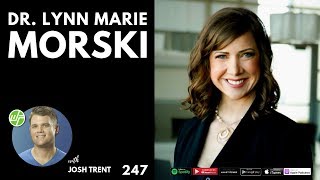
Episode 247 of Wellness Force Radio (YouTube) — host Josh Trent interviews Dr. Lynn Marie Morski about her work "Quit Happens" and the practice of strategic quitting. Core ideas: quitting can be a healthy, strategic act (not the same as giving up); plan quits by identifying misalignment, addressing fears, preparing logistics (finances, relationships, health), then making the quit in a way that preserves relationships; journaling, breathwork, movement and identity work help surface quits; bodily symptoms (anxiety, insomnia, GI issues) can be early signs; sunk-cost fallacy, parental/tribal pressure, and social-media facades create stigma around quitting; strategic quitting is framed as self-care and living your truth. Practical resources mentioned: Quitting by Design (book), quittingbydesign.com, Quit Happens (podcast), Organifi sponsor. Guest facts: Dr. Morski still practices medicine (13 years), has ~ $250k medical school debt, has worked as physician, attorney, law professor, multimedia designer, political delegate (Bernie 2016), and hosts the Quit Happens podcast.
Questions this video answers
Episode 247.
13 years.
About $250,000 (a quarter million dollars).
quittingbydesign.com
Quit Happens ("quit happens" podcast).
Chapters
I'd say think about the end of your life, right? You want to have lived your truth as much of your life as you can. And so many people think that quitting is this dirty word, but to me, settling is the dirty word. If you've settled for less than your truth for your whole life, being on your deathbed is going to give you one feeling. But if you've lived your truth for as much of your life as you can, and like I'm saying, that's why I believe in, in teaching people how to quit, because everybody's just to going, go live your best life. Go live your truth. It may not be that easy. There may be some things you have to quit that are blocking your truth. So do your best to quit those as soon as possible, as soon as they arise, so that you can live as much time in your truth so at the end of your life, you don't have these regrets.
That's Dr. Lynn Marie Morski, and this is episode 247 of Wellness Force Radio, where we discover the physical and emotional intelligence to live life. Well. In this episode, we're talking with my friend, podcaster and physician, Dr. Lynn Marie Morsky. You know, this podcast is going to shake the house. I love Dr. Lynn Marie so much for so many different reasons. She's actually one of the Wellness Force ambassadors that we have on our team. You can learn more about her@wellnessforce.com 247 today. Make sure you go to the show notes. Dig into Dr. Linrie's work. She has done so much in such a short amount of time, and to no surprise, she's mastered this art of quitting. She's the author of Quit Happens, she's a podcast host, and she is the founder of Multiple Things. But really what she does, in a nutshell, is she gives men and women the permission to follow their deepest truth. This is so powerful, this concept of quitting. You know, in our society, quitting is stigmatized, isn't it? It's like, oh, no matter what happens, you have to hustle hard and white knuckle and grind it out, and whatever happens, don't quit. I mean, how many times have we heard that don't quit? But what if it's actually 180 degrees the opposite for certain people to involve strategic quitting into their lives so that they can actually move towards the happiness, the fulfillment, and that peace in their solar plexus and stomach and chest that they really deserve. Well, Dr. Lynn Marie has mastered this art form of quitting, and we're talking about this on the show today, we're talking about her journey as a lifelong quitter, going from physician to attorney to law profess. Now being a podcaster, speaker and a published author, we also explore why quitting can be a beneficial form of self care, why quitting can be self love. We discover what works for each person. We talk about what a strategic quit is and how to use it to your advantage and actually to benefit your mind and body. And we talk about strategic quitting for getting over anxiety and letting go of what other people think. I think you're gonna really love her response when I asked her if she cares about what other people think. Stay tuned for that. We also explore the number one reason why people don't embrace the quit and how quitting and giving up are two very different things. If you are interested in making a strategic pivot or a strategic quit in your life, make sure you reach out to Dr. Lynn Marie Morsky on social on her website through the Wellness Force community. We're talking about this so much more this week and into 2019@wellnessforce.com group. If you're not a VIP member, this is where you get early entry into all these events, like the event we're throwing next year for wellness force that Dr. Linmrie is going to be speaking at. You can join us, be a vip, come into our group and get early access to all these cool things, including free stuff@wellnessforce.com VIP now let's dig in and explore what it really means to do a strategic quit with Dr. Lynne Marie Morsky. This is Wellness Force. I'm Josh Trent, sitting here with the one and only Dr. Lynne Marie Morski. How are you doing today? Dr.
I'm doing great. Very excited.
I've been so looking forward to this. We'll talk about this on the show today in this quit happens exploration. But one interesting thing is that health, health is a big piece of our lives. Yet health is something that's so overlooked and people quit things way before they'll actually pay attention to their health. I want to read a little bit about your bio because we're exploring this like health of emotions, health of the physical body. Today with you at your home at your lovely place here in San Diego, California. People don't know you yet because you haven't been on Wellness Force, but this is what you do in a small way. You've gone from a physician to an attorney to a law professor and a lifelong quitter. I love that. Carving out a successful path by not only knowing when to persevere and when to quit, but more importantly, how to learn from the situations in which quitting was the best option. Her firm belief is that quitting doesn't deserve the stigma it's been given, which I'm so stoked to explore the stigma behind quitting, for it is a key step in finding out what truly works for each person. This is such a great conversation. Start. Thank you for coming on Wellness for Us.
Thank you so much for having me.
I love this part of your book. I have the book here with highlights and notes, and I spent the morning going over it again, and I thought about in my own life, how many times I've quit something and felt shame around it. And that's really what I want to explore with you on the show, is this contrast of mental and physical health and shame. You know, these three components and going in and out of those. This is what I've been looking forward to. But one thing that was really cool is on your homepage of your website, you said, quit until the life you want is yours.
Yes.
Let's start right there. What do you mean by that?
Because you start off with this dream, right? Okay. We want to live this type of life, this. This ideal life, and you're not really sure how to get there. At age 20, who's given a guidebook on how to live this ideal life? It's trial and error, right. And you try something, and it may not be what's going to take you on the path to that ideal life. So once you realize that you've got to quit that redirect, start trying another path. I mean, you never know. People say, well, how do we know the next thing's we quit one thing, the next thing's going to be perfect? You don't. But the process of strategic quitting is that you learn from each of those, okay. What you did and didn't like, so that the next time you make a pivot, hopefully you make a slightly better decision. I mean, life is consistently about trying one thing, maybe not going that direction. So then you go another direction. Maybe you overcorrected. So you go back a little bit. Like it's trial and error, but you have to quit until you finally carve out exactly what that ideal life looks like for you. And then you carve out the path to it. Yeah.
And the carving of the path isn't always so obvious. You've had 20 years of quits. Strategic quits, indeed. And it's really cool, actually, to do a podcast with you because we're friends, I've had rich conversations with you and spent personal time with you. And to know that really you've done so much that I didn't even know of. And I wonder in our lives, like, how many people we know in our tight circle that have achieved so much, that have done so much, but we don't know it. Because just looking at someone or just talking to someone, we never know how many quits they've actually encountered. This, this quitting, this strategic quitting. What is a strategic quit? For people that don't know, a strategic.
Quit is any quit that you have consciously planned out in the following way. So you've realized that something wasn't working for you. You tuned into your intuition. You were like, okay, this is not in line with my passions or my purpose, or it's causing me a lot of friction. And then you dial down, okay, maybe I thought it was my job, but I'm going to dial down. Is it the job or is it just the commute? Or is it maybe just my co workers or some way I'm doing some part of the job? So you've got. Okay, that's exactly the part that needs to be quit. Cause you don't have to quit more than you need to. And then if there are fears that come with that quit, the next step in strategic quitting is to address those fears. And then following that, you should prepare the logistics. If it's a quit that's going to involve some financial changes, you better make sure that your finances are in order. And most quits, it's advantageous to prepare your relationships and your health before going into them. And then the last step in the strategic quitting process is to make the quit. If it's going to involve other people, make the quit in the way that preserves relationships and burns the fewest bridges. Mm.
Okay, so there's preparation before the quit. Cause we've all had that moment at some job or maybe in a relationship where we say, you know what? F this, I quit. And that's not. That's not what we're talking about today in the show.
Right?
There's. There's other ways to quit that are more strategic, that are healthier for your mind and body. As we explore this exploration of what it's like to be in this physical meat suit. Oh, my God, Lynn Marie. This physical meat suit. If we're not clear in our meat suit, that's gonna affect the way that we quit. Let's talk about health real quick before we dive into strategic quitting.
Absolutely.
You're a huge health advocate.
I am.
I actually made some notes looking at your LinkedIn, so. Lynn Marie's LinkedIn. This is so cool. Started in 97 as a multimedia designer, living one of the most quit heavy pivot and play lives I've ever seen or read. Then you went on to be a sports medicine physician, teladoc physician, urgent care physician, then to teaching law at Thomas Jefferson School, being a project manager for a media company, then onto the Veterans Administration to practice medicine. Wow. 20 years of strategic quitting. But health seems to play a huge role in that.
Totally.
What is that for you? How do you, how do you practice health for yourself? Let's go there first.
For me, having a basis in strategic quitting has been key to keeping my level of health. I mean, to this day. For example, this morning, I realized something that I've been doing that I thought was helpful for my health, I realized is probably not. I've been doing intermittent fasting, and I read some more articles because I'm getting some. I'm having a little more weight gain. And I was like, what's going on? I'm barely eating. And then I'm like, look at this. Intermittent fasting in women, not necessarily the way to go. So I'm, I'm probably going to strategically quit intermittent fasting. And that's the process of realizing when something isn't right with your health. There's probably something that you're doing that may. I mean, it could be something you're not doing, but very often it's something you are doing that maybe is, is not in line with your DNA or your, you know, your specific lifestyle. And so you have to dial back and realize, okay, what's causing these health symptoms.
Yeah.
Because you know what, you are a big advocate of not just throwing medication at things. Right. And you and I, even though I'm a western trained doctor, I'm much more a fan of treating the cause of disease instead of the symptoms. And that's the cause of so many diseases is this friction or this discomfort or this malalignment with something in your life. And so for me, my own health, whenever I notice a health symptom, the first thing I think isn't, like, what's wrong with that organ system. The first thing I think is what's out of alignment with my life that may be manifesting itself in that organ system having some dysfunction.
I loved how you said, what's deeper? That's manifesting a symptom on the top because there's a window that we see when it comes to physical or emotional. And I think if that window is cloudy from a physical perspective, it's really challenging to actually feel your emotions.
Yes.
You know, if you're trying to look within and you can't see through the dirt and the soot on the window, how are you supposed to plan a strategic quit? So let's go more into your health behaviors because I went to dinner with you a while ago. You said you have like sometimes a five or a four hour morning routine, which I was stoked to learn that you've, that you've implemented a few pieces of the M21. Tell us about your morning routine. How has that evolved for you as a medical doctor and someone that leads honestly, like a really achievement based life. What does that look like for you now?
Well, as I think I was telling you at the time, and if I haven't, I'll tell you now. A lot of why I maybe overemphasize my morning routine in comparison to the rest of my day is because I spent so many years out of alignment. Medical school, residency, fellowship with pre med all rolled in. That was a decade of study and a decade of study in a field that is not necessarily in line with my purpose and passions. The way that medicine is practiced, like we were talking about, you know, medication or having to see a patient every 15 minutes or having a 30 hour work shift, which we all know is, I mean cutting out sleep, like that is terrible for everything. Like how can you be a good doctor when you are a shell of a human because you haven't slept in days, you, you have the cognition of somebody who's got a blood alcohol level of like, you know, one point something.
You're essentially walking around drunk when you're sleep deprived.
Yeah, absolutely. And so to be out of alignment and to be so out of touch with my own health because I, I just was like, head down, go forward. You know, this is, I'm a different person today. Like, and that's why this strategic quitting thing is so important for me to share as a message because I went through so many years of having no idea that I should have been quitting a lot of things because it was like, okay, I on the prize, I'm going to be a sports medicine to charge through until this happens. And that that's left a lot of trauma. And I think that's why I spend so much time in this morning routine because I'm just making up for those years. And you know, I would like to live a long Life. I've got great DNA. My grandparents were over 100, but I know that I did a lot of stress. That's really nice. Over 100.
Yeah.
Yeah. So that's why I, you know, I get up and I make my bed and I drink the water and I do breath work and I do some of the box breathing and a little bit of my own style of meditation. I'm still working on finding a meditation style that really works for me. I'm a musician, and so I try to, like, put on a music, like a piece of music that I really find either inspiring or just relaxing. And then I'll try to watch my breath to that. And then I go do different types of workouts. But I always, almost always take a walk through my neighborhood. I live in North Park, San Diego. I walk all the way to Balboa park, which is where you and I, the first day you came over.
That's right.
We went all the way. Yeah. Because Josh is like, hey, I just met you. Let's go take a walk.
I wanted to go see the bocce courts. Yes. To appeal to my Sicilian side. Yeah.
So, yeah, I walk every day to the bocce courts. And that gives me so much gratitude. So it's kind of my walking meditation. I mean, it's San Diego. I'm out in the sun, I'm getting my vitamin D, my sun gazing for the day, and I'm just bathed in gratitude because I grew up in the Midwest where this is not an option to be doing in the middle of like December. And so I take, you know, an hour long walk and then I come back and I try to sit in my little personal infrared sauna. Now all of a sudden, all your guests are thinking, oh, she's like a millionaire and she' got this big personal infrared sauna. No, it is like a personal thing. It was like 100 something bucks that you zip yourself into. And it sits in a, like, very tiny plastic.
It almost looks like you're on the inside of like a black ice cube with your head popping out. That's kind of what it looks like. Well, thank you for telling us about that. Because, you know, although elaborate, it's something that you've come to understand that's best for you over time.
Yeah.
And I love that you said, oh, from my past when I didn't take care of myself. I'm paying for it now. And I think this karmic burn is kind of weaved into your work. There's a lot of karma in your work. And I think about strategic quitting. People that feel shame around, oh, I don't want to quit. One of the coolest things in your book, one of the things that I have bookmarked here is wasted time. This is actually where I think a great jumping off point would be. I want to read this from chapter four. Let's assume for sake of argument that most relationships have the end goal of marriage. Therefore, dating is essentially a process of finding someone with whom you would want to spend the rest of your life with. Most pre marriage relationships are generally the period of time where you test out whether a person is someone with whom you feel you would be compatible in the long term. Relationship with ourself is the same thing as relationship with a man or a woman. When we look at this shame around, oh my gosh, I've invested all this time, I can't quit, I can't get out of this because look what I've poured into it. Why is that so detrimental to people that actually want to perform a strategic quit?
It's this sunk cost fallacy most of the time. And that's the notion where you have the thought of, okay, I've already dedicated this much time or this much money or this much energy or effort to a thing, so I have to, you know, somehow justify that and make that worthwhile by staying in it. Which if you realize just on like give you. Giving you. The most basic example is food. If you go to some restaurant and you have like sushi or something that you're not going to bring home tomorrow, you know, necessarily and have leftovers, you order $50 worth of sushi, you're halfway through, you feel really stuffed, and you've already spent the money finishing the sushi, you do not get the money back. So if you leave the sushi there, you've spent $50. If you eat the rest of the Sushi, you spend $50. Like it is a sunk cost. You do not get back by fin. And finishing it will just make you ill. And that's what we do so many times in life is think like, oh, but I've already dedicated so many years to this relationship. I'm like, well, if it's not working in the first three years, how is it suddenly going to be worth your time to spend another three years? If it's not functional now, and if you don't do something to turn it around, counseling or whatever, why would you dedicate more years to it? Why would you not say, man, I've already tolerated this many years of a situation that isn't right. I owe it to myself to pivot and find something that is better.
Don't you think that a lot of people would play devil's advocate question to you, though? Because how couldn't it not improve in the fourth year if somebody really put their heart into it, you know, how do we know that it's not going to change in the future?
Well, that's absolutely true. And that's why I said the caveat there is without making some kind of improvement or change, you know, if you go three years and you've already done the counseling and you know that, okay, we've made our best effort to improve this relationship and we're still at this. Maybe there's a fundamental, you know, difference between the two of you. If you've already tried, you know, same thing with your job. That's why in strategic quitting, I say, don't up and quit your job. Take a really hard look at what is wrong in the job. And if you can't fix that, then it's probably time to quit.
Also, one of the things you said that I loved is one of my favorite quits of all time, quit being so serious. This actually is the dichotomy between the magnitude of being in a relationship with yourself that's aligned with your true north or someone else, and then on the other side, just taking a damn deep breath and realizing that we don't have to be so serious all the time. There's other strategic quits and ways in which we go about them that I want to talk to you about later in the show. But right now, like, this aspect of not being so serious, that's a big quit for most people. We're a very masculine driven, ego driven, production driven society. How do we get out of the why so serious mode?
You have to realize that what you enjoy as a person is probably what other people enjoy. And so even as a podcaster, I've had people say to me, like, you know, sometimes it sounds like you're reading. You know, this is back in the early, early days. They're like, just be yourself. You know, I like it better when you, I can tell you're just like, you just burst out laughing or you're just having a good time. And I thought, you know what? That's a podcast I like to listen to too, is when people are just themselves and having a good time. And I had a guest whose episode's coming up. His name's Jason Goldberg. He has an entire thing about playful prosperity. He's a comedian, but he's so rich with knowledge, but the way he gives his knowledge is through these hilarious kind of, like, wordplay. And I remember things that he's told me so much more than all the other kind of, like, solem gurus that have, you know, given advice over the years. So that's what I. I realize. And what other people I think could benefit from realizing is what do you enjoy listening to? I mean, maybe if you enjoy really solemn, you know, somber advice, then. Then that's. That's your jam. But I think a whole lot of us, society is a little rough right now. Don't we just need to, like, laugh and have a good time and be ourselves? And, like, I mean, it's going to happen at some point in this podcast. I'm going to uproariously laugh. It's going to happen. The mic is going to peak all over the place because that's just my laughter. Like, if you watch the intro on Facebook for this, where Josh and I are, like, trying to set up this photo at. Or organifi. At Drew's. Drew Canole's book signing, like, I'm laughing hysterically. And that's, like, where I'm in my flow state is when I'm laughing that much. And I think a lot of people, if they let themselves get to that point, would realize they feel the same way.
I love talking to you so much because you have this hardcore academia background, but you also operate in the spiritual flow. And that's why I really love being around you and your energy and having conversations with you, because I felt that from you ever since I met you. And I think that's why people can connect with you. And I think that's why this book is going to have so much success, is because this is not about just the analytical side of life. This is about taking a deeper emotional inventory to what actually serves you. And I think what holds people back from that is fear. You talk about fear so much in your book. What is it around the quit that brings up the fear? Fear bubbles as soon as people start thinking about health, wealth, relationships, quitting in either three of those categories. What is that fear aspect?
There are a lot of reasons behind it. One is fear of the unknown. We all have that. There's nothing wrong with you. If you have fear of the unknown. That's like an evolutionarily built in fear. Right. What's around this corner? Is it a lion?
Yeah. Fear can keep us alive.
Exactly.
Exactly.
So don't be ashamed if you have that fear. That's when the analytical part come in to your rescue if you're afraid, like, okay, I'm going to make this leap. What if I totally fail? The next thing. Take a look at the evidence. You always say, gather the evidence, right? Look back in your own life. Think about how many times you have made a leap and it's worked. Or if it didn't work that well, you still used your resilience to pull yourself up and find some way to, you know, carve out a little path that way. That should make it slightly less of a fearful situation, right? Look at the fact that trust yourself, trust the universe. That's another big one that, you know, the universe has your back if you're willing to let it, right? So that unknown is a big fear. And then another fear, which is, for me, a lot easier to conquer. But I think another. It's a place where I can really help other people is the fear of what other people will think of their quit. And if you're quitting something, that may be what seems like a dream job to other people, that's a. That's a big one. Like, or you're quitting medicine or law. Like, if you're quitting medicine, so many people are gonna be like, but didn't you go in it to help people? Well, yeah, that may be why I went in, but there may also be a lot of other reasons why people go into medicine or law or anything that serves other people. But that can also take a toll on the person. And then having that societal pressure of, like, why would you ever quit this thing? You have to stop and realize the people who are going to judge you, first off, aren't you. They aren't in your shoes, they're not in your head, they're not living your life. So you are the one who has to live the life. Why should you let what somebody else will think about you shape your existence? And then secondly, they're going to think about it for, like, three seconds, and then they're going to go back to their own Instagram feed like, it's so true.
And I've fallen into this trap. We're all human beings while we're spiritual beings having human experience. And in my human experience, I get caught up and trapped sometimes in caring so much about what other people will think. You know, like, when I first started the podcast, it was like a year of putting out my best work. Looking back on it now, like, cringing sometimes when I listen to it, but just having compassion and. And having respect and love and admiration for, like, the fact that we choose to jump off the ledge in the first place is so admirable.
Yeah.
Someone who's in a position where. Like yours. You were a doctor for a long time. How many years did you practice?
I still am. I still practice medicine.
You're still practicing?
13 years.
13 years. So when it was full time and you weren't pivoting towards strategic quitting and your brand quit happens, there was probably a moment or two or ten where you felt inside the quit was bubbling up, yet there was that fear that quelled it. Can you take us to there?
I can. And I have to be completely honest. One of my superpowers, if there are any in this world, is that I've never cared what somebody else thought about my quit. Like, because I have always realized, you know, we're all wired differently. Right. There are plenty of things that I'm anxious about in a normal day that other people aren't. Like, almost every time I walk to my car, I think it's go. That is a strange thing to be worried about. But one thing I'm never worried about is what, what people are going to think of my quits. And I give a lot of credit to my parents because whenever I would bring up that I wanted to do a quit, they'd be like, all right, you know, whatever makes you happy. They were completely supportive, which is a huge foundation to have. You know, we all have our troubles with our family members, et cetera. But one thing that I would say, both my mom and my dad, they would say, okay, we want you to be happy. Go ahead. And so if my, if the two people who knew me best and were closest to me weren't questioning it, I didn't really care what, you know, Joe Schmoe walking down the street thought about it because I've always had an analytical side to realize he's not in my shoes, he's not me living this life. He doesn't have my background, he doesn't have my DNA, my makeup, none of these things. So it just wasn't ever a fear based thing. But what did ever stop me is the finances, because there are the fears that are more of an existential type, like we were talking about. And then like you referred to, you've got to prepare logistics for a quit. And I'm a quarter million dollars in debt for medical school. So you cannot just up and quit a lot of types of medical practices. You know, I couldn't just go to Bali and do the digital nomad thing like the US Government would come knocking very quickly. And so for me, it was more of the concrete logistics that would keep me from making any kind of strategic or unstrategic quit.
I would say finance is probably the biggest weight existentially, emotionally, which then shows up physically, since we're exploring that intersection. And I feel like the financial aspect is probably the number one reason why people don't embrace the quit. Embracing the quit is a strategy of its own. Talk to us about embracing the quit.
Yeah. What's funny is that if you are out there and you have made a giant quit in your life, you will understand when I say quitting is a drug, because once you have done it right, it is a feeling like no other. You know, I have quit so many things, and, like, the minute you make that quit and when it's done well, you feel this weight that is just lifted off of you, and that's how you know it's right. And so even I tell people, before you make a quit, tell yourself you're going to make the quit. And if you feel amazing, that's probably a quit you should make. If you feel sudden, like you miss the thing, then maybe reevaluate. Maybe that's not the quit to make. But make that quit in your head first long before you actually make it in the world. And that'll give you a lot of information.
The phrase everything happens for a reason, you don't like that. You actually felt that it was insulting. And I think that when some people kind of go into that inventory process to feel if their quit is right, there could be some forces against them that would say, well, if it was meant to be, then I'd have a sign that it was meant to be? If everything happens for a reason, which is essentially the root of my question, then why wouldn't I receive a guidepost or a sign or something that would actually allow me to know that the quit is right?
I think you are receiving those, and you may be missing them. A lot of times, people do not recognize the signs that they need to make a quit. And I. That is not a judgment call. That is me for 20 years, not realizing the signs. That's why this mission is so important to me, because as. As I've told many people before, there was a point at which I was in fellowship, so that's my last year of training, and I started taking beta blocker medication because my heart was racing so much when I would see patients, and I was just like, man, my heart's too fast. Better take this medication to slow down my Heart. I didn't think for a while, hey, maybe this way of seeing patients is actually making you very anxious to the point where your heart can't even take it. And it's like beating out of control. It took months of me being on beta blockers and real like to finally realize, oh, this is not a heart problem. This is an I need to quit problem. And as a doctor, it took me so many years. I mean, I had a panic attack, went to the er. Nobody knew that was anxiety. I was in medical school. I should have at least, like, somebody should have thought about this. So there is absolutely no judgment for people who have not yet recognized their symptoms. I was there for so many years.
Yeah, you'd invested so much, so much.
And that's, that's another big thing. Like you were saying, sometimes it's really hard to take a look. Look clearly, because you are so in the thick of a thing, you know, going towards my quote unquote dream job at the time of being a sports medicine doctor. It was just this light at the end of the tunnel. And in that tunnel, I was not going to evaluate the tunnel. I was like, no, no, just charging toward the light. And that's what I tell people, man, if you're in this dark tunnel with a very dim light and the tunnel is very long, maybe reevaluate if it's time to turn around.
Yeah.
Is it worth it?
And I love that you said that because we get to allow space for the reevaluation, for the understanding if the quit is right for us. And I feel like to circle back to that question, people do throw around the phrase everything happens for a reason. And your book, you talked about, well, how do you explain people being born with cancer then? Do you think that that happened for a reason? Talk about that a little bit and frame that around quitting.
Well, and that's the, that's the thing is I say, like, often everything happens for a reason is kind of, you know, if it works for you as a way to not beat yourself up, use it.
Beautiful.
Right? You know, it's just that, like, and I just give the caveat in the book is that like the minute you say that to somebody else who may be super analytical, they're like, well, then why are there starving children and people dying in Africa? You know, so it's not a catch all phrase that solves all things, but I would say like half of this. Half what? Probably 90 of all this is a mental game, right? And so whatever you need to tell yourself that makes you not regret the times that you spent. If everything happens for a reason helps you not regret. Please do. Because in my own path, like, am I currently a multimedia designer? No.
No.
I don't actively practice law. I'm not a co founder of a startup. Anything that I have been at any of these points. Right. But I wouldn't return any of them because it led me to this path.
Yeah.
It was all necessary for me to have examples and experience that I can now pass on to others.
I can't wait to go on your podcast. So I'm gonna. I. Lynn Marie graciously asked me to be a guest on her show and I'm just so excited to talk about quitting because it's on the top of everyone's mind at some point in their life. I would say, you know, whether you follow the cellular return, every seven years, our bodies turn over cells. I feel like every five to seven years, maybe even less now with the millennial attention span, everyone is going to consider a major quit in their life three, five or seven years into the process. But yet again, we have these forces that are going through an evolution. And the forces are, you're not allowed to do that because you invested time. You're not allowed to do that because what will people think?
Think.
I love that you said, I don't really care if people think that's one of my superpowers. That's probably not one of my superpowers. But there is a third component, and that is setting yourself up for the recipes to be in place so that you can actually kind of cook out this strategic quit. What are the other pieces of the recipe? You talked about finance, getting yourself prepared financially. Obviously that means creating somewhat of a Runway so that when you make the quit, you're not just totally stuck at the bottom of Maslow's triangle. But what are the other pieces of the recipe for a strategic quit?
And two other big pieces are preparing your health and your relationships. We'll start with relationships because that's the slightly easier one. You know how much easier it's going to be to make a transition, especially if we're talking a job transition. You know, maybe you are in a day job and then you're going to try a side hustle. Or maybe you're going to quit that day job and you're just going to have to hustle like crazy to make up that income. If your family, and I mean the people who are surrounding you, like in your household, your partner, whoever is there, if you have that, if they are in support of your quit. They are going to make things so much easier. They can help out. Okay, we're going to, to we'll do the dishes because, you know, mom or whoever needs to, you know, go work on her website or whatever as opposed to if they're not on board. They could be so detrimental to your quit because you're already stressed, because it's already going to be a rough time. Quitting is not easy and I do not for a second pretend that it is. That's why I wrote the book, to make it easier. But it is not simple. And if people are like, well, you don't give me any time anymore. You know, the kids want to hang out with you, but they don't have time. If they don't understand and aren't on board with your quit, they can make it significantly more difficult. So getting them on board is huge.
Can we pause there just for a moment? Because I think about our parents are operating in this life as the consciousness they were gifted from their parents and so no one's wrong. I love my mom and dad. They did the best they could and they will continue to do so. And I do believe that everyone is doing the best they can. I'm curious how you see parental influence on the quit. Let's talk about that a little bit deeper because I think that to the degree that a parent is conscious, that's the way they're either going to support or go against someone's heartfelt quit.
Yes, and you just brought up one of my favorite things to talk about. But it is one of the biggest friction areas though, when I put it out there, people really resonated with it, is that sometimes you have to quit caring what your family thinks. And sometimes you have to quit whole members of your family, which is a very controversial topic. But I believe, and I'm a person who has no children, I will state that. But I believe that parents job is to bring children into the world and give them their best life. It is not to bring children in the world to serve them, to live out the lives that they think they should have. And so if as a parent, your whole goal is to have a child who's living to their most fulfilled life, then sure, feel free to give advice about their quits if you think that your advice is helpful. But as Jason, as I was just referring to, he says most people who do that are either protecting or projecting. And neither of those are your problems. And I love that because it's true. Like your parents may just be projecting their own fears because they grew up in a totally different generation or they may be trying to protect you. But if you're an adult, you know, you can say thank you, I appreciate that advice. Please support me despite the fact I'm not going to take it. And if they continue to support you, great. And I always say if they don't, then they don't have your best interest in mind. And that's not part of the five people you get to surround yourself with that we always talk about. Right. You know that you are the sum of the five people. Those five people don't have to include your family. You know, you can keep them and appreciate them for what they've given you and you can have a certain type of relationship. But if they're not going to support your quit, then sure, don't discuss it with them.
Oh, Lynn Marie, I love this spot of the conversation because parents, they shape us from, you know, conception to seven. That's when all of our brain matter is most malleable. That's when we're learning all of our habits for life. Yet the parents that they were when we were kids, that in some way has shaped us as an adult and our ability to do strategic quits, they're not the same now either because they're going on their evolution. Maybe, maybe parents have had strategic qu in their lives. Yet in this current moment, if someone's listening and they're kind of having that quit bubble up inside them, that's what I felt a bunch when reading your book. I think you guys are going to love her book, by the way. Let's pause here. Go to wellnessforce.com radio, pick up a copy of Quitting by Design right now. Okay, let's come back to the show. I think about this paradigm of parents having consciousness evolution of their own. If someone's feeling that bubbling quit and maybe they're so close with their mom or dad, how do they approach that conversation of having the quit even though they're an adult with their parents. Right. That they're holding so close to them?
I would start with always showing the gratitude for your parents because they have done so many things that they have to get you to this point and then couch it as I'm going to make this quit. I am very likely going to make this quit. I would love to discuss it with you. I would love to maybe have your feedback on it. But I want you to know that I'm, you know, depending on if you're 99%, if you're 100% sure that you're going to make it. You're like, but I just value you enough that I want you involved in the process. I want you to know about. I don't want to keep anything from you. And that's, I think that's the best way to go about it is to say, this isn't necessarily up for debate. I'm not looking for you to talk me out of it. I'm just looking to share this with you.
I love that you're almost priming them for the quit that you're about to make. And the same way that we approach parents that we're possibly close with definitely could be with a spouse. Right. Or a girlfriend or boyfriend. Would that conversation be different or would it be kind of the same?
It's definitely different if it's a spouse or somebody within your family unit. Because if you are going to quit a job that may have a distinct effect right on your spouse.
Who's gonna buy the nitrate free bacon tomorrow? I don't know.
Exactly. And so that's why I was saying, you know, having your relationship, having your partner on board is huge because they may feel totally abandoned if you're like, I'm just gonna up and quit my job tomorrow. Well, that's not, that's not fair to them at all. You know, quitting is, is a selfish act, but you cannot be acting selfishly all the time. You know, when there's somebody else that.
Again, that was so rich. I love that.
Quitting is a selfish act, but you cannot be acting selfishly all the time.
Can we let that land for a moment? Because. Because the parallel with that statement is it's actually an act of generosity because you're letting go of something that doesn't serve you. Yeah, like that's what I felt in this moment. How does generosity play into your work? Being generous to yourself, being generous to others with your gift? Is that part of the quit or is that a different description?
Well, I feel as though the generosity that I have in the quitting realm is giving people permission because so many people feel stuck in some area and like they cannot move. And, and I feel just by sharing my own story as openly as I possibly can, that gives other people permission to say, man, if Lynne Murray, she's a quarter million in debt and she can make this quit or that quit. And then I have the podcast where I give other people examples of people they may be looking up to who also made some really tough quits, maybe even divorces or quits that involve other people.
Wait till you get to my quits.
I cannot wait. I can't. I cannot wait. I cannot wait. Yeah, but I think that it's the, the one of more generous things that a quitter can do is share their quits so that other people feel like, hey, there shouldn't be, there's no stigma. This other person just quit and they're doing better. I mean, think about if, you know, if quitters never win is stuck in your head somewhere. Think about Steve Jobs, Mark Zuckerberg, Michael Jordan. These are all very successful people that have had a ton of very public quits. They can do it, you can do it. And so that's kind of where the generosity comes up for me, is just sharing that message and freeing people.
So one thing that we all can do is quit the excuses that we can't eat healthy foods. We know that micronutrients that are delivered way deep down into our mitochondria in our cells is actually the powerhouse of how we have all energy throughout the day. Well, we can do this. We can do this with Organifi, who is totally been a complete part of my life three times a day. The green, the red, the gold juice. I say totally because this is total, this is comprehensive. This is a system. It's not just supplementing with juice powder. This is a superfood, a slow dried, organic, non GMO vegan powder that you can have to fill your cells deep in those mitochondria with fuel. With the proper fuel. Listen, what happens to your car if it's a gasoline car and you put diesel in it? You're probably going to end up on the side of the freeway and in the rain. It's not going to be a good day.
So.
So let's let go of giving ourselves any excuses that we cannot have these delicious and fulfilling micronutrient foods delivered to our system. You can do this@organifi.com WellnessForce to get the green juice with the ashwagandha, to get the red juice with the cordyceps and also to get the gold with the calming lemon balm so you can sleep soundly like a baby. Well actually a baby cries at night, so like an adult baby. Anyways, go to Organifi.com WellnessForce Enter code WellnessForce. You get 20% off. 20% off is a huge discount. You won't find that any greater anywhere else. Wellness Force is the code for 20% off. Now let's get back to quitting or strategic quitting with Dr. Lynn Marie Morsky. I love the branding of quit Happens. I'm not going to lie. I'll tell you, when I first saw it, I was like, what does she mean, quit? Because I had my previous programming. So by experiencing your work and by getting to know you, you, I've allowed myself to up level because I'm like, oh, I'm reframing this word. Quit. Quit has such a stigma. Let's talk about the stigma. Let's go into the actual aspect of why people that are super successful say, never quit, quitters never win. I think it's because they've been in that alpha style brain where they're doing, they're in the masculine, they're charging and that gets results. But what about our longevity and quality of life?
Exactly.
And the way that we experience the process of growth and actually moving forward? I look at guys like Dan Pena, who's been on a London reaction, real complete. Right. I would not want to be in the room with this guy yet. He makes millions and millions of dollars. Let's go to this stigma around quitting. Why do you think this narrative around quitting has been so hard, charging and almost in a way, shaming to people?
Yes, you. One thing that you brought up is absolutely one of the hugest reasons, is that we want people to suffer like we suffered. Right. That's a huge thing in medicine. You know, why are the residents made to work 30 hours in a row? Oh, because when I was growing up, you know, I had to work 30 hours in a row in the snow, up, up, you know, barefoot, seven miles both directions, you know, and, and people want to put that out there. And they also want a medal of honor for their own stick to itiveness. But like you said, at the end of their life, on their deathbed, and they're looking back to their, oh, I've spent 50 years crawling up this ladder and now I'm, you know, VP at this bank or whatever it is. Are you happy? Is that. Are you happy that you stuck with it and you've got, you've got a plaque on the wall, but is that. Were you happy? Like, that's one of the things I think people are so unhappy in their choices and they want some kind of badge of honor from having stayed unhappy and stuck to a thing when that's not what. Luckily that this new generation realizes that's. That's not a badge of honor. That's kind of ridiculous. Why didn't you evolve? Why is the, the person who you were when you took that job should not be the person you are 40 years later? Why do they want to have the same job? You know, like, luckily the paradigm is shifting there. But I think another huge thing is that people confuse quitting and giving up. And they are very different. If I'm on my ninth rep at the gym and I'm like, oh, this is getting a little hard and I don't do the 9th rep or the 10th rep, what I'm supposed to do, that's giving up. You know, something gets a little hard, you give up. Strategic quitting is when you realize something is completely out of line with you and your passion and your purpose, and it may be even affecting your health. And then you quit. And all those successful people have probably made plenty of quits, but they called them pivots.
Yeah.
Or something much more, you know, PC.
Sure.
And then nobody notices. And then they get to themselves, say, quitters never win, winners never quit. And what's so funny is that somebody, there's this big meme out with this Michael Jordan quote about never quitting. He definitely, you know, we all know he quit the NBA, he went to baseball, he quit baseball, he went back.
To the NBA, the public limelight.
Right?
Yeah.
And yet he has even had those statements come out. And so I think what people, the sentiment they're trying to get out when they make that is don't give up when things get hard. Hard. But unfortunately, the vernacular they use is never quit. And then it gives quitting this stigma. And so that's why I want to destigmatize quitting. Because quitting, call it pivoting, call it evolving, call it transforming. But you need to quit the thing that isn't working to go on to the thing it is.
And I love right below the quitting is really a warm, loving care for yourself that's actually around self love, around self love. Like the self love aspect of quitting, they're. They're weaved together. Quitting is permission, like you said earlier. And I love that. It's like somebody giving you a golden ticket. I'm thinking about Willy Wonka and the Chocolate Factory. Imagine, you know, somebody goes their whole life and then all of a sudden you come around, you're like, here's actually the golden ticket and you're allowed to quit.
Yeah.
Like it's okay to quit right now because you're worth it. You. And what happens in that moment is people might reject it. So to the degree that someone has self love, self care, self worth inside of them, their practices that surround that they may not be able to receive the message of quitting when the universe gives it to them. Did you ever have a moment like that? Because it seems like you're a pretty fantastic quitter, but did you ever have a moment where you saw the signs come in and you're like, you know what? No, I'm not ready. Either from a place of self love or just awareness that you rejected the message of the quit?
Yeah, there have been times when I have delayed a quit when I'm sure signs had popped up because I thought, okay, no, I'm supposed to be here for this certain reason. And it took the self love practice of, of writing down my ideal day at some point to realize, okay, this is what I truly want in life. And this thing that I'm sticking with despite all these signs, like at this point I remember thinking, like I tell everybody about quitting, why am I still stuck in this thing that if I were my own client I would be like, get out that thing. You know. But when I finally did, you know, and I know you're a big advocate of putting pen to paper. When I finally journaled and put some pen to paper, the things that came out were like, oh, that's my ideal day. Well, it looks nothing like bold. Both what I'm currently doing and it also doesn't look like the reason that I. So the reason I'm currently staying in the situation is to get this other job. That job is also not in my ideal day. So why am I struggling? Like quit, quit, quit. So it. But you're right, it takes the self love to realize I need to take some time and do that emotional inventory you talk about. Get some silence. Yeah, look, about what, think about what you really want in life and whether or not the things that you're currently doing are going to get you to there.
Take us to one moment then where you kind of resisted the quit. What was it?
It? I was in that, that media job that you referred to. I was working in social media for nonpartisan political campaigns. And I was doing that on top of doctoring and on top of writing the book. And this is right before I started the podcast. So I had three. I mean I was just going non stop and you know, there was. I was not great at the job that I was doing. It was in social media and I was brand new to social media. So I was very happy to learn it. But you know, it was a whole new ball of wax for. I mean I did medicine, I did law. There was like the amount of space in my brain was, was wearing down and it was just Bit of a struggle. And I'm like, no, no, no. Okay. If I stick with this, maybe I could get hired by this other nonpartisan election reform organization. I'm like, hold it. You want to go talk to people about quitting and you want to have this certain lifestyle where you get to coach and speak and podcast and you're trying to do this job so you can get another, like, 40 hour a week job. That doesn't make any sense. And I had to stop and pull the brakes. And that was because I sat down and I wrote out the ideal day. And it. The ideal day had me working from home, doing podcasts and all this stuff. It didn't have me going. As much as I wanted to do election reform, I now have it as a side, you know, as a pastime, as a not. I don't want to say hobby, but it's something I do on the side.
Yeah.
As a passion project and not my main thing, but I struggled with that. Quit for a bit because I had not yet realized, no, this is not in line with my true ideal life. Wow.
And you're also kind of a quasi movie star because in your political job, you were actually on a very famous show. Just tell people really quickly. Lynn Marie's face was, like, plastered over millions of TV sets and computer screens for, like, two seconds. Tell us about that real quick.
I wish it were only two seconds.
Oh, it was longer than two seconds.
I mean, it might have been a full 15 seconds of fame, but yeah, I was a Bernie Sanders delegate in 2016 and at the Democratic National Convention. And this, you know, there's some quits around this too, you know, because you cannot go through this thing that I'm going to just describe without having some thoughts and checking with your intuition. But it was a very stressful time. And the Bernie people, and I love you all to death, but they are a very fiery, fiery crowd. And there was so much anger at that convention. You know, Clinton was going to be nominated and all the Bernie people, like, almost half the place was Bernie people because it was very closely divided. And the California delegation was very riled up. And so the TV cameras were always on us. And when Bernie came out to talk, I got both very proud because here's Bernie, he's about to talk to all these people. And also, like, a Clinton and a Bernie delegate next to me broke out in a fight. And that was just like, too much anger. And so I just started bawling. And a camera from, I'm guessing MSNBC caught it. And then that feed went everywhere. So I was on the Daily show crying and Samantha Bee and Larry Wilmore in the Today show and Saturday Night Live. And then recently somebody told me I was in Michael Moore's Fahrenheit 11 9, crying some more.
Wow.
Yeah. But that made me realize, okay, hey, if I'm driven to the point of tears on national television, maybe doing this kind of progressive work is not my jam. And that's when I moved to the nonpartisan space. Because in the nonpartisan space, you. You didn't get super fired, crazy up about one person or one thing. You just got fired up about your right to vote.
Yeah.
So I made that transition.
Oh, my gosh. And we'll definitely link this in the show notes. The clip, it was Trevor Noah show. Right. So we'll link this in the show notes because it just. It's a testament to experiencing kind of the undulations of the process of, quote, quitting. There. Your face was. It kind of like your face on the video describes the undulations of quitting just by, like, what was actually going on there. It's so interesting. Like, we talked about signs earlier in our conversation, and there's been like, a garbage truck outside making noise. And I'm thinking about the process of emotional inventory, putting pen to paper, essentially. What are we doing? We're getting rid of the trash that's in our brain now. We're also cultivating what our soul's trying to tell us. Whatever messages really are aligned with where we're getting, where we're going to actually choose to go. And this process of journaling, it's so monumental for so many people. That's why we put it in the M21 guide. I think it's why you talk about it in your work so much. Let's go to the journaling practice for strategic quitting. When someone is going through that first, second, third stage of quitting, maybe they've already had the conversation with their spouse, they've had the inventory with themselves. What does that journaling practice look like for a strategic quitter quit?
Well, let me back. I'll back up a little bit to the beginning. If you don't know what you need to quit, but you feel this sense of discontent, there's just some friction, or maybe there's just something more for you in life. That's where I think journaling is really powerful, because try to, at the end of your day, look back and say, where did. All of a sudden I feel my stomach sink? Where did I feel my heart race? Where did I feel excitement? Because you may be missing out on, you know, don't just write down the negatives. That may be things that need to be quit. But on the flip side, say you're quitting a job job. Then. Then the things that maybe lit you up are possible paths of where you could turn to once you've quit this other job. And so I think that's where journaling becomes crucial. And then use it, like you said, to journal about what fears are coming up. You know, how do we specifically address those? Because you may just have, like, you said, I'm gonna quit. And then this wall of fear hits you, but you're not sure how to address it because you're not sure where they're coming from. So that's when you're like, okay, is it a fear of what other people think? Is it just the fear that, I don't know what the. What's next? Or is it specifically like, oh, I'm afraid I won't pay my rent? Like, there are definitely different ways you can attack those, but you have to be able to identify them first.
I love this contrast of rational fear. Like, hey, I need food, I need to, like, wear clothes so I don't freeze, and I need to have a roof over my head. Those are, like, rational fears that deserve respect and deserve attention. But the irrational fears in this journaling process, you know, the trash compactor being emptied, and also the gems coming up from our soul when we're writing down the rational and the irrational, don't you feel like that's where we can get clarity on the steps to take a quit?
Totally 100. That's exactly why you do it. You're like, okay, this. I'm having this emotion in this context. All right, this is an unpleasant emotion. Let's. Let's whittle down why I'm having it. Let's overcome whatever fears are associated with it. And then is the fear just something that I can plan out logistically? Great. That's. That's sometimes, you know, even easier. Oh, it's a thing we didn't even get to talk to because we took a break after that. Health, after the relationships. But you've got to prepare your health for a quit, and that's a huge one. Because if you're going to leave a job that has insurance, get every last checkup you can before leaving that job.
All of a sudden, eating organic becomes so much more attractive, yet challenging.
Yes. Yeah. And. And think about all the. The health practices that will keep you healthy through A transition. You should get those in place before making the quit. You know, get your sleep in order, get your diet in order, get your yourself on an exercise routine, because quitting may require more of you. If you're trying to going to try to do the whole side hustle, doing two things at once thing. Or maybe you're going go quit your job completely and then you're on your own. You're like, well, am I just gonna sit at home and like, put Doritos in my mouth all day? Like, if you don't pre plan and start to get some healthy habits in place, you could end up worse for the wear. And that's not what we're trying to do with any of these strategic quits.
I love the word strategy because I'm sure it has some Latin root to like organization and trust. I don't know, I'm just thinking about the etymology live here on the show. But one thing that the logical brain and the plan doesn't always see that can be easily glossed over is identity. And you talk about this in the book, and I love this section of the book, you said so how does one quit an identity? As with so many other processes, the first step is acknowledging that that's what you're trying to do. Not many of us have spent much conscious effort figuring out what our identities are. This is something that gets glossed over because the analytical brain just wants to tick off the boxes. Have I had the conversation, is my health in order? Do I have enough money and Runway to make things quit? But what if we miss the identity completely?
If you haven't identified that there's an identity quit there, it may just feel like this nagging fear that you can't get rid of. And that's, I think, what a lot of people go through. And that's why I want to bring it up. Because if you are having this, like, okay, I've got my finances in order. I've overcome all the fears, like, why can't I make this quit? I'm willing to bet that's a. That's some portion of it because it's so hard to say. Part of what I am is no longer going to be part of me anymore. More. And what I emphasize is that, like Tim Ferriss talks about diversification of identity. You aren't just one thing. You know, Josh Trent, you are a podcaster, but you're also a healer and a friend and a son and. And a yoga practitioner. Like, there's so many things that you are.
Yeah.
That if One of those goes away, you are still you. And a lot of people are so intertwined with what they do. You know, I'm a doctor that's. I've been a doctor for years. Like, that's. This is not me and I'm a few other things and that, you know, but that's on the list. Right? But so many doctors, I think, or other professionals that have this like, title, it's very hard to quit because if you're not that, then who are you anymore? You know, and they don't realize, like, oh, I'm also a musician or a dancer and. And if you've spent your entire life only being one thing, and maybe the only thing you have is, is like family relation, like, okay, I'm also a sister or something, you know, before the quit, try to investigate, like, what other things would I like to be be so that there's not so much weight. Because when you're talking about like quit being so serious, it is. It feels very serious to quit your identity. Right.
Tell me about it.
Who. Who are you? Like, that's just kind of like a nullification of your existence at some point. Yeah. You've got to dig deep and find out who you really are so that that doesn't throw you off so badly.
I want to talk to someone listening right now that's so inspired in this moment because, like, I'm feeling the energy of, of strategic quitting right now. And I think I know that right now, in this moment, if you're listening to this, just take the inventory. Like, if you're feeling the quit bubble up, give yourself the gift of the space and the time and the presence to just unload the dump truck and lift up the gems. Like, this is the biggest piece. But when it comes to identity, I think that can almost be probably, maybe if not the hardest, one of the hardest parts of a quit, because the identity is so ingrained from childhood and life. For example, my identity was when I graduated high school. I was a football player from east county who was like going to work for Mercedes Benz. Right. And that was my identity. But I spent enough time in that identity to where it felt so gross to me and it felt so misaligned with who I really was in my soul that I made the choice to quit, which we'll talk about in your show. Your choice though, to go from so many different things to be this really quitting specialist. You help people of all walks of life, CEOs, everyday moms and dads. I might even hire you at some point down the road if I need to do quitting. Right. Why do you think? What is it about your emotional intelligence that's allowed you to step into this role of. Of being a strategic quitting specialist?
I think it's a combination of the fact that some parts of this came very easy to me, like the logic behind quitting, like the sun cost fallacy. It was not a thing I ever fell prey to, and the fears are not a thing I ever fell prey to. So, like I said, so many of the things involved in quitting were natural, like I said, superpowers for me that I just want to be able to share that. That. But on top of it, I've done so many different things that hopefully a lot of people can identify with some portion of my story. And that's why I feel as though, like you said, from CEOs to moms to whomever, you know, I grew up in a small town. I quit, for example, like the political party of my family. I went quit the entire Midwest and moved out here. I've quit multimedia. I quit four majors before I had finished, I think, my first year of college. Like, somewhere some person can probably identify with so many of my quits, because even if it's not any of the physical quits, I've had a lot of mindset quits and a lot of mindset quits I'm still working through. And I think just the fact that I'm very open about that helps people relate to me. And that's why I want to be able to, like you said, quit being so serious, just be more of myself. And then people can say, like, oh, I see some of myself in her. But then once I made that connection, I can help kind of transfer that superpower to others. Like, hey, you don't have to worry about whether people think of your quit. They're not thinking that much about it. You know, like, they're too busy with their own lives. Or, hey, that sunk cost fallacy. Just because you dedicated five years to this law firm, that means that you've put in this time and you should feel like, man, I now owe it to myself to go find something I like better. I think that's why, hopefully I'm helpful to some people.
I think you're extremely helpful. And I think really what it is is it's we're all going home to the truth. Truth either in a hurry or takes us decades. And I think what you're really doing is you're giving people this permission to go home within themselves because so many people are living like 247 in an Airbnb. They're not actually in their own home. They're not actually in their own mind or their body. And I think about, like, the big lessons we all learn there has to have been. What's the biggest lesson? What is the biggest lesson that you've learned in this quitting process? What was the hardest lesson to learn?
That no matter what the other person may suffer you, like, for example, is it your boss that you're quitting on? Or like, for me, one of the hardest quits was when I quit my startup and the founder was going to be co founderless in the middle of a startup round. No matter. A lot of people think, well, I can't quit on this other person. That other person wants the best version of you in that spot. If it's your spouse that you can't quit on, do they want somebody who's constantly thinking of quitting the marriage? No. That's not fair to them. Does your boss want an employee who's constantly looking for a way out? No. Do them the favor of you quitting. Like, it. Like you said, it's actually a generous act at some point because they should want somebody in that position who wants to be in that position, and they should want somebody in that position who's healthy and fulfilled. And if you are forcing yourself to be in any of those positions, you're actually doing them a disservice. And. And there's an opportunity cost for you. You can't move on to the next thing. And there's an opportunity cost for that person, too. Too. Because then they can't get somebody better in those roles.
Yeah. And opportunity cost, it's not just a song by G. Eazy. Like, the opportunity cost is real. We all have investments that we've poured tears and blood and sweat into. And I think even there's been times during the creation of Wellness Force where I've. I've literally had to check in and do a deep inventory of like, do I actually want this because my soul wants me to move in this direction, or is my ego driving this for external validation?
Yes.
And I think that piece for me had to become very clear and has been even more galvanized this year. Year with my health struggles of like, hey, when everything is completely not in your favor and when you're not receiving any support, where do you go? Are you still in alignment with the thing that you want to do, or is it time for a strategic quit? Maybe give people in this moment a Couple of the red flags, a couple of the flares that it's, it's number one. I think in your checklist. You said when you've done everything you possibly can and it's within your control and it still doesn't feel right, like there's forces stacked against you, you tell, tell us a couple of the telltale signs and the red flags when a strategic quit is on the horizon.
For me, it was anxiety and insomnia were two of my biggest things that I did not instantly realize were signs. And that's why it's so important for me to tell other people that these may be signs. Because you may have anxiety, you have no idea where it's coming from, you may have insomnia, you have no idea where it's coming from. Or you may be one of the people that has like irritable bowel syndrome or acid reflux or one of these other things. Because I always say your body will whisper to you until it starts yelling. Yelling. So it's going to start whispering with like, okay, a little feeling the gut of your stomach or maybe a little bit of heart racing. And then by the time you're having full on ulcers or full on panic attacks, it's a lot harder to treat those symptoms and to, you know, then you really have to back up and figure out the cause. But if you can stop and, and back up and figure out that cause ahead of time or when it's in its infancy, that's, that's just super crucial.
I loved how you said your body's gonna whisper and then it's gonna shout. I think that's kind of the metaphor you gave. And, and I've heard that from a lot of people on the, of really what I believe are the consciousness, the light workers, the people that are actually doing things, and the light warriors, the ones that are going out there and sharing their message. This level of consciousness that we have, it's not always something that comes easy. Specifically, when it comes to you expanding your consciousness. What does that look like for you? Is it breath? Is it meditation? What are the ways in which you grow your own consciousness?
It's all of those. Breath work is huge for me because I have a. Many of us, the high performers have a mind that's hard to turn off. Right? So I, I feel as though breath work, it gives me a thing to be doing that all of a sudden, you know, when I'm tingling, I'm doing kapalabhati breathing and suddenly my hands and feet are tingling.
What Is Kapalabhati breathing.
Oh, okay. It's where you do these.
Warrior breath. Okay.
And you do that for, like, the app that I use. It does it for a minute straight, and then afterward, you do a little breath hold, and then you breathe, and then you start the process over again. And I've. I used to work with somebody who. We do it for, like, a half hour, but I just do it in the morning for, like, seven minutes. But in that you're feeling actual sensations and. And your body is flooded with oxygen. And after that is when I'm primed to meditate. And I may just sit there for three minutes, and I may just do some box breathing to some music, But I feel as though at that point, different ideas kind of flood in.
Yeah.
And I think that's been really helpful. And like I said, the journaling is hugely helpful. Things that I would not have realized I wanted to or needed in life. Once I wrote them down, they just popped up, you know, like, it was as if my subconscious was doing the writing. And that. That's really helpful for me.
What about capoeira? Because you're a huge advocate of dance, and, you know, dancing is something that's really uncomfortable for a lot of people. We don't want to look stupid. You know, why so serious? It's the same kind of narrative from the ego, from the analytical mind that says if you look bad, then the tribe won't accept you. And if the tribe doesn't accept you, then that's a threat to your life. It's a threat to your existence. But it just doesn't apply in 2018 anymore. It just doesn't apply. What is your fascination with capoeira? And how is this actually you getting in your body, out of your head?
Well, it's funny that you mentioned that, because. Let's see. In August, I quit capoeira. I quit training capoeira on. On. I used to train weekly. It's not that you ever take the capoeiras out of a person again. There's an identity quit. Right. Like, when I went to quit it, you know, a lot of my identity was. In fact, when you read the chapter on identity, it specifically says. If you check my Twitter, it says as like, doctor, lawyer, capoista. And I even say in the chapter, I can't imagine ever quitting capoeira, but if I did, I would have these other identities in place. So when I finally did have to quit capoeira, it was that exact same thing happened. It was like, it's okay. You Know in your heart you can still, like, if somebody starts playing the capoeira music and there's a circle of people, you could still get in there. But I did realize that, like, there were things about it that I needed to quit. And training every week was one of it. And being in a certain hierarchical martial arts system was not in line with like, who I am. I don't really love hierarchies and. But the act of dancing or doing capoeira, Capoeira was for me, exactly like you said, getting into your body. But for me, I'm not a martial artist, I'm a dancer. And so I'm not used to dancing with like a foot flying in my face. And so it was a, it was a, you know, it was a, a big process of learning to be strong. Cause my identity previous to that was not strong at all. I was just kind of a frail, you know, fit enough person, maybe just skinny, you know, but there was no substantial muscle. And I definitely would have been frightened in an alley if anybody came up to me. But I think that was that. What, what capoeira provided was this, this strength that once you have that strength in, in your physical body, it makes it even easier to feel strong in other areas of your life.
And it's the exploration of a different state of consciousness. Look, it doesn't always have to be plants. It can be breath, it can be breath, it can be jumping on trampoline. Right. I noticed here in your home you have a trampoline. I won't tell people where it was. Maybe you can tell them it's in a secret location. The one cool thing though about this exploration is it comes from a deeper knowing that we're not here forever. And it's tapping into this source of curiosity. And to me, you seem like the kind of soul that's just been really curious her entire life. Otherwise you wouldn't have had so many quits since 97. And all of these quits have brought you to this point now. And so where you're at now, if you were to breathe into this question, what is the big collective quit that we as a society, as men and women, women are avoiding.
I think we're avoiding putting ourselves out there. We need to quit this facade, quit the mask, quit this external game. Social media has made it so much worse. It is doing the opposite of what it should be doing.
The ultimate double edged sword, right?
Exactly. And I think, think about how many quits you would make, how much more easily you could make them if nobody thought one thing about you, right? Like, so if, you know, if for some reason you decide to quit podcasting, but you have this entire social media following. JOSH TRENT PODCASTER and it would be so much easier if people didn't have to like, live this, this one way that every the society is looking at or that they just didn't put so much emphasis on it. You know, they could just walk away from it. And it's so ingrained in who we are that it's really hard. I mean, for myself, that's not something I, you know, I would be comfortable doing. So if somebody could like, wave a magic wand on society, that's the one. I' a kind of deep seated feeling that I wish that the magic wand could quit for everybody is this feeling that we always have to be putting out this person, this Persona that may or may not be who we are. That's why I started doing things like open mics, because I was always told I had a terrible voice. And now I'm like, I don't care. I want to go sing and have fun. And so then like, little eeks of that will, will pop up, you know, like, okay, this is me trying to show you who I am with all my warts and flaws and whatever. But like you said, that's not, that's not that common in society that people are willing to do that. And so I think if we could collectively have that lifted from us, this need to live up to this outer thing that we're building every day, generally on social media, but even just in our day to day activities, I think that would free a lot of people.
Wow. Take a breath on that. Let that land. Because I feel like what I am a voice for and what you're a voice for, and anyone that's in the wellness and or personal development podcasting world is we're giving people this breath, this permission, this space to allow themselves to be vulnerable.
Absolutely.
And it seems like it's an overstated phrase. So, you know, if you've been listening to Wellness Force for a long time, or, you know, you're a fan of Lynne Marie, then you've probably heard us talk about this yet we could hear a message 55 times about authenticity or vulnerability. And we hear it and we conceptualize it and it goes into our logical brain. But on the 56th time or the 57th time, it might just be the right time that we hear a message. Message. How has that metaphor actually played its way in your life? What was something that came up on a regular basis to where you finally turned to it and you said, okay, I, I hear you. I receive that this is the truth.
I'd say the I am enough issue because, I mean, so many people are struggling, struggling with that lack of enoughness, right? And I, I think a lot of us don't necessarily identify it. We just feel it, right? It's behind all of our fears. Like, why do, why do I not put myself out to try this thing? Oh, because there's a voice that says you're not enough, even though you haven't maybe identified that that's what it's saying. There's just kind of this in the back of you, this fear, whatever. And so a lot of people had addressed that and addressed that. You know, I've heard many, many people talk about it. And then I was in a coaching an on stage, live coaching with a coach named Rich Litvin, and that kind of topic came up and he said, who are you? He says, don't make that. Because I, I had actually said, you know, who am I to do such and such. And he said, well, no, actually who you are are you don't make that rhetorical. And so I think for a lot of people, maybe just stop and have that same thought right now, like if you're having maybe imposter syndrome or something else. Okay, I, I. Who am I to be a CEO of this company? Who am I to start a podcast? Who am I to put up a YouTube channel and, and try to teach people thing? Well, stop and say, no, who are you? Who are you to do that? Oh, are you a person that's actually spent your entire life amassing knowledge that you could pass on to other people? Have you, like, you know, in my instance, like, have you accomplished all of this, these, you know, disparate but, you know, interesting things that you, you know, are you the Bernie Crier? You know, like, there's lots of parts that make me a patchwork of kind of interestingness, and that's who I am to be able to pass on this message. And so for other people, if you're having that imposter syndrome feeling, maybe try that practice. But for me, it was like a lot of people had had that, okay, you are enough. You are enough. But, like, just saying that without giving me kind of the tool to realize why I'm enough. It took that, that, that little tool for me to finally catch on.
Was it there on the stage with the coach that it really hit you?
It was, there were tears, I'm not gonna lie. It was a very powerful moment. And Then even like after that, somebody came up to me afterward and said, I'm not sure, not enough is your problem. I think it may be this, this other issue. And so it's led down to this entire self exploration path. But I'd never gotten anywhere near that path just with other people saying it. So it took this, you know, just a different way of kind of phrasing that instead of just telling me I'm enough. I mean, I'm an evidence based person person, you know, I'm into intuition and feeling, sure. But it's going to be easier to tell my left brain I am enough with a little bit of evidence. And so I think that's why his version of the message was more impactful.
Wow. And the impact for me of what you just said is that you're such a big reminder to people. You're almost, you know, to the degree that you're reminding people from 8 inch microphone or a 25 inch microphone, or in your case, I feel like it's a hundred foot microphone, is you're getting people back home to the truth, which is I brought up earlier. And your truth you experienced on stage. For somebody that's just beginning the truth process, they're obviously going to pick up a copy of the book. Is there any other wisdom you could give them around embracing their truth?
I'd say think about the end of your life, right? You want to have lived your truth as much of your life as you can. And so many people think that quitting is this dirty word. But to me, settling is the dirty word. If you've settled for less than your truth for your whole life, being on your deathbed is going to give you one feeling. But if you've lived your truth for as much of your life as you can, and like I'm saying, that's why I believe in teaching people how to quit. Because everybody's just go live your best life, go live your truth. It may not be that easy. There may be some things you have to quit that are blocking your truth. So do your best to quit those as soon as possible, as soon as they arise so that you can live as much time in your time truth. So at the end of your life you don't have these regrets.
One of the coolest things I loved about your book is that you have these phrases that you know. Michael Pollan says that the, the platitudes like love is all there is are easily washed over because the truth usually hides in plain sight. And so we have these phrases that come up for Us, where it's like, be yourself. Speak your truth. There's so much absolute power in these statements, yet they're platitudes. But in your book, you take that platitude and you break it down, down so that people can actually systematically understand it. This has been one of my favorite episodes on the show. I have a few more questions for you, but I just want to stop and acknowledge you because I know that this path you've taken isn't easy. And the way that you've been so honest about explaining the trials, the tribulations, the thresholds that you've gone through, not everybody can do that. So I just want to acknowledge how special that is that you can speak your truth from such a large microphone.
Thank you.
You're welcome.
Appreciate it.
This intersection of emotional and physical, we always operate there. If somebody is starting today, literally like this morning, they're listening to the show, what are three physical practices that you know to be tried and true that can get people clear in that vessel so that maybe they can make a strategic quit? Three things. Physically.
Physically, I would. Since we're talking physical, move your body in your favorite way, because that's the best way to get. Like you said, we're talking about the mental trash. Shake out that trash, right?
Empty the trash.
Empty the trash. You know, for some people, it's ecstatic dance. For some people, it's just walking around the neighborhood like it's gonna have multiple benefits. It gets your adrenaline pumping. It gets you out. Especially if you're going outside out in the sunshine, it's gonna clear your head in some way from there. And then I'd say physically, pick up that pencil or that pen and start journaling. And then after that, I would say physically set yourself down, maybe, and have a little bit of stillness, because I do want people to be in their body and to realize the. The joy of play. And then also realize when you don't feel that joy, because that's. If you don't have a baseline of knowing what joy feels like, then anxiety might not feel that weird to you. If you've been living anxious for so long, that's not your comfort zone. It's just your familiar zone, and that's what's going to feel normal to you. So go out and find yourself some joy in some way, and then have the stillness throughout your day to realize when you're not in that joy and what caused it to be there, because that's the first step to strategic quitting is like, okay, I was like, I Just went out and danced my pants off and I'm feeling great. And also my stomach dropped. What was that thing? Was it an email? Was it a phone call I got? Was it a thought about work? I'd say that's the first steps.
I loved all three of those. Those are so powerful. They're in the show notes with a ton of other links and resources for you. From the emotional standpoint, though, we. I personally, not to project here, but I personally know that some of the things that I'm teaching and I'm speaking to about, I'm also learning deeply within myself. And you know, the adage is from, from many leaders is that we teach what we must learn. From that standpoint. What is something that you're currently teaching that you're also learning as you teach it?
Quitting the financial mindset of scarcity, that is a huge role in being able to make some of these leaps is to develop an abundance mindset. And I know about these, but I come from a certain, you know, background in a certain place, in a certain mindset for years and years that I did not, of course, identify as scarcity mindset all those years ago. But now I realize, oh yeah, a lot of the thoughts that I have come from a scarcity mindset. And so one of the things I tell people to quit is that mindset. But for me, it is still a process that I'm working through.
Yes. And thank you for telling us that because, gosh, I can't imagine how many people said, me too. That's the same one that I'm struggling with. And, and I do want to say, like, thank you for bringing up the. Gather the evidence earlier in the conversation because when it comes to this allowing in our soul, soul, you know, the analytical mind is the one that brings up the fear around money. It's like, how am I going to take care of this? And that's valid to a point. To a point. But I think what you've unlocked so much in this conversation is the awareness and the knowing within ourselves of what is true. And that's kind of where I think this strategic quitting and quit happens actually comes from, is from that deep place of truth, of knowing, knowing all that you know and teaching all that you teach. Though, how would you define wellness? You know, what's your definition of wellness in 2018? How do you see that for. For yourself?
For me, there are two components. One is the physical ability to get up and do whatever brings you as close to your flow state as possible, even if your flow State is reading. Can you sit in a chair long enough to do it? Physical ability to do what makes you happy and the emotional and mental stability to appreciate that.
It's a very succinct answer. I loved the answer. I would expect no less. Where can people discover more about strategic quitting? We're obviously linking the the book. Today's really special. We're recording on your book launch party day. Congratulations on this massive book launch. But if people want to dig in, they want to know where you are and where you play the most. Where is that?
Well, you can go to quittingbydesign.com from there. That'll link you to Amazon where you can buy the book. It will also link you to my Instagram and Facebook and all those things. I'm quitting by design on all the social media. If you want to work one on one with me, you can go to the coaching tab in that same website, Quitting by design and then we'll set up a call and chat about your unique, unique quit and then quit happens is the podcast which is also you can access that from the website but it's on itunes, Spotify, Stitcher, all those places.
And the podcast is great. You have a great podcast voice which I think is why your show is growing. And you guys make sure we're talking about this more in the Wellness Force group. This conversation about our truth and about strategic quitting is going to continue to unfold. So we will see you very soon and thank you for tuning in today. Lynn Marie, thank you so much for coming on the show.
This is a pure delight. Josh, thank you, thank you.
Hey my friend, thank you for hanging out and growing with me today. Everything you learned on this podcast starts with your morning practices. So from over 200 world class guests and counting, we've distilled the gems, the best of the best science backed practices down into a 21 minute morning system guaranteed to increase the positive flow in your day. Get this free and powerful 21 minute life changing system over@wellnessforce.com if you enjoyed this episode, tap your phone, share it with someone you care about because that is how we all get better together. Supporting the show is easy. Leave us a five star review right now from your phone. It helps us reach other smart and conscious people like you. Either tap your phone and hit the link in purple that says review this podcast or go to wellnessforce.com review. And this show doesn't stop here. We're continuing the discovering process process in our private Facebook group. You can be a part of it. All you have to do is go to wellnessforce.com group and I'll welcome you at the door. Okay? Now you get to go out into your world and live your life well. So until I see you again real soon, I'm wishing you love and wellness.
More from Josh






Your child's future start before pregnancy... and even before conception! #podcast

MD Reveals: Your Healing Creates Your Child's Reality (The Souls Coming In Need Strong Bodies)



