250 Dave Asprey: Building Bulletproof Emotional Intelligence
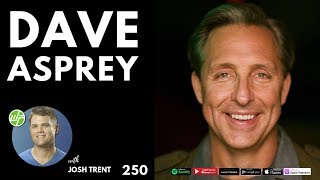
Episode 250 of Wellness Force Radio: a long-form interview (Dec 18, 2018) where Josh Trent interviews Dave Asprey (founder of Bulletproof) about biohacking emotional intelligence and his book Game Changers (which distills 46 laws of high performance from ~500 interviews). Key themes: emotional intelligence is 'hackable' via focused practices (e.g., five days of intense meditation + neurofeedback can approximate 40 years of daily practice), the role of gratitude in shifting physiology and heart-rate variability, the impact of early-life factors (toxic mold exposure, birth trauma) on adult personality and fear responses, consciousness as awareness vs story, the influence of gut microbes/ego, and sex as an altered state with different effects for men and women (Taoist-derived ejaculation frequency rule). Practical interventions mentioned include neurofeedback, HRV training, EMDR, meditation, breathwork, dietary optimization, and relationship/sexual awareness.
Questions this video answers
December 18, 2018 (contest start at 12:01 Eastern Time on December 18; review window until Dec 20).
46 laws.
Chapters
In five days of intense meditation with neurofeedback, you can have the same brain states as someone who's done an hour of meditation every day for 40 years. That's why that program I started is called 40 Years of Zen. So emotional intelligence is hackable in that, yes, you have to do the work, but maybe you could do the work more effectively. It's kind of like hiring a personal trainer. If you walk into a gym for the first time, there's a machine, I don't know, I'll hop on the machine and I'll try and do it. But if you have a trainer sitting there holding you accountable, teaching you, oh no, lower it more slowly, you'll get more results in less time if you do that. I believe that it's true. Whether you go to a shaman who tells you to fast in a cave for four days, you're probably going to get better results than if you just said, I'm not eating for four days and I'm going to watch Netflix. There's a fast path and there's a slow path.
That is Dave Asprey. And this is episode 250 of Wellness Force Radio where we discover the physical and emotional intelligence to live life well. In this episode, we're talking to one of the top titans in health and wellness, the one and only Dave Asprey. But this is not your average interview. We're exploring areas of Dave's life, career and mindset that he usually doesn't talk about. So consider this a very exclusive deep dive into the head to heart connection of the leader of the bulletproof empire.
What?
Where in this episode we talk with Dave about what it really takes to build a bulletproof emotional intelligence for the human and also the maintenance of this physical conduit and its own intelligence so we could live our life well. You know how excited I am for this podcast. If you've been following Wellness Force on social or in our Facebook group now you know that it took a year and a half to get Dave on the show. And as always, the universe delivered everything to us in perfect timing. Because not only are we doing a one of a kind show with Dave today, we're also talking about his new book, Game Changers. Giving away three free copies of this brand new book, the bulletproof team was generous enough to give our entire audience a chance to win one of three free copies of Game Changers. What leaders, innovators and thinkers do to win at life. This book gives 46 science backed laws Summarizing the advice from Dave's guests on his show, along with actions you can take away if they resonate with you.
But what I want to say before.
We get into the podcast with Dave is this. A lot of the topics we're going to discuss are quite polarizing. You may feel uncomfortable, you may feel happy. I don't know. I don't know how you're gonna take this podcast, but I do know one thing. This is gonna go down as one of the most powerful shows ever on Wellness Force. Now, to win one of those three free copies, here's how you do it. Just go to wellnessforce.com250 for the full breakdown on the rules. But it's super easy. All you have to do right now is just tap your phone, the show notes on itunes, or wherever you're listening, and hit the button that says review this podcast and boom, you are automatically entered to win. No purchase necessary. Just make sure you do this starting at 1201 Eastern Time on December 18th. Leave us a five star review before 11:59pm Eastern Standard Time on December 20th. So for these 72 hours, it'll take you 60 seconds or less to leave Wellness Force a five star review and you'll be automatically entered to win. The winners will be chosen on December 21 and announced on our Facebook page. So get a free copy of this book for the holidays@wellnessforce.com 250. You can get the full rules on entering for free. You do not have to purchase a thing. Just leave us a review which totally helps the show. Now let's get into this. I've been waiting for months to bring you this podcast. We talk about why Dave actually wrote Game Changers, the power of gratitude for brain health, and the rewiring of old patterns based on old stories, based on old beliefs, how early trauma, including what happens to us in the womb, can affect our personality as adults. And we go practical. You knew that with Dave the biohacking Buddha, we were gonna go practical. We talk about this one question. Can we actually hack emotional intelligence? Well, based on my own life, I'm gonna say no. But Dave says there is a shorter path. His definition, by the way of this will be so profound. And also his definition of consciousness. The two answers to those questions alone are complete bombshells. And I cannot wait for you to get all this wisdom and gems. Oh, and by the way, we also talked a lot about sex and the three biggest pieces of advice for anyone that wants to perform better at everything they do in life. Okay, let's dig in with the man. Him on Wellness Force right here, right now with Dave Asprey.
My guest today is the founder and CEO of Bulletproof, a global health company and movement that sparked two decades ago where through his own health journey he was driven to travel across the world to work with world renowned experts that helped him unlock the deepest levels of health through optimizing physical and mental performance. He's been voted as one of the most influential people in health and is a two times New York Times bestselling author and Webby award winning podcaster. But his mission now is to share this vast amount of knowledge with the rest of the world and help people on their journey to a better self. Widely known as one of the godfathers of wellness technology and even to some, the Buddha of biohacking, he's here today to talk about his new book called Game Changers and how this relates to us building Bulletproof emotional intelligence. Dave Asprey, welcome to Wellness for us.
Josh, I'm really happy to be here.
It's exciting to me. It's been a year and a half, you know, getting to get this process going, to actually have this time with you and you know, so many questions from our audience. Dave, this is, we had like 40 different questions for you to start us off here. It's like so many people know you, Dave, as biohacking. Biohacking is kind of where you started. That was your process and learning and discovery. But where does that passion actually come from? You know, this technology and science. Why is wellness technology such a deep part of your life?
Because I used to weigh 300 pounds, because I used to be hypoglybitschy and hangry and I had arthritis in my knees since I was 14 and fibromyalgia and chronic fatigue syndrome and some other stuff that was not making me a happy, healthy, functional human being. And I did the stuff that was supposed to work. I went to the gym six days a week, an hour and a half a day. Even when I was tired, I went on the low fat, low calorie diet and I stayed fat and got more tired. And I see this so much and I realized technology can help us see what works because most of what we've been told to do is kind of bs and it's based on well meaning intentions, but it's so simplified that it's lost meaning or it's actually become the opposite of what it's supposed to be. The technology lets you see what works and then it lets you get more results in way less time. I look at all of us, whether we're entrepreneurs or just whether we're human beings. It comes down to return on investment. You have so much energy to invest, it's not even about time. It's about energy. And then it's about time. And if you're going to do something with it, don't you want to get the most return you can at least amount of time? And this led me to look at, okay, can I meditate? Or can I meditate with a computer telling me on a second by second basis, am I doing it right? Well, it turns out you could get more meditation in less time. Actually, you can say, hurry, meditate faster. And of course, people might laugh at that. But here's the deal. If you could in 10 minutes get an hour's worth of meditation, or in 10 minutes get an hour's Worth of cardio, that extra 50 minutes that goes back into providing for your family, it goes back into playing with your kids, it goes back into just feeling good. After you do your hour, commute home at the end of the day so when you walk in the door, you can meet your spouse or your kids and have enough energy to do something meaningful. That's why this stuff matters. And that's what. That's why it matters to me.
Yeah. And this, this biohacking aspect, there are some things that obviously you said, what is our return on investment? But there are some things that can't be hacked. I mean, we look at emotional intelligence, you know, the construct for a conversation. Your new book, Game Changers, these, these incredible laws that we're gonna talk about. There is a piece of life that can't be biohacked. I'm curious, with all your travels around and everything you've gone through, what have you learned about biohacking that really can't be hacked?
Biohacking is an interesting term and Merriam Webster's just added it to the dictionary, is one of 840 new words in the English language. And I'm actually in the definition, which was incredibly cool.
You're in a dictionary?
Yeah.
Excellent.
It's the art and science of changing the environment around you and inside of you so that you have full control of your own biology. And I haven't yet found anything that is not changeable in your body, even emotional intelligence. I would have been classified as being on the Asperger's spectrum as a young person. And a lot of this has to do with environmental toxins, has to do with genetics. My grandmother is a advanced degree nuclear engineer. We have this engineering gene in the family that Oftentimes is correlated with those kinds of brain states. You can change that stuff so dramatically, you can change it by doing what I did. I went to Tibet to learn meditation from the masters. I did holotropic breathing and personal development workshops. I did ayahuasca with shamans in Peru and went on this path. I also at this point, know that in five days of intense meditation with neurofeedback, you can have the same brain states as someone who's done an hour of meditation every day for 40 years. That's why that program I started is called 40 Years of Zen. So emotional intelligence is hackable in that, yes, you have to do the work, but maybe you could do the work more effectively. It's kind of like hiring a personal trainer. If you walk into a gym for the first time, here's a machine, I don't know, I'll hop on the machine and I'll try and do it. But if you have a trainer sitting there holding you accountable, teaching you, oh, no, lower it more slowly, you'll get more results in less time if you do that. I believe that it's true. Whether you go to a shaman who tells you to fast in a cave for four days, you're probably going to get better results than if you just said, I'm not eating for four days and I'm going to watch Netflix. There's a fast path and there's a slow path. And my whole point in writing Game Changers, my new book, was I wanted to ask, and I did ask, almost 500 people on bulletproof radio one question. It's like, tell me the three things, the three most important pieces of advice for someone who wants to perform better at everything they do as a human being. And that means to perform better at meditating, at being in my community, at being aware of the people around me, at being a parent and at my job and at my sport or at my passion or at painting pains, whatever it is. The idea is performance goes to everything. And it isn't about winning medals. It's about showing up where you choose to show up and having what it takes, no matter what life brings you, to just know I've got this. And I wanted to learn from these people because this is not a feeling that I used to have. I used to feel like I didn't have this. The accelerator is pushed all the way to the floor, and I'm slowing down and I can push harder, but there's no more space with the accelerator. Like, what do I do? And it creates almost A sense of panic and overwhelm, and you feel like there's chaos. So what do you do about that? And how did these people who got Nobel Prizes and became Navy Seals or became leaders in meditation and personal development and achieve these things? How did they do that? What did they pay attention to the most? Because my thesis in all this, and I actually did the math, hired a statistician, and we went through all their answers and correlated them and organized them to crack the code. So instead of saying, well, this one guru, this one successful person, they did stuff. So I'm going to do everything they did. Well, bad news. You may be a different sex than that person. You may have different genetics, you had different parents, you have a different educational background, you have a different brain. You have a different emotional intelligence. What worked for them probably won't work for you. But if you look at what mattered most for that person and what mattered most for a few hundred other people who did noteworthy stuff, maybe that's going to give you better guidance for where you put your efforts first. And what boiled out of this was 46 laws of high performance. And this is what the people who do noteworthy things across a broad variety of fields, this is what they pay attention to. And I put together exercises for each one of these things to help, you know, is this where I should put my efforts now? And the idea here is no one listening to your show at all is going to be able to do every single personal development thing that is possible in this lifetime.
They might try.
It's okay to try. You have to be very busy. And I would encourage you, if you feel called, to do something, yes, go do it. But if this book can give you some guidance to figure out what's going to be the highest return, most important thing, I think that is an enormous gift that can save you not just tens of thousands of dollars in courses and things like that, but to save you thousands of hours of time that you could put into something that matters more. And frankly, if you have a family, putting that into time with your kids might be the most important thing you could do or into serving your community, not necessarily into your career.
Yeah, this conduit, our body is a conduit. And you spent 20 years cleaning the conduit, making sure that conduit can really be a deep vessel for service. And I think about human potential being both physical and emotional. Can you tell us about maybe the most challenging health struggle you went through? I think there's a section of your book where you're like, I'm grateful for the mold that happened. I'm curious, was that the biggest one or was it something earlier, something more deep?
Well, I had toxic mold in my bedroom growing up. And it is a neurotoxin. It affects the way your brain works. And it's one of the things that contributed to me weighing 300 pounds. And it turns out this is a smoking gun for at least 100 million homes in the U.S. i filmed a documentary called Moldy Movie on this that I funded out of my own pocket. This is a very big thing contributing to Alzheimer's, diabetes, cancer. And you see people who are perfectly healthy, they move into a new apartment and they lose their edge. Their brain stops working, they become emotional, they gain weight, stuff hurts. They feel like they're hungover all the time and they don't know why. One of the companies I started called Home Biotic, makes a a bacterial probiotic spray that eats toxic mold because we have to fix this problem because it's affecting our kids, it's affecting our hormones, it's affecting our happiness. But that wasn't the biggest thing for me. The biggest thing for me was actually how I was born. I was born with the umbilical cord wrapped around my neck. And when I was 30 years old, I went to one of the first personal development seminars I ever went to. And this incredible woman named Barbara Van Dyson, she looked at me with these big piercing blue eyes, and she was, I think, about 90 years old at the time. She was the head of the American Pre and Perinatal Psychology Association. I didn't know that at the time. And she goes, tell me about your birth. And I go, I don't know. Hospitals, vaginas, I'm feeling uncomfortable right now. And she says, do you know anything else? I said, yeah, I didn't lose oxygen, but the umbilical cord was wrapped around my neck. And she said, yeah, I thought so. I go, what do you mean you thought so? Like I said, this 300 pound entrepreneur guy, and she puts up a PowerPoint slide. It was like a strengths weakness index. And she had me pinned like a butterfly to a board about all the things that I was afraid of. I said, how could you know this? And she said, it's science. We've been studying for 30 years that early trauma, even during birth, even in the womb, even in those first couple years of life, it affects your personality and your fear response as an adult. And I felt like she just punched me in the gut when she said I actually had tears come to my eyes. I'm like, why didn't anyone tell me this? And I did some really deep work because I found out I came into the world thinking something was trying to kill me, feeling like I was never going to be safe, and feeling disconnected from the world around me because I'm going to have to do everything all by myself. So it affected my relationships, the voice in my head, which used to be a super asshole, and. And all those things, and no one told me. And some of the laws in game changers come, especially the ones about fear. They come down to this, is that you will have a sensation in your body called fear, which is designed to keep your body alive if you weren't in there. And then you're going to feel that and then make up a story, using your powerful human brain about why you feel it, and the story is probably a lie. And if you believe those stories and you let that fear run things, you're not going to change your game. You're not going to do the things you're here to do. And I'm profoundly grateful. I got to go through that, and I got to go through all the mold, toxins and all that other stuff, because if I hadn't had to overcome those things, I wouldn't have learned the things that have powered my books and that have changed I don't know how many people's lives. Hundreds of thousands of people's lives.
Yes, yes.
100 million downloads of bulletproof radio. I like to think it mattered.
Well, people are obviously resonating, Dave. I mean, this is why I connect with your message. And I was so excited to talk about the book. There's a chapter actually use gratitude to rewire your brain. I love this. We all have heard from many gurus, from all the personal development people. Gratitude is so powerful, both on a physiological and on a neurological level. But what have you found? I mean, your science, you know, creating this book and all these years of research and honestly, the doing, Dave, it's like you've come from a place of doing and being as well. What's the science show about? Gratitude? Actually rewiring the brain.
It's. It's so easy. In fact, I think every personal development book now says, you know, gratitude and gratitude. Journals and things like that are really important. It's easy to pay lip service to gratitude, much like we do to exercise. Oh, if you just exercise more, you'll be healthier. Drink eight glasses of water. By the way, how many ounces are in a glass? No one has ever been able to answer that. It doesn't mean anything. Here's what gratitude does that we can show with neuroscience. And having started a neuroscience institute where having spent four months of my life with electrodes glued to my head to show me what my brain and my nervous system were doing, having been CTO of one of the wristband companies that tracks your heart rate and things like that, I've dug really deep in on this and here's what happens. Your body is a very, very powerful pattern matching system, and it'll match patterns of threats long before you can think about them. About a third of a second, 350 milliseconds or so. So you walk into a room and there's a guy in the room who somehow reminds your body of someone who was mean to you. Whether it was a parent, a bully, an ex, boyfriend or girlfriend, whatever, it triggers that pattern and immediately your heartbeat changes and it stops being this nice kind of variable thing and it goes into like very, very even heartbeats, Maybe speeds up a little bit, your eyes dilate a little bit, your galvanic skin response, micro sweat on your skin changes. You don't know any of this is happening, but you feel a sense of unease. And then you make up a story about why. And the story is probably not true. But now you've got the sensation, you've got the story, and then you're going to react. And when you go into that state, instead of going through the prefrontal cortex, the part of your brain that used to think and to act like an adult, it goes through the amygdala, which is the part of the brain that you share with pretty much all mammals. And that's the thing that keeps tigers from eating you. So you stop thinking, you start reacting, and then you yell at your kids, you yell at your employees, you flip the person off in traffic and you do pretty much all the things you've ever done that you're ashamed of are coming from this.
We all get stuck there from time to time too. I mean, all of us find ourselves in this like angry moment that we can't get out of.
Supposedly it's the human condition. And then even worse, we beat ourselves up afterwards. And then you have that voice in your head that says, oh, why did I do that? It's probably because I'm a bad person. What kind of person would do this? And all this self judgment and criticism, the antidote for this is gratitude. The second you're telling yourself those stories or you're feeling those feelings, if you can find one thing to be grateful for, it Flips a switch in your brain, and it can actually turn your heart rate variability back to that of a healthy thing. And especially when you're rehashing something that happened in the past. I actually walk people through this. At 40 years of Zen, the neurofeedback facility, we have people who went through real trauma. And being bullied in seventh grade is real trauma, because at the time, you felt like you were gonna die. The number of entrepreneurs who are successful because they were bullied and they're still running away and trying to prove themselves, it's pretty scary. But they're miserable entrepreneurs, right? And the number of people in bad relationships because of stuff like that, they're still reacting, but they don't know they're reacting. And this happens to all of us. And God knows I've been in bad relationships. I've walked this path so much, probably because I had more trauma than the average person. And the first thing to do to let go of a trauma permanently so that the pattern matching no longer matches the pattern is actually gratitude. And you can find someone's going, oh, my life is hell. My house just burned down. I'm in a divorce. It's the end of the world. I've hit rock bottom. There's nothing to live for. Look, can you find one good thing that happened? And it may be as simple as, I don't have to clean my house. It doesn't matter if it's an important thing. It just has to be one thing. Oh. And as soon as you throw that switch in your brain, that, oh, switch, what happens is a sense of curiosity returns, a sense of passion can return, and you get the change in neurotransmitters that then lets you see from a different perspective. And there's a bunch of laws in the book. One is find a way to get outside yourself. And when you can do that, suddenly the fear isn't in charge anymore. And this is why every night with my young kids, tell me three things you're grateful for today. And sometimes they have rough days, but they're like, well, we did have steak for dinner. Okay, great. And they can sleep, and their sleep is better. And we're all wired this way. And it's so easy to not do gratitude or just to pay at lip service. The trick for gratitude, and this is in the law on gratitude, is that you don't just say, we're grateful for it. You have to think about it and then feel about it. Gratitude's a skill. It's a feeling. And so what does gratitude Feel like, Do you feel it in your heart? Do you feel it in your throat? Do you feel it in your gut? Does the hair stand up? I don't know. It's different for different people. But you actually feel gratitude. You don't state gratitude. And that's a big part of the law.
This is the embodiment too. I always think about what is true intelligence. Intelligence is the ability to gather, to apply and to embody.
It's all three.
Like most people, Dave, they get stuck in that phase of just gathering. And I think, you know, the health industry is notorious for this, right? New plans, new programs, new everything. It's constant novelty for the brain. So this limbic system's fired up. But the heart, the head to heart connection, when people are in that moment and they're super triggered, you know, they've had a shitty day at work, they're home, their kids are screaming. Where do they actually go in that moment? Where have you gone as a father in that moment when you're super triggered? And you know that gratitude's important, but yet there's still a voice inside you that says, I don't want to practice gratitude.
Where you go is. And this actually isn't in Game Changers because it's more of an advanced personal development thing. But it's the stuff that I teach people. And you go down to, what did you do when you were that age? And I remember this time I was on an airplane and my daughter was maybe five, and we're sitting at the very front of the airplane near first class, but not quite in first class because, well, I couldn't afford first class at the time. And so my daughter goes into the bathroom in first class, which is totally acceptable. And the stewardess said it was fine. And she's in there for all of two minutes. And this lady in first class gets really upset about this. She's taking too long in the bathroom. And I just looked at her and I said, you know, when you were five, you did the same thing. And she's kind of like, she hadn't thought about that, right? So we were all kids, and we still have all that kid programming running in us. And I fundamentally believe that that's a big part of what's behind, especially the happiness laws in this book. Happy people perform better at everything they do, including parenting, including just being a good friend. So how do you turn on happiness? Well, it turns out using gratitude to overcome fear and reactive patterns is something that Nobel Prize winners have figured out, something that Navy SEALs have figured out. People who've done really big things. People like Gabby Bernstein, who's in the book and all that. And I wanted to understand what of them did. I certainly have my narrative woven throughout the book, the things I've learned in my own uncomfortable path. But also, it's not just me. It's not just one guru. Don't follow one guru. I want to know what they're all doing. What do they all agree on? Because maybe you're going to get a higher return on that than just doing what one person did. So this is that meta analysis, and this is 500 hours of interviews, plus thousands of hours of prep time. And, you know, because with WellnessForce, before you interviewed me, you prepared, and I prepare as well. So all of that study goes into it and then all the just organizing your thoughts and all. And for me, I wanted to know what these people did for my own life so I could continue to evolve and continue to do what I do with Bulletproof and all of my other companies and to write books and things. So I felt like if I didn't do this, I was going to run into some problems. And if someone had just done this for me when I was 20, if I could hand this book to myself 25 years ago, the amount of money, time, energy and suffering that it would have saved, if I only listened to just a third of what's in the book, man, I wish I'd have had this.
Do you think from a deeper philosophical perspective, though, you had to go through essentially the arrow being pulled back harder so that you could shoot farther? In other words, you kind of had to go through these deep, deep, uncomfortable challenges to where maybe at times you even felt like, shoot, should I even be here on the planet? Don't you think, in a way that fueled you to be able to hold the container now for Bulletproof? I mean, that's an incredible container to hold.
It absolutely did fuel me to do it. I can tell you though, if I had the right tool sets to address that pain and those challenges earlier on, I still felt them. I just would have. Instead of looking for 10 solutions and stumbling on one, I would have had a better guidebook. Because the more. The more you feel something and the faster you can resolve it, then that opens the door for the next challenge that life is going to bring you. The people who made it into Game changers. And not all 500 people I interviewed are in the book. The Data from all 500 are in the book. But specific stories are in there. They've all done enough of that kind of work, whether we're talking about Jack Canfield and people like that, and a lot of them learn from helping others. But what it comes down to is what if. Let's say that you have some reactive pattern in your life you don't like. You could do 20 years of talk therapy, or you could do 10 sessions of EMDR, which is this eye movement dissociative response, a newer kind of psychology that lets you really reset old patterns. I think it's probably the third most effective thing after neurofeedback and heart rate variability. And it's very affordable. You do it with a therapist, but it's fast. Okay, if you resolve that problem now, you can go out and have a much better relationship. Find the person that you wanted to make your life partner. I can tell you, even if you've done that work, when you get in that relationship, you're going to have some relationship challenges you're going to have to work through as well, right?
Yes.
But you wouldn't have had those relationship challenges unless you had dealt with the pain before. So I want people to have the right tools to solve the problems, because we're here to evolve as human beings. And if you just have the right tools to apply to the challenge you have, you can feel the pain, you can get the learning. But the learning doesn't have to take decades. It might only take months or minutes. And then what's next? There's so much on this earth that we can do. I just don't want to waste time getting to the next challenge. And when I see it, I want to have a sense of passion and curiosity and a sense of safety and a community that supports me. And funny enough, it's not just me that wants that. The people who've done the biggest things, they figure this out oftentimes with help from others, sometimes just by brute force. And to be able to boil that down, distill that knowledge so that I can make my next mistake more elegantly and recover from it faster, seems like a really good investment.
Making the elegant mistakes. I'm curious too, when these common threads, 500 hours and then countless hours in preparation, too, what was the common thread in regards to their emotional intelligence, their intuition? With all these high performers, I mean, there had to have been like a. Almost like a galvanization of their intelligence. How would you say that emotional intelligence connected all of these high performers minds and hearts?
I would say that almost everything in here, all 46 laws, tie into emotional intelligence one way or another. And funny enough, the Number one answer, these people could have said anything, just measuring the statistics was food. They didn't all agree on what to eat. I mean, I've interviewed vegans. I used to be a raw vegan. Then it made me really sick. And it's, it's very interesting. A lot of them just, they figured out if I don't eat the right stuff for me, I don't have what it takes to have emotional intelligence, to have passion, to have purpose and all that. So they all have figured this out. And a lot of them also said, in fact, Eric Handel, a Nobel Prize winning neurologist, very big name in the field, who's, I think 93. When I interviewed him, his number one answer was, have a good wife. Of all the things a Nobel Prize winning scientist could say, be curious, do your research. No, no, no. Have a good wife. And obviously if you're a woman, that would mean you have a good husband. But his point was because the relationship is what made him able to do what he did. And so you hear this come up throughout these interviews because anytime you're removing fear and reactive patterns from your life, you're increasing emotional intelligence. And what I arrived at, not just in Game Changers, but in my last one of my three books, kind of the arc of the books. My first book was around what do you do before and during pregnancy as a man and a woman in order to have babies who are healthier, stronger, smarter and more resilient? Man, if you were lucky enough to have a mom who did some of that, you already came in with such a big advantage. And then the next one is, what do you eat so that your body works because your brain doesn't work. If your body doesn't work, and the next one is, what do you do to make your brain work even better? Okay, so now I've got enough energy, I've got my willpower, I have a body that works and supports me. Now what am I going to do with all this stuff? And that's where it gets really hard. But all these people figured out, like, if I'm not moving, if I'm not eating the right stuff for me, I just don't have the energy to care about other people, to give back to my community and all. So surprisingly, even one of the laws in here is eat like your grandma, which is interesting, not like a caveman. And the reason that that's such an interesting law is that it comes down to, okay, what did your ancestors eat? Because you're probably wired to eat that and not your Dad's mother, but your mom's mother. Because we pass our power plants down, these people figure that stuff out. Yeah, I eat the food that works because people who are hungry. I mentioned hypoglybitschy earlier, which would be a great description for me when I weighed 300 pounds. You will not have emotional intelligence. If you're thinking about the croissant on the table in front of you, it just doesn't work.
I love that you said that food was the connecting thread. I actually would have thought it would have been something else. But it doesn't surprise me, though, because the conduit, the body, that's where everything begins. I've heard many podcasts where you explore consciousness, and I think consciousness has a very deep connected role to emotional intelligence. One of the shows that I loved was where you and Shaman Durek were talking. He actually pinpointed an organ in your body through his own kind of awareness, his own talents, you know, many years of shamanism and his background. And you were like, yeah, you're right. You actually did pinpoint something based on a supplement you had taken that wasn't working out for you. But I'm curious, when you look at consciousness, what is your definition of that of consciousness, and how does that relate to your work with bulletproofness?
Well, they're very intimately tied. Consciousness is your ability to be aware of what's actually happening in the world around you instead of your story about what's going on in the world around you. And I believe based largely on my last book, Headstrong, about these ancient bacteria that are running your system. They're the Puppet Masters. They're running this operating system, and this is original thinking that isn't from anywhere else else. There's an algorithm that all life forms have to follow, whether they're single celled or not. Run away from, kill, or hide from scary things, because you'll die right now if you don't do that. And then eat everything, because a famine will kill you in about a month or less, depending on if you're a bacteria or something. And then make sure you have a lot of sex, because otherwise the species will die out. Now, for everyone listening, is there anything that you've ever done that you're ashamed of that wasn't one of those three behaviors? So what's going on is there's a quadrillion ancient bacteria in your body trying to trick you into doing these things all the time. And what consciousness is is your ability to get rid of their false information where they want what they want. It's a separate consciousness inside of you. It's also known as the ego. But I believe the ego is an emergent phenomenon that comes as a network effect from these ancient bacteria that are running the system, and that your consciousness is separate. The cool thing is we are wired at a fundamental level to be nice to each other, because the fourth thing bacteria will do, after they're not dying, after they're not starving, after they can reproduce, they'll make kombucha. They'll make yogurt. They form a community. It's the fourth F word. We have fear, we have feed, we have the other F word, and then we have friend. And that's what we're here to do, to build a community, to specialize, to support other people and all that. And what is consciousness? It's the ability to get rid of those first three. Focus on that last one. And that means being aware that, oh, someone cut me off in traffic. The story I told myself was that they did it because they think they're more important than me or because they disrespected me or whatever your story is, it doesn't really matter. Well, the reality is that you don't know why they did it. So you could make up a story. Hey, they're on their way to the hospital to see their child being born. That's great, man. You go right ahead. But since I have no data on this, the truth is that all I know is there was space in front of me and someone took it. And that's a conscious thought, but the unconscious thought is all of the emotion and story and drama that we create ourselves. Because we're trying to make sure that nothing eats us. Because we're trying to make sure we don't starve everyone. Trying to make sure we have a lot of sex. Yes. That's consciousness.
I love that definition. The interesting part about this is there is a dance between the ego. Someone we had on the show, I forgot who it was, but he said something I loved. He said, the ego is actually your amigo. And I thought that was really cool, because we don't want to hammer down the ego yet. The ego can sometimes be in the driver's seat, I'm sure, in the beginning. Dave, I'd love for you to talk about this.
What was the role of the ego.
For you when you started bulletproof versus now? Because we look at what happens to movie stars where, you know, they. They have a huge run, and they get kind of, like, stuck in their ego. I don't I don't sense that from you in this moment. I sense that you're here to serve humanity. How have you transitioned from the beginning? Did you ever feel like the ego was a part of it?
I didn't understand that the ego was a separate consciousness inside of me. I didn't understand what it did. And it's very easy to identify that voice in your head as being you. So I was very ego driven as a young man. I was anxious and I didn't know it. I was highly reactive. I knew I was pissed off all the time, but I thought I was well justified. I mean, look at all this crap and all the stories we tell ourselves. And spending four months of my life with electrodes on my head, having done ayahuasca with shamans and going to Tibet and learning meditation from the masters and doing holotropic breathing with Stan Grof and actually getting to interview him on the show, all that stuff, it really changed my awareness of that. And the price of freedom is eternal vigilance. If you believe Thomas Jefferson. Anyway, who is talking about democracy? Nah, I'm talking about your ego. If you want to be conscious, you want to be free, you got to understand the ego is part of the operating system that keeps your meat alive. It's not going away, but if you let it drive instead of you, bad things will happen. However, all marketing throughout history engages the ego. And I think it's fascinating and fun and awesome to engage people's egos to dissolve the ego.
That's awesome.
That is what I'm doing with Bulletproof, because those three things, we're talking about fear a lot. Game Changers talks about fear a lot. But the easiest, lowest hanging fruit is food. If you can walk around not hungry all the time, a third of the things that are putting you in your ego stop. And that's why brain octane oil and bulletproof coffee and the collagen protein, all that stuff, they increase consciousness because you have more energy in your cells and because you're not thinking about food all the time. When you're not thinking about food all the time, maybe you have a little bit more room to think about serving your community. Think about your mission.
Yeah. Oh, this is so good. Because the conduit, the battery, if it's clean consciousness, can pour in, but if it's dirty, consciousness can't get in there. So people that are at a lower vibration, a lower level of consciousness, it's probably due to these connecting threads from the high performers where the conduit's dirty, you're right.
And, and there's some other stuff in this book that I was. I almost didn't put it in there, but I thought it was worth it. And I want to talk about things that no one will talk about here. There's two parts of the book. There's one or two rules about getting outside yourself. And you talk to these really high performing people and almost all of them had an experience, whether it was a near death experience like a car wreck like Brendon Burchard will talk about, or I interviewed Jack Canfield for the second time just the other day and said, so Jack, when did you have this kind of awareness? And he said, oh, when I was 29, I did LSD. I'm like, what did you just say?
That people are talking about psychedelics more and more. I mean, it's a common thread.
So there's a rule in here and certainly they played a role in my evolution. But it says you don't have to do psychedelics. If you do, don't go to Disneyland. But maybe it's vipassana, maybe it's fasting, but there's a variety of things. But the people who've changed their lives, they found a way to step outside themselves and look back and say what's going on? From a different mindset, different perspective. And this is important. That was one. And I talk about my experiences there. And I've interviewed the luminaries in the field, including Stan grof, who treated 3,000 patients as a licensed psychiatrist with LSD in the 60s and created a new field of psychiatry as a result of that, or a new field of psychology. The other one was around sexual. And people oftentimes just won't talk about sex because it's private, especially in the us. But the people who perform really well, they recognize that sex is an altered state. So I publish data in the book about testing old Taoist equations. And there is something called an orgasm hangover, but it's only there for men. And it turns out when a man ejaculates the next day, he is much less likely to be loving, kind and patient. And this isn't something you're going to see. I tracked this stuff and tested the equations for how frequently men should ejaculate to live for a long time based on ancient texts and all this stuff, because I was curious. So I published the data. But it turns out the rules are very different for men and women. The effect of orgasm on your life, on how you show up, on how conscious you are, is incredible. So there's actually rules here that say, okay, never say ruled. Their laws in the book, there's 46 laws. But basically for women, orgasm has a very powerful effect on raising oxytocin and connectedness. And it's very important. And for men, orgasm is fine. But if men are ejaculating, especially because of porn on a regular basis, it will suck your energy in a way that you would not expect. And this is stuff that people just don't talk about it because it's embarrassing. But there's four laws in the book that talk about sex as an altered state. And people, they trip as hard as they do on lsd, sometimes just in bed. And if you're lacking that third F word in your life, okay, maybe I eat pretty well, maybe I've dealt with some of my fear, but I don't have love in my life. That ego, that operating system is going to be uncomfortable and you are not going to be as conscious as you could be. So the deal is, if you're chasing sex all the time, if you're chasing porn all the time, if you're having unconscious sex, it's going to lead you down one path. If you're having conscious sex in a healthy relationship or in healthy relationships, I've interviewed John Gray, Esther Perel and people like this. And I built the laws around that knowledge. Because if you don't talk about that, you don't pay attention to that in your life, you're going to wonder why things aren't working. You can be thinking about croissants all the time or you can think about skirts all the time. Either one of those is going to make you less conscious. So there's a degree of loving and things like that. In these interviews. A lot of people don't talk about it, but then we talk about it afterwards because I've been very open, hey, this is what happens with my own data on orgasm. I give a talk like that and I'll have 20 or 30 people come afterwards and go, we figured that out in our relationship too, but we were afraid to tell anyone. This is happening. It's real. Napoleon Hill wrote about it.
Sexual transmutation, yeah, this is an energy source.
It's real. And it's different for men and women, but it's massively critical if you want to show up fully in the world. So this is in the book and I share the data.
We get to have sex. What's the frequency for a game changer? What's game changing frequency sex?
Well, the answer is very different. If You're a man. This is ejaculation, not orgasm. It's possible for men to have an orgasm without ejaculating. The old Daoist equations, the ones that I tested for a year, say that you should take your age in years minus seven and divide by four, and that's going to yield a number of days, and that is the number of days or say the minimum number of days between ejaculations. I'm 46, so my number is around 8, which means I should ejaculate once a week if I want to maintain my health, my energy, my resilience, and my connectedness. What I found when I tested this, and it was kind of embarrassing to publish the graphs, but when you do that, the less often you ejaculate as a man, the more often you have sex because frankly, you're horny all the time. And what does that do for you? It increases oxytocin and connectedness dramatically for you because, well, you're in bed more often. What does it do for your partner as a woman? Well, well, because you know, you're not going to quote finish, you focus a lot more on her pleasure. And what do orgasms do for women? Well, that equation does not apply to women. And this is actually from the old Taoist text. They say a woman walks away from either sex or orgasm undiminished. And that having at least one orgasm, or probably more than one, leads to an increase in emotional intelligence in women, and it leads to increased happiness, increased performance. And in the rules or in the law about sex, I actually quote John Gray and some of his research about what orgasm and sex is going to do at different times of the monthly cycle for women, because it turns out it really matters. And I think all women listening know this already intuitively. Like, there's times of the month where, you know, I really want to get some, and there's times where I don't. And so this is in there. So magically, if you're a guy and you understand just the basics of that cycle, there are times when it's going to be really, really important, and there are times it's going to be less important. And so you can take that knowledge, you can take Esther Perel's knowledge about relationships and what your community does for your relationship, and if you pay some attention to that stuff, the amount of friction in your life, the amount of drag on your life just drops. And all of a sudden stuff that has nothing to do with sex.
Yes.
Becomes much easier. And that's what this is About.
I love how you're weaving sex into emotional intelligence.
Because, look, the four Fs that you.
Talked about, they're all really fun except for one of them, the fear one. The other ones, though, they drive our behaviors and it happens so much on a subconscious level. Dave, I want to be respectful of your time. I just wanted to ask you at least a few questions from the audience. The first question from your friend Cassie, Dave, how do you maintain emotional balancing in your relationships while growing the bulletproof empire? And what products do you use to optimize that?
Well, I've never thought of it as an empire. It's an act of service for me and it's a mission and a passion. But one of the laws in the book is around money doesn't make you happy. At least above $74,000 a year, there is not a net increase in happiness from another dollar of income. So I look at this as disrupting big food because big food has done very, very bad things to our soil, to our oceans, to our gut biome, to our bacteria, to our mitochondria, to our cells. We've got to fix that. And so I will happily go in and disrupt corn syrup all day long with healthy fats. And it just gives me great joy and pleasure. And there's no empire building in that. That is fun, right? That is a mission. And to maintain balance while I do that, I don't know, when you're doing something that is important and fun and that gives you energy, it's hard to not be balanced do that. Part of that, though, is the first rule in the book, the very first one, is the power of no. It says use the power of no. That means that for me to do it, I've got to be very conscious about when I say yes to doing something, because my nature is to say yes, all the fun stuff. But then I wouldn't have any time left for the other things. So I have people who help me do that. I have an executive assistant and I have a senior leadership team who can help to look at ideas that I might put in the top of our decision making funnel. But I'm not the only one making the decisions. And a lot of people who are CEOs of two person companies, they're in that mindset. I have people way smarter and better than me at almost everything working for me now. So I can have an idea that no one's had before and they can say, this is a terrible time to do that.
Yes, there was a progression. There was a progression for you to get to that space too. Some people listening that are entrepreneurs, they're like, I make all the decisions. Right now, I'm kind of nodding my head, thinking I might make too many decisions as well. This question is from Lauren. Lauren said, how did you create Bulletproof and focus on the positive change? If you were able to do it over again, would you do anything differently?
You know, if I was to do something differently in Bulletproof, I think I've done a really good job of staying on the positive side of things. I would. And learn how to hire people better earlier. Almost every entrepreneur or even manager just working in a company who has employees, you've never been taught how to hire somebody. My whole time as an entrepreneur in Silicon Valley, you know how many classes I had in hiring? None. It's something you're just supposed to know how to interview people. And now I put a lot of energy into culture and just finding the right people. Because finding one superstar can change your business. Hiring one. I have this name, Garbage Hearts, I like, which is not a negative term. But when your heart is surrounded by the garbage of accumulated traumas on heart, you're so well defended, you're so frankly traumatized that you will not see reality and you'll sabotage the people around you and you won't even know you're doing it. You hire one person like that and your whole culture can just spoil. And so my ability to keep the people who just need to do a lot of work before they're ready to join Bulletproof, to keep them out and to bring in people who are doing it for the right reason and are good human beings who are able to lead and lead with a sense of purpose and passion. That's the biggest challenge. I just wish I'd been more conscious and I'd built my own ability to do that earlier in the process, because that would have accelerated what I did.
What is the answer? You always ask your guests these three things. I'm curious for you, Dave, like, if you wanted to kick ass in life, what's the three things that you think can help us in emotional intelligence? Three, either characteristics or habits.
In the end of Game Changers, on my new book, I actually answered with four. And I'm actually going to give a little bit of a different answer for your audience based on these, because having asked some leaders in personal development on my show, the question, they change their answers too. So one of them that doesn't change, though, is gratitude. And we talked about it already. But if you don't have a practice of doing that. It's free, it's relatively easy, and it just matters so much. So that would have to be one of my top three. The other one is having a sense of purpose and a sense of mission and knowing why you're here. And this is also a really big challenge. If you don't know why you're here, it can be painful. Because when you're doing things that society or your parents or your traumas or whatever tell you you're supposed to be doing, but they're not fulfilling you, that's a pretty good sign you don't know why you're here. And I wish I could tell people really quickly. Here's how to know why you're here. It's going to take some work, some really deep self reflection, journaling, meditation, talk to a shaman, do some ayahuasca.
I don't know.
There's different paths, but when it comes to you, is obvious. When you do that, everything works. When you do other things, life sucks. So find that mission, know why you're here. And the third thing is just understand that so much of your decision making is an emergent phenomena from ancient bacteria who think they're in charge. And this is probably the stuff in your gut and the way it talks to the bacteria that run your power systems and your environmental sensing systems. And if you understand that you are not the voice in your head, you are not that, that you share hardware with that thing and that it is not you, it doesn't even have your best interests at heart that can unlock so much consciousness, so much emotional intelligence, and so much ability just to show up. And I don't mean show up in a big. I'm doing bulletproof change in the world. I'm talking about showing up for dinner.
Thank you for that awesome explanation. The last question for you before we link everything in our notes today, it's going to be@aspreygamechangers.com for the book. My last question for you, Dave, is at this intersection of physical and emotional, it's wellness. How does Dave Asprey define wellness? What is wellness to you?
Wellness goes back to that definition of biohacking. And it's understanding that your biology responds to the environment around you more than it does to your thoughts, although it does respond to your thoughts too. So wellness then is when you set up the environment. I mean, the times you eat, the temperature at which you sleep, the lights in your office where you live, how you sleep, the people in your life, all of those things. Wellness is when you change your internal external environment enough that you have the amount of energy and resilience that you want. And for me, it's. I want to know that I have the energy to handle whatever life brings my way, no matter what it is. I've got that level of resilience. I did not have that as a young man. I did not have that as a teenager. And I have it now in spades. And it's awesome. And it is a buildable thing. And that's really what wellness is. It's about having just the deep knowledge and true knowledge that you can handle whatever life brings your way.
Dave, thank you so much for coming on the show. This has been incredible. I am personally gonna be sharing. We're giving away two copies of Game Changers for the Wellness Force community.
So head bow, deep breath.
Dave, thank you so much for what you do in our industry, man.
You got it, man. It is my great pleasure to be able to do it, to be able to be on your show and just to share this stuff. This matters. This is what makes us better human beings. And remember of all the things we talked about, it's that fourth F word, friend. We are wired to be kind to each other. That is our core state. Everything else is just garbage in the and we can clear that out faster than ever before.
You heard it from Dave. Be kind today you guys. We'll talk to you soon.
Thanks.
Hey my friend, thank you for hanging out and growing with me today. Everything you learned on this podcast starts with your morning practices. So from over 200 world class guests and counting, we've distilled the gems, the best of the best science backed practices down into a 21 minute morning system guaranteed to increase the positive flow in your day. Get this free and powerful 21 minute life changing system over@wellnessforce.com M21 if you enjoyed this episode, tap your phone, share it with someone you care about. Because that is how we all get better together.
Supporting the show is easy.
Leave us a five star review right.
Now from your phone.
It helps us reach other smart and.
Conscious people like you.
Either tap your phone and hit the link in purple that says review this podcast or go to wellnessforce.com and this show doesn't stop here. We're continuing the discovering process in our private Facebook group. You can be a part of it. All you have to do is go to wellnessforce.com group and I'll welcome you at the door.
Okay?
Now you get to go out into your world and live your life well. So until I see you again real soon. I'm wishing you love and wellness.
Ra.
More from Josh






Your child's future start before pregnancy... and even before conception! #podcast

MD Reveals: Your Healing Creates Your Child's Reality (The Souls Coming In Need Strong Bodies)



