257 Jennifer Cohen: Training Muscles In Your Mind
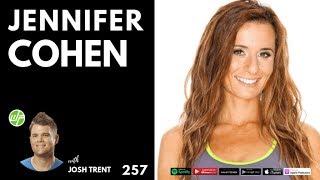
This content was created by Josh Trent. This content was uploaded by Josh Trent. This is a YouTube video titled "257 Jennifer Cohen: Training Muscles In Your Mind" created on February 5, 2019. It features a conversation between Josh Trent and Jennifer Cohen on the Wellness Force Radio podcast. They discuss mental and physical fitness, the importance of mindset in achieving fitness goals, and Jennifer's experiences as a performance coach and author. The conversation also touches on topics like habit formation, the role of mental strength in physical fitness, and strategies for maintaining a healthy lifestyle.
Chapters
It's really about your mental behavior and where you are mentally, like how you think and how you feel, like why you're doing it. What's your why for all of this if you can tweak what you're getting out of it. I guess on a bigger scale I think that the losing weight is a byproduct and having a goal that's more positive, like getting stronger versus getting skinnier is a more positive message and it's a healthier place to be mentally. You got to build habits and routines to keep you on path for long term success.
That is Jen Cohen and this is episode 257 of Wellness Force Radio where we discover the physical and emotional intelligence to live life well. In this podcast we talk to leading fitness and wellness authority as well as bestselling author and the greatest named 100 most influential people in health and fitness, Ms. Jennifer Cohen. But what's interesting about this podcast, and I know you're going to enjoy what we go into is the other side of fitness. Not just training your arms and your butt in the gym, but how to train the muscles in the mind which if you look at behavior change in the habit reformation science, it's the consistency, the sticking power of habits that are really controlled by the mind. But I gotta ask you, what exactly is controlling the mind? You and I both know it's our soul and the contract we have with the intelligent stuff that brought us here to the planet. But while we're here, we get to learn from health and wellness experts like Jennifer Cohen about how we actually do this clean living thing in the modern world with her second book Strong is the New Skinny, reaching number two on the bestsellers list. We're going to do a deep dive and get some interesting cul de sac exploration in this conversation with Jennifer where we take a breath and break it down to understand the real truth about how to train our mind. What's self talk and self identity's role in weight loss and having more energy. And for all the moms and parents listening, what's changed the most for Jennifer after having a child? We explore the common threads of difficulty from high achieving CEO clients and celebrities that Jennifer's trained like Britney Spears to have the exact same pitfalls that everyday human beings fall into. We'll talk about how to permanently remove yourself from these holes in the ground. We talk about mindset on the show and and Jennifer shares with us practical strategies on how to lower stress. And also for anyone listening that has a personal trainer they work out with. We talk about when it's time to let go of your trainer. How do you actually know when it's time to let your trainer go? Show Notes from today are@wellnessforce.com257. Make sure you go to the Show Notes page to explore Jennifer's books, her videos and links. And while you're there, do not miss the opportunity to sign up for the Wellness Warrior VIP Club. This is an exclusive club. You can get direct access to me for all your health and wellness questions. Right from Facebook Messenger. Right from your phone. No joke. I set aside specific time every single day to talk to our Wellness Warriors. This is in the VIP section of Facebook Messenger. You can get access to this for free@wellnessforce.com VIP this bombshell podcast is brought to you by my favorite turmeric and Reishi infused superfood tea on the planet, the one and only Organifi Gold. This gold is stocked with organic cinnamon, organic ginger, organic turkey tail and red Reishi and and a bulk of other superfood adaptogens. My friend. This is the absolute best thing I do in the evenings. I become chill af which after a long day of holding space and having conversations and taking care of the business, this Organifi Gold has been such a deep breath and a treat for me. I actually use almond milk. I don't even need stevia because it's already sweet enough. You can get this relaxing sleep enriching superfood powder today. For 20% off just go to organifi.com wellnessforce and and use code wellnessforce at the checkout. That's organifi.com wellnessforce and use code wellnessforce at checkout so you can sleep better, save money and get 1% closer, maybe 10% to living your life well. So let's do this. Let's learn how to make these lessons stick with the one and only Jennifer Cohen. My guest today is a world renowned performance coach and bestselling author and entrepreneur who for over 12 years has been the face of the Nike brand. But she trained numerous celebrities and and combined her love for music and fitness as a label trainer, which I didn't even know what that was. I'm curious to know more about this for Universal Music Group. And then she went on to write two bestselling books, no Gym Required and Strong is the new Skinny One book we're talking about today, Badass Body, the Booty Building Journal and Waist Training Journal which by the way Glute Health 2019. So important. Jennifer, welcome to the show.
Thank you so much for having Me, it's a pleasure to be on.
I loved connecting with you for the few minutes before we recorded. You know, it seems like a lot of fit pros go many years in the industry and then they eventually kind of all roads lead to personal development and really productivity, lifestyle design. Why do you see this, Jennifer, with yourself? Most of your colleagues that are operating at this high level, they start in fitness and have great fitness careers. Then they transition into higher level coaching and lifestyle design. Why is this?
Well, I can't speak for anyone else, but I know for myself, I think that the principles that you learn within fitness are transferable really with any other area. And I think that as you hone your skills and that you learn in that, it kind of is a nice dovetail to like everything within wellness. Right. So wellness is not about just lifting a weight, it's about having good mental health, having good balance with other aspects of habits. I know with MIFA fitness, I think that goal setting and discipline was a really strong staple and foundation that kind of helped lead to success in all other aspects. And I think that as your career evolves, like you were saying, and you kind of not master fitness, but you kind of want to expand into other areas, I think it's a natural place to kind of focus on other elements of habits and rituals that kind of make somebody healthy and well beyond just exercise.
I love that you brought up wellness having so many parts because I think it's so easy for people to fall into the fitness rut where they'll get stuck going to the gym one hour a day, but then, hold on, there's like 23 other hours of the day that you're living your life. That stress that you have with high performers, I'm curious with executives, because you coach a lot of executives now. Was there any common threads of difficulty with executives? And with people like Britney Spears or Christina Aguilera, did they share any difficulties?
You know what I think I actually, from all my experience, what I've actually found to be kind of a common thread with everybody, be it like a CEO of a company or a celebrity, is that people who are high achievers, how they do one thing in their life, they're going to do in other areas of life, they're going to have the same kind of passion and intensity in how they do one thing versus how they do another that's also extremely transferable. Like a Britney Spears, for example, at the time she was very much a high achiever and she put like 130% into her fitness as she Would into other areas of her life and just how a CEO of Johnson and Johnson or whoever it would be, the same kind of situation applies. So a high achiever like that, I think that if you're not necessarily one person who is that way, it could be something that is learned and practiced and become it. You can become that if you just take the time to actually focus on it.
Do you feel like working with celebrities for so many years? And by the way, I have to know right now, what, what was this music, this blending of music and fitness? What did that actually mean to work for these two companies? Were you like the voice or were you a dancer? What was that with the music and the fitness?
Neither. So my background's a little bit. A little unique. So I never. Fitness for me, I kind of fell into. So my background is I was the youngest marketing executive for a record label. I was working for BMG at the time in Canada and had nothing to do with fitness at all. I basically oversaw the marketing strategies, the budgets for all sorts of people like a Britney Spears, Dave Matthews Band, Christina Aguilera, whoever it must be, whoever it was at the time. And then I actually got a job offer with Sony and Immortal in Los Angeles. And then when I moved to LA to take that job, I eventually got burned out because the music industry just eventually was changing. It became much more about itunes and back when like Napster and MP3.
I love that you mentioned Napster. That's such a blast from the past. I used to buy my CDs at Tower Records in the sleeve. Remember the cardboard sleeve?
Absolutely. That was the day that's basically. That was my client. So when I was working, when I was in the music world, Tower hmv, Do you remember them?
Yes, totally.
Tower Records, all those people were my. Were basically I was creating the marketing initiatives for the talent and so they would buy more. More albums from the label if we like, based on what we would do with the talent for their chain. Right?
Yes.
So that was really my milieu, so to speak. So as things were changing and morphing in the music world, I decided to kind of leave. But I was already on a worker's visa. I was brought here, so I was not legally allowed to work unless I had a visa. So when I quit my job, there was very few things I was able to do. So I figured I'd go get my fitness personal training certificate and then maybe train some people on the side to make some money and then kind of figure it out. That was my initial thought. Right. But as I Kind of gone through the program and thinking to myself, there's probably a better way to kind of like, skin this cat. So I went to the late record labels where I had my relationships already, and I kind of created a position for myself, actually knowing how the marketing budgets work. And I basically put myself on their payroll, on retainer, where therefore, I was getting paid legally again through the label, but this time as a trainer. And so I was basically a personal trainer. I was training the talent for when they got ready for a music video or when they went on a tour or anything like that. And then I guess I did well with the talent. So then one label led to two labels, led to three labels. And, you know, eventually I. You know, I couldn't be everywhere at one time, so I started hiring a lot of trainers underneath me and basically built a whole business around that.
Yeah, it seems like you have this really unique business acumen. I'm curious, where did that come from? Was your mom or dad an influence on your business savvy?
No, I think my parents, they always were about education. So I did have a back. I mean, not like it made a difference in my career, but I did have a master's, and I went to school for business. I went to school for psychology. I had two degrees. And I think that I naturally always was very entrepreneurial. I always liked to make my own money. Even as a kid, I would work two jobs, three jobs. It was just my nature. I think it was just who I was developed to be. I was never really pushed by my parents to do it like that. It just kind of was me, and I just kind of like, it was, like, fun for me. Like, I liked to work. It felt like. It felt like it was. I like to be productive. I liked having money so I can buy things for myself or save it or whatever.
It's so cool because, you know, being a mother yourself, so many parents and just people who look after young kids listen to the show. And I'm curious, from a fitness mentality perspective, what changed for you when you became a mom? You know, what was different about your fitness habits?
Well, I definitely had to learn how to be more efficient with my time. Right. And make sure that when my workouts really, every second counted. So I really did try to figure out strategies and workouts that would give me the biggest bang for my buck, because I didn't have time necessarily to go to the gym for hours on end and socialize and work or just go from machine to machine or whatever people do. Right. So I actually Just had to become much more efficient with my time and I developed a workout system. It's actually in my current book called Badass body goals, called 4, 3, 2, 1, which is scientifically proven actually to be the most effective way to burn the most amount of calories in the least amount of time and really build lean muscle mass, which is what kind of helps you burn calories throughout the days, not just in the hour that you're working.
Let's talk about the science I love. I mean, it's easy to remember 4321. It's a very easy model. It goes deep into the subconscious. It's easy to remember. But what's the science behind this? I mean, why is it so proven to have these great results?
Well, it's basically a reverse pyramid. So it is a HIIT workout. So high intensity interval training is the most effective way to burn as many calories in the least amount of time. I'm sure you're very familiar with what HIIT is.
We love hiit.
Yes, right. And I don't think you can do it every single day. I think you can, you should be able, you should be going back and forth with it. Like you can burn yourself out. You can burn, you can burn your adrenals out, I think. But I think that if you, if you incorporate that type of workout structure, then it is the best way to kind of get the goals that you're looking for. And so what I did was I tweaked the hit. You gotta have, you know, actually, Josh, you gotta read the book and you gotta try it out for yourself to see.
Oh, I got the book in front of me. I mean, I'm looking at this pink band. Like, I'm gonna talk to you about the transverse abdominis in a minute. No, because the fascinating part about this is the efficacy, like you said, specifically for a busy mom. Like, these workouts have to be short, but they also have to be, you know, really productive. They have to hit the right targets of the body. So I'd love to dig in a little more to the science aspect of 4321.
So how I worked it was that I. It's both strength and cardio, and it's a reverse pyramid. So what I did was, what it means is 4, 3, 2, 1 is the first circuit is four exercises that you do for one minute and then you get a 30 second break. And then the second circuit is three exercises, but you're cutting time. So from that one minute, you're going to 50 seconds each move, but you're doing two rounds. So you're basically cutting off time and adding around as you go down the pyramid. The third circuit is only two moves, but you're doing each move for 45 seconds, but you do it three times. And the last move is done for 30 seconds, but you're doing it four times. So what is good about this system is your body is always being confused. So you're not just doing a squat or a lunge or whatever the move is all the time, the exact amount of reps at the exact amount of time. So for muscle confusion and for your body not to plateau, you need to always shift and change your repetitions with the time. You know what I mean? Like you being a trainer, you know, you understand that like if you do the same move over and over and over and over again for the same amount of time, it becomes second nature to your body. You're not going to change. And my theory is if you do even hit training every single day, your body gets used to that. That's why I also don't think it's a good idea to do it every day.
I love what you're saying because I even found, I'm 38 now, and so I found in my 30s, my general adaptation syndrome would kick in maybe even in a two week period. If I did the same thing for two weeks, I would start noticing, you know what, and it's not really giving me the result like it did in week one. Would you say that as we age, as men and women age, that they really get to restructure consistently and constantly their modalities of exercise because of this general adaptation syndrome?
I do, I think what happens as we age, we lose more lean muscle mass every year. So it gets harder and harder to see results. And because of that, I think that it's very, very important to constantly tweak and change and what you're doing. And it's very easy, I think, to get into ruts and basically just do the same thing over and over and over again because it's easy. And your brain goes on autopilot. And I'm a victim of that too. Like we're talking about being a mom or talking about having a busy life so often. What do I do? Even with all the knowledge I have and all the library of exercises and all the other things that I have stored in my brain, I do what's the easy thing for me. I'll jump on the treadmill for a bit or I'll do whatever and I Get no change. I may be maintaining if that. It's really important to kind of tweak yourself. And you also, Josh, you know that all of this is for naught if your diet is not there, right? So 80% of it is what you eat and really the other 20% is tweaking and toning. But the both, you can't do one without the other. And I think as we get older and we have more stressors in life, I think it's important to also do a lot for our well being, our mind. So having things that kind of are more holistic, which is not just exercise and nutrition, but also what are you doing for your well being? What are you doing for your reflection? Are you drinking enough water? Are you mobility, Are you stretching? So there's a lot of different things within the wellness umbrella that are important to kind of hit upon.
There's a part in your book you talk about developing strength from the inside out. I love this. You said your head can be your friend or foe when it comes to getting stronger, fitter and sexier. That's because your mind is your most powerful muscle. So you can either flex it to boost your motivation and perseverance, which is great, or clench it to resist your efforts, which is bad. Do you really believe that it's good and bad when it comes to mindsets fitness? I mean, isn't it always an evolving journey, someone's mindset around fitness?
I think that the physical aspect of fitness, like doing a squat or whatever, a push up or a bicep curl, that's really the easy part. What I like to say is that it's really about your mental behavior and where you are mentally, like how you think and how you feel, like why you're doing it. What's your why for all of this? I think that giving people, I think that really like shifting how people think about fitness. Not just because they want to have, you know, they want to look fit, they want to lose weight or they want to be skinny. I think that what I'm trying to say is if you can tweak what you're getting out of it on a long or I guess on a bigger scale, I think that the losing weight is a byproduct. But I think that having a goal that's more positive, like getting stronger versus getting skinnier is a more positive message and it's a healthier your place to be mentally. So that's really what I meant by that. I think an exercise helps with building confidence and mental strength. I think they Work hand in hand with each other. The stronger you get physically, you feel mentally more strong and more confident. So I think everything basically works and feeds off of each other.
Yeah, thank you so much for mentioning that. So wellness, this triangle of physical, emotional, and honestly spiritual in this guidance that you give people. You know this is the third book, right? This. The Badass Body Goals.
Yes, yes.
So three books doesn't come unless you have a passion about something. You have a connection to a higher source of some sort. Like what drives you when life gets challenging to keep creating content.
Oh, you mean. Oh, my gosh, I don't listen, that's a toughie for me. I don't know if there's like a higher source beyond. I think it's important to always want to grow and expand spiritually and emotionally. I think if you're stuck, that's a problem. So I feel like it's part of what I do for a living and for how much I interact with other people who look to me for some kind of motive. I hate the word motivation, but some kind of guidance. The onus is upon me to constantly learn and grow and therefore take that knowledge and kind of pass it forward or pay it forward. So I think it's just part of who you are and how I am. And as you've evolved and morph and change, it's important to keep on feeding your soul with things that are bettering you and you're learning from. I think that's basically what I try to do.
Yeah. So in your kind of passion, your line of work, it never goes to that spiritual conversation with these executives and. And maybe even with movie stars. It never got to that place of, hey, what's your connection to higher power?
No, I try to stay actually kind of away from what your connection is, a higher power. I think a lot of times, if people want to share that with me, that's great. I think it's important to have that. But it's much more about whatever your connection is. You should have a connection to something spiritually. That's a good anchor. And then from there, you want to learn more, you want to grow, you want to continue on a path of betterment and knowledge.
One thing you said that really perked my ears up. You said, I don't really like the term motivation. I have to tell you, I have been really thinking about that lately. To motivate somebody is to be this external locus of control, but inspiration to inspire action. Inspired action. It comes from this internal locus of control. So what are your thoughts about inspiration versus motivation. Which one's really sustainable?
I think motivation. I hate the word motivation. And I'll tell you why. I think motivation comes and goes. I don't think people. You can motivate like Tony Robbins, right? You can go to a Tony Robbins seminar and you can be so super motivated. Yeah, yeah, yeah.
It's like a rock show, right?
It's a rock. Exactly. And you can leave them like, yeah, I'm gonna do this, I'm gonna do that. And then like within 24 hours, 48 hours, it's kind of. It wanes. So does willpower. Things like willpower, motivation, it ebbs and flows. Ebbs and flows. I don't think there's that. You shouldn't be relying on those two things. I think that you gotta, like, you gotta build healthy, you gotta build habits and routines to keep you on path for long term success and put certain things on autopilot where then you don't have to think about them. And then you can use your brain for other things that need your emotion, your emotional or your brain power. You know, too much and too many people are saying, what do you think? You know, how do you motivate people? Well, I don't think I do motivate people. If I do, it doesn't last.
You inspire people. It's a totally different fuel source.
Right. And so to answer your question about inspiration, I think leading by example is the best way to inspire anybody. That be it a mom, a fitness person, a personal development person, a coach. I think that when you are a good example to others, it's not about talking. I don't have to talk for them to be inspired. You lead it by example. You live it every day, you breathe it every day. And if people like what they see, then they're gonna be inspired to incorporate those things into their life. And if they don't, well, they'll find it from someone else.
I really enjoyed that. I was sitting here smiling, thinking about how many people I've met where, you know that feeling where inside there's this existential connection where it's like, you know what? I really trust that person. They haven't even talked to me yet. But there's something about their energy where I'm just like, I get you, I trust you. That's exactly what you're talking about. But these things, I think we can be born like this, Jennifer, with this inspiration flowing through our veins. But also you talk about these morning habits. Specifically in Forbes, you wrote about six morning habits that are destroying productivity. I Loved when you said, number one, hitting the snooze button. The jury's still kind of out on this for many people. But you think hitting the snooze button is actually the number one destroyer of productivity. Why is this? What if somebody's really tired?
Yeah, it's funny that you've said that just now too, because there are all these studies out right now saying that a great way to cut a great health hack right, is to wake up and you kind of just kind of lie in bed for like 10, 15 minutes and gather your thoughts and kind of like set your intentions for the day and all that. I mean, I don't think so. I think it's a better thing just to. I think because you're procrastinating and I think if you're a busy person, you want to get some stuff out first thing in the morning that is the most tedious or tiresome or things that you need to accomplish. For me, I think it's very important to exercise first thing in the morning because I think A, it sets your day off correctly, it gives you more, B, it gives you more energy, and three, it makes you more productive for the rest of the day. So I think the more you hit that snooze button, the less you're going to exercise, the less you're kind of, you're telling yourself, you know what? I want to be productive today. I'm going to be alert, I'm going to do it. Like, I just think that it's something that I believe, I think, I don't. That's how I get. That's where I'm coming from.
Yeah, yeah. Well, you're known for this straight talking approach. I mean, it's in your media, all over the Internet. So you really like to get down to the truth pretty quickly, right?
I try to.
This is what I feel from you. And one thing I loved on number six, on the same article you said it's lack of interaction. As humans, we need conversation and connection. And I love this because you're challenging people in this article to take this little extra effort to just have a quick conversation with a human being. Imagine that in the first few hours while we're awake. Why is this from a neuroscience or even just a emotional intelligence perspective? Why is it so important that in the first couple hours we actually talk to a human being besides ourselves?
Because I think that everything now is about technology and I think that we're losing the ability and know how to socialize beyond just through texting. Like, have you Ever noticed that when you call somebody up, they're all like, hey. They don't answer the phone or they're shocked when you're like, why are you calling me?
Yeah.
Yeah. I mean, I guess because it's in my generation not to again age myself, but like, we never had. We didn't text people back then.
I'm with you. I had a rotary phone when I was growing up.
Right, me too. And so, like, we went outside to play, you know, we weren't on our iPads. We had to call someone to make a plan. I think that a big part of being happy and overall happiness in life is about human connection. And why stunt it by relying on the easy ways of, like, you know, the path of least resistance. I'll just text that person. I'll just. First of all, I think that when you talk to someone, you have a good conversation. I think serotonin gets released from your brain. I think that also it's very stimulating. I think that a lot can come from. Much more can come from human connection, from even just simply doing a workout. I think that it's underrated and underutilized. And so that's why even with. I always call people and like I said, most of the time they put me to voicemail and they're like, why don't you text me what you want, but I'll just keep on calling.
And I actually want to stick in a caveat, there is this technology now where we can leave each other walkie talkie messages, right? Whether it's WhatsApp or Voxer, even on the iPhone, you can leave. And that is not the same thing as having a conversation. Because even with what you and I are doing right now, like we're present, we're practicing this skill set of presence. And I think the same kind of emotional presence in a conversation where two people are kind of vibing about the same topic, it's the same exact skill set that applies to exercise, that applies to being with your kids. Let's talk about presence, because that is a skill set that, whether you're an executive or just a parent or just a human being, Presence now in 2019, it's under attack more than anything else. How do you define presence? And then what are your habits for being present?
Okay, well, that's okay. So I was going to just touch upon something you just said. I think that that's why a lot of times that you being a personal trainer, even in the past, like me, why do you say I think my business thrived not because I was the best trainer in the world, but it thrived because people liked to talk and be around me like they would with you. Right. They get used to it. They get comfortable with it. Not because I'm so special, but because it's human connection. Right. And I think why personal training as a business does so well is because people like their trainer, right? They like that experience. They like that. So it's not even so much for the exercise that they end up. They stick with somebody. It's more not because they're getting results, it's because they just like their trainer. And I think it's a very. It's interesting because that if people actually do it or like build relationships, they see the importance and like the like for that, like how important, how much they actually enjoy that. Now with presence, I try to be present with even talking to you or with my children or whatnot, by actually listening. I know it sounds crazy, but like basically not using my phone, turning off my phone, not looking at Instagram. When I'm physically with somebody, I think that's the number one. And then I think, well, that's all. That's not number one. That's everything. I think being present means being attentive and actually being paying attention.
Yeah, that phrase, paying attention, isn't it interesting? It's like we have this bank account where, and you know, science has proven this with decision fatigue. There's so many decisions that people can make each day. This is why Steve Jobs for the same thing, you know, the black turtleneck. It's because every single decision we make throughout the day, this fight for so many human beings, am I going to work out? Am I not? What is. Take us to the truth here with this straight talking, because how do we actually just decide once and for all that we're just going. Part of our lifestyle is to work out every day. What does that look like to take away the decision fatigue of am I going to exercise or not?
Well, that's why I was saying earlier that I think if you put as much stuff on autopilot, like create. Create habits that are positive habits that you'll do day to day where it becomes like brushing your teeth or taking a shower that you put, that you put something like exercise on an autopilot, where it just is something you don't think about. I think it's extremely important. And you make it so it's the first thing in the morning where then it's like I said, done. And it's not this daunting task that you're like dreading at 4 o' clock that you have to do. I'm all about leaving space and room in your brain for other things that come that, that kind of just creep in your life that you need to manage and handle.
Yeah. So clearing out all the clutter. There's a lot of mental clutter. And I know you connect, you, you connect with both the physical and the, the emotional, the mental that you coach people with. Now these executives, because of how many hours they work, I'm sure some of them are like 12, 14 hours a day, maybe even more. Are there is your strategies more for them being less sedentary, Terry? Like, do you use any kind of technology to help them or is it more just outlining their day? Do you rely on any technology or is it more strategic planning when it comes to them being healthy throughout the entire day?
It's more about pushing through barriers. So I think that like it's. That's only technology that, you know, when I come, when it comes to fitness or working out, when someone's sitting all day is a lot of people I know who are corporate people. The corporate executives, a lot of them now are using these standing desks, these standing treadmill, you know, even like treadmills like that. They're walking at two miles an hour on to kind of keep their keep, you know, to move. But because I. And also I think that's important to mention that fitness for me or being active isn't about just going to the gym for an hour, doing a workout for 45 minutes, and then being sedentary the rest of the day. I think it's important to remain active and have an active lifestyle, which means taking breaks during your day and going for a walk around the block, taking the stairs, walking to dinners or lunch or whatever. It is being active in other ways, doing things that are fun, like a dance class. It's not just a workout. It's more than that. And then to answer your question, it's about everything. It's about pushing past barriers that are not just fitness based, but like it could be anything based. A lot of times it's work based. Right. Like, or life based, you know?
Yes.
So people, everybody needs accountability. So all I do is make people accountable for what they already want.
And you hold great conversations with them. I love that you talked about that. I think that's what makes me an attentive and a great podcast host is because I love connecting with people. Isn't that at the core of any great trainer? You've actually written about this online, like when it's time to let go of your trainer, you know, like when it's time to fire your trainer. If people do have personal trainers and, you know, they. They're kind of getting this sense, like, it's not the right fit. Is it just the trainer's ability to hold conversation? Or are there other telltale signs that, like, it's time to let go of this fitness plan?
No, absolutely. But my point was that people stay with their trainers much, much, much, much longer than they should based on the fact that they like them as a person because they like to talk to them. So basically, you're paying a lot of money for a friend, which I guess because people all want that human connection. But the problem, and the trouble is from a professional standpoint, is that a lot of trainers, not everybody, they get very comfortable and they kind of don't do their job well. I mean, one thing I can't stand is when I see trainers who are basically phoning it in all the time and just on their phone scrolling Instagram and Facebook when their client is doing whatever move they're doing. I think I cannot stand that. And, like, it takes all of my willpower. Oh, I hate willpower. To go up to that person and say something. I don't like it. I think it's. It's so disrespectful. But I think that's a great. But people, when their trainer isn't. When the trainer is not paying attention, terrible. When the trainer is not pushing past where you are, where they're not. Where they're not challenging you anymore by giving you the same mundane exercises and workouts. If you're paying for a trainer to train you, pay for the trainer to train you properly.
Yeah. And you don't really need them to be a friend because I fell into that trap too. And I think a lot of people listening can relate to this. You know, being someone's friend and holding them accountable is not always mutually connected. Like, they're sometimes actually better separated. How do you feel about that?
Yeah, no, I agree with that. I think. Well, and that's the problem. I think people, then they confuse the two and they think, oh, I'm going to my trainer. So mentally and psychologically, they think that they're actually working out and, like, taking care of themselves, but really they're just going to the gym or their wherever to talk. And then if they, you know, if they do a bicep curl, they're. They're lucky. I think that, like, if you are I don't like it. I can go on about this topic.
All the time, Right? Right. Well, basically. And we'll link this in the show notes too, because there's so many articles. How do you find the time, by the way, to write all these articles and books and be a mom and do all your other obligations? Like, is there a North Star that guides you from overwhelm?
No, I think everything is like an evolution. Right? Like, I think that you can't do everything. You could do everything, but you can't do everything at one time. So you're talking about articles that I've written over years and years and years. I mean, I've been doing this for a long time. And yes, I have my column in Forbes that's been around for. For five years or so, but I was with Men's Health for a while. I was with Health magazine for a while. And the reality is there are finite periods of time. And then you move on because as you have kids and like I do, it's really hard to do everything. So I do what I can and I guess one project ends and then another one begins.
I like the way you explain that, because I believe this. And I'm curious how you feel. Everyone in every moment is doing the best they possibly can, depending on their education or their level of awareness. Because we talk about the intersection of physical, emotional and wellness force. How do you believe consciousness, like someone's inner work, actually relates to them being healthy in their body?
I think that's the most important part. Someone's consciousness is the most important part. Like I was saying, I think being mentally fit makes you physically fit. And being conscious and being like you were saying earlier, present being conscious, having intentions and goals, all that, that is the most important part. And the fitness part, perspective, the fitness part is a byproduct.
You've built this life. And even now, I'm sure as a mom, where you have a lot of people looking to you for direction, and even with all these brands, Muscle Milk and Kind and Weight Watchers and Nike, it seems like you've always had this structure around you that you showed up for. But if you stripped away all that structure and it was just you, like, from a health perspective, do you think you'd still be as motivated to look and perform and really your connection to fitness and wellness, do you think it would be the same if there wasn't the external frameworks?
Absolutely. In that way. In that way. Because I would build other frameworks because it's that important to me. So Nike or kind or weight watchers or whoever the spot, whatever that person is. We were partners because we both had like minds. And if it wasn't those people that I would find other people to partner with or I would do it on my own or whatever. I mean the reason why those companies work with me because on a deeper level, because I wasn't just a face, I was usually much more integrated in the marketing part is because it was we had the same goals and like minded ability to kind of for their brand and for how I live my life.
Yeah. And that came from probably decades of habit and just really the practice. Right. It's this daily practice. Was there ever a time, if you look back though, was there ever a time where you personally struggled with any kind of health or fitness habit or did you kind of come out of the womb with a dumbbell and a notepad?
No, absolutely. I'm a product of what I talk about, which is I created an infrastructure that worked for me to kind of for pitfalls that I have for myself. I'm not naturally, I'm not, I'm not naturally. I wasn't prone to be a fitness person or to do this. Like a lot of things had come because I love to eat food, for example, I do have add. So I had to create structures to perform well and to. And to be successful. And fitness for me was a way to kind of like a, like give myself some discipline, give myself some goals, keep me focused on something. And from that it was like a building block to other things. But because over time I've done it for so long, it's become who I am where I don't even know. It doesn't. That's who I am now. So I believe that everybody and anybody could change their inner dialogue or their like inner way that they want to live their life if they were committed to figuring out what ways to structure things that they are good and bad at. Right.
I love that you mentioned identity. This has been a great conversation with a lot of gems. We're going to link the badass Body goals book not just to build the Booty. We didn't have too much time to talk about the booty. All the information will be linked in our show notes. I do want to talk about identity because you brought that up and I think that's so big to actually identify like who I am. I am a strong, healthy, well, man or woman. The identity piece. If someone right now feels totally disconnected from fitness and wellness being their identity, where's their first breath? Where's their first step.
I think that their first step is, I think it's knowing that you want to make a difference or make a change and then picking one small win. So don't think, don't think five years from now, don't think even a month from now. Just make small changes. Make a small change, one small change every week to your regular routine. It could be as small as I'm going to drink a glass of water every morning before I get up. I'm going to do five air squats. And then once you start, I think then you add another small thing and it's all just like, small wins equal big change.
If someone is feeling trepidation or maybe they're a little bit intimidated, what is one thing because you gave us some great, you know, take the first step. It's like, how do you take the first step? Well, you take the first step, you actually do the thing. But from an emotional perspective, if someone's feeling like maybe a lack of confidence around this in the badass body goals book or even in, you know, strong, skinny is the new strong. Strong is the new skinny. I'm sorry, is there a core tenant from getting somebody out of that low emotional space that you rely on?
I think having a good affirmation, affirmations are very helpful for people. I think having a mantra that you say, pick a mantra that you say to yourself and you say it when you feel low self, when you have a low self esteem or you think you can't do it. I think we are what we think we are. So the more we tell ourselves a different story, the more we actually end up believing it. So the best way to kind of change that story in your head of who you are is changing that story of who you are by picking a mantra that you want to be and making that small change.
Last question for you. This has been a fun conversation and I'm curious how you would define wellness. What is your definition of wellness?
I think my definition of wellness is being happy in all areas of your life or being, being content and happy in all areas of your life. I don't think it's about having the hardest abs. And I think if that makes you happy, great. But I think of having happiness and balance and fulfillment in more than just one area really gives people true happiness. And I think that in itself de stresses you and therefore makes you well. So I think stress is a, is one of those things that it's a killer. That is, if you can't manage that, then all the other stuff is for naught. And the best way to do that is balance and figuring out how to be happy. And not just in one area, but in more than one.
It's almost like the happiness code that we're all constantly cracking in this world. Thank you Jennifer for coming on the show. The real Jen Cohen on Facebook and then also jennifercohen.com and what's your Instagram therealjan Cohen all right, the real Jennifer Cohen. The real thank you for coming on Wellness Force.
Thank you so much for having me.
Oh, you're so welcome. Have a great rest of the day. Hey my friend, thank you for hanging out and growing with me today. Everything you learned on this podcast starts with your morning practices. So from over 200 world class guests and counting, we've distilled the gems, the best of the best science backed practices down into a 21 minute morning system guaranteed to increase the positive flow in your day. Get this free and powerful 21 minute life changing system over@wellnessforce.com M21 if you enjoyed this episode, tap your phone. Share it with someone you care about because that is how we all get better together. Supporting the show is easy. Leave us a five star review right now from your phone. It helps us reach other smart and conscious people like you. Either tap your phone and hit the link in purple that says review this podcast or go to wellnessforce.com review. And this show doesn't stop here. We're continuing the discovering process in our private Facebook group. You can be a part of it. All you have to do is go to wellnessforce.com group and I'll welcome you at the door. Okay. Now you get to go out into your world and live your life well. So until I see you again real soon, I'm wishing you love and wellness.
More from Josh






Your child's future start before pregnancy... and even before conception! #podcast

MD Reveals: Your Healing Creates Your Child's Reality (The Souls Coming In Need Strong Bodies)



