259 James Maskell: The Truth About Functional Medicine
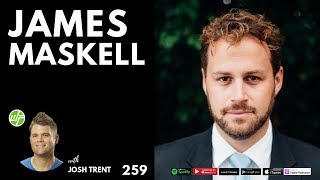
Transcript of episode 259 of Wellness Force Radio (host Josh Trent) featuring James Maskell. The conversation defines functional medicine (root-cause, systems view, participatory care), explains community micro-practices and low-overhead models for scaling functional medicine, and describes NewHealth (a non-insurance medical cost-sharing/community alternative) as a pathway to make functional medicine accessible. Key themes: scaling chronic-disease reversal via groups and health coaches, changing incentives through alternative payment models, and the role of community, technology, and psychedelics in future care. Practical claims and figures (savings, eligibility, timelines) are presented.
Questions this video answers
Episode 259
James Maskell
Root-cause resolution; systems/interconnection (holistic viewpoint); participatory care (patient involvement).
26 cities over 4 months
2014 (Functional Forum started in 2014; May 2014 noted as an early milestone)
Chapters
More medicine actually doesn't equal better health outcomes. In fact, it's quite the opposite. All of the data shows the more you use the medical system, the worse off your health outcomes are going to be in the long run. So ultimately, what we're trying to do here, and I know this is part of what you're trying to do on the radio here, Josh, is to keep people well and keep people not having to interact with the medical system at all.
That's James Maskell and this is episode 259 of Wellness Force Radio where we discover the physical and emotional intelligence to live life well. In this podcast we talk about functional medicine. But this is not your average cookie cutter skimming of the functional medicine topic.
This is a deep dive.
We explore the new Health Knew with its founder, James Maskell. Now, you know James from his work at the Evolution of Medicine, a speaker sought after in the space of functional medicine. He's also the author of of the Evolution of Medicine book. But did you know that James had a very unique plant medicine experience that shifted his soul's calling here on planet Earth to serve so many people and a multiple of millions in the health care world. We're talking about the health care system today with James, why it's set up to keep people hooked on long term medications. We talk about why functional medicine's focus is now turning towards whole health treatments and why reversing chronic disease should be the number one priority now.
And in the world of healthcare, if.
You'Ve been personally suffering, or maybe someone you care about has been suffering with chronic health conditions and they're stuck in this broken healthcare system roundabout that we call healthcare here in America. This episode is for you and anyone you can share this with because right now the evolution of medicine is here and this is the new paradigm of treatment for men and women across the world that are actually going to give.
Them long term health.
And as always, we're going to the truth as quickly as possible to talk about the real definition and really the application of functional medicine for literally all wellness warriors across the world. We explore how functional medicine, specifically the concept of community micro practice where men and women can save thousands of dollars every single year on healthcare and get a 10x multiple of the quality of care rooted in proactive and comprehensive wellness rather than than just reactive sick care, which is where so many millions of Americans sadly find themselves today. So you can do this with me, with us, together we can be a part of this change in this world. You're here, you care, you're listening. To the podcast. You're part of the Wellness Force community and you have way more power than you realize. I know you're gonna love this episode. James is one of the biggest hearts in the wellness industry. Make sure you go to the Show Notes page today, get all the free resources and learn more about about how you can save thousands of dollars per year with this new wave of holistic healthcare over@wellnessforce.com 259 and I'm literally bursting right now. You should see me at my standup desk. I'm like bouncing on my feet. I am thrilled to tell you that this community aspect we talk about on the show so much is coming to fruition live here in Encinitas, San Diego. I'm officially inviting you in this moment to this is a personal invite from me to you to join us at the Wellness Force and Soma Breath Communities for a full day immersive workshop live Saturday, March 30th in Encinitas, California. Now check this out. This is a full day experience. We're going to be doing yoga, awakening, breathwork, journeys, manifesting and visualization meditations, ecstatic dance, getting into your body, getting out of your head. You'll get a custom Wellness Warrior swag bag, a healthy lunch and drinks, and most importantly, connection with your tribe and community. So do not miss our very first live event. Make sure you Click over to wellnessforce.com breath that's wellnessforce.com breath Pick up your early bird ticket. You have about a week to get your early bird savings before the price goes up and this event will sell out. We had such a massive response actually that we had to rent a bigger space. So make sure you pick up your ticket and meet me and your other wellness warriors. Your community live here in person in San Diego on March 30th. Now let's drop into this connected conversation for the Truth About Functional Medicine with James Maskell. My guest today spent over a decade.
As a leader with a new narrative for the shift away from conventional Western medicine towards a wellness centered functional medicine model, starting with the doctors themselves. He's the creator of the Functional Forum, the world's largest integrative medicine conference with record setting participation online and in growing physician communities around the world. But he's also the founder of the Evolution of Medicine, a community e commerce platform which gives customized resources, products and tools and services to make it easier and really more affordable for conventional doctors and their patients to walk a different and really a more sustainable model of managing healthcare. His book, the Evolution of Medicine has been widely referenced across the wellness industry as a movement to solve chronic disease. This epidemic for practitioners and patients to fall back in love with with medicine. James Maskell, welcome to Wellness Force Radio.
Hey, great to be here with you, Josh. Thanks so much for having me.
I've been looking forward to this. Man, you know, I missed you.
I was in Thailand for a month and we had to reschedule. So all things come in good time, which is really a mirror for the slow evolution of the medical space that we see right now. This passion that you have, man, it's so prevalent. I've been seeing so much of your work online. 26 cities and 4 months for the new health tour. You were in a bus traveling around with your family. Tell us about that.
Yeah, so, yeah, that was last summer. It was kind of an idea that started with my five year old daughter. She spent one night in an RV and was like, why don't we live in this? You know, we can go wherever we want. Here's my bed. There's your bed. Let's do it. And I decided to turn that into a four month kind of family slash road trip to launch this new alternative to health insurance that we launched last year. And you know, it was equal parts like amazing and terrifying to be able to spend that much time with the family and see some of the great parts of this country do these 26 live events, meet doctors and practitioners whose lives have been transformed by the functional forum and by shifting to functional medicine. But also it was way too long and my daughter wasn't about enough after about six weeks. So we had to take some evasive action. But ultimately it was a really transformative time for myself and my family. And I would recommend to anyone who lives in America that there's just so many beautiful places to see. And I highly recommend something like it. But four months is probably a little ambitious, especially if you're trying to launch a company at the same time.
It's pretty tight with the family in those close quarters. But I have to say, you know, that just is a stem of your dedication to this mission. We're going to talk about this. You know, your mission has stemmed over the past 10 years, man, but you actually came from banking, which for me is kind of a catch 22. I'm thinking, okay, he probably got so many skills from being in banking and running businesses and you've been a CEO and a leader of multiple businesses to get you to this point where now you truly are. As I mentioned in your bio, you're leading James, this new narrative from the shift away from conventional western medicine. But I got to ask you, how would you even define functional medicine? I think it's a very overused term. A lot of people don't even know what the heck it means. How do you define functional medicine?
Yeah, functional medicine is a new operating system of delivering health that is focused on three main principles. Root cause resolution, so getting to the root cause of the symptoms. It's based on a holistic viewpoint of the patient. So looking at the interconnection between systems where chronic disease typically resides. And it's a participatory system, so patients have to participate in their care. And those are the three sort of main differentiators from traditional western medicine. But, yeah, I mean, I only really came across functional medicine about 10 years ago. I'd been in integrated medicine for five years before that, working in a clinic. And I saw firsthand what this kind of approach was capable of. I started working with practitioners. But the thing about functional medicine, in my mind, that differentiates it from integrative medicine, naturopathic medicine, holistic medicine, other words, is that it's a reproducible system where everyone's doing it the same. And there's a certain structure that you take people through. And what it does is it prioritizes what you should be doing in a specific order. And that makes it much more efficient than, in my mind, than integrative or naturopathic, where you could have loads of doctors who will call themselves the same thing, but are doing very different things in the day to day of their practice.
The root cause, the interconnection, the participation. This is a really rich definition of this because I think a lot of people see functional medicine as, oh, you get a test kit, you poop in a cup, and then that's pretty much it. You get your results and then you modify your lifestyle. But we're seeing that it's a lot more contextual and really complicated than that. 80% of you've mentioned on multiple interviews and across the media. You know, 80% of really what these functional medicine doctors do is they make people execute on a healthy lifestyle. What is the other 20%?
Yeah, the other 20% is really getting to the root cause of what's going on. You know, ultimately, you know, when you get into patient care and something unexpected is going on, like why do people go to functional medicine typically at this moment in time? They're going because all of the standard of care, ways, ways they've looked to remediate their symptoms thus far have not worked. And so they're looking for an underlying cause. They're looking for why they might be different than other people in their disease peer group and why the standard of care therapy has not worked for them. And so, yeah, there's some digging, there's some deep work in the timeline. There's some, you know, to go in and map what happened even from preconception right through to now and what happened in that time. What were some of the triggers or antecedents that happened that could explain, you know, the journey of what's happened, what were some of the previous issues, Things happened in childhood. So, you know, there's some digging, but the prioritization is key as well. It's like, you know, there's seven key ways in which the body sort of degrades over time. And if you can understand, you know, which one of those is the, has been the most impacted, you can start to see what is the underlying function in the body that's started to go wrong. That has led to, you know, the outward communication of these symptoms. Yeah, that's a different way of going through. And it does take some time to execute.
You know, this is why I've been thrilled to have you on the show. And we said, you know, all good things come in time. And I think this is perfect timing to talk about this. In April, you're actually going to be opening up the doors on something really exciting. So everyone make sure that you stay tuned because James and I are going to be talking about how you can get involved in your communities. Let's talk about this though. You mentioned in your book the Evolution of Medicine and the community micro practice. How does this relate to functional medicine? What is this community micro practice? This is really exciting to me.
Yeah. So ultimately, having spent maybe like 10 years in the field, what I saw was that there was a lot of doctors who felt a moral obligation to practice in a new way. Maybe they saw their kid transform with a diet change. Maybe they saw their patients transform. Typically it was some sort of real personal story and in a lot of cases, actually their own health. Right. So they have symptoms they can't work out. The conventional medicine toolbox fails them. They turn to functional medicine and learn about it and they go to some conferences and they realize, wow, like this makes a lot more sense. This is a much more logical way of dealing with lifestyle driven chronic disease. So they start to do it on themselves. They get great results. But then they have a day job and they maybe have kids and they have a life and they can't just unplug from a salary. And so what I saw was, you know, in some cases the majority of doctors going to functional medicine conferences still not practicing functional medicine day to day. And one of the reasons is, is because I think most doctors, when they would go and see functional medicine being practiced, they would go to some of these gurus practices and see this whole elaborate integrated wellness center, beautiful location, spa like environment and they would go in there and go, wow, this is a vision that I have for my own practice. But I don't have the capital to do this. I can't afford any of like what am I even starting with. And so what started to emerge in about 2014, when we started the functional forum in 2014, it started as a meetup for doctors in New York that were interested in functional medicine. And we started sort of like a stage show and we featured young aspirational doctors like Robin Burzin and Kelly Brogan and people like that Jeff Glad, really showcasing this is what your life could be like. But one thing started to happen is that the amount of stuff that you needed, like physical stuff, physical location, all that kind of stuff, you didn't need as much stuff to be able to run a successful functional medicine practice. And Dr. Jeff Glad, who's been a friend for 10 years, he came onto the fourth episode of the Functional Forum which coincidentally was the same episode where Mark Hyman announced the Cleveland Clinic center for Functional Medicine. So it was May 2014. It was like a moment in history for us. But on that same episode, Dr. Glad talked about his community micro practice essentially in Fort Wayne, Indiana. So he is like a tiny town, not evolved like being in LA or New York or Chicago or San Diego. But he'd been able to build a successful integrative medicine functional medicine practice using this micro practice model. And exactly that moment, lots of great tech was emerging to mean that you didn't need as much stuff, as much overhead as you used to need to practice functional medicine. Even people like Chris Kresser and others were practicing in this micro practice model, which was basically you could run a functional medicine practice off a laptop in a co working space, right? You didn't need as much stuff as you used to need because you couldn't use e prescribed for supplements. And you could have, you know, there's phlebotomists that would come to your patient's house to draw the blood. So you just didn't have to have all that inside. So in the book, what we tried to do and through the Functional Forum was to create a much more Easy pathway for doctors and practitioners that wanted to start their own practice, that felt the moral obligation to practice in a new way, but just hadn't been able to make the shift for very practical reasons. And so over the last five years we've created our practice accelerator. The book has been sort of like the catalyst for a lot of doctors. They read it and they go, I want to do that. In the book I was able to make the argument to practice functional medicine in the right order, which I always felt like depending on where you came into functional medicine, it would either sound awesome or wacky, depending on the first thing you heard if you were a doctor. So I was able to make the arguments in the right order and give people a vision for a super low overhead practice that they could start as a side hustle while they were still employed and eventually start to move over there using things like online appointment booking and online education and E prescribe and these kind of tools so that you didn't have to have as much. So, you know, it was a micro practice model, a super low overhead model. But the best micro practices typically were born in a community environment where people already were.
Yes.
So you know, co working spaces or churches or crossfit boxes or any of these places where there was already a community of people ready to use it. And that was the genesis of the community micro practice.
And it's interesting because we're all wired. If you look at Jason Silva's done a lot of work on brain and neurosciences. I know one of your friends, Daniel Schmachtenberger from Neurohacker, right here in Encinitas, we look at this model of interconnection and you actually mentioned it in the true definition of functional medicine, this interconnection, how our emotions, the psychosomatic connection between our thoughts, maybe unprocessed trauma and the way that this chronic disease epidemic has continued to grow. But I'm curious, from your perspective in the past 10 plus years, what is the big deal with people actually not looking at feelings? Because it's truly this model of the unprocessed trauma that leads to disease and then that disease manifests into a chronic condition. Has this come up in conversations with you? Because I could see how so much of your work would be the tactical approach, you know, the lab tests, getting people with education and resources. But from an emotional intelligence perspective, the unprocessed trauma, how is that showing its face in the functional medicine space?
Well, you know, I'll tell you this, the more experience that practitioners get in this space Right. When they first come across from traditional medicine, they haven't really grasped the complexity of the interconnection. And so, you know, labs and supplements looks like a lot like labs and drugs. It's very easy as a starting point. But, you know, having met now thousands of doctors and seen their journey, what typically happens is, you know, labs, abs and supplements can be sort of a good transition focus for their practice because you can rebuild function with lifestyle and that kind of thing. But typically, as a practitioner gets more involved and starts to work with patients, they realize where's the leverage to get people well as quickly as possible. And it's getting into that stuff. And that's why we're seeing more and more use of groups, which I'm super excited about. And that's one of my themes in the practitioner space. My theme for 2019 is the use of groups because we're really seeing that the most effective way that functional medicine is being delivered in major medical institutions like the VA and the Cleveland Clinic is through a group format. There's something really powerful about the vulnerability in front of a group and, you know, the community that's created by a group of peers supporting each other. So I'm very excited about that. But yeah, typically the more sophisticated the practice, the less of a reliant on labs and supplements and more of a, you know, really getting into it with the patient. And ultimately that typically starts to require a team. Are you going to have a, you know, someone else on the team who can get into that? Because, you know, doctors, depending on their training, you know, either learn that or will have someone on the team who can really get into that with patients that they feel like it's a big, a big part of the genesis or the etiology of the, of the disease.
I find it fascinating that we have probably technology that can connect us so much more intimately now than ever. But James, there's the double edged sword, right? The more technology we use and the more automated that we try to make things, the more we quote scale medicine, it seems like that personal touch can be lost, especially if there's not enough mindfulness behind truly spending time with a patient. You know, I'm actually getting over a little winter cold myself. And I went into the physician's office and I think I was there for like literally three minutes. I was, she, she looked at my nose, she tried to give me antibiotics and I thought to myself, I'm in the wrong space. And I was looking, I was, I was personally looking for a different alternative, you know, like a Naturopathic physician or somebody that actually engages smartly in functional medicine. Do people go to your website to find practitioners? Tell us how people actually find practitioners outside of that Western model?
Yeah, we're actually, you know, we're working on that right now. You know, the best ways to find, I mean, there's two different things going on. I mean, I think a naturopathic doctor is a great fit for primary care type stuff, acute type of things where you can spend time and really look at that. Most of functional medicine at this moment is really in the delivery of chronic disease reversal, chronic issues that are not getting better. So the Institute for Functional Medicine has a practitioner finder on it. That's very good. But we're actually working on a few things to connect the demand and supply and do it in an efficient way. I just want to get back to something you said though. You said, you know, that that personal touch can be lost. Yeah, you know, one of the, one of the things that I think is, you know, is so certainly technology and we've seen a massive rise in telemedicine. So a lot of the practitioners we work with will have availability through that way. There's a new way of delivering care that we've helped a lot of practitioners. I talk about this in my book called Direct Primary Care, where a doctor will work with a very specific group of patients and you pay the doctor directly outside of insurance, but it still can be very reasonable and that you can get in to see the doctor and you know, the doctor, you're not just handed off to whoever's in your like insurance plan. So that's been a big trend. But yeah, ultimately most, most functional medicine is in chronic disease reversal at this moment. But you're starting to see, you know, when I was going around the country, like when I was in, in Phoenix, I stopped in a clinic called Holistic Urgent Care. And it was a couple of naturopathic doctors that realized that there's a demand for people who, when they have issues come up, want to be able to go somewhere that is going to treat them as a whole person. And so, you know, we just starting to see the beginning of that. But I would say where the, where the biggest demand is, where the biggest opportunity for transformation is in my mind is in chronic disease care because ultimately that's making up 86% of cost. It's the most vexing problem on the planet. And functional medicine is really, really well designed to combat lifestyle driven chronic disease.
We're talking about healthcare and functional medicine in this episode in depth with James, but you and I both know it's the daily practices, the things we do in private when no one's watching that really dictate how often we see the doctor in the future. You know, I've been a huge fan of organifry green, red and gold juices for over two years now, but there's some exciting things I just found out about the adaptogen, specifically the lemon balm in the Organifi gold for improving the quality of sleep. Lemon balm combined with other plant adaptogens in the gold help to promote better sleep, which then gives the restoration and the energy from the inside out so you can show up refreshed for the next morning. That's what we all deserve really is the energy to meet the demands, the onslaught of responsibilities. And check this out. I found this really interesting PubMed study where 100 women aged 50 to 60 were selected randomly for a sleep quality Index index using valerian and lemon balm for sleep disorders during menopause. The results were significant. They observed a key difference with reduced levels of sleep disorders among the women who took valerian and lemon balm when compared to placebo. So if you've been craving better sleep, do not wait another minute. Give yourself the gift of Organifi Gold. We made it easy for you to save 20% off so you can get better sleep and save some money. You won't find a bigger discipline discount 20% off over at Organifi.com WellnessForce just use code WellnessForce pick up the Organifi gold and get better sleep with the lemon balm and the other adaptogens so you can take deep breaths and wake up refreshed for the day. That's code WellnessForce to save 20%@Organifi.com WellnessForce now let's get back to James and talk more about the truth behind functional medicine.
I find it fascinating that there's this transformation you've been feeling for the past 10 years. And I don't know if you came up with this in the beginning, middle or if it's been more clear in the past year. But you've talked about this three part strategy for the true transformation of healthcare and you speak with such conviction about this three part strategy. You know, number one, establishing more functional medicine doctors, number two, actually delivering functional medicine to a greater population. But phase three is a little more contextual, a little more, a little more convoluted, I guess you could say for people how they might look at it. The Donald Trump tax bill of 2018. People are no longer penalized to buy health insurance in this third phase of your vision. Can you talk to us about the third phase and how this Donald Trump tax bill really changed that?
Yeah, so I'm glad you brought that up. So, yeah, look, the first thing, you know, the first phase of the plan was really like, you know, we need way more functional medicine doctors. So that was the community micro practice, that was the functional forum that was establishing meetup groups in every city around the country where doctors could come and find out about it. The second was really looking to build out and scale the delivery. So, use of health coaches, use of groups. How do you make it affordable to most people? How do you standardize it? How do you organize it in a way that you're going to get a good experience that's affordable across different practices? And then, yeah, phase three. So I've just used integrated providers my whole life. You said I was a banker. I was a banker for about a year. And that's before I realized. Realized that I was playing for the wrong team. But before that, I was, you know, I was born in a, in a community in, in Colorado. Like, I was born in an intentional community. This has just always been the way that my health was done. I had a chiropractor and a homeopath growing up before anyone really knew what that was about. My mom was the only mom at school that insisted that I not be given antibiotics, you know, without her permission. So somehow my mom, you know, worked out that there was going to be a downside of the use of antibiotics 30 years before it actually started to emerge with no medical training. And sort of that understanding really kind of led me to this journey because, like, why, you know, why is all this happening? So for the first few years I lived in America, I actually didn't have health insurance at all. So I worked with a lot of doctors, I knew a lot of doctors. I was kind of taking a risk. But I was just a single guy. You know, I had a girlfriend and then a wife, but we were just sort of taking a chance, as many young people do at this moment. And then in 2013, the game changed because I had a child, and simultaneously I had a child. And also the, you know, Obamacare kicked in and there was this tax penalty for not having health insurance. So that led me to start thinking about, okay, well, what should we do about this? Because at that moment, I lived in New York. I was making enough money that I didn't qualify for any of the subsidies. So my insurance for now, my young family of three. And also my wife of childbearing age was $1,500 a month. And when I looked at that, and by the way, that same number, it could be like $3,000 a month today, because this was five years ago. And when I looked at it, I was like, I'm not going to use these services. Right? I'm not going to. You know, when you, when you're paying that much, it's because you have a percentage chance of getting an autoimmune disease and you have a percentage chance then of using Humira. Like, if I have anything that's going in that direction, I'm going functional first, right? So, you know, I'm using practitioners. And the pediatrician that we wanted to use didn't take insurance, and the doctors that want to take didn't take insurance. So that's when I started looking around at what are some different options here. And that's when I came across these Christian health cost sharing ministries. And I did a little research. I was told about them. But essentially it's a different way of taking care of the downside risk of something happening, which is essentially what insurance is. And it's way cheaper. It was 449amonth versus 1500. And we did a summit in 2015 where we sort of popularized this with one of the Christian ministries. And it's been great for us because I've saved $1,100 a month or more, $13,000 a year. And I could put a percentage of that into chiropractic visits or seeing whatever doctor that I want where I can just pay them cash. And so it made a lot of sense to me. And it made a lot of sense to a lot of other people too, because between 2010 and 2018, number grew from 160,000Americans to over a million Americans. And the reason why it grew is because it was the only way to get out of paying the tax penalty and still have some support if the worst were to happen. And so in January 2018, the Trump tax bill basically ended the individual mandate. So the penalty for not having health insurance went away. And because I've been so close into this and you know, had been really thinking about how do we get the average person to access this type of care, Right? Most people just will only do what's in their insurance plan. 170 million Americans just have their health care through their employer. But there's this like 150 million Americans or maybe more like 100 million. If you take away Medicare and kids that are you know, that are paying for health insurance from the exchanges and that ultimately, if we could reduce the amount of money that open up wallet.
Share.
For this kind of care, that would be a way for more of the masses to start to use it, and particularly young people. Right. You know, can we really afford as a nation to just wait until all today's younger people just get chronically ill and then treat them with the same plan like we're going off a cliff financially? You know, my training was really in health economics, so that's, that's kind of what drew me into this world, because I saw the cliff that America and every other industrialized nation is starting to fall off of.
Yes.
Because there's just not enough money to go around to pay for all the chronic care for everyone. So, yeah, January 2018, I just realized, okay, here's the moment. We could start our own medical cost sharing program. That's not Christian. That appeals to young people where they would save that much money over their health insurance, that there would just be an excitement of that. Right. That they could just save that much money and that we would then encourage them to use health coaches, use functional medicine, doctors, or ideally not use any medicine at all. Because if you really look into the data, and this is shocking to most people, more medicine actually doesn't equal better health outcomes. In fact, it's quite the opposite. All of the data shows the more you use the medical system, the worse off your health outcomes are going to be in the long run. So ultimately, what we're trying to do here, and I know this is part of what you're trying to do on the radio here, Josh, is to keep people well and keep people not having to interact with the medical system at all.
Ain't that the truth? I mean, at the core of it all, we're understanding how do we live our life well. And really, it's not to be involved in that system, because once you get into the medical system, we had Neeraj Naik, who was a pharmacist on the show. He had ulcerative colitis. And he told us from the inside out that basically this system, James, it's set up for people to stick in for the long term. The medications, the antibiotics, the way that even patients are taken in, it's built on a very foundational structure of. Of really opportunistic medicine. I almost could say where we're capitalizing on people's health, we're not really focused on making them well. We're focused on keeping them in this healthcare system. It's no surprise that everybody knows that the healthcare system is fundamentally broken. Yet turning this thing, I mean, it's gotta be such a monstrosity of a task when the challenges are stacked up against you, when really it can't be the easiest thing in the world to run a movement that you're running. What deep down drives you to do this whole thing in the first place? Because you're turning a very epic battleship here, my friend.
Yeah, so I can tell you very clearly. So I. In 2005, I was a year into working for the bank. I'd grown up in this holistic way. I sort of had rejected it because I thought my parents were insane. And I'd gone into economics and then just taken the highest paying job that I could get because I had student loans. Everyone think about that. And then I had my first psychedelic experience during that year. And I basically realized I was playing for the wrong team. And I had a moment of clarity. And the moment of clarity was just that you can't solve the problems of today with the same level of thinking or consciousness. Like Einstein said that, you know that you can't do that. But what will it take to facilitate a consciousness transformation? And what I saw was that there is a very clear engine of consciousness transformation that happens when people get into a relationship with an empathetic provider. And when I say an empathetic provider, I mean a provider that's going to empower you to take action from a new story. The best definition that I ever heard of creating consciousness is taking action from a new story. A new story about yourself. And when you go to a functional medicine doctor, or even if you go to a health coach, the story changes from, I've got the bag of tricks and I'm here as the doctor to help you get rid of your symptoms. Two, you're way more powerful than you think. And if you can adopt these simple lifestyle changes, you can avoid medicine and get off your medication. That is a new story. And if people take action from that new story, it creates a consciousness transformation. How many times have you heard, Josh, that someone changes their lifestyle, they start working out, they start eating better, and then suddenly they're looking at their relationships different and they're not taking the abuse from someone at work or they're quitting their job or otherwise. Because you realize what are the causative factors that are driving dysfunction? And so I had that moment of realization. I was like, okay, I'm here to scale this up. That's what the job is going to be. We're going to scale it up. We're going to give every person access to having that kind of provider. Now some people are going to do it because they get chronically ill and they are awakened to the fact that now there's this other opportunity for them to do it, but they have to pay cash for it. It. But then, you know, we've got to open up more opportunities. So how do we help younger people get into a situation where they're going to avoid this thing? You got to change their health insurance. Because if they just follow the plan, they're going straight into the doctor's office, they're getting diagnosed with something or other, they're going some sort of medication. You know, look at the numbers of how kids are getting on medication. Shocking, right? And so, you know, there's a great opportunity. But I want to come back to one thing you said, Josh, which is like, it's not an easy time to do this. And in America, I would argue that it's the perfect time to do this because compare and contrast changing this paradigm in the UK right now versus the US So in the UK right now you have single payer health care, which means that there is. You don't have to pay for any of your health care, which is great in a certain way. And my mom lives there and I'm super thankful for it in a lot of cases. But changing the system is so hard because you literally have layers upon layers of bureaucracy that are there to not change the system. In America today, you have a system where health insurance is fundamentally broken. It's so expensive. The level of scam in all the pricing of all the medical systems is so obvious. There's this whole new cash economy being built where you can literally pay $0.02, $0.05, $0.10 on the dollar for any medical procedure you want by going directly using apps like MDS and good Rx. Like you never have to pay full price for anything again. Which by the way, is happening in the background of your insurance plan. And the only reason you don't know it is because it's designed to be opaque, it's designed to be confusing because everyone is like feeding off this giant teat.
Okay, okay, we gotta stop you right there then, because you just dropped some serious knowledge. I interviewed the founders of Heal, which is this primary care physician where the physician cuts away all the bureaucracy, all the middleman. It goes right, right to the patient's home. We're seeing this more and more and more. Even if you looked at the functional medicine and the health space at ces, the Consumer Electronics show, there is a flood of new applications and tools for quantified self and telemedicine and all these things. It's no surprise that they're coming up. James, and I'm curious how this ties into your solution for functional medicine in 2020, 2021, in the next three to five years. How do you see this tying into the fixing the brakes and getting away from the old paradigm that's honestly just keeping people sick.
Yeah. So the first thing is you have to give people an engine to get out of it. And that either means. So in the next few years you will see. So I'm working on two angles, right. On the one angle, on the functional medicine angle, it's about getting more functional medicine doctors doing it. It's about getting more efficient delivery methods, things like groups using health coaches, making it more affordable, making it more standardized so that there's a specific, there's a predictable journey towards health that you can have at most people's clinics. And then on the other hand on the consumer end, making it easy for people to save money so that they can invest in that over there. Because I'll tell you one thing, it's extremely unlikely that there's going to be functional medicine in the way that it's delivered now available through your insurance. It just, those two things don't really match that well. How so?
Can you tell us why?
It's just because functional medicine is a fundamentally inefficient service in its current form. If you're spending an hour and a half with a high paid doctor, it's very difficult to justify that for an insurance carrier. Why am I paying? To be able to see that, you have to be able to know that that's going to save a certain amount of money in the future. Now there are some companies that are starting to show that they can show, okay, we can get a statistically significant number of people off an expensive medication and save money in that way. But the numbers and the maths are very difficult to show. If you look at how functional medicine is being delivered right now in the Cleveland Clinic as an example, like if you want to be a patient in the Cleveland Clinic and you think, I'm going to go and see Mark Hyman at the Cleveland Clinic, I got news for you. The first thing that you go through is a 10 week group visit run by dietitians, health coaches and PAs. Why? Because they realize that if you can get people to change behavior in a group environment, a lot of the chronic disease goes away. And you don't need Mark Hyman and you don't need those tests and you don't need those supplements. Some people will. And so Mark's there and he's building his team of doctors that can work on the individual things. But most chronic disease is driven by lifestyle and can be fixed by lifestyle. We just need structures that are efficient enough to deliver it. It. So I think in the next few years, you will be able to get functional medicine group visits. In fact, there are people doing group visits all across the country on insurance right now for functional medicine. But the functional medicine that you and I know, that Chris Kress is delivering that kind of care, I think it's unlikely that that will be on a regular insurance plan in the next five years for many reasons. But there is help for chronic disease reversal. It's just not going to look exactly like it's looked in the first year.
With the Kresser Institute. You know, Chris was on the show for episode 140, so we'll link that in the show notes. I know you and him are both friends and you're both very passionate about this new narrative. Really, James, in Functional Medicine, how do we scale this? Because I think about the scaling aspect of medicine, the reason that the traditional Western model can scale is because it's very low time and it's built on breakage. It's built on people actually not following the health practices that'll make them healthy in the first place. But the new narrative that you toured about with New Health, and that's K N E W New Health, what do you think that represents for us in this year, in 2019 and 2020? How is new Health changing the narrative to make people actually stick to these habits? Changing behaviors can be very challenging if people don't have that self awareness. Does New help people with self awareness?
Yeah. So, you know, the biggest thing is to not be continuing to fund the thing that's the problem. Right. So I feel like there's almost like a Stockholm syndrome situation where people know that it's bad, but they still love it and they still give it $1,000 a month. Right.
I'm not laughing. It's just. It's so ludicrous that it's funny, you know?
Yeah. You know, whatever you're paying into that system, you're financially supporting the thing that you don't believe in. So first of all, let's provide someone an opportunity to not do that. That, you know. Secondly, with New Health, we give you everything that you need to be able to, you know, enter into the, you know, the. If you need. Let's just put it this way. There are two things happening in medicine. There's chronic. There's the old system, which is really designed for chronic disease. I mean, for disease management. And sometimes you need disease management. You know, you need it if you have an acute issue. If you hit by a car.
Yes.
If you have a skiing accident, those kind of things, you can't do anything on the other end. There's no health creation that. That happens at that moment. So ultimately, what we help you to do is to navigate that system at the least possible cost. So you have a personal concierge you can call at any moment. And if you need anything from that system, they will help you find the best, cheapest thing in your location. And the company that we're working with does this already for millions of people every day. There's this whole cash economy that's happening. You pay cash, you get the lowest possible rate, and you submit it to us and we'll pay for it. In that kind of situation, on the other end, on the health creation side, it's ultimately about honoring the fact that people, different people value different ways of creating health. And now you've freed up some income. And let me just give you an idea of how much income you freed up. Because when we launched back in November, we asked people, how much are you paying now? And then they could compare it to the cost calculator. The Average savings was $212 a month for individuals, $450 a month for couples, and over $600 a month for families. That's the average. So some people, because some people didn't know how to use the calculator, or some people who have their insurance paid for by their company don't realize that their health insurance is actually $2,000 a month. The only reason they're paying 400 is because the company's paying the other 1600. Right. Because again, it's like, it's opaque. You don't really know what's going on.
Yes.
You save that much money. So then it might be like, okay, maybe you want to go to a functional medicine Doctor, because for $300, you could go and sit down with someone for an hour and a half and go into a deep history of what's going on, see where you are, see how you're doing, and come up with a plan. And then that plan might include, I don't know, going to a chiropractor if you have some significant structural issues. Like the beauty of functional medicine is that it prioritizes other integrative services. It may be that you need supplements, it may be that you need to do meditation, it may be that. But what you see is that you probably, Josh, have different ways by which you value taking care of your health, and those might be different from the person down the road. We need to honor those differences. Ultimately, what we see is that by taking away people's preferences and choices and by only paying for things that, you know, that are in the disease management system, you haven't really given people a chance to explore that. So give people a chance to explore and support their journey. For some people, it's, you know, they. They already have it locked down. So a lot of our members were people that already know how to take care of themselves. The biohacker community, the health coach community, the paleo community, these are all people that have worked it out already. They know what they have to eat, they know how they have to take care of themselves. So it's a great fit for that. And then we have venues for self exploration. And ultimately, over the next two or three years, Josh, what we'll do is start to bring these two areas together. On one hand, the alternative to health insurance, and the second is the new, improved, more dynamic functional medicine community that's growing. And they'll meet together in a couple years and we'll have a true alternative to health insurance that keeps everyone well for the long term. It's just like anything, it takes a while to get there, but we've got the best people on it.
And it takes time to turn the analogy of a battleship. But once it's going in the other direction, James, we get momentum. And we're seeing this with the physician supervised health coaches. These are high level health coaches that are actually guided by a physician.
I think this is the way that.
We'Re gonna see this functional medicine approach truly scale, because then you're gonna have like one key physician who might be managing maybe 10 to 20 high level health coaches which will then give those patients the highest level of care you could ever imagine. How do you see this unfolding in the functional medicine space? This physician supervised health coach?
Yeah. So what we realized a few years ago was that, you know, that there's two fundamental things happening in functional medicine. There's lifestyle execution and then there's getting to the root cause of the, you know, of the issue. And ultimately, doctors are too expensive to be doing the lifestyle execution. And health coaches are actually much better trained and much, you know, Better to do those kind of things. And, you know, why wouldn't you just go to a health coach for all your health needs? Because they're not trained medically. Right. And if there's something comes on, you don't want to do that. So you get the best of both worlds. And I. And, you know, the cost differential between a health coach and a doctor could be 10x. So, you know, let's get them. You know, let's get the right people in the right seats on the bus and have them do their best work. And ultimately, this is sort of like the ecosystem that's emerging.
We've talked a lot, James, about the tactical side. NewHealth.com starting with a K N E W Health.com is where people are going to go. But when we look at the other side, the tactical side is the nuts and bolts linking up with providers of functional medicine, training providers of functional medicine. But then there's also the emotional side, the lifestyle side. We've talked so much on Wellness Force. At this intersection of habits and lifestyle change, we have this intrinsic locus of control. We have this extrinsic locus of control. How do you see psychedelics weaving into this conversation? Because, you know, we look at ice ears, we look at maps, we look at, I mean, shooting. You so profoundly stated your life shifted in 2005 so much from the use of psychedelics that you were actually playing for what you called the right team. How do you see psychedelics and healing in the functional medicine space? Do you think that Maps or iceers will be partnering with any of the large functional med organizations in the next three to five years?
Yeah, I think it's really exciting. It's a really exciting area of, you know, of where things are going. Like, I think on the mental health component, you know, in functional medicine, if you look at someone like Kelly Brogan, you know, she's really looking at, let's say, the, you know, the physiological issues that contribute to mental health issues. So systemic inflammation, blood sugar, all of those kind of areas, toxicity, those areas. But I think that for processing trauma and that key area that you talked about, I think it's going to be an exciting time. I think we're just starting to see, you know, the transformation of the legal infrastructure that's necessary to make these kind of things legal. So you see in Oregon, psilocybin is coming up. I think you're starting to see with Michael Pollan popularizing these ideas through his book. You know, I think there's a shift happening in society to realize that These things can be valuable and these aren't. Things aren't that aren't purely recreational. But it's probably going to determine where you live in the country, will determine what sort of access you have to it. But I'm super excited to see because they are getting results that are not possible in any other way. Like if there's any other cure for PTSD that works 74% of the time, apart from MDMA assisted psychotherapy, I want to know what it is, because I think PTSD is pretty much untreatable in the pharmaceutical model or not very well treated. So, you know, the results that are being gained by the research that's happening at MAPS are unprecedented. And I think it's all going to converge in, you know, in a few years and. And I think America, just by the brokenness of where we've been, has the best chance to open up the world to these kind of things. I mean, look how the world changed with even cannabis, right? One little state decides that it's going to make it legal and shows the whole world that this isn't a bad thing, this is a very healthy thing, that crime doesn't go up, that young people aren't affected in a negative way, the tax revenues go up, and then all the other states like, hey, I want some of that. And only in America could that happen. It's not like in England. One little county could decide, okay, cannabis is legal, or imagine one province in Russia or France deciding that America has just a really interesting thing, but it's following the lines of Portugal and other countries that have gone through legalization. So it's a very exciting future, and I'm excited to be so right in the middle of it. And I know that your listeners are right in the middle of it, so, too.
Yeah, me too. And this is why I'm so excited to honestly live where I live. I mean, we are so blessed. I just spent a month in Thailand. These people have nothing. And I mean, some of the most decrepit, abject poverty you could ever see with your eyes, yet they're so happy and so present. And I think we're in this rapid acceleration of consciousness where I think everyone is looking around and we're saying, there's got to be more than this. There's got to be more to this existence than this. And we're seeing that consciousness unfold with your leadership, James, in the functional medicine space. And I just want to pause here and take a breath, like, thank you so much, man, for what you're doing in this space. If you didn't have that moment with higher intelligence in 2005, if you didn't follow the truth, if you didn't know in your heart that the truth was undefeated and that you'd eventually be a voice for that truth, you and I wouldn't be on this podcast, man. So thank you so much for what you do in the world.
Yeah, I appreciate it, Josh, and thank you for your work and for all the people. There's been a ton of people along the way that have supported this journey thus far, and all the doctors and the people that showed up for functional medicine and who are doing it. But I also know we're just getting started. This is just the beginning of this process. It's not anywhere close to being done. But the cool thing is we're young, we got time to do it, and you look at the next generation's really ready for it, and ultimately it's evolve or die.
I want to go practical because we've done a lot of high level and we've talked about the theory and the science behind types of things on the show today. But let's talk to someone where they really are, James. You know, someone is in their mid-40s, they're extremely stressed. They have maybe 40, 50 pounds on their body, and they're feeling defeated. Maybe they're on the car driving to work right now in this very moment. Can you talk to that person? Can you give them the deep breath and the first step, step in this road of functional medicine?
Yeah, absolutely. You know, I think the most important thing is the community. You know, the healthiest thing that you can do is find a community of other people that want to hit the same goals as you. And that could be, you know, a lot of these functional medicine doctors offices are, you know, are creating community meetup groups, that kind of thing. But really, you know, some of the most profound changes that are possible are really possible in a community environment. And so for me, CrossFit was a huge shift because to be able to find not just a place where you could work out where people ate together and learn from each other, but that community environment that support if the friends that you have supported you. To get to this place right now, you have to change the environment. And I think community is the biggest leverage point for transformation and the cheapest.
I love that, because connecting with another human being is free. We can do it anytime we want. And there's so much power in this, you know, the cure, man, the cure is in the community. So thank you, James, for These reminders, man. I have a few questions for you before we say goodbye. And I want to make sure that we link people to New Health because people can literally today, in this moment, set themselves up for success so they can take their health into their own hands. But beyond just the health aspect, there is wellness and understanding that. There's the physical intelligence we explore, there's the emotional intelligence we explore. Where they all meet, I believe, is at this triad of spiritual, emotional, and physical. How do you define wellness? What's your definition of wellness in the modern world?
Being able to activate your mission on this planet. Right. Being in a position where you can actually do what you're here to do. And I think that that's the real purpose of it, so that you can spend your days doing what you're here to do. And ultimately, there's that great quote, says, like, the healthy person has many dreams, the sick person has only one. And so I think wellness is just. Is just your ability to be able to actualize your mission on the planet.
I just want to contextualize that and put it on a placard and put it on the wall because that was one of the coolest answers I've ever had to that question. That's the signature question, James. I asked that to every guest on the show. That was one of the best answers I've ever heard, man. So I want to link people to New Health, but this is not an insurance company. I want to be very clear.
Clear.
New Health is not an insurance company. This is a true community. So we talked about the Kieran community. So tell us about the community at New Health, man. Where can people go?
Yeah, go to newhealth.com we took in a bunch of new members in our launch in November. Coming April 1st, you'll be able to sign up again, sign up to be part of it. This year, we are building the ecosystem behind to make sure that everyone's having a really incredible experience with it. But we hope that this community will be able to work together to control healthcare costs and keep each other healthy and well and take advantage of all of the cool tech and gizmos that help keep people well. We're just at the beginning of the journey, but if this resonates, we'd love to have you to be part of it. You have to be between the ages of 21 and 65. You have to live in America and you have to not get your health insurance through your company. But that's a growing segment of the population. And yeah, we'd love to have you in join the community. So it's NewHealth with a K. NewHealth.com you can go right now and sign up for updates and April 1st we'll be taking new members.
This is the alternative to expensive health insurance. So if you're listening and you've been really frustrated with how much your insurance costs and also how little real health health you're getting from it, go to newhealth.com, we'll link it in the show notes James taking another deep breath for you. Just acknowledging the ripple that you're creating that is going to completely outlast so many lifetimes ahead of you, man. So thanks so much for what you do.
Thanks Josh. Great to be here with you.
Hey my friend, thank you for hanging out and growing with me today. Everything you learn on this podcast starts with your morning practices. So from over 200 world class guests and counting, we've distilled the gems, the best of the best science backed practices down into a 21 minute morning system guaranteed to increase the positive flow in your day. Get this free and powerful 21 minute life changing system over@wellnessforce.com M21 if you enjoyed this episode, tap your phone, share it with someone you care about because that is how we all get better together. Supporting the show is easy. Leave us a five star review right now from your phone. It helps us reach other smart and conscious people like you. Either tap your phone and hit the link in purple that says review this podcast or go to wellnessforce.com review and this show doesn't stop here. We're continuing the discovering process in our private Facebook group. You can be a part of it. All you have to do is go to wellnessforce.com group and I'll welcome you at the door. Okay, now you get to go out into your world world and live your life well. So until I see you again real soon, I'm wishing you love and wellness.
More from Josh






Your child's future start before pregnancy... and even before conception! #podcast

MD Reveals: Your Healing Creates Your Child's Reality (The Souls Coming In Need Strong Bodies)



