261 Dr. Theresa Larson: How To Be A Warrior
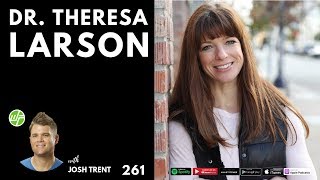
Episode 261 of Wellness Force Radio (YouTube) — host Josh Trent interviews Dr. Theresa (Teresa) Larson, a former Marine Corps officer, doctor of physical therapy, CrossFit coach and author of the memoir Warrior. The interview traces Larson’s childhood (loss of her mother), early athletic identity, Body for Life/fitness obsession, escalation into bulimia, deployment as a Marine and the difficulty of seeking help in a combat zone. The conversation emphasizes recovery: asking for help as courageous, vulnerability as strength, daily practices (breathwork, boundaries, morning routine), and Larson’s ‘‘LOVE’’ pillars (Lead, Open to change, Vulnerability, Elasticity/Endurance). Practical offerings—MovementRx, online programs, and the My New Normal podcast—are mentioned alongside calls-to-action and resources.
Chapters
Ask yourself, you know, if you're a young adult, ask yourself, how are you coping? Do you have anything going on in your life where you just feel empty inside? Find out why that is. I just felt like this was me, and if this is me, I don't want to live like this. All of the ups and downs of life, the loss, the loss of friendships, the loss of loved ones, there's a lot of losses that we go through. So the ability to be able to cope with those losses is very important to build skills, skill in it, because loss will happen.
That's Dr. Teresa Larson, and this is episode 261 of Wellness Force Radio, where we discover the physical and emotional intelligence to live life well. In this podcast, we talk about becoming a warrior. Whether you're a man, woman, mother, or father, it doesn't matter. We all face universal challenges, don't we, when it comes to living our life well, Especially when in this modern, fast paced, sometimes disconnected world. So in order for us to connect with the warrior that lives inside of us, sometimes we need the right fuel source. A story from a warrior who has gone through a threshold after threshold of growth and pain to bring back the lessons. This true archetype of the warrior does not happen easy. And we all have this warrior inside of us. And this is why today I'm both thrilled and honored to welcome Dr. Teresa Larson to the podcast. You know, this was a really touching episode for me. It's been over a year since I've read a book that moved me so much emotionally. Like Dr. Teresa's book, it's called Warrior. A former U.S. marine platoon commander, she's a doctor of physical therapy. She's a CrossFit coach and a mom. She wrote this book. And this podcast is so close to my heart. I am 100% confident you're gonna feel a deep well of inspiration and a new perspective on what it means to be a warrior. We talk about Dr. Teresa's childhood, imprinting how the loss of her mother drove an eating disorder, this bulimia that led her to chase achievement in high school and college, which then took her to the military, where she came face to face with what she called her darkest demon. To learn what it took to love herself, to truly love and accept herself, and how that led her to step into her power to care for others. As a doctor of physical therapy, we talk about addiction and healthy boundaries. We also explore the skill sets required to live and embrace our present moment, which is the most important thing. This is the crazy part about life. I know you can relate to this, where you have the desire to be in the present moment, not be distracted, connect with the people you care about. Yet health and responsibilities and stress and bills and calendar appointments and everything else starts piling up so fast that the present moment becomes a thing of the past. Well, the bedrock, the foundation, the ground floor of being in the present moment is feeling good in our body. This is why, hands down, I love and depend on organifi green juice every single day. You know how much I love organifi products, but specifically this green juice. I've been doubling down on it daily because I just have this sense that right now, in this time of the year, I get to receive more support.
In my immune system.
And the coolest part about this green juice is that it supports mitochondrial health through better stress management. So you're not frying out and cracking out at the middle of the day, reaching for the third cup of coffee. You don't have to do this. It can be a totally different energy system.
I promise.
The better way is the middle way. In fact, we're One study through the Ayurvedic Research Institute recently showed that in chronically stressed adults, those who supplemented with ashwagandha had significantly greater reductions in cortisol compared to the control group. And those taking the highest doses of Ashwagandha had a 30% reduction on average. So you can do this. You can have less stress. Give yourself the gift of more energy and less stress today. Do it through this portable micronutrient greens superfood powder. For literally just a few bucks a day, go to organifi.com use code wellnessforce share this code with your friends, with your family, with your neighbor down the block who's in a bad mood. Whoever you want to get the best discount possible online because Wellness Force was grandfathered in, you get 20% off over at Organifi.com WellnessForce just by using code WellnessForce for 20% off and not just on the green juice on every single product. So you can be present in a.
Body that feels great.
All right, the time is now. The show notes from today are@wellnessforce.com 261. Do not miss the opportunity to learn more about Dr. Teresa Larson. Pick up a copy of Warrior.
Use her story as a mirror of.
Your own Warrior's journey. So now let's take a deep breath in. This might be the first time the entire day where you're taking a deep breath.
Take a quick breath break.
Breathe in for five. Feel your belly and your diaphragm hold in air. Feel how good it feels to pull in as much oxygen as possible. Keep holding it and now exhale slowly for five. Just know that your breath break is always there for you. At any moment during the day, you can always take yourself to that safe place. Do one more 5 second inhale. I want to read you something Teresa wrote me on the inside of her book After I left the interview with her, she said, josh, I found to truly own your life, you must understand your mind, tame your attention, and have the courage to know what you can control and what you cannot. So now let's go to this interview live in person here in San Diego with the one and only Dr. Teresa Larson.
This is such a special moment for me. I talked to you on the phone three times leading up to this podcast and I wrote a bio for you. It's not scripted from anything from your publishers or anything else, but I wrote one based on what you made me feel feel from your book and your path and I'd love to read it. My guest today is a doctor of physical therapy, former Marine Corps engineer and a combat veteran, and the author of Warrior, A memoir spotlighting one woman's powerful and touching story where mindset, self love and overcoming addiction is a lens for her readers to learn that true strength isn't always what it looks like. After battling bulimia on medical leave from the Marine Corps, her hero's journey took her to find wholeness, health and happiness by doing the deepest and most intimate work possible to recover from her eating disorder. Now, as a mother, wife, speaker and wellness influencer who is rapidly rising to be a top voice at the intersection of mental health and movement, her story is that of perseverance and success of a woman who's a model for everyone struggling to conquer their own demons. She believes that asking for help is not an act of weakness, rather an act of courage. And if we choose, that is what we can truly be. A warrior through Dr. Therese Larson. Welcome to Wellness Force.
Thank you, Josh. I'm very excited. That was a amazing intro. Thank you.
You brought it out in me. I have been so looking forward to this. I actually was sick recently, so this is like the coolest moment for me being 100%, getting to be able to do a deep dive, a drop in with you on all things, not just mental health, but also this concept of being a warrior. A warrior is a phrase that's thrown around in wellness and I guess just maybe in media and marketing in the world, but like the true definition of a warrior as you talk about in your book is somebody who's open to being vulnerable.
Yes.
The true warrior leads with their heart and with the sword. I'd like to start our conversation, though. Your TEDx was awesome. We're going to link this in the show notes.
Can I preface that? My TEDX was so. It was eight weeks after I gave birth to my first kid, which I only have one, but it was a nutty time. My brain was, like, so swarming with hormones and just lack of sleep. And I was like, what am I doing? How am I gonna remember what to say on stage? Because the first eight weeks of my life was all, baby, baby. You know? His life was all baby, baby.
Yes.
So it was. That was a huge. Another, like, undertaking. Not just a TedX, but like a. I have a kid now and in business. And how am I gonna talk for 20 minutes without my notes?
Yes. But like a warrior. You did it anyways.
Yeah. I was like, screw it. This is. We're going to do it.
One thing you said, and I think it's a beautiful jumping off point for us, you said the definition of a warrior is taking ownership for yourself.
Yes.
Can you talk about that?
Yeah. So, you know, that was the. More I've. When I wrote the story, wrote my story and have started to talk about it. This concept of warrior is thrown around, and a lot of it's around, like, war heroes and Navy SEALs and professional athletes. And in my eyes, honestly, because I've been both. I've been in war and I've been a professional athlete. And those aren't what make me a warrior. Those aren't what make me a good person or a cool. It's the fact that I am taking ownership of my life, my thoughts, how I act, how I treat people, how I mother, how I am a wife to my husband, all aspects. And in my story, the first step of taking ownership was the asking for help. So that is what a warrior means. And anyone can be that, but not everyone is that because people are disconnected.
And also because the choice of raising one's hand and saying, like, hey, I actually need help right now. Especially from my upbringing. I mean, I was like East County, San Diego, raised where you didn't talk about your feelings. You play football, and if something hurts, you throw dirt and you get back out there. You never complain, you never show weakness. This construct that we're seeing now is totally different. I feel like you truly are one of these voices that is talking to men and women about the power of authenticity and how it actually is A stroke of power, authenticity and vulnerability, or stroke of power. It's not something to be shameful about or put into a darkness.
No, you can be an extremely success. However you define success, right? Like the. Whether you define it by money, fame, whatever it is, the, the, the lay, the authentic layer to you has to be there of admitting when you need help with something. It can't just be. You can't be all facade, that. That's not success. If you make a ton of money, but you, you really don't know yourself and you're unhealthy, then that's not really success, I felt. Or if you're just all about fame, right, and there's no depth to you and you're not willing to share with your own wife or husband the fact that you, you know, you're struggling with your time or that you can't even tell them you love them on a daily basis, like that's. Then you're not successful. So there's that, that deeper layer that we see in people who, you know, you see people in the media who've done all these things, yet the underlying aspect of them and being able to be vulnerable, like the ones that I, the celebrities and the people who I really admire don't necessarily have the most following, but they're the ones that are most authentic, sharing their truth, being able to be vulnerable, sharing that they have a mental condition. Look at, you know, I met Debbie Phelps not too long ago and her son, you know, she raised a champion, Michael Phelps. But Michael Phelps has had mental struggles, too. And I'm very thankful that he opened up about it, because anyone of his caliber, anyone striving to be that caliber, trying to be. Striving to be the best, it's a struggle, because if you're expected to every time when you get in the pool to be a world champion, that's a lot of pressure. Yeah, right. Every time I went out of the wire, I didn't want to lose anyone. It's a lot of pressure. No one in their right mind isn't going to struggle with that kind of pressure. It's. But it's the support of the community and being able to, you know, for me, as a Marine, the support of a condition like I had, I waited a long time to ask for help, but people don't have to, shouldn't have to wait that long. There should be support already there for these individuals who are going to war, for these individuals that are, you know, as we grow up and get into sports, like the ability to Teach our children how to cope. Well, that should be there. And it shouldn't be like a. You can be extremely successful and extremely. Can be with extreme. Being extremely vulnerable. Like, they don't have to be separate. And that's the thing I find more power. The more vulnerable I am, the more real I am. Let's cut the bullshit out and actually talk about real stuff. Like, I am successful, but I also struggle.
And I would say that's the case for most high achievers. If you look at anyone that's ever created anything meaningful, they've had to go through their shit. But what's fascinating to me is we look at the kind of stigma around mental health. And I was looking at some research earlier today. 30 million people of all ages and genders suffer from eating disorder in the U.S. but eating disorders, really all seeds of addiction start in the garden of childhood. The imprinting from 0 to 7. Like, that's where all addiction is really planted. And this is really what happened for you, for all people that have some type of an addiction that they move away from, that they transcend. And it happened like you were, I think, in a log cabin. As a young, young girl drove in a log cabin, you had this, like, where. Where was the log cabin?
So it was in a small town called Woodway outside of Seattle, Washington.
Yeah, yeah, you were there and two brothers, your mother, your father. He was a commodities broker before. And you had this environment that started really early where about kind of achievement. And it was about like being not an echelon of perfection, but it was about achievement. How early in your life did you know that when you achieved, you were loved?
Well, from what I can remember, it's, you know, I started in sports when I was, gosh, like four or five. Like running or.
You do when you were four.
Okay.
Like basketball. Yeah, co ed basketball, which was great. And then running, cross country. I basically did what my brothers did, but it wasn't until, like when I like the memories of it. When my mother passed away. I think that's when I was 10 when that happened, when I really started to feel like there's a lot of pressure on me. I think she was a good balance in my family of I don't care if you win or lose, you know, just go and do it and have fun. My dad, on the other hand, was a little bit different. It's like, no, you're going to go for A's, you're going to get A's. If you don't get A's, why, you know you don't do well in sports. Well, practice more like, I want to see you be successful there. So I think that the fact that there wasn't that balanced mother, father anymore was what. Where I felt. Started to feel the pressure, and I started to feel that pressure. I talked a little bit about it in my book. Like, I actually had to stand up to my dad a number of times, and he did come through in the end of. Wow, okay. I'm. I'm actually not helping my daughter.
Yeah.
But it took a little while. It took me kind of being the squeaky wheel and like, you know, summing up the courage to. To confront him because he was a. He was a. He was a tough. He reigned. He kind of ruled our house with tough love.
Yeah. You said he ran the family as if it was a military unit.
Right.
Did he run it the same way when your mom was still around, or was that different when she was around?
It was different.
It was different.
My mom. I mean, my mom struggled with breast cancer for six years. You know, six years of my 10 years I knew her, so it was different. There was a. We. Six years of my life we spent going to medical appointments and making sure the home. She was comfortable at home and caring for her, essentially. My dad and I cared for. My brothers were around, but they were, you know, getting into their late early teens, so sports and friends were. And I don't actually remember them a lot during those earlier years, just because I was really little, but it was my dad and I, my mom taking care of my mom, and there was a sense of. I mean, my mom was his everything. So we threw our time and energy into her, and maybe I would run his. So he had a vending business. When my mom got sick, he started a vending business so he could be home with her during the day, and he'd work at night. And sometimes I would go and work with him at night just to, like, help him and make sure he stayed awake. Yeah, I would get free pies and stuff if I helped him. So there was. There was a. The household became this area, like, just place of healing, you know, and taking care of my mother. When she passed, that shifted to, all right, drive, like, make something of yourself, and you need to get good grades. You need to do well in sports.
This was almost like an inflection point in your hero's journey where you had the motherly support for so long. And then I think it was six years. Right. That she was battling breast cancer. But there was such a touching moment that I Wanted to explore with you. And it was where she asked you to sing her song from the Phantom of the Opera. Why was that so special between you two?
Well, so the Phantom of the Opera. You're gonna make me tear up. It was. That's such a special musical. Like, I loved the music and I would. I played the piano growing up. So, like. And she was a beautiful pianist singer. And pianist. I'm not the singer. Eventually I might take singing lessons, but she's beautiful pianist, singer, loved that musical. And we went together three times before she passed away. One of the times, like, she was on chemotherapy and like, basically terminal, you know, maybe had six months to live. But we were determined to go. We went to Vancouver. So it was like a two and a half hour, three hour drive. And I even think I talked about this in the book. Like, the drive back was we had to leave early because she was just really struggling and had to take her to the hospital. But when she was in this kind of final stages, when hospice was there and people were coming in and bringing us food, she was in and out of consciousness. But that was so I thought. But she was fully alert. She just wasn't showing it. And so I was like, well, I don't really have confidence in my voice, but I'm going to sing to her, you know. And I hadn't really gotten much response from her, but I was like, I'm just gonna sit here and sing. And, you know, the one song that really was touching was Wishing youg Were Somehow Here Again. Which is what I ended up playing after she passed away, too, for a number of years. It's just a beautiful song. And no one cannot cry if they've ever lost someone close to them with that song. It's a beautiful song. But I remember singing to her and finishing and kind of it was only me in the house and her. And she, like, woke up and smiled. And I was super stoked about that. But also like, oh, she heard me. She wasn't.
Did I sing well enough? So I was picturing that and I was. There's so many touching moments in the book that I want to go over with you. But after she passed, she said something that I think rings true for a lot of people. And it's also hard to swallow. It's hard to accept. And she told you, Teresa, life is not fair, but you must keep moving forward. And for me, the gravitas of that was sometimes really crazy shit happens in this world and people that we care about deeply, that we love the most in the world leave and life isn't fair. How often do you pull upon what she told you in your life since then?
All the time, actually. I mean, because to say my life doesn't have struggle now, it's not true. It does. Every week there's something, or every day there can be something. But in those moments, there have been moments when I don't feel like, especially when I was in my recovery phase of facing the Marine Corps and asking for help. It wasn't easy doing that. It was just an uphill battle just because of the lack of understanding. I mean, even if you share your story, you know, society doesn't understand eating disorders, and not that I talk about those exclusively anymore, it's all of the ups and downs of life. The loss, the loss of friendships, the loss of loved ones. There's a lot of losses that we go through. So the ability to be able to cope with those losses is very important to build skill in it, because loss will happen. And there have been times in my life I haven't wanted to go on. Like, I've been so blinded by my perspective, my lack of perspective, that I haven't wanted to go on. And her voice always comes through. It's like, it has to. There's no choice. And it's. You know, actually, in the last couple months with the companies I'm working with, there's been a couple companies that have had suicides. You know, someone in a local gym committed suicide. Like, it's. It's out there. People are taking their own life. And I don't care if people don't like this, this message, but it's selfish to take your own life. God gave the. God gave you this life. You were given this life as a gift. I don't care what you believe in, but you've been given this life. Respect it. There is a way out. And so even when my darkest moments of when I felt, yeah, what am I doing here? Life has to go on. You'll figure it out. Like, there is hope. Give it a day. Take a breath. There are coping skills I have now, but it's selfish to take your own life.
Not everyone has the coping skills, which is why you do some of the work that you do to teach them these coping skills. And it's. I mean, Anthony Bourdain, Kate Spade, like, we're seeing people take their life way too early, and it's because I don't think they have the skills, or maybe they've been able to learn them, but they've rejected the skills at some point, going back to the seeds being sown in childhood of, like, that's where all addiction comes from for you and for so many millions of people, 30 plus million people in America, it really came from needing something that wasn't given. There was something in that phase of life where going throughout school, I think you mentioned you kind of felt like an outsider. It wasn't until you found softball that you really found your lane, found your power. What do you think you truly needed in that time?
Well, I needed to be seen. You know, I think that was as a kid again. The shift happened after my mother passed away. It was. I went from being this really kind of outgoing little girl to pretty. Pretty much more introverted.
I'd play teenagers, which was a shocker to me. I was like, how is she a speaker and author and she's an introvert.
I would play like Teenage Mutant Ninja Turtles on my own with a couple friends. You know, I'd go from being, you know, the life of the party to this very quiet, withdrawn little girl and. But I needed to find, you know, as a young person growing up, I. I thrived off of accomplishment. I got that feedback from my family. Whoa, you're like the best basketball player in this, the Metro League. You're getting so much attention. You could do this with your life, you know, you're going to do something with yourself. Think big, but you got to practice all the time. So when I started softball, I just. I was on. I'm a pitcher. So it was like, there I am on my own, just me and the catcher.
Yeah.
You know, and it was like a game within a game. That's what it was. That's the pitcher and catcher relationship.
You said it felt like an island, like it was a place where you could be in control.
It was. You can, especially if you're really, really good at what you do. A nice. I drove myself to be the best because I liked that control. But it gave me affirmation, too, that I was good, I can make something to myself. It made my dad proud. It made my classmates proud. It gave me friends. Superficial or not, it gave me friends. And that led me into high school, where I was kind of known as the jock and really good at sports, softball, cross country, basketball. But I really still wasn't, you know, I. I didn't know how to love myself or take care of myself still, because I. It was built off of this needing to win and needing to be the best. So you can imagine what that's like if you don't Win. Your day is ruined. Like, my day was ruined. I felt horrible, sick to my stomach, my heart sinking, like, so I had to win, and I had to have people saying good things about me. And, you know, that just doesn't go away. Like, I can. I am on a journey, and I think any athlete who has done. Who's really driven to be the best can relate to this, because you see a lot of athletes, when they're done playing, they kind of lose themselves and they don't know who they are. After being a Marine, what are you doing? Like, I went through these big things where I had to shift into something different. But all the while, I'm the same human being, the same caring, introverted, loving human being. I just didn't know that when I was young. I didn't know that I was more than just what I looked like and what I accomplished.
It's almost like the part of the identity that's deeply embedded in the brain has to relearn itself. Like, you went through three big identity transitions.
Oh, yeah.
So being the athlete and then doing this incredible Fit for Life challenge, by the way, was that Bill Phillips?
That was the Body for Life.
Body for Life.
We call it Fit for Life because of the copyright of the name.
And then military, and then now physical therapist, doctor Physical therapy, and a mom. But let's go back to the Fit for Life because that really was where, like, kind of the demon came out from the book. Like, doing that challenge is where the demon really started to get its roots.
Well, I found. I mean, shoot, you see this in the fitness industry. I found, like, when I got to college and I started this program, and really, it started out of good, in good faith. Like, my dad needed help. My dad had lost the love of his life. He was on his own. He was actually transitioning to go into the seminary, and. But he was.
The seminary is where they were priests.
Yeah. He became a second vocation Catholic priest, which is very rare. But he, like, he was, like, 45 pounds overweight, but for a really big, tall guy, like, you really couldn't tell too much. Like, he didn't look obese, but he definitely wasn't. He didn't feel good. So my brother, the brothers and I were like, let's do this Body for Life program. And I was like, cool. And so for Christmas, we all gave each other supplements. I was like, I literally have the best photo. We even had a family photo shoot, like, where we all got tan. And, like, that's how obsessed my family got with this Body for Life challenge, all of us. I just so happened to be the one that won. But I felt like my dad deserved. He deserved it because he just. He dropped so much weight. Felt like an athlete again, you know, kind of got a purpose back for himself, which he needed. But, yes, the eating demon. What I learned from the program was, oh, my gosh, you can change your body so quickly through food and exercise. I didn't really know how to exercise. It's not like my college strength and conditioning coach, he might probably is going to be listening to this because he's. He didn't really teach me too much. I'll be honest. He knows way more now than he did. Yeah, but, you know, like, strength and conditioning was all right. We're gonna. We're gonna do one set of 10 reps of everything. That was the strength and conditioning, you know. So I did the body for life with my collegiate softball stuff. With the Marine Corps training on top of eating six meals a day, Like, I was obsessed. I did the whole EAS thing, and I changed. I mean, I. I got super lean. I put on lean body mass, did fitness modeling for EAs and Muscle Milk. And so that was where the obsession and I started to do the, you know, free meal. I was like, oh, my gosh, it's free days. You know, this could be a trigger for some people. This free day is perfect.
So you're perfect the whole week, and then you get one day where you can just eat a whole pizza. And I would a tub of ice cream.
And that was really awesome initially. And then it wasn't because I overdid it. Like, my friends and I got my friends on it, we would eat till we wanted to puke. And some of my best girlfriends remember that. And we didn't think anything of it at the time, but you just sort of like, yeah. And then the six days, but you're actually. You just feel like you're in this hangover for a few days after. Like, it doesn't feel good at all. And I was like, this can't be healthy. But now add on the pressure of, you know, being being a collegiate athlete and the pressure of being. Wanting to be the best and having to have all these titles. And then going into the Marine Corps, it took that eating perfection to the next level. Because now people identify to me as, you're this fitness guru. You're a fitness model. You look the part. Teach us what you know. You're in the Marine Corps. You're a Marine officer. Like, you have to. If you're Gonna lead these young men and women. You better lead from the front and look the part, you know, don't. You don't want to. You're not supposed to date anyone that's anywhere in remotely near your unit. Don't act like a typical woman, as my. Some of my colleagues would tell me, which I think is just bs, you know, just. There was just all this, like, information I was getting. Don't be the stereotypical woman, you know? What does that mean?
It's almost like the, the more pressure, though, the more responsibility that someone has who might have, like the beginnings of any kind of addiction. We're just talking about the food one now. But, but the more pressure that a human being has, the more it exacerbates that kind of undealt with demon. So you went from, you know, achieving in collegiate sports to like, I think you got an award as well. And so people were looking up to you. So that added to the pressure. And then you got to the military and here you are in command of people.
Yeah.
So where did you go in your heart internally then? Was it coming from a place of. I don't know what to do, so I'm just gonna get control however I want? What was that?
It was. So it's. I'll tell you this. The way it feels, you feel like you're in a dark hole because you feel very out of control. Like, oh my gosh, what's gonna happen today that's gonna make me feel like I don't have control or I don't know if I can handle this loss, this game, or I don't know if I can this person who drives me nuts. Right. It's basically letting everything else take control of your emotions. So you don't know where your emotions are gonna go that day. However, you look calm, cool and collected and put together, and you should stay that way because if you show that you're weak, so don't show it, but you don't know how you're going to react. So I didn't know how to cope with what I was dealing with. These normal stressors of being a Marine officer, pretty normal stressors. I just didn't know how to cope with it. And it feels like, like I, I. My dad would tell me, obviously pray. So yes, I would pray and I would talk to my mom and think about, you know, those, those things, but they didn't really help because I didn't know my. I know, I know how to pray. But praying isn't necessarily going to help you build self Love, Like, I didn't understand. And actually, the biggest thing to understand is your physiology, like, how the brain and body are connected. And so just praying and just sitting there in your head is not the place to be. Like, there has to be an action to take. There has to be a physical thing that you do to step out of. Change that channel. But I didn't know that. And no psychologist I saw it told me that. Right. It was always like, let's talk about this. Let's talk about all your problems and why here's the medication. Well, that's not gonna help me. So all I can say is that anyone with an addiction or addicting behaviors. Your phone. You know, if you're addicted to feeling, like, you need to know who likes you. Right? That's an addiction. And anxiety.
Yes. How many likes I get on social media.
It can be a black hole of you. You need this constant reinforcement from the outside to tell you you're worthy. And if you're not getting it, you feel empty. And in a way, it was. It was super lonely because I have. I had a mother who's very loving. I have a father who's loving, you know, and brothers. And I grew up with a decent upbringing, you know, and great education. And I feel so empty. And why do I feel empty? Am I worth something? Like, and so you. You. The further you get away from your. Who you are, knowing who you are, which I didn't really even know who I was for the longest time, the more you just feel like, is this even worth it?
Yeah.
And imagine it's just all I can. I mean, I'm like, feel the feelings welling up. It's the worst place you want to be. Is that feeling far away from who you are?
You talked about this in your TEDx. It's not really, like, a food issue. You know, eating disorders really aren't about food. It's about any addiction that starts in the soul. It's a lack of belief in oneself. It's a true connection to who the hell we actually are.
Right. And you know what? Sometimes, though, as a young kid, I don't think I knew that this was developing. Like, you don't. I think I was so unaware. Right. Just of.
You're just dealing. Your mom died. Like, you're stepping up to the plate.
And I think even my own, you know, parents listening might say, like, they might be unaware. They. They might be unaware of their children. Like, I. They're. My dad didn't know that this was happening. He didn't. I think he was struggling with his own coping. And so it's like there's, you know, coaches. My coaches didn't know. They were like, you're just. You're a superstar. Like, you're good. Well, no, I wasn't good. You know, I know now when I work with people, you can look great on the outside and have all the successes and letters behind your name, but I want to know how you are, how you handle stress, and how are you coping with what you're dealing with? Like, those questions matter. No one ever asked me those questions. And not to fault people for that, but anyone listening, think about that. If you are a parent or if you're a kid, ask yourself, you know, if you're a young adult, ask yourself, how are you coping? Do you have anything going on in your life where you just feel empty inside? Well, find out why that is, because that wasn't. I just felt like this was me, and if this is me, I don't want to live like this. What's the point on living?
There was so much expectation. That's really what it is. It's like people have expectations for others that are projected onto them. When you were at the trail end of your military career, there was this moment where you were like, okay, I actually need help. You were on the phone with your doctor from Villanova, your old doctor, and she said, you can't heal yourself in a combat zone. And to me, I was listening to the book and I just laughed out loud. I'm like, how is she supposed to heal an eating disorder, which is really an internal war, when she was in a physical war with guns and bullets and bombs going off? I mean, how is that a perfect mirror and a construct for anyone trying to heal anything? If they're in a war, they can't heal the war within themselves.
So that's. That's the thing, though. I felt like, oh, yeah, being in this war is going to. It's going to kick it out of me. Being in this stressful environment. That's my psychology at the time was like, yeah, you know, when I got this eating issue, I know it's an issue because my boyfriend told me, like, my roommate were like, you got an issue. We need to address this. Yeah, going to war will help that because I won't have time for it. Little did I know, you know, that that was not the case. Now I'll tell you this. Any Marine listening or military member can. I've had people say, well, why didn't you just handle it before you left? Or like, start, you know, you didn't have to deploy. I'm like, I was trained to be a Marine Corps officer, a leader. So I don't leave. I do what my platoon does. I was trained for mission accomplishment and troop welfare, so I was really good at taking care of other people. Any good Marine officer can relate to that. Like, you do your mission and you forget. You don't forget about yourself. You're not supposed to, but that's kind of what happens. Everyone else comes first. Leaders eat last. Like the Simon Sinek thing, which I don't think actually is a great tagline. Sorry, Simon Sinek, I really like you, but, you know, like, no, actually, leaders, it's okay to eat first. Not in a selfish way, but in a way that you can help impact others. There are selfish ways. You know, we can lead, but I'm not talking about those.
Being in a place where you're like, okay, I have to change. I'm not exactly sure how you get this call or you called her, and.
Then you're in the war zone.
How did you actually make that transition?
So the psychology of me thinking I could take care of myself clearly went out the door. When I got there, I was like, no, this is worse.
Yeah.
And in the book, you'll hear all the great advice I got from the chaplain, too. Not great advice.
Which they didn't at that time, didn't even know what eating disorders were.
No, like, there was just, like, a. Okay, so maybe you should go see PTSD doc over there.
Yeah.
PTSD doc was like, so what's the bulimia? What's symptoms of bulimia?
Huh?
Yeah, I got all kinds of advice, and everyone did, I think, the best they could. But there also was, I think, this underlying. Because who goes to a chaplain when you need people that need help, but oftentimes people that want to not deploy, they want to get out of there. And that was the last thing I wanted was to leave. You know, that was what I was fearful of. This female Marine leaving Iraq. That's kind of the stereotype. That was the stereotype that I was told I didn't want to be that, but I felt like he was automatically judging me. I can. I assume. No, I shouldn't assume, but that was the energy I got from. Oh, you're. You're one of those.
Do you feel like. And this is your metaphor from being in the military and leaving on medical. But do you feel like when people are going through a struggle that's impacting their work, the reason they don't say their struggle is because they have fear of retribution. They have fear of being judged.
Oh, yeah.
And that just further ingrains the actual demon itself.
Yes. So it does. And when we can go into that, because that's part of the work I do now with company leaders. But the. The conversation with the doctor when she was on the phone, and she was like, there's no way you're going to heal yourself in a war zone. It. It reminded me of the letters, too, that my dad had sent me, which a lot of them revolve revolved around. Like, you're at war with yourself. Let's be honest.
He knew the whole time in the.
Military, and he really struggled with me being out there and what I was doing to myself. And so he didn't tell me what to do, but he's like, put it in perspective. The Marine Corps will go on. It's a big green machine. It always will. But you won't. You matter. So if you got to believe, you matter. Do something. So that's kind of what really got me, was the fact that this man, who I'd grown to love and love even more, had lost his wife, and he was struggling because of me. It's that whole, like, you commit suicide. Who else do you affect? You affect everyone around you. Me hurting myself is going to affect everyone else around me if I continue my Marines, too. Like, running convoys in a war zone, like, that's not healthy if my mind is elsewhere. So it was seeing him hurt. He tried not to show it too much, but seeing him hurt and seeing that, wow, this lack of attention to detail is going to hurt my Marines if I don't. I mean, I'm lucky. I've been lucky. No one's been hurt or myself, but it could happen. And I don't believe that me being at 40, 50% of my max capacity mental capacity is okay.
How many people are operating at that, too? Because food is one thing. Overworking, being on social media. Alcohol is huge. We live in a society right now where there are so many tools of distraction and so many ways that people can kind of get sucked in, like the tentacle of the monster or the demon wraps around their leg. And there's almost like this, well, if my will says I can keep going, then I will, until one moment when the wheels totally fall off the wagon. But there's a narrative that people tell themselves. And you actually told yourself this too. You're like, you know what? I can do this. I'm not gonna ask for help. I'm a warrior. And it's interesting how the warrior reframed from I'm only a warrior if I don't need any help. Because warriors don't need help versus I'm a warrior and warriors ask for help. When did that shift actually occur? Like, when did you get clarity on that shift?
So when I came home, after I got home, I talked to a friend of mine who was a JAG officer, he was a judge advocate, He's a lawyer in the Marine Corps. Those guys and gals see so much crazy stuff. But he, he put it in perspective for me. He was like, Teresa, let's put it this way. You had the courage. Because I was, you know, standing in front of my commander and he's like, you're a disappointment. Like, why would you do this to me? That kind of B.S. it's like, do this to you. Like, there are plenty of other officers that could take my place. You know, I knew that, but not gonna say that to lieutenant colonel as a young lieutenant. So my judge advocate friend told me, he's like, it took courage to do that. And that is a sign of strength. More Marines need to learn to do that. Because a lot of the problems that we deal with in the legal system is because people are just, they can't ask for help and they're wanting to do it on their own, are too hard headed. And he's like, I want you to know that even though you're gonna be put under fire right now, and like people are going to tell you all kinds of things and there's lots of rumors about you now, just know that what you did took a lot of courage and that's what a leader should do. And so it just, you know, I think hearing that from my friend versus just family, like my dad was really proud of me. My older brother at the time was, he was very empathetic. But hearing that from a friend from afar was just like, okay to keep that message in my mind. Remember that.
The journey of healing addiction, it's like, in a way, I'd love your thoughts on this. It's almost like the actual awareness of it never goes away. Because once you're aware of the addiction being there, there can always be a backsliding. If one doesn't do their work, if one doesn't stay on point. How do you stay on point for you now? What keeps you centered and keeps you far away from ever going to addiction again? For the people that are listening that might be struggling with addiction or might be recovering?
Yeah. So addiction is all, all around us, especially with tech, right? And food. Food is an easy access. Like it is the easy access and.
We have to do it all day long, right?
So what keeps me centered is things like little simple things like where. Where am I spending my time? Like my time. And it's all based around physical action. So where am I spending my time? Like, the work I do has to be something that fills my cup. And there has to be. Since I'm introverted, even though I have these big moments of extroverted energy, I need to have the balance of the quiet. So where I spend my time, I don't. Don't mess around with my evenings and mornings. Those polar times the day are huge. That means shutting off my phone at a certain point. I don't turn it on until a certain point. I don't look at it after a certain point. Social media is. I only have access to that a number of times a day. And it's not like I think I spend a max of like 15 to 20 minutes on it because I use a. If I have to put something out, it's based on a program. I'm not sitting there just scrolling. I can't do that. So I have boundaries around that. My attention, I don't want my attention to be there. My attention needs to be on myself and what I'm doing for my family and my work. So those are the things that cause distractions. So my time is spent on the things I love and the mornings and evenings are with those I love. So my husband and son. So I can be centered and focused on them and my attention. So it's a lot of my work now is done because every day there come, you know, there's conflict that comes up. There's always a problem or conflict, good and bad, that's going to come up. So it's really how I handle it. How effectively can I move past hard things? Whether it's a relationship or a business deal or being able to put this thing in its place, it's how I react to it that matters. So my work, my internal work and the breath work. I do, the reading I do the writing I do, which is all part of my morning routine. I do have morning. I do have a morning routine that I do without my phone. It's. I write, I listen to an audiobook or read my book. Actually, the book I'm reading is called the Darkest Soul right now. And it's by a veteran and I can't actually remember his name at the time because it's not like a normal name, but I read, I write, and I do my breath work and that sets me up for my day. But I make sure that what I'm putting into my mind are things that will help strengthen, do the reps on handling the conflicts in my life.
Yeah, the healthy. I love the way you described your healthy boundaries. Like, there are sacred times during the day where certain things happen and things don't ever get in the way of that. So do you guard those at knife point?
Yeah. So, I mean, because I've been asked to be on boards. Right. For various veteran organizations. Or can you help us out, be an advisor for this committee? Like, when is it at night? Nope, not doing it. Like, oh, you want to go hang out and have a drink? Well, I'm not currently drinking, but no, I don't want to actually be out typically. Unless I really, really, really like you, you'll know. Yes, but it's way weekends. Like, where. What am I doing? I just did a talk in Columbus that had to be really meaningful for me to go out there. And it's a quick turnaround because I don't want to miss my son's bedtime too many times or in the mornings, the time I have with him. Those times are so sacred. You don't know if you have tomorrow. You know, you don't, like, after anyone who's ever lost anyone or been through something hard, you know that life is super precious and your time is precious. So don't fuck around. Like. And so if you're going to fly me out somewhere, it's going to be quick unless you bring my family and it's going to be a very important mission.
Yeah. This power, this strength around what you're willing to do versus what you're not willing to do, that was forged for you from what you've been through. Not everybody has really the gift of the adversity like you've had, although it's a tremendous adversity. I mean, I've never lost anyone. I haven't lost a parent. I lost my grandfather, who I was deeply connected to. But for people that have lost a mother, a father, like somebody that they really loved with all of their heart, how do you maintain somewhat of a North Star in your life, knowing that they're not a part of your life anymore?
So that's a very, you know, that's a question that I struggle with. I have to be the North Star for myself. Like, I, I get sad sometimes about because I have a son and it really brings up. And you know, I see friends of mine, like their moms are coming into town to help them with their babies and you know, grandpa and grandma are around and I have wonderful in laws who come and love Magnus and love me. I miss my own parents. So it's. I have those breakdown moments of like, man, I really wish they were here to see him. And so I still have a lot of grieving that I'm doing around them. But what I do center my focus on is the fact that I had them. And I have wonderful pictures of them and I have stories of them and they're in me. And if my dad taught me one thing is to be your own hero and you can't, you know, I have my faith, but my faith, my God gave me the gift of life. I have the ability to be healthy, to make the good, make good decisions and to look around me at the people who love me. So my husband can't make me happy. I'm happy with him. I can be the only one to make me happy. I don't need my mother and father here to parent my child. Would I love them here they are here. But I am happy that they gave me tools to be a good mother. I don't read any freaking books about parenthood either. I'm just like figuring it out. But I think that's almost better.
Yes.
Yeah, we're good. He's alive, he's eating well. We're good.
Teresa, I.
This is why I was so thrilled.
And honored to talk with you. Because this conversation about the truth, uniquely your truth, anyone's listening who their truth is this concept that you talked about at the very end of the book. And everyone's going to read this book. It's going to be linked in the show notes. We're going to be doing a Q and a about your book and the Wellness Force community. Like, there's so many lessons about this book, but one of the phrases that really hit me when I felt emotional when you were sharing right now is that you embrace vulnerability now more than ever. You said I pull from a reservoir deep within side myself. We all face wars inside of us. Some are self doubt, regret, loneliness, fear of failure and the need to be in control. But we have weapons. Our weapons are love, good friends, healthy exercise, healthy eating, rest, and living in each and every moment. Yes, just the moment. The present moment is actually the skill set that is under most attack right now in the world. Being here in this moment with you fills me up. It makes me feel like a human being. How do people cultivate the skill of the present moment so that they can have some tools to fight the war. I mean, really, we're warriors here in this modern world.
Yes. Well, they have to let go of distraction, you know, be. Life is chaotic as it is, so the things that will distract us the most are technology. So put those away. You know, don't have them on the dinner table. Don't be on your phone when you go out to lunch with your family or whatever. Like, have those things away. And then when you are with. When you're doing a task, whatever task it is, it could be cleaning a freaking toilet or doing the dishes. Be doing just that task, you know, stop the multi. You know, mothers will say I'm great at multitasking. Well, it's. Multitasking actually makes you really ineffective and really scatterbrained. I am the first to admit that I feel like a freaking crazy person when I'm multitasking.
But you can walk and listen to an audiobook.
You totally can.
Because that's more self care aligned.
Yes, well, you can. Yeah. Sometimes me walking and doing anything else is tough, but, yes, you. I do. I go for a walk with my son and I'll listen to Donnybrook, or even better, I just talk with him. And we look at diggers and, you know, big trees and all the weird things that he's seen now and amazing things. But I think it's the key is, like, clear your attention when you're feeling overwhelmed. Look at your surroundings. It's like, look at survival. Like, think about yourself. Like, imagine yourself in the woods and, you know, you're a freaking prey. You're an animal prey. Like, people are probably hunting you. Bones freaking, you know, sorry, I'm saying that a lot now. This is the Marine.
It's better than the F word.
So we got, you know, people wanting something from you. Traffic. You just clear those things away. Like, let those things go and be present with the person in front of you. Because that dopamine response you're gonna get is gonna be so much greater than worrying about all of the tasks. So start. But you can't just, like, expect that that's gonna happen by you and me talking here. I can totally be thinking about a million other things, right? But I'm choosing to say no to those and saying I want to focus here right now.
This is why people love podcasting, because they're with us in the present moment. We're all connecting in a present moment. And this is why community, you know, so many things we've Heard from Gabor, mate. The opposite of addiction is human connection. We understand that for people to actually connect, it takes them to take a deep breath and drop into that connection. To not have their phone around. There's certain ways of being. You talk about these ways of being, and it's really cool. It's the four principles, really, that you talk about in your TEDx. And it's love.
Love. Oh, yeah.
This is so beautiful because it's lead. What is the first one?
Lead.
Let's lead. You first.
Lead.
You first. Yep.
You can't fill anybody else's cup if your cup is empty.
Yes. And the only way you're going to fill it up is by getting in touch with who you are. Spending some time alone. You know, I don't, you know, spending time alone, doing nothing, just breathing. Maybe you write, like, sometimes I'll sit here and I'll write whatever's on my mind. There's no clear sentences. It might be just a bunch of bullet points, but just like, what do I want to write about? This is what's on my mind. Blah. You know, it's.
I love. On the front of your journal, it says pause.
Yes. That's the word of the year for me. Because it's I. It's part of the skillful way of reacting to things. Right. We all have to react. It's how we react. But we pause before you say, send that message or say that thing or judge or assume. You make an ass out of yourself if you assume. That's very much helped me in business and in life. Relationships are part of business. But I've definitely laid into people in my life based on just like, can we just get off our freaking phones for once? Let's put them down. Let's focus. However, there are times when my feedback. I've had to pause and just say, you know what? Where's this person coming from first? This is probably why they're acting this way. Let's find out.
Yeah.
Before, like, judging them.
Which leads to your second pillar. This is being open to change. I wrote down when I was looking at your video. Seeking out help is a strength. Breath, meditation and slowing down. Sometimes being open to change means pausing to actually see what the change is.
Yes. Giving yourself a chance. Giving, like waiting.
Being patient, which is sometimes so hard.
It's so hard. Like I look at business relationships, the relationships I cultivated two or three years ago are now coming to fruition. Right. The things that we're doing together, it takes so much time. And so, you know, being. Being able to be patient with that. The. The team I had three years ago is much different than the team I have now. Like, the right people on the bus matter, but sometimes you don't know until you try. But most of the work we're doing now is because of relationships built back in the day.
Yeah.
And the compound interest of doing breathwork every day is not going to just affect you that day. It may affect you a little, but it's the compound interest of doing it on a daily basis. The reps. The reps of writing, the reps of getting up. It's five to just spend some time alone before my little one gets up and I train and then I go into my day. It's the reps of saying no to sugar, which I'm now doing again. It's like. And how that's affected my brain and my body and how much clearer I feel.
We're sitting here because of the testament to the compounding. You're talking about Anders Varner, I think episode 160 something on Wellness Force, which we talked about how it was so hard for him to slow down, and he actually talked about you on that podcast. Yeah. Because he was like, if it wasn't for Dr. T, I wouldn't have learned about meditation, and I wouldn't be talking to him and you and I wouldn't really be talking right now if it wasn't for that compounding. So I just want to. I just want to put that on a spotlight. Like, when we're doing work on ourselves. These reps, the meditation, the breathing, these aren't just things that are facades or that get to be placated. I mean, having a morning where you can do 30 minutes of meditation and 10 minutes of breath work, that can compound to a year later having a moment where you maybe call in the love of your life. Like, all these things, we can't tail the future. But those building blocks every single day, they're so powerful. They're so important.
They are. And they are things that will. They will stand the test of time no matter what changes in tech. Right. Or whatever happens in the work I do or my book or what's going. What's happening with the book or what's happening with my work or with my growing family. Those will be principles that will be with me till the day I die. Like, no drug, no cool new experience or no. Nothing is going to get in the way of that. It can't. Because that is the premise of what keeps me healthy to do that work and helps me make Decisions on is this actually. This is a bunch of fluff or is this actually good for me?
Which is the next one? That's vulnerability. So L O V for vulnerability. Being open and courageous to share oneself. And that's all of oneself. The dirty, the dark, the not so sexy, like the real. That's a skill set that's. That could take a year of its own to just focus on. Vulnerability.
Yes.
Why did you choose that? I love the acronym, by the way, so.
Well, yeah, the love principles are key. It's key in my message, Key in my life, actually. Obviously, vulnerability. Because I have found when, especially through writing that memoir and then sharing my story with. I started sharing it with my adaptive athletes, the ones I coach. And when I shared my story with them for the first, I felt like, kind of embarrassed because I'm like, you know, I still kind of looked down on eating disorders and like, wow, I had an eating disorder. You lost your leg? Yeah. You know, I felt like I was. I was comparing it in my mind. That's rule number one. Don't do that. You are a unique person. Your issues are your issues. You never know. However, someone else is struggling too. And usually physical wounds come with mental wounds too. And I don't. I don't think I knew and respected the level that invisible wounds, the toll they take on people. So by sharing my story with the adaptive athletes, they were like, oh, my gosh, thank you so much. They didn't have any loss of respect for me. They were like. One of them was like, I struggle with alcoholism. I struggle with alcoholism. Yeah. I struggle with depression. I've wanted to commit suicide a number of times. And so hearing that was like, wow, okay, maybe I need to start sharing this more. Because then they felt more comfortable with me and started opening up. And through actually writing this, many people reached out and were like, now I'm asking for help because I was scared. I feel like you have everything together. That's what people. It's so interesting. By no means do I want to ever act like I have everything together. And never, never do I want to come across that way. I am a human, chaotic human being with all kinds of things.
But you have these core pillars, these fundamentals that are based on love, that are based on self care.
Yeah, I'm real. I'm a real person and that. So I think by me sharing my vulnerability, it was like, wow, she opened up about it in that way. I can do that because I'm really struggling and my life is also suffering, but I'm scared But. But with fear. On the other side of that is courage. So that's why vulnerability is so important, because it's not like you have to share, like a memoir with people. You don't have to do that. I knew that exposing myself would expose myself to all kinds of people. I got all kinds of feedback. But you don't have to do that. You just share it with people you love.
Yeah.
And by that, by doing that, that will build the rep of taking care of yourself.
And there's the last and final rep, which is really about being oneself, being the deepest human you possibly can be. And that is understanding that it's the endurance. We're in a marathon here. It's enduring. We get to endure the enduring mindset. That's the last part of the.
So I actually changed that recently. So I changed the E. And during mindset. I brought that up in the TED Talk because my good friend Lisa Moffatt, she actually passed away from stage four adrenal cancer before I gave the talk. But she was a great example. And anyone listening from Team Red, White, and Blue will know, Lisa, if you're in San Diego or if you're part of my adaptive program, she was a mother of two, and she just, like, she lived her life to the fullest. I mean, there, she wasn't scared of death, at least that she put on the outside. And I think everyone, you know, there is a little bit of a fear there. But she just, like, embraced life and had this mindset of, not woe is me, but like, how can I serve my family and live the best life right now? And so that E was a testament to her, and I gave an example of her life in the talk. But since then, I've changed it to elasticity. And the reason why is because as a physical therapist, I work with bodies and movement and mindset in this concept of plasticity. Right. And change, which is change in the body, neuroplasticity, change in the brain. And so I give people, typically, a rubber band to put around their wrist. And I'm like, okay, so this is. This is an example of your tissue or your mind, like your brain, brain waves. The rubber band is comfortable here on your wrist. It's comfortable in just the position it's in. But then you stretch it, right? It's getting a little uncomfortable. It's a little uncomfortable on your wrist. Maybe the tissue is uncomfortable. You let it go, goes back to its normal length. But you stretch it enough times, it starts to change. Right. And depending on the tissue, bone, connective Tissue, muscle, neurons like those. It depends on the time it will take to change. Point being is that there can be change that happens, but you have to do it every day. You have to think a certain way. Any type of you want to change a certain way of thinking, then keep stretching your thinking in a different way.
How does elasticity relate to love?
So elasticity relates to love because the more you do those reps, those physical reps of, okay, my shoulder hurts. I'm not just gonna let it sit here and hurt. I'm going to do something about it. That's self love. I'm taking time for my tissue, so it kind of pulls it. Like that's the part where I get really nerdy, you know, like I like to the oxygen, the oxygen piece. And then the elasticity is like, oh, yeah, let's get into tissue here, guys. I think it's really cool to know that your tissue can change. Like that hip pain that you have doesn't have to be there. You can start doing something about it. You don't have to wait for your doctor to throw you a bunch of pills. There's stuff that you can do. And I think there's really power in knowing like, that tight tissue can change.
Yeah. And I think as a warrior myself, like I consider myself to be a wellness warrior. I think like in our world, it takes for all the mothers specifically listening, you have to be a warrior in this world. You have to have a shield that deflects distraction. You have to have the resources, the self love, the self worth to actually accomplish things. How do you define warrior now compared to when you wrote the book? Is it the same?
Well, the message has become a lot more clear, like the book is my story. Because oftentimes I don't have three or four hours talking to people about my story. It's 20 minutes, little snippets, or sometimes 10 or sometimes an hour. So. But a warrior is, is a similar concept to being your own hero. It's just owning, taking ownership of your life. And in my line of work, that's through health. Health as wealth. Right. So that's, it's, it's the same message. It's just become a little bit more clear, clearly defined with the different groups I've talked to.
You have movement Rx, which is where you help not just wounded warriors, but also regular men and women. And you also have the My New Normal podcast. Tell us about that podcast.
So, yeah, I started it. So this is part of the introverted side of me. Why would you start a Podcast when you're introverted? Good question. I just. But I. I've run an adaptive strength and conditioning class for, I know, four years now, and we've just moved the hub of it to 1904. Across the 1904. So we have.
Used to be downtown San Diego.
It was, yeah. But we changed it to here recently. We have a membership to it because we want to grow it. And I mean, there's 12.8% of our American population have a disability that could be adaptive, and we want to help those individuals. But I also know that I'm only one person. I have great coaches here. I want to be able to provide the education, the global education of why people need to be doing functional fitness and breath work in the adaptive community. And I don't want to do it where I have to travel all over the place. Like, CrossFit asked me to do the adaptive course right back when they first started it, and I had to, really. I was just about to become a mother and just launching my book and launching this new business, and it was like, that doesn't fit with my energy. I don't actually want to travel around the globe spending hours teaching seminars. What I can do is have my class here, have an online course, and do this podcast where I can interview people. It works with my time and energy, I can spread a good message.
Yeah.
And it works within the realm of how I do my work with MovementRx.
And the mind New Normal. The concept of that is really people that have gone through trauma or just change in general.
Change in general, because typically the thing around it isn't like, what's your disability? We don't talk about what's your disability or necessarily what their adaptive need is. It's like they're in this new normal space. And the way you can really thrive in it is through accepting where you're at and being the best in it. And so these people I interview are people like yourself who've gone through these crazy changes in your life or traumas or injuries or loss and have chosen to thrive, chosen to adapt optimally because you'll adapt no matter what. But are you really adapting optimally? That's a choice.
Are you thriving or are you just, like, surviving? Yeah, because sometimes, like, a trauma will happen and people will choose, oh, well, that trauma happened because I'm supposed to be sad. The subconscious mind. I'm supposed to live my life broken and sick forever. But on this podcast, you explore how that's actually not true. You can reframe that.
Yes.
With Certain strategies and real, just heart centered conversations.
Yes. So it's been really fun to do and it's kind of. It's actually my extension of Warrior 2, like other chapters. But now I get to tell other Warrior stories and give. Allow other people who haven't ever really shared their story with as much depth the platform to do it.
Yeah.
So it's pretty exciting for people that.
Are listening that want to dig into your work. Obviously, we're linking the book and I would love to invite you to Wellness Force for us to do a Q and A on this. I think people would love to hear from you because the book touched me and it's very rare for me to be touched so deeply by a book. We have a lot of health and wellness authors on the show, but your book Warrior truly unpacks this physical and emotional intelligence, which is what we talk about on Wellness Force. And to be intelligent, it's three phases.
Right.
It's the gathering of info, it's the applying of that info. And. And then lastly, most importantly, it's the embodiment. It's what do I do? Do I have healthy boundaries, things like this? So this has been truly an honorable experience for me. For people that want to go learn more about you, where do they go?
So movement-rx.com is my company website. We've got our online programs that are great. The low back fix is one. The knee fix, the shoulder fix, Those are good. And then we also have in person work here in San Diego if you ever need some physical therapy. But the other place you can look up stuff on Warrior and my podcast is drtarisalarson.com and it's got all of that stuff that I do that's an extension of Movement Rx, but I put it on my own personal site because I just write about whatever the heck I want. Talk to whoever the heck I want.
That's more fun.
Yeah.
Well, with a big deep breath and a bow. Thank you for being the person you are. You could have chosen to take different paths.
Yeah.
You could have chosen to be a victim and to go in a totally dark space, but you've reframed that. And I think that's the part of me that sees that and respects that in you. Is that your ability to reframe things?
Yeah.
So my last question for you, it's. It's at this intersection of the physical and the emotional, and it's really like the wellness aspect of why the heck we're even here in the first place. How do you define Wellness, like as a mom, as a business owner with all the things that you do.
Yeah.
How do you see wellness? What's your definition of wellness?
So my definition of wellness is basically it starts from within, like on a physiological level. Like how are you coping and managing mentally and physically? That's, that's the question. It's optimal coping mentally and physically in life. Optimal coping physically and mentally. So you know, we can take objective measures of your blood work, you know, we can take objective measures of your emotional health and physical health. But there's also the subjective measures too. But ultimately wellness, you being well, not just well, there's that sick to fit model that I don't actually bring up much. Well is more on the fit side. But it's you being able to own, like see, be attentive enough to know that mentally this is, this is the best ways for you to cope. And physically this is the best ways for you to cope with all of the things you're gonna endure in your life and being aware of that. So we can provide wellness solutions, but that doesn't make a company well. What makes a company well is when they embody it. So again, we can take this, we take subjective and objective measures when we work with companies and people, but it's when they embody it is when they become well.
We're talking about this so much more. Wellnessforce.com group that's where we're going to do the Q and A. Theresa, thank you so much for coming on the show.
Thank you very much. Josh, this is an honor. Wellnessforce, I'm ready for you.
We'll see you soon.
Hey my friend, thank you for hanging out and growing with me today. Everything you learned on this podcast starts with your move morning practices. So from over 200 world class guests and counting, we've distilled the gems, the best of the best science backed practices down into a 21 minute morning system guaranteed to increase the positive flow in your day. Get this free and powerful 21 minute life changing system over@wellnessforce.com M21 if you enjoyed this episode, tap your phone, share it with someone you care about. Because that is how we all get better together. Supporting the show is easy. Leave us a five star review right now from your phone. It helps us reach other smart and conscious people like you. Either tap your phone and hit the link in purple that says review this podcast or go to wellnessforce.com review. And this show doesn't stop here. We're continuing the discovering process in our private Facebook group. You can be a part of it. All you have to do is go to wellnessforce.com group and I'll welcome you at the door.
Okay?
Now you get to go out into your world and live your life well. So until I see you again real soon, I'm wishing you love and wellness.
More from Josh






Your child's future start before pregnancy... and even before conception! #podcast

MD Reveals: Your Healing Creates Your Child's Reality (The Souls Coming In Need Strong Bodies)



