264 Steven Kessler | The 5 Personality Patterns
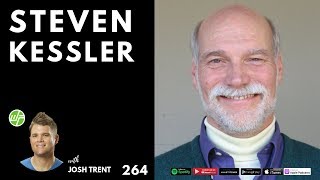
This content was created by Josh Trent. This content was uploaded by Josh Trent. This is a YouTube video titled "264 Steven Kessler | The 5 Personality Patterns" featuring a conversation between Josh Trent and Steven Kessler. The video, created on April 2, 2019, explores the concept of personality patterns as safety strategies rather than typologies. Josh Trent and Steven Kessler discuss emotional intelligence, presence, and the impact of childhood experiences on adult behavior. The conversation delves into the five personality patterns and how they influence human behavior and consciousness.
Chapters
This map of personality is not a typology, it's rather a map of safety strategies. So it's a map of what you do, not a map of who you are. And I want to make that clear for people because it's so easy to start thinking of yourself as a type, which then of course leads to thinking of yourself as a thing and trying to make yourself a noun. Instead of the enduring pattern, which is an action, enduring is a verb. People will want to change it into I am an endurer, which then distorts your thinking about it and makes it harder to remember that this is only something you do. It's not who you are.
That's Stephen Kessler, and this is episode 264 of Wellness Force Radio, where we discover the physical and emotional intelligence to live life well. Hey, what is up, my friend? It's Josh Trent. Today on the podcast, we're talking about the five personality patterns with the one and only Steven Kessler. This is a deep exploration into understanding ourselves, other people. And this is the key, emotional maturity. It's been a long time since I've come across a book this profound when it comes to understanding our emotional intelligence. And this episode is also really special, really close to my heart because it was recorded before I went to Rythmia Life Advancement center for my second round of plant medicine ceremony 20s in Guanacaste, Costa Rica. You can probably hear it in my voice. I feel light. I feel good. I feel like I'm in love with Josh Trent. This is a crazy phrase to be in love with yourself, but I'm going to be sharing much more about this in upcoming shows. We're also going to take a deeper exploration in future podcasts on consciousness, habit reformation and mindset, which you and I both know deep down, this is where all behavior modification, new lifestyles occur. Whether you want to lose weight or get more energy, change the shape of your body, get stronger, move pain free. All of this, literally all of this depends on the state of our inner work. That's right. How much inner work we've done and how much consciousness we're holding in that space, that important space between our head and our heart. This is the most important thing. And in this podcast, we're talking with Steven Kessler, a licensed psychotherapist and the author of the five personality patterns. He's taught hundreds of workshops and over three decades of studying human behavior, which why we do what we do this utterly fascinating concept. We explore this in the conversation. If you personally are curious about how to build your Inner game, your emotional intelligence so you can step into your relationships, your dietary habits, your career, literally every aspect of this 3D experience to show up your best self. Then this podcast is for you. Truly one of my favorite shows in almost 300 episodes to come across the microphone and I cannot wait to share it with you. I just have a few themes, things to talk about before we get right to the podcast. You know, the same way that you and I are walking this path of evolution and the discovery process of physical and emotional intelligence, let's not forget one key concept. We are not our thoughts. Thoughts come and go in the same understanding. Make a promise to yourself today to not get stuck in the first phase of intelligence. This alluring muse we've talked about on the show. Intelligence. People love to just gather, gather and gather. But true intelligence has three parts. I believe that intelligence has a gathering phase where you gather information. It has the applying phase where you try out what you've gathered. And then it also has the most important phase, which is the embodiment phase. But embodiment, it only happens through experiential learning, going through experiences, which is why we're also hungry for human connection. Experiential learning, this is what happened to me in Costa Rica just recently. It was wild, my friend. Holy shit. I cannot wait to share with you. My life will never be the same. And I know as you listen to this show with Steven Kessler, if you go to the show notes page and you start applying and you start taking this information and putting it towards practice, you will have a different outcome in your life from this podcast, guaranteed. No matter what personality pattern you are, whether it's the leaving, the merging, the enduring, the aggressive, or the rigid, we'll talk about all five of these concepts and you'll learn which one actually applies to you. Every single person that has a body, that's in a body deserves quality nutrition. And before nutrition actually combined with it is sleep. This sleep is a key building block of any wellness program. But good sleep starts with taking care of your environment. So once you've created a cool, dark, comfortable space to sleep in, you're comfy. Quiet your mind with some organifi gold. This turmeric and a reishi infused superfood powder is my go to for quality sleep. I actually tested this data with my Oura ring and I showed a high percentage increase in deep sleep from taking the organifi gold before I go to bed. This is the secret ingredient. Actually, it's not that much of a secret. It's right on the container. It's lemon balm and turkey tail as well as the reishi and the turmeric. These superfoods together go down to the nervous system and calm down the gut microbiome and just give the body a state of calmness. You can do this. You can have better sleep. If you've been struggling with sleep, give it a test drive. Just go to Organifi.com WellnessForce make sure you use code WellnessForce. You get 20% off of the quality sleep inducing lemon balm turkey tail reishi infused goodness. And I say goodness because it tastes damn good. It tastes so good. Go to Organifi.com WellnessForce use code WellnessForce to get 20% off your entire order and sleep better immediately. Don't sleep better tomorrow, sleep better tonight. Also, don't miss the show notes. Click over to wellnessforce.com264Learn more about Steven Kessler and if you are, by the way, ever going to pick up a copy of a book to better understand yourself, really a guidebook for Emotional intelligence, this is the one for you. So no further waiting. Let's understand these personality patterns, the five ones that direct our lives and how we can use them and wield them to have the best wellness and the best relationships possible with the one and only Steven Kessler. My guest today has been a licensed psychotherapist for over 30 years and and is the best selling author of the Five Personality Patterns, your guide to understanding yourself and others and developing Emotional maturity. Since the early 1980s, he has taught hundreds of groups and seminars across the world helping men and women heal their wounds and grow into their full adult selves. In these three decades, he's explored and walked the path of mastery in numerous spiritual practices, including an 18 year journey in the Diamond Heart Meditation School. He's taught over a hundred workshops, training other therapists and in the use of EFT and through a deeper calling. From 2006 to 2010, he actually left his private practice for two to three months a year to work on US military bases in North America and overseas, helping soldiers and their families heal the wounds of war. He's with us today on Wellness Force to explore these five personality patterns at this intersection of human consciousness and human behavior. And through my personal research and in reading his book, I believe this man is a voice of guidance to walk us all home to our truest self. Steven Kessler, welcome to Wellness Force.
Thank you very much Josh. I'm glad to be here.
This is a cool moment for me. It's been quite a while Since I've read a book that inspired me so deeply about why I do what I do and the certain things that show up in my life that I actually don't want. How do I reorganize my thoughts? How do I understand a deeper way of who I actually am? And with 30 years, Stephen, 30 years in study, such a nuanced and explorative field, this human behavior and consciousness, what is your fascination with this? I mean, you have to have quite the fire for this to drive you for three decades.
I don't know. It's just always been this way. When I was a child, I became famous in my family for taking things apart to see how they worked. Now, that was mostly mechanical things like machinery. An old watch my father gave me. By the way, when you take the back off a watch just brings the stuff, stuff jump out and you never get it back. I took apart the family cord organ and. Well, first I went to college to study physics at mit, and while there I also started studying meditation. And that started me more interested in how do people work. And then after a year at mit, I transferred to acting school at Boston University to study people. And I had done some acting in high school and I really loved it. And I discovered it's a way to find out how people work by becoming somebody else for a short time. But you have to really get in there in order to answer the question of, like, why is this character doing this thing? Even sometimes it's a really awful thing they're doing, but if you don't get to that answer, it's not believable. So somehow this has always been a fascination for me my whole life.
Did you ever want to be a professional actor?
Oh, sure. When I was in acting school, I kind of, you know, drank the Kool Aid with everybody else. We're all going to go to New York and we're going to slay New York.
Yes.
And then I became a member of a rep company. And then gradually, you know, the glitter wore off and I realized, actually, I never thought I was going to go be an actor. And being a professional actor was really not my calling. I started acting partially to find out how people work and partially to heal myself because I grew up in a pretty dysfunctional family. I was wrapped up really tight as a teenager and, you know, deeply wounded in many ways. And I really needed a lot of healing. And as a well brought up young man on the east coast, you couldn't get psychotherapy unless you were crazy and you couldn't be that so theater was really the only avenue I had for healing. Yeah, that was the one I took.
It's fascinating because I think so many people that go into the arts in general, whether it's painting or acting or whatever it might be, it's a channel for them to find out who they really are and the healing. You talk about imprinting and things that happen from conception to seven and all the things that happen to us when we're young, if they're not acknowledged and if they're not worked through, then in our adult life, we actually project that lesson, that unlearned lesson, onto the relationships and the people that we care about most. And actually, one of my favorite quotes from your book, right in the beginning, you mentioned, as an adult, we may do spiritual practices to reconnect with our presence as our true self. But until we heal the core traumas in our body that fuel our survival patterns, we still go into our patterns when in overwhelm. Can you talk about the survival patterns? I know we're going to talk about the personality patterns, but the survival patterns are much different.
Yeah, I refer to them in the book as survival strategies. Since publishing the book, I've begun changing that a little bit to refer to them as safety strategies. Because really what each one is is a simple action, a behavior that the person does to try to feel safer. And these five safety strategies seem to be really the only choices that we have as children and even as full grown adults. And then each of the personality patterns grows out of using one of those safety strategies over and over and over again until it becomes conditioned into the body, becomes an automatic habit, and becomes a self reinforcing loop in the body. That's what changes it from just being something you do occasionally to being something you do automatically whenever you feel overwhelmed. It becomes a self reinforcing loop that becomes the personality pattern.
Yes, I love that you said self reinforcing as well. Because we're not actually aware that it's going on unless we become aware of it.
That's right. Most of us are so used to being in one or the other of our patterns. And a person typically does two of these, not just one. We're so used to that that we think of that as who we are. And if you ask somebody, well, why do you behave that way? They'll say something like, that's just who I am, or that's all I know, or that's me. Because they're not used to experiencing themselves as presence, they're only used to experiencing themselves in pattern. So Part of the value of a map like this is that it shows you that when you are in patterning, you don't have to be. It shows you there's something called being present that you can aim for instead of being in pattern.
And I'm excited to talk about the personality patterns we in the, I guess you could say self help world or personal development world. We hear a lot about this term presence. And you mention it, it's really a cornerstone of a lot of communications within the book. How would you actually describe presence? Because there's so many definitions out there. But from your expertise these past 30 years, like, how do you see presence now? What is that?
Yeah, to be present in the moment is to be here and fully here, that is, not have an automatic mechanism from the past running in the background that is distorting your perception, distorting your thinking and feeling, controlling your behavior. To be free of that, free to actually be here now. If you remember, I think it was Ram Dass's first book was Be Here Now.
Yes.
Which is one of the basic recommendations of all spiritual practice. The problem is, in order to be here now, you have to not be in pattern because the pattern comes from the past. The pattern is literally the past is still alive in your body, fueled by the old traumas that helped create that personality pattern. And that is running your life unless you're able to get out of pattern. And that's the thing that can happen momentarily. And then something happens, you go back into pattern. So it's not like a one time shift, but when a person is not in pattern, they are present in the moment. And then you can respond to this moment in a way that's actually elegantly fitted to this moment.
In this moment is actually everything occurs. So for us to be like in this moment with you and I, I'm feeling excitement, I'm feeling focus. I want to give everyone the excitement that I felt in reading your work. Like, these are all the things that happen in a present moment. But if we're not free, if we're not actually free to be in that present moment because of the fuel that's coming from the traumas that are unprocessed. There is no such thing as presence. Like, it almost doesn't exist.
Yes, it is an experience that most people do not have most of the time. Most people, in my understanding, do have fleeting moments of presence. Usually in a situation where there are no demands on you. You know, the sort of stereotype moment is like you're standing on a hill or a Beach, looking out over the ocean, watching a beautiful sunset. Maybe you're on vacation, maybe you're with someone you love, but for a moment, everything in your world is good. And then there's this sort of relaxing inside and this sort of upwelling of well being. That's presence. But most of us aren't able to live there most of the time.
And I want to set a greater context because so much of our society is distracted on a continuous basis. You know, whether it's the cell phone or current events or just kind of the energy of the people around us, the types of conversations that we have are so powerful. How do you maintain outside of your work? I mean, obviously you're working with clients, but in your own personal life, how do you maintain a healthy boundary to have the types of conversations that you want to have that'll actually give you that space of presence?
So I don't think of presence as arising from the kind of conversations I'm having or even really arising from the outside situation, although that helps. But more arising from a set of energetic practices, energetic skills that a person is able to develop. And ideally, we would all have learned these from our parents, from our culture, just the way we learn to speak English, for instance. But that doesn't happen in this culture.
Yeah.
So one of the main energetic practices is known as core, and that is a felt sense of the core of your body. From the crown of your head down to the bottom of your torso, your perineum. Actually a felt sense of yourself inside. That gives you a direct experience of, I exist here now. I exist whether someone else is liking me or not, whether they're paying attention to me or not, whether I've achieved something or not. I am here. I exist. It also gives a place for you to reference in your body where you are the most you, where you will find the answers to all the questions, big and small questions in life, ranging from do I want chocolate or vanilla ice cream right now? To do I want to marry this person? If you notice of the three centers in the body of intelligence, the head center, heart center, belly center, three different intelligences, all of those three centers are within that core. Most people emphasize one of those centers over the other two. You know, we have a first, a second, a third in terms of our strength, the third being largely ignored. And in developing a strong felt sense of core, you integrate those three. That gives a person literally the foundation for self confidence. And I like to think of self confidence as what the word says, self confidence. I am confiding in myself. I am telling myself the truth of my situation inside, my hopes, my desires, my preferences right now. That that is actually the foundation of self confidence, not a track record of achievement or winning or approval from other people.
A lot to digest there.
Yes.
So when you say self confidence, I love this. I've actually never heard that reframe thinking about confidence and self confidence. You mentioned in your book that when we contrast confidence and actually being in a prison, you talk about us not really being free. And this is. This is kind of a dark concept. However, there's light after the darkness. You say we're not really free. We live our lives in prison. These patterns can run our lives. We don't see it. We think that's who we are. You already touched on this a little bit, but I'd love to go deeper to this prison concept.
Yes. So in childhood, each of us will try out all five of these safety strategies. You know, leaving, connecting, enduring, fighting, being good. And some of them will work better for us in our situation as a child, and others won't work at all. Maybe it doesn't work in that situation with those parents, those siblings. Maybe we don't have the talents to pull it off. We'll pick the ones that work for us the best and then repeat them over and over and over and over again. And as we repeat our favorite two, maybe three safety strategies, they get conditioned into our body. They develop into personality patterns which run automatically as soon as we feel overwhelmed, even in the slightest. And then we live our lives inside those personality patterns, and the patterns are running our lives. We think that we are making decisions about what job do I want, who do I love, where do I want to live, what kind of house do I want to live in? But in fact, our patterns are making most of those decisions for us, and that's the prison. The problem with the prison is it's invisible. We don't usually experience ourselves as being outside the prison, so we don't have that contrast. And we only understand things and learn about things through contrast. We can't know heat without knowing cold. We can't know pleasure without knowing pain. We can't have a feeling or have a felt sense or an understanding of the fact that we are living inside a prison cell without even for a moment being outside it. One of the things people love so much, especially teenagers, about drugs, is for a moment, the drug takes you outside of your usual cell and you go, oh, I didn't even know this was possible. So we're living inside these prison cells. And it's. Shall I talk about it the way I did in the first chapter of my book, in terms of TV stations?
I love that. And then I have a mental question that I've locked in. So I'm gonna ask it when you're done. And I'd love for you to describe it in that way, because the book was so profound. The first 50 pages of the book actually are, for me, the most emotionally moving. So I'd love for you to go into that.
Yeah, I spent a long time going to bed and asking for a dream, like talking to the dream teachers and saying, give me a way to explain to people that we're living in this kind of personality prison. How do I. People don't understand this. How can I help people get this? And what came to me was, think of yourself as living in a fairly small room. And the walls and the ceiling and the floor of this room are all TV screens, big video screens, and they're all fitted together so well that there's no seam. And you can't tell that there are even screens there because it's one endless visual for you. So you only see what's on tv. That's all you see, all you hear, all you smell, all you touch. But what's on TV changes depending on what TV channel you're watching. So if you're watching the Danger channel, it's showing you all the ways that you're in danger. And all of your experience then gets sifted down to all, like, the little tiny parts of it that could be danger. And those are the part that's broadcast to you. The rest is left out. So you're watching the Danger channel and you see a world that looks pretty damn dangerous. Yes, that's all there is.
Right, Right, right.
Or you change channels and you're watching the Love Channel, the connection channel. And it's all about who feels connected to who. And do you love them and do they love you and how do you feel about them? And do we have a heart connection? Yeah. You're not seeing any evidence of danger. You're only seeing the world through the lens, through the filter of love and connection. So for you, the world is all about love and connection. And I want them to like me. I want them to love me. Okay, change the channel again. We go to the power channel. There's nothing about danger. There's nothing about love. What it's about is who has power. The only stuff that shows up on your screen, because remember, it's being filtered now. So the real world is filtered in each case. And the only stuff that comes through the filter is the part that matches what you're focused on in this channel. This channel is about power. Do I have more power than that person? Can I take them in a fight? Can they take me in a fight? Can I persuade them? How would I persuade them? How would I convince them and get them to do what I want? How do I get one up on this person? Are they getting one up on me? Are they lying to me? Are they telling me the truth? Can I trust them? It's all about power. That's all you see when you switch from one pattern to another, it's like changing the channel. Most of us don't change very often. We will have maybe a fleeting moment of being present. Then we get a little bit distressed, a little annoyed, a little frustrated, a little irritated. And we probably go into our first pattern, primary pattern, the one that we go into first, not necessarily the one we stay in the longest. And then as the distress builds, there'll be some threshold. We switch to our backup pattern. Sometimes that change can be quite dramatic from the first pattern to the second. Sometimes a person can change from sort of, I'm just trying to hide and get away and I don't want to talk about it, and let's not do this. Maybe they switch then into the aggressive pattern for their backup and suddenly it's time for a fight.
I love the analogy of the channel. That was very, very clear to me. And I know everyone listening and watching this can relate to. If you've ever been watching a TV program and. And it brings up fear or tension in the body, why continue to watch it? Like there's no one holding you, making you watch it. It's you, it's this person who's actually selecting the channel. And I want to go back up to something you said. You said a piece of gathering evidence. You said, when I'm looking at a certain channel, it's only giving me the evidence to the channel I've selected. And I love this, Stephen, because In our community wellnessforce.com group, we're going to be talking so much more about your work. One of the things that we talk about there is that when I gather the evidence to know that I'm supported, that I'm loved, and that I'm on the right path, it is my loving ownership for me to gather my own evidence. That's us selecting our channel. Now, I don't know what that came from. For me, it just came up one day in a meditation but whenever I say that to you, even saying it to you right now, it makes my whole body, my whole nervous system relax. It makes my entire nervous system relax. What am I doing there? What strategy am I doing? How does that relate to these personality patterns?
I think you're talking about being present with reality and actually sifting for the truth of the situation by gathering your evidence. I don't think you're looking for distorted evidence. I think you're looking for accurate evidence. Right?
Yeah.
And the thing about being present is you finally get an undistorted view of the world, whereas when we're in any of our patterns, the view is distorted. Because our patterns literally filter and distort our perception. They bring. They make certain things move into the foreground and seem really big and important and vivid. And other things recede into the background and kind of get grayed out, seem unimportant. And they distort our experience in such a way that it reinforces the beliefs of that pattern. So that's how the pattern becomes self reinforcing. There's a set of beliefs and then a set of actions and feelings, and that creates the pattern. And then the pattern actually distorts our attention and our perception. Each of the patterns is fundamentally a habit of attention. A habit of attention that's held in the body and actually determines how life energy flows through the body.
Let's talk about that a little bit more. Because when you say change the channel, I think the analytical mind says, okay, I'll just change the channel. It's not always that easy. Yes, we need a map. We need a map to change the channel. And one of the fascinating things that I found in your book is that there is a map. I identified myself as enduring. That was my number one. And this is for everyone watching on YouTube or listening. There is a beautiful system that Steven has created here to actually allow us to understand what is our type, what's our primary, what's our secondary. And for me, it was very clear. It was enduring. I'd love to talk about the enduring one because, hey, you're on Wellness Force and I get to learn from you and people get to watch and experience our learning. So one of the other names for enduring is actually masochist. Burdened. Endure. Expressing, self taking action, claiming my own space is the things that I have difficulty with. For people that have this enduring type, what are the ways that we can be aware when we're in pattern?
Yeah, I like to talk about it not as types, because this is not who you are. Birth to death. That is the way that the Enneagram and the Myers Briggs talk about it. They are typologies. This map of personality is not a typology. It's rather a map of safety strategies. So it's a map of what you do, not a map of who you are. And I want to make that clear for people, because it's so easy to start thinking of yourself as a type, which then of course, leads to thinking of yourself as a thing and trying to make yourself a noun. Like, instead of the enduring pattern, which is an action, enduring is a verb. People will want to change it into I am an endurer, which then distorts your thinking about it and makes it harder to remember that this is only something you do. It's not who you are. So I just want to emphasize that.
Thank you for that Catch. I just realized I used the language where I was attaching myself to it instead of just being aware of it. So thank you for that.
Yeah, it'll make the idea of shifting back to presence seem out of reach if you think of yourself as a type. Also, a person typically does two of these rather than just one. And you can watch yourself, or if you have little kids, you can watch them try out these five safety strategies over and over again and then settle on the ones that work best for them. Now, you were asking more about the enduring pattern. So are you wondering, like, how it originates, or.
I think it's really just the understanding of how do I catch myself? And this goes to all of the five patterns. Specifically, we're just talking about the enduring pattern that you've created here. How do we recognize. How do I recognize that I am in pattern?
Right. The easiest way to recognize that you're in pattern and to track which pattern you're in is to watch how you respond as your body becomes more distressed or more overwhelmed. And a person will go into pattern when their body is overwhelmed by too much energy running through it, even if that energy is positive. When a person. Person feels more joy than they can manage, they will go into pattern, just as they will when they feel more fear than they can manage. So it's about your system getting overloaded. So the way to. To discern which patterns you tend to go into is to watch your thoughts and feelings and behaviors and actions as you shift from absolutely fine, happy, contented, safe, to a little bit irritated, a little more irritated, frustrated, upset. And, you know, as the scale goes up, what do you do first? How long do you continue that? Is there a place where it Changes to some other safety strategy.
The challenge, I think, is in recognizing is that, like you said, these channels have been selected for so long, it's almost as if the synapses and the grooves are worn so deeply that maybe there's a narrative in the mind that says, well, these things are just who I am, and they're worn so deeply, I'm not even gonna try. There's this defeatist attitude.
That's true. That's true. It's very easy to think that way. And one of the things that's marvelous about learning this map is that you learn what is possible. A map will show you the whole territory, even the parts you've never visited, and then you can think to yourself, oh, that would be fun. Let's go there. Now, I'm not recommending that people try out other personality patterns, but I am recommending trying out presence. Being present is actually much more rewarding and much better than being in any.
Of these patterns with someone that's done such an incredible amount of work and has helped so many people. I mean, look, you actually train other therapists, so that is a testament to the path you've been on for so long. When did you recognize your primary pattern? What age were you at? And what did you do to actually become more aware so that that pattern was something that wasn't you anymore?
Yeah, that's been a long path. The first time I really got into studying any map of personality was in 1987, when I was studying the Enneagram with Helen Palmer. She would teach from life. She would have a panel of five live exemplars so that your body can literally learn from their bodies, like, what is it that they're doing in their bodies? And the big thing that the huge, you know, light bulb from that experience was, wow, everybody else is not just like me, only somehow wrong or stupid or, like, what's wrong with them, that actually people can be enormously different from each other. So that was my introduction to maps of personality in general. And then I continued studying the enneagram for almost 20 years, because during my 16 years in the Diamond Heart School, we used that very deeply in understanding the obstacles that would arise in meditation practice. But it wasn't until I came across this map, which originally was called character structure. I didn't create this all on my own. What I've done is synthesized a lot of other people's work on this. This began, actually back in the 1930s with a guy named Wilhelm Reich, who referred to it as character structure. And he was Writing in German. And in German, the word character means more like we mean by personality in English, when you say character, you mean a person's moral character.
Yeah.
Right. So it was about 15 years ago, 20 years ago, when I first began studying character structure, that I began finally to be able to understand what would happen automatically in my body and would cause me to react when in distress in ways that I didn't like, ways that weren't good and didn't get the kind of results in the world and social interaction that I wanted. But it finally gave me a way of understanding this. And then being a psychotherapist, having been an actor, being into people so much, I just went into studying this as deeply as I could.
Do you ever find it challenging to be a voice of truth that coaches other professionals, that works with so many people across the world, and also being vulnerable yourself? Because I can see that. And this I find with a lot of leaders of movements or voices of truth, the ability to be vulnerable in the right moment for some people, not all, but for some people, can almost challenge the credibility of a professional.
Yeah, I think it's very important to be able to stay with yourself even when challenged. And this will happen frequently. Like in a live workshop situation. There will be somebody who asks a question that challenges, like the fundamental foundation of what you're teaching or something like that, to be able to stay with yourself and respond from a hurtful place rather than go into pattern and tighten up, go into whatever your pattern response might be. Because when people see you go into pattern, even if they don't think of it in these terms in a certain way, they see you leave yourself. They see you leave simply being present and authentic. And when people see you no longer being authentic, they think, oh, I'm not sure I can trust what this guy's saying. Yes.
And we can all feel that it's a radiance.
Yes.
We can say it's like an existential enteric nervous system. Like, I don't really trust that guy or gal.
There's something about that moment wasn't right. I don't know what it is, maybe, but something wasn't right. And I'm a little wary now. Yeah, yeah, that's.
That's almost like an intuitive guidepost. We talked about Esther Hicks, Abraham Hicks, before we recorded here. And I think we can all. I'll speak for myself, receive lessons and downloads from people that we trust. And then at some point, though, haven't you experienced this yourself? That you're almost. You've gotten whatever you need from that teacher, and you're now ready to move on to the next teacher. Do you think that this map that you've created for people with these five types of. Do you think this is a lifelong work that doesn't ever need to be strayed from?
I don't even know what you mean by a work that doesn't need to be strayed from. I'm sure it can be improved. What I've done is collect a lot of the discoveries and teachings of people who came before me in this. Now, this has been largely sort of hidden in the dark corners of psychotherapy and hands on healing. The part where you really need to be able to see auras in order to really get into it. And I'm not able to do that. But I have collected this understanding, tried to clarify this map. I've changed the names of the patterns so they're not pathologizing the way they had originally been. And I've tried to bring it out to the general public. But I would not claim that everything I've said here is 100% right. It's as right as I know at the moment that's honest. I've done the best I could at the time of publication. For instance, I would now change survival strategy to safety strategy. But there's always going to be some part where I misunderstood reality and it needs to be corrected. There are going to be parts where people can take it and expand it into other realms, other ways of understanding. I would not make the claim to be the be all and end all of anything. That sounds like hubris to me.
Yeah, very true. And I think the reason I ask that is because in my life and in my growth path, I do receive downloads and teachings that are so valuable. And then I find my internal guidance system directs me towards now your work. So here I am, age 38, you know, and I'm inspired and I'm feeling that's the key in those three centers you talked about. I'm feeling pulled towards this work. And I'd love to share something personal here because I was on a plane ride back from a marketing conference and I read the first 50 pages and I must have gone through seven pages of notes in my Evernote understanding why all these things had happened. It was almost like, you know that scene in Minority Report. I don't know if you've seen the movie where he puts all the visions of all this city up on the wall. And I was able to trace back to when I was a little kid.
Oh, okay.
Feeling that pressure in my body, not knowing what to do when my dad was gone, when people were yelling. It was a very volatile environment. And I love my parents, like, they did the absolute best they could and so did their parents. But this broken link of the chain only comes through discovery from work that actually matters. So I'm writing all these notes and I'm understanding, like, wow, I can trace the way that I treated women and the way that I interacted with women in my late 20s and early 30s to when I was literally 6 and 7 years old. Because I only knew at that time that I had to find something where I was in control. I had to find something that'll give me that deep breath. And I think for me personally, going through these seven pages of notes, the big takeaway for me is that my work still continues. You know, I thought that I had done all this work, and I've almost like, sometimes I'll feel, Steven, like, you know, I've done so much work, why does it still have to be so challenging? And I think a lot of people can feel this way about the work. It's like once it started, there's moments of beauty, there's moments of, oh, yes, I have come a long way. I love myself. Look at this beautiful work I've done. And then there's moments of, have I done anything at all?
Mm.
What's your take on this? On my download here, from the seven pages of erratic notes, me being a child, connecting it to my behavior in my 20s and 30s, I don't know.
Where the question, have I done anything at all? Comes from, but it sounds like there's something important there. So I would just want to encourage you to inquire into that, investigate that, let it open up to you and find out, like, where does that come from? It does sound like self doubt. One of the best practices for a person caught in enduring pattern is since part of the pattern is to contract your bubble, your field of energy that you will hold around you, which normally should be about a yard, 3ft a meter out in all directions, to collapse that in almost to the skin line in order to be smaller and fly under the radar and basically go invisible if possible, so they don't attack you anymore. That's part of the hunker down, endure strategy. Right? So one of the things that any person who's caught in that pattern needs to do is, is to get the energy moving in your body again and refill your space with your own life energy. So moving your hips and lower body half an Hour a day, preferably at the beginning of the day. Running, hiking, dancing, bicycle, kickboxing, swimming, anything that moves your body. And then there's also an energetic practice originally known as the doubt shout, which I've called filling your space. People can get a recording of that on my website for the five personality patterns. Com. Doing that will help remove that doubt, that self doubt. It sounds like you go down into, you spiral down into a state of self doubt which is literally caused more by your energetic field being so collapsed than by some real thing that's happened in the world. What you need to do is re expand your field. So one practice that you can learn and do regularly in order to refill your field with your own life energy. Because ideally each of us should be walking around in a bubble of our own life energy, our own thoughts and feelings, not a bunch of other people's thoughts and feelings.
Yes, yes, thank you so much for that. You know, I'll be honest, that wasn't a very comfortable thing for me to admit to tens of thousands of people that I struggle with this pattern. However, I know that in me sharing what I'm going through, people are going to connect with what they're going through too. Oh yeah, that's the whole point of this, right? This discovering process.
People will go, oh my God, I do that too. Yes.
And there's actually a way where we talked a little bit about me. But on your site you have this quiz where in, in a learning tool, in a company with the book, people can go to your side. They can actually understand through a quiz process. What is their type? What do they kind of pull towards? Where can they find that specific quiz?
Yeah, and again, let's not talk in language of understand their type. You're using a singular noun.
This is great. I love this. I love how we're checking each other on language. No, I appreciate it.
And I want you to know you're not alone in this. In every interview I do, I have to spend a fair amount of time trying to reorient people away from things and nouns toward verbs and understanding yourself as a human being as a process. The English language is very noun oriented and it makes us see the world and experience the world in terms of things, objects, billiard balls, all smacking together instead of seeing the world as verbs, as processes and actions that are flowing and interacting with each other. And when you see yourself more as a verb, as a process, you feel much more fluid and in a certain way more free. So just, you know, that's a big fundamental Thing about the English language I love.
I am very appreciative that two times in this conversation that you have redirected language because it's something that my friends and I do with each other. I'm in men's groups. I've been doing work. And it's easy for me on the outside to look at someone and go, you know what? Instead of, you have to. You actually get to Sean or Jim or whoever your name is. It's easy for me on the outside. And I think so many of us. I'll speak for myself. Get caught up in being on the outside of what others are doing and knowing what's best for them. The real work starts in understanding who I really am and knowing what's best for me.
Of course. Yeah. And pertinent to what you had said earlier about feeling like, why am I not done with my inner work yet? I don't think anyone ever gets finished with their inner work because the mystery is bottomless. One of my best teachers, the only person I've known that I could truly say, I think that person is enlightened. His report of the experience of enlightenment is literally, the mystery just keeps deepening and deepening and deepening. It's not like you get somewhere and then you're done. Things just keep opening up. And I feel more excited about that than the idea of will you arrive and then, like, what do you do? Feel your thumbs, I don't know, Wait to die? Yes.
Is that. There is no finish line. And you're echoing. We've had so many amazing human beings on the show talk about this aspect of there is no finish line. And so thank you for that reminder. I have a few more questions for you, and they're about defining things. Now, I've used specific language that you've corrected me on, which I appreciate. So many people talk about the soul and God and consciousness. I'd actually love to hear your perspective on consciousness itself. You know, Dave Asprey on the show said, consciousness is ancient bacteria that's trying to kill you. And it's our awareness of that bacteria and who we are. That's actually consciousness. And I thought, that's an interesting perspective, but I'd love to know how you see consciousness. What is your definition of consciousness?
I do not see myself as a great expert in this area, but what I've got so far is based on the many, many experiences of many people of being an awareness outside of the physical body and even outside of the physical time and space world. It seems to me that Consciousness exists separate from the physical world and separate from the physical body. So this would be what is commonly referred to as spirit or soul in religious terminology or a point of awareness or sometimes in mystical schools. In the Ridwan school, it's often referred to as an aware space, that you are a space that is aware. There is no thing there, there is no experiencer, but there is experience. And that having experience without an experiencer is like an earthquake in your ego structure. That one I've had, and it was only like 15 minutes coming back from that into my regular ego structure, it literally felt like the ground was shaking under my feet because it's so challenging to the false self, to the ego structure to have been in a state of there is experience going on, but there is no experiencer. Now you can also think of an experiencer. For instance, in the Diamond Heart School, the Ridwan School, they use the word soul to refer to that which is experiencing, the one who is having the experience. I find that to be a useful definition.
I think that your way of defining it is based on this ground shaking moment you had. And I love that because my next question for you, it's a perfect segue. It's about different states of consciousness. We've had many guests on the show, specifically from Rythmia in Costa Rica, that use plant medicine, ayahuasca, for a lens of personal growth. Because many people, myself included, have had these groundbreaking moments where I've just noticed how silly that this ticker tape in my mind actually is. And that gave me incredible peace and freedom which then my role was to integrate that knowledge into my life. What is your, what is your opinion, actually, I would say, or your clinical opinion of people that use, in a safe environment, in a legal environment, plant medicines for personal growth?
Oh, I think they can be very helpful because they do temporarily open up your experience beyond the bounds of the personality prisons that you've been living in. And having that experience of, oh, something bigger is possible then creates a contrast, enables you to see the prison you live in normally and creates a thirst for, oh, I want to live like that all the time. Then your job becomes to grow into that without having to use the drug, without having to use the plant medicine. Now with all these kinds of plant medicines or drugs, it's important to have guides who are competent, who are experienced, who are actually wise and grounded in themselves because, you know, old traumas can surface and you will need help in dealing with those.
Yeah.
So it can be a very strong kind of experience and it's Important to do it in a. In a planned, wise, and I would say ritual container.
Yes.
An energetic container.
Working in your field, has this ever come up in conversations with clients that you've actually recommended? They go to a trusted space that's very safe. Has that ever come up in your work?
Very rarely. Usually the clients who are doing that have already decided to do it before they started working with me. And then maybe they're working with me to help them integrate.
Yes.
What they've experienced.
Yes.
Because I have a psychotherapy license from the state of California, and because the state of California is not exactly on the cutting edge of consciousness, and the lawmakers are not on the cutting edge of consciousness, I have to remember that they are going to see this kind of thing through their understanding and their lens. That means my license doesn't really allow me to recommend that somebody goes use plant medicine, especially something that's currently illegal in the United States.
Yes. Good catch.
Same way that I'm not licensed to prescribe drugs to people, because that's not the license that I have. I'm not licensed to recommend nutritional. You know, I'm not a nutritionist or a. Whatever that license is. Gotta stay within my lane.
Yes.
And that's the legal structure that I work within.
Thank you for that clarification. Because my last two questions are around what you want people to receive from this work. You know, one of the coolest moments I had was before we recorded and you said, you know, we were talking about what we're most grateful for. And you said, I'm most grateful to be able to share this message and to put something out into the world that actually contributes to human development, to the peace of human beings. Do you see this being something where if men and women are struggling with addiction of any kind, you know, Gabor Matei has this metaphor of the hungry ghost where it can consume information, but it doesn't matter unless the healing within is actually taken care of. Do you see this being a tool for people that struggle with addiction?
I do. Now. It's more a tool for locating the core wounding that needs to be healed for them to be able to give up the addictive behavior. My understanding of addiction is that it's a way of medicating the feelings that start to arise in your body from some old trauma stuck in the body. So the trauma is the fuel for the addiction without the painkiller. You can think of it this way. If you have a headache, but you take some kind of painkiller medicine, Ibuprofen, tylenol something like that your headache goes away temporarily. That the things people do that they get addicted to, they're addicted to that because it is taking away some kind of pain or fear or unhappy experience that they would otherwise have if they weren't doing that behavior. And if you think you're addicted to something and you want to know what it might be medicating, all you have to do is stop doing the addictive behavior, stop taking the drug. And a person can be using work as an addiction. They can be using sex as an addiction. They can be using fame as an addiction. Just stop the doing the thing that is medicating your underlying pain. And pretty soon, the pain will come to the surface. In order to not be addicted anymore, a person has to get the core wounds healed. When the core wound is healed, you don't need the painkiller anymore.
Just such an eloquent way of describing it. And I think this is why I've will continue to do your work. We're going to continue to have these conversations in the Wellness Force group because there is no finish line. And that is the beautiful mystery that is the way that we can actually enjoy this process. Thank you for being a reminder on so many fronts, Stephen. You know, the work that I've done and the work that I'll continue to do, and all of us that are interested in this emotional intelligence, you know, the intelligence that I believe in is the gathering, the applying, and then most importantly, you know, the embodiment. That's what we're all looking for. We're all looking to embody the information in your book. And that embodiment, It's a nuanced process.
It is. And until you've embodied wisdom, you don't really have it.
Yeah.
You know, you might have it in your head, but until you have it in your body, the way you have how you ride a bicycle, you know, when we learn to ride a bicycle, you had to embody it. Reading a book about somebody riding a bicycle won't do it. That's real wisdom. I'm sorry to interrupt you. Where were you going?
No, it's beautiful, because when I was a kid, it was so exciting. When I learned how to ride a bike, it was like this thing where I didn't understand it. I'm like, how do they do that? How do they balance on the bike? And I went through the process of actually learning it, and then the embodiment was, I can balance on a bike.
That's right.
And that's the most fun.
And it Takes practice.
It takes practice.
And the energetic practices that I talk about in the book and have some, some recordings about on my website, they all take practice. And when you've embodied each of those, then you have that in your body.
Embodiment.
Yeah, embodiment. Where are you going?
So this question of wellness, every guest on the show has had a unique way of describing it. And with these 30 years, I'm really curious how you see it. How do you see wellness? How would you define wellness?
You know, I don't think I've ever been asked that question before. I would, off the top of my head, I would say it requires a capacity to be present most of the time, which will mean being able to remain present even though the inner distress is rising, you know, at least fairly high. And a fundamental inner experience of well being that is not caused by outer events. People frequently have from old traumas. Feelings of fear or feelings of sadness, feelings of loss, feelings of anger, feelings of shame that are not really tied to current outer events. They're coming from deep inside. Similarly, when a person has worked through a certain path of that reconnected with the essential quality, the quality in their own essence of safety or of well being, then there is simply an inner experience of contentment and well being and a kind of fundamental safety. Even though the outer world might not be supporting that at the moment, I would say that's probably a part of wellness also.
That's a pretty good explanation off the top of the head. I've enjoyed this conversation for so many reasons. Deep Bow, just really, really appreciative of the work that you do in our world. The five personality patterns, your guide to understanding yourself and others and developing this is the key. Emotional maturity and enjoying the process too. This doesn't have to be so heavy, right? There could be undulations of heaviness and lightness, but at the end, can we just honor the mystery? Thank you for this reminder. Steven Kessler.
Thank you very much. Thank you so much for the inner work you've already done, the work you've obviously done to prepare for this interview, the way you actually know the material in my book already and can make this interview a really enriching and alive experience for people. Thank you so much for all your work and your efforts and your ability to be so present in this today.
I received that and it feels amazing. We explored so many things to say goodbye. Is there anything you think we missed when we look at the five personality patterns? What did we not go over today?
Oh, well, you know, the book is almost 400 pages long.
But I will tell, I will tell everyone the first 50 pages. You can really get a sense of where you're going to go next. So if you commit to 50, you'll go to the go the full range.
And I want people to know that they can actually get the first chapter as a PDF for free on the website for the book which of course is called the five Personality patterns dot com. Yeah but on that first page that comes up you can get a free PDF of the first chapter and take a look.
Thank you. We'll link this in the show notes 5 Persona powers.com also there's the quiz on the website. Steven Kessler thank you again for coming on the show.
Thank you so much for inviting me. Josh.
Hey my friend. Thank you for hanging out and growing with me today. Everything you learned on this podcast starts with your morning practice practices. So from over 200 world class guests and counting, we've distilled the gems, the best of the best science backed practices down into a 21 minute morning system guaranteed to increase the positive flow in your day. Get this free and powerful 21 minute life changing system over@wellnessforce.com M21 if you enjoyed this episode, tap your phone, share it with someone you care about because that is how we all get better together. Supporting the show is easy. Leave us a five star review right now from your phone. It helps us reach other smart and conscious people like you. Either tap your phone and hit the link in purple that says review this podcast or go to wellnessforce.com review. And this show doesn't stop here. We're continuing the discovering process in our private Facebook group. You can be a part of it. All you have to do is go to wellnessforce.com group and I'll welcome you at the time door. Okay. Now you get to go out into your world and live your life well. So until I see you again real soon, I'm wishing you love and wellness.
More from Josh






Your child's future start before pregnancy... and even before conception! #podcast

MD Reveals: Your Healing Creates Your Child's Reality (The Souls Coming In Need Strong Bodies)



