273 Adrienne Nolan-Smith | From Illness To Wellness
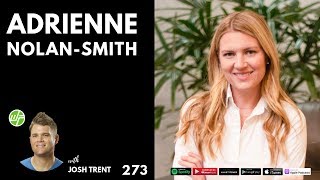
Episode 273 of Wellness Force Radio (Josh Trent interviewing Adrienne Nolan-Smith) examines holistic wellness and patient advocacy through Adrienne’s personal and professional story. Adrienne explains Wellbe’s origins (concept in 2013, relaunched ~2017), describes becoming a certified patient advocate (sat the first board exam in early 2018), and recounts her mother’s severe mental illness and death (December 2010) as formative experiences. The conversation critiques the US ‘sick care’ system, emphasizes integrating physical, emotional, mental and spiritual health (gut–brain axis, forgiveness, social connection), highlights the loneliness epidemic, and advocates for storytelling, emotional intelligence, and research-driven inclusion of integrative modalities (including psychedelics) into mainstream care.
Questions this video answers
273
Summer 2013 (class between business school years).
Around 2017 (shelved 2013–2017, formally started again in 2017).
Early 2018 (the first-ever board exam, per Adrienne).
December 2010.
Chapters
So when I think about Wellness, it's a 360 degree life approach to wanting to be your best, live your best, and also being very self aware about the choices that you're making every single day. From the toothpaste that you use to what you put in your mouth and how you talk to yourself. I think there's no way to just focus on the physical parts of it, the, you know, the green juice and the yoga and the supplements without the mental, emotional and spiritual. And I think there's no way to just kind of meditate and never find out what's going on with your blood work and think that everything is hunky dory in your body. You've really got to look at the physical and the mental, emotional and spiritual and just feel whole. I think it's doing the work to get to that place where you do feel whole and that you're experiencing everything life has to offer from joy and movement and relationships and self love.
That's Adrian Nolan Smith and this is episode 273 of Wellness Force Radio, where we discover the physical and emotional intelligence to live life well. What's up, everyone? Welcome back to the show. It's Josh Trent and today we're talking with the founder of wellbe. This connection to wellness and healthcare. We're diving into a brand new concept for wellnessforce. First time ever, we're exploring this concept of patient advocacy. I got fired up in this conversation. You're gonna hear it in my voice. Not just because the timing of what's going on with health and my family, but also for millions of us across America, this sick care system, the needless suffering it forces on men and women in towns, across state lines and really globally. The pharmaceutical, insurance and medical ivory tower triangular money siphoning system has been designed, it's literally been designed to take away people's health and push the dollar in front of longevity, this sick care system. But today we're focused on the solutions. What do we actually do as a collective to heal us? Or as Adrian calls how do we get well? Be. We know that eating healthy foods is the start of it all. So before we ever develop chronic illness or lethargy or tiredness, we have the power to eat these micronutrients and move our bodies in a healthy way and sleep well so we can then wake up refreshed in the morning and train harder, be more fit and mentally healthy. All these beautiful things. But it all starts the night before. It's crazy. We have the M21 guide@wellnessforce.com M21. Thousands of people have downloaded this free guide, but it starts the night before because if your sleep sucks, let's face it, your morning routine is not going to matter. It's going to be challenging to do anything at all because when you walk around sleepy, you're essentially walking around drunk. So let's stop that. Let's instead use the Organifi Gold Turmeric and Reishi Infused Gently Dried Superfood powder. This is my go to this Gold juice, specifically the Gold. It's a plant adaptogen which has been scientifically proven to be considered for reducing anxiety symptoms in the evenings like nervousness or edginess. Also, for people that struggle with getting that quality night's sleep, the synergistic blend of the lemon balm, magnesium and Reishi mushroom. This delivers a sounder night's sleep so you can wake up refreshed, which is what we all deserve. I don't care who you are, everybody deserves a damn good night's sleep. If you've been looking for a sleep supplement that actually works, give Organifi Gold a test drive. You have nothing to lose. Organifi has been such a great supporter of the Wellness Warrior community, bringing this powerful podcast to us every single week for free. They also give you 20% off, the deepest discount you'll find out there on the Gold Sleep Supporting Superfood powder. So pick it up@organifi.com wellnessforce and you are here with us. You get the epic discount. Use code wellnessforce to save 20% off at checkout@organifi.com wellnessforce and whether you're a generally healthy person or you're interested in preventing chronic illness or chronic disease, maybe you're listening and you're a nutritionist, a coach or a trainer or a therapist or just a wellness warrior that deep down you care. You give a shit about your fellow men and women in this world. I can't stress this enough. This episode is going to be huge for all of us that hear it. I am a massive supporter of Adrienne Nolan Smith. After meeting her and talking with her, she herself went from illness to wellness. Even after dealing with the loss of someone closest to her, which many of us can relate to. And as we explore this intersection of forgiveness, self love and being a victor instead of a victim for what life brings to us, Adrienne Nolan Smith is going to show us how we can always choose. With her massive heart centered mission and also her academic background with a BA from Johns Hopkins and an MBA from the Kellogg School At Northwestern University. She is here to take us on a journey from the illness to the wellness in this episode right here, right now on Wellness Force. Well, B started, gosh, I want to say 2015. Well, B.
Well, I started it in a class at business school in 2013 in a different form entirely and then shelved it from 2013 to 2017 and then formally started up again.
Yes. And now the timing is sweet. The timing is right now.
Yeah. I mean, now, you know, it's like having a child, I think being an entrepreneur and if you are in a, you know, time and place in your life where you can't dedicate your life to it 24 7, like, it's really. That's the challenge. So I'm very happy that I waited a bit and got, you know, more experience in the healthcare system too, and got married and like, all these other things that I needed to really, like, honor with my full attention. And now could, you know, much to my husband's chagrin, like, dedicate everything I.
Have to literally everything. And you've been through. This is why I'm so excited to have you on the show. And I was actually, there's a cool story of how we got connected. Your PR reached out and I love the name so much. I didn't know who Adrienne Nolan Smith was, but I was like, well, B, ha. Isn't that what we all want? This? Well, be like, how did you even come up with that concept? Well, be.
Well, it was the summer between my two years of business school and I was already kind of building it in this class and I just sat down with a notepad with my younger brother at home in New York, and I just went through all the different URLs that were available and all the things related to, you know, wellness and well being and health and healthy and all this, whatever. And we got kind of arrived at this name, wellbe, and asked some friends what they thought of it and a couple from like, yeah, we love it. It's great. I can't believe, you know, I can't believe it's available. We're like, well, it's not.
Yes.
And then what we realized was available was getwellbe, which we ended up thinking was great because it kind of takes an action feel, you know, it puts an action to the process of becoming well and having wellbeing. And anybody who's been through anything knows that health doesn't just happen to you. You really have to work at it. Like, you know, a good marriage or being a good parent. Or anything else that's really fulfilling and rewarding. So now we use it all the time, you know, as a, when we interview people like how do you get wellbe? You know, and I getwellbe by whatever. So it's become now part of, part of the whole company identity. So yeah, that's how it became the cool part too.
This, this term patient advocate. It's funny, before you and I had connected, I didn't know what that was. I mean self explanatory. A patient advocate is someone advocates for the rights and the resources for patients. But why is this so special to you, this patient advocate? Tell people what that is actually.
Yeah. So it's a pretty new certification actually. I sat for I think the first ever board exam in early 2018. So it's been about a year and it came about sadly. I mean it's actually really sad that it's even needed. But I guess, you know, there's, it's such a broken healthcare system and there's so many people who have chronic illness or you know, our family members who have full time jobs and they're just completely overwhelmed with the complexity and the bouncing around and kind of the lack of patient centered care and the lack of, kind of a real sense of power in your own, you know, care and these different forms and insurance companies and hospital bills and specialists and it's really daunting and time consuming and a lot of people don't know where to turn when they have a problem. Because as you know, there's 17 different ways that you could approach psoriasis, right from the extreme of steroids and or immunosuppressant drugs to understanding what you're eating and how your gut could be impacted by it and just simply removing some foods that might have something to do with it. And so there's a wide range of things kind of in between there, but those are very different approaches. And how you decide what to do is challenging.
Why does this even exist? Why does patient advocate even exist? You would think that the system itself would have advocacy from within.
Well, that's what I'm saying. It's really, really needed. And it exists because patients are often left with a pile of paperwork. Medical debt, a ton of medical debt. So many Americans today have it from a variety of chronic illnesses, especially with the lack of a perfect market in healthcare. The consumer, it's the patient, right? They're not really the buyer, right? It's the insurance company. So if we were, I believe if it was just patients and providers, there would be A lot more power in the hands of the patient, but because there's this third party. And then when you throw in drug companies and all these other things too, it becomes a very convoluted mess and the patient loses their power. And so what I believe is, you know, the reason this certification was created is to really have somebody there who can be the navigator, the champion who understands medical research and can dig and find these different treatment options that are available and help people walk through the steps and decide what to do and then actually take action on doing it. I know. I don't know if this has ever happened to you, Josh, but I've, you know, gotten the name of somebody that I should maybe go see or something I should maybe try as far as a treatment, even in the integrative medicine and natural medicine world. And it just sits on my desk for a while, you know, and life is busy and I don't get to it for a bit, and I feel overwhelmed and, oh, it's going to cost money. And so I think the patient advocate is also about evaluating your options and then making choices and taking action so that you actually make progress on healing. And so the irony is I'm kind of bastardizing the reason that this came about as far as the certification, because my focus is so much on people fully healing their body with an integrative and holistic approach. And so, you know, they're. They're talking about. Most of the exam that I sat for was utilizing my knowledge on the conventional healthcare system from working within it for three years with hospitals on Medicaid billing and different, you know, drug things and different disease codes and all that sort of thing. But really how I am able to advise people now is more so on the like, okay, here's all the different things that you could do that don't involve pharmaceuticals and surgeries, because most of the time, if anybody's talking to me, they've already done all of that. They already tried all of that. And so they wanna really fully heal. And what we find is, except in emergency situations, as I'm sure you realize, you get run over by a car, you absolutely want the full power of the conventional healthcare system to put you back together. But for pretty much all other chronic disease issues, a pharmaceutical or surgical approach doesn't really get to the root cause of it. And so it can't really heal the body or empower the body to heal itself.
And this is the fascinating part, too, because we look at things like chronic sinusitis or these things that keep recurring for people. And there's doctors that'll just throw prednisone at people like it's candy. And I think about how our system is set up, and this really stems to the patient advocate role that you and that Wellbe stand for. If people don't know and they have no idea that there'd be an alternative path, they're not inspired to walk it. So in a way, do you feel like you're getting people to this path of inspiration where you're letting them know, hey, you don't have to do exactly what your physician tells you.
Exactly. So I'll actually tell you a story. I was sitting on my. I was sitting on a beach on my honeymoon in September 2016 with a notebook just, you know, furiously writing ideas and problems and how he was going to solve them and things that I had gone through. And my husband was like, are you serious? Like, can't you just enjoy this, you know, and relax? Like, read a magazine? And I was like, no, I've been waiting so long to, you know, build weldy again. Like, I can't wait any longer. And when I walked back over to his chair, you know, after I was done, he said, so, you know, what are you going to build? And I said, I think I'm starting with a media company. And he said, what? You know, you don't know anything about that. You've just been in the health tech world, you know, the conventional healthcare system. Like, what are you talking about? And I said, without inspiration and content that allows people to think differently or have their eyes open to a different approach. You know, an app just serves the people who are already interested in this who are already bought in. But what about the majority of people who aren't? You know, I didn't arrive at this place because I was just interested in it. You know, I had chronic Lyme, and that helped me to see things differently. And I had amenorrhea. Again, helped me to see things differently. And of course, then my mom's experience, which I can talk about in a bit, helped me to see things differently. And without those things, I would have just gone to the fancy Ivy League doctors on, you know, Park Avenue here in New York and thought, wow, this office is so clean and everything is beautiful and this is great. And so I think you need storytelling and you need things like what you're doing with interviewing people who have a different perspective in order to take the first step. And then you need help people to help you take action and do that research and get the resources that you need to go further. But it all starts, I believe, with that first. Oh, wow.
Awareness. Yeah. It starts with being self aware. It's where every single thing, whether it's the habit loof or, you know, habit reformation, or you look at Gretchen Rubin's work, anyone at all that works in long term behavior change in and out of healthcare, they all say the same thing. It starts with a man or a woman being self aware. Like what is the truth? Can we get down to the truth? And the fascinating part about your story when I was going through all the resources at getwellbe is I felt so much emotion when I was reading about your mother. Because my mother for the past 20 plus years herself has taken lithium. She manic bipolar when I was a child. So you and I share this understanding of just the incredible deafening sound of mental health in a child's life and in a man or woman's life. This mental health aspect, this is the part that is so overlooked by the current traditional western model because these physicians. Let's paint the frame here if we can. They're so overloaded, they get seven minutes with a patient, literally sometimes less than that. They necessarily don't have time to care. Our system is built to reinforce mental health issues. Can you talk about that a little bit?
Absolutely. And I remember when we first spoke, I couldn't believe that your mom had also gone through that. And my mom's diagnosis was schizoaffective disorder, which is a total made up term. It's a collection of symptoms similar to, I believe it's sort of between bipolar and schizophrenia. So who knows, they could have had the exact same experience for all I know. But she was on lithium and Risperdal as well, at times more drugs than that. But that's what she was on when she died. And the experience of seeing the mental healthcare system as I did was one of the most eye opening experiences of my life because I didn't know it could be that bad. And we were even paying for quote unquote, amazing care. And so just to back up what happened was when I was just graduating from college, my mom had a manic episode. And I don't know if your mom ever experienced, Josh, any paranoia or.
When I was like 10 years old, I remember her getting carried out on stretcher. It was like very emotional. I wasn't sure what was going on. Still a vivid memory.
Yeah, so that was very vivid for me as well and I'll never forget it. But you know, she heard voices and she thought people were trying to Kill her and harm her. And so it was all super sad, but she basically ran away from my older and younger brother and I, the three of us, in the summer through the New York City subway system from Manhattan to Queens, and really late at night in the dark. And we were chasing her and it was all like a movie really. And finally we were able to restrain her and my brother kind of held her in a human straight jacket and we called the police and because she just kept trying to get away from us and put her in the back of a cop car and, you know, off she went to some sort of mental health care facility. But I don't say I don't know what I would have done otherwise. So I can't say I regret because I think everything happens for a reason. But had I known that the mental health care system was like, you know, I don't know, a good analogy is like a wood chipper, like once you like put your finger in, I mean, it's just like you're sprayed.
You're never getting out.
Yeah, you're never getting out. You're never getting out. And certainly not in one piece. And you know, the amount of drugs they give you and the insurance companies calling every day when she had, you know, she was in an inpatient stay and trying to get her out because it's thousands of dollars a day and, you know, the opposite of a healing environment, like just, you know, girl interrupted types, you know, people screaming and very stark conditions and having a roommate and, you know, the opposite of healing. Right. The opposite of peace. And she was in and out of these different facilities for three and a half years and heavily medicated. And I'm not sure if lithium does this exactly. And since your mom's been on it for 20 years, I'm sure that she's found a better dose for her. But my mom had crazy side effects like drooling and shaking and, you know, tremors and, you know, sleep problems and weight management problems and really slurred speech. Like it was just really terrifying because she was a super high functioning woman. She had been in the first class of women at Columbia Business School and had been a management consultant and very brilliant. And so seeing her in her late 50s, reduced to this kind of like slurring, shaking, drooling mess, it was really disturbing. And she was so unhappy because she knew the power of, you know, integrative health because of taking care of my brother and I when we'd had Lyme disease when we were younger and we then she couldn't Access it. You know what I mean? She was stuck in the jaws of this system simply by coming through as a, you know, from the police. And we didn't know how to get her out either because the couple of times, you know, she went off the medication from feeling so horrible, horrible, you know, she had manic relapses, and so, you know, found herself back in inpatient stays. And we were so scared and didn't know what to do and. But I was still determined to figure this out. So I would, you know, do a lot of research in PubMed and other places to try to find an alternative treatment or any experimental thing. And, you know, at one point, you know, before. Just before she died, she was living in Boston because my uncle became her legal guardian, her brother, because my parents had divorced a couple of years before she sick or before she had her episode, I should say. And so she was at McLean Hospital up there. And I remember meeting with her psychiatrist and finding out that she barely, if ever really connected with the therapist that my mom is supposed to be seeing. As if the whole, like, emotional, spiritual part of this thing, this was really irrelevant.
Oh, yeah, we can't quantify that, so we can't put any notifications on someone's emotions.
It's kind of like icing on top. Like, sure, yeah, maybe I could talk to her. But that's not really important here. What's important is the dosages. You know, like, completely patronizing. And really, I mean, it was like, you know, a couple of, let's say, max, a half an hour that she. We actually got to talk to her probably less. And all the things that I brought up and asked about, you know, an experimental treatment that I had seen in the NIH had done, and it was in PubMed from a couple of years before that about these intravenous fish oil experiments that seem to be working for mental health patients and the importance of healthy fats, and what were they doing about could they prescribe an appropriate diet to strengthen brain health? And she was looking at me like I was completely insane and kind of rolling her eyes, I think, internally at the whole recommendation of maybe trying this experimental fish oil thing or just kind of. Yeah, yeah. Anyway, that's really not, you know, I'm here to. To monitor her dosages. And that was it. There was no attempt to get to any kind of root cause.
And what year was this?
This was. This conversation took place probably in 2009.
2009. What's changed since then? Because I know that that led to a very unfortunate Event where you lost your mother. And I'm just curious, what do you think has changed since then, and how is that fueling you now? I mean, it just tugs on my heart just to even speak about it.
Yes, it's changed, I think, so much in my world and from my knowledge, but I think overall, the conventional system hasn't really changed at all. So the event that you're talking about in, you know, December couple, a week before Christmas, December 2010, my mom ended up taking her life. And, you know, I don't. I don't blame her. She was. The drugs, I think, were so debilitating that she was kind of a vegetable in a different way. Like, it wasn't more of a solution. It was just not, you know, solving the manic symptoms, but creating these other symptoms and not creating a real life that she felt like she could live. And I think she was also just incredibly lonely because she was in Boston. And, you know, I've read so much since then about also the public health crisis, which is social isolation and the importance of that. So that's a whole other topic. But on the issue of, you know, how we're actually treating mental illness today, the microbiome project was, I think, the most important thing that will ever happen to mental health care in this country because, well, everywhere. Because it finally showed that there was a gut brain connection and that science could really prove that it was bidirectional. You know, there was some evidence and some awareness before that that, you know, being really stressed could make you, let's say, constipated or have gut trouble. But it didn't. Didn't show that the trillions of microbes in our gut include, you know, parasites, the bacteria, fungus, all that stuff, you know, good and bad bacteria could be influencing our moods and potent, you know, and mental illness as well.
I don't think there's a could. I mean, it's a direct correlation. Now, if you look at the work of Dr. Michael Ruscio and you understand the enteric nervous system and the gut brain axis, I mean, geez, like, the research is just toppling Adrian's.
Yes, and I only say could in the sense that if you were experiencing symptoms. But, yeah, you're 100%.
I mean, they're so meshed. They're so meshed and connected. And I get, you know, I get. I get emotional. I get fired up when I have a conversation like this with someone as woke as you are, because this stems from an emotional place. And when I look at the work you're doing, And I see actually something you just Posted recently from Dr. Laura Belous on your Instagram. She said exactly what you and I are talking about. You can eat all the kale, drink the alkaline water, take the supplements, do yoga, but if you don't deal with the shit going on in your head and in your heart, you're still unhealthy. This moment just let that land everyone who's with us right now. It's not about the perfect PDF, the perfect diet plan. It's about understanding the emotional load on the nervous system. I'd love for us to riff back and forth on emotion and its load of either pro or con for the nervous system and for our health. What have you seen in your research?
Oh, my gosh, I've seen so much. So one of my most impactful statistics that I've learned was from interviewing Kelly Gores. She is the documentary filmmaker of the movie Heal.
Oh, Heal. We've had Peter Crone on the show who was in Heel.
Yes, yes, he was in it, as were a lot of other integrative health experts. And one of them was Dr. Kelly Turner, I believe is her name. And she. She had overseen this research or found this research showing that there had been a huge number of cancer patients that they were able to look into and push aside all of the different factors that could have contributed. And just look at. They had spontaneously healed from cancer. And they looked at all the similarities in their actions and tried to figure out what, if there were any at all. And what they were. And what they found were there were nine common traits that happened when people spontaneously healed from cancer in this clinical trial or this research study. And only two of the nine were physical, and the other seven were all emotional and spiritual. And a lot of them had to do with releasing suppressed emotions and forgiveness and increasing positive emotions and positive beliefs about your life and yourself. And it just stood out to me so much that I ended up doing some emotional freedom technique work after that. Really. I mean, I'd done six months of therapy when my mom passed away, because I felt that was really important. But then I kind of thought, okay, I'm done. I'm healed. I've worked through the stages of grief.
Your ego got smart. We're done. Six months, we're out.
Yeah, I, you know, I thought, I can handle it. I'm tough. I'm very rational. You know, I'm not gonna get. Not gonna let this overtake me. And the truth is, you're never done. Your emotions and things that happen to you. With different relationships, with different career changes, different, just different things that happen to you. It's, it's always, you know, a battle inside your head with a ton of negative self talk, with a lot of different, you know, inhibiting conversations that you have in whatever way or, you know, just. There's so much from our childhood as well that's just lingering and causing stress and chronic inflammation the same way that, you know, inflammation from a bacteria or fungus might be there.
Well, you bring up a great point. I mean, the, the inflammation of our tissues and the inflammation of our thoughts that might come from anger or resentment or lack of forgiveness or whatever other things that are not being looked at through a lens of intelligence. You know, we always talk about physical and emotional intelligence on Wellness Force. And I think about how you're interviewing this person from the Heal documentary and two out of nine were only physical. Like that just boggles my mind. Or does it though? Because I can remember seeing Heal and understanding the concepts of energy medicine where the, they were taking people through many hands on Reiki eft, these certain modalities. When are we going to see these modalities start sticking their way into care that's actually refurbished and care that's paid for proactively on a grand scale? When do we get those seven components that are emotional into paid relationships with insurance companies?
Josh, I will fight for that for the rest of my life.
I mean, because it's obvious they work. It's obvious they're working.
I couldn't agree more. I think that the issue is really around research and who pays for research. I think that most huge double blind clinical trials are, you know, funded by industry. And what's the most powerful industry of all? The pharmaceutical industry.
It's a Goliath.
And they have a very, very real reason to make sure that, you know, solving mental illness or other chronic health issues with releasing suppressed emotions or going through some program that helps you to, you know, forgive others that's devastating to their bottom line. I think, you know, and the other piece of it is it's very expensive to do very good trials and very good studies. And so, you know, who's going to pay for a study on emotional freedom technique? Like the practitioners that do it, they're not, they don't have billions of dollars. And so that's kind of the problem is that, you know, only the wealthiest organizations and companies can actually do this research. And so if we can spread enough awareness and I think get the demand going from the consumer level and the patient level, that this is Something that they want that enough academic medical centers and other nonprofits that do do research can start to spend some money on it and raise some money that way. But it's still pennies on the dollar to what the pharmaceutical industry can spend on research.
It seems a little surmounting, to be honest. Like when I'm hearing you, I'm like, I'm taking a breath and I'm like, okay, she's right. We can do this. There are very progressive industries and companies and even private donors, private funders that are putting this research into qualified medical practitioners hands. But like, how do you explain this to people that might say, well, there's no way we can win, you know, the defeatist attitude, like can you inject hope and intelligent hope into the conversation that we can defeat these large coffers of the pharmaceuticals?
Absolutely. I think it starts with your own health. I think, you know, people, especially women, right? Women are 80% of the healthcare decision makers, or rather they make 80% of the healthcare decisions.
Shout out to all the ladies listening to wellness for us. This is the majority of our audience. Adrienne.
Well, I.
Educate the men, please.
Yeah, I want men to be just as educated.
That's right, we are. We're getting there. We're getting there.
Yeah, we certainly are. But you know, for themselves, their spouses, their elderly parents and their children, a lot of women are faced with challenging decisions and want to do research and find out, you know, what to do. And so if you think about it, any given, you know, 40 year old woman might be making healthcare decisions for like 10 people or eight people. And so just being super informed and also advocating for what you want and making sure that you understand that you're the boss of your healthcare and the CEO and these specialists, that you don't give away your power, you're allowing them to do you a service if you so choose. But if you don't like their approach, you don't have to work with them. I think is the best way to show that you want something different and then from there making sure that you really speak up. I want to be able to get my emotional freedom technique paid for. I would like to get my meditation applied paid for. This is medicine and making sure that, you know, the people who are in decision making roles start to see this differently and then understanding that, you know, things do take time and there's a lot of pressure against it. But all change starts with people speaking up. Like some of the, you know, if I think if you told, you know, people in the Civil rights movement, how things would be today or, you know, those fighting against certain chemicals in the 70s that, you know, when we still have as many problems, but with certain chemicals they've, you know, been outlawed or whatever they might be, or there's awareness at least about, you know, asbestos and things like that. They would be like, what? I can't believe it, you know, but it all starts with a few empowered, impassioned people, you know, gathering that research, gathering that good information, not being, you know, too emotional. I think when you want to win people over with your argument, you have to be rational. Yes. And you have to show the other side and that you've thought about all these different things and this is why you believe what you believe. And slowly but surely that becomes a movement and that becomes the force that is needed to tackle, you know, kind of the evils that exist today as far as the status quo. And really, I think we have no choice because if you look at the chronic disease rates and the chronic disease epidemic, it's just skyrocketing and there's no signs of slowing down. So when you think about it like that, like, what else do we have to, you know, we can't do what we've been doing if this is, you know, this is clearly not working. So we have to come up with a different approach. And when you can think about, or when you do think about the fact that a lot of the modalities that you're discussing that you mentioned about emotional freedom technique and working with people to help you release childhood traumas and, you know, enable forgiveness, these are free. I mean, obviously it might, you know, take some money to work with a really qualified practitioner, but these are side effect free and these are things that you can do on your own. And so I just can't believe that these things cannot be put into practice in a clinical way, given that there's no downside for giving people.
You know what do you ever. Do you ever pause on this reflection point where look at what happened with tobacco. You know, there were ads where kids were smoking cigarettes with Barney rubble in the 40s and Ronald Reagan was in a doctor's coat saying he prefers Camels. Look what happened to tobacco. Where eventually the ivy ivory towers showed cracks. They fell down, people woke the f up. And I feel like you and I have completely pulled off the bedspread here. And we're like, you guys, listen, the truth is actually been hiding. Here's the real truth. Because this concept of loneliness, it really comes from suppression of information. If people are Lonely. They're not in the resources of connecting with others. They're not connected to their community centers. They're not capable of connecting with other people. I look at the research from Health Resources and Service Administration that talks about seniors. 43% of seniors feel lonely on a regular basis. Like, this is actually what's driving it. Adrienne, I'd love for you to talk about the loneliness epidemic and what are some solutions for combating loneliness in this health care model?
Oh, my gosh. Well, I wish I could go back and remake America because I think that the nuclear family is one of the biggest problems with loneliness today in this country. How, you know, we all just decide where we want to live because, oh, we like that city, or that's where we got a job. And we don't really think about belonging to a community necessarily. We. Obviously, with digital devices and, you know, Netflix and everything else, you can occupy yourself living a pretty lonely existence. Just, you know, driving to work. You don't interact with anybody. Driving, you know, you could sit at a cubicle all day, hardly interact with anybody. Drive home, watch tv, go to bed and rinse and repeat. And maybe on the weekend, you go to a gym, you're working out by yourself. You know, if you go for a walk, you don't think to go with anybody else. You could, you know, order and takeout. It's. You could live a very lonely existence. And yet, for most of humankind, except the last tiny blip of, you know, the last, I'd say, 100 years, not even your community, your extended family, your village, this was really where you sourced all of your support and who you spent your time with. And the idea of being alone was almost impossible. Maybe when you went to the bathroom, that's basically it, right?
Other than that you were taking care of someone else's kids because you all depended on each other. We're wired for empathy.
Even. Even sleeping there was never your own room. That's, like a ridiculous concept for most, you know, There was like 10 people in a room, you know. You know, that was mostly because a lot more people were a lot more poor. But still, there was just no alone time. And, you know, we all need and want a little bit of alone time, but the majority of the human experience is about not only being around others, but touching others. So I saw an amazing, awesome statistic. I always tell my husband that just six seconds of hugging somebody releases all kinds of hormones and starts a chain reaction of positivity within the human body. And so you can't do without it. I mean, it's just as happiness inducing as going for a walk or seeing something funny or whatever it might be. And it's crucial. And so the human touch, being around others, you know, you can hang out with some friends that you kind of know, but if you don't give them a big hug when you leave or when you come and really, you know, hang on and mean it, you're missing a crucial part of that experience. And so the loneliness, you know, shipping your parents off to nursing homes and kind of visiting here and there and having people, strangers that don't even know them, take care of them. It's a very weird thing. I hope, like, plastic in 50 years. We're not doing it anymore. And I'm happy to see that the surgeon general, I believe it was the surgeon general, declared loneliness a public health crisis, because hopefully that will get the mainstream, you know, attention that this is something that really needs to be taken seriously. But I think it's. It's a huge error, similar to, as I mentioned, plastic that are a huge experiment that we'll look back on and say, you know, like, cigarettes. Oh, what did that.
There's so many things that our future selves, you know, 100 years from now, 200 years from now, men and women are gonna look back and be like, what the hell were these people thinking? Like, consciousness is up, leveling so quickly right now. And I know you feel it. That's what. That's honestly what I feel from Wellbe. This undercurrent that fuels you is a connection of love to your mother. It's a connection of love to the people that you serve. It's having conversations that actually matter and that meet people where they truly are. And let's face it, people are freaking lonely. We live in a world right now of swipes and tablets and computers and phones and the concept of self love and forgiveness and real emotional intelligence. Like, this is the conversation worth having. And I'd love for you to talk about the intelligence part of emotions, because it's one thing to quantify, like blood work and labs. How do we do this, Adrienne? How do we start quantifying the emotional aspect so that not only these things are paid for by insurance companies, but so that people start actually being attracted to emotional intelligence. How do we make emotional intelligence attractive to people? What's your advantage on that?
Yeah, well, first of all, I think that gamification is certainly powerful. I think that there's a way, and I've seen a few of these where you can actually turn emotional intelligence into sort of like even an IQ type of test or you know, sort of a quiz where you can see your score. And I think when most people want to self improve or at least a lot of people listening to this right.
Now, I think we want to get better every day, at least like a little bit.
Right, exactly. It's, you know, most of us, that's what this is all about. And so I think there's plenty of opportunity to have it be, you know, and the conventional healthcare system loves scores and tests and charts and so I'm sure they can come up with some way to kind of create, you know, a quiz or a test that you can take to score emotional intelligence if they haven't already done. So I pretty sure that they have. And you can use that, I think to help any kind of practitioner or doctor, insurance company to understand, look, this person is really stunted and they happen to have cancer or heart disease or diabetes, but they have, they are hanging on to so much, there is so much baggage here and they're not really self aware and they're not very emotionally intelligent to be able to work through it. And so it is absolutely worth investing money into helping this person move along and kind of unpack a lot of what's stagnating inside them. And sure we'll have to do some, you know, it'll be years and enough thousands and hundreds of thousands of patients to really see trends. But I believe that anybody who invests in that will say see chronic disease and the activities that contribute to it or reduce it really start to change when somebody can unpack their emotional stuff inside them.
And this is a bigger concept too because if you look at like the physics with kinetic energy, you know, energy in motion, so this object is moving and it's the amount of work that is needed to move a mass from its rest to its next place. So if we look at what really moves energy, it's emotion, it's energy in motion. People, this is why you're doing wellbe because, gosh, you're healing people because they're inspired. How do we wake people up to inspiration? I mean really the inspirational conversation, it doesn't always have to happen from tragedy. How do you see the inspiration conversation coming from a place of love and from empowerment?
Oh wow, you're absolutely right. I mean, nobody is going to start making these changes that you need to make to prevent or reverse chronic health issues or disease without being inspired to do so first. It's just, you just don't it's like trying to force somebody to do something that they want to do, don't want to do. There's going to be tons of resistance and we'll never succeed. So.
And sometimes people do it out of spite just to not go with what you're saying, like, no, I'm not going to do that because you want me to.
Oh, absolutely. I mean, you know, even people that believe sometimes do that, you know, just to kind of like, I've had enough of you. Stop telling me what to eat, leave me alone. Right. But that's why I believe that storytelling and proof is for me the most inspiring thing, because you can see from somebody else's experience that they didn't just start out believing this way. They weren't some sort of self empowered self love guru from the start. Like, you know, they had to go through something to get there. And like you said, it doesn't necessarily need to be tragedy, but it could just be like somebody woke them up and it was a particular book or was a conversation they had or an experience or something they saw and that changed everything. And so when you see that somebody else went through that and then changed everything about their life and their health, I think that's super powerful. And that's why we film all these stories of health recovery through integrative medicine at Wellbe, because you can watch. And you know, Josh, I mean, people ask me for wellness advice all the time, you know, and what should I do for this and that? And you can say the party line, you know, you can say, oh, well, it's really important to keep your devices out of your bedroom. And.
Right, right, right. You can give people a check.
Exactly. Like, I know what I'm supposed to say, and this is what you are supposed to do according to, you know, the general belief in the wellness world. But my phone was in my bed this morning, you know, like it's, it's about practice, not just what you're supposed to do. And so you can listen to all the experts that you want, but when you see these real people who were lawyers or, you know, doctors or accountants, and having to go through, you know, a real life transformation to heal themselves of some kind of, you know, either very serious or somewhat serious chronic health issue, that to me is the most powerful thing because one, it shows that there's hope. I think a lot of people lose hope and think that they're kind of resigned to managing symptoms forever or, and progressively getting worse. And when you can see that somebody else turned it around and fully reversed it you're like, okay, if they can do it, I can do it. And then it also shows you that, you know, they were like you. They didn't want to have to think differently. They were, you know, stubbornly fine to kind of follow the status quo, but once they were woke, right then they wanted to share and help others to become aware as well. And so I love that combination. I think stories are the best place to start.
Well, and this is how we've always connected for millennia. You know, we look at the work of Paul Check. I'm going to go to the Paleo conference tomorrow and meet with some of the biggest people in health and wellness. And one of the men that I quote all the time is Paul Check. And he said, you know, in the old days, you would know when a shaman would interview you, if you were having a spiritual malady or you had something going on, he would ask you a few questions and it would be, when did you stop telling stories? When did you stop dancing? When did you stop spending time with yourself? And when did you start losing the mystery of life and respecting the mystery of the universe? These components is a huge part of wellness. I'm curious from your stance right now, with everything that you're doing, how you might see plant medicine or breath work or psychedelic therapy, we look at what's happening right now with maps. Multidisciplinary association for Psychedelic Sciences. How do you see this conversation coming up in wellness from where you sit, the psychedelic conversation and healing?
Wow. Well, one of the things that we do at wellbe is cover health and wellness research into a sort of, we call it our wellbe wrap up. And it's kind of, you know, quippy and short and kind of gets into the top pieces of health and wellness research that you really need to know for your health that month because there's a lot in PubMed and a lot of studies that come out and most people don't have time to read them all unless, like, you know, Time magazine and NBC and everybody else picks the story up. But there's a lot of important stuff that happens aside from that. And so we love to cover it because we also love to prove that this whole world of wellness and integrative medicine, there's plenty of science there. And so when we hear, oh, that's not science, like, it drives me insane. So I love to showcase it. And one of the things that we showcased a few months ago was the Johns Hopkins researchers coming out. I went to Johns Hopkins, so I was really excited about this. But coming out and saying that psychedelic therapies and psychedelic drugs need to be included in clinical medicine. There's enough evidence to show that it's important. And even that magic mushrooms, as they were calling them, were the safest recreational drug there is, which I thought was pretty interesting.
Attaboy, Johns Hopkins. Thank you.
Right, right. And it made me laugh. But the truth of the matter is it was very risky and very brave of these four researchers to come out and say this because it is really not standard and, you know, could have ruined their career or might even, you know, maybe. Maybe people are already trying to block them from, you know, producing.
Yeah. Well, it was hard for Rosa Parks to stand up on the bus as well.
Yes. And I hope that they are rewarded for their bravery. But I thought this was really important that they came out and said this. And, you know, I don't have a lot of experience with psychedelics, but I feel from what I read about the paper that they published and their announcement that it's has. It has its place and should be, you know, something that is utilized in. In medicine. And it's really a shame that. That it's not being used now.
Yeah. And this is why the conversation has rippled to this point between you and I, because we started at the foundation, and the foundation was love. You know, it's a. It's a platitude that Michael Pollan has talked about multiple times because the truth does love to hide in plain sight. You know, the hippies had something right, Adrienne, when they said love is all there is. It's real. I mean, everything else just kind of gets in the way. We live in a world of logical mind, neck up thinking. And so what I see you doing with Wellbe is really getting people's hearts and heads connected. So thank you so much for what you do. Like, I feel like we just scratched the surface on this conversation. I do have a few more questions for you, but I just want to take a deep breath with you and thank you because we need thousands more. Well be people. Thousands of people.
Oh, that was so sweet. Thank you so much. I felt like we could have talked for five more hours.
We're just getting started. We're gonna have you back on the show. No, but I wanted to give people something actionable at the end because I know they've felt where you're coming from, as I do for people that are struggling themselves with conditions and also for loved ones. You know, unfortunately, we just got news that my mom has late stage kidney disease because of the lithium she's taken. So now we're gonna be looking into this. Just managed care and doing all these crazy things, you know, painful things. I've had days in the past week where I've cried, and it's like that's. That's part of my emotional intelligence, just letting my emotions flow. But for people that reverberate with that type of situation in their life, where do they begin with the Wellbe journey, when they're dealing with that.
Wow. I'm so sorry to hear about your mom's kidney disease. Yes. Well, if you ever need any help on the side about navigating the conventional system, I can try to do. Try to help you.
Thank you. Yeah.
But I. I would say, like I said before, for people with particular chronic diseases, we've filmed, you know, dozens of stories at this point of people that have healed from, you know, chronic. Chronic health issues, you know, ranging from a lot of autoimmune conditions like fibromyalgia and lupus and psoriasis and arthritis to Ms. And celiac disease and Lyme disease and, you know, misdiagnosis of bipolar disorder, which turned out to be Hashimoto's toxic drug reaction to a thyroid drug. So a lot of different things, but the common traits of healing and the things that they went through, I think is really a great place to start. And if you happen to find one of the stories is your chronic illness, watching that and just kind of seeing how that sits and seeing if it inspires you to take further action. And we'll usually have resources on the page if it was a particular book that made them think differently or a doctor that helped them or whatever, and, you know, you can look into doing those things as well, or, you know, I'm one of those people. I will find a way to help you. So, you know, reaching out to the website and talking about what it is that you need or want a recommendation about or what you're struggling with, I'm, you know, that is totally fine as well. Yeah. But I do believe, starting with if you are suffering from something, some of these chronic disease stories and watching the videos or even listening to them on the Wellbe podcast is a great place to start. Or even watching if you know, your diagnosis, you know, heartburn, for example, we have a great interview with this ENT doctor treats heartburn and acid reflux entirely with diet. Now, after doing, you know, neck surgery for over a decade and realizing this is all totally in vain and unnecessary if people understood how to eat. So, you know, people love to See his interview as well, if they're suffering from those issues, because it's just a great place to start making some changes and. But like you said, if you're not inspired yet, it's not even going to do anything. You know, you can watch this.
It's like, get inspired. I mean, that's. We're starting with inspiration. Because motivation, it's like this temporary muse that I think people chase. I want to stay motivated. It's like, is that even possible in this modern world with all of its distractions?
Yeah. Absolutely not. I am historically terrible about exercise. Like, just, you know, I love to walk, but, you know, I'm pretty bad about getting myself out for a run or whatever it is. And so I'm constantly battling this, you know, exactly like this, chasing this motivation. My dream world. I just wake up and I. This is who I am. I'm just somebody who's personally motivated to exercise. And then that works out for two weeks and I go, you know, four or five times a week and I'm so excited about it. And then of course, it falls off because. Impossible to keep that up. And so I think what I've started to realize now that I'm a bit more self aware is that, all right, I got to figure out the things that make me want to exercise, like seeing one of my best friends from high school for a Pilates class, or singing along to music in a soul cycle class, or taking a walk in the sunshine with somebody I love, or, you know, running with my husband. It's the only way he can do it if he makes me go, you know, that kind of thing. So for me, it's about connecting with others and because I love music, making sure that that's a part of it or whatever it is. But know yourself, know that you're not, you know, what you. What you like to do, what you can get yourself to do instead of just relying on this, you know, phantom motivation, which you think somehow after 30 something years is just going to show up.
Yeah, there's no, there's no motivation fairy that comes in and sparkles you with accelerated pixie dust. It doesn't happen.
Or like, look at the past. A million, you know, times that it's was strong and then it wasn't. Like, that's gonna keep happening. Like, think of a different way to get yourself to do the things that will, you know, really improve your health and. Or do enough research and get smart enough that you start thinking about it a different way. And then it. It's truly embedded in who you are that you want to do that.
Yes. You've been putting out such great content with the the Change Makers. I see a ton of my friends on here. Max Lugavere, Kelly Noonan was the director from heal. She is going to come on the podcast. My friend Stephanie is going to introduce me to her. What a powerful series that I think could happen with you and with everyone that's on this site. Do you think that this will lead to an in person event? Because that's where we can really get down and get well.
Bea, I would love to. It's on my roadmap for, you know, having the Wellbe conference one day would just be a total dream. But you know, I'm still a very one one person shop with a handful of wonderful freelancers and interns who help me. But I am, you know, I can only do so much at once. And I've decided it's been, you know, I go back and forth on it, but I've decided not to raise money because I know that, you know, when you raise money for a company or any venture, you've got to either, you got to exit, right? Otherwise why would somebody invest in that? So you've got to either sell or IPO or whatever. And when something is so close to your heart and your lifelong mission that you want to work on till the day you die, you just can't sell that. So I think I'm, you know, it's going to be slower but also something that is really mine and my vision and I can help people in the way that I really think they need my help.
I love that you said no exit. I mean, that's so real. And all of us can feel that because we wouldn't exit on the people we care about. So thank you for being you. The last question is at this intersection, physical and emotional and it's, you know, the true definition of wellness. You've been through so much, you know, the loss of your mom and going through your own health journey and seeing the sick care system from the inside out. If you could take a deep breath for us and just say your definition of wellness. How do you see wellness in the modern world?
I see wellness living every single day as. Let me start over. First of all, I see the 100 choices that you make a day as truly your healthcare. And I mean that. From who you spend your time with to how you talk to yourself inside your head to the food that you put in your mouth and you know, whether or not you're woke enough to see healthcare providers, when you do see them, who do the right testing and really want to work with you to get to root causes. So when I think about Wellness, it's a 360 degree life approach to wanting to be your best, live your best, and also being very self aware about the choices that you're making every single day. From the toothpaste that you use to, like I said, what you put in your mouth and how you talk to yourself, I think there's no way to just focus on the physical parts of it, the, you know, the green juice and the yoga and the supplements without the mental, emotional and spiritual. And I think there's no way to just kind of, you know, meditate and never find out what's going on with your blood work and think that, you know, everything is hunky dory in your body. If, you know, maybe that could be the case. But I think in most cases you've really got to look at the physical and the mental, emotional and spiritual, and just feel whole. I think all of us deep down know when we don't feel whole and we don't feel like we're really on the right track to living our best life and preventing and reversing chronic health issues when they might arise. And I think it's doing the work to get to that place where you do feel whole and that you're experiencing everything life has to offer from joy and movement and relationships and self love.
Multiple times in our conversation, I've gotten full body chills because I just resonate so deeply with who you are and the work you do in the world. And I know that Wellness Force. I've already had visions of this in our conversation. Our Wellness Force community is going to be supporting you@getwellbeat.com we're also going to be doing something together in the future. I can sense that because I am connected to the Human Longevity Project. We've had Jason Prall on the show. I just have this feeling, Adrian, that we will be doing something in person in the next two years or less. So I want to plant that seed in your garden right here live on the podcast. Because we are all in this together. This is what it's all about. We are never alone. Even when the ego might stick in, in a moment of weakness and say, ah, nobody's going to care. Don't even start. Negative voices. These, these habit loops, they're not us. They're not who we are. And we can come together if we choose. So thank you for this reminder of being a victor instead of a victim and just deep gratitude for you as we say goodbye. Is there anything you think we missed when we look at this concept of well being?
No, I'm just happy that you sort of have hit on everything that it stands for. And obviously thank you so much for letting me share my mission and my story and seeing through everything. Exactly. Sort of who I am and what I'm trying to do because I feel like not everybody fully gets it and you really do. And of course, any in person experience the next two years I'm so down for. I feel like one of my favorite parts about building Wellbe over the last two years has been how many people I get to connect with in real life that I feel so connected to as far as who they've chosen to be and their mission, et cetera. You named some of them on my site, but it's the greatest part. You know, there's a lot of annoying parts about building your own company and a lot of anxiety and stress and negative self talk.
A lot of computer time.
Yeah, a lot of computer time. But the best parts by far are the connecting with people like you, but really in person. So I hope we do get to do that at some point.
Well, it's in the garden like it's growing right now as we speak. So thank you for coming on the show. Getwellbe.com Adrian Nolan Smith thank you for coming on the show.
Thank you so much. Thanks for having me.
Josh hey my friend. Thank you for hanging out and growing with me today. Everything you learn on this podcast starts with your morning practices. So from over 200 world class class guests and counting, we've distilled the gems, the best of the best science backed practices down into a 21 minute morning system guaranteed to increase the positive flow in your day. Get this free and powerful 21 minute life changing system over@wellnessforce.com M21 if you enjoyed this episode, tap your phone, share it with someone you care about because that is how we all get better together. Supporting the show is easy. Leave us a five star our review right now from your phone. It helps us reach other smart and conscious people like you. Either tap your phone and hit the link in purple that says review this podcast or go to wellnessforce.com review and this show doesn't stop here. We're continuing the discovering process in our private Facebook group. You can be a part of it. All you have to do is go to wellnessforce.com group and I'll welcome you at the door. Okay, now you get to go out into your world and live your life well. So until I see you again real soon, I'm wishing you love and wellness.
More from Josh






Your child's future start before pregnancy... and even before conception! #podcast

MD Reveals: Your Healing Creates Your Child's Reality (The Souls Coming In Need Strong Bodies)



