278 Dr. Michael Ruscio: What's Really Going On With My Thyroid?
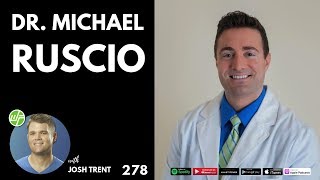
Episode 278 of Wellness Force Radio (June 11, 2019) — host Josh Trent interviews Dr. Michael Ruscio about the overlap between gut problems and thyroid symptoms. Key points: gut dysfunction can mimic or drive symptoms commonly attributed to hypothyroidism; many patients may be misdiagnosed and prescribed thyroid medication unnecessarily; clear diagnosis of true hypothyroidism relies primarily on TSH and free T4 (high TSH + low free T4 indicates glandular hypothyroidism); downstream markers (T3, reverse T3) often reflect adaptation and are less reliable alone. Practical guidance includes starting with diet/lifestyle (Paleo-like whole-foods), using targeted supplements judiciously (including an intestinal immunoglobulin product Dr. Ruscio discusses), and a 25-question online quiz (drruscio.com/gutquiz) to help triage gut vs thyroid vs female-hormone patterns. The episode also discusses limits of microbiome-mapping tests, the value of listening to patient symptoms, and emerging therapies (peptides, brain-based therapies) for stubborn cases.
Chapters
We know that problems in the gut can cause symptoms that look like they're thyroid hormone symptoms, but they're actually gut driven symptoms. And this challenge is so many symptoms are nonspecific. You can be fatigued and depressed from a gut issue or from hypothyroidism. Right. So then the challenge is what's the best order of operations for trying to help someone identify what the root cause of their problem is. Even now, these doctors reading the newsletter are seeing this in their practices and they're even writing up case studies of the them finding the same problem of over incorrect diagnosis in their practices and undiagnosing people with hypothyroidism and putting them on whatever else is needed to get them healthy.
That is Dr. Michael Ruscio. This is episode 278 of Wellness Force Radio where we discover the physical and emotional intelligence to live life well. What is going on, my friend? It's Wellness Force. It's Josh Trent. This episode, I was sitting on a couch in Austin, Texas. I was at the PaleoFX conference with Dr. Michael Ruscio. Now this is Dr. Ruscio's fourth time, which is actually the first time ever that a guest has come on the show four times. But there's a reason he's coming on for the fourth time. This man is a treasure chest of knowledge when it comes to sifting through the confusion about thyroid conditions and gut health. I actually didn't know there was such a deep misunderstanding between symptomatic approaches and root healing causes to thyroid dysfunction and gut dysfunction. So if you're currently dealing with digestive issues or thyroid issues, or maybe you're just curious about it and you'd like to boost your intelligence, or maybe you have a friend or a family member who is dealing with thyroid or gut issues. This episode is going to be gold. A big bar of gold dropped in your lap. We talked about the difference between gut health and thyroid health in depth. Why there are so many misdiagnoses. Is that a word, misdiagnoses? I think it is. I said it anyways. Why are there so many of these things when it comes to thyroid and dysbiosis? You know, dysbiosis where there's too much bad bacteria in the gut and too little good bacteria. We also talked about gut health testing. Why Dr. Ruscio still to this day has a truly polarizing viewpoint across the industry on these gut health tests, which quite frankly, the majority of them are complete BS Anyways. They're just collecting your data to then sell you products later. But you did not hear that from me. Just in case Big Brother is listening, we also talked about the first steps you can take to decipher whether you have a gut or thyroid problem, including a simple questionnaire that Dr. Ruscio offers on his website. You can easily start this process. It does not have to be so hard. Ruscio makes this gut healing process so much easier and he's fun to listen to. This process of Health by the way, I've been coming across this mindset lately. Where have you heard this? People talk about health as being this incredibly dramatic and challenging and heavy thing. Yes, of course it has its moments of challenges. But let's be honest. As we describe health as this challenging, dramatic and heavy thing, don't you agree that our subconscious mind is listening? So if you're going through a phase in your life right now where you're stressed out, you're dealing with health conditions, let's use the right language because you're in the right place. We explore this physical and emotional intelligence here at Wellness Force for one reason only, and that is so we can embody a life well lived. This life well lived starts with our breath, taking these deep breaths throughout the day, and also with our food, this building block of life. This is why, for over a year, I have been drinking the green juice with the ashwagandha, spirulina, chlorella and turmeric found in the Organifi product. This juice owned by my friend Drew Canole and my family over at Organifi, who have been supporting this podcast. So we can keep bringing you these powerful guests. As you know, these shows and travel and production costs are not free. It costs me a lot of time and energy and money, which is a labor of love. It expands my heart every time I do it. And I'm thrilled and honored to do this podcast. And this is why it's so important I remind you about Organifi because not only do they support the show, they also give back to you with a product that promotes health and wellness and a deep discount for 20% off. Over@organifi.com WellnessForce it's like we get so wrapped up in the biggest health trends that we forget sometimes about the core fundamentals of health and wellness. And that is eating mostly plants. If you're like me, you don't want to go to the grocery store and buy a bunch of eggplant and produce and stuff that'll eventually go bad and take up the back of the fridge, it can be easier. Give yourself this gift of Organifi green juice. You can get a test drive this green juice for 20% off over at Organifi.com WellnessForce make sure you go exactly to that link Organifi.com WellnessForce you can share this link with as many people as you'd like. There's no limit. You, your family, your friends, your neighbor, maybe even somebody at your office who you're just helping out with their health. Everybody gets 20% off over@organifi.com WellnessForce and lastly, this episode is going to be featured@wellnessforce.com 278 that's 278. There's a lot of links. The top 10 from Lauren, our amazing content and community manager that helps to create these in depth show notes every single week, sometimes twice a week. So get those top 10 resources from the podcast and listen in peace and curiosity so you don't have to scribble down notes during the show. Just go to wellnessforce.com278 Josh Trent, Wellness Force Dr. Michael Ruschel. This is the fourth time he's been on the show. Three times we talked about the gut, we talked about the second brain, we talked about healing the second brain. We talked about pretty much A through Z of gut health. But today this came from an inspiring conversation actually in a lift last night about how much misinformation is out there about the thyroid. And let's, let's start this jumping off point with the thyroid. Yeah, just for people that don't even have any conception of thyroid and gut brain axis, explain the thyroid in the gut brain axis.
Well, firstly, the thyroid is important because it regulates metabolism on a cellular level. People probably know this already, but your metabolic rate of your cells is partially dictated by thyroid hormone. This is why when people are hypothyroid, we see a general slowing down, fatigue, depression, dry hair and skin constipation. And when we see hyperthyroid or high levels, people can be sped up. They can have palpitations or a racing heart or a very high elevated resting heart rate. They can have oily skin, they can potentially have diarrhea. So this is why thyroid hormone is important. But the problem is that if we went in this conference and we polled everyone and we said, okay, based upon what you've read, what you've heard, anecdote, how prevalent do you think IBS is? So irritable bowel syndrome, and how prevalent do you think hypothyroidism is? Most people would probably say, well, hypothyroidism is much more prevalent than ibs. It's Not IBS is measurably more prevalent than hypothyroidism. How that all ties into your question is we know that problems in the gut can cause symptoms that look like they're thyroid hormone symptoms, but they're actually gut driven symptoms. And the challenge is so many symptoms are nonspecific, specific. You can be fatigued and depressed from a gut issue or from hypothyroidism. Right. So then the challenge is what's the best order of operations for trying to help someone identify with the root cause of the problem?
This is what everyone wants, is the order of operations. It's like, especially in your world, you know, healthy, gut, healthy. You did that hit bestseller.
It did in category. It's flickered in and out of bestseller.
Which I just want to let you know. We redid the website. Your book is in our resources section.
Awesome.
So we have nine books for physical emotional intelligence. And based on everything I've ever known from you, having these conversations with you.
Awesome.
We suggested your book because you have done, I think in the entire world, man, I'll just go out there and say it. You and Grace Lou, like you're both leading the conversation from a place of service when it comes to gut health instead of like, hey, I'm just going to sell products.
Right.
And I think that's why possibly the misinformation exists about the thyroid is because it's really, really cost effective for businesses, for marketing to sell medications, you know.
Or even, or even for alternative health gurus. It's a super marketable term.
Yes.
And people just jump on anything regarding thyroid, which it's good by the one hand that people want to take action and they're motivated to read something on the Internet and follow through with the recommendations. The challenge is, is that again, the order of operations, we are, we are pinning the tail on the wrong end of the donkey in many cases. And here's what I can tell you. It's getting so out of hand now. There are literally papers being published that are looking at this ambiguous hypothyroid diagnosis. There was a paper we were talking about this last night published in Greece. They looked at 299 patients who had an unclear cut hypothyroid diagnosis, but they were on thyroid medication anyway. So the researcher said, well, let's go back and check this the way that we should. 60% of the people in this study were not hypothyroid and could come off their medication.
That's huge.
Not only that, last night at the speaker dinner, I asked A few docs kind of in this little huddle chatting. And I said, is anyone else seeing a ton of over and incorrect diagnosis of hypothyroid? And everyone's face is lit up, literally. The two other doctors there said, yes, I'm seeing that all the time. And to really just drive this all the way home, I have that clinical newsletter. So I write one newsletter a month for clinicians. It involves a case study and some research paper reviews. And even now these doctors reading the newsletter are seeing this in their practices and they're even writing up case studies that we're publishing in our newsletter of them finding the same problem of over incorrect diagnosis in their practices and undiagnosing people with hypothyroidism and putting them on whatever else is needed to get them healthy.
They only get a little bit of time with patients though. You have a way different approach. I mean, you have structured your business in a way where you spend the time necessary.
It doesn't take that much time actually.
How much time are we talking about?
I mean, I can tell someone if they're truly hypothyroid or not in 30 seconds. You just have to look at their lab work. But the problem isn't so much time. It's a conflation of non optimal thyroid hormone conversion and overt hypothyroidism. So those are two separate issues. One issue is an issue of the gland, right? It's like if you're a guy and your gonads don't work, you're gonna have low testosterone, right? But your gonads could be fine, yet there's some huge inflammatory issue or high insulin that's causing you to aromatize your testosterone into estrogen. So it's like me saying if a guy has high estrogen, there's something wrong with his gonads. It's not the case. So in hypothyroidism their production of hormone can be fine, but the metabolism downstream looks off. And that leads some providers erroneously, but probably in a well intentioned manner to conclude, well, you are hypothyroid, we're going to put you on armor or Levothyroxine or Synthroid or whatever it is. And the problem again isn't the thyroid gland. If you go on a low calorie diet, on a low carb diet, just as two examples, that can cause a skewing of those downstream hormones.
Do you feel like with the rise of keto that that's affecting so many of these misdiagnoses?
Maybe, yeah, it depends on how overzealously the provider is.
A massive shift of nutrients that people aren't used to eating, could that typically affect thyroid function?
And so here's a great question. There was a study looking at the effect of a paleo diet and lifestyle on a group of patients, so that they not only put them on a paleo diet, but also on a paleo lifestyle. They found that the patients in the treatment group on the paleo diet and lifestyle group had better body composition. So they lost body fat. They may have gained a little bit of muscle. They were sleeping better, they were happier, they were less depressed, they had more energy. But their thyroid hormone fractions shifted in a slightly unfavorable way. Their T3 levels went down a little bit. The reverse T3 levels went up a little bit. You see this? So this tells you that those fine perturbations in the downstream thyroid hormones don't tightly correlate to how someone's feeling. When your body's under a little bit of metabolic stress, the thyroid hormones downstream start to adapt. And it doesn't mean it's a bad thing. And so some of these providers are looking at that downstream adaptation and saying, well, this must be the cause of your fatigue. And I understand where they're coming from, but that hypothesis is pretty well disproven at this point.
What are you looking for as a clinician in the upstream? Because you talked about the misdiagnosis on the downstream, like, what's the. What are the handful of things that everyday people can recognize upstream working with someone like you. Right.
So it's really easy to diagnose. Fairly easy to diagnose hypothyroidism. So there's this line between thyroid hormone metabolism. This is where you're looking downstream. This is your T3 and your reverse T3. Those are really less relevant, in my opinion. What is relevant for assessing if someone is truly hypothyroid, if they have a disease of the thyroid gland, is TSH and free T4.
TSH and free T4.
And this is available any big box lab.
Right.
It's not a special test, but LabCorp quest wherever and according to the conventional ranges, that's an important clarifier because sometimes functional medicine will use more narrowed ranges. So we're talking about the conventional ranges. If TSH is high and T4 is low together, that tells you you have hypothyroid. It's actually a fairly straightforward diagnosis. There's a few nuances, but those nuances regarding what's known as subclinical hypothyroidism. Those are more of a rarity for most people. What you want to do is if you're on hypothyroid medication, if you're on thyroid medication and you've been told you're hypothyroid, go back to the labs that diagnosed you and ask your doctor, or if it was another doctor, just. We have our patients do this all the time. Find that lab, the one from right before you went on thyroid hormone. Not when you're on thyroid hormone. Because when you're on.
Everything's skewed. Right.
Exactly. And if you don't see from the lab range high TSH and low T4, there's a very high probability that you're not actually hypothyroid and you were given thyroid hormone medication in an erroneous fashion. And this is not something that only happens once in a while. I see probably at least one case of this a month, if not one to two, which is alarmingly high. Right. You shouldn't be told you have a disease when you don't that frequently. That should be more of a rarity. Okay, the clinician misread this. It was an extenuating circumstance. But this is happening fairly often. And why this is relevant is these patients will then try a different form of thyroid hormone. They'll start off with levothyroxine. Let's say that's your most typical starting point. I'm not feeling well. Okay, we'll put you on armor, eh? I'm still not feeling well. Okay, we'll put you on tyrosine plus cytomab. So they'll go down this whole black hole, this whole rabbit hole of trying different medications, different doses. And I've seen patients who've done for over a year with a provider, haven't got anywhere. They come into our office, we get them off the medication, we go to work in their gut, and literally, we just published a case study of the same exact scenario. Two to three months, 90% of the symptoms are gone. So I don't mean to sound disparaging. It doesn't matter to me. Right. My clinical practice is going to run no matter what. It's the people listening to this and reading this that I'm trying to look out for. So pardon if my tone's a little bit dispensary.
No, it's cool. I mean, I think we all love the passion. That's why you do what you do, man. And I think that's what leads people to the water, is the energy of which you speak. Because there's an interesting play that happens when it comes to these heady discussions like what you do and what you know can be a bit overwhelming for people, you know. So your ability to speak from that place of truth about it. And this is what's in Healthy Gut, Healthy youy. One of the coolest chapters in there was you actually gave people the steps, the real steps.
Oh, sure.
And I believe there was eight steps. Correct.
And the self help protocol.
There was one of those steps that actually might align to what we're talking about today, and that is the discovery of taking foods out, putting foods back in this. Elimination versus feeding.
Right.
When you look at elimination versus feeding, is there something that really alters or is there something that gives people clarity about if it's thyroid or not? Certain foods that actually mess specifically with thyroid function?
Good question. I don't think that there are certain foods that would cause just thyroid dysfunction as compared to inflaming your gut and just making you feel generally unwell. But there have been a couple of studies showing that quite simply, going on a paleo diet can improve thyroid function, can improve thyroid autoimmunity, which is great.
Why is that, though, specifically with the Paleo?
So here. And this comes back to the initial question which you asked earlier, which we should continuously try to fill in because it's so important.
Yes.
The gut thyroid connection. The largest density of immune cells in your entire body. Small intestine. Right. So that's a huge regulator of your immune system. The primary cause of hypothyroidism is autoimmunity. So if the primary regulator of your immune system is your small intestine and the primary cause of hypothyroidism is autoimmunity and immune imbalance. There's your connection. If you eat foods ostensibly that irritate the small intestine, that will likely rev up your immune system and will make autoimmune conditions worse. If you're eating bad foods, or conversely, thankfully, if you're eating foods that are healthy for your small intestine or just your intestines in general, you can see a decrease.
Doesn't it really come down to heat? It's. It's too much heat created in the system. So like the inflammatory food goes in there, it heats that space. That's what it's all connected to. Heat. Too much heat for the thyroid.
Yeah. If you're. If you're looking at heat and inflammation synonymously, then yeah, I think that's a, That's a fair posit.
So then really it's about cooling. And it's not just cooling foods. I mean, there's specific nutrients in these foods that can do the cooling. Do any come to mind? Specific foods for cooling and healing?
Well, foods that tend to be.
Or does it always vary between patient to patient?
No, I mean, it's kind of like a Venn diagram where there are some things that it overlaps people are going to overlap on. So focusing on vegetables, meats, fish, healthy fats, that for most people is a great start. And just getting off of processed foods. And this is nothing new. Your audience is probably saying, yeah, I know this, but it's great to hear the message again, though it's worth repeating that. That gets you pretty darn far. Yeah. Then there are nuances in terms of, okay, you're getting processed foods out of your diet. You're focusing on whole and fresh. Then do you do paleo? Do you do keto? Do you do more Mediterranean kind of balance carb? Do you do vegetarian? And that nuance is something that's navigated from person to person. But the foundation is really those basic steps.
Yeah, the building blocks exist really from. And we talk about it a lot here at the conference, this ancestral lens. So whether it's more of like a Mediterranean Paleo or even like a higher fat version of that. Like what works best for you personally.
Exactly. And learning and. Well, and I was going to say, and learning to listen to your body. Yeah, right. There are some people who, they're kind of in this camp of low carb Paleo, but constitutionally, they do better on Mediterranean higher carb. And it takes them a long time to get over the fact that everyone says I should eat this way, but my body doesn't like it. But everyone keeps saying that if I eat more carbs, it's bad for me. So people will spend years eating the wrong way just because they're not listening to their body. So I would say learn to listen. I mean, within reason, obviously, if you're saying to yourself. If you're saying to yourself, got a big gulp. I feel great when I have 20 ounces of soda. Okay. Maybe, you know, you might want to.
Work on your signals.
Yeah, there's some confines there, but generally speaking.
Yeah, well, and this has been a discovery process for me because I've been doing, like, a lot of traveling and content lately, and I've been really drawn to, like, more cooling vegetable foods. Like, I used to eat a lot more fats and proteins than I do now. I'm actually eating More carbs now. And I feel like I'm doing the right thing for me.
Great.
But I check in, I'm not using lab values. And this is a differentiator too. I know we're talking about the thyroid and the gut axis, but how people feel, man, that's the greatest report card ever.
The biggest promise that functional medicine has not delivered on is that we can use extensive testing to figure out exactly what you should do. Yeah. It is one of the biggest mistakes that occurs in this space. And I can say this as someone who used to do a lot more testing, now I'm doing a lot less testing. I'm learning to listen to the patient more and use their body signs and signals to steer the ship. And not only me, but now the clinicians who are reading my newsletter are doing the same thing and they're going, wow, I've gone to these conferences and I've been told I've got to test X, Y, Z, A, B, C, D, E, F, G. Yeah. But you're saying I can do a lot less and I'm doing a lot less and I'm actually getting better results. And my patients are loving it because it's less testing and they feel like I'm listening to them more rather than treating the lab values more. There, there is some progressive testing in the movement that's helpful, but there's so much that's wasteful.
Well, we actually just this morning heard about ubiome just got infiltrated.
Yes. I was just gonna say that by.
By the government because they were double charging people. These industries that are built on capturing data, clients, data, it's not always like they're actually trying to just serve the client, the patient. What is your take on this? Why do you think that went down? This is a pretty fresh event.
Well, I don't know why. Right. I don't know the details behind what the impetus to fraudulence insurance billing was. If I were to speculate, I shouldn't. But if I were to speculate, we can speculate, I would say that they're probably, hopefully trying to do the right thing and they're trying to amass enough data to be able to make clinical recommendations. So I should first preface my comment by saying I've been warning against these microbiome mapping tests for years now.
I remember six months ago we were talking about this on WellnessForce for years now.
And the reason for that, and I should clarify the context I'm warning, is not that they are bad companies or they have malicious intent, but rather if you're sick and you're looking for answers. These tests do not provide the answers. These are like supporting an academic research center where they're going to amass data and eventually, hopefully in the future they'll be able to say, okay, we figured this out. But unfortunately that's not the narrative that they're giving. What they're saying is, you have IBS do this test, we'll tell you what's wrong with you. And that's been corroborated by Rob Knight, Professor Rob Knight, who's been on my podcast two times. He's made this remark publicly, which is we should not be using these tests in a clinical fashion. I think what you buy in was doing is they were trying to get there. They were trying to get to the point where they had enough data at mass where they could start being accurate with their clinical recommendations and they probably needed funds to be able to continue to grow the business to get there. But yeah, it's unfortunate the amount of patients who come in and they spend a few hundred dollars on a test that is completely useless. It is alarmingly high.
Right. And where could they be partitioning that money that would be actually more impactful?
You could go through the entire, you could go through most of the healthy gut, healthy you protocol, depending on what your needs are for the same cost as one lab test.
The book came out I think a year and a half ago and six months ago, I remember we went into a deep dive of the book. What's changed in the past six months? Is there anything that's come up for you that you wish was in the book? Are you going to add it to the book later?
Yeah, because it moves very quickly in.
Your world, the information.
But the protocol in there is really somewhat timeless. The foundational protocol doesn't change at all. What does evolve is some of these nuances for the really stubborn cases. And so for those cases there's been, I think, one development that is fairly significant. And so this touches back on your comment of those who are trying to just sell supplements like we were talking about. So we released a dietary supplement. But I want to juxtapose someone who's trying to sell a dietary supplement on the one hand with what I'm doing, which is, and I kind of have this two step process. When I find something in the research literature that looks promising, first of all, I check all of the available literature to make sure it's got a good case. So I'll first do that. And then if something looks promising, I'll Then bring it into the clinic and experiment with it for about four to six months. And why I do that is because the research literature isn't always. I don't want to say correct, but there's something known as publication biased, where when there's a new treatment, only the positive studies are published. And so for any new treatment, you have to be a little bit tempered because you may be seeing an overly flattering conclusion in the research literature. And then another year or two later, when more papers get published that are showing the negative or the lack of effect, then you get a more balanced view. So you might see a new therapy. At first, 90% effectiveness because there's only two studies published and they're both favorable trials. Then another year later, you have another few papers showing no effect. And now the average effect of the therapy is 45%. So with time and more data amassment, you get a more accurate representation of the efficacy of the therapy. How you can guard. Am I getting too cerebral here?
I love this. I mean, basically what you're saying is the course of time, things will flesh out. That's why you spend how much? Four months.
And that's why I spend four to six months in the clinic testing it. And it takes that amount of time because you have the patient try something and they don't come back tomorrow.
Right, right.
You know, they come back.
It'd be cool if it was that easy.
Right. They come back usually a month later. And you've got to see enough patients go through this to have enough of a sense in terms of what the effect is. So that's step two, evaluating it in the clinic to see how often is it helpful, are there certain reactions, how to best dose this, how to troubleshoot. And then, and only then will I say, okay, not to like the Rusheaux Institute audience to our broader platform here is something that I would recommend. And we recently did this with an immunoglobulin, which is essentially taking a oral supplement that is the same constitution as the mucous membrane in your gut. So that mucous membrane is secretory IGA, IgG, IgM, and so then the function.
Of the IGA and the other eyes is what?
So this is to help bind to toxins and irritants in the gut?
Yes.
So you don't get gut inflammation or heat.
Are they, in a way, cleaning agents of some sort?
In a way, yeah, because they bind to toxins and help deactivate them. And so this is something new that we've recently released. And this has been really cool. For, for patients who have tried a lot and they've never fully got there. This is one of the more end phase recommendations that has gotten people over that hump. They, you know, they've gone paleo, they've done probiotics, they may have done antimicrobials or whatever it is. And yeah, they've gotten better, but they don't fully feel like I can expand my diet or whatever. So these immunoglobulins, the one that we released is intestinal repair formula. They've been really helpful. And so that's something new. But it doesn't change the foundational book protocol because this new thing is more so at the end, an add on at the end.
Well, this is the whole word supplement.
Right.
I think people forget that, like there's so many focuses that have a supplement first and it's like, hold on, isn't there from your perspective, no matter who someone's working with, there gets to be a certain period of time where no supplementation is used. Correct.
One of the things I have all patients do is they call it a drug holiday or supplement holiday.
A drug holiday?
Yeah. If you're using a drug to try to evaluate if the drug is still helpful, you can do a drug holiday, which is taking the time off of a drug. And some patients come off of a drug and they still feel fine. That's more so the conventional medicine nomenclature that's used. But essentially I have patients come off all supplements and some patients will get vastly improved when they do this because some patients are over supplementing and I call it in the book supplement creep. One month you read about this, the next month you read about that. You keep adding to your shopping cart and never taking anything away. And before you know it, you're taking 20 supplements. And that in and of itself can irritate your gut because a fair amount of supplements have certain binders or fillers in them and, or, and, or too many just concentrated compounds going through your gut can be problematic. So you're, you're dead on. We want to be careful not to look at supplements as the only way. Like the more supplements you take, the healthier you are. That's, that's a flawed assumption. There's definitely that. You know the response curve.
Why'd you wait so long to put out a supplement?
Well, we have, when I, when I published the book, we rolled out a line of supplements, some, my own that I formulated, some other companies, but the.
Mucus supporting one specifically though, well, that.
Was, you know, it was probably about as Fast as I could have put it out.
Okay.
The research evidence on this is fairly new. And I'd been following that. Like I said, I've been following that for a while. And it was actually only available at first as a prescription. It was only available at first as a prescription medical food. And then in time, I think the company making it said, well, why the heck are we making this prescription only? It's only a medical food. We don't need to do this. So it was then released, and there may have been a regulatory hurdle they had to get around. It was then released as a dietary supplement. And so that got me looking at it even more, saying, okay, this is now something that more patients can use. And more studies were published. There's been about nine trials published to date. And that was about six months ago. About six months ago, maybe eight months ago. I said, okay, I want to start using this in the clinic. And then I spent six months using it, and then it worked, and then we released it.
So, yeah, well, then good things take time. And I think there's like a bevy of people here. There's the kind of people that are just starting and maybe they're super inflamed. You know, going back to this heat conversation, they're coming here and they may be dealing specifically with this thyroid issue that's connected to the gut. As they walk through the doors, what can they go to as a starting place for differentiation between thyroid and gut?
I'm glad you asked that. We recently released a quiz, and if people go to the URL. Drrusheau.com gutquiz so it'S-R-R-U-S-C-I-O.com gutquiz then I designed a questionnaire that, depending on how you answer it, it can help you identify if you have solely a gut problem, a gut thyroid problem or a gut female hormone imbalance problem. And then you're given a quick start protocol for either one of those variants. So that's a way that people can get started.
So the quiz, and is it a long quiz?
No, it's 25 questions. Maybe it's not super long.
And I've always. This is fascinating to me, these quizzes that we see, because there's a lot of them in our space. How do you build that? How do you build it so that someone's actually getting the right information for them?
That's a key question because there's some.
Technology involved with that.
So the building on the back end part, I can't profess to know the details. We've got a great team who essentially assists with that. But there are certain questions that have been validated in terms of a predictive hypothyroidism questionnaire. This questionnaire would not diagnose you with hypothyroidism. To do that, you need to do the blood test. But it points you in the right direction of should I make these dietary and initial supplement changes to support with this or not? And so I want to say we use. I can't actually think of the name. I was going to say Jotform, but it's not Jotform.
So you go through and based on someone's response, you'll literally put in five different answers for one segment or the tree will be grown. Like 10 different answers for one segment.
It's not really that hard. If you think about all these symptoms, hot flashing. There are certain symptoms that flag more one system of the body than any other. If a woman's having hot flashing in irregular periods, okay, that's not thyroid. Right. That's female hormones. So there are some symptoms that definitely overlap. But then there are some that are more unique to a certain system of the body. And so that's how you wait the quiz to help steer what the answer should be of the quiz.
And this is a great place. Say it one more time so people know.
Drruescio.com gutquiz so yeah, obviously the book.
Is a resource, but a really quick resource is to do the quiz.
And that's why we made it is for people who said I would read the book, but I'm super busy. I got a lot going on. So this way, take the quiz and boom.
This is kind of interesting though, for me because the degree of someone's pain is the degree of their motivation to find an answer.
Agreed.
So if someone's thinking, oh, I don't have time to read the book, but the symptoms are still there. It's like, how long do they go through the symptoms and the pain before it becomes so much more painful to not take the time investment.
Agreed. You could also make a counter argument that for some people, they haven't built up the trust yet. And so giving them a baby step to have the positive reinforcement of. Okay, this whole thing about changing your diet actually can't. Maybe they came from a family that shunned diet and wasn't really supportive. So maybe part of their programming isn't supportive of this kind of concept. So they need to baby step with some positive reinforcement, make a small change. Change Your diet, I feel better. Okay. Now I'm going to be progressively more invested.
Some of the women that you work with in later stages, like we have a tremendous community of women for wellness Force and a lot of them deal with stresses as moms. So, you know, they might have a thyroid that's off, they might have a gut axis that's off. Are there groups, are there like a support group within your community where these women can go, like, how do you reach moms, specifically busy moms, where they are? Great question with who you are.
So we do have a, I don't want to say a forum, but for different treatment steps of the book protocol, we do have like a question and answer forum where people ask questions and they share their experience. So that's something outside of that. I don't have a great answer, unfortunately. But I will say, watching the quiz results come in, the most common variant that's scored is the gut female hormone connection variant. And I don't think the female hormone imbalances get the attention that they deserve. And the beauty of this is if you take some steps to support someone's gut health and you give their female hormone imbalances a gentle push with some herbal medicines that are non hormonal, they're just herbal, you can see miraculous results. And this is the reason why I wrote this into the gut quiz, because my work is predominantly gut. Right. But there are two other areas that I see so common that coincide with that which are thyroid and female hormones. And I probably have this conversation at least three times a week of a woman who comes in, they're not feeling well, and they ask me, can you help me? And I will say, your presentation of gut symptoms and female hormone symptoms is very common. They tend to dysfunction together and if you support them, they tend to function together. So you have a, you have a very good prognosis.
Yeah. And the, I guess the unique challenge for them is men. We don't have to deal with certain things that women do.
Right.
So for us it really comes down to this choice point. There's a choice point for people that want to be healthy. So when people come in, how do you know if they've actually decided to choose or not?
Good question.
I mean, because if they don't choose man, like, nothing's going to happen. The emotional intelligence quotient and the gut healing question.
I think the fact that there's a wait to be seen by me in the clinic kind of filters out people who aren't motivated because there's about a six to Eight month wait to be seen. Which sucks. I get. If you're someone who's trying to get healthier, you don't want to wait. I can't do anything about that. It's not like I'm choosing to make that happen. But I think because of that, the people who want to see me really want to see me. And so I'm a bit insulated from that.
Yeah.
But I do think when you talk with someone you get a sense for how motivated they are. You know, if you do this every day for after a year or two, you're like, okay, here are all the red flags that someone's not motivated.
Will you be putting out any content specifically around thyroid or can you talk about the content you've already put out that we could link in this show?
Yeah, we could definitely put together a little brief of a few links. I've done two posts on what are healthy levels of thyroid antibodies. In fact, that's probably my most popular post on the website. It's got something like 150 comments. I think it's crazy.
Yeah, well, the good evidence leaves clues, right?
But people are also just so confused about how to interpret their antibodies because unfortunately there's some zealotry on the Internet regarding thyroid antibodies, which is very destructive for patients. And I feel very bad for patients who get pulled into that overzealous thinking. But yeah, we could put together a brief with some links.
We're here with a bunch of tools. I moderated the panel with Dave Asprey and Dan Pardee and we're talking about hacking this hacking term, right? When it comes to outside tools beyond just food or supplementation, are there tools, are there tools like red light therapy or PEMF or any of these other, I guess you could call them, you know, hacking tools that will actually help in healing the gut in any way?
Yes. So there is some interesting discussion regarding peptide therapy. Are you familiar with peptides?
Please tell me. I don't know anything about peptide therapy.
So peptides are essentially chains of amino acids that can dock into certain receptors of the body. So most receptors are made out of proteins and amino acids are what constitute proteins. And so it turns out that at least as I understand it, there are certain amino acid protein structures that can trigger certain receptors of the body. So there are some that can trigger growth hormone receptor. So this is known as MK677. And you can use this amino acid to help bolster growth hormone levels. There's Also another one, BCP157, that helps with Tissue healing. And there's some studies showing that it may improve ulcers. And some clinicians are finding it's pretty effective for just tissue healing in general.
Where do they source these things from?
You have to make sure you get these from a quality source because you will see some of these labs that are making these, and they may be doing it in a legitimate fashion, but I would be super cautious for animal research. And so, and this is, you know, not, not to, not to poison the well here, but when people are buying things like steroids online, they'll oftentimes get them from these medical research companies and it'll say only for animal use, because they think that these people are using this injectable testosterone for like an animal study. And guys are just injecting it into their legs or whatever. You'll see some people doing that to get around it. You can also go through a pharmacy. There's Taylor Compounding, which is a compounding pharmacy, which makes some good peptides. We've had on the podcast Dr. William Seeds, who is probably one of the leading researchers in this charge. And it's something I'm just starting to experiment with in the clinic. I've had one or two patients who've tinkered with it. One swore by it, the other. I don't think I've even heard back yet. So it's way too early for me to weigh in with my personal clinical experience. But I do think these peptides, they're kind of like the new wave of anti aging, like supports where you can support tissue healing, you can support anti inflammation, you can support growth hormone production.
What's different than just taking a full spectrum round of BCAAS on a good dose than these?
Yeah, because these are more. So these aren't just a litany of branch chain amino acids. These are compounds that specifically trigger certain receptors in the body.
Ah, okay.
So they have a certain. So amino acids are. Every amino acid has a different shape. Right. So the way the protein chain, the amino acid chain is comprised, if that has the right shape, it can fit into a given receptor and have a certain lead to a certain response.
Yes. You know what would be really cool? A study where if somebody could quantify someone's like emotional intelligence and then go through these different pieces that they add in to help heal and then bcaas. Have you ever done any quantified emotion testing in alignment with gut repair? That would be fascinating. Well, beyond just mood, you know.
Yeah, when you say quantified emotion testing, I'm not sure exactly what you mean by that, But I can say people who experience high scores of anxiety or depression, we've seen remarkable improvements. In fact, we just released a case study this week of a very educated doctor, dual doctorate, ND PhD, was in cardiac rehab with somewhat debilitating anxiety. I think we were talking about this in the lift. And she took a few steps to improve her gut health. Essentially low fodmap and probiotics were what was helpful for her from the book protocol. And her chronic debilitating anxiety was gone in a couple months. And she was just amazed that she said, I thought this was part of who I was. And I was offered drugs and I went on them. I didn't feel right. And now just a couple months later, after improving my gut health, I feel so much better. I'm not anxious, I'm not nervous, I'm not all sped up. And she said, I want to shout this from the rooftops. I want everyone to know that you don't have to feel this way all the time. So in terms of a research validated emotional questionnaire, we haven't done that. Yeah.
Challenging thing to do. Right. I mean, how do we could do it?
I mean, so here. So a little bit of a call out. Right. If I were a guy who was going to have this proclamation that, you know, if my shtick was, you can heal your emotions by healing your gut, I would do what's known as a retrospective chart review where we would have patients fill out a research validated emotional inventory.
Yep.
And then after a number of months, we would write up their pre post analysis. So it's not hard to do. It's just for me, I haven't been, you know, motivated enough to do that one specific analysis.
When is your field going to be meeting specifically with trained mental health professionals working in tandem? Like, how do we make that?
Yeah, I think, I think it's starting to happen. So we've had two people on the podcast that I thought did an excellent job speaking to this Ashok Gupta and Annie Hopper. Ashok Gupta, his, what he terms this is as conditioned defense response. And any Hopper's work is dnrs. But essentially what they do is for people who seem to be stuck in this internal stress response, some people get physically healthy, but they're still stuck in this mental loop of thinking that they're sick.
Yes.
And for these people, I think they. And this is actually something I'm very excited about because we're just starting to refer out some cases for this and I think what they need to do is deprogram or reprogram their brain to not think that they're still sick. And from my cohorts who've been using these therapies or referring out for them, they've reported that this is the missing link for some patients who, you've gotten everything else right and you're scratching your head like why isn't this person. All their other symptoms are gone, but they still just seem like they're neurotic and they're unhealthy and what have you. And that is where certain brain based therapies may be needed. So I think that's already happening. You know, at what point will it be super well disseminated? Right? I don't know ever. Because my, my perspective is specialization is, is really helpful and it's nice to have this, you know, we have this big clinic and there's all these doctors, one's thyroid, one's female hormones, one's gut, one's emotional health. But it's so hard to support that kind of model financially. Right. Because you have to bring in a ton of patients to feed all these different providers.
Well, don't you think we're at this precipice though where there's this, this increasingly big gap between people's knowledge of how the gut actually impacts mental health and then there's some communities where there's no gap at all, it's just accepted as bar none, truth.
Agreed. Agreed.
There's like this dueling war between, you're wrong, I'm right. It's like, can we just come together?
No, I mean that point I fully agree with and I think you are seeing more appreciation occur. It's just these things take time to change. Right? I mean, there has to be studies performed. Those studies have to be submitted for publication, go through peer review, then get published, then find their way to a doctor's office. And then a good doctor is not going to just jump on something with the first study like we just talked about. They're going to wait for a few studies reinforcers, not a publication bias, and then cautiously experiment with it. So that whole process can take years and years before it turns the tide in a significant fashion. But I think we're there, I think we're seeing more and more people realize it.
And that's why I'm so, I feel so grateful to be at this kind of a conference. I mean this, this has been, I would say the best conference yet in my, I guess you could say career here in this space because there's so many different Opposing viewpoints. But there's this. Also, there's an element of respect, and it's not about telling someone else they're wrong. It's just consistently offering different viewpoints.
Right.
And I don't know if you feel this way with, you know, some of the people that are in your. There could be some friction, you know, like people that might have different viewpoints about gut health than you.
Yeah. I mean, and I've had a little friction with. With some people, but I think it's.
I think you and Grace even had some friction at one point.
Yep. But I think it's important to. And a valuable exercise to distinguish between someone's professional opinion from their personal morality.
Yeah.
And, you know, sometimes we conflate. Well, if I don't agree with that person, they must be a bad person. And I think that's. That's not a good way of looking at this because it's. I mean, it's not. We should look at. We're going to challenge each other's ideas. But just because I disagree with you in an academic sense doesn't mean that you're a bad person trying to swindle somebody.
Right.
Right. Some people. Some people are swindlers, I think. But you know what I mean, we don't want to just say just because you disagree, you're a bad person.
Yeah. And, you know, it's cool about having you on the show for this fourth time, which, by the way, I want you to feel very special. Okay.
I do feel special.
Four times on the podcast is amazing. And it's because there is just this narrative of truth that you continue to put out. What continues to inspire you. Like this world for you never gets old, it seems like. And it actually. It seems like it gets brand new all the time. What is it, man? What do you love so much about this?
You know? You know what? I'm. I've been thinking on this a lot lately, and. By the way, is that a Wellness Force hat that you're wearing?
It is, yeah.
How do I get one of those?
I'll get you one. We'll link it@wellnessforce.com products.
Yeah, I like that.
Thanks for the shout out. Yeah.
The truth. I really think it's the truth. And we have to be careful because sometimes people say, well, my truth, your truth. And that's a whole nother use of the term. What I'm talking about is objective, verifiable truth. And it's on the one hand, sad that that excites me because you would think that the truth is so common that me pursuing the truth isn't a novelty. But I think why it excites me is there seems to be a real challenge with people being able to look at information objectively and not bring their preconceived notion into the data pool and the data analysis. And I think because I got so burnt out on dogma early in my career, that I just kind of had this reset where I was like, you know what? I don't care. I don't care what I think is right or what I think is wrong. What I care about is just being objective and looking at these ideas. And like we were talking about last night, here's an idea, I'm going to put it on the table and I'm going to try to tear it down. And if I can't tear that idea down, then that means it's a good idea. If I put the idea on the table and I try to tear it down and I can tear it down, if there's all these contradictory pieces of evidence that tear that idea down, then it's a bad idea. And I've got to readjust my approach, my conclusion, whatever it is. But it seems like so few people can do that. And I think that's what makes me excited. Thyroid being a good example of that. When you go into the real world and you start applying this, this looks like Mary sue, single mother of two, hasn't been feeling well for five years. She was diagnosed hypothyroid four years ago because she read a bunch of stuff on the Internet. Saw a clinician four years ago, diagnosed hypothyroid incorrectly. She didn't know that at the time, went on thyroid hormone, had a reaction, changed the formula, had a different reaction for a year. This is actually a case study the that we published. For a year. She suffered with a thyroid guru who's spoken at this conference, who's published books on thyroid. Working with that thyroid guru for a year felt terrible the whole time. Came in to see me two years after that, after just kind of getting used to not feeling well, I looked at her lab work. I said, you're not hypothyroid. You can come off the medication and let's take some steps to improve your gut health. Two to three months later, 90% of her symptoms were gone. So this is someone who suffered for about five years needlessly because clinicians have a hard time objectively looking at data regarding thyroid. And I don't mean that in a disparaging way to the clinician. I'm sure that they were doing the best they could with what they were seeing. But it doesn't change the fact that if you can't look at information objectively and you're biased, you will hurt people. As part of that bias, every doctor is probably unintentionally doing some harm. It's about harm mitigation. And we only get there if we are going to be incredibly circumspect and cautious in our analysis and our conclusions. And that's what makes me excited, because it's seeing this problem and then I start talking about it and writing about it. Other doctors are seeing it, other doctors are fixing it. So now I think I'm having a real impact out there because of these observations. So that's. As you can tell, it's very easy to stay excited when things like that are happening.
I love when you drop into your Italian self, man, when you start using your hands. Well, Michael, this has been another great dive with you, like, fourth time on the show. Thank you for coming on. It's always so fun, the quiz. We're gonna link in the show notes. But what did we miss? You know, there's. There is still. You gave people some great starting points. So listen to the podcast twice. If you're currently suffering with gut health or potential thyroid issue, go back through this entire episode. But what do we miss, man? Like, what clarity did we not cover about thyroid?
Well, I mean, probably a lot, because I think people are so confused about thyroid that they really need kind of an equivalent to the gut book, which is a 1, 2, 3, 4 step guide. I'm going to try to get some of this written out in an ebook soon. It's just so many things I'm trying to do at the same time. It's just hard to pick which one to focus on first. But essentially, if you're on medication and you suspect that you weren't correctly diagnosed. Now, how do you get an inkling for that? Don't send your email to me after I say this, but if you were diagnosed by any kind of integrative, alternative or progressive provider, now, it doesn't matter if they have a conventional degree, if they're like your MD or do, but if they're practicing in this really integrative, progressive model, it's that model where this misdiagnosis is somewhat rampant. And again, I don't think the provider is doing it with any mal intent. They've probably been told that this is the thing to do. Right? So check your lab work from before you went on thyroid hormone. If you're not flagged by the lab range, not what the doctor wrote in or highlighted the lab range, if the lab range didn't flag you high TSH and low T4, then there's a very high probability that you don't need the medication that you're on. Now don't do anything without first checking with a clinician. Right. Because you could misinterpret what I'm saying and harm yourself. So don't just do this willy nilly on your own. Find a provider who can walk you through this. And a conventional endocrinologist will probably do a pretty good job of keeping you in these lines, even though sometimes they're vilified. I think when it comes to diagnosing true hypothyroidism, they do a very good job because it's pretty clear cut. So if you look like you were not truly hypothyroid, double check that. And under the guidance of a doctor, come off your medication and you will want to monitor your TSH and your T4. And usually about six to eight weeks after coming off the medication you recheck and if TSH goes high and T4 goes low, then okay, you are hypothyroid. Go back on the medication. If they stay in the normal range, then you're not. Congratulations. Now if you're still having symptoms, that's another question. And there's a good chance that may be coming from your gut. It's not a guarantee, but statistically it's the best place to start after just general diet and lifestyle. So go to the quiz and, and that'll give you an easy on ramp guide for a couple dietary and supplement recommendations to get you started and that gets you kind of off to the races.
And I'm going to put this out there as you take Dr. Ruscio's quiz. Practice deep breathing because breathing and healing, they go hand in hand. Man, I've been diving very deep into breath work lately. We're going to put so many things in the show notes today. I want you to answer this question because six months ago you had a really cool answer. I don't know if you remember it but what is your definition of wellness now? Because it was profound the last time you answered. How has that changed or is it the same?
I think it's, I think it's pretty much the same. And I don't know if I shared this example but for, you know, and I think essentially, essentially what I said was having enough well being and energy to Pursue the life that you want, essentially. And I was thinking about this the other day where I've had this goal of playing piano for a while and I'm finally making some strides. Sweet. And I. And thank you. And I had to figure out. So firstly, I had that goal and I kept that goal in my mind. And I had this vision of myself being at a nice hotel and there's like a baby grand piano there and just being able to sit down and play that beautiful instrument. And I had that vision maybe three years ago, got a piano, made some progress for about two months and then just got bit, quote, unquote, got busy and fell off. And about a year went by after that. And I said, I'm not making any progress toward that vision I have in my head. Why am I not doing that? Part of that was, I think I was working a little bit too much and I had to put some more into my own health and wellness to have the energy so that at the end of the day I had something left for me and that's something I wasn't doing. And when I changed that, it felt so good to start seeing myself move toward that vision of myself that I had in my head. And part of that was a health and wellness adjustment. It wasn't a gut healing adjustment. It was more so a lifestyle adjustment. That's the part of. But that's part of the whole health and wellness parcel. So that made me feel so good because I think it's important for us to have these visions of our best self and to feel like we're making progress towards them. Also understanding that you're probably going to get derailed. And that's, you know, I think those who achieve and those who fail, the difference between them is people who achieve understand it's not going to be easy. Learning piano is not going to be easy. There's going to be setbacks.
But man and I loved how we're ending this episode because it's echoing a mirror of other conversations we've had here where you are not your disease. You're a man or woman. You're a man or woman currently facing a disease. But a diagnosis is not an identity of someone's soul, not who you are.
Nor should it be. And that's why the motto on our website is get healthy and get back to your life.
That's right.
Because we're using health to get you back to your life, to pursue the things that you enjoy. And you're right. It's important that people don't make you.
Are not your illness.
Right. And it's important people don't use terms like mycebo my I think those are those those are getting too close to inculcation of your in conflation of your identity and a lab finding that you have. Yeah.
Doc Ruscio, thanks for being my friend. Thanks for coming on the show man.
Thank you.
All right you guys, we'll talk about this more in the WellnessForce group. Wellnessforce.com group do the quiz if you're feeling like it calls to you. There's a reason why you're inspired by it. So absolutely go check out the book as well. Healthy Gut, healthy you, Josh and Dr. Michael Ruscio signing off for Wellness Force Live at Paleo fx. We'll talk to you guys soon. Hey my friend, thank you for hanging out and growing with me today. Everything you learn on this podcast starts with your morning practices. So from over 200 world class guests and counting, we've distilled the gems, the best of the best science backed practices down into a 21 minute morning system guaranteed to increase the positive flow in your day. Get this free and powerful 21 minute life changing system over@wellnessforce.comm 21. If you enjoyed this episode, tap your phone, share it with someone you care about because that is how we all get better together. Supporting the show is easy. Leave us a five star review right now from your phone. It helps us reach other smart and conscious people like you. Either tap your phone and hit the link in purple that says review this podcast or or go to wellnessforce.com review. And this show doesn't stop here. We're continuing the discovering process in our private Facebook group. You can be a part of it. All you have to do is go to wellnessforce.com group and I'll welcome you at the door. Okay. Now you get to go out into your world and live your life well. So until I see you again real soon, I'm wishing you love and wellness.
Sat.
More from Josh






Your child's future start before pregnancy... and even before conception! #podcast

MD Reveals: Your Healing Creates Your Child's Reality (The Souls Coming In Need Strong Bodies)



